Tag Archives: vegetable gardening

Orphaned No More – Our Incredible Edible Landscape Project

Here at Raincatcher’s, we have a wide variety of demonstration gardens spread all around: we have an orchard, raised vegetable beds, ornamental trees, five types of turf, butterfly gardens, compost demonstrations and even a mixed ornamental bed in the courtyard. But there is one, last, orphaned space; it’s known as the old playground, and in some ways, it’s the church’s secondary entrance.  Which means it’s a very visible space that most people walk past and all cars drive by.  Wrapped in cyclone fencing, the playground was deemed ‘unsafe’ by regulatory agencies, and had been sitting unused when we moved to the church from Joe Field, the location of our previous garden.  We initially used the old playground as storage for all the plants, soil, and other large objects we brought over during our move. Then we disassembled the playground equipment and put it aside, in case we might be able to use it for another purpose.
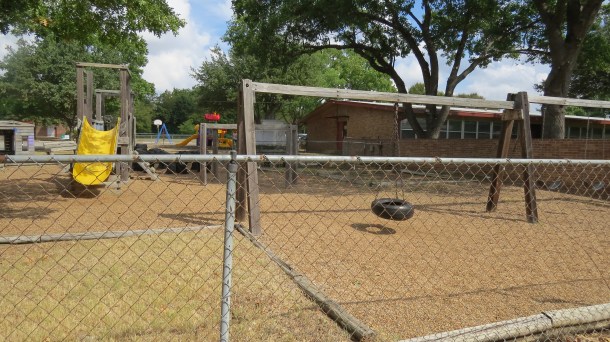
Playground "Before" Transformation

Playground “Before” Transformation

A year has gone by. The gardens have been installed.  The plants, soil, and other large objects have been moved into their new homes, and it became clear that the playground parts were not going to be needed.  We removed them, and what was left inside the cyclone fence was a greenhouse, the air conditioning mechanism for the church, a couple of compost bins, a chicken coop, mature trees, and the frame for the old swing set.  When you step back from that, you realize that the space is reminiscent of what most homeowners have in their own yards:  some nice things, some not so nice things, a fair amount of shade, some sun.

What it’s inspired us to do is play. (The space was a playground, after all!)  We’re going to be experimenting in this, last, garden, but we’ll be experimenting with a purpose.  Over the next year(s?), we’ll be installing an edible landscape in this space, this crowded, pre-owned space with some sun and a fair amount of shade.  We’ll be designing around our obstacles, turning them into features, and we’ll make the shade our ally instead of our adversary.  We’ll be showing off all sorts of different techniques from hugelkultur to vertical gardening to straw bales to edible flower beds.  Some will be raised, some will be inground; everything will be edible.  There will be some new crops, variations on common crops, and some old crops with new parts to eat.  And so in addition to growing these foods, we’ll also show you how to prepare and eat them.

Why are we going to do this? Because this space has so many similarities to the average homeowner’s yard, it’s a perfect teaching and demonstration tool, and teaching is our mission.  Why do it as an all-edible landscape?  Because there are many examples of ornamental landscaping, and plenty of examples of edible gardening, but there are not as many of edible landscaping.  We’re doing this because people are becoming interested in growing at least some of their food, but are often concerned that it won’t look good, or they can’t because they have too much shade.  This old playground gives us the opportunity to show everyone how they can create a beautiful landscape with edibles.

How are we going to do this? We’re going to do this in stages.  First, we’re going to start with the hardscape.  One of the biggest concerns people have about landscaping with edibles is the aesthetics – whether it’s an overgrown tomato plant, or the fallow season (too hot, too cold to grow edibles) for their climate.  To have a beautiful edible landscape, the first thing you need to do is make sure the landscape looks good before any plants are planted.  Plants (crops) are the ornamentation on top of a good looking base structure, your hardscape.  After all, there will be times when you may not have plants in your landscape; you might have had a crop failure, or have just harvested dinner!

In our next post, we’ll talk about hardscape ‘rules’, and show you how we’ll be incorporating them into our landscape.

Come along and follow our adventures – celebrate with our successes, and learn from our failures!

The Incredible Edible Landscape Team

Lila Rose

Picture by Starla

Note: Lila Rose will be speaking at the Whole Foods at Preston Forest soon about Edible Landscaping. Will add date to this post, so check back with us.
Tomatoes and North Texas

In selecting varieties of tomatoes for North Texas, the most important criterion to consider is the one in the trade called, “Early Season”. The less time required for maturation the better, because the extreme heat of our summers for tomatoes is like falling off a cliff.

Tomato varieties can also be described as being either determinate or indeterminate. Determinate varieties have the characteristic of reaching a point during their maturation at which most of the bearing of fruit occurs within a short time.  Indeterminate is just the opposite, where bearing occurs on a more gradual and sustained basis.

Indeterminate varieties that perform best here are mostly the smaller sized varieties. These can bear fairly prolifically even in mid-summer.  My own personal preference is for this class of tomatoes.  They are just the right size for popping into the mouth.  A usual day in my life finds me eating them every morning and about half the time that evening.

Tomato" Yellow Pear" an indeterminate variety

Tomato” Yellow Pear” an indeterminate variety

Larger sized tomatoes that perform best are the mid-sized varieties. The most popular 8- 12 oz. tomato for many years has been the determinant variety, Celebrity.  Its sister, Carnival is good also.  A typical year will find this variety bearing typically most heavily from early June to early July.

The largest fruited varieties require too long to mature, where anything past 65 days is marginal. The large fruited varieties also are susceptible to splitting and sun scald.  These do not appreciably affect the taste but certainly do affect the esthetic qualities of the fruit.

Celebrity Tomato Ripening on the Vine

Celebrity Tomato Ripening on the Vine

Perusing the catalog, “Tomato Growers Supply Company”, there are listed 16 varieties of Early Season varieties, many from which to choose.

Over the years, varieties come and go. Some are described as being highly heat resistant, but I would be wary of accepting that description as being accurate.  I would recommend acquiring a tomato catalog along with using my advice in choosing your selection(s).  Celebrity remains the preeminent mid-sized tomato.

Tom Wilten

Pictures by Starla


Perfectly Planted Potatoes Premiers

     Just in time for the Oscars:  Potatoes take center stage on the red carpet in this exclusive short video.  It features our own Jim Dempsey, nominated for Best Instructor, and Starla Willis, nominated for Best Cinematographer. Good luck to both!

And… if you want more information about growing potatoes, check out “One Potato, Two Potato, Hopefully More” and “Fried Green Potatoes.”

Carolyn

Video by Starla


Learn the Square Foot Gardening Concept

Rain or Shine, Come to our Square Foot Gardening Class, Tuesday, February 23 at 11am

at The Raincatcher’s Garden of Midway Hills


Taught by Stephen Hudkins, Texas A&M AgriLife Extension, Dallas County Master Gardener Coordinator.

We will meet in the Vegetable Patch. If raining, go to Fellowship Hall.


Address: 11001 Midway Road, Dallas, Texas, 75229

Public Welcome, Master Gardeners can receive education credit.


Brussels Sprouts

Brussesl sprouts are an acquired taste.  Hardly anyone under 12, puts  them on their plate. But taste buds change and recipes for Brussels sprouts salads, soups, and au gratin direct us to digest this nutritious crop.

Brussels sprouts planted in the fall at The Raincatcher's Garden

Brussels sprouts at The Raincatcher’s Garden

In Texas we plant Brussels sprouts in the fall. Brussels sprouts like cold weather. It’s a long season crop with 90 days to maturity from transplants and 100-110 days from seed.

Would you like to grow better Brussels sprouts?  Dorothy has a gardening tip:

video by Starla

Ann

Education Opportunities at The Raincatcher’s Garden of Midway Hills

Square Foot Gardening  by Stephen Hudkins, Tuesday, February 23rd at 11am in the Vegetable Patch.

Rain Garden Installation by Dr. Jaber and Dr. Woodson, Tuesday, March 1st at 9am, Fellowship Hall.

All welcome, Master Gardeners can receive education credit. Leave a comment if you need more information.


Radish Reminders and Onions

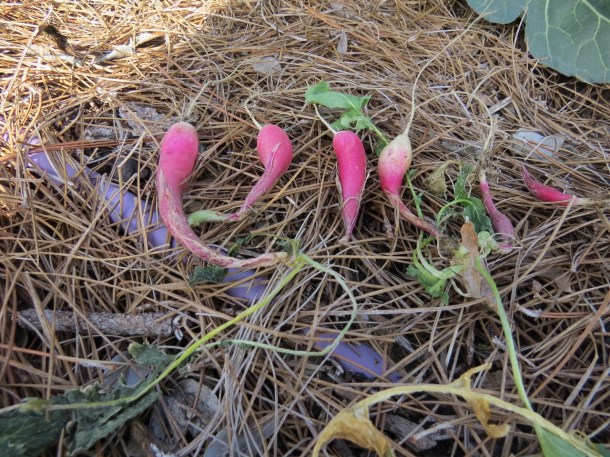
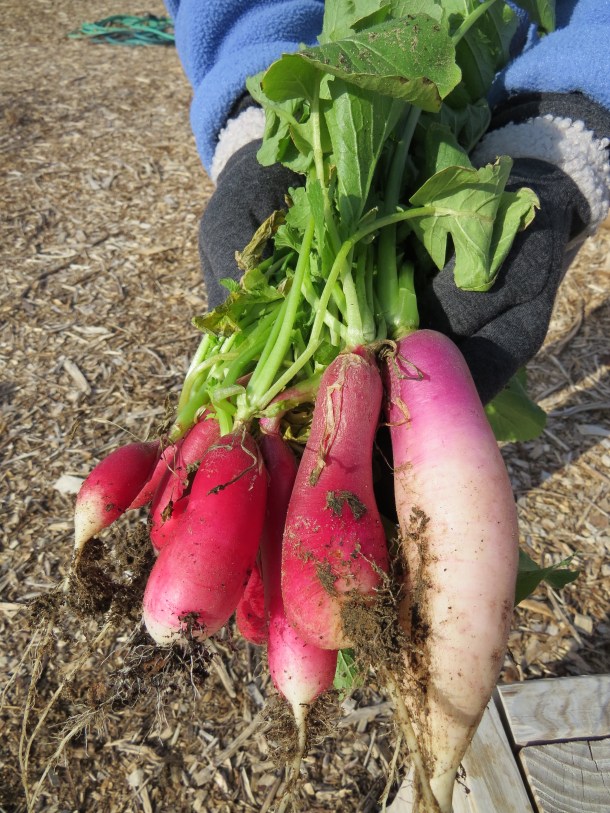
Sow radish seeds early February through mid- April. We enjoyed them all through fall and winter and now get a second chance. Radishes are perhaps one of the most satisfying crops because they germinate quickly and profusely from seed but don’t forget to thin them! At approximately two weeks old or one inch in height, snip off the leaves and add the tops right into your salad bowl. In fact, you can eat radish tops anytime. They are one of the “root to leaf” crops being touted by American chefs and gardeners.

Above: Stunted Radishes, No Room to Grow

Above: Stunted Radishes, No Room to Grow

A word from Jerry Parsons,  Ph.D., horticulture specialist with the Texas Cooperative Extension in San Antonio:  “Plants require a certain amount of space for optimum root expansion and foliage growth if maximum production is expected.” The key words to understand are “optimum” and “maximum” . Plants limited by space restrictions will produce, but not to the maximum. They will grow, but not in the optimum condition. This is true for those vegetables which need space to physically expand (the radish, turnip, onion bulb) as well as all vegetables which need the intensity of sunlight to energize the chlorophyll of cells to insure optimum functioning of plant processes and, consequently, maximum production.”

Radishes from our Garden, Properly Thinned

Radishes from our Garden, Properly Thinned

Onions-you have probably already planted them or are “fixin” to get them into the ground.

Above: Onion Sets Ready to be Planted

Above: Onion Sets Ready to be Planted

Remember to allow space for them to grow. Judge this by the expected size of the variety you are planting.

For example, green onions need less space than the larger bulbs of 1015Y onions. Spring is coming! Here’s what you can look forward to as an onion grower.

No worries about how to eat these crops. The Dallas County Master Gardener Cookbook, A Year On The Plate, will have plenty of recipes. (Publishing Date To Be Determined) But just like spring, it’s coming!

Onion Planting Advice : The Lowly Onion

Ann

Pictures and Video by Starla

Oh, oh, oh and don’t forget National Seed Swap Day at Preston Forest, Whole Foods Market today from 12-4.

Master Gardeners  will be there with seed activities and seeds to give away.

Flavorful News from the Dallas County Master Gardener Cookbook Committee

A new Dallas County Master Gardener Cookbook is on the way.  Our members have submitted a wheelbarrow full of recipes and gardening tips that the cookbook committee has been dutifully busy tasting and testing.

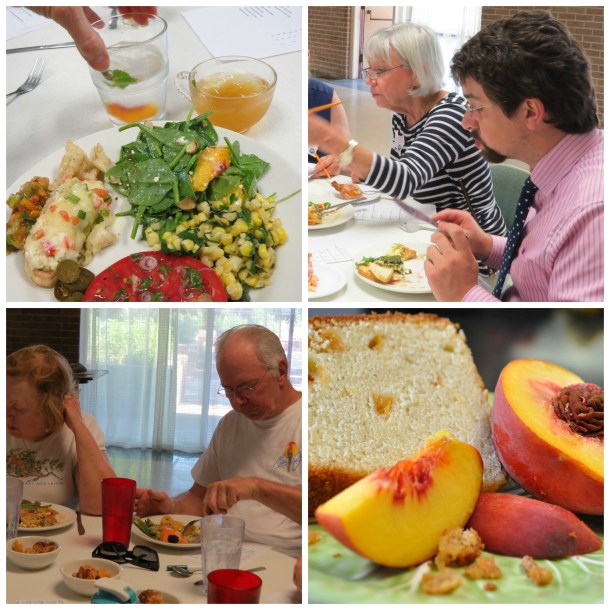
cookbook collage

We jumped into July with forks in hand. Tomato recipes were tasteful and tempting.  Corn, in abundance, brought comfort to our tummies.  Blackberries had us beaming with their beauty.  And, peaches just pushed us over the edge with their juicy goodness.  What could be better?  Well…

Cookbook August cropped overhead shot

In August we anguished over the okra. Which do we like best?  Fried, roasted, simmered, stewed or even finessed into little muffins?   And, oh how the squash recipes raised our spirits.  Shaved into salads, grated for quiche, pureed into soup, carpaccio and casseroles to consider.  How will we decide?

September, October and November we celebrated the harvest bounty. Sweet potatoes to savor, pumpkin recipes to ponder, an over-the-top apple recipe, a unique and very elegant pear presentation that left us swooning while Meyer lemon pie made us pucker with pride.

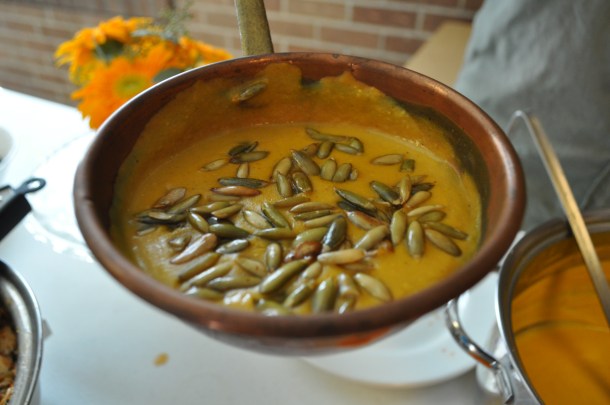
Creamy Southwestern Pumpkin Soup

Creamy Southwestern Pumpkin Soup

Our journey has been filled with flavor, fun and friendly evaluations. We’ve tasted, tested, eliminated some and accepted over 140 recipes.  Profound thanks to our faithful volunteers who have traveled with us.   The adventure continues to grow more exciting and we can’t wait to share our discoveries.

Until then, stay posted for more “flavorful news” from the cookbook committee and a special 2016 unveiling.

Take a peek at some “behind the scenes pics” courtesy of Ann and Starla!

Linda Alexander, Cookbook Chair

Winter at Raincatcher’s

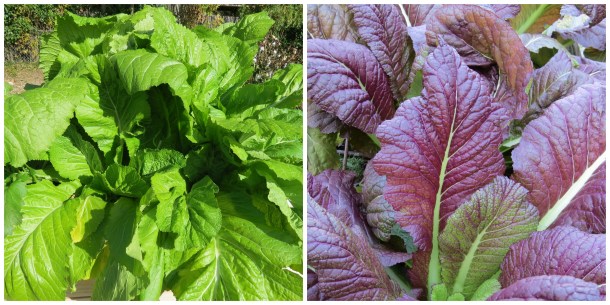
Green and Red Mustard Greens at The Raincatcher's Garden of Midway Hills

Green and Red Mustard Greens at The Raincatcher’s Garden of Midway Hills

If you have been eating your way through the garden this winter, no doubt you are acquainted with the  brassica family.  Members of this family include arugula, cabbage, cauliflower, broccoli, Brussels sprouts, kale, rutabaga, turnips, radishes, collard greens and mustard greens. They are cool season vegetables, planted in the fall in Dallas, Texas and harvested all through our mild winter.

Right now I am smacking my lips thinking of the cauliflower picked and  prepared at Linda’s yesterday. The recipe will be in our new Master Gardener cookbook, A Year on the Plate, which we hope, hope, hope to publish this year.

Along with harvesting and enjoying winter veggies, you should be planting onions now.  Onion planting instructions and recipes are all through our blog. You can’t escape them.

Ann

Pictures by Starla

What’s coming up in 2016?

Seed Swap Day at Whole Foods at Preston Forest, January 30

More information about our cookbook, A Year on the Plate.

A how-to video about braiding onions so you will remember to get yours planted right away


Fall Tomatoes at The Raincatcher’s Garden

Listen to Dorothy! I always do! Here’s our fall tomato report:


We have talked about green tomatoes almost as much as red, ripe tomatoes:

Green Tomato Primer

Fried Green Tomatoes

Dorothy’s Chow Chow

Fall Tomatoes

Ann

Video by Starla

Goodbye Summer and Recipes

We’ve tested and tasted, savored and enjoyed but now it’s time to say farewell.  Our memories have been sweetened with the most delightful flavors of summer; juicy, plump blackberries, tantalizing tomatoes and the star of the show – those luscious, versatile peaches (many would agree, perhaps, summer’s finest fruit).  Yes, we would take them through every season if nature allowed.  But, we must let go and only dream about the spring and summer yet to come.

From the Raincatcher’s Garden: We wish you and your family a restful, and pleasure filled Labor Day weekend.  Join us on our seasonal garden journey by subscribing to Dallas Garden Buzz.

blackberries in carton


Blackberry Brie Bites

Ingredients:

1 tube refrigerated crescent rolls (Pillsbury 8 oz.)

1 round Brie Cheese (8 oz.)

¼ cup blackberry jelly (Smuckers Spreadable Fruit)

24 fresh blackberries

24 large toothpicks, optional

Directions:

  1. Separate the crescent rolls into 4 rectangles. Press the seams together and cut into

6 even squares. Press into 24 mini muffin tins.

  1. Cut the rind off the Brie cheese. Cut into 24 small squares. Place on square into each crescent lined tin. Spoon a small amount of blackberry jelly on top of each cheese square. Fold the tips of the crescent rolls over, if desired. Bake at 350 degrees F for 12-15 minutes. Remove from the oven and top with a fresh blackberry on a toothpick. Serve immediately.

Yield: Makes 24 crescent cups.


Tomatoes for recipe

Gorgonzola-Tomato Salad

Ingredients:

Gorgonzola Tomatoes4 ounces Gorgonzola cheese

¼ cup minced fresh parsley

3 tablespoon minced shallot

2 tablespoons minced fresh basil

6 medium tomatoes, thinly sliced

⅓ cup olive oil

2 tablespoons fresh lemon juice

2 teaspoons Dijon mustard

Salt and freshly ground pepper to taste


Directions:

  1. Freeze cheese 30 minutes or until firm. Grate cheese into a small bowl; add parsley shallot, and basil, stirring gently to combine. Arrange tomato slices on a large serving platter. Sprinkle cheese mixture over tomato slices.
  2. Combine olive oil, lemon juice, mustard, and salt and pepper to taste, beating well with a wire whisk. Drizzle dressing mixture over salad.

Yield: 6 servings

Linda

Peach recipe tomorrow!