Tag Archives: vegetable gardening

Want To Try A Different Vegetable?

Now here’s a Jeopardy question that might have stumped even the best contestant:

Answer: A subtropical vine that has beautiful white fringed, lacy flowers that have a sweet perfume, leaves that when crushed smell like “hot buttered popcorn,” and edible fruit that can grow up to three feet or more long and looks like a creature.

Question: What is Snake Gourd?

Snake Gourd Growing at Hope Garden

Snake Gourd Growing at Hope Garden

Snake Gourd (genus Trichosanthes, which is Greek for “hair flower”) is an edible gourd grown throughout India, Australia and Insular and Mainland Southeast Asia. Because it loves hot, humid climates, it is a good plant to grow in our hot, humid Dallas summers. Though most snake gourds can grow to enormous lengths, there is a shorter variety, called Snake Gourd India Short which grows only to about four to six inches.


All true edible snake gourds, Trichosanthes anguina or T. cucumerina, get soft when ripe and usually disintegrate on the vine, unlike many mature gourds that form a hard shell. They are eaten when very immature, while the fruit is tender and the seeds are still soft.   The mature fruit turns bright orange when ripe and has seeds surrounded by a bright red pulp. The mature fruit often breaks open spilling the contents, which look like big clots of blood (hence the name “anguina”). The red pulp is sweet to the taste and considered a delicacy by Southeast Asian children.

Snake gourd seeds can be planted in full sun in late spring after the soil is warm. The seeds have a hard coat and need to be soaked overnight. Though the vines can sprawl on the ground, they do best when grown on a sturdy trellis. Trellised snake gourds, especially those with stones tied to the blossom end, tend to be straighter than the curved gourds that are left to grow on the ground. The fruit of the India Short variety is picked just before it turns from moist to dry feeling. The longer varieties are harvested when they are about 16-18 inches. With a taste reminiscent to cucumbers and texture similar to zuchinni squash, Snake Gourd can be fried, stuffed or boiled.   It is also good in soups and stir-fry. Snake Gourd is often used in Indian dishes and there are many recipes using it on the internet.

Finding edible snake gourd seeds is somewhat difficult. I recently tried to order on Ebay seeds of Snake Gourd India Short from a grower in India. However the seeds were confiscated at US Customs. There are however several seed companies that sell the edible long variety, so check on the internet. However, just be sure that you are ordering edible Snake Gourds, either Trichosanthes anguina or T. cucumerina. There is another ornamental, hard shelled variety that is used in crafts that is readily found in seed racks even in our big box stores. Though they would be fun to grow, they are not edible.

Carolyn

A Texas Connection

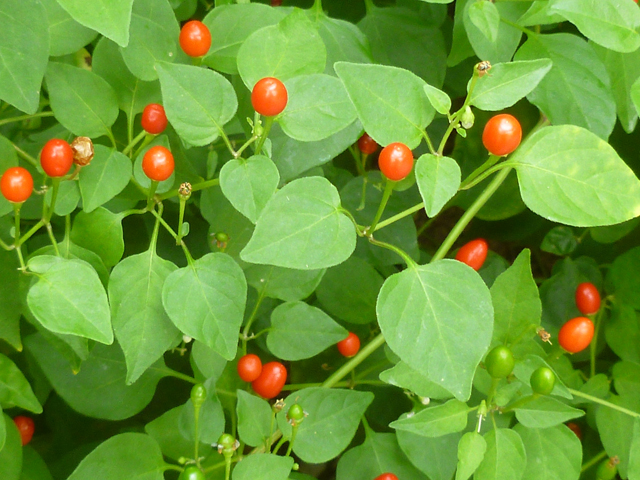
Capsicum annuum var. glabriusculum

Capsicum annuum var. glabriusculum

Most people know of Thomas Jefferson (1743-1826) as the main author of the Declaration of Independence and that he was the third president of the United States.   However we gardeners know that he was also an avid gardener who collected and grew as many as 300 cultivars, representing 99 species of vegetables and herbs, during his 15 year retirement at Monticello. However, did you know that one of the experimental vegetables that he grew has a Texas connection?

Around 1812, Capt. Samuel Brown, who was stationed in San Antonio, sent Jefferson seeds of a bird pepper, Capsicum annuum var. glabriusculum. According to the seed packet from Monticello, Capt. Brown said that the dried peppers were as “essential to my health as salt itself.” He went on to say “The Spaniards use it in fine Powder & seldom eat anything without it. The Americans…make a pickle of the green Pods with Salt & Vinegar which they use with Lettuce, Rice, Fish, etc.”

Jefferson planted what he called “Capsicum Techas” in pots at Monticello and hoped it would be a hardy variety of pepper at his home. He also sent the seeds to a Philadelphia nurseryman, Bernard McMahon, who sold it as an ornamental pepper in Pennsylvania. Food historian William Woys Weaver said that “Old Philadelphians used the potted peppers as a winter table ornament or as window sill plants. The peppers themselves were used to make pepper vinegar, pepper sauce, or pickles.”

Though Jefferson called the pepper “Capsicum Techas,” like many plants it has several common names. One of the common names for the pepper is McMahon’s Texas Bird Pepper, but it also goes under the names of Pequin, Tepin, Petin, Chiltepin, Bird’s Eye Pepper, and Turkey Pepper. The Aztecs called it “chilli” and many people know it by another common name, Chili pequin.

Texas Bird Pepper is the only pepper native to North America. In fact, it is considered to be the official wild pepper of Texas. It gets its name “bird pepper” from the fact that birds, who are not sensitive to the extremely hot taste of capsaicin, love to eat the fruits, which are high in Vitamins A and C. The birds then distribute the seeds through their droppings.

Chili Pequin or Texas Bird Pepper, Common Names

Chili Pequin or Texas Bird Pepper, Common Names

The plant itself is about 12 inches tall and has a compact shape with bright green pointed leaves. The tiny (about ¼”), sparkling round or bullet-shaped red fruits were described by Jefferson as “minutissimum.” But don’t let their miniscule size fool you. They are hot! Very hot! Often 7-8 times hotter on the Scoville Scale than jalapenos’ 30,000-60,000 units.

Though the peppers originated in Central America and are considered reliably perennial in plant hardiness zones 9 through 11, here in Dallas they will often freeze to the ground but come back from the roots once the temperature warms. Because of their ornamental look, they also make a good container plants and can be protected in a greenhouse during the winter. Unlike many peppers that require full sun, Texas Bird Peppers also do well in part shade, though they do get a little leggy. They have few diseases, are drought tolerant, and need little fertility.

They can be used in any recipe requiring hot peppers—but remember to add just one or two little peppers, as their heat can go a long way. One of the most popular uses for the peppers is to make pepper vinegar. The commercial hot sauce brand Cholula lists bird peppers as one of its ingredients. Recipes for pepper vinegar can be easily found on the internet.

So, if you are looking for a very pretty plant with an interesting history, remember the Texas Bird Pepper. Just don’t forget: they are hot!

Carolyn

Pictures Courtesy of http://www.wildflower.org

Chili Pequin is beckoning butterflies at The Raincatcher’s Garden. We have two!

It’s Fall at the Garden, Maybe you Didn’t Realize

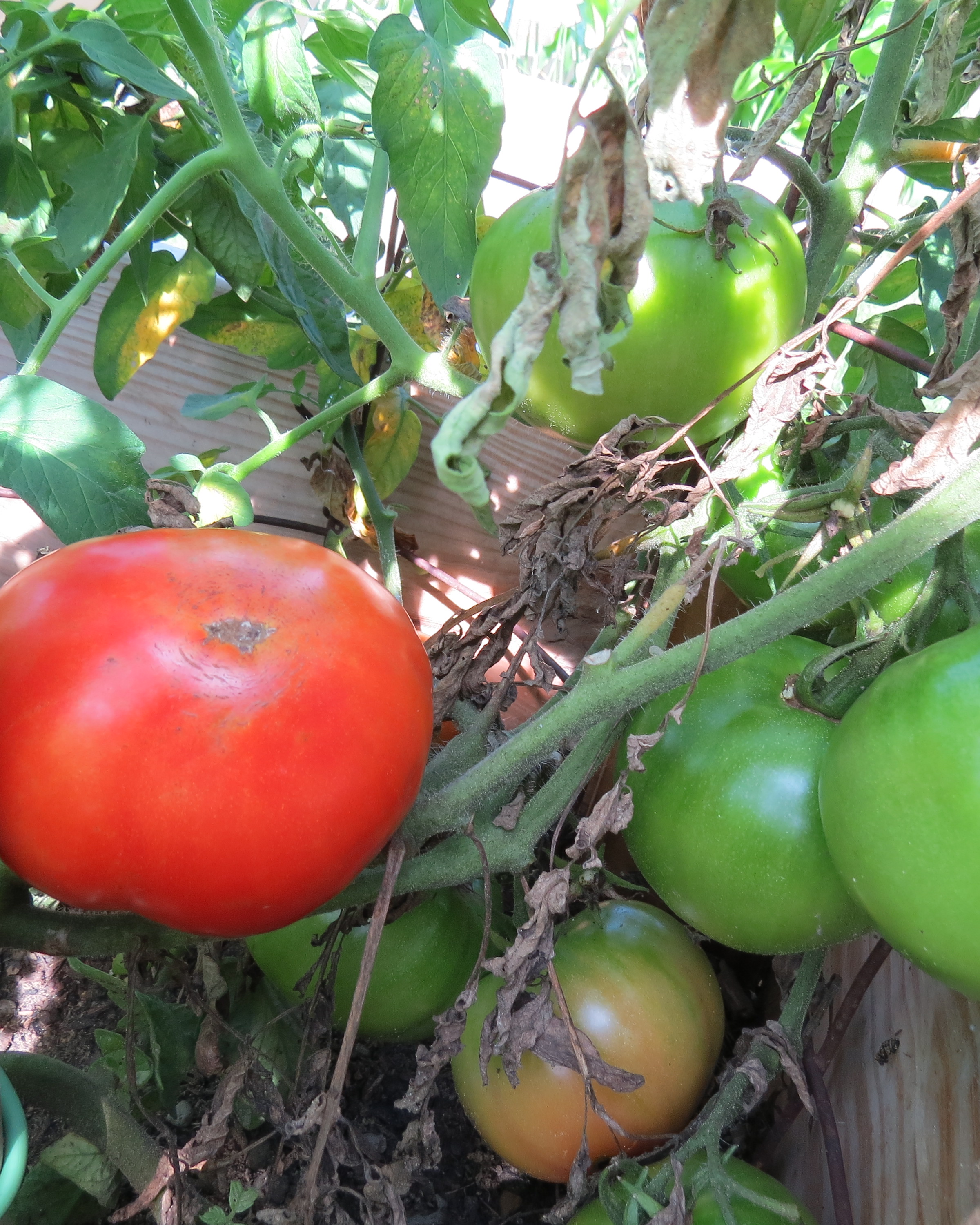
Celebrity Tomatoes on the Vine

Celebrity Tomatoes on the Vine

It’s been a good year for tomatoes in Dallas. Dorothy, one of our veggie garden experts, talks about her tomatoes as if they were her best friends. “The Celebrities, the Cherokees and Zebras have been fabulous. I couldn’t pick a favorite.  The Zebras and Cherokees are heirloom, which usually just give me one good round, but with this weather, they have stayed covered. ”

So imagine my surprise when Dorothy told me to radically cut back my tomato plants now and prepare for fall!  She leaves only the limbs bearing large tomatoes, all others are cut to a height of 3 feet.  The smaller tomatoes literally go into the skillet to become fried green tomatoes.

She recommends foliar feeding with fish emulsion every two or three weeks to help the  tomato plants rebound for fall.

Trash the  dead or diseased tomato plants,  they are not worth saving.

What else is Dorothy doing about fall?  Seeds of Carrots, Beets, Kale, Contender and Gold Rush Green Beans, and Oats are being planted at The Raincatcher’s Garden. A few new tomato transplants will be added and  hope abounds for the tomato plants who endured the harsh pruning.

When it gets a little cooler; lettuce, spinach and snow pea seeds along with broccoli and Brussel sprout transplants will be added.

Thank you, Dorothy, now what time is that dinner of friend green tomatoes?

Ann

Pictures by Starla

Hoemgrown Tomato Atop a Bed of Rosemary

Homegrown Tomato Atop a Bed of Rosemary

Fall back on some of our good advice: Fall, What’s not to Love and Fall Crops for Dallas Veggie Gardens 


Fried “Green Potatoes?”

 If you are a southerner, you probably know that unripe, green tomatoes, when fried or made into chutney, can be a culinary delight.  However, green potatoes?  AVOID THEM!!


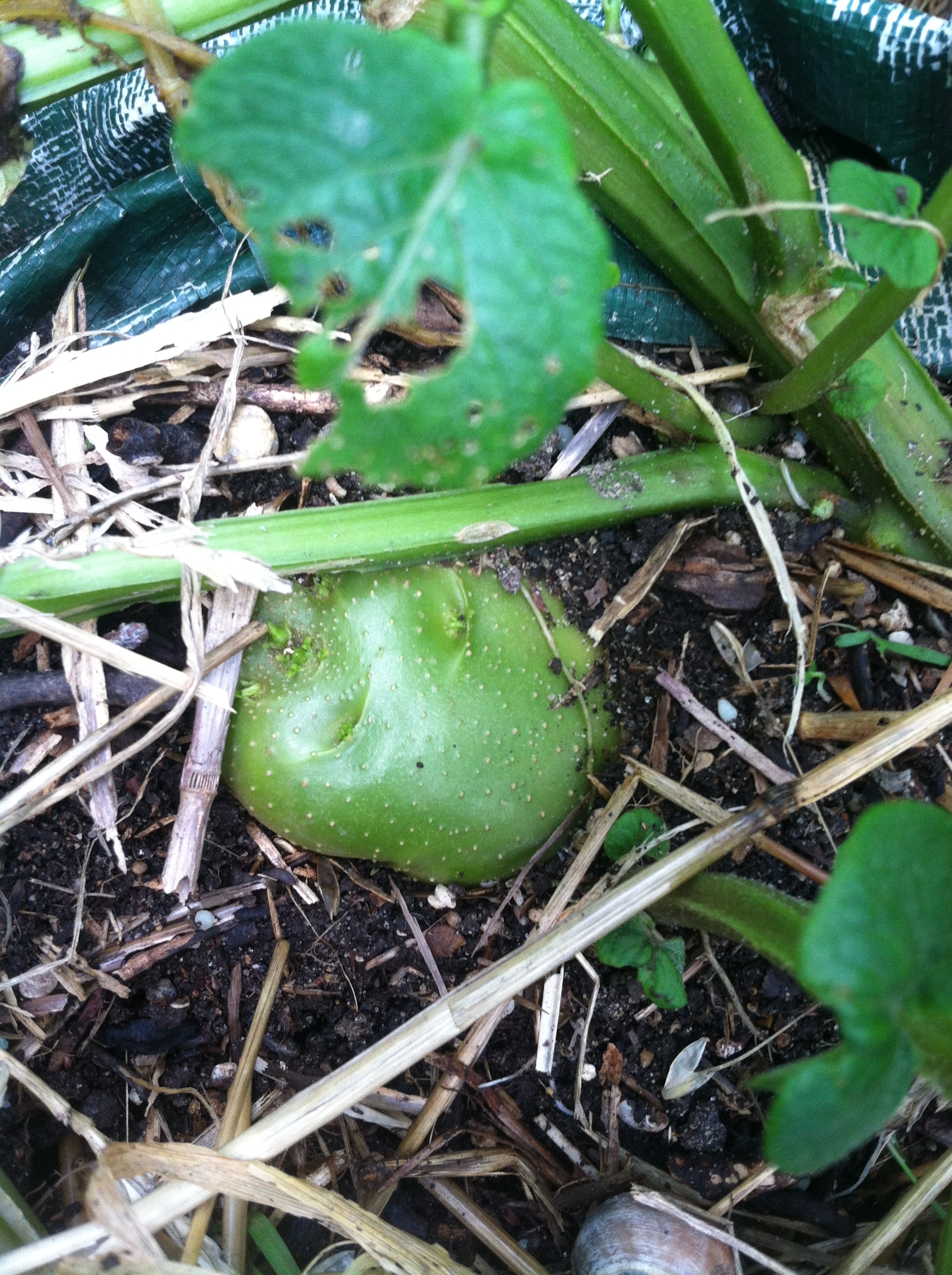
Neon Green Potato from Carolyn's Garden, Not Photo Shopped! Beware, Even Green Tinged Potatoes Should not be Eaten.

Neon Green Potato from Carolyn’s Garden, Not Photo Shopped! Beware, Even Green Tinged Potatoes Should not be Eaten.

Now is the time that many vegetable gardeners are harvesting the potatoes that they planted in late January-February.  If, as recommended, you have been hilling up soil against the stem of the potato or kept adding soil and compost to a potato bin, the odds are good that you will not find any “green” potatoes.  However, if the ever-growing bunches of potatoes have managed to heave themselves out of the ground and are exposed to sunlight or if the potatoes have been exposed to extremes of heat or cold — beware.  Those greenish potatoes can be potentially deadly.   In fact, even potatoes brought from the store, if not properly stored in a cool, dry, dark place, can develop a greenish tint if exposed to too much light.

The greenish hue that can be found on potatoes exposed to light is actually chlorophyll.  Not a bad thing, you say, because we eat chlorophyll in many leafy greens.  However in the potato, the presence of chlorophyll also indicates the presence of solanine, a glycoalkaloid poison found in species of nightshade.  This bitter nerve toxin crystalline alkaloid is part of the plant’s defense against insects, disease, and predators.  It is found primarily in the stems and leaves of potatoes but can also be found on any green spots on the skin of a potato and on buds.

Solanine interferes with the body’s ability to transmit impulses between cells.  Ingested in large enough quantities, it can cause vomiting, diarrhea, headaches and even paralysis of the central nervous system.  Though an average adult would have to eat a very large quantity of green tinged potatoes (which are often quite bitter, a good warning sign) to have neurological damage, children may be more susceptible to ill effects.  In general, it is probably best to throw away any potatoes that have green eyes, sprouts, or greenish skins.

As B. Rosie Lerner, Extension Consumer Horticulturist at Purdue University says: “The next time you see a green potato, be thankful for that color change.  It’s warning you of the presence of toxic solanine.”

Carolyn

Picture by Carolyn

More info about potatoes :

Vegetable Planting in January

One Potato, Two Potato, Hopefully More


Beginnings

The dirt’s flying at the new Rainctcher’s Garden-into the new raised vegetable beds on the north field.

Straight rows of onions stand like little soldiers, the first vegetables planted at the new garden. We planted one bunch each of 1015y (yellow) and Southern Belle Red (red). Potatoes are next!

 Our First Onions Planted at The Raincatcher's Garden!

Our First Onions Planted at The Raincatcher’s Garden!

The top 12 inches of the beds have been filled with a generous gift of Vegetable Garden Mix from Living Earth Technology, made of compost, sandy loam, aged mulch, and other ingredients.  We topped it off with some of our homemade compost.

Living Earth, Sarah, and Judy!

Living Earth, Sarah, Tim, and Judy!

Last week the first of our trees, an urban forest demonstration was planted. Expect to see more about berm building and tree planting next week.

Ginko Tree Planted February 19, 2015

Ginkgo Tree Planted February 19, 2015

Pictures by Starla

Writing taken from Jim and Elizabeth emails

Onion Peelings here.

Onion Recipe

Ann


Garden Progress

“It won’t be a chore, it will be a garden.”

 Quote by Jeannie Mobley

Come with us on this journey as we  build and transform our gardens at 11001 Midway Road.    “It won’t be  a chore, it will be a garden.”  You can see  from these pictures that we are enjoying the process.

Here we are beginning to build the raised beds:

Here we are, beginning to build our raised beds-Jim, Judy, Dorothy, Elizabeth

Jim, Judy, Dorothy, Elizabeth

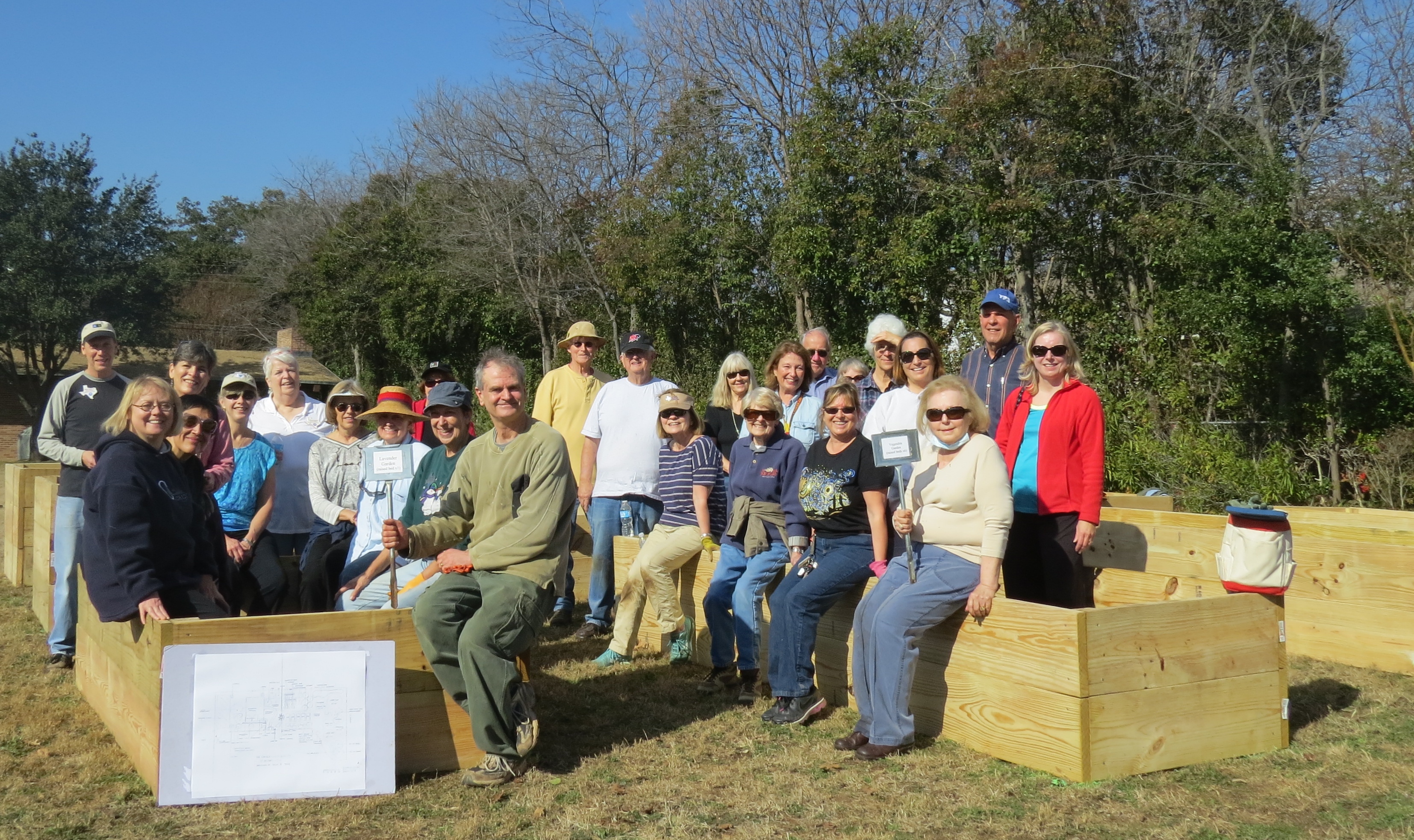
Knowing we will be having school field trips in the spring, our first order of business was to get the vegetable garden beds built.  This was possible because of a generous donation from Loew’s on Inwood.

Vegetable Beds and our Crew of Dallas County Master Gardeners

Vegetable Beds and our Crew of Dallas County Master Gardeners

We are also working on a shade garden demonstration for the lucky people in Dallas, Texas who have shade. The courtyard at Midway Hills Christian Church is being renovated.   Asian Jasmine and Mondo Grass have been removed to make way for shade gardening with winter color in mind, WaterWise of course.

Hans and Michele, part of our Courtyard renewal team!

Hans and Michele, part of our Courtyard renewal team!

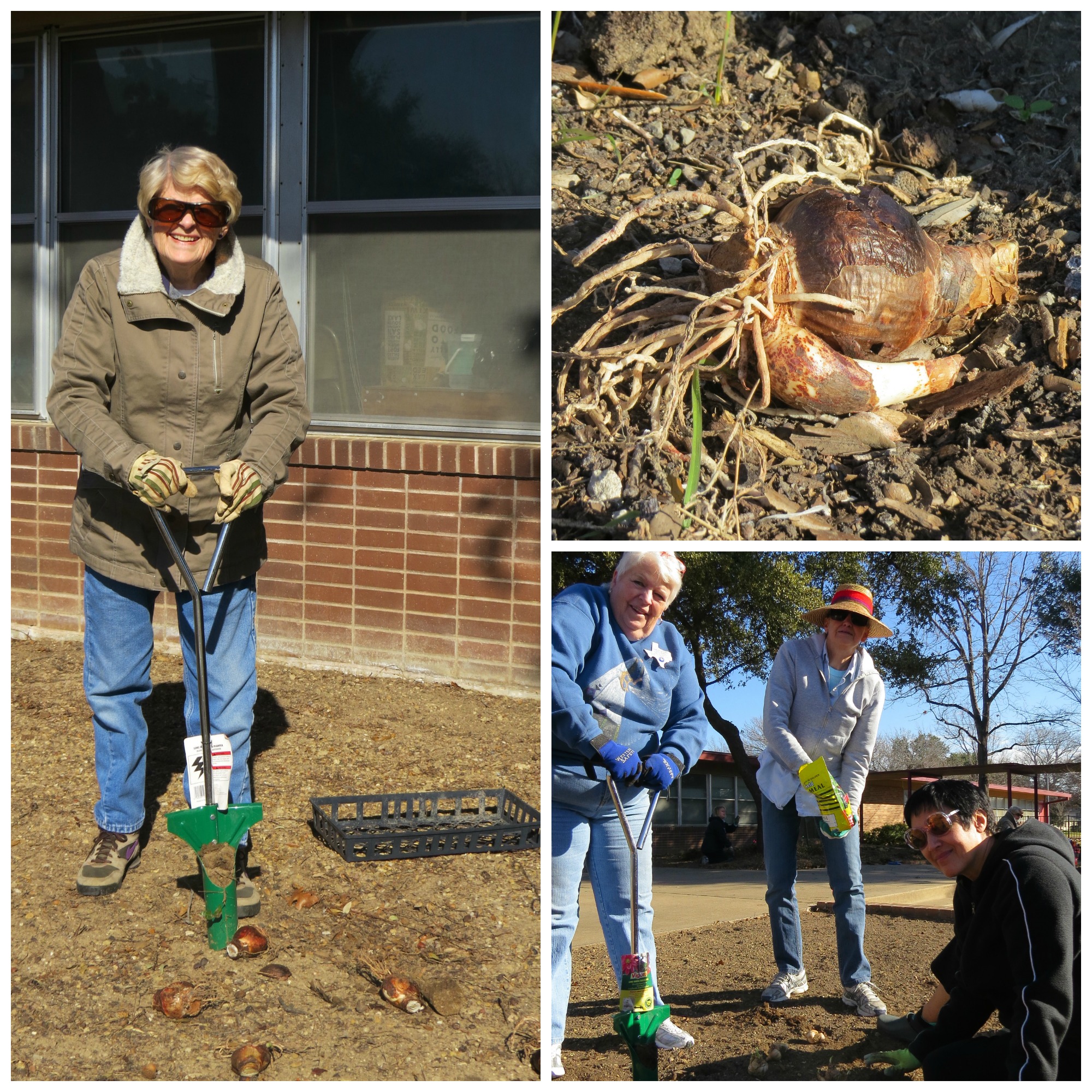
This spring you will see swaths of daffodils and Hardy Amaryllis .  The Amaryllis came with us from the old garden. You’ll see; they multiply like crazy.

Evelyn on the left, Sarah, Carolyn, and Cynthia on the right, Amaryllis top right

Evelyn on the left, Sarah, Carolyn, and Cynthia on the right, Amaryllis top right

By the way, this would be a good time to study bulb nomenclature and you can do that by clicking here.

Ann

Pictures by Starla


Moving Asparagus

If your house caught on fire, you might have thought about which prized possessions you would grab on your way out. What would it be: a photo album, childhood memoir, or book?

What if you had to leave your 9 year old garden in a rush?  We had to do that very thing.

For sure our asparagus plants needed to be moved to our new location. Two or three years ago we had planted two packages of scrawny looking asparagus crowns in a trench.  They looked dead and we didn’t think they would come up, but in a miraculous way they thrived!

Now we had to hurry to bring these very same asparagus plants to our new garden. Hastily the digging began!

 Asparagus Roots

Asparagus Roots

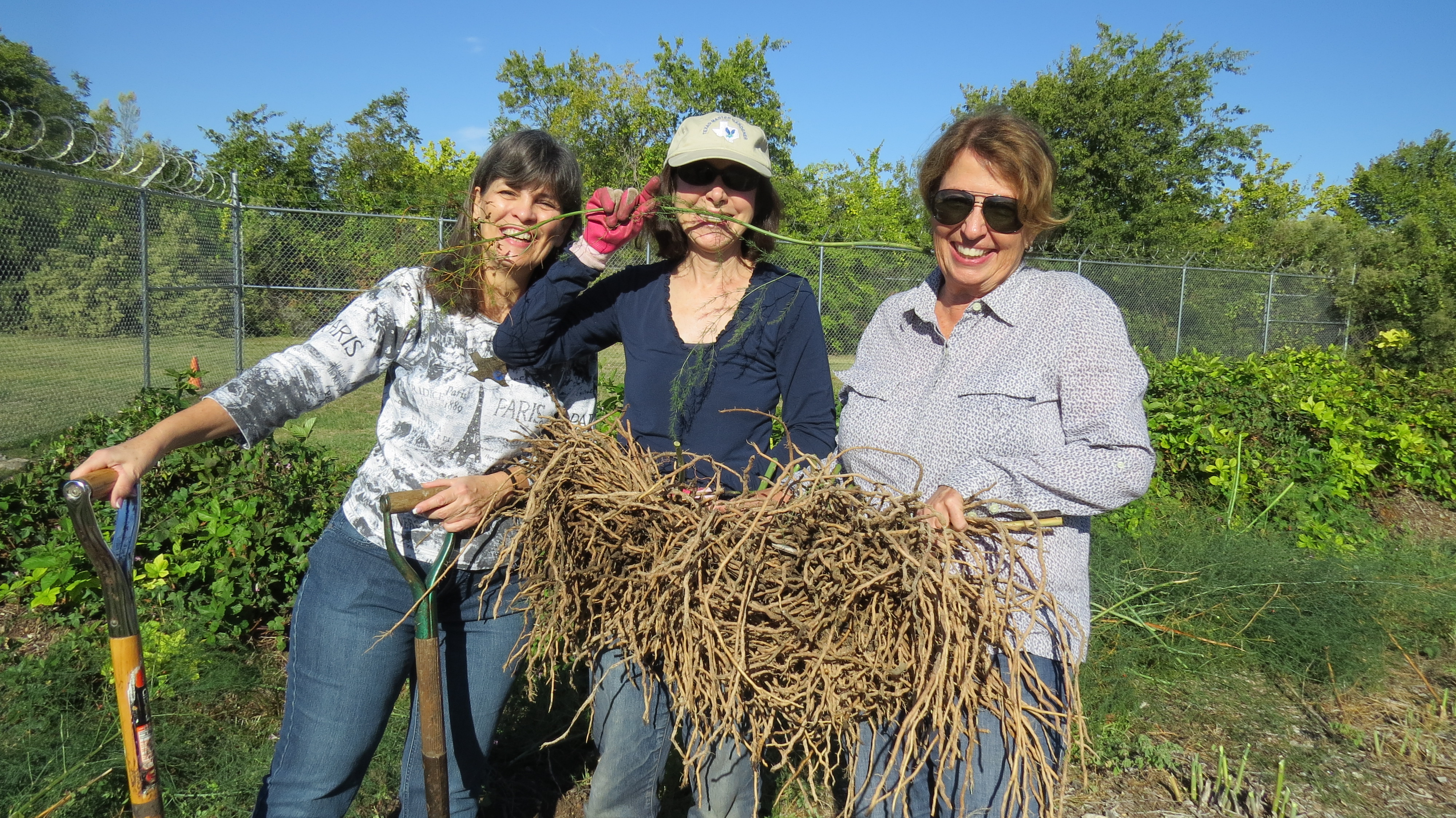
The roots had grown to gargantuan proportions. Even that didn’t stop us and we got a little silly about it!

Kim, Sue, Ann, and our Saved Asparagus Roots

Kim, Sue, Ann, and our Saved Asparagus Roots

We picture our asparagus flourishing in our new garden at Midway Hills as a sort of Asparagus Lane at the entrance to our new vegetable garden. And why not; asparagus is a perennial vegetable and really pretty throughout the year except after the first freeze when you cut it back.

There’s nothing finer than Asparagus from your very own garden.

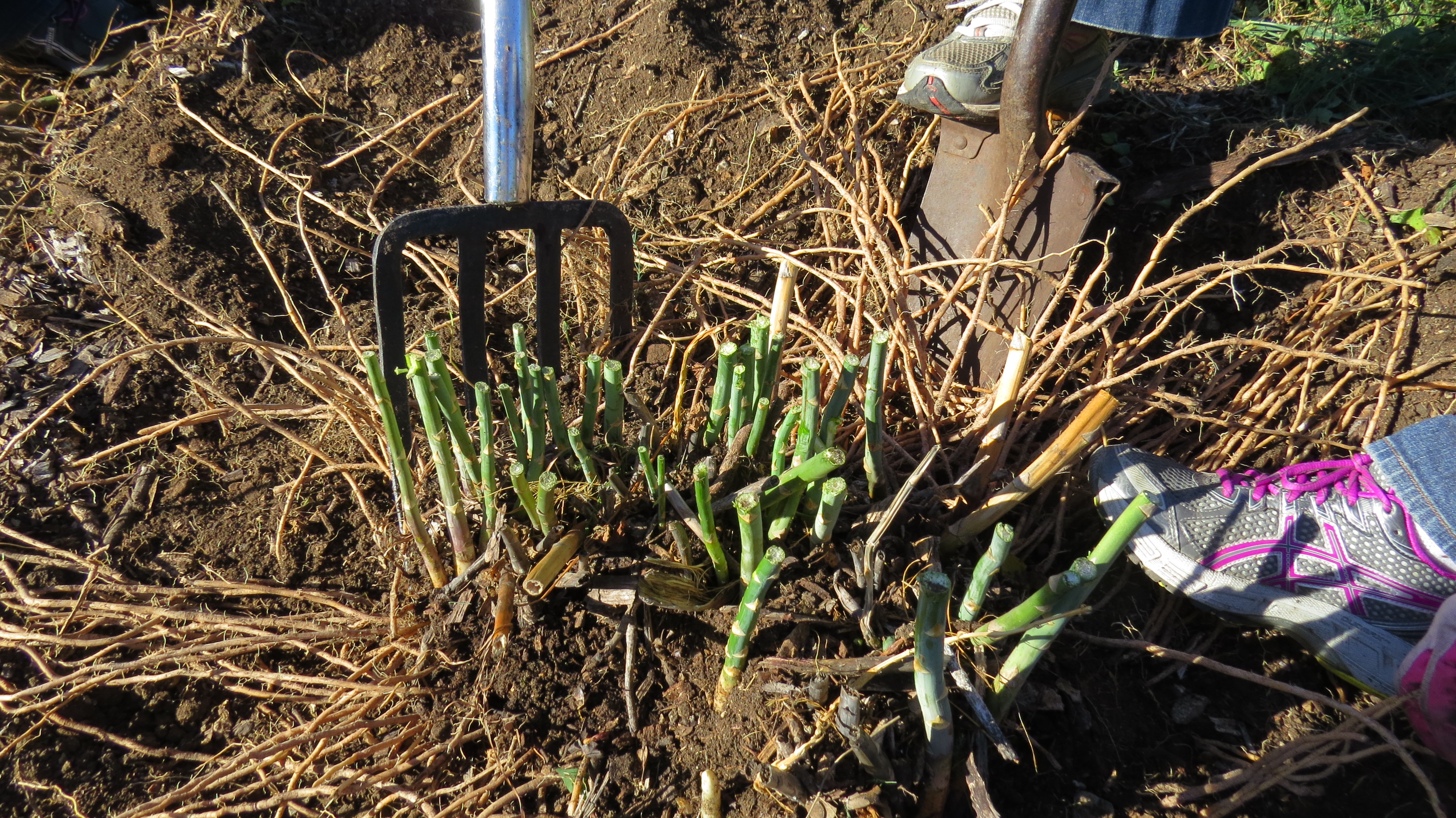
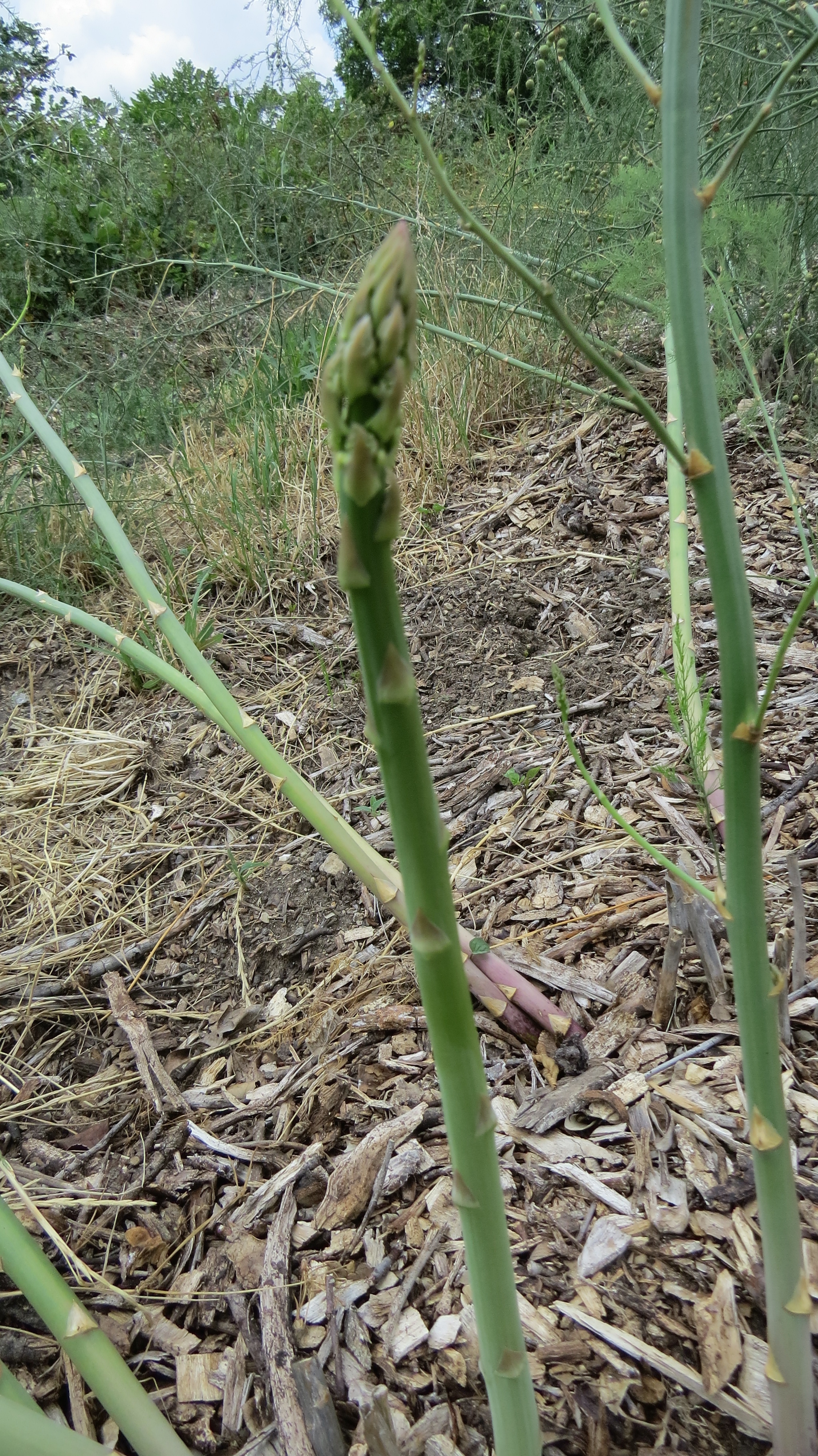
Close up of Asparagus Shoots

Close up of Asparagus Shoots

So, dear friends, we will be talking hopefully about fresh asparagus this spring.

I am just glad we got ours out in time!

Ann

Pictures by Starla and Kim

More notes on Asparagus tomorrow.


Chow Chow

This is the Monday family’s ‘best guess’ recipe for the relish served at an old cat fish place near Oil City, Louisiana.

 I’m not sure why, but  we call it “B and B Relish”.

Tomatoes and Onions on the Stove!

Tomatoes and Onions on the Stove!

B and B Chow Chow

(Also known as Cool Point Relish)

2 Gallons quartered green tomatoes

1/2 Gallon quartered (or smaller) onions

1 Pint hot peppers ( or less)

1/2 Gallons white vinegar

6 Cups sugar

1/2 cup salt

In large pan, add the vinegar, sugar, and salt to a large pan.  Bring it to boil and add tomatoes, onions, and peppers.  Bring it back to a boil, and remove from heat.

Pack in jars, cover with liquid and seal.

Dorothy

Harvesting Before the Freeze

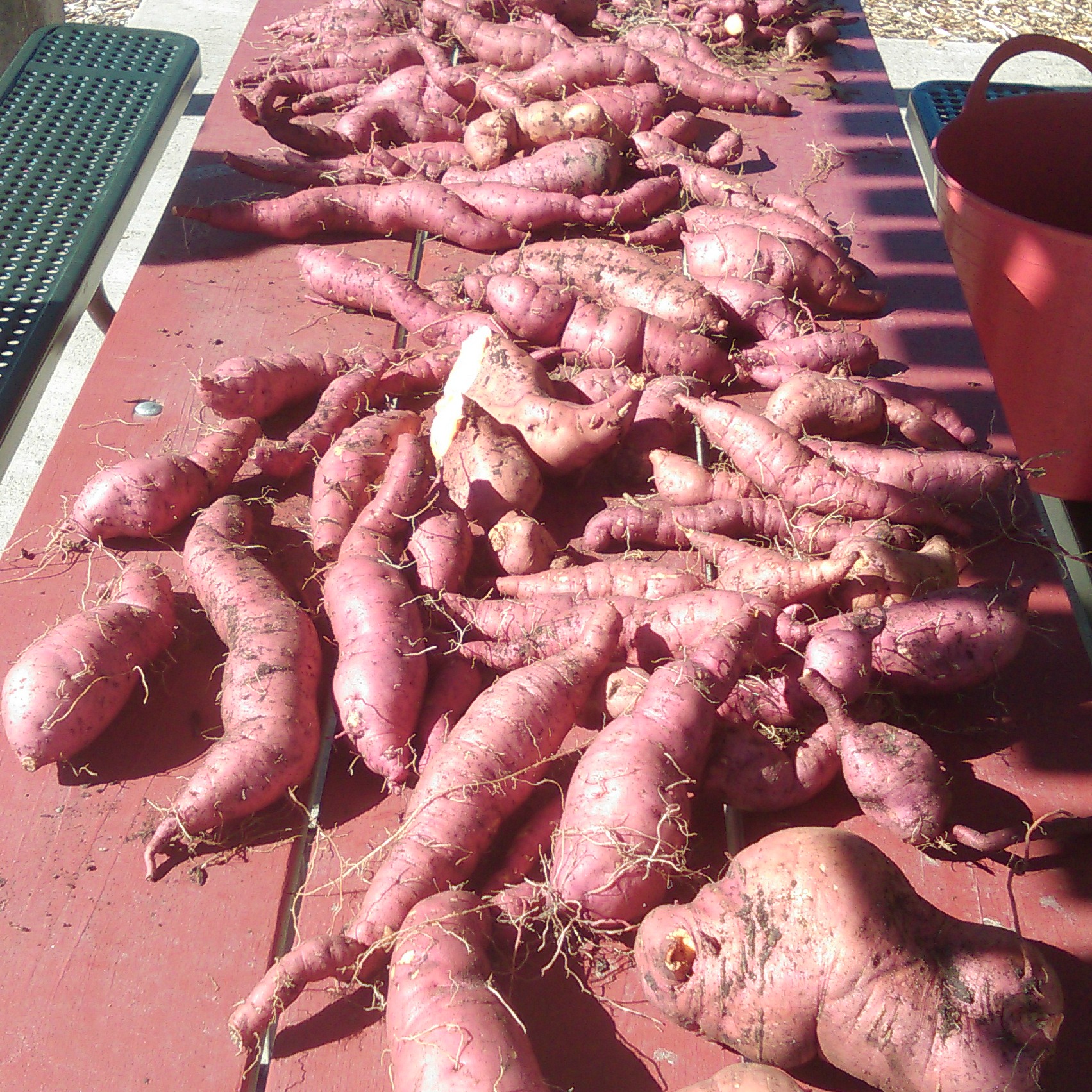
For a whole summer I have watched the beautiful, vining sweet potato plant in my garden and wondered what was happening below ground.  Sweet potatoes can be dug as soon as the tubers reach suitable size but farmer friends like Tim say the flavor and quality improves with colder weather. They can even be left in ground until after the first freeze  and leaves blacken, but you don’t want to leave them in too long and have rotten potatoes.  So today was my  day to pick!

Sweet Potatoes from Ann's Garden

Sweet Potatoes from Ann’s Garden

Of course, Tim had more. He has a nice big plot at The Farmer’s Branch Community Garden.

Tim's Sweet Potatoes

Tim’s Sweet Potatoes

I also picked my green tomatoes.  Dorothy  picked 70 pounds from her garden last week and made the most delicious Chow Chow.

Chow Chow is a southern favorite made from pickled green tomatoes and other veggies. It is served alongside  black eyed peas to hamburgers to cornbread, almost anything and hers was the best I have ever tasted.

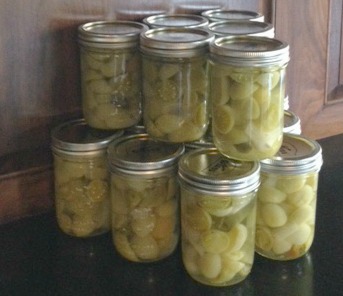
Green Tomato ChowChow

Her recipe will be shared tomorrow!

Ann


Farewell to the Field Fall Luncheon, We are Moving in November!

Farewell to the Field Fall Luncheon Reservations

Come bid the Joe Field Road Earth-Kind® WaterWise Demonstration Garden a fond good-bye at “Farewell to the Field,” 11 a.m., Tuesday, November 4th.  Your $35 reservation will treat you to our most fabulous fall luncheon yet and a last stroll of the Joe Field location. All proceeds from the luncheon go to help in relocating the garden.

As always, photos and recipes will be posted after the event  on our blog. You might come away inspired to make some delicious additions to your own Thanksgiving menu.

Your check is your reservation.  Sorry, no refunds.  For more information, please contact dallasgardenbuzz@gmail.com or reply in our comment section to find out where to send your check.

Proceeds will be used to help with relocation expenses

Menu

Welcome wassail bowl

Baked Brie with Cranberry Sauce and Walnuts

Swiss chard Turnovers

Smoked turkey breast with cranberry spice chutney

Roasted Vegetables with Pomegranate Vinaigrette

Bibb lettuce salad tossed with raspberry maple dressing

Sweet potato crescent rolls & sour cream yeast rolls

Cranberry pear crisp with flavored cream or  Pumpkin cheesecake topped with cinnamon whipped cream

Sparkling water, orange infused iced tea, Texas pecan coffee