April 21, 2026
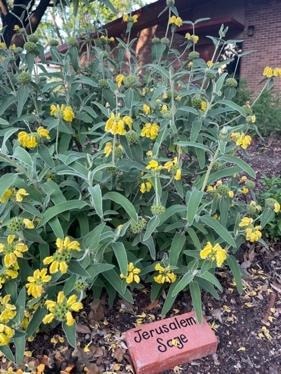
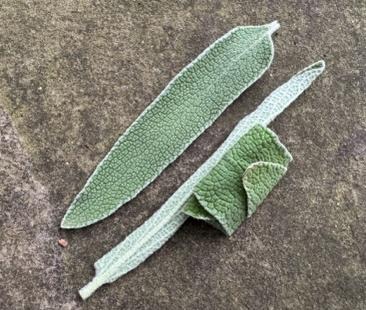
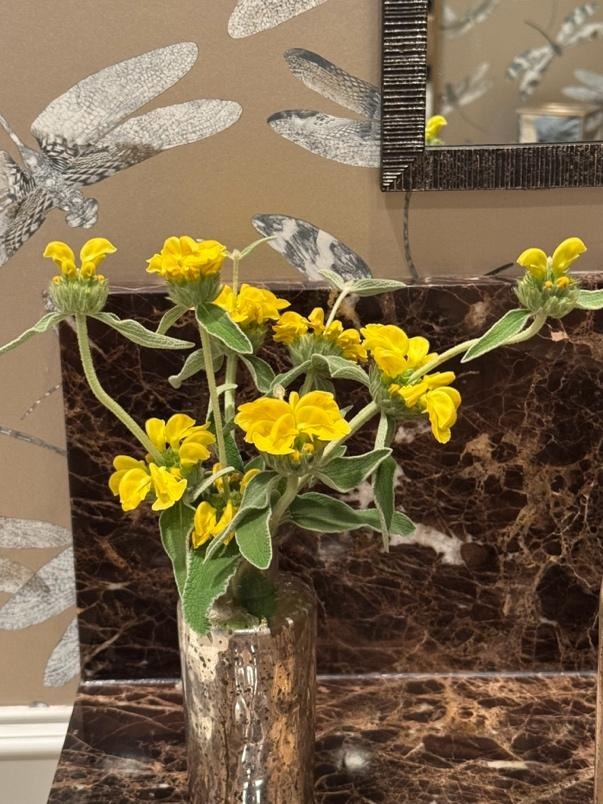
A few years ago, the Edible Landscape team at Raincatcher’s Garden made the decision to add a colorful new ornamental plant to the Sensory Garden. We were drawn to its woolly, lance-shaped leaves with a silvery-gray color and felt-like, fuzzy texture which would lend a unique tactile element to the “touch” component of our garden. But it was the whorls of buttery-yellow flower spikes that intrigued us most. Their “tiering” formation of spherical clusters promised to give us a dramatic floral display for the springtime garden. It fulfilled its promise!
Jerusalem Sage is a stunning evergreen shrub native to the rocky, Mediterranean region. Historically, it was known as the lamp wick plant. After harvesting, the soft, gray-green leaves were carefully rolled and placed directly into olive oil to act as a wick. The fine, tiny hairs on the leaves served to absorb the oil and maintain a continuous flame. Interestingly, the plant’s genus name, Phlomis, is derived from the Greek word for “flame”, giving it a direct reference to its historical use.
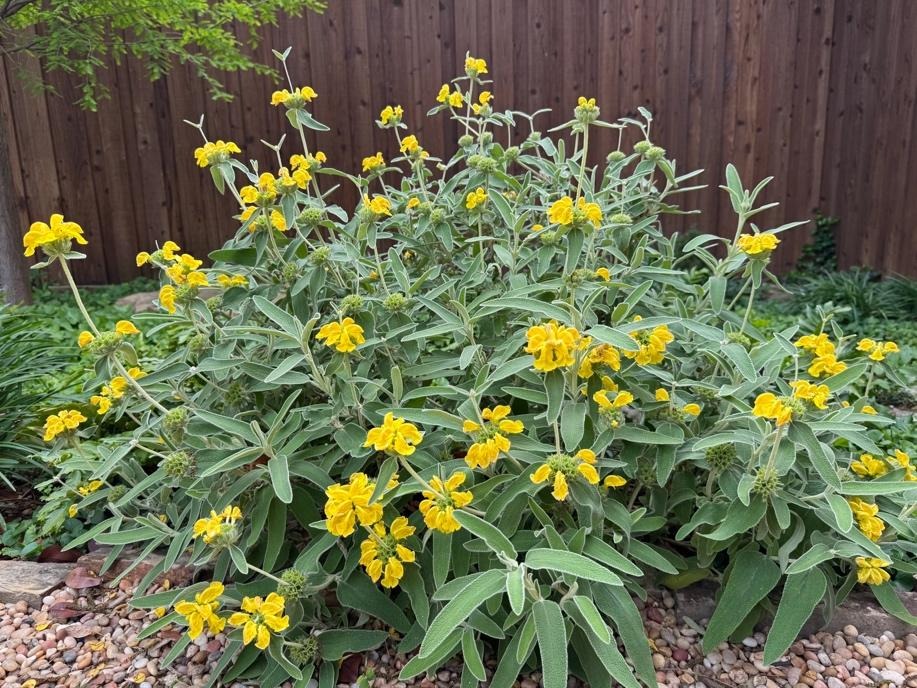
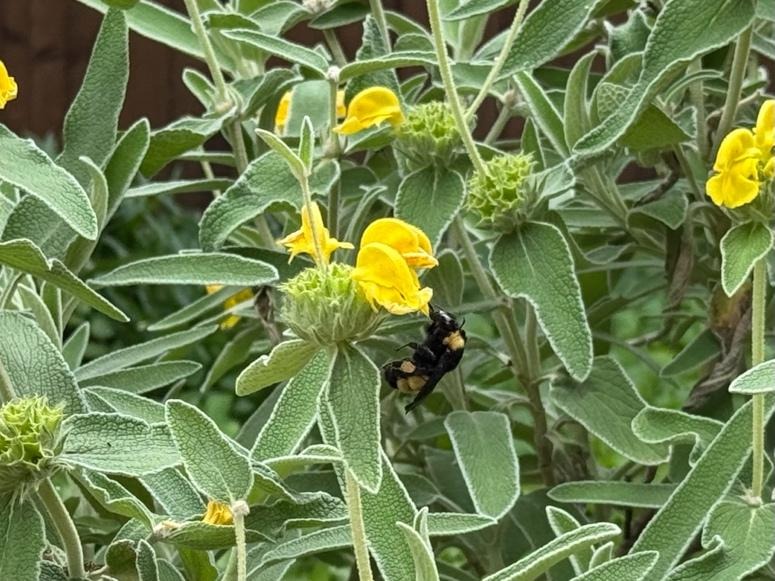
The Jerusalem Sage in my home garden was planted in May of 2024. Now, two years later, it has grown into a dense, mounding shrub with a unique architectural-type form. Current size is about 3 to 4 feet in height and width. Our plant is thriving in an area that receives around 6+ hours of morning to mid-day sun. The nectar-rich flowers attract bees, butterflies and hummingbirds.
If you are looking for a plant well-suited for a Mediterranean-style garden, consider the durability and structural integrity of Jerusalem Sage. Here are a few specifics to get you started:
Genus Name Phlomis fruticosa
Common Name Jerusalem Sage
Plant Type Perennial, Shrub
Height 2 to 4 feet
Width 3 to 5 feet
Flower Color Yellow
Foliage Color Gray/Silver
Zones 8, 9, 10
Propagation Division, Seed, Stem Cuttings
Jerusalem Sage is a member of the mint family that requires minimal care. Plant it in a location with similar conditions to the Mediterranean area, a sunny spot with well-draining soil. It is a tough, low-maintenance plant that, once established, is drought tolerant. It doesn’t require fertilizers and will do fine with a scattering of compost around the base of the plant in early spring.
Linda Alexander, Dallas County Master Gardener Class of 2008