Tag Archives: dallas gardens

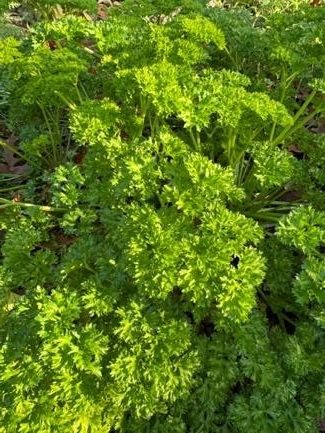
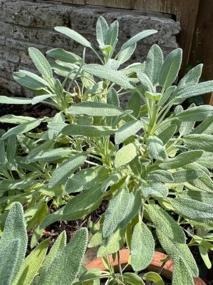
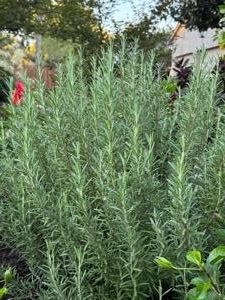
Parsley, Sage, Rosemary and Thyme

As I’ve shared before, my childhood years spanned the 50’s and 60’s. Our television was never turned on during the daytime hours. Instead, a lot of time was spent outdoors playing with friends. We always found a way to create our own adventures in the natural world; climbing trees, exploring the creek while catching crawdads, picking mulberries and writing “plays” for our parents that were performed on a backyard “make-shift” stage. 

My family lived in a very small rental house with several old elm trees and one lonely, yellow rose bush. At that time, I had absolutely no awareness of herbs. Honestly, I don’t even remember using herbs for culinary purposes unless they were the dried variety purchased from the local grocery store in small tin cans. 

It wasn’t until after my husband and I married in 1970 that my introduction into the world of garden grown herbs began. And even then, it was a slow, sporadic start with some of the more familiar herbs. Now, 55 years later, I’m growing over 28 different types of herbs in pots, raised beds and throughout my garden. We experience the delightful aroma and taste of freshly harvested herbs with almost every meal. 

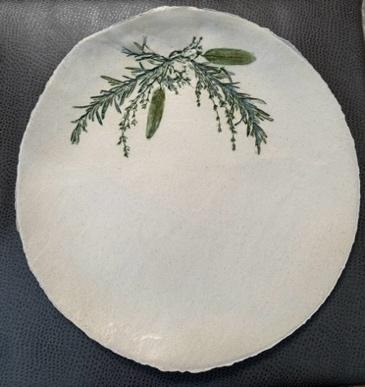
On a refreshing trip last summer to the very scenic and historic mountain town of Park City, Utah, I was met with an unexpected “herbal” treat. After the “hubbies” took off for a day of golf, the “girls” headed over to the main street art fair. You can imagine how thrilled I was to discover a lovely handmade ceramic plate featuring the four herbs mentioned in the title. It happened suddenly when my eyes caught a glimpse of something intriguing in one of the smaller booths along the event route.  Stopping to take a look, I soon had the pleasure of meeting and visiting with a precious couple from Colorado that had come to exhibit their wonderful herb-themed ceramic pieces.

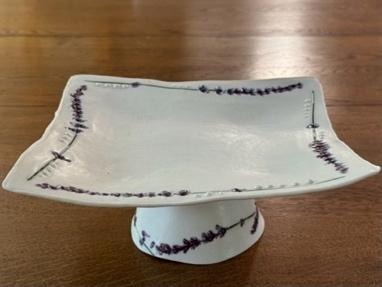
Listening carefully as the wife so proudly explained how she chose herbs from her own garden to embellish each and every item, I imagined how their cleverly designed plates, bowls and more might soon become the creative serving pieces I would enjoy using. Her “technique” involved carefully positioning, then gently pressing freshly harvested herbs into the soft, moist clay. Next was a trip to the kiln for the firing to begin.  I was memorized by the stunning variety of options on display before me. Ultimately, I narrowed it down to two choices; this tastefully done 16” round platter featuring a slightly curved bundle of parsley, sage, rosemary and thyme and an elegant lavender-pressed cake stand.

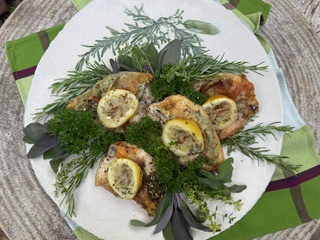
Back in Dallas my thoughts turned to finding the perfect recipe for serving on my new platter.  Once the decision was made I started preparing “Roast Chicken with Herbs”.

And then, I found myself humming to the tune of the 1966 Simon and Garfunkel hit; Parsley, Sage, Rosemary and Thyme. While the duo didn’t write the song, it was adapted from the 19th century English folk ballad “Scarborough Fair”. The four herbs were included because they were a traditional part of the folk song. Each of the herbs has a long-standing symbolic meaning in folk lore and as ingredients for love potions:

*Parsley: Represents comfort or a desire for a loved one.

*Sage: Symbolizes strength or power. 

*Rosemary: Represents love and remembrance.

*Thyme: Signifies courage or ethereal significance.

Simon and Garfunkel’s contribution was the anti-war “Canticle” melody. It was woven into the traditional folk song to create their own version. 

FYI…You might not be able to resist listening to Simon and Garfunkel songs while making “Roasted Chicken Breasts” prepared with a generous combination of freshly gathered parsley, sage, rosemary and thyme!

Linda Alexander, Dallas County Master Gardener Class of 2008

Parsley, Sage, Rosemary and Thyme Roasted Chicken Breasts

May Flowers with Patriotic Flavors

May 1, 2026

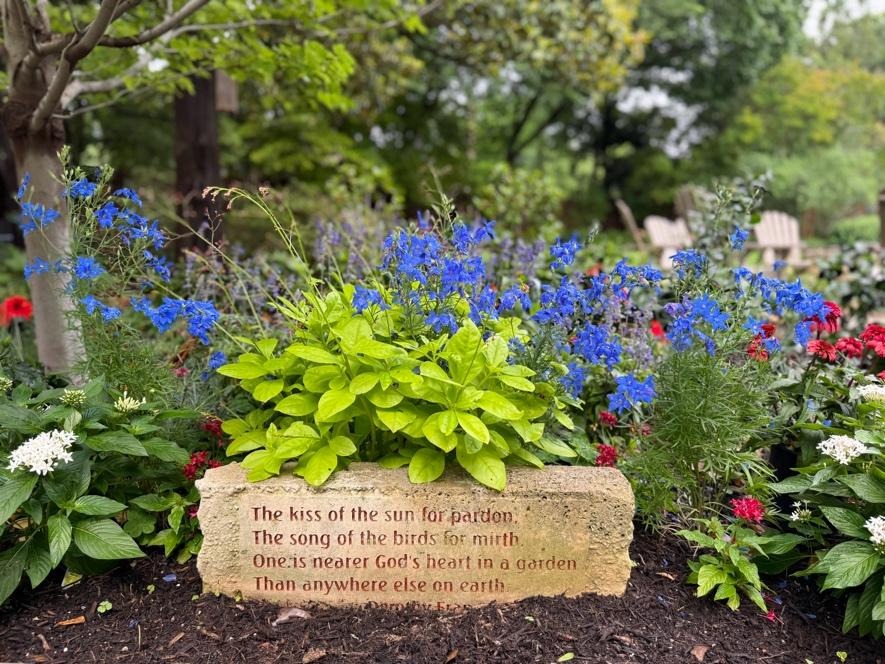
Patriotic Garden Vignette: Red and White Pentas, Echinacea Double ‘Raspberry Deluxe’, Blue Delphinium

As we continue our patriotic journey into the month of May, yards across the metroplex are becoming eye-catching panoramic expressions of red, white and blue.   With only two full months remaining before the nation-wide celebrations reach their grand finale, we’re reminded that 250 years of freedom is a major milestone in American history! 

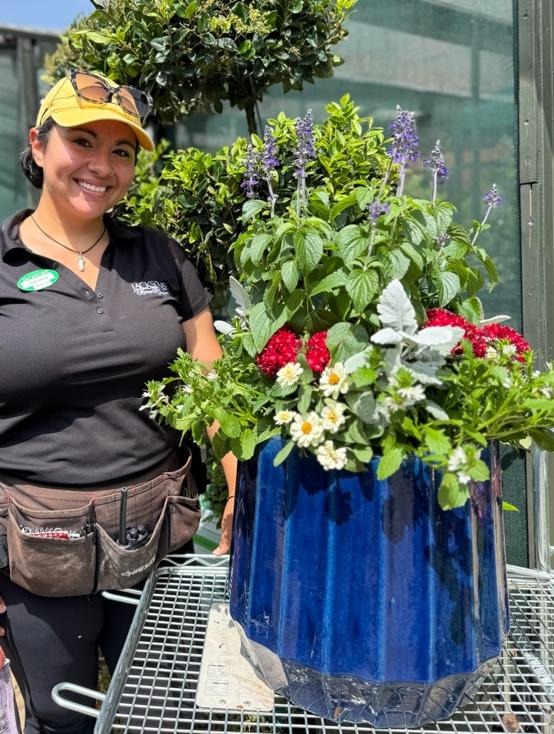
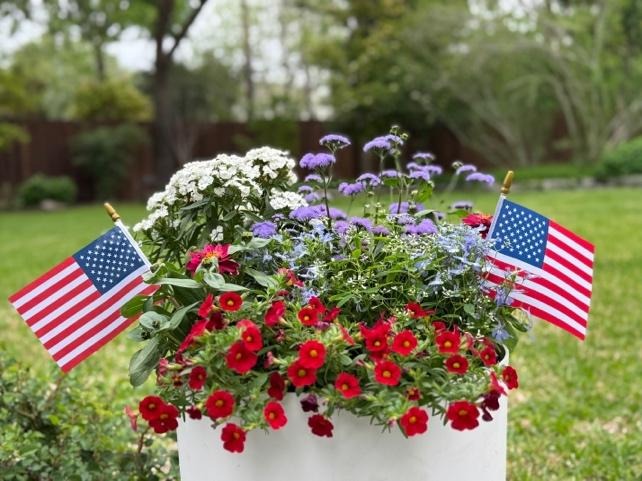
Hopefully, you are planning to come to the Raincatcher’s Garden Plant Sale this Saturday from 10:00-3:00pm where two creatively designed patriotic pots overflowing with red, white and blue flowers will be available to purchase. We are grateful to our local garden centers that participated in this fun and colorful endeavor.  The April Patriotic pot was donated to our sale by Nicholson Hardie Garden Center on Lover’s Lane. Click here for the link describing their pot. The May Patriotic pot is courtesy of Jackson’s Home and Garden Center on Lemmon Ave. Our thanks go to Alyssa Rohde, Tropical Green House Manager, and Tess Garza, Plant Department Manager, for their outstanding creation. In their own words, here is a lovely description of the plants chosen:

“The plants we chose are sun loving, timeless, tried and true plants. Over the years they have proven to be successful. These plants are known to attract pollinators like bees, butterflies, and even hummingbirds. 

For our tall center thriller, we chose the ever-popular Victoria Blue Salvia, a perennial with beautiful blue-purple blooms that are great for height. Our fillers are (one of our favorites) Fresh Look Dusty Miller; great for Spring all the way into Fall and is cold hardy. It can be replanted over and over and withstand our crazy Texas weather. 

We know red is absolutely necessary in a red, white and blue patriotic pot! So, we chose the best ‘pop’ of red; Red Graffiti Pentas! They are so bright we knew that only a few were needed. Pentas are drought tolerant and can handle all day sun. They have multiple clusters of star-shaped blooms; they are the best pop of color for any pot or garden.

Next we chose White Profusion Zinnas, a sun loving annual. They have distinct yellow centers and large flat petals creating daisy like blooms. Let’s be honest, they just scream classic Americana!

For our trailing or ‘spiller’ plant we chose White Scaevola or Fan Flower. It is sun loving in spring and does well in combination planters and in garden beds. This plant can typically last until fall if not in all day hot sun in the 100’s. But no worries because a great alternative to this trailer is White Cascading Vinca for a full sun, drought tolerant summer planter. Thank you for the opportunity to help support the plant sale. We hope your fundraiser goes well!”

Tess with the May Patriotic Pot Courtesy of Jackson’s Home and Garden Center, Lemmon Avenue
April Patriotic Pot Courtesy of Nicholson Hardie Garden Center, Lover’s Lane

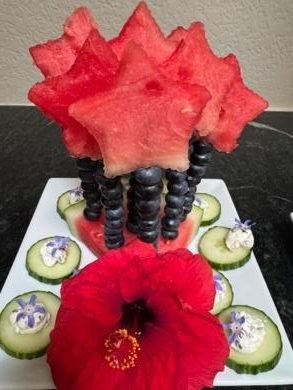
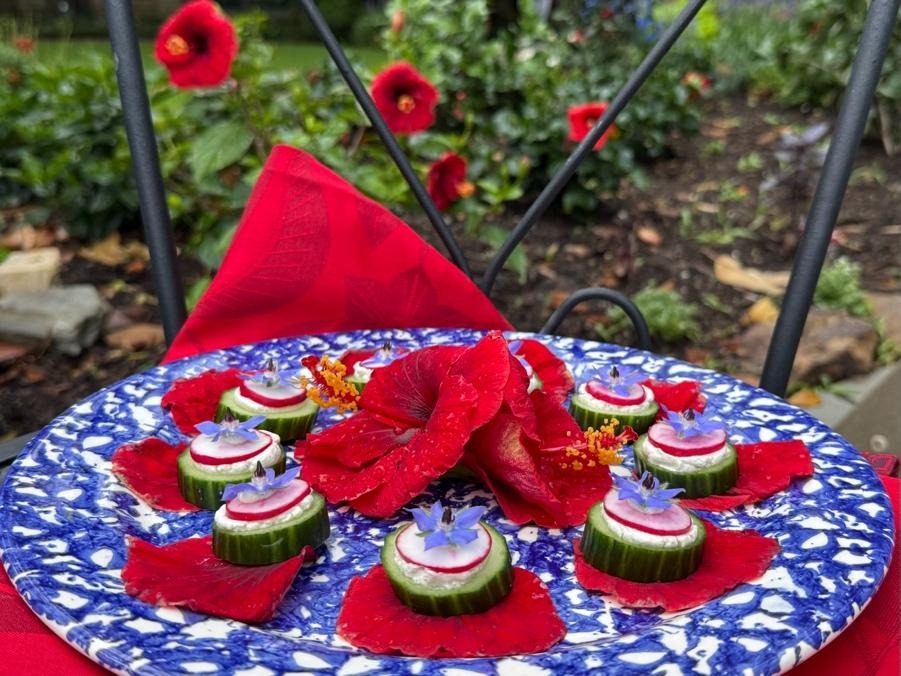
And finally, what fun to celebrate gifts from the garden with a touch of patriotism. While waiting for the main course, enjoy these bite-size nibbles composed of English cucumbers filled with herbed cream cheese, thinly sliced radishes and freshly snipped blue borage blossoms. Nestled on petals of Hot Shot Red Tropical Hibiscus for a touch of whimsy, they’re irresistible!

Nestled on Red Hot Hibiscus Petals

Linda Alexander, Dallas County Master Gardener Class of 2008

Raincatcher’s Garden Annual Plant Sale May 2, 2026

Raincatcher’s Garden Annual Plant Sale

Location: Midway Hills Christian Church ,11001 Midway Road, Dallas, Texas 75229

Saturday, May 2nd, 2026

10 AM – 3 PM

Great selection of annuals, perennials, herbs and veggies, succulents and sedums, tropicals and house plants, shrubs and trees, groundcovers, bulbs and irises grown by the intrepid Raincatchers volunteers.

All proceeds go to Dallas County Master Gardener projects.

Thank you for supporting Raincatchers’ Garden.

Winter Garden

January 1, 2026

 Winter is officially here! The winter solstice has come, leaves have finally turned and fallen, and the Frost Weed has frosted. Never mind that we are alternating between sweaters and shorts. It is winter in the garden. Many older gardening books speak of closing down or putting a garden to bed for this season, but like children waiting to see the New Year arrive at midnight, our landscapes are not truly snoozing. 

Our deciduous trees stopped producing chlorophyll. This let us see and enjoy their yellow carotene colors that were previously hidden, instead of just greens. The gorgeous reds and pinks seen across Dallas this year remind us that our autumn was dry, sunny, and certainly stayed above freezing, the conditions needed for the productions of anthocyanins. The mix of colors this year was constantly changing and quite stunning. 

But now these trees are bare (my sister refers to them as stick trees) and this slimmed down profile helps to protect them and their branches from wind, snow, and ice.  But those lovely leaves still have so much to offer, in one form or another across just about every landscape.

One use involves shredding leaves. This allows us to add that temperature modulating 3–6-inch layer of mulch around our trees and shrubs, or 2-3 for our flowers. That blanket is really appreciated by any newly planted perennials as they settle into their new homes. Extra shreds are perfect for composting. Whole leaves between rows in the vegetable garden keep our feet dry and relatively mud free, while they discourage pesky weeds.

But consider the advantages of doing nothing at all in much of your flower beds and lawns, leaving even a small section of your landscape undisturbed, with plant stems untrimmed and fallen leaves where they fall this winter. Those stems and leaf litter house the insects that will populate, pollinate, and protect our plants next spring. Leaf blowers, rakes, snippers, shredders, and compost heat destroy the habitat our beneficials need this season.

Not all our garden friends headed further south with the monarchs and hummingbirds. They have deployed many clever techniques to survive until spring and summer. Some insects are sheltering in stems, others have headed underground, and some have taken the ‘get small’ approach by wintering as eggs.   Cleaver swallowtail butterflies produced their own antifreeze, turning sugars to glycol as an added layer of protection for chrysalis wintering in their cocoons. Despite appearances, life has not deserted our landscapes.

And in our pollinator gardens most especially, we want those insects to survive, to continue to play their garden roles.  A fascinating study of the effects of removing autumn leaves can be found here: https://www.sciencedirect.com/science/article/pii/S0048969725004565. To support our diminishing populations of butterflies, bees, beneficial of all kinds, please consider how you can support them as they winter in our yards and gardens. While I don’t want to offer my house as a winter vacation getaway for arthropods and arachnids, I do want them year-round in my landscape outside.  

Mary Freede, Dallas County Master Gardener Class of 2005

Jewels of Opar

November 3, 2025

My Jewels of Opar is in a mostly shady area. Next spring, as new plants emerge, they will be relocated to a place in my garden that receives full sun until late afternoon.

In May of 2021, we shared an article with our readers about Jewels of Opar, a lovely plant that is both edible and ornamental. Click here for the original article which includes helpful growing information.

This time, we’ve chosen to “drop in” for a quick autumn visit showcasing this adorable little beaded wonder in full bloom. You may remember that Jewels of Opar, sometimes referred to as Pink Baby-Breath, produces wands of tiny, pink star-shaped flowers followed by jewel-like fruits in shades of pink and orangish red.

Enjoy this photo of a simple arrangement filled with Roselle Hibiscus leaves gracefully surrounding Jewels of Opar in its colorful autumn wardrobe!


Linda Alexander, Dallas County Master Gardener Class of 2008

Dallas County Master Gardener School and Moon Flowers

September 16, 2025

Moonflower in my garden. Smells delighful, blooms at night!

Do you remember the book, All I Ever Really Needed to Know I learned in Kindergarten?

That’s how I feel about the Master Gardener training I recieved in 2005. Although I was raised in a backyard full of horticulture and minored in horticulture at Texas Tech, the Dallas County Master Gardener School and my experiences working in gardens for 20 years with other Master Gardeners have been my grounding influence. Myabe you have been thinking about expanding your understanding of gardening in Texas, if so-see below.

  1. Applications Available NOW for Dallas County Master Gardener School
    What: Dallas County Master Gardener School
    When: Every Thursday starting January 8, 2026 through April 23, 2026 8:30 AM- 3:30 PM
    Where: Dallas County Roads & Bridges Building / District 1 (aka “R&B1”), located at 715 Rowlett Road, Garland, TX 75043

    2. Use this link to apply: https://forms.gle/D1aTXZQLL1cK6kwD8
    Save and share this flyer with friends who might be interested!

Applications accepted until September 26th for the 2026 class starting in January 2026.

Ann Lamb, Dallas County Master Gardener Class of 2005

And if you want to know more about Moon flower, click here.

One Final Hurrah!

May 30, 2025

It happens every season. Our gardens give us a show-stopping presentation and then, poof, it’s over! So, what’s a good way to prepare for the transition? My advice, let the garden inspire you.

How about an artful arrangement of garden gifts for a dinner party buffet centerpiece?

A simple white ceramic pitcher was the perfect vessel for displaying the following “end of season” blossoms and greenery. Once completed, it had become a tapestry of seasonal beauty.

Cilantro in its “bolting” stage, curly and flat-leaf parsley, radish leaves, beet leaves, cornflower (bachelor’s buttons) and lots of blooming oregano stems for “filler”.  A sprinkling of German Chamomile lightened the look. Guests were mesmerized by the natural beauty that a “fresh from the garden” look offered.  Some couldn’t resist sampling a few sprigs! 

A few days following our buffet dinner, the delightful arrangement was carried outside to be composted.  As one master gardener remarked, “this is liquid gold for the compost bin!” I agree!

Linda Alexander, Dallas County Master Gardener Class of 2008

Sometimes–it’s time to fold ’em

October 30, 2024

If the key to life is simply living it..  The key to understanding may be simply realizing that wisdom is all around even in unlikely places.  Our job is to realize wisdom when we find it—and then apply it .

     For an example let’s think about these simple lines:

          YOU GOT TO KNOW WHEN TO HOLD EM

          YOU GOT TO KNOW WHEN TO FOLD EM

          YOU GOT TO KNOW WHEN TO WALK AWAY

          YOU GOT TO KNOW WHEN TO RUN

     Few words but the ideas are wise and useful.  No where more so than in the garden at this time of the year.  We start with the first of course.  And actually this idea was most important a little earlier in the year.

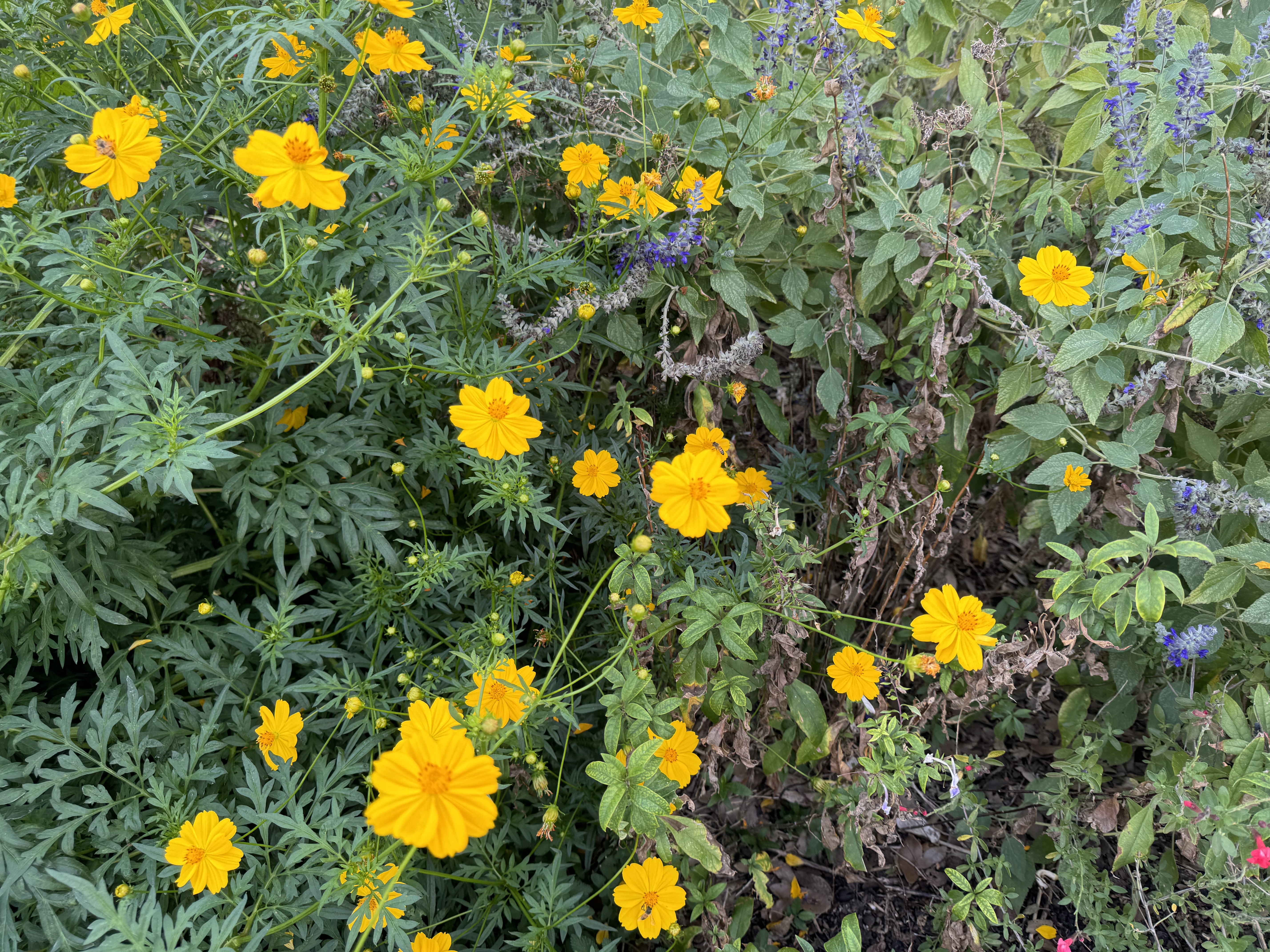
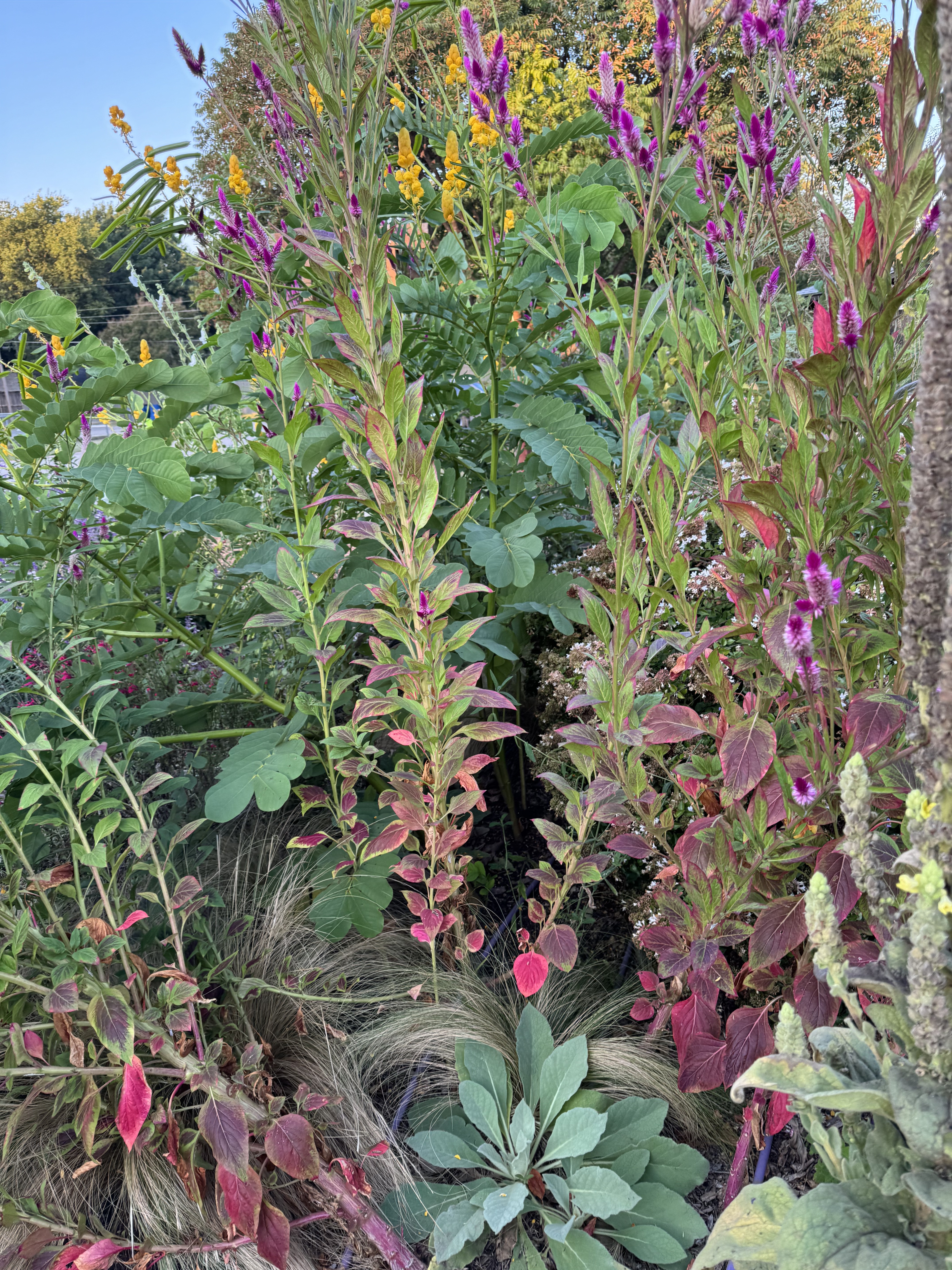
     How was it so useful?  well the yellow cosmos are a great example.  All summer they grew and grew.  No flowers at all.  Some falling over due to the weight of stems and leaves.  A passerby was heard to say ” I don’t know about those green leafy things they sure are big”  Were they a terrible mistake?  Are they ever going to bloom?  Are they going to all fall over?  Temptation grew to pull them all out.  And then all at once they bust into huge numbers of lovely cheerful flowers.  Butterflies and bees are just loving them.  They even look great as cut flowers.  

Yes!!!  holding was the best choice for sure.

The big green leafy things that were bare all summer are blooming at last and they are amazing. Cosmos!

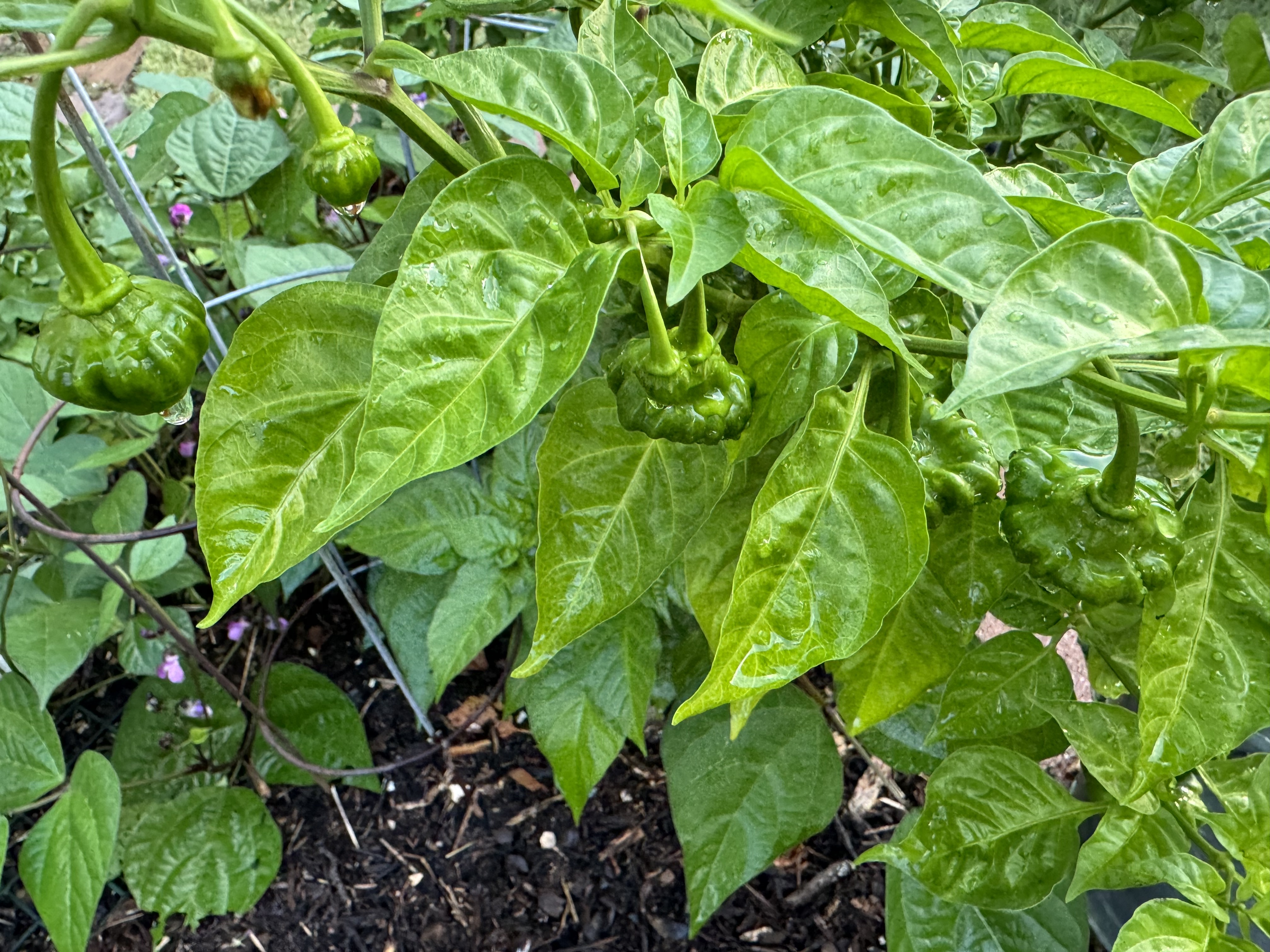
    Aji dulce peppers –no peppers for months.  All they were doing was taking up space and causing thoughts of “what on earth went wrong?”  They were biding their time. Summer just didn’t suit.  Just a small improvement in the weather–and blooms followed by lots and lots of little peppers.  It was a temptation to give up–but it would have been a shame.

The Peppers finally realizing they have a job to do.

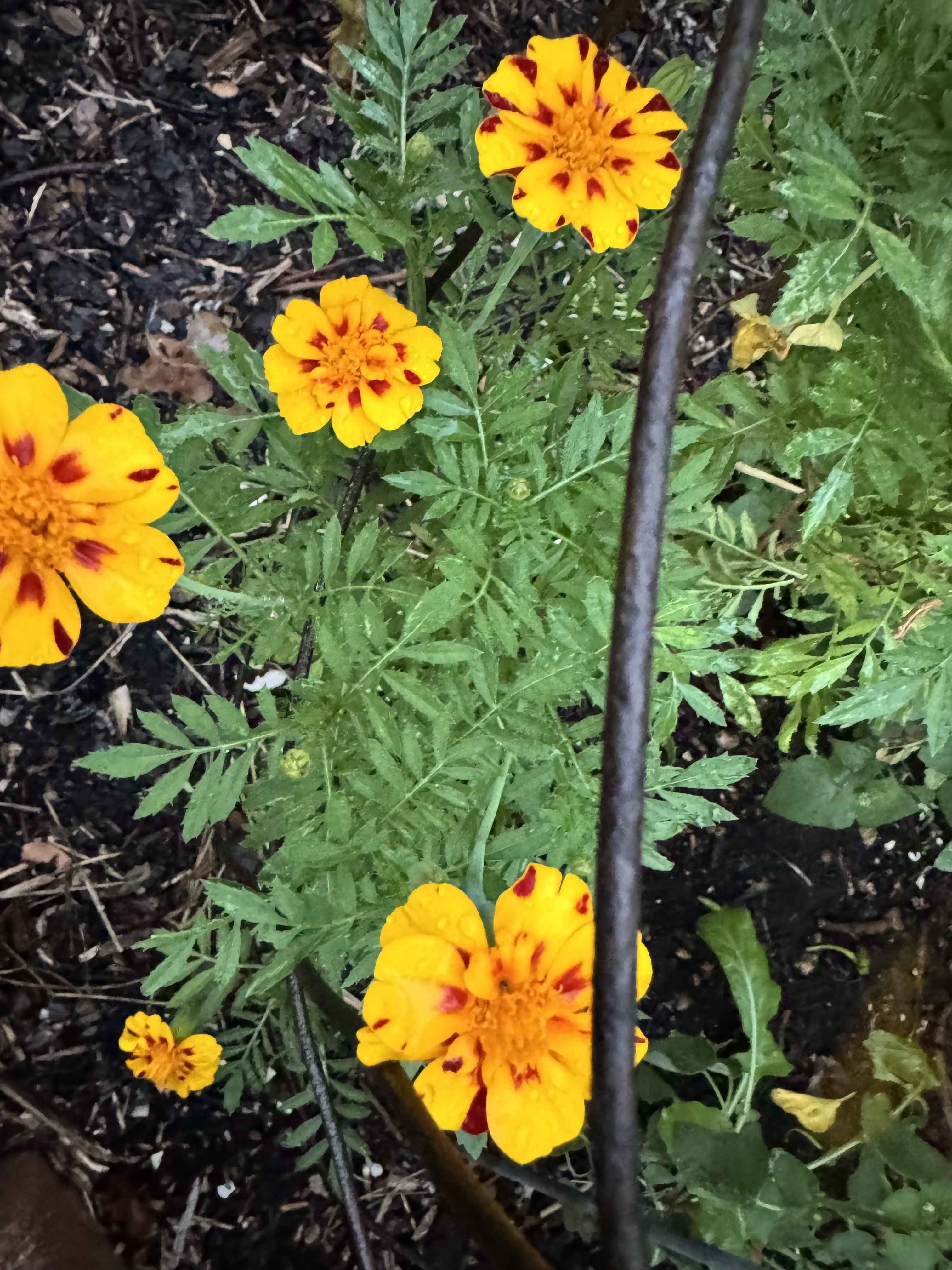
Marigolds–they also seemed to find the past few months not to their liking–the remaining tomatoes are happy maybe because the marigolds are happy.

The Marigolds were to keep the tomatoes company all summer. They are doing it now.

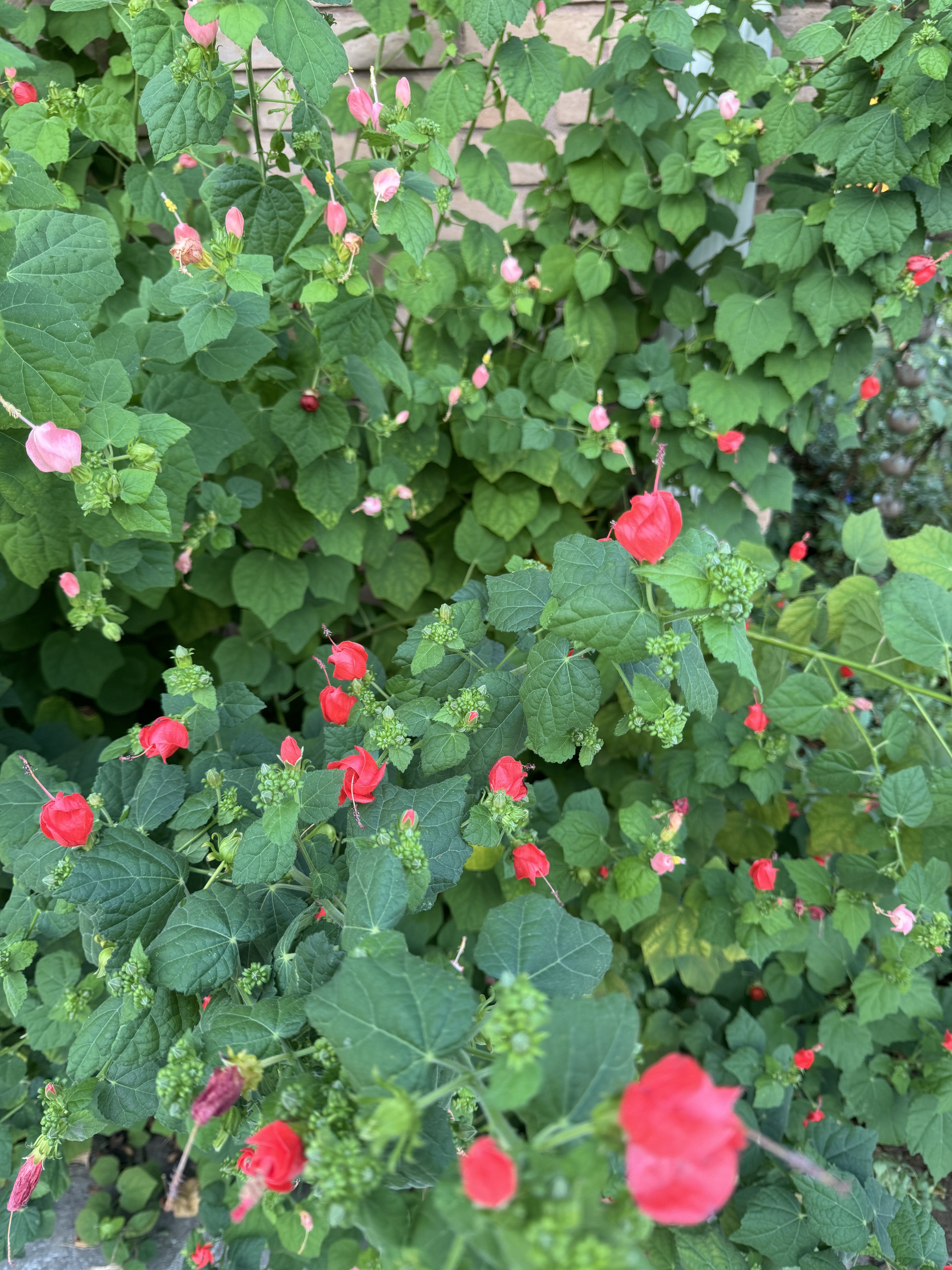
Turk’s cap–honestly it seemed to be asking to be cut to the ground–very few blooms and yet requiring constant pruning to keep it withing reasonable bounds–but–again a reward for avoiding extreme measures–countless flowers–and happy creatures.

Turk’s cap-all summer, some flowers but now covered in flowers.

     Of course the facts are–that all doesn’t go as hoped.

The most obvious are annuals that have tried really hard but have now reached the end of the line.  It is hard to do this when they aren’t quite done but face it–sad straggliy plants just distract from everything around them.  Let them go its ok.

It’s time for an old friend to go. Sad but true.

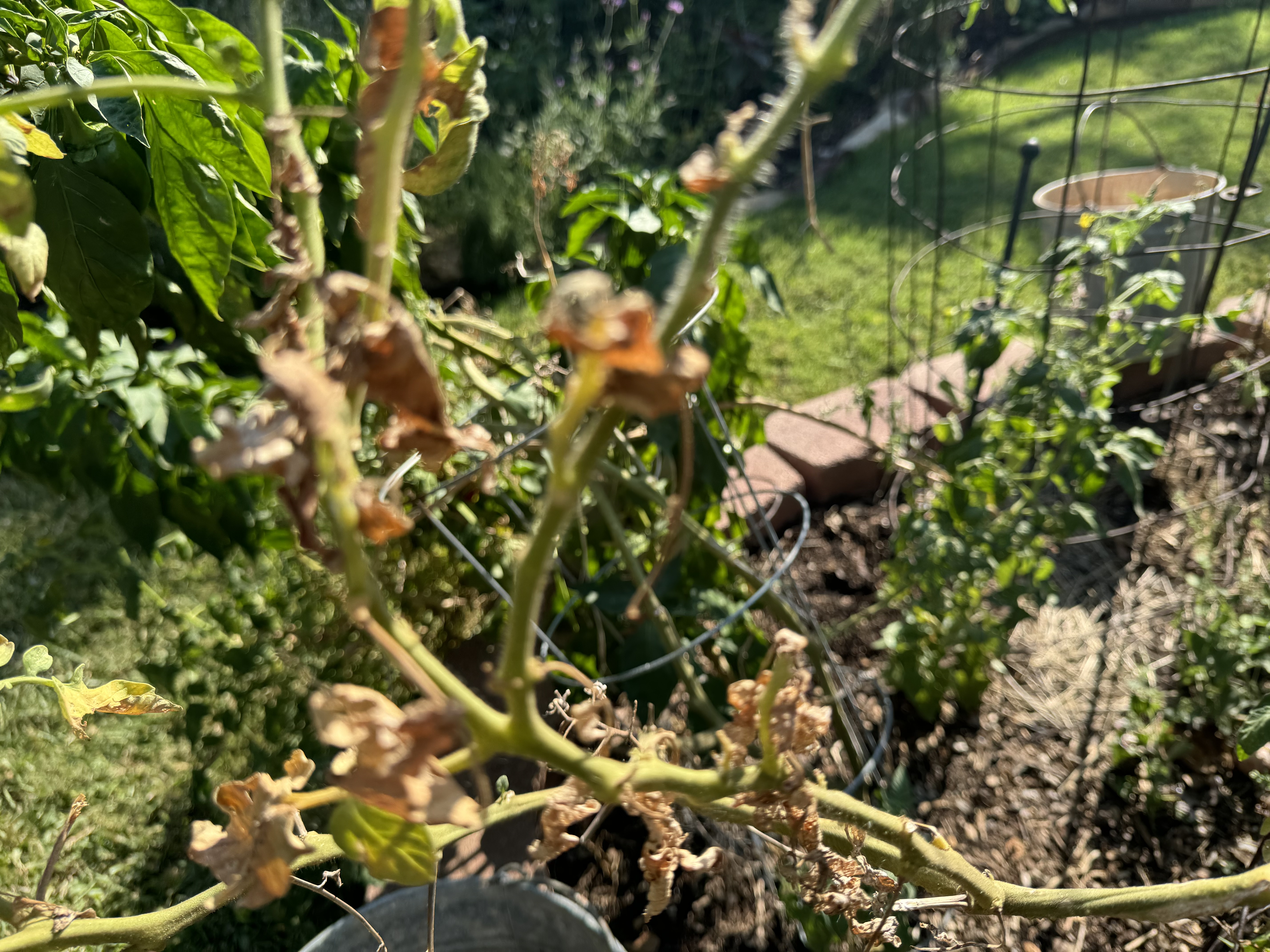
Same with vegetable plants.  These plants work hard some can make it on into fall.  But some just can’t.  It is really best to get rid of them they can attract pests and diseases that are just doing what they do to eliminate the weak–but best to beat them to it.

This tomato in my garden just isn’t going to recover.

The really hard part of the fold ’em is facing that some of your efforts really were in vain.  For some reason plants die.  Sure try  to figure out why.  Was it lack of water–a common issue.  Maybe over crowding?  But sometimes its unknown.  Pull them out anyway no use spending resources–including your time and energy on plants that just are not making it.

Perennial doesn’t mean live forever!

Those first two are pretty clear–but what about KNOW WHEN TO WALK AWAY?

 Actually its an important one.  This is the time of the year when plants have pretty well done what they are going to do.  It can be so valuable to step back and away and look at the big picture.  Could you do anything different ?  Is it just that much too much?  Or not quite enough?  Walk away and take a good look and make some mental notes for next year.

Can’t forget YOU GOT TO KNOW WHEN TO RUN.  No it won’t be a big problem don’t worry.  But do keep in mind that wasps and yellow jackets are very active at this time of the year.  Of course they are part of nature and normally not an issue–but  do look around they like to build nests in protected places–who doesn’t of course–but sadly when its right above the back door for example you may have to do what you would rather not.  But be careful at times their temper can be kindly said to be “Uncertain” And i hope you don’t have to run–but—-.

YOU GOT TO KNOW WHEN TO HOLD EM

YOU GOT TO KNOW WHEN TO FOLD EM

YOU GOT TO KNOW WHEN TO WALK AWAAY

YOU GOT TO KNOW WHEN TO RUN.

Susan Thronbury, Dallas County Master Gardener Class of 2008

I’M GOING TO STAND MY GROUND AND YOU CAN TOO

Don’t give up, Susan Thornbury has some words of inspiration and an action plan for us during these hot days of summer.

August 15, 2024

Memory is strange.  Most thoughts and memories are unhelpful.  So much so that often a deep breath and a reminder that they are just thoughts and memories and not reality seems to be indicated.      But then when least expected a flash of amazingly helpful inspiration!! 

After listening to a weather forecast –given after the meteorologist  offers an apology for what will be coming–and then stepping out to look at the garden already in a negative frame of mind and naturally seeing trouble everywhere—a song came –the words very loud and clear:  “I”M GOING TO STAND MY GROUND YOU KNOW I WON’T BACK DOWN I’M GOING TO STAND MY GROUND”  

Now don’t rush to judgement on that song–in this case it was crystal clear what the meaning was–it was aimed  at gardeners!!

Not those  in “other places”  Places where the nights are cool it rains at least once a week and where things “just seem to grow”  Oh no, they don’t get a song–it was not meant for them.  

It was meant for gardeners here–it was meant for US!!

It is just such a temptation to give up–Its so hot and yet weeds are thriving–the list of “NOT FAIR” is a long one

But not for us to dwell on that: WE WILL NOT BACK DOWN WE WILL STAND OUR GROUND”

We can’t just think about it though–a plan is needed!

Each plan must suit the planner of course but–there are some important point that might be universal.

First give serious thought to becoming a morning person–if you start at 7AM –its not so bad and you can get a lot done in an hour or two.  If this is not your usual habit–well just tell yourself–when November comes you can sleep late!!

Second set priorities.  Take a good look and decide what must be done now  some things can and should wait until later.  One thing is usually deadheading..  The poor plants are stressed they don’t need to be trying to set seeds or supporting yellowing leaves.  When you tidy them up they are really helped–and you get some encouragement–things are looking better already.

Third don’t give up on weeding.  Weeds are cleaver plants and they can grab water and use it to set their seeds faster than one can believe–so don’t let them–you sure don’t need more weeds and your plants need all the water they can get.

Healthy and happy mulberry weeds edited out of the garden-they thought they were safe hiding in the salvia

Fourth–look for what is working.  Which plants are showing a fighting spirit and a will to live  they must be encouraged and rewarded–as they are encouraging and rewarding you.

But of course you must also face what isn’t working–Bite the bullet–remove dying plants there is just no use in trying to care for them and waste precious water on them–make a mental note to avoid them in the future.

Last–congratulate  yourself!!  you deserve it YOU STOOD YOUR GROUND NO YOU DIDN’T BACK DOWN YOU STOOD YOUR GROUND!!! 

Susan Thornbury, Dallas County Master Gardener Class of 2008

More information about Turk’s Cap

Germander, Teucrium chamaedrys

August 1, 2024

Germander Upright

If you’re contemplating a substitute for boxwood, consider these words from Cyrus Hyde, the late garden herb folklorist and founder of Well-Sweep Herb Farm in New Jersey. He referred to germander as “poor man’s box”. Why then, has it not received more recognition in the world of herbs? 

Even our first president, George Washington was such an admirer of germander that it was planted at his Mount Vernon, Virginia estate. But sadly, it seems to have faded from view until recently when garden centers began featuring lesser known herbs alongside the more desirable customer favorites. Thankfully, it was a wise decision with germander finding its place as a decorative evergreen border plant and as a substitute for boxwood in the beloved knot-garden design.

Germander is a Mediterranean native in the mint family (Lamiaceae) with small, dark green scalloped leaves and a mild garlic-spice aroma. It is a hardy perennial and evergreen, keeping its tidy appearance throughout the year. In early summer whorls of purple-pink flowers appear. Bees are attracted to the tiny flowers. 

Grow it: 

  • *Space plants 2 feet apart and at least 3 feet away from companion plants. 
  • *Germander prefers full to partial sun and well-drained soils. 
  • *Follow a regular watering schedule to establish, then cut back to maintain health.
  • *Fertilize lightly with an all-purpose organic fertilizer once or twice a year. 
  • *Pruning right after bloom will help to renew the plants faster. 

Germander with single stem gerbera daisies gently nestled in the glossy green foliage

Linda Alexander, Dallas County Master Gardener Class of 2008