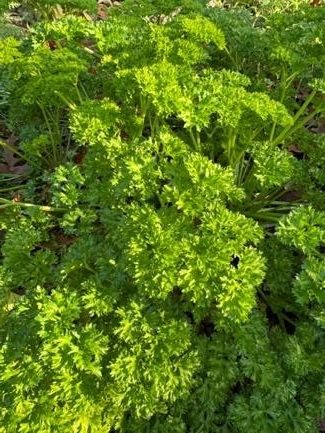
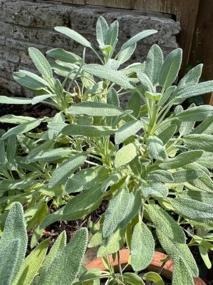
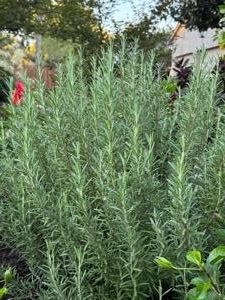
As I’ve shared before, my childhood years spanned the 50’s and 60’s. Our television was never turned on during the daytime hours. Instead, a lot of time was spent outdoors playing with friends. We always found a way to create our own adventures in the natural world; climbing trees, exploring the creek while catching crawdads, picking mulberries and writing “plays” for our parents that were performed on a backyard “make-shift” stage.
My family lived in a very small rental house with several old elm trees and one lonely, yellow rose bush. At that time, I had absolutely no awareness of herbs. Honestly, I don’t even remember using herbs for culinary purposes unless they were the dried variety purchased from the local grocery store in small tin cans.
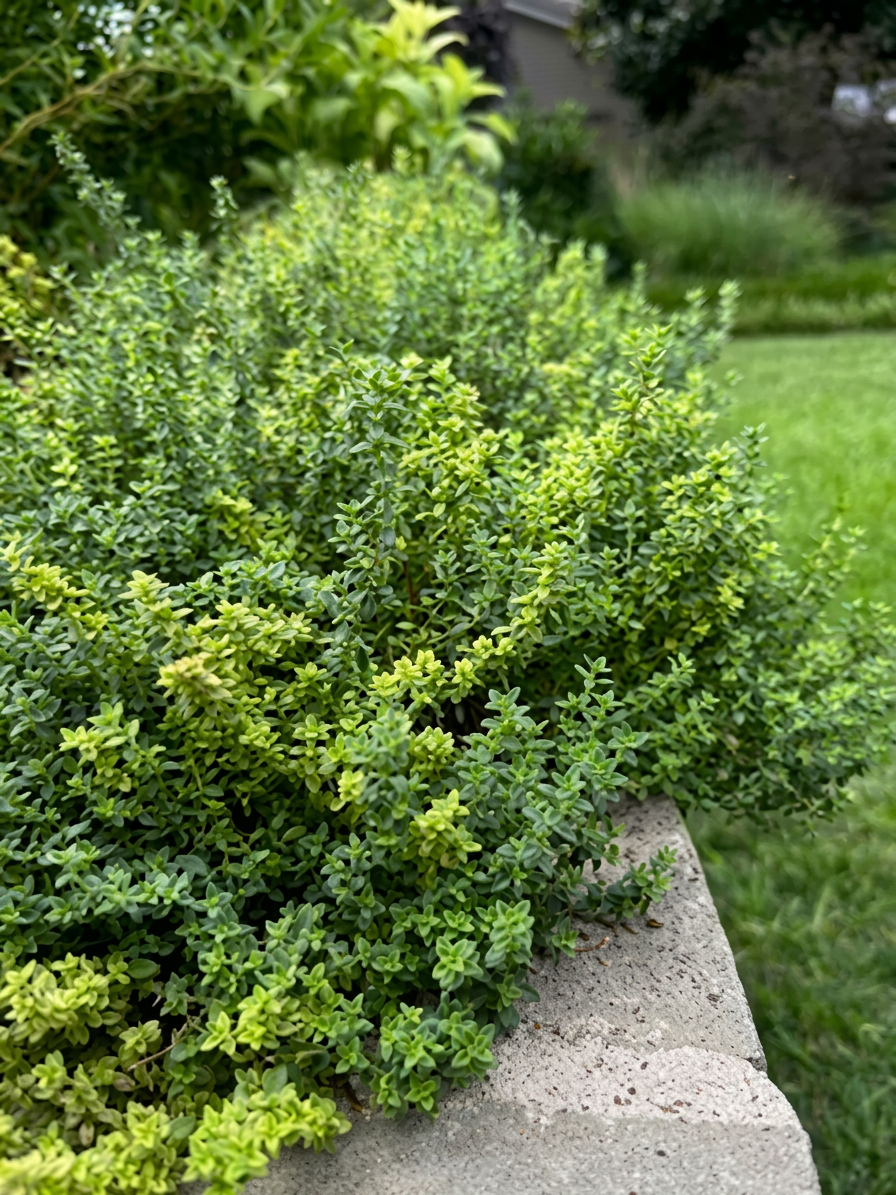
It wasn’t until after my husband and I married in 1970 that my introduction into the world of garden grown herbs began. And even then, it was a slow, sporadic start with some of the more familiar herbs. Now, 55 years later, I’m growing over 28 different types of herbs in pots, raised beds and throughout my garden. We experience the delightful aroma and taste of freshly harvested herbs with almost every meal.
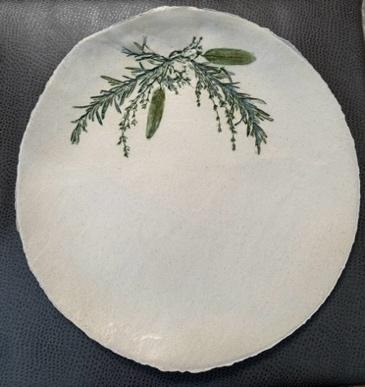
On a refreshing trip last summer to the very scenic and historic mountain town of Park City, Utah, I was met with an unexpected “herbal” treat. After the “hubbies” took off for a day of golf, the “girls” headed over to the main street art fair. You can imagine how thrilled I was to discover a lovely handmade ceramic plate featuring the four herbs mentioned in the title. It happened suddenly when my eyes caught a glimpse of something intriguing in one of the smaller booths along the event route. Stopping to take a look, I soon had the pleasure of meeting and visiting with a precious couple from Colorado that had come to exhibit their wonderful herb-themed ceramic pieces.
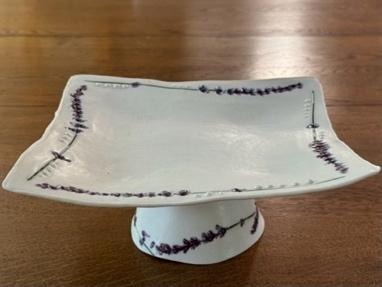
Listening carefully as the wife so proudly explained how she chose herbs from her own garden to embellish each and every item, I imagined how their cleverly designed plates, bowls and more might soon become the creative serving pieces I would enjoy using. Her “technique” involved carefully positioning, then gently pressing freshly harvested herbs into the soft, moist clay. Next was a trip to the kiln for the firing to begin. I was memorized by the stunning variety of options on display before me. Ultimately, I narrowed it down to two choices; this tastefully done 16” round platter featuring a slightly curved bundle of parsley, sage, rosemary and thyme and an elegant lavender-pressed cake stand.
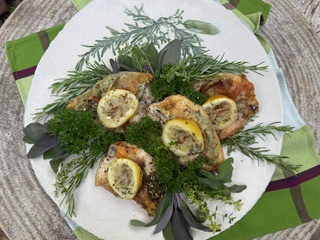
Back in Dallas my thoughts turned to finding the perfect recipe for serving on my new platter. Once the decision was made I started preparing “Roast Chicken with Herbs”.
And then, I found myself humming to the tune of the 1966 Simon and Garfunkel hit; Parsley, Sage, Rosemary and Thyme. While the duo didn’t write the song, it was adapted from the 19th century English folk ballad “Scarborough Fair”. The four herbs were included because they were a traditional part of the folk song. Each of the herbs has a long-standing symbolic meaning in folk lore and as ingredients for love potions:
*Parsley: Represents comfort or a desire for a loved one.
*Sage: Symbolizes strength or power.
*Rosemary: Represents love and remembrance.
*Thyme: Signifies courage or ethereal significance.
Simon and Garfunkel’s contribution was the anti-war “Canticle” melody. It was woven into the traditional folk song to create their own version.
FYI…You might not be able to resist listening to Simon and Garfunkel songs while making “Roasted Chicken Breasts” prepared with a generous combination of freshly gathered parsley, sage, rosemary and thyme!
Linda Alexander, Dallas County Master Gardener Class of 2008