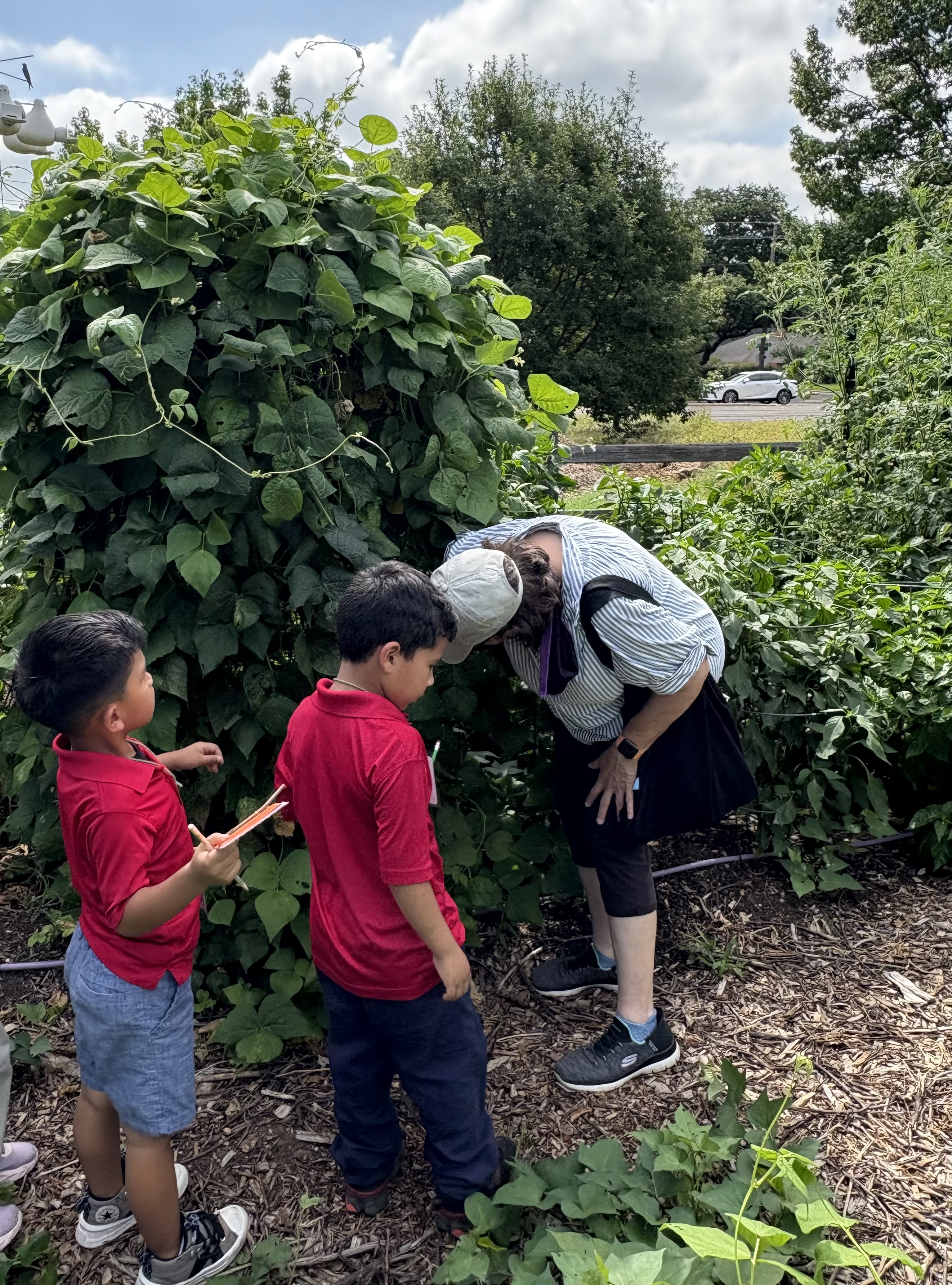
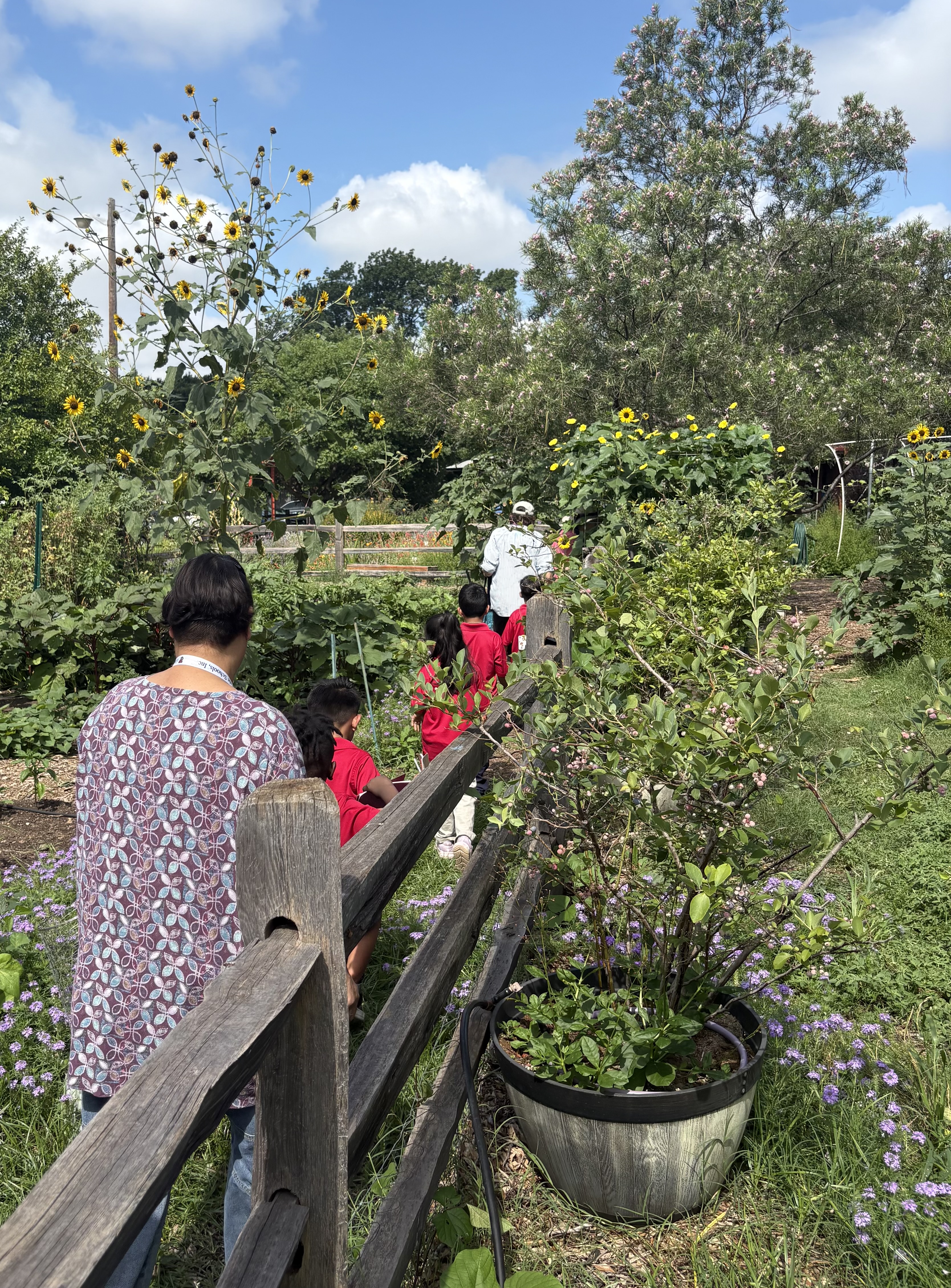
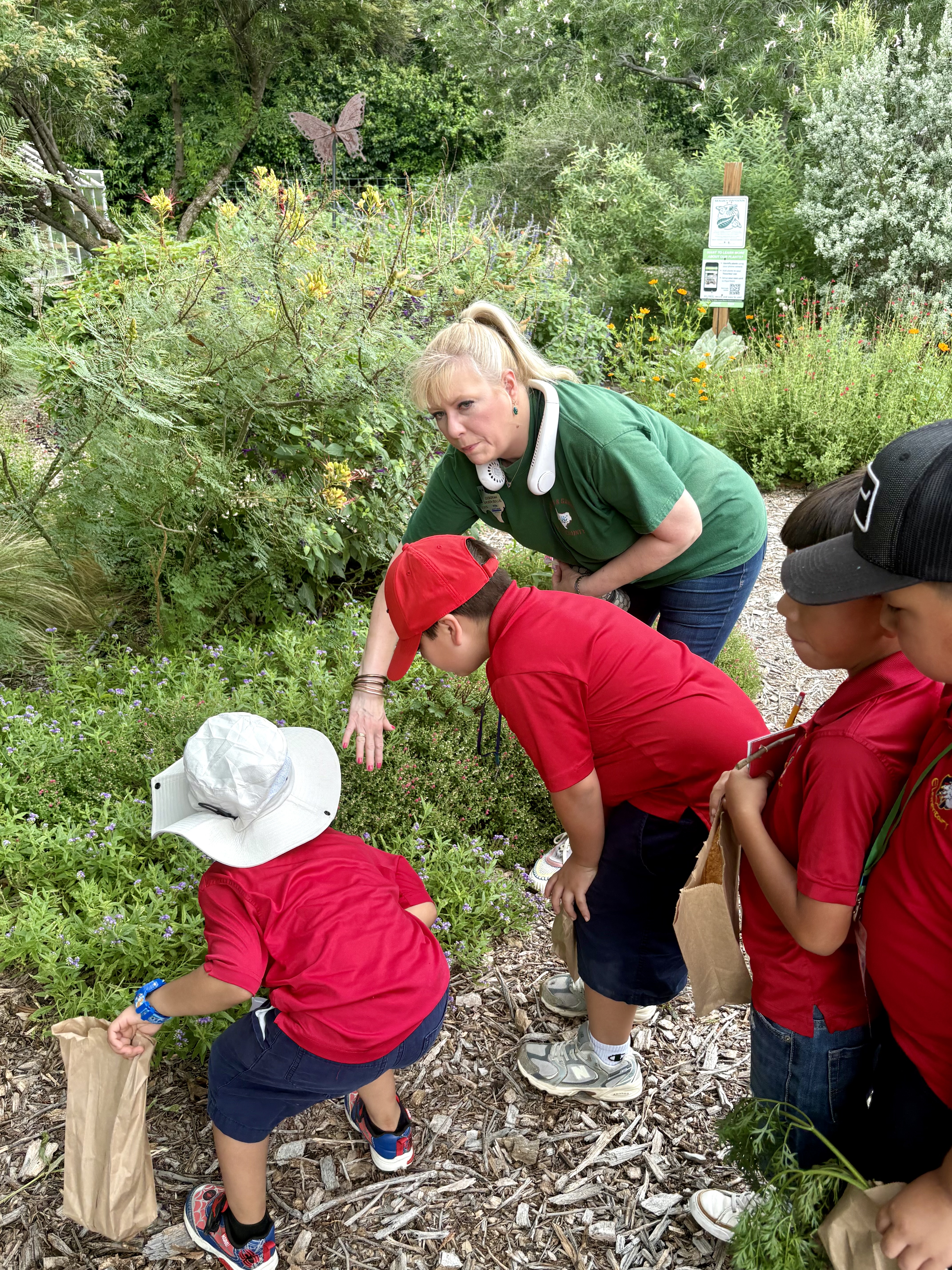
School’s out and Summer is upon us, but the activities at Raincatcher’s Garden continues to Bee busy. Thanks to the recent June rains, the plants are still blooming, the vegetable garden continues to produce, and the workers remain diligent to come and maintain our space. We have also been able to welcome students both young and old to experience our garden. Even though the temperatures are heating up (after all, it is July in Dallas), there are still jobs to do and beauty to observe.
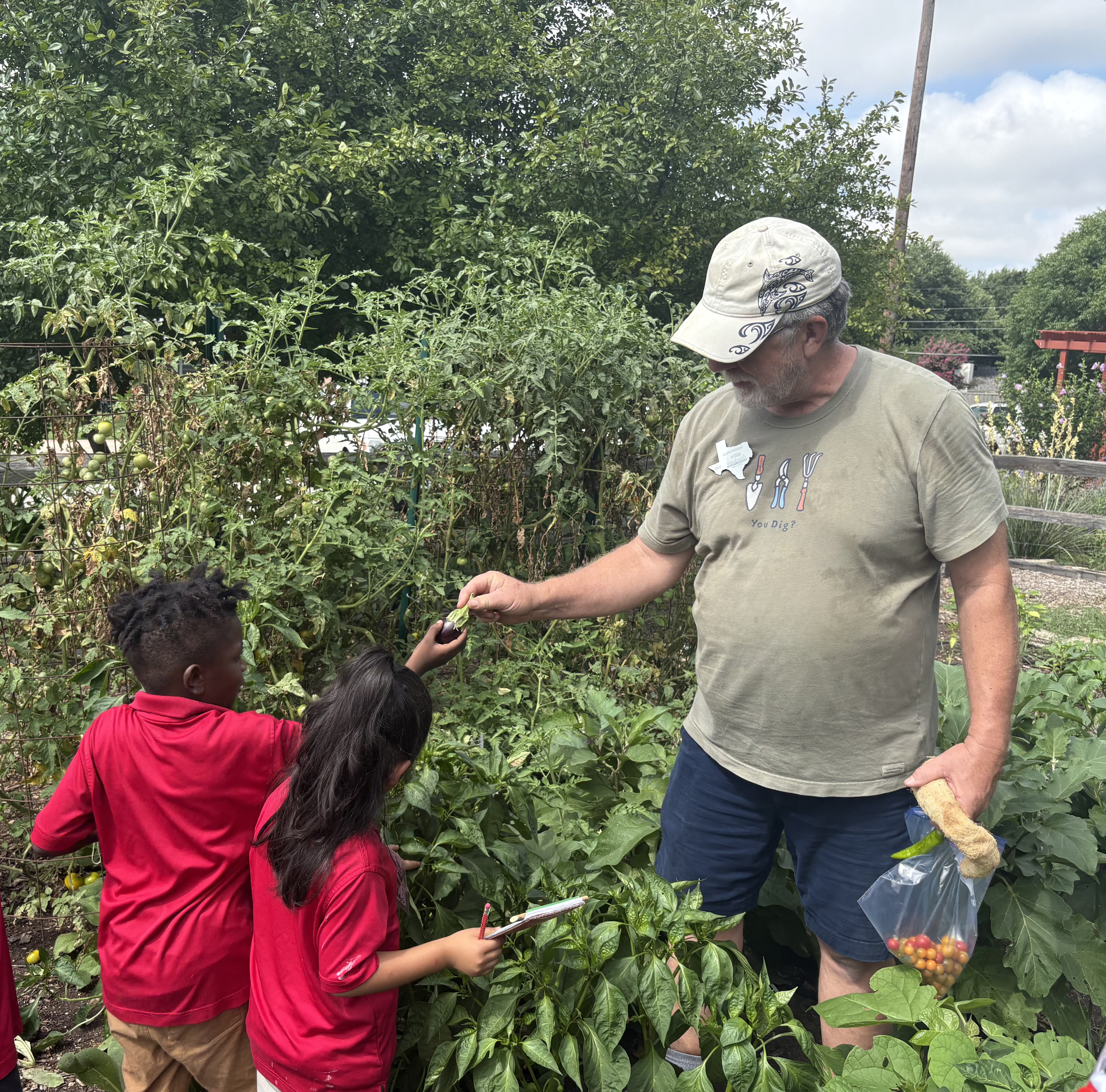
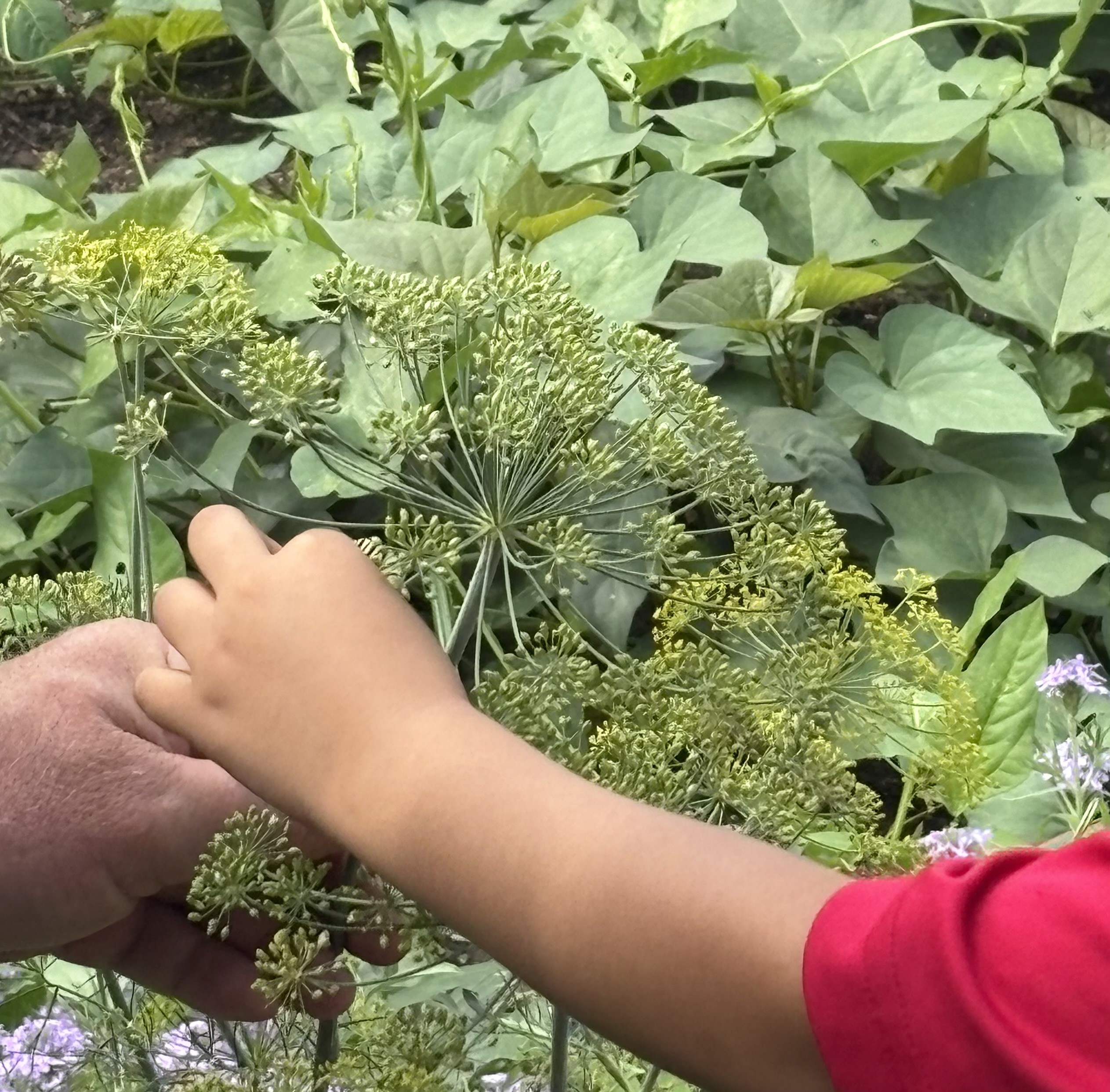
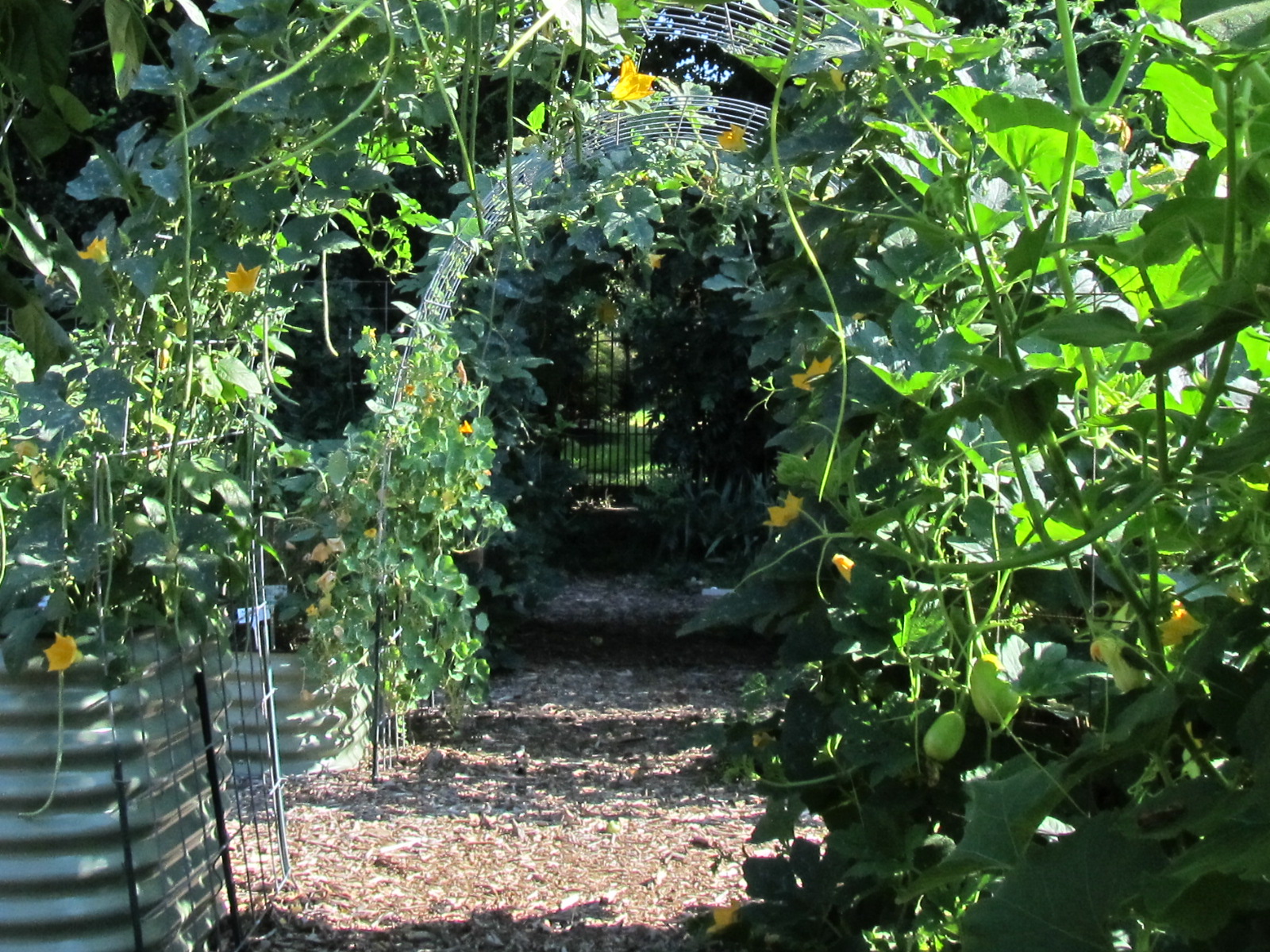
During the school field trip, each child chose one item to harvest and take home. They enjoyed the experience of finding and harvesting things like pepper and squash. The dense green arbor of loofa vines invites you inot the fenced garden with it’s yellow blooms and loofa gourds.We also showed them blossoms which were becoming fruit and we talked about how some of our food is harvested above the ground and some below ground. Searching for a very hungry caterpillar in the umbels of fennel and dill.
Early Summer garden maintenance includes deadheading the blooming plants, weeding unwanted plants and grasses and watering throughout the spaces of our garden.
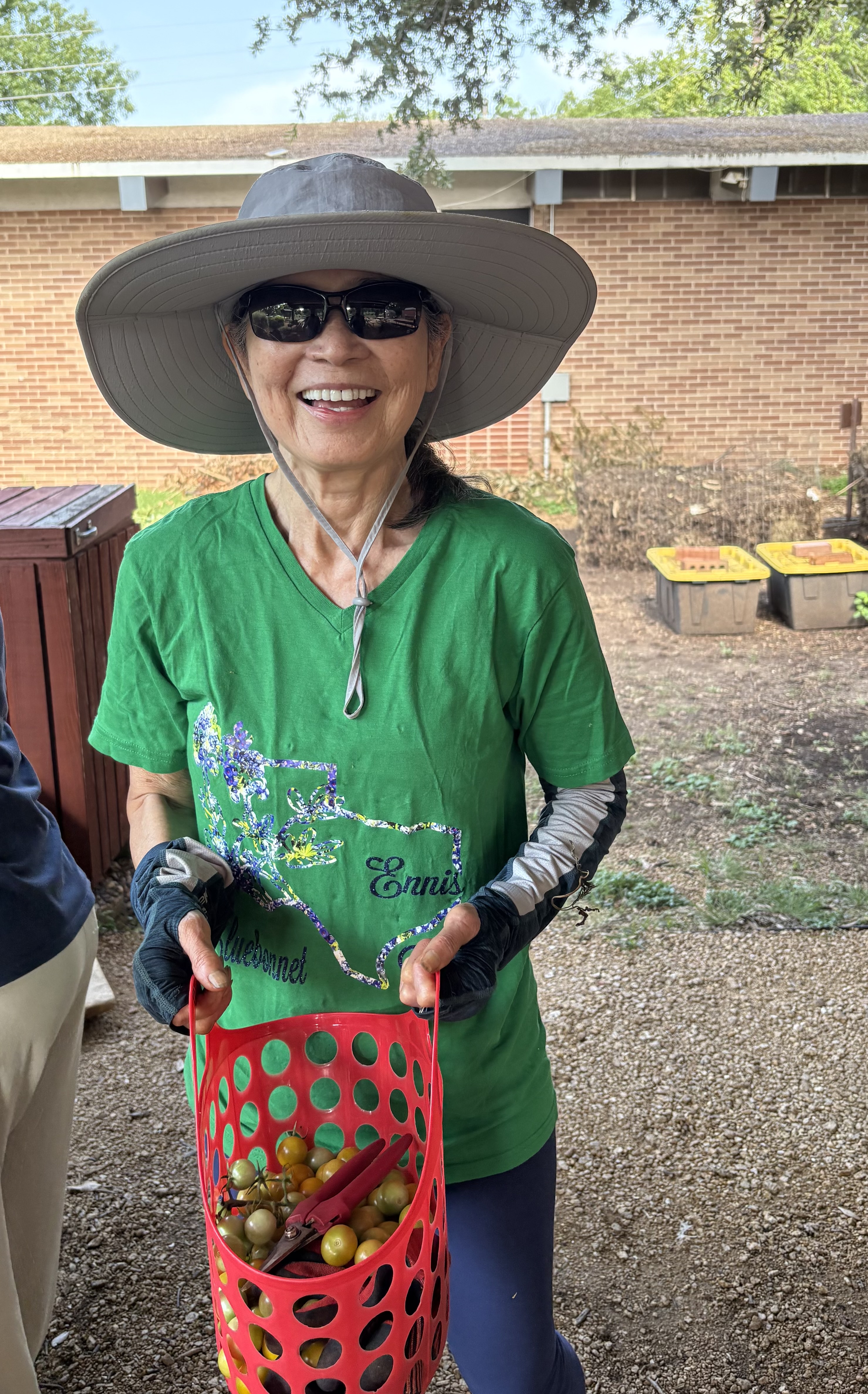
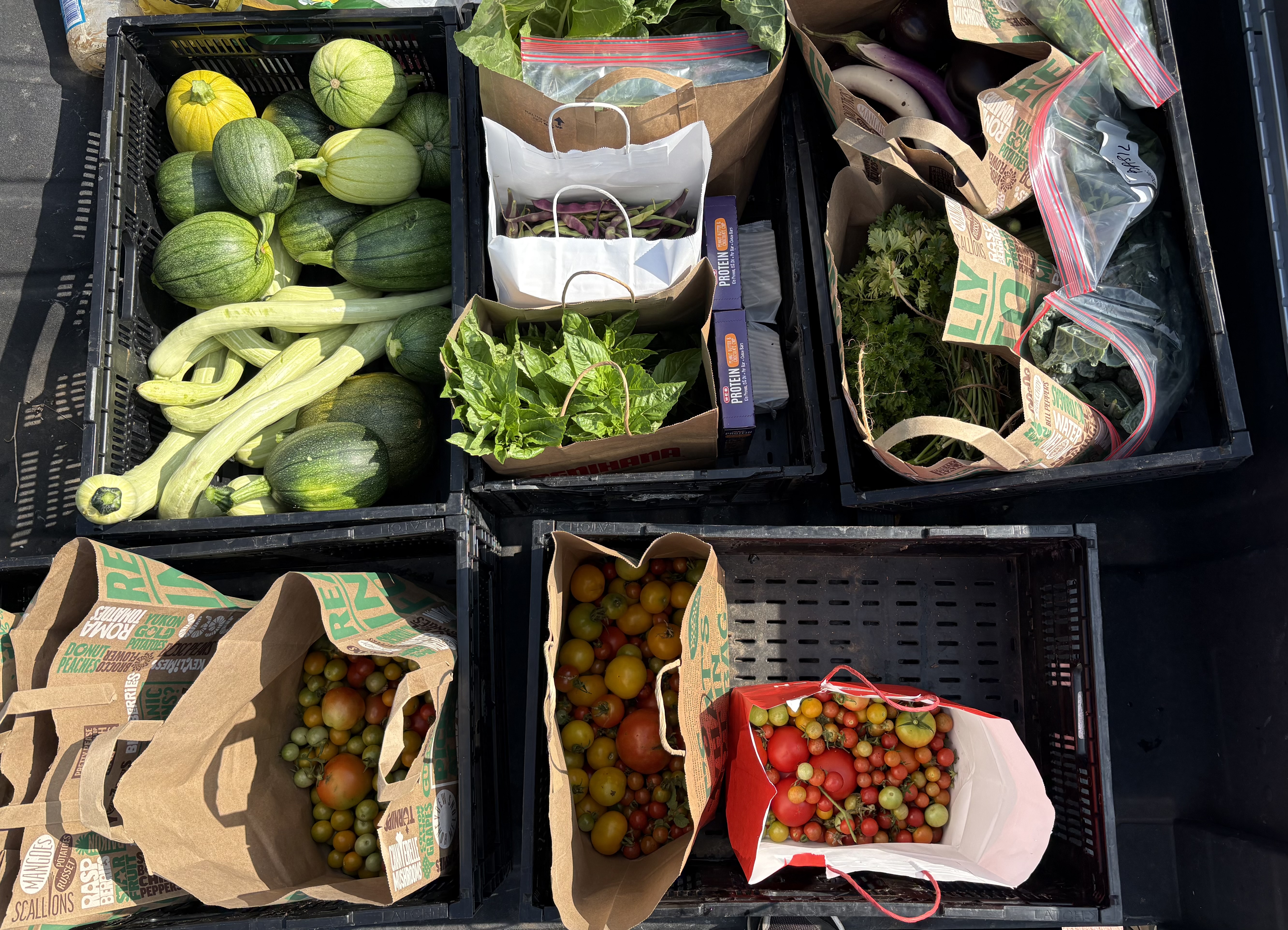
The vegetable beds provide fresh produce for Now Forward formerly known as North Dallas Shared Ministries, as well as some fun and community among the workers. They meet on Monday mornings to work in the beds in the North Garden.
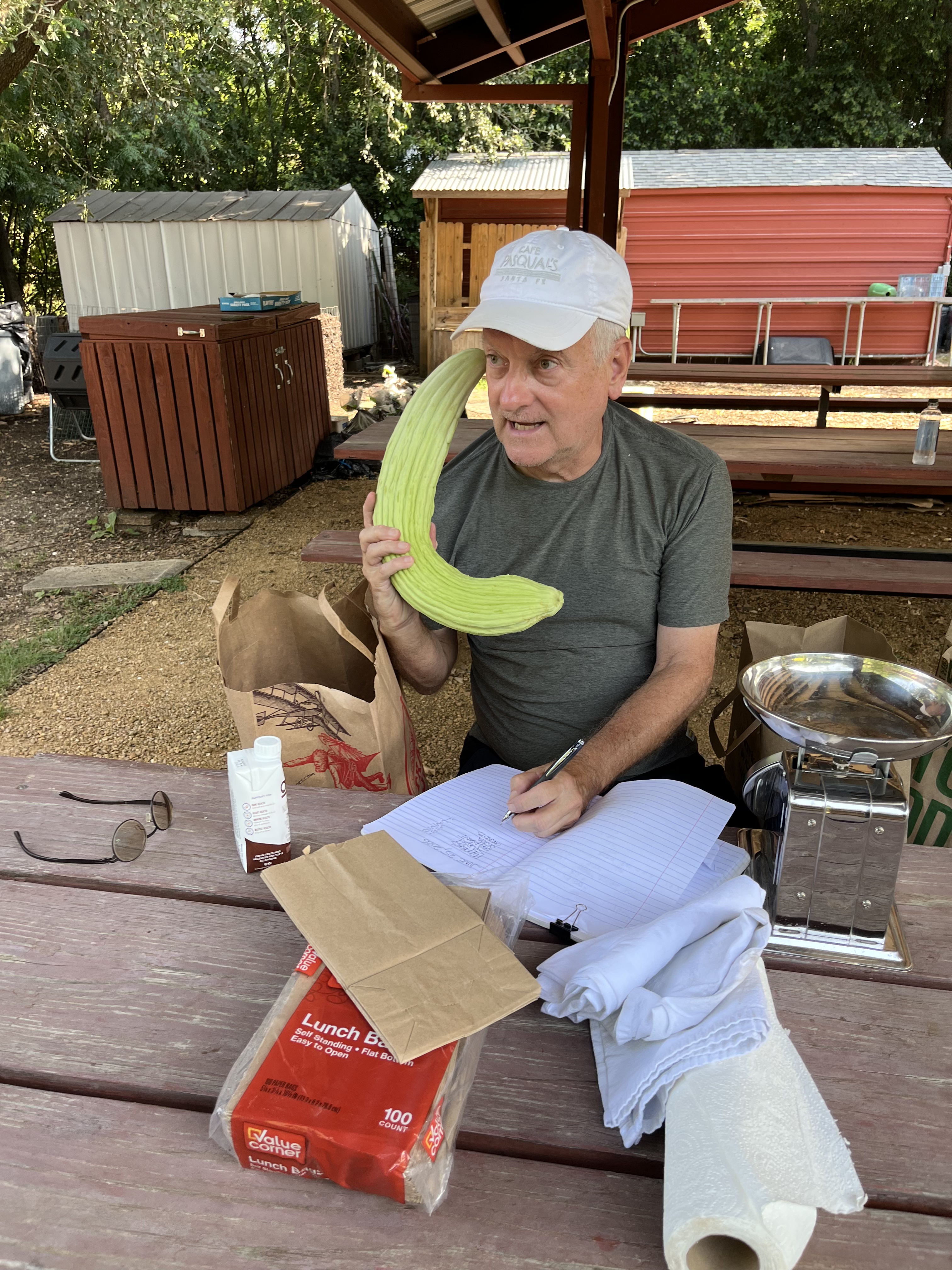
Master Gardener, Don, is holding an Armenian Cucumber saying ” So what you’re saying is we’ve harvested 996 pounds this year?”
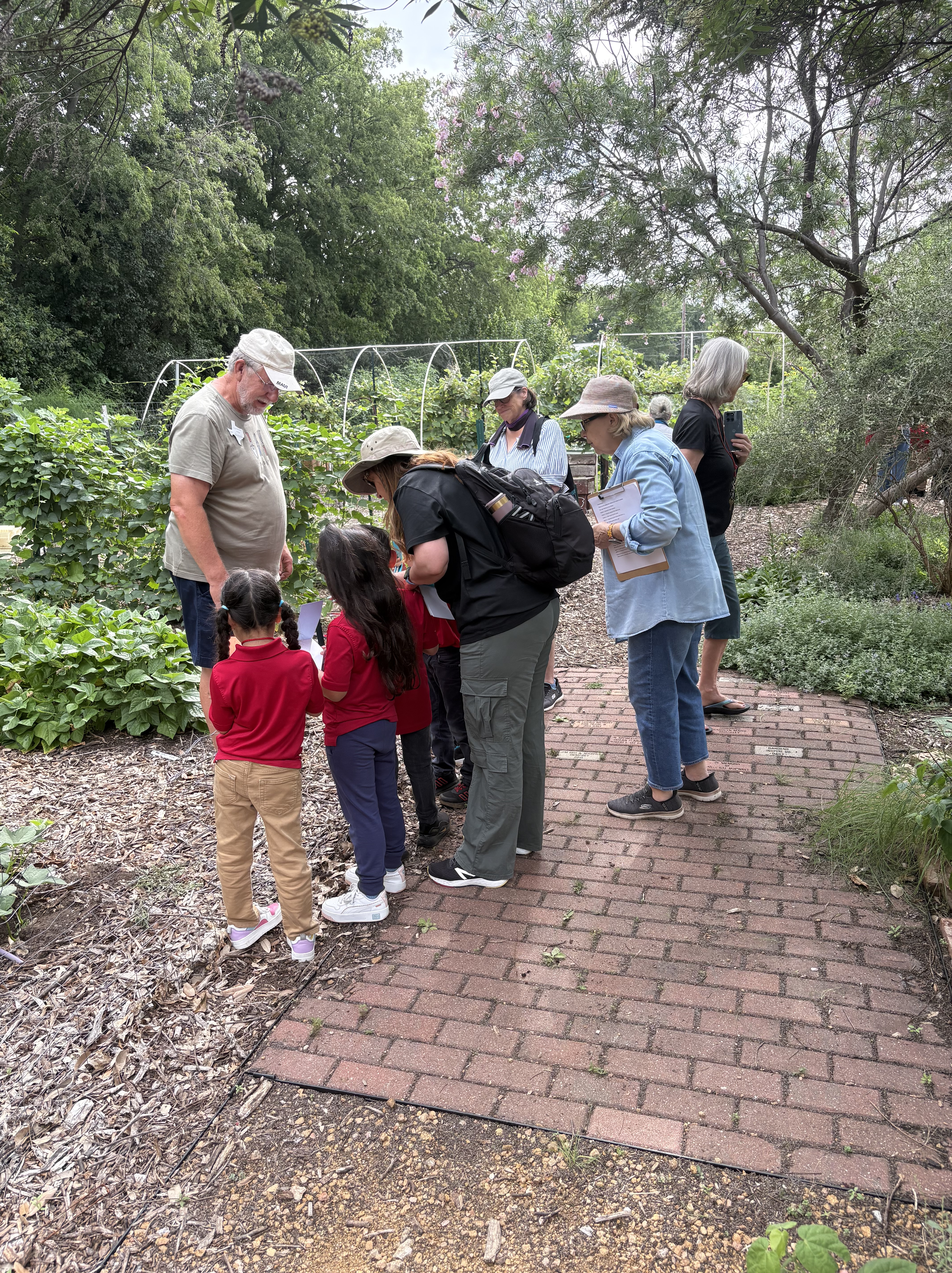
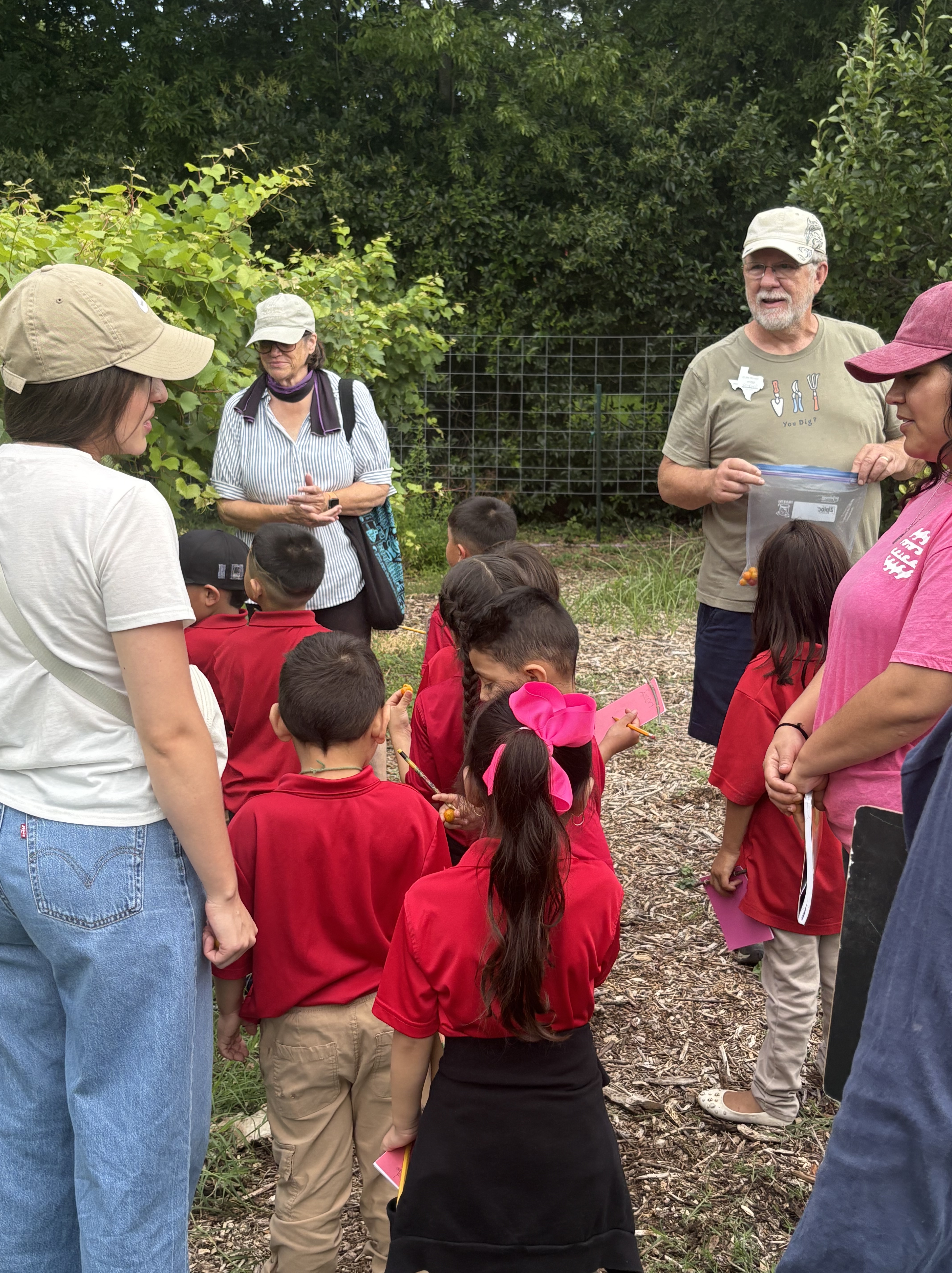
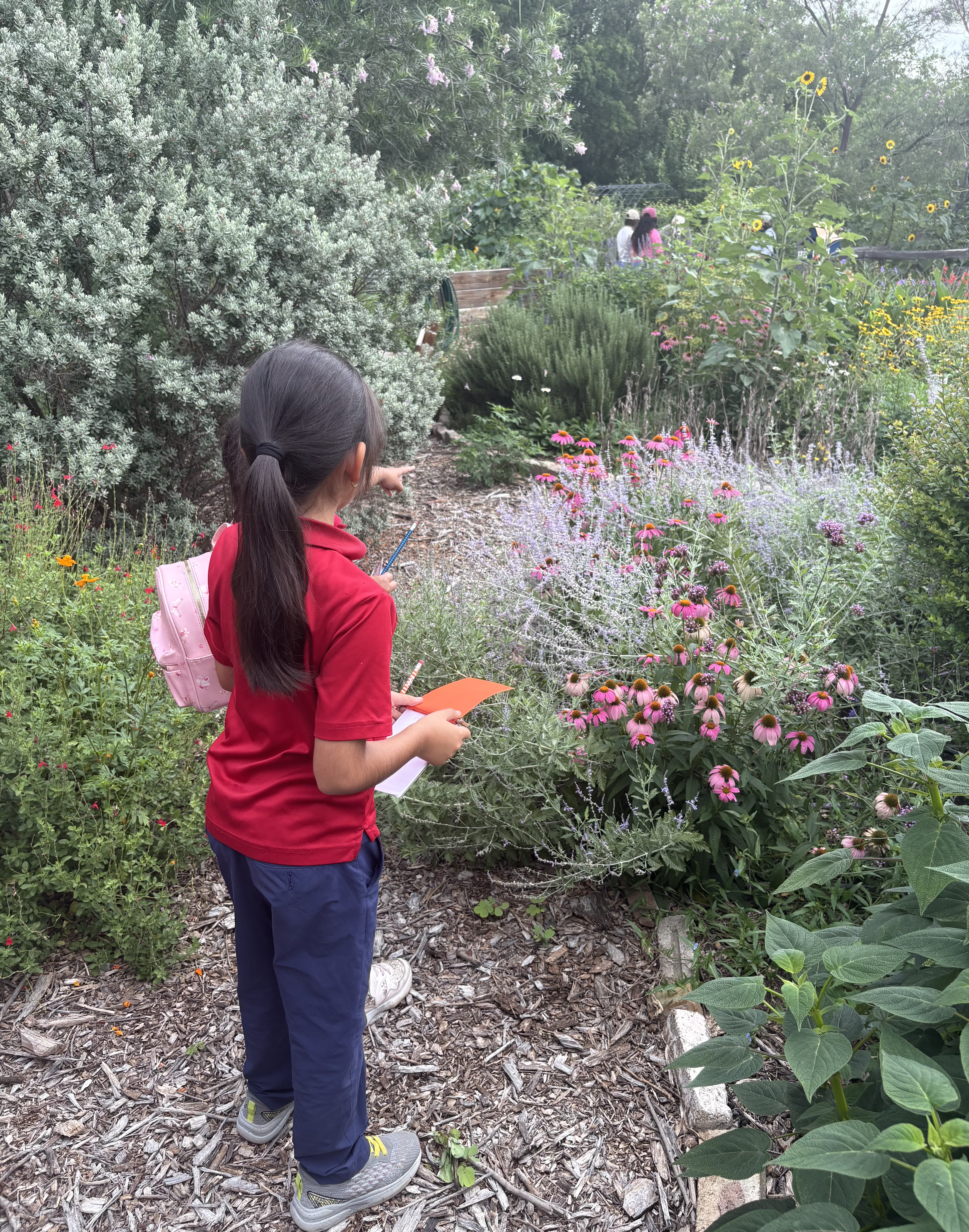
We are always glad to welcome visitors to the garden and in mid June. A group of young friends came to see what’s going happening.
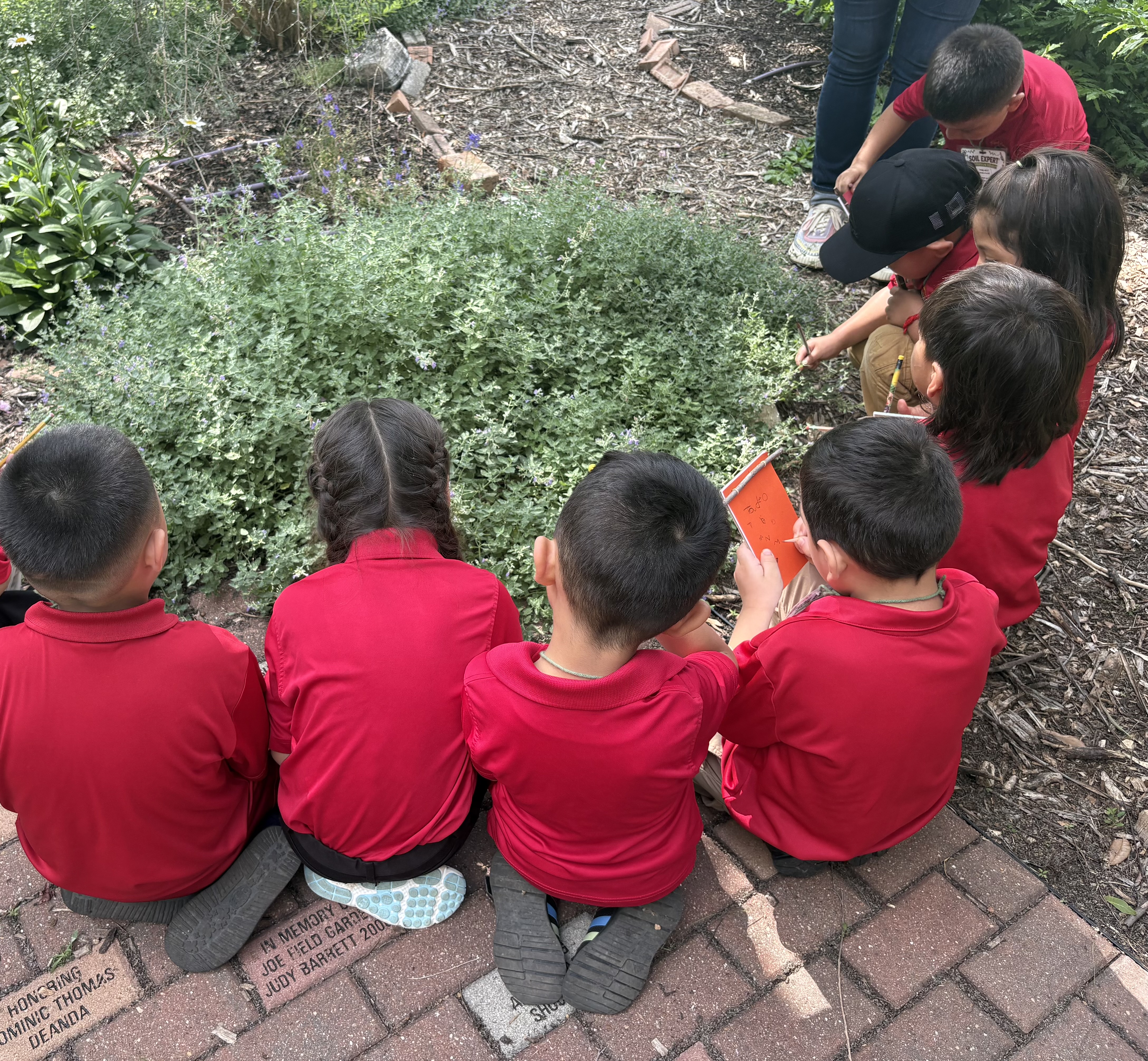
Volunteers took students on atour of the garden. The children were able to take notes on their findings on a notepad made especially for each student
We will continue to work in the garden, but will start earlier to beat the heat. Come and join us on Monday or Tuesday mornings.
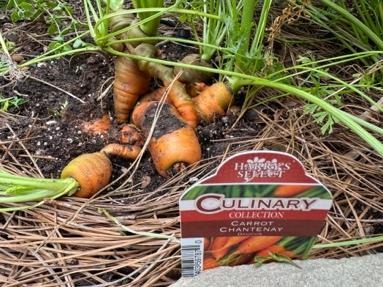
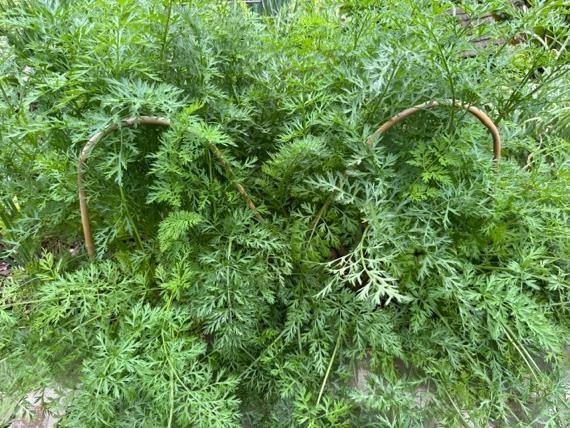
It’s been six years since Dallas County Interim Extension Agent Jeff Raska advised us to let our carrots grow for two seasons. We should have listened more attentively. So, this summer instead of harvesting the carrots first, my little Chantenay plants are going the distance. And now it’s time to share the good news.
While it is true that carrot tops and blossoms are edible, a very strategic decision had to be made. Why? Carrots quickly lose their sweetness and flavor if left in the ground too long. Once they begin to blossom the plant pulls energy from the root to produce flowers. As gardeners, we know this process as “bolting”, which causes the carrots to then become woody, somewhat tough and loose their signature sweet taste. At this point, they can even become bitter.
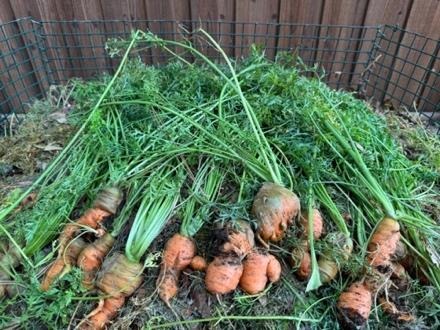
Chantenay carrots left in ground too long were no longer edible. Straight to the compost bin they went!
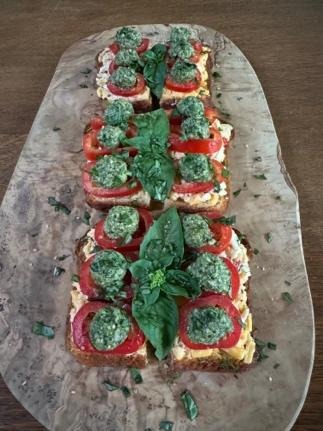
My decision to let the bolting stage happen naturally was made one morning earlier this spring when doing garden chores. While observing the carrots lush green foliage, I remembered Jeff telling us that all parts of the carrot were edible. Shortly after that, I discovered a recipe for carrot top pesto and gave it a try. Here is the recipe that called for one cup of carrot tops. It was my first time to use carrot tops as the main ingredient in a recipe but the results were impressive.
From Carrot Greens to Carrot Pesto
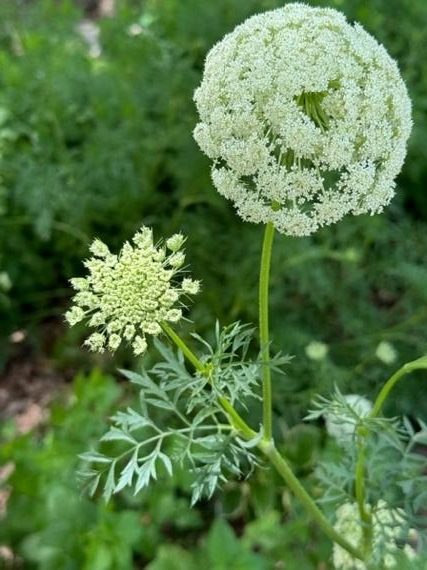
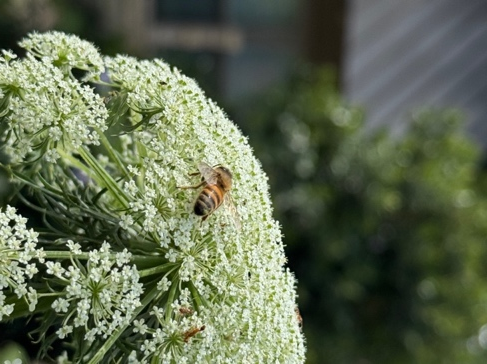
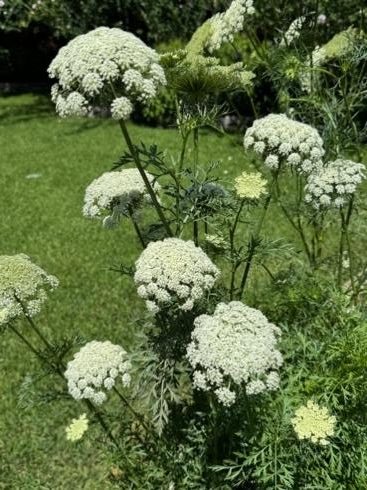
Fast forward to June 2026. As you can see from this photo (taken last week) my carrots were clearly in the “bolting” stage and the flowers were putting on a stunning show. Honeybees and other pollinators were enjoying the spectacle as well. It was time for a new culinary moment fresh from the garden.
Honeybees get first “dibs” but the beautiful umbels also make great cut flowers
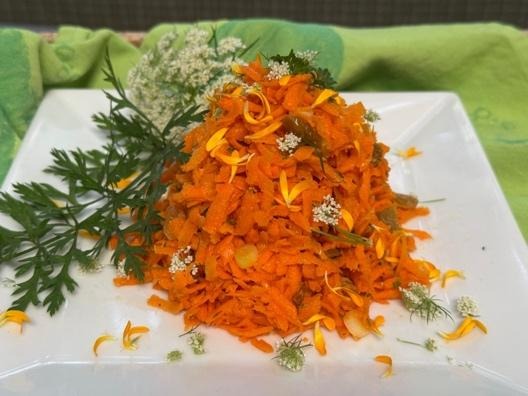
This slightly adapted recipe for a French-style carrot salad was so simple that I couldn’t resist. My adventure into the world of carrots has now come full circle as each part of this amazing plant has been totally experienced and embraced. Bon Appetit!
Linda Alexander, Dallas County Master Gardener Class of 2008
Have you been feeling somewhat listless or despondent over the last few weeks? Are you experiencing a period of inactivity or lack of energy? If so, you are not alone. It may be that those summer doldrums have many of us in a wearisome summer slump!
We’ve all, no doubt, spoken those words many times over the years. However, for the first time, my curiosity motivated me to do a little investigating into the meaning of “doldrums”. Much to my surprise the doldrums are for real! In oceanographic terms, they are a part of the ocean near the equator abounding in calms and light shifting winds.
In the early 19th century, the word doldrums came to be applied to certain tropical regions of the ocean marked by the absence of strong winds. Sailing vessels, depending on wind propulsion, struggled to make headway in these regions, leading to long, challenging journeys.
While the exact etymology of doldrums is not certain, it is believed to be related to the Old English dol, meaning “foolish” – a history it shares with our adjective dull.
Click here for a much more scientific and very fascinating explanation from NOAA
If you are like other gardeners waiting for the winds to “pick up”, here are a few refreshing ideas to help you navigate through the summertime blues! One of the most delightful ways to celebrate the hot, sticky last few weeks of summer is found in the herb garden. When I’m in search of a culinary treat, summer herbs seem to have the answer. Let’s look at a few of the heat-tolerant, dependable standouts that satisfy the craving.
Whatever your preference, vibrant flavors ranging from sweet and floral to savory and pungent can be found in herbs that persevere through the high heat and icky humidity of summer.
Offering aromatic qualities from minty and citrusy to earthy and woodsy, consider these flavor profiles to suit your preference:
*Sweet and floral: basil, lavender and anise hyssop
*Citrusy: lemon verbena, lemon balm and French sorrel
*Minty: various mints (spearmint, ginger mint, peppermint, etc.), nepitella, oregano and thyme
*Earthy: sage, rosemary and thyme
*Pungent/Spicy: chives, papalo, French tarragon
Enjoy the simple pleasures of growing and harvesting summer herbs. Some of the most satisfying ways for using fresh herbs are found in sprinkling, scattering and tossing over fruits, salads, vegetables and desserts for a delectable finish. Other than a quick trip to the grill, bake free is the best way to savor the gifts of our summer gardens. Use freshly gathered herbs to elevate your food from tasty to irresistible!
Here are a few ideas for a cool ending to summer:
Grilled Peach and Blueberry Salad with Fresh Mint
Peaches grilling in a nonstick grill panHoney infused balsamico used as a dressing for the saladGrilled Peach and Blueberry Salad
Creamy Chilled Cantaloupe Soup Garnished with French Tarragon and Blue Borage Blossoms
Ground sumac spice for cantaloupe soupCantaloupe growing in my August garden.Creamy chilled cantaloupe soup
Yellow Pear Tomato Salad with Red Rubin Basil, Nasturtium Blossoms, Basil Pesto and Mozzarella Pearls
Yellow pear tomatoes growing in my August gardenYellow Pear Tomato Salad with nasturtium blossoms
If the key to life is simply living it.. The key to understanding may be simply realizing that wisdom is all around even in unlikely places. Our job is to realize wisdom when we find it—and then apply it .
For an example let’s think about these simple lines:
YOU GOT TO KNOW WHEN TO HOLD EM
YOU GOT TO KNOW WHEN TO FOLD EM
YOU GOT TO KNOW WHEN TO WALK AWAY
YOU GOT TO KNOW WHEN TO RUN
Few words but the ideas are wise and useful. No where more so than in the garden at this time of the year. We start with the first of course. And actually this idea was most important a little earlier in the year.
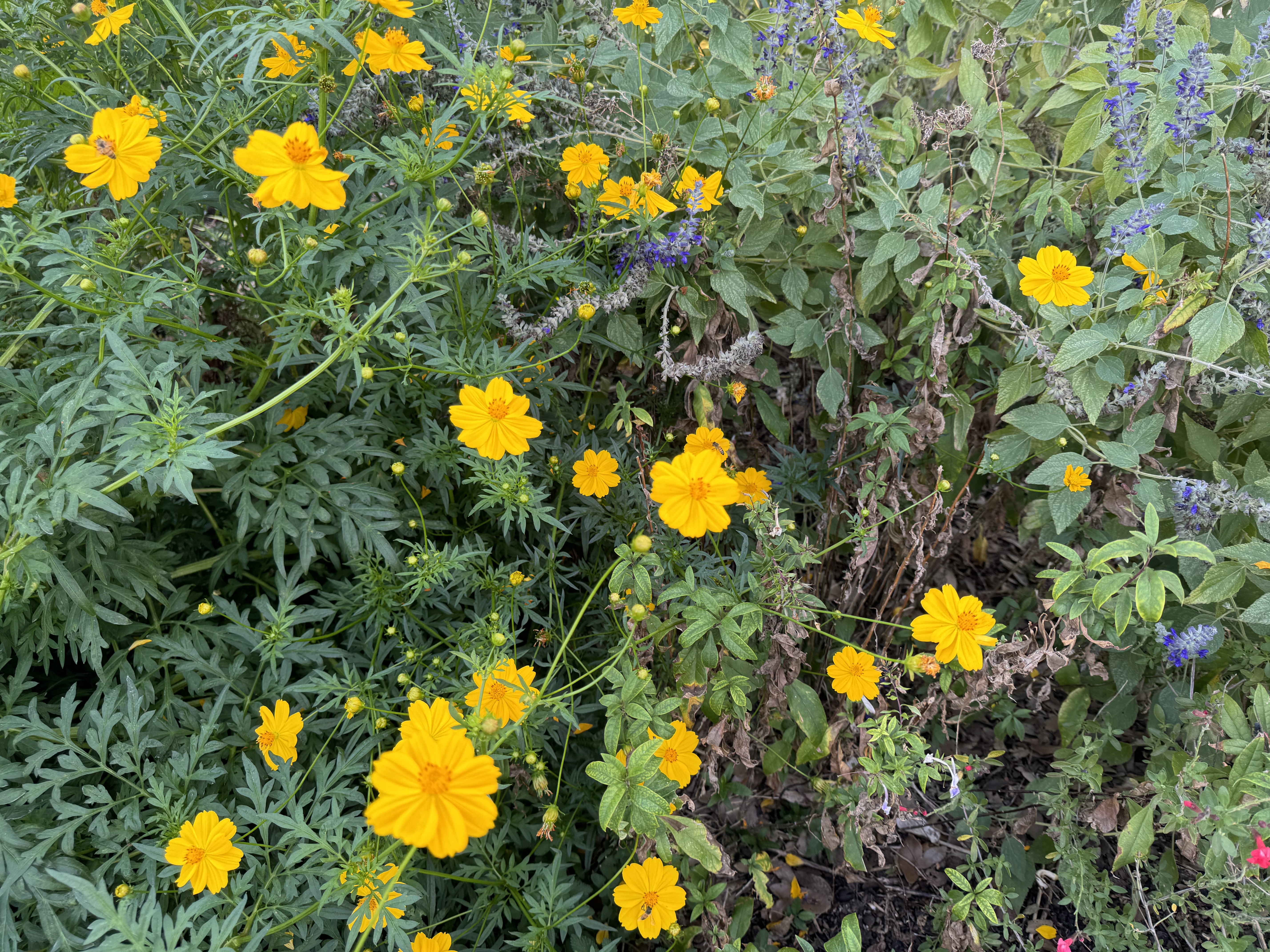
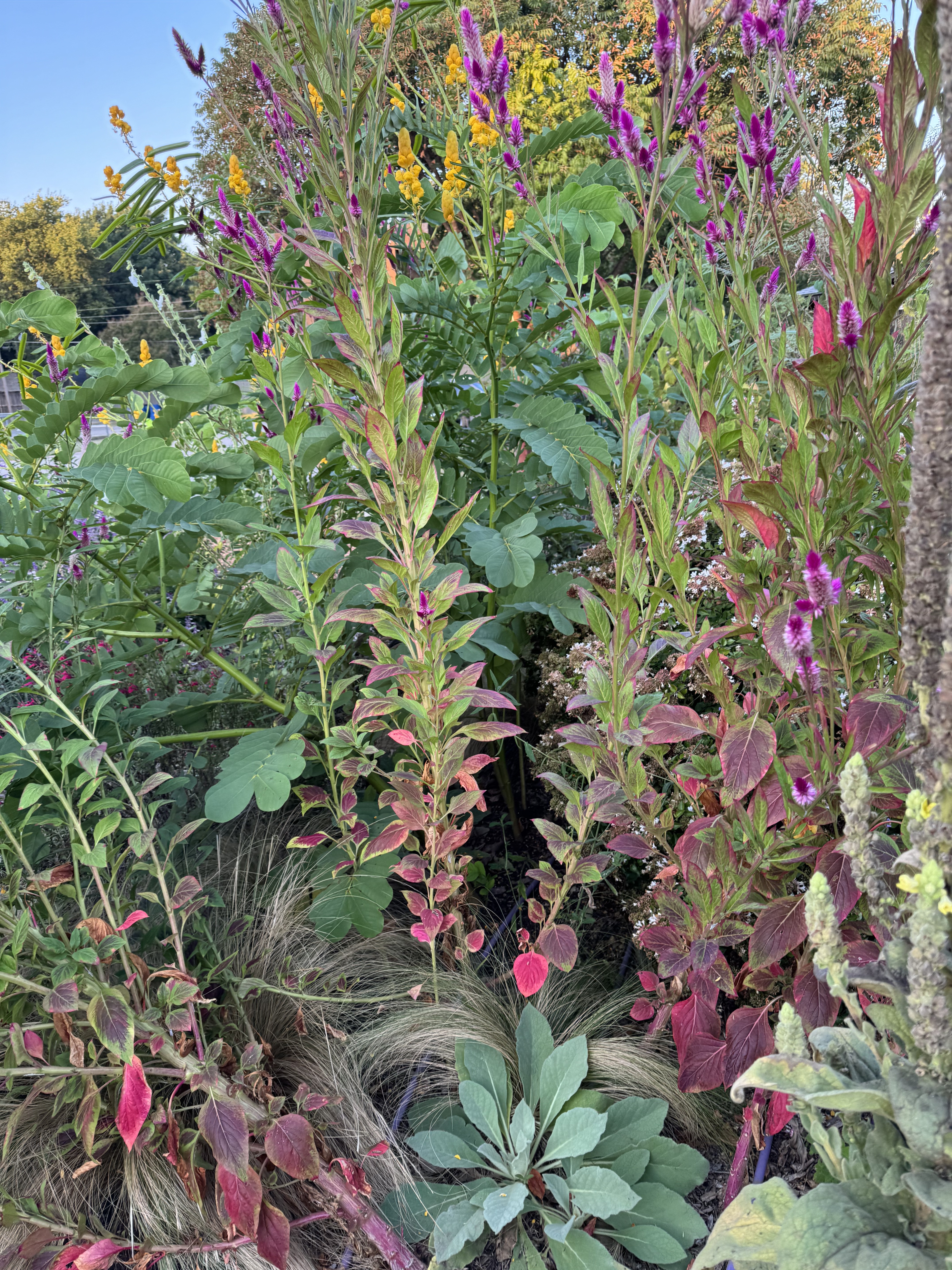
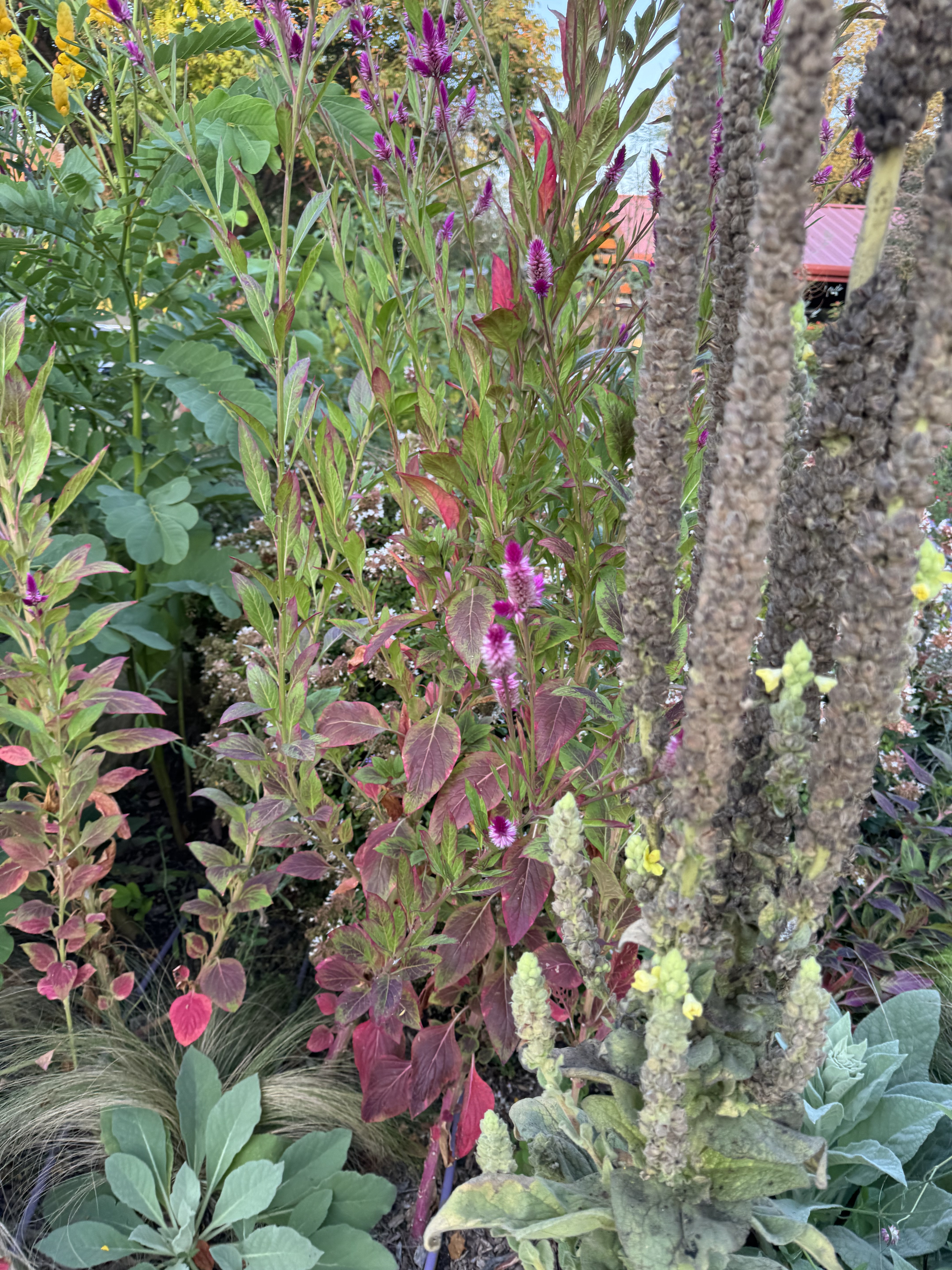
How was it so useful? well the yellow cosmos are a great example. All summer they grew and grew. No flowers at all. Some falling over due to the weight of stems and leaves. A passerby was heard to say ” I don’t know about those green leafy things they sure are big” Were they a terrible mistake? Are they ever going to bloom? Are they going to all fall over? Temptation grew to pull them all out. And then all at once they bust into huge numbers of lovely cheerful flowers. Butterflies and bees are just loving them. They even look great as cut flowers.
Yes!!! holding was the best choice for sure.
The big green leafy things that were bare all summer are blooming at last and they are amazing. Cosmos!
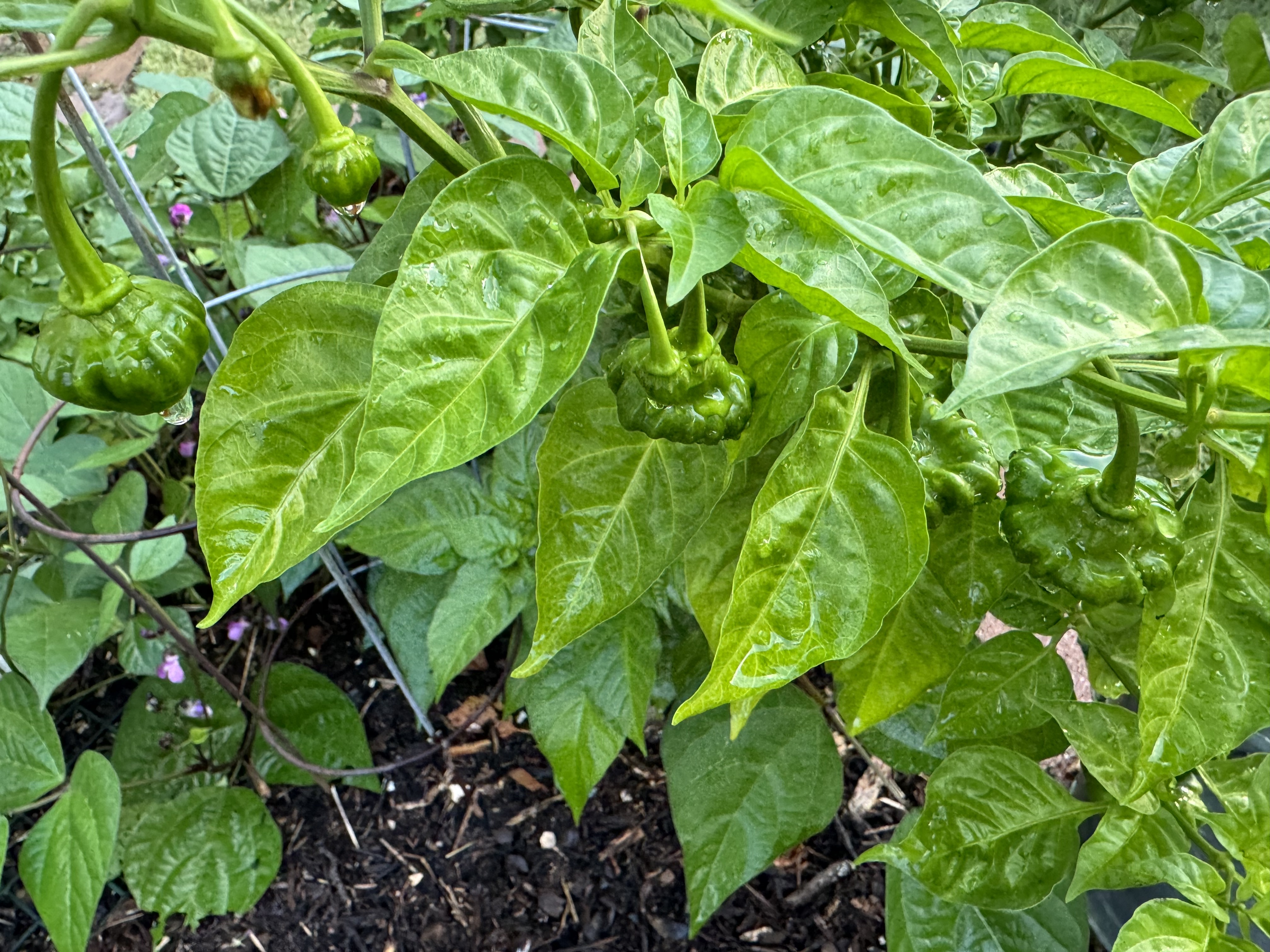
Aji dulce peppers –no peppers for months. All they were doing was taking up space and causing thoughts of “what on earth went wrong?” They were biding their time. Summer just didn’t suit. Just a small improvement in the weather–and blooms followed by lots and lots of little peppers. It was a temptation to give up–but it would have been a shame.
The Peppers finally realizing they have a job to do.
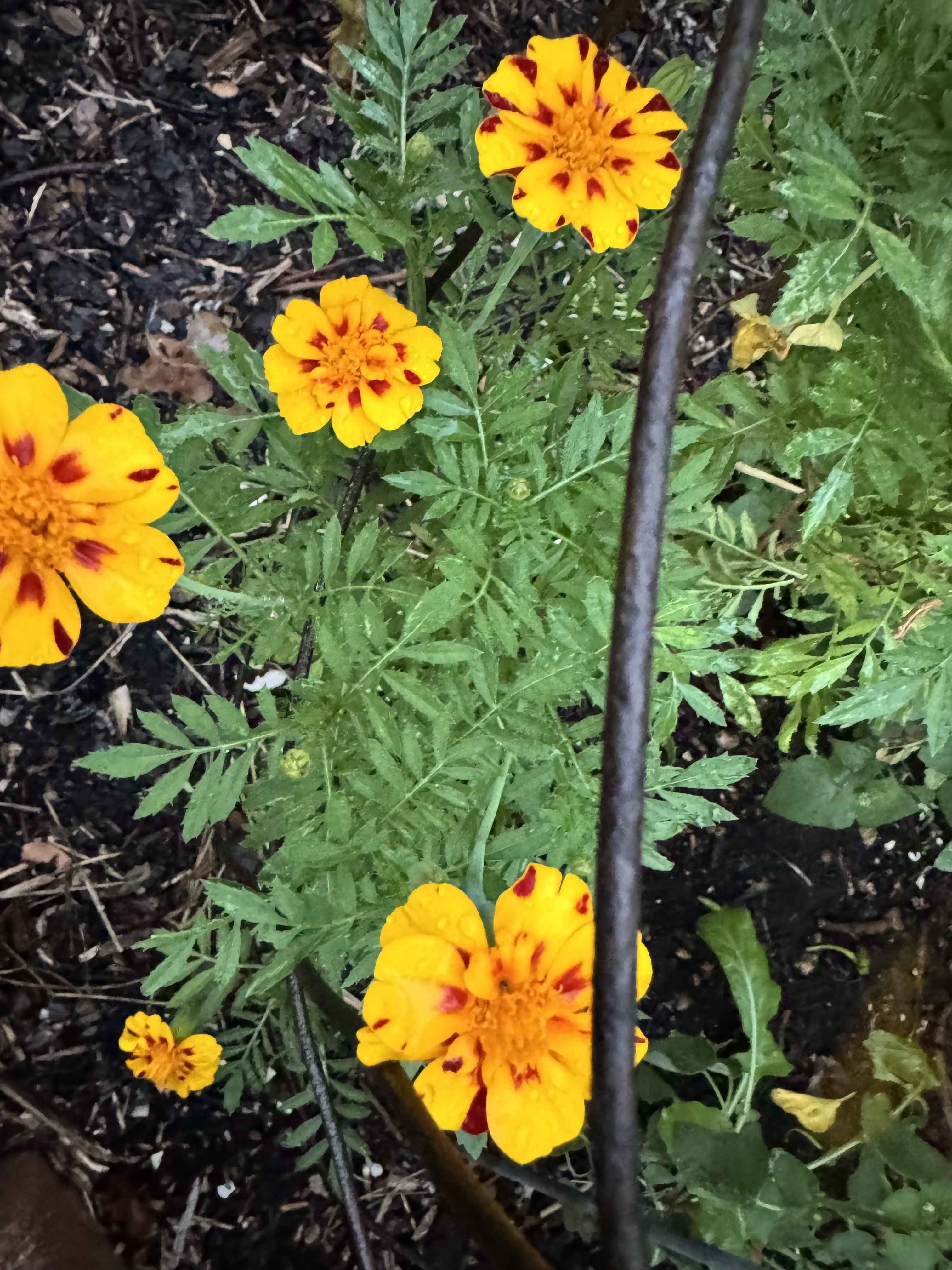
Marigolds–they also seemed to find the past few months not to their liking–the remaining tomatoes are happy maybe because the marigolds are happy.
The Marigolds were to keep the tomatoes company all summer. They are doing it now.
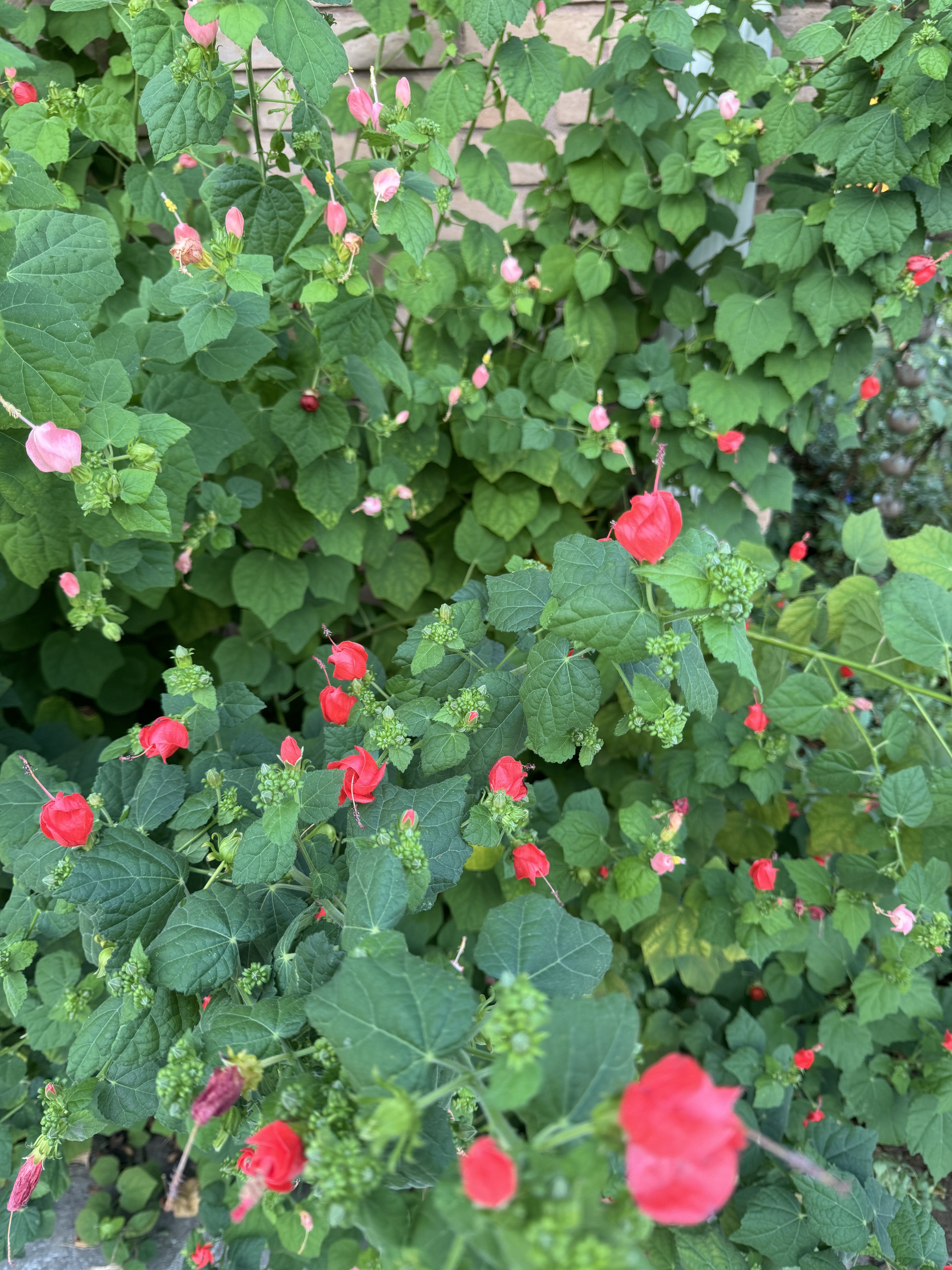
Turk’s cap–honestly it seemed to be asking to be cut to the ground–very few blooms and yet requiring constant pruning to keep it withing reasonable bounds–but–again a reward for avoiding extreme measures–countless flowers–and happy creatures.
Turk’s cap-all summer, some flowers but now covered in flowers.
Of course the facts are–that all doesn’t go as hoped.
The most obvious are annuals that have tried really hard but have now reached the end of the line. It is hard to do this when they aren’t quite done but face it–sad straggliy plants just distract from everything around them. Let them go its ok.
It’s time for an old friend to go. Sad but true.
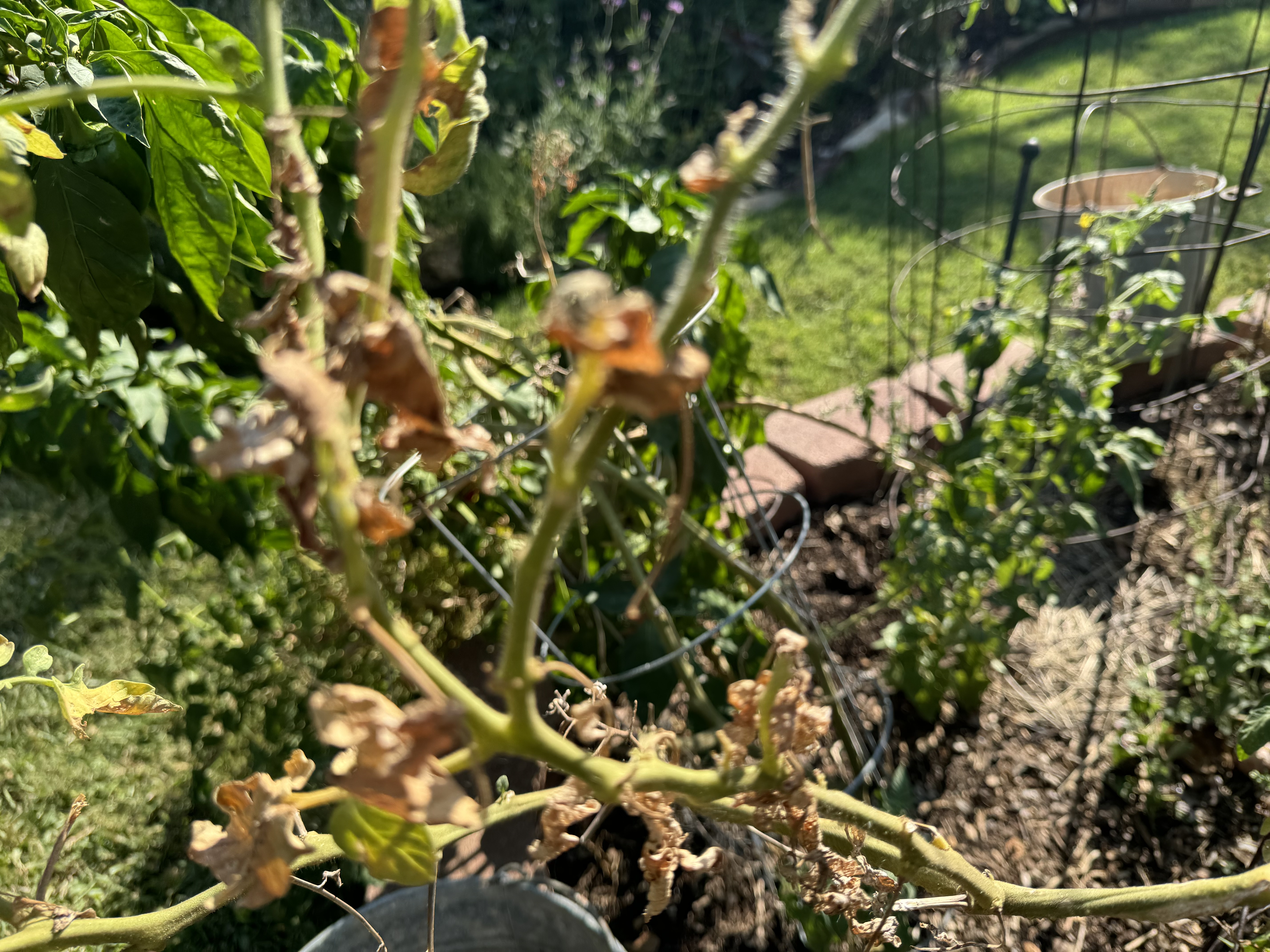
Same with vegetable plants. These plants work hard some can make it on into fall. But some just can’t. It is really best to get rid of them they can attract pests and diseases that are just doing what they do to eliminate the weak–but best to beat them to it.
This tomato in my garden just isn’t going to recover.
The really hard part of the fold ’em is facing that some of your efforts really were in vain. For some reason plants die. Sure try to figure out why. Was it lack of water–a common issue. Maybe over crowding? But sometimes its unknown. Pull them out anyway no use spending resources–including your time and energy on plants that just are not making it.
Perennial doesn’t mean live forever!
Those first two are pretty clear–but what about KNOW WHEN TO WALK AWAY?
Actually its an important one. This is the time of the year when plants have pretty well done what they are going to do. It can be so valuable to step back and away and look at the big picture. Could you do anything different ? Is it just that much too much? Or not quite enough? Walk away and take a good look and make some mental notes for next year.
Is it maybe just a little too much? Take a step back and look.
Can’t forget YOU GOT TO KNOW WHEN TO RUN. No it won’t be a big problem don’t worry. But do keep in mind that wasps and yellow jackets are very active at this time of the year. Of course they are part of nature and normally not an issue–but do look around they like to build nests in protected places–who doesn’t of course–but sadly when its right above the back door for example you may have to do what you would rather not. But be careful at times their temper can be kindly said to be “Uncertain” And i hope you don’t have to run–but—-.
YOU GOT TO KNOW WHEN TO HOLD EM
YOU GOT TO KNOW WHEN TO FOLD EM
YOU GOT TO KNOW WHEN TO WALK AWAAY
YOU GOT TO KNOW WHEN TO RUN.
Susan Thronbury, Dallas County Master Gardener Class of 2008
Does the familiar phrase ‘once upon a time’ bring back memories of your early childhood? Maybe it was when you heard the classic story of Little Red Riding Hood for the first time or were mesmerized when you saw Disney’s version of Snow White and the Seven Dwarfs. Throughout the years, fairy tales have given us wondrous characters in magical settings and left an indelible impression on young children throughout the world. But the fairy tale that has recently impressed me most is of a uniquely different variety. It is one that produces magically, ornamental plants for your garden. In this case, it is the adorable petite eggplant known as ‘Fairy Tale’.
Fairy Tale Eggplant
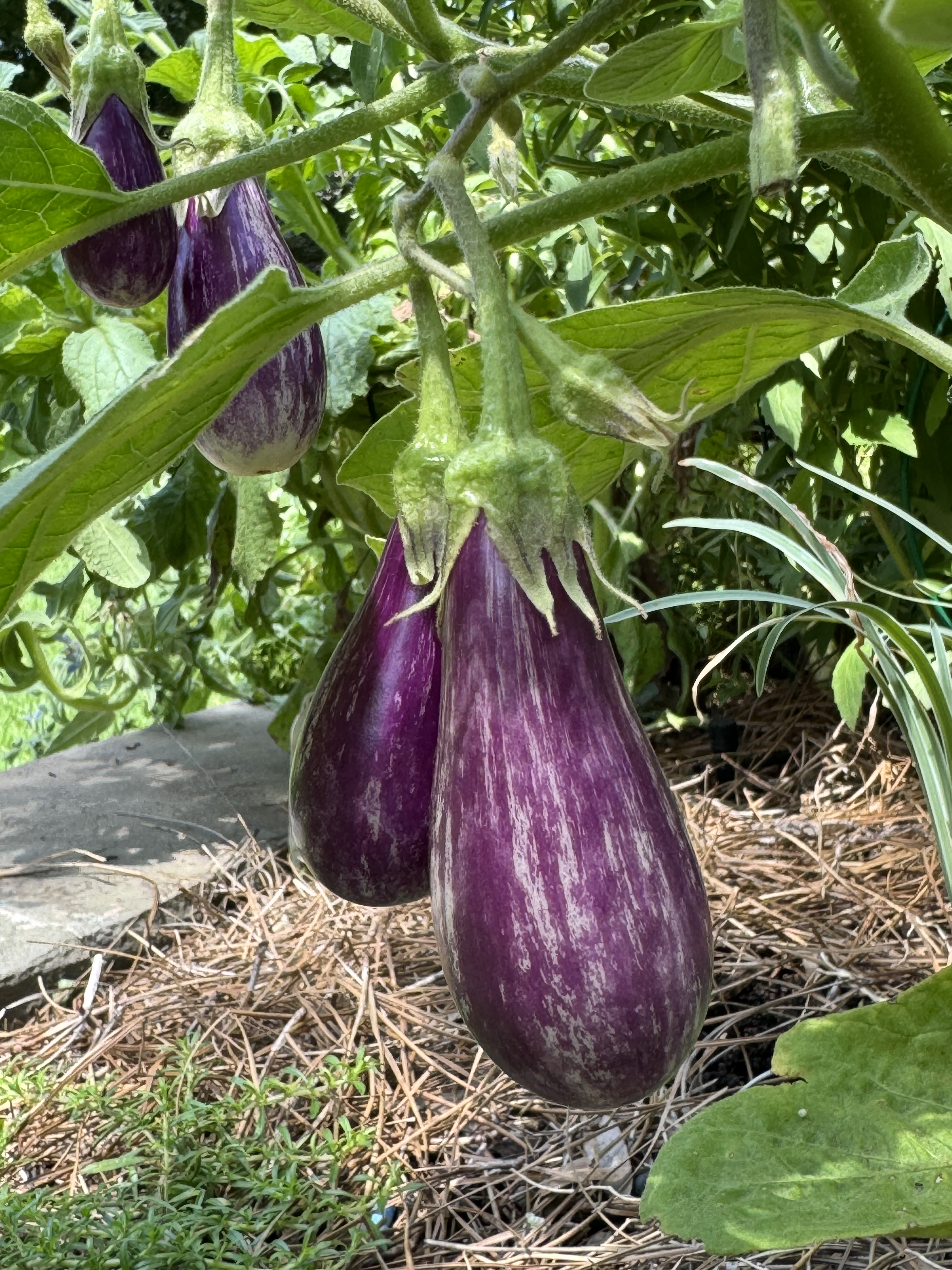
As you can see from the photo, it is a lovely mini eggplant, only 4 inches long, with stunning streaks of lavender and white. The plant itself grows to only 24” but produces tender-sweet fruits that are as beautiful as they are delicious. This variety can be grown in ground but, with its compact, dwarf size, is a just as suitable for container growing.
When it was time to harvest and enjoy, a quesadilla recipe was the perfect choice. Honey crisp apples gave it a sweet, tart taste while the smaller slices of savory fairy tale eggplant fit nicely on the tortilla. A handful of roughly chopped spinach along with some creamy Monterrey Jack cheese completed the combination of amazing flavors. Freshly made tortillas from Central Market held everything together while the quesadillas were baking in the oven.
A very unique feature of ‘Fairy Tale’ is the recognition it received in 2005 as an AAS* vegetable award winner. It was the first eggplant to win an AAS award since 1939. There is still time to grow ‘Fairy Tale’ in your garden so why not give it a try?
For transplants:
Pick a sunny site with rich, organic, well-draining soil. Eggplants require at least 6+ hours of direct sunlight per day. (Some sources advise not planting it in a plot where you grew tomatoes, peppers, potatoes or other eggplants the year before). Set transplants about 3 feet apart.
Mulch after planting.
Provide adequate water to produce the best-tasting eggplants. Fairy Tale eggplant enjoys deep, consistent watering throughout the growing season. Check often to be sure that Fairy Tale is receiving about 1-2 inches of water per week.
Harvest when fruits reach 2-4 inches in length for sweet, bitter-free enjoyment. Snip fruit with clean shears at their individual stems or in clusters. The skin should appear glossy (left side of photo), as dull skin can indicate overripe fruit (right side of photo). Harvest regularly to encourage new fruit production.
*All-America Selections winners are tested at trial grounds across North America. Each winner has superior qualities that distinguish it from similar varieties. ‘Fairy Tale’ was granted the prestigious AAS award by a nationwide panel of experts.
Linda Alexander,Dallas County Master Gardener Class of 2008
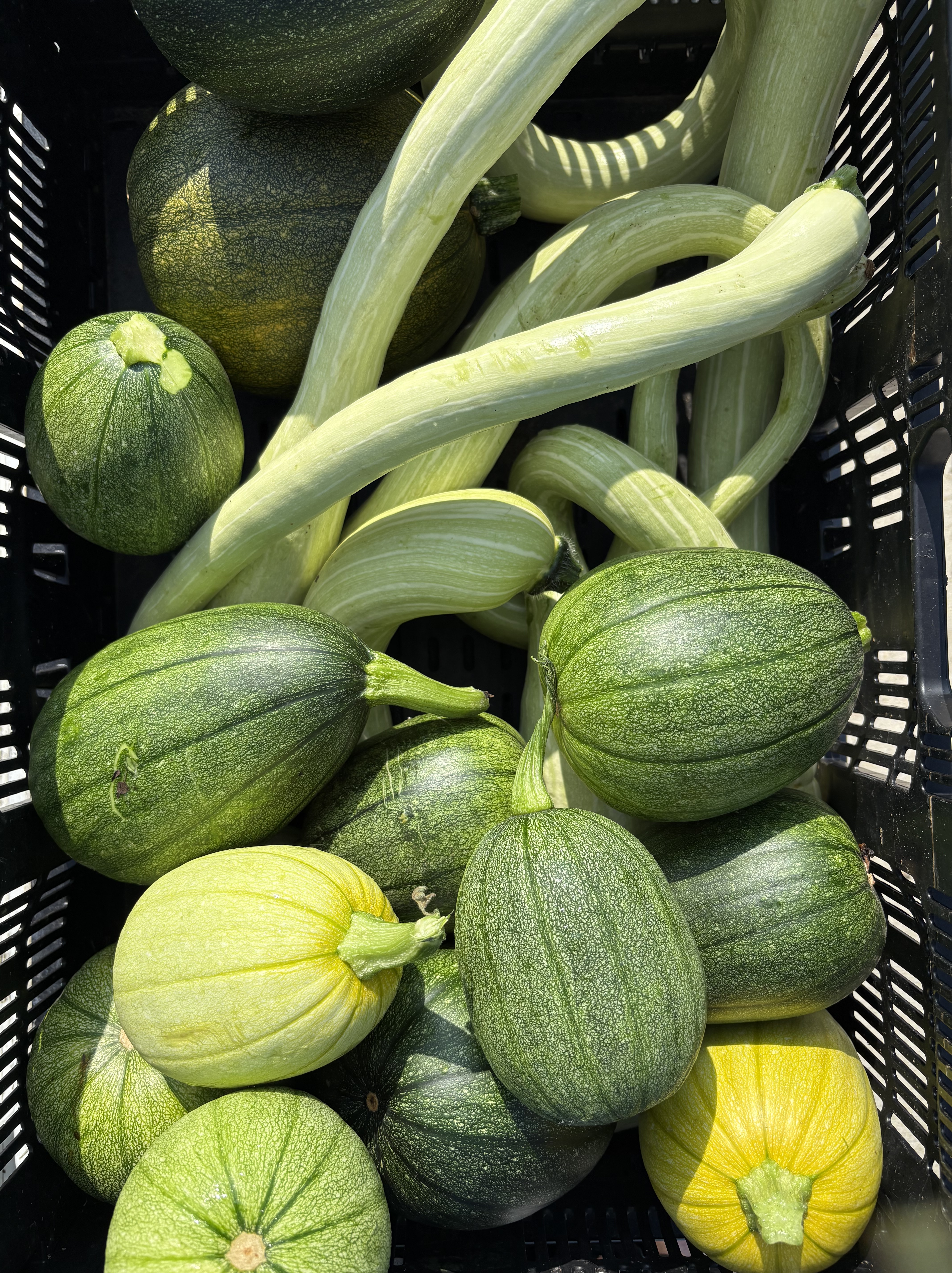
Congratulations to the Raincatcher’s Garden Veggie Team, who has harvested and donated 634 pounds of squash so far this year. It’s quite an accomplishment when you consider the ubiquity of the destructive squash vine borer (SVB) in the area.
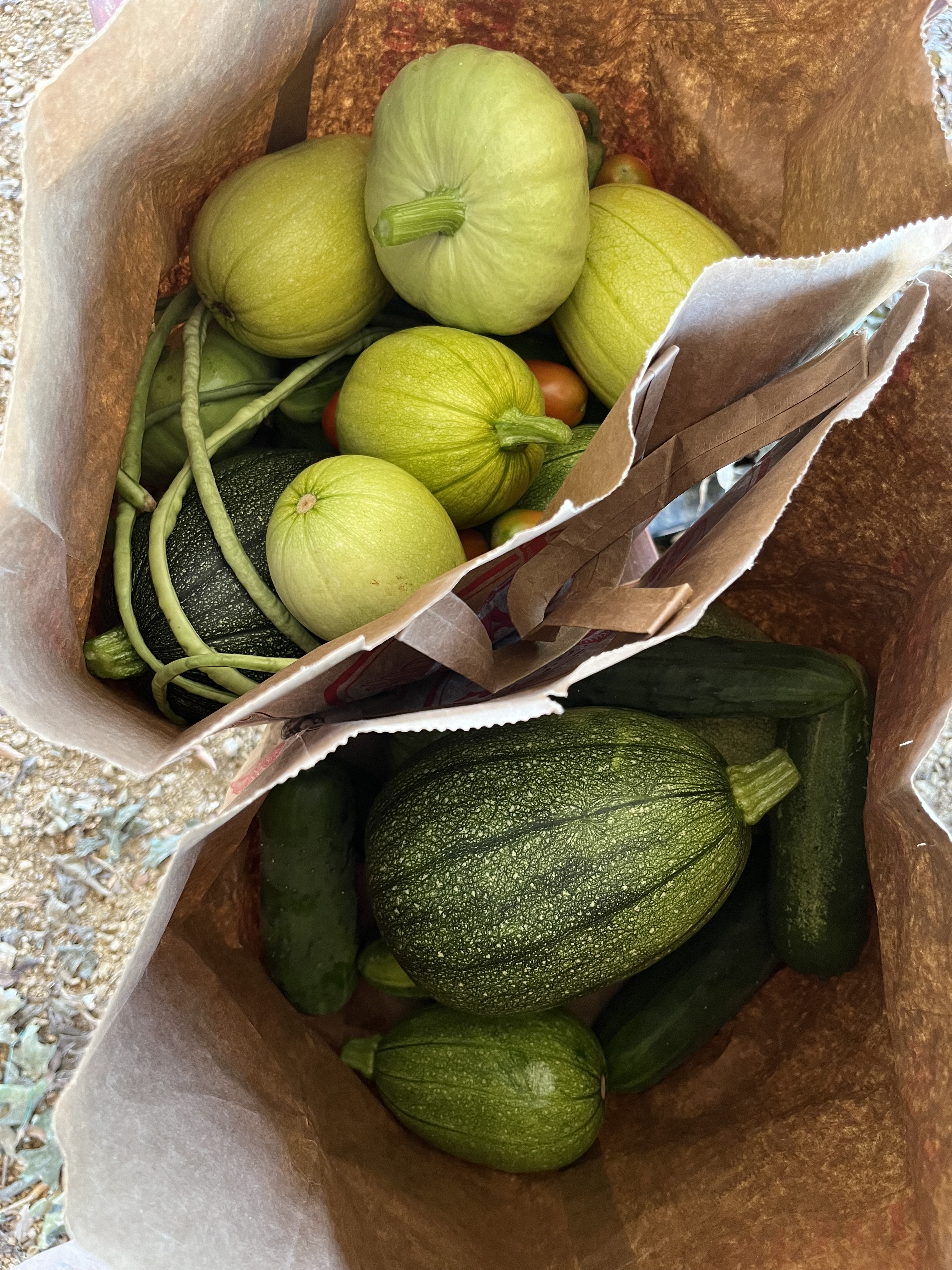
The team’s challenge was to find a squash variety that resists SVB. Over the past three years, gardeners have tried Zucchino Rampicante (Cucurbita moschata), Baby and Waltham Butternut (Cucurbita moschata) and Calabacita (Cucurbita pepo). All overcame SVB damage, but the Calabacita production was much higher.
Calabacita is delicious, especially when harvested at tennis ball to softball size. It can also be eaten as a soccer ball size pumpkin and stores well at the larger size. It takes a little more effort to prepare the larger size, so the gardeners included cooking instructions with donations.
One difficulty, but a good problem to have, is finding the many fruits of this prolific plant before they reach a large size.
Another issue is the vines grow over 10 feet long and quickly sprawl throughout the garden. At Raincatcher’s they grew over large trellises and into the raised beds and grape arbor on the opposite side.
However, the trade off of space for productivity worked out well for the garden this year.
Well done Veggie Team, whose total production for 2024 has now surpassed 1200 pounds, providing fresh, nutritious food for the patrons of North Dallas Shared Ministries.
Cyntihia Jones and Beverly Allen, Dallas County Master Gardeners
The Veggie Team works hard every Monday morning (and many Thursday mornings during harvest), weather permitting, so please feel free to stop by with any questions you may have about growing vegetables in Dallas or just to look around and be inspired. Our garden is located on the grounds of Midway Hills Christain Church at 11001 Midway Road, Dallas, TX, 75229.