Tag Archives: Dallas County Master Gardener Association

DCMGA Garden Tour Preview: The Garden of Janet D. Smith

 By Alan Rister

This is the unlikely story of a woman whose garden was created unintentionally and who, in the process, became a gardener accidentally.

Prior to entering the Dallas County Master Gardener program in 2005 following her retirement, Janet D. Smith confesses that she was completely ignorant of any and all knowledge concerning gardening.  Her attempts at home horticulture had consisted of purchasing hanging baskets of seasonal color annuals at big-box stores and “inundating them with Miracle Grow.”

Janet’s back yard had long suffered from a lack of adequately engineered drainage, which caused flooding of her garage every time there was a big rain.  She therefore sought out professional help to remediate the situation, and landscape architect Carol Feldman undertook the project, which involved the removal of a large amount of soil from the yard.  The drainage problem was solved, but now there was the question of what to do with the excavated soil, for which Janet did not want to incur costs for removal from her property.  The solution was to use the soil for the formation of a berm in her front yard.

The unexpectedly large volume of the new berm presented an opportunity for the creation of a garden, and thus, with a planting plan prepared by the landscape architect, Janet began a life-changing voyage of discovery through everything she could learn about gardens and the pollinator insects and birds that play such important roles in sustaining them.

Previously unaware that there exist many plants that come back from their roots every year to flourish and flower (perennials), Janet was delighted to discover that she could be freed from having to replant her new garden from scratch (with annuals) year after year.  And the planting plan that had been provided to her did indeed feature mostly perennials, among them many species of plants that are native to our region.  From that point, it is fair to say that this neophyte gardener dived zealously into the enterprise of gardening and has never looked back.

It has been a long and great transformation from Janet’s complete lack of gardening knowledge to becoming one of the Master Gardeners’ most respected authorities on best gardening practices and one of our most in-demand public speakers.  As she became more experienced as a gardener, she has pursued further education.  She completed both the Master Naturalist and Native Plant Society of Texas (NPSOT) programs, and over the years she has become as active in those organizations as she has remained in the Master Gardeners.  She has also continued to educate herself by studying topics that interested her most, especially all about pollinators, including local butterflies, bees, and hummingbirds.

Janet has been profoundly influenced by the principles of Douglas Tallamy, especially as elucidated in his seminal work Bringing Nature Home:  How You Can Sustain Wildlife with Native Plants (2009).  This work is a holistic treatment of the interplay of all members of the earth’s biome and how they create its ecology.  For Janet, this speaks precisely to the fascinating role of pollinators in the environment, which draws her continuously to study and teach about them through her speaking and writing.

Her evident passion about good horticulture and her enthusiasm for sharing her knowledge with the public has led her to becoming a well-known speaker in the Master Gardeners Speakers Bureau.  Since she began her public speaking in 2006, she has given hundreds and hundreds of presentations to garden clubs, community organizations, school groups, and others, not to mention her continual involvement with Dallas County Master Gardeners, North Texas Master Naturalists, and NPSOT programs and projects.  She has become so renowned for her particular love and knowledge of butterflies that all she now lacks is a coronation to be known as the “Queen of Butterflies” in Dallas County.

Today, Janet’s beautiful berm garden stands out as an exemplary showcase of smart gardening:  the “right plants” (varieties chosen for their optimal adaptation to local climate and soil types) in the “right places” (growing environments best suited for plants’ needs for sun exposure, moisture, drainage, and soil fertility).  The notably modest size of the garden and its conversion to an all-perennial palette of plants (with the exception of larkspurs, which self seed) make it inherently easier and more realistic to maintain.

Standing in her colorful garden, Janet says that what she most enjoys about it is observing “the complexity of nature and how it provides us the life we have.”  She muses that “this berm changed the direction of my life.”  Thus, this pile of dirt has provided Janet with inspiration and purpose.  Come to Peavy Road to see where it all began under the hand of a true Master gardener.

Alan Rister, Dallas County Master Gardener Class of 2005

Click here for ticket information about the garden tour taking place on Saturday, May 18th rain or shine.

A Late Spring Update

According to the calendar, the first day of spring was Friday, March 20, 2024. Dallas natives know that early signs of spring started appearing in late February. One of the happiest moments for me was when two new additions to my garden in 2023 announced their comeback from winter’s cold. They are now showing signs of an exciting springtime welcome.

*Veggie Green Rose (Planted April 2023) – It has easily doubled in size, producing new buds over the past two months.

*Green Gage Plum (Planted September 2023) – It was thrilling to see both trees filled with delicate white blossoms during the last few days of February, continuing into March. Fresh, new green leaves started appearing in late March and early April. It’s now May and all is well.

*Black Sage (Planted September 2023) Sadly, this one did not survive those few days/nights of below freezing temperatures. But I’m not giving up on growing black sage in my garden. This time I’m trying a different strategy. Last month I ordered four new 4” plants from the same grower in California. Each one was planted in a different location of the garden with varying degrees of sun to shade. I’m encouraged today that all four plants have almost doubled in size. Hopefully, by this coming fall they will all be well established and ready for our unpredictable winter weather.

(Black Sage planted in early April 2024 is thriving)

A recent Savannah Bee email featured their Black Sage Honey and the amazing story of how it thrives in the lower mountain slopes and upper desert regions of the Sierra Nevada mountains. It is a fascinating look at what it takes to produce this uniquely flavored honey. Thankfully, I still have a few jars left from my last order!

Linda Alexander, Dallas County Master Gardener Class of 2008


Raincatcher’s Garden Annual Plant Sale

 Tuesday, May 7th 2024

10 AM – 3 PM

Midway Hills Christian Church 

11001 Midway Road 

Dallas, Texas 75229

So you think you want a GREENHOUSE!  Experiences from Acquiring a Green House for Raincatcher’s Garden

The allure of having a greenhouse is something that some gardeners dream of – a place to overwinter plants, start seedlings, and have workspace. How does this become a reality?  First of all,  determine your goals and ideas.  Do your homework and decide if it is a project worthy of the investment of your time, money and efforts?  

About the time Fall arrives and freezing weather makes its appearance, ads for greenhouses start flooding inboxes and social media sites.  It seems like a good idea to have a place to store tender plants that can’t handle it outside during our coldest temperatures of January and February. Another bonus is the ability to provide a head-start for seedlings to sprout before they are planted in the garden.  

There are a variety of styles, sizes, price points as well as optional accessories to consider – from heavy plastic, glass or plexiglass partitions, to brick surrounds, and various mortar and glass options, ranging in cost, size and function. A greenhouse can also be labor intensive, and impractical for those who don’t have the time, ability, or manpower to maintain it properly.

The preferred space needs to be of adequate size for your garden needs, level and in a sunny to mostly sunny location. Water needs to be close and the ability to heat, cool and monitor the space is an important consideration.

Dreaming of a place to overwinter my plants caused me to inquire online. My available location was not ideal-the space was not adequate and the prep and the assembly was more than daunting (in so many ways). Ultimately, the amount of time, effort and money to be invested caused me to pause, rethink and determine that installing a greenhouse was not my best move.  However, a well-utilized greenhouse is much more than just a storage space for tender plants.  

While contemplating this, Raincatchers’ acquired one that would be optimal for our North Garden. It was transported to the property and the plans for putting it into seedling production began to unfurl. It took about two months to get the “new to us” greenhouse relocated and in working order. The “team” at Raincatchers’ has spent many man hours preparing it for use, leveling the site, setting a brick floor on decomposed granite, anchoring the greenhouse against the strong Texas winds, building multiple two-tiered seedling tables, installing a solar powered cooling fan, and initiating water and electrical hookups. Maintenance will be ongoing.

Seedlings have now been started for our many vegetable beds and they appear to be very happy in their controlled environment.  Note: vegetable seedlings are started and then set out into our gardens at the proper time.

If you are thinking about  acquiring a greenhouse, either by purchase or building it yourself – the best of luck to you! Hopefully, you now have an idea of the reality of the effort to produce a functioning greenhouse and can make an informed decision  It can be very useful and an asset to your gardening efforts; whether starting vegetables, flowers or show plants, or just over wintering your houseplants or tropicals.  

A gardener’s considerations for Installing a greenhouse:

Manpower to construct the unit (most come in sections that require construction) 

$$ Cost (from a few hundred dollars to several thousands)

Overall Size and Options

Site selection –    

Sunny to mostly sunny location

Ground leveled for structure

Anchoring against the wind

Inside Flooring (Hard surface with the ability to drain) several options Shelving options (Water resistant)

Storage options (Greenhouse supplies)

Heating and Cooling Capability, i.e., a solar operated cooling fan

Electrical Considerations

Water Availability (For plant watering and seedling misting) 

Shade Capability (For the long, hot sunny days)

On-going Upkeep (several hours a week) 

Construction Permit (If required)


Starla Willis, Dallas County Master Gardener Class of 2011 with input from Jon Maxwell, Class of 2015

Two dates to remember:

Raincatcher’s plant sale-May 7th

Dallas County Master Gardener Association Garden Tour 2024-May 18th

Easy Access to Great Plant Information

April 8, 2024

The kiosk in the north garden at Raincatcher’s Garden has been somewhat ignored over the years.  We felt it would be a good opportunity to give people visiting the garden some useful information about events happening at the garden, as well as plant details.  It was time that the kiosk served some purpose!!!  The first poster that was added to the kiosk was information about our blog, Dallas Garden Buzz.  Hopefully, visitors to the garden will use the QR code and find a wealth of plant information, beautiful garden photos and great recipes.  Another flyer was added to announce our annual plant sale coming up on Tuesday, May 7, 2024

One of our main missions as Master Gardeners is to be a resource for gardening knowledge to the community.  We will be using the kiosk to do this by posting a monthly plant information sheet featuring one of the plants in the garden.  Not only will visitors be able to read the plant information but they will also be able to stroll through the garden trying to locate the plant on the flyer. 

Below is the first “Plant of the Month” information sheet that is currently posted in the kiosk.  Hopefully, this will be the first of many!!!  

Chinese Ground Orchard

The Chinese Ground Orchid is a perennial bulb in the orchid family that grows to a height of 1 – 1½ foot with a 1 foot spread.  It is a shade plant that does well in morning sun and afternoon shade but it will also grow in full shade.  The blooms last for about 6 weeks and the foliage looks like a palm tree seedling when not in bloom. This tropical plant does well as a ground cover or growing under a tree and is a good choice for a container in colder climates.  The Chinese Ground Orchid spreads by rhizomes and is easily propagated by divisions.  This beautiful plant is blooming in the courtyard now.  

Jackie James, Dallas County Master Gardener Class of 1993

Snowball Viburnum

March 27, 2024

A view of 3 Snowball Viburnums, looking thru my blackberry bushes. Eleagnus flanking the west side, hellebores underneath.

Spring comes and this is what I see every year out my south-facing windows. What a sight! I planted these 3 snowball viburnums 11 years ago. They have been the showiest, easiest plant choice I have ever made. The buds are chartreuse and and bloom into softball size white blossoms.

As you can see from my picture above, mine are now feet 15 tall and slightly crowded but I don’t mind. The winter honeysuckle that has gotten bigger than I ever expected is pushing one snowball to the East. It is going to be pruned!

Last year even with the unbearably hot temperatures, my viburnums bloomed a second time. There were’t as many blossoms but in that terrible summer heat it was nice to see a few snowballs.

Plant Attributes

This picture from Neil Sperry’s website shows the early chartreuse bloom.
  • Common Name: Chinese snowball viburnum, Chinese snowball tree
  • Botanical Name: Viburnum macrocephalum
  • Family: Adoxaceae
  • Plant Type: Perennial, Tree, Shrub
  • Mature Size: 6–20 ft. tall, 6–15 ft. wide (grows larger in warmer climates)
  • Sun Exposure: Full, Partial
  • Soil Type: Well-drained loamy, sandy, or clay soil
  • Soil pH: Acidic
  • Bloom Time: Spring
  • Flower Color: begins chartreuse then becomes white
  • Hardiness Zones: 6–9 (USDA)
  • In Dallas, Snowball Viburnums do not loose their leaves in winter
  • Excellent cut flower with long vase life!

Ann Lamb, Dallas County Master Gardener Class of 2005

Captivated by Caraway…Flavorful Leaves, Spicy Seeds and Tasty Roots

March 23, 2024

Carum carvi

Early last fall I planted a 4” pot of caraway in my raised garden bed. That little plant has now more than tripled in size. 

Just a few days ago tiny white flowers appeared atop the feathery foliage. Blooming should continue until sometime during late spring or early summer when spent flowers yield those small, but wonderfully aromatic, hard brown seeds used in cuisines throughout the world.

If you’ve never grown caraway in your garden, follow along as we learn more about this carrot-like plant which is edible from root to shoot! 

Caraway is a hardy herbaceous biennial requiring two seasons to complete its life cycle. The first year, bright green threadlike foliage resembling that of a carrot form a mound 1 to 3 feet high. Next comes the umbels of creamy white, delicate flowers that resemble Queen Anne’s Lace.

Once the flowers are spent, brown ribbed seeds appear. The familiar caraway seed is actually the fruit of the plant. It is recommended that seeds should be harvested about a month after they have blossomed. To accomplish this, clip off the seed heads and place in a paper bag to finish ripening.

 While caraway seeds are most often associated with rye (or dark rye) breads there are a many other applications for using it. Some include: desserts and baked goods, liquors, stews, casseroles and as a flavoring for beef and pork dishes. 

When the plant has produced seed, dig up the taproot and use as you would any other root vegetable.

Caraway is a pleasing plant to grow in your herb garden. The lovely little flowers attract beneficial insects, including honeybees. 

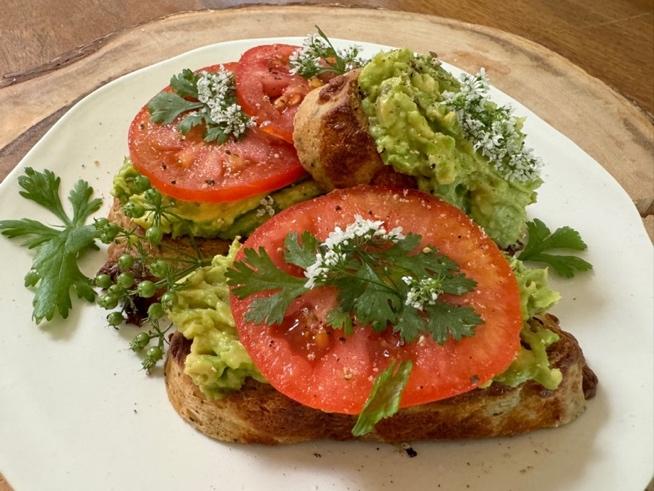
For two different dinner options recently, we enjoyed caraway leaves straight from the garden in the following ways:

Linda Alexander, Dallas County Master Gardner Class of 2008

Learn to Grow Horticultural Presentations at the Arboretum

February 29, 2024

An update from the Dallas Arboretum:

Master Gardeners get into the Arboretum free on Fri before the Learn to Grow Classes.  Just wear your DCMG badge and advise the ticket agent that you are a Master Gardener coming for a Class.  Attend the class and visit the gardens for the rest of the day. This is a reminder the class is at 11am, Friday, March 1st in the Tasteful Place at the Arboretum. All members of the public are welcome to the class.

Starla and I will be showing pictures from our tour of America’s Garden Capitol and discussing photo tips.

Here is a preview of one the beautiful gardens, Wyn Eden.

Ann Lamb, Dallas County Master Gardener Class of 2005

Learn to Grow Horticultural Presentations at the Dallas Arboretum

Important Events Coming!

February 28,2024

Starla and I will be speaking at the Dallas Arboretum during Dallas Blooms at 11am on Friday, March 1st. We will be coordinating with the Dallas Blooms theme-A picture’s worth a thousand words, showing pictures of our recent trip to America’s Garden Capitol and giving photography tips.

Click here for information about our talk as part of the series: Learn to Grow Horticultural Presentations. Many other classes will be available by other Dallas County Master Gardeners. Check the calendar!

No charge except your admission to the Arboretum.


The DCMGA Japanese Maple Sale Begins March 6

Once again, we are offering a large selection of Japanese Maples from Metro Maples for purchase with all proceeds going to DCMGA. If you were disappointed because you missed out buying one of these lovely trees in the October sale, be sure to get online early to make your selections. The SignUpGenius for ordering and purchasing maples will go live March 6 at 8 AM. At that time, you can order and pay for your selection(s).
 One-gallon trees are $35.00 (including tax)
Two-gallon trees are $46.00 (including tax)
The SignUpGenius will close at 5 PM on March 13, or earlier if all trees are sold. Our inventory of trees sold out within hours last October. Please bring your confirmation to the pickup on Saturday, March 23 between 10 AM and 1 PM at Raincatcher’s Garden.
 

SAVE THE DATE: Raincatcher’s Garden Annual Plant Sale

Midway Hills Christian Church 

11001 Midway Road 

Dallas, Texas 75229

Tuesday, May 7th 2024

10 AM – 3 PM

We will have annuals, perennials, herbs, peppers, succulents, shrubs, trees, groundcover, bulbs, houseplants, decorative pots, yard art, etc. 

All proceeds from this sale go to Dallas County Master Gardener Projects.

Ann Lamb, Dallas County Master Gardener Class of 2005

Flowers of Frost and Freezes

February 25, 2024

In our Zone 8 climate they are not only survivors of winter’s chill but soon after a January freeze, Hellebores lift their lovely heads and shower us with an abundance of February color. Starting now and continuing into late March and early April, refresh your home by selectively snipping and arranging their decorative blossoms. 

A close-up of a flower

Description automatically generated

If you aren’t already growing Hellebores in your garden, now is a really good time to give them a try. Many of our local garden centers currently have a wide selection of varieties with colors ranging from ivory and pale green to pink and dark burgundy. You might find comfort in knowing that the symbolic meaning of hellebores includes peace, serenity and tranquility.

My hellebores were planted three years ago and were used to make each of the featured arrangements. However, this was my first time to use hellebores as a cut flower, but it won’t be my last. It has been impressive to see how well their strong and sturdy stems hold up when anchored in a “frog-type” holder. 

Here are my top three reasons for growing hellebores:

  1. During the dreary backdrop of winter, hellebores bring joy to your garden with a rainbow of beautiful colors. 
  2. As a cut flower, hellebores hold up well and can be arranged in unique and beautiful ways.
  3. As you can see from the photos, hellebores provide honeybees with a much-needed nectar source when options are extremely limited.

Linda Alexander, Dallas County Master Gardener class of 2008

Other Hellebore articles from our archives:

Hellebores

Lenten Rose

Helleborus, ‘Glenda’s Gloss’ will be planted
along the wavy wall in memory of Raincatcher’s volunteer
and dear friend, Glenda Nix. She was loved and is missed.

Iris


Who doesn’t love a beautiful iris plant? It’s one of the first plants to
bloom in the spring and it is rugged, reliable and very easy to grow.
The iris is named for Iris, the Greek goddess of the rainbows and
personal messenger for the Gods. It is a long lived perennial that
needs a minimum amount of care.


There are almost 250 species of iris and they come in a multitude of
colors. With many different types and colors available, there is a
perfect iris for every garden. The most popular iris is the bearded iris.
Other popular varieties include Siberian and Japanese irises, Louisiana
irises (which are native to North America), and Dutch hybrids.
Bearded iris get their name from the “beard” that runs down the center
of the cascading petal.

The rhizomes need sun and air to keep them
dry. If they are covered with soil or mulch there is a chance the plant
will rot. Some say to plant the bearded iris rhizomes “with their face
in the sun” leaving the upper part of the rhizome exposed.
Iris plants need at least 6 hours but preferably 8 hours of direct sun.
The best time to plant iris is early fall. This will give the plant enough
time to settle into the ground and start rooting before the first frost.
They should be planted 12–18 inches apart. If you have different
types of iris cultivars, plant each type together in groups of 3 to 7
plants for a greater color impact.


After iris plants have finished blooming, cut the flower’s stem down to
the base but do not trim the leaves. The plant’s foliage carries on with
photosynthesis in order to generate energy for next year’s growth and
flowers. It is best to divide iris plants in the fall.


We are lucky at Raincatcher’s Garden to have the most beautiful
collection of iris so I hope you enjoy the photos taken at the garden.

Or better yet, visit the garden in the near future and see these beauties
in person! If you have iris in your garden, share them with friends and
neighbors and help spread the joy of iris!


Jackie James
Dallas Master Gardener Class of 1993