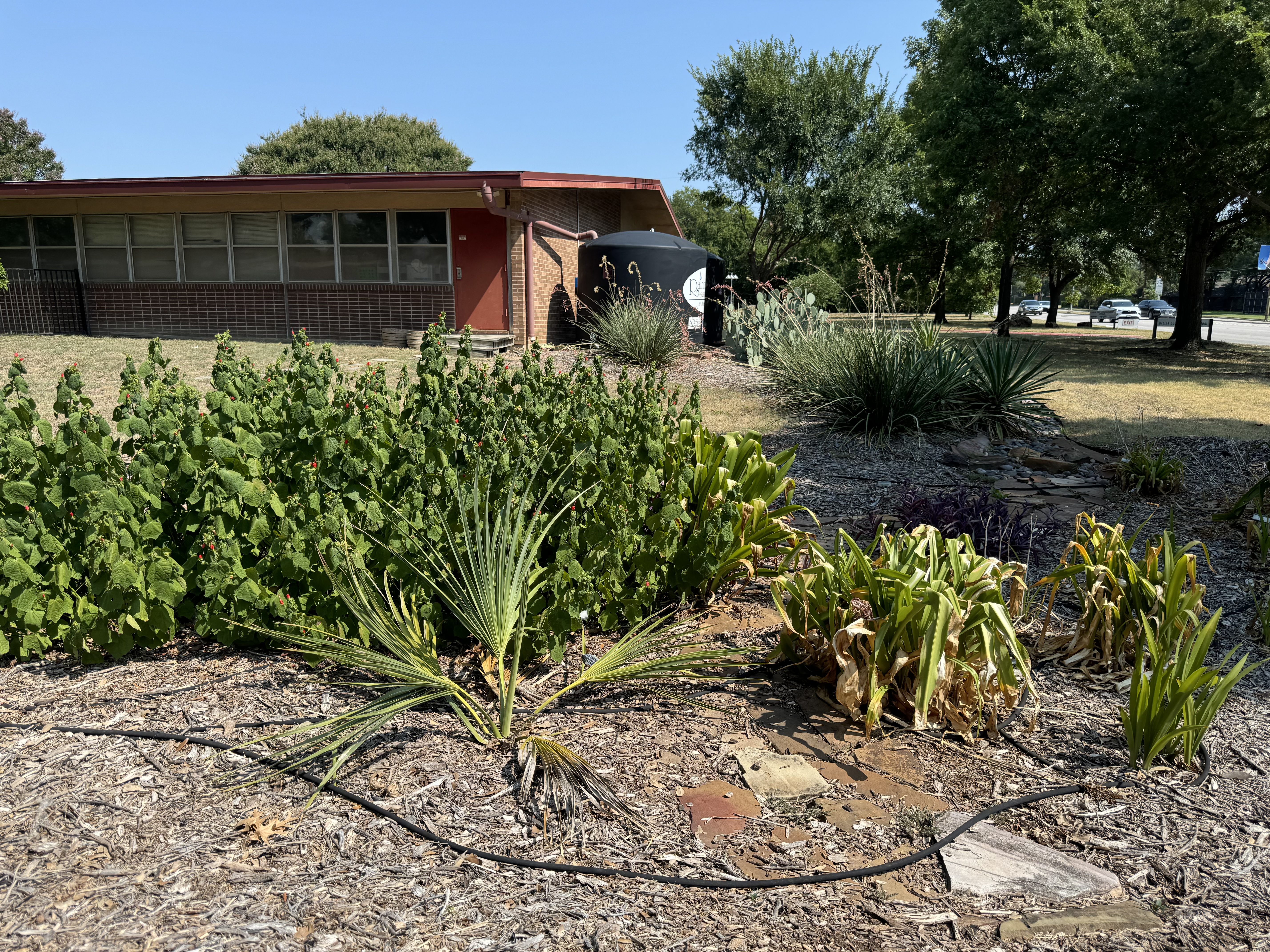
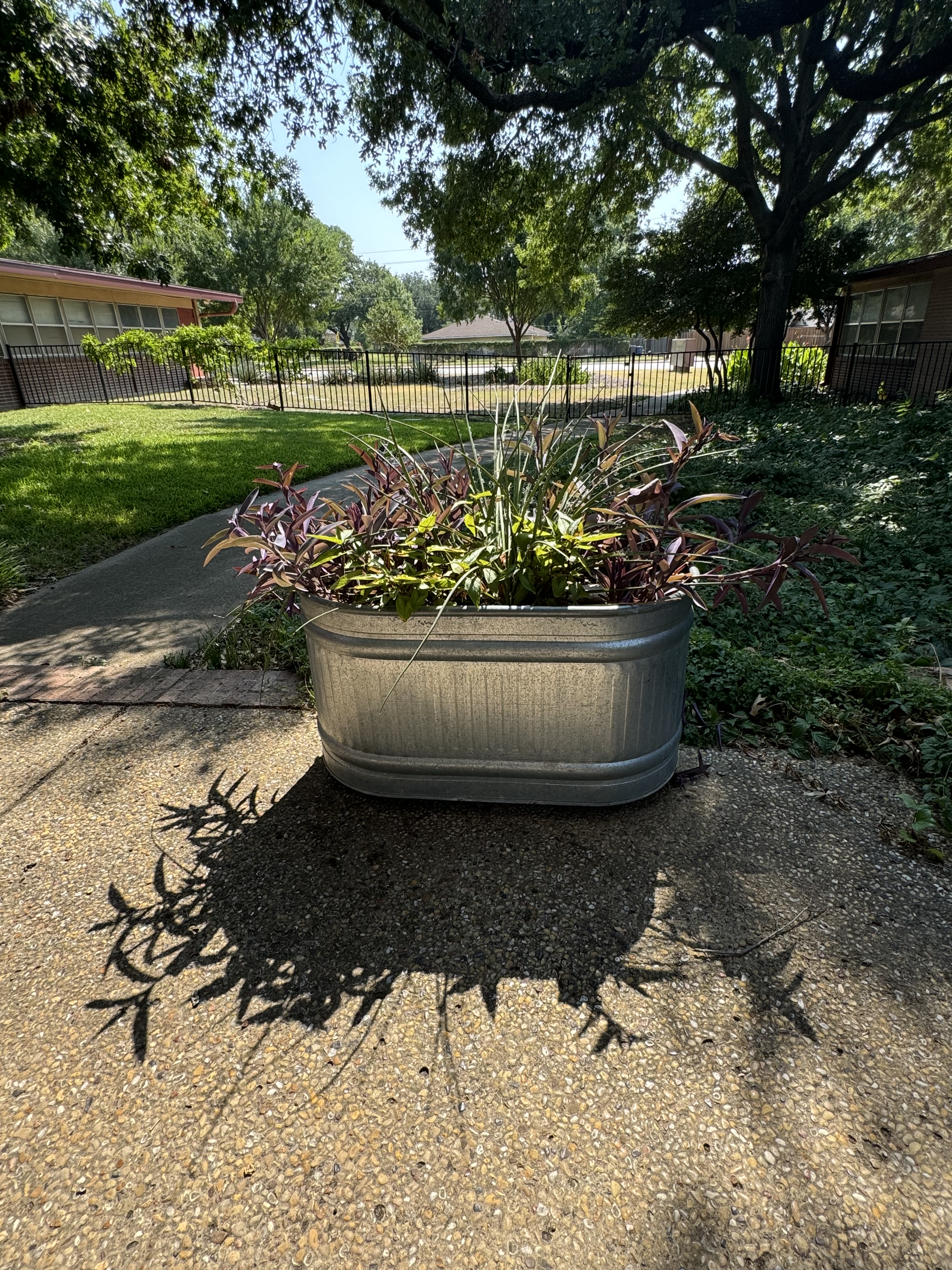
This bit of wisdom came by way of what seems an unexpected source. It was a great many years ago now–in a cartoon a FELIX THE CAT cartoon that was most likely old even then. Thinking back it was a strange cartoon not really designed for children at all. But that hardly matters at all.
Wisdom comes in many ways and forms and can make a lasting impression–so maybe it was a good thing for children–after all wisdom is useful to everyone. Once its firmly in one’s mind it can be called upon when most needed.
It turns out it’s needed now–by gardeners at least. This can be a discouraging time in the garden. Sure its great to have lots of perennials and if you try to remember–they were lovely pretty and then there were bees and butterflies. And the summer and fall were sure improved by the blooming annuals. Oh but now –just how many dead stalks did all that beauty leave behind–sadly alot!! And no way are they lovely now in fact they are awful.
It’s time for the big cutback!!! This just isn’t a happy thought. Let’s face it –its a very unhappy thought. It can seem overwhelming when you look at the whole thing–just too much hard to face.
All gardeners know it has to be done. The health and beauty of the plants require it and there is an absolute need to tidy things up. All the hoped for winter beauty of seed heads and such–its done stalks are falling over and there just isn’t anything pretty about it.
Don’t despair–this is where the wisdom of FELIX THE CAT comes in.
Take a step back from the whole situation. It all doesn’t have to be done at once–more than likely it just can’t be. Just get started–get out the clippers and loppers and sturdy gloves–make it as pleasant for yourself as possible.
Then remember INCH BT INCH. It will get done. You will be happy and justifiably proud of your accomplishment.
Cutting back lots and lots of dead stems just isn’t fun.. That doesn’t mean you can’t get some pleasure from the process.
Take breaks look at what you have done congratulate yourself!!
Look for signs of life among the dead stalks. Remember how valuable your work is. The Spring annuals and the bulbs can’t possibly look good if the garden isn’t ready for them.
Keep saying to yourself inch by inch–and yard by yard–will happen!!
So many dead stems that have to go-It’s a bit discouraging, no way around it.And still more to go!This grass is showing signs of lifeYes, there are weeds but then a baby poppy.Look the Narcissus arae returning.A stem can look very dead but a little plant can be growing from the roots, remember our plant sale is coming.This didn’t look promising but now there are tiny plants. Let’s see what happens.Wonderful baby Larkspur!
Susan Thornbury, Dallas County Master Gardener Class of 2008
Raincatcher’s Garden of Midway Hills 11001 Midway Rd, Dallas, TX 75229 Classroom 1, North Church Building 10-11 AM, Tuesday, February 4, 2025
Join us for a practical and informative class on maintaining your investment in your garden tools taught by Tim Allsup, an experienced and knowledgeable garden volunteer.
Rusted clippers? Dull loppers? Broken shovel handle? Tim can help you learn how to repair, restore and protect your tools in anticipation of spring garden tasks ahead.
To find the class, please enter the Midway Hills Christian Church campus from the south drive, follow the signs and park in the west parking lot. Enter the south building through the courtyard. The Community Hall is on your right.
Lisa Centala, Dallas County Master Gardener Class of 2010
The first week of January was warm—high temperature in the 60’s, maybe even higher. But, this is Texas. Give it a little time and the weather will change.
Weather reports started warning of incoming weather –COLD TO VERY COLD.
And, our tomatoes are still blooming and setting fruit, but not ripening. What should we do? In the past, we’ve harvested the green tomatoes and put them in a cool dark place (under the bed was one suggestion) or we could just let them freeze and use them in the compost bin.
We had five plants. I remembered one year Dorothy Shockley, a fellow Master Gardener at Raincatcher’s RED Garden had inviterd us to her home to take care of that year’s abundant crop of green tomatoes. She had a recipe for B&B CHOW CHOW (also know n as Cool Point Relish in Louisiana). It was the same pickled green tomatoes I had eaten with my fried catfish years ago, but never knew how to make it. Dorothy shared her recipe and I dug it out of my files.
When Roger & I started picking, we didn’t know if we would have enough green tomatoes to make a batch. Not to worry—we had 10 pounds of varying sizes, some beginning to blush, but most were green rocks.
Cindy and green tomatoes!
We went to the store to purchase the rest of the ingredients: onions, jalapenos, white vinegar, more sugar, canning lids. I already had jars and rings in the pantry.
After a couple of false starts at preparation (I’m not as young as I used to be) we got our batch of chow-chow jarred and ready to refrigerate .We even saved the excess picking solution per Dorothy’s recommendation to use with cucumbers and other salad ingredients.
Personally I like this solution better than lemonade.
Bon Appetite!
Cindy Bicking, Dallas County Master Gardener Class of 2006
Raincatchers’ Garden chose Obession Nandinas to co-exist with established Crepe Myrtles that have a darker leaf and white blooms. These two plants provide an attractive, easy to maintain small area within our garden, and provide a colorful treat for the eye throughout their growing season. Our plantings flank our shade pavilion located in the northwest corner of our north garden.
Glowing vibrant red in the spring and summer, Obsession™ Nandina is visually appealing, and it is also easy to grow, even for beginners. An upright, compact, dense grower, Obsession offers richer color than ordinary nandinas and is non-invasive.
With its vibrant foliage and compact form, Obsession Nandina adds texture and color to any landscape. It thrives in various growing conditions and adapts to full sun and partial shade. Whether you aim to create a colorful border, enhance a foundation planting, or beautify a patio or balcony, Obsession Nandina is up for the task. Best of all, Obsession Nandina is deer-resistant!
Ideal growing conditions for the Obsession Nandina shrub include well-drained soil and regular watering, especially during hot summer months, though you’ll find the water-wise Obsession to have low water needs once established.
This low-maintenance plant also doesn’t require frequent fertilizing, making it an excellent choice for those with busy schedules. If you wish, feed your Obsession Nandina once per year in early spring.
You can selectively prune to shape your nandina shrub prune in late winter or early spring according to your preference, but Obsession Nandina doesn’t require pruning to stay compact. When pruning, remove any dead or damaged branches, as well as any crossing or overcrowded stems.
Bloom/Feature Bright red new growth
Evergreen or Deciduous? Evergreen
Plant HardinessHardy to -10°F to 0°F
Key FeaturesDeer Resistant, Disease / Pest Resistance, Water-wise, Winter / Floweing Season
Fall Foliage Color None
UsesAccent, Container, Mass Planting, Slope
Water Needs Medium
FertilizeYearly in early spring
PruningNone Needed*
Planting Instructions
• Water before planting • Plant in location that receives partial sun to shade • Dig hole 2X the width of pot • Plant 1-2″ above ground soil level, backfill hole with soil • Water deeply to settle, then add more soil if needed • Mulch 1-2″ deep around plant, avoiding area closest to stem
*If pruning is desired for shape, remember to cut the offending branches at ground level, not from the crown of the plant.
Information above is from Southern Living Plant Collection.
Just a little over 18 years ago, my husband and I moved into our home on Shadywood Lane. Charles Dilbeck built the Monterey Ranch style one story house for the Runyan family in 1948. The 77 year old property was, and still is, filled with a wonderful assortment of mature trees, shrubs, perennials and evergreens.
Fourteen large magnolias, seven majestic red oaks, four stately live oaks, two towering cedar elms, a half dozen American elms, pecans, yaupons, dogwoods, Texas mountain laurel, cherry laurels, hackberries and redbuds were planted long before we arrived. But one magnificent red oak tree in the backyard was our favorite. Standing at over 40 feet tall along with a canopy spreading out over 40 feet in diameter, it provided an abundant covering of shade for our backyard. Under its protective branches were lovely Japanese maples, three Chindo viburnums and a large bed of endless summer hydrangeas. And then, the story changed.
Rushing outside to try and understand what had just happened, I was stunned to see the damage. Over one third of the canopy was gone. We would need a professional tree company to remove the limb and evaluate the overall condition of the tree. The tree was treated for insect damage, and we moved forward.
And then another chapter with our majestic red oak unfolded just a few months ago. On September 2nd, labor day, very early in the morning, an even larger limb snapped and crashed to the ground. Thankfully, no one was outside when it fell across the driveway and onto the guest house. Our youngest son was kind enough to rush over and cut the limb into smaller pieces so that we could get our vehicles out of the garage. Completing the task of cutting the limb into more manageable pieces for bulky trash pickup took two guys almost three hours.
With only half of the original canopy remaining, we decided to bring in an arborist to assess the condition of the tree. At over 80 years old, a difficult decision was unanimously reached to have the beautiful old red oak taken down completely. Alex, the arborist, carefully explained that there were simply too many issues involving the overall health of the tree to treat it. The most important consideration was related to safety. The tree was leaning too far in one direction and would totally destroy our small guest house if it fell over or, even worse, hurt a family member or anyone else who happened to be in the backyard.
Our affection for the old tree had grown immensely over the years. We loved the amount of shade it provided when the grandkids came over to play games in the backyard. Summer picnics and dinner around the firepit wouldn’t have been possible without its lush canopy shielding us from the scorching sun as it moved across the sky. In a fleeting moment the microclimate transitioned from lush, dappled shade to full sun.
As the arborist recommended, we would need to select a different variety of tree and move the placement approximately 6-8 feet away from where the majestic, old, red oak stood. The next step was to visit to a local tree farm. Fortunately, our family had lived next to the Fannin’s of Fannin Tree Farm over 35 years ago so after a quick call, we scheduled an appointment to visit their retail facility on Highway 121. A decision had already been made to replace the oak with a cedar elm. Touring their inventory of wonderful trees gave us many options. Here is the cedar elm we selected. My husband is 6’ 4” which gives a better perspective on the size of the tree.
With some hesitancy, we scheduled the removal of our old red oak for Monday, September 21st. It was a two-day event which included several nail-biting moments of suspense. Starting with the remaining canopy, branches were very strategically roped and secured before any cutting began. Watching the four men maneuver their way around the tree was truly amazing. With each ‘tug’ of the rope, they carefully orchestrated the exact spot where the falling limb would land. Nothing on the ground was damaged due to the safety measures that were kept in place.
Once completed, stump grinding was next on the agenda. It took over four hours to slowly and carefully remove the remainder of the tree. And then, it was completely gone. I stood silent for a moment and tried to imagine it still standing there, beautiful and thriving for over 80+ years. Whispering a soft prayer of thankfulness for the joy we had received over the years, my eyes opened to an empty landscape filled with new possibilities. Now It was time to move forward with a renewed hope about our next adventure.
Installation of the 18’ tall cedar elm was an incredible experience. The challenge of bringing it down our rather tight and winding back driveway took a measured amount of skill. The crew sent to do our installation amazed me with their ability to lift and place the tree at just the right angle in the pre-dug hole. A few tweaks of the chain positioned it for maximum beauty.
We are adjusting to the new tree a little better than expected. But there are times when I find myself reminiscing about the beautiful canopy of the old red oak that we benefited from and enjoyed immensely for over 18 years. Treasured memories of that majestic tree are still in my heart and will remain there for a lifetime. But, thankfully now, Joyce Kilmer’s lovely tree poem has spoken to me once again!
Where, Oh Where is Dear Little Susie? (Answer: She’s Way Down Yonder in the Paw Paw Patch)
Where, Oh Where is Dear Little Susie? (Answer: She’s Way Down Yonder in the Paw Paw Patch)
Four years ago (Spring 2020) two small Paw Paw trees were planted in the Raincatcher’s Garden of Midway Hills Edible Landscape. As advised by the grower in Florida, we ordered two different varieties to ensure cross-pollination and fruit set; Collins Select and Eastern Seedling. At planting time, they were about 18” tall. Now, four years later our little trees are continuing to grow and have reached over 5 feet in height.
Paw Paw Tree ‘Collins Select’ Spring 2024‘Eastern Seedling’ September 2024
However, what we have yet to experience are those vibrant, maroon-colored spring blossoms.
Patience, according to the growth characteristics of paw paws, will need to be exercised for a few more years. In other words, if we consider the projected time frame for fruit production, a range of five to eight years is to be expected. Waiting will be a challenge but, hopefully, we’ve done all the right things to get our trees started on their journey to a delicious tropical harvest.
Hoping for a pleasant surprise in Spring 2025!
Paw paw Asimina triloba, is a species in the plant family Annonaceae, which is the largest family of the magnolia order and includes many tropical plants. They are the largest edible fruit trees native to the eastern United States.
Linda Alexander, Dallas County Master Gardener Class of 2008
For a fascinating article about paw paw trees, their characteristics and history, follow this link.
If the key to life is simply living it.. The key to understanding may be simply realizing that wisdom is all around even in unlikely places. Our job is to realize wisdom when we find it—and then apply it .
For an example let’s think about these simple lines:
YOU GOT TO KNOW WHEN TO HOLD EM
YOU GOT TO KNOW WHEN TO FOLD EM
YOU GOT TO KNOW WHEN TO WALK AWAY
YOU GOT TO KNOW WHEN TO RUN
Few words but the ideas are wise and useful. No where more so than in the garden at this time of the year. We start with the first of course. And actually this idea was most important a little earlier in the year.
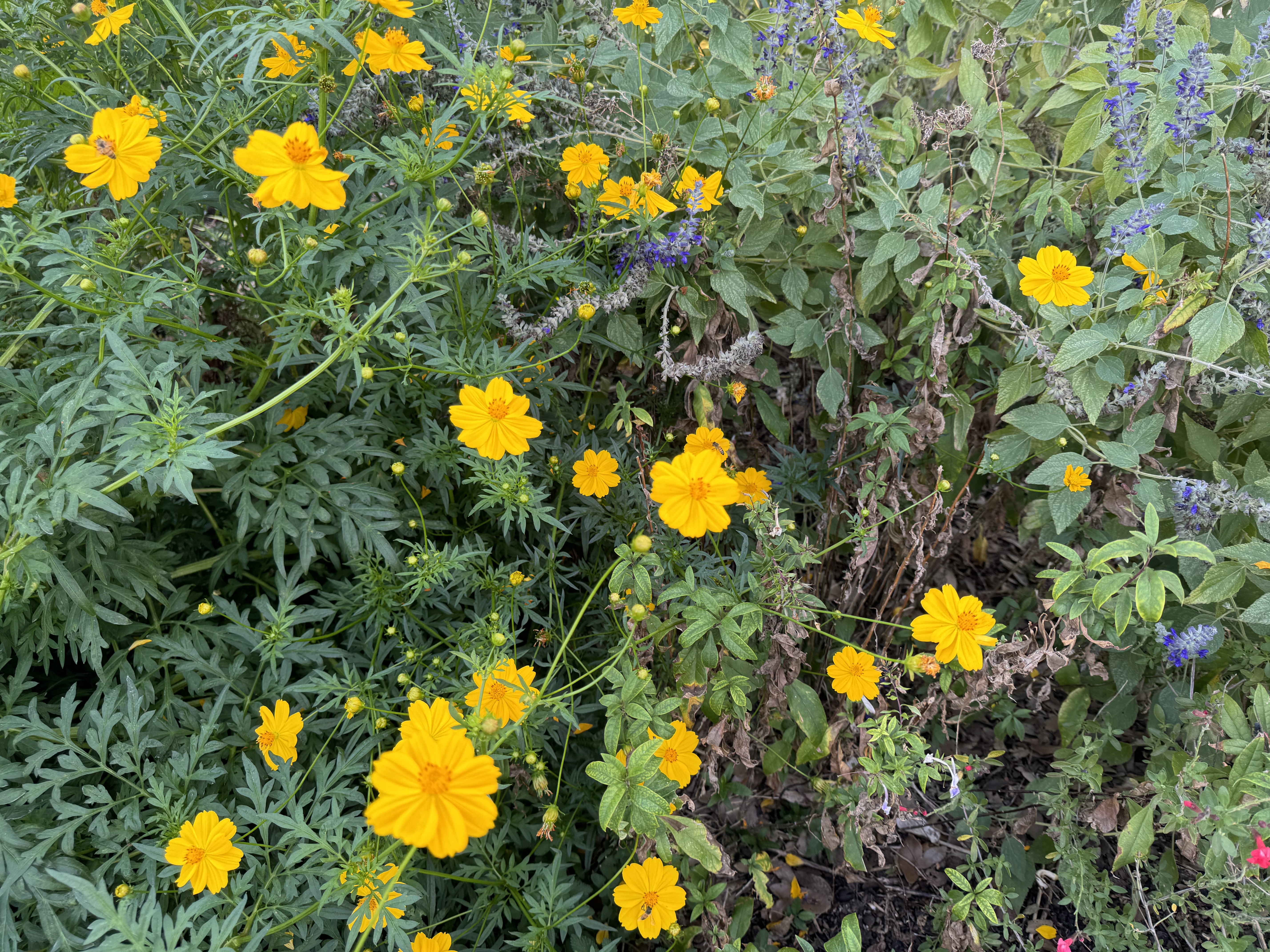
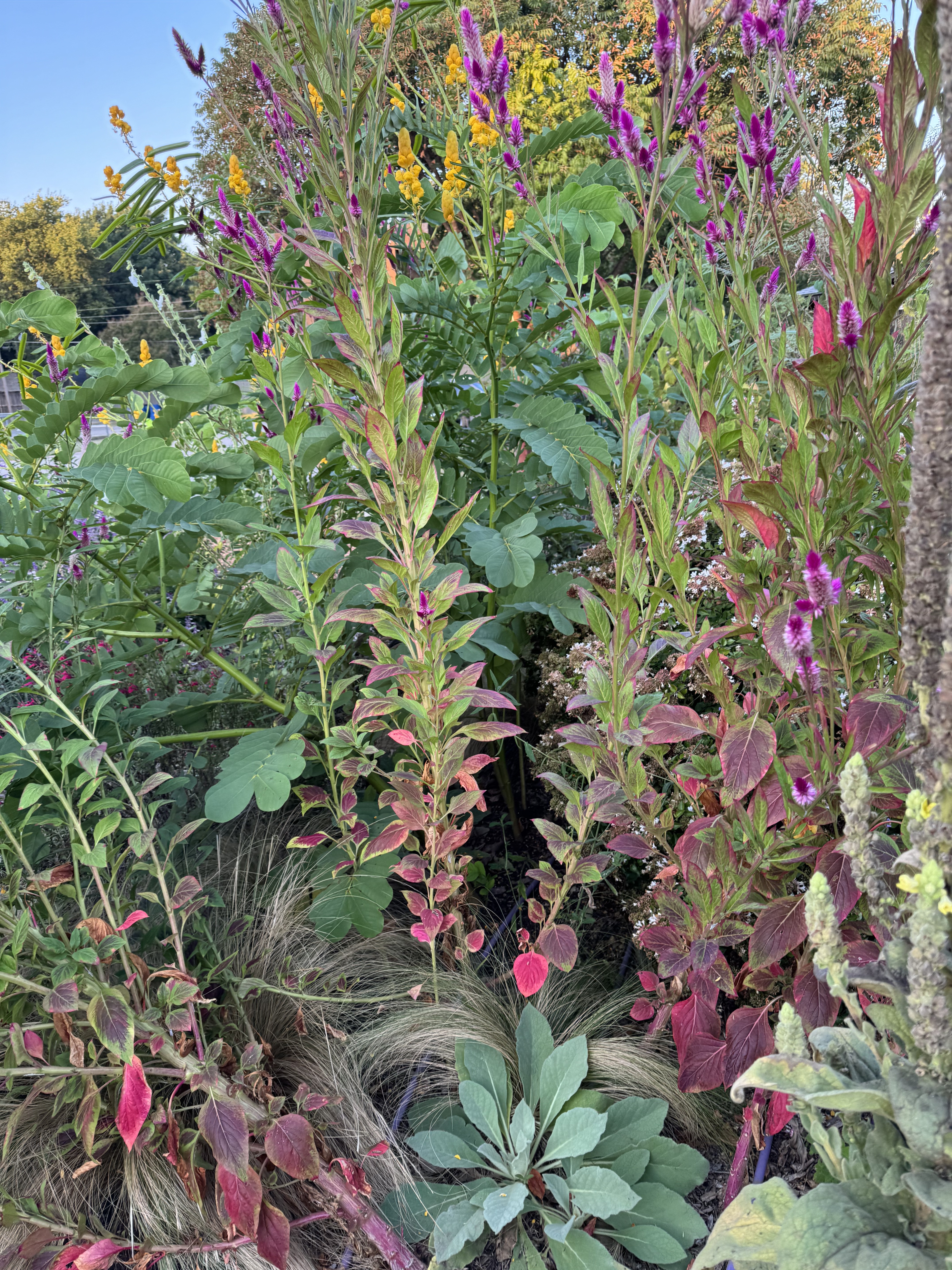
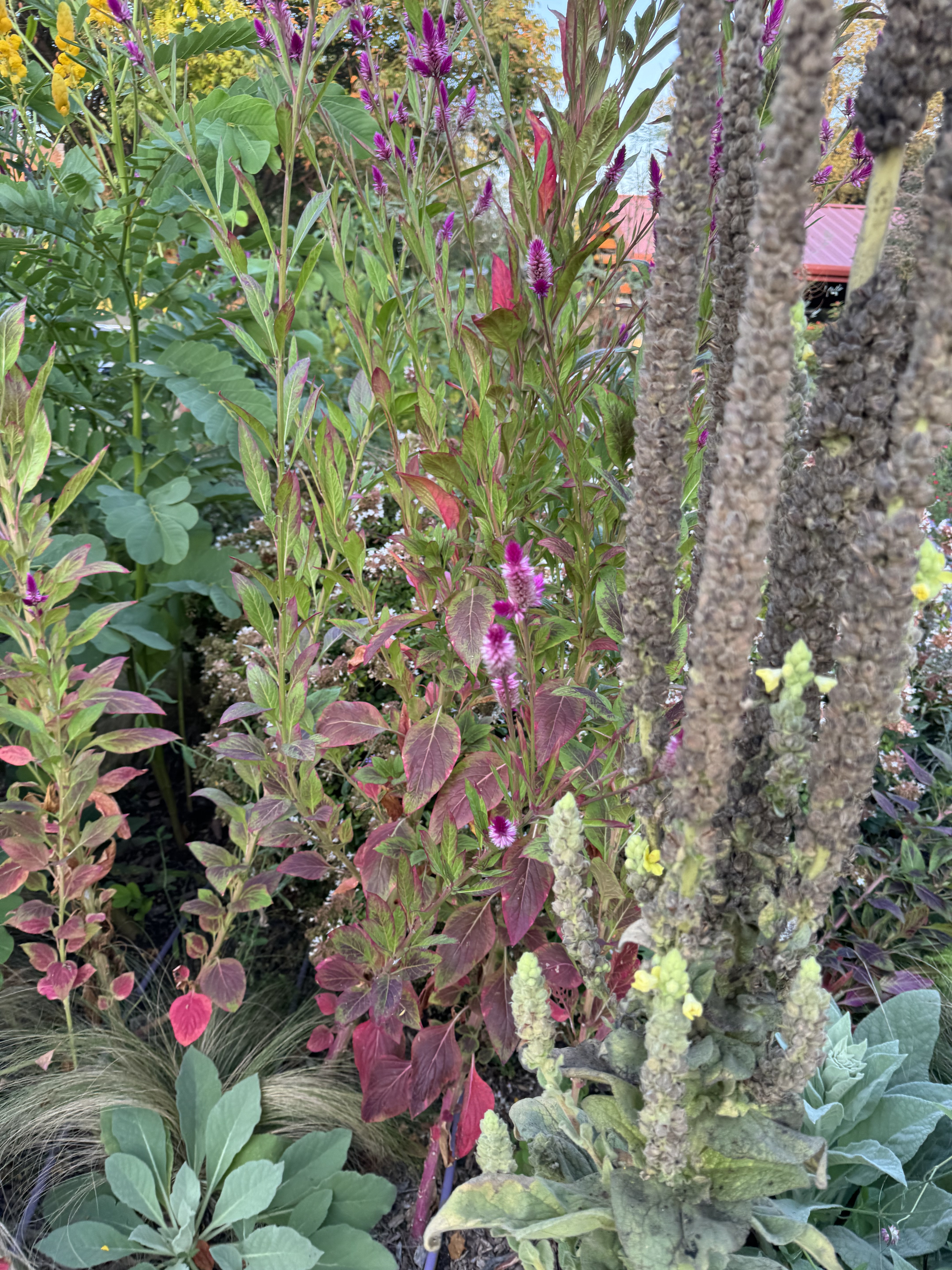
How was it so useful? well the yellow cosmos are a great example. All summer they grew and grew. No flowers at all. Some falling over due to the weight of stems and leaves. A passerby was heard to say ” I don’t know about those green leafy things they sure are big” Were they a terrible mistake? Are they ever going to bloom? Are they going to all fall over? Temptation grew to pull them all out. And then all at once they bust into huge numbers of lovely cheerful flowers. Butterflies and bees are just loving them. They even look great as cut flowers.
Yes!!! holding was the best choice for sure.
The big green leafy things that were bare all summer are blooming at last and they are amazing. Cosmos!
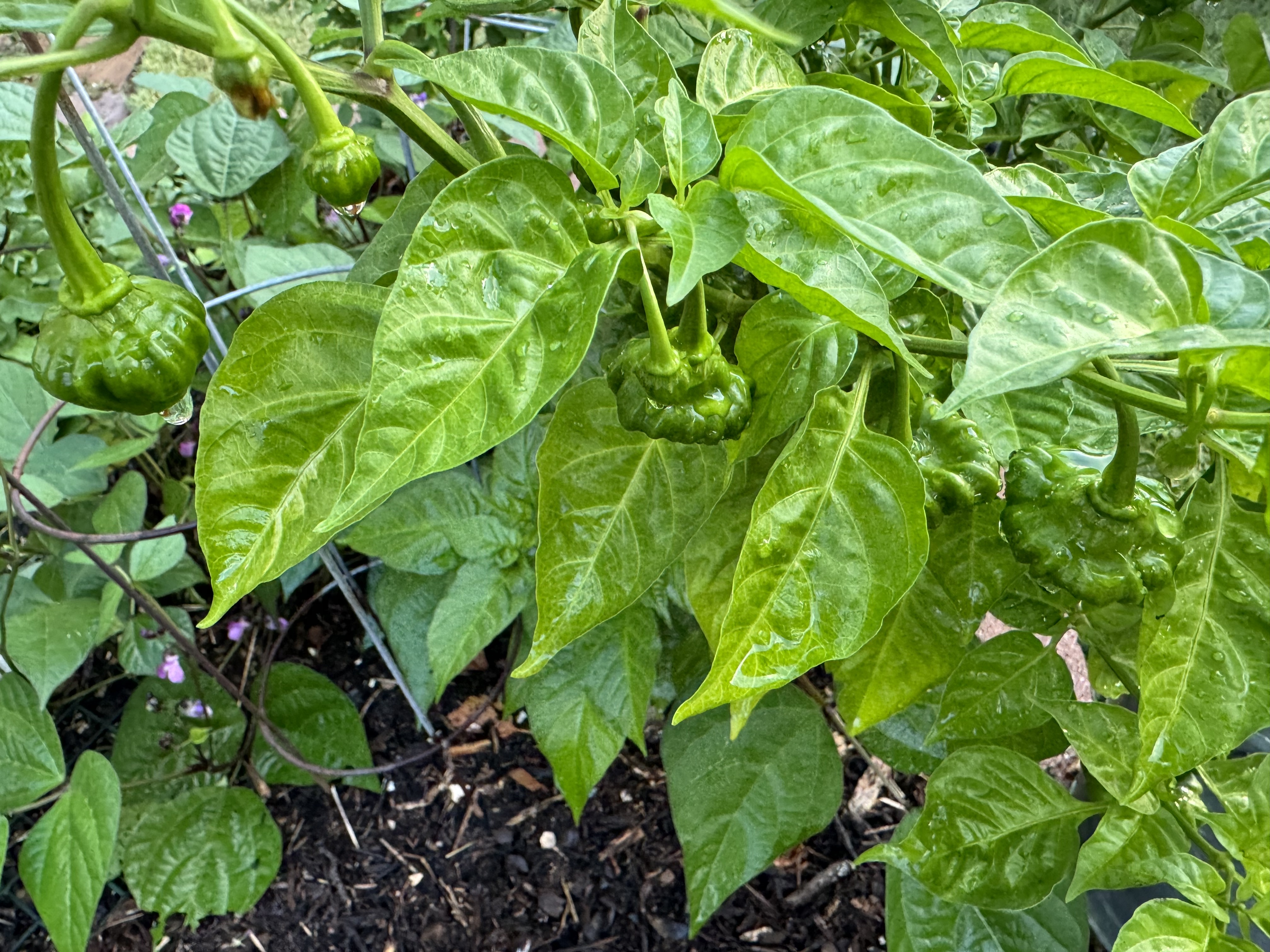
Aji dulce peppers –no peppers for months. All they were doing was taking up space and causing thoughts of “what on earth went wrong?” They were biding their time. Summer just didn’t suit. Just a small improvement in the weather–and blooms followed by lots and lots of little peppers. It was a temptation to give up–but it would have been a shame.
The Peppers finally realizing they have a job to do.
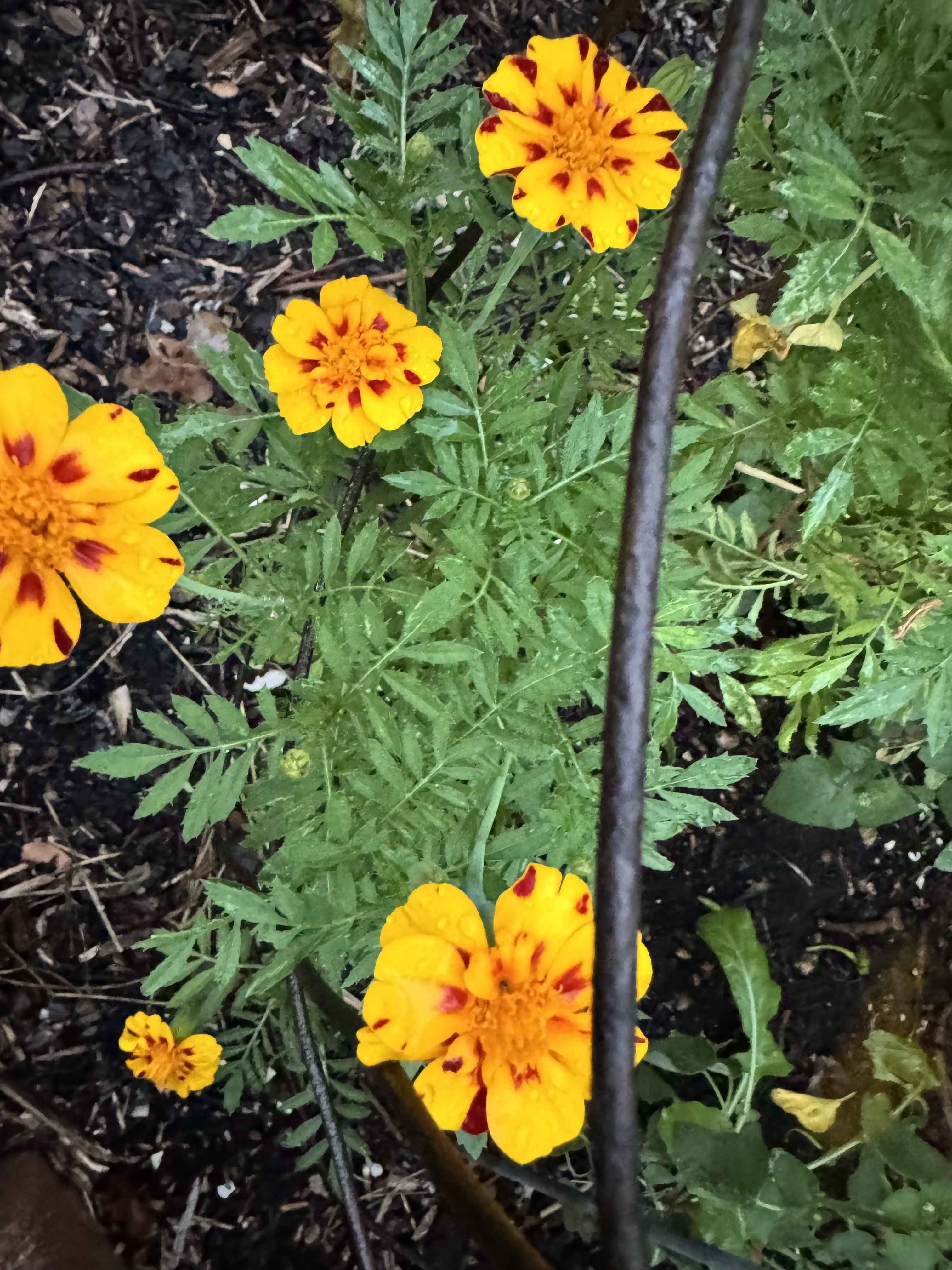
Marigolds–they also seemed to find the past few months not to their liking–the remaining tomatoes are happy maybe because the marigolds are happy.
The Marigolds were to keep the tomatoes company all summer. They are doing it now.
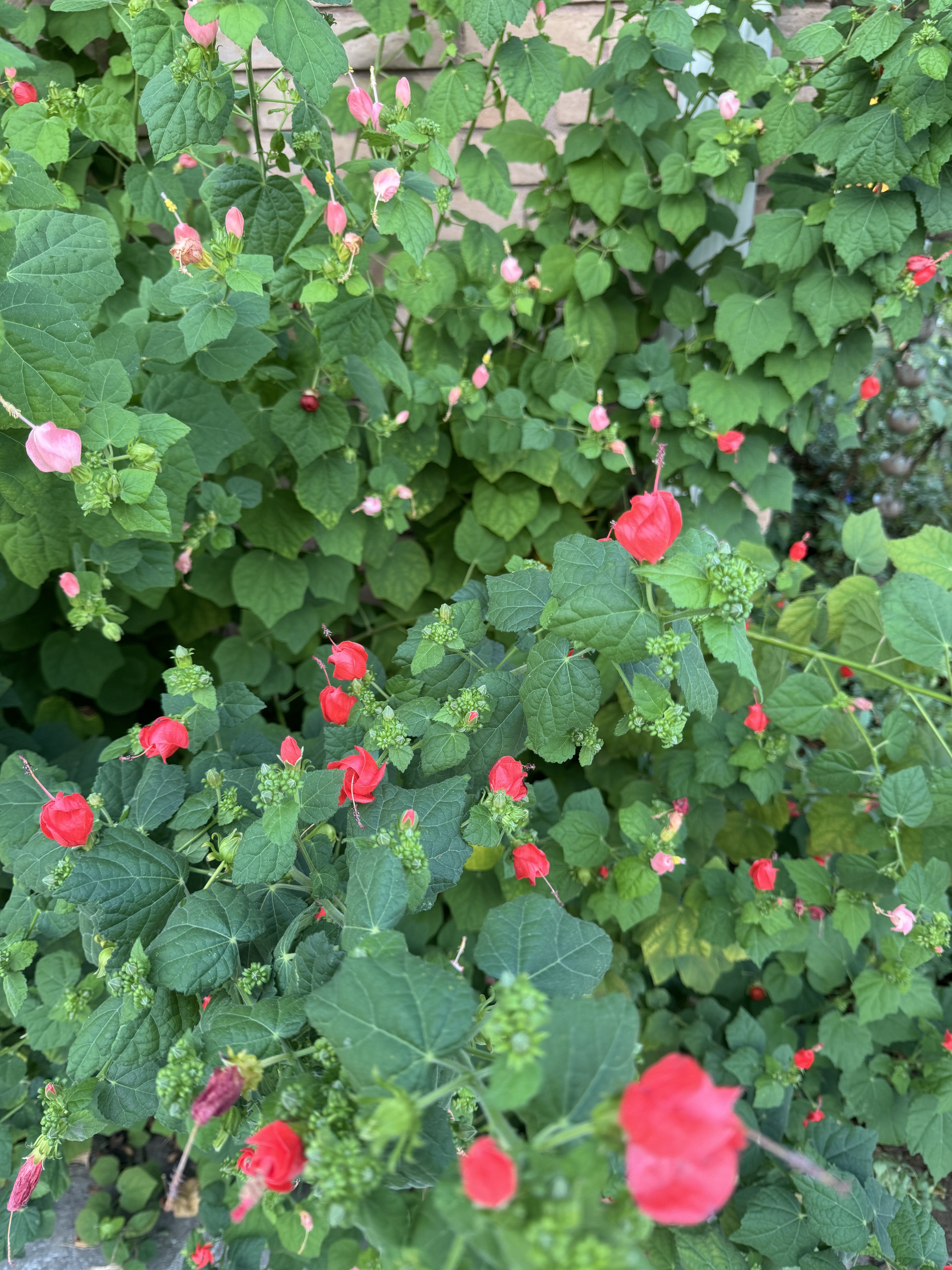
Turk’s cap–honestly it seemed to be asking to be cut to the ground–very few blooms and yet requiring constant pruning to keep it withing reasonable bounds–but–again a reward for avoiding extreme measures–countless flowers–and happy creatures.
Turk’s cap-all summer, some flowers but now covered in flowers.
Of course the facts are–that all doesn’t go as hoped.
The most obvious are annuals that have tried really hard but have now reached the end of the line. It is hard to do this when they aren’t quite done but face it–sad straggliy plants just distract from everything around them. Let them go its ok.
It’s time for an old friend to go. Sad but true.
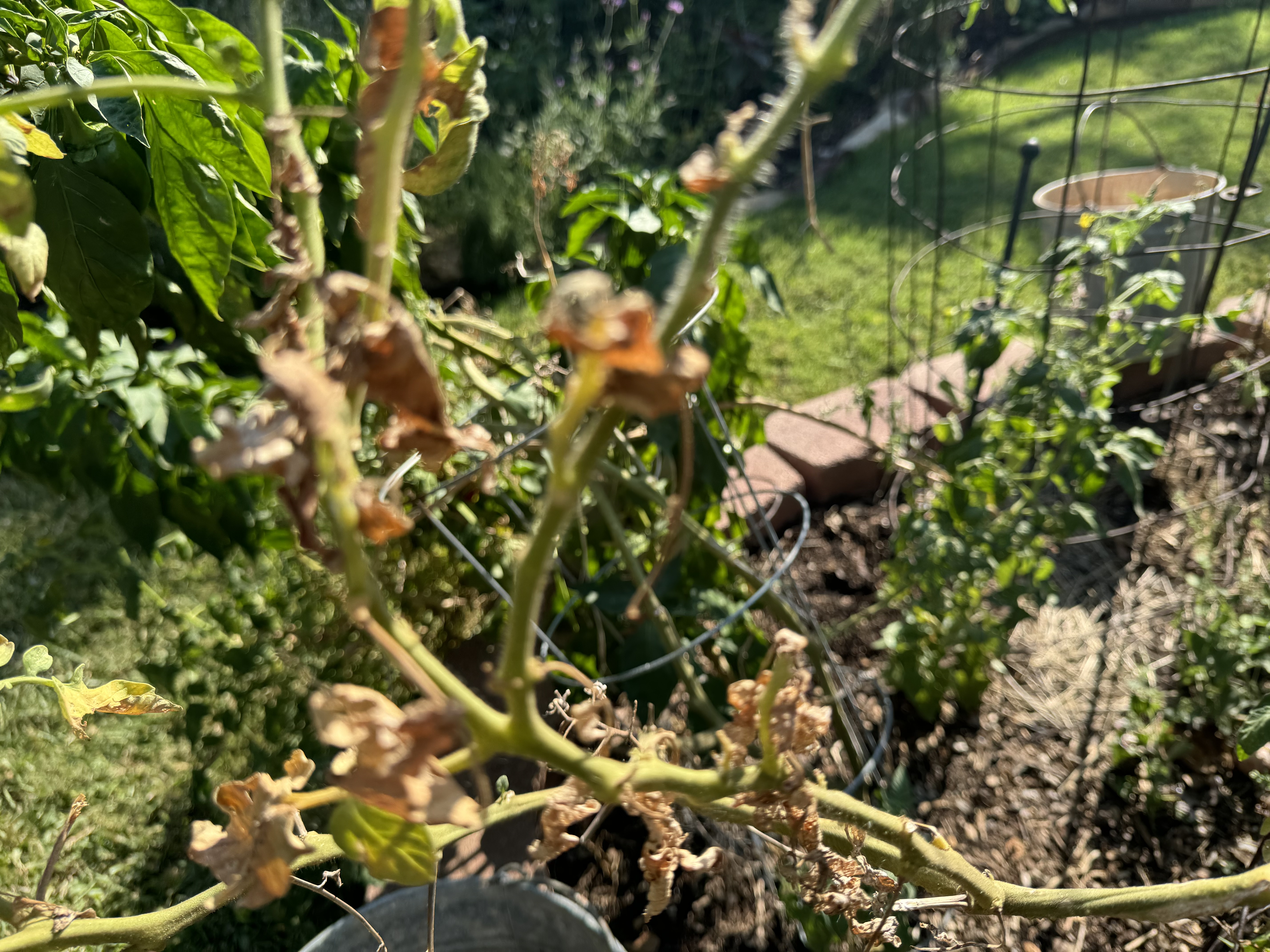
Same with vegetable plants. These plants work hard some can make it on into fall. But some just can’t. It is really best to get rid of them they can attract pests and diseases that are just doing what they do to eliminate the weak–but best to beat them to it.
This tomato in my garden just isn’t going to recover.
The really hard part of the fold ’em is facing that some of your efforts really were in vain. For some reason plants die. Sure try to figure out why. Was it lack of water–a common issue. Maybe over crowding? But sometimes its unknown. Pull them out anyway no use spending resources–including your time and energy on plants that just are not making it.
Perennial doesn’t mean live forever!
Those first two are pretty clear–but what about KNOW WHEN TO WALK AWAY?
Actually its an important one. This is the time of the year when plants have pretty well done what they are going to do. It can be so valuable to step back and away and look at the big picture. Could you do anything different ? Is it just that much too much? Or not quite enough? Walk away and take a good look and make some mental notes for next year.
Is it maybe just a little too much? Take a step back and look.
Can’t forget YOU GOT TO KNOW WHEN TO RUN. No it won’t be a big problem don’t worry. But do keep in mind that wasps and yellow jackets are very active at this time of the year. Of course they are part of nature and normally not an issue–but do look around they like to build nests in protected places–who doesn’t of course–but sadly when its right above the back door for example you may have to do what you would rather not. But be careful at times their temper can be kindly said to be “Uncertain” And i hope you don’t have to run–but—-.
YOU GOT TO KNOW WHEN TO HOLD EM
YOU GOT TO KNOW WHEN TO FOLD EM
YOU GOT TO KNOW WHEN TO WALK AWAAY
YOU GOT TO KNOW WHEN TO RUN.
Susan Thronbury, Dallas County Master Gardener Class of 2008
Fall is a good time to plant Hardy Hibiscus and Hydrangeas for spring and summer blooms.
Blissfully soaking rains in April ushered in the arrival of extraordinary May flowers. How refreshing to see these three stalwarts of the garden bursting with blossoms as they made their dramatic appearance in the landscape. New growth started to emerge on these three beauties sometime around early April. Continuing into May, they filled out with tender green leaves, buds and blossoms.
June’s gift to us was an explosion of color. The temptation to selectively snip and arrange them for indoor enjoyment was overwhelming. Restraint was needed but rather difficult to achieve.
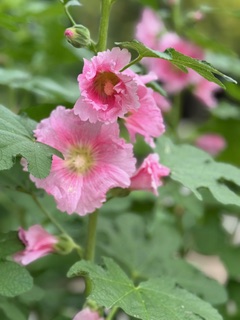
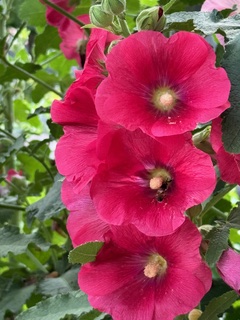
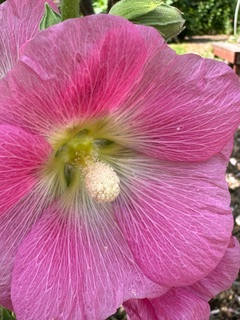
Hibiscuses (Malvaceae)are in the Mallow family and, interestingly, also include such plants as okra, cotton and the old-fashioned hollyhock. My preference for dependable seasonal color is the tropical variety, which is considered an annual in our Zone 8 climate. Late winter is when I start planning the layout and design of my seasonal garden beds. Hibiscus is ALWAYS included. Who wouldn’t appreciate a flowering, seasonal plant that can go into the ground during the month of April and continue blooming until the first freeze? Another benefit: it’s the type of plant that manages itself well. During the growing season when glossy green leaves begin to turn yellow and die, they politely fall to ground. Blossoms that open for a few days, do likewise. They really are gardener friendly plants!
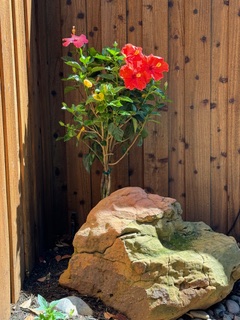
This year I’ve included tropical hibiscus in different shades of pink mixed in with existing limelight hydrangeas. They receive about 6 hours of morning to mid-day sun. And for a bit of whimsy, two hibiscus topiaries were added in areas that benefited from slightly more height. One is my favorite; it was placed behind my sunflower girl statue and features dreamy double yellow blossoms. The other is a sassy 4 foot tall, braided hibiscus topiary tree nestled in a corner bed. The multi-colored blossoms are a standout against our bronze colored fence.
Starting in late June our three hardy hibiscus plants began their seasonal show with those bodacious salad plate size flowers. These herbaceous perennials die to the ground in winter then around mid-April new growth signals their return to the garden.
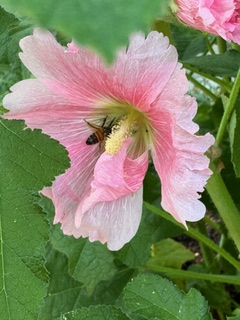
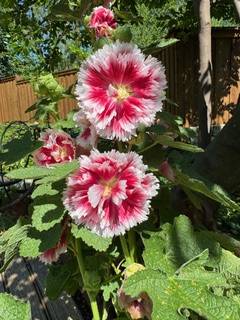
King Henry VIII Pink Hollyhocks with Honeybees Foraging for NectarPlanted 2023 in a location with morning sun and mid-afternoon shade‘Fiesta Time’ was added to my garden in May. Its fringed flowers are stunning
At Raincatcher’s Garden of Midway Hills, Master Gardener Susan Thornbury started seeds of a variety respectfully referred to as ‘Outhouse’. In days past, this treasured garden beauty was supposedly used as the perfect blocking for an unsightly outhouse while helping to mask the smell. Take a closer look at the multi-colored single blooms of white, pink, red and burgundy and you’ll see why it provided a pretty visual barrier.
Hydrangeas: When we moved into our home in May of 2006, oak leaf hydrangeas were already growing in a mostly shaded area of the garden. A few years later, they had overgrown the space and needed to be moved. A successful relocation to an area with filtered sun in the morning gave them more room to stretch their branches.
Since then, we’ve introduced a variety of hydrangeas to our garden beds:
*Big Leaf Hydrangea – Hydrangea macrophylla (Also, known as ‘mopheads’, these are the most common type of hydrangeas grown in home gardens and landscapes. Bloom time is usually late April through July. They are deciduous shrubs with large pom-pom heads of pink, purple or blue flowers. The flowers are greenish-white when young, picking up subtle shades of pink and brown as they age.
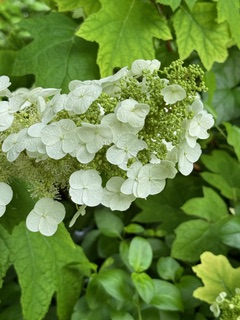
*Oakleaf Hydrangea – (Hydrangea quercifolia) Commonly referred to by its translation oak-leaved or oakleaf hydrangea, this variety offers year-round beauty with seasons of blooms, foliage and peeling bark. Blooms in spring and early summer. These beautiful plants were already growing when we moved to our home in 2006. Since then, I have searched for the compact, well-rounded deciduous hydrangea shrub known as ‘Ruby Slippers’. Finally, in mid-June, our local garden center received a shipment. I was first in line to purchase 3 plants. It was a special Father’s Day gift for my husband whose late mother was Rubye. He was thrilled! Oakleaf hydrangeas bloom on last year’s growth, so prune minimally after they bloom – not in early spring when new flower buds appear.
(This incredibly spectacular display of oakleaf hydrangeas is in the yard directly behind our house. It is the first thing that catches my eye when turning to leave our driveway. The photo on the left was taken in April when the plants were filled with those enormous white blossoms. Early to mid-summer they transitioned to lovely shades of deep pinkish/red. While the specific variety is unknown, something suggests to me that they could possibly be “Ruby Slippers’.)
*Panicle Hydrangea – (Hydrangea paniculata) This is one of the most cold hardy and heat tolerant of all species of hydrangea, thriving in Zones 3 through 9. Reaching 8’ + at maturity, there are now several dwarf varieties that stay under 5’ tall. For the strongest stems and the most abundant flowers, locate them in an area that receives 6+ hours of bright, direct morning sun then shaded during the hottest part of the day. We added ‘Limelight’ to our garden in 2022 and it has been a joy to watch them grow. Their huge, luxuriant conical flowers are mesmerizing. Bountiful blooms appearing in late May gradually turn from lime-green to creamy white in late summer followed by a rich deep pink which fades to beige as fall arrives.
*Of note, these hydrangeas are a recipient of the prestigious Award of Garden Merit of the Royal Horticultural Society and the Gold Medal Award of The Pennsylvania Horticultural Society.
Note: All photos were taken in the April – July time frame. The 100+ degree temperatures of the summer have left some plants struggling to endure the extreme heat. However, just as happened last year, the hardy hibiscuses, hollyhocks and hydrangeas will return next spring. The tropical hibiscus plants are going to be replaced with a new color palette in April of 2025.
Linda Alexander, Dallas County Master Gardener Class of 2008
The Dallas County Master Gardener Association Japanese Maple Sale opens October 9 Once again, we are offering a large selection of Japanese Maples from Metro Maples for purchase with all proceeds going to DCMGA. These are very small young trees that will do well in a container until you find a place for them in your garden; in fact, many of them would be perfectly happy in containers for several years, although you can certainly plant them directly in the ground. If your interests lean toward the unusual and rare, we have several varieties that qualify including the dwarf Kotohime, Beni hagoromo, Chiri hime, Nuresagi and Ogon Sarasa. Get online early to make your selections. The SignUpGenius website for ordering and purchasing maples will go live October 9 at 8 a.m. At that time, you can order and pay for your selection(s).
One-gallon trees are $35.00 (including tax) Two-gallon trees are $46.00 (including tax)
The SignUpGenius will close at 5 p.m. on October 16, or earlier if all trees are sold. This fall we have 20% more trees for sale, but don’t procrastinate because our inventory of trees has sold out within hours in the past. Please bring your confirmation to the pickup on Saturday, October 26 between 10 a.m. and 1 p.m. at 3015 Randy Ln., Farmers Branch (note: this is a new pick-up location.)
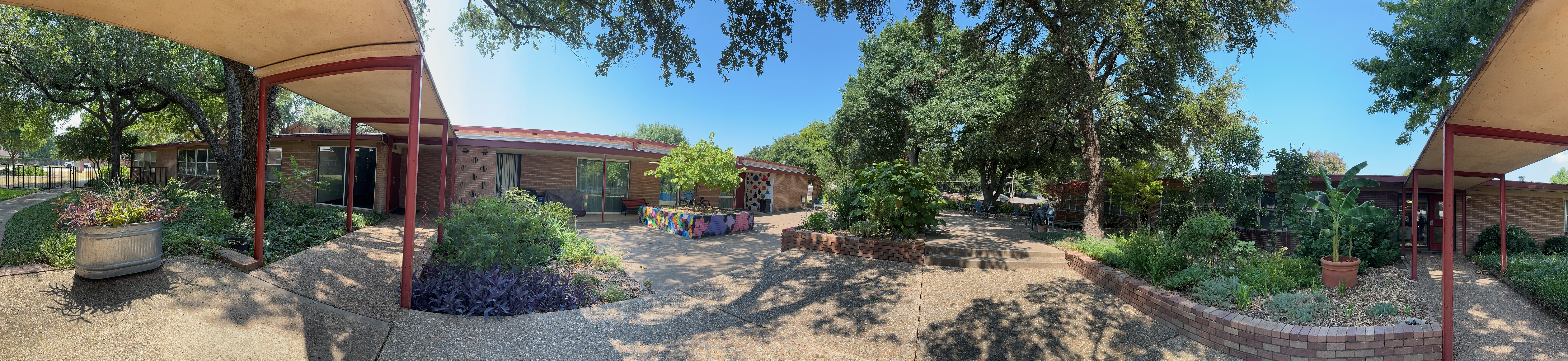
Panoramtic View of the Courtyard, Raincatcher’s Garden
Our garden has survived and even thrived this summer. The Raincatcher’s Garden was built using the 7 principles of Water Wise Landscaping:
Planning and design
Appropriate plant selection
Practical turf areas
Soil improvement
Efficient irrigation
Use of mulches
Appropriate maintenance
With fall temperatures giving us a respite, maybe you are looking for plants and practices that will endure our hot Texas summers. Take a look below at what worked for us and as always we would love to have you come for a vsit.
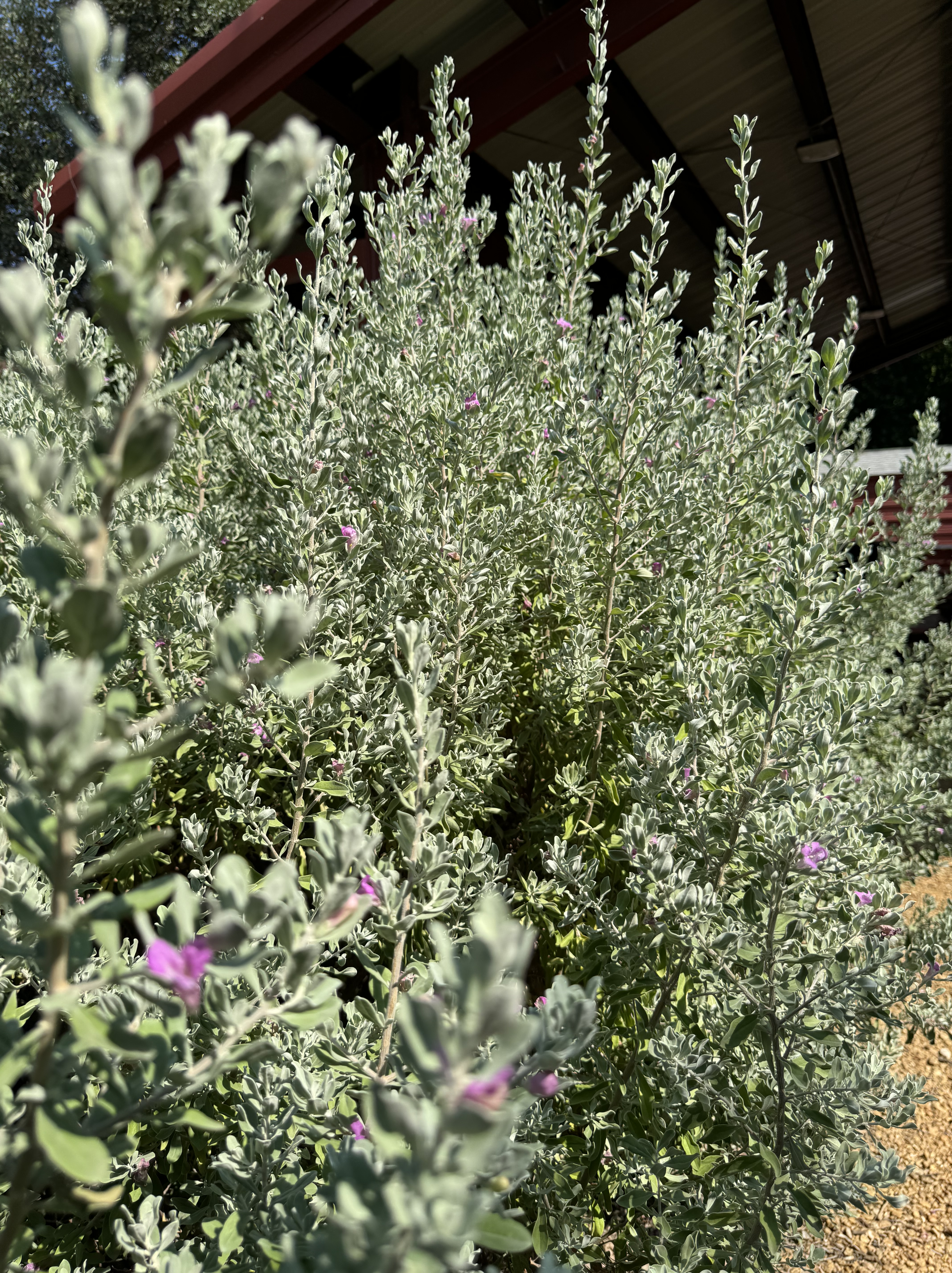
Rainctcher’s Prolific Vegetable GardenDesert Willow with attached polinatorFlame Acanthus for the HummingbirdsOkraTexas Sage, Leucophyllum frutescens, also known as the barometer bush-it blooms in periods of high humidity or rainGarden made Compost for Sale!A Crinum in bloom!Gardeners behind EsperanzaMexican Bird of Paradise, Caesalpinia pulcherrimaPentasA View of the Edible LandscapeZipper Spider-we think!Raincathcher’s Rain Garden with Rain Cisterns in BackgroundEvergreen Wisteria-we have a blog about this plant
Ann Lamb, pictures by Starla Willis- class of 2005 and 2008