Tag Archives: dallas gardens

Some Like It Hot!

It’s that time of year again when it is too hot to do anything, much less garden in the full sun.  Cool weather crops of greens, lettuce, cilantro, and others have either withered away in the heat or gone to seed.  Even tomatoes, as the temperature climbs up into the high nineties, are beginning to get stressed.  Somehow, at this time of year, purchasing bags of pre-cut and washed lettuce and spinach at the grocery store doesn’t seem so bad.  Yet there are some green leafy vegetables that not only like the heat but thrive in it.

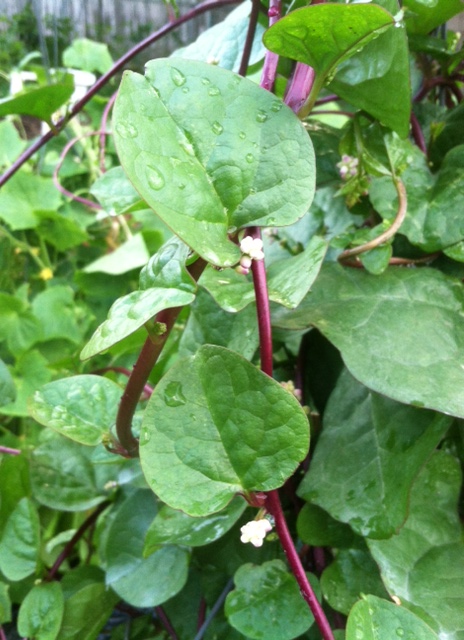
Malabar Spinach (Basella albra and Basella rubra) is an edible vine in the family Basellaceae.  It features dark green, glossy, thick leaves. In its native habitat of the Indian Subcontinent, New Guinea, and Southeast Asia it is a perennial plant.  Here in Dallas it dies in the winter but will often come up readily (occasionally too readily) from seed as the weather warms up in the spring.  It goes by several common names such as vine spinach, Ceylon spinach, and climbing spinach among others.  From its name you can see that it needs something to twine around.  Even an upside down large tomato cage will work, though a large trellis is better because the vines grow quickly and need to be constantly “put in their place.”

Malabar Spinach

Malabar Spinach at Hope Community Garden

There are two varieties of Malabar Spinach. B. alba has green stems and B. rubra has red stems and is quite ornamental.  Though both are called “spinach,” they are only distantly related to spinach and have an entirely different texture and taste.  In general, only the leaves are eaten, though in Africa the stems are cooked too.  Younger leaves have a very mild taste, though larger leaves, especially if not watered well, can have a peppery, astringent flavor.  When harvesting, it is recommended that about every other one of the small to middle sized, younger leaves be picked.
Malabar Spinach,Basella rubra

Malabar Spinach,Basella rubra

Malabar Spinach, like okra, is known as a “slippery vegetable” and some people find the mucilaginous texture of the succulent leaves takes some getting used to.  However, Malabar Spinach is high in Vitamin A and C, iron, and calcium.  It is also high in protein per volume and is a good source of soluble fiber.  It holds up particularly well in stir fries, egg dishes and curries.  Many recipes can be found on the internet for ethnic dishes using Malabar Spinach.  It is also good raw mixed with lettuce and other vegetables for a nutritious summer salad.

Growing Malabar Spinach is easy—just wait until the ground temperature is 65-70 degrees (like okra) since the plant thrives in hot and humid temperatures.  White flowers produce black seeds that will often readily reseed themselves.   Some internet sites recommend scarifying the seeds to help with germination or soaking them but often this is not necessary if the soil is kept moist.

Humans are not the only “animals” that enjoy Malabar Spinach.  Dallas County Master Gardeners who volunteer at the Dallas Zoo have helped grow Malabar Spinach in the past for the Zoo’s animals.  Aaron R. Bussell, Animal Nutrition Supervisor at the zoo, says this about the role of Malabar Spinach at the Zoo :

We had a great crop of Malabar Spinach last summer from the Green Life Education Garden, and it lasted into winter.  It was a great source of “Novel” greens for our primates that can get bored eating the same greens on the market.  Novel foods are rotated into the diets to provide nutrition and enrichment.  The diets we produce at the Animal Nutrition Center for over 2000 animals every day are tailor made for 400 plus species at the Dallas Zoo.        We substituted the Malabar Spinach into our Mixed Greens Salad which is shredded for birds, mammals, and reptiles throughout the zoo, and our full time Nutritionist evaluated it as an appropriate substitute for spinach or greens for our primates like chimpanzees, gorillas, and monkeys.  Having more variety of greens to offer these sometimes picky eaters is a great way to provide enrichment for their daily routine.  Malabar Spinach was grown not only for its nutritional value, but it provided natural stimulation when our Western Lowland Gorillas striped the leaves from the vine when served.  It continued to grow much further into the fall and winter as well.  We ended up serving the last of the harvest still entwined onto the bamboo trellis it was grown on.  Great vegetable.  We look forward to growing more again.”

So…. if you want to grow a spinach substitute and a plant favored by both man and beast, try growing Malabar Spinach. You may discover you like it.

Carolyn


Revised Onion Harvesting at The Raincatcher’s Garden 2016

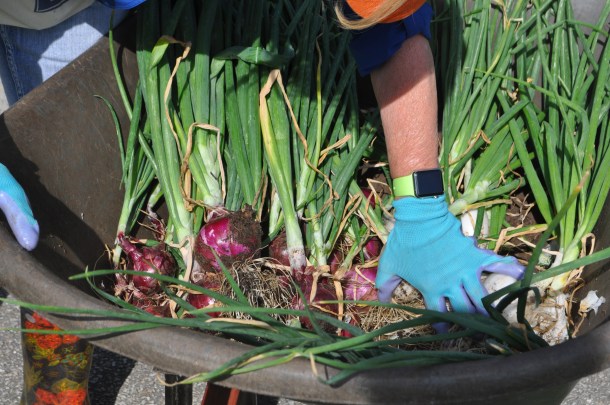
Onions have been harvested at the garden during the last two weeks.

They are now drying in our storage shed.

Fantastic Haul of Onions!

Fantastic Haul of Onions!

Harvest Onions when the tops begin to naturally fall over and turn brown. Dig the onions from the ground up with tops intact and to keep the bulb from being damaged. We used a garden knife or trowel to get them out of the ground carefully.  Onions that have bolted are past their prime and can be left to reseed.

As a reminder, here’s how to braid onions:

and here are notes on storing, eating, and lots of other onion thoughts in these articles: The Lowly Onion and Beginnings

Ann


Orphaned No More – Our Incredible Edible Landscape Project

Here at Raincatcher’s, we have a wide variety of demonstration gardens spread all around: we have an orchard, raised vegetable beds, ornamental trees, five types of turf, butterfly gardens, compost demonstrations and even a mixed ornamental bed in the courtyard. But there is one, last, orphaned space; it’s known as the old playground, and in some ways, it’s the church’s secondary entrance.  Which means it’s a very visible space that most people walk past and all cars drive by.  Wrapped in cyclone fencing, the playground was deemed ‘unsafe’ by regulatory agencies, and had been sitting unused when we moved to the church from Joe Field, the location of our previous garden.  We initially used the old playground as storage for all the plants, soil, and other large objects we brought over during our move. Then we disassembled the playground equipment and put it aside, in case we might be able to use it for another purpose.

Playground "Before" Transformation

Playground “Before” Transformation

A year has gone by. The gardens have been installed.  The plants, soil, and other large objects have been moved into their new homes, and it became clear that the playground parts were not going to be needed.  We removed them, and what was left inside the cyclone fence was a greenhouse, the air conditioning mechanism for the church, a couple of compost bins, a chicken coop, mature trees, and the frame for the old swing set.  When you step back from that, you realize that the space is reminiscent of what most homeowners have in their own yards:  some nice things, some not so nice things, a fair amount of shade, some sun.

What it’s inspired us to do is play. (The space was a playground, after all!)  We’re going to be experimenting in this, last, garden, but we’ll be experimenting with a purpose.  Over the next year(s?), we’ll be installing an edible landscape in this space, this crowded, pre-owned space with some sun and a fair amount of shade.  We’ll be designing around our obstacles, turning them into features, and we’ll make the shade our ally instead of our adversary.  We’ll be showing off all sorts of different techniques from hugelkultur to vertical gardening to straw bales to edible flower beds.  Some will be raised, some will be inground; everything will be edible.  There will be some new crops, variations on common crops, and some old crops with new parts to eat.  And so in addition to growing these foods, we’ll also show you how to prepare and eat them.

Why are we going to do this? Because this space has so many similarities to the average homeowner’s yard, it’s a perfect teaching and demonstration tool, and teaching is our mission.  Why do it as an all-edible landscape?  Because there are many examples of ornamental landscaping, and plenty of examples of edible gardening, but there are not as many of edible landscaping.  We’re doing this because people are becoming interested in growing at least some of their food, but are often concerned that it won’t look good, or they can’t because they have too much shade.  This old playground gives us the opportunity to show everyone how they can create a beautiful landscape with edibles.

How are we going to do this? We’re going to do this in stages.  First, we’re going to start with the hardscape.  One of the biggest concerns people have about landscaping with edibles is the aesthetics – whether it’s an overgrown tomato plant, or the fallow season (too hot, too cold to grow edibles) for their climate.  To have a beautiful edible landscape, the first thing you need to do is make sure the landscape looks good before any plants are planted.  Plants (crops) are the ornamentation on top of a good looking base structure, your hardscape.  After all, there will be times when you may not have plants in your landscape; you might have had a crop failure, or have just harvested dinner!

In our next post, we’ll talk about hardscape ‘rules’, and show you how we’ll be incorporating them into our landscape.

Come along and follow our adventures – celebrate with our successes, and learn from our failures!

The Incredible Edible Landscape Team

Lila Rose

Picture by Starla

Note: Lila Rose will be speaking at the Whole Foods at Preston Forest soon about Edible Landscaping. Will add date to this post, so check back with us.

Spring at Raincatcher’s Garden 2016

“A little Madness in the Spring is wholesome even for the King.”
― Emily Dickinson

Take a walk with us through our garden to see some of our spring madness!

'Annelinde' peony-type tulip

‘Annelinde’ peony-type tulip

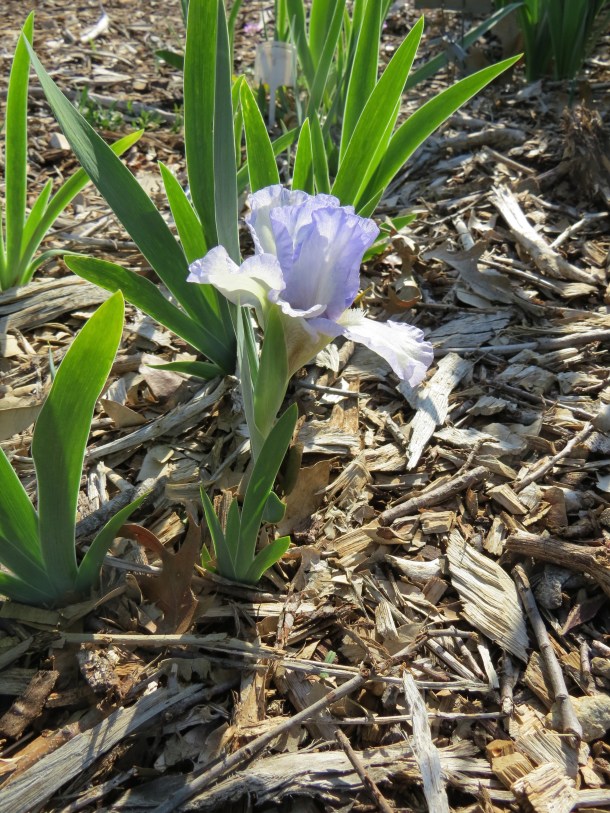
Iris 'Frothingslosh'

Iris ‘Frothingslosh’

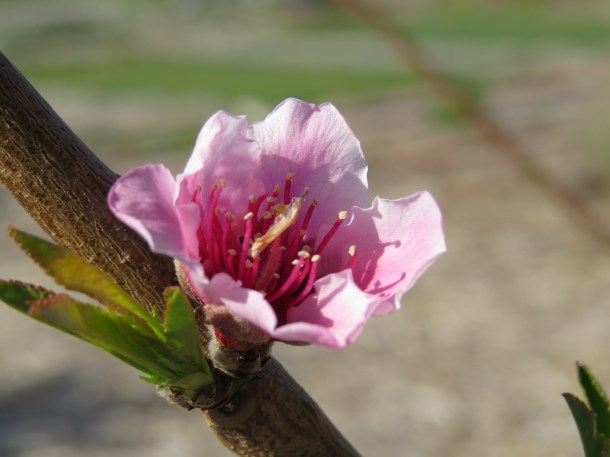
Peach Tree Bloom

Peach Tree Bloom

Pear Tree Bloom

Pear Tree Bloom

Plum Tree Bloom

Plum Tree Bloom

Ground Orchid, Bletilla striata Blooming in our Courtyard

Ground Orchid, Bletilla striata Blooming in our Courtyard

Cultivate Garden Thoughts by reviewing:

Our Orchard Varieties listed on the right, front page under Raincatcher’s Resources

Blooming Bulbs 

Daffodils, Jonquils, Narcissus

If you are like me, you have fallen in love with the Pink Tulip and Ground Orchid shown above.  Order them for your garden and help ours. The Raincatcher’s Garden receives a portion of your order at Brent And Becky’s fundraising site Bloomin’ Buck$ (www.bloominbucks.com).

Ann

Pictures by Starla


Perfectly Planted Potatoes Premiers

     Just in time for the Oscars:  Potatoes take center stage on the red carpet in this exclusive short video.  It features our own Jim Dempsey, nominated for Best Instructor, and Starla Willis, nominated for Best Cinematographer. Good luck to both!

And… if you want more information about growing potatoes, check out “One Potato, Two Potato, Hopefully More” and “Fried Green Potatoes.”

Carolyn

Video by Starla


Green Tomato Primer

Green tomatoes are usually seen at the beginning and the end of tomato season.  Sometimes they get harvested at the beginning when you just can’t wait another minute to have a tomato, and when the weatherman announces the first frost of the year, the rest of the harvest comes inside in a hurry.

If it’s been a good year, that leaves you with lots of tart green balls; some may continue to ripen, but they usually don’t have the depth of flavor and sweetness of those that finish on the vine.  But it’s a pity to compost all that hard work and potential goodness.  So what do you do?

Above: 13 cups of green tomatoes were harvested  for Green Tomato Recipes. The ripe tomatoes were eaten.

Above: 13 cups of green tomatoes were harvested for Green Tomato Recipes. The ripe tomatoes were eaten.

This primer will hopefully help you better understand your green harvest and give you some ideas – along with some recipes – to help you use it all up deliciously! Green tomatoes are tart and hard.  If you have green cherry tomatoes, you may even find them a little bitter (I think that’s from the greater amount of skin to pulp than you have on a larger tomato.)  To mellow the flavor of the tomato, you could cut, dice or slice it (you want to expose the interior), salt it, cover it and let it sit overnight in the refrigerator.  The next day (or the day after that) when you go to use it, drain and rinse it, and it will still be tart, but it won’t turn your face inside out. Green tomatoes can be substituted reasonably easily in recipes that call for:

  • tart apple
  • lemon
  • kumquat
  • tamarind
  • fresh cranberries

Cherry green tomatoes would work especially well as substitutes for kumquats and cranberries if the shape is important.  So if you already have a recipe you enjoy that uses one of these ingredients, go ahead and substitute green tomatoes for it! Below is a list of flavors that would complement green tomatoes, if you enjoy improvising:

  • almonds
  • walnuts
  • hazelnut
  • coconut
  • coconut cream
  • sesame oil
  • balsamic vinegar
  • tea
  • vanilla
  • rose water
  • ginger
  • sugar (brown, white)
  • thyme
  • rosemary
  • coriander
  • allspice
  • cardamom
  • cloves
  • cinnamon
  • nutmeg
  • mustard
  • caraway
  • bay leaf
  • chile pepper
  • garlic
  • onion
  • bitter greens
  • corn
  • butter
  • cheese (ricotta, parmesean, cream)
  • chicken
  • turkey
  • duck
  • beef
  • game (venison)

A flavor combination:

  • beef + coconut milk + green tomato 

Other recipe ideas:

  • cornbread with green tomatoes and jalapenos
  • almond thumbprint cookies with candied green tomatoes (or green tomato jam)
  • coconut pie/tart crust with a green tomato filling
  • green tomato jam and coconut milk in your favorite vanilla ice cream recipe (substitute the coconut milk for some or all of the milk and cream)
  • dehydrate and powder the tomatoes to add to any recipe for a little extra tartness
  • added to soups or stews
  • the classic: fried green tomatoes! 

The following recipes were designed for a small batch of green cherry tomatoes, where 1 cup weighed approximately 5 ounces.

Above: Green Tomato Recipe Sampling at The Demonstration Garden

Above: Green Tomato Recipe Sampling at The Demonstration Garden

If your tomatoes are full-sized, you may choose to dice or slice them, and in addition, you have the option of peeling the skins to reduce the acidity, and some of the bitterness.

Hungry for Lila  Rose’s Green Tomato Recipes? Click Here.

Lila Rose

Pictures by Starla

It’s Fall, Plant Lettuce Now

Big Tex

When you are “fixing” to go to the Texas State Fair and see Big Tex, you know it’s fall in Texas and time to be planting cole crops and cool season greens.

My lettuce and spinach seeds are in the ground and I am waiting, waiting, waiting for them to germinate. Last year  Oak Leaf Lettuce and Red Sails provided a border for my perennial beds and salad for our meals; the perfect ornamental edible!

All winter long and up until June, we could pick  salads from the backyard. Lettuce being cold hardy  can withstand a light frost and  even lower temperatures without cover. (If temperatures, fall down into the 20’s, cover your lettuce.)

Salad Greens as a Border, Ornamental Edibles!

At the Demonstration Garden, we have enjoyed lettuce grown in our raised  beds.

Spring Lettuce in a Raised Bed

Lettuce does not need full sun and is best started in the fall in Dallas.  You can also buy transplants now at your favorite garden center.

“Leaf lettuce (often called loose-leaf lettuce) is perhaps the best adapted choice for our Texas climate. It forms loose rosettes of leaves that come in a range of colors from various shades of green to burgundy including speckled types. Leaves may be harvested individually or as with other lettuce types you can harvest entire plants at one time. Another option is to “mow” the plants back part way with scissors and then allow them to regrow for a later harvest.” (Quote from Texas Gardener)

Search for loose leaf varieties like Black Seeded Simpson, Red Sails, Oak Leaf, Green Ice, and Prize Leaf.  Try  Little Caesar for a Romaine type of lettuce and Buttercrunch for a sweet butter head type lettuce.

To read more about growing lettuce read: Lettuce From Seed To Harvest in Texas Gardener.

Before you go to the Texas State Fair, get out in your garden and plant to enjoy a long season of homegrown lettuce!

Ann

One Way To Prepare A New Garden Bed

Dallas Garden Buzz wants to be the blog that helps you achieve the garden results we all long for in North Texas.  We don’t want to be just a pretty face but hope to guide you through the garden seasons with advice you can use to prepare and plan your own successful gardens.  From time to time, we may share experience from gardens other than The Demonstration Garden to illustrate gardening technique of lessons we have learned.

My Mom asked me to oversee the installation of a new garden patch at her house. I arrived early  just in time to see a plot of grass approximately 4 feet wide and 14 feet long being extracted.  The old grass went to the back part of the yard where grass had died out.

Mom's Yard "Before"

 Mom  wanted a  garden bed wide enough for flowers and a few tomatoes in the sunniest part of her yard.  She is also a Dallas County Master Gardener, so we agreed to use the Earth-Kind bed preparation for this new garden.  We have used this recipe for soil improvement at  The Demonstration Garden.

To coax the clay soil into submission for her dream garden, we added  3 inches of compost and 3 inches of expanded shale.  Picture the new garden bed as a cake, think about frosting it with a 3 inch layer of compost and a 3 inch layer of expanded shale. Now till it in so that you have changed the structure of the top 12 inches of soil in your garden.

Expanded Shale and Compost Blended Together

(To make the process easier, Dallasites can purchase a  blend of these two products  in bulk at places like Soil Building Systems and Living Earth Technology under the product names of Clay Slayer or  Clay Killer.)  Buy six inches of the product to till into your garden soil (3 inches of compost and 3 inches of expanded shale equals 6 inches of the two combined).

To figure the cubic yards needed we multiplied the 14 feet x 4 feet x .50 feet and divided by 27.  If you want to skip the math, use the cubic yard calculator on the Soil Building Systems website.  For Mom’s garden one yard of the blended product was purchased and tilled into the plot.

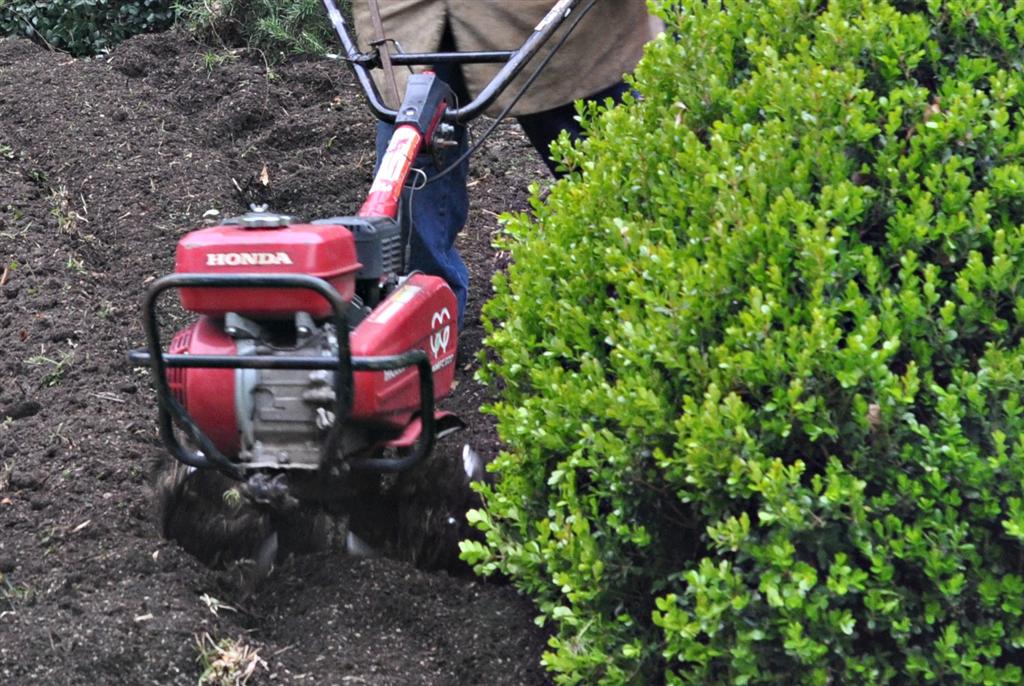
Rototilling Expanded Shale and Compost Into The New Garden Bed

Now that the clay has been amended into luscious, friable garden soil, the garden is ready for planting and will be topped off with 3 inches of mulch

Mom, your dream has come true!

Ann

The Case for Cilantro

Ina Garten (aka the Barefoot Contessa) says she despises it.  Others say the taste reminds them of dirty dishwater.  Some claim a soapy taste when they chew on it.  How could it be, then, that guacamole wouldn’t make it to a true “TexMex” table without a hefty amount of cilantro mixed in?  And salsa without cilantro?  Not in TEXAS! While there are clearly two sides, the “lovers” and the “haters”, consider these facts before arriving at your own verdict.

 History

Cilantro, Coriandrum sativum, a member of the Apiaceae (Umbelliferae) family has been cultivated as a medicinal and culinary herb for more than three thousand years.  Mentioned first in Egyptian papyri and the Bible, Spanish conquistadors introduced cilantro to Mexico and South America where it quickly became associated with that cuisine.  Also known as Chinese parsley, the herb has a long history in Chinese medicine and cuisine.  One of the ancient uses was as an aphrodisiac.

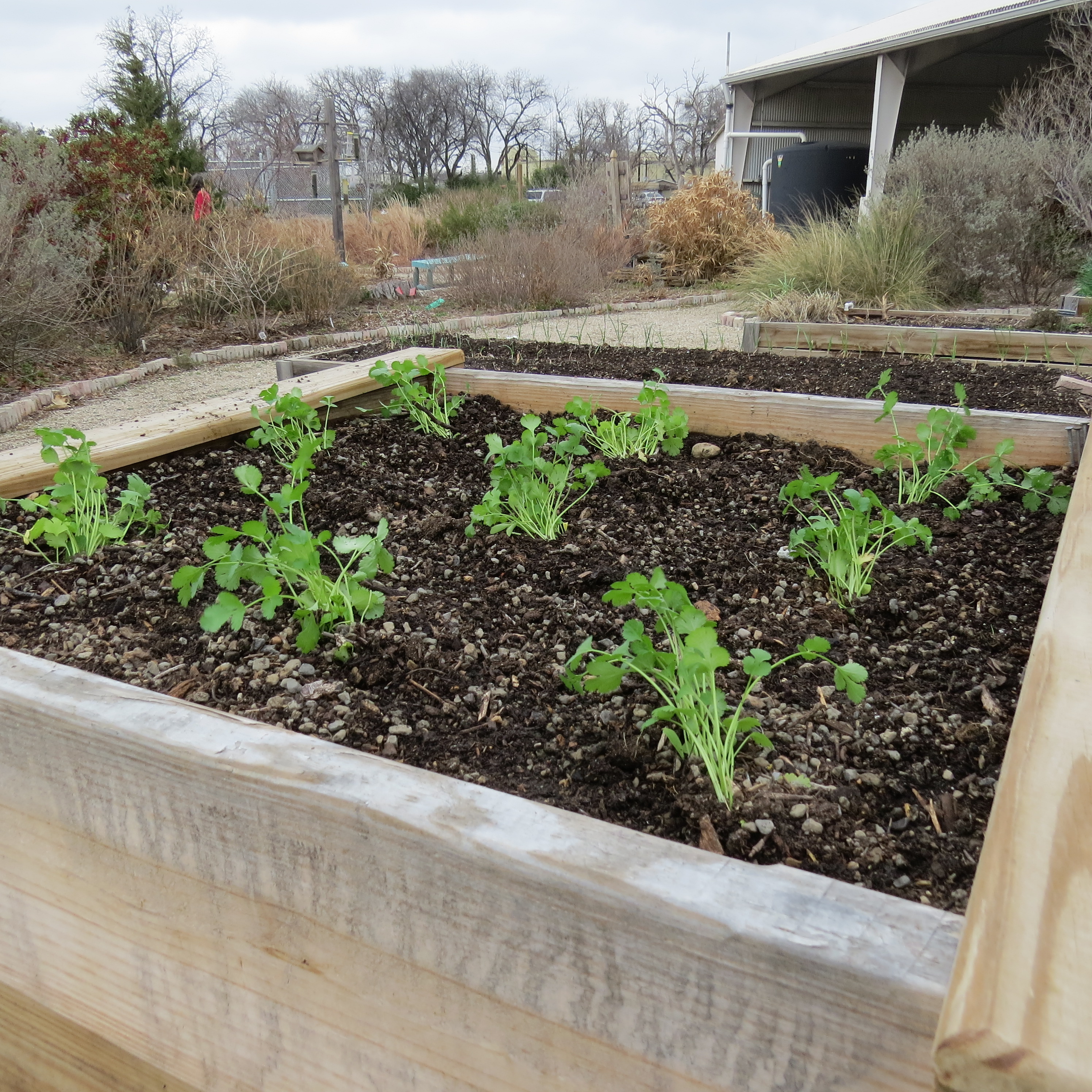
Cilantro Growing in Raised Bed, Demonstration Garden Joe Field Rd, Dallas

Growing It

Cilantro likes loose, rich, well-draining soil.  Sow seeds in the fall ½” deep, thin seedlings to 1 foot apart.  Plant seeds again in February to give your cilantro time to grow before it gets too hot. If you can find it,  choose variety “Long Standing” for its excellent flavor, improved leafiness and, as the name infers, its slow-to-bolt quality. 

Cilantro  needs full sun and occasional watering if the weather is dry.  Transplants can be put in the ground anytime throughout the fall and winter.  A succession of crops will help your cilantro last longer.  To harvest cilantro, cut the stems down to the ground, a small section at a time.  When cilantro gets ready to flower, it sends up leaves that are lacier and smaller.  The seeds of the cilantro plant are known as coriander.   An aromatic spice, try using coriander in sweets, cakes, breads, and to flavor liqueurs.

Cooking With Cilantro

Every part of the plant is edible.  Cilantro’s  flat and gently serrated dark green leaves, resembling Italian parsley, are best used when the plant is about 6 inches high, and they must always be used fresh.  Toss them into almost any salad.  You can use cilantro anytime you would use parsley.  Make a pesto out of it just as would basil and freeze it for future use.  Store a bunch of cilantro for about a week in the refrigerator in a jar of water loosely covered with a plastic bag.  (Remember to change the water every few days.) 

Enjoy It 

The flowers make an attractive bouquet or addition to other garden flowers for cut arrangements.   Use it to settle the stomach and encourage good digestion.  Or do as the Chinese, use it in a “love potion” which they believed led to a long life.   While true, its unique aroma and pungence often demand an acquired taste, once you acquire the taste for it cilantro can be addicting!  Finally, just be thankful that when summer tomatoes and peppers are beginning to ripen  and cilantro may no longer be found in the garden, a quick trip to the grocery always keeps it within reach.   Case solved!

Linda

Note:  Over the next few weeks we will be sharing some of our favorite “cilantro” recipes with you.

Soups And Cornbread With Veggies

Broccoli Cornbread

Broccoli Veggie Cornbread 

½ stick butter or margarine, melted

2 eggs, slightly beaten

1 pkg Jiffy Cornbread Mix

½ pkg (10 oz) frozen chopped broccoli, cooked (about 1 cup)

½ cup small curd cottage cheese

½ cup canned creamed corn

Grated onion or chopped green onion, if desired 

Preheat oven to 350 degrees. Chop cooked broccoli a bit smaller. In a large bowl melt butter in microwave. Add chopped broccoli, cottage cheese, corn, onion and beaten eggs. Mix till combined. Stir in cornbread mix.

Pour into greased 8 x 8 Pyrex for thicker squares or 7 x 11 Pyrex for less thick squares. Bake about 35 minutes or until toothpick in center comes out clean. 

Patti,Dallas County Master Gardener Class 2012

 Spicy Refried Bean Soup

1 can (15oz) fat-free, spicy refried beans

1 can (15 oz) whole kernel corn, drained

1 can (15 oz) black beans, rinsed and drained

1 can (14.5 oz) vegetable broth

2 cans (10oz) Rotel tomatoes with green chilies

1 cup water

Mix all ingredients in a large pan.  Heat on medium until it comes to a boil.

 Reduce heat and simmer 8-10 minutes.  Serve with tortilla chips.

Makes 2 quarts.  Less than 120 calories per 8oz. serving.

“Heat” can be adjusted by using less Rotel tomatoes

Sarah, 2006

Mediterranean Lentil Ragoût

Olive oil cooking spray

1 large onion, finely chopped

5 cloves garlic finely minced

1 jalapeño pepper, finely minced

1 large fennel bulb, sliced thin

1 (28 ounce) can diced tomatoes

1 1/2 cups orange juice

1 1/3 cups lentils, picked over and rinsed

1 Tablespoon dried basil

1 Tablespoon dried oregano

1/4 cup tomato paste

1/3 cup mint leaves, chopped, divided use

6 cups cooked rice, quinoa or bulgur

Parmesan cheese (optional)

1. spray a heavy skillet with cooking spray; place over low heat and sauté onion, garlic, jalapeño and fennel, stirring occasionally, until soft, about 5 minutes. (if vegetables start to stick or brown, cover skillet.)

2. Add tomatoes, orange juice, lentils, basil, oregano and tomato paste. Increase heat and bring to a boil.  Reduce heat, cover and simmer for 40 to 50 minutes, or until lentils are tender. (add up to 1/2 cup water or orange juice if ragout gets too thick.)

3. Stir in mint leaves, reserving 2 tablespoons for garnish.  Serve lentil stew over rice, quinoa or bulgur. Garnish with Parmesan cheese, if using, and remaining chopped mint.

Serves 6, approximately 449 calories per serving

Recipe from The Phytopia Cookbook by Barbara Gollman and Kim Pierce