Tag Archives: dallas gardens

One Way To Prepare A New Garden Bed

Dallas Garden Buzz wants to be the blog that helps you achieve the garden results we all long for in North Texas.  We don’t want to be just a pretty face but hope to guide you through the garden seasons with advice you can use to prepare and plan your own successful gardens.  From time to time, we may share experience from gardens other than The Demonstration Garden to illustrate gardening technique of lessons we have learned.

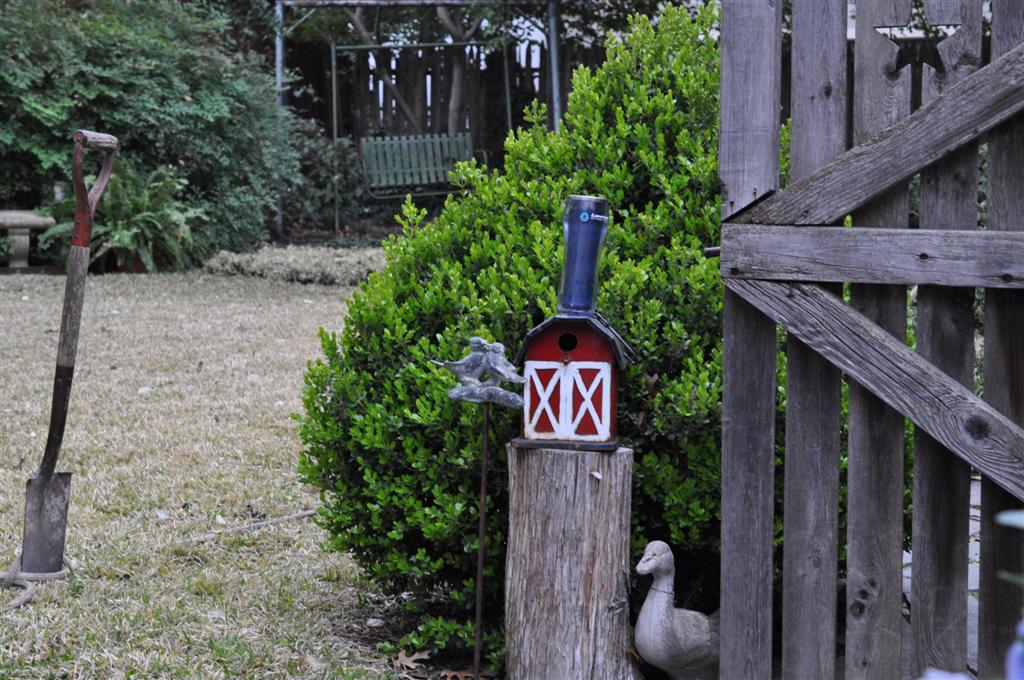
My Mom asked me to oversee the installation of a new garden patch at her house. I arrived early  just in time to see a plot of grass approximately 4 feet wide and 14 feet long being extracted.  The old grass went to the back part of the yard where grass had died out.

Mom's Yard "Before"

 Mom  wanted a  garden bed wide enough for flowers and a few tomatoes in the sunniest part of her yard.  She is also a Dallas County Master Gardener, so we agreed to use the Earth-Kind bed preparation for this new garden.  We have used this recipe for soil improvement at  The Demonstration Garden.

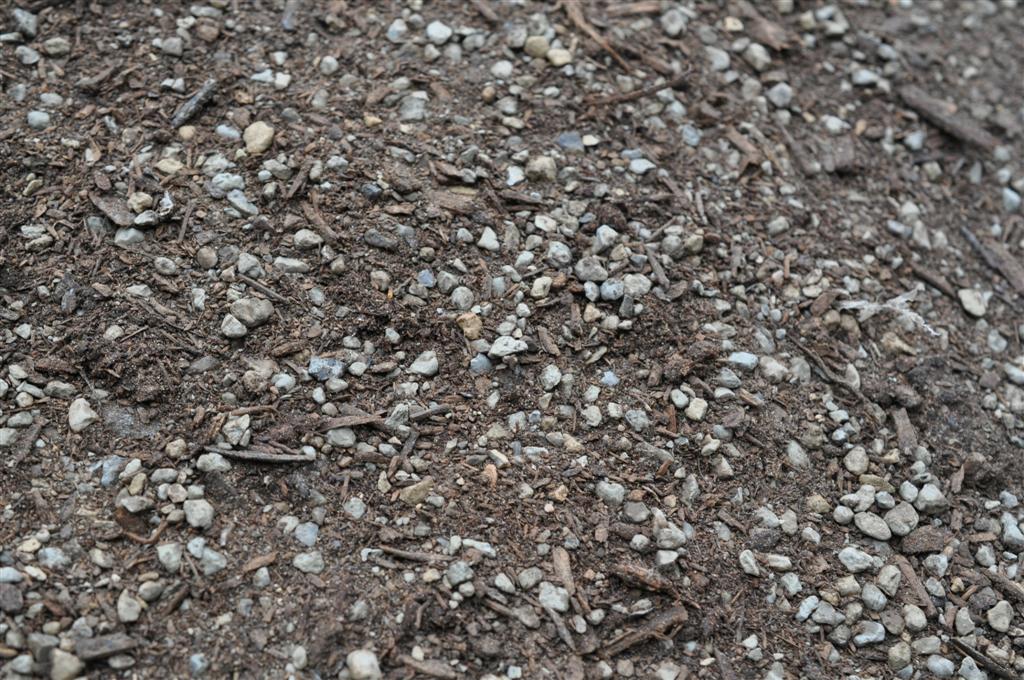
To coax the clay soil into submission for her dream garden, we added  3 inches of compost and 3 inches of expanded shale.  Picture the new garden bed as a cake, think about frosting it with a 3 inch layer of compost and a 3 inch layer of expanded shale. Now till it in so that you have changed the structure of the top 12 inches of soil in your garden.

Expanded Shale and Compost Blended Together

(To make the process easier, Dallasites can purchase a  blend of these two products  in bulk at places like Soil Building Systems and Living Earth Technology under the product names of Clay Slayer or  Clay Killer.)  Buy six inches of the product to till into your garden soil (3 inches of compost and 3 inches of expanded shale equals 6 inches of the two combined).

To figure the cubic yards needed we multiplied the 14 feet x 4 feet x .50 feet and divided by 27.  If you want to skip the math, use the cubic yard calculator on the Soil Building Systems website.  For Mom’s garden one yard of the blended product was purchased and tilled into the plot.

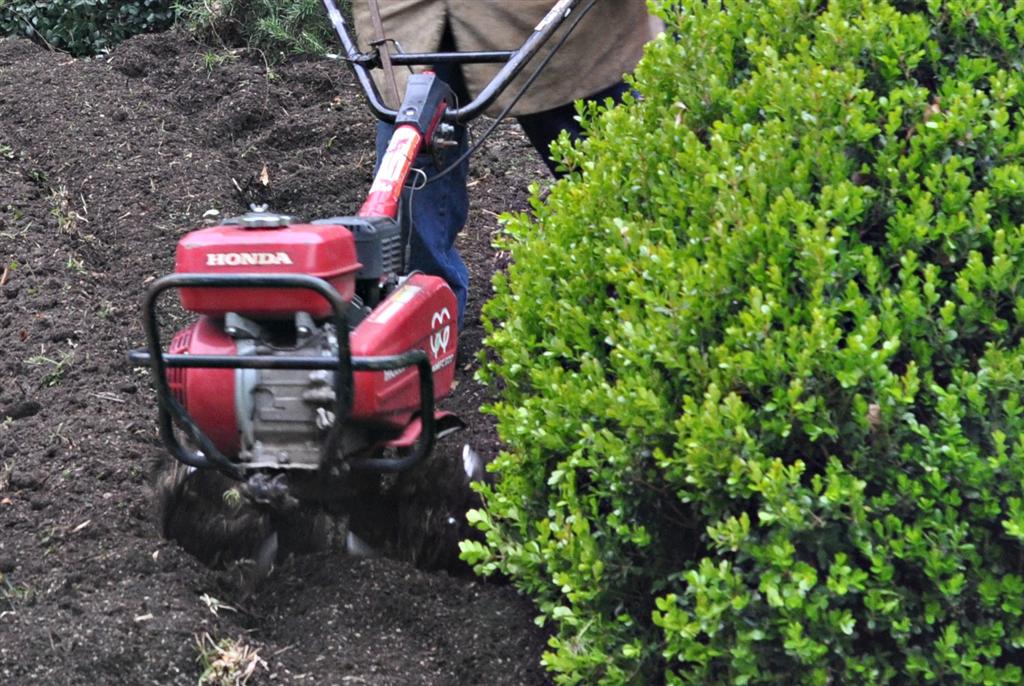
Rototilling Expanded Shale and Compost Into The New Garden Bed

Now that the clay has been amended into luscious, friable garden soil, the garden is ready for planting and will be topped off with 3 inches of mulch

Mom, your dream has come true!

Ann

The Case for Cilantro

Ina Garten (aka the Barefoot Contessa) says she despises it.  Others say the taste reminds them of dirty dishwater.  Some claim a soapy taste when they chew on it.  How could it be, then, that guacamole wouldn’t make it to a true “TexMex” table without a hefty amount of cilantro mixed in?  And salsa without cilantro?  Not in TEXAS! While there are clearly two sides, the “lovers” and the “haters”, consider these facts before arriving at your own verdict.

 History

Cilantro, Coriandrum sativum, a member of the Apiaceae (Umbelliferae) family has been cultivated as a medicinal and culinary herb for more than three thousand years.  Mentioned first in Egyptian papyri and the Bible, Spanish conquistadors introduced cilantro to Mexico and South America where it quickly became associated with that cuisine.  Also known as Chinese parsley, the herb has a long history in Chinese medicine and cuisine.  One of the ancient uses was as an aphrodisiac.

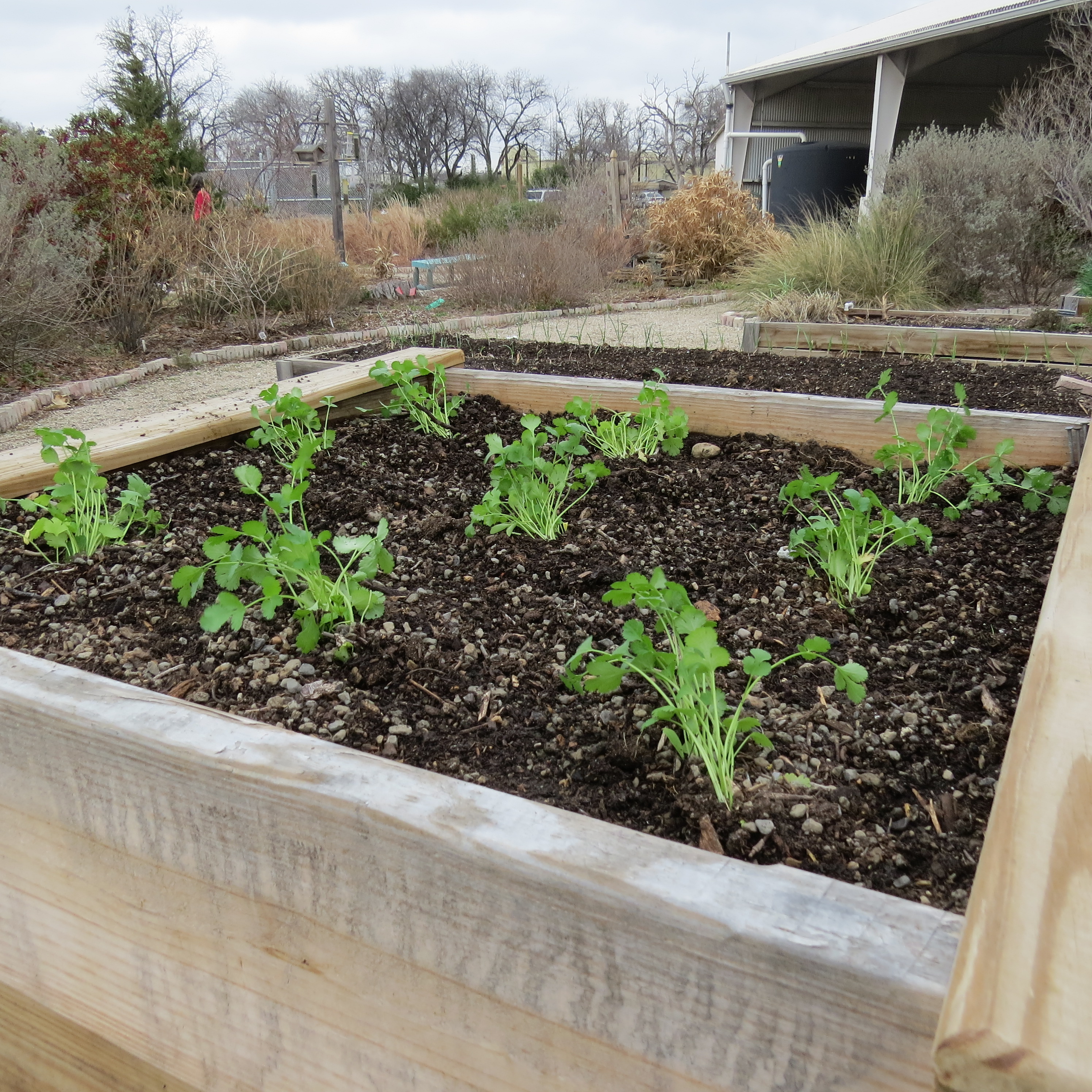
Cilantro Growing in Raised Bed, Demonstration Garden Joe Field Rd, Dallas

Growing It

Cilantro likes loose, rich, well-draining soil.  Sow seeds in the fall ½” deep, thin seedlings to 1 foot apart.  Plant seeds again in February to give your cilantro time to grow before it gets too hot. If you can find it,  choose variety “Long Standing” for its excellent flavor, improved leafiness and, as the name infers, its slow-to-bolt quality. 

Cilantro  needs full sun and occasional watering if the weather is dry.  Transplants can be put in the ground anytime throughout the fall and winter.  A succession of crops will help your cilantro last longer.  To harvest cilantro, cut the stems down to the ground, a small section at a time.  When cilantro gets ready to flower, it sends up leaves that are lacier and smaller.  The seeds of the cilantro plant are known as coriander.   An aromatic spice, try using coriander in sweets, cakes, breads, and to flavor liqueurs.

Cooking With Cilantro

Every part of the plant is edible.  Cilantro’s  flat and gently serrated dark green leaves, resembling Italian parsley, are best used when the plant is about 6 inches high, and they must always be used fresh.  Toss them into almost any salad.  You can use cilantro anytime you would use parsley.  Make a pesto out of it just as would basil and freeze it for future use.  Store a bunch of cilantro for about a week in the refrigerator in a jar of water loosely covered with a plastic bag.  (Remember to change the water every few days.) 

Enjoy It 

The flowers make an attractive bouquet or addition to other garden flowers for cut arrangements.   Use it to settle the stomach and encourage good digestion.  Or do as the Chinese, use it in a “love potion” which they believed led to a long life.   While true, its unique aroma and pungence often demand an acquired taste, once you acquire the taste for it cilantro can be addicting!  Finally, just be thankful that when summer tomatoes and peppers are beginning to ripen  and cilantro may no longer be found in the garden, a quick trip to the grocery always keeps it within reach.   Case solved!

Linda

Note:  Over the next few weeks we will be sharing some of our favorite “cilantro” recipes with you.

Soups And Cornbread With Veggies

Broccoli Cornbread

Broccoli Veggie Cornbread 

½ stick butter or margarine, melted

2 eggs, slightly beaten

1 pkg Jiffy Cornbread Mix

½ pkg (10 oz) frozen chopped broccoli, cooked (about 1 cup)

½ cup small curd cottage cheese

½ cup canned creamed corn

Grated onion or chopped green onion, if desired 

Preheat oven to 350 degrees. Chop cooked broccoli a bit smaller. In a large bowl melt butter in microwave. Add chopped broccoli, cottage cheese, corn, onion and beaten eggs. Mix till combined. Stir in cornbread mix.

Pour into greased 8 x 8 Pyrex for thicker squares or 7 x 11 Pyrex for less thick squares. Bake about 35 minutes or until toothpick in center comes out clean. 

Patti,Dallas County Master Gardener Class 2012

 Spicy Refried Bean Soup

1 can (15oz) fat-free, spicy refried beans

1 can (15 oz) whole kernel corn, drained

1 can (15 oz) black beans, rinsed and drained

1 can (14.5 oz) vegetable broth

2 cans (10oz) Rotel tomatoes with green chilies

1 cup water

Mix all ingredients in a large pan.  Heat on medium until it comes to a boil.

 Reduce heat and simmer 8-10 minutes.  Serve with tortilla chips.

Makes 2 quarts.  Less than 120 calories per 8oz. serving.

“Heat” can be adjusted by using less Rotel tomatoes

Sarah, 2006

Mediterranean Lentil Ragoût

Olive oil cooking spray

1 large onion, finely chopped

5 cloves garlic finely minced

1 jalapeño pepper, finely minced

1 large fennel bulb, sliced thin

1 (28 ounce) can diced tomatoes

1 1/2 cups orange juice

1 1/3 cups lentils, picked over and rinsed

1 Tablespoon dried basil

1 Tablespoon dried oregano

1/4 cup tomato paste

1/3 cup mint leaves, chopped, divided use

6 cups cooked rice, quinoa or bulgur

Parmesan cheese (optional)

1. spray a heavy skillet with cooking spray; place over low heat and sauté onion, garlic, jalapeño and fennel, stirring occasionally, until soft, about 5 minutes. (if vegetables start to stick or brown, cover skillet.)

2. Add tomatoes, orange juice, lentils, basil, oregano and tomato paste. Increase heat and bring to a boil.  Reduce heat, cover and simmer for 40 to 50 minutes, or until lentils are tender. (add up to 1/2 cup water or orange juice if ragout gets too thick.)

3. Stir in mint leaves, reserving 2 tablespoons for garnish.  Serve lentil stew over rice, quinoa or bulgur. Garnish with Parmesan cheese, if using, and remaining chopped mint.

Serves 6, approximately 449 calories per serving

Recipe from The Phytopia Cookbook by Barbara Gollman and Kim Pierce


Homegrown, Veggies, Fruits and Herbs

I have a visual image of Master Gardener and nutritionist Barbara Gollman at Kroger: Red hair flying, trim figure running behind a cart, zipping down the frozen food isle flinging packs of frozen veggies into the cart for one of her wonderful soups. 

Barbara, Dallas County Master Gardener Teaches Value of Vegetables

Barbara intrigued a large group of Master Gardeners Tuesday with her talk on the nutritional benefit of vegetables, fruits, and herbs.  Turns out that Mom was correct when she urged us to eat our vegetables.  Carrots, oranges, sweet potatoes, and other fruits and vegetables are full of phytochemicals, substances in plants that have the potential to slow aging, boost immunity, prevent disease, and strengthen our hearts and circulation. 

Cabbage, Broccoli Field Road, Dallas, Texas

Barbara suggests that we eat watermelon and tomatoes, plants that are packed with lycopene, a nutrient which helps prevent macular degeneration.  Pinto beans are rich in fiber, which can prevent cancer and heart disease, and flavonoids, which can curb the oxidation of LDL cholesterol and prevent blood clotting.  Cruciferous vegetables like broccoli and cabbage are high in calcium.  Nuts are filled with Vitamin E, one of the most potent fat-soluble antioxidants. Berries, greens, winter squash—-well, you get the idea.  

Barbara said that new research has shown the health benefits of herbs. Who knew? Turns out that 1 teaspoon of oregano = ¾ cup of brussel sprouts in antioxidants.  

Barbara dries her herbs in the microwave after her husband’s reaction to using his closet as an herb drying rack. Remove the leaves from the stems of the herbs and spread on paper towels.  Put two paper towels on top of the herbs.  Pop in the microwave and zap for one minute.  (If the leaves are charred, try again and use a shorter amount of time. If the leaves aren’t crisp, microwave longer in 15-second increments.)  Remove from the microwave and air dry on the kitchen counter for a few days.  Store in a labeled glass jar.  

Are home grown vegetables better for you than those found in the grocery? Barbara says some research showed up to a 15 percent increase in nutrients in homegrown and organic vegetables.  Some other studies didn’t find an increase in nutrients. 

Many thanks go to Barbara for her research and common sense approach to healthy eating.  Let’s just put it this way: on the way home I stopped at Whole Foods and bought spinach, broccoli, and almonds for dinner.   

Elizabeth

Recipes served in the class will follow.

One Potato, Two Potato, Hopefully More

One of the joys of winter is to sit down with a cup of tea or hot chocolate and thumb through garden books and catalogues.   Visions of a riot of color from  gorgeous flowers (does it really matter that my yard is shaded by many tall trees and the descriptions say “full sun”) and bountiful vegetable harvests (surely there is a shade tolerant tomato) always seem to intoxicate me into ordering or purchasing many more seeds and products than any reasonable person needs or can use.  Of course, most of the sunny place flowers struggle, get lanky, then die a slow death in the shade of my yard; and, so far, I haven’t discovered a shade tolerant productive tomato.  Yet spring holds such promise, and occasionally I find a particular variety of full sun plant that tolerates shade, that I forget the failures of last year and try again.  After all, some experiments turn out well.

     For the past two years the Garden’s vegetable guru, Jim,  has experimented with the “trash can” method of planting potatoes.  If you are not familiar with this method there are several  YouTube videos showing literally pounds and pounds of potatoes being harvested from potato sets planted in 30 gallon trash cans.  To construct a “trash can” potato bin, a drainage hole is made in the bottom of a plastic trash can, Seed potatoes are planted at the bottom of the can in a few inches of soil, then as the potato plants grow to about eight inches tall enough soil (in the Garden’s case, the Garden’s homemade compost) is added to cover them half way up the stem.  At the end of the season, the trash can is dumped and the potatoes are harvested.  An easy way to grow potatoes?  It certainly sounds like it.  However Jim reported that in the first year’s experiment, the Garden’s trash can potatoes rotted.  Guessing that perhaps there wasn’t enough drainage, the second year Jim tried putting 2” drainage holes around the side of the can.  Once again, though the plants themselves were huge and vigorous since they were growing in all that compost, the actual potato yield was small and many of the potatoes continued to rot. 

     A failed experiment, perhaps….  however one always learns something.  Jim surmised that perhaps the problem was that the potato plants were not getting enough sun.  Potatoes need full sun and the opaque trash can shaded them unless the sun was directly overhead.    It wasn’t until months later when the plants grew over the top of the can that they were in full sun throughout the day.

     So, this year, the Garden is trying two methods to grow potatoes.  The first, in the garden’s raised bed, is the usual “trench method” where a trough about 6”-8” deep and about 4” wide is dug.  Seed potatoes that have been cured and dusted with sulfur are planted about 12”-15” apart and covered with about 4” of soil.  As the potatoes sprout, the soil is “hilled”/backfilled around the stems since potatoes grow in the space between the seed potato and the surface of the soil.    

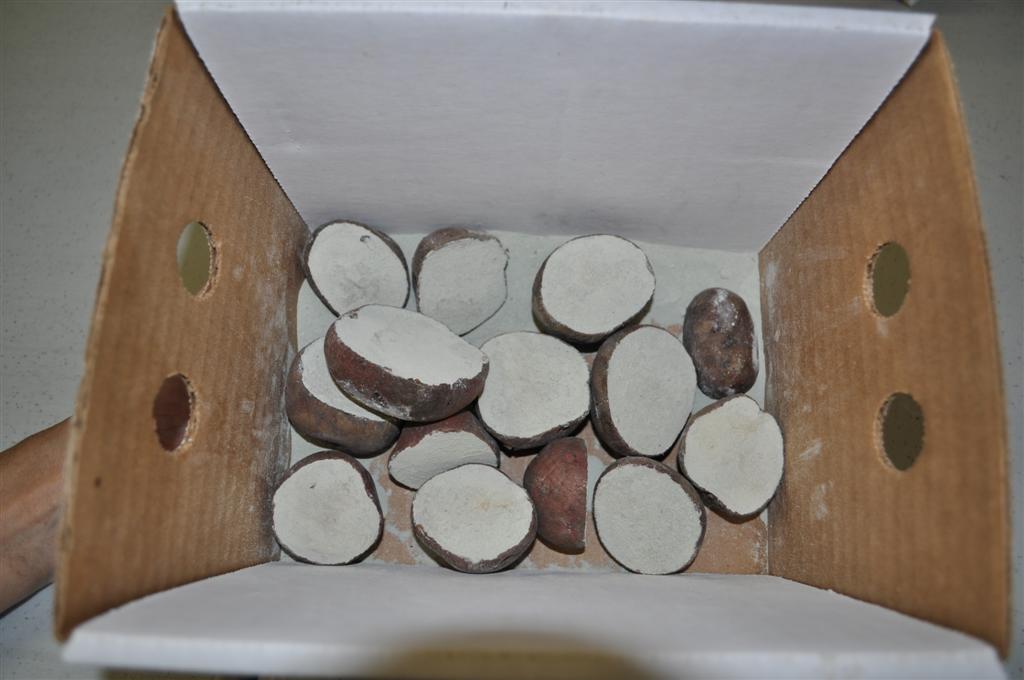
Red La Soda Potatoes, Dusted With Sulfur, Ready For Planting

                                                               . 

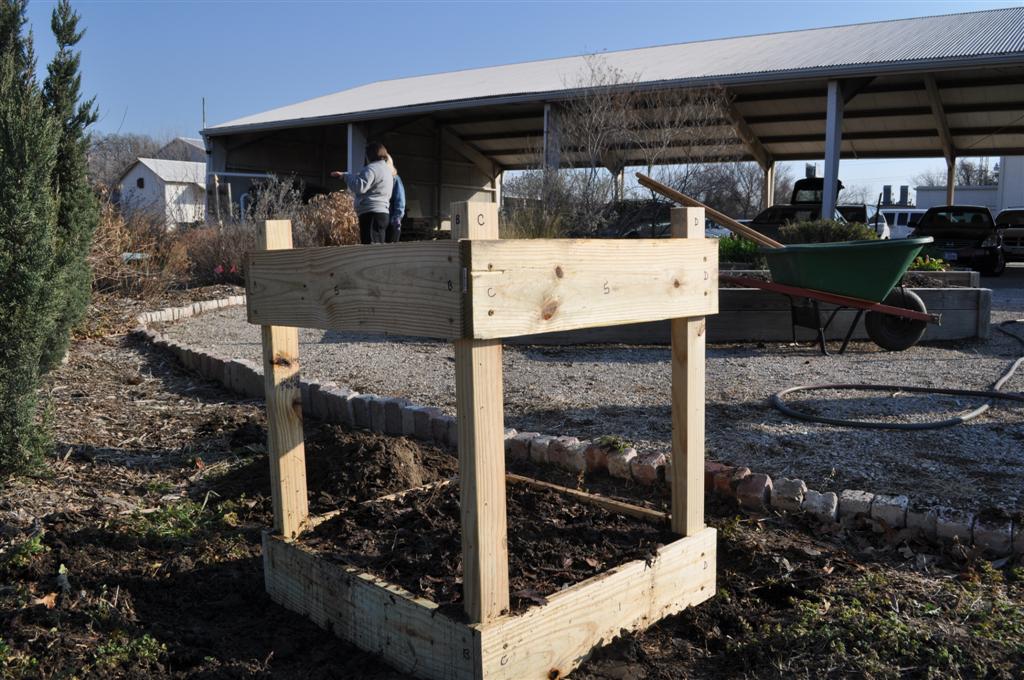
    The second experimental method being tried is Jim’s homemade 2’x2’ potato bin constructed from 1”x6” treated lumber (one can also use untreated lumber or cedar).  As the potatoes plants grow to about 12” tall, another 6” panel of lumber will be added to the bin and enough soil added to bury 1/3 of the plant. 

New Potato Bin At The Demonstration Garden

The advantage to this type of bin as opposed to the trash can method will not only be increased drainage but also the potato plants will be able to receive full sun throughout the day since more panels can be added as the potato vines grow taller.  Will this method produce a better crop of mature potatoes?  Who knows….. but that’s the fun of experimenting.

     There are many other methods (potato bags/wire bins lined with newspaper/etc) used to plant potatoes.   Do you have a favorite method for planting potatoes?   If so, let us know.  This year in my community garden plot, I plan to try “laundry basket” potatoes:  cutting out the bottom of a plastic laundry basket and using it like a cage to hold the mounded soil around my potatoes.  If it works, I’ll let you know the results.  If not, I’ve only lost several small seed potatoes plus three dollars to purchase three laundry baskets from the Dollar Store.  So tell us your method— and Happy Experimenting!!

Carolyn

Arugula-Pear-Blue Cheese Salad

Arugula, Pears, Pecans, Blue Cheese For Salad

1/4 cup plus 2 Tbsp peach or pear preserves

1/2 cup Champagne vinegar

1 shallot, sliced

2 tsp. Dijon mustard

1/2 tsp salt

1/4 tsp freshly ground pepper 

1/2 cup olive oil 

8 cups loosely packed arugula

2 Bartlett pears, cut into 6 wedges each

4 oz. blue cheese, crumbled

1/4 cup chopped toasted walnuts or pecans 

Process 1/4 cup preserves and next 5 ingredients in a food processor 30 seconds to 1 minute or until smooth.  With processor running, pour oil through food chute in a slow steady stream, processing until smooth.  Transfer to a 2-cup measuring cup or small bowl, and stir in remaining 2 Tbsp peach preserves. 

Place arugula in a large serving bowl.  Top with pears, blue cheese, and pecans.  Drizzle with vinaigrette. 

Elizabeth  From Southern Living Magazine 

Eat Your Greens!

Collard GreensAfter my transplant from Connecticut to the Dallas area twenty-eight years ago, I’ve tip-toed around the Southern idea of cooked “greens”, but other than cooking kale occasionally never really developed an interest.  However, in a recent search for a non-dairy source of calcium for aging bones, I found that greens such as collards are a great source of this mineral as well as other complementary vitamins K and A.  Collards are one of the cruciferous vegetables in addition to the better known and more consumed broccoli, kale, and cabbage.  These greens have great cholesterol-lowering, anti-cancer, antioxidant, and anti-inflammatory benefits. 

Good for your heart, good for your bones, now how to make them good to eat!  I found a great cookbook called Greens Glorious Greens! by Johnna Albi and Catherine Walthers with great information, specific preparation and cooking directions, and great recipes for over thirty of these leafy greens—from arugula to wild greens such as chicory and dandelion.

These authors, as well as Whole Foods website, the world’s healthiest foods ,call collards a nutritional goldmine.  But one more obstacle before plunging into my exploration of greens—my Dallas-born husband who dislikes cooked greens.  So with a promise of corn muffins and BBQ chicken, I made the following recipe, which is adapted from Greens Glorious Greens! 

Collard Greens and Caramelized Onions 

12 ounces Collard greens (about 6-7 cups chopped)

1 Tablespoon extra virgin olive oil

1 large onion, thinly sliced

3 cloves garlic, minced

1-1/2 teaspoon agave nectar (or 2 tsp of sugar), for caramelizing the onions

salt to taste 

Chopped GreensWash collards, remove stalks, and cut leaves in half.  Stack 5 to 6 leaves together and slice into ¼ inch strips.  Set aside. 

In large, deep skillet (or cast-iron pan) heat olive oil, add onions, and sauté for 15 minutes.  Add agave (or sugar) to onion and continue to stir for 2 to 3 minute.  Add garlic and sauté for another 2-3 minutes. 

While the onions are cooking, bring 3 cups of water to a boil in a 12-inch skillet with a lid.  Add collards, cover, and cook at a good boil for 8 to 10 minutes, stirring occasionally.  The greens are bright green, but tender, when ready.  Drain in colander. 

Stir greens into onions and garlic.  Season with salt and cook for 2 to 3 minutes until heated through, Serves 3 to 4.

Adapted from Greens Glorious Greens, page 118. 

A great new vegetable recipe to add to my collection, and—yes—my husband did eat all his greens. 

Jean

Poppy And Larkspur Seed Planting For Dallas Gardens

Before the seed there comes the thought of bloom. –E. B. White

 Poppy Blooming In Front Of Climbing Pinkie Rose In Our Rose Trellis Garden

Plant Poppies and larkspur seed now for early spring blooms!

They require cool weather to germinate.  If you want gorgeous color for a low price, take this simple step and throw down these seeds in your garden right away.

Sow poppy and larkspur seeds on top of a well-prepared bed but do not cover with dirt. Tamp down the soil with the back of a hoe or pat down with your hands. Do not mulch.  

With a little rain, they will begin to germinate and next spring you will be well on your way to an heirloom, cottage garden look. Time is of the essence.  Do it now, you will be thanking us next spring! 

Ann

Fall-What’s Not To Love?

What’s my favorite season? Easy peasy. FALL. Jacket wearing, college football cheering, leaf rustling, turkey roasting, Halloween mini-Snickers sneaking—Fall!

This lovely autumnal season is so much more than pulling up summer-scorched annuals and popping in mums for a few weeks.  At a time when northern gardeners are closing up shop for the winter, Texas gardeners have realized that the fall months may very well be the best time of the year to plant.

Think about it.  A Sweet Innocent Perennial you might plant in the spring is just being lined up for the furnace blast of summer from late May through August.  It’s hard to even survive—much less thrive–in temperatures in the 100s, no rainfall, and nighttime lows that hover in the 80s.  But if you’re a savvy gardener and plant that same Sweet Innocent in the fall, you’ve tucked it in when the future holds cooling temperatures and more frequent rain.  Voila.  Plant Success.

Most plants will put on a fall flush of growth and bloom in fall weather conditions.  Roses can be spectacular in the fall, often with blooms more vibrant than spring or summer.  Trim roses back now, fertilize, and give a deep soaking to promote bloom.

Raised Bed with carrots, radish seeds and trowel

If you’re planting a fall school garden with kids, it’s time to get busy.  If you want a warm season garden, plant bush beans and pinto beans by seed until September 15.  Be sure to baby your seeds; they need to be kept moist until they sprout and are established. 

Dallas County Master Gardeners Busy With Fall Gardening

Fall is Prime Time for cool season crops, those vegetables that love a nip in the air in November and December.  Plant beets, spinach, lettuce, and carrots by seed now through October 15.  Kids love transplants; they’re veggies in miniature.  Plant broccoli, Brussels sprouts, cabbage, and cauliflower transplants now through late-November.  Mustard greens, Swiss chard, spinach, parsley, leeks and kale transplants can be tucked in the garden from September 15 through the winter.  (Harvest your warmer season crops in late October, then plant cole transplants for a continued harvest.)

Spring flowering bulbs can be a fun thing to plant with kids.  Purchase your bulbs now when nurseries start stocking bulbs, but wait on planting them until soil temperatures cool significantly, for us in mid- to late-November.  Daffodils are probably your best bet with kids.  They are dependable, don’t require pre-chilling (like tulips), and some will naturalize.  The Southern Bulb Co. in Golden, Texas  is known for propagating old varieties of bulbs, often found in deserted homesteads. 

The best reason to garden in the fall is to enjoy it.  Your garden is filled with new blooms and growth.  Pests have taken a vacation with the cool temperatures.  So nibble a bit of early Halloween candy and enjoy the season.

Elizabeth

School In The Garden

A s summer fades away. here’s a look at some of our crops and more reasons to have school outside in our learning center at the Earth-Kind® WaterWise Demonstration Garden.

Chinese Red Yardlong Noodle Beans, Garlic Chives, Pomegranate

 Chinese Red Yardlong Noodle Beans and Amaranth Love Lies Bleeding

We are growing these two exotic edibles at the Demonstration Garden to learn more about them ourselves. In our first picture Cindy is stretching out the yardlong bean and the amaranth is blooming with cascading ropes of flowers in front of it.

 To find out how to cook the yardlong noodle beans read Garden Betty.  

Amaranth aka, Love Lies Bleeding, loves the heat and does not need much water. The leaves and seeds are highly nutritious.  Its creepy name refers to its use in the middle ages to stop bleeding.  A whole social studies unit could be written about Amaranth and the uses of it around the world today and historically.  Our garden setting would be the perfect place to teach this!

Garlic Chives  Plop the ornamental seeds heads into your salad along with the chopped up  stems or leave them so you can gather their seeds.

 Pomegranate  We grow the variety, ‘Wonderful’, and it started producing for us the summer after we planted it in 2009.  It will become a multi-trunked small to mid-size tree .  We have an orchard in the planning stages with  Pomegranate trees and other Dallas oriented fruit trees to be planted and more school lessons to be taught!

Ann