Tag Archives: Dallas County Master Gardener Association

Dig Into Garden Resources While Sheltering

April 19, 2020

While quarantine has been hard on everyone, it gives us a chance to learn something new. There are many online classes and resources to dig into.

Digging!

Several Master Gardeners have been sending me links which are now compiled below for you to browse.

Susan Thornbury suggests the Texas Wildflower Newsletter here. and eco-friendly low maintenance gardening.

She added this article on what plants can teach us about surviving a pandemic as a must-read.

Beverly Allen has been reviewing techniques to start herb and vegetables from seed and found these guidelines to share from Terrior Seeds.

The Agrilife Facebook Live class (class #2 seed starting) on the same topic are also very helpful.

Kids at home? Garden projects from Garden Design for cute ideas.

Sheila Kostelny has recommended A start to finish guide for growing sweet potatoes.

Here’s one from me. I am imagining myself in France at Monet’s garden.


Ann Lamb


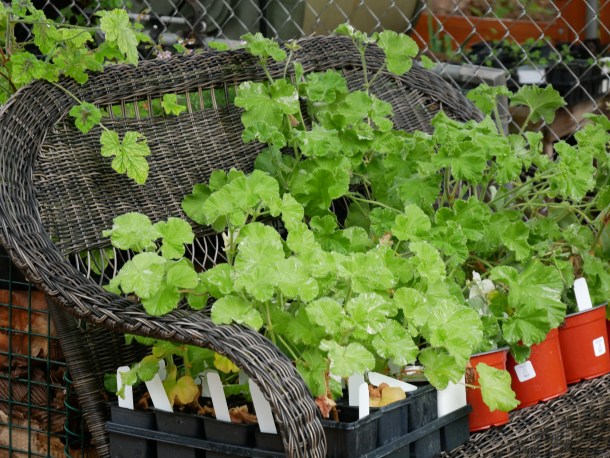
June 2nd is the date for our scented geranium educational event and lunch. Please consider signing up on Eventbrite.  The date of our event may change depending on health guidelines from Dallas authorities and the Dallas County Master Gardener Association. See the eventbrite link above for more details.


Pictures by Starla Willis


Homesteading in North Dallas

Sheila Kostelny, a Louisiana gal, and  Master Gardener class of 2009  walks us through her garden.


Shiela’s words of advice and her own planting date guide:

It’s too late for peas (sugar snap and snow peas are planted Feb 1st thru 10th) and too early for winter squash.  In addition to okra, I will be planting my sweet potato slips after April 15th.  Attached is a timetable that I compiled from the TAMU and NHG suggested dates for planting.  I’m glad to share this spreadsheet. It’s created with the veggies/herbs that interest me.

Thank you, Sheila. this has been a pleasure and I love what you told me about your garden.

We close with Sheila’s words:

“My garden has provided a great deal of joy and feelings of usefulness.

It’s my place of normalcy and peace during this time.”

Thank you, Sheila.

Ann Lamb

Sweet potatoes 


Bundles of Love

Our Edible Landscape’s Response to COVID-19

Sheltering in place has been a time of quiet solitude and reflection for me. My precious 91-year-old mother is being cared for by the staff in her memory care facility and I’m not allowed to visit at this time. (We are so grateful for their compassion and the care she receives from each one of them).  Our children and grandchildren send “face time” hugs and kisses but we are missing the warmth of their sweet touch. 

For me, the one familiar and unchanging experience is time spent in the garden. Early in the morning, with clippers in hand and a basket in my arm, the gathering begins. Late winter and into spring we’ve seen record high amounts of rain followed by temperatures dipping into the  30’s then soaring up into the mid 90’s. Somehow, this unusual weather has blessed our plants with the nourishment needed to grow and flourish. The garden has graced with a bounty of flavorful herbs and greens. 

Since the mid l980’s I’ve been smitten with herbs. Growing them is one of my simple pleasures. From sun to part sun, dappled shade to deep shade, over 20 different kinds of herbs make a seasonal appearance in my garden and in the edible landscape at Raincatcher’s Garden of Midway Hills. A few of the evergreens stay throughout the year while perennials come and go as they choose. Annuals fill in the gaps with seasonal color and interesting flavors.

This year as we started the gentle transition of winter into spring, wonderful things began happening in the garden. Sleepy little lettuce plants opened their heads with delicate green foliage to use in our spring salads. French tarragon, Mexican mint marigold and Italian oregano made a colorful statement from their country of origin. Alliums grew by inches, almost daily. The garden was ready to embrace the season. 

At Raincatcher’s garden and in my garden at home, I’ve been using the harvest of the season to create “bundles of joy” for my family and friends. Always careful to wear gloves and a face mask, if the garden is ready to share, I’m prepared to snip away. Look at each of these three bundles and see if you can identify the herbs and greens in each one. Everything you see is edible!

Did you find nasturtiums, blue borage, rosemary, kale (‘Jagallo Nero’-blue-green frilly leaves with a sweet, tender taste), rosemary, wasabi arugula with white blossoms, dill, thyme and rose scented geranium?
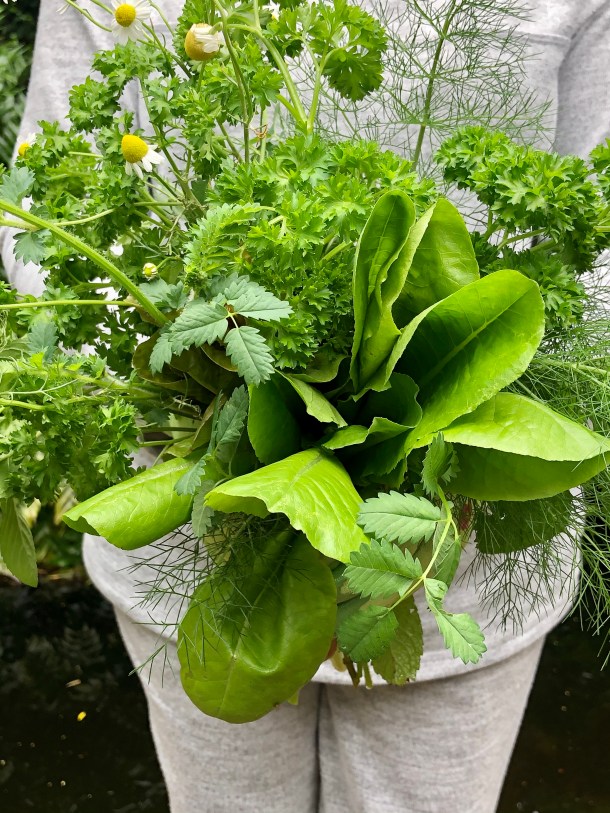
Look for the curly parsley, fennel fronds, spearmint, salad burnet, buttercrunch lettuce and German chamomile blossoms

In this photo you will find cutting celery (looks like Italian flat leaved parsley but has a taste resembling celery), calendula flowers, French sorrel, watercress, oak leaf lettuce and lemon verbena.

Note: These delightful little bundles should be shared with instructions to use soon after harvesting. Remember, leaves don’t like to be under water. So, keep everything fresh and snip from the top down. 

Included are a few favorite recipes but here are some suggestions for using more herbs in your daily meal planning:

Nasturtiums: leaves for pesto and flowers for butter, cookies, jams, salads, and tea sandwiches 

Borage: lovely blue blossoms as a garnish for cakes, salads and syrups

Rosemary: breads, cakes, cookies and soups

Arugula: leaves and blossoms in salads; leaves for pesto

Dill: breads, frittatas and fish

Calendula: flower petals for cornbread, cakes, cookies, quiche 

Scented geraniums: leaves for flavoring sugar, cakes, flowers and leaves for whipped cream

Curly parsley: parsley soup (recipe included), salads

Fennel fronds: salads and soups

Spearmint: tea, lemonade, brownies and in watermelon salad

Salad burnet: creamy dips and salads

German chamomile blossoms: tea and garnish for cakes and cookies, syrups

Cutting celery: creamy dips and young, tender leaves in salads

Marjoram: Italian foods like lasagna and pasta dishes

French sorrel: soups and as a wrap for oven roasted salmon

Watercress: leaves and blossoms for salads

Lemon verbena: breads, cakes, custards, sorbets and in iced tea, water or lemonade

Thyme: butters, soups, cookies and gougers 

Linda Alexander

And now for those recipes:

Parlsey Potato Soup

Lemon Verbena Bread
 

A Gardener’s Response To Shelter in Place

April 7, 2020

Until 3 weeks ago I had no idea what “Shelter in Place” would look like, I just knew I didn’t like the sound of it.

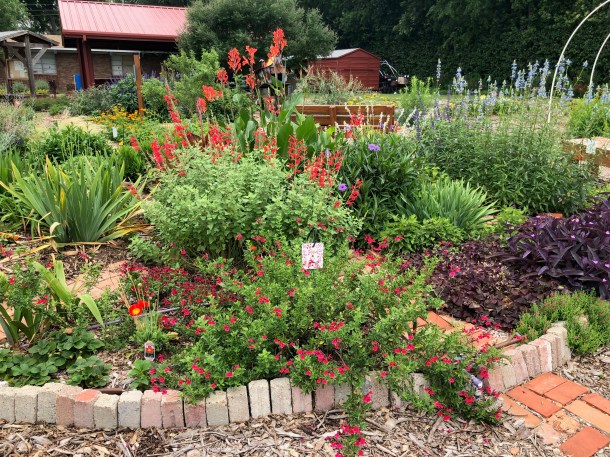
On Monday, I went to The Raincatcher’s Garden before restrictions went into effect on Tuesday. The garden was showing signs of spring; wildflowers, vegetables, new growth, flowering trees and shrubs, and irises. Although the bees were about their normal business of pollinating, it was lacking the normal buzz of people.

Raincatcher’s Garden without the buzz!

We are now about 2 or 3 weeks into Shelter in Place – How are things going?   To be really honest, this girl is having a hard time staying put There are plenty of things to do at home, inside and out, but it’s the NOT going, and NOT connecting that’s the real challenge. 

Starla and son and dog sheltering in place.

 I am a social gardener. I realize that my energy comes from interaction with people as much as growing things, so this quarantine is difficult to say the least.  

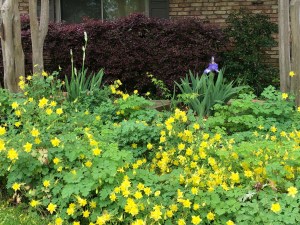
But on the bright side, my yard is awash with color; yellow columbine, red and pink roses, purple irises, and pink Indian hawthorn and many white flowers. 

Front yard with Columbine, Iris, and a backdrop of Loropetalum.

Bridal wreath and white Agapanthus. Other white flowers in Starla’s garden include dianthus, candytuft and snowball viburnum.

 With all of this springtime bounty, I have found a distraction that stays within the boundaries of social distancing and provides an outlet for me.

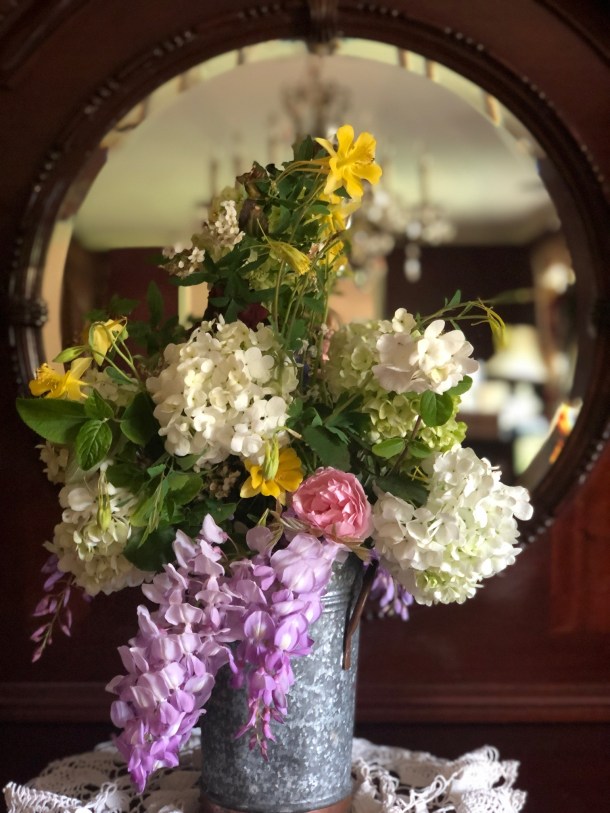
Wanting to surprise my neighbor from across the street, I asked to borrow a vase. She agreed and then the fun began, after flowers and greenery were chosen from the yard, an arrangement was created and placed on her porch. 

It was fun to bring a little joy, some sweet scents, and colorful flowers to an unsuspecting neighbor in this time of uncertainty.  My kitchen has turned into a florist’s workshop as I  continue to create garden bouquets for my neighbors.

A surprise bouquet from Starla. Starla, won’t you be my neighbor?

Everyone is dealing with this situation differently, but this has helped me to stay connected while adhering to social distancing guidelines. 

I can’t wait to get back to regular routines and friends, but in the meantime this will be my outlet. By the way, can I borrow a vase?

What are you doing to bring a little sunshine to those in your circle?  Dallas Garden Buzz would like to hear how you are dealing with this disruption of our normal patterns.  Leave a comment to let us know.

Starla Willis with captions by Ann Lamb

Raincatcher’s Garden Spring 2020

April 2, 2020

Most of us are at home this week and for the next coming weeks.

If you’re itching to walk through a garden, why not take a tour of ours through the eyes of Starla, our photographer who took these pictures last week.

New decomposed granite walkway flanked by beds of  Canyon Creek Abelia, Hamelim Dwarf Fountain Grass, and Texas Sage, “Compactum” (Texas Ranger) Read a full description of this new memorial garden here.

Veggie beds full of turnips (mostly gone), mustard greens (lots), collards (gone), carrots, and onions. Meanwhile Jim, is nursing 6″ pots of tomatoes and peppers for the garden.

Pollination of a blackberry blossom

The color wheel garden with a pretty apricot iris. Jim has repotted 40 zinnias and has 20 more to repot for the color wheel.

Redbud tree in bloom

The rain garden, our unsung hero! It has been channeling rain from our full rain cisterns to this sunken garden.

Garden questions? Send us a question by making a comment.

Ann Lamb

Pictures by Starla Willis

Crane Flies

Have you noticed the plethora of winged insects with really long legs of late?  While admiring our blooming Texas Mountain Laurel, crane flies were spotted resting on the grape-soda scented flowers.  After taking way too many pictures, it was time to learn about them. We are seeing an abundance of them due to the wet weather and the fact that it’s early spring, the time they usually appear.  

There are over 14,000 species of Crane Flies.  “Mosquito Hawk” is the common name, which is a misnomer all the way around. It is not a mosquito, it’s a fly, and hawk nope, – not a predator, and it doesn’t hunt down mosquitoes either, but is often food for other birds and wildlife.  

They have beautiful stained glass-like wings as seen in this up close photo

These beneficial insects contribute to the ecosystem by feeding on decomposing matter in moist areas in the larval stage, which is 95% of their life span. The crane fly’s lifecycle is about a year, but adults only live for about 10-15 days. They do not bite, are attracted to light, and the sole purpose as adults is to mate and for the female to lay eggs near water.

Enjoy the brief time that crane flies occupy our airspace.  They are interesting to watch, helpful to our environment, and fun to photograph. 

Starla Willis  


Eagle Scout Project Completed At Raincatcher’s Garden


Newly completed handwashing station at Raincatcher’s

Another Boy Scout Eagle project has been completed at Raincatchers!  Boy Scout John Rehagen, a 7th Form, (Junior), student at Cistercian Preparatory School and member of St. Monica Catholic Church’s Boy Scout Troop 412, recently completed a very ambitious project in Raincatchers’ north garden.

This project is the fourth Eagle Scout project to be completed at Raincatchers since our relocation during 2015 from the garden at the Joe Field location.  The completed projects were: Construction of two substantial trash and recyclable receptacles, two garden cedar benches, and the garden information kiosk.

John’s project included the design and construction of a framed cedar surround with a roof, for a large galvanized tub, along with the required plumbing, for a 3 position hand washing station.  It also incorporates an additional 4th station for cleaning garden tools before being placed back into storage.  The hand washing station is now available for garden visitors, especially our younger guests, and volunteers during their time at the garden.  

As all Boy Scout Eagle projects require, John’s project had a written development plan, a formal approval from the Troop’s Boy Scout leadership, a plan for securing funding and volunteer workers, sourced from his troop’s members, friends and family members, along with an actual work plan and projected completion date.  

Eagle Scout project in progress

Upon receiving Troop leadership approval of his project, John used his considerable CAD/CAM skills to construct a “virtual” hand washing station.  The program provided him with the necessary dimensions and a list of materials required. Physical construction started on December 28, 2019 and, fortunately with our good weather, concluded on January 7, 2020.  Substantial manual effort and many man hours were invested by John and his volunteers, including his tenacious younger brother, Brian, during the construction time frame.  

Eagle Scouts demonstrate perseverance, discipline, motivation, leadership, accountability, and achievement.  These personal traits lead to tangible lifelong benefits and college admissions officers recognize the award for its value and it is given considerable weight in their admission decisions.  The fact that the attainment of the rank is based on accomplishing a set of national standards rather than some arbitrary local qualifications makes its achievement an outstanding personal accomplishment!

Very few Boy Scouts actually achieve this prestigious rank.  Only 4% of boys participating in the Boy Scout program since 1911 have achieved the organization’s most prestigious rank of Eagle Scout.

There are always prospective Eagle Scouts looking for worthy projects.  Dallas County Master Gardener project coordinators should reach out to the Boy Scout Troops located near their gardens whenever there is a construction requirement that might fit the description of an Eagle Scout project.

Congratulations, and a Dallas County Master Gardeners’ thank you to John, and his parents, Sarah and Chris, on their son’s truly worthy accomplishment.

Jon Maxwell


Scented Geraniums, An Olfactory Pleasure

Raincatcher’s Garden of Midway Hills is hopeful that by June, social distancing and shelter-in-place restrictions will be lifted. However, the health and well-being of our community is, of course, our highest priority. We will review the official guidance from health authorities and our local government, particularly Dallas County, as well as guidance from the Dallas County Master Gardener program, as our June 2nd date gets closer. If you purchase a ticket, you will be notified via email if this event must be postponed or cancelled due to COVID-19 concerns.Taste of the Garden


Scented Pelargoniums (Scented Geraniums)

“An Olfactory Pleasure”

Snowflake geraniums and chocolate geranuims growing in The Raincatcher’s edible landscape

Learn how to bring color, variety and a whole spectrum of fragrances into your life. Following an enlightening talk about growing their aromatic foliage you’ll be treated to a tasting table of flavorful treasures.

Tuesday, June 2nd

Raincatcher’s Garden of Midway Hills…11001 Midway Road

Program 10:00 – 11:00am with
Dallas County Master Gardener, Paula Spletter
Free and open to all in the Sanctuary

‘A Taste of the Garden’ 11:15 – 12:15
$10.00 per person in the Community Hall

Reservation Deadline, May 26th

Menu

Rose Geranium Italian Cream Cake with Rose Cream Frosting

Strawberry Rose Geranium Ice Cream

Rose Geranium Buttermilk Pie

Rose Scented Geranium Lemonade

Sign up here and keep up with any news about this event on our blog:

https://www.eventbrite.com/e/taste-of-the-garden-scented-pelargoniums-scented-geraniums-tickets-101252956318 


Questions? Leave a comment on this blog or contact lindawalexander@sbcglobal.net

Have Hope, Carry On

March 24, 2020

Hello dear readers,

Most everything, every event, every gathering has been cancelled in Dallas and we are under ‘shelter in place’ orders until April 3.

The Dallas County Master Gardener office is closed and our Dallas County help desk is not available at this time. If you have garden questions, send them to us in the comments area of this blog and we will try to answer quickly.

Please don’t fret, our gardens will survive and one day soon we will be welcoming you back to Raincatcher’s events, plant sales, garden classes, and garden visits.

In the meantime, look through seeds you have saved and begin planting. Seeds represent hope!

Some garden centers in Dallas are open and have pick-up service because they supply herbs and vegetables. I have an order in right now, for starts of squash, eggplant, jalapēno, green beans and hopefully sun gold tomatoes.

Starla took this picture yesterday of The Raincatcher’s Garden to cheer you.

Bluebonnets, Englemann daisy, redbud trees and peach, pear, plum trees in bloom.

Ann Lamb

Picture by Starla Willis

Grow Now!

Dallas County Master Gardener volunteers at the Raincatcher’s Research, Education and Demonstration Garden of Midway Hills share your concern for eating healthy during these uncertain times. We’ve put together a short list of ways that you can start growing and harvesting seasonal crops over the next few weeks and months. Here are some gardening (and recipe) suggestions to help supplement your meals with freshly harvested herbs and vegetables.

 If you do not already have a designated vegetable garden, try one of these options:

1) Find an open place in your flower bed that receives around 6 to 8 hours of sun, preferably from morning until mid or late afternoon. Give your soil a boost by adding compost. Good quality compost can be purchased at most local garden centers. Make sure you have a water source close by, and position the garden where you can keep a daily watch to head off any potential pests and weeds that could create problems if left unchecked.

2) Create a simplified version of a raised bed using cinder blocks. Place cardboard directly over a grassy spot in your yard that receives ample sunlight, then place cinderblocks in a rectangular shape around the cardboard, starting with 5 on each side and 3 at each end. Fill the enclosed space about 6 inches above the bed border with a commercial raised bed mix, and water thoroughly to let the soil settle. Space plants or seeds according to directions. Water as needed to maintain even moisture within the bed.

The cardboard method, a good way to smother weeds

A large cinder block garden bed

Start with 4” to 6” edible plants spaced according to label directions. Seasonal plants, including cucumbers, peppers, and tomatoes, are currently in stock at many local garden centers, but don’t stop there.

Try the following options in your new raised bed or in your existing landscape as borders and ground covers, or plant a bay laurel to grow as a shrub or small tree. 

Arugula (Eat fresh in salads, or use in dips.)

Spinach (Eat fresh in salads, sauté with scrambled eggs, or use in omelets, quiches and vegetable dishes.)

Kale (Eat fresh in salads; sauté for kale chips.)

Lettuce (Many different varieties provide texture and color in the landscape.)

Radish (Eat fresh in salads; slice thinly and serve on buttered bread for sandwiches.)

Carrot (Eat fresh in salads, roasted, or in soups and souffles. Use carrot tops to make pesto.)

Beet (Serve roasted, or grate for a cake.)

Swiss Chard (Eat fresh in salads, use leaves as a “wrap” for fresh chopped vegetables, sauté for turnovers, or add to soups.) 

Dill (Leaves can be added to salads, potatoes, meat and fish at the end of cooking.)

Fennel (All parts of the plant are edible – leaves and stalk make a wonderful flavoring for fish.)

French Sorrel (Can be cooked or used fresh like lettuce. Makes a good soup; adds zip to salads. Great on roast beef sandwiches.)

Nasturtiums (Harvest the leaves, buds and flowers anytime, and use fresh. Excellent in salads. Leaves make a great pesto.)

Artichokes (Excellent vegetable served roasted, sautéed or steamed—a beautiful and majestic plant for your garden.)

Thyme (Strip small leaves from stems and use to enhance the flavor of baked or broiled fish dishes or fish sauces. Thyme Cheese Roll: Combine 8 ounces softened cream cheese, 1 tablespoon chopped thyme, 1 tablespoon chopped parsley, ½ teaspoon minced garlic. Roll into a log and refrigerate. Serve with toast or crackers for a quick and easy snack.)

Sage (Flowers and leaves are edible; flowers are nice in salads and for making tea, and the leaves are great for cooking and making herb butters.)

Rosemary (Use with foods rich in fat such as roasted meats, poultry and fish. Add to soups and stew. Use stripped branches as skewers for your favorite grilled meats and veggies.)

Chives (Snip the leaves at ground level when harvesting. Chop and serve with salad, potatoes, pasta and cabbage.)

Oregano (Sprinkle on fresh tomatoes or use to make a sauce; adds flavor to stews and soups.)

Marjoram (Rub leaves on all kinds of meat, chop into egg dishes, stir into soups and sprinkle it over vegetables)

Basil (Plant mid to late April. Use leaves for salads, pesto and sauces. Combines well with zucchini, beans and mushrooms.)

Watercress (Harvest and use fresh in salads, soups and sandwiches.)

Purslane (Use in early spring salads. Leaves can be cooked like spinach.)

Sweet Bay/Bay Laurel (Use the leaves of this evergreen plant in soups, stews and other simmered dishes. Cook a leaf or two with dried beans.)

We hope you will be inspired to start gardening with your family and experience the joy of bringing fresh, flavorful food to your table. 

How about a healthy robust minestrone soup using fresh garden ingredients. Picture by Linda

Click here for the recipe. 

Linda Alexander and Lisa Centala with comments by Jeff Raska, Horticulture Assistant, Dallas County

Follow these planting guides: TAMU Vegetable Planting Guide

Northaven Garden Spring Planting Guide

New to gardening? Read this pamphlet, pages 13-15 have specific recommendations for veggie gardening.

Pictures by Starla Willis