Category Archives: Vegetable Gardening in Dallas

Squash, Squash, and More Squash Coming

We are going to be sharing many, many squash recipes from our SQUASH ME event yesterday.  We had beautiful, lower temperature weather and a fabulous speaker who talked to us about the wide and inviting subject of squash.  While you are waiting for a complete write up, we thought you might like a few of the recipes.  Please also spend a little time reading about The Sex Life of Squash on the blog, Garden Betty to prepare  for the scintillating squash info we will be presenting in the next few days.
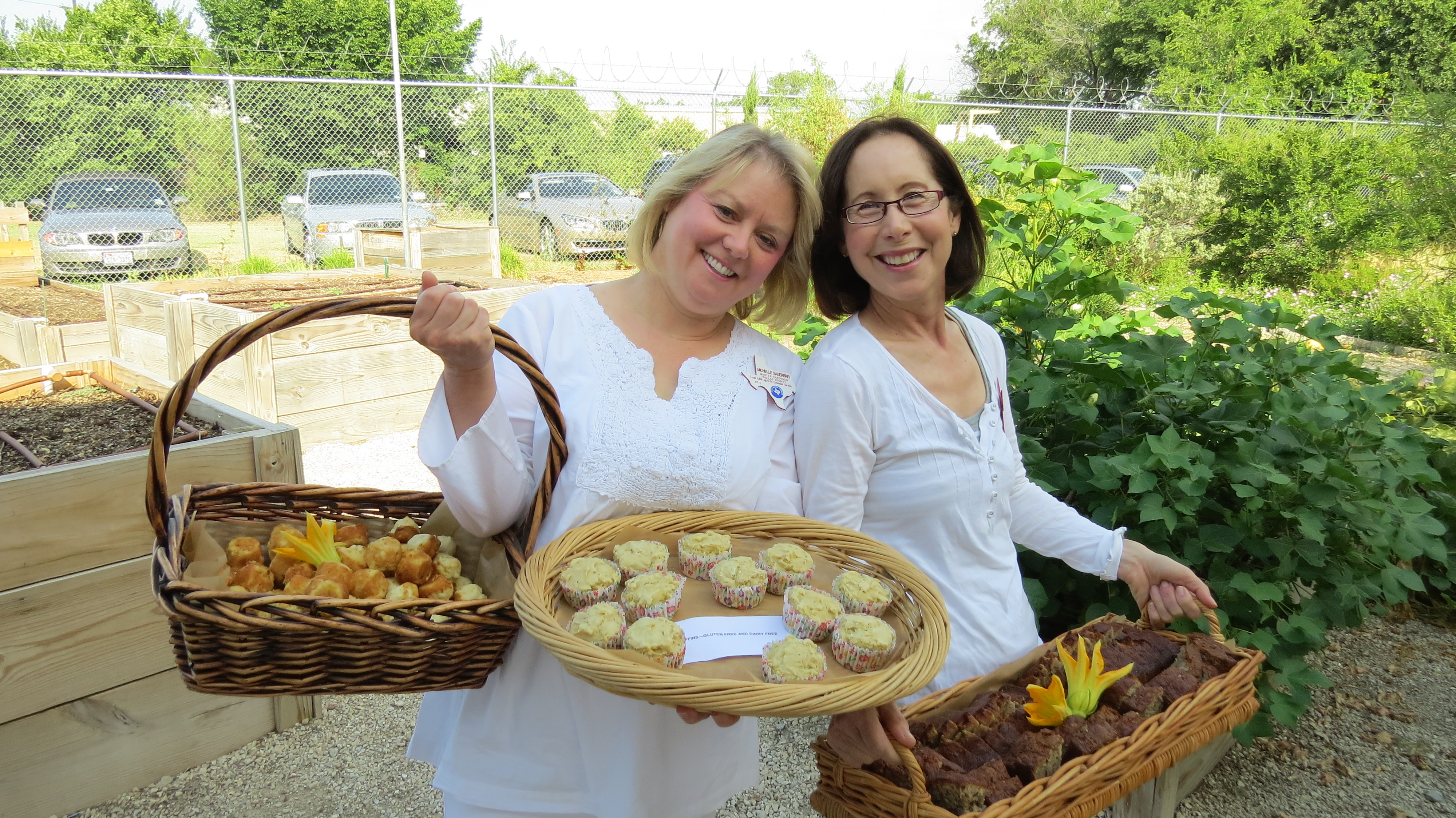
Michele and Sue Serving Squash Muffins with and without Gluten and Banana  Zucchini  Bread

Michele and Sue Serving Squash Muffins with and without Gluten and Banana Zucchini Bread

Squash Muffins 

Ingredients:

2 cups all-purpose flour

1 tablespoon baking powder

¼ teaspoon salt

2 tablespoons sugar

2/3 cup grated yellow squash

1 egg, beaten

¾ cup milk

2 tablespoons vegetable oil

Directions:

  1. Combine flour, baking powder, salt, sugar, and squash in large bowl; make a well in center of mixture.  Combine egg, milk, and oil; add to dry ingredients, stirring just until moistened.
  2. Spoon batter into lightly greased muffin pans, filling two-thirds full.  Bake at 350⁰ for 20 to 25 minutes.  Remove muffins from pans immediately.

Yield:  1 dozen.

Banana-Zucchini Bread

Ingredients:

3 cups all-purpose flour

1 teaspoon baking soda

1 teaspoon salt

1 teaspoon ground cinnamon

½ teaspoon baking powder

1 cup vegetable oil

3 eggs

2 cups sugar

1 tablespoon vanilla extract

2 cups mashed bananas

2 cups unpeeled shredded zucchini

1 cup chopped pecans or walnuts

Directions:

  1. Combine flour, soda, salt, cinnamon, and baking powder in a mixing bowl, and set aside.
  2. Combine oil, eggs, sugar and vanilla extract in a large bowl; beat well.  Stir in bananas and zucchini.  Add flour mixture, stirring just until moistened.  Stir in pecans.
  3. Pour batter into two greased and floured 8 ½- x 4 ½- x 3-inch loaf pans.  Bake at

350⁰ for 1 hour or until a wooden pick inserted in center comes out clean.  Cool in pans 10 minutes; remove from pans, and cool completely on wire racks.

Yield:  2 loaves.

squash chocolate cake

Chocolate-Zucchini Cake

Ingredients:

½ cup plus 1 tablespoon butter, melted

2 cups sugar

3 (1-ounce) squares unsweetened chocolate, melted and cooled

3 eggs

½ cup milk

2 teaspoons grated orange rind

2 teaspoons vanilla extract

2 cups coarsely grated unpeeled zucchini

2 ½ cups flour

2 ½ teaspoons baking powder

1 ½ teaspoons baking soda

½ teaspoon salt

1 teaspoon ground cinnamon

2 tablespoons powdered sugar

½ teaspoon ground cinnamon

Whole fresh strawberries (optional)

Directions:

  1. Cream butter; gradually add 2 cups sugar, beating until light and fluffy.  Beat in chocolate.  Add eggs, one at a time, beating well after each addition.  Beat in milk, orange rind, vanilla, and zucchini.
  2. Combine flour, baking powder, soda, salt, and 1 teaspoon cinnamon; add to creamed mixture, mixing well.  Pour batter into a greased and floured 10-inch Bundt pan.  Bake at 350⁰ for 1 hour or until a wooden pick inserted in center comes out clean.  Cool cake in pan 10 to 15 minutes; remove from pan, and place on a wire rack.
  3. Combine powdered sugar and ½ teaspoon cinnamon; sift over warm cake.  Cool completely.  Fill center of cake with strawberries, if desired.

Yield:  one 10-inch cake.

Ann

Recipes by Linda

Pictures by Starla


Confused ?


Confused by the weather this year?  One minute you are wearing your winter clothes and the next day it’s almost 90 degrees, with it feels like the same amount of humidity.  Then Dallas suffered through a severe drought, only to be drowned by flash floods.  Even the dogs and cats can’t decide whether to shed their winter coats or curl up into a warm ball in their beds. — And just think about the plants.  If we are having difficulty adjusting, what must they “feel.”

Many of our native plants have evolved to handle Texas’ “if-you-don’t-like-the-weather, just-wait-a-minute” fluctuations.  However this year’s drastic changes in temperature and moisture have been particularly hard on onions.  Jim Dempsey reported that after the last hard freeze, at least one fourth of the Demonstration Garden’s onions were lost.  Now many onions are beginning to bolt (i.e. go to seed).  Other vegetable gardeners throughout Dallas are reporting that more than the usual numbers of their onions are bolting.  Why is this happening?


An Onion in Full Bolt!

An Onion in Full Bolt!

According to Dixondale Onion Farm (www.dixondalefarm.com) in Carrizo Springs, Texas, there are several causes for onions bolting.  Bolting in onions is a survival mechanism in response to stress.  The onion “thinks” it is dying and sends up a flower stalk in order to reproduce to insure its survival into the next generation.  Temperature fluctuations and cold weather stress are the most common cause of this.  Dixondale’s website says that “when the temperature is below 45 degrees Fahrenheit for a prolonged period, the plant becomes dormant. When the temperature rises, the plant grows. If cold weather returns, the plant goes dormant again, and with returning warmth, it will grow again. Two or more dormant/growth cycles will likely result in bolting.”  This certainly sounds like our winter/spring!!

Other factors that contribute to bolting in onions are: (1) Too loose a soil:  if onion roots are too disturbed, the onion may react by thinking that it is starving and begin to prematurely go to seed; and (2) Over-fertilization which results in the onion’s growing too quickly.  Though both of these causes may be prevented by correct onion planting practices, there isn’t much that can be done about the weather.

If your onions are bolting however, don’t despair.  Though bolted onions have stopped growing and cannot be stored for a long period of time, they are perfectly edible.  So go ahead, pick them, and enjoy them in your salads, soups and casseroles.  Yum,,,,,,,,,,

Carolyn

Onions, onions, onions here.

Picture by Starla

Companion Plants and Plantings

Onions and potatoes…not only do they taste great together – they grow great together!  A few weeks ago, we planted our onions (yellow 1015, otherwise known as Texas Sweet) and potatoes (red LaSoda) in one of our raised beds.  We planted the onions from seedlings, and prepared seed potatoes.

Above: Calloused Potatoes, ready to plant

Above: Calloused Potatoes, ready to plant

To prepare the potatoes, they were quartered – making sure there were a couple of eyes in each section, dipped in sulfur powder (you may know it as the stuff you sprinkle on yourself to keep chiggers at bay), and then left in a cool, dry, dark place to callous over.   By callousing over the cut parts of the potatoes, excess moisture evaporates and the chance of mold growing underground where the potato was cut is reduced. Usually, 7-10 days is sufficient for callousing.

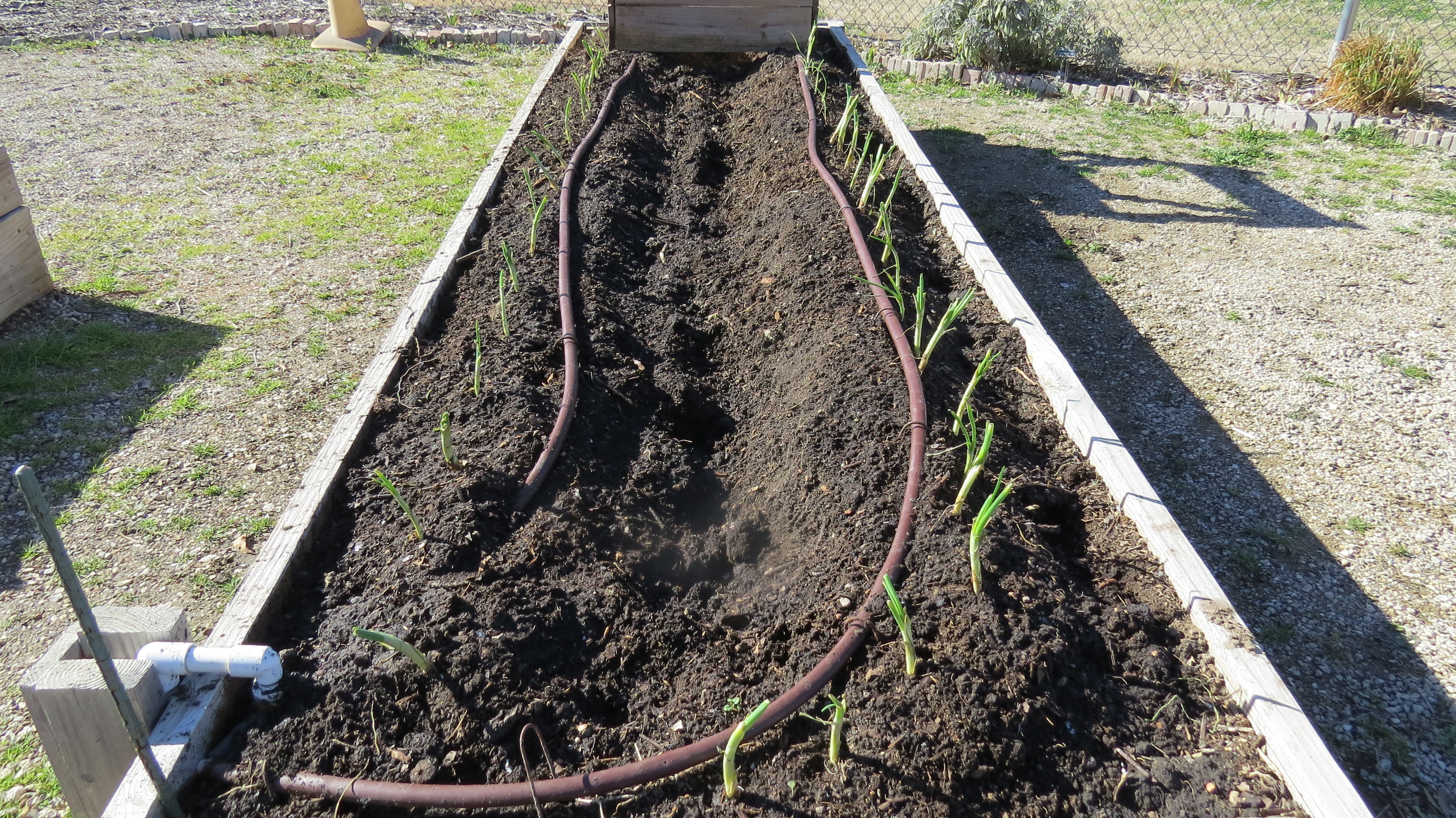
Since the onions didn’t require any special work, they got planted a couple of weeks earlier, at the top of two rows we’d made in the bed.  They were planted about an inch deep, and roughly four inches apart from one another.  These are bulb onions, so we wanted to make sure there’d be plenty of room for them to grow nice and big.  The potatoes, once they were ready, got planted in the furrow made between the two rows of onions, cut side down (eyes up), about four inches deep and roughly six inches apart.  Six inches may seem a little close, but our goal was to plant all our sets, and that’s how the spacing worked out in our raised bed.

Above: Sue and Christina planting our potatoes inside rows of onions

Above: Sue and Christina planting our potatoes inside rows of onions

So why plant these two together?  It goes like this:  as the onion grows, to help facilitate bulb production, we’ll start removing some of the soil off of the tops of the bulbs.  Meanwhile, the potato plant grows upwards, but the potato is formed off of the part of the stem that is underground.  So as the potato grows upwards, we’ll use the soil we’re removing off of the onion to help bury the potato plant stem so there’s more stem to swell into more potatoes!  Pretty nifty, eh?

Finally, at the end of the bed we have a boxlike structure made of wood.  There, we’re experimenting with growing the potatoes really tall – covering the stems with compost as the plant grows upwards.  We’ve planted five potato pieces in there – one in each corner, and one in the middle – and our drip line extends into the box area.  As the plants grow up and we add more compost, we’ll lift the drip line (we’ve left a little play in there) so it stays near the top of the soil.

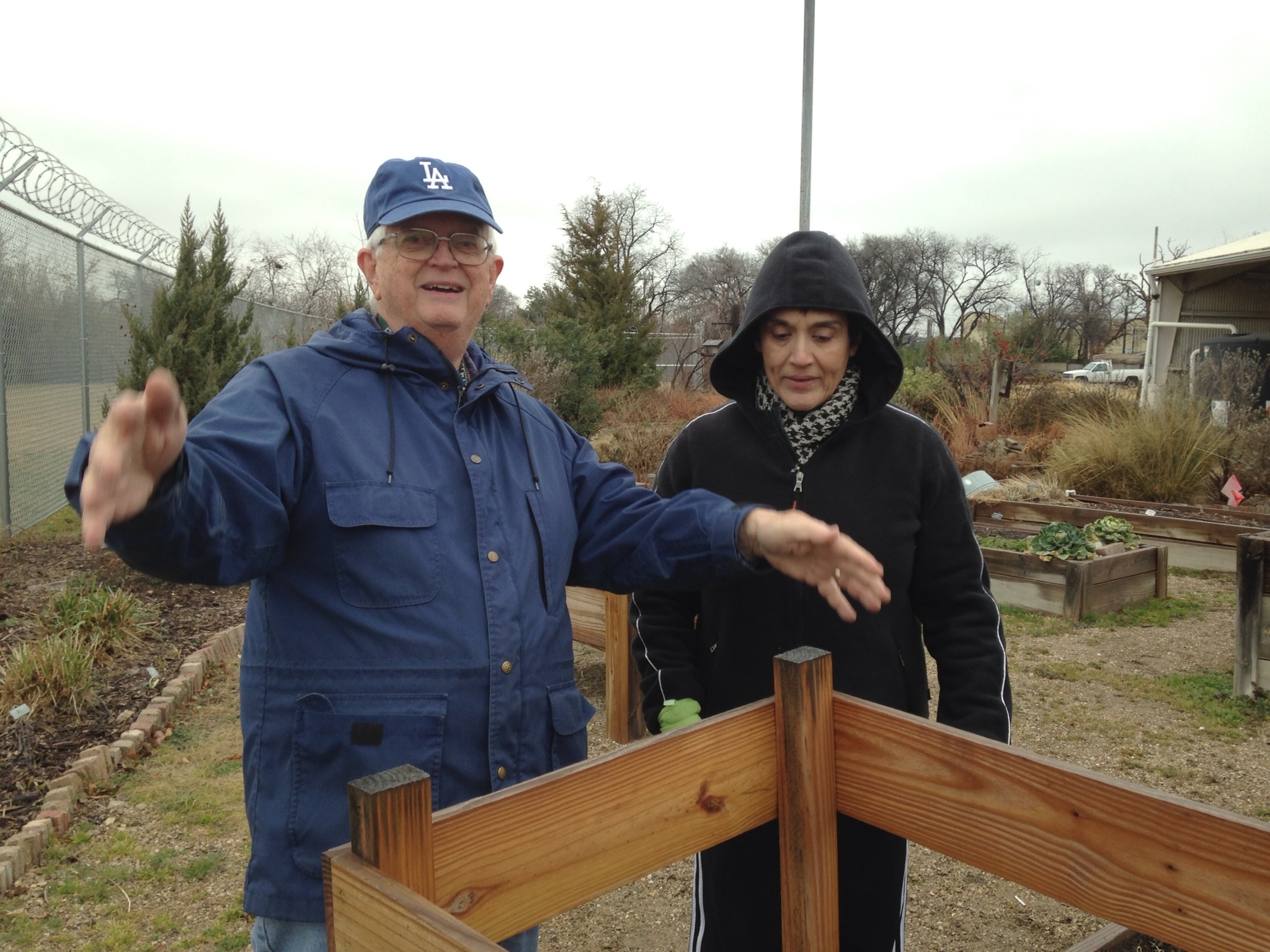
Above: Jim explaining the potato growing process

Above: Jim explaining the potato growing process

It’ll be a few months before we can harvest the roots and tubers of our labors, but it’s good to keep in mind that if you plant a short-day/spring/sweet onion, it’s not considered a storage onion.  If cured properly, it may last a couple of months, but the high sugar content works against long storage.  So it’s best to cook ’em up and eat ’em quick!

Lila Rose

More about our Potatoes: One Potato, Two Potato, Hopefully More, A Better Mouse Trap, and Vegetable Planting in January and more about Onions: The Lowly Onion.

The Lowly Onion

Because of their circle within a circle anatomy, the Egyptians considered them to be the symbol of eternal life, and they buried them along with their dead.  The Greeks, on the other hand, used them to increase the strength and endurance of their athletes before the Olympic Games.  Throughout the ages they have served as food and medicine for both the poor and wealthy.  What is this ancient vegetable?  The lowly onion, of course.

Above: Dallas County Master Gardeners-Cindy, Tim, and Linda with our onions harvested in 2013

Above: Dallas County Master Gardeners-Cindy, Tim, and Linda with our onions harvested in 2013

Onions (Allium cepa or bulb onions) are thought to have first originated in Central Asia or perhaps Iran and Pakistan at least 5000 years ago.  Our earliest ancestors probably ate wild onions and gradually started cultivating and domesticating them since onions are portable, easy to grow, prevent thirst, and could be dried for times when food was scarce.  To the Romans, the onions’ medicinal qualities included to cure vision, induce sleep, and heal mouth sores, dog bites, toothaches, dysentery, and lumbago.  In the Middle Ages their antiseptic qualities were thought to cure snake bites, alleviate headaches and prevent hair loss.  In North America, despite the abundance of wild onions consumed by Native Americans, the Pilgrims in 1648 planted bulb onions as soon as the ground could be cleared.

Today it is estimated that the per capita consumption of onions in the United States is over 20 pounds a year.  The onion is also the official state vegetable of Texas.    If you want to grow onions in North Texas, Jan. 1-Feb. 15 is the time to plant them.  Onion varieties are generally divided into three major categories:  long day, short day and intermediate day onions.  Dixondale Onion Farm in Carrizo Springs, TX, stresses that when selecting onion varieties “the size of the onion bulb is dependent upon the number and size of the green leaves or tops at the time of bulbing.  For each leaf, there will be a ring of onion.  The larger the leaf, the larger the ring will be when the carbohydrates from the leaves are transferred to the rings of the bulb.  The triggering of this transfer or bulbing is dependent upon day length and temperature and not the size or age of the plants.  When selecting your onion varieties, remember that the further north you are, the more hours of daylight you have during the summer.”  The onions that can be grown in Dallas County are those varieties found in the short day and intermediate day category.  This, unfortunately, eliminates some of the “specialty” onions found in some seed catalogues; however there are still white, red and yellow onions that do well in here.  Most garden centers carry onion slips that are selected for our area or go to the Aggie-Horticulture website  to see a list of recommended varieties.

Onions prefer a loose, well drained soil and should be planted 4-6 weeks before the last spring freeze.  To grow larger onions, they can be fertilized with a synthetic or organic fertilizer that has a larger middle number, such as 10-20-10 when they are first planted.  After the original planting, they can be fertilized with ammonium fertilizer (21-0-0) in alkaline soils or calcium nitrate (15.5-0-0) in acidic soils about every 2-3 weeks, if desired.  Stop fertilizing once the onions start to bulb.

Above: Onions planted at The Demonstration Garden on Joe Field Road in 2014.

Above: Onions planted at The Demonstration Garden on Joe Field Road in 2014.

Plant the onions slips one inch deep and no deeper as their ability to form a bulb will be compromised.  Onions grown to maturity should be planted about 4 inches apart; however, if green onions are desired, the onion slips can be planted about 2 inches apart and every other one pulled for green onions.  Water thoroughly and regularly until the tops turn brown or yellow and fall over, then cut back on water.  At this point a fully mature onion should have about 13 leaves.

When they are harvested, dry them thoroughly for several days to avoid problems with rot.  The entire neck (where the onion meets the bulb) should be dry and not “slip.”  Once the onions are dry, clip the roots and clip the top to 1 inch.  Store them in a cool, dry, well-ventilated location if not consumed right away.  Any onion that shows signs of rot should be removed immediately.  In general, according to Dixondale, sweeter tasting onions do not store as long as the more pungent types.

So, plant yourself some onions—and Bon appetite !!

Carolyn

More about onions click here and for onion recipes click here!

Green Tomato Primer

Green tomatoes are usually seen at the beginning and the end of tomato season.  Sometimes they get harvested at the beginning when you just can’t wait another minute to have a tomato, and when the weatherman announces the first frost of the year, the rest of the harvest comes inside in a hurry.

If it’s been a good year, that leaves you with lots of tart green balls; some may continue to ripen, but they usually don’t have the depth of flavor and sweetness of those that finish on the vine.  But it’s a pity to compost all that hard work and potential goodness.  So what do you do?

Above: 13 cups of green tomatoes were harvested  for Green Tomato Recipes. The ripe tomatoes were eaten.

Above: 13 cups of green tomatoes were harvested for Green Tomato Recipes. The ripe tomatoes were eaten.

This primer will hopefully help you better understand your green harvest and give you some ideas – along with some recipes – to help you use it all up deliciously! Green tomatoes are tart and hard.  If you have green cherry tomatoes, you may even find them a little bitter (I think that’s from the greater amount of skin to pulp than you have on a larger tomato.)  To mellow the flavor of the tomato, you could cut, dice or slice it (you want to expose the interior), salt it, cover it and let it sit overnight in the refrigerator.  The next day (or the day after that) when you go to use it, drain and rinse it, and it will still be tart, but it won’t turn your face inside out. Green tomatoes can be substituted reasonably easily in recipes that call for:

  • tart apple
  • lemon
  • kumquat
  • tamarind
  • fresh cranberries

Cherry green tomatoes would work especially well as substitutes for kumquats and cranberries if the shape is important.  So if you already have a recipe you enjoy that uses one of these ingredients, go ahead and substitute green tomatoes for it! Below is a list of flavors that would complement green tomatoes, if you enjoy improvising:

  • almonds
  • walnuts
  • hazelnut
  • coconut
  • coconut cream
  • sesame oil
  • balsamic vinegar
  • tea
  • vanilla
  • rose water
  • ginger
  • sugar (brown, white)
  • thyme
  • rosemary
  • coriander
  • allspice
  • cardamom
  • cloves
  • cinnamon
  • nutmeg
  • mustard
  • caraway
  • bay leaf
  • chile pepper
  • garlic
  • onion
  • bitter greens
  • corn
  • butter
  • cheese (ricotta, parmesean, cream)
  • chicken
  • turkey
  • duck
  • beef
  • game (venison)

A flavor combination:

  • beef + coconut milk + green tomato 

Other recipe ideas:

  • cornbread with green tomatoes and jalapenos
  • almond thumbprint cookies with candied green tomatoes (or green tomato jam)
  • coconut pie/tart crust with a green tomato filling
  • green tomato jam and coconut milk in your favorite vanilla ice cream recipe (substitute the coconut milk for some or all of the milk and cream)
  • dehydrate and powder the tomatoes to add to any recipe for a little extra tartness
  • added to soups or stews
  • the classic: fried green tomatoes! 

The following recipes were designed for a small batch of green cherry tomatoes, where 1 cup weighed approximately 5 ounces.

Above: Green Tomato Recipe Sampling at The Demonstration Garden

Above: Green Tomato Recipe Sampling at The Demonstration Garden

If your tomatoes are full-sized, you may choose to dice or slice them, and in addition, you have the option of peeling the skins to reduce the acidity, and some of the bitterness.

Hungry for Lila  Rose’s Green Tomato Recipes? Click Here.

Lila Rose

Pictures by Starla

The Power of Pumpkin

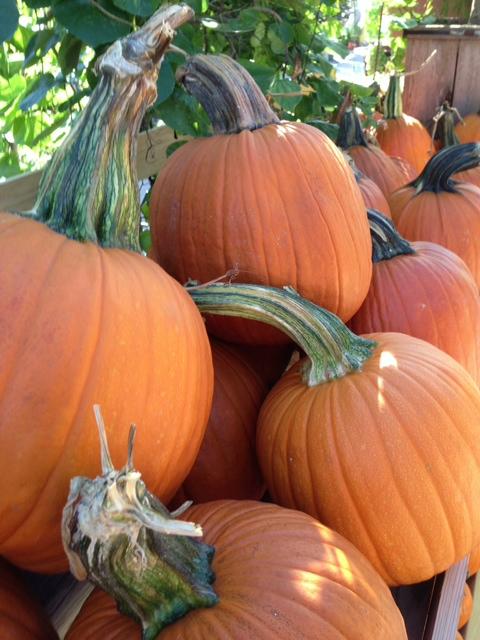
Pumkins at an Outdoor Market

“I would rather sit on a pumpkin, and have it all to myself, than be crowded on a velvet cushion.”–Henry David Thoreau

To some they are the “orbs” of autumn, the quintessential symbol of fall, making their graceful entry into hearts and homes.  The names, alone, captivate childlike feelings of giddiness; Aladdin, Baby Boo, Cinderella, Cotton Candy, Jack-Be-Little, Jack-Be-Quick, Full Moon and Wee-Be-Little.

Why, then, are we so fascinated with pumpkins?  Consider these facts: * The word pumpkin originated from the Greek word Pepon which means large melon.  The word gradually morphed by the French, English and then Americans into the word “pumpkin”.

Pumpkins and squash are believed to have originated in the ancient Americas. * Early Native Americans roasted pumpkins strips over campfires and used them as a food source, long before the arrival of European explorers.  Pumpkins helped The Native Americans make it through long cold winters.  They used the sweet flesh in numerous ways; roasted, baked parched, boiled and dried.  They ate pumpkin seed and also used them as a medicine.  The blossoms were added to stews.  Dried pumpkin could be stored and ground into flour * Columbus carried pumpkin seeds back with him to Europe. * Indians introduced pumpkins and squashes to the Pilgrims.

Pumpkins were an important food source for the pilgrims, as they stored well, which meant that they would have a nutritious food source during the winter months. *The Pilgrims were also known to make pumpkin beer.  They fermented a combination of persimmons, hops, maple sugar and pumpkin to make this early colonial brew. *In early colonies, pumpkin shells were used as a template for haircuts to ensure a round and uniform finished cut.  As a result of this practice, New Englanders were sometimes nicknamed “pumpkinheads”. An old Pilgrim poem gives testament to the Pilgrims dependence upon pumpkins for food:

“For pottage and puddings and custard and pies

Our pumpkins and parsnips are common supplies,

We have pumpkins at morning and pumpkins at noon,

If it were not for pumpkins we should be undoon”.

Pilgrim verse, circa 1633

During the month of October we will explore some fun and flavorful ways to use pumpkins.  To begin, here’s what Dr. Mercola, a leading health advocate, has to say about pumpkin seeds: 10 Health Benefits of Pumpkin Seeds “With a wide variety of nutrients ranging from magnesium and manganese to copper, protein and zinc, pumpkin seeds are nutritional powerhouses wrapped up in a very small package”. Pumpkins provide:

  •  Heart Healthy Magnesium
  •  Zinc for Immune Support
  •  Plant-Based Omega Fats
  • Prostate Health Cancer-Protective Properties
  •  Anti-Diabetic Effects
  •  Benefits for Postmenopausal Women
  •  Heart and Liver Health  Tryptophan for Restful Sleep
  •  Anti-Inflammatory Benefits

The best way to eat pumpkin seeds is raw – this preserves the healthy fats in the seeds.

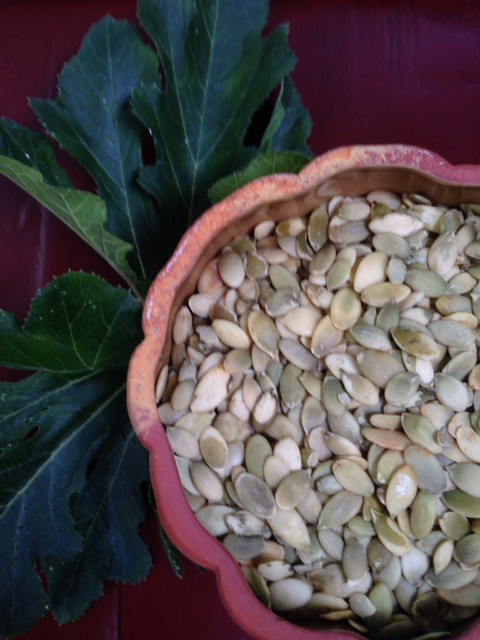
Roasted Pumkin Seeds in a Red Bowl If you prefer to eat the seeds roasted use this simple recipe: Roast raw pumpkin seeds on a low heat setting in your oven (no more than 175 degrees F), sprinkled with Himalayan or other natural salt, for about 15-20 minutes.

Sign up for our Harvest Lunch, Outstanding at the Field on October 29th. Instructions Here.

Next week:  Creamy Southwestern Pumpkin Soup

Linda

Fall Crops For Dallas Veggie Gardens

If you are feeling the heat, you may think of September as the end of summer but if you are outside ready to work in your veggie patch;  fall is on your mind.

At the Demonstration Garden on Joe Field Road, we are busy planting and preparing for fall.  Jim, as always, is way ahead of most of us and provides this useful fall planting guide : For our fall crop info click here.

Last week we planted seeds of  green and yellow bush beans and yellow squash.

Next up, seeds of beets, peas, carrots lettuce and radishes with broccoli, brussel sprouts, cabbage and cauliflower transplants.

Seeds for Fall Planting in Dallas Gardens

Seeds for Fall Planting in Dallas Gardens

Prepare your beds for fall planting:

  • First, decide what crops will produce through fall, pull the diseased and finished or  non producing vegetables. For instance, I will save jalepeno,  okra, basil, and one of my tomato plants.
  • Pull back the mulch or set it aside on a tarp or in a wheelbarrow and add compost to your vegetable bed.  It is important to remove the mulch for seed planting and so that you don’t incorporate it into the soil.
  • After adding and forking your compost into the soil, you are ready to sow seeds or add transplants.
  •  Add back the mulch around transplants only. When your seeds have sprouted and have their “true” leaves, you can gingerly add mulch to these plants.

Ann

Two More Fall Planting Resources:

TAMU Fall Planting Guide and NHG Guide

Okra Pilau For Dinner Tonight

I am making this okra recipe tonight!  Last summer I let you know of my obsession  with okra. For an okra review: click here.

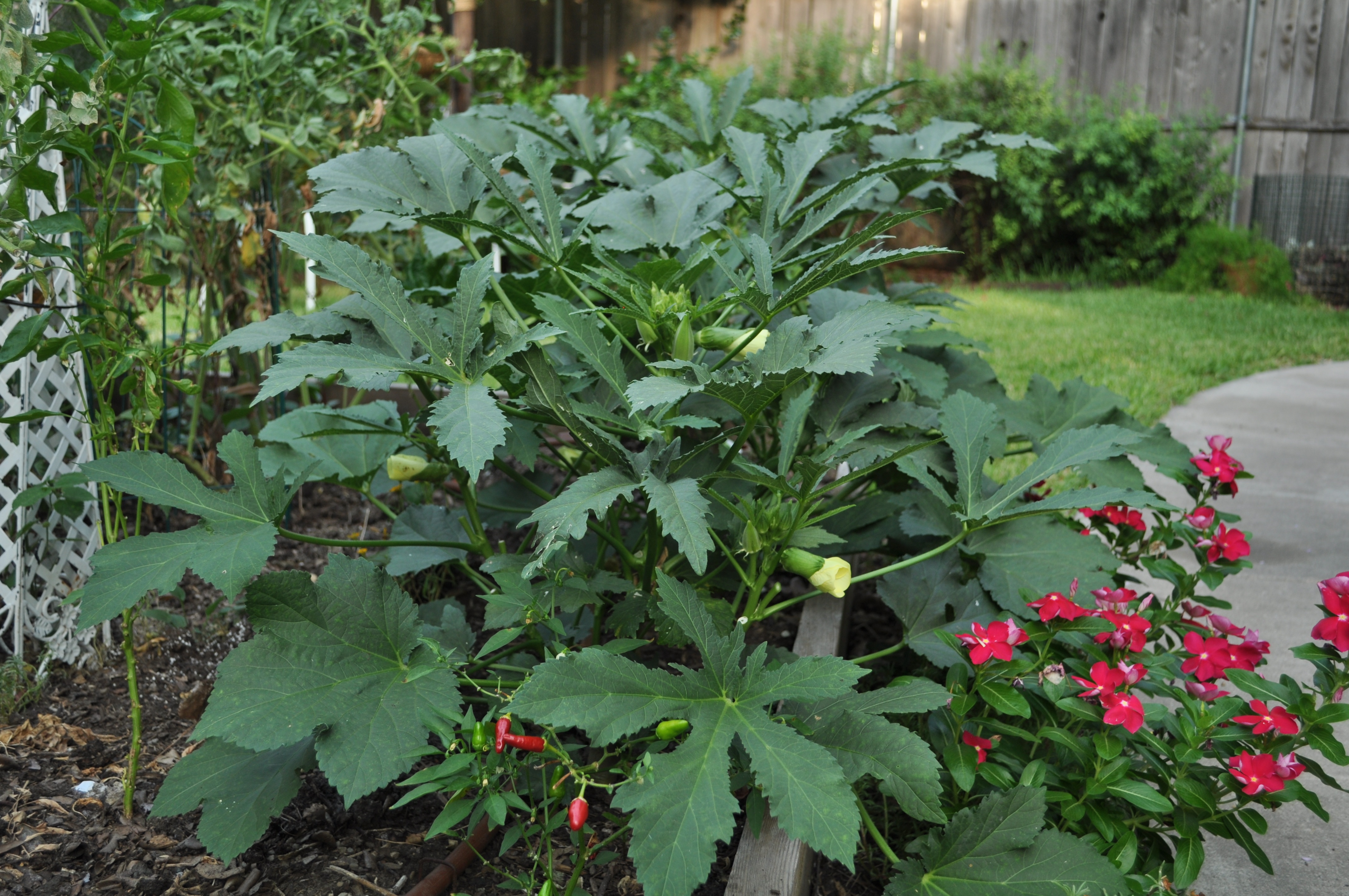
Green Fingers Okra in a Dallas Garden

Okra Pilau

Yield: 4 servings

8 bacon slices, diced
11/2 cups sliced fresh okra*
1 large onion, chopped
1 green bell pepper, chopped
11/2 cups uncooked long-grain rice
1/2 teaspoon salt
1/4 teaspoon pepper
2 cups water or chicken stock

Cook bacon in a large skillet until crisp; remove bacon, reserving 2 tablespoons drippings in skillet.

Sauté okra, onion, and bell pepper in hot drippings over medium-high heat 5 minutes or until tender. Stir in rice and next 3 ingredients; bring to a boil. Cover, reduce heat, and simmer 20 minutes or until water is absorbed and rice is tender. Remove from heat; stir in bacon. Let stand 5 minutes.

You can use any variety of okra (preferably from your garden) for this recipe that Tim says will make okra lovers of us all.

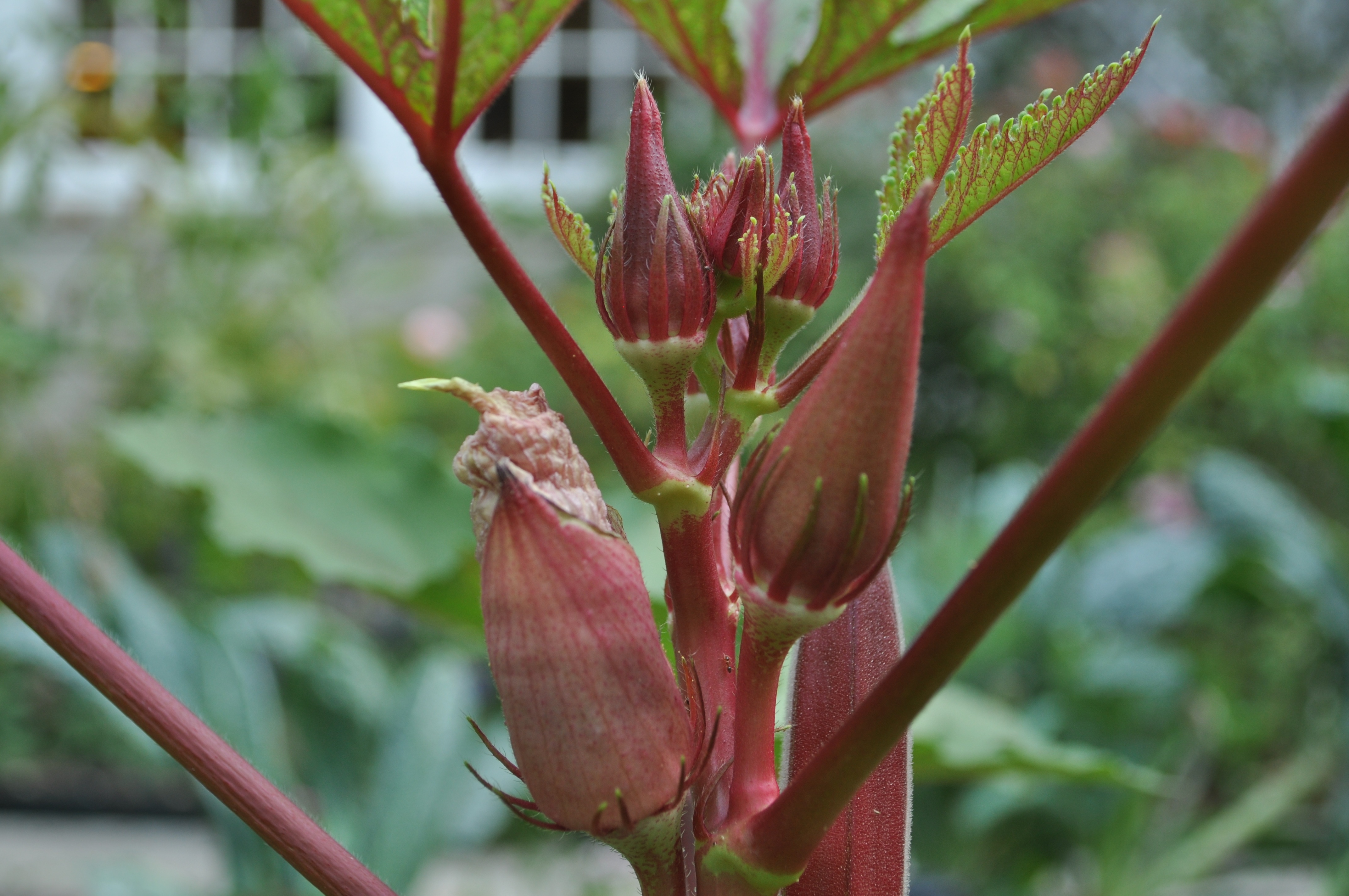
Red Velvet Okra will be in my skillet tonight.  I love it’s color even though the okra turns green when cooked.

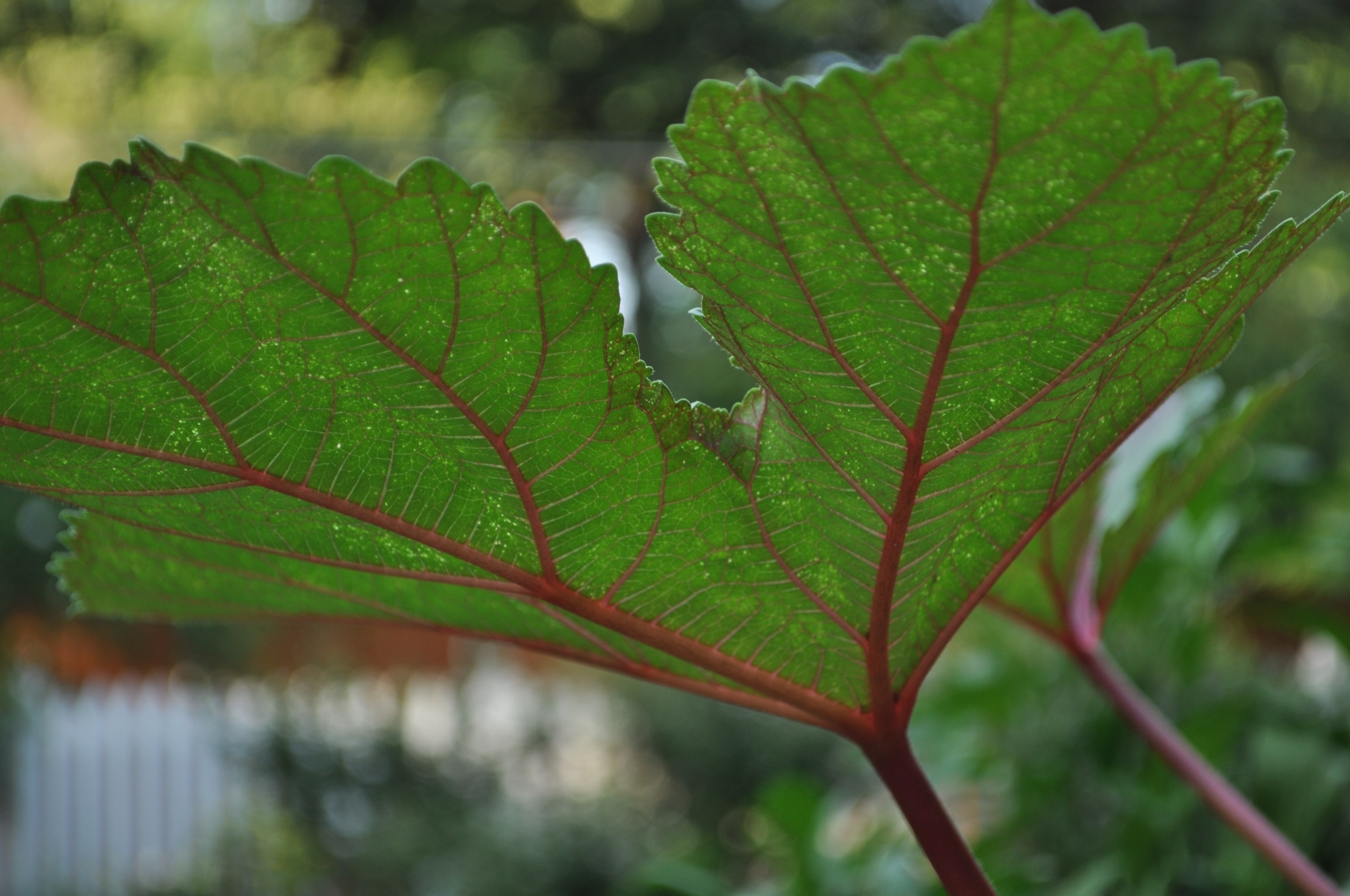
Red Burgundy Okra, Dallas Garden BuzzYou can’t eat Okra leaves but how lovely they are to have in your garden. Harvesting Okra every day requires your careful attention and looking in and around the whole plant and under every leaf to find Okra that may be hiding.  if you let it go an extra day, you end up with giant Okra good for drying and seed saving but not much else.

Okra Leaf, Dallas Garden Buzz

For the healthy benefits of okra including a hair rinse recipe, read this.

Ok now, all this about Okra is persuading me to get out in the garden and start picking.  Hope you are, too.

Ann

Cantaloupe Harvest

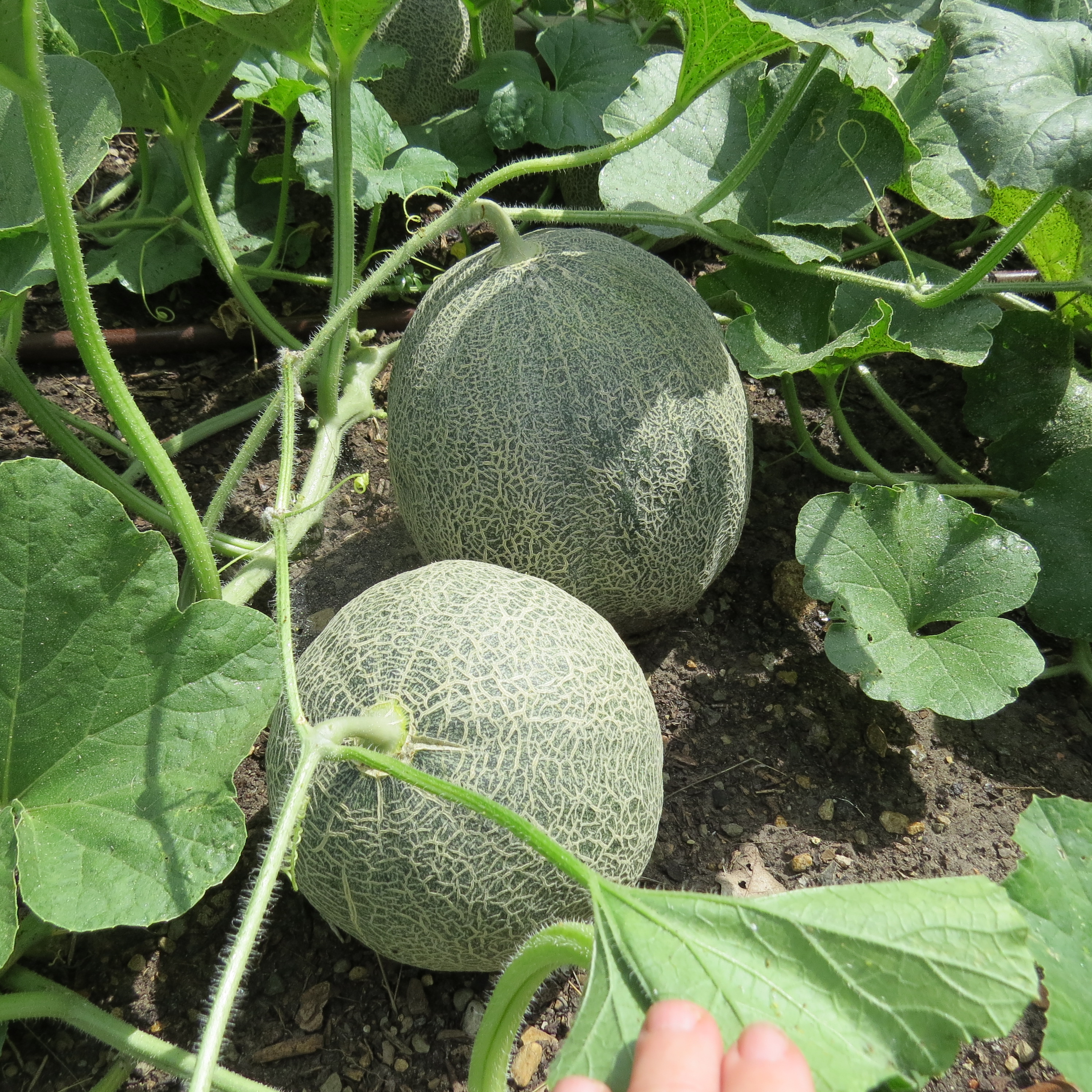
Most of us  believe you reap what you sow. We diligently follow  gardening advice and planting dates, prepare the soil, pray for rain, and then we hope!   This year we are enjoying a bounty of cantaloupes; 17 have been counted in one of our  raised beds.  Last year we had what Jim refers to as “insect activity” and not many cantaloupes.

Cantaloupe in the Garden

The variety we planted is Ambrosia.  If you will look on the right hand side of our blog, you will find our Garden Journal with all the details of our veggie gardening.

The Joys and sorrows of our garden experiment are recorded there.

The Cantaloupe was planted May 26th and will be eaten all through August.  When all the Cantaloupe is gone, Jim says we will be planting bush beans.

As summer wanes and we look forward to a drop in temperature, the gardeners at our Demonstration Garden are happy to  indulge in the sweetness of homegrown cantaloupe. More Fall gardening info right here.

Cantaloupe ripe and ready to eat

Ann

Pictures by Starla

For Aggie Horticulture Cantaloupe advice: click  here.

A Better Mouse Trap?

     Ralph Waldo Emerson wrote: “Build a better mouse trap and the world will beat a path to your door.”  However, if the Garden’s potato experiments are any indication, maybe those tried and true methods for growing potatoes really do work the best.  Perhaps sometimes there really isn’t a better mouse trap, but it’s still fun to experiment.

The Garden’s January 25, 2013 blog “One Potato, Two Potato, Hopefully More”  described several different methods of growing potatoes, including the old time “trench” method, last year’s “trash can” method, and this year’s “potato bin” method.  Guess which method produced the most and largest potatoes?  Yes, it was the trench method used by generations of farmers to grow potatoes.

As you can see by the pictures, the potatoes grown in trenches in the Garden’s raised bed were larger and many more were harvested.

Our Potatoes Grown Trench Style

The potatoes grown in this year’s newly constructive bin where slats could be added to the side of the bin and filled with soil as the potato plants grew, did well, but produced smaller and fewer potatoes than those grown in trenches.

Smaller and Fewer Potatoes

One reason for this, DCMG Jim Dempsey hypothesized, might have been that the potatoes grown in the raised beds in trenches were on a drip system, while those in the slatted bin received water only once a week.

Never one to give up easily (and who knows, someone may really invent a better mouse trap), Jim said that next year the slatted bin will be moved to a place where it too can be on the drip system and receive more water. The experiment continues………

Do you have your own methods for growing potatoes?  And how did your potatoes do this year?  Let us know.  We would love to hear from you.

Carolyn

Pictures by Starla