Tag Archives: vegetable gardening

Grow and Graze Salad Gardens Lecture and Recipes

Our Salad Gardens Program last Tuesday, March 19th included everything from easy-to follow directions for growing a tasty variety of salad lettuces, herbs, and edible flowers to a buffet brimming with a variety of salads that stirred the senses.

Some useful tips to help us get started were:

*Locate garden near a source of water

*Use compost for drainage and nutrients

*Use mulch to help retain moisture

*Use deep, infrequent watering

For a healthy foundation…start with good soil:

*Remove weeds, rock, debris

*If needed, order a soil test from Texas A&M

*Need 8-12 inches of loose tillable soil

*Ideal pH is 6.5 – 7.0 (DFW = 7.2)

*Do not work soil when it is wet

*Consider raised bed with special soil mix to start

*Build a compost pile

Growing salad greens:

*Greens include lettuce, herbs, salad greens and leafy green vegetables such as cabbage, collards, kale, mustard, spinach and Swiss chard

*Most greens are cool-season crops and must be grown in the early spring or fall in Texas. Some greens, especially kale, will withstand temperature below freezing and can be grown all winter. And, even in our hot Texas summer climate there are partially shaded spots to grow certain greens.

*Greens grow best in a well-drained soil with lots of organic matter. They prefer full sunlight but will tolerate partial shade.

*The soil should be worked at least 8 to 10 inches deep in the early spring when it is dry enough not to stick to garden tools. Break up large clods and remove trash and weeds. Work the soil into beds about 4 inches high. Add compost or organic matter before digging the soil.

*Greens grow best when given plenty of fertilizer. Adequate nitrogen is needed to develop the dark green leaf color. Before planting the seeds, apply a general garden fertilizer such as 10-10-10 at the rate of 2 to 3 pounds per 100 square feet. Mix fertilizer into the soil about 3 inches.

When shopping for seeds or transplants, consider the limitless possibilities for filling your garden with a variety of leafy greens. Rich in vitamins and folic acid, salad gardens provide both nutrition and fiber. Our mother’s admonition to “eat your greens” really was good advice.
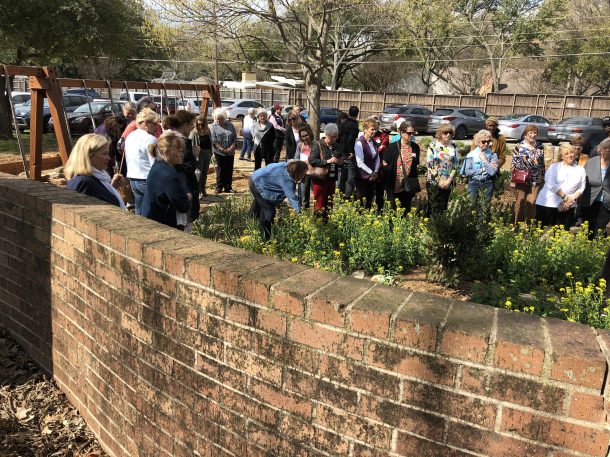
Edible Garden tour after lecture and lunch

Here are a few of the crowd-pleasing salads our lunch guests enjoyed:

Mixed Green Salad with Nasturtiums and Raspberry Vinaigrette Raspberry Vinaigrette
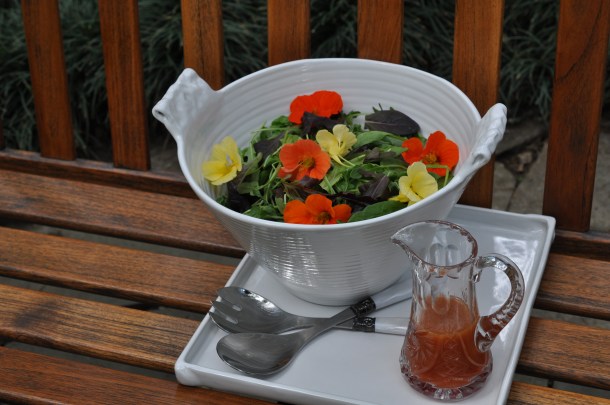
To lend intrigue to a salad of mixed greens, toss in a handful of peppery nasturtium blossoms.

Ingredients

¼ cup raspberries

2 tablespoons freshly squeezed lemon juice

2 tablespoons raspberry or red-wine vinegar

½ teaspoon sugar

6 tablespoons olive oil

Salt and freshly ground black pepper

Directions

Using a wooden spoon, push raspberries through a handheld wire strainer to puree.

In a medium bowl, whisk together 2 tablespoons raspberry puree, lemon juice, vinegar, and sugar.

In a slow but steady stream, whisk in olive oil until emulsified.  Season with salt and pepper.

Vinaigrette can be made 1 day in advance and stored in an airtight container in the refrigerator.

Yield:  Makes about ¾ cup

Adapted from Martha Stewart

Salad:

6 large handfuls of mixed greens, including wild rocket arugula, herb salad mix, etc.

6 nasturtium blossoms

Toss mixed greens with the vinaigrette.  Strew the blossoms over and serve immediately.  (Options:  may also toss with fresh blueberries or raspberries)

Fresh Spinach and Tatsoi Salad with Orange Curry Dressing

A “dressy” and inviting way to serve spinach. The addition of tatsoi gives it textural interest.

Ingredients

For the dressing

1 cup apple cider vinegar

2 tablespoons (heaping) orange marmalade

2 teaspoon curry powder

½ cup sugar

2 teaspoons dry mustard

2 teaspoons salt

1 teaspoon freshly ground pepper

½ teaspoon Tabasco sauce

1 ¾ cups vegetable oil

For the salad

4 bunches fresh spinach, trimmed

2 cups tatsoi leaves, optional

6 apples (red and green), chopped

2 cups golden raisins

1 ¾ cups walnut halves, lightly toasted

6 green onions, chopped

¼ cup sesame seed, toasted

1 pound bacon, chopped, crisp-fried, crumbled (optional)

Directions

Combine the vinegar, marmalade, curry powder, sugar, mustard, salt, pepper and Tabasco sauce in a blender container.

Add the oil in a fine stream, processing constantly at high speed until thickened.

Let stand at room temperature for 2 hours.  Chill, covered in the refrigerator until serving time.

Arrange equal amounts of the spinach and tatsoi on 12 salad plates or one large platter.  Drizzle with the dressing.

Sprinkle each serving or the platter with the apples, raisins, walnuts, green onions, sesame seeds and bacon bits.

Serve immediately.

Yield:  12 servings

Orange Fennel Watercress Salad with Lemon Ginger Poppyseed Dressing
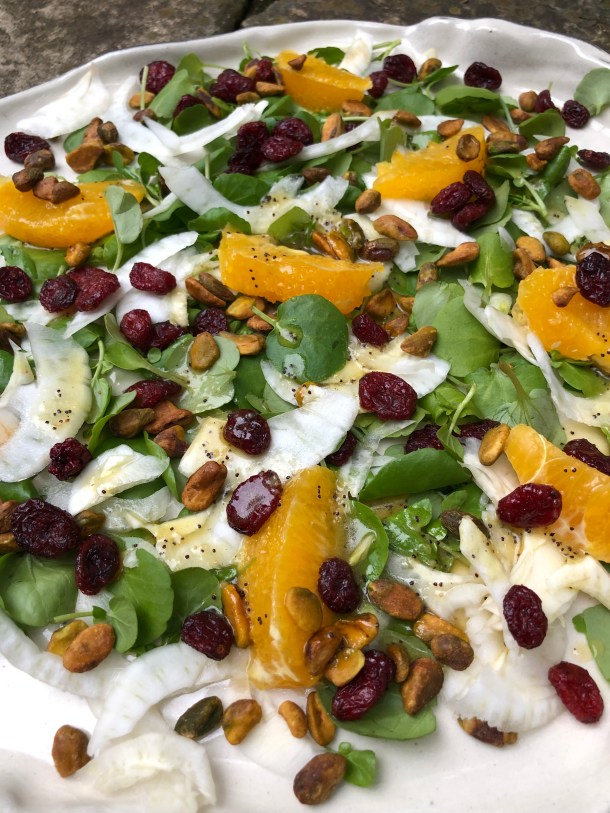
Ingredients

2 large navel oranges

3-4 ounces baby watercress

½ medium fennel bulb cored and thinly sliced crosswise

¼ cup dried cranberries

¼ cup salted roasted pistachios

½ cup cutting celery, lightly chopped, for garnish (optional)

Lemon Ginger Poppyseed Dressing

Directions

Using a sharp knife, cut about ¼ to ½ inch from the top and bottom of the orange to expose the flesh. Place the fruit on one of its flat ends and cut down to remove the skin and the white pith. Rotate and repeat, working your way around the fruit until the orange fruit is completely exposed. Slice, dice or cut between the flesh and the white membrane to create orange segments.

Place most of the watercress (reserve a small amount) on a large serving plate or platter. Top with sliced fennel, oranges, dried cranberries and pistachios. Drizzle with the Lemon Ginger Dressing. Sprinkle reserved watercress and cutting celery over the salad.

Yield: Serves 4

Linda Alexander

Pictures by Starla Willis

Now we understand why Peter Rabbit ignored his mother’s warning and stole under that garden fence for a quick sampling of both lettuce and danger. We hope you enjoy your salad garden adventures as much as he did.

 

A March Day in The Raincatcher’s Garden

March 13, 2019

Three minutes of your time, please. Have you ever seen such motivation, such verve. Our gardeners, Syann, Sue, and Dorothy are in the garden under umbrellas pouring out plans from our vegetable garden.

And then, what are strawberry spinach seeds and what’s the best method for starting them?

Thank you everyone; the gardeners, the videographer, the greenhouse personnel, those who weed, those who work in the compost area, all of you who make Raincatcher’s what it is even on a rainy day. You inspire me.

Ann Lamb

video by Starla Willis

More about strawberry spinach seeds here.

Grow and Graze, Lecture and Lunch March 19

March 19, 2019

Tatsoi seeds were sown in January. Look at it now!

Have you ever grown Tatsoi? If not, you may want to give it a try. Our Salad Gardens class on March 19th will introduce you to this sassy little Asian green that delivers a unique flavor experience. Following the class, join us for lunch at the salad garden buffet where Tatsoi will be one of our “featured” greens.

After lunch, take a stroll through our edible landscape where you’ll find Tatsoi growing in abundance around the bay laurel tree. Our volunteers have become big fans of this small, spoon-shaped green that can be succession planted from spring through fall. We’re now referring to it as one of our edible garden “super stars”.

The sign up deadline for our Grow and Graze lunch on March 19 has been extended to March 15th. Please sign up here on eventbrite. We have 10 or so reservations for the lunch available but will need all reservations by March 15.

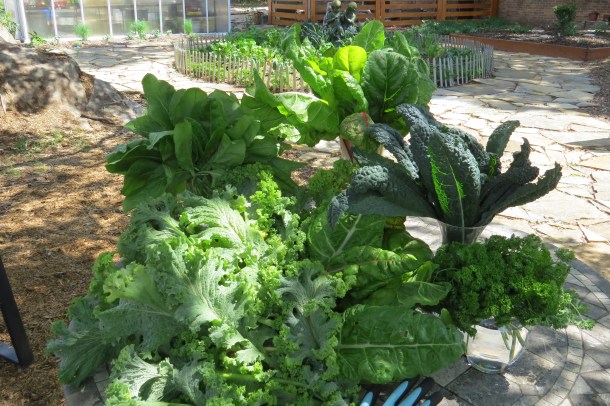
Mustard greens, sorrel, swiss chard, kale and parsley grown in The Edible Landscape at The Raincatcher’s Garden

(Reservations are not needed if you plan to attend the class only.)

Linda Alexander

Grow and Graze with Raincatcher’s Garden of Midway Hills

Salad Gardens

Did you know that “salads” have been a part of humankind’s diet for thousands of years? Even the ancient Greeks and Romans made lettuces a part of their daily meals. Learn how to raise healthy, nutritious food that can be picked and eaten at its peak of flavor.

Tuesday, March 19th, 10:00 – 11:30am

Raincatcher’s Garden of Midway Hills * 11001 Midway Road

Instructor: Jeff Raska, Dallas County Horticulture Program Assistant, Texas A&M AgriLife Extension Service

The class is free – no reservation required. The public is welcome, and Master Gardeners earn a one-hour education credit.

Immediately following Jeff’s presentation in the church sanctuary, you are invited to join us in the Community Hall for a …

Salad Bar Smorgasbord of Garden Delights

Choose from an array of textures, shapes, colors and flavors even Peter Rabbit would envy. Use your imagination to create your very own culinary masterpiece. Toss your creation with an assortment of dressings, crunchy vegetables and a few surprise toppings.

Garden Salad with Caramelized Almonds and Mandarin Oranges

Mixed Green Salad with Nasturtiums and Raspberry Vinaigrette

Fresh Spinach and Tatsoi Salad with Orange Curry Dressing

Orange Fennel Watercress Salad

Creamy Leek and Sorrel Soup

“Jump in” and finish your feast with a chomping delicious piece of Chocolate Beet Cake or that sneaky little rabbit’s ultimate pleasure…Blue Ribbon Carrot Cake

Lunch reservations must be received by Tuesday, March 12

$15 person, limited to 60

https://www.eventbrite.com/e/salad-gardens-tasting-luncheon-tickets-56498368140

Future 2019 classes, no reservations yet but you can save these dates on your calendar:

June 18th… Herbs of the Mediterranean

August 27th… Corn, the Golden Essence of Summer, and Okra, a Garden Giant

October 22nd …Seasonal Splendor, Pumpkins and Sweet Potatoes


Seed Starting Indoors

Garden Betty’s blog has been an inspiration to me. The name Betty resonates deeply because of my Mom, Betty Haughton, who was a Master Gardener, class of 2008 and then there’s the fantastic organic practical horticultural information you will want to absorb.

Click here for The No Brainer Guide To Starting Seeds Indoors by Garden Betty and then listen up to what Jim Dempsey, our seed starter says:


Last year’s zinnias and peppers started indoors and then moved to the greenhouse.

 “I use a grow light because I have no sunny location in the house. Our pepper seedlings (slow to come up and slow to grow) are just now coming up. I plan on planting the tomatoes mid- February (in the past I have started too soon)  and our flower seeds shortly after that. Weather permitting, we would like to plant the seedlings (4″ pots) by first part of April.”


Ann Lamb


News From the Winter Vegetable Patch at Raincatcher’s

Lovely looking lettuce but guess what Syann told me-it took 3 sowings to get that lovely lettuce because the rain kept washing the seeds away.

Lettuce crop at Raincatcher’s 2019

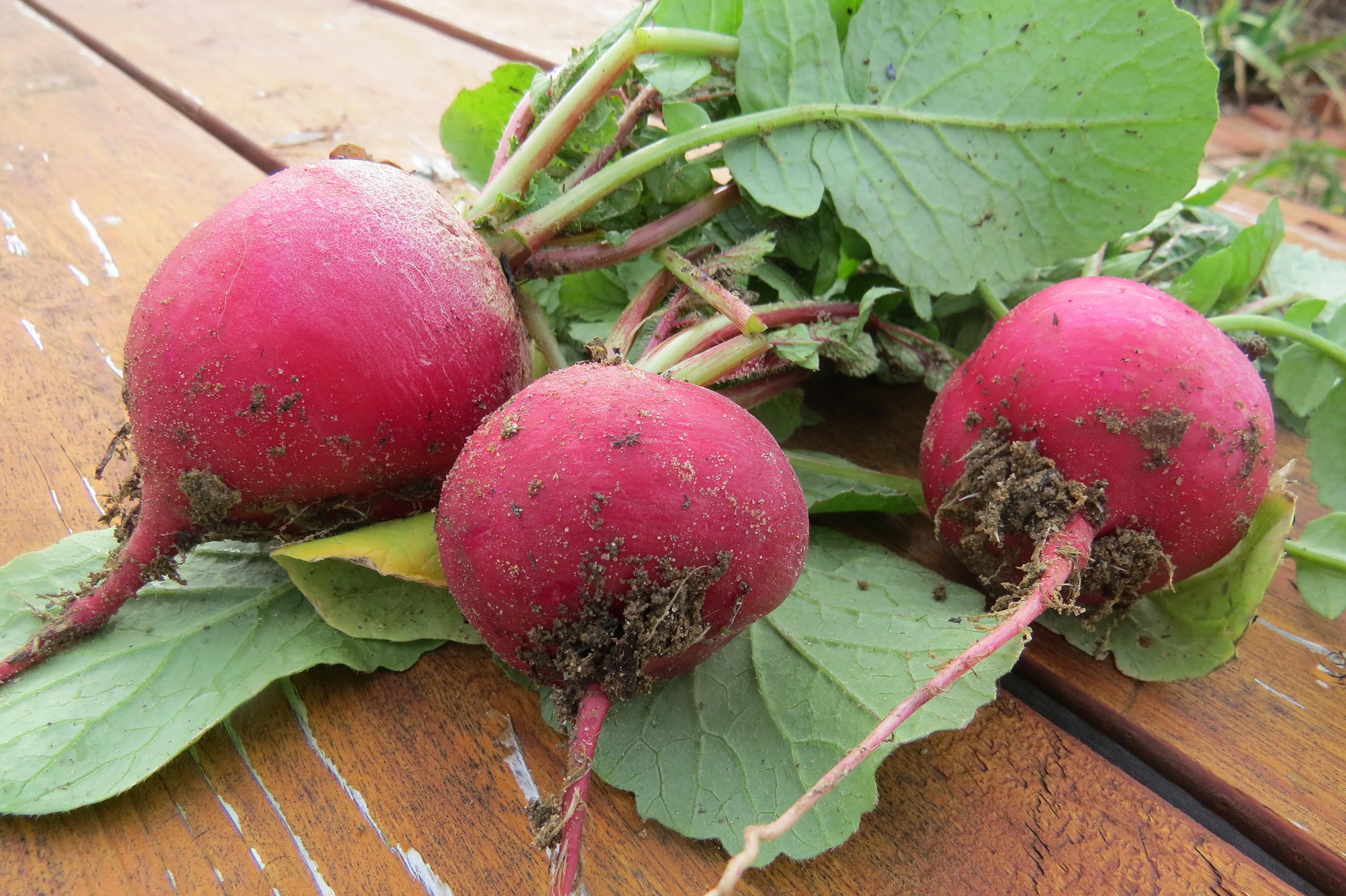
Here’s our recent radish harvest. We have planted more radish seeds to enjoy throughout the spring.

Freshly pulled radishes

A dedicated team of Master Gardeners cultivates our vegetable gardens. As you can see in the picture below, note only one smiling gardener, it takes persistence and concentration to tend a research, education and demonstration garden.

Dallas County Master Gardeners-Sue, Cindy, Dorothy, Jim and Syann

We farm this patch of earth on Midway Road so that we can help you. Come see us on Tuesday mornings, attend our classes, or send us a question on this blog. We’d love to help your garden grow.

Ann Lamb

Pictures by Starla Willis


This year we will plant potatoes in the color wheel in the green section because, well, they have pretty green leaves.  Review our video: Perfectly Planted Potatoes Premieres

It’s time to plant onions, buy them now at your favorite garden center and plant like this.

A list of our 2019 classes will be coming later this month.

Happy New Year 2019 and It’s Getting Cold Outside!

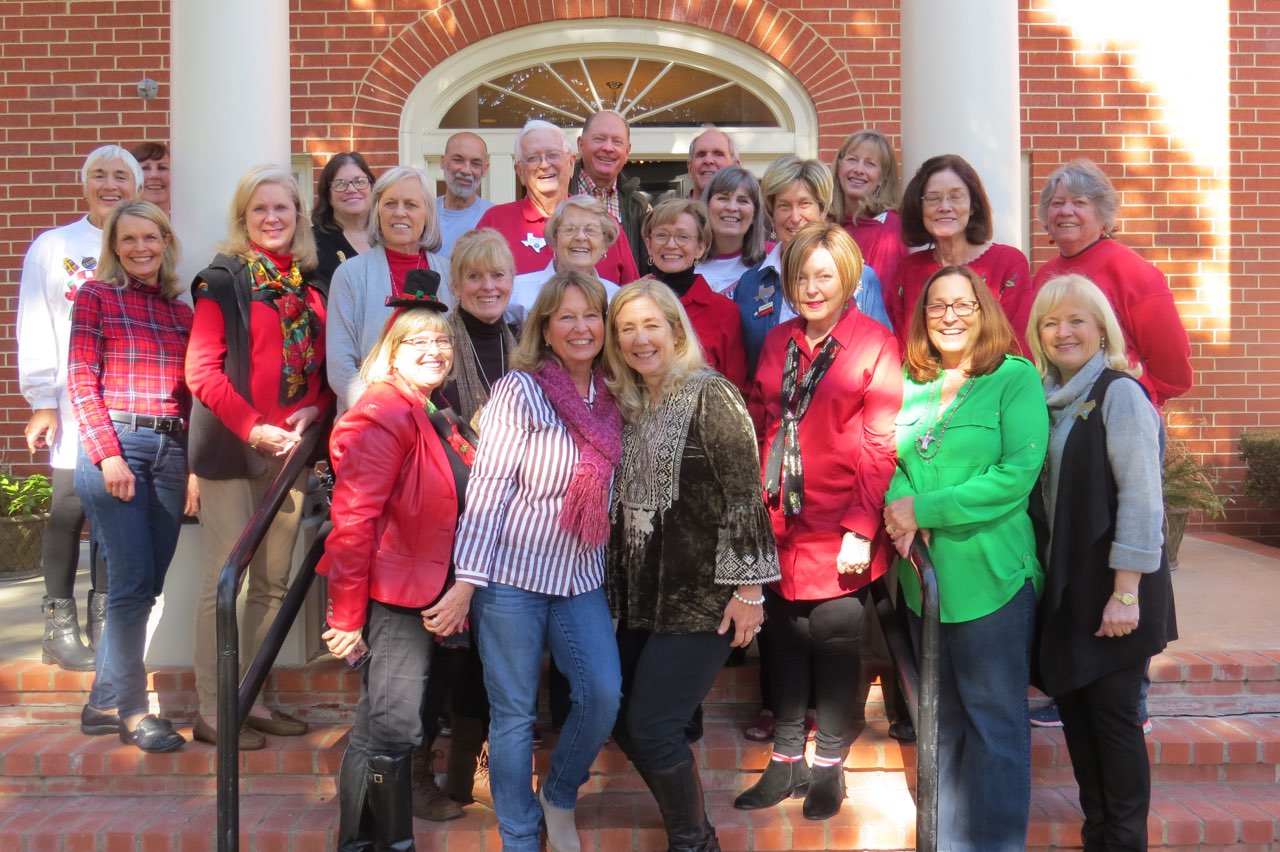
Raincatcher’s Volunteers at our Christmas Party. Some Volunteers are missing from this picture and more needed! Happy Gardening in 2019 from our garden to yours.

Q. You have often mentioned cold tolerant vegetable crops and those which are very susceptible to frosty injury.  Could you list these and temperature lows which they can tolerate?

A. This is very difficult to do and be accurate since cold tolerance depends on preconditioning. For instance, if broccoli has been growing in warm conditions and temperatures drop below 22 degrees F., it will probably be killed. If these same broccoli plants had experienced cool weather, they would probably survive the sudden cold.

In general, a frost (31-33 degrees F.) will kill beans, cantaloupe, corn, cucumbers, eggplant, okra, peas, pepper, potatoes, sweet potatoes, squash, tomatoes, and watermelon.

Colder temperatures (26-31 degrees F.) may burn foliage but will not kill broccoli, cabbage, cauliflower, chard, lettuce, mustard, onion, radish, and turnip.

The real cold weather champs are beets, Brussels sprouts, carrots, collards, kale, parsley, and spinach.

Thank you Aggie Archives for this information!

More about frost protection here.

Cold Tolerant Veggies from Daniel Cunningham here.

Ann Lamb


Shopping For Seeds for Next Year’s Garden

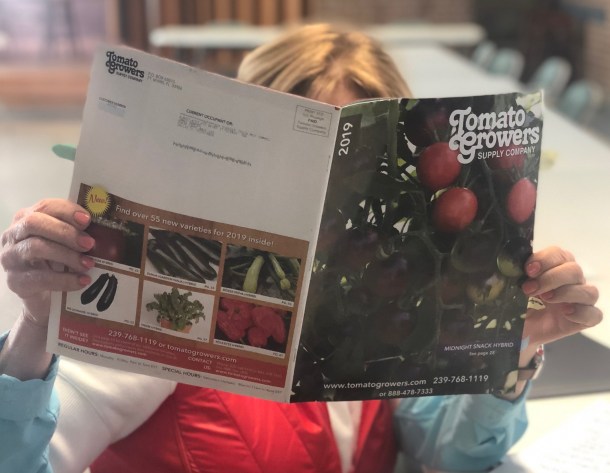
Dorothy shopping for Raincatcher’s via catalog!

Jim, Could I ask some questions about starting seeds for our 2019 gardens.

While many of us buy transplants for our garden, it’s a step up to know that our garden plans to start everything from seed.  What’s your reasoning behind that decision?
  By starting our seeds indoors, we can purchase the seed selection that we want and hopefully they will be ready to transplant at the proper time.  Some seeds are difficult to start from seed and it is better to just purchase the transplants, for example onions and leeks.  Also, some seeds are easy to start by planting directly into the ground – radishes, greens, beans, okra for example.
Are you planning to start everything for our vegetable garden from seed?
 For the raised vegetable beds, we plan on starting the peppers, tomatoes indoors and for the first time eggplant and tomatillo.
Why not the pepper, Hot Big Boss Man, that you grew last year?
 We like to try new varieties and interesting vegetables each year.  This year the peppers will be from the All America Selection list.
Ok, that was my next question. Did I hear that all seeds would be All-American varieties and why is that important? 
All of our peppers will be All American Selections (AAS) winners, except for the Poblano L.  AAS winners have been “Tested and Proven Locally” for garden superiority by horticultural professionals across North America.

Last year’s tomatoes(2018) started by seed, thanks to Jim!

You are an expert on tomato grafting! Which tomato varieties do you plan to graft and on what stock? 
No, I am not an expert by any means. I attended a workshop at a MG state conference and have grafted tomatoes with some success several times.  I also, presented an informal presentation at Joe Field garden years ago.  We plan on using the rootstock Estamino VFFNTA hybrid and grafting heirloom tomatoes, Brandywine Red and Cherokee Purple onto the rootstock.  Hoping for the same excellent flavor of the heirloom with improved production.
When do you plan to start these seeds indoors for the spring season?  Peppers we start mid-January and tomatoes mid-February. Probably, the other seeds around mid-February.  That will give us about 6 weeks before we set them out into the garden. The seedlings will be in the greenhouse the last two weeks before transplanting.
Thank you, Jim, this will help all of us as we plan our gardens for 2019.
Here’s a partial list of the seeds we are starting at the Raincatcher’s Garden:
Tomatoes-Lemon Boy and Celebrity
Peppers-Carmen, Carnato, Gallo, Gypsy, Poblano L and Hot Sweet Hybrid
Ann Lamb
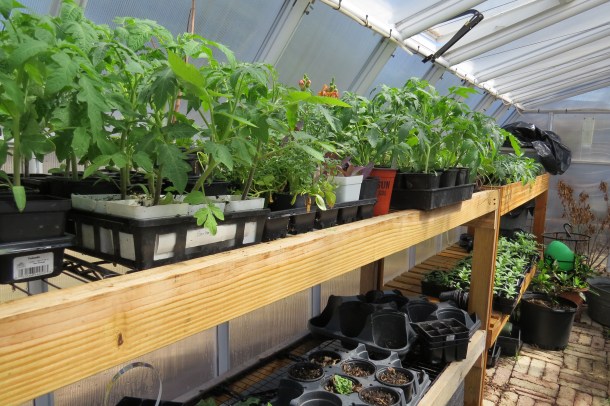
Picture in greenhouse by Starla Willis

Recipes from the Apples, Pears, Persimmons, Pomegranate Lunch

Nature’s grand finale plated!

Bake Brie with Roasted Persimmons

Ingredients

2 (8-ounce) wheels of Brie, rinds intact

Roasted Persimmons, chopped (recipe follows)

1 large egg

2 tablespoons water

1 (17.3-ounce) package frozen puff pastry, thawed

Seasonal fruit

Crackers

Directions

Preheat oven to 350˚F. Line a baking sheet with parchment paper.

Cut 1 wheel of Brie in half horizontally. Place half of Roasted Persimmons on one half of Brie, and top with remaining half. Repeat with remaining wheel of Brie and remaining Roasted Persimmons.

In a small bowl, whisk together egg and 2 tablespoons water.

On a lightly floured surface, roll puff-pastry sheet to ⅛-inch thickness. Place 1 Brie round on puff pastry; fold pastry over Brie, cut away excess dough, and invert Brie onto prepared baking sheet. Repeat with remaining Brie and puff pastry. Using an acorn-shaped cutter, cut 2 acorns from remaining dough. Using a pastry brush, brush dough with egg wash. Place 1 acorn on each Brie round, pressing gently to adhere; brush with egg wash.

Bake until pastry is golden brown, 25 to 30 minutes. Remove from oven, and let cool for 10 minutes. Serve with seasonal fruit and cracker.

Yield: Makes 10 to 12 servings

Roasted Persimmons

Ingredients

¼ cup maple syrup

¼ cup granulated sugar

¼ cup brandy

¼ teaspoon salt

1 vanilla bean, halved lengthwise

4 cardamom pods

4 whole cloves

2 star anise

2 cinnamon sticks

4 persimmons, blanched, peeled, and quartered

Directions

Preheat oven to 450˚F.

In a cast-iron or ovenproof skillet, combine syrup, sugar, brandy, salt, vanilla bean, cardamom, cloves, star anise and cinnamon sticks. Add persimmons.

Roast until fruit is tender, about 20 minutes. Remove from oven and let cool completely.

Remove persimmons, discarding spices and vanilla bean. Chop persimmons. Cover and refrigerate for up to 5 days.

Yield: Makes 2 cups


Butternut Squash-Pear Soup garnished with Parmesan and Chopped Rosemary

Butternut Squash-Pear Soup

Ingredients

1 (2.5-pound) butternut squash, peeled, seeded, and chopped into 2-inch pieces

2 cloves garlic

¼ cup vegetable oil, divided

1 tablespoon kosher salt

1 teaspoon ground black pepper, divided

1 ½ cups chopped onion

1 shallot, minced

1 quart chicken broth

2 cups half-and-half

1 tablespoon fresh chopped rosemary

2 teaspoons fresh minced ginger

6 ripe Bartlett pears, peeled, cored, and chopped

Garnish: shaved Parmesan cheese, fresh rosemary

Directions

Preheat oven to 450˚F. Line a rimmed baking sheet with foil, and coat foil with cooking spray.

In a large bowl, combine squash and garlic. Toss with 2 tablespoons oil. Season with salt and ½ teaspoon pepper.

Transfer squash mixture to prepared pan. Bake until tender, 25 to 30 minutes. Remove from oven, and let cool.

In a Dutch oven, heat remaining 2 tablespoons oil over medium-high heat. Add onion and shallot, and cook, stirring often, until tender, about 8 minutes. Add squash mixture, chicken broth, and remaining ½ teaspoon pepper Bring mixture to a boil; reduce heat to medium and simmer for 20 minutes.

Add half-and-half, rosemary, and ginger, stirring to combine. Continue to simmer for 10 minutes. Remove from heat, and let cool slightly. Add pears to mixture.

In the container of a blender, puree mixture, working in batches, until smooth. Return mixture to pan, and simmer over medium heat for 10 minutes. Garnish with Parmesan and rosemary, if desired.

Yield: Makes 8 servings

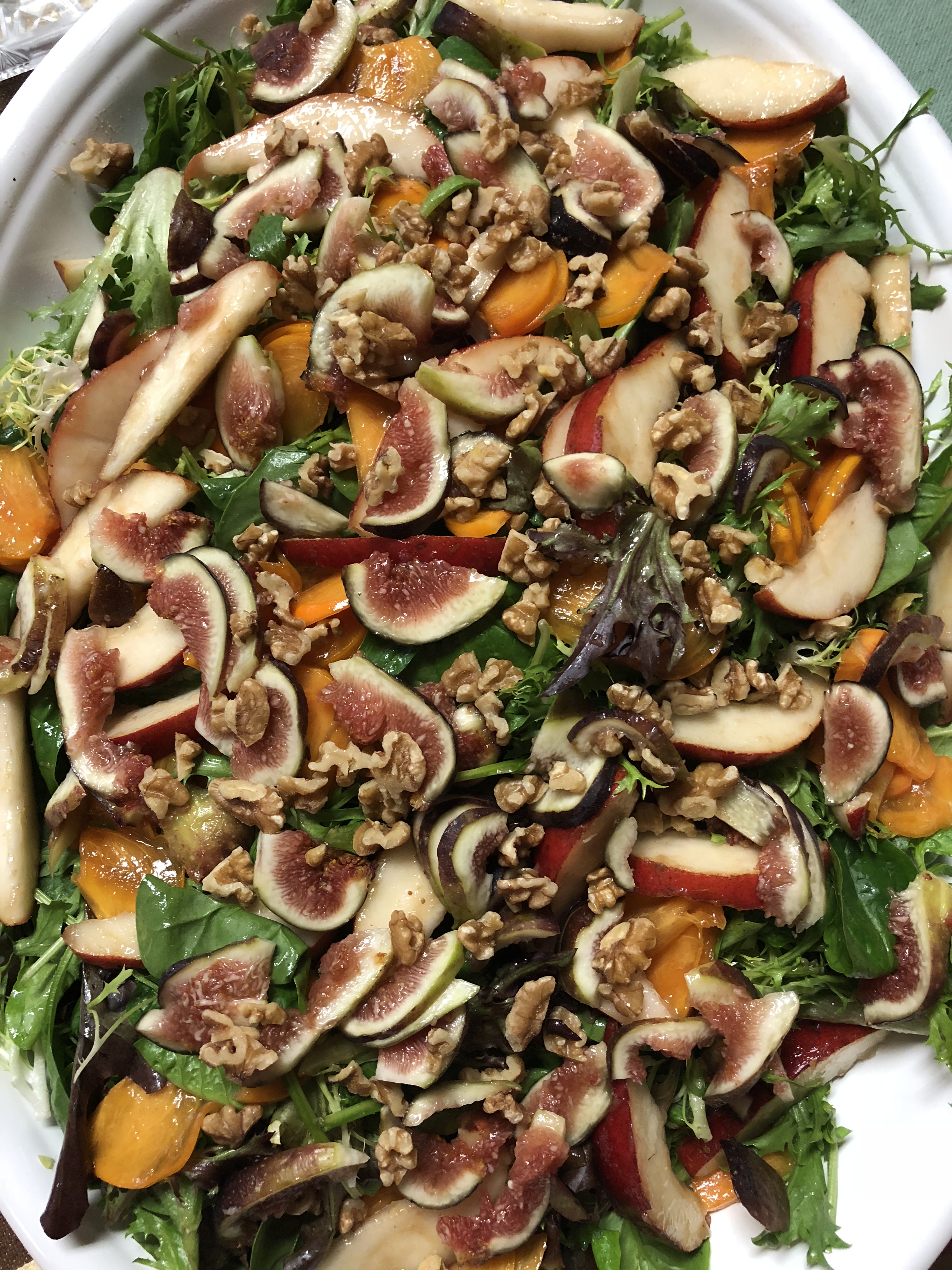
Figs, Pomegranates, Persimmons and Pear Salad

Salad of Figs, Pomegranates, Persimmons and Pears

Ingredients

½ cup walnut halves

2 large heads frisee, carefully rinsed and stems trimmed

1 Fuyu persimmon, cut into thin slices

1 Red Bartlett pear, halved, cored and cut into thin slices

6 fresh figs, halved through the stem end

Directions

Preheat oven to 350˚F. Spread the walnuts on a baking sheet and toast until lightly browned and fragrant, 5-7 minutes. Remove from the oven and let cool.

Arrange the frisee, sliced persimmon and pear, and fig halves on individual plates, dividing them equally. Sprinkle with toasted walnuts. Alternately, arrange salad on a large platter.  Drizzle with the Pomegranate Salad Dressing.

Yield: Serves 4

Pomegranate Salad Dressing

Ingredients

½ cup Pomegranate Syrup (see recipe)

¼ cup olive oil

2 tablespoons red wine vinegar

1 tablespoon lemon juice

⅛ teaspoon salt

Directions

Combine all ingredients in a jar; cover tightly and shake vigorously. Chill.

Yield: ⅔ cup

Pomegranate Syrup

Ingredients

4 cups pomegranate seeds (4 large pomegranates)

3 ½ cups sugar

Directions

Combine seeds and sugar in a large glass bowl; cover and chill at least 8 hours.

Transfer mixture to a heavy non-aluminum saucepan; bring to a boil over medium heat. Reduce heat, and simmer 3 minutes.

Pour mixture through a cheesecloth-lined colander; press against sides of colander with back of a spoon to squeeze out juice. Discard pulp.

Pour juice into a 1-quart sterilized jar; cover with lid, and screw on band. Cool; store in refrigerator up to 2 weeks.

Yield: 3 cups

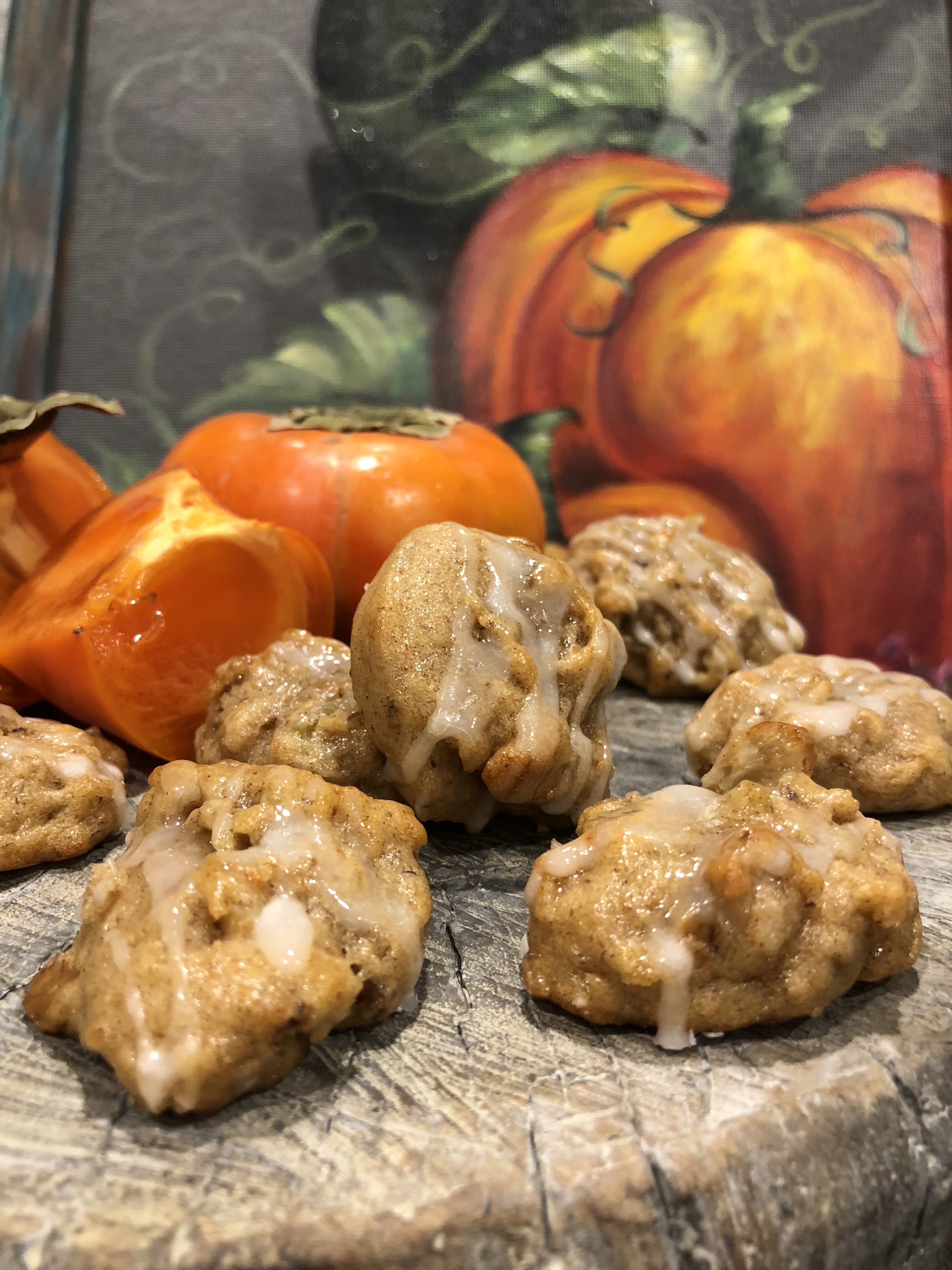
Persimmon Cookies

Persimmon Cookies

Ingredients

2 large ripe persimmons, peeled and coarsely chopped

1 cup sugar

⅔ cup vegetable oil

1 large egg

2 cups all-purpose flour

1 teaspoon baking soda

1 teaspoon ground cinnamon

1 cup raisins

1 cup chopped walnuts

1 cup sifted powdered sugar

3 tablespoons lemon juice

Directions

Position knife blade in food processor bowl; add persimmon, and process until smooth, stopping once to scrape down sides. Measure 1 cup pulp.

Combine pulp, sugar, oil, and egg, stirring until smooth.

Combine flour, soda, and cinnamon in a large bowl; add persimmon mixture, stirring until blended. Stir in raisins and walnuts.

Drop dough by rounded teaspoonfuls onto lightly greased cookie sheets.

Bake at 375˚F for 9 minutes. Transfer to wire racks placed on wax paper. Combine powdered sugar and lemon juice, stirring until smooth; drizzle over warm cookies. Cool.

Yield: 5 dozen

Autumn Orchard Crisp

Ingredients

3 pounds firm, flavorful apples

1 pound pears

Juice of ½ lemon

3 tablespoons granulated sugar

1 cup light brown sugar

1 cup all-purpose flour

2 tablespoons ground cinnamon

½ cup (1 stick) unsalted butter, at room temperature, cut up

1 ½ cups chopped walnuts

½ cup coarsely chopped cranberries

Whipped cream or vanilla ice cream

Directions

Preheat the oven to 350˚F. Butter a 13 x 9-inch baking pan.

Peel, core and slice the apples and pears. Toss them in a bowl with the lemon juice and granulated sugar.

Place the brown sugar, flour, cinnamon, butter, and half the nuts in the bowl of a food processor. Process until blended and crumbly.

Spread one-third of the crumb mixture on the bottom of the prepared pan, top with half of the sliced fruit and scatter over half of the cranberries. Top with the second third of the crumb mixture.

Layer on the remaining sliced fruit and sprinkle over the remaining cranberries. Mix the remaining nuts with the remaining crumb mixture and spread over the top.

Bake until well browned and slightly bubbly, about 1 hour. Cool to warm and top with whipped cream or ice cream.

Yield: Serves 8

Review our horticultural lesson on

apples, pears, poms and persimmons here.

Linda Alexander

Pictures by Starla Willis and Linda Alexander


Brussel Sprouts

As master gardeners, we really dig a good reason to gather around the table. When delicious, garden-fresh food is involved we’re “all in”. That’s what happened a few weeks ago when we surprised our Raincatcher’s team leader, Lisa Centala, with a ‘bring your favorite dish’ salad buffet for her special birthday.

A tantalizing line up of salad bowls and platters was spread out the length of two 8-foot tables. We didn’t hesitate to fill our plates with the most amazing variety of green salads, vegetable salads, chicken salads and more. Approaching the end of the line were Artichoke Bites, Baguette slices spread with basil cream cheese and Hatch chili biscuits. No restraint was shown as evidenced by plates full of our garden-inspired selections.

One particular dish new to many of us and requested by all was the Zesty Brussels Sprouts. True to its name, the apple cider vinegar combined with sugar and horseradish was soaked up by each little sprout. They had just the right amount of zip to satisfy the palate. Kathey Roberts graciously shared the recipe for everyone to enjoy.

Raincatcher’s Iconic Picture of Brussel Sprouts! Agree?

Now is the time to plant Brussels sprouts. With their long maturity date, transplants should be in your garden by October 15th. 

Zesty Brussels Sprouts

Ingredients

2 (10-ounce) bags frozen Brussels sprouts or use fresh from your garden or produce isle

1 ½ cups sugar

1 cup apple cider vinegar

5 Tablespoons prepared horseradish (not cream of horseradish)

Salt to taste

2 teaspoons dry mustard

Directions

Cook the sprouts according to package directions; drain. In a large bowl, mix the sugar, vinegar, horseradish, salt and mustard. Add the sprouts and toss lightly. Refrigerate at least 6 hours or overnight.

For more information about Brussel sprouts and a video about their care read here.

Linda Alexander

By the way, only 6 tickets left for the Apples, Pears, Persimmons and Pomegranates lunch on October 16th.  Lecture is free.