Tag Archives: vegetable gardening

Grow and Graze, Herbs of the Mediterranean

Herbs of the Mediterranean can and should be grown in Dallas, Texas. Embrace our hot and usually dry climate to grow the herbs of France, Greece, Italy and Spain.  Herbs like rosemary, lavender, thyme, and oregano thrive in Dallas gardens. Ounce for ounce, many herbs used to flavor foods have more antioxidant power than berries, fruits, and vegetables according to a recent agricultural study.  The herbs with the highest antioxidant activity are in the oregano family.

Last week Dallas County Master Gardener, Marian Buchanan, came to teach us about these herbs and afterwards guests enjoyed  an herb inspired lunch.


Above: Our centerpiece of fennel, sage, rosemary, lavender, sorrel, and tarragon

Some of our guests were kind enough to tell us what they thought about the day:

“I’m not a gardener at all and was afraid the presentation would be clinical or over my head. It was so much fun. There was something for everyone, details that a professional would enjoy as well as useful, interesting information for anyone. Then, the food. It was filling and flavorful and so much more interesting after having learned a bit about each of the herbs and herb combinations. I hope to come again.”Chris Bradshaw

“Thoroughly enjoyed & highly recommend Raincatcher’s gardeners’ events. Learned so much about the planting & care of herbs, many of which were on the menu of our delicious lunch. And Beverly was the best hostess when afterwards she took a small group of us on a tour of their amazing, beautiful & peaceful gardens.” A Fan


I appreciated the useful information about each herb (varieties, preservation, use in cooking) and helpful growing tips. The volunteers at Raincatcher’s did a stellar job organizing a delightful lecture and lunch.” Kateri Allen


Thank you to everyone who worked so hard clipping and snipping and tying bundles of herbs and cooking, decorating, teaching and organizing.

Above: Dallas County Master Gardeners smiling and ready to serve at the  ‘Grow and Graze’ event

In the next few days, we will share recipes and pictures. Here’s the list of herbs featured.

Linda Alexander and Ann Lamb

Picture by Starla Willis


A Walk Around The Garden

June 18, 2019

When you’ve worked in a garden, something happens to you. You begin to pay more attention to the rain, the temperature and sunshine and how it affects your plot of land.

You peer down at the soil looking for signs of life. Have your squash seeds sprouted? Are the beans going to climb up that trellis?

Some plantings have flourished and are bearing fruit, others have  peaked and need tender loving care.

What I am saying is-you are now emotionally involved with a garden plot and it makes it very hard to leave town.

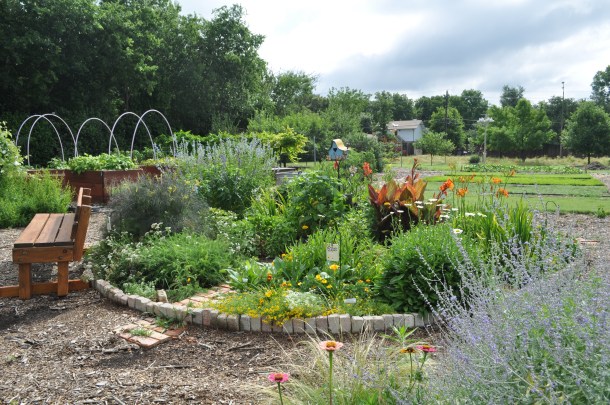
That is the state I am in and so yesterday I walked through our gardens and took these pictures.

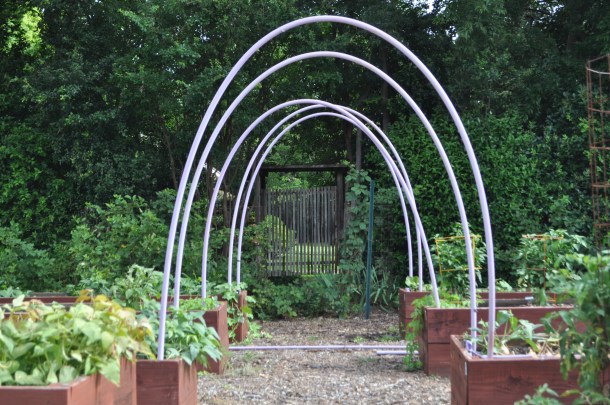
Above: Garden trellis made of irrigation tubing. Long beans will grow here and other vining crops.

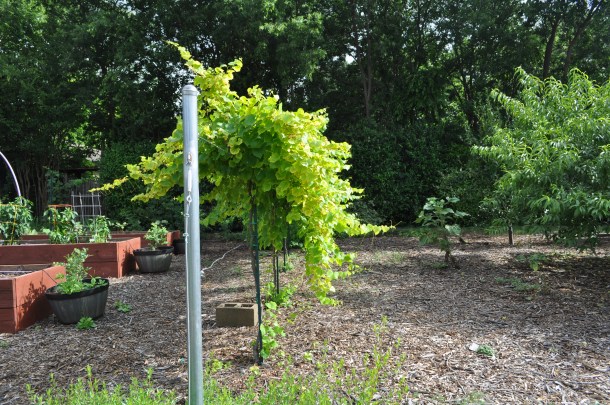
Above: the grape vines seem to be glowing

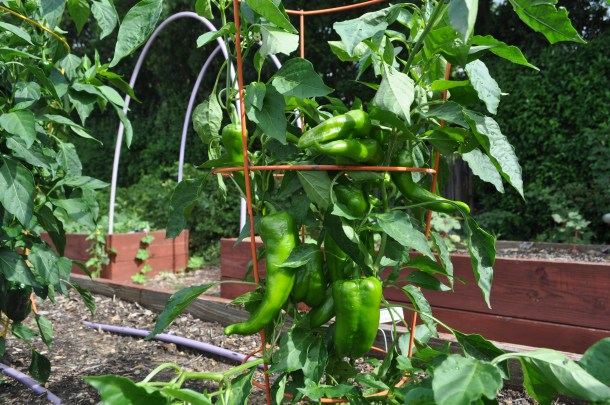
Above: Poblano Green Pepper

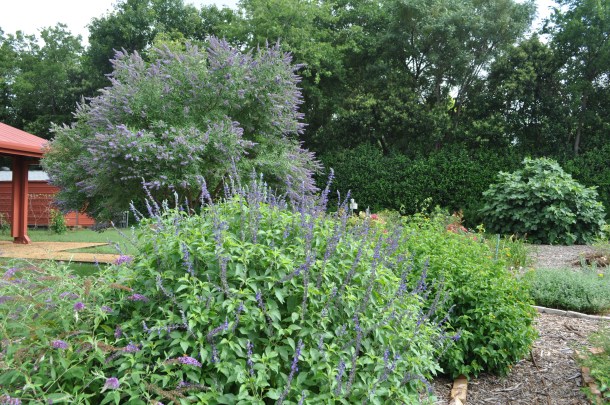
Above: Blue on blue-sage and vitex in our butterfly garden.

Above: Should be a good fig harvest this year!

Above: The color wheel

Above: a view of our grass plots-looking mighty fine!

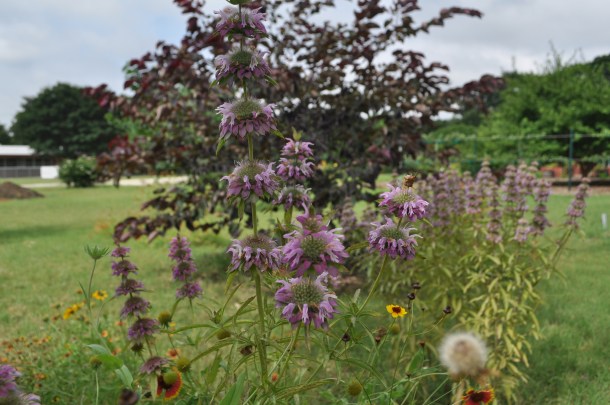
Above: Horsemint in front of our Redbud Tree

Ann Lamb

If you would like to learn more about herbs of the Mediterranean, come to our garden lecture by Marian Buchanan on Tuesday, June 25th at 10-11:00 am. Class will be held in the church sanctuary.

The lunch following the lecture has been sold out. No reservations required for the lecture. Just come! All welcome.

Location: 11001 Midway Road, Midway Hills Christian Church

(Master Gardeners earn two CEU’s)


Herbs of the Mediterranean, A Grow and Graze Event

Herbs of the Mediterranean

Herbs activate our senses. Join us for a culinary trip to the Mediterranean where we’ll explore some of the world’s best tasting food. Be inspired by this delightfully aromatic way of using fresh and dried herbs in your cooking.

Tuesday, June 25th

A “Grow and Graze” Event Hosted by

 The Raincatcher’s Garden of Midway Hills

Time:  10:00 – 11:00

Location:  11001 Midway Road Church Sanctuary

Instructor: Marian Buchanan, Dallas County Master Gardener, Herb Specialist

(Master Gardeners earn two CEU’s)

Immediately following the program, please join us at our Mediterranean Table

Lunch: 11:15 – 12:30

$15 per person, Reserved seating for 60 available starting May 20th. Deadline June 18th

https://www.eventbrite.com/e/herbs-of-the-mediterranean-tickets-60462949309

Menu

Iced Herb Gazpacho and Toasted Baguette Slices spread with Every Herb Pesto

Black Olive & Swiss Chard Tart

Green Herbs & Butterhead Lettuce Salad with Herb-Seasoned Croutons

Salad of New Potatoes with Sweet Cicely, Lovage and Green Peppercorns

Mediterranean Summer Roasted Vegetable Ratatouille

Honey-Lemon Olive Oil Cake with Whipped Crème Fraiche and Fresh Berries

Lavender Honey Ice Cream

All members of the public invited for the free lecture. To make a reservation for the lunch use the eventbrite link above.

Linda Alexander

Edible Landscape Spring and Summer Planting 2019

May 4, 2019

Ana and Linda enthusiastically took center stage last week to proclaim the spring and summer plans for the Raincatcher’s Edible Landscape. The purpose of our edible landscape is to create a stylish and appealing outdoor space using vegetable, fruit, and herb plant materials. On top of that, think partial shade and an area formerly used as a children’s playground. Add in budget constraints and the lack of an irrigation system..

Without the fervor of Ana and Linda and their band of Master Gardeners, I doubt this garden would have flourished. But with its second birthday round the corner, the edible landscape is ready to take off its training pants and mature into a beautiful and thoughtful garden full of edible delights.

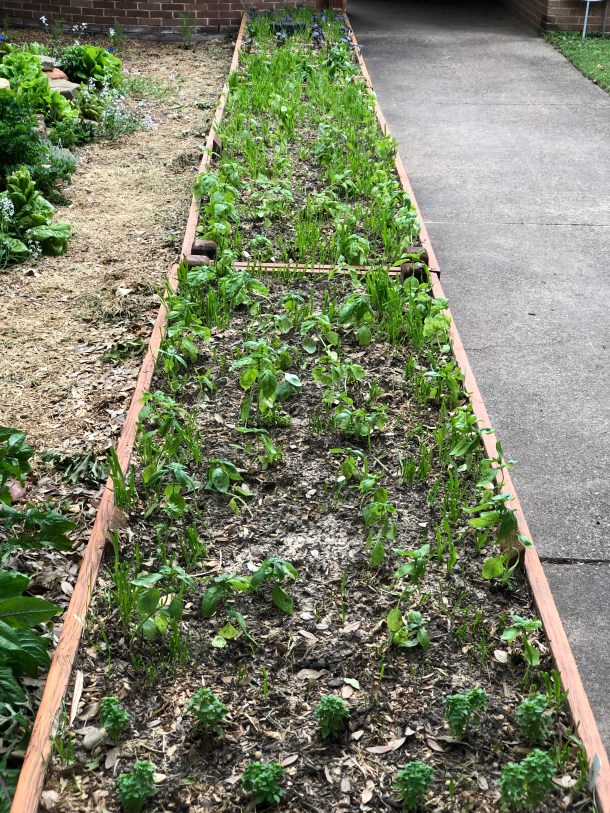
In the next few weeks, look for articles giving more detail about the 2019 design plan. The basil bed has just been planted with many different colors of basil. Hint: research the ombré look and we’ll explain later how it’s being used in the edible landscape.

South Sidewalk Raised Beds – Basil varieties/cultivars: Piccolino (Greek), Napoletano (Genovese), Eloenora (Genovese), Persian (Thai), Cardinal (Thai), Balsamic Blooms (Genovese), Red Freddy (Genovese), Amethyst Black (Genovese)

Ann Lamb

PIctures by Linda Alexander

Open this link for a list of the all the plants  and a plot plan of The Edible Landscape at The Raincatcher’s Garden.

The Edible Landscape Adds a Food Guild

April 30, 2019

The idea of a food guild or food forest is interesting because it is a less labor intensive way to grow food and more sustainable. Everyone likes the idea of low maintenance and more crops, so watch this video to see the food guild we are creating to in our Edible Landscape at The Raincatcher’s Garden.

The food guild utilizes layers of different types of plants. We are fortunate to have towering oak trees for our tall tree layer and also fortunate to have tasted acorn muffins made from acorn flour. So yes, our tall tree layer, the live oak tree is a food source. Next we will have a short tree, a vine will grow up that tree, then a shrub layer, an herb layer, ground cover and a root crop like horseradish or carrots.  As you read this, you should be getting the idea of plants growing together and utilizing each other’s strengths to create this sustainable food guild.

It’s a fascinating concept and you will get to hear of it’s successes and trials, as we watch it over the next few years.

Ana has given us a list of the plants we will be considering for The Raincatcher’s Food Guild. I’m excited about the mandarin orange tree.

Ann Lamb

video by Starla Willis

For more information about planting a food guild click here.

Planting Corn at The Raincatcher’s Garden

April 15, 2019

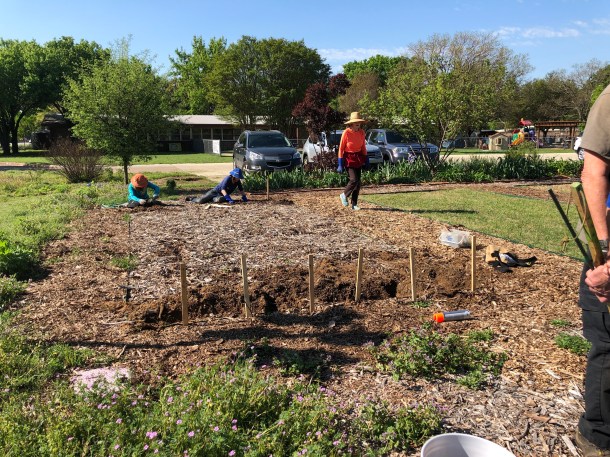
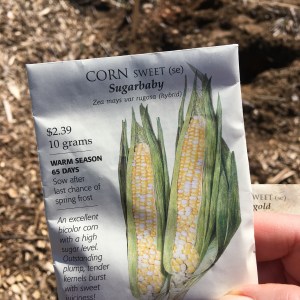
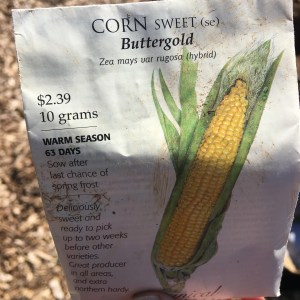
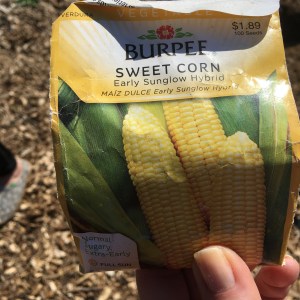
We are banking on a good crop of corn this year. After all, we have plenty of sun and warm, rich soil and dedicated gardeners staking out our new garden bed.

Let’s get those corn kernels in the ground!

You can almost taste summer when looking at the seed packages.

Sugarbaby

Buttergold

Early Sunglow

Hwy, what do gardeners say after a corn harvest  when receiving a complement about their corn crop?

Aww shucks, thank you!

Ann Lamb

Pictures by Starla Willis


To learn about Glass Gem corn, read Christmas in July.

Dandelions are Edible

April 7, 2019

Do you consider dandelions a weed? If so, here’s some nutritional information that might encourage you to grow and harvest dandelions plants in your garden or yard.

Italiko Rosso is the variety we selected for our garden. Notice the bold red stems and midribs which contrast beautifully with the forest green leaves.

Dandelion takes it name from the French dent de lion or “tooth of the lion.” A close look at the deeply indented leaf structure tells you why.

Both dandelion flowers and leaves are a surprising source of nutrients. Dandelion greens contain vitamin C, potassium, calcium, iron, magnesium, phosphorus, thiamin, riboflavin, beta carotene and fiber. Some consider dandelions to be a nearly perfect food.

For culinary purposes, the younger the better. Fresh dandelion flowers have a sweet honeylike taste. The greens are commonly used in salads, and the root makes a cleansing and detoxifying diuretic tea.

Dandelions are by nature a very bitter green, but there are some steps to help reduce the bitterness.

First, grow a less bitter variety such as one of the more “gourmet” types: French Dandelion a.k.a Vert de Montmagny, Ameliore a Coeur Plein Dandelion, Improved Broad Leaved Dandelion or Arlington Dandelion.

Second, harvest early. Young leaves are less bitter than more mature leaves.

Third, brine leaves before steaming. This helps remove some of the bitterness. For a short demonstration on cooking dandelion leaves, see the YouTube video featuring P. Allen Smith.

Dandelions are a perennial. After you harvest the plant it will grow back the same season, year after year.

Linda Alexander

Click here to review our dandelion salad recipe. It was a featured salad, cooked to order at our last Grow and Graze luncheon.

Fresh dandelion greens can also be purchased in some grocery stores. Locally, places like Central Market, Sprouts and Whole Foods stock them on a seasonal basis.

— 

Grow and Graze Salad Garden Recipes II


See and taste The Grow and Graze Centerpiece of salad greens and to the left is our table-top appetizer featuring the peppery taste of Wasabi Arugula.

“Kick Up the Heat” Spread

Ingredients

¼ cup Wasabi Arugula, chopped

1-2 cloves garlic, finely chopped

1 cup sour cream

1 (8 ounce) package cream cheese, softened

1 teaspoon fresh grated ginger, optional

Dash of sea salt

Assorted crackers

Directions

In a medium bowl, whip all ingredients together until smooth. Spread over crackers. Serve immediately or refrigerate for a few days.

Beth cooking dandelion salad for our guests.

Dandelion Salad

Ingredients

6 ounces young dandelion leaves, tough stems and base ends removed*

2 tablespoons blanched hazelnuts (filberts), coarsely chopped (optional)

3 ounces thick-cut sliced slab bacon, cut crosswise into pieces ½ inch wide

1 ½ tablespoons sherry vinegar or red wine vinegar

2-3 tablespoons olive oil

Salt and freshly ground coarse pepper to taste

Directions

Pick over the dandelion leaves, tearing the larger ones in half. Place in a wooden salad bowl. Add the hazelnuts, if using.

In a small frying pan over high heat, fry the bacon until crisp and its fat has been rendered, about 1 minutes. Using a slotted spoon, transfer the bacon to the bowl holding the dandelions, leaving the fat in the pan.

Return the pan to high heat, add the vinegar, and swirl the pan or stir with a wooden spoon to pick up the sediment on the bottom.

Pour in as much additional oil as will be necessary to dress the salad, swirl once to heat a little, and then pour the contents of the pan over the salad. Season with salt and pepper, toss, and serve immediately.

Yield: Serves 6

*If dandelion leaves are not available, the outer dark green leaves of curly endive or spinach may be substituted.

After tasting a smorgasbord of color, flavors, shapes and textures, attendees indulged their sweet tooth with a few garden-inspired desserts:

Blue Ribbon Carrot Cake and Chocolate Beet Cake with Beet Cream Cheese Frosting
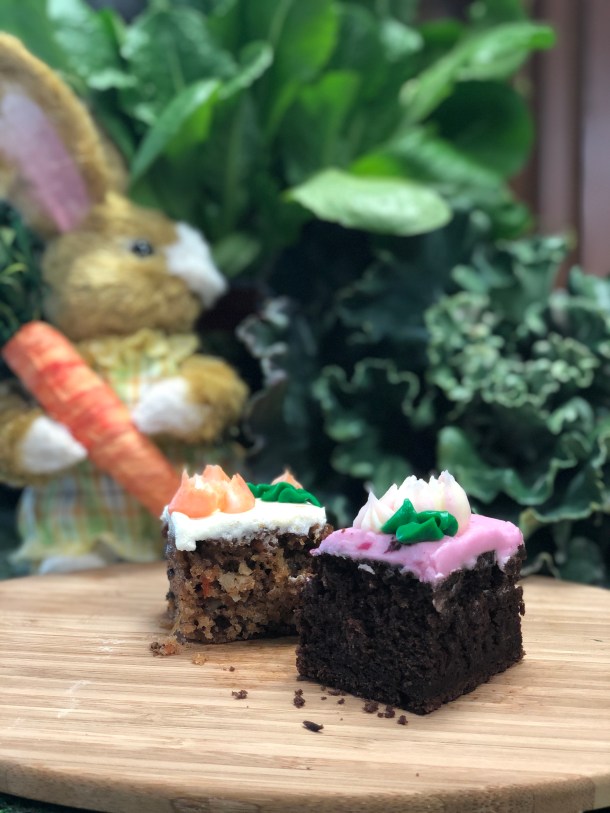
Blue Ribbon Carrot Cake

Ingredients

2 cups all-purpose flour

2 teaspoons soda

½ teaspoon salt

2 teaspoons ground cinnamon

3 eggs, well beaten

¾ cup vegetable oil

¾ cup buttermilk

2 cups sugar

2 teaspoons vanilla extract

1 (8-ounce) can crushed pineapple, drained

2 cups grated carrots

1 (3 ½-ounce) can flaked coconut

1 cup chopped walnuts

Buttermilk Glaze

Orange-Cream Cheese Frosting

Directions

Combine flour, soda, salt, and cinnamon; set aside.

Combine eggs, oil, buttermilk, sugar, and vanilla; beat until smooth.  Stir in flour mixture, pineapple, carrots, coconut, and chopped walnuts.  Pour batter into 2 greased and floured 9-inch round cake pans.

Bake at 350˚F for 35 to 40 minutes or until a wooden pick inserted in center comes out clean.  Immediately spread Buttermilk Glaze evenly over layers.  Cool in pans 15 minutes; remove from pans, and let cool completely.

Spread Orange-Cream Cheese Frosting between layers and on top and side of cake.  Store cake in refrigerator.

Yield:  One 2-layer cake

Buttermilk Glaze

Ingredients

1 cup sugar

½ teaspoon soda

½ cup buttermilk

½ cup butter

1 tablespoon light corn syrup

1 teaspoon vanilla extract

Directions

Combine sugar, soda, buttermilk, butter, and corn syrup in a Dutch oven.  Bring to a boil; cook 4 minutes, stirring often.  Remove from heat, and stir in vanilla.  Yield: about 1 ½ cups.

Orange-Cream Cheese Frosting

Ingredients

½ cup butter, softened

1 (8-ounce) package cream cheese, softened

1 teaspoon vanilla extract

2 cups sifted powdered sugar

1 teaspoon grated orange rind

1 teaspoon orange juice

Directions

Combine butter and cream cheese, beating until light and fluffy.  Add vanilla, powdered sugar, rind, and juice; beat until smooth.  Yield:  enough for one 2-layer cake.

Chocolate Beet Cake with Beet Cream Cheese Frosting

Ingredients

For the cake

2 medium beets, unpeeled but trimmed of their greens

1 teaspoon vegetable oil

6 ounces (¾ cup) unsalted butter, softened, plus more for greasing the pans

1 cup packed brown sugar

¾ cup granulated sugar

2 large eggs

1 teaspoon pure vanilla extract

2 cups all-purpose flour, plus more for dusting the pans

⅔ cup unsweetened natural cocoa powder

1 teaspoon baking soda

½ teaspoon baking powder

1 teaspoon salt

1 ¼ cups buttermilk

For the frosting

1 cup (2 sticks) unsalted butter, softened

8 ounces cream cheese, softened

4 to 5 cups powdered sugar, sifted

2 tablespoons finely grated beets, mashed with a fork

1 teaspoon pure vanilla extract or scrapings of one vanilla bean pod

1-2 teaspoons milk, depending on desired consistency

½ teaspoon fresh lemon juice

Pinch of salt

Directions

Place a rack in the center and upper third of the oven.  Preheat oven to 375˚F.

Thoroughly wash beets under running water, and trim their leaves, leaving about ½ inch of stem.  Place clean beets in a piece of foil.  Drizzle with just a bit of vegetable oil.  Seal up foil.  Place on a baking sheet in the oven.  Roast until beets are tender when pierced with a knife, about 1 hour.

Remove the beets from the oven.  Open the foil and allow beets to cool completely.  Beets will be easy to peel (just using a paring knife) once completely cooled.

Using a box grater, grate the peeled beets on the finest grating plane.  Measure ¾ cup of grated beets for the cake and 2 tablespoons for the frosting.  Set aside.

Reduce the oven temperature to 350˚.  Use butter to grease two 8 or 9-inch round baking pans.  Trace a piece of parchment paper so it is the same size as the bottom of the cake pan.  Cut it out and place inside the cake pan.  Butter the parchment paper.  Add a dusting of flour to coat the pan.  Set pans aside while you prepare the cake.

In the bowl of an electric stand mixer, fitted with a paddle attachment, cream together butter and sugars.  Beat on medium speed until pale and fluffy, about 3 to 5 minutes.  Beat in eggs, one at a time, for one minute after each addition.  Stop the mixer and scrape down the sides of the bowl as necessary.  Once eggs are incorporated, beat in beets and vanilla extract until thoroughly combined.

In a medium bowl, whisk together flour, cocoa powder, baking soda, baking powder, and salt.

Add half of the dry ingredients to the butter and egg mixture.  Beating on low speed, slowly add the buttermilk.  Once just incorporated, add the other half of the dry ingredients.  Beat on medium speed until milk and dry ingredients are just incorporated.  Try not to overmix the batter.  Bowl can be removed from the mixer and mixture folded with a spatula to finish incorporating ingredients.  Cake batter will be on the thick side…not pourable.

Divide the batter between the two prepared cake pans.  Bake for 23 to 25 minutes (for a 9-inch pan) or 30 to 32 minutes (for an 8-inch pan).  Cake is done when a skewer inserted in the center comes out clean.  Remove cakes from the oven and allow to rest for 10 minutes.  Invert cakes onto a cooling rack to cool completely before frosting and assembling the cake.

To make the frosting

In the bowl of an electric stand mixer, fitted with a paddle attachment, beat cream cheese for 30 seconds, until pliable and smooth.  Add the butter and beat for another 30 seconds, until well combined.  Stop the mixer and scrape down the bowl as necessary.  Beat in the beets.  Add the powdered sugar, vanilla extract, milk, lemon juice, and salt.  Beat on medium speed until smooth and silky   Refrigerate the frosting for 30 minutes before frosting the cooled cakes.

To assemble the cake

Place one layer of cake on a cake stand or cake plate.  Top with a generous amount of pink frosting.  Spread evenly.  Place the other cake on top of the frosting.  Top with frosting.  Work frosting onto the sides of the cake.  You will have extra frosting left over.  Refrigerate for an hour before serving (it will make cake easier to slice).  Cake will last, well wrapped in the refrigerator, for up to 4 days.

Yield:  Makes one 8 or 9-inch layer cake

Linda Alexander

Pictures by Starla Willis and Linda Alexander


Grow and Graze Salad Gardens Lecture and Recipes

Our Salad Gardens Program last Tuesday, March 19th included everything from easy-to follow directions for growing a tasty variety of salad lettuces, herbs, and edible flowers to a buffet brimming with a variety of salads that stirred the senses.

Some useful tips to help us get started were:

*Locate garden near a source of water

*Use compost for drainage and nutrients

*Use mulch to help retain moisture

*Use deep, infrequent watering

For a healthy foundation…start with good soil:

*Remove weeds, rock, debris

*If needed, order a soil test from Texas A&M

*Need 8-12 inches of loose tillable soil

*Ideal pH is 6.5 – 7.0 (DFW = 7.2)

*Do not work soil when it is wet

*Consider raised bed with special soil mix to start

*Build a compost pile

Growing salad greens:

*Greens include lettuce, herbs, salad greens and leafy green vegetables such as cabbage, collards, kale, mustard, spinach and Swiss chard

*Most greens are cool-season crops and must be grown in the early spring or fall in Texas. Some greens, especially kale, will withstand temperature below freezing and can be grown all winter. And, even in our hot Texas summer climate there are partially shaded spots to grow certain greens.

*Greens grow best in a well-drained soil with lots of organic matter. They prefer full sunlight but will tolerate partial shade.

*The soil should be worked at least 8 to 10 inches deep in the early spring when it is dry enough not to stick to garden tools. Break up large clods and remove trash and weeds. Work the soil into beds about 4 inches high. Add compost or organic matter before digging the soil.

*Greens grow best when given plenty of fertilizer. Adequate nitrogen is needed to develop the dark green leaf color. Before planting the seeds, apply a general garden fertilizer such as 10-10-10 at the rate of 2 to 3 pounds per 100 square feet. Mix fertilizer into the soil about 3 inches.

When shopping for seeds or transplants, consider the limitless possibilities for filling your garden with a variety of leafy greens. Rich in vitamins and folic acid, salad gardens provide both nutrition and fiber. Our mother’s admonition to “eat your greens” really was good advice.

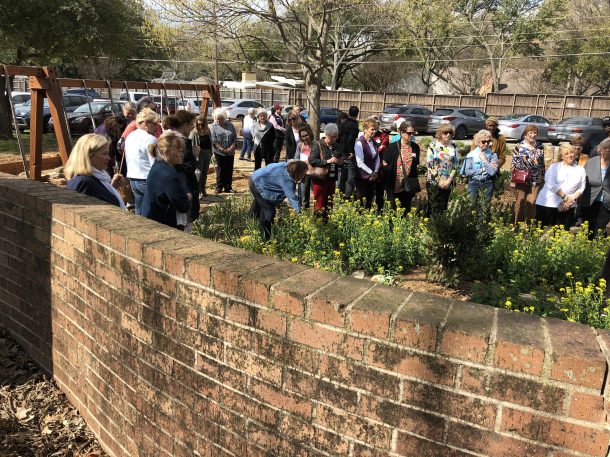
Edible Garden tour after lecture and lunch

Here are a few of the crowd-pleasing salads our lunch guests enjoyed:

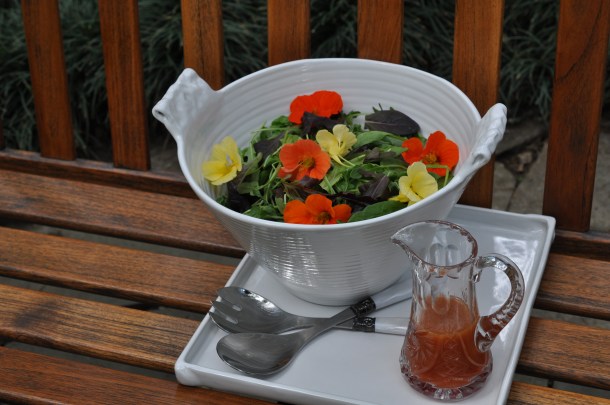
Mixed Green Salad with Nasturtiums and Raspberry Vinaigrette Raspberry Vinaigrette

To lend intrigue to a salad of mixed greens, toss in a handful of peppery nasturtium blossoms.
Ingredients

¼ cup raspberries

2 tablespoons freshly squeezed lemon juice

2 tablespoons raspberry or red-wine vinegar

½ teaspoon sugar

6 tablespoons olive oil

Salt and freshly ground black pepper

Directions

Using a wooden spoon, push raspberries through a handheld wire strainer to puree.

In a medium bowl, whisk together 2 tablespoons raspberry puree, lemon juice, vinegar, and sugar.

In a slow but steady stream, whisk in olive oil until emulsified.  Season with salt and pepper.

Vinaigrette can be made 1 day in advance and stored in an airtight container in the refrigerator.

Yield:  Makes about ¾ cup

Adapted from Martha Stewart

Salad:

6 large handfuls of mixed greens, including wild rocket arugula, herb salad mix, etc.

6 nasturtium blossoms

Toss mixed greens with the vinaigrette.  Strew the blossoms over and serve immediately.  (Options:  may also toss with fresh blueberries or raspberries)

Fresh Spinach and Tatsoi Salad with Orange Curry Dressing

A “dressy” and inviting way to serve spinach. The addition of tatsoi gives it textural interest.

Ingredients

For the dressing

1 cup apple cider vinegar

2 tablespoons (heaping) orange marmalade

2 teaspoon curry powder

½ cup sugar

2 teaspoons dry mustard

2 teaspoons salt

1 teaspoon freshly ground pepper

½ teaspoon Tabasco sauce

1 ¾ cups vegetable oil

For the salad

4 bunches fresh spinach, trimmed

2 cups tatsoi leaves, optional

6 apples (red and green), chopped

2 cups golden raisins

1 ¾ cups walnut halves, lightly toasted

6 green onions, chopped

¼ cup sesame seed, toasted

1 pound bacon, chopped, crisp-fried, crumbled (optional)

Directions

Combine the vinegar, marmalade, curry powder, sugar, mustard, salt, pepper and Tabasco sauce in a blender container.

Add the oil in a fine stream, processing constantly at high speed until thickened.

Let stand at room temperature for 2 hours.  Chill, covered in the refrigerator until serving time.

Arrange equal amounts of the spinach and tatsoi on 12 salad plates or one large platter.  Drizzle with the dressing.

Sprinkle each serving or the platter with the apples, raisins, walnuts, green onions, sesame seeds and bacon bits.

Serve immediately.

Yield:  12 servings

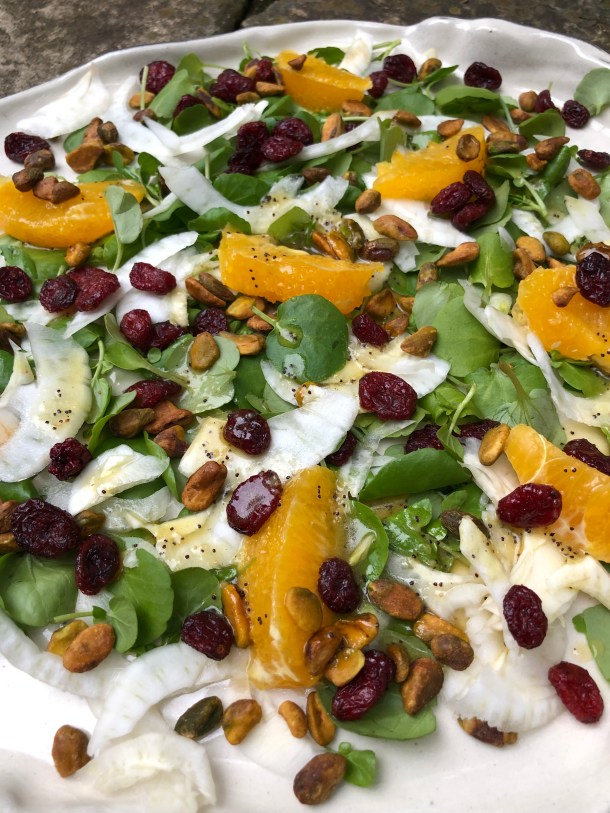
Orange Fennel Watercress Salad with Lemon Ginger Poppyseed Dressing

Ingredients

2 large navel oranges

3-4 ounces baby watercress

½ medium fennel bulb cored and thinly sliced crosswise

¼ cup dried cranberries

¼ cup salted roasted pistachios

½ cup cutting celery, lightly chopped, for garnish (optional)

Lemon Ginger Poppyseed Dressing

Directions

Using a sharp knife, cut about ¼ to ½ inch from the top and bottom of the orange to expose the flesh. Place the fruit on one of its flat ends and cut down to remove the skin and the white pith. Rotate and repeat, working your way around the fruit until the orange fruit is completely exposed. Slice, dice or cut between the flesh and the white membrane to create orange segments.

Place most of the watercress (reserve a small amount) on a large serving plate or platter. Top with sliced fennel, oranges, dried cranberries and pistachios. Drizzle with the Lemon Ginger Dressing. Sprinkle reserved watercress and cutting celery over the salad.

Yield: Serves 4

Linda Alexander

Pictures by Starla Willis

Now we understand why Peter Rabbit ignored his mother’s warning and stole under that garden fence for a quick sampling of both lettuce and danger. We hope you enjoy your salad garden adventures as much as he did.


A March Day in The Raincatcher’s Garden

March 13, 2019

Three minutes of your time, please. Have you ever seen such motivation, such verve. Our gardeners, Syann, Sue, and Dorothy are in the garden under umbrellas pouring out plans from our vegetable garden.

And then, what are strawberry spinach seeds and what’s the best method for starting them?

Thank you everyone; the gardeners, the videographer, the greenhouse personnel, those who weed, those who work in the compost area, all of you who make Raincatcher’s what it is even on a rainy day. You inspire me.

Ann Lamb

video by Starla Willis

More about strawberry spinach seeds here.