Tag Archives: vegetable gardening

Squash, Squash, and More Squash Coming

We are going to be sharing many, many squash recipes from our SQUASH ME event yesterday.  We had beautiful, lower temperature weather and a fabulous speaker who talked to us about the wide and inviting subject of squash.  While you are waiting for a complete write up, we thought you might like a few of the recipes.  Please also spend a little time reading about The Sex Life of Squash on the blog, Garden Betty to prepare  for the scintillating squash info we will be presenting in the next few days.

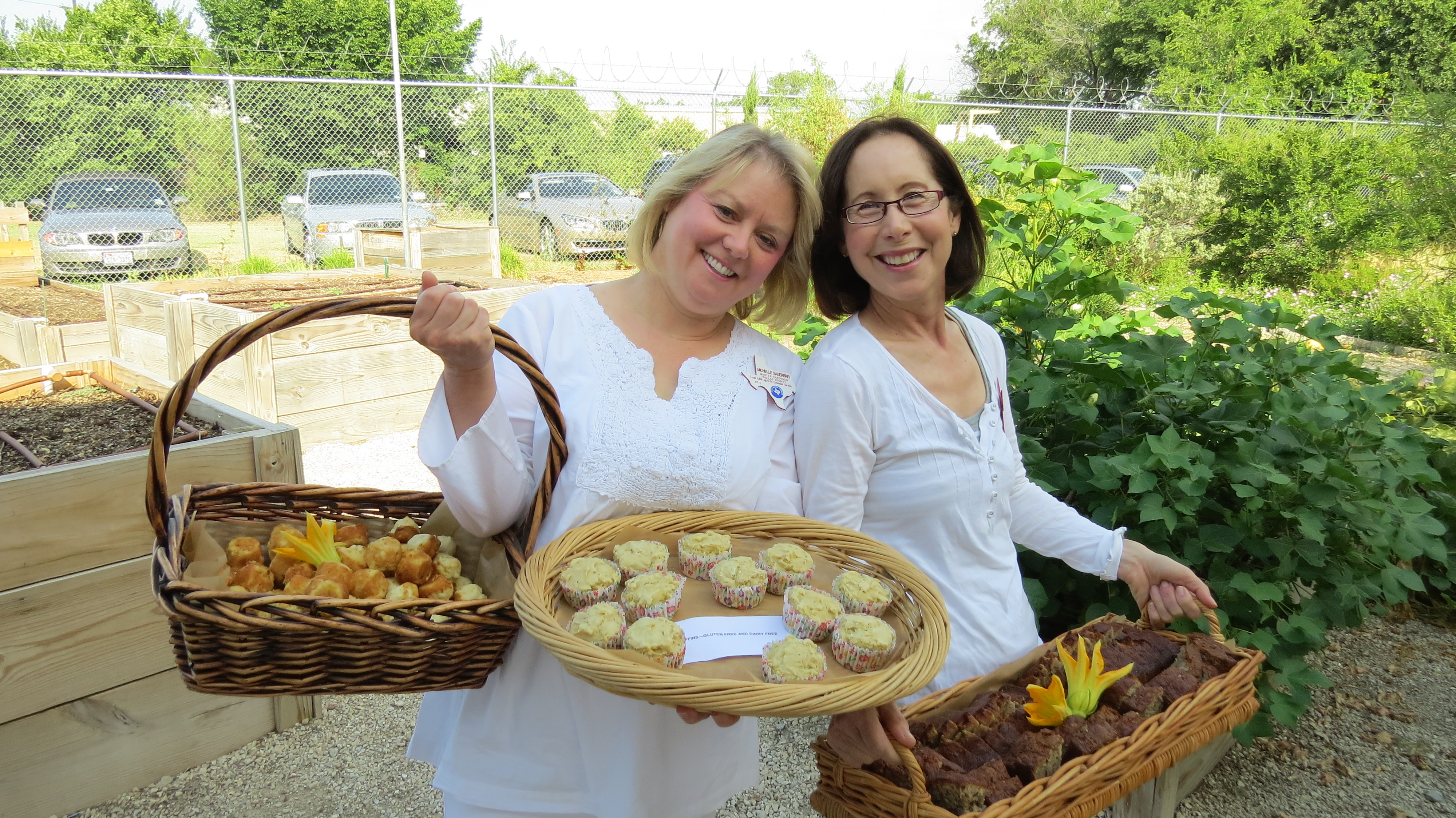
Michele and Sue Serving Squash Muffins with and without Gluten and Banana  Zucchini  Bread

Michele and Sue Serving Squash Muffins with and without Gluten and Banana Zucchini Bread

Squash Muffins 

Ingredients:

2 cups all-purpose flour

1 tablespoon baking powder

¼ teaspoon salt

2 tablespoons sugar

2/3 cup grated yellow squash

1 egg, beaten

¾ cup milk

2 tablespoons vegetable oil

Directions:

  1. Combine flour, baking powder, salt, sugar, and squash in large bowl; make a well in center of mixture.  Combine egg, milk, and oil; add to dry ingredients, stirring just until moistened.
  2. Spoon batter into lightly greased muffin pans, filling two-thirds full.  Bake at 350⁰ for 20 to 25 minutes.  Remove muffins from pans immediately.

Yield:  1 dozen.

Banana-Zucchini Bread

Ingredients:

3 cups all-purpose flour

1 teaspoon baking soda

1 teaspoon salt

1 teaspoon ground cinnamon

½ teaspoon baking powder

1 cup vegetable oil

3 eggs

2 cups sugar

1 tablespoon vanilla extract

2 cups mashed bananas

2 cups unpeeled shredded zucchini

1 cup chopped pecans or walnuts

Directions:

  1. Combine flour, soda, salt, cinnamon, and baking powder in a mixing bowl, and set aside.
  2. Combine oil, eggs, sugar and vanilla extract in a large bowl; beat well.  Stir in bananas and zucchini.  Add flour mixture, stirring just until moistened.  Stir in pecans.
  3. Pour batter into two greased and floured 8 ½- x 4 ½- x 3-inch loaf pans.  Bake at

350⁰ for 1 hour or until a wooden pick inserted in center comes out clean.  Cool in pans 10 minutes; remove from pans, and cool completely on wire racks.

Yield:  2 loaves.

squash chocolate cake

Chocolate-Zucchini Cake

Ingredients:

½ cup plus 1 tablespoon butter, melted

2 cups sugar

3 (1-ounce) squares unsweetened chocolate, melted and cooled

3 eggs

½ cup milk

2 teaspoons grated orange rind

2 teaspoons vanilla extract

2 cups coarsely grated unpeeled zucchini

2 ½ cups flour

2 ½ teaspoons baking powder

1 ½ teaspoons baking soda

½ teaspoon salt

1 teaspoon ground cinnamon

2 tablespoons powdered sugar

½ teaspoon ground cinnamon

Whole fresh strawberries (optional)

Directions:

  1. Cream butter; gradually add 2 cups sugar, beating until light and fluffy.  Beat in chocolate.  Add eggs, one at a time, beating well after each addition.  Beat in milk, orange rind, vanilla, and zucchini.
  2. Combine flour, baking powder, soda, salt, and 1 teaspoon cinnamon; add to creamed mixture, mixing well.  Pour batter into a greased and floured 10-inch Bundt pan.  Bake at 350⁰ for 1 hour or until a wooden pick inserted in center comes out clean.  Cool cake in pan 10 to 15 minutes; remove from pan, and place on a wire rack.
  3. Combine powdered sugar and ½ teaspoon cinnamon; sift over warm cake.  Cool completely.  Fill center of cake with strawberries, if desired.

Yield:  one 10-inch cake.

Ann

Recipes by Linda

Pictures by Starla


Let’s Picnic!

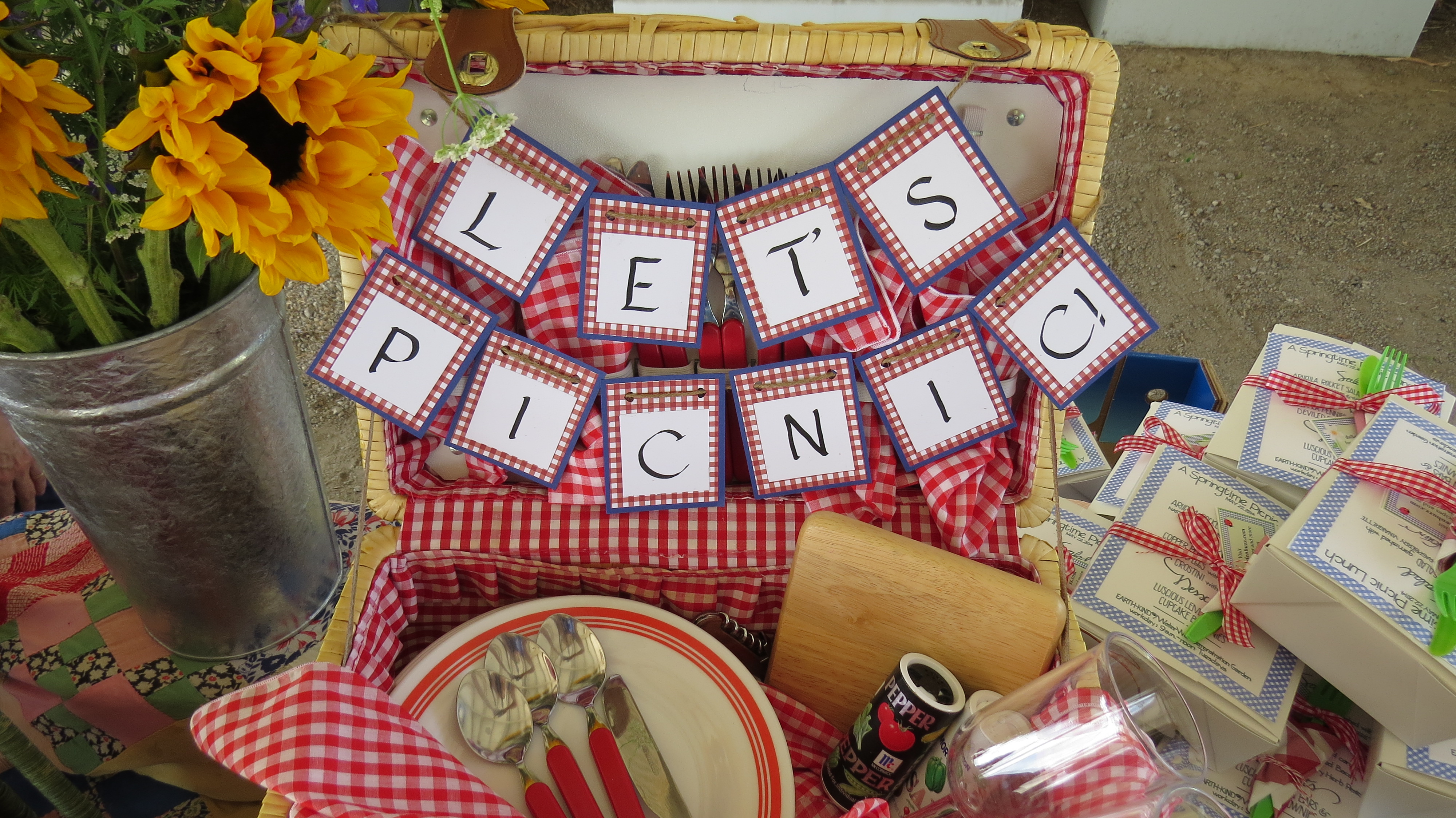
Before Christmas, the poem says, young children dream of sugarplums. Our Linda must have visions of gingham checks.  At the May 22 Master Gardener meeting, red gingham ribbon tied white picnic lunch boxes topped with blue gingham bordered menus, nestled by larger red gingham napkins.  Picnic tables were piled high with gingham quilts and vintage picnic baskets. An open picnic basket crowned the decorations, all ready for a party and filled—you guessed it—with red gingham napkins and red and white plates.

picnic basket close up


Master Gardeners visiting the Demonstration Garden were in for a treat.  Our Annette pulled out all her teacher skills and fascinated us with the world of earthworms.  How-to’s were flying right and left: we learned how to raise little wigglies in the laundry room, what to feed them, and how to sift out worm castings.

Sue and Michelle signed autographs after their unforgettable demonstration of how worms get close and friendly.
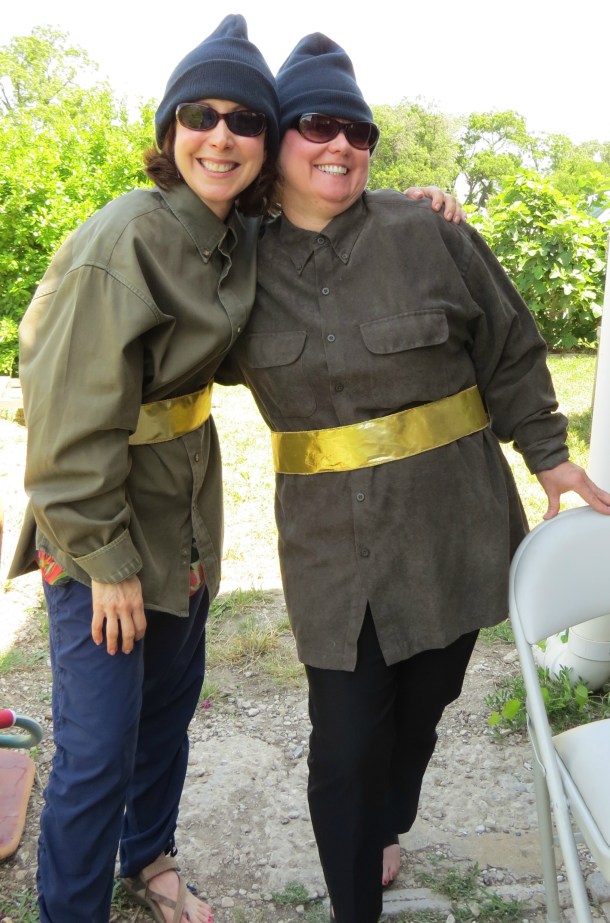
picnic-Michele and Sue cropped


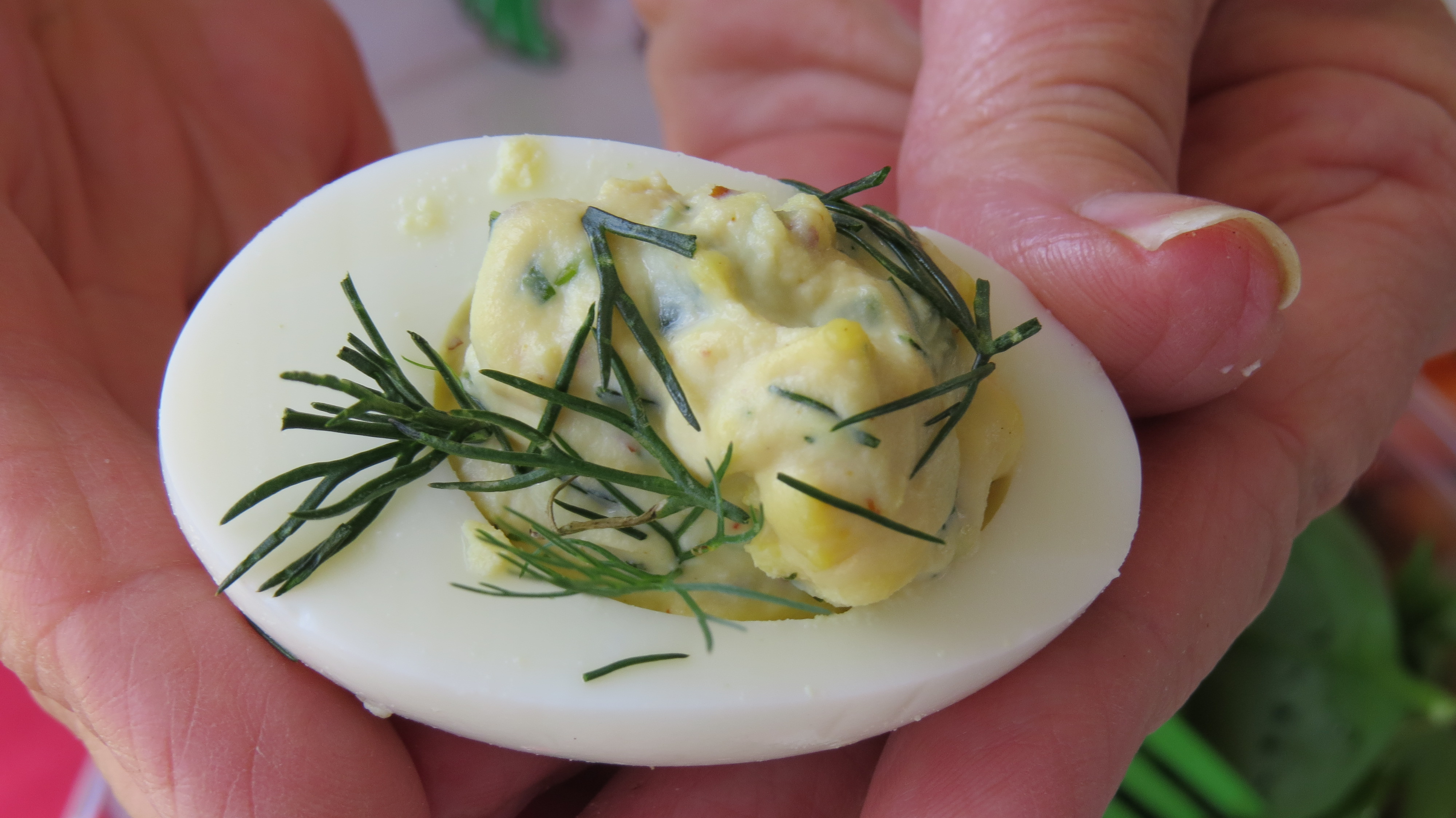
Guests opened their picnic lunches to find a carefully packed feast wrapped in ladybug cellophane.  They enjoyed Arugula Rocket Salad with Nasturtium blossoms and Raspberry Vinaigrette, Copper Pennies, deviled eggs with candied bacon, crostini with Every Herb Pesto, Lemon Bars and Cupcake Brownies.   What a picture perfect day for a picnic.  Come back soon, fellow Master Gardeners!

Elizabeth
picnic-boxed lunch

Recipes

Salad with Nasturtiums and Raspberry Vinaigrette

Raspberry Vinaigrette


Ingredients:

¼ cup raspberries

2 tablespoons freshly squeezed lemon juice

2 tablespoons raspberry or red-wine vinegar

½ teaspoon sugar

6 tablespoons olive oil

Salt and freshly ground black pepper


Directions:

1.  Using a wooden spoon, push raspberries through a handheld wire strainer to puree.

2.  In a medium bowl, whisk together 2 tablespoons raspberry puree, lemon juice, vinegar, and sugar.

3.  In a slow but steady stream, whisk in olive oil until emulsified.  Season with salt and pepper.


Vinaigrette can be made 1 day in advance and stored in an airtight container in the refrigerator.

Yield:  Makes about ¾ cup

Adapted from Martha Stewart


Salad

6 large handfuls of mixed greens, including wild rocket arugula, herb salad mix, etc.

6 nasturtium blossoms


Toss mixed greens with the vinaigrette.  Strew the blossoms over and serve immediately.  (Options:  may also toss with fresh blueberries and/or raspberries)

Picnic-deviled eggs


Deviled Eggs with Candied Bacon


Ingredients: 

1 ½ tablespoons light brown sugar

Cayenne pepper

Pinch ground cinnamon

1/8 pound thick-cut bacon (about 3 strips)

8 large eggs, straight from the refrigerator

¼ to ½ cup mayonnaise, or as much as desired

2 teaspoons whole grain mustard

1 tablespoon finely chopped fresh dill, plus more for garnish

1 tablespoon cider vinegar

1 teaspoon Worcestershire sauce

2 scallions, minced

½ teaspoon kosher salt

Paprika, for garnish


Directions:

1.  Preheat the oven to 350 degrees F.

2.  In a small bowl, mix together the brown sugar, a pinch of cayenne and the cinnamon.  Place the bacon on a wire rack set over a rimmed baking sheet.  Sprinkle each slice of bacon with some of the spiced sugar and bake, about 10 minutes.  Flip the bacon, sprinkle with the remaining spiced sugar and continue to cook until crispy, about 20 more minutes.  Remove the bacon from the oven and allow to cool.  When the bacon is cool, mince it and set aside, reserving a quarter of it for garnishing the eggs.

2.  Put the cold eggs in the bottom of a medium sauce pan and cover with cold water.  Bring water to a boil and remove the pan from the heat.  Cover the pan with a lid and let stand for 12 minutes.  Drain the eggs and rinse with cold water.  Let the eggs cool a bit and then peel when they are still warm (eggs are much easier to peel when they are warm).  After they are peeled, you can then store them covered, in the fridge.

3.  Mix together the mayonnaise, mustard, dill, cider vinegar, Worcestershire sauce, ¼ teaspoon cayenne, the scallions and the minced bacon in a medium mixing bowl.  Season with the salt.

4.  Slice the eggs in half lengthwise.  Gently remove the yolks by pressing your thumb against the back of the yolk to pop it out of the white.  Add the yolk to the bowl with the mayonnaise mixture.  Mash together, using a fork, until smooth.

5.  Put the filling in a re-sealable bag.  Cut one end off and pipe the filling into the egg whites.  Sprinkle with the paprika, extra bacon bits and dill before serving.


Yield:  6 to 8 servings.

picnic-marinated carrots


Marinated Carrots


For any kind of summer backyard gathering, Grandmother always served these.


Ingredients: 

¾ cup sugar

½ cup vegetable oil

½ cup vinegar

1 Tablespoon Worcestershire sauce

1 Tablespoon prepared mustard

Salt and pepper, to taste

2 lb. bag precut and peeled baby carrots

1 small red onion, sliced into rings

1 green bell pepper, chopped

1 (15 ounce) can tomato soup

Directions:

1. Simmer carrots in water to cover for 5 to 7 minutes or until crisp tender.

2. Drain into a large strainer.  Immerse strainer in ice water to cover carrots.

3. Drain briefly then remove to a large bowl.

4.  Combine first seven ingredients and pour over carrots.

5.  Add sliced onion rings, green pepper and tomato soup.

6.  Refrigerate overnight.

Yield:  8 to 10 servings


Every Herb Pesto


Ingredients:

½ cup Marcona almonds, toasted

2 cloves garlic, peeled

1 cup fresh spinach leaves

½ cup grated Parmesan

½ cup fresh cilantro leaves

½ cup fresh parsley leaves

¼ cup basil leaves

¼ cup fresh tarragon leaves

1/8 cup fresh mint leaves

1/16 cup fresh chervil leaves

2 tablespoons chopped fresh chives

Zest of lemon

Juice of 1 lemon

¾ cup canola oil

¼ cup extra-virgin olive oil

Kosher salt and freshly cracked black pepper

Garlic-rubbed crostini, optional

Heirloom tomatoes, chopped, optional


Directions:

1.  Blend the almonds and garlic in a food processor until fine.  Add the spinach, cheese, herbs, lemon zest and lemon juice to the food processor.  Blend the herbs just enough so they are mixed, about 3 seconds.  Add the canola oil and olive oil while the food processor is on a low setting. Season with salt and pepper.  Blend to desired consistency.

2.  Transfer the pesto to a serving bowl.  Place the chopped tomatoes on top of the crostini if using and top with pesto.  Any leftover pesto should be placed in a bowl and covered with plastic wrap.  Press the plastic wrap right on top of the pesto and refrigerate.


Yield:  About 2 cups.


Luscious Lemon Bars


Position a rack in the center of the oven.  Preheat the oven to 325°.  Line a 13 x 9-inch baking pan with a sling made of parchment paper or foil.

Sift into the bowl of a food processor fitted with a metal blade:

1 ½ cups all-purpose flour

¼ cup powdered sugar


Sprinkle over the top:

12 Tbl. (1 ½ sticks) cold unsalted butter, cut into 12 pieces

Pulse until the mixture resembles coarse sand.


Pour the crust mixture into the pan and press to an even thickness with the bottom of a measuring cup.  Bake until golden brown, 20 to 30 minutes.  Set aside to cool slightly.  Reduce the oven temperature to 300° F.


Whisk together until well combined:

6 large eggs

3 cups sugar


Stir in:

Grated zest of 1 lemon

1 cup plus 2 tablespoons fresh lemon juice (about 5 lemons)


Sift over the top and stir in until well blended and smooth:

½ cup all-purpose flour


Pour the batter over the baked crust.  Bake until set, about 35 minutes.  Remove the pan to a rack to cool completely before cutting into bars.


Just before serving sift with:

Powdered sugar


The Joy of Cooking (1997 edition)


Cupcake Brownies


A “go to” recipe for chocolate lovers!


Ingredients: 

2 sticks butter

4 ounces semisweet chocolate

4 eggs

1 ¾ cups sugar

1 teaspoon vanilla

1 cup flour

1 cup chopped walnuts or pecans


Directions:

1.  Melt butter and chocolate together in a fairly large pan.  Remove pan from stove and let mixture cool a few minutes.  Add remainder of ingredients and mix together by hand.

2.  Spoon batter into foil-lined cupcake pans (use either regular-sized pans or the mini cupcake pans – just be sure to use the foil cupcake pan liners).  Fill cups ½ full.

3.  Bake at 325 degrees F for about 20 to 30 minutes (adjusting time if using mini pans).  Let cool.

4.  If desired, spread a little of your favorite chocolate confectioners’ sugar frosting on each cupcake.

5.  May be wrapped well and frozen.


Yield:  About 2 dozen regular size brownies, or 3 ½ to 4 dozen mini brownies.

picnic lunch balckberry tea

Blackberry Iced Tea


Ingredients:

3 cups fresh or frozen blackberries, thawed

1 cup sugar

1 tablespoon chopped fresh mint

Pinch of baking soda

4 cups boiling water

3 family-size tea bags

2 ½ cups cold water or sparkling water

Garnishes: fresh blackberries, fresh mint sprigs


Directions: 

1.  Combine 3 cups blackberries and sugar in large container.  Crush blackberries with wooden spoon.  Add chopped mint and baking soda.  Set aside.

2.  Pour 4 cups boiling water over tea bags; cover and let stand 3 minutes.  Discard tea bags.

3.  Pour tea over blackberry mixture; let stand at room temperature 1 hour.  Pour tea through a wire-mesh strainer into a large pitcher, discarding solids.  Add 2 ½ cups cold water, stirring until sugar dissolves.  Cover and chill until ready to serve.  Garnish, if desired.

Yield:  about 7 cups

Recipes by Linda

Pictures by Starla
Confused ?


Confused by the weather this year?  One minute you are wearing your winter clothes and the next day it’s almost 90 degrees, with it feels like the same amount of humidity.  Then Dallas suffered through a severe drought, only to be drowned by flash floods.  Even the dogs and cats can’t decide whether to shed their winter coats or curl up into a warm ball in their beds. — And just think about the plants.  If we are having difficulty adjusting, what must they “feel.”

Many of our native plants have evolved to handle Texas’ “if-you-don’t-like-the-weather, just-wait-a-minute” fluctuations.  However this year’s drastic changes in temperature and moisture have been particularly hard on onions.  Jim Dempsey reported that after the last hard freeze, at least one fourth of the Demonstration Garden’s onions were lost.  Now many onions are beginning to bolt (i.e. go to seed).  Other vegetable gardeners throughout Dallas are reporting that more than the usual numbers of their onions are bolting.  Why is this happening?


An Onion in Full Bolt!

An Onion in Full Bolt!

According to Dixondale Onion Farm (www.dixondalefarm.com) in Carrizo Springs, Texas, there are several causes for onions bolting.  Bolting in onions is a survival mechanism in response to stress.  The onion “thinks” it is dying and sends up a flower stalk in order to reproduce to insure its survival into the next generation.  Temperature fluctuations and cold weather stress are the most common cause of this.  Dixondale’s website says that “when the temperature is below 45 degrees Fahrenheit for a prolonged period, the plant becomes dormant. When the temperature rises, the plant grows. If cold weather returns, the plant goes dormant again, and with returning warmth, it will grow again. Two or more dormant/growth cycles will likely result in bolting.”  This certainly sounds like our winter/spring!!

Other factors that contribute to bolting in onions are: (1) Too loose a soil:  if onion roots are too disturbed, the onion may react by thinking that it is starving and begin to prematurely go to seed; and (2) Over-fertilization which results in the onion’s growing too quickly.  Though both of these causes may be prevented by correct onion planting practices, there isn’t much that can be done about the weather.

If your onions are bolting however, don’t despair.  Though bolted onions have stopped growing and cannot be stored for a long period of time, they are perfectly edible.  So go ahead, pick them, and enjoy them in your salads, soups and casseroles.  Yum,,,,,,,,,,

Carolyn

Onions, onions, onions here.

Picture by Starla

Perfecting the Pond

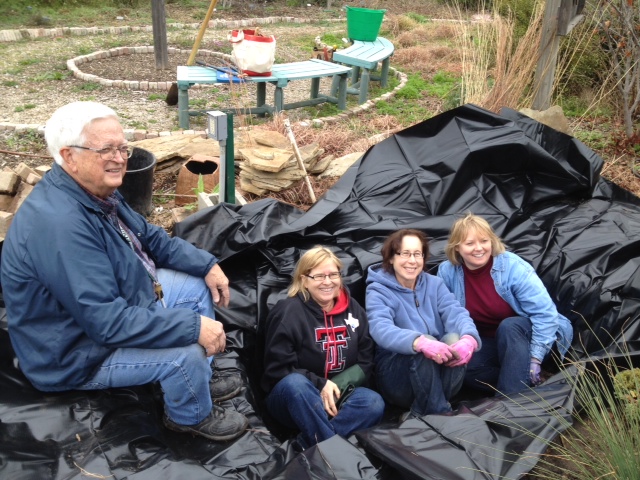
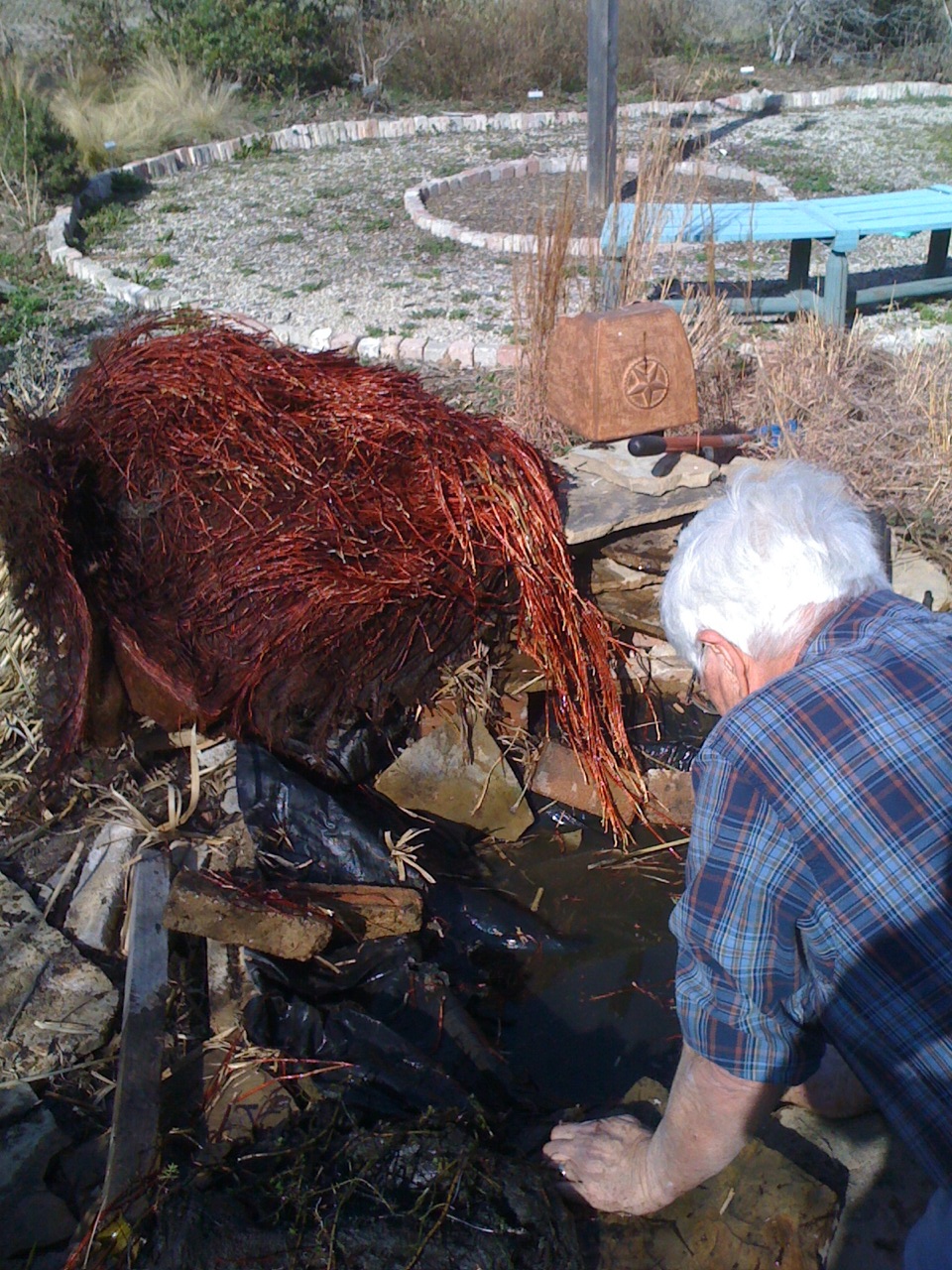
Like mud? Try enlarging the pond in the wildlife area of the Demonstration Garden on a cool Tuesday morning.  The dirt—well mud—was flying as Jim, Michelle, Sue and friends dug out the pond and added six-inch shelves for bog plants.  After adding a thick new liner, the pond is perfect for a picture for DALLAS GARDEN BUZZ! Gardeners arranged flagstones around the pond edge to hold the liner, filled the pond with water and returned aquatic plants, and installed a new pump with a fountain head.  Whew! As Jim commented, that’s a lot of work!

Dallas County Master Gardeners: Jim, Starla, Sue, and Michele  Taking A Rest After Digging the Pond

Dallas County Master Gardeners: Jim, Starla, Sue, and Michele
Taking A Rest After Digging the Pond

Vegetable updates: Radishes and lettuce planted last week are up and growing; carrots are taking their time to sprout.  Onions and leeks planted a few weeks ago are doing well; the spring potatoes have not made an appearance yet.

Master Gardeners also worked to trim back roses and grass, pull weeds, and start rose cuttings for the May plant sale.   We had a great turnout (welcome interns!) and good productive workday in the Demonstration Garden.

Elizabeth

A Very Good Day at the Garden

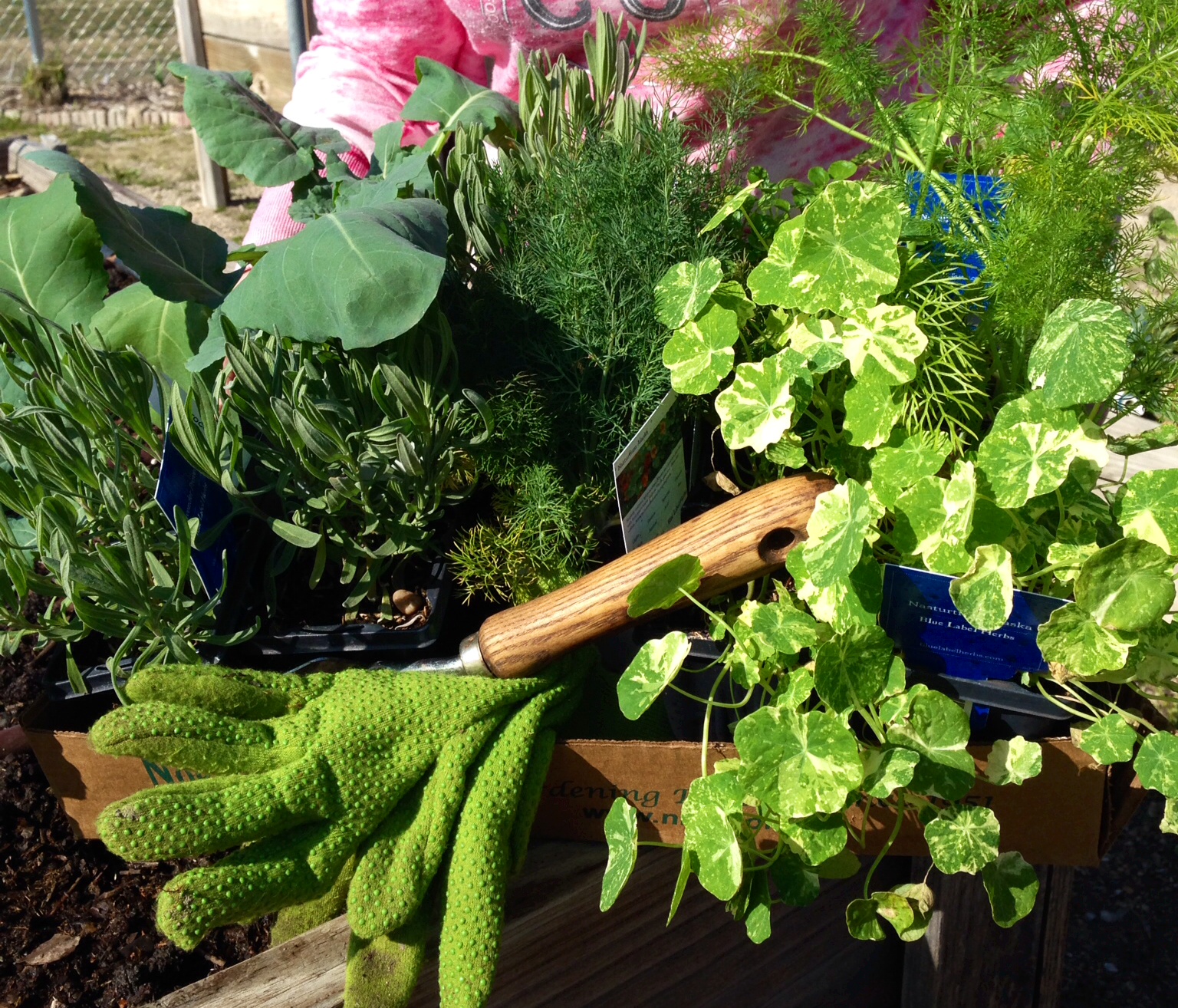
Above: Nasturtiums, Watercress, Lavender, Fennel, and Broccoli

Above: Nasturtiums, Watercress, Lavender, Fennel, and Broccoli

Thought I might give you a report .  We had a pretty day at the garden and we got a lot accomplished:

1)  roses trimmed

2)  planted radishes, carrots, lettuce, and beets

3)  cleaned up the herb beds and planted

4)  weeded

5)  removed most of the brown material in the RainCatcher Garden

6)  cleaned up the Color wheel

7)  trimmed asparagus

8)  worked the compost bins

9)  removed the ‘umbrella’ plant from pond – BIG job

10) divided and planted most of the huge papyrus plant

11) removed water lily pots, bailed nasty water from the pond and remove the damaged pond line

12) will dig pond deeper, but not bigger and will decide what type of liner to use

We had a very good day.

Above: Cleaning out the Pond, Red Roots Belong to our Papyrus to be Divided

Above: Cleaning out the Pond, Red Roots Belong to our Papyrus to be Divided

Jim

Pictures by Kim and Michele

For more about our pond click here.

Tomorrow: More about that lovely little plant in the box at the top of the page-Nasturtium.

The Lowly Onion

Because of their circle within a circle anatomy, the Egyptians considered them to be the symbol of eternal life, and they buried them along with their dead.  The Greeks, on the other hand, used them to increase the strength and endurance of their athletes before the Olympic Games.  Throughout the ages they have served as food and medicine for both the poor and wealthy.  What is this ancient vegetable?  The lowly onion, of course.

Above: Dallas County Master Gardeners-Cindy, Tim, and Linda with our onions harvested in 2013

Above: Dallas County Master Gardeners-Cindy, Tim, and Linda with our onions harvested in 2013

Onions (Allium cepa or bulb onions) are thought to have first originated in Central Asia or perhaps Iran and Pakistan at least 5000 years ago.  Our earliest ancestors probably ate wild onions and gradually started cultivating and domesticating them since onions are portable, easy to grow, prevent thirst, and could be dried for times when food was scarce.  To the Romans, the onions’ medicinal qualities included to cure vision, induce sleep, and heal mouth sores, dog bites, toothaches, dysentery, and lumbago.  In the Middle Ages their antiseptic qualities were thought to cure snake bites, alleviate headaches and prevent hair loss.  In North America, despite the abundance of wild onions consumed by Native Americans, the Pilgrims in 1648 planted bulb onions as soon as the ground could be cleared.

Today it is estimated that the per capita consumption of onions in the United States is over 20 pounds a year.  The onion is also the official state vegetable of Texas.    If you want to grow onions in North Texas, Jan. 1-Feb. 15 is the time to plant them.  Onion varieties are generally divided into three major categories:  long day, short day and intermediate day onions.  Dixondale Onion Farm in Carrizo Springs, TX, stresses that when selecting onion varieties “the size of the onion bulb is dependent upon the number and size of the green leaves or tops at the time of bulbing.  For each leaf, there will be a ring of onion.  The larger the leaf, the larger the ring will be when the carbohydrates from the leaves are transferred to the rings of the bulb.  The triggering of this transfer or bulbing is dependent upon day length and temperature and not the size or age of the plants.  When selecting your onion varieties, remember that the further north you are, the more hours of daylight you have during the summer.”  The onions that can be grown in Dallas County are those varieties found in the short day and intermediate day category.  This, unfortunately, eliminates some of the “specialty” onions found in some seed catalogues; however there are still white, red and yellow onions that do well in here.  Most garden centers carry onion slips that are selected for our area or go to the Aggie-Horticulture website  to see a list of recommended varieties.

Onions prefer a loose, well drained soil and should be planted 4-6 weeks before the last spring freeze.  To grow larger onions, they can be fertilized with a synthetic or organic fertilizer that has a larger middle number, such as 10-20-10 when they are first planted.  After the original planting, they can be fertilized with ammonium fertilizer (21-0-0) in alkaline soils or calcium nitrate (15.5-0-0) in acidic soils about every 2-3 weeks, if desired.  Stop fertilizing once the onions start to bulb.

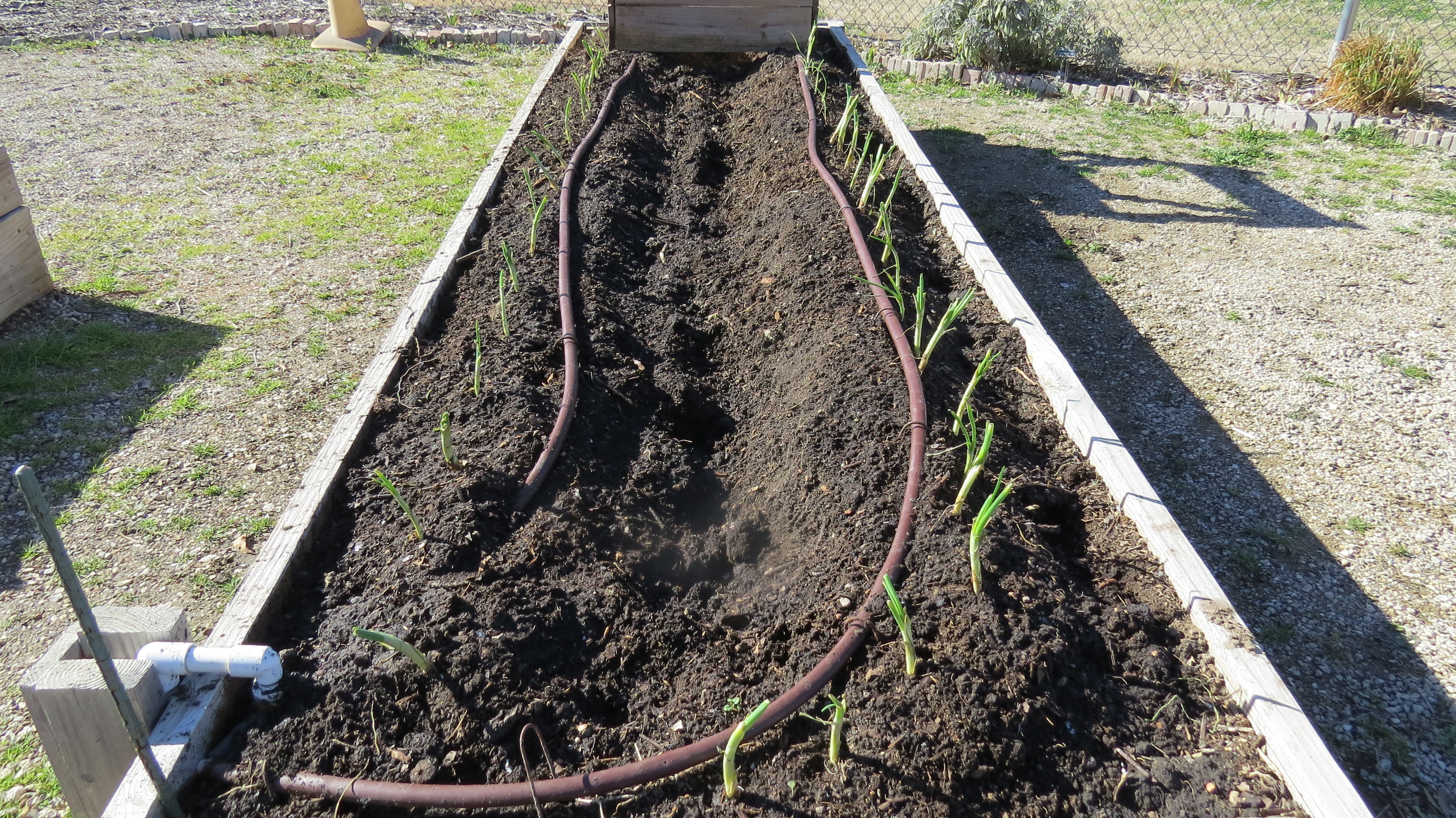
Above: Onions planted at The Demonstration Garden on Joe Field Road in 2014.

Above: Onions planted at The Demonstration Garden on Joe Field Road in 2014.

Plant the onions slips one inch deep and no deeper as their ability to form a bulb will be compromised.  Onions grown to maturity should be planted about 4 inches apart; however, if green onions are desired, the onion slips can be planted about 2 inches apart and every other one pulled for green onions.  Water thoroughly and regularly until the tops turn brown or yellow and fall over, then cut back on water.  At this point a fully mature onion should have about 13 leaves.

When they are harvested, dry them thoroughly for several days to avoid problems with rot.  The entire neck (where the onion meets the bulb) should be dry and not “slip.”  Once the onions are dry, clip the roots and clip the top to 1 inch.  Store them in a cool, dry, well-ventilated location if not consumed right away.  Any onion that shows signs of rot should be removed immediately.  In general, according to Dixondale, sweeter tasting onions do not store as long as the more pungent types.

So, plant yourself some onions—and Bon appetite !!

Carolyn

More about onions click here and for onion recipes click here!

Roasted Butternut Squash Salad with Warm Cider Vinaigrette

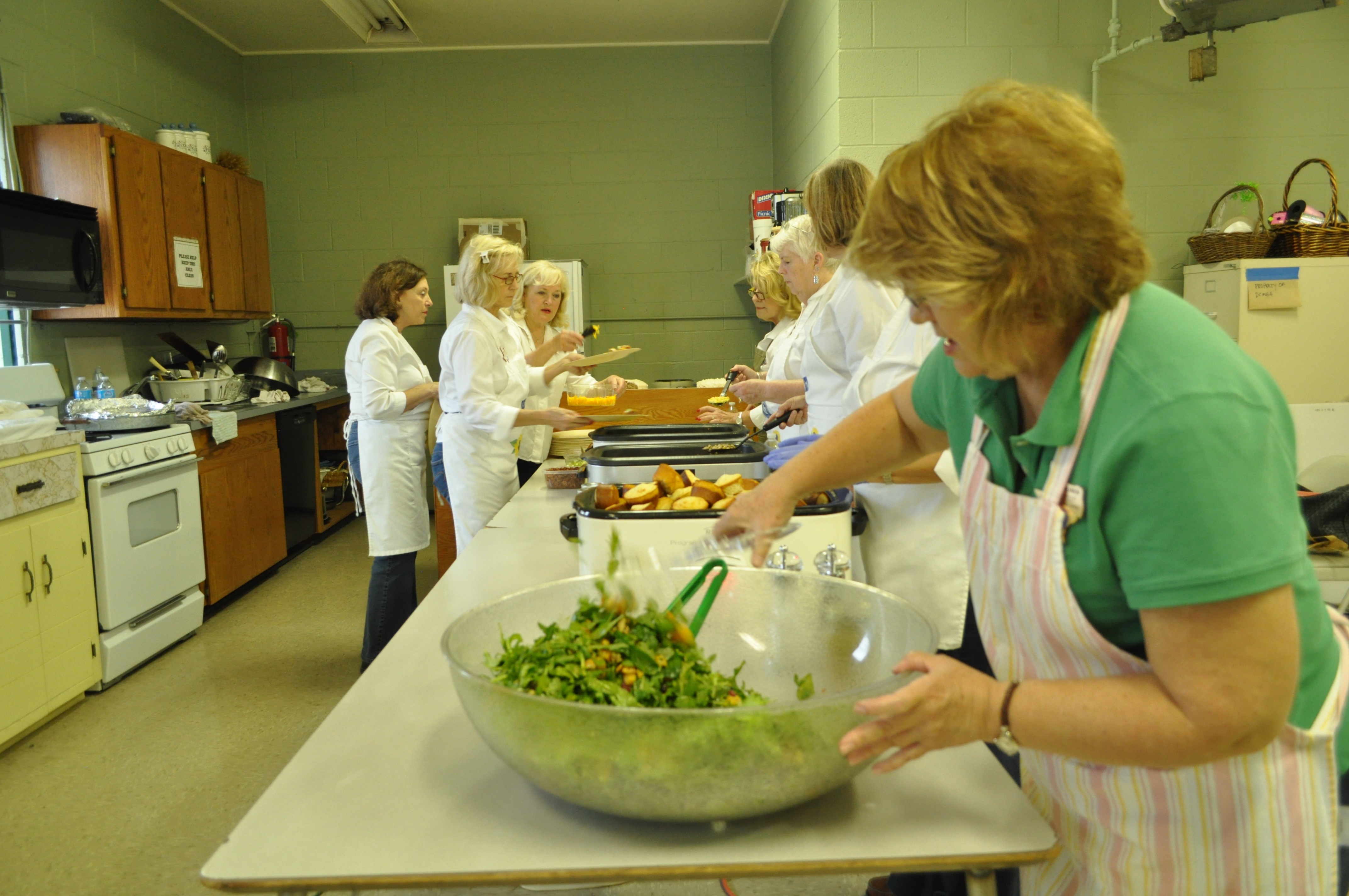
Last Tuesday, you would have found Dallas County Master Gardeners on Joe Field Road busy preparing our first and (will be repeated) ” farm to table” lunch.

image

Craving just the right salad for your own fall feast? Here is our recipe for roasted butternut squash salad with the,oh so good, warm vinaigrette.

Ingredients:

1 (1 ½-pound) butternut squash, peeled and ¾-inch diced

Good olive oil

1 tablespoon pure maple syrup

Kosher salt and freshly ground black pepper

3 tablespoons dried cranberries

¾ cup apple cider or apple juice

2 tablespoons cider vinegar

2 tablespoons minced shallots

2 teaspoons Dijon mustard

4 ounces baby arugula, washed and spun dry

¼ cup walnut halves, lightly toasted

¾ cup freshly grated Parmesan cheese

image

Directions:

1. Preheat the oven to 400 degrees.

2. Place the squash on a sheet pan.  Add 2 tablespoon olive oil, the maple syrup, 1 teaspoon salt and ½ teaspoon pepper and toss.

3. Roast the squash for 15 to 20 minutes, turning once, until tender.  Add the cranberries to the pan for the last 5 minutes.

4. While the squash is roasting, combine the apple cider, vinegar, and shallots in a small saucepan and bring to a boil over medium-high heat.  Cook for 6 to 8 minutes, until the cider is reduced to about ¼ cup.  Off the heat, whisk in the mustard, ½ cup olive oil, 1 teaspoon salt and ½ teaspoon pepper.

5. Place the arugula in a large salad bowl and add the roasted squash mixture, the walnuts, and the grated Parmesan.  Spoon just enough vinaigrette over the salad to moisten, and toss well.  Sprinkle with salt and pepper and serve immediately.

Yield: 4 to 6 servings Adapted from Barefoot Contessa

Linda

The Power of Pumpkin

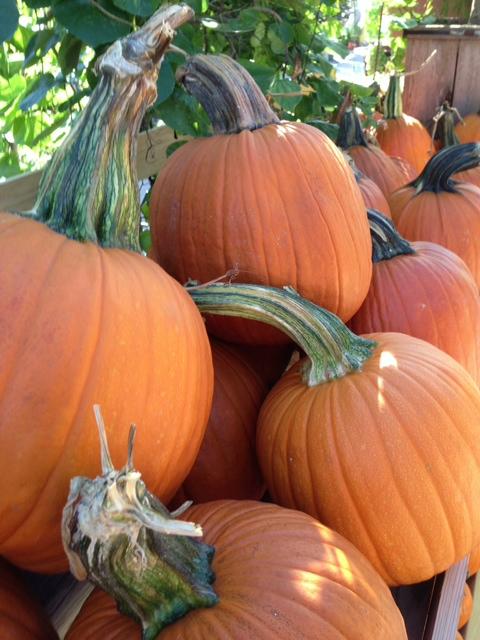
Pumkins at an Outdoor Market

“I would rather sit on a pumpkin, and have it all to myself, than be crowded on a velvet cushion.”–Henry David Thoreau

To some they are the “orbs” of autumn, the quintessential symbol of fall, making their graceful entry into hearts and homes.  The names, alone, captivate childlike feelings of giddiness; Aladdin, Baby Boo, Cinderella, Cotton Candy, Jack-Be-Little, Jack-Be-Quick, Full Moon and Wee-Be-Little.

Why, then, are we so fascinated with pumpkins?  Consider these facts: * The word pumpkin originated from the Greek word Pepon which means large melon.  The word gradually morphed by the French, English and then Americans into the word “pumpkin”.

Pumpkins and squash are believed to have originated in the ancient Americas. * Early Native Americans roasted pumpkins strips over campfires and used them as a food source, long before the arrival of European explorers.  Pumpkins helped The Native Americans make it through long cold winters.  They used the sweet flesh in numerous ways; roasted, baked parched, boiled and dried.  They ate pumpkin seed and also used them as a medicine.  The blossoms were added to stews.  Dried pumpkin could be stored and ground into flour * Columbus carried pumpkin seeds back with him to Europe. * Indians introduced pumpkins and squashes to the Pilgrims.

Pumpkins were an important food source for the pilgrims, as they stored well, which meant that they would have a nutritious food source during the winter months. *The Pilgrims were also known to make pumpkin beer.  They fermented a combination of persimmons, hops, maple sugar and pumpkin to make this early colonial brew. *In early colonies, pumpkin shells were used as a template for haircuts to ensure a round and uniform finished cut.  As a result of this practice, New Englanders were sometimes nicknamed “pumpkinheads”. An old Pilgrim poem gives testament to the Pilgrims dependence upon pumpkins for food:

“For pottage and puddings and custard and pies

Our pumpkins and parsnips are common supplies,

We have pumpkins at morning and pumpkins at noon,

If it were not for pumpkins we should be undoon”.

Pilgrim verse, circa 1633

During the month of October we will explore some fun and flavorful ways to use pumpkins.  To begin, here’s what Dr. Mercola, a leading health advocate, has to say about pumpkin seeds: 10 Health Benefits of Pumpkin Seeds “With a wide variety of nutrients ranging from magnesium and manganese to copper, protein and zinc, pumpkin seeds are nutritional powerhouses wrapped up in a very small package”. Pumpkins provide:

  •  Heart Healthy Magnesium
  •  Zinc for Immune Support
  •  Plant-Based Omega Fats
  • Prostate Health Cancer-Protective Properties
  •  Anti-Diabetic Effects
  •  Benefits for Postmenopausal Women
  •  Heart and Liver Health  Tryptophan for Restful Sleep
  •  Anti-Inflammatory Benefits

The best way to eat pumpkin seeds is raw – this preserves the healthy fats in the seeds.

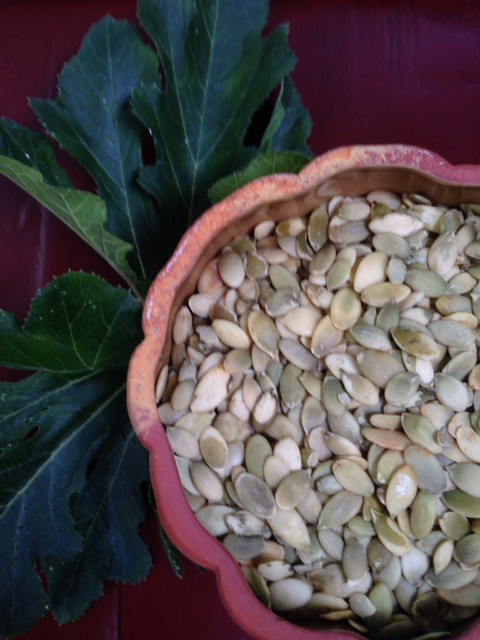
Roasted Pumkin Seeds in a Red Bowl If you prefer to eat the seeds roasted use this simple recipe: Roast raw pumpkin seeds on a low heat setting in your oven (no more than 175 degrees F), sprinkled with Himalayan or other natural salt, for about 15-20 minutes.

Sign up for our Harvest Lunch, Outstanding at the Field on October 29th. Instructions Here.

Next week:  Creamy Southwestern Pumpkin Soup

Linda

It’s Fall, Plant Lettuce Now

Big Tex

When you are “fixing” to go to the Texas State Fair and see Big Tex, you know it’s fall in Texas and time to be planting cole crops and cool season greens.

My lettuce and spinach seeds are in the ground and I am waiting, waiting, waiting for them to germinate. Last year  Oak Leaf Lettuce and Red Sails provided a border for my perennial beds and salad for our meals; the perfect ornamental edible!

All winter long and up until June, we could pick  salads from the backyard. Lettuce being cold hardy  can withstand a light frost and  even lower temperatures without cover. (If temperatures, fall down into the 20’s, cover your lettuce.)

Salad Greens as a Border, Ornamental Edibles!

At the Demonstration Garden, we have enjoyed lettuce grown in our raised  beds.

Spring Lettuce in a Raised Bed

Lettuce does not need full sun and is best started in the fall in Dallas.  You can also buy transplants now at your favorite garden center.

“Leaf lettuce (often called loose-leaf lettuce) is perhaps the best adapted choice for our Texas climate. It forms loose rosettes of leaves that come in a range of colors from various shades of green to burgundy including speckled types. Leaves may be harvested individually or as with other lettuce types you can harvest entire plants at one time. Another option is to “mow” the plants back part way with scissors and then allow them to regrow for a later harvest.” (Quote from Texas Gardener)

Search for loose leaf varieties like Black Seeded Simpson, Red Sails, Oak Leaf, Green Ice, and Prize Leaf.  Try  Little Caesar for a Romaine type of lettuce and Buttercrunch for a sweet butter head type lettuce.

To read more about growing lettuce read: Lettuce From Seed To Harvest in Texas Gardener.

Before you go to the Texas State Fair, get out in your garden and plant to enjoy a long season of homegrown lettuce!

Ann

Outstanding At The Field-An Invitation

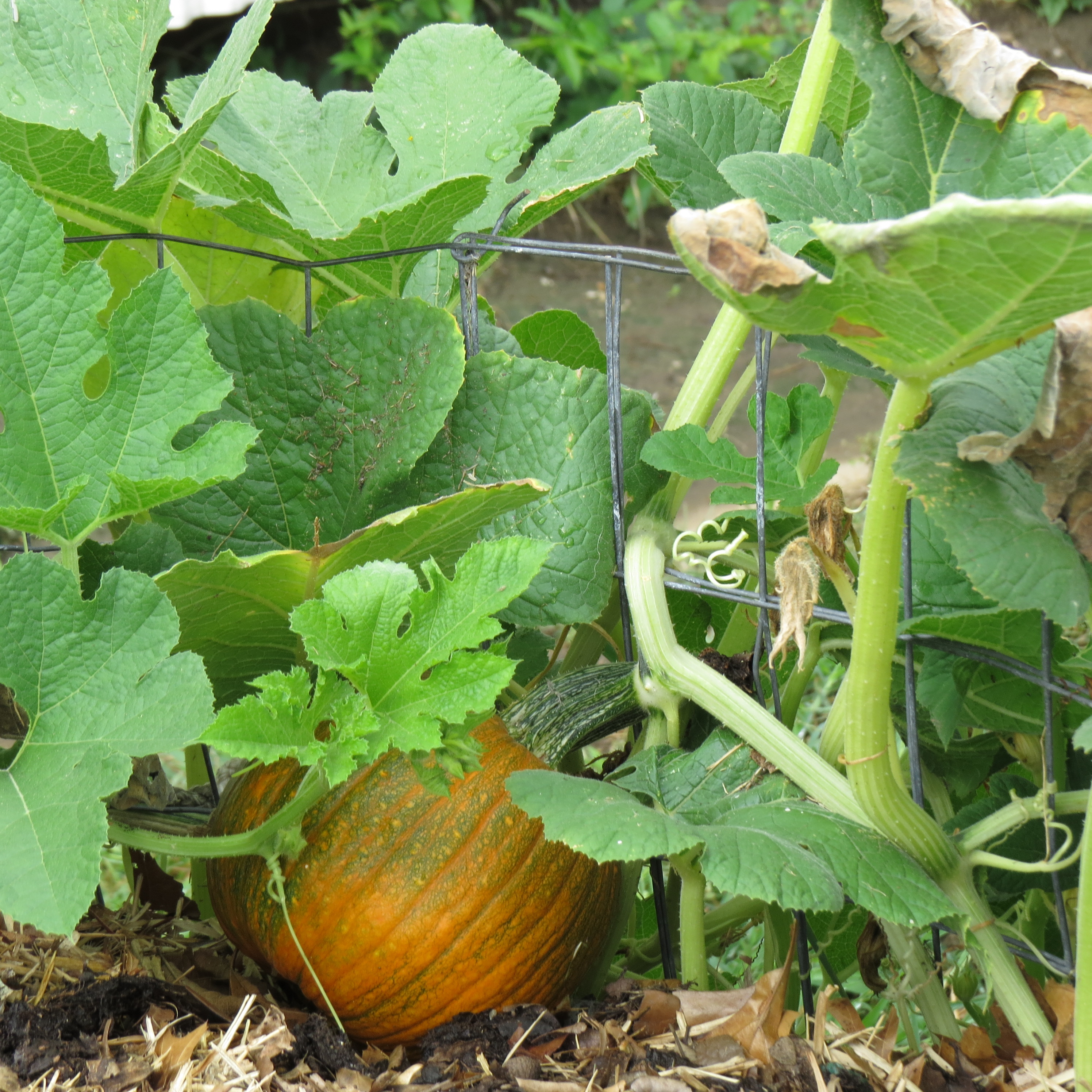
pumkin growing in the demo garden

Master Gardeners at the Joe Field Demonstration Garden invite you to…

“Outstanding at the Field”

Guests will enjoy a fall feast celebrating the harvest, the land, and the farmers that cultivate the food for our table.

Lunch will served on white tablecloths covering a long table

set within our lovely fall garden.

 Garden to Table Harvest Lunch

Mother’s Meatloaf with Piquant Sauce

Skillet Fried Corn

A “Mess of Peas” with Sweet-and-Spicy Chow-Chow

Roasted Butternut Squash Salad with Warm Cider Vinaigrette

Dixie Cornbread with Honey-Thyme Butter & Tomato Jam

Caramel Apple Layer Cake with Apple Cider Frosting

or

Layered Pumpkin Pie in a Jar

 and

“Growing and Grilling”

 A special presentation by Master Gardener Tim Allsup

(One-hour Education Credit for Master Gardeners)

11:00 a.m. – 12:30 p.m. Tuesday, October 29

 $15 per person

 Proceeds benefit educational tours for Dallas schoolchildren

Your reservation is your check for $15 made out to DCMG.  Checks must be received by October 15th.

If you would like to come, please email us at dallasgardenbuzz@gmail.com

 Enrollment is limited.

This event is open to all Master Gardeners, friends, and the public.