Music in shops–usually just more noise to be ignored—but then, just every now and again a line from a song provides a useful and welcome bit of advice. A helpful insight for the volunteer gardener.
It can happen that for this volunteer a sneaking feeling that all is not well–a creeping feeling of discontent appears and can grow and affect every hour in the garden. A feeling that the task is too big just too much. And the reward–where is it??? Why aren’t there more volunteers? Does anyone see what I am doing–much less care or appreciate it??
Sadly once this happens –if nothing changes–the next step can be a vanished volunteer.
What needs to change?
The basic situation isn’t going to change. Garden work can be hard and it can be repetitive. Weeds come back without fail. Treasured flowers and veg can seemingly fail for no apparent reason. Add in garden tours to be led, fundraisers, plant sales,and extra work days- all need volunteers and they seem to come around way too often.
So what to do. Everyone has heard it but now its time to believe it. The situation is the same–the response to it that’s different-it can change–a lot–and for the better.
Take a step back and think clearly don’t just react. Remember respond don’t react.
Maybe part of it is listening to a lot of talk of self care. One thing often mentioned is just saying no to requests for help. And of course no one can say yes to everything.
We must take time for ourselves and our own homes and gardens.
But don’t lose sight of the personal benefits of helping either. There are friendships and connections–yes we may have to work on them but its valuable work.
We all want our communities to be better–greener–safer for plants wildlife –and ourselves.
Plant sales and garden tours–well those aren’t just things to get through–they can make a difference. If just a few people learn about plants that will grow and provide help for the bees and butterflies–isn’t that valuable.. If people learn that insects are the foundation of life on earth and they can help protect them, that is your time well spent. If you help a child develop a love for living things not a fear–well what could be better–that is the highest form of self care.
Starla’s niece with cicadaLinda teaching the butterfly life cycleIntroduction to an insectStarla’s son long ago with butterfly
Can you save the earth? No you cannot–but can you make your part of the world a little better? Yes, you can and you make yourself a little better with the time and effort.
We can’t wait for all the others who should be there helping.. Those others that should be appreciating us more. Give them time!! But for now–
We ARE THE PEOPLE WE’VE BEEN WAITING FOR
Many hands make light workVolunteers planting a treeOn their knees, hard at workEnthusaiastic Raincatcher’s volunteers
Susan Thornbury, Dallas County Master Gardener Class of 2008
Join us at the garden, 11001 Midway Road, Dallas, Texas 75229 on the grounds of Midway Hills Christain Church. Our work days are Monday mornings and Tuesday mornings. This is a Dallas County Master Gardener approved project.
First some good news; the persimmons that we are featuring won’t cause you to pucker up after taking a bite. These are locally grown, non-astringent Fuyu persimmons that have been ripening on the tree for the last few weeks. Honestly, they are sweet, delicious and ready to enjoy plucked straight from the tree. We’ve also included a few recipes that might convince you to become a persimmon enthusiast, as well!
A few weeks ago, I received a message from Susan Thornbury, a master gardener friend. We went through the Dallas County Master Gardener program together in 2008 and have volunteered at the same demonstration garden since that time. Susan’s message to me was delivered in the form of a special gift. Knowing how much I really like persimmons, she graciously shared over 25 juicy, ripe Fuyu persimmons with me from the tree in her backyard. I was thrilled to have them just in time for a big autumn bread baking project.
Anxious to see Susan’s tree, I headed over to her house a few weeks ago. We had a lovely visit sitting on a bench under her spectacular persimmon tree. Here a few things I asked Susan about persimmons.
Where and when did you find your persimmon tree?
“I found it about 12 years ago at North Haven gardens. It was in a 5 gallon pot and approximately 2 – 3 feet tall. I planted it in a full sun area of my backyard.”
When does the fruit appear?
“Hard, green orbs start appearing after flowering and continue developing until early fall. Persimmons are usually ready to be picked in early to mid-November.”
Approximately, how many persimmons does it produce during the season?
“Each year is different. Last year (2023) there was hardly any. This year, I’ve harvested over 200 beautiful persimmons.”
How do you pick the persimmons at the top of your 12’ tall tree?
“Well, the persimmons on those upper branches get harvested by the opossums. That’s my gift to them!”
Susan has a totally organic garden and doesn’t worry about fertilizing her persimmon tree other than with fresh compost from her bins, as needed. It has been a fairly low maintenance tree that sparkles with a beautiful display of colorful leaves each autumn.
If you are ready to add a jewel of a tree to your yard, here is some helpful information to get you started.
Fuyu persimmon trees (Diospyros kaki) bear a glowing, yellow-orange fruit that is sweet and filled with flavor once the color appears. In zone 8 look for fruits in mid-October that transition to a glowing orange. Be patient when planting a small seedling as it can take several years to bear fruit. Irrigate regularly, especially during the early years when it is getting established.
USDA Hardiness Zone: 7-1
Sun Exposure: Full Sun
Soil Type: Rich, Well-drained
Water Requirements: Medium
Maintenance: Low
Height: 20 – 30 feet
Bloom Time: Spring
Fruit Size: 2’ – 3’ across
Flower Color: Creamy white, pink
Resistant To: Heat, drought
Plant Spacing 20+ feet
The best reason for growing a Fuyu persimmon tree in your yard is for the abundance of sweet, non-astringent fruit. Enjoy persimmons fresh from the tree or in jams, jellies, puddings, breads, cookies and salads. Here are three of our very favorite persimmon recipes but, don’t tell, as they will be part of my Christmas gift giving this year!
Linda Alexander and Susan Thornbury, Dallas County Master Gardeners class of 2008
In observance of National Cookie Day yesterday we included a arecipe for Persimmon Cookies made with fresh persimmons from Susan’s tree.
Just a little over 18 years ago, my husband and I moved into our home on Shadywood Lane. Charles Dilbeck built the Monterey Ranch style one story house for the Runyan family in 1948. The 77 year old property was, and still is, filled with a wonderful assortment of mature trees, shrubs, perennials and evergreens.
Fourteen large magnolias, seven majestic red oaks, four stately live oaks, two towering cedar elms, a half dozen American elms, pecans, yaupons, dogwoods, Texas mountain laurel, cherry laurels, hackberries and redbuds were planted long before we arrived. But one magnificent red oak tree in the backyard was our favorite. Standing at over 40 feet tall along with a canopy spreading out over 40 feet in diameter, it provided an abundant covering of shade for our backyard. Under its protective branches were lovely Japanese maples, three Chindo viburnums and a large bed of endless summer hydrangeas. And then, the story changed.
Rushing outside to try and understand what had just happened, I was stunned to see the damage. Over one third of the canopy was gone. We would need a professional tree company to remove the limb and evaluate the overall condition of the tree. The tree was treated for insect damage, and we moved forward.
And then another chapter with our majestic red oak unfolded just a few months ago. On September 2nd, labor day, very early in the morning, an even larger limb snapped and crashed to the ground. Thankfully, no one was outside when it fell across the driveway and onto the guest house. Our youngest son was kind enough to rush over and cut the limb into smaller pieces so that we could get our vehicles out of the garage. Completing the task of cutting the limb into more manageable pieces for bulky trash pickup took two guys almost three hours.
With only half of the original canopy remaining, we decided to bring in an arborist to assess the condition of the tree. At over 80 years old, a difficult decision was unanimously reached to have the beautiful old red oak taken down completely. Alex, the arborist, carefully explained that there were simply too many issues involving the overall health of the tree to treat it. The most important consideration was related to safety. The tree was leaning too far in one direction and would totally destroy our small guest house if it fell over or, even worse, hurt a family member or anyone else who happened to be in the backyard.
Our affection for the old tree had grown immensely over the years. We loved the amount of shade it provided when the grandkids came over to play games in the backyard. Summer picnics and dinner around the firepit wouldn’t have been possible without its lush canopy shielding us from the scorching sun as it moved across the sky. In a fleeting moment the microclimate transitioned from lush, dappled shade to full sun.
As the arborist recommended, we would need to select a different variety of tree and move the placement approximately 6-8 feet away from where the majestic, old, red oak stood. The next step was to visit to a local tree farm. Fortunately, our family had lived next to the Fannin’s of Fannin Tree Farm over 35 years ago so after a quick call, we scheduled an appointment to visit their retail facility on Highway 121. A decision had already been made to replace the oak with a cedar elm. Touring their inventory of wonderful trees gave us many options. Here is the cedar elm we selected. My husband is 6’ 4” which gives a better perspective on the size of the tree.
With some hesitancy, we scheduled the removal of our old red oak for Monday, September 21st. It was a two-day event which included several nail-biting moments of suspense. Starting with the remaining canopy, branches were very strategically roped and secured before any cutting began. Watching the four men maneuver their way around the tree was truly amazing. With each ‘tug’ of the rope, they carefully orchestrated the exact spot where the falling limb would land. Nothing on the ground was damaged due to the safety measures that were kept in place.
Once completed, stump grinding was next on the agenda. It took over four hours to slowly and carefully remove the remainder of the tree. And then, it was completely gone. I stood silent for a moment and tried to imagine it still standing there, beautiful and thriving for over 80+ years. Whispering a soft prayer of thankfulness for the joy we had received over the years, my eyes opened to an empty landscape filled with new possibilities. Now It was time to move forward with a renewed hope about our next adventure.
Installation of the 18’ tall cedar elm was an incredible experience. The challenge of bringing it down our rather tight and winding back driveway took a measured amount of skill. The crew sent to do our installation amazed me with their ability to lift and place the tree at just the right angle in the pre-dug hole. A few tweaks of the chain positioned it for maximum beauty.
We are adjusting to the new tree a little better than expected. But there are times when I find myself reminiscing about the beautiful canopy of the old red oak that we benefited from and enjoyed immensely for over 18 years. Treasured memories of that majestic tree are still in my heart and will remain there for a lifetime. But, thankfully now, Joyce Kilmer’s lovely tree poem has spoken to me once again!
If the key to life is simply living it.. The key to understanding may be simply realizing that wisdom is all around even in unlikely places. Our job is to realize wisdom when we find it—and then apply it .
For an example let’s think about these simple lines:
YOU GOT TO KNOW WHEN TO HOLD EM
YOU GOT TO KNOW WHEN TO FOLD EM
YOU GOT TO KNOW WHEN TO WALK AWAY
YOU GOT TO KNOW WHEN TO RUN
Few words but the ideas are wise and useful. No where more so than in the garden at this time of the year. We start with the first of course. And actually this idea was most important a little earlier in the year.
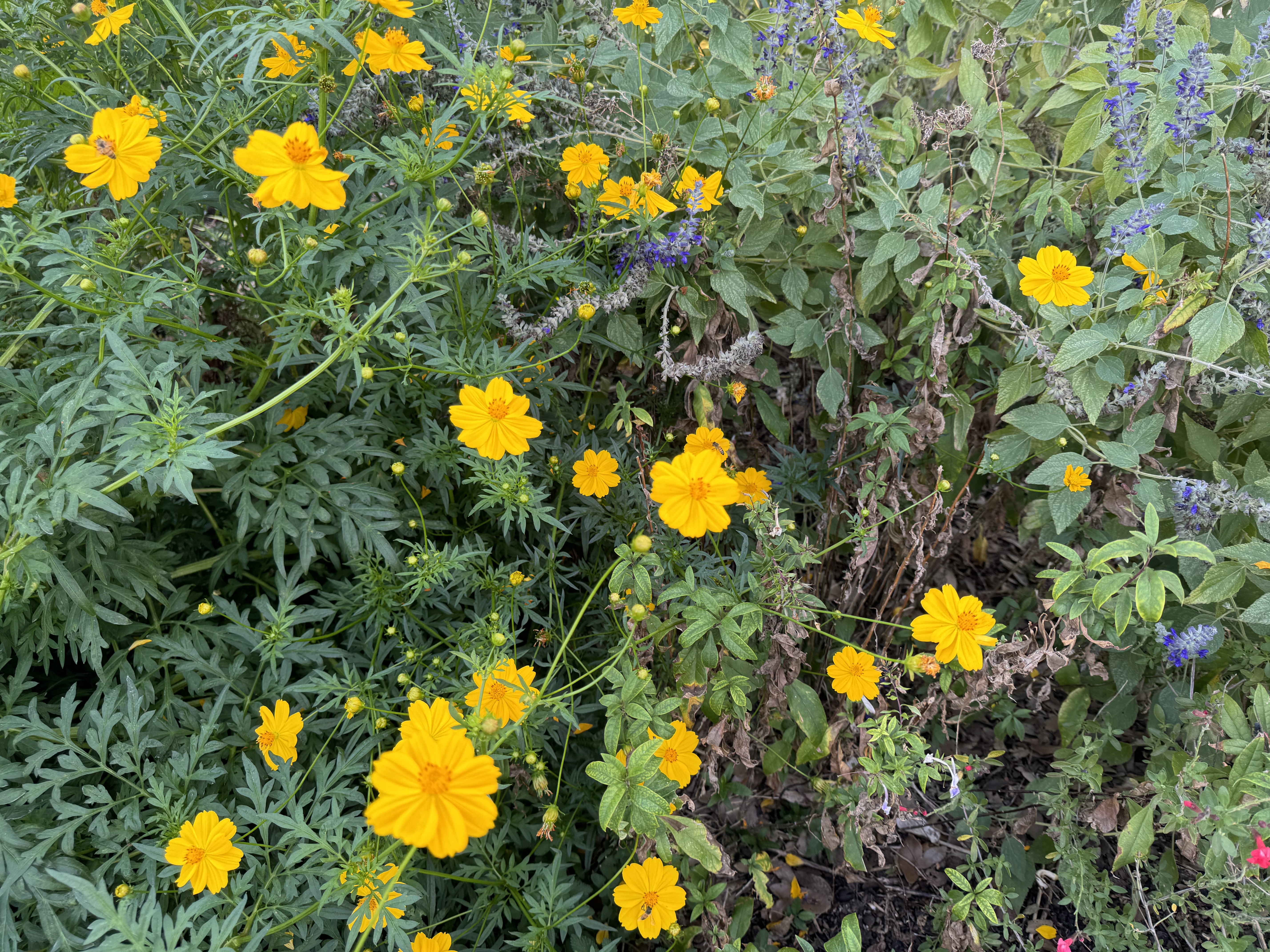
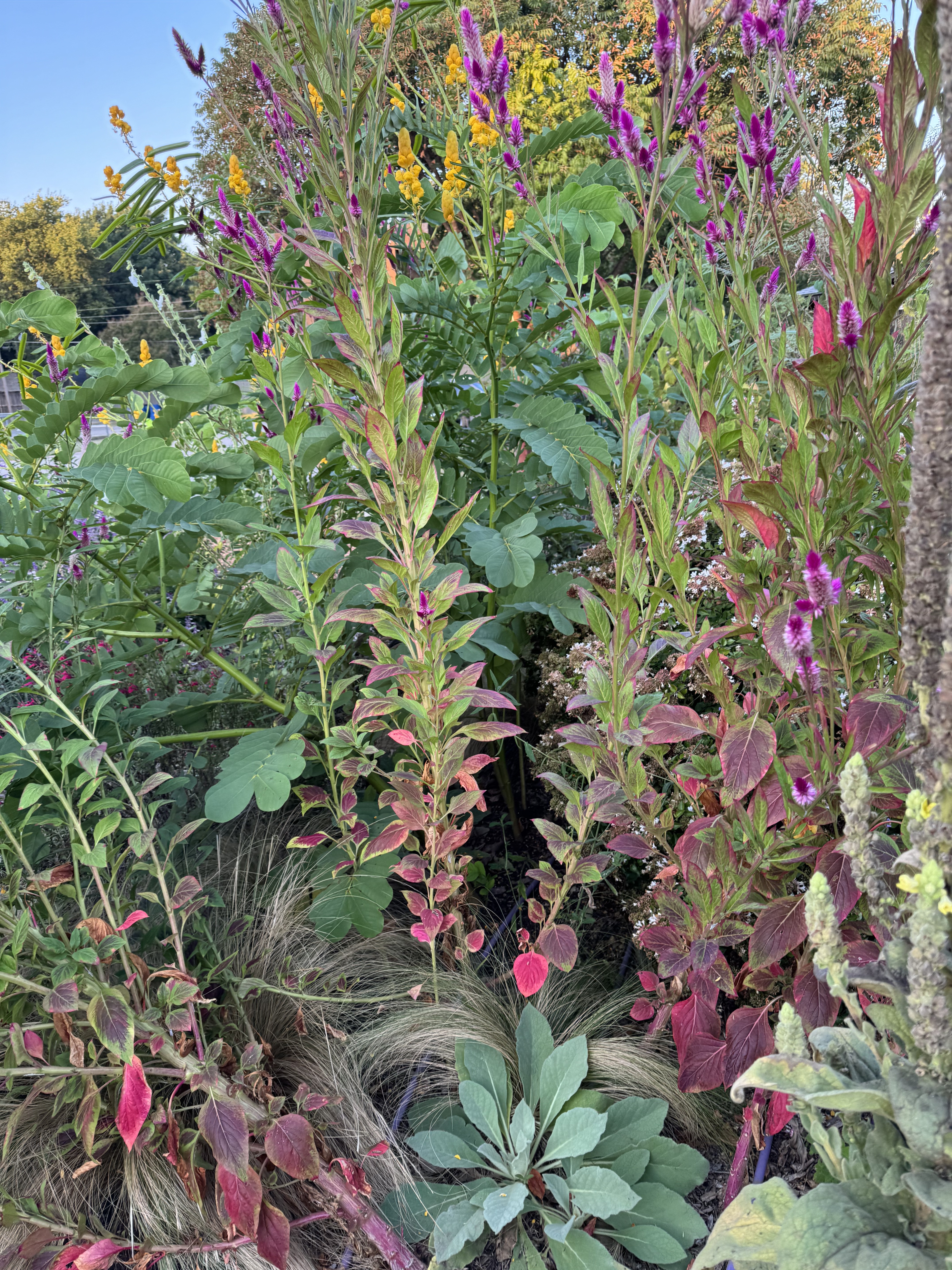
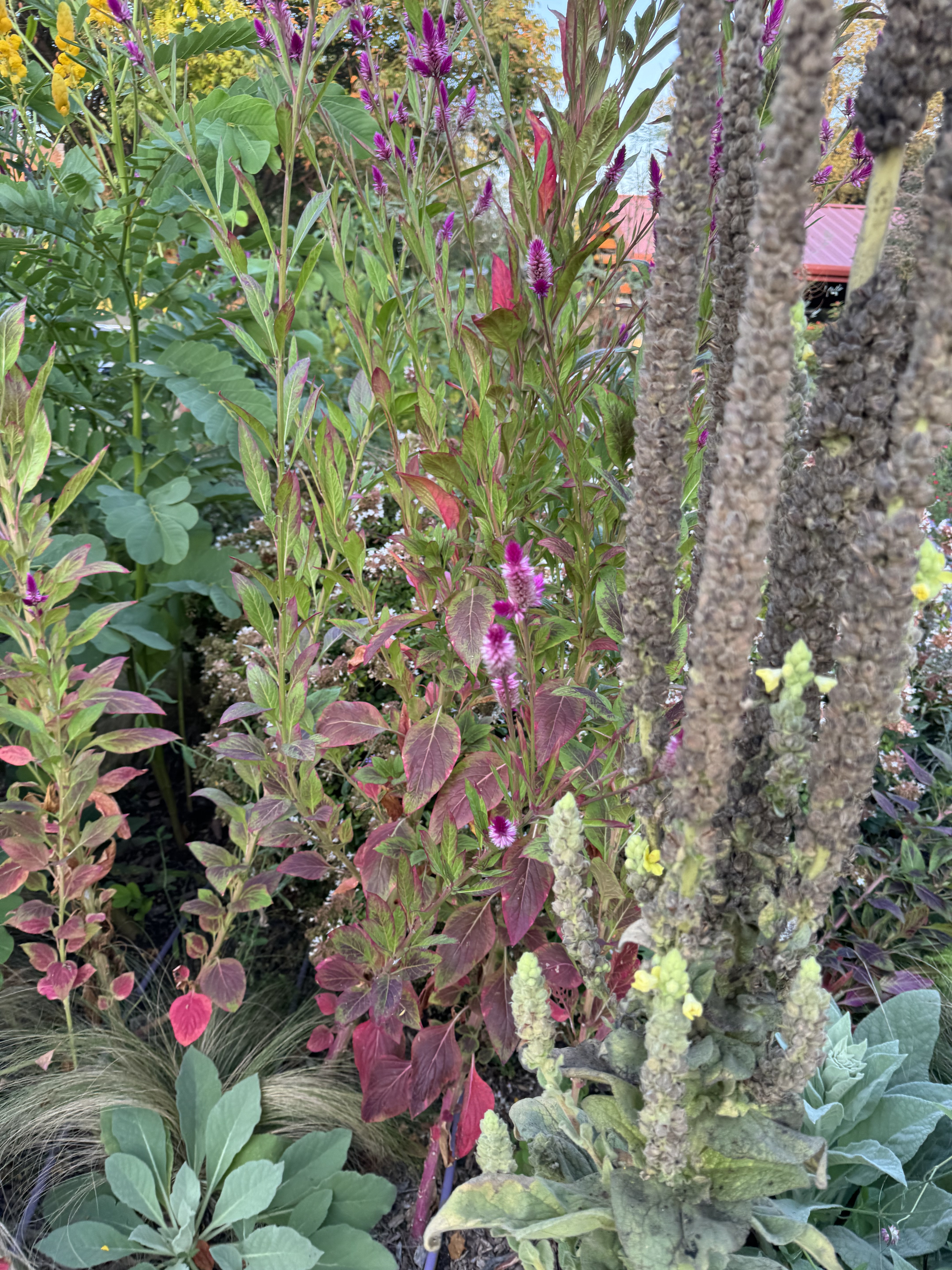
How was it so useful? well the yellow cosmos are a great example. All summer they grew and grew. No flowers at all. Some falling over due to the weight of stems and leaves. A passerby was heard to say ” I don’t know about those green leafy things they sure are big” Were they a terrible mistake? Are they ever going to bloom? Are they going to all fall over? Temptation grew to pull them all out. And then all at once they bust into huge numbers of lovely cheerful flowers. Butterflies and bees are just loving them. They even look great as cut flowers.
Yes!!! holding was the best choice for sure.
The big green leafy things that were bare all summer are blooming at last and they are amazing. Cosmos!
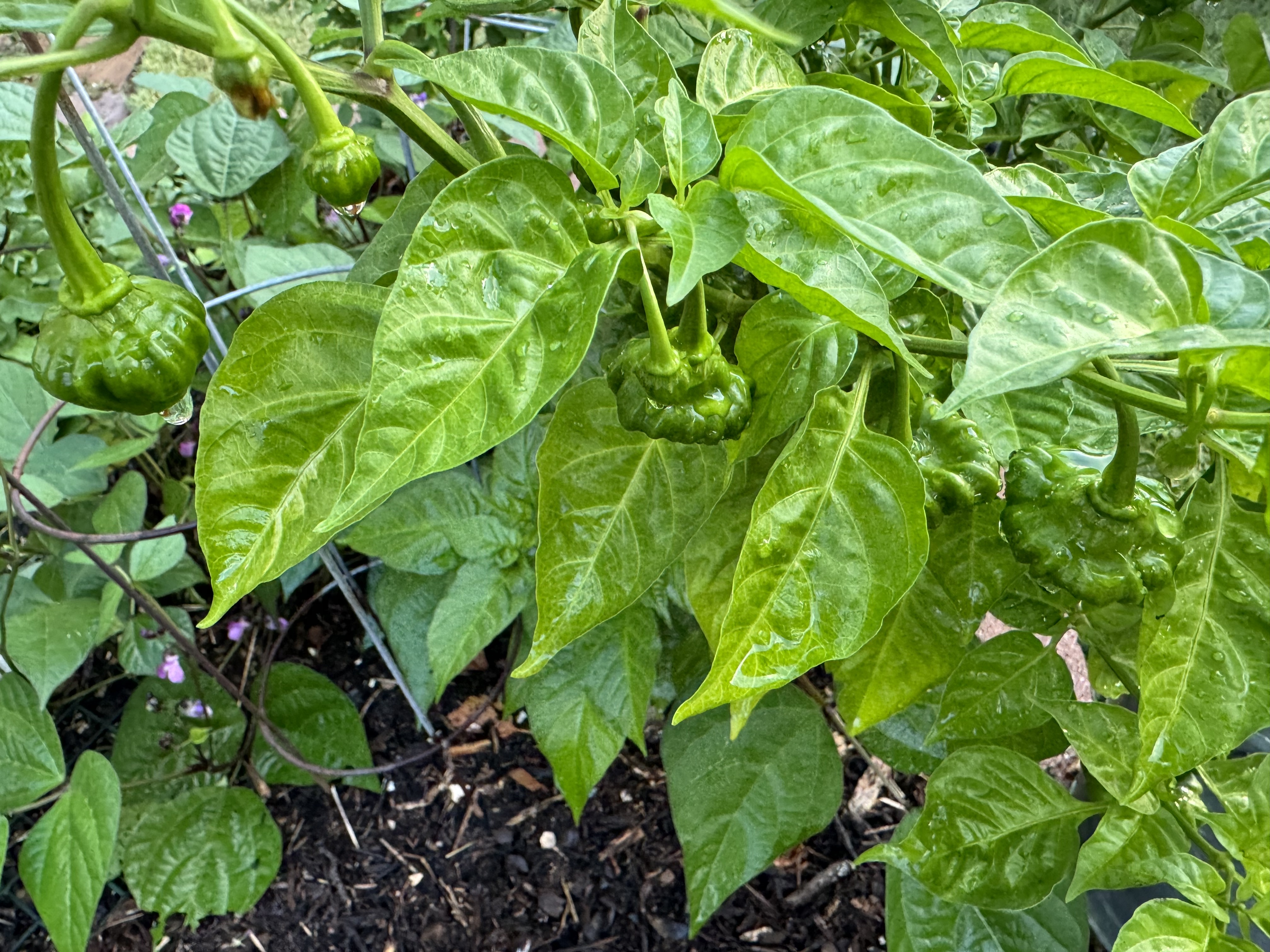
Aji dulce peppers –no peppers for months. All they were doing was taking up space and causing thoughts of “what on earth went wrong?” They were biding their time. Summer just didn’t suit. Just a small improvement in the weather–and blooms followed by lots and lots of little peppers. It was a temptation to give up–but it would have been a shame.
The Peppers finally realizing they have a job to do.
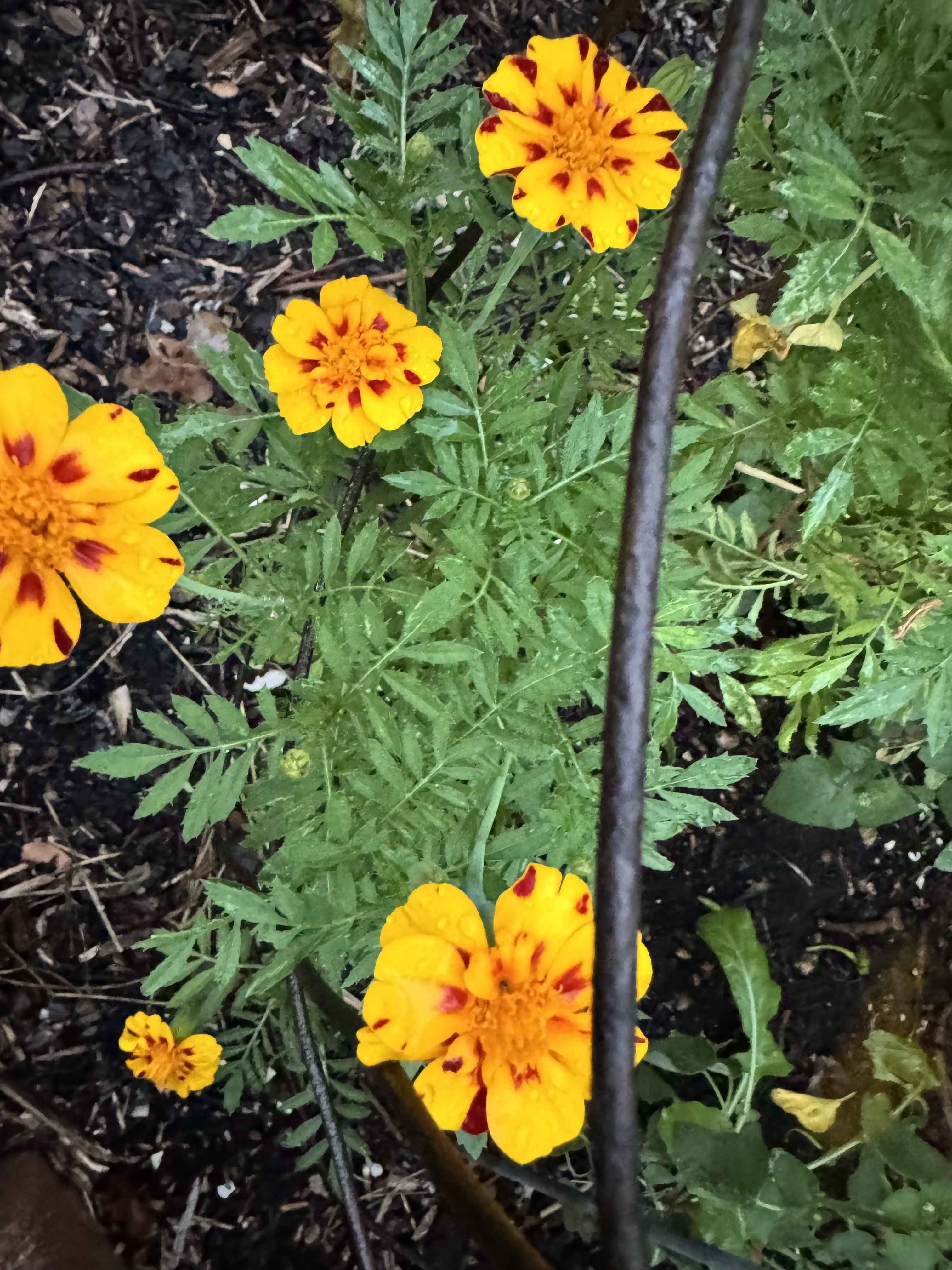
Marigolds–they also seemed to find the past few months not to their liking–the remaining tomatoes are happy maybe because the marigolds are happy.
The Marigolds were to keep the tomatoes company all summer. They are doing it now.
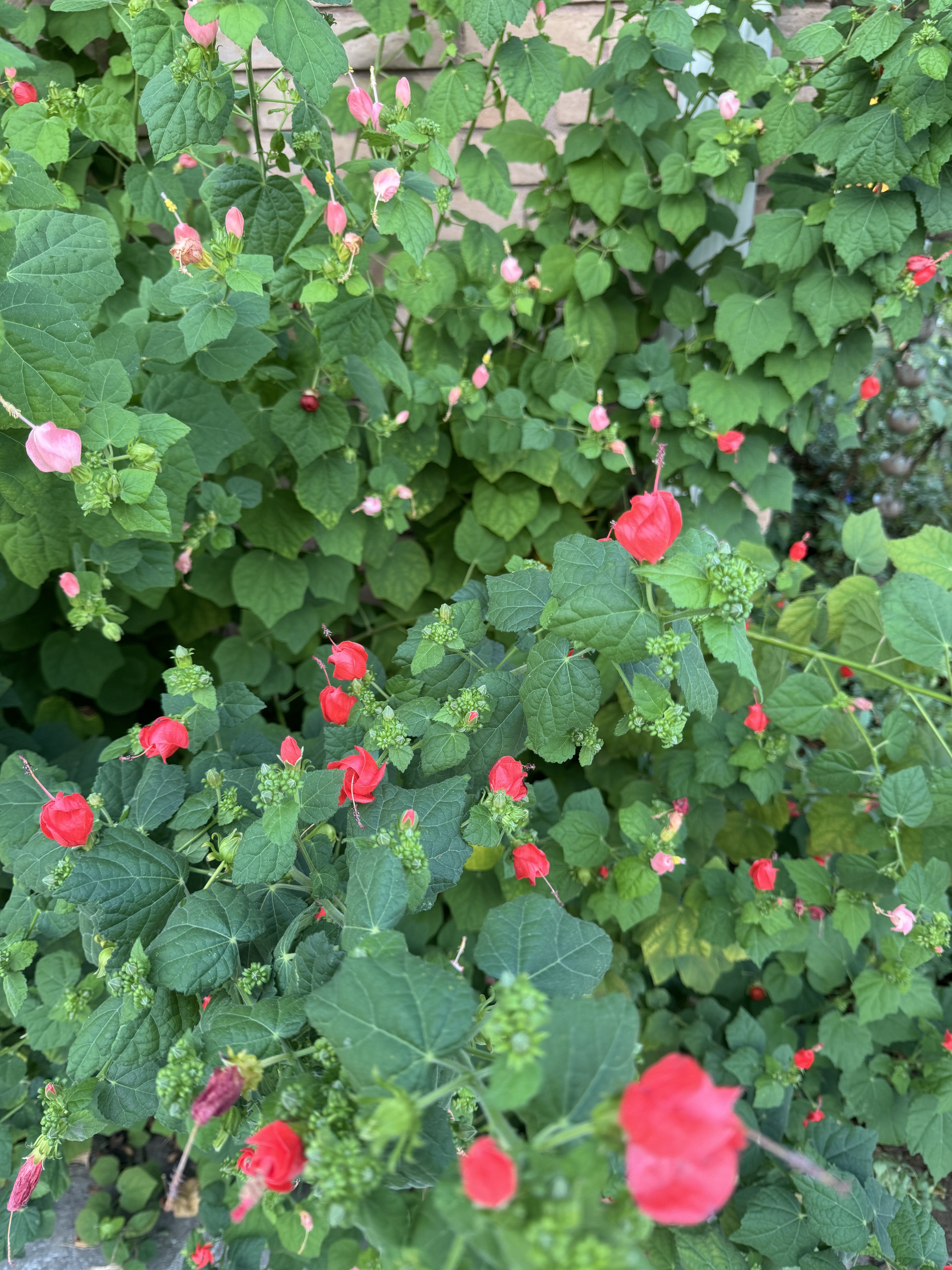
Turk’s cap–honestly it seemed to be asking to be cut to the ground–very few blooms and yet requiring constant pruning to keep it withing reasonable bounds–but–again a reward for avoiding extreme measures–countless flowers–and happy creatures.
Turk’s cap-all summer, some flowers but now covered in flowers.
Of course the facts are–that all doesn’t go as hoped.
The most obvious are annuals that have tried really hard but have now reached the end of the line. It is hard to do this when they aren’t quite done but face it–sad straggliy plants just distract from everything around them. Let them go its ok.
It’s time for an old friend to go. Sad but true.
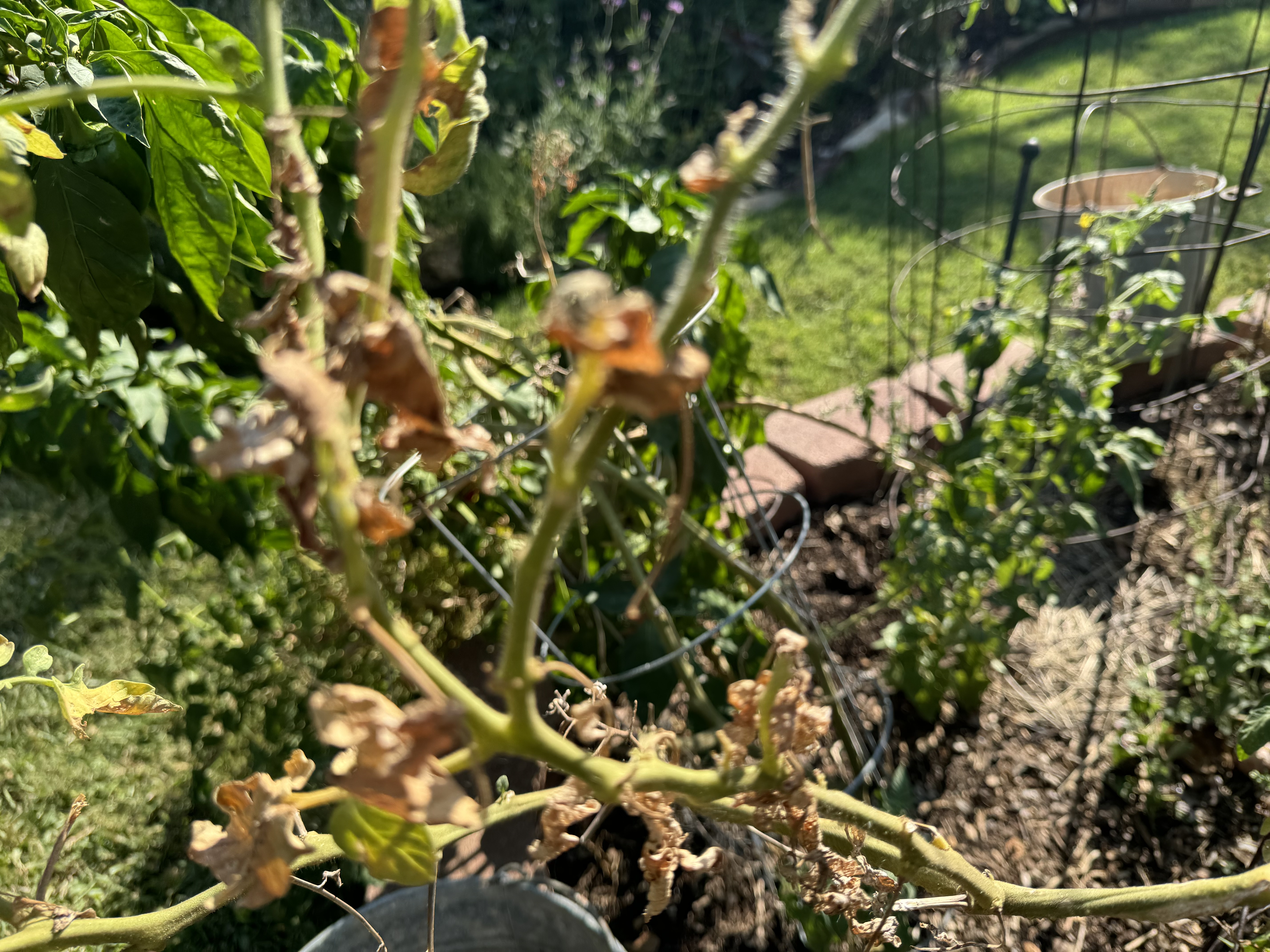
Same with vegetable plants. These plants work hard some can make it on into fall. But some just can’t. It is really best to get rid of them they can attract pests and diseases that are just doing what they do to eliminate the weak–but best to beat them to it.
This tomato in my garden just isn’t going to recover.
The really hard part of the fold ’em is facing that some of your efforts really were in vain. For some reason plants die. Sure try to figure out why. Was it lack of water–a common issue. Maybe over crowding? But sometimes its unknown. Pull them out anyway no use spending resources–including your time and energy on plants that just are not making it.
Perennial doesn’t mean live forever!
Those first two are pretty clear–but what about KNOW WHEN TO WALK AWAY?
Actually its an important one. This is the time of the year when plants have pretty well done what they are going to do. It can be so valuable to step back and away and look at the big picture. Could you do anything different ? Is it just that much too much? Or not quite enough? Walk away and take a good look and make some mental notes for next year.
Is it maybe just a little too much? Take a step back and look.
Can’t forget YOU GOT TO KNOW WHEN TO RUN. No it won’t be a big problem don’t worry. But do keep in mind that wasps and yellow jackets are very active at this time of the year. Of course they are part of nature and normally not an issue–but do look around they like to build nests in protected places–who doesn’t of course–but sadly when its right above the back door for example you may have to do what you would rather not. But be careful at times their temper can be kindly said to be “Uncertain” And i hope you don’t have to run–but—-.
YOU GOT TO KNOW WHEN TO HOLD EM
YOU GOT TO KNOW WHEN TO FOLD EM
YOU GOT TO KNOW WHEN TO WALK AWAAY
YOU GOT TO KNOW WHEN TO RUN.
Susan Thronbury, Dallas County Master Gardener Class of 2008
Fall is a good time to plant Hardy Hibiscus and Hydrangeas for spring and summer blooms.
Blissfully soaking rains in April ushered in the arrival of extraordinary May flowers. How refreshing to see these three stalwarts of the garden bursting with blossoms as they made their dramatic appearance in the landscape. New growth started to emerge on these three beauties sometime around early April. Continuing into May, they filled out with tender green leaves, buds and blossoms.
June’s gift to us was an explosion of color. The temptation to selectively snip and arrange them for indoor enjoyment was overwhelming. Restraint was needed but rather difficult to achieve.
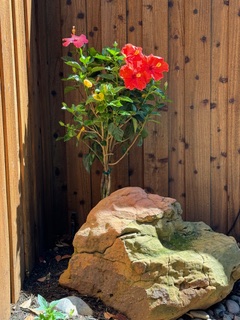
Hibiscuses (Malvaceae)are in the Mallow family and, interestingly, also include such plants as okra, cotton and the old-fashioned hollyhock. My preference for dependable seasonal color is the tropical variety, which is considered an annual in our Zone 8 climate. Late winter is when I start planning the layout and design of my seasonal garden beds. Hibiscus is ALWAYS included. Who wouldn’t appreciate a flowering, seasonal plant that can go into the ground during the month of April and continue blooming until the first freeze? Another benefit: it’s the type of plant that manages itself well. During the growing season when glossy green leaves begin to turn yellow and die, they politely fall to ground. Blossoms that open for a few days, do likewise. They really are gardener friendly plants!
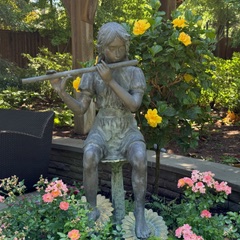
This year I’ve included tropical hibiscus in different shades of pink mixed in with existing limelight hydrangeas. They receive about 6 hours of morning to mid-day sun. And for a bit of whimsy, two hibiscus topiaries were added in areas that benefited from slightly more height. One is my favorite; it was placed behind my sunflower girl statue and features dreamy double yellow blossoms. The other is a sassy 4 foot tall, braided hibiscus topiary tree nestled in a corner bed. The multi-colored blossoms are a standout against our bronze colored fence.
Starting in late June our three hardy hibiscus plants began their seasonal show with those bodacious salad plate size flowers. These herbaceous perennials die to the ground in winter then around mid-April new growth signals their return to the garden.
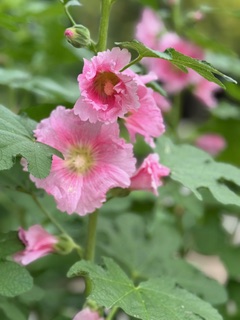
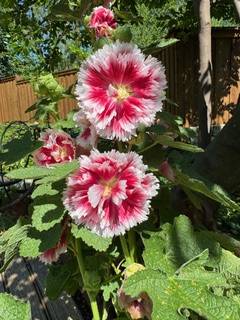
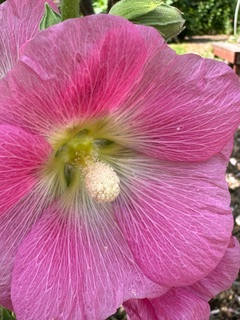
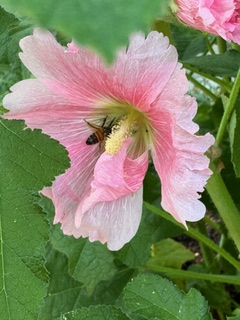
King Henry VIII Pink Hollyhocks with Honeybees Foraging for NectarPlanted 2023 in a location with morning sun and mid-afternoon shade‘Fiesta Time’ was added to my garden in May. Its fringed flowers are stunning
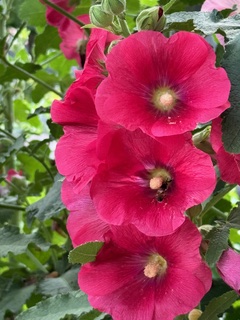
At Raincatcher’s Garden of Midway Hills, Master Gardener Susan Thornbury started seeds of a variety respectfully referred to as ‘Outhouse’. In days past, this treasured garden beauty was supposedly used as the perfect blocking for an unsightly outhouse while helping to mask the smell. Take a closer look at the multi-colored single blooms of white, pink, red and burgundy and you’ll see why it provided a pretty visual barrier.
Hydrangeas: When we moved into our home in May of 2006, oak leaf hydrangeas were already growing in a mostly shaded area of the garden. A few years later, they had overgrown the space and needed to be moved. A successful relocation to an area with filtered sun in the morning gave them more room to stretch their branches.
Since then, we’ve introduced a variety of hydrangeas to our garden beds:
*Big Leaf Hydrangea – Hydrangea macrophylla (Also, known as ‘mopheads’, these are the most common type of hydrangeas grown in home gardens and landscapes. Bloom time is usually late April through July. They are deciduous shrubs with large pom-pom heads of pink, purple or blue flowers. The flowers are greenish-white when young, picking up subtle shades of pink and brown as they age.
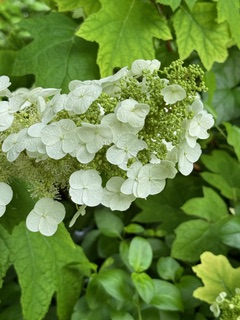
*Oakleaf Hydrangea – (Hydrangea quercifolia) Commonly referred to by its translation oak-leaved or oakleaf hydrangea, this variety offers year-round beauty with seasons of blooms, foliage and peeling bark. Blooms in spring and early summer. These beautiful plants were already growing when we moved to our home in 2006. Since then, I have searched for the compact, well-rounded deciduous hydrangea shrub known as ‘Ruby Slippers’. Finally, in mid-June, our local garden center received a shipment. I was first in line to purchase 3 plants. It was a special Father’s Day gift for my husband whose late mother was Rubye. He was thrilled! Oakleaf hydrangeas bloom on last year’s growth, so prune minimally after they bloom – not in early spring when new flower buds appear.
(This incredibly spectacular display of oakleaf hydrangeas is in the yard directly behind our house. It is the first thing that catches my eye when turning to leave our driveway. The photo on the left was taken in April when the plants were filled with those enormous white blossoms. Early to mid-summer they transitioned to lovely shades of deep pinkish/red. While the specific variety is unknown, something suggests to me that they could possibly be “Ruby Slippers’.)
*Panicle Hydrangea – (Hydrangea paniculata) This is one of the most cold hardy and heat tolerant of all species of hydrangea, thriving in Zones 3 through 9. Reaching 8’ + at maturity, there are now several dwarf varieties that stay under 5’ tall. For the strongest stems and the most abundant flowers, locate them in an area that receives 6+ hours of bright, direct morning sun then shaded during the hottest part of the day. We added ‘Limelight’ to our garden in 2022 and it has been a joy to watch them grow. Their huge, luxuriant conical flowers are mesmerizing. Bountiful blooms appearing in late May gradually turn from lime-green to creamy white in late summer followed by a rich deep pink which fades to beige as fall arrives.
*Of note, these hydrangeas are a recipient of the prestigious Award of Garden Merit of the Royal Horticultural Society and the Gold Medal Award of The Pennsylvania Horticultural Society.
Note: All photos were taken in the April – July time frame. The 100+ degree temperatures of the summer have left some plants struggling to endure the extreme heat. However, just as happened last year, the hardy hibiscuses, hollyhocks and hydrangeas will return next spring. The tropical hibiscus plants are going to be replaced with a new color palette in April of 2025.
Linda Alexander, Dallas County Master Gardener Class of 2008
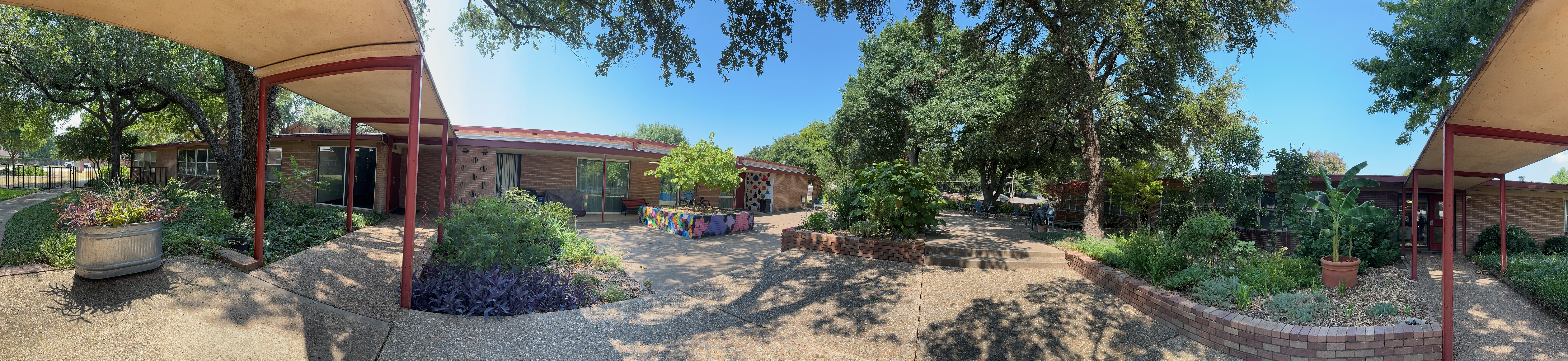
Panoramtic View of the Courtyard, Raincatcher’s Garden
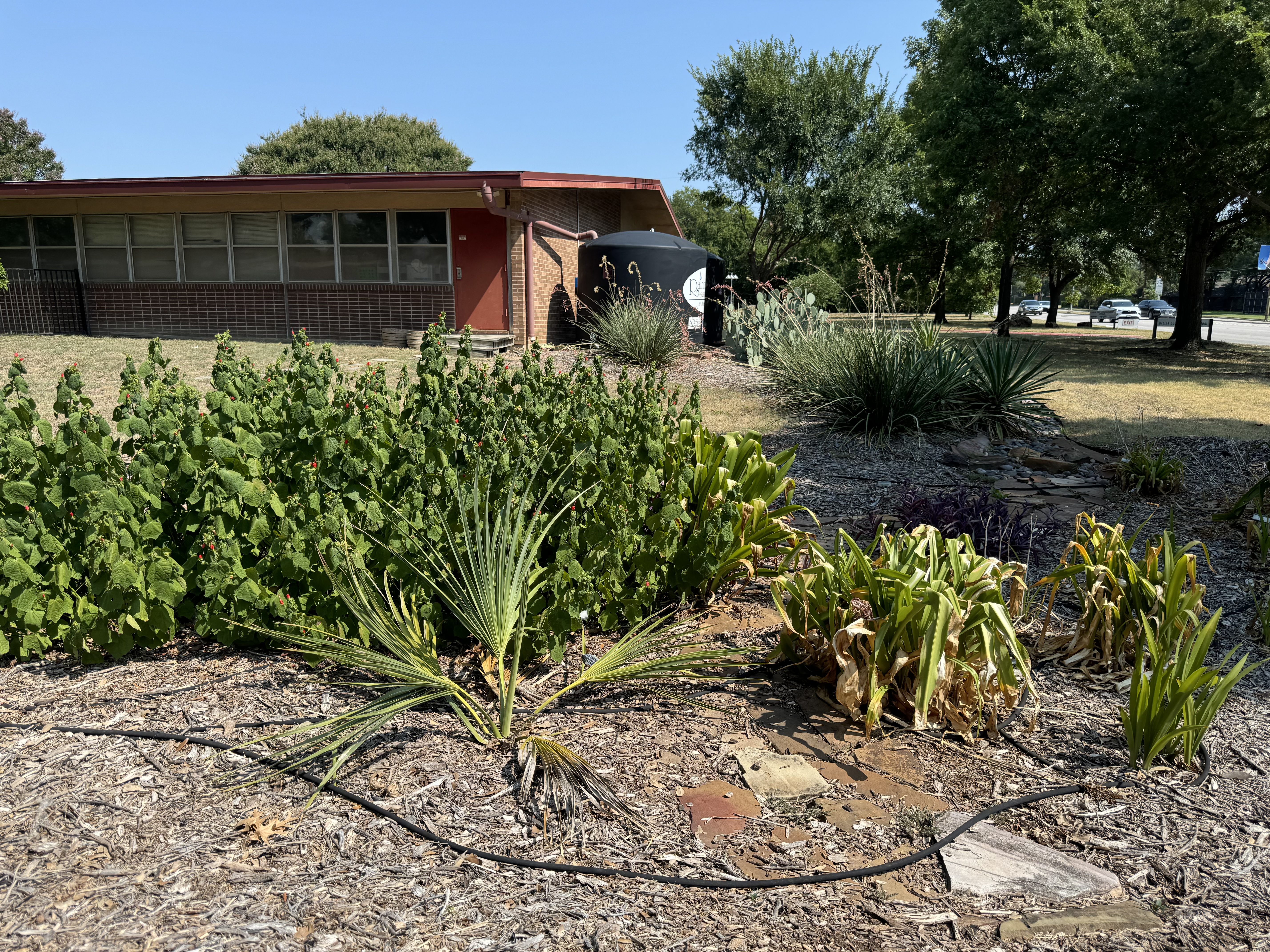
Our garden has survived and even thrived this summer. The Raincatcher’s Garden was built using the 7 principles of Water Wise Landscaping:
Planning and design
Appropriate plant selection
Practical turf areas
Soil improvement
Efficient irrigation
Use of mulches
Appropriate maintenance
With fall temperatures giving us a respite, maybe you are looking for plants and practices that will endure our hot Texas summers. Take a look below at what worked for us and as always we would love to have you come for a vsit.
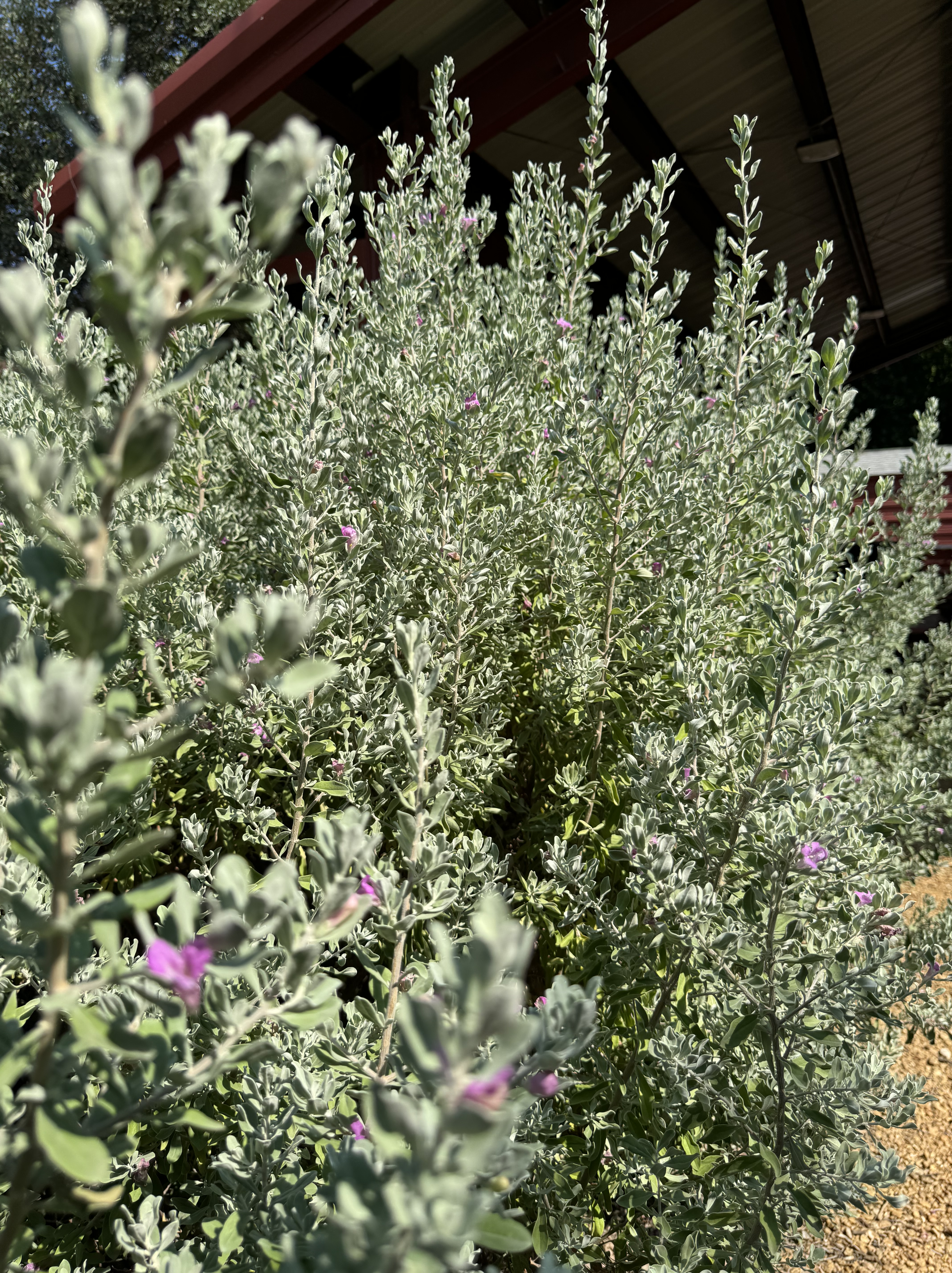
Rainctcher’s Prolific Vegetable GardenDesert Willow with attached polinatorFlame Acanthus for the HummingbirdsOkraTexas Sage, Leucophyllum frutescens, also known as the barometer bush-it blooms in periods of high humidity or rainGarden made Compost for Sale!A Crinum in bloom!Gardeners behind EsperanzaMexican Bird of Paradise, Caesalpinia pulcherrimaPentasA View of the Edible LandscapeZipper Spider-we think!Raincathcher’s Rain Garden with Rain Cisterns in BackgroundEvergreen Wisteria-we have a blog about this plant
Ann Lamb, pictures by Starla Willis- class of 2005 and 2008
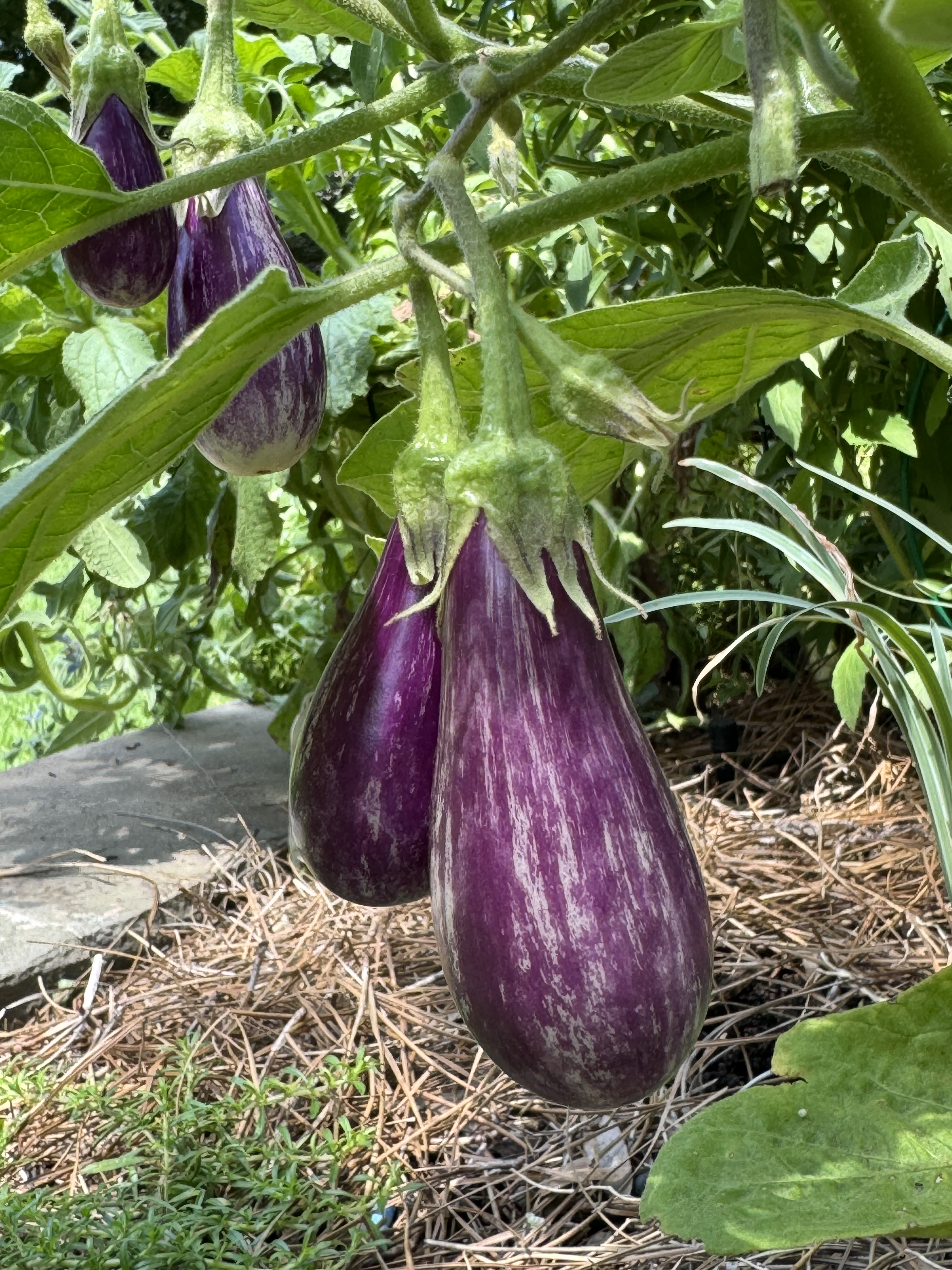
Does the familiar phrase ‘once upon a time’ bring back memories of your early childhood? Maybe it was when you heard the classic story of Little Red Riding Hood for the first time or were mesmerized when you saw Disney’s version of Snow White and the Seven Dwarfs. Throughout the years, fairy tales have given us wondrous characters in magical settings and left an indelible impression on young children throughout the world. But the fairy tale that has recently impressed me most is of a uniquely different variety. It is one that produces magically, ornamental plants for your garden. In this case, it is the adorable petite eggplant known as ‘Fairy Tale’.
Fairy Tale Eggplant
As you can see from the photo, it is a lovely mini eggplant, only 4 inches long, with stunning streaks of lavender and white. The plant itself grows to only 24” but produces tender-sweet fruits that are as beautiful as they are delicious. This variety can be grown in ground but, with its compact, dwarf size, is a just as suitable for container growing.
When it was time to harvest and enjoy, a quesadilla recipe was the perfect choice. Honey crisp apples gave it a sweet, tart taste while the smaller slices of savory fairy tale eggplant fit nicely on the tortilla. A handful of roughly chopped spinach along with some creamy Monterrey Jack cheese completed the combination of amazing flavors. Freshly made tortillas from Central Market held everything together while the quesadillas were baking in the oven.
A very unique feature of ‘Fairy Tale’ is the recognition it received in 2005 as an AAS* vegetable award winner. It was the first eggplant to win an AAS award since 1939. There is still time to grow ‘Fairy Tale’ in your garden so why not give it a try?
For transplants:
Pick a sunny site with rich, organic, well-draining soil. Eggplants require at least 6+ hours of direct sunlight per day. (Some sources advise not planting it in a plot where you grew tomatoes, peppers, potatoes or other eggplants the year before). Set transplants about 3 feet apart.
Mulch after planting.
Provide adequate water to produce the best-tasting eggplants. Fairy Tale eggplant enjoys deep, consistent watering throughout the growing season. Check often to be sure that Fairy Tale is receiving about 1-2 inches of water per week.
Harvest when fruits reach 2-4 inches in length for sweet, bitter-free enjoyment. Snip fruit with clean shears at their individual stems or in clusters. The skin should appear glossy (left side of photo), as dull skin can indicate overripe fruit (right side of photo). Harvest regularly to encourage new fruit production.
*All-America Selections winners are tested at trial grounds across North America. Each winner has superior qualities that distinguish it from similar varieties. ‘Fairy Tale’ was granted the prestigious AAS award by a nationwide panel of experts.
Linda Alexander,Dallas County Master Gardener Class of 2008
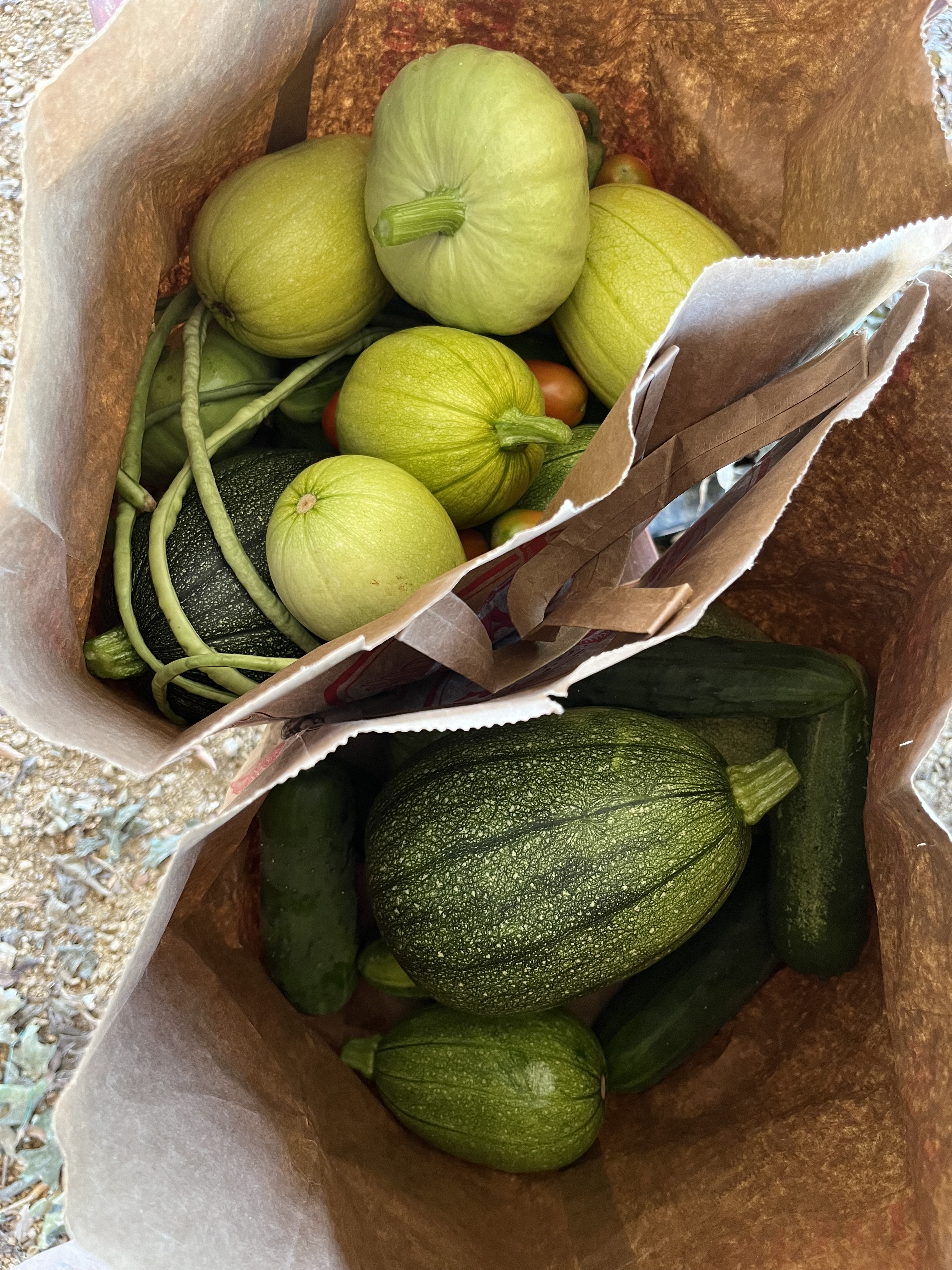
Congratulations to the Raincatcher’s Garden Veggie Team, who has harvested and donated 634 pounds of squash so far this year. It’s quite an accomplishment when you consider the ubiquity of the destructive squash vine borer (SVB) in the area.
The team’s challenge was to find a squash variety that resists SVB. Over the past three years, gardeners have tried Zucchino Rampicante (Cucurbita moschata), Baby and Waltham Butternut (Cucurbita moschata) and Calabacita (Cucurbita pepo). All overcame SVB damage, but the Calabacita production was much higher.
Calabacita is delicious, especially when harvested at tennis ball to softball size. It can also be eaten as a soccer ball size pumpkin and stores well at the larger size. It takes a little more effort to prepare the larger size, so the gardeners included cooking instructions with donations.
One difficulty, but a good problem to have, is finding the many fruits of this prolific plant before they reach a large size.
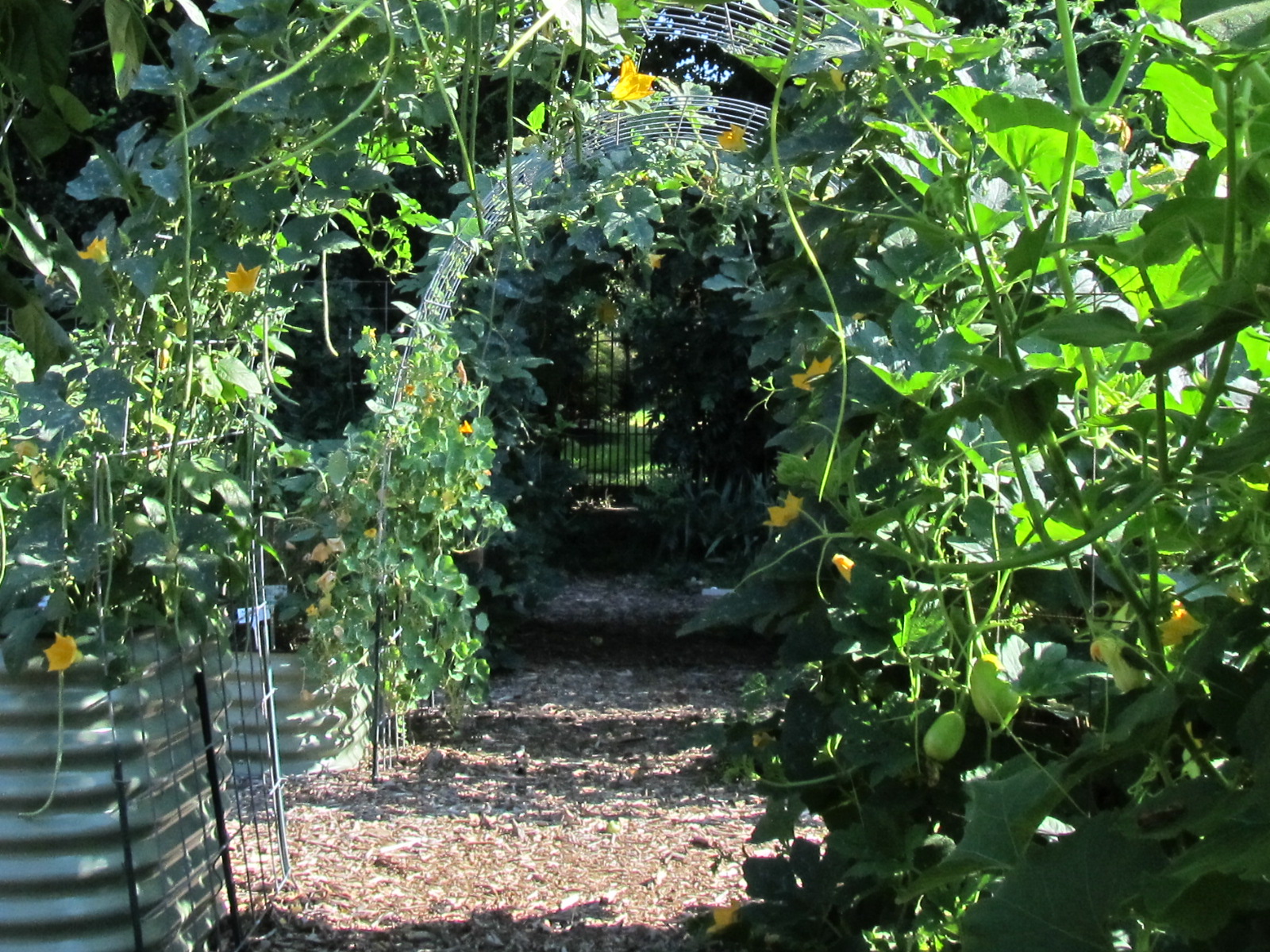
Another issue is the vines grow over 10 feet long and quickly sprawl throughout the garden. At Raincatcher’s they grew over large trellises and into the raised beds and grape arbor on the opposite side.
However, the trade off of space for productivity worked out well for the garden this year.
Well done Veggie Team, whose total production for 2024 has now surpassed 1200 pounds, providing fresh, nutritious food for the patrons of North Dallas Shared Ministries.
Cyntihia Jones and Beverly Allen, Dallas County Master Gardeners
The Veggie Team works hard every Monday morning (and many Thursday mornings during harvest), weather permitting, so please feel free to stop by with any questions you may have about growing vegetables in Dallas or just to look around and be inspired. Our garden is located on the grounds of Midway Hills Christain Church at 11001 Midway Road, Dallas, TX, 75229.
Many things connect us to our gardens.We have had a busy spring at The Raincatcher’s Garden.
Garden chores become pleasure when we work together. Spring has consisted of weeding, seed collecting, watering and learning from each other and then sharing the fruit of that knowledge with all ages and also agencies that assist others
North Dallas Shared ministries received over 200 lbs of fresh vegetables to distribute from the Raincatcher’s Garden.Our compost crew hard at work. Combining efforts and resources for common goals. Here we are at our annual plant sale Jackie, Sue and Deborah at the Raincatcher’s Plant Sale
Nature unfolds before our very eyes. This honeybee is about to forage for nectar on a beautiful cactus flower at the Raincatcher’s Garden.
Garden love also includes sharing life, having fun, and learning through our garden work experiences.
Starla Willis, Dallas County Master Gardener Class of 2011
The allure of having a greenhouse is something that some gardeners dream of – a place to overwinter plants, start seedlings, and have workspace. How does this become a reality? First of all, determine your goals and ideas. Do your homework and decide if it is a project worthy of the investment of your time, money and efforts?
About the time Fall arrives and freezing weather makes its appearance, ads for greenhouses start flooding inboxes and social media sites. It seems like a good idea to have a place to store tender plants that can’t handle it outside during our coldest temperatures of January and February. Another bonus is the ability to provide a head-start for seedlings to sprout before they are planted in the garden.
There are a variety of styles, sizes, price points as well as optional accessories to consider – from heavy plastic, glass or plexiglass partitions, to brick surrounds, and various mortar and glass options, ranging in cost, size and function. A greenhouse can also be labor intensive, and impractical for those who don’t have the time, ability, or manpower to maintain it properly.
The preferred space needs to be of adequate size for your garden needs, level and in a sunny to mostly sunny location. Water needs to be close and the ability to heat, cool and monitor the space is an important consideration.
Dreaming of a place to overwinter my plants caused me to inquire online. My available location was not ideal-the space was not adequate and the prep and the assembly was more than daunting (in so many ways). Ultimately, the amount of time, effort and money to be invested caused me to pause, rethink and determine that installing a greenhouse was not my best move. However, a well-utilized greenhouse is much more than just a storage space for tender plants.
While contemplating this, Raincatchers’ acquired one that would be optimal for our North Garden. It was transported to the property and the plans for putting it into seedling production began to unfurl. It took about two months to get the “new to us” greenhouse relocated and in working order. The “team” at Raincatchers’ has spent many man hours preparing it for use, leveling the site, setting a brick floor on decomposed granite, anchoring the greenhouse against the strong Texas winds, building multiple two-tiered seedling tables, installing a solar powered cooling fan, and initiating water and electrical hookups. Maintenance will be ongoing.
Seedlings have now been started for our many vegetable beds and they appear to be very happy in their controlled environment. Note: vegetable seedlings are started and then set out into our gardens at the proper time.
If you are thinking about acquiring a greenhouse, either by purchase or building it yourself – the best of luck to you! Hopefully, you now have an idea of the reality of the effort to produce a functioning greenhouse and can make an informed decision It can be very useful and an asset to your gardening efforts; whether starting vegetables, flowers or show plants, or just over wintering your houseplants or tropicals.
Friends helping move our greenhouse.Joe at work, brick by brick.Many hands make light work.Bricks donated by Tig and fetched by Mark-thank you!Jon and the greenhouse floor-Jon keeps us level.Don, washing brickspre-installation.The greenhouse installation has been a true team effort with many hands involved-thank you!
A gardener’s considerations for Installing a greenhouse:
Manpower to construct the unit (most come in sections that require construction)
$$ Cost (from a few hundred dollars to several thousands)
Overall Size and Options
Site selection –
Sunny to mostly sunny location
Ground leveled for structure
Anchoring against the wind
Inside Flooring (Hard surface with the ability to drain) several options Shelving options (Water resistant)
Storage options (Greenhouse supplies)
Heating and Cooling Capability, i.e., a solar operated cooling fan
Electrical Considerations
Water Availability (For plant watering and seedling misting)
Shade Capability (For the long, hot sunny days)
On-going Upkeep (several hours a week)
Construction Permit (If required)
Starla Willis, Dallas County Master Gardener Class of 2011 with input from Jon Maxwell, Class of 2015