My Jewels of Opar is in a mostly shady area. Next spring, as new plants emerge, they will be relocated to a place in my garden that receives full sun until late afternoon.
In May of 2021, we shared an article with our readers about Jewels of Opar, a lovely plant that is both edible and ornamental. Click here for the original article which includes helpful growing information.
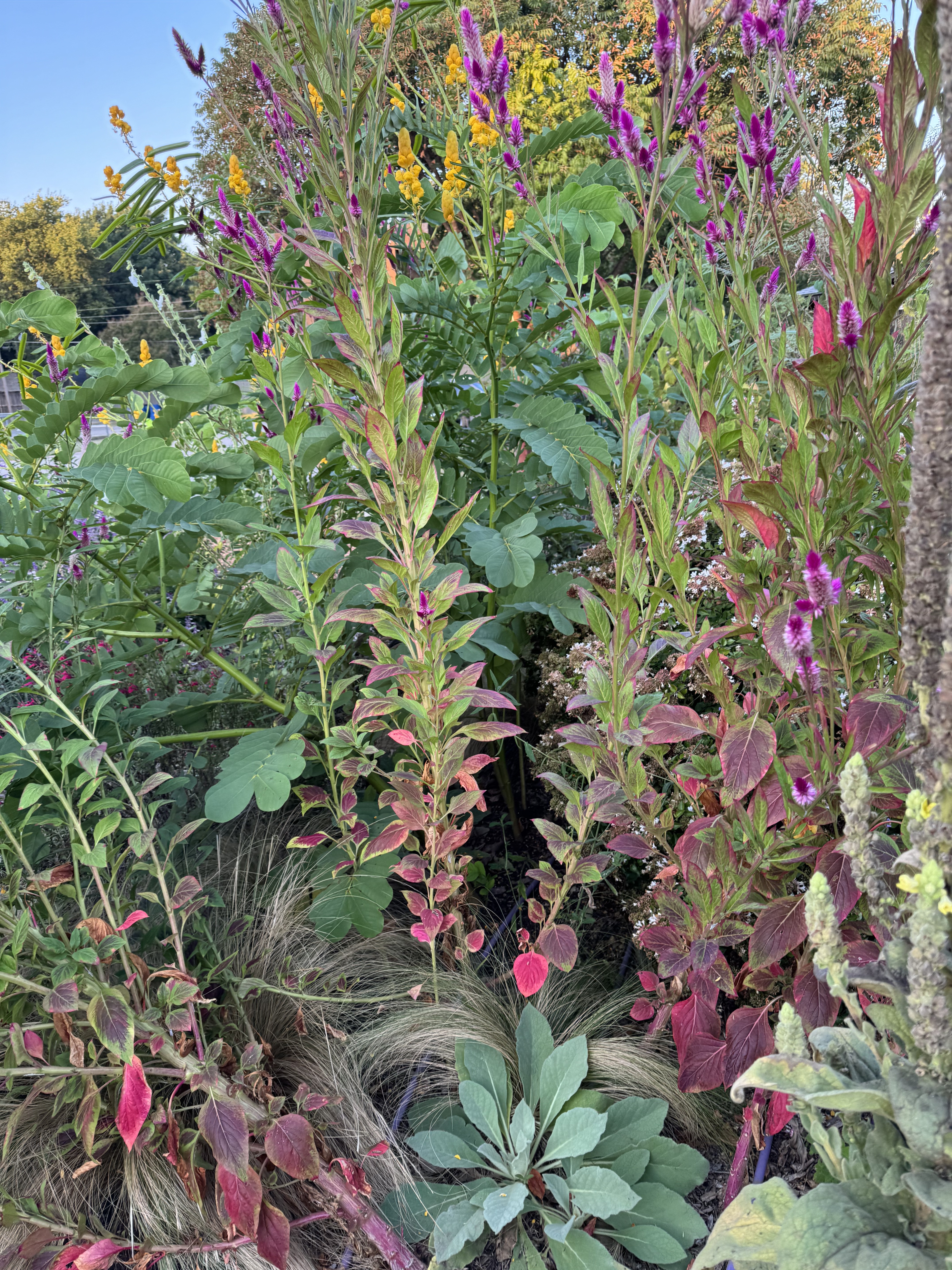
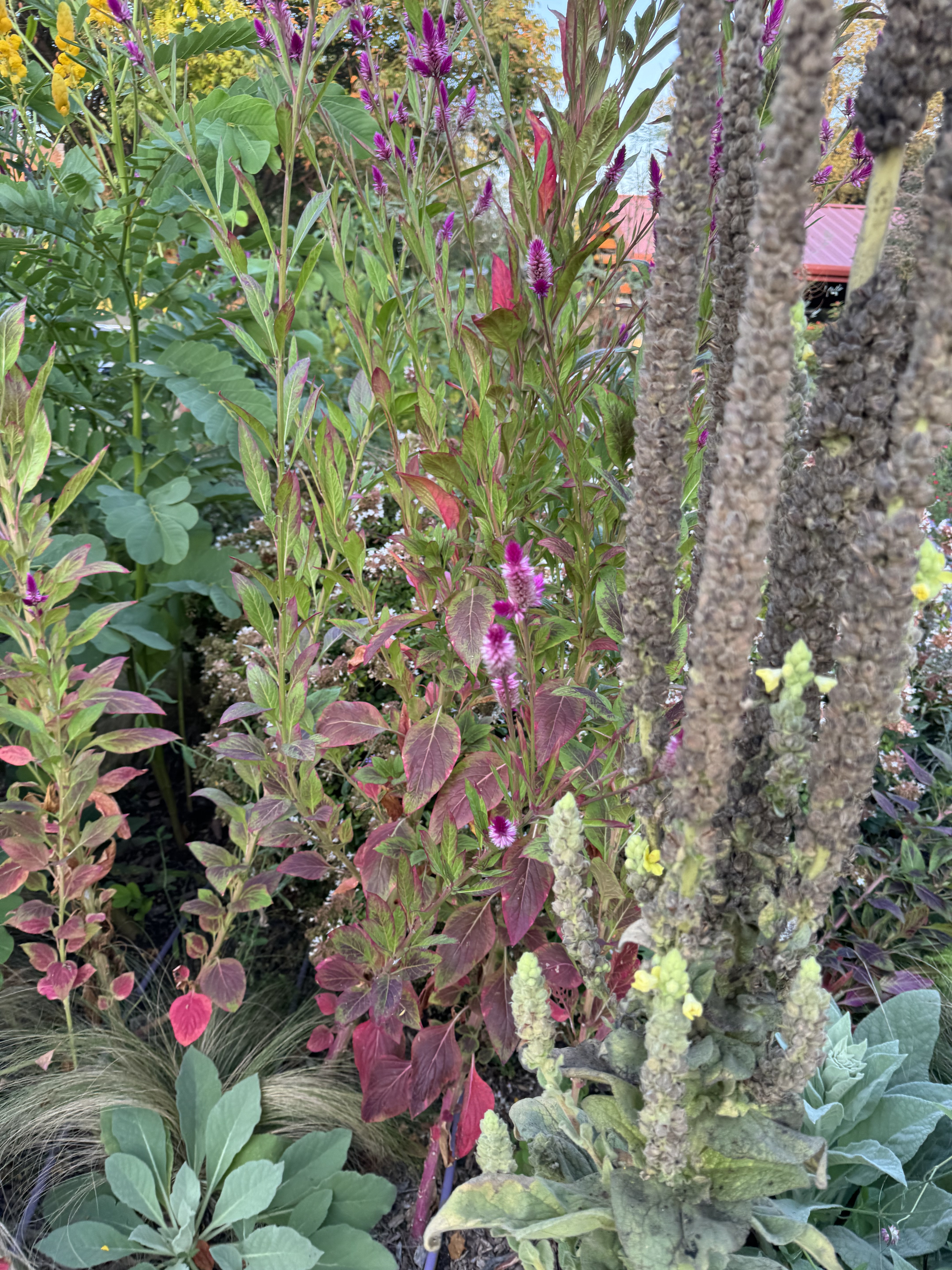
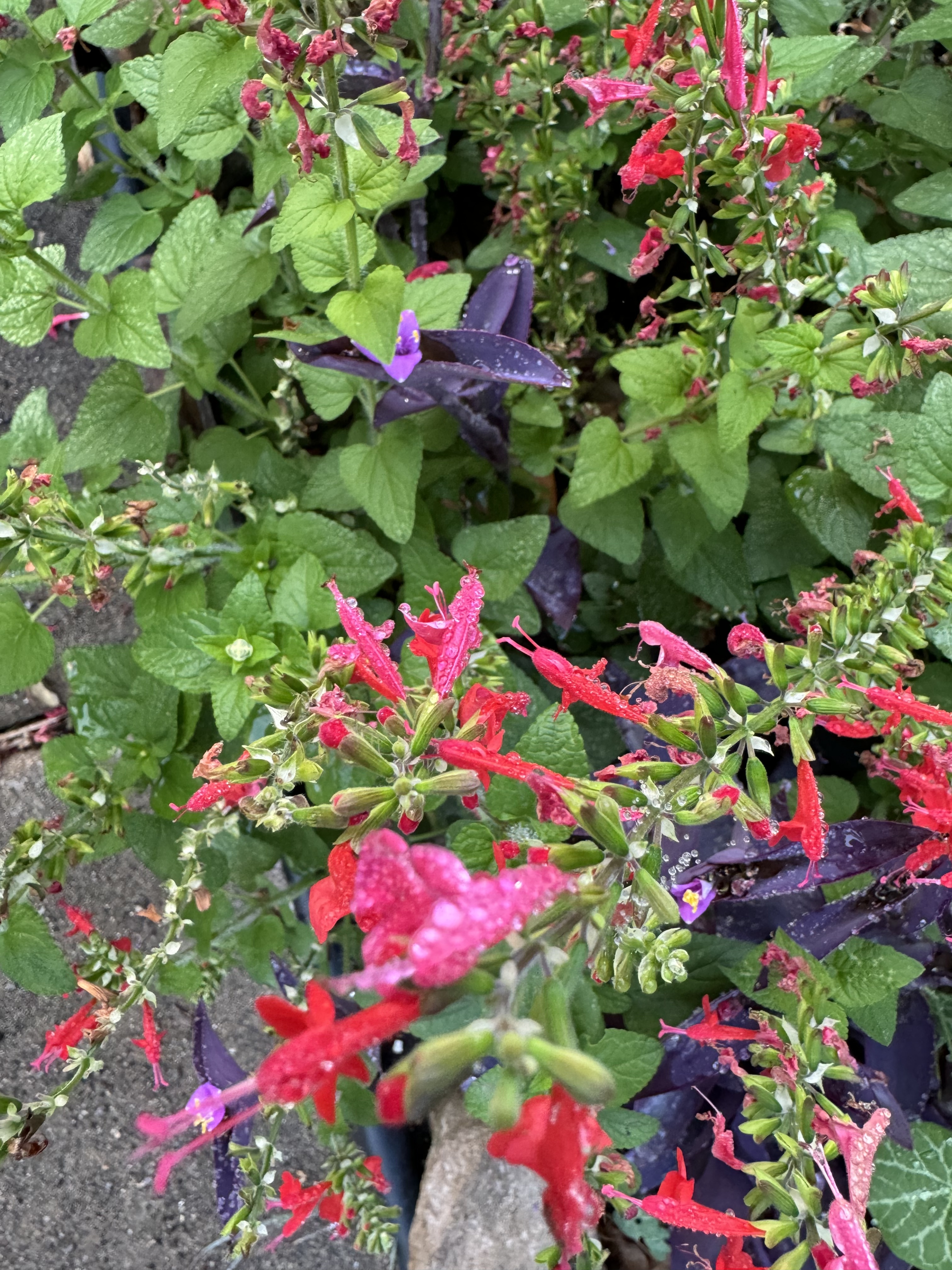
This time, we’ve chosen to “drop in” for a quick autumn visit showcasing this adorable little beaded wonder in full bloom. You may remember that Jewels of Opar, sometimes referred to as Pink Baby-Breath, produces wands of tiny, pink star-shaped flowers followed by jewel-like fruits in shades of pink and orangish red.
Enjoy this photo of a simple arrangement filled with Roselle Hibiscus leaves gracefully surrounding Jewels of Opar in its colorful autumn wardrobe!
Linda Alexander, Dallas County Master Gardener Class of 2008
Moonflower in my garden. Smells delighful, blooms at night!
Do you remember the book, All I Ever Really Needed to Know I learned in Kindergarten?
That’s how I feel about the Master Gardener training I recieved in 2005. Although I was raised in a backyard full of horticulture and minored in horticulture at Texas Tech, the Dallas County Master Gardener School and my experiences working in gardens for 20 years with other Master Gardeners have been my grounding influence. Myabe you have been thinking about expanding your understanding of gardening in Texas, if so-see below.
Applications Available NOW for Dallas County Master Gardener School What: Dallas County Master Gardener School When: Every Thursday starting January 8, 2026 through April 23, 2026 8:30 AM- 3:30 PM Where: Dallas County Roads & Bridges Building / District 1 (aka “R&B1”), located at 715 Rowlett Road, Garland, TX 75043
It happens every season. Our gardens give us a show-stopping presentation and then, poof, it’s over! So, what’s a good way to prepare for the transition? My advice, let the garden inspire you.
How about an artful arrangement of garden gifts for a dinner party buffet centerpiece?
A simple white ceramic pitcher was the perfect vessel for displaying the following “end of season” blossoms and greenery. Once completed, it had become a tapestry of seasonal beauty.
Cilantro in its “bolting” stage, curly and flat-leaf parsley, radish leaves, beet leaves, cornflower (bachelor’s buttons) and lots of blooming oregano stems for “filler”. A sprinkling of German Chamomile lightened the look. Guests were mesmerized by the natural beauty that a “fresh from the garden” look offered. Some couldn’t resist sampling a few sprigs!
A few days following our buffet dinner, the delightful arrangement was carried outside to be composted. As one master gardener remarked, “this is liquid gold for the compost bin!” I agree!
Linda Alexander, Dallas County Master Gardener Class of 2008
If the key to life is simply living it.. The key to understanding may be simply realizing that wisdom is all around even in unlikely places. Our job is to realize wisdom when we find it—and then apply it .
For an example let’s think about these simple lines:
YOU GOT TO KNOW WHEN TO HOLD EM
YOU GOT TO KNOW WHEN TO FOLD EM
YOU GOT TO KNOW WHEN TO WALK AWAY
YOU GOT TO KNOW WHEN TO RUN
Few words but the ideas are wise and useful. No where more so than in the garden at this time of the year. We start with the first of course. And actually this idea was most important a little earlier in the year.
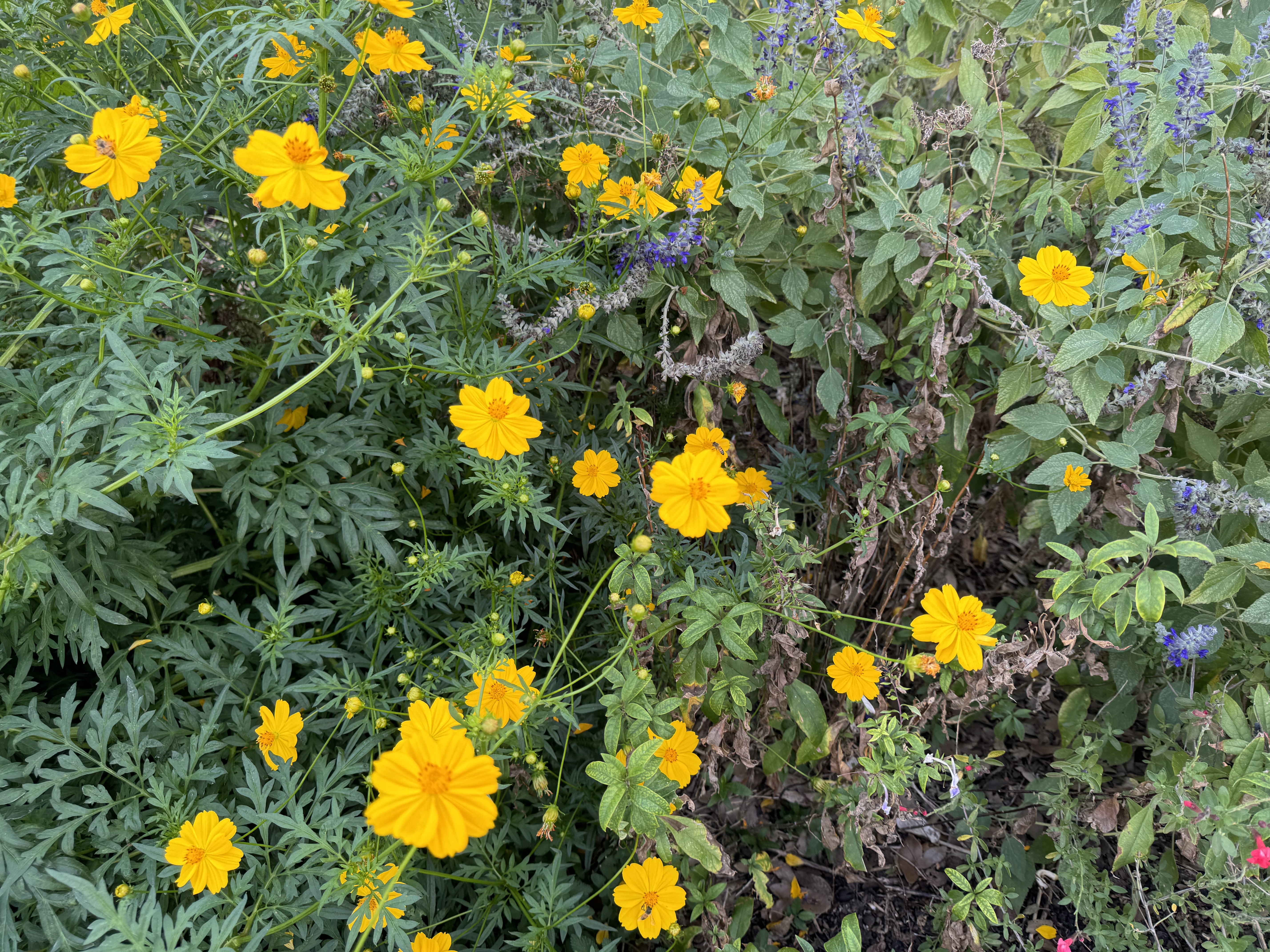
How was it so useful? well the yellow cosmos are a great example. All summer they grew and grew. No flowers at all. Some falling over due to the weight of stems and leaves. A passerby was heard to say ” I don’t know about those green leafy things they sure are big” Were they a terrible mistake? Are they ever going to bloom? Are they going to all fall over? Temptation grew to pull them all out. And then all at once they bust into huge numbers of lovely cheerful flowers. Butterflies and bees are just loving them. They even look great as cut flowers.
Yes!!! holding was the best choice for sure.
The big green leafy things that were bare all summer are blooming at last and they are amazing. Cosmos!
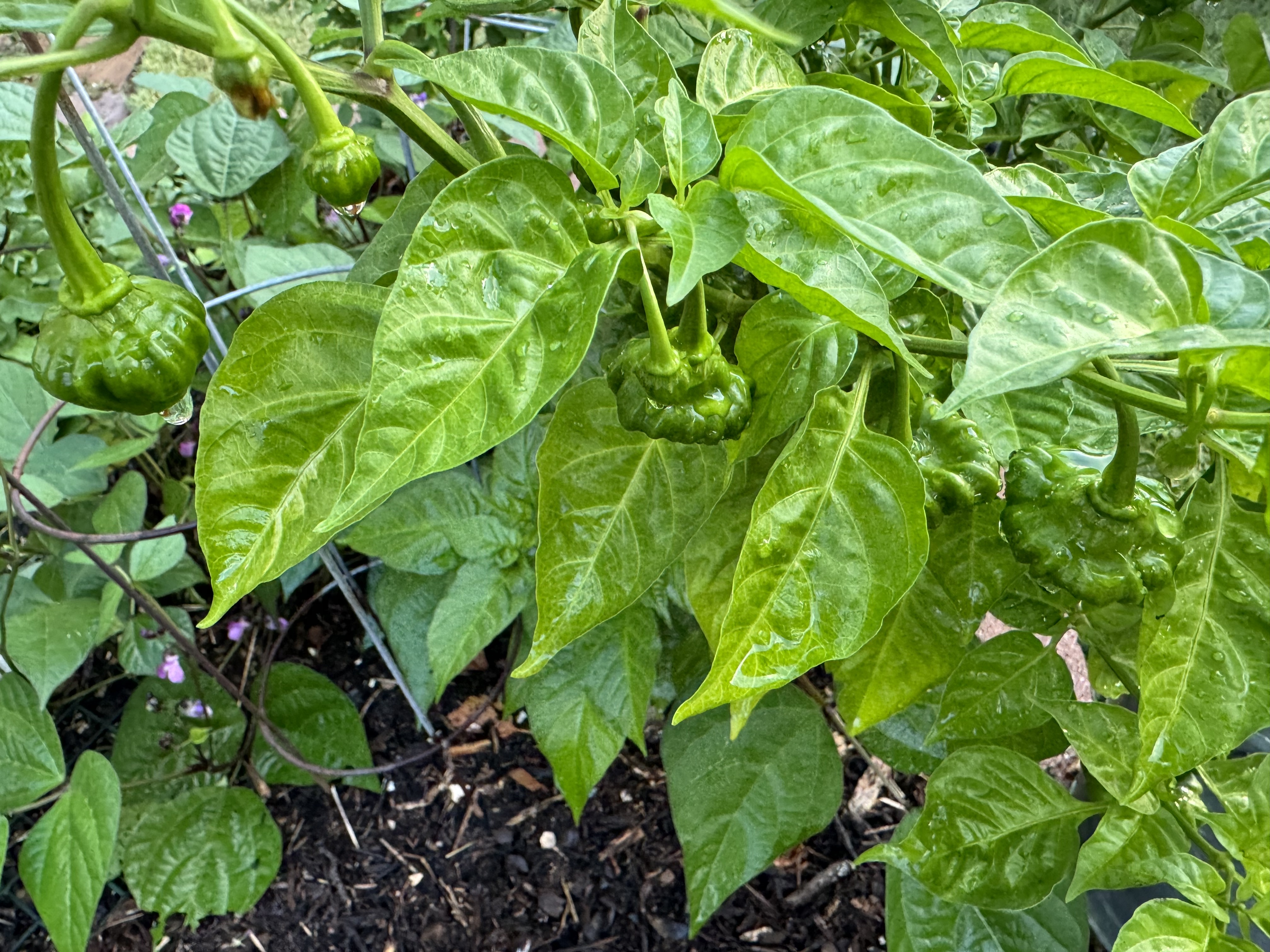
Aji dulce peppers –no peppers for months. All they were doing was taking up space and causing thoughts of “what on earth went wrong?” They were biding their time. Summer just didn’t suit. Just a small improvement in the weather–and blooms followed by lots and lots of little peppers. It was a temptation to give up–but it would have been a shame.
The Peppers finally realizing they have a job to do.
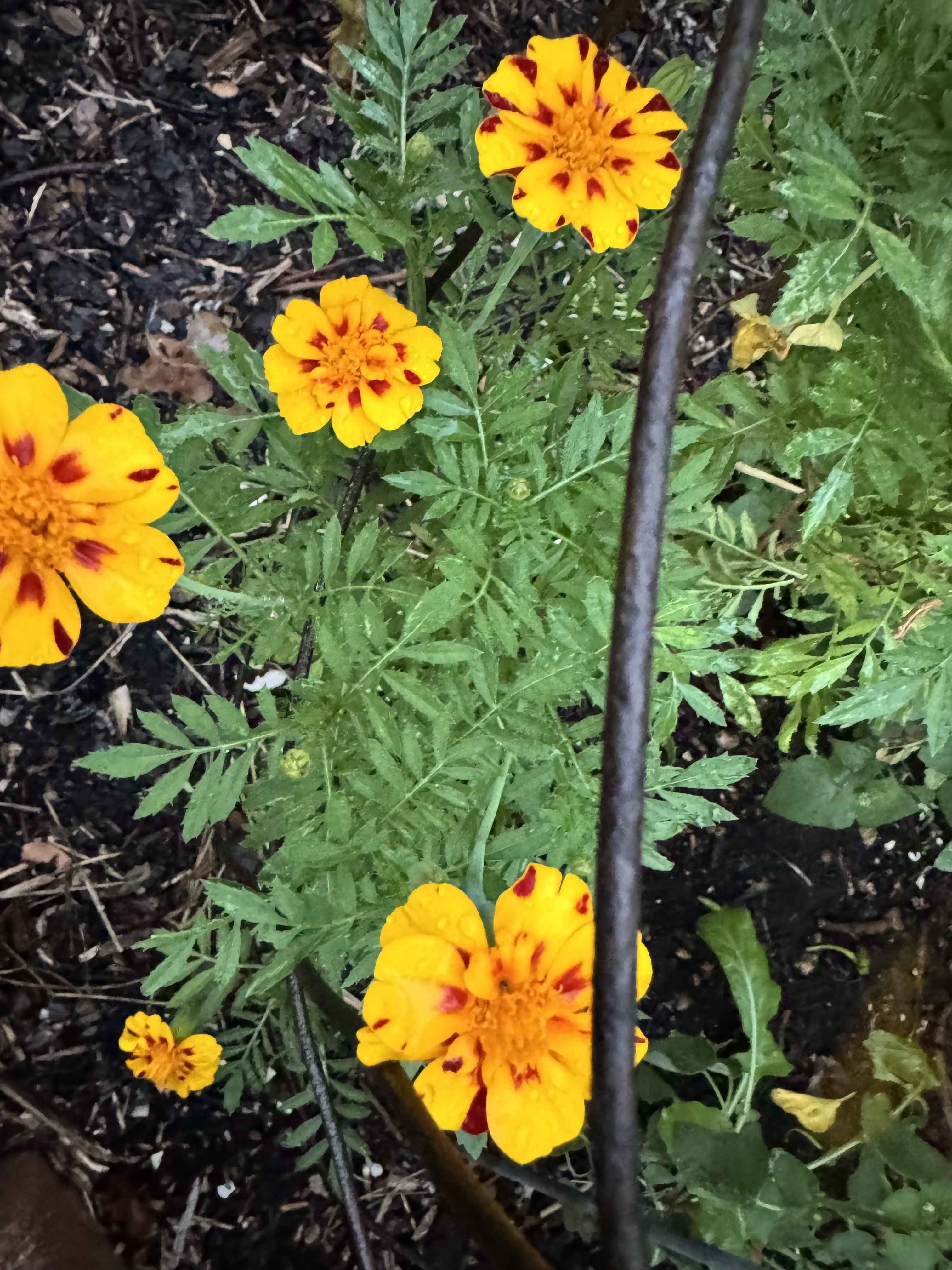
Marigolds–they also seemed to find the past few months not to their liking–the remaining tomatoes are happy maybe because the marigolds are happy.
The Marigolds were to keep the tomatoes company all summer. They are doing it now.
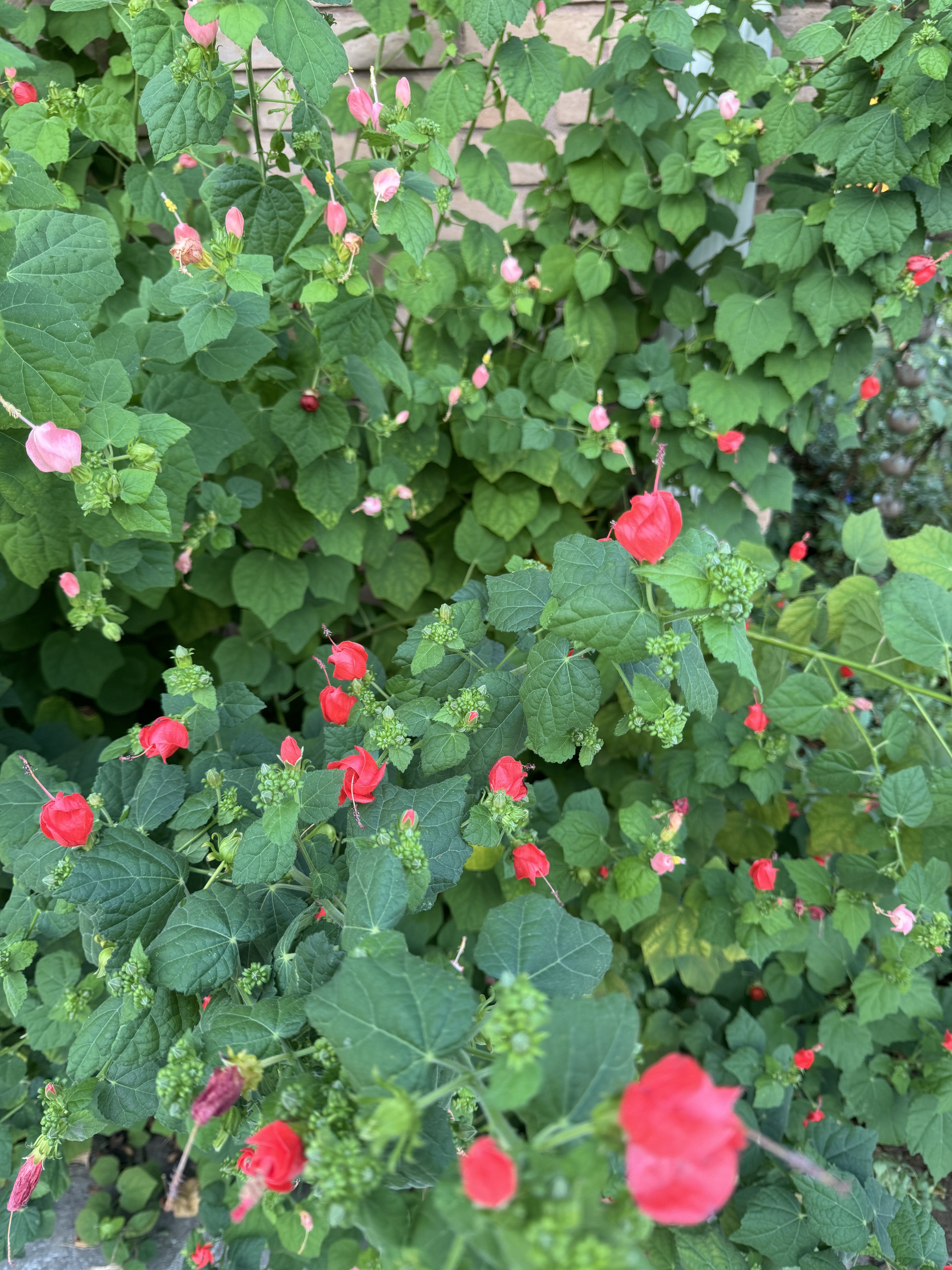
Turk’s cap–honestly it seemed to be asking to be cut to the ground–very few blooms and yet requiring constant pruning to keep it withing reasonable bounds–but–again a reward for avoiding extreme measures–countless flowers–and happy creatures.
Turk’s cap-all summer, some flowers but now covered in flowers.
Of course the facts are–that all doesn’t go as hoped.
The most obvious are annuals that have tried really hard but have now reached the end of the line. It is hard to do this when they aren’t quite done but face it–sad straggliy plants just distract from everything around them. Let them go its ok.
It’s time for an old friend to go. Sad but true.
Same with vegetable plants. These plants work hard some can make it on into fall. But some just can’t. It is really best to get rid of them they can attract pests and diseases that are just doing what they do to eliminate the weak–but best to beat them to it.
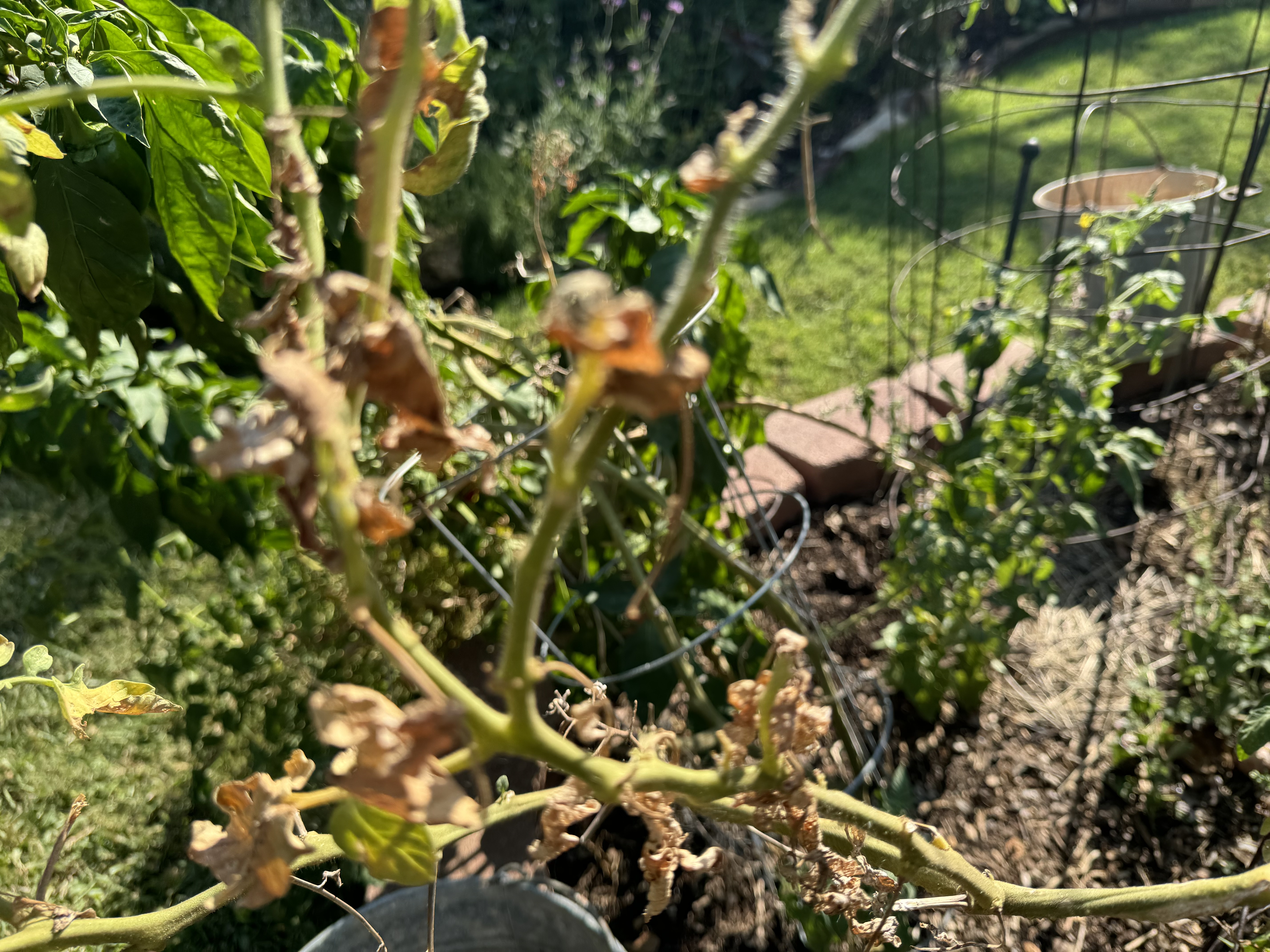
This tomato in my garden just isn’t going to recover.
The really hard part of the fold ’em is facing that some of your efforts really were in vain. For some reason plants die. Sure try to figure out why. Was it lack of water–a common issue. Maybe over crowding? But sometimes its unknown. Pull them out anyway no use spending resources–including your time and energy on plants that just are not making it.
Perennial doesn’t mean live forever!
Those first two are pretty clear–but what about KNOW WHEN TO WALK AWAY?
Actually its an important one. This is the time of the year when plants have pretty well done what they are going to do. It can be so valuable to step back and away and look at the big picture. Could you do anything different ? Is it just that much too much? Or not quite enough? Walk away and take a good look and make some mental notes for next year.
Is it maybe just a little too much? Take a step back and look.
Can’t forget YOU GOT TO KNOW WHEN TO RUN. No it won’t be a big problem don’t worry. But do keep in mind that wasps and yellow jackets are very active at this time of the year. Of course they are part of nature and normally not an issue–but do look around they like to build nests in protected places–who doesn’t of course–but sadly when its right above the back door for example you may have to do what you would rather not. But be careful at times their temper can be kindly said to be “Uncertain” And i hope you don’t have to run–but—-.
YOU GOT TO KNOW WHEN TO HOLD EM
YOU GOT TO KNOW WHEN TO FOLD EM
YOU GOT TO KNOW WHEN TO WALK AWAAY
YOU GOT TO KNOW WHEN TO RUN.
Susan Thronbury, Dallas County Master Gardener Class of 2008
Don’t give up, Susan Thornbury has some words of inspiration and an action plan for us during these hot days of summer.
August 15, 2024
Memory is strange. Most thoughts and memories are unhelpful. So much so that often a deep breath and a reminder that they are just thoughts and memories and not reality seems to be indicated. But then when least expected a flash of amazingly helpful inspiration!!
After listening to a weather forecast –given after the meteorologist offers an apology for what will be coming–and then stepping out to look at the garden already in a negative frame of mind and naturally seeing trouble everywhere—a song came –the words very loud and clear: “I”M GOING TO STAND MY GROUND YOU KNOW I WON’T BACK DOWN I’M GOING TO STAND MY GROUND”
Now don’t rush to judgement on that song–in this case it was crystal clear what the meaning was–it was aimed at gardeners!!
Not those in “other places” Places where the nights are cool it rains at least once a week and where things “just seem to grow” Oh no, they don’t get a song–it was not meant for them.
It was meant for gardeners here–it was meant for US!!
It is just such a temptation to give up–Its so hot and yet weeds are thriving–the list of “NOT FAIR” is a long one
But not for us to dwell on that: WE WILL NOT BACK DOWN WE WILL STAND OUR GROUND”
We can’t just think about it though–a plan is needed!
Each plan must suit the planner of course but–there are some important point that might be universal.
First give serious thought to becoming a morning person–if you start at 7AM –its not so bad and you can get a lot done in an hour or two. If this is not your usual habit–well just tell yourself–when November comes you can sleep late!!
Second set priorities. Take a good look and decide what must be done now some things can and should wait until later. One thing is usually deadheading.. The poor plants are stressed they don’t need to be trying to set seeds or supporting yellowing leaves. When you tidy them up they are really helped–and you get some encouragement–things are looking better already.
Third don’t give up on weeding. Weeds are cleaver plants and they can grab water and use it to set their seeds faster than one can believe–so don’t let them–you sure don’t need more weeds and your plants need all the water they can get.
Healthy and happy mulberry weeds edited out of the garden-they thought they were safe hiding in the salvia
Fourth–look for what is working. Which plants are showing a fighting spirit and a will to live they must be encouraged and rewarded–as they are encouraging and rewarding you.
Turk’s Cap loves summerCenzio is ok with heat, even seems to like itRosemary is not complainingYard pointsetta and white veined piple vine are okay with heat but do like shadeSalvia coccinea keeps going when the going gets tough
But of course you must also face what isn’t working–Bite the bullet–remove dying plants there is just no use in trying to care for them and waste precious water on them–make a mental note to avoid them in the future.
Last–congratulate yourself!! you deserve it YOU STOOD YOUR GROUND NO YOU DIDN’T BACK DOWN YOU STOOD YOUR GROUND!!!
Susan Thornbury, Dallas County Master Gardener Class of 2008
If you’re contemplating a substitute for boxwood, consider these words from Cyrus Hyde, the late garden herb folklorist and founder of Well-Sweep Herb Farm in New Jersey. He referred to germander as “poor man’s box”. Why then, has it not received more recognition in the world of herbs?
Even our first president, George Washington was such an admirer of germander that it was planted at his Mount Vernon, Virginia estate. But sadly, it seems to have faded from view until recently when garden centers began featuring lesser known herbs alongside the more desirable customer favorites. Thankfully, it was a wise decision with germander finding its place as a decorative evergreen border plant and as a substitute for boxwood in the beloved knot-garden design.
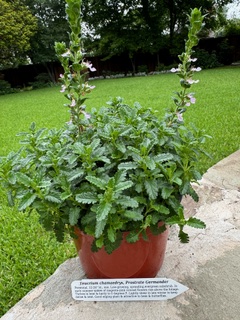
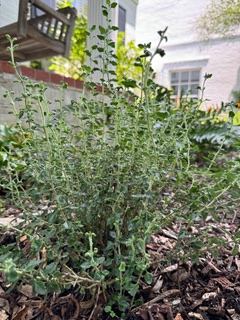
Germander ‘Upright’ surrounding the children’s statue in the Edible Landscape at Raincatcher’s GardenGermander ready to be planted at Linda’sGermander thriving in MG’s Patty Brewer’s Garden.
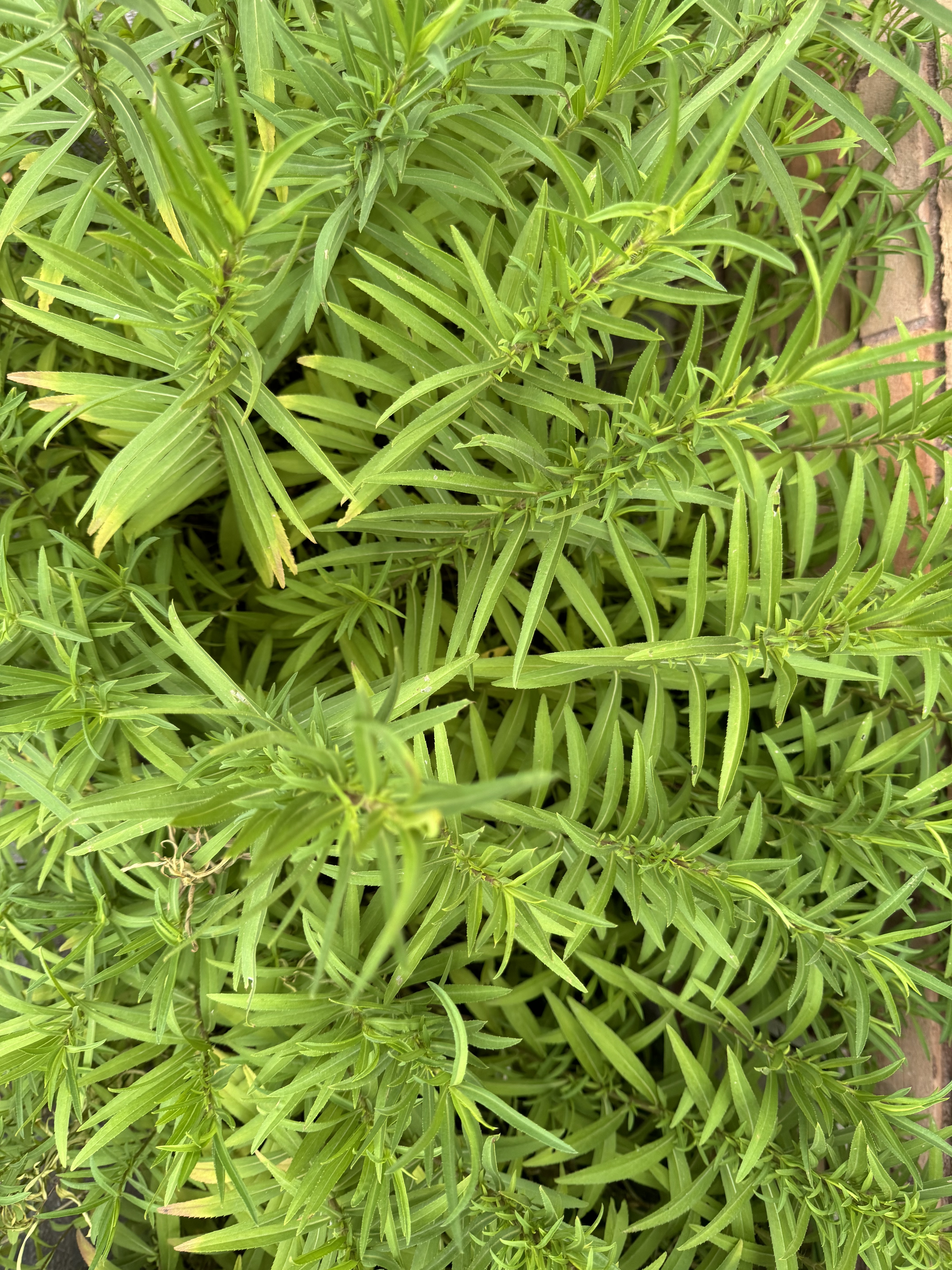
Germander is a Mediterranean native in the mint family (Lamiaceae) with small, dark green scalloped leaves and a mild garlic-spice aroma. It is a hardy perennial and evergreen, keeping its tidy appearance throughout the year. In early summer whorls of purple-pink flowers appear. Bees are attracted to the tiny flowers.
Grow it:
*Space plants 2 feet apart and at least 3 feet away from companion plants.
*Germander prefers full to partial sun and well-drained soils.
*Follow a regular watering schedule to establish, then cut back to maintain health.
*Fertilize lightly with an all-purpose organic fertilizer once or twice a year.
*Pruning right after bloom will help to renew the plants faster.
Germander with single stem gerbera daisies gently nestled in the glossy green foliage
Linda Alexander, Dallas County Master Gardener Class of 2008
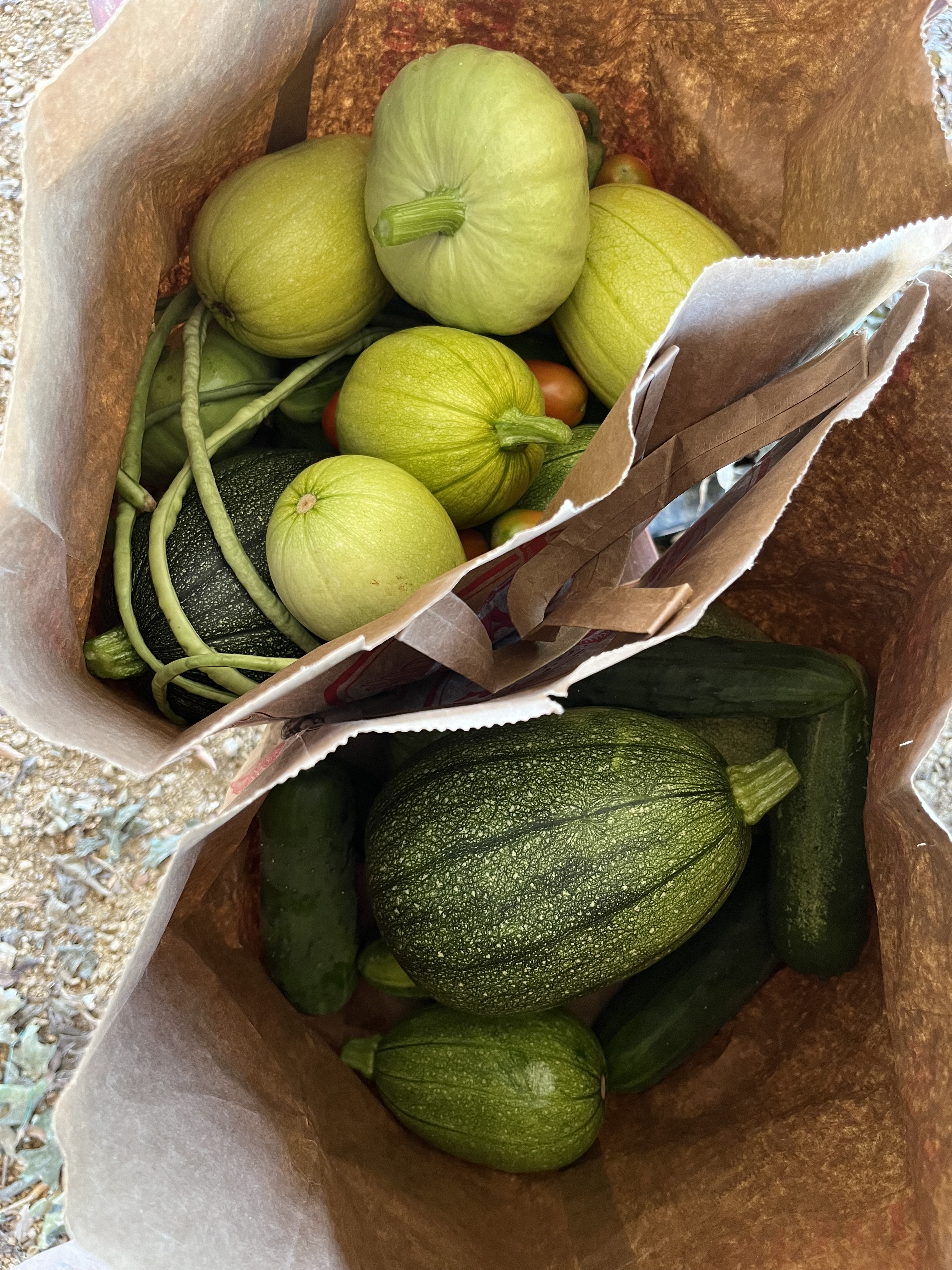
Congratulations to the Raincatcher’s Garden Veggie Team, who has harvested and donated 634 pounds of squash so far this year. It’s quite an accomplishment when you consider the ubiquity of the destructive squash vine borer (SVB) in the area.
The team’s challenge was to find a squash variety that resists SVB. Over the past three years, gardeners have tried Zucchino Rampicante (Cucurbita moschata), Baby and Waltham Butternut (Cucurbita moschata) and Calabacita (Cucurbita pepo). All overcame SVB damage, but the Calabacita production was much higher.
Calabacita is delicious, especially when harvested at tennis ball to softball size. It can also be eaten as a soccer ball size pumpkin and stores well at the larger size. It takes a little more effort to prepare the larger size, so the gardeners included cooking instructions with donations.
One difficulty, but a good problem to have, is finding the many fruits of this prolific plant before they reach a large size.
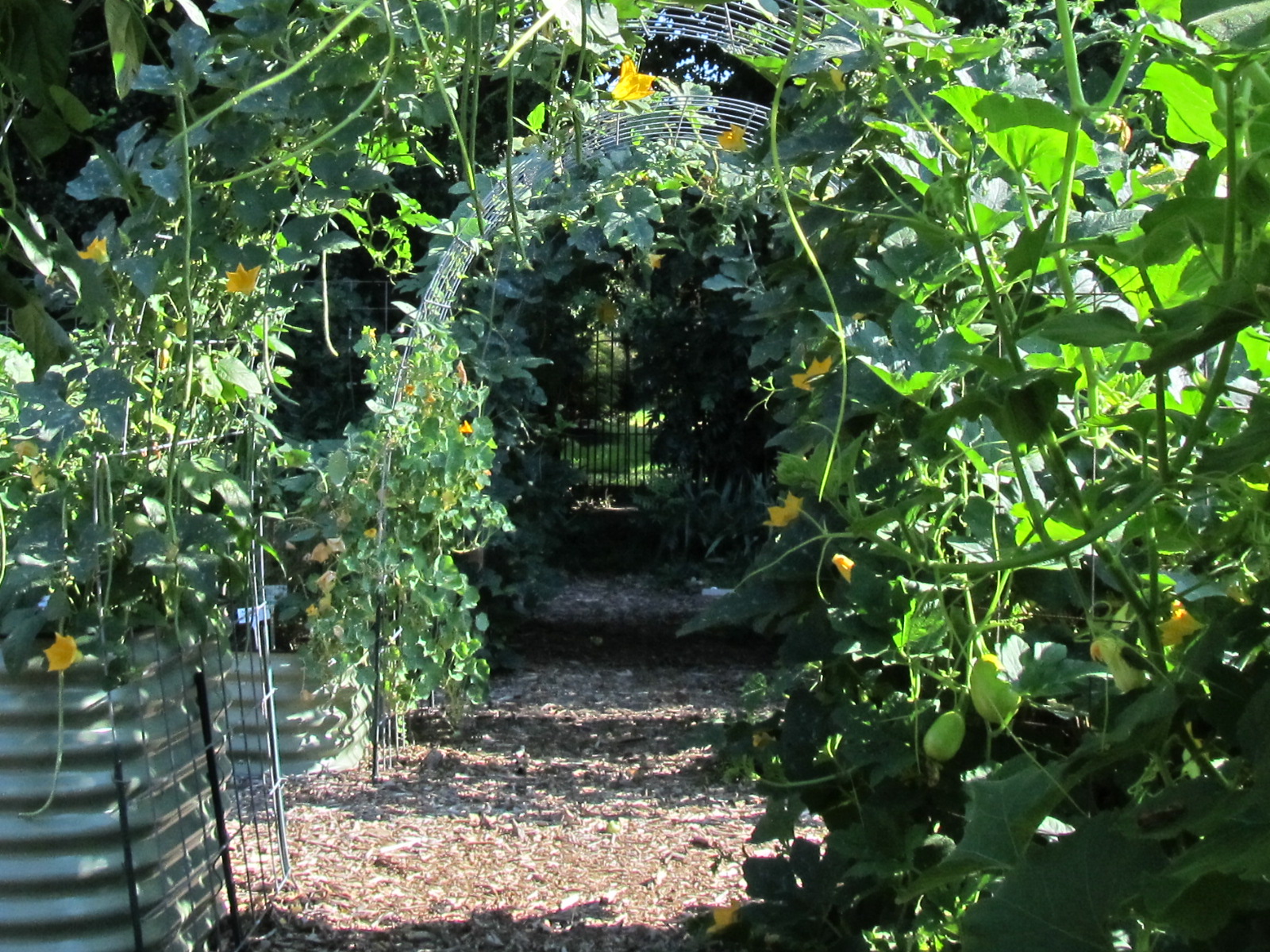
Another issue is the vines grow over 10 feet long and quickly sprawl throughout the garden. At Raincatcher’s they grew over large trellises and into the raised beds and grape arbor on the opposite side.
However, the trade off of space for productivity worked out well for the garden this year.
Well done Veggie Team, whose total production for 2024 has now surpassed 1200 pounds, providing fresh, nutritious food for the patrons of North Dallas Shared Ministries.
Cyntihia Jones and Beverly Allen, Dallas County Master Gardeners
The Veggie Team works hard every Monday morning (and many Thursday mornings during harvest), weather permitting, so please feel free to stop by with any questions you may have about growing vegetables in Dallas or just to look around and be inspired. Our garden is located on the grounds of Midway Hills Christain Church at 11001 Midway Road, Dallas, TX, 75229.
Many things connect us to our gardens.We have had a busy spring at The Raincatcher’s Garden.
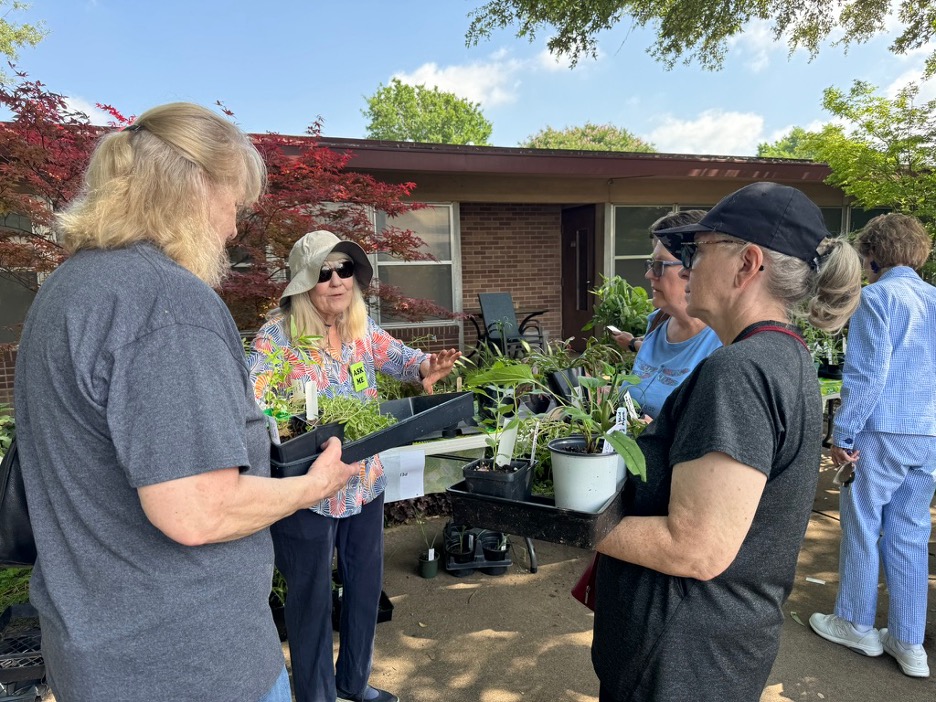
Garden chores become pleasure when we work together. Spring has consisted of weeding, seed collecting, watering and learning from each other and then sharing the fruit of that knowledge with all ages and also agencies that assist others
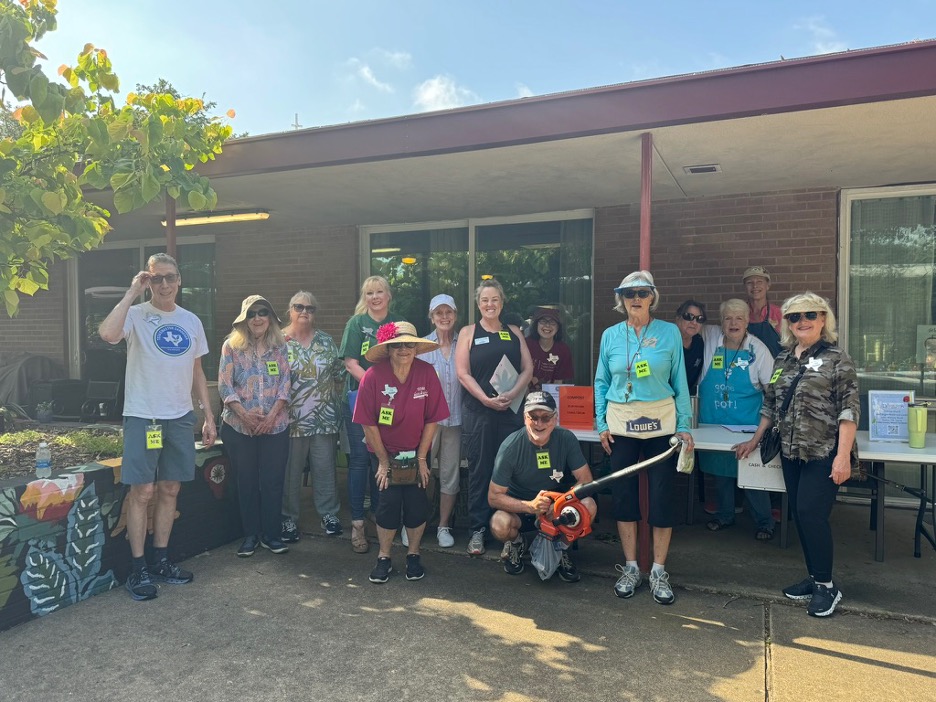
North Dallas Shared ministries received over 200 lbs of fresh vegetables to distribute from the Raincatcher’s Garden.Our compost crew hard at work. Combining efforts and resources for common goals. Here we are at our annual plant sale Jackie, Sue and Deborah at the Raincatcher’s Plant Sale
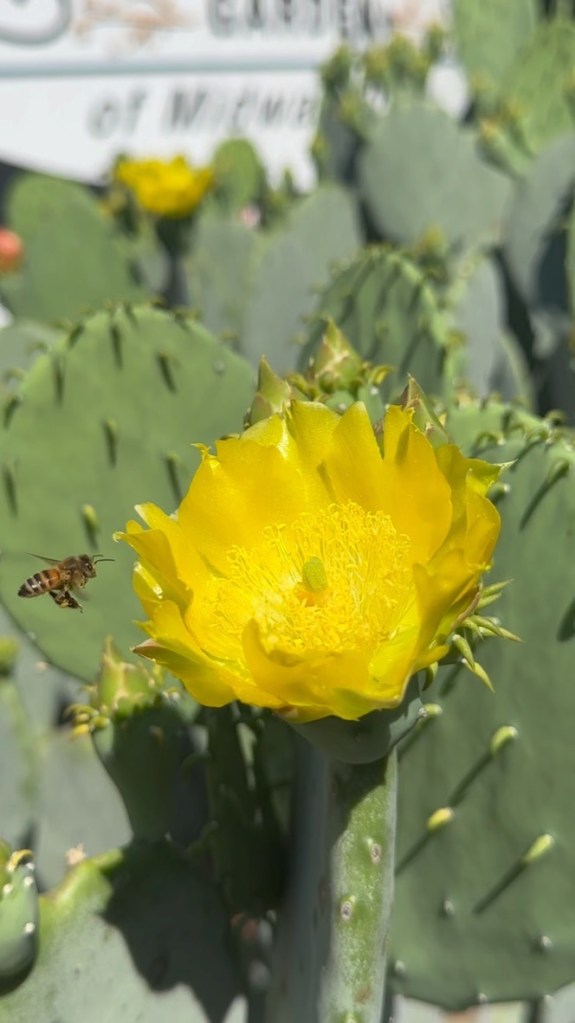
Nature unfolds before our very eyes. This honeybee is about to forage for nectar on a beautiful cactus flower at the Raincatcher’s Garden.
Garden love also includes sharing life, having fun, and learning through our garden work experiences.
Starla Willis, Dallas County Master Gardener Class of 2011
The upcoming DCMGA Garden Tour on May 18 will feature eight beautiful gardens, including the garden of Suzy Renz, as one of the stops on this year’s tour.
Once upon a time, a very conventional house in northeast Dallas had an acre of lawn and very little more than a couple of live oak trees, some unremarkable foundation shrubs, and a tired looking wooden deck in the back to make up what passed for a “yard.” Then along came Suzy Renz, on a house-hunt, who instantly saw the potential for garden greatness at this unique site, and the rest, as they say, has been five-going-on-six years of creating everything you can see at this exceptional property located on Park Branch creek.
Among Dallas Master Gardeners, Suzy is known for her singular originality and creativity in garden and home design as well as her very “green” thumbs. She is known in particular for her “Farmhouse Eclectic” style, influenced by many trips to the Round Top Antiques Fair, where one-of-a-kind objects abound and can become the stars of design vignettes when carted back home. So, unsurprisingly her yard stands out in her neighborhood as a glorious testament to both her distinctive plantswomanship and its marriage to inventive garden design.
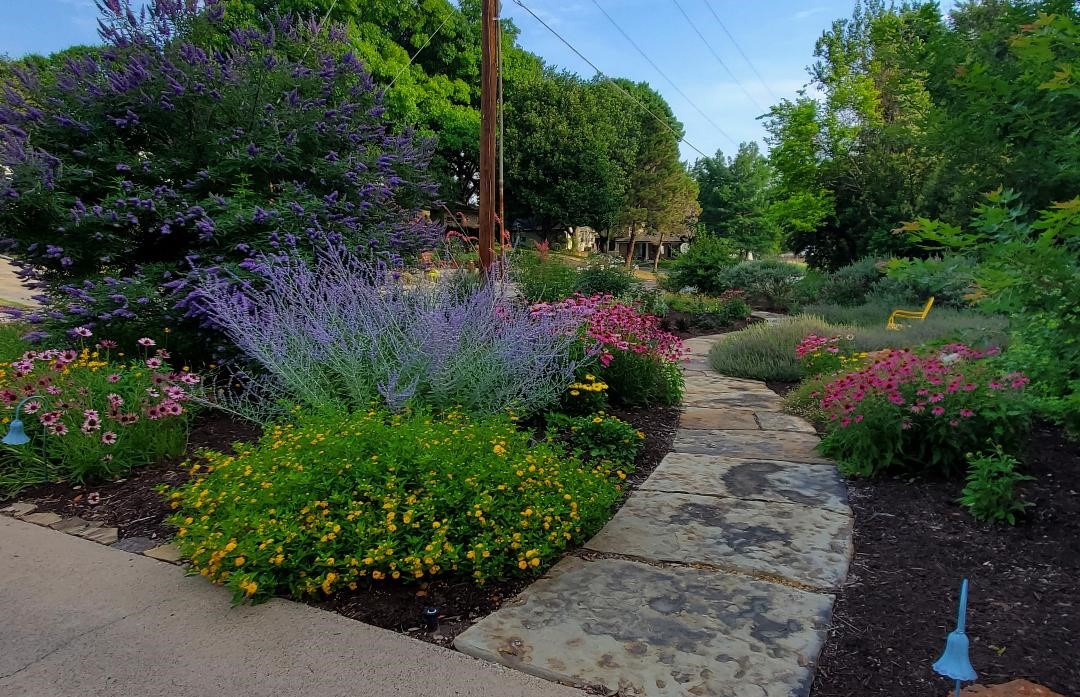
At the front of the property the “North Forty” garden, which extends along the street from the driveway to the corner of the block in an ever-narrowing strip, is a fine collection of native and adapted plants that thrive in the full sun exposure. Suzy’s prowess
at choosing the “right plant for the right place” is on full view here, as these sun-hardy specimens—the purple of Coneflowers, the blue of Russian Sage, the azure of Vitex, the yellow of Lantana, the red of Texas Yucca, and so many more—appear completely at home together in this garden space. Large slabs of Oklahoma flagstone form a lazy river pathway that invites strolling and exploring this excellent collection of well chosen plants.
When entering Suzy’s back yard through the custom-made “GARDEN” gate sign, one immediately has the sense of having arrived in a wonderland of personal horticultural and artistic expression, for this is an intensely personal space. The first steps into this special place always evoke a gasp of surprise, because this garden and indeed this house are all about the appreciation of a hidden fifteen-foot deep ravine and the creek that carved it, which are essentially invisible from the street level. A split rail fence of native cedar defines the edge of the wild from the tended garden within and demarcates the fringe of the native woods beyond. The first view of this completely unexpected terrain demands a long pause for wonderment.
Meanwhile, discovery of Suzy’s creative design talents begins with a survey of the top terrace adjoining the back of the house, which she and husband Rob extensively remodeled. Any old galvanized bucket or unusual flower pot can, in Suzy’s hands, become a container for spotlighting annual plantings of various colorful flowers. A whimsical found-object sculpture by local artist Janice Sommerville stands as a sentinel at the back door, part of Suzy’s collection of several pieces by this artist. Other mostly unidentifiable but interesting mechanical objects randomly punctuate the scene here and there. Still other smile-provoking figures, such as the trio of little concrete fisherboys and a welded iron cat whose spine is an old industrial spring, hang out around the swimming pool and exemplify the un-fussiness of this garden.
From the patio just outside the back door a series of switchback steps lead dramatically down the back yard slope to a firepit surrounded by Adirondack chairs in a rainbow of happy colors. Arriving at this convivial destination one has the feeling of having descended into an immersion in green, as the lush foliage of this remarkable site envelops the seating area and indeed the entire back yard.
A blue glass bottle tree nestles among a grove of Abelia ‘Canyon Creek’ on the lower terrace level along with smaller blue bottle “bush.” The Abelias along with a dense planting of Junipers on the middle level function as screens of green to conceal the concrete landscape blocks that form retaining walls. These walls serve primarily to hold the house and garden in their proper places, but they also create dramatic changes of elevation as the back yard drops precipitously towards the creekbed below.
While this garden shows evidence of constant attention and hard work on the horticulture, it also manages to look effortless because of the abundance of fanciful, unpretentious decorative elements. Little wonder, then, that Suzy says what she loves most about her garden is the opportunity for exercising the unlimited “process of creating.” Fortunate is she who has found her Happy Place.
Alan Rister, Dallas County Master Gardener Class of 2005

Make plans to join us on Saturday, October 14, for a unique day-long educational event sponsored by the Dallas County Master Gardener Association and Dallas College featuring well-known horticulturalists Felder Rushing and Callie Works-Leary. The $20 cost of registration includes lunch. To review the schedule of presentations, to read more about our speakers, and to register, visit dallascountymastergardeners.com. All who love gardening are welcome to attend!