Tag Archives: Dallas County Master Gardeners

Cool as a Cucumber

July 25, 2024

Did you know that not all cukes are created equal? To simplify, there are two main types of cucumbers, American and English. Both can be used for pickling and slicing. This year I decided to try the English variety in my raised garden bed. Also, to save space, I used a trellis type support system for growing it vertically. That proved to be a very good decision.

13 inch long English cucumber ready to be harvested from my garden

After about two and a half months in the ground, my little cucumber transplant has covered the trellis and produced over a dozen cucumbers. English cucumbers generally grow thinner and straighter than their American counterparts and can grow in the range of 12 to 24 inches long. So far, I’ve been harvesting them at around 12 to 14 inches in length. 

English cucumbers have a sweeter flavor and delicate skin that is less bitter than that of other cucumbers. Many sources say that English cucumbers tend to have very few seeds but, as you can see from the photo, mine had a generous amount. 

A person peeling cucumber on a cutting board

Description automatically generated
Seeding an English cucumber with a serrated grapefruit spoon

Tips for growing:

*Plant in an area of the garden that receives a minimum 6 hours of sunshine daily. 

*Prepare the soil by tilling well while adding aged compost to a depth of 6 inches.

*On average, cucumbers require: 1 inch of water per week in moderate conditions, twice per day when temperatures exceed 90°F. 

*Add a 4-inch layer of organic mulch around base, but not touching the stem.

One of my favorite cucumber recipes is from a place in the Texas hill country where my husband and I, for over 35 years, always enjoyed having lunch. It was an absolutely charming restaurant in Fredericksburg known as ‘The Peach Tree Tea Room’. The Pedregon family opened their new venture in the fall of 1984. It brought in diners from all over the United States and internationally, as well. Sadly, it closed a few years ago leaving a void in the Fredericksburg culinary scene. Thankfully, over the years, I purchased all three of their wonderful cookbooks. The recipe I’m sharing is from their first cookbook, published in 1990. It is the recipe for ‘Chilled Creamy Cucumber Soup’. 

Making the recipe over the weekend brought back cherished memories from those early days in Fredericksburg. It was especially rewarding to use three of the ingredients called for in the recipe from my garden; English cucumbers, parsley and garlic that was curing in my pantry. 

A bowl of food on a plate

Description automatically generated
Chilled Creamy Cucumber Soup Garnished with Freshly Chopped Parsley and Tomatoes

Hope you will be inspired to take a cool and refreshing break with ‘Chilled Creamy Cucumber Soup’. In the meantime, chill out with these tasty, sliced cucumber appetizers.

Cucumber slices with flowers and a small glass vase of herbs on a wood surface

Description automatically generated
English cucumber slices topped with Herbed Cream Cheese, Salad Burnet and Borage Blossoms

And, just in case you were curious about the title…’Cool as a Cucumber’. I did a quick online search and learned something new. First, the inside of cucumbers are approximately 20 degrees cooler than the outside air. And the phrase ‘cool as a cucumber’ first appeared in a poem by the English author John Gay in 1732. It expresses the narrator’s angst regarding a woman with unreturned love! Today, that phrase is used to describe someone who tends to remain calm, assured and composed in any situation.

Linda Alexander, Dallas County Master Gardener Class of 2008

Chilled Creamy Cucumber Soup

Cucumber Slices Topped With Herbed Cream Cheese

Calabacita – SVB Resistant and Productive

July 1, 2024

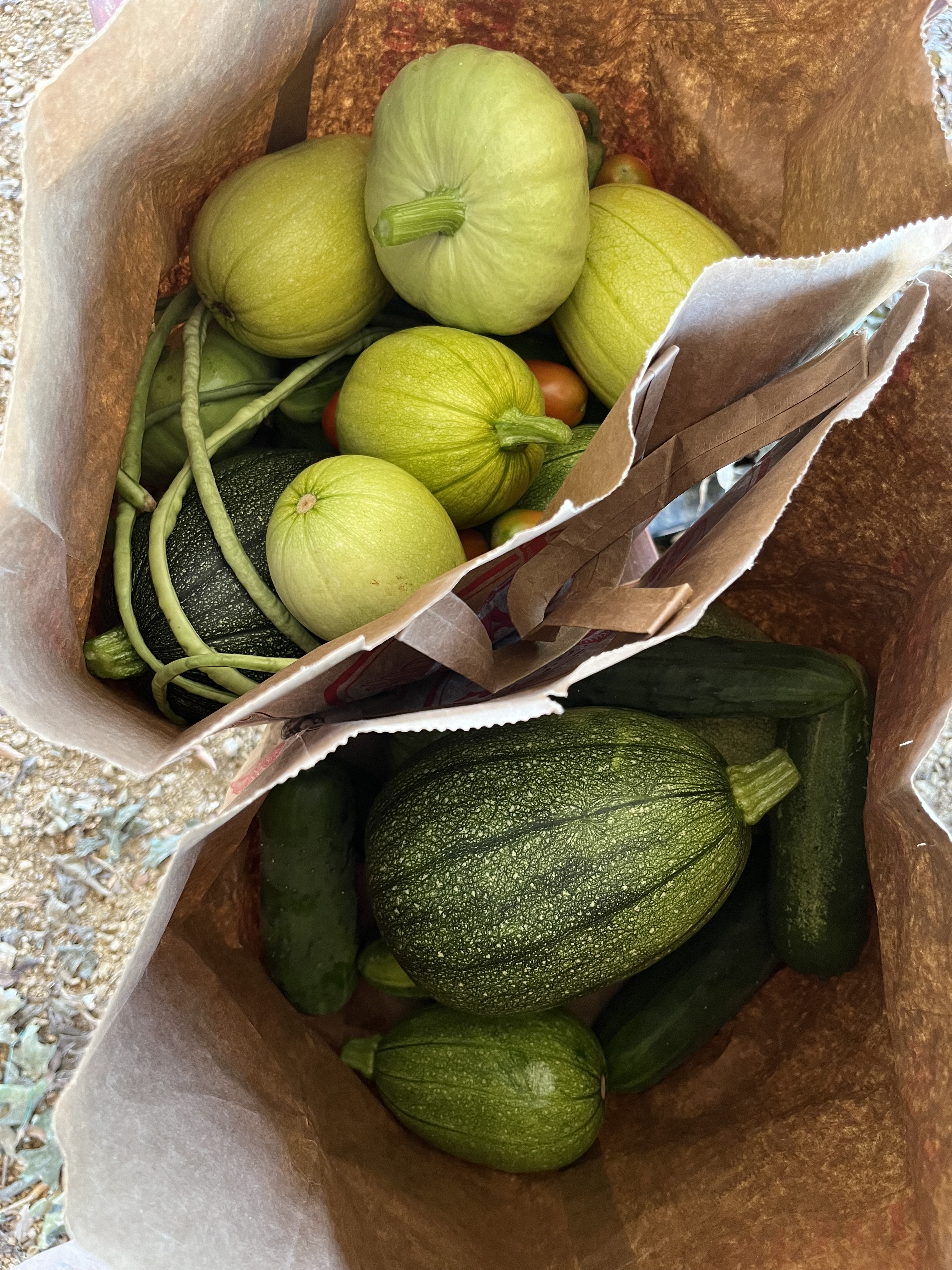
Congratulations to the Raincatcher’s Garden Veggie Team, who has harvested and donated 634 pounds of squash so far this year. It’s quite an accomplishment when you consider the ubiquity of the destructive squash vine borer (SVB) in the area.

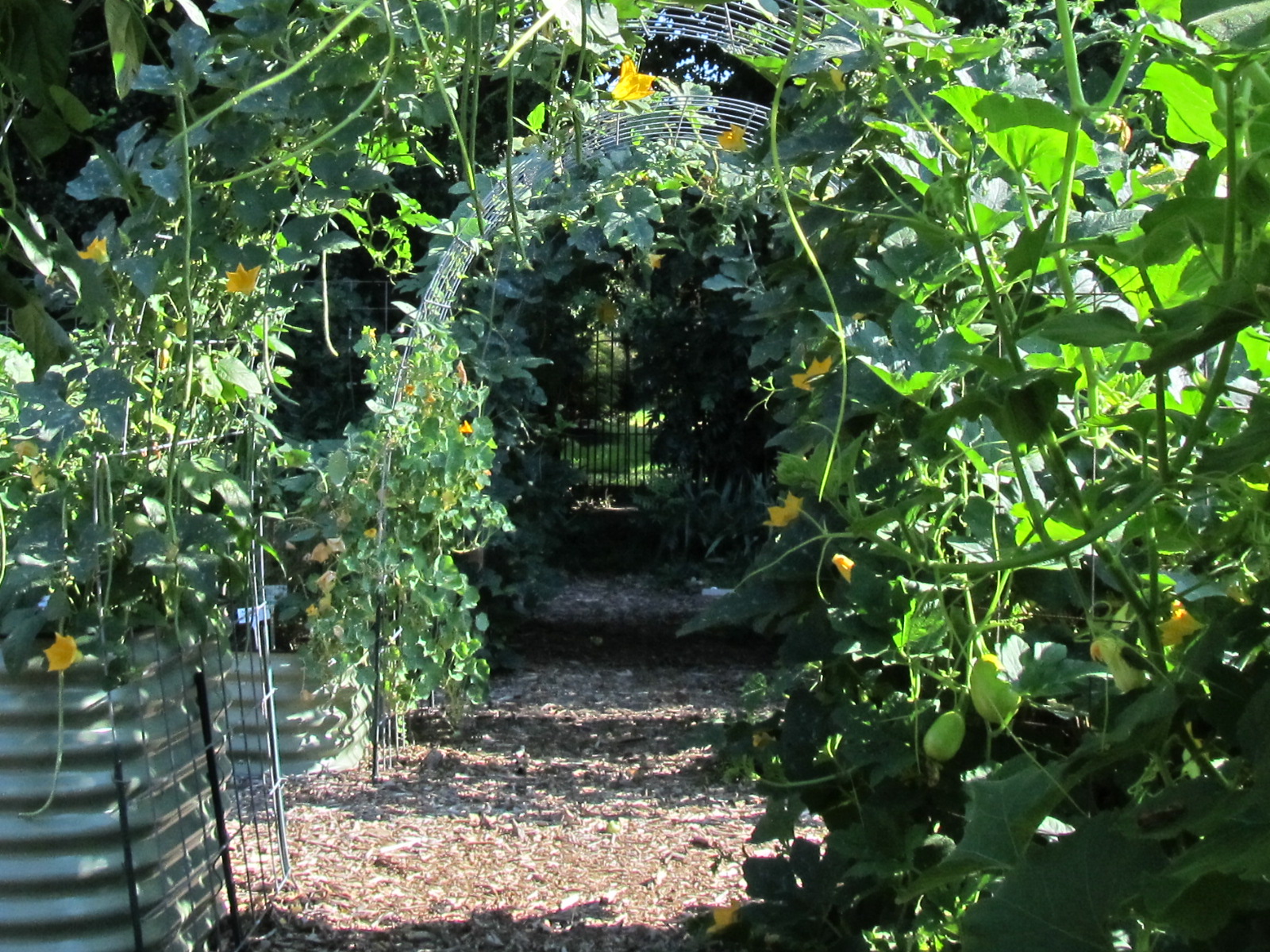
The team’s challenge was to find a squash variety that resists SVB. Over the past three years, gardeners have tried Zucchino Rampicante (Cucurbita moschata), Baby and Waltham Butternut (Cucurbita moschata) and Calabacita (Cucurbita pepo).  All overcame SVB damage, but the Calabacita production was much higher.

Calabacita is delicious, especially when harvested at tennis ball to softball size. It can also be eaten as a soccer ball size pumpkin and stores well at the larger size. It takes a little more effort to prepare the larger size, so the gardeners included cooking instructions with donations.

One difficulty, but a good problem to have, is finding the many fruits of this prolific plant before they reach a large size.

Another issue is the vines grow over 10 feet long and quickly sprawl throughout the garden. At Raincatcher’s they grew over large trellises and into the raised beds and grape arbor on the opposite side.

However, the trade off of space for productivity worked out well for the garden this year.

Well done Veggie Team, whose total production for 2024 has now surpassed 1200 pounds, providing fresh, nutritious food for the patrons of North Dallas Shared Ministries.

Cyntihia Jones and Beverly Allen, Dallas County Master Gardeners

The Veggie Team works hard every Monday morning (and many Thursday mornings during harvest), weather permitting, so please feel free to stop by with any questions you may have about growing vegetables in Dallas or just to look around and be inspired. Our garden is located on the grounds of Midway Hills Christain Church at 11001 Midway Road, Dallas, TX, 75229.

Bee Balm vs. Lemon Bee Balm vs. Lemon Balm

 Oh, I so enjoy the colors and flowers that bloom during the early summer and one that I’m enjoying of late is bee balm.  Its magenta flowers atop a tall stalk are a feast for pollinators. In the wildflower area of Raincatchers, a purple rocket-like plant is putting on a show – Bee balm?   It looks nothing like the other, but I recall it being bee balm too. Can it be?  And then there’s Lemon Balm with its bushy habit and ability to travel readily.  Looks like it’s time to clear up this mystery— 

Upon further investigation, these similar names create a climate for confusion Bee balm, Lemon Balm, and Lemon Bee Balm -the looks of the plants are distinctively different but all are related to the mint family.   

eBee balm, also called Wild bergamot, has several varieties – some perennial and others annual. Monarda is a genus of flowering, plants from the mint family. Lamiaceae didyma or fistulosa (zones 4-9) are perennials.   Its cheery pink flowers are located near the Edible landscape greenhouse and stands 24-48 inches tall, and can spread 24 -36 inches.  It blooms late spring into summer in full to part sun in well prepared beds with good drainage. Bee balm has magenta, pink, purple, red or white flowers that are 2-3-inch across with slender tubes looking flowers on a tall stalk. 

Bee Balm

If your garden needs a smaller specimen, pinch the stalks in early spring, or purchase a shorter variety. Deadheading and cutting makes way for more flower production.  Cut the stalks close to the ground in late fall and they will return in the spring. Powdery mildew might make an appearance if it’s a wet spring, but it won’t harm the plant.  

II was purchased at the DCMG Plant Sale at Fair Park and then a dear friend gifted some she started from seeds (Northaven Gardens).  It spreads some, but not difficult to control.  The bees, Butterflies and hummingbirds are delighted.  Mark and Cynthia Jones captured this picture of a moth (white lined sphinx moth I think) feasting on  the variety Peter’s Purple. 

Lemon BEE Balm (Monarda citriodora) is a herbaceous annual of the mint family, native to Central, southern America and Mexico and is commonly found in pastures and prairies.  It will thrive in full sun, and in poor, rocky, or sandy soils. Can you see where this gets confusing?  It Blooms in late Spring early summer about the same time as the Bee balm is blooming.   This was found in our wildflower area at the garden along with blanket flower, long after the bluebonnets, Indian paint brush, and Engelmann daisies have said their adieus (goodbyes) To confuse even more, Lemon Bee balm is also known as purple horsemint or lemon mint.  It has lemon scented spiky clusters of varying shades of lavender.  You can find this in seed packets and often in wildflower mixes.  

Lemon Bee Balm

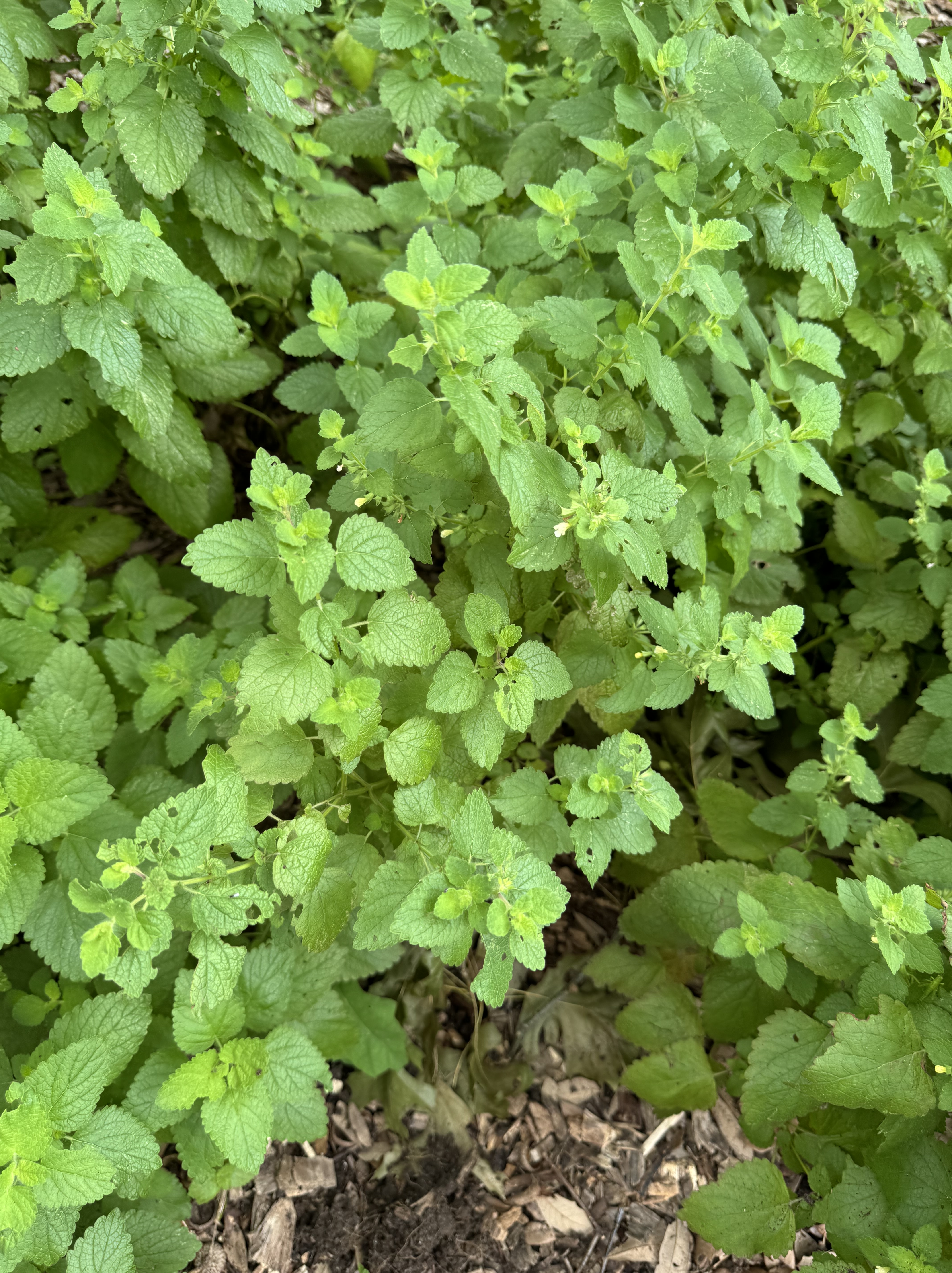
Lastly there is Lemon Balm, another member of the mint family, (Melissa officinalis). Native to Europe, It can be found in many places, but most recently has been thinned from the Hügelkultur in the Edible landscape.  It grows in a clump, with wrinkled  leaves that have a scent of Lemon. The flower is an insignificant spiky pale-yellow cluster.  This herb is said to produce calming effects.   It seeds and spreads readily and can get 3 feet by 2 feet.   It consistently returns in the garden. It can be obtained in the herb section of  garden centers or possibly a garden friend would gift you a start.  

Lemon Balm

Now that that mystery is put to rest,  figure out a way to use one or all of  these beauties in your landscape.   

Starla Willis, Dallas County Master Gardener Class of 2011

Video of sphinx moth, courtesy of Mark and Cynthia Jones, Dallas County Master Gardeners Class of 2013

Sunflower Honey

June 14, 2024

A bee on a yellow flower

Description automatically generated

A recent Savannah Bee email was so inspiring to read that I immediately ordered three jars of what founder Ted Dennard described as “the happiest honey around”. Sourced from the beekeepers of Ukraine and Romania, it truly is “as sweet as a summer day.”

For more information about the women beekeepers who produce and distribute this remarkable sunflower honey, please follow the link to Savannah Bee. Their story is one of determination and perseverance in continuing the art of beekeeping for future generations. 

Also, please revisit a blog article posted by Master Gardener Starla Willis in August of 2022. It features her summer trip to Ukraine where she captured an amazing photo of sunflower fields from her train ride across the country. She has cherished memories of that special experience.

For a quick breakfast treat, spread this yummy, crystallized honey onto a toasted English muffin.

A plate with food on it and a jar of butter

Description automatically generated

Only 5 ingredients from this to this!

*Note: For all products and references to Savannah Bee go to savannahbee.com

Linda Alexander, Dallas County Master Gardner Class of 2008

Candied Sunflower Seed Snack Recipe as pictured above

Cilantro/Coriander

May 30, 2024

Coriandrum sativum

It’s as common in the garden and grocery isles as parsley but there seems to be a level of misunderstanding that needs addressing. First Coriander and Cilantro are the same plant. The confusion is found in the seeds.  It is also sometimes referred to as Chinese parsley because of its long history of use in that cookery.  To clarify, the name “coriander” comes from the Greek koris, meaning bug, in reference to the odor of the leaves. And who hasn’t heard the taste of cilantro described as having a “soapy” character? 

Historically, coriander has been used for culinary and medicinal purposes for over 3,000 years. It is mentioned in Sanskrit texts, on Egyptian papyri and in Tales of the Arabian Nights.

In the Bible it is compared with manna. (Exodus 16:31 – “And the people of Israel called the bread manna. It was white like coriander seed and tasted like wafers made with honey.” NASB)

Coriander was brought by the Romans to Europe, where it now grows wild. In Mexico and throughout the Southwest you’ll find cilantro leaves used as a necessary flavoring ingredient in salsas, salads, soups, chicken and meat dishes.

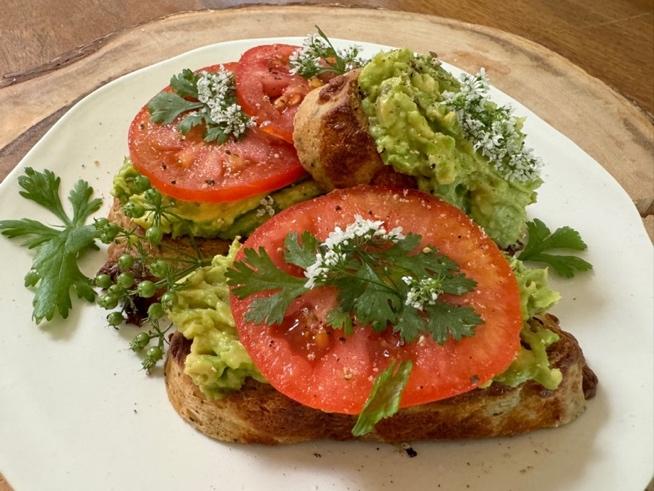
Today, coriander is grown primarily for the leaves, but chefs are discovering new ways of using the entire plant. Interestingly, for me, while working in the garden last week, a cilantro plant filled with lacey, petite white flowers caught my eye.  After taking a few colorful photos, I couldn’t resist snipping a delicate umbel and popping it into my mouth. While the leaves of coriander/cilantro have a much more assertive personality, the flowers offered a milder, citrus-like taste that was cool and refreshing. It was an “ah-ha” moment for me. Never before had I considered using the delicate flowers in my cooking. I’m now convinced that a creative approach to using them will be enjoyed and appreciated. It is recommended cilantro flowers always be used fresh, never dried.

A plate of food on a wood surface

Description automatically generated

(Avocado Toast with Tomato Slices, Freshly Snipped Cilantro Flowers and a Splash of Apple Balsamic Vinegar)

A plate of food on a wood table

Description automatically generated

(Asian Noodle Salad with Fresh Cilantro Flowers)

*Finally, here’s an easy way to simplify the confusion. When people speak of cilantro, they are referring to the stems, leaves and flowers of the plant. Coriander usually refers to dried seeds. All are edible so, please, enjoy using the entire the plant in your future cooking adventures. 

Linda Alexander, Dallas County Master Gardener Class of 2008

Natural Gardener – Austin, Texas

May 24, 2024

A recent springtime visit to The Natural Gardener with my son who lives in Austin was delightful. We had gone to purchase seasonal color for his front beds but lingered for over an hour just to soak in the experience. Themed gardens filled with fragrant blossoms, the intoxicating scent of countless herbal treasures along with an earthy aroma of perfectly finished compost bins kept us there longer than we intended to stay. 

Located on a meandering section of Old Bee Cave Road, The Natural Gardener is considered a world-class gardening destination. The Dromgoole family has owned and operated the establishment, in its current location, since 1993. They are well respected for their pioneering work in organic gardening and sustainable living. 

You might find that visiting during the week is a more relaxing time to leisurely stroll through over eight acres of this rustic Hill Country beauty. Bring a picnic lunch to enjoy on a comfortable bench alongside the Kitchen Garden or while resting in the old red swing. 

Be prepared to take pictures at every turn. Don’t miss the whimsical expressions of the goats while perched on their elevated wooden table or the chickens scratching around in the ground. Plan to spend some time in the Butterfly Garden where honeybees, butterflies and hummingbirds can be found visiting flowers displaying an array of beautiful colors.

Linda Alexander, Dallas County Master Gardener Class of 2008

Garden Love

Many things connect us to our gardens. We have had a busy spring at The Raincatcher’s Garden.

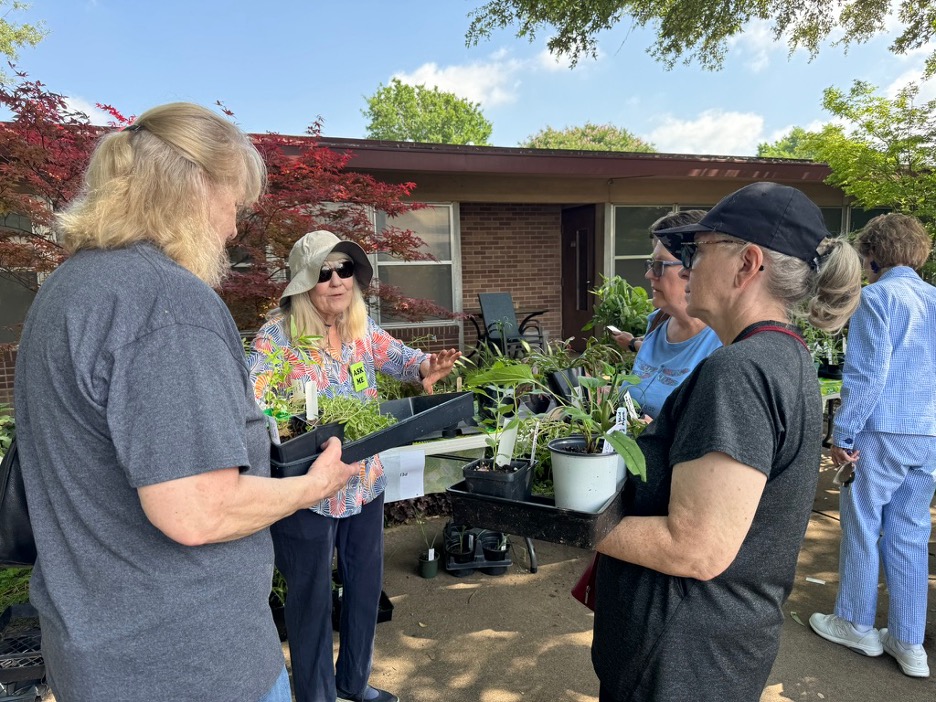
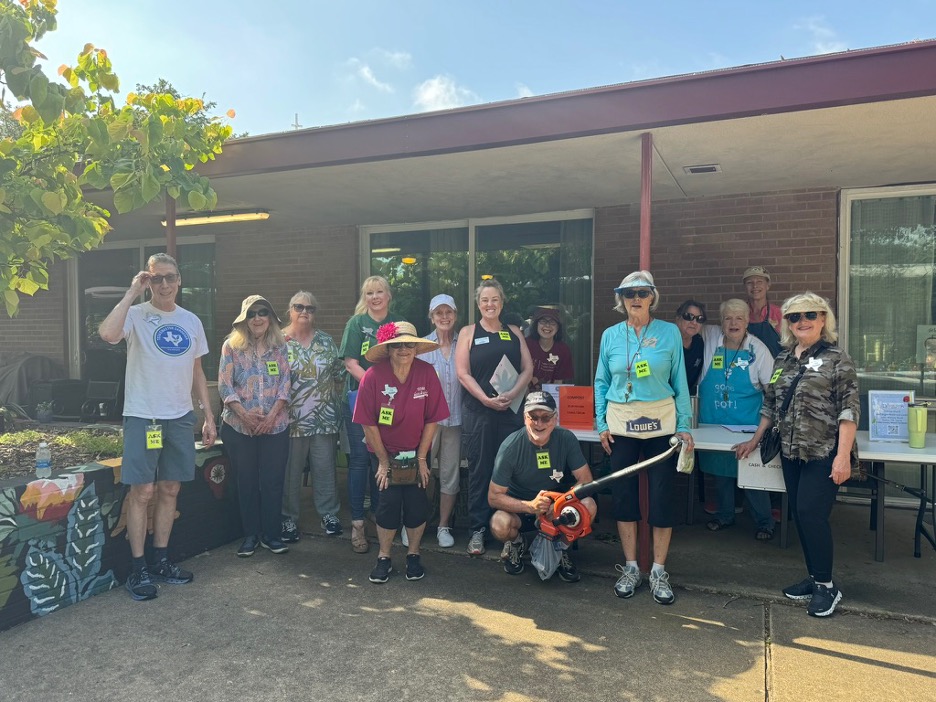
Garden chores become pleasure when we work together. Spring has consisted of weeding, seed collecting, watering and learning from each other and then sharing the fruit of that knowledge with all ages and also agencies that assist others

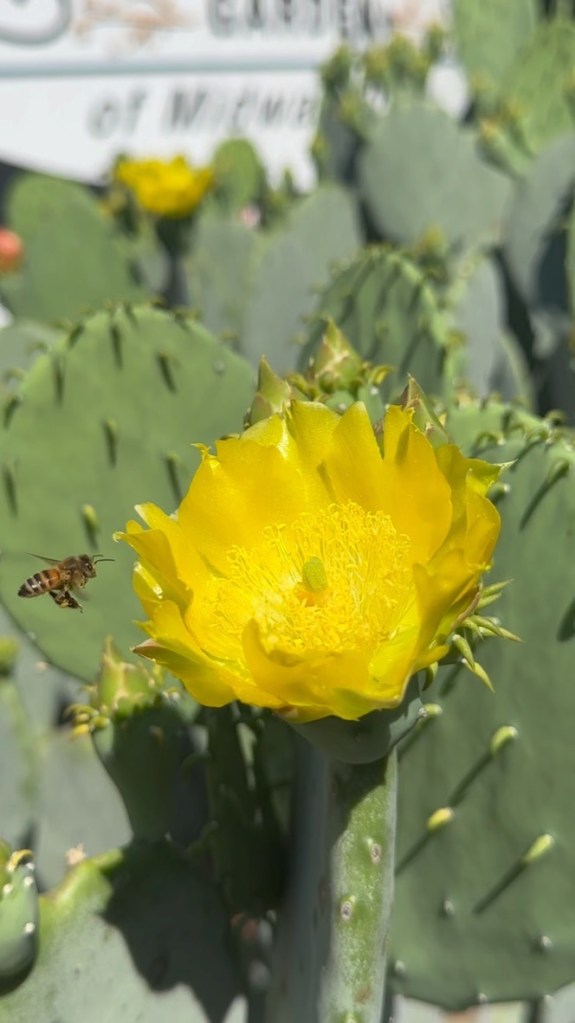
Nature unfolds before our very eyes. This honeybee is about to forage for nectar on a beautiful cactus flower at the Raincatcher’s Garden.

Garden love also includes sharing life, having fun, and learning through our garden work experiences.  

Starla Willis, Dallas County Master Gardener Class of 2011

DCMGA Garden Tour Preview: The Garden of Suzy Renz

May 17, 2024

 By Alan Rister

The upcoming DCMGA Garden Tour on May 18 will feature eight beautiful gardens, including the garden of Suzy Renz, as one of the stops on this year’s tour.

Once upon a time, a very conventional house in northeast Dallas had an acre of lawn and very little more than a couple of live oak trees, some unremarkable foundation shrubs, and a tired looking wooden deck in the back to make up what passed for a “yard.”  Then along came Suzy Renz, on a house-hunt, who instantly saw the potential for garden greatness at this unique site, and the rest, as they say, has been five-going-on-six years of creating everything you can see at this exceptional property located on Park Branch creek.

Among Dallas Master Gardeners, Suzy is known for her singular originality and creativity in garden and home design as well as her very “green” thumbs.  She is known in particular for her “Farmhouse Eclectic” style, influenced by many trips to the Round Top Antiques Fair, where one-of-a-kind objects abound and can become the stars of design vignettes when carted back home.  So, unsurprisingly her yard stands out in her neighborhood as a glorious testament to both her distinctive plantswomanship and its marriage to inventive garden design.

At the front of the property the “North Forty” garden, which extends along the street from the driveway to the corner of the block in an ever-narrowing strip, is a fine collection of native and adapted plants that thrive in the full sun exposure.  Suzy’s prowess

at choosing the “right plant for the right place” is on full view here, as these sun-hardy specimens—the purple of Coneflowers, the blue of Russian Sage, the azure of Vitex, the yellow of Lantana, the red of Texas Yucca, and so many more—appear completely at home together in this garden space.  Large slabs of Oklahoma flagstone form a lazy river pathway that invites strolling and exploring this excellent collection of well chosen plants.

When entering Suzy’s back yard through the custom-made “GARDEN” gate sign, one immediately has the sense of having arrived in a wonderland of personal horticultural and artistic expression, for this is an intensely personal space.  The first steps into this special place always evoke a gasp of surprise, because this garden and indeed this house are all about the appreciation of a hidden fifteen-foot deep ravine and the creek that carved it, which are essentially invisible from the street level.  A split rail fence of native cedar defines the edge of the wild from the tended garden within and demarcates the fringe of the native woods beyond.  The first view of this completely unexpected terrain demands a long pause for wonderment.

Meanwhile, discovery of Suzy’s creative design talents begins with a survey of the top terrace adjoining the back of the house, which she and husband Rob extensively remodeled.   Any old galvanized bucket or unusual flower pot can, in Suzy’s hands, become a container for spotlighting annual plantings of various colorful flowers.  A whimsical found-object sculpture by local artist Janice Sommerville stands as a sentinel at the back door, part of Suzy’s collection of several pieces by this artist.  Other mostly unidentifiable but interesting mechanical objects randomly punctuate the scene here and there.  Still other smile-provoking figures, such as the trio of little concrete fisherboys and a welded iron cat whose spine is an old industrial spring, hang out around the swimming pool and exemplify the un-fussiness of this garden.

From the patio just outside the back door a series of switchback steps lead dramatically down the back yard slope to a firepit surrounded by Adirondack chairs in a rainbow of happy colors. Arriving at this convivial destination one has the feeling of having descended into an immersion in green, as the lush foliage of this remarkable site envelops the seating area and indeed the entire back yard.

A blue glass bottle tree nestles among a grove of Abelia ‘Canyon Creek’ on the lower terrace level along with smaller blue bottle “bush.”  The Abelias along with a dense planting of Junipers on the middle level function as screens of green to conceal the concrete landscape blocks that form retaining walls.  These walls serve primarily to hold the house and garden in their proper places, but they also create dramatic changes of elevation as the back yard drops precipitously towards the creekbed below.

While this garden shows evidence of constant attention and hard work on the horticulture, it also manages to look effortless because of the abundance of fanciful, unpretentious decorative elements.  Little wonder, then, that Suzy says what she loves most about her garden is the opportunity for exercising the unlimited “process of creating.”  Fortunate is she who has found her Happy Place.

Alan Rister, Dallas County Master Gardener Class of 2005

A Late Spring Update

According to the calendar, the first day of spring was Friday, March 20, 2024. Dallas natives know that early signs of spring started appearing in late February. One of the happiest moments for me was when two new additions to my garden in 2023 announced their comeback from winter’s cold. They are now showing signs of an exciting springtime welcome.

*Veggie Green Rose (Planted April 2023) – It has easily doubled in size, producing new buds over the past two months.

*Green Gage Plum (Planted September 2023) – It was thrilling to see both trees filled with delicate white blossoms during the last few days of February, continuing into March. Fresh, new green leaves started appearing in late March and early April. It’s now May and all is well.

*Black Sage (Planted September 2023) Sadly, this one did not survive those few days/nights of below freezing temperatures. But I’m not giving up on growing black sage in my garden. This time I’m trying a different strategy. Last month I ordered four new 4” plants from the same grower in California. Each one was planted in a different location of the garden with varying degrees of sun to shade. I’m encouraged today that all four plants have almost doubled in size. Hopefully, by this coming fall they will all be well established and ready for our unpredictable winter weather.

(Black Sage planted in early April 2024 is thriving)

A recent Savannah Bee email featured their Black Sage Honey and the amazing story of how it thrives in the lower mountain slopes and upper desert regions of the Sierra Nevada mountains. It is a fascinating look at what it takes to produce this uniquely flavored honey. Thankfully, I still have a few jars left from my last order!

Linda Alexander, Dallas County Master Gardener Class of 2008

Raincatcher’s Garden Annual Plant Sale

 Tuesday, May 7th 2024

10 AM – 3 PM

Midway Hills Christian Church 

11001 Midway Road 

Dallas, Texas 75229

So you think you want a GREENHOUSE!  Experiences from Acquiring a Green House for Raincatcher’s Garden

The allure of having a greenhouse is something that some gardeners dream of – a place to overwinter plants, start seedlings, and have workspace. How does this become a reality?  First of all,  determine your goals and ideas.  Do your homework and decide if it is a project worthy of the investment of your time, money and efforts?  

About the time Fall arrives and freezing weather makes its appearance, ads for greenhouses start flooding inboxes and social media sites.  It seems like a good idea to have a place to store tender plants that can’t handle it outside during our coldest temperatures of January and February. Another bonus is the ability to provide a head-start for seedlings to sprout before they are planted in the garden.  

There are a variety of styles, sizes, price points as well as optional accessories to consider – from heavy plastic, glass or plexiglass partitions, to brick surrounds, and various mortar and glass options, ranging in cost, size and function. A greenhouse can also be labor intensive, and impractical for those who don’t have the time, ability, or manpower to maintain it properly.

The preferred space needs to be of adequate size for your garden needs, level and in a sunny to mostly sunny location. Water needs to be close and the ability to heat, cool and monitor the space is an important consideration.

Dreaming of a place to overwinter my plants caused me to inquire online. My available location was not ideal-the space was not adequate and the prep and the assembly was more than daunting (in so many ways). Ultimately, the amount of time, effort and money to be invested caused me to pause, rethink and determine that installing a greenhouse was not my best move.  However, a well-utilized greenhouse is much more than just a storage space for tender plants.  

While contemplating this, Raincatchers’ acquired one that would be optimal for our North Garden. It was transported to the property and the plans for putting it into seedling production began to unfurl. It took about two months to get the “new to us” greenhouse relocated and in working order. The “team” at Raincatchers’ has spent many man hours preparing it for use, leveling the site, setting a brick floor on decomposed granite, anchoring the greenhouse against the strong Texas winds, building multiple two-tiered seedling tables, installing a solar powered cooling fan, and initiating water and electrical hookups. Maintenance will be ongoing.

Seedlings have now been started for our many vegetable beds and they appear to be very happy in their controlled environment.  Note: vegetable seedlings are started and then set out into our gardens at the proper time.

If you are thinking about  acquiring a greenhouse, either by purchase or building it yourself – the best of luck to you! Hopefully, you now have an idea of the reality of the effort to produce a functioning greenhouse and can make an informed decision  It can be very useful and an asset to your gardening efforts; whether starting vegetables, flowers or show plants, or just over wintering your houseplants or tropicals.  

A gardener’s considerations for Installing a greenhouse:

Manpower to construct the unit (most come in sections that require construction) 

$$ Cost (from a few hundred dollars to several thousands)

Overall Size and Options

Site selection –    

Sunny to mostly sunny location

Ground leveled for structure

Anchoring against the wind

Inside Flooring (Hard surface with the ability to drain) several options Shelving options (Water resistant)

Storage options (Greenhouse supplies)

Heating and Cooling Capability, i.e., a solar operated cooling fan

Electrical Considerations

Water Availability (For plant watering and seedling misting) 

Shade Capability (For the long, hot sunny days)

On-going Upkeep (several hours a week) 

Construction Permit (If required)


Starla Willis, Dallas County Master Gardener Class of 2011 with input from Jon Maxwell, Class of 2015

Two dates to remember:

Raincatcher’s plant sale-May 7th

Dallas County Master Gardener Association Garden Tour 2024-May 18th