The Tomato Station

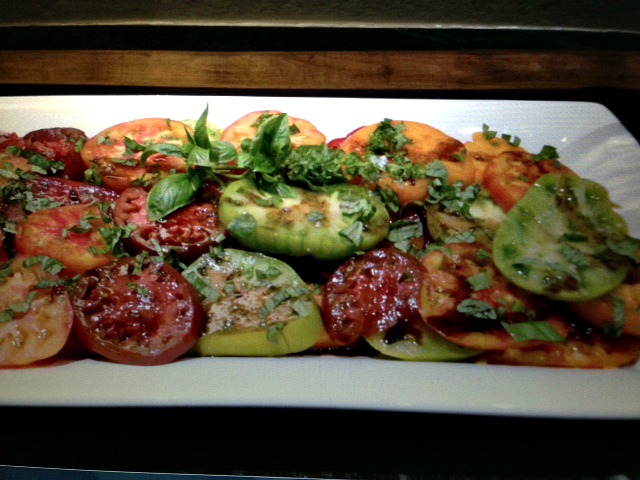
On a recent summer trip to Colorado for a destination wedding, my husband and I experienced a new concept – “the tomato station, or tomato bar “.  The idea is to select any variety of tomato available, heirloom, beefsteak, celebrity, etc., then sprinkle with a selection of different “salts”.  From there you move to the balsamic vinegar tray where, once again, you decide and then “drizzle” accordingly.

Tomato Station

Finally, to complete the experience, garnish with freshly chopped basil and enjoy the flavors that you have combined.

Once we were back in Dallas, I copied the idea and provided an heirloom tomato tray as one of the items for a “Summer Supper” dinner party.   It was the star of the menu.

Fleur de SelOur favorite salt was the “Fleur de Sel”, which can be found at places like Central Market, and Blackberry Balsamic Vinegar from a boutique type farm in Colorado.  I ordered multiple bottles from Westwood Farms.

As you can see from the picture, nature provides the most beautiful palette creating a real feast for the eyes.

Enjoy!

Linda

Dallasites, if you don’t have  tomatoes from your garden, try Central Market or Whole Foods or the Farmer’s Market.

Fall Crops For Dallas Veggie Gardens

If you are feeling the heat, you may think of September as the end of summer but if you are outside ready to work in your veggie patch;  fall is on your mind.

At the Demonstration Garden on Joe Field Road, we are busy planting and preparing for fall.  Jim, as always, is way ahead of most of us and provides this useful fall planting guide : For our fall crop info click here.

Last week we planted seeds of  green and yellow bush beans and yellow squash.

Next up, seeds of beets, peas, carrots lettuce and radishes with broccoli, brussel sprouts, cabbage and cauliflower transplants.

Seeds for Fall Planting in Dallas Gardens

Seeds for Fall Planting in Dallas Gardens

Prepare your beds for fall planting:

  • First, decide what crops will produce through fall, pull the diseased and finished or  non producing vegetables. For instance, I will save jalepeno,  okra, basil, and one of my tomato plants.
  • Pull back the mulch or set it aside on a tarp or in a wheelbarrow and add compost to your vegetable bed.  It is important to remove the mulch for seed planting and so that you don’t incorporate it into the soil.
  • After adding and forking your compost into the soil, you are ready to sow seeds or add transplants.
  •  Add back the mulch around transplants only. When your seeds have sprouted and have their “true” leaves, you can gingerly add mulch to these plants.

Ann

Two More Fall Planting Resources:

TAMU Fall Planting Guide and NHG Guide

Herbal Treats For Labor Day Festivities

Finish your Labor Day  supper with this flavorful treat and your guests will have sweet dreams.

Cinnamon Basil Ice Cream
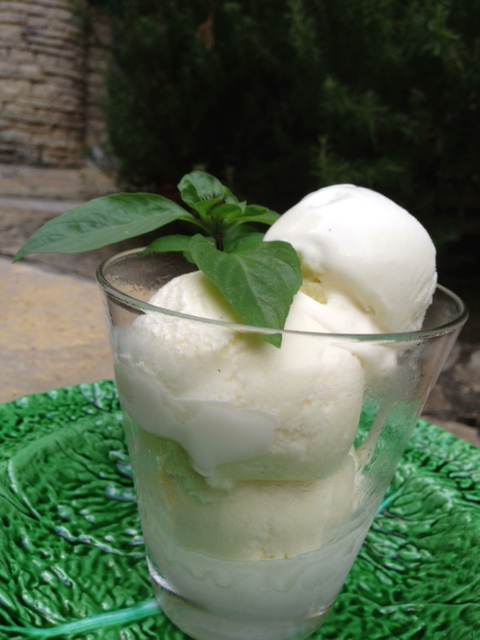
cinnamon basil ice cream


Ingredients: 

2 ½ cups whole milk, plus an additional 2 tablespoons if needed, or substitute low-fat

(2%) milk for a slightly less rich ice cream

1 ½ cups heavy cream

8 4-inch sprigs cinnamon basil and ½ cinnamon stick, or 6 4-inch sprigs sweet basil and

1 ½ cinnamon sticks

¼ vanilla bean, split and scraped, or ½ teaspoon vanilla extract

8 large egg yolks

1 cup plus 2 tablespoons sugar

Directions: 

1.  Infuse the cream.  Pour the milk and cream into a 2-quart saucepan and bring it to a boil over medium-high heat.  Add the basil, cinnamon stick, and vanilla bean if using, push them under the surface of the liquid with a spoon, and immediately remove the pan from the heat.  Cover the pan and steep for 20 minutes.  Strain the liquid through a fine sieve into a large liquid measuring cup, pressing down firmly on the herbs to extract all the liquid from the leaves.  Add fresh milk if needed to measure 4 cups.  Return the infused cream to the saucepan.

2.  Egg yolks.  Put the egg yolks in a medium stainless-steel mixing bowl and float that bowl in a larger bowl half full of hot tap water.  Whisk the yolks until they are lukewarm, 90 to 100 degrees F (it will take less than 1 minute), then lift the bowl out of the water.

3.  Ice cream base.  Add the sugar to the infused cream and bring it back to a boil over medium-high heat.  The instant the cream comes to a rolling boil and rises in the pan, lift it off the heat.  With the whisk in one hand and the saucepan in the other, pour the boiling cream into the egg yolk as you whisk constantly but gently.  Don’t whisk rapidly or you will cool the custard before the yolks have a chance to set.  Continue to stir the custard with the whisk for 1 minute.  At this point it should be fully cooked.  An instant-read thermometer set in the custard should register 170 degrees to 180 degrees F.  It will coat a teaspoon, but it will become much thicker when it cools.  (If for some reason the custard did not get hot enough to thicken, you can place the bowl on top of a saucepan of boiling water and stir it with a rubber spatula until it reaches 170 degrees F.  Do not overheat the custard or it will curdle).  Whisk the sauce rapidly for 30 seconds to cool it, then pour it through a fine sieve.  If using vanilla extract, add it now.  Refrigerate this custard base until thoroughly chilled.  Freeze in an ice cream maker according to the manufacturer’s directions.   Make 1 ½ quarts.

Adapted from” The Herb Farm Cookbook”

More Cinnamon Basil recipes to savor: Cinnamon Basil Swirl Cake and Cinnamon Basil Chicken.

————————————————————————————————————-

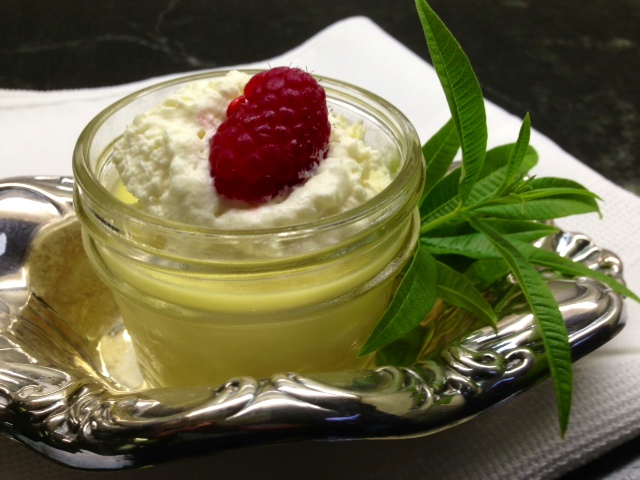
Lovely and fragrant Lemon Verbena gives a nice lift to these rich, silky lemon custards.
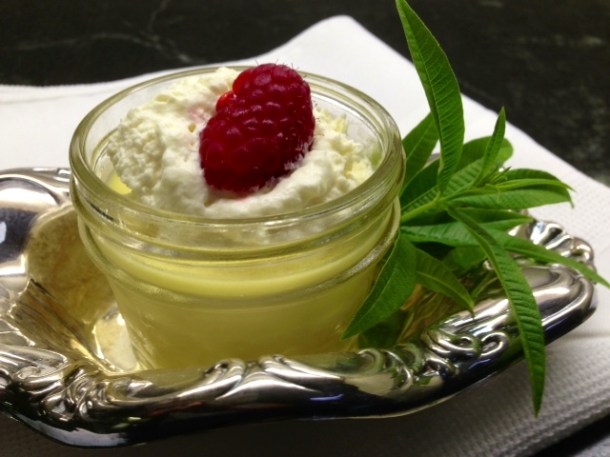
lemon verbena custard

Lemon Custards with Lemon Verbena

Ingredients:


1 cup water

14 2- to 2 ½-inch-long fresh or dried lemon verbena leaves (optional)

10 2 x ½-inch strips lemon peel (yellow part only)

6 tablespoons sugar

1 ½ cups whipping cream

6 large egg yolks

2 teaspoons fresh lemon juice

Directions:


Preheat oven to 325 degrees F.  Combine first three ingredients in medium saucepan.  Boil until mixture is reduced to ½ cup, about 4 minutes.  Add sugar; simmer until mixture is reduced to 1/3 cup, about 3 minutes.  Stir in cream.  Whisk yolks to blend in medium bowl.  Gradually whisk in hot cream mixture.  Whisk in lemon juice.

Strain custard through sieve into 4-cup measuring cup.  Divide among six 2-cup ramekins or soufflé dishes.  Cover ramekins with foil.  Place ramekins in a 13 x 9 z 2-inch metal baking pan.  Add enough hot water to pan to come halfway up sides of ramekins.

Bake custards until just set, about 45 minutes.  Remove pan from oven; let custards cool in water in pan.  Transfer ramekins to refrigerator.  Chill at least 4 hours or overnight.  Serve chilled.  Garnish with flavored whipped cream topped with a raspberry or blackberry.

Yield:  Serves 6

(This is a very rich custard that you may want to divide into smaller quantities)

Adapted from Bon Appetit

Linda
Refreshing Beverages for Summer’s End

There’s nothing like summer and none of us want to see beach trips, long summer nights, and  carefree days  disappear. The only cure I know is to extend the things you like about summer. Drink it up with these two herbal drinks and remember the good times!

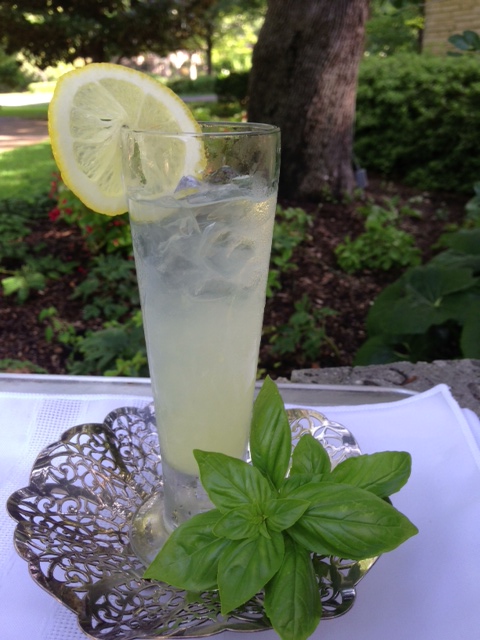
Basil limeade

BASIL LEMONADE OR LIMEADE

Basil Lemon or Lime Syrup:

4 cups packed fresh basil sprigs

2 cups sugar

4 cups cold water

9 strips of lemon or lime zest

Basil Lemonade or Limeade:

2 cups basil lemon or lime syrup

1 ¼ cups fresh lemon or lime juice

2 cups cold water

2 cups ice cubes

Fresh basil and lemon or lime zest for garnish

Directions:

Prepare the basil lemon or lime syrup by bringing all ingredients to a boil in a medium saucepan, stirring until the sugar is dissolved.  Let stand at room temperature, covered for one hour, then transfer to an airtight container and chill until cold (about one hour).

Strain the syrup through a sieve into a bowl, pressing the solids to extract as much liquid as possible.  Discard solids.  Makes four cups of syrup.

Prepare basil lemonade or limeade by stirring together all the ingredients in a large pitcher.  Pour into tall glasses half filled with ice.  Garnish with basil sprigs and lemon or lime zest strips.

Note:  The lemonade or limeade (without ice) can be made three hours ahead and chilled.

————————————————————————————————————-

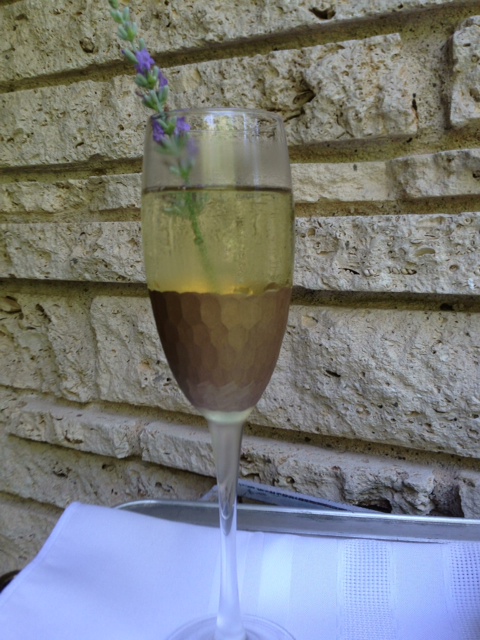
Lemon Lavender Cocktail is a champagne based cocktail with a lavender aroma that will caress your palate at every sip.  Its delicate and subtle lavender flavor infused within the citrusy essence of Rometti Limoncello is the perfect drink for a relaxing time with friends and family.

.Lemon Lavendar Champagne Cocktail

LEMON LAVENDER CHAMPAGNE COCKTAIL

Ingredients:

2 sprigs of lavender flowers

1 oz. gin

1 oz. Rometti Limoncello

½ oz. fresh-squeezed lemon juice

Champagne

Ice

In a cocktail shaker combine lemon juice and Rometti Limoncello.  Strip the lavender flowers from the stem and muddle them into the lemon mixer, letting them release their aromatic oil.  The longer you leave the flowers in the mixer, the stronger the lavender aroma.  Add the gin and ice and shake well.  Pour the mixer into a champagne glass and top it with champagne.  Add a lavender flower to garnish.

Linda

For more summer beverages to sip try: Basil Citrus Cooler or Lemon Verbena Tea

Seed Saving: It’s A Good Thing

Though it is not quite time yet for “autumn leaves to drift by my window,” it is getting to be time for gardeners to start thinking about saving seeds from their favorite plants and flowers.  Dr. Tom Wilten, when he taught the Dallas County Master Gardener class on propagation, developed a list of ten reasons why someone might want to propagate plants from seeds and cuttings.   Some of these reasons included to save money, produce a genetically identical plant from cuttings, etc.  However, for some gardeners, it just seems inherently “right” to connect with the entire life cycle of a plant.

Seed Saving, Dallas Garden Buzz

Here we are connecting with the entire life cycle of the plant, in our kitchen, saving seeds.

When thinking about saving seeds, there are several factors that one should consider.  It is important to remember that not all seeds can be legally, or should be, saved.  According to Willaim Woys Weaver, author of Heirloom Vegetable Gardening,  there are basically three different kinds of seeds.  Only one of these three kinds of seeds can, or should, be saved:

1) Genetically modified seeds (GM seeds):  These are seeds that have been artificially changed to make them resistant to pathogens and/or herbicides.  No matter what you may philosophically or medically think about the use and consumption of plants grown from GM seeds, it is against the law to save GM seeds since they are patented.  One cannot legally save seeds from or reproduce a GM patented plant unless you pay the maker a royalty.  In general, the average homeowner does not have to worry about this as currently GM seeds are used by huge commercial growers who grow monocultures, such as corn, soybeans, etc.  However, if growing a patented plant, just be aware of this.

2)  F1 Hybrid seeds:  This is another type of patented seed that is a cross between different plant species.  F1 refers to Filial 1:  the first filial generation of seeds/plants resulting from a cross mating of distinctly different parental types. These are commonly found in seed catalogues and purchased by homeowners.  One should not however save seeds from F1 hybrid plants because they will not grow true to type, plus after a few generations F1 hybrid plants will eventually lose the traits for which they were bred.  Most plants and seed packets are prominently labeled if they are F! Hybrid seeds or plants.

3)  Open-pollinated seed:  Open-pollinated plants are those plants that are pollinated by nature which may be bees, wind, birds, etc.  Seeds from these open-pollinated plants have often been passed down from generation to generation (heirloom seeds) though they may be more recently developed.

To save seed from open-pollinated plants there are several things to consider.  First, the seed must be fully ripe/developed.  This may seem obvious, but for some plants such as cucumbers, it means that the fruit must be left on the vine until it turns yellow, and gourds, beans and peas must be left on the vine until the seeds rattle in their hardened shells.

The second thing to remember is that because open-pollinated seeds are pollinated by nature, it is very easy to get cross pollination since bees fly from flower to flower and the wind may carry pollen across a yard or field.  Basil and mint are notorious for being “promiscuous” with different varieties easily cross pollinating.  Therefore, if you are saving basil seed you should not save seed from, for example, a lime basil planted too close to a sweet basil.  Seed from this cross may, or most likely may not, be good tasting.

Finally, when storing seeds it is important to let them dry thoroughly, and then store them in a cool, dry place.  If kept properly, most seeds will be viable for several years.

Do you have a favorite plant from which you save seeds?  Let us know, and tell us your technique for saving them.  Not just pass-a-long plants but pass-a-long knowledge is, as Martha Stewart would say, “a good thing.”

Carolyn

Picture by Starla

What Would We Do Without Turk’s Cap?

All gardeners have those tough spots where nothing seems to want to grow.  Dry shade? Morning shade followed by hot west sun? Neglected, hard to water spots? It’s enough to bring on a tension headache.

The bright apple green leaves and red furled blooms of Turk’s cap Malvaviscus arboreus var. drummondii are often just the right solution.  I love easy to grow plants, but this Texas native is almost beyond belief.  Shade, sun, or a little of both? Moist or just on rainfall alone?  Clay, loam, sand, or limestone soils (with good drainage)?  Insect damage? Very minimal. All North Texas gardeners have to do is cut the stems back to the ground after a hard freeze in the fall.

The blooms on Turk’s cap are so unusual.  The vermillion red flowers are twisted into a loose tube of overlapping petals, with a red stamen protruding from the center.  The flowers are said to resemble a Turkish turban, thus the name, Turk’s cap.  Butterflies and hummingbirds are drawn to the blooms.  The marble-sized fruit is edible and is enjoyed by a number of birds and animals.

Red Turk's Cap, Dallas Garden Buzz

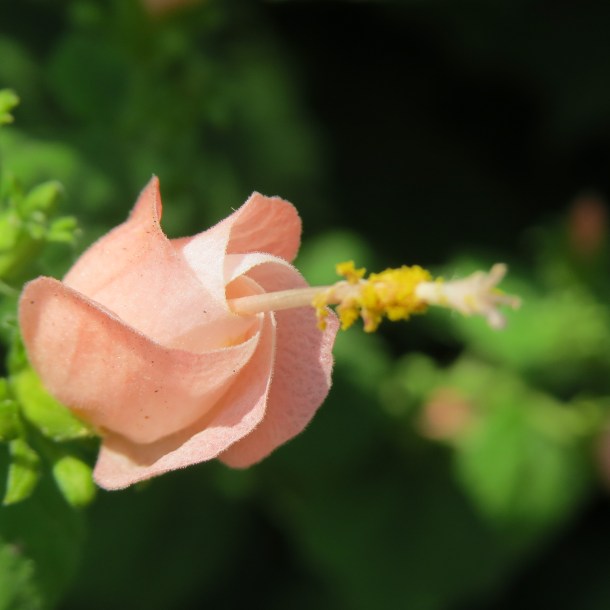
At the Demonstration Garden, we have enjoyed a Turk’s cap with pink blooms for many years.  I hope it is the Greg Grant introduction, named after the first woman horticulture student at Texas A&M, Pam Puryear.  Her namesake has been designated a Texas Superstar by the AgriLife Extension Service.

Pink Turk's Cap

Pink Turk’s Cap

The variety name for Turk’s cap, Malvaviscus arboreus var. drummondii,  honors another groundbreaking botanist in Texas.  Thomas Drummond was a Scottish naturalist, born in Scotland about 1790.  In 1830, he came to America to collect plant specimens from the western and southern United States.  He arrived in Velasco, Texas, in March 1833, and collected 750 species of plants and 150 specimens of birds in the almost two years he worked in central Texas.

Although Turk’s cap will adapt to full sun (and I do have several blooming like crazy in west sun), I really think it should be ideally planted in morning sun, afternoon shade.  I have found that if Turk’s cap is in deep shade, the blooms are limited.  Although Turk’s cap is drought tolerant, the plant will wilt noticeably in full sun.  It loves heat, and is a dependable August bloomer.  The bloom season runs from May to November.

For a low maintenance light to medium-shade garden, mix Turk’s cap with southern wood fern and caladiums.

Elizabeth

Pictures by Starla and Ann

For more perennial information see our post on Gardening With Perennials.

Okra Pilau For Dinner Tonight

I am making this okra recipe tonight!  Last summer I let you know of my obsession  with okra. For an okra review: click here.

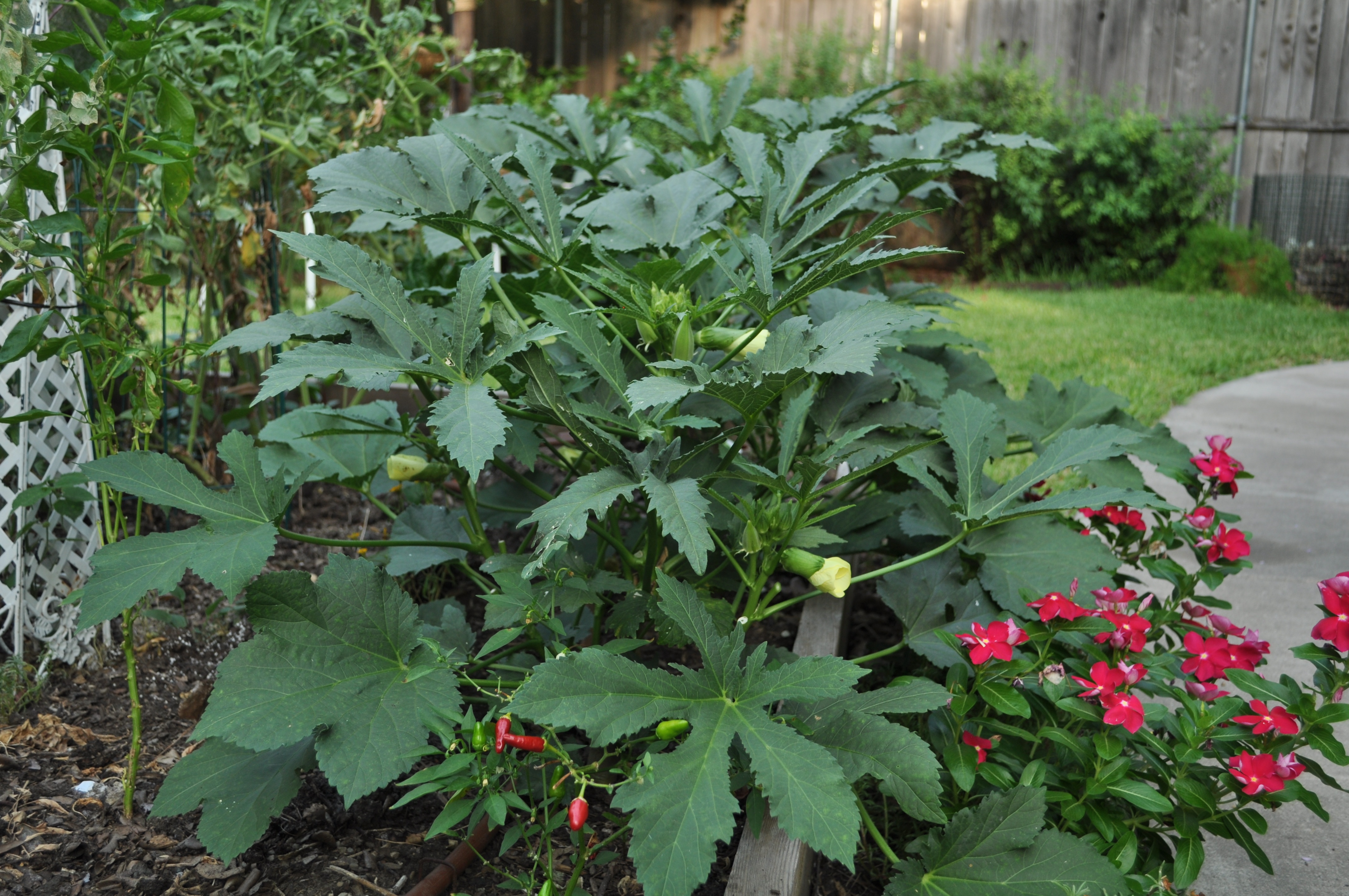
Green Fingers Okra in a Dallas Garden

Okra Pilau

Yield: 4 servings

8 bacon slices, diced
11/2 cups sliced fresh okra*
1 large onion, chopped
1 green bell pepper, chopped
11/2 cups uncooked long-grain rice
1/2 teaspoon salt
1/4 teaspoon pepper
2 cups water or chicken stock

Cook bacon in a large skillet until crisp; remove bacon, reserving 2 tablespoons drippings in skillet.

Sauté okra, onion, and bell pepper in hot drippings over medium-high heat 5 minutes or until tender. Stir in rice and next 3 ingredients; bring to a boil. Cover, reduce heat, and simmer 20 minutes or until water is absorbed and rice is tender. Remove from heat; stir in bacon. Let stand 5 minutes.

You can use any variety of okra (preferably from your garden) for this recipe that Tim says will make okra lovers of us all.

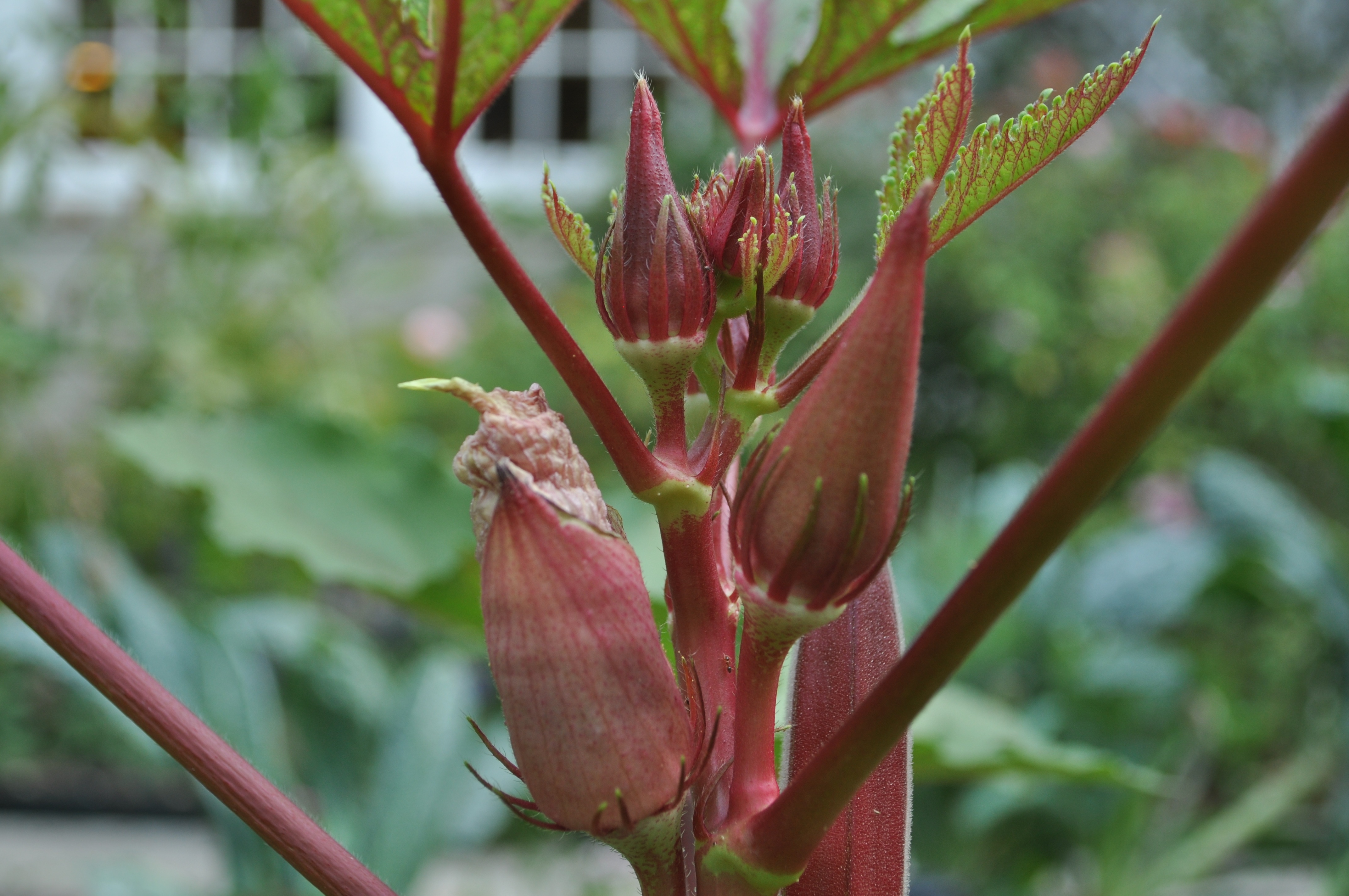
Red Velvet Okra will be in my skillet tonight.  I love it’s color even though the okra turns green when cooked.

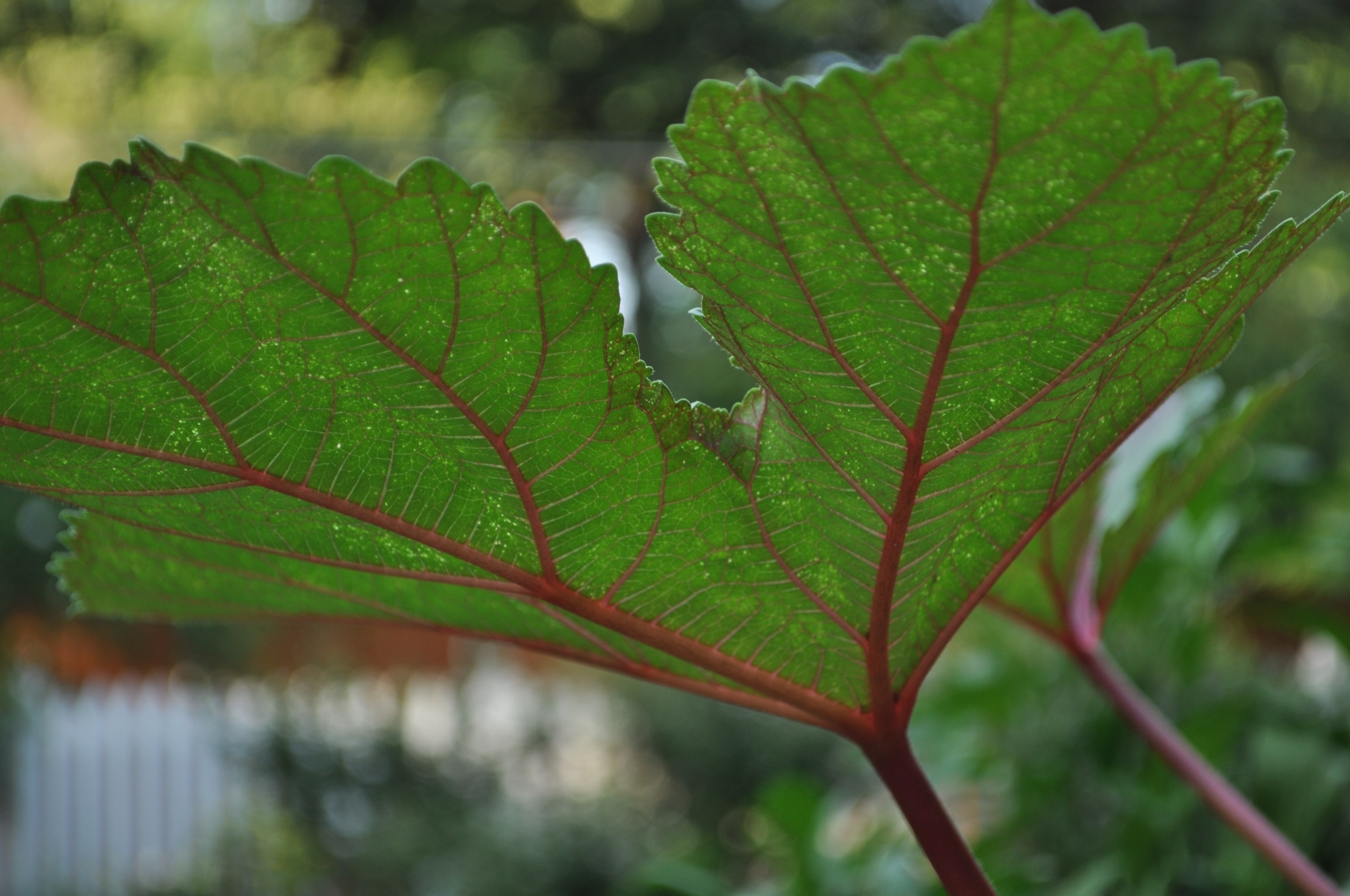
Red Burgundy Okra, Dallas Garden BuzzYou can’t eat Okra leaves but how lovely they are to have in your garden. Harvesting Okra every day requires your careful attention and looking in and around the whole plant and under every leaf to find Okra that may be hiding.  if you let it go an extra day, you end up with giant Okra good for drying and seed saving but not much else.

Okra Leaf, Dallas Garden Buzz

For the healthy benefits of okra including a hair rinse recipe, read this.

Ok now, all this about Okra is persuading me to get out in the garden and start picking.  Hope you are, too.

Ann

GARDENING WITH PERENNIALS

In Texas, our 52-week growing season has a double-edged sword: Yes, we can grow flowers in the garden all year round (well, the vote is still out on August).  But if your plant choices are flats and flats of annuals—changed out by the season–you’ll either throw out your back or overdraw your checking account.  Or both.

Seldom in life can one say: unequivocally here’s the answer.  With a vision of Oprah guiding my thoughts:  Here Is The Answer: Practically Perfect Perennials.  They bloom, come in every size, shape, and color of the color wheel, and make a return visit to your garden next season.  Ideally, mix annuals (one season show) with perennials (several week bloom) for long lasting color.

Gardeners’ hearty embrace of the charms of perennials has only come about in the last decade or so.  I remember a Fort Worth nurseryman telling our class on perennials that he couldn’t give them away in the 1980s.  Traffic stopping masses of white periwinkles were as ubiquitous as padded shoulders and Dynasty.

As purchasing habits have moved from annuals to perennials, the look of gardens has also changed.  Carefully chosen groupings of perennials tickle the senses with different bloom shapes, colors, and leaves in comparison with the banality of one type of annual.

Enough already.  I’m converted.  I see the light.  I want to add perennials to my garden beds.  How do I start?

Soil Prep: You can’t escape it in North Texas.  Lots of compost, 3 inches of expanded shale, tilled in.  Run a drip system or soaker hose up and down your beds.  Plant, remembering the eventual height and width of the plant (tall goes in the back).  Mulch like your plant’s life depends on it, at least 2-3 inches.

What do I choose?  I start with color.  For example, for a house with brown brick you might consider going with warm, bright colors.  Hot yellows, warm oranges, and flaming pinks pop against the neutral brown.  Pick a unifying color; I almost always choose blue or purple.  It goes with everything.

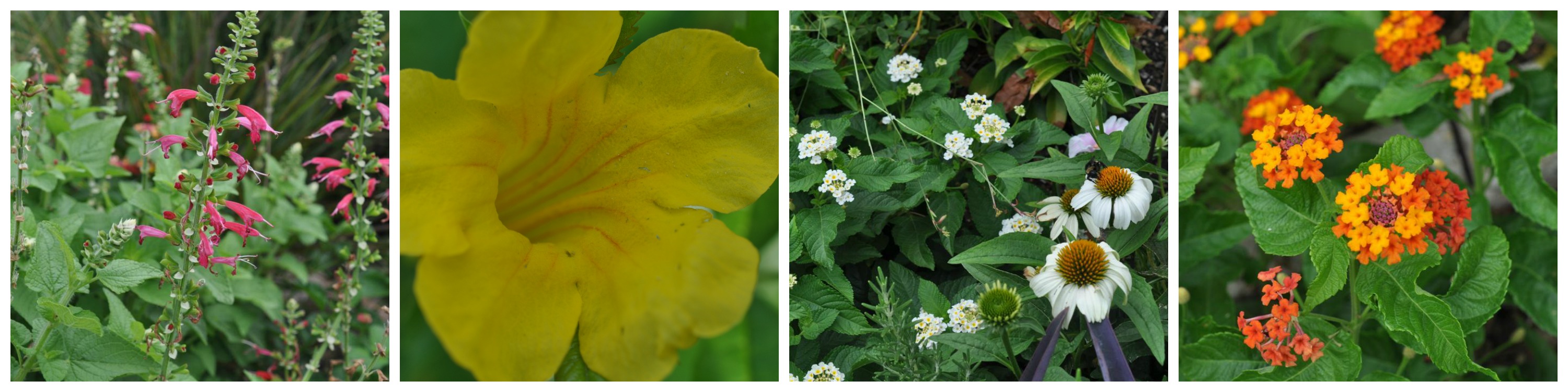
Now life gets interesting.  I use a yellow legal pad and some good gardening books.  Make of list of plants you can’t live without.  Like daylilies? Bee balm? Search for background perennials with high, mid-level, and low front of the bed plants.  Think about bloom season to narrow your plant choices.  Early spring? Early summer? Fall? To narrow your selections and make your garden more interesting, look at plants by bloom type.  The four flower types are spike (salvia), tubular (petunia), ray (daisy), and umbel (lantana).  You want to include each type of bloom.

Spike, Tubular, Ray, Umbel Flower Types, Dallas Garden Buzz

Spike, Tubular, Ray, Umbel Bloom Type

Also consider leaf shape and size.  The huge leaf of a Mexican sunflower contrasts well with feathery yarrow or long and narrow salvia.

Cannas, Dallas Garden BuzzOne of the selling points for cannas is their huge leaf, some varieties come now in shades of purple.  For purple heart, the leaf is the big draw of the plant; the flower is small and insignificant.

Stumped or overwhelmed?  Don’t do it on your own.  Go to the outstanding arboretums and botanical gardens in the area for ideas.  Stroll the aisles of good nurseries and talk with the knowledgeable employees.  Call the Dallas County Master Gardener Help Desk at 214/ 904-3053 for assistance.  Oh, and have fun!

Elizabeth

Pictures by Ann

For more soil prep garden advice review:  One Way To Prepare A New Garden Bed.

Cantaloupe Harvest

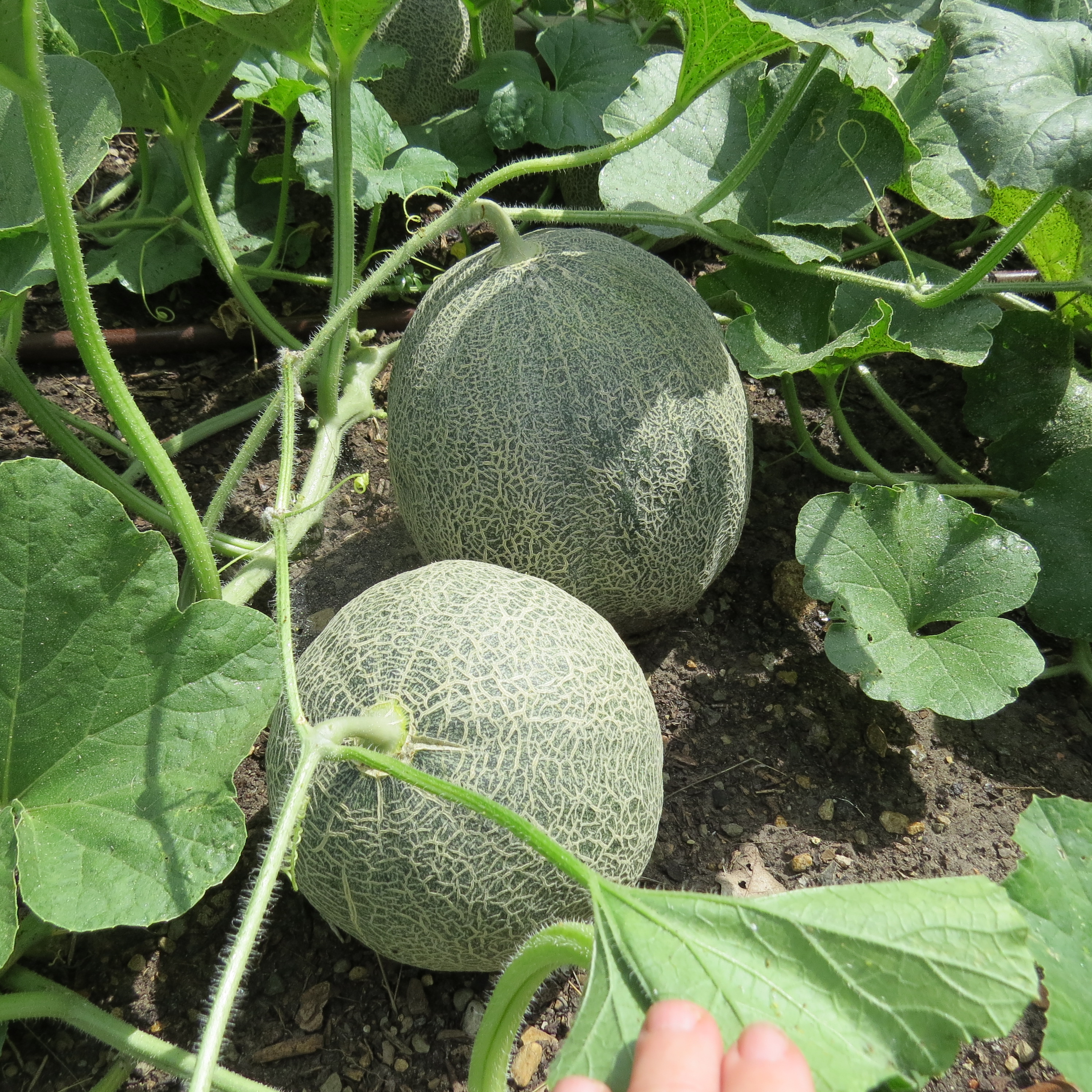
Most of us  believe you reap what you sow. We diligently follow  gardening advice and planting dates, prepare the soil, pray for rain, and then we hope!   This year we are enjoying a bounty of cantaloupes; 17 have been counted in one of our  raised beds.  Last year we had what Jim refers to as “insect activity” and not many cantaloupes.

Cantaloupe in the Garden

The variety we planted is Ambrosia.  If you will look on the right hand side of our blog, you will find our Garden Journal with all the details of our veggie gardening.

The Joys and sorrows of our garden experiment are recorded there.

The Cantaloupe was planted May 26th and will be eaten all through August.  When all the Cantaloupe is gone, Jim says we will be planting bush beans.

As summer wanes and we look forward to a drop in temperature, the gardeners at our Demonstration Garden are happy to  indulge in the sweetness of homegrown cantaloupe. More Fall gardening info right here.

Cantaloupe ripe and ready to eat

Ann

Pictures by Starla

For Aggie Horticulture Cantaloupe advice: click  here.

Ornamental Tree for Texas


JAPANESE MAPLES ARE LOVELY, BUT…..

You really can’t beat a Japanese maple for shady locations in your yard, but if you have a spot, like I do, on the edge of mature trees, you might consider one of the small ornamental trees that do well in north Texas.

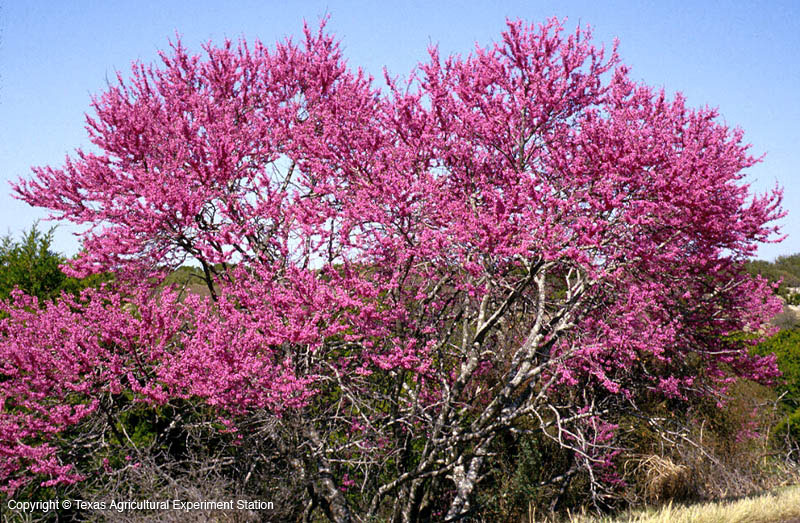
Texas Redbud Cercis canadensis var. texensis

Texas Redbud Tree

What would spring be without redbuds?  Texas actually has three native redbuds, but you want to choose the right one for our alkaline, clay soil.  The eastern redbud brightens up the piney woods of East Texas.  The Mexican redbud grows as a multi-trunk tree on the rocky limestone soils of West Texas.  It cannot tolerate poorly drained soil.

As in “The Three Bears” children’s story, the third type, the Texas redbud, is just right–for north and central Texas.  It is smaller and more drought tolerant than its eastern relative, with thick, leathery leaves with wavy margins.  The Texas redbud is also commonly multi-trunked and will grow in well-drained clay.

Of course, we plant redbuds for their spectacular show of pink blooms in the early spring.  This small tree grows 15 to 20 feet tall and wide.

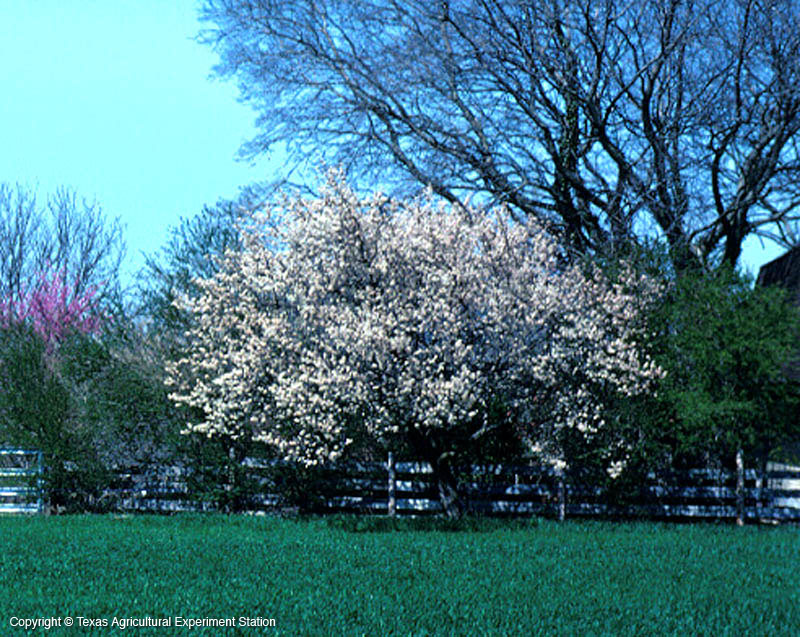
Mexican plum Prunus mexicana

Mexican Plum Tree

The Mexican plum plays on the same playground as the Texas Redbud. Each bloom at the same time in early spring and are about the same size. Consider planting redbuds and Mexican Plum together along your property line or as understory trees in a wooded area for breathtaking spring color.  The magenta flowers of the redbud contrast beautifully with the cloud of white blossoms from the Mexican plum.

Mexican Plum Tree FruitLike the Texas redbud, the Mexican plum is very drought tolerant, living on rainwater alone in all but the most extreme situations.  It grows 15 to 35 feet tall by up to 20 feet wide.  The one-inch wide white blooms are an important pollen source for bees.  Small oval plums—which will stain a sidewalk or patio—appear in late summer and are favorites of birds and small mammals.

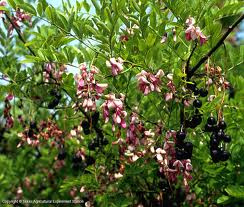
Eve’s Necklace Sophora affinis

Fruit and Flower of Eve's NecklaceThis lovely small tree rewards gardeners all year round.  In spring, it is covered with 4- to 6-inch long clusters of pea-like pink flowers.  Green glossy leaves in summer are followed by distinctive black seed pods and yellow fall color.  The pods, from which the tree gets its name, resemble a black string of beads.  (Caution: the seeds are reportedly poisonous.)


Eve’s Necklace grows 15 to 25 feet tall by 10 to 20 feet wide and can be planted at the edge of or slightly under large shade trees like cedar elm.  It is related to the Texas Mountain Laurel Sophora secundiflora, which is evergreen.

Fall’s around the corner, and that would be the perfect time to add a small ornamental tree to your landscape.

Elizabeth

Pictures by Texas Native Trees Database

Another small ornamental tree worthy of consideration: Vitex !