Category Archives: Herbs To Grow In Dallas

The Case for Cilantro

Ina Garten (aka the Barefoot Contessa) says she despises it.  Others say the taste reminds them of dirty dishwater.  Some claim a soapy taste when they chew on it.  How could it be, then, that guacamole wouldn’t make it to a true “TexMex” table without a hefty amount of cilantro mixed in?  And salsa without cilantro?  Not in TEXAS! While there are clearly two sides, the “lovers” and the “haters”, consider these facts before arriving at your own verdict.

 History

Cilantro, Coriandrum sativum, a member of the Apiaceae (Umbelliferae) family has been cultivated as a medicinal and culinary herb for more than three thousand years.  Mentioned first in Egyptian papyri and the Bible, Spanish conquistadors introduced cilantro to Mexico and South America where it quickly became associated with that cuisine.  Also known as Chinese parsley, the herb has a long history in Chinese medicine and cuisine.  One of the ancient uses was as an aphrodisiac.
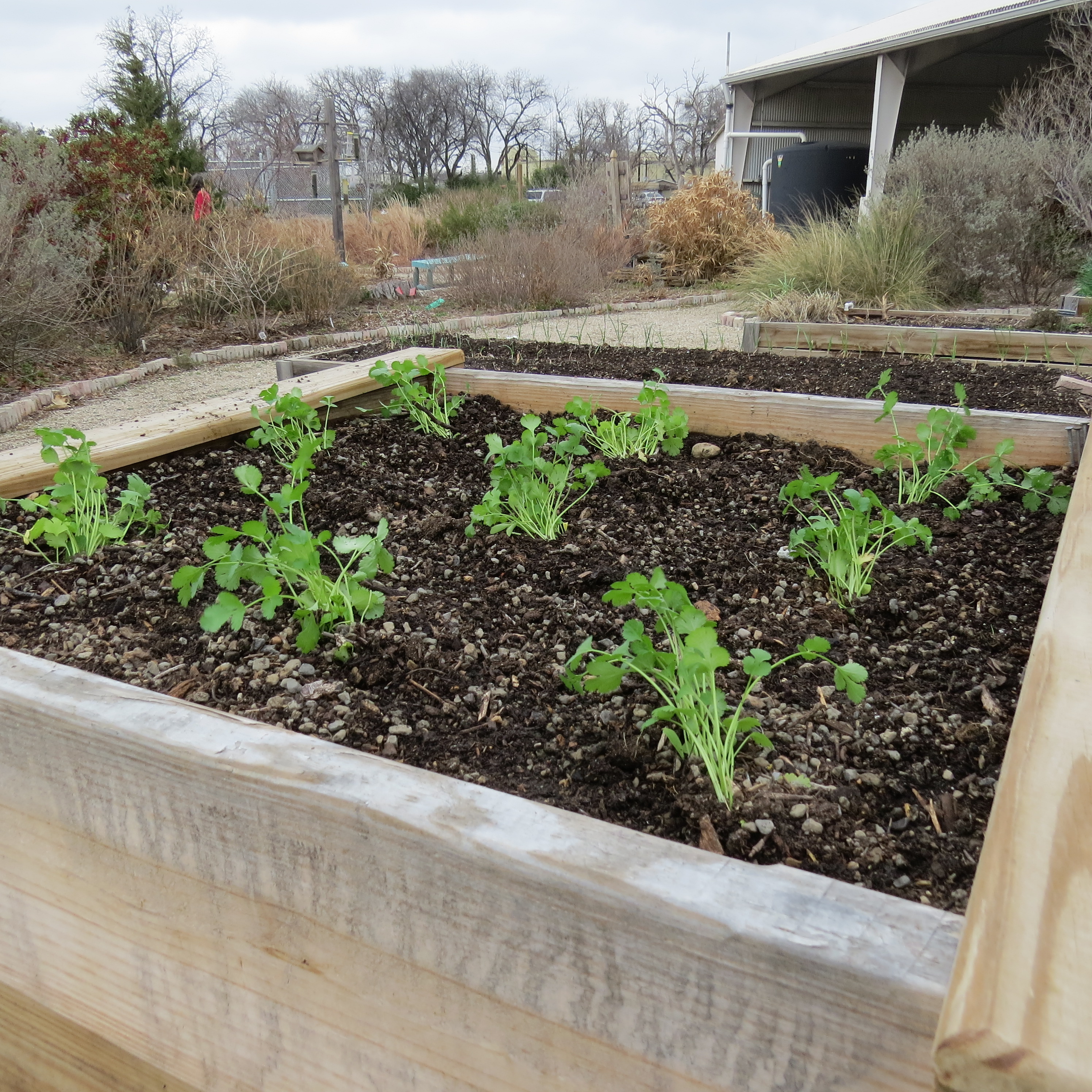
Cilantro Growing in Raised Bed, Demonstration Garden Joe Field Rd, Dallas

Growing It

Cilantro likes loose, rich, well-draining soil.  Sow seeds in the fall ½” deep, thin seedlings to 1 foot apart.  Plant seeds again in February to give your cilantro time to grow before it gets too hot. If you can find it,  choose variety “Long Standing” for its excellent flavor, improved leafiness and, as the name infers, its slow-to-bolt quality. 

Cilantro  needs full sun and occasional watering if the weather is dry.  Transplants can be put in the ground anytime throughout the fall and winter.  A succession of crops will help your cilantro last longer.  To harvest cilantro, cut the stems down to the ground, a small section at a time.  When cilantro gets ready to flower, it sends up leaves that are lacier and smaller.  The seeds of the cilantro plant are known as coriander.   An aromatic spice, try using coriander in sweets, cakes, breads, and to flavor liqueurs.

Cooking With Cilantro

Every part of the plant is edible.  Cilantro’s  flat and gently serrated dark green leaves, resembling Italian parsley, are best used when the plant is about 6 inches high, and they must always be used fresh.  Toss them into almost any salad.  You can use cilantro anytime you would use parsley.  Make a pesto out of it just as would basil and freeze it for future use.  Store a bunch of cilantro for about a week in the refrigerator in a jar of water loosely covered with a plastic bag.  (Remember to change the water every few days.) 

Enjoy It 

The flowers make an attractive bouquet or addition to other garden flowers for cut arrangements.   Use it to settle the stomach and encourage good digestion.  Or do as the Chinese, use it in a “love potion” which they believed led to a long life.   While true, its unique aroma and pungence often demand an acquired taste, once you acquire the taste for it cilantro can be addicting!  Finally, just be thankful that when summer tomatoes and peppers are beginning to ripen  and cilantro may no longer be found in the garden, a quick trip to the grocery always keeps it within reach.   Case solved!

Linda

Note:  Over the next few weeks we will be sharing some of our favorite “cilantro” recipes with you.

Homegrown, Veggies, Fruits and Herbs

I have a visual image of Master Gardener and nutritionist Barbara Gollman at Kroger: Red hair flying, trim figure running behind a cart, zipping down the frozen food isle flinging packs of frozen veggies into the cart for one of her wonderful soups. 

Barbara, Dallas County Master Gardener Teaches Value of Vegetables

Barbara intrigued a large group of Master Gardeners Tuesday with her talk on the nutritional benefit of vegetables, fruits, and herbs.  Turns out that Mom was correct when she urged us to eat our vegetables.  Carrots, oranges, sweet potatoes, and other fruits and vegetables are full of phytochemicals, substances in plants that have the potential to slow aging, boost immunity, prevent disease, and strengthen our hearts and circulation. 

Cabbage, Broccoli Field Road, Dallas, Texas

Barbara suggests that we eat watermelon and tomatoes, plants that are packed with lycopene, a nutrient which helps prevent macular degeneration.  Pinto beans are rich in fiber, which can prevent cancer and heart disease, and flavonoids, which can curb the oxidation of LDL cholesterol and prevent blood clotting.  Cruciferous vegetables like broccoli and cabbage are high in calcium.  Nuts are filled with Vitamin E, one of the most potent fat-soluble antioxidants. Berries, greens, winter squash—-well, you get the idea.  

Barbara said that new research has shown the health benefits of herbs. Who knew? Turns out that 1 teaspoon of oregano = ¾ cup of brussel sprouts in antioxidants.  

Barbara dries her herbs in the microwave after her husband’s reaction to using his closet as an herb drying rack. Remove the leaves from the stems of the herbs and spread on paper towels.  Put two paper towels on top of the herbs.  Pop in the microwave and zap for one minute.  (If the leaves are charred, try again and use a shorter amount of time. If the leaves aren’t crisp, microwave longer in 15-second increments.)  Remove from the microwave and air dry on the kitchen counter for a few days.  Store in a labeled glass jar.  

Are home grown vegetables better for you than those found in the grocery? Barbara says some research showed up to a 15 percent increase in nutrients in homegrown and organic vegetables.  Some other studies didn’t find an increase in nutrients. 

Many thanks go to Barbara for her research and common sense approach to healthy eating.  Let’s just put it this way: on the way home I stopped at Whole Foods and bought spinach, broccoli, and almonds for dinner.   

Elizabeth

Recipes served in the class will follow.

Arugula-Pear-Blue Cheese Salad

Arugula, Pears, Pecans, Blue Cheese For Salad

1/4 cup plus 2 Tbsp peach or pear preserves

1/2 cup Champagne vinegar

1 shallot, sliced

2 tsp. Dijon mustard

1/2 tsp salt

1/4 tsp freshly ground pepper 

1/2 cup olive oil 

8 cups loosely packed arugula

2 Bartlett pears, cut into 6 wedges each

4 oz. blue cheese, crumbled

1/4 cup chopped toasted walnuts or pecans 

Process 1/4 cup preserves and next 5 ingredients in a food processor 30 seconds to 1 minute or until smooth.  With processor running, pour oil through food chute in a slow steady stream, processing until smooth.  Transfer to a 2-cup measuring cup or small bowl, and stir in remaining 2 Tbsp peach preserves. 

Place arugula in a large serving bowl.  Top with pears, blue cheese, and pecans.  Drizzle with vinaigrette. 

Elizabeth  From Southern Living Magazine 

Apple-Sage Tarte Tatin

A rustic and comforting dessert.

6 Granny Smith’s apples, peeled, cored, sliced into 8 wedges

1 Tablespoon fresh lemon juice

3/4 cup firmly packed light brown sugar

6 tablespoons unsalted butter

3/4 cup granulated sugar

3 tablespoons minced sage leaves

 Pillsbury Refrigerated Pie Dough

Garnish:  fresh sage leaves; lightly sweetened whipped cream optional

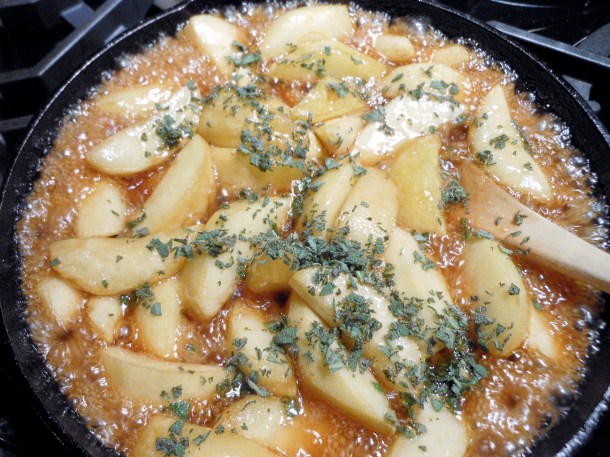
Apple-Sage Tart Cooking In Iron Skillet

Preheat oven to 425°.

Put apples, lemon juice, and brown sugar in a large bowl and toss to mix; set aside.  Melt butter in a 9-10 inch cast iron skillet or other heavy, oven-safe skillet and stir in granulated sugar.  Cook over medium high heat, stirring, until mixture turns * pale golden.  Add apple mixture and cook, tossing occasionally to coat apples, for 5 minutes.  Add sage leaves and cook 5 minutes more, stirring occasionally.  Set aside while you roll out the dough.

On a lightly floured surface, roll out the dough to about 10 inch circle for a 9 inch skillet or an 11 inch circle for a 10 inch skillet, lifting dough and turning to prevent sticking to the surface.  Fold the dough in half or quarters and place it over the apples in the skillet.  Unfold the dough, tuck the overhang under the edge of the dough into the skillet and cut 4 slits in a circle at the center of the dough.  Bake 20 minutes until the crust is deep golden.

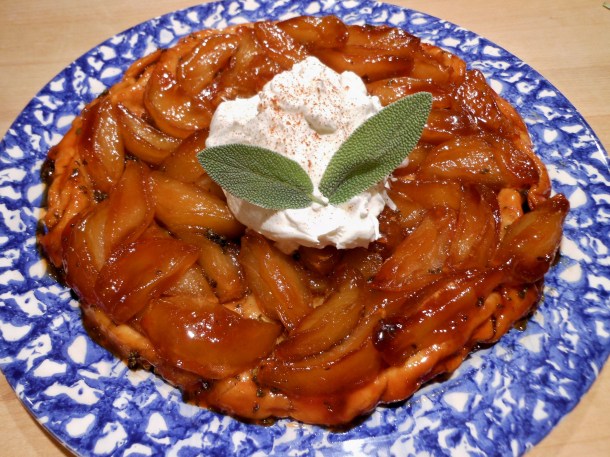
Using heavy oven mitts, remove skillet from oven and shake lightly to dislodge any stuck apples.  Place a a serving platter over the pan and, gripping the pan and plate lightly together, flip the tart over onto the platter.  Let stand a few minutes before serving or serve at room temperature.  do not refrigerate.  Garnish with a few fresh sage leaves, and serve plain or with whipped cream.

Apple-Sage Tarte Tatin With Sweeetened Whip Cream and Sage Garnish

8 servings.

 *Be sure to only let the mixture get a “pale golden color”.  You really have to watch closely to keep it from getting too brown.

Recipe and Pictures from Linda, adapted from DESSERTS FROM AN HERB GARDEN

Poached Pears With Sage-Honey Glaze

Finish a heavy meal with a lighter touch.

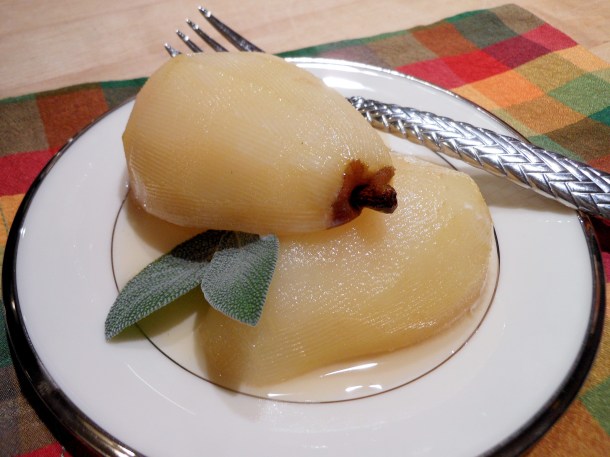
Poached Pear Dessert With Sage-Honey Glaze

6 cups water

3/4 cup granulated sugar

1 tablespoon fresh lemon juice

4 pears, preferably bosc or d’Anjou

1/3 cup honey

2 tablespoons chopped sage leaves

Garnish: sage leaves, heavy cream optional

In a dutch oven or large saucepan, stir together water, sugar, and lemon juice. Bring to a a simmer.

Meanwhile, peel pears and halve them, leaving the stem intact on one half. Working from the bottom, insert an apple corer or melon baller to remove cores.

Gently place pears in sugar syrup and cook, uncovered, at a steady simmer.  Cooking time may be anywhere from 8 minutes to 30 minutes, depending on the pears’ ripeness; pears are done when they are tender and a paring knife can be inserted easily.

Meanwhile combine honey and sage leaves in a small saucepan an bring them just to a simmer over medium-low heat.  Remove from heat and let stand until pears are done.

When pears are done, remove them with a slotted spoon, draining them well, to a large plate, flat sides down.  Reheat sage honey if needed to make it liquid enough to brush onto pears;strain out sage leaves.  Brush honey over each pear (don’t brush the flat sides).  Arrange on serving plates with the stem half of each pear propped on the other half.

Serve pears garnished with sage leaves; drizzle with a little cream if desired.

Recipe and photo by Linda, adapted from DESSERTS FROM AN HERB GARDEN

Cheddar Cheese and Sage Biscuits

Throw a log on the fire and enjoy these “cheesy” biscuits with your favorite bowl of soup.  Makes about 16.

Sage From Linda's Garden

4 cups all-purpose flour, plus more for work surface

4 teaspoons baking powder

1 teaspoon baking soda

1 teaspoon salt

1 teaspoon sugar

1/2 teaspoon paprika

1 cup (2 sticks) chilled unsalted butter, cut into small pieces

3 cups grated cheddar cheese (9 ounces)

2/3 cup finely sliced fresh sage leaves

2 cups buttermilk

1 large egg, lightly beaten

1 tablespoon heavy cream

Preheat oven to 375° F. In a medium bowl whisk together flour, baking powder, baking soda, salt, sugar, and paprika.  Using a pastry blender or two knives, cut in butter until mixture resembles coarse crumbs.  Stir in cheese and sage. Add buttermilk, stir with a fork until mixture just comes together to form a sticky dough. On a lightly floured work surface, with floured hands, pat dough into a 1-inch thick round.

Using a 2 1/2 inch biscuit or cookie cutter, cut out biscuits as close together as possible, dipping cutter into flour each time to prevent sticking. transfer biscuits to a baking sheet.

In a small bowl, stir together egg and cream.  Lightly brush the top of each biscuit with egg wash. Bake until golden brown rotating baking sheet halfway through, 20 to 30 minutes. Transfer to a wire rack. Serve warm or at room temperature.

Recipe and photo by Linda, adapted from  NEW ENGLAND OPEN HOUSE.

Sage-Feta Cornbread

 Remember a few weeks ago we promised sage recipes for your Thanksgiving menus.  Over the next few days we will be giving dessert, bread, and vegetable recipes using sage.

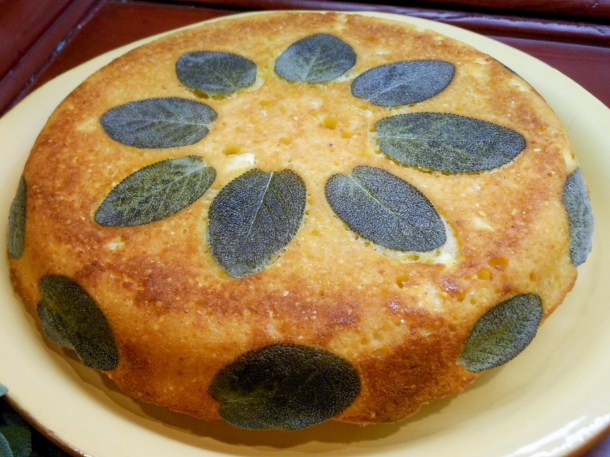
Dazzle your guests with this artistic display of garden sage. 

Sage-Feta Cornbread

Sage leaves, arranged in the buttered pan before the batter is poured in, form a beautiful pattern on the crust of this bread and distinctly flavor it throughout.  Crumbled feta contributes moistness and a salty bite.

1 tablespoon unsalted butter, softened for the pan

18-24 large sage leaves

3/4 cup stone ground cornmeal

1 cup all-purpose flour

2 teaspoons baking powder

2 teaspoons sugar

1/2 teaspoon fine salt

2 large eggs

1 cup buttermilk

1/4 cup olive oil

4 ounces (1 cup) crumbled Greek feta

Preheat the oven to 400°F. Smear the butter on the inside of a 9 inch glass pie plate.  Press the sage leaves into the butter in a circular daisy pattern, saving about 6 to press into the side of the pie plate horizontally.

Stir the cornmeal, flour, baking powder, sugar, and salt together with a wire whisk in a medium mixing bowl.  Whisk together the eggs, buttermilk, and olive oil in a second bowl.  Stir the liquid into the dry ingredients until the lumps smooth out.  Stir in the cheese.

Pour the batter into the pie plate over the sage leaves. Bake for about 25 minutes, or until the crust is browned and the bread springs back in the middle when you press on it.  Let cool for about 10 minutes in the pan.  Loosen the sides with a paring knife, then flip the cornbread out onto a plate or board with the sage leaves on top, and serve while still warm.

Recipe and Photo by Linda adapted from HERB GARDEN

Fall Herbs

Paula taught a class at our garden last week about fall herbs.  She gave us the name of a new sage: New’re Year’re Sage and gave it the thumbs up for taste.  We will all have to look at Dallas garden centers to try to find it.

She reminded us to plant Cutting Celery, which smells and tastes like celery.  Chop up the slender stalks and leaves of Cutting Celery for tuna and  in any dish that call for celery.  I’ll bet she uses it in Bloody Mary’s too!

Fall Herbs For Texas Gardens

We talked about Bay which Paula uses fresh in her recipes and doubles the amount of leaves.  For instance using 4 when her soup recipe says 2.  When purchasing Bay, you want to make sure you are buying the culinary version.

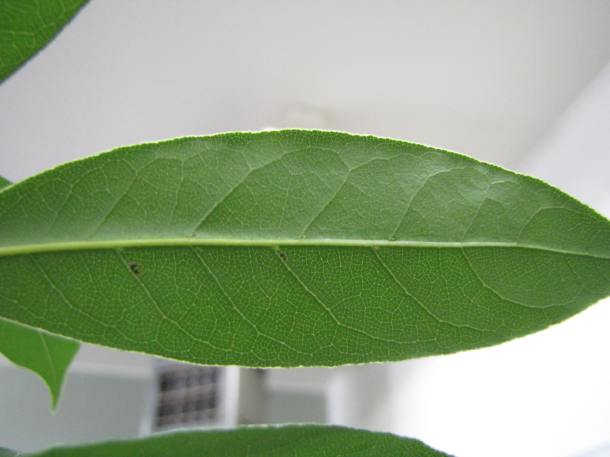
Bay Leaf

Paula says hold a leaf up to the light; if you can see the veins of the leaf, you have the correct Bay.

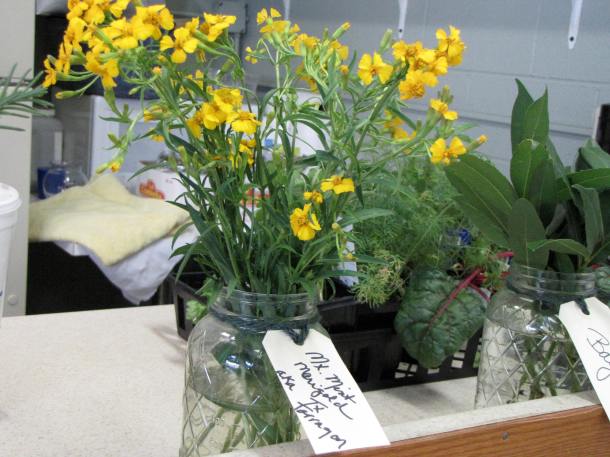
Mexican Mint Marigold

 Texans use the licorice flavored leaves of Mexican Mint Marigold as a Tarragon substitute and the flowers as an edible garnish.  It is blooming now in our Demonstration Garden.

It’s not too late to harvest Basil to make a few batches of Basil Butter for the holidays or Basil Ice Cubes.  Use your Basil now because it will be gone after the first frost.  
 
Basil Ice Cubes: Wash and dry your Basil and remove the leaves from the stems. Discard the stems. Finely chop the leaves. Fill an ice-cube tray with chopped Basil, scooping one tablespoon of the Basil into each cube. Fill the cubes with vegetable or chicken broth. When they freeze, pop them out of your tray and into a Ziploc bag in your freezer.  Yum-Basil all winter to be added to soups and vegetables!
 
We can also rely on Rosemary, Hot and Spicy Oregano in salsa and enchiladas, Lemon Verbena, and Italian Parsley to perk up our fall menus.

Ann

Thanksgiving’s Coming, Plant Sage Now!

Have you ever thought of putting a bit of sage in your spaghetti sauce? Hmmm. I’ll pass on that one. The beloved herb Salvia officinalis actually is a Mediterranean native that has migrated around the world and now lends its woodsy flavoring to our Thanksgiving table.

Classic Green Sage

If you want to have a patch of sage ready for holiday picking, now is a great time to tuck it in the herb garden. Marian Buchanan, the Dallas herb expert, suggests planting herbs in a generous half day of sunlight, preferably morning light with some afternoon protection.  Good drainage is critical with herbs; Marian says to add at least 2-3 inches of organic compost and expanded shale before planting. Like rosemary, thyme, oregano, marjoram, and fennel, sage is sensitive to overwatering.  Marian suggests watering thoroughly, then let the soil dry a bit.

I visited the herb section of our local nursery last week and like jelly beans at the mall candy store, I wanted a variety of each color.  The classic green garden sage is perfect for turkey stuffing and flavoring stock.  Try this sage blended into mild cheese or minced with other herbs in a delectable melted butter. 

Berggarten SageThe ‘Berggarten’ sage leaves are quite a bit larger and more rounded than oval-leafed garden sage.  If dried, this sage can lose its flavor and taste more medicinal after awhile.  Try freezing the fresh leaves for better flavor.  ‘Berggarten’ translates to ‘mountain garden’ in German.  The name comes from the gardening plots of the Herrenhausen Gardens in Hanover, Germany, built in 1666 to supply produce for the Herrenhauser Castle in Lower Saxony.

On your herb buying trip, you also might see the adorable ‘Tricolor’ sage. The pink, white and green leaves have the classic sage taste and are popular asTricolor Sage a garnish for roasted turkeys.  Crushed or chopped leaves add a wonderful flavor to soups, teas, vegetables, salmon or tilapia fillets.  If you want to keep the lovely pink edge on this sage, be sure to plant it in sufficient sunlight.  Otherwise, the leaves will fade to just green and white. 
Linda has tempted our blog readers with so many of her recipes.  She’s culling her holiday files now for Thanksgiving classics, many featuring sage. 

In my kitchen, I’m like the Chinese in the 17th century who so admired sage from the Dutch merchants that they would trade three chests of Chinese tea for one chest of sage. 

Elizabeth

School In The Garden

A s summer fades away. here’s a look at some of our crops and more reasons to have school outside in our learning center at the Earth-Kind® WaterWise Demonstration Garden.

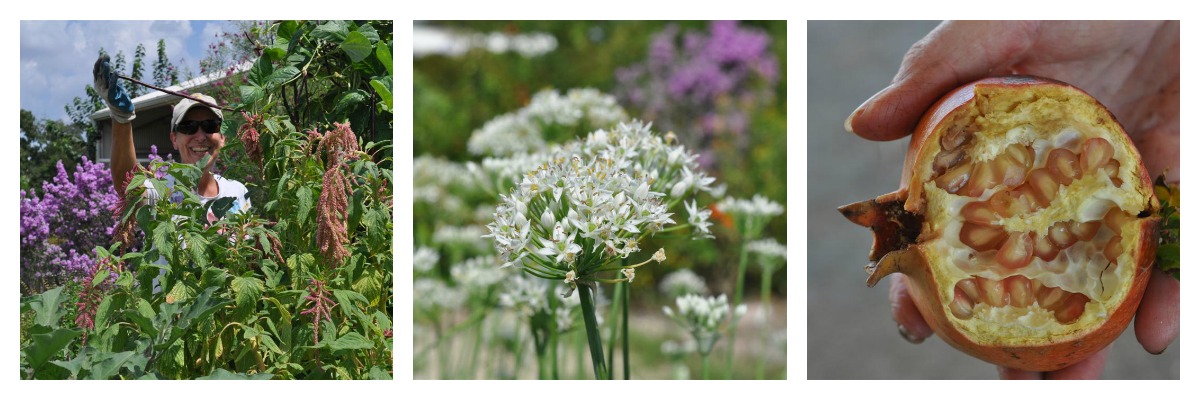
Chinese Red Yardlong Noodle Beans, Garlic Chives, Pomegranate

 Chinese Red Yardlong Noodle Beans and Amaranth Love Lies Bleeding

We are growing these two exotic edibles at the Demonstration Garden to learn more about them ourselves. In our first picture Cindy is stretching out the yardlong bean and the amaranth is blooming with cascading ropes of flowers in front of it.

 To find out how to cook the yardlong noodle beans read Garden Betty.  

Amaranth aka, Love Lies Bleeding, loves the heat and does not need much water. The leaves and seeds are highly nutritious.  Its creepy name refers to its use in the middle ages to stop bleeding.  A whole social studies unit could be written about Amaranth and the uses of it around the world today and historically.  Our garden setting would be the perfect place to teach this!

Garlic Chives  Plop the ornamental seeds heads into your salad along with the chopped up  stems or leave them so you can gather their seeds.

 Pomegranate  We grow the variety, ‘Wonderful’, and it started producing for us the summer after we planted it in 2009.  It will become a multi-trunked small to mid-size tree .  We have an orchard in the planning stages with  Pomegranate trees and other Dallas oriented fruit trees to be planted and more school lessons to be taught!

Ann