Category Archives: Fall

October Master Gardener Meeting

The best Dallas County Master Gardener Meeting of the year takes places tomorrow, October 24,  at 11:30am at the Farmer’s Branch Recreation Center.  Potluck, Craft Fair, and Seed Exchange all rolled into one fantastic meeting.

Master Gardeners will be selling everything from plants to pastries.

We have been making  pomegranate jelly for two weeks. Remember?

  Pureeing pomegranate seeds-thank you Kim!

Pureeing pomegranate seeds-thank you Kim!

Buy a jar and help us educate Dallas County citizens  become super savvy  gardeners.

Sarah,Lynn, Sheila, Sue-Jammin!

Sarah,Lynn, Sheila, Sue-Jammin!

We will also be selling Lemon Verbena Tea Bread, Pumpkin Bread, Fall themed Sugar Cookies, Banana Apricot Bread, and Feta Sage Cornbread.

Just a thought but wouldn’t the pomegranate jelly be good on sage cornbread!

We expect to sell out of our vintage silver plate spoons stamped to use as garden markers.  You might want to stop by our table early to shop for these and our butterfly/ rose stamp necklaces.

Ann

Creamy Southwestern Pumpkin Soup

Creamy Southwestern Pumpkin Soup

Soul-satisfying contentment with a little “kick”! Pumkin Soup, Dallas Garden Buzz   Ingredients:

2 tablespoon butter

1 large onion, chopped (about 2 cups)

1 jalapeno pepper, seeded and chopped

2 garlic cloves, minced

5 cups chicken broth

1 large baking potato, peeled and chopped (about 2 cups)

1 ¼ teaspoons salt

½ teaspoon chili powder

½ teaspoon ground cumin

1 (15-ounce) can pumpkin

¼ cup chopped fresh cilantro

2 cups milk

3 tablespoons fresh lime juice

Garnishes: sour cream, fresh cilantro sprig, toasted pumpkin seeds

Directions: 1. Melt butter in a Dutch oven over medium heat.  Add onion, jalapeno pepper, and garlic; sauté 15 minutes.  Add chicken broth and next 4 ingredients; cook, stirring often, 30 minutes or until potato is tender.  Remove from heat, and let cool slightly (about 5 to 10 minutes).

2. Process potato mixture, pumpkin, and cilantro, in batches, in a food processor or blender until smooth, stopping to scrape down sides.

3. Return to Dutch oven; stir in milk, and simmer 10 minutes or until thoroughly heated.  Stir in lime juice; garnish, if desired.

Yield: 10 cups

Review your pumpkin facts here.

Linda

October In Our Garden!

Our garden at 2311 Joe Field Road in Dallas, Texas has turned delicious!

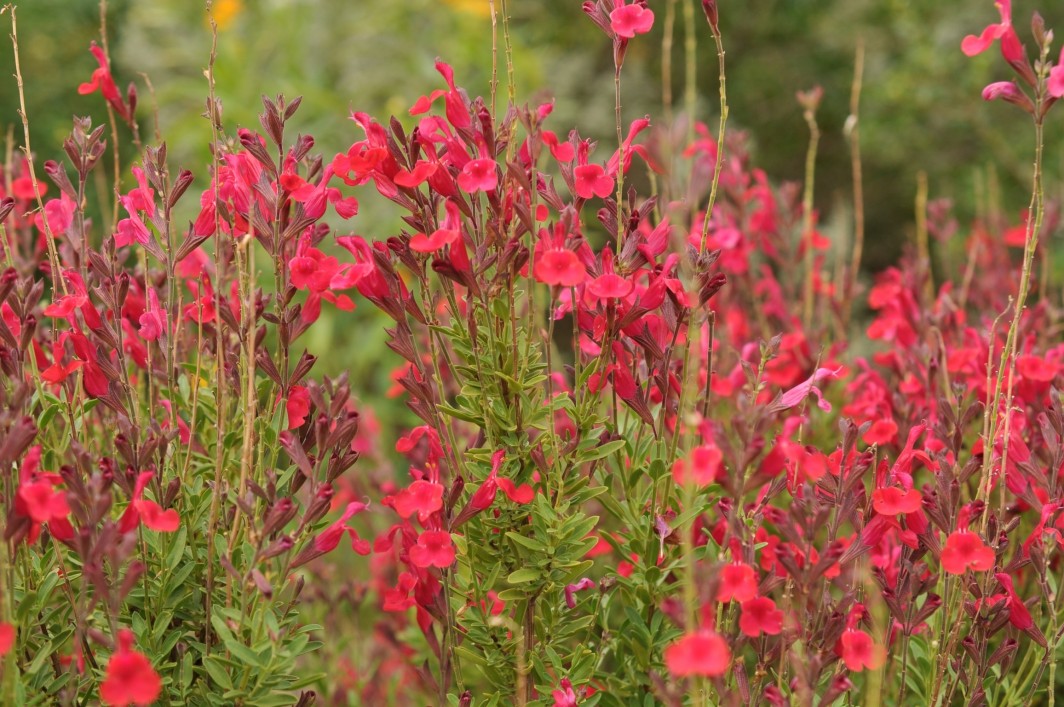
This is Salvia greggi ‘Raspberry’, a perennial you will want in your water wise garden! Hmmm…looks good enough to eat, but please don’t.  Plenty of edibles  from our garden are coming.

Blooming Salvia Greggi, raspberry color

Jim made pumpkin pie for us after cooking up these pumpkins we grew!

pumkins and squash on countertop

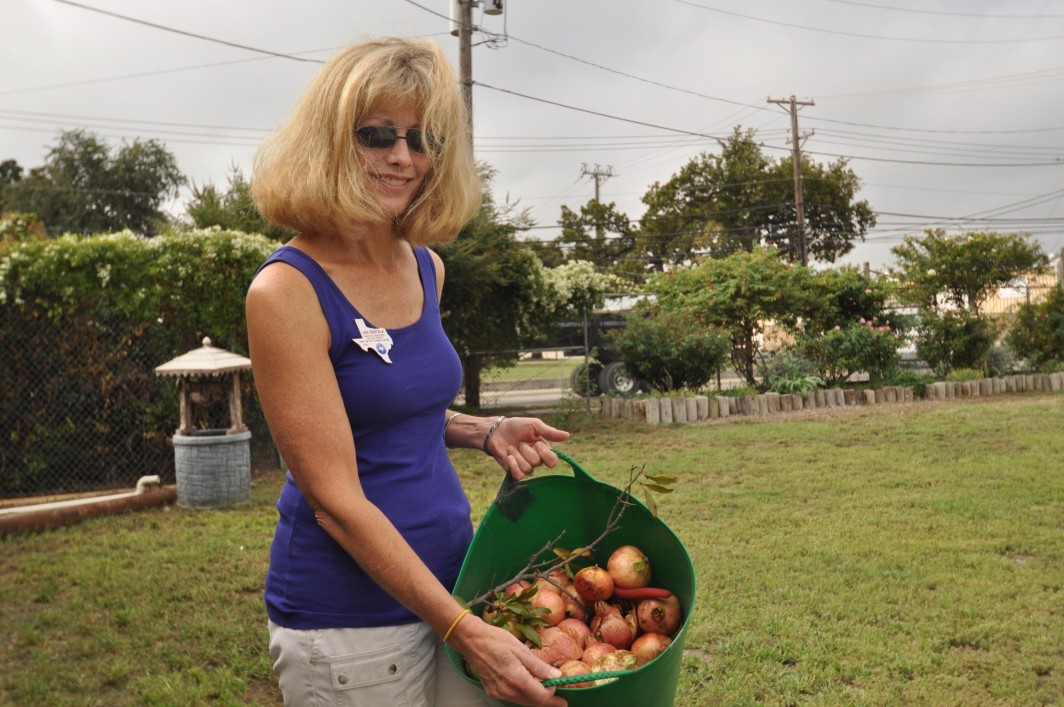
We have been picking pomegranates in our garden and are ready to make our famous pomegranate jelly again.

Two Master Gardeners holding a bucket of pomegranatesLisa picked pomegranates from a neighbor’s tree; after asking permission. Imagine they didn’t want the fruit!  Should we share a jar of our pomegranate jelly with them?

Master Gardener holding a bucket of pomegranatesIf you would like to buy a jar of pomegranate jelly made from Sarah’s recipe and these pomegranates, come to our Dallas County Master Gardener meeting on Thursday, October 24th at 11:30 am at the Farmer’s Branch Rec Center.  All welcome!

Ann

The Power of Pumpkin

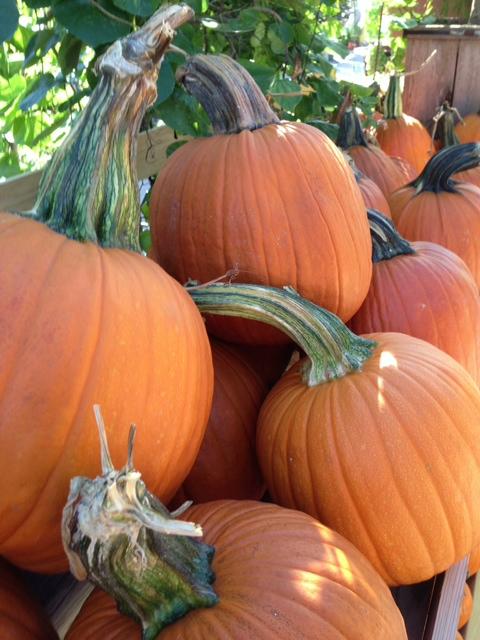
Pumkins at an Outdoor Market

“I would rather sit on a pumpkin, and have it all to myself, than be crowded on a velvet cushion.”–Henry David Thoreau

To some they are the “orbs” of autumn, the quintessential symbol of fall, making their graceful entry into hearts and homes.  The names, alone, captivate childlike feelings of giddiness; Aladdin, Baby Boo, Cinderella, Cotton Candy, Jack-Be-Little, Jack-Be-Quick, Full Moon and Wee-Be-Little.

Why, then, are we so fascinated with pumpkins?  Consider these facts: * The word pumpkin originated from the Greek word Pepon which means large melon.  The word gradually morphed by the French, English and then Americans into the word “pumpkin”.

Pumpkins and squash are believed to have originated in the ancient Americas. * Early Native Americans roasted pumpkins strips over campfires and used them as a food source, long before the arrival of European explorers.  Pumpkins helped The Native Americans make it through long cold winters.  They used the sweet flesh in numerous ways; roasted, baked parched, boiled and dried.  They ate pumpkin seed and also used them as a medicine.  The blossoms were added to stews.  Dried pumpkin could be stored and ground into flour * Columbus carried pumpkin seeds back with him to Europe. * Indians introduced pumpkins and squashes to the Pilgrims.

Pumpkins were an important food source for the pilgrims, as they stored well, which meant that they would have a nutritious food source during the winter months. *The Pilgrims were also known to make pumpkin beer.  They fermented a combination of persimmons, hops, maple sugar and pumpkin to make this early colonial brew. *In early colonies, pumpkin shells were used as a template for haircuts to ensure a round and uniform finished cut.  As a result of this practice, New Englanders were sometimes nicknamed “pumpkinheads”. An old Pilgrim poem gives testament to the Pilgrims dependence upon pumpkins for food:

“For pottage and puddings and custard and pies

Our pumpkins and parsnips are common supplies,

We have pumpkins at morning and pumpkins at noon,

If it were not for pumpkins we should be undoon”.

Pilgrim verse, circa 1633

During the month of October we will explore some fun and flavorful ways to use pumpkins.  To begin, here’s what Dr. Mercola, a leading health advocate, has to say about pumpkin seeds: 10 Health Benefits of Pumpkin Seeds “With a wide variety of nutrients ranging from magnesium and manganese to copper, protein and zinc, pumpkin seeds are nutritional powerhouses wrapped up in a very small package”. Pumpkins provide:

  •  Heart Healthy Magnesium
  •  Zinc for Immune Support
  •  Plant-Based Omega Fats
  • Prostate Health Cancer-Protective Properties
  •  Anti-Diabetic Effects
  •  Benefits for Postmenopausal Women
  •  Heart and Liver Health  Tryptophan for Restful Sleep
  •  Anti-Inflammatory Benefits

The best way to eat pumpkin seeds is raw – this preserves the healthy fats in the seeds.
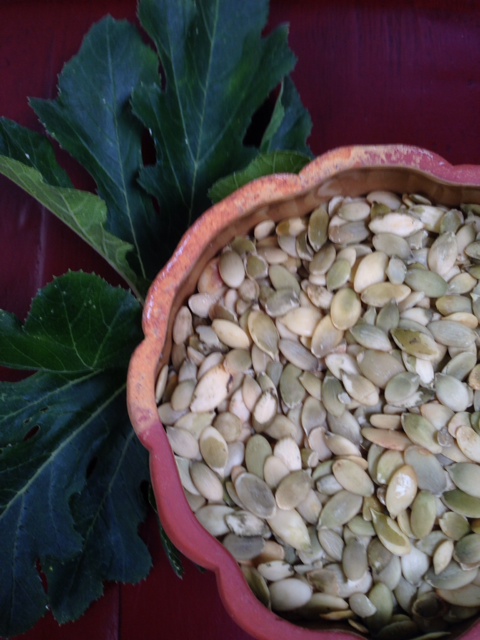
Roasted Pumkin Seeds in a Red Bowl If you prefer to eat the seeds roasted use this simple recipe: Roast raw pumpkin seeds on a low heat setting in your oven (no more than 175 degrees F), sprinkled with Himalayan or other natural salt, for about 15-20 minutes.

Sign up for our Harvest Lunch, Outstanding at the Field on October 29th. Instructions Here.

Next week:  Creamy Southwestern Pumpkin Soup

Linda

It’s Fall, Plant Lettuce Now

Big Tex

When you are “fixing” to go to the Texas State Fair and see Big Tex, you know it’s fall in Texas and time to be planting cole crops and cool season greens.

My lettuce and spinach seeds are in the ground and I am waiting, waiting, waiting for them to germinate. Last year  Oak Leaf Lettuce and Red Sails provided a border for my perennial beds and salad for our meals; the perfect ornamental edible!

All winter long and up until June, we could pick  salads from the backyard. Lettuce being cold hardy  can withstand a light frost and  even lower temperatures without cover. (If temperatures, fall down into the 20’s, cover your lettuce.)

Salad Greens as a Border, Ornamental Edibles!

At the Demonstration Garden, we have enjoyed lettuce grown in our raised  beds.

Spring Lettuce in a Raised Bed

Lettuce does not need full sun and is best started in the fall in Dallas.  You can also buy transplants now at your favorite garden center.

“Leaf lettuce (often called loose-leaf lettuce) is perhaps the best adapted choice for our Texas climate. It forms loose rosettes of leaves that come in a range of colors from various shades of green to burgundy including speckled types. Leaves may be harvested individually or as with other lettuce types you can harvest entire plants at one time. Another option is to “mow” the plants back part way with scissors and then allow them to regrow for a later harvest.” (Quote from Texas Gardener)

Search for loose leaf varieties like Black Seeded Simpson, Red Sails, Oak Leaf, Green Ice, and Prize Leaf.  Try  Little Caesar for a Romaine type of lettuce and Buttercrunch for a sweet butter head type lettuce.

To read more about growing lettuce read: Lettuce From Seed To Harvest in Texas Gardener.

Before you go to the Texas State Fair, get out in your garden and plant to enjoy a long season of homegrown lettuce!

Ann

Outstanding At The Field-An Invitation

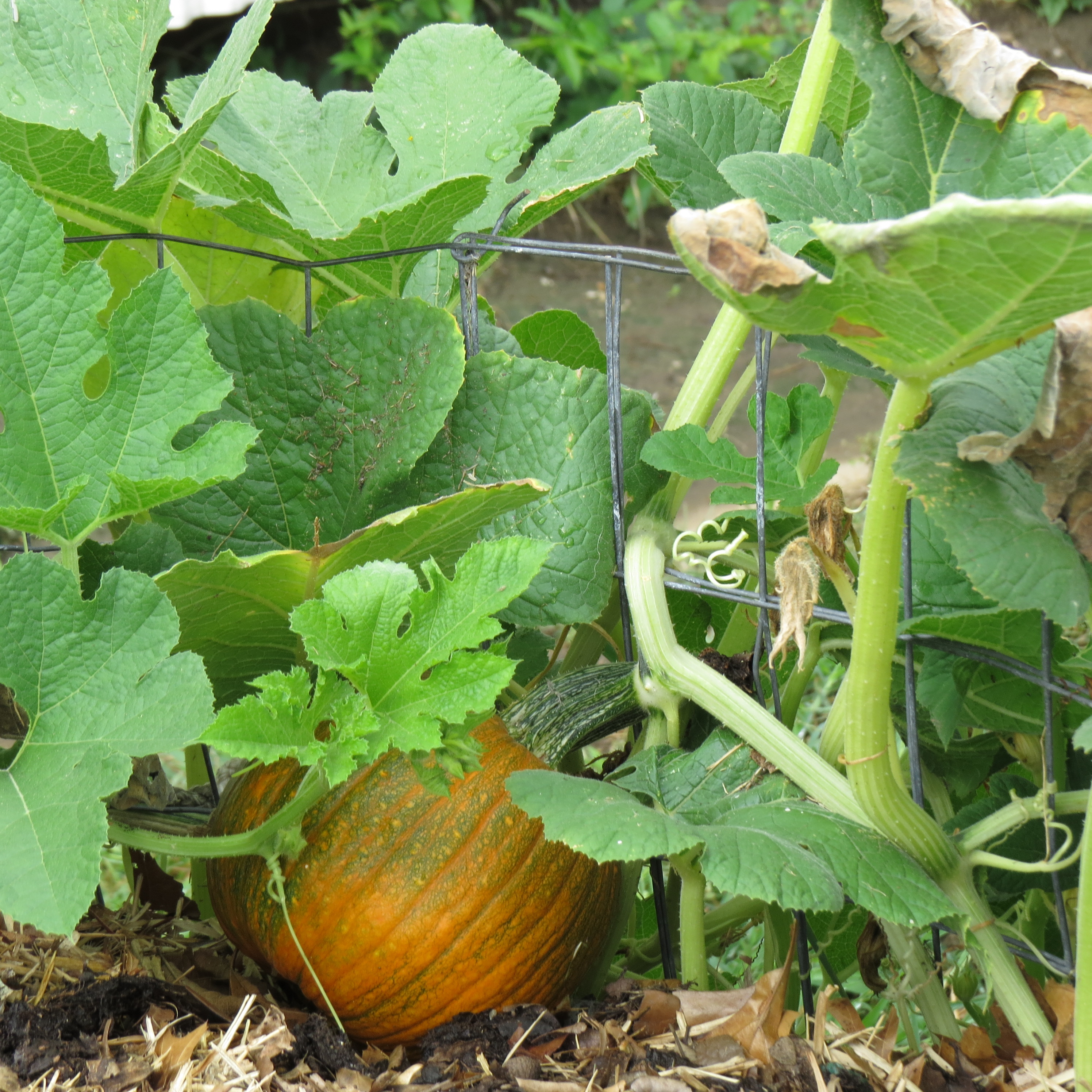
pumkin growing in the demo garden

Master Gardeners at the Joe Field Demonstration Garden invite you to…

“Outstanding at the Field”

Guests will enjoy a fall feast celebrating the harvest, the land, and the farmers that cultivate the food for our table.

Lunch will served on white tablecloths covering a long table

set within our lovely fall garden.

 Garden to Table Harvest Lunch

Mother’s Meatloaf with Piquant Sauce

Skillet Fried Corn

A “Mess of Peas” with Sweet-and-Spicy Chow-Chow

Roasted Butternut Squash Salad with Warm Cider Vinaigrette

Dixie Cornbread with Honey-Thyme Butter & Tomato Jam

Caramel Apple Layer Cake with Apple Cider Frosting

or

Layered Pumpkin Pie in a Jar

 and

“Growing and Grilling”

 A special presentation by Master Gardener Tim Allsup

(One-hour Education Credit for Master Gardeners)

11:00 a.m. – 12:30 p.m. Tuesday, October 29

 $15 per person

 Proceeds benefit educational tours for Dallas schoolchildren

Your reservation is your check for $15 made out to DCMG.  Checks must be received by October 15th.

If you would like to come, please email us at dallasgardenbuzz@gmail.com

 Enrollment is limited.

This event is open to all Master Gardeners, friends, and the public.

Fall Crops For Dallas Veggie Gardens

If you are feeling the heat, you may think of September as the end of summer but if you are outside ready to work in your veggie patch;  fall is on your mind.

At the Demonstration Garden on Joe Field Road, we are busy planting and preparing for fall.  Jim, as always, is way ahead of most of us and provides this useful fall planting guide : For our fall crop info click here.

Last week we planted seeds of  green and yellow bush beans and yellow squash.

Next up, seeds of beets, peas, carrots lettuce and radishes with broccoli, brussel sprouts, cabbage and cauliflower transplants.

Seeds for Fall Planting in Dallas Gardens

Seeds for Fall Planting in Dallas Gardens

Prepare your beds for fall planting:

  • First, decide what crops will produce through fall, pull the diseased and finished or  non producing vegetables. For instance, I will save jalepeno,  okra, basil, and one of my tomato plants.
  • Pull back the mulch or set it aside on a tarp or in a wheelbarrow and add compost to your vegetable bed.  It is important to remove the mulch for seed planting and so that you don’t incorporate it into the soil.
  • After adding and forking your compost into the soil, you are ready to sow seeds or add transplants.
  •  Add back the mulch around transplants only. When your seeds have sprouted and have their “true” leaves, you can gingerly add mulch to these plants.

Ann

Two More Fall Planting Resources:

TAMU Fall Planting Guide and NHG Guide

Rudbeckia Nitida ‘ Herbstonne’

Dallas County Master Gardeners and our visitors have been admiring a statuesque green-eyed coneflower in our garden all through July. And why shouldn’t they? Rudbeckia Nitida ‘Herbstonne’ is no slouch. It stands 4 feet tall featuring large daisy like flowers  that surround  a green cone. Even its foliage is arresting with rich green, deeply cut leaves at its base. Stunning!

Large Coneflower at the Demonstration GardenWith a good deadheading after the first bloom, it will flower all through the fall.

Looking up Through Rudbeckia HerbstonneStand and gaze at it, after  finishing garden chores, of course. You may be in line with the bees and butterflies who adore it.

Another View of Rudbeckia HerbstonneThis perennial appreciates  full sun and well drained soil in a Water Wise Garden.

Ann

Lakota Squash, An Heirloom Vegetable For Fall Gardens

Lakota Squash Planted In  Early August

Lakota squash is one of the winter storage types of squash. It’s a medium sized,  pear-shaped squash, weighing an average of about seven pounds. The outer shell is hard with interior flesh a golden yellow. The flavor is nutty and sweet. The Lakota squash derives its name from the Lakota Tribe of the Sioux Indians who prized this hardy winter squash for cooking and baking.   We like to think we are continuing their history by growing it at The Demonstration Garden. 

Store Lakota squash in a cool, dry place for up to three months or more after picking them. Since this is our first time to grow this heirloom vegetable, we may try one of these cooking ideas from Chef Kyle Shadix :

• Purée in food processor with light coconut milk, curry, and freshly minced and sautéed ginger and garlic.
• Add brown sugar, vanilla extract, and toasted walnuts.
• Add maple syrup and toasted almonds.
• Serve mashed with salt and pepper and a touch of real butter.
• Mix with prepared pesto and sprinkle with Parmesan or Pecorino Romano cheese.

Because Lakota Squash is an heirloom variety not a hybrid, the seeds will produce offspring like the parent. Next year we can share the seed and all get a little taste of Sioux history!

Ann

Beets And Turnips From A Dallas Garden

When my husband called tonight and asked “what’s for dinner”, I said “beets”. Silence ensued. What he didn’t know was that a stampede almost took place in the garden today when we were harvesting our turnips and beets.  Our Dallas County Master Gardeners know eating your vegetables is not only good for you, it is downright tasty. 

Beets And Turnips Harvested At The Demonstration Garden

Turnips can be mashed like potatoes or used in gratins, couscous, or  frittatas.

Tokyo Cross Hybrid Turnips Grown At The Demonstration Garden

Tired of pickled beets?  Try a beet cocktail for something different.  Eat the tops of both of these vegetables for an extra nutrition boost.

Burpee Golden Beets

 Aside from the enthusiasm over our harvest, the most astonishing thing was that just six weeks ago we were planting these crops by seed.  We planted Purple Topped and White Tokyo HyBrid Turnips, Detroit Dark Red Beets and Burpee’s Golden.  We are hoping for a repeat performance when it is time to plant beets and turnips again February 1.

All the talk was of dinner when we left the garden today and I knew each pot would hold some of our harvest.  We had Beets and Beet Greens with Maple Walnuts. Now he’s talking!

Ann