Tag Archives: vegetable gardening

Fall-What’s Not To Love?

What’s my favorite season? Easy peasy. FALL. Jacket wearing, college football cheering, leaf rustling, turkey roasting, Halloween mini-Snickers sneaking—Fall!

This lovely autumnal season is so much more than pulling up summer-scorched annuals and popping in mums for a few weeks.  At a time when northern gardeners are closing up shop for the winter, Texas gardeners have realized that the fall months may very well be the best time of the year to plant.

Think about it.  A Sweet Innocent Perennial you might plant in the spring is just being lined up for the furnace blast of summer from late May through August.  It’s hard to even survive—much less thrive–in temperatures in the 100s, no rainfall, and nighttime lows that hover in the 80s.  But if you’re a savvy gardener and plant that same Sweet Innocent in the fall, you’ve tucked it in when the future holds cooling temperatures and more frequent rain.  Voila.  Plant Success.

Most plants will put on a fall flush of growth and bloom in fall weather conditions.  Roses can be spectacular in the fall, often with blooms more vibrant than spring or summer.  Trim roses back now, fertilize, and give a deep soaking to promote bloom.

Raised Bed with carrots, radish seeds and trowel

If you’re planting a fall school garden with kids, it’s time to get busy.  If you want a warm season garden, plant bush beans and pinto beans by seed until September 15.  Be sure to baby your seeds; they need to be kept moist until they sprout and are established. 

Dallas County Master Gardeners Busy With Fall Gardening

Fall is Prime Time for cool season crops, those vegetables that love a nip in the air in November and December.  Plant beets, spinach, lettuce, and carrots by seed now through October 15.  Kids love transplants; they’re veggies in miniature.  Plant broccoli, Brussels sprouts, cabbage, and cauliflower transplants now through late-November.  Mustard greens, Swiss chard, spinach, parsley, leeks and kale transplants can be tucked in the garden from September 15 through the winter.  (Harvest your warmer season crops in late October, then plant cole transplants for a continued harvest.)

Spring flowering bulbs can be a fun thing to plant with kids.  Purchase your bulbs now when nurseries start stocking bulbs, but wait on planting them until soil temperatures cool significantly, for us in mid- to late-November.  Daffodils are probably your best bet with kids.  They are dependable, don’t require pre-chilling (like tulips), and some will naturalize.  The Southern Bulb Co. in Golden, Texas  is known for propagating old varieties of bulbs, often found in deserted homesteads. 

The best reason to garden in the fall is to enjoy it.  Your garden is filled with new blooms and growth.  Pests have taken a vacation with the cool temperatures.  So nibble a bit of early Halloween candy and enjoy the season.

Elizabeth
School In The Garden

A s summer fades away. here’s a look at some of our crops and more reasons to have school outside in our learning center at the Earth-Kind® WaterWise Demonstration Garden.

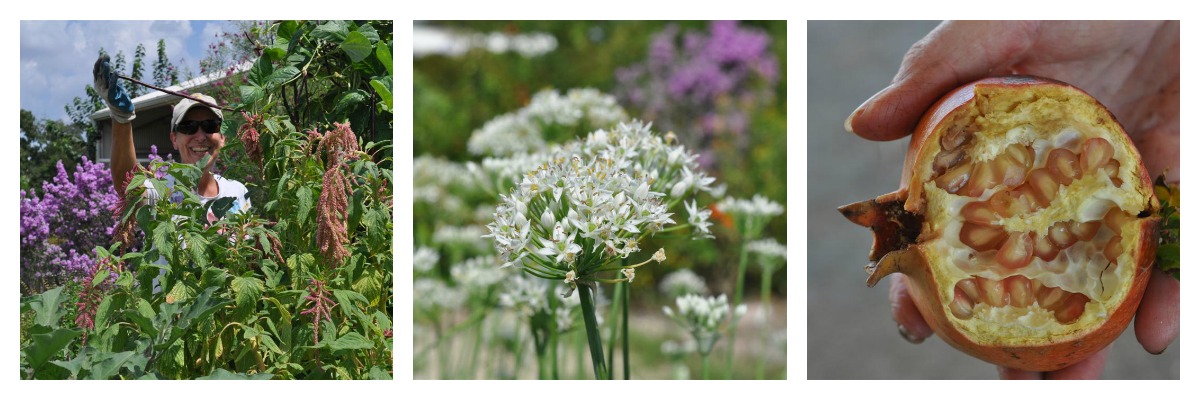
Chinese Red Yardlong Noodle Beans, Garlic Chives, Pomegranate

 Chinese Red Yardlong Noodle Beans and Amaranth Love Lies Bleeding

We are growing these two exotic edibles at the Demonstration Garden to learn more about them ourselves. In our first picture Cindy is stretching out the yardlong bean and the amaranth is blooming with cascading ropes of flowers in front of it.

 To find out how to cook the yardlong noodle beans read Garden Betty.  

Amaranth aka, Love Lies Bleeding, loves the heat and does not need much water. The leaves and seeds are highly nutritious.  Its creepy name refers to its use in the middle ages to stop bleeding.  A whole social studies unit could be written about Amaranth and the uses of it around the world today and historically.  Our garden setting would be the perfect place to teach this!

Garlic Chives  Plop the ornamental seeds heads into your salad along with the chopped up  stems or leave them so you can gather their seeds.

 Pomegranate  We grow the variety, ‘Wonderful’, and it started producing for us the summer after we planted it in 2009.  It will become a multi-trunked small to mid-size tree .  We have an orchard in the planning stages with  Pomegranate trees and other Dallas oriented fruit trees to be planted and more school lessons to be taught!

Ann

The “Mild” Habanero And The Eggplant

Never take your daughter with you to buy vegetable transplants. Molly seemed like a safe bet; this 24-year-old hasn’t cooed over anything but boyfriends and clothes since she turned 11. But show her the 4-inch veggies all waggling their cute little leaves and begging to come home with you, and don’t you know it, Molly’s like a preschooler with a batch of free puppies.  She wanted them all.

That’s how we ended up with The “Mild” Habanero and The Eggplant.

Eggplants And Habaneros On The Kitchen Counter

For the summer garden, we planted squash, cantaloupe, and watermelon seeds and transplants of tomatoes—plus the habanero and eggplant.  Now two months later, the cantaloupe seeds never sprouted, beetles decimated the squash and watermelon, and the tomatoes have decided that it’s too hot to do much of anything.

Of course, the habanero and eggplant have thrived.  

The tag on the habanero read “mild”—as compared to what? A ghost chili?  And you’ve never seen a more prolific pepper; at least 25 chilies in shades of green, yellow, and orange hang from its branches.  Perhaps one could blend up a concoction of chilies and vinegar strong enough to repel squirrels or wayward cats, but otherwise the peppers are too hot to use in anything.

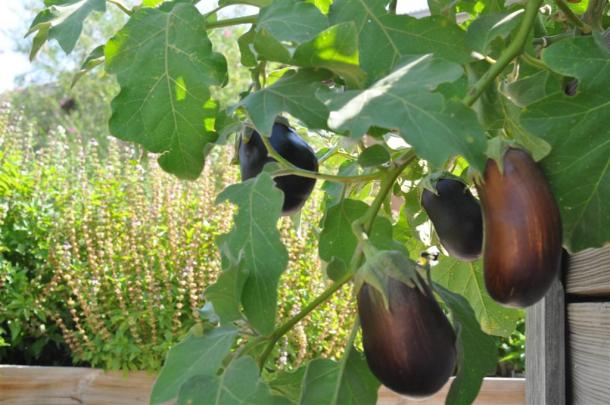
Eggplant growing in a raised bed at the Demonstration Garden in Dallas

The eggplant is now the size of a small shrub.  At least six of the most beautiful aubergine purple globes dot its sturdy branches.  Eggplants are much loved by cooks; the English and French call them aubergines.  Crayola even named a pink-purple-grey color crayon eggplant in 1998. 

In my kitchen, I have grilled, fried, stewed, stuffed, and rolled eggplant—all with the same conclusion.  I don’t like eggplant.  I tried, but no.

So, here we have it.  The stars of my August garden are inedible or underappreciated. Perhaps I could put a little vegetable stand out by the mailbox with an honor system jar for quarters.  Habaneros and Eggplant—Name Your Price…

Elizabeth

Okra, An Olympic Hopeful For Dallas Gardens

This morning I woke up wanting to be like Gabby, the American gymnastics darling of the Summer Olympics.

I wanted to look like her, smile like her, have her discipline, WIN like Gabby!

My next thought was of my garden and what I needed to do out there in the early morning before it gets hot.  Before any more depressing thoughts of never winning an Olympic gold medal entered my head,I jumped out of bed and into my vegetable garden to coax my veggies into looking like Olympiads.

At this time of year, tomatoes are hanging on waiting for fall, cucumbers have stopped producing and the leaves look weathered, bell peppers and red peppers are stable but also wait for a drop in temperature. 

The super performers for Texas gardens in August  are okra, eggplant, and jalapeños. 

Maybe I am more like Gabby’s Olympic coach, Liang Chow. Okra will be my Olympic hopeful.

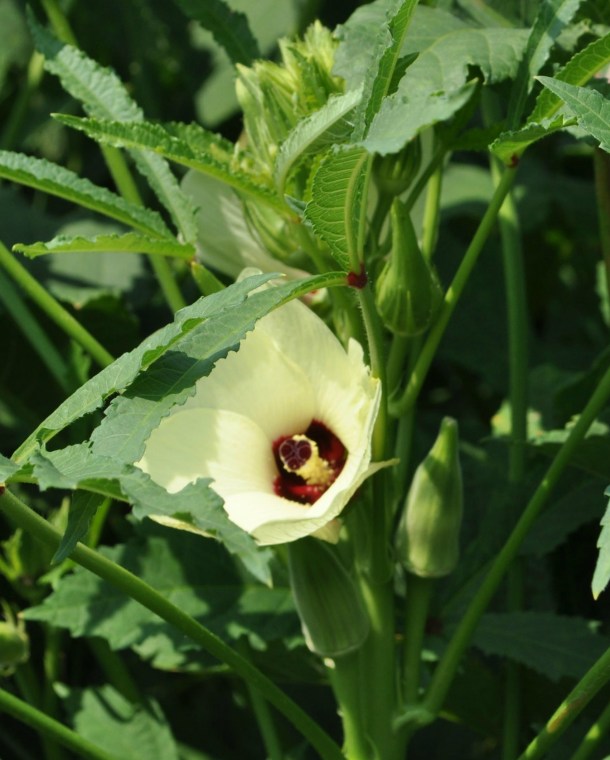
Okra Blossom and Okra Pods

 I will squirt the aphids off my okra with water, pick okra pods on time before they get too big and stringy tasting, and turn them into culinary delights that will cause even the pickiest of eaters to say, I LOVE OKRA!

Now I am imagining stands filled with fans, chanting we want okra, we love okra, and okra can win!

If you want to be a winner with okra remember these tips:

Planting Time: Don’t plant too early, the soil temperature needs to warm up and minimum average temperature should be above 65°. Plant seed in April for summer harvest and July15-August 25 for fall harvest.

Needs: Full Sun, adequate spacing, moderate water needs. Texas A&M recommends one inch of water weekly in the absence of rainfall for good production.

Harvest: pick the pods every day; they should be less 3-3 ½ inches in length. 

Varieties:  We have had great success with Clemson Spineless at the Demonstration Garden. Try Burgundy for the burgundy colored okra pods.  Other suggested varieties are Emerald, Louisiana Green Velvet, Annie Oakley (smaller stature-I like this one), Red Velvet and Beck’s Big.

Cooking:    Click here for a good Dallas Morning News okra recipe.

The burgundy varieties turn green when cooked and taste just like the green okra pods.  Okra blossoms are edible.

Ann

Peach, Watermelon, and Tomato Salad With Mint and Basil

Peach, Watermelon, and Tomato Salad With Mint And Basil

½ medium size watermelon, cubed

3 medium peaches, cubed

2 medium size heirloom tomatoes (green variety) cubed

½ red onion, thinly sliced

1-2 stalk’s worth of basil leaves

1-2 stalk’s worth of mint leaves

Juice of one lime

1 teaspoon salt

¼ teaspoon freshly  ground pepper

1 teaspoon sugar

¼ teaspoon chili powder

1 teaspoon white wine vinegar

¼  cup good quality  olive oil 

1.  Toss together the watermelon, peaches, tomato, and onion in a large bowl.  Chiffonade the basil and mint and add to the fruit  mixture. 

2.  In a separate bowl, whisk the remaining ingredients and toss with the watermelon mixture.  Chill or serve at room temperature. 

Makes 6 to 8 servings.  Can easily be doubled or tripled.

Linda

Corn, Orzo, and Basil Salad

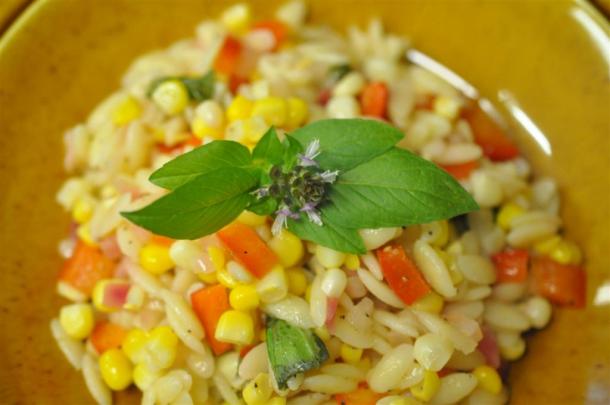
Basil, Corn, Orzo Salad With Basil Garnish  

½ medium red onion, finely diced

¼ cup white wine vinegar

3 tablespoons fresh lime juice

2 teaspoons kosher salt

3/4 teaspoon freshly ground black pepper

4 ears sweet corn, shucked

8 ounces orzo pasta

¼ cup plus 2 tablespoons extra virgin olive oil

1 red bell pepper, seeded and diced into ¼-inch pieces

1 ½ cups torn leaves of sweet basil or lemon basil 

Stir the red onion, vinegar, lime juice, salt and pepper together  in a large mixing bowl.  Let it sit while you continue with the recipe, allowing the acidic ingredients to mellow the raw bite of the onion.  

Hold the ears of corn upright on a large cutting board and cut off the kernels, being careful not to cut so deep you shave the cob.  They should give you about 5 cups of kernels. 

Bring a large pot of salted water to the boil.  Add the orzo and when it is just tender, after about 8 minutes, add the corn kernels to the pot.  Cook until the water boils again, then drain in a colander, and rinse with cold water. 

Stir the olive oil in to the bowl with the dressed onion.  Toss in the pasta and corn, red bell pepper, and basil until evenly combined.  Refrigerate at least 1 hour before serving. 

Yield:  10 servings

Recipe from The Herbal Kitchen by Jerry Traunfeld

Linda

All About Basil

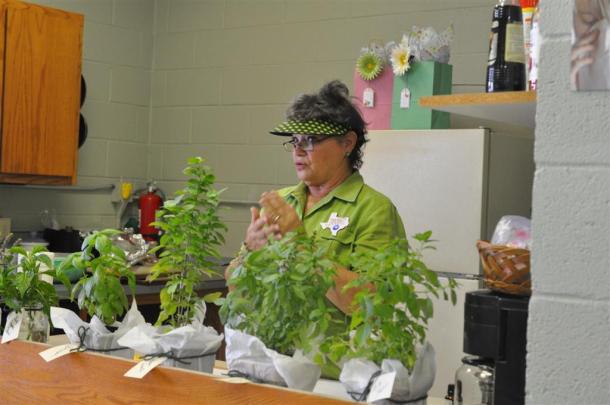
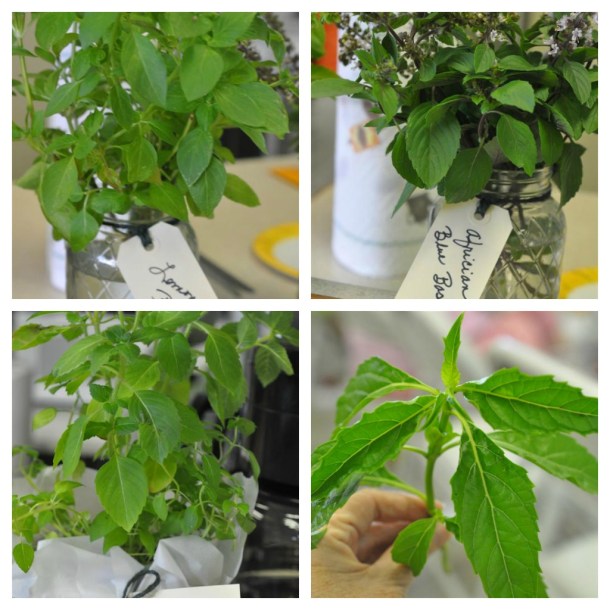
  Paula With 6 Varieties of Basil for Class  

The delightful smell of fresh basil greeted over 30 Dallas County Master Gardners as they feasted on a delicious basil based light lunch (recipes will be forthcoming) and learned all about basil from our own Basil Queen, Paula.   The first topic in her talk was: just how do you pronounce “basil.”  Is it “basil” with a long “a” (bay-sil) or with a short “a” (baa-sil)?  According to Paula, either pronunciation is correct—- and however you pronounce it, fresh basil is delicious.

     Basil has a long and varied history.  It is mentioned in literature pre 206 BCE.  The Greeks and Romans used it as a symbol of hatred.  They said that the gardener had to rant, rave and cuss when planting it.  As the centuries passed, basil became the symbol for love in Italy.  Young women would put a sprig of basil on their clothes to proclaim their chastity.   However, centuries’ later, in a complete symbolic reversal, women would put a pot of basil on their window sill when they were “entertaining” their lovers.  Voodoo priestesses used basil in their rituals as a symbol of love and devotion; while in Victorian times basil symbolized “best wishes” when given to a friend.   In Europe, basil was said to keep evil spirits away and, if a man carried basil in his pocket, it was supposed to bring him wealth.  (Paula tried this with her husband.)

     Low in saturated fat, cholesterol and sodium, basil is high in many nutrients such as riboflavin and Vitamins E and A.  However, Paula warned that it is also high in Vitamin K and should not be consumed by people who are on the blood thinner Coumadin.

     With over 150 varieties of basil, ranging from a shrub to compact varieties, with many different flavors, there is a basil variety for every taste and place in the garden.  Paula has found that though basil likes full sun, it will even grow in part shade.  Though most basils are annuals in Dallas, there is one type, a Bell Pepper basil, that can be grown as a perennial if well mulched in the winter.  

Sweet Basil, Lemon Basil, Holy Basil, Green Pepper Basil

    Some of Paula’s favorite basils are:

            Aussie Sweet Basil:  This is a columnar/upright basil that grows about 24 inches tall and is only 8-10 inches wide.  It does not set seed quite as quickly as some other varieties.

            African Blue Basil:  Primarily a landscape rather than culinary variety, this basil is grown by Paula to attract butterflies and bees.

            Holy Basil:  Used in Hindu and Muslim burial rituals, this clove/spicy basil is best used in potpourris and as a mosquito repellent.  Just rub a few leaves on your skin.

            Sweet Basil:  This type of basil is the favored basil of many people for use in cooking and making pesto.  One of Paula’s favorite varieties of sweet basil is Genovese. 

            Lemon Basil:  Leaves of this basil impart a lemony flavor to dishes.

            Thai Basil:  Used in Asian dishes, this basil imparts a licorice/anise flavor to food and drinks.

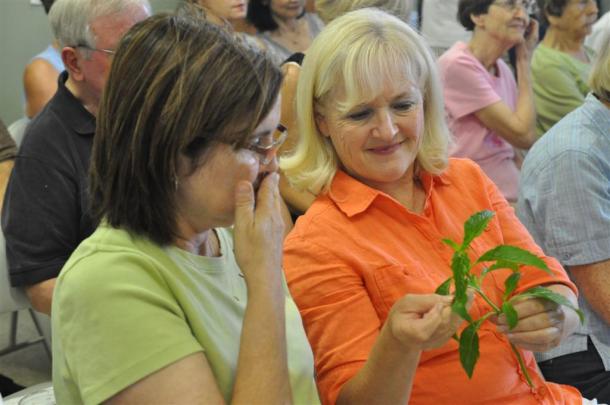
            Bell Pepper Basil:  A “Paula find” at the Herb Festival at Round Top, TX, this basil grows as a shrub in Houston.  Leaves of this variety can be substituted for bell pepper in salads.  They can also be infused in vodka and, according to Paula, make a great Bloody Mary.

Bell Pepper Basil Sampled by Dallas County Master Gardeners Sheridan and Linda

For basil growing tips and some great basil recipes, keep following Dallas Garden Buzz.

Carolyn

A Profusion of Cucumbers

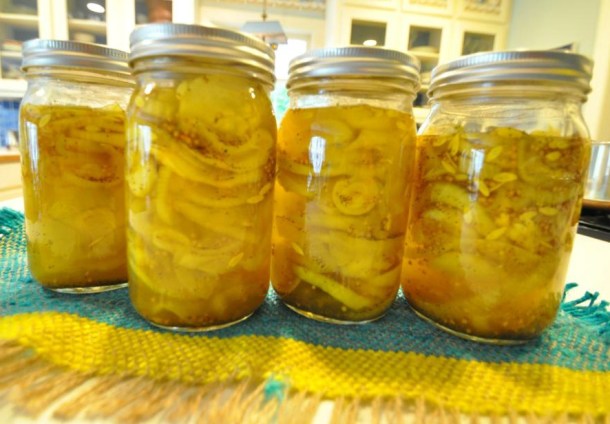
Maybe it’s something to do with the submarine shape: cucumbers and zucchini over run our gardens this time of year. ‘Fess up, Ann. Was that you close to midnight last week frantically turning a bunch of cucumbers into pickles?  Or looking up cucumber dip recipes?

One of the most prolific cucumbers in Ann’s garden wasn’t even invited. The cucumber’s home garden was across the alley and down the street, and this summer it appeared in Ann’s yard.  Didn’t yo’ mama teach you any manners, cucumber?

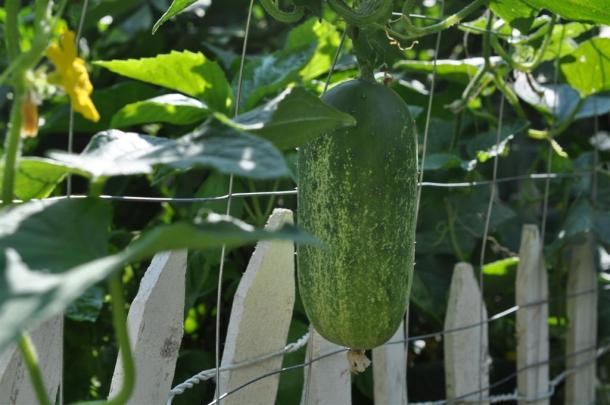
Cucumbers Growing in a Dallas Vegetable Garden on a Trellis

AgriLife Extension horticulturists Sam Cotner and Jerry Parsons tell us how to create cucumber nirvana in our gardens: work amended soil into rows 4-6” high and at least 36” apart for good drainage.  Plant 3-4 cucumber seeds on top of the row every 12-14 inches.  Thin the cucumbers soon after they emerge.  Cucumber vines can reach 6-8 feet or more. 

In large gardens, cucumbers can trail on the ground, but in small gardens train cucumbers on a fence, trellis or wire cage. (If using a trellis or cage plant 3-4 seeds in hills 4-6” high around the edge of the container.)  Soak the plants weekly if it doesn’t rain; use drip irrigation or water in the morning or early afternoon being careful not to get water on the foliage.

Sliced Cucumbers

Farmers markets often carry the little pickling cucumbers that grow 3-4” long and keep their crunch when pickled.  They can also be used fresh in salads.  Suggested varieties include Carolina, Liberty, Saladin and County Fair 87.  Slicing cucumbers reach 6-8 inches long and are ideal for fresh vegetable trays and salads.  Varieties include Sweet Slice, Burpless, Dasher II, and Slicemaster.  Cucumbers for a fall garden can be planted August 1-15.

Jars of Cucumbers on the kitchen counter

Wait a minute….there’s the doorbell.  Image that, a basket of CUCUMBERS! Could that be from you, Ann?

Elizabeth

Don’t forget our Cucumber Dill Sandwich Rounds Recipe

Garden Party Sparkles With Peach Cake and Dragonflies

The July 14th garden party menu was in place.  A few more details and we would be ready for the day. Captured by the beauty of the dragonfly, our theme quickly developed around this unique and fascinating creature.  Invitations, nametags, garden stakes,  decorations, and even cookies were all bearing a strong resemblance to the winged wonder.  (And how appropriate that one of the interns even came wearing a dragonfly necklace!)

Dallas in July usually means that our gardens are full of cucumbers, peppers, tomatoes, lemon verbena, basil, pineapple sage, and more.  All this and a few surprises became part of our menu.

Cucumber Ready to Be Picked,Growing in a Dallas Garden

 Who could resist a chunky piece of fresh peach pound cake?  Of course, the difficult part was deciding whose peaches should go into the cake batter.  Which area would receive the honor?  Parker County peaches, East Texas Lorings, or maybe even a few from the Texas Hill Country.  Why not just give them equal standing and use a little of each?  Talk about a flavor explosion!

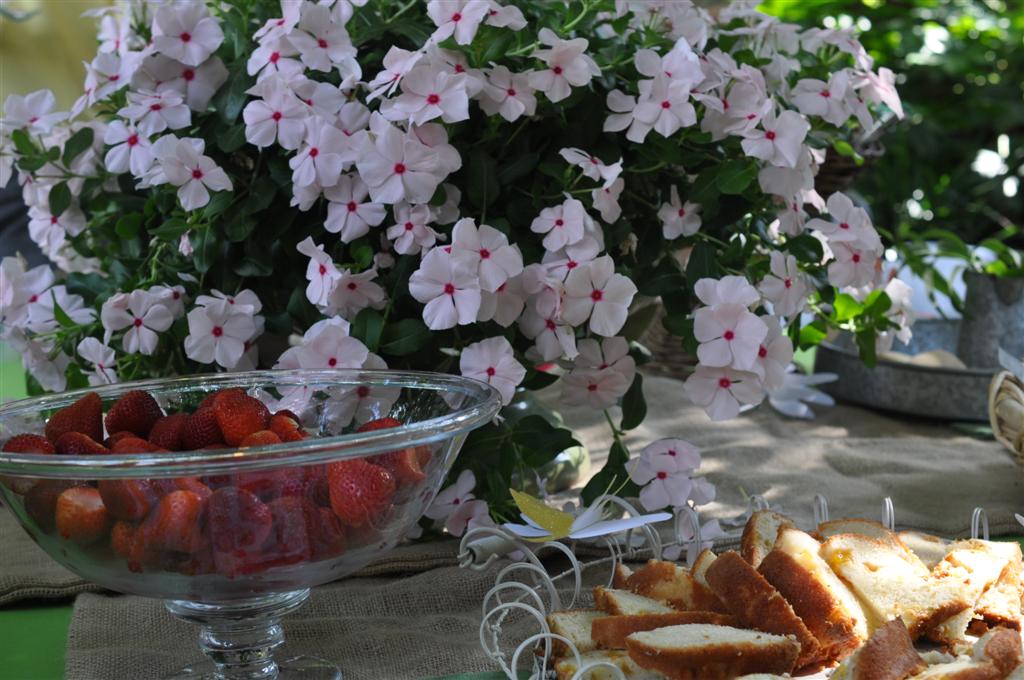
Peach Pound Cake in front of periwinkles, next to strawberries

And those luscious lemon verbena thins, light as a feather and topped with sweet goodness, disappeared in a flash.

But the real crowd pleaser had to be the melt-in-your-mouth but almost too pretty to eat yummy little dragonfly sugar cookies.

Dragonfly Iced Sugar Cookies

 Ah, yes, we were treated to a delightful show of nature in all her glory.  Did 87% humidity stop anyone from savoring every moment of our time together?  Of course not!  As any true gardener will tell you-gardening isn’t for sissies.

And so, after months of anticipation, we proudly proclaim that the class of 2012 is now fully initiated, ready to “dig in and get growing!”

We wish them all a very successful and meaningful start to a lifetime of gardening adventures.

Linda

Strolling Along The Garden Path

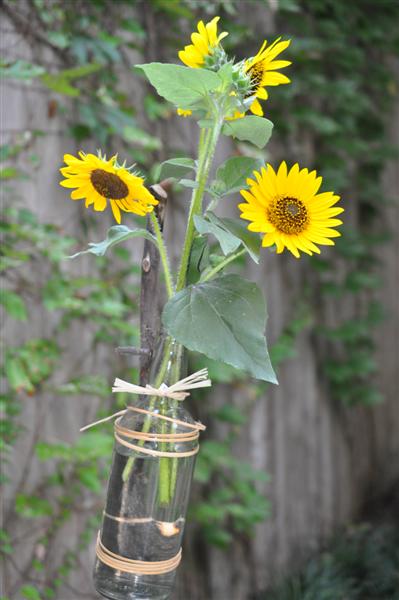
  Sunflowers in a glass bottle staked to show the garden path   On Saturday July 14, we welcomed a new class of Master Gardener Interns to a morning of “meeting, greeting and eating” in Linda’s  backyard.   A chorus line of dancing sunflowers (courtesy of the Earth-Kind® Demonstration Garden) turned their perky little “faces” to greet the guests.  Over 120 Mentors and Mentees found each other along the way ready to embark upon the journey ahead.

Dallas Garden Party

 Another “garden feast” had been planned, orchestrated and beautifully prepared by a committee of enthusiastic volunteers, otherwise known as “foodies.”  How we love those garden-themed events that give us the opportunity to think creatively and exercise our culinary skills!

 And so it was decided, this one would highlight the best that our July gardens had to offer, especially those glorious herbs and veggies.  

Our menu included a “little of this,” and a lot of “that.”  Here’s a sampling of what we munched on throughout the morning:

 Strawberry Lemonade Coolers 

 Jalapeno Pimento Cheese Sandwiches

 Cucumber Dill Sandwich Rounds

Cheesy Quiche Squares 

Crudité Tray with Spinach/Herb Dip

 Strawberry Bowl 

 Fresh Peach Pound Cake

Lemon Verbena Thins

Dragonfly Sugar Cookies

Summertime Iced Tea 

 Linda

Keep following Dallas Garden Buzz for these recipes!