Tag Archives: Dallas County Master Gardener Association

Master of the Woods

Sweet Woodruff

If the title sounds like the name of a new novel, continue reading for a charming introduction into an often-forgotten herb, sweet woodruff – Waldmeister (Galium odoratum formerly known as Asperula Odorata.) According to German folklore it is known by many sources as master of the woods. Delving deeper into its history and uses, you may want to obtain some quickly for a refreshing sip of Maiwein to celebrate May 1st.

In the edible landscape we chose sweet woodruff because it is an ideal herb to use for planting under trees and along shady walkways. With its whorls of emerald green leaves and white starry flowers, it is a welcome sight in late spring while the foliage is attractive all season long.

Sweet woodruff prefers a rich, loamy, well-drained slightly acidic soil but tolerates both sandy and heavy, alkaline clay soils. The shady side of our hügelkultur bed provides it with an optimum growing environment. It typically grows to about a foot tall and spreads indefinitely by stringy yellow underground runners. In our Zone 8 climate it is considered an evergreen. A light covering of mulch this winter helped it survive during the freeze.

The German name, Waldmeister (master of the woods), reflect its habitat, the common name bedstraw, applied also to other members of the genus, refers to its use. During the middle ages it was used as a fragrant strewing herb and mattress filling. When dried, the leaves smell pleasantly of new-mown hay, honey and vanilla. 

Maiwein Garnished with Strawberries

Today, sweet woodruff is probably best known as an ingredient of German May wine. It is traditionally drunk on May Day both to welcome the season and as a spring tonic. Follow this simple recipe for a refreshing sip of an historical beverage. The recipe was taken from a German Culture website which specified that only the tender, young leaves should be used in this drink, before sweet woodruff is in bloom. As you can see from the photograph, our sweet woodruff fits that description, so we are ready to enjoy a glass of Maiwein on Saturday, May 1st!

Sweet Woodruff Wine

Ingredients

1 bottle dry German Riesling

7 sprigs young sweet woodruff

Instructions

Tie the stems of the woodruff with a string and stuff it into the opening of the wine bottle, leaving the string outside the bottle. Let it soak for 15-20 minutes. Remove the bunch and serve the wine chilled. Note: Germans like to garnish the Maiwein with fresh strawberries and mint.

Here is a link to a wonderful recipe for Creamy Maiewien cake: gathervictoria.com.

Linda Alexander, Dallas County Master Gardener Class of 2008

Aji Dulce – Paco’s Peppers

April 29, 2021

This article is about my friend Paco.  We met on a pickleball court 5 or 6 years ago and have been good friends ever since.  The first time I stepped into his backyard, I discovered we had something other than pickleball in common – gardening!  Paco is from Puerto Rico and he has turned his backyard into a tropical paradise.  Last year at a summer pool party, I noticed a pepper plant with small, wrinkly looking red and green peppers.  He explained that he collected the seeds from peppers he got in Puerto Rico because it is an important ingredient for sofrito.  I left the party with a baggie full of seeds.

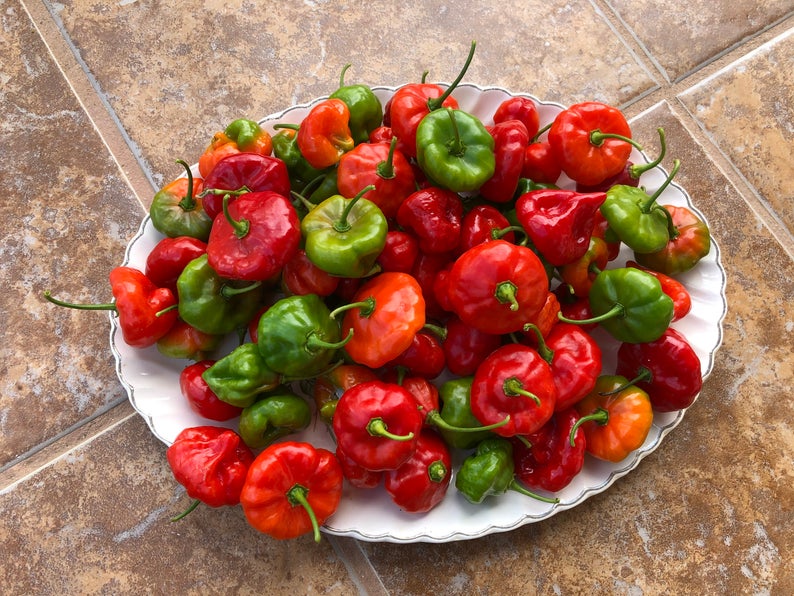
The Aji Dulce peppers (Capsicum Chinese) are small, sweet peppers.  They have the shape and size of a habanera pepper but without the heat.  They start out light to dark green and eventually turn red and orange if left on the plant to mature.  Aji Dulce is used to season dishes in Puerto Rico, Dominican Republic and Cuba.  My research found that in Puerto Rico, it is most commonly used in sofrito (which translates to stir fry or sauté in English).  It is a perennial in the tropics but is an annual here.  

With the seeds Paco gave me last year, we have been able to start a number of these pepper plants for the Raincatcher’s Garden annual plant sale which will be held at the garden on Thursday, May 13th.  I am looking forward to growing a couple of these plants myself this summer and will be looking up sofrito recipes once I get a good crop going!  

This plant goes by several names.  In Puerto Rico it is know as aji dulce, ajicito or ajies.  In the Dominican Rebuplic it is called aji gustoso and in Cuba it is aji cachucha. To me, this plant will always and simply be referred to as Paco’s peppers!  

Jackie James

Dallas County Master Gardener Class of 1993 

We will be posting more details on this blog about the May 13th plant sale in the near future.  

Rising Sun Redbud Tree Continued….

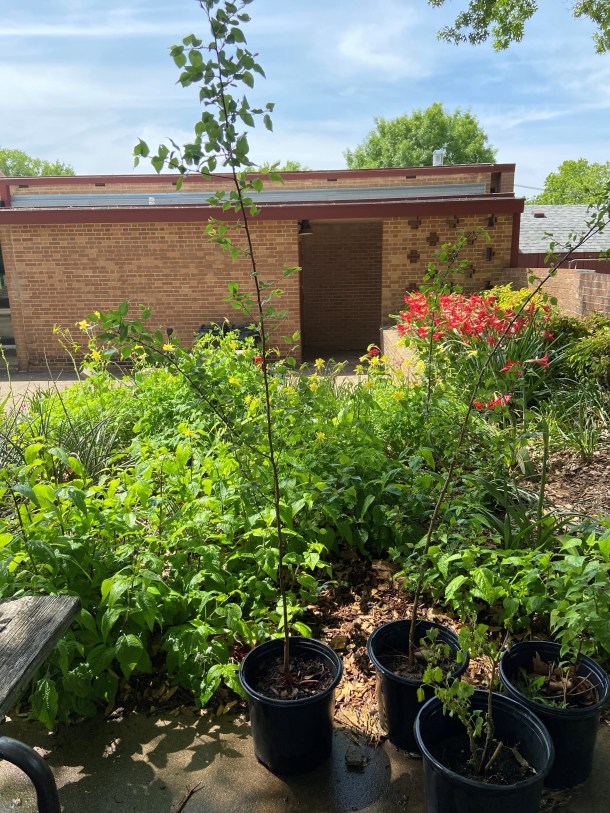
On October 6, 2020, we posted an article on this blog about our new Rising Sun Redbud Tree.  We planted it with such great expectations of year round color including spring flowers and a combination of three different colors of leaves throughout the summer.  Then came February 2021!  For the past several weeks, we have been wondering whether this newly planted tree would survive the “storm of the century.”   A couple of days ago we got our answer.  At close inspection, we saw flower buds starting to form.  Within a few days, it exploded with beautiful light purple flowers closely followed by some light green leaves. 

I have been encouraged watching plants coming back to life over the past few weeks.  Many plants looked dead but now are starting to show signs of life.  I’m sure we will lose plants at Raincatcher’s garden as well as our own gardens, but so far I am feeling hopeful that these plants have a great will to continue to live!!!

Jackie James – Dallas County Master Gardener Class of 1993

Photos by Jackie and Starla Willis

Arbequina Olives

We harvested the arbequina olive tree last November and preserved the fruit in a very strong brine. The brine leaches out the bitter oleuropein that makes olives straight off the tree inedible. The result was tasty but very salty!

Gardeners at Raincatcher’s took every precaution possible in mid-February to stave off sub-freezing temperature damage. Looking back, we wish we had double wrapped our precious Arbequina Olive. We don’t think our olive tree will survive but are waiting a few more weeks to see how it fared.

Brown leaves due sub freezing temps

In the meantime, we have olives to enjoy!

Beverly Allen, Dallas County Master Gardener Class of 2018


Going for the Green

March 15, 2021

St. Patrick’s Day is quickly approaching and we’re ready to bring out the ‘green’. But with last month’s devastating winter weather event, our garden needs a little “luck of the Irish” to show more of its true color. 

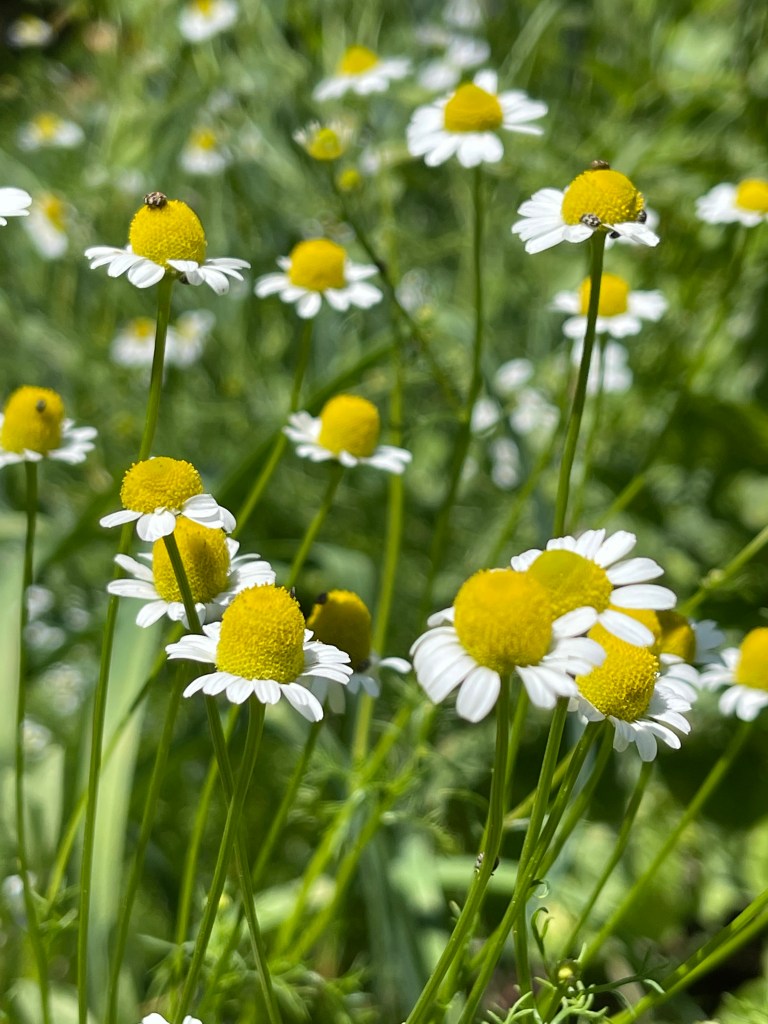
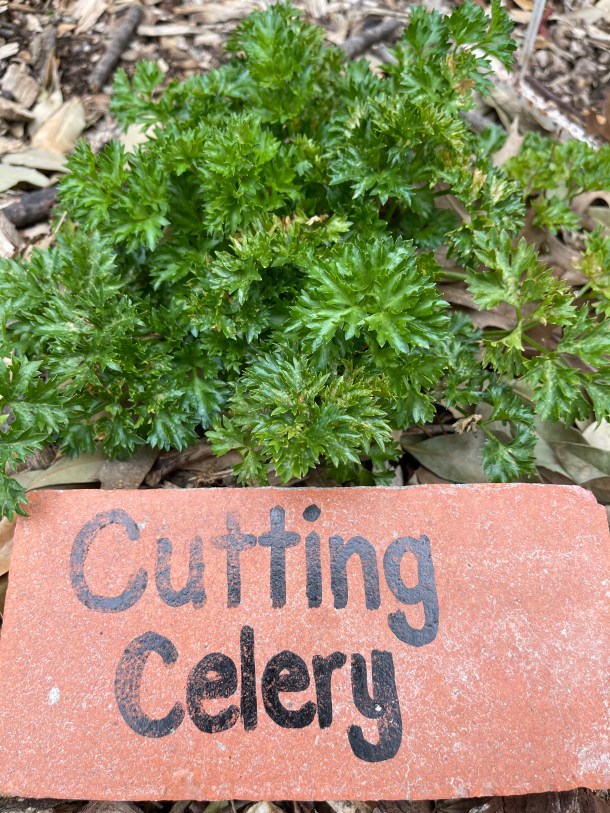
Plants that persevered under a blanket of fallen leaves include chervil, cutting celery, French sorrel, bloody sorrel, salad burnet, red stemmed apple mint, spinach, everbearing strawberries, creeping thyme and sweet woodruff. A few others are just now peeking out from the cold ground with their delicate little leaves and branches: anise hyssop, calendula, dwarf trailing winter savory, German chamomile, lemon and bee balm, pineapple sage, sweet fennel and summer savory.

With the help of Gail Cook and Jim Dempsey, our very own ‘seed starting saints’, an impressive list of seedlings are due to make an early spring appearance in the edible landscape. Alyssum, anise, aster, bachelor’s button (cornflower) impatiens, variegated rocket cress and sweet William will start arriving in late March and April. 

In early May our gardens will be filled with three different varieties of basil, Jimmy Nardello peppers, jalapeno peppers, tomatillos, marigolds – ‘lemon gem’ and tangerine’, papalo, roselle hibiscus and white velvet okra.

It makes us so happy to see the garden going green again. Let’s celebrate with an old Irish wish…

May your paths bloom with shamrocks, and your heart ring with songs, and the sky smile with bright sunshine all this happy day long.

Linda Alexander, Dallas County Master Gardener class of 2009


Local Gardeners and Their Lovely Lime Trees

March 3, 2021

Our dear friends, Sheila Kostelny and Paula Spletter, are master gardeners extraordinaire. Paula is a graduate of the class of 2009 who works at Northhaven Gardens as their Creative Director, specializing in color pot combos. She is a garden lecturer and speaker with an extensive knowledge of herbs and succulents. And, with the impressive gift of a custom designed greenhouse built by her sweet husband, gardening year ‘round is her greatest pleasure.  

Paula Spletter with her citrus collection

Sheila also graduated in 2009 and has just recently completed her vegetable specialist certification from the Texas Master Gardener Association. Her backyard-raised herb and vegetable garden beds leave you starry-eyed with wonder. Sheila, too, enjoys having a greenhouse to take her through the seasons. 

Sheila and her lime tree which looks a little sad this year but has produced one lime. Usually it is more productive.

Together, these two ladies have guided us through many gardening projects at Raincatcher’s Garden of Midway Hills. We love to spend time with them and, yes, when they speak, we listen!

Just recently, we ran across a photo that left us drooling. It was the creative work of nationally acclaimed food stylist and photographer, Eva Kosmas Flores. Photos of her Coconut Lime Tart with a Coconut Graham Cracker Crust inspired us to learn more about the possibility of growing lime trees locally. Paula and Sheila were just the gardeners needed to advise us in the endeavor. Join us in this informative and inspiring Q & A as they take us on a journey of Texas lime tree “tips’”.

To start, when did you become interested in growing lime trees?

Paula: I think when my little sister moved to Florida. When I would visit, she had a variety of citrus trees in her backyard. I’ve always enjoyed growing citrus trees and have quite a collection. I prefer the taste of limes over lemons. A thornless lime is a must have!

Sheila: I have had a Meyer lemon tree for probably 10 years that I purchased at Sunshine’s Miniature Trees on Greenville Avenue.  Since that time, I’ve added Persian Lime, Sweet Kumquat, and Arctic Frost Satsumas.  

Was there a particular variety that you felt most appropriate for our Zone 8 climate?

Paula: Not really. I went by what was recommended by Texas A & M for our zone and of course what garden friends had success with.

Sheila:  To be quite honest, I purchased the Persian Lime tree from Costco 4 years ago.  It wasn’t a purchase that I researched ahead of time.   

Lime trees are tropical plants so how do you manage year-around care?

Paula: They do prefer some late afternoon shade, especially in our harsh summer months. Surprisingly, they can take pretty cold temperature in short bursts. It’s the prolonged cold temperatures that destroy good tissue. What can’t fit in my “barn” are on flat bed dolly’s and rolled into the house. They are generally starting to bloom in the winter, so I get the extra bonus of their scent. 

Sheila:  The ability to bring these potted trees into my greenhouse at the threat of 32-degree temperature is a luxury I cherish.   I have one Arctic Frost satsuma planted in the ground in my west garden and one planted in its original pot in my raised bed.  At the point that I realized that this weather storm was going to hang around a while, I removed the potted satsuma and put it in my greenhouse.  I’m not sure if either of them will survive at this point as they have survived temperatures as low as 9 degrees.

When is harvest time and about how many limes does each tree yield?

Paula: For me, harvest is in late fall. The current Mexican lime I have I might get a dozen, or so, limes off it. They are smaller limes and tend to ripen quicker. Fortunately, the birds seem to leave them alone. Strong winds tend to knock the blooms off so I don’t get as many as I should.

Sheila:  Harvest time is around November for me.  My lime tree struggled this year and I’m not quite sure why.  It really started to kick start in December (of all times) and was beautiful when it was placed in my greenhouse in mid-January.  It started putting out an abundant amount of blooms and produced 4 limes.  At one point, I had my greenhouse heater a bit too high and the citrus didn’t like that at all.  It showed its displeasure by promptly shedding it’s leaves, leaving me with ONE lime left.  Typically, I can expect about 5 or 6 limes a year and they are wonderful.

What do enjoy most about having lime trees in your garden?

Paula: Oh, the blooms! The scent is intoxicating! I cut stems full of blooms just to have in the house.

Sheila:  As with all my citrus, I love being able to watch it produce from bloom to fruit and, as with anything homegrown, enjoy its rich sweetness and flavor like no other.

How do you use the limes from your lime tree?

Paula: They usually don’t ripen at the same time so I’m bad about just peeling and eating them off the tree. But they do make great margaritas!

Sheila: As I mentioned, my lime harvests haven’t been luxurious.  However, there’s nothing like a vodka and soda with a squeeze of home-grown lime.  😊

Linda Alexander

Coconut Lime Tart with Graham Cracker Crust

Advice from Texas AgriLife on growing citrus

The joys of growing Citrus in North Texas

Baby, It’s Getting Cold Outside.

February 10, 2021

Better get out more of those covers for your plants. This arctic blast is lasting through mid-week next week and temperatures are forecast to drop way down into the single digits. I have checked the weather app on my phone much more than I ever checked instagram or any other media platform and my level of anxiety was rising until I talked to Jeff Raska.

Jeff Raska, our county horticultural agent, gave some advice.

Cover all bedding plants even pansies and kale, cover all soft tissue plants and perennials that have broken bud. Shrubs that are marginally cold tolerant may also need a cover. That would include Pittosporum, Indian Hawthorn, and Loropetalum. Boxwood may get frost damage so consider covering them.

Just like us, our plants are not used to this cold weather snap so protection is in order. Fortunately, we may get rain first and Jeff says that will help a ton!

As far as frost cloth versus using bed sheets, Jeff says he has saved many plants with bedsheets. Frost cloth or frost blankets are better and will give better protection, but if you run out of those, empty out your linen closet and put those bed linens over your plants.

Looking out at my yard, I am deciding which plants are my favorites and prioritizing them. My relatively new bed of pittosporum, my giant kale, and the fall planted ShiShi Gashira camellias in front are getting the frost cloth and I may even double it. The huge Indian Hawthorns that flank my front yard beds will also get special treatment. I wish there was a way to help by Chinese Snowball Viburnums that are already blooming. For them, I will have to say a prayer.

In closing, Jeff reminded me that nature happens, Things will grow back, as long as they don’t get root damage. The sun will shine again.

Ann Lamb

Dallas County Master Gardener Japanese Maple Sale Coming Soon

The Joy of Japanese Maples

You may have noticed the brilliant reds and golds of Japanese Maples around town in recent months. The foliage colors and textures were more reminiscent of an autumn drive through New England than fall in North Texas!

The Dallas County Master Gardeners are hosting a sale of Japanese Maples in March. Many of us are familiar with the variety “Bloodgood,” however the Maples we are offering are varieties not often available at local nurseries. This is your opportunity to purchase these trees in one- and two-gallon sizes.

There is a place in every garden for a Japanese Maple. They thrive in afternoon shade (the perfect understory tree!) and will make that special spot in your garden a focal point year-round.  

Watch for  the sign-up genius link and additional information including varieties available, pricing, and contactless pick-up details, in February. 

Cindy Bolz Dallas County Master Gardener Class of 2013

Before shopping for your Japanese Maple, please read these two articles:

 The Japanese Maples at the Raincatcher’s Garden

Dallas County Master Gardeners and Japanese Maples

Meet Diane – A Frequent Visitor to the Raincatcher’s Garden

Our new friend, Diane

I met Diane at the Raincatcher’s Garden a couple of months ago when she was in the edible garden and courtyard taking photos.  I stopped to say hello and she raved about our garden.  She lives in the neighborhood and had noticed the garden from the street. Eventually she stopped by to check it out – and the rest is history. 

She told me she sends a selection of the photos each week to people to “brighten their day.”  Diane sent some of her photos to me and I was so impressed that I thought it would be nice to share some on Dallas Garden Buzz. 

We have made two slides shows from Diane’s photos for you to enjoy.

Diane sends weekly emails (subject line Happy Merry Monday) to about 20 friends, family members and former co-workers.  Many of the recipients live in Dallas but the photos reach people in Tennessee, Arizona and Ohio as well.

 She also shares her efforts with about 25 people from her church who are home bound. Several of these people don’t use a computer so Diane gets copies made and mails the photos to them!!!  It is a pleasure to think of all of the people who are enjoying our garden through her images.

DCMG volunteers have worked hard (within the activity limitations of the pandemic) to ensure the garden remains beautiful and well kept. Many of us have found working at the garden to be a much needed retreat from everything that is happening in the world.

 As gardeners we take great satisfaction in the knowledge that visitors to the garden and recipients of Diane’s photos are enjoying the positive benefits and beauty of nature. 


Jackie James

Dallas County Master Gardener 1993

Enchanted

It was the sweet, anise like fragrance of Mexican Mint Marigold that drew me into the garden on the morning of October 18th. Brushing up against the plants, I yielded to the temptation and immediately tasted one of the delicate yellow blossoms surrounded by slender green leaves. My garden journey was just beginning.

Landscapes bursting with brilliant color, leaves gently tumbling down from trees and pumpkins spilling out from the porch and into the yard welcome fall in all its glory. I find myself truly enchanted, wanting the experience to linger beyond this moment in time.

Spending one blissful day after another outdoors renews my spirit and encourages me to immerse myself fully in the shimmering days of October and November. I’m immediately drawn to the garden where beauty abounds throughout. Join me on a creative journey of discovery among the flowers and foliage of the season.

Bringing the natural world indoors reminds me, once again, that Autumn’s gifts never fail to bring happiness to my home. From soft whispers of golds and ochre to vibrant shades of burgundy and orange, fall arrangements lend themselves to a more simplistic style. Gathering your treasures is almost as joyful as placing them in a cherished vase. Let nature speak to you in a soft, sweet seasonal whisper. Savor every precious sight, smell and color of this magical season.

My first experience with frostweed was in 2008 as an intern in the Dallas County Master Gardener Association. It was a “give away” during one of our classes. For the past twelve years it has continued to grow in my garden.

Frostweed growing in the garden

Grow It, Use It – Frostweed is a lovely perennial plant native to Texas and many other states. It is a member of the Sunflower Family. Frostweed grows from 3’-6’ and is covered with white disc-like blooms from late August until November. It is an exceptional nectar source for butterflies like Monarchs and Great Purple Hairstreaks. It grows well in dappled shade.

During the month of October Red Rubin Basil delivers a vibrant splash of deep purple in the garden. Paired with purple-veined kale leaves in a mustard colored French olive pot, the only elements needed to complete the picture are two glasses of robust Pinot Noir and freshly cut Black Mission Figs. Cheers!

Grow It, Use It-Plant Red Rubin Basil in April and watch the colors intensify as the months pass. A location with morning to mid-day sun followed by dappled shade in the afternoon will reward you with that spectacular fall foliage. Bees and butterflies will visit the spiky blossoms until the first frost ends its growing season.

A simple bouquet of Mexican Mint Marigold surrounded by the bold, deep red and purplish savoy leaves of Red Giant Mustard pair perfectly in an unassuming pedestal vase.

Grow It, Use It – Mexican Mint Marigold can be planted in the garden after the danger of frost has passed. It tolerates many different soil types but must have good drainage. Plant it in a location that receives early morning to mid-day sun. The distinctive anise flavored leaves can be harvested throughout its growing season from spring through frost. The real show-stopper attraction begins around late September when bright yellow, marigold-like flowers attract migrating butterflies and other pollinators. Mexican Mint Marigold is a perennial that usually freezes to the ground in winter but reappears in spring.

Red Giant Mustard gets two bonus points; it has good cold tolerance and is more insect resistant than other varieties. Start outdoors in late September and continue growing until late spring. Plant in partial shade. Enjoy its beauty as a dramatic landscape plant but harvest the spicy mustard flavored leaves for eating.

When the glossy dark-green leaves of Japanese Aralia began to lose their color, consider using them in unexpected and unusual ways. As the browning tips gently began to curl and turn upwards, create a sense of drama by giving each uniquely faded leaf its place within the arrangement.

Aralia and Dried Hydrangeas

Aralia growing under an arbor

Grow It, Use It – Japanese aralia is grown around the world as a cultivated plant. Enjoy adding a tropical feel to your landscape by using it as an understory plant beneath trees or large shrubs. Plant it in rich, moist soil that drains well. Aralias prefer part sun to shade and will typically grow to around 8 feet. Try to avoid afternoon sun which may scorch the leaves. Flower stalks with creamy flowers followed by black berries appear in late fall or winter.

Freshly squeezed rosy grapefruit juice is your invitation to come for a perfectly planned fall brunch in the garden. Cascading branches of ‘Rose Creek’ abelia create a relaxing and peaceful environment where you are embraced by nature. Dreamy blush colored blossoms found in this simply elegant tabletop setting create a calming effect.

Abelia ‘Rose Creek’ at Raincatcher’s Garden

Grow It, Use It – Monrovia best describes this variety of abelia as having showy clusters of small, fragrant, white flowers that emerge from rosy pink sepals in summer. It is best planted in rich, well-draining soil in a location that receives full sun.

Come visit our blog again Wednesday morning to see the remaining photos plus a spectacular ‘Grand Finale’ arrangement.  We encourage you to stroll through Raincatcher’s anytime this week to experience the full seasonal beauty of our garden.

Linda Alexander