Vegetable Lambs

Plant Born Sheep, The Medieval Idea Of Cotton           

     Have you seen the Demonstration Garden’s flock of “vegetable lambs?”  Tended with loving care by Dallas County Master Gardener Jim and other DCMG volunteers, they thrive in the Garden’s raised beds.  Though we now know these “vegetable lambs” by their contemporary name, cotton, during the medieval period in Europe, cotton was an imported fiber and the actual plant that produced it was unknown.  So, noting its similarities to wool, people imagined that cotton must have been produced by plant-born sheep.  In 1350 John Mandeville, after a trip to Tartary, wrote: “There grew there (India) a wonderful tree which bore tiny lambs on the ends of its branches.  These branches were so pliable that they bent down to allow the lambs to feed when they are hungrie (sic).”   Later in 1791 Dr. De la Croix in his work Connubia Florum, Latino Carmine Demonstrata  wrote of the vegetable lamb:

  Upon a stalk is fixed a living brute,                       Early Understanding Of Cotton Plants
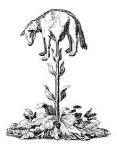
  A rooted plant bears quadruped for fruit.

  It is an animal that sleeps by day

  And wakes at night, though rooted in the ground,

  To feed on grass within its reach around.

     Today’s scientific classification of cotton is, of course, much different from the zoophyte (i.e. an animal that visually resembles a plant) classification of the medieval period.  The name of the genus derives from the Arabic word goz, which refers to a soft substance. 

It is particularly interesting that cotton is in the Mallow family and is related to hibiscus.  This resemblance can be seen easily in cotton’s flowers.  Cultivated cotton is a perennial shrub.  However it is grown in our area as an annual.  Plants are around 3-5 feet tall with broad three to five lobed leaves.  The seeds are contained in capsules called a “boll.”  The many seeds found in a boll are surrounded by two types of cotton fiber.  The longer fiber can be spun into thread and ultimately cloth, while the much shorter fibers, called “linters,” are spun into low quality fiber, giving rise to the term “lint.”  Cotton requires a long growing period, full sun, moderate water and likes heavy soil.  If this sounds like a perfect plant for the Dallas area, it is—- and is why cotton fields used to be numerous throughout DallasCounty.  There are several different naturally occurring colors of cotton (white, brown, and green) and the DemonstrationGarden grows brown cotton and several different varieties of white cotton.
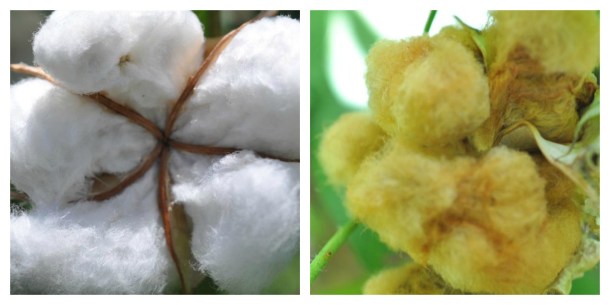
White Cotton And Brown Cotton Grown At The Demonstration Garden

     So the next time you visit the DemonstrationGarden, try standing by the cotton plants, closing your eyes, and just “Believe.”  If you listen closely, maybe you will hear the vegetable lambs say “baaaa.” 

       ***this is the first of several articles on cotton: the plant, its history, spinning and dyeing

Carolyn
 

Okra, An Olympic Hopeful For Dallas Gardens

This morning I woke up wanting to be like Gabby, the American gymnastics darling of the Summer Olympics.

I wanted to look like her, smile like her, have her discipline, WIN like Gabby!

My next thought was of my garden and what I needed to do out there in the early morning before it gets hot.  Before any more depressing thoughts of never winning an Olympic gold medal entered my head,I jumped out of bed and into my vegetable garden to coax my veggies into looking like Olympiads.

At this time of year, tomatoes are hanging on waiting for fall, cucumbers have stopped producing and the leaves look weathered, bell peppers and red peppers are stable but also wait for a drop in temperature. 

The super performers for Texas gardens in August  are okra, eggplant, and jalapeños. 

Maybe I am more like Gabby’s Olympic coach, Liang Chow. Okra will be my Olympic hopeful.

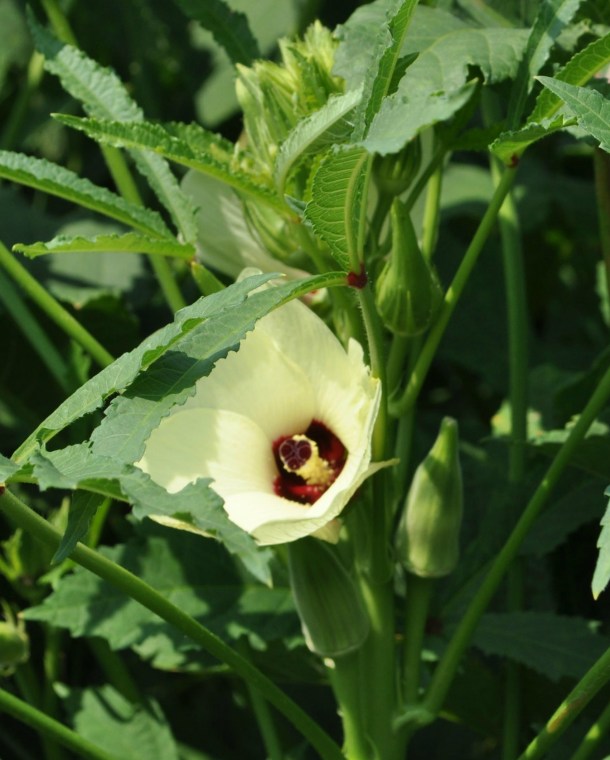
Okra Blossom and Okra Pods

 I will squirt the aphids off my okra with water, pick okra pods on time before they get too big and stringy tasting, and turn them into culinary delights that will cause even the pickiest of eaters to say, I LOVE OKRA!

Now I am imagining stands filled with fans, chanting we want okra, we love okra, and okra can win!

If you want to be a winner with okra remember these tips:

Planting Time: Don’t plant too early, the soil temperature needs to warm up and minimum average temperature should be above 65°. Plant seed in April for summer harvest and July15-August 25 for fall harvest.

Needs: Full Sun, adequate spacing, moderate water needs. Texas A&M recommends one inch of water weekly in the absence of rainfall for good production.

Harvest: pick the pods every day; they should be less 3-3 ½ inches in length. 

Varieties:  We have had great success with Clemson Spineless at the Demonstration Garden. Try Burgundy for the burgundy colored okra pods.  Other suggested varieties are Emerald, Louisiana Green Velvet, Annie Oakley (smaller stature-I like this one), Red Velvet and Beck’s Big.

Cooking:    Click here for a good Dallas Morning News okra recipe.

The burgundy varieties turn green when cooked and taste just like the green okra pods.  Okra blossoms are edible.

Ann

Basil Lime Shortbread

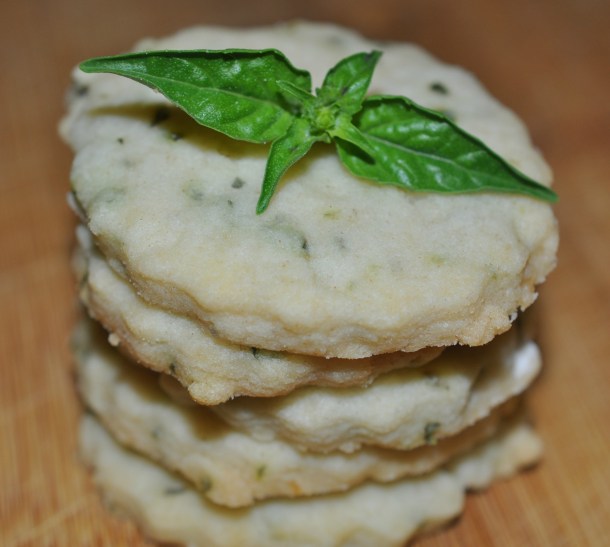
Basil Lime Shortbread With Basil Sprig

¾ cup unsalted butter

½ cup confectioner’s sugar

¼ teaspoon vanilla extract

¼ teaspoon salt

1 ½ cups all-purpose flour

¼ cup finely chopped fresh basil

2 tablespoons fresh lime zest

 1.  In a medium bowl and using an electric mixer at medium speed, cream the butter and confectioner’s sugar together until light and fluffy.  Beat in the vanilla extract and salt.  

2.  In a small bowl, toss together the flour, basil, and lime zest.  With the mixer at low speed,  add the flour mixture to the butter mixture, and mix until the dough just comes together and forms a ball.  Remove the dough from the bowl, wrap tightly with plastic wrap, and refrigerate for 2 hours. 

3.  Preheat oven to 350 degrees.  Line 2 baking sheets with parchment paper, and set aside. 

4.  On a lightly floured surface, roll the dough out to 1/8-inch thickness, and using a 2-inch round fluted cutter, cut cookies.  Place on prepared baking sheet, and bake for 8 to 10 minutes, or until edges begin to brown.  Cool on wire racks before serving. 

Yield:  24 cookies

Recipe from Victoria Bliss Magazine, March/April 2009

Linda

Basil Citrus Cooler

Citrus Basil Cooler Ready to Serve
1 cup tightly packed basil leaves

3 TBS. sugar 

In a large container mash the basil and sugar with the back of a wooden spoon until basil is broken. 

Add:  3 cups fresh orange juice

          3 TBS. fresh lime juice

          5 cups water 

Stir until sugar is dissolved.  Serve over ice.  Makes approx. 8 cups.

Paula

Peach, Watermelon, and Tomato Salad With Mint and Basil

Peach, Watermelon, and Tomato Salad With Mint And Basil

½ medium size watermelon, cubed

3 medium peaches, cubed

2 medium size heirloom tomatoes (green variety) cubed

½ red onion, thinly sliced

1-2 stalk’s worth of basil leaves

1-2 stalk’s worth of mint leaves

Juice of one lime

1 teaspoon salt

¼ teaspoon freshly  ground pepper

1 teaspoon sugar

¼ teaspoon chili powder

1 teaspoon white wine vinegar

¼  cup good quality  olive oil 

1.  Toss together the watermelon, peaches, tomato, and onion in a large bowl.  Chiffonade the basil and mint and add to the fruit  mixture. 

2.  In a separate bowl, whisk the remaining ingredients and toss with the watermelon mixture.  Chill or serve at room temperature. 

Makes 6 to 8 servings.  Can easily be doubled or tripled.

Linda

Tomato Tarts

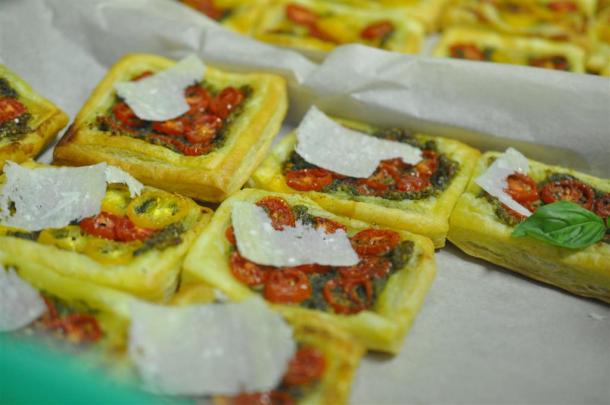
Tomato Tarts Baked For The Basil Class 

½ (17.3-ounce) package frozen puff pastry, thawed

1 cup fresh basil pesto ( see recipe below)

 3 cups cherry tomatoes, sliced

1 teaspoon kosher salt, divided

1 teaspoon freshly ground black pepper, divided

2 tablespoons olive oil

1 cup shaved Parmesan cheese

Garnish: fresh basil 

Preheat oven to 400 degrees.  Line a baking sheet with parchment paper; set aside. 

On a lightly floured surface, roll dough into a 13×10-inch rectangle, trimming as necessary. 

Cut rectangle into 4 parts horizontally and 3 parts vertically, creating 12 (3 ½ x 3 ¼-inch) rectangles.

 Using a sharp knife, score 4 lines to create a ¼-inch border all the way around each rectangle.  Transfer to prepared baking sheet. 

Spread about 1½ teaspoons pesto inside the border of each rectangle.  Place tomato slices in a single layer on pesto.  Bake for 12-15 minutes, or until  light golden color; remove from oven, and cool slightly.

Drizzle each rectangle with olive oil.  Place cheese shavings on tarts, and garnish with fresh basil.  Serve immediately. 

Yield:  1 dozen tarts 

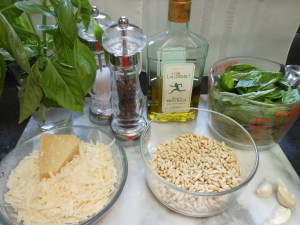
Ingredients for Making Basil Pesto

Classic Pesto 

3 large cloves garlic

3 cups loosely packed fresh basil leaves

½ cup pine nuts, lightly toasted

½ cup coarsely grated Parmigiano-Reggiano cheese

1 tsp. salt

½ tsp. freshly ground  black pepper

½ cup extra-virgin olive oil 

Place the basil leaves in a food processor and pulse until half-way chopped.  Add the pine nuts and garlic.  Continue pulsing.  Add the cheese, salt and pepper.  Through the pouring spout, with the processor on , drizzle the olive oil into the basil mixture.  Blend just until incorporated but not completely smooth.  A little texture is best. 

Yield:  About 3 cups

Linda

Corn, Orzo, and Basil Salad

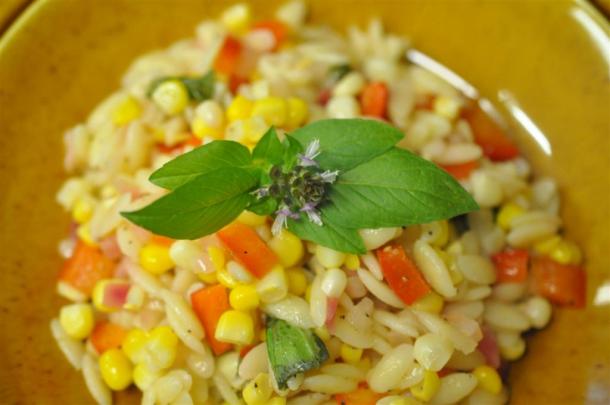
Basil, Corn, Orzo Salad With Basil Garnish  

½ medium red onion, finely diced

¼ cup white wine vinegar

3 tablespoons fresh lime juice

2 teaspoons kosher salt

3/4 teaspoon freshly ground black pepper

4 ears sweet corn, shucked

8 ounces orzo pasta

¼ cup plus 2 tablespoons extra virgin olive oil

1 red bell pepper, seeded and diced into ¼-inch pieces

1 ½ cups torn leaves of sweet basil or lemon basil 

Stir the red onion, vinegar, lime juice, salt and pepper together  in a large mixing bowl.  Let it sit while you continue with the recipe, allowing the acidic ingredients to mellow the raw bite of the onion.  

Hold the ears of corn upright on a large cutting board and cut off the kernels, being careful not to cut so deep you shave the cob.  They should give you about 5 cups of kernels. 

Bring a large pot of salted water to the boil.  Add the orzo and when it is just tender, after about 8 minutes, add the corn kernels to the pot.  Cook until the water boils again, then drain in a colander, and rinse with cold water. 

Stir the olive oil in to the bowl with the dressed onion.  Toss in the pasta and corn, red bell pepper, and basil until evenly combined.  Refrigerate at least 1 hour before serving. 

Yield:  10 servings

Recipe from The Herbal Kitchen by Jerry Traunfeld

Linda

Basil Butter

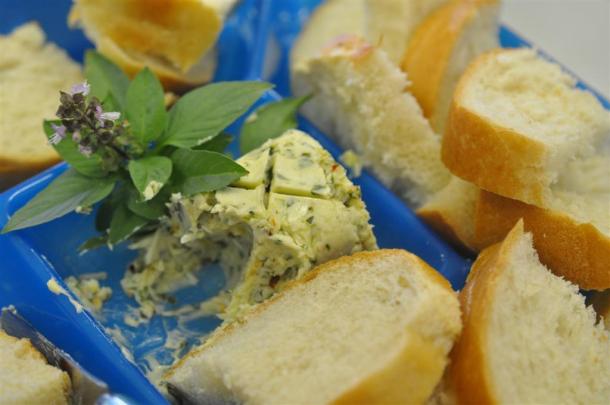
Basil Butter With Bread                                       2 sticks softened unsalted butter

                                        2 gloves of garlic, peeled

                                        1 cup packed basil leaves

                                        1 TBS. fresh squeezed lemon juice

                                        2 TBS. grated parmesan cheese

                                        ¼ tsp. kosher salt

                                        1 tsp. crushed red pepper (opt.)

Place cleaned basil leaves, parmesan cheese and garlic in a small food processor and process till finely chopped.

Add to butter.  Then add lemon juice, salt and crushed red pepper.  Mix well.  Place in any container you wish and refrigerate.  Butter will last in the refrigerator 2-3 weeks.  Can be frozen for up to 3 months and just slice off chunks as needed.

Paula

Have A Blast With Basil


One of the stars of summer surely is the well-loved herb – basil.  But did you know how many ways this fragrant little plant could be incorporated into cooking, healing and pleasure? 

Tomato Tart Basil Pesto; Corn, Orzo, Basil Salad; Watermelon, Peach, Tomato, Basil In Cup

Starting in May then continuing on until October the possibilities for allowing Basil to grace both table,  home, and garden are endless.  Here are some of our favorites: 

Basil Lunch Medley 

Tomato Tarts with Basil Pesto 

Corn, Orzo, and Basil Salad 

Peach, Watermelon and Tomato Salad With Mint and Basil 

Italian Bread with Basil Butter 

Basil Lime Shortbread 

Citrus Basil Punch

Linda

Dallas Garden Buzz would like to know if you would like some of these recipes!

Basil Tips For Dallas Gardens

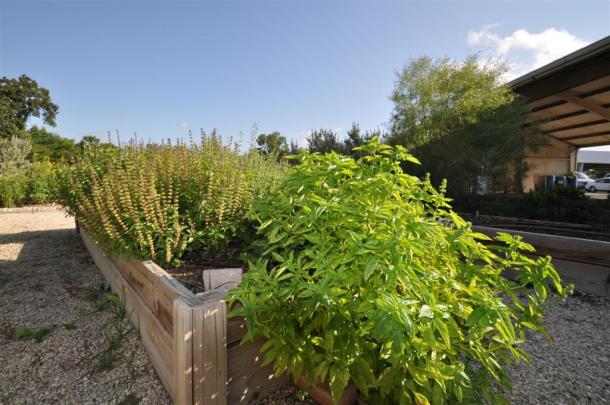
Basil Growing in Raised Beds at the Demonstration Garden

Some of Paula’s growing tips for basil are:

            Wait until May to plant basil whether from seeds or transplants.  Though it is tempting to plant basil in March as soon as the plants are available in nurseries, basil loves hot weather and will often be stunted if planted too early.

            Basils and tomatoes are consider “companion” plants and seem to do well planted near each other.  Of course, everyone knows that a basil, tomato and mozzarella sandwich is a culinary delight.

            In general, basil does not like to be pampered.  However a light application of a synthetic or organic fertilizer can be used to give the plants a boost as the growing season progresses.

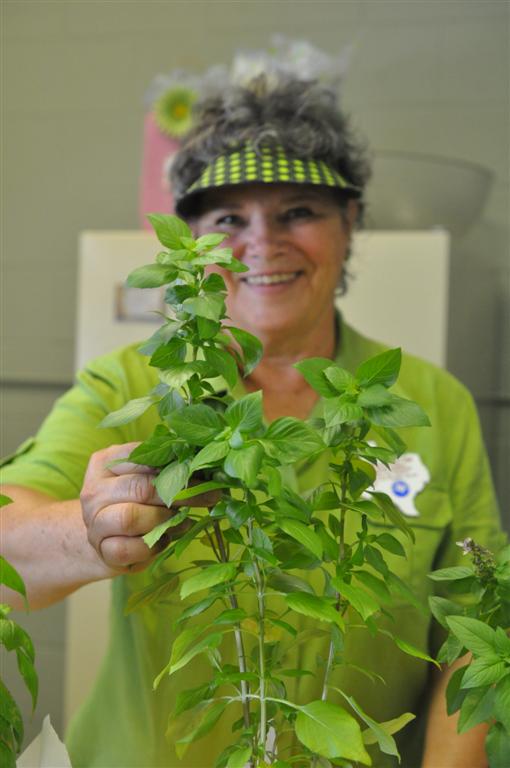
Paula the  Basil Queen Showing Where to Cut Basil for Harvest

            Never prune off more than 1/3 of the plant at a time.  Paula also does not recommend letting the plant go to bloom as this seems to change the flavor of the leaves. 

            It is best to pick basil early in the morning when there is the highest concentration of oils in the leaves.  Paula either keeps the stems in water on her counter top or she washes the leaves, rolls them in paper towels and places them in the refrigerator.  They will keep this way for a few days.  Basil can also be frozen as ice cubes (Paula freezes the leaves in broth.)

            It is best to add basil to recipes at the end of the cooking cycle to preserve more flavor.

     In general, basil is a fairly hardy plant that is not attacked by many insects.  However caterpillars, grasshoppers, slugs and snails, white flies and aphids can be a problem.  Many of these can be controlled by organic means such as the use of Bt, Sluggo, or a strong stream of water.

      Basil is also able to be used as both an aromatherapy and medicinal agent.  It is said to relieve aches and pains.  Essential oil of basil can be added to bath water.  Paula also uses a poultice of basil on ant and bee stings.  She says this helps bring down the swelling.

     Some of Paula’s favorite places to find unusual varieties of basil are:  Round Top’s Herb Festival which takes place the third weekend in March, NorthHaven Gardens, Central Market, Southwest Nursery, and Plants and Planters in Richardson, TX.

Carolyn