Leek and Potato Soup

  leek soup3 pounds medium potatoes

3 leeks or about 6 cups chopped

6 Tablespoons butter

6 to 8 cups water or chicken broth

1 cup half and half or evaporated milk

Salt and pepper to taste

Garnish:  Bacon bits and/or sour cream and chives 

1. Peel and cube potatoes.  Wash, trim, and chop the leeks, using as much of the green tops as is fresh.

2. In large stock pot, melt butter and add leeks, lightly cooking on medium heat until wilted.

3. Add potatoes and broth.  Bring to boil, reduce heat and simmer until potatoes are tender, about 40 to 45 minutes.  If a thicker soup is desired, drain some of the liquid at this time.   Add half and half or evaporated milk and heat before serving.  Taste for salt and pepper.   Garnish, as desired. 

Serves 14 – 16 

Linda

Recipe is adapted from The Peach Tree Tea Room Cookbook

Growing Leeks In Your Dallas Garden

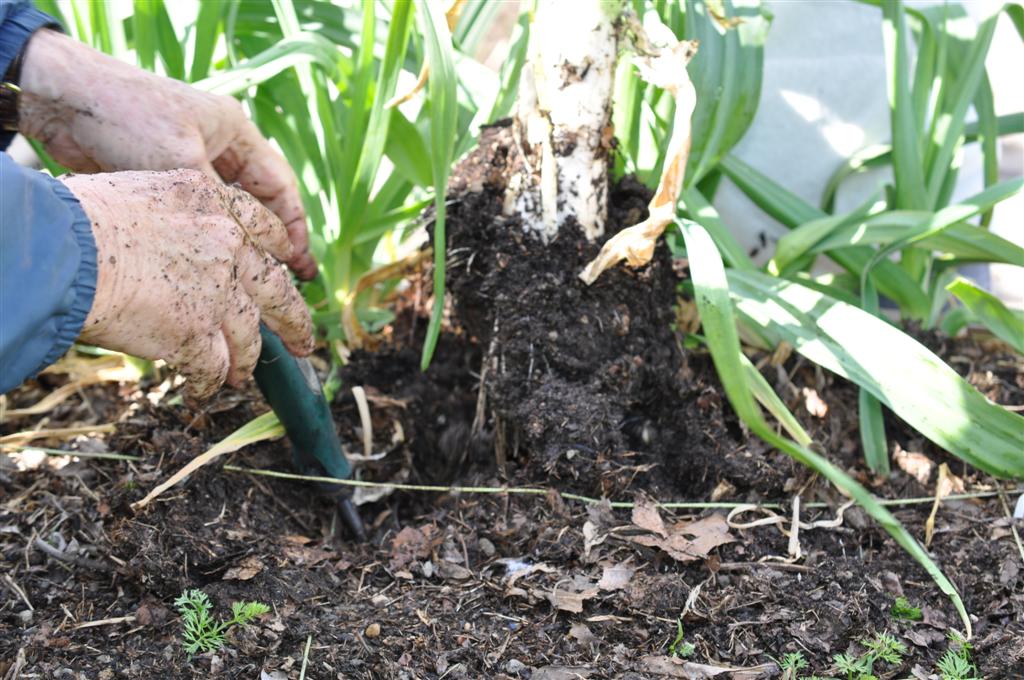
Jim wasn’t exactly sure what had been given to him when he dropped that pencil thin “slip” into the ground over 6 months ago.  This week our garden gave us the answer. Buried deep in the soil and somewhat stubborn about wanting to come out, we were finally able to get beneath the dense roots and give a hefty yank.  The game of tug-of-war had ended and our leek surrendered to an early spring harvest. 

Harvesting Leeks At The Demonstration Garden on Joe Field Road

Leeks are related to garlic and onions but have a much subtler, sweeter and more sophisticated flavor.  They can be used to enrich soups or stews and   partner well with potato and cheese to form tasty side-dishes and suppers that comfort and satisfy throughout the fall and winter. 

Leeks Harvested

History 

Leeks have been cultivated for thousands of years and are depicted in surviving tomb paintings from the time of the Ancient Egyptians.  The Romans considered the leek a superior vegetable with Emperor Nero thinking that eating leeks would improve his singing voice. 

Biology 

The leek is a member of the onion family.  It thrives in cooler climates and is tolerant of frost, hence its great popularity as a winter vegetable. 

Nutrition 

Leeks are an excellent source of vitamin C as well as iron and fiber.  They provide many of the health-giving benefits associated with garlic and onion, such as promoting the functioning of the blood and the heart. 

Preparing

Remove any damaged outer leaves.  Trim the rootlets at the base and cut off around a half to two thirds of the dark green tops.  Partially cut the leaks in half lengthwise, starting at the middle and running the knife up to the green tops.  Make a second lengthwise cut perpendicular to the first, allowing you to fan out the leaves.   Give them a good rinse to remove the dirt that can get trapped inside as the leek grows.  Enjoy these simple recipes coming your way in the next few days!

Linda

A Texas Spring

Like an orchestra warming up, the exquisite period of spring is just about to lift the baton for the opening crescendo.  Nature gifts us with a few achingly beautiful days every year: a December snowfall, a flutter of yellow leaves in crisp November.  But, for me, the most breathtaking time of the year comes in a few days in March when spring quietly tells you it’s on its way.

Close your eyes and smell deeply of a Texas spring.  It comforts you with the humid promise of drenching rains and crackling thunderstorms.  The sweet grape Kool-Aid perfume of Texas Mountain Laurel drifts by. Black compost, filled with earthiness, crumbles in your hand.

Texas Mountain Laurel  

Listen for signs of a Texas spring.  The red cardinal sits up on top of the bare branches of a cedar elm, sings for a mate.  The mud from today’s rain sucks at your shoes. The white wing dove coos. 

Redbud Tree Blooming In Spring

Finally, look for a Texas spring.  Not in shoulder to shoulder tulip blooms. Rather, one can find spring in native redbuds bursting out in vibrant pink branches in a field of deciduous brown.  Or in tall spiderwort thrusting their hot pink flowers high above a mass of foliage.  Or in the Mexican plum’s first white blooms, pretty as the lace of a bride’s dress.

A Texas spring.  Savor it this year.

Elizabeth

Thank you, Steven Schartzman, for use of his pictures from the blog: Portraits of a Wildflower

Spring Is Coming To Dallas!

If you’ve never been thrilled to the very edges of your soul by a flower in spring bloom, maybe your soul has never been in bloom.  — Terri Guillemets

Please don’t take this quote harshly, enjoy these pictures of spring blooms from our garden.  If you have never been thrilled to the very edges of your soul by spring blooms, maybe today is the day!

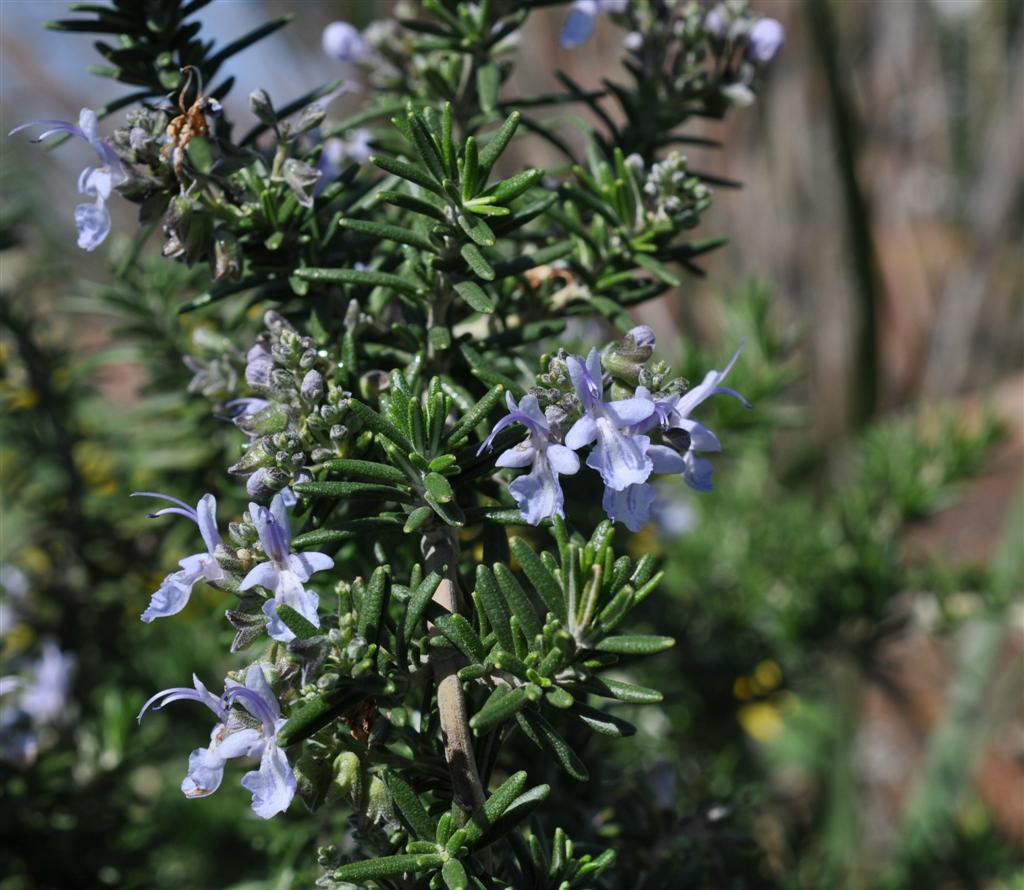
Pale blue blooms of Rosemary in our Entry Garden:

Rosemary In Bloom At The Demonstration Garden

Narciuss Campernelle. This narcissus  has a fragrance so sweet, they are also known in East Texas cirlces as “sweeties”.

Narcissus Campernelle In Front of Red Yucca Foliage

  Narcissus Grand Primo faithfully blooms every year and muliplies into larger and larger clumps to enjoy.  Our bulbs are from The Southern Bulb Company in Golden, Texas.  These Heirloom bulbs are the equivalent of a  ‘slam dunk’ for gardeners. Plant them in the fall.  They will make points for you each spring.Grand Primo Narcissus

Ann

Cilantro Peach Cobbler

Our Cilantro menu will include a cilantro flavored ‘dessert’ recipe.  It may be the most surprising use of cilantro.  A sweet treat with just a taste of “earthiness”.  (I used frozen peaches, for now, but come summer the locally fresh, ripe ones will be put to good use).  

Cilantro Peach Cobler

Cilantro in a dessert recipe may sound a little weird but the flavor is actually very subtle.  It’s based on a traditional, sticky-sweet Southern cobbler.

Ingredients:

½ cup (1 stick) unsalted butter

1 ½ tablespoons minced cilantro leaves

1 ¼ cups all-purpose flour

1 cup granulated sugar

1/8 teaspoon coarse salt

2 teaspoons baking powder

1 cup milk

4 cups (about 1 ½ pounds) peeled, sliced ripe peaches

Garnish: Heavy cream or vanilla ice cream (optional)

Instructions: 

Preheat oven to 350 degrees;  put the butter in a 9-inch square baking pan and let butter melt in the oven.

Whisk together  cilantro leaves, flour, sugar, salt, and baking powder.  Whisk in milk until smooth.  Pour over melted butter;  do not stir.  Distribute peaches over batter.

Bake for 1 hour, until top is golden and set.  Serve warm or at room temperature, plain or with cream or ice cream.

Yield:  6 to 8 servings

Adapted from ‘Desserts from an Herb Garden’

Linda

More About February Garden Chores

Garden chores never really stop just because it’s winter.  Even though the garden “sleeps” during these colder months, there’s always something to do – trimming frost-bitten plants, removing those that have been winter-killed, composting, mulching – the list of chores go on.  For the volunteers at the Demonstration Garden, January and February have us looking forward to the Spring garden – what should we plant, when is the best time to plant, what do we need to do to get ready? 

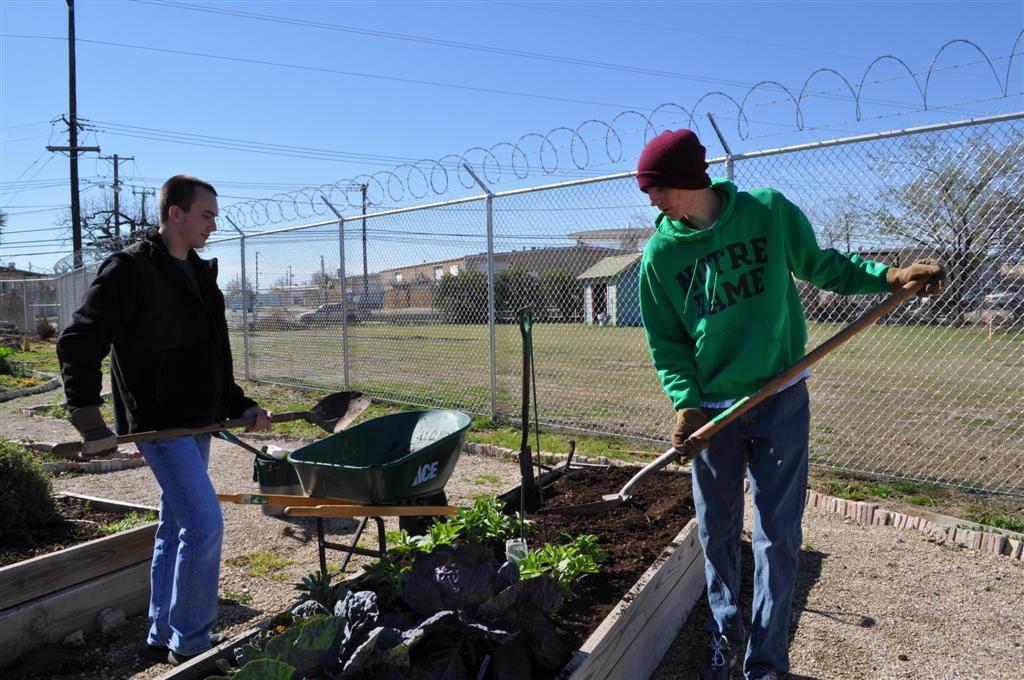
 ILPS Students Preparing Vegetable Beds For Spring

Independence Life Preparatory School students Myron and Bradley worked in one of the many raised beds to thin out fava beans which they planted a month ago.  Ever the recyclers, rather than composting, they potted up the 12 plants they removed for transplanting.  Myron added a wheelbarrow load of compost, then, he & Bradley prepped the entire 4’x 12′ raised bed for planting bush beans next month.   

Bradley couldn’t think of a better place to take a break than to sit on the edge of the raised bed he’d so carefully tended.  On a beautiful sunny February day, who could ask for more?

Student Helper At The Demonstration Garden on Joe Field Road

Annette

February Garden Chores

During February Dallas gardeners prepare for spring.   Several of our Dallas County Master Gardeners pruned roses at the Farmers Branch Rose Gardens and developed the confidence needed to remind us hot to tackle  17 varieties of Earth-Kind Roses at the Demonstration Garden.

We pruned the roses back to about three feet, cut out crossing and interior branches, pruned out the dead wood and excess-voila Earth-Kind Roses ready for spring.

February Rose Pruning, Mutablis Rose and Two Master Gardeners

Sarah demonstrated an ornamental grass cutting technique:  

To cut  tall grasses in a perfect mound……you go around the clump with a bungee cord, cut straight across just above the cord and pop the cord off. Sarah just happened to have a couple of bungee cords in her trunk so that we could try this technique.

Bungee Cord Wrapped Around Grass To Be Pruned

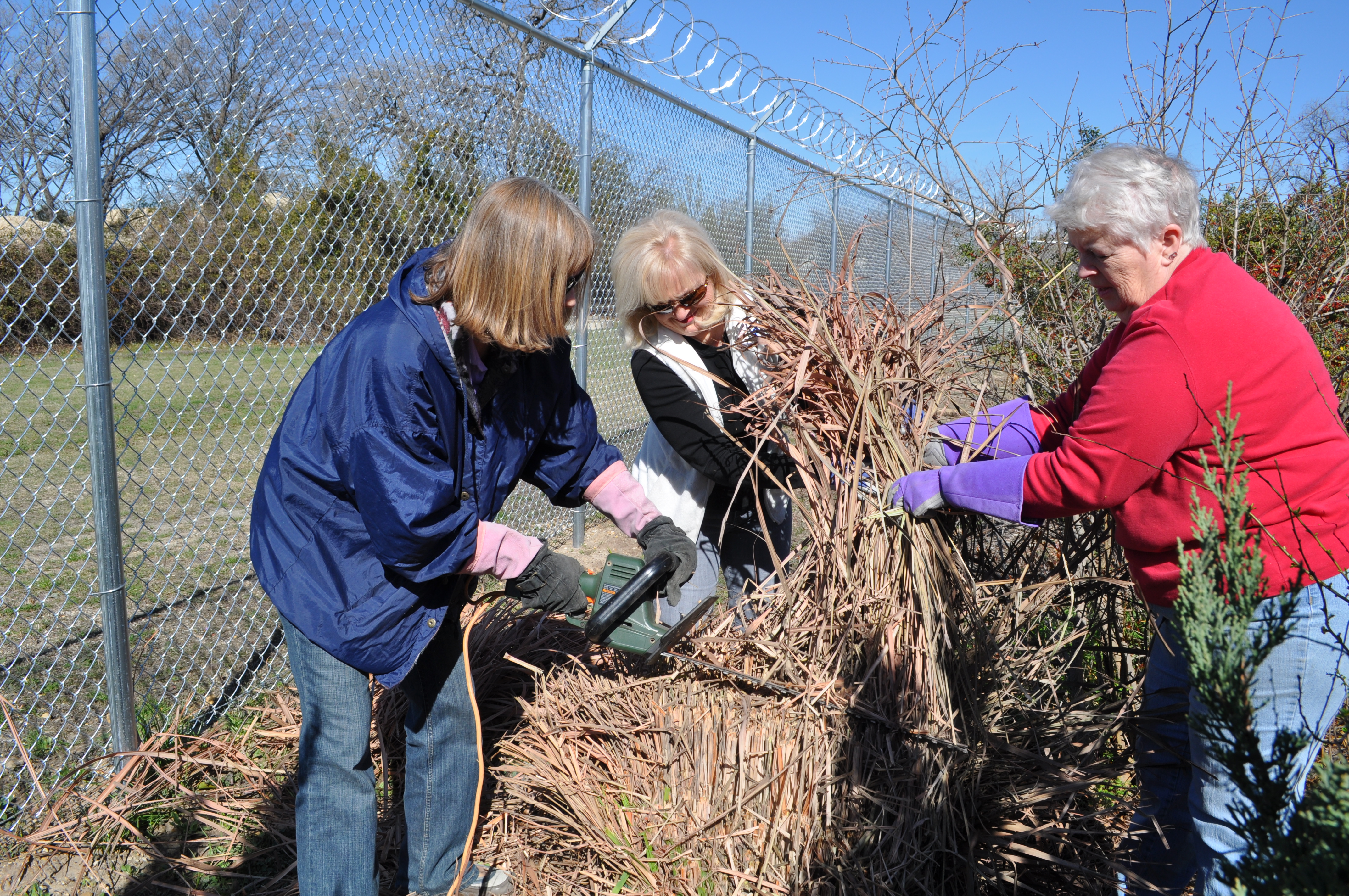
Sarah, Jackie, and Linda take it away:

Master Gardeners Cutting Back Grass

More ornamental grass pruning by Jean, Becky, Michele, and Linda:

Master Gardeners Cutting Back Grasses At The Demonstration Garden

This grass will go to the compost pile:

Clippings Going To Our Compost at The Demonstration Garden

Spring is coming and we hope you will visit us at our garden, 2311 Joe Field Road, Dallas, 75229.   Comment  if you would like to ask a question or set up tour of the gardens.

Ann

The Case for Cilantro

Ina Garten (aka the Barefoot Contessa) says she despises it.  Others say the taste reminds them of dirty dishwater.  Some claim a soapy taste when they chew on it.  How could it be, then, that guacamole wouldn’t make it to a true “TexMex” table without a hefty amount of cilantro mixed in?  And salsa without cilantro?  Not in TEXAS! While there are clearly two sides, the “lovers” and the “haters”, consider these facts before arriving at your own verdict.

 History

Cilantro, Coriandrum sativum, a member of the Apiaceae (Umbelliferae) family has been cultivated as a medicinal and culinary herb for more than three thousand years.  Mentioned first in Egyptian papyri and the Bible, Spanish conquistadors introduced cilantro to Mexico and South America where it quickly became associated with that cuisine.  Also known as Chinese parsley, the herb has a long history in Chinese medicine and cuisine.  One of the ancient uses was as an aphrodisiac.

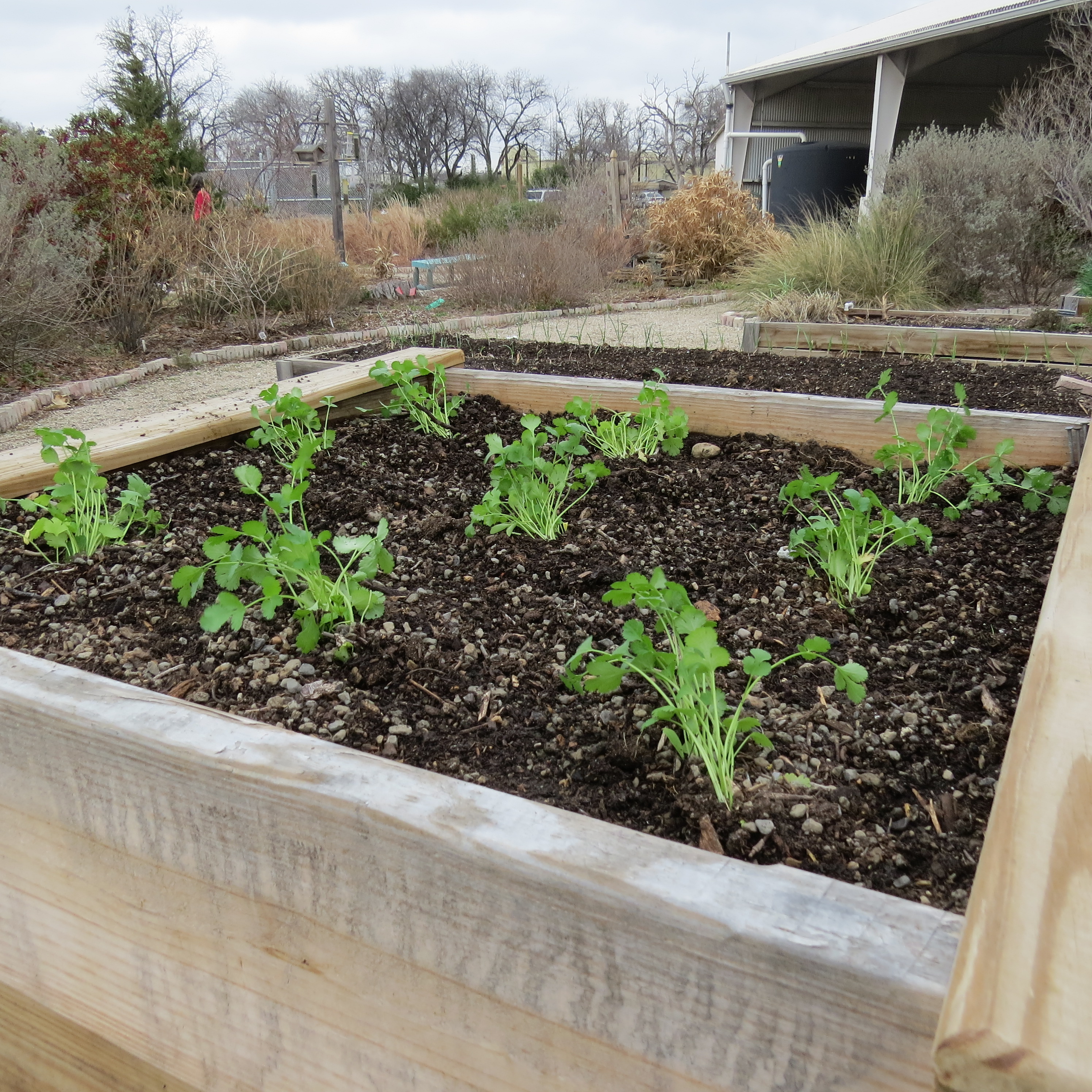
Cilantro Growing in Raised Bed, Demonstration Garden Joe Field Rd, Dallas

Growing It

Cilantro likes loose, rich, well-draining soil.  Sow seeds in the fall ½” deep, thin seedlings to 1 foot apart.  Plant seeds again in February to give your cilantro time to grow before it gets too hot. If you can find it,  choose variety “Long Standing” for its excellent flavor, improved leafiness and, as the name infers, its slow-to-bolt quality. 

Cilantro  needs full sun and occasional watering if the weather is dry.  Transplants can be put in the ground anytime throughout the fall and winter.  A succession of crops will help your cilantro last longer.  To harvest cilantro, cut the stems down to the ground, a small section at a time.  When cilantro gets ready to flower, it sends up leaves that are lacier and smaller.  The seeds of the cilantro plant are known as coriander.   An aromatic spice, try using coriander in sweets, cakes, breads, and to flavor liqueurs.

Cooking With Cilantro

Every part of the plant is edible.  Cilantro’s  flat and gently serrated dark green leaves, resembling Italian parsley, are best used when the plant is about 6 inches high, and they must always be used fresh.  Toss them into almost any salad.  You can use cilantro anytime you would use parsley.  Make a pesto out of it just as would basil and freeze it for future use.  Store a bunch of cilantro for about a week in the refrigerator in a jar of water loosely covered with a plastic bag.  (Remember to change the water every few days.) 

Enjoy It 

The flowers make an attractive bouquet or addition to other garden flowers for cut arrangements.   Use it to settle the stomach and encourage good digestion.  Or do as the Chinese, use it in a “love potion” which they believed led to a long life.   While true, its unique aroma and pungence often demand an acquired taste, once you acquire the taste for it cilantro can be addicting!  Finally, just be thankful that when summer tomatoes and peppers are beginning to ripen  and cilantro may no longer be found in the garden, a quick trip to the grocery always keeps it within reach.   Case solved!

Linda

Note:  Over the next few weeks we will be sharing some of our favorite “cilantro” recipes with you.

Soups And Cornbread With Veggies

Broccoli Cornbread

Broccoli Veggie Cornbread 

½ stick butter or margarine, melted

2 eggs, slightly beaten

1 pkg Jiffy Cornbread Mix

½ pkg (10 oz) frozen chopped broccoli, cooked (about 1 cup)

½ cup small curd cottage cheese

½ cup canned creamed corn

Grated onion or chopped green onion, if desired 

Preheat oven to 350 degrees. Chop cooked broccoli a bit smaller. In a large bowl melt butter in microwave. Add chopped broccoli, cottage cheese, corn, onion and beaten eggs. Mix till combined. Stir in cornbread mix.

Pour into greased 8 x 8 Pyrex for thicker squares or 7 x 11 Pyrex for less thick squares. Bake about 35 minutes or until toothpick in center comes out clean. 

Patti,Dallas County Master Gardener Class 2012

 Spicy Refried Bean Soup

1 can (15oz) fat-free, spicy refried beans

1 can (15 oz) whole kernel corn, drained

1 can (15 oz) black beans, rinsed and drained

1 can (14.5 oz) vegetable broth

2 cans (10oz) Rotel tomatoes with green chilies

1 cup water

Mix all ingredients in a large pan.  Heat on medium until it comes to a boil.

 Reduce heat and simmer 8-10 minutes.  Serve with tortilla chips.

Makes 2 quarts.  Less than 120 calories per 8oz. serving.

“Heat” can be adjusted by using less Rotel tomatoes

Sarah, 2006

Mediterranean Lentil Ragoût

Olive oil cooking spray

1 large onion, finely chopped

5 cloves garlic finely minced

1 jalapeño pepper, finely minced

1 large fennel bulb, sliced thin

1 (28 ounce) can diced tomatoes

1 1/2 cups orange juice

1 1/3 cups lentils, picked over and rinsed

1 Tablespoon dried basil

1 Tablespoon dried oregano

1/4 cup tomato paste

1/3 cup mint leaves, chopped, divided use

6 cups cooked rice, quinoa or bulgur

Parmesan cheese (optional)

1. spray a heavy skillet with cooking spray; place over low heat and sauté onion, garlic, jalapeño and fennel, stirring occasionally, until soft, about 5 minutes. (if vegetables start to stick or brown, cover skillet.)

2. Add tomatoes, orange juice, lentils, basil, oregano and tomato paste. Increase heat and bring to a boil.  Reduce heat, cover and simmer for 40 to 50 minutes, or until lentils are tender. (add up to 1/2 cup water or orange juice if ragout gets too thick.)

3. Stir in mint leaves, reserving 2 tablespoons for garnish.  Serve lentil stew over rice, quinoa or bulgur. Garnish with Parmesan cheese, if using, and remaining chopped mint.

Serves 6, approximately 449 calories per serving

Recipe from The Phytopia Cookbook by Barbara Gollman and Kim Pierce
 

Homegrown, Veggies, Fruits and Herbs

I have a visual image of Master Gardener and nutritionist Barbara Gollman at Kroger: Red hair flying, trim figure running behind a cart, zipping down the frozen food isle flinging packs of frozen veggies into the cart for one of her wonderful soups. 

Barbara, Dallas County Master Gardener Teaches Value of Vegetables

Barbara intrigued a large group of Master Gardeners Tuesday with her talk on the nutritional benefit of vegetables, fruits, and herbs.  Turns out that Mom was correct when she urged us to eat our vegetables.  Carrots, oranges, sweet potatoes, and other fruits and vegetables are full of phytochemicals, substances in plants that have the potential to slow aging, boost immunity, prevent disease, and strengthen our hearts and circulation. 

Cabbage, Broccoli Field Road, Dallas, Texas

Barbara suggests that we eat watermelon and tomatoes, plants that are packed with lycopene, a nutrient which helps prevent macular degeneration.  Pinto beans are rich in fiber, which can prevent cancer and heart disease, and flavonoids, which can curb the oxidation of LDL cholesterol and prevent blood clotting.  Cruciferous vegetables like broccoli and cabbage are high in calcium.  Nuts are filled with Vitamin E, one of the most potent fat-soluble antioxidants. Berries, greens, winter squash—-well, you get the idea.  

Barbara said that new research has shown the health benefits of herbs. Who knew? Turns out that 1 teaspoon of oregano = ¾ cup of brussel sprouts in antioxidants.  

Barbara dries her herbs in the microwave after her husband’s reaction to using his closet as an herb drying rack. Remove the leaves from the stems of the herbs and spread on paper towels.  Put two paper towels on top of the herbs.  Pop in the microwave and zap for one minute.  (If the leaves are charred, try again and use a shorter amount of time. If the leaves aren’t crisp, microwave longer in 15-second increments.)  Remove from the microwave and air dry on the kitchen counter for a few days.  Store in a labeled glass jar.  

Are home grown vegetables better for you than those found in the grocery? Barbara says some research showed up to a 15 percent increase in nutrients in homegrown and organic vegetables.  Some other studies didn’t find an increase in nutrients. 

Many thanks go to Barbara for her research and common sense approach to healthy eating.  Let’s just put it this way: on the way home I stopped at Whole Foods and bought spinach, broccoli, and almonds for dinner.   

Elizabeth

Recipes served in the class will follow.