October In Our Garden!

Our garden at 2311 Joe Field Road in Dallas, Texas has turned delicious!

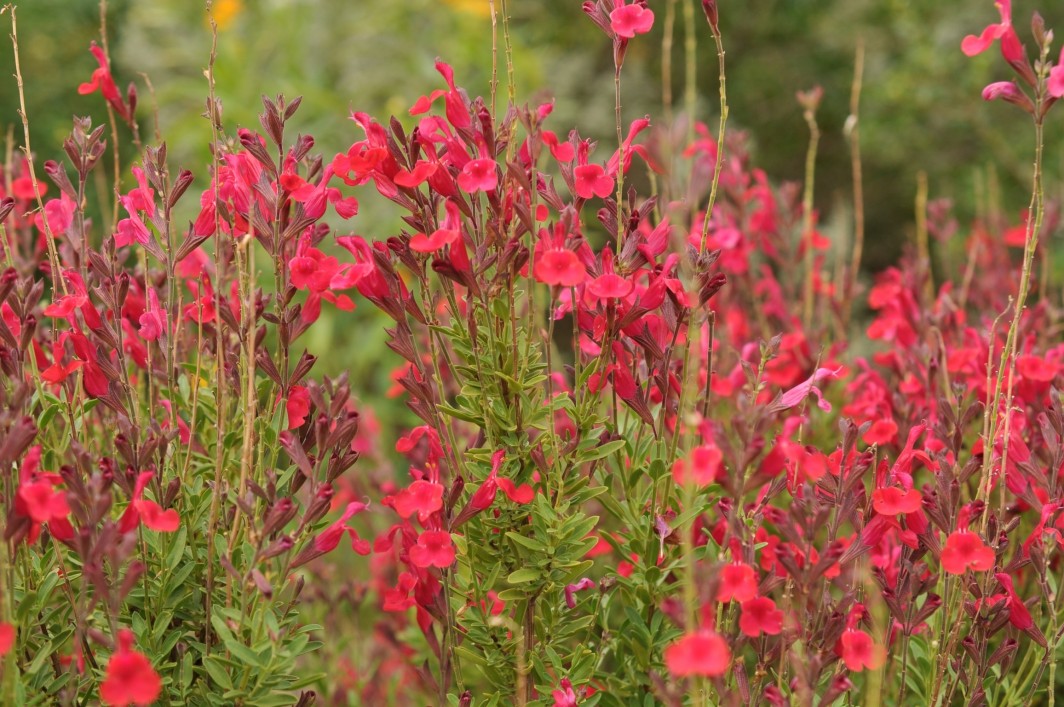
This is Salvia greggi ‘Raspberry’, a perennial you will want in your water wise garden! Hmmm…looks good enough to eat, but please don’t.  Plenty of edibles  from our garden are coming.

Blooming Salvia Greggi, raspberry color

Jim made pumpkin pie for us after cooking up these pumpkins we grew!

pumkins and squash on countertop

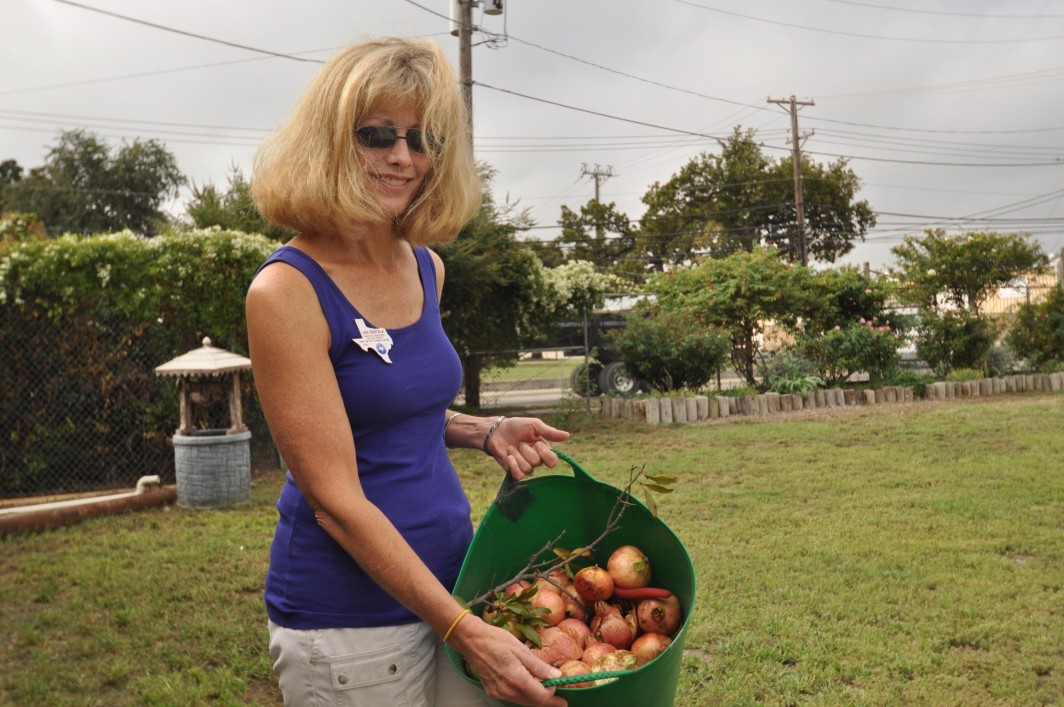
We have been picking pomegranates in our garden and are ready to make our famous pomegranate jelly again.

Two Master Gardeners holding a bucket of pomegranatesLisa picked pomegranates from a neighbor’s tree; after asking permission. Imagine they didn’t want the fruit!  Should we share a jar of our pomegranate jelly with them?

Master Gardener holding a bucket of pomegranatesIf you would like to buy a jar of pomegranate jelly made from Sarah’s recipe and these pomegranates, come to our Dallas County Master Gardener meeting on Thursday, October 24th at 11:30 am at the Farmer’s Branch Rec Center.  All welcome!

Ann

The Power of Pumpkin

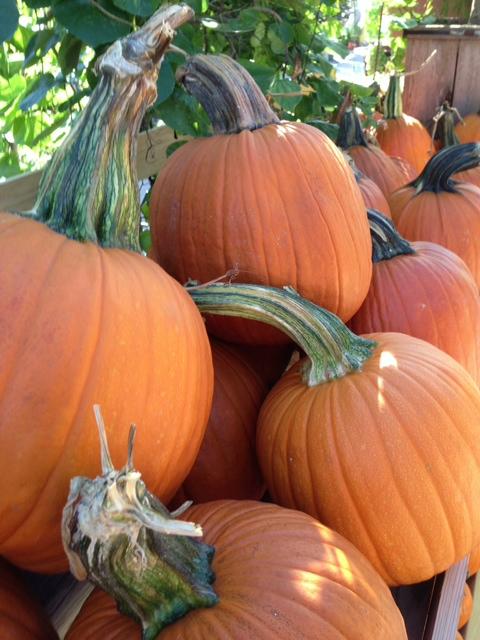
Pumkins at an Outdoor Market

“I would rather sit on a pumpkin, and have it all to myself, than be crowded on a velvet cushion.”–Henry David Thoreau

To some they are the “orbs” of autumn, the quintessential symbol of fall, making their graceful entry into hearts and homes.  The names, alone, captivate childlike feelings of giddiness; Aladdin, Baby Boo, Cinderella, Cotton Candy, Jack-Be-Little, Jack-Be-Quick, Full Moon and Wee-Be-Little.

Why, then, are we so fascinated with pumpkins?  Consider these facts: * The word pumpkin originated from the Greek word Pepon which means large melon.  The word gradually morphed by the French, English and then Americans into the word “pumpkin”.

Pumpkins and squash are believed to have originated in the ancient Americas. * Early Native Americans roasted pumpkins strips over campfires and used them as a food source, long before the arrival of European explorers.  Pumpkins helped The Native Americans make it through long cold winters.  They used the sweet flesh in numerous ways; roasted, baked parched, boiled and dried.  They ate pumpkin seed and also used them as a medicine.  The blossoms were added to stews.  Dried pumpkin could be stored and ground into flour * Columbus carried pumpkin seeds back with him to Europe. * Indians introduced pumpkins and squashes to the Pilgrims.

Pumpkins were an important food source for the pilgrims, as they stored well, which meant that they would have a nutritious food source during the winter months. *The Pilgrims were also known to make pumpkin beer.  They fermented a combination of persimmons, hops, maple sugar and pumpkin to make this early colonial brew. *In early colonies, pumpkin shells were used as a template for haircuts to ensure a round and uniform finished cut.  As a result of this practice, New Englanders were sometimes nicknamed “pumpkinheads”. An old Pilgrim poem gives testament to the Pilgrims dependence upon pumpkins for food:

“For pottage and puddings and custard and pies

Our pumpkins and parsnips are common supplies,

We have pumpkins at morning and pumpkins at noon,

If it were not for pumpkins we should be undoon”.

Pilgrim verse, circa 1633

During the month of October we will explore some fun and flavorful ways to use pumpkins.  To begin, here’s what Dr. Mercola, a leading health advocate, has to say about pumpkin seeds: 10 Health Benefits of Pumpkin Seeds “With a wide variety of nutrients ranging from magnesium and manganese to copper, protein and zinc, pumpkin seeds are nutritional powerhouses wrapped up in a very small package”. Pumpkins provide:

  •  Heart Healthy Magnesium
  •  Zinc for Immune Support
  •  Plant-Based Omega Fats
  • Prostate Health Cancer-Protective Properties
  •  Anti-Diabetic Effects
  •  Benefits for Postmenopausal Women
  •  Heart and Liver Health  Tryptophan for Restful Sleep
  •  Anti-Inflammatory Benefits

The best way to eat pumpkin seeds is raw – this preserves the healthy fats in the seeds.

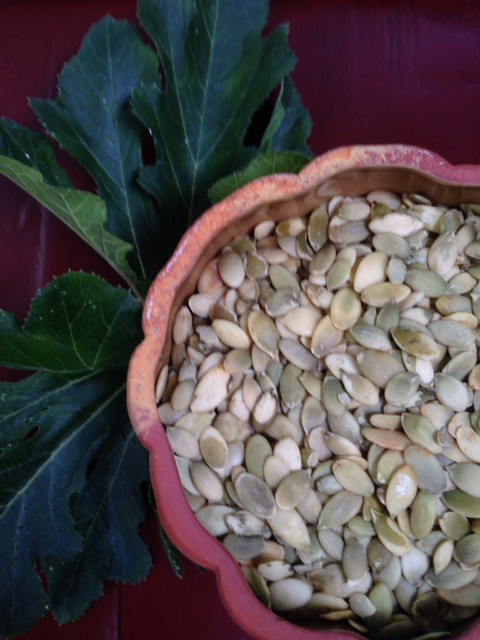
Roasted Pumkin Seeds in a Red Bowl If you prefer to eat the seeds roasted use this simple recipe: Roast raw pumpkin seeds on a low heat setting in your oven (no more than 175 degrees F), sprinkled with Himalayan or other natural salt, for about 15-20 minutes.

Sign up for our Harvest Lunch, Outstanding at the Field on October 29th. Instructions Here.

Next week:  Creamy Southwestern Pumpkin Soup

Linda

It’s Fall, Plant Lettuce Now

Big Tex

When you are “fixing” to go to the Texas State Fair and see Big Tex, you know it’s fall in Texas and time to be planting cole crops and cool season greens.

My lettuce and spinach seeds are in the ground and I am waiting, waiting, waiting for them to germinate. Last year  Oak Leaf Lettuce and Red Sails provided a border for my perennial beds and salad for our meals; the perfect ornamental edible!

All winter long and up until June, we could pick  salads from the backyard. Lettuce being cold hardy  can withstand a light frost and  even lower temperatures without cover. (If temperatures, fall down into the 20’s, cover your lettuce.)

Salad Greens as a Border, Ornamental Edibles!

At the Demonstration Garden, we have enjoyed lettuce grown in our raised  beds.

Spring Lettuce in a Raised Bed

Lettuce does not need full sun and is best started in the fall in Dallas.  You can also buy transplants now at your favorite garden center.

“Leaf lettuce (often called loose-leaf lettuce) is perhaps the best adapted choice for our Texas climate. It forms loose rosettes of leaves that come in a range of colors from various shades of green to burgundy including speckled types. Leaves may be harvested individually or as with other lettuce types you can harvest entire plants at one time. Another option is to “mow” the plants back part way with scissors and then allow them to regrow for a later harvest.” (Quote from Texas Gardener)

Search for loose leaf varieties like Black Seeded Simpson, Red Sails, Oak Leaf, Green Ice, and Prize Leaf.  Try  Little Caesar for a Romaine type of lettuce and Buttercrunch for a sweet butter head type lettuce.

To read more about growing lettuce read: Lettuce From Seed To Harvest in Texas Gardener.

Before you go to the Texas State Fair, get out in your garden and plant to enjoy a long season of homegrown lettuce!

Ann

Outstanding At The Field-An Invitation

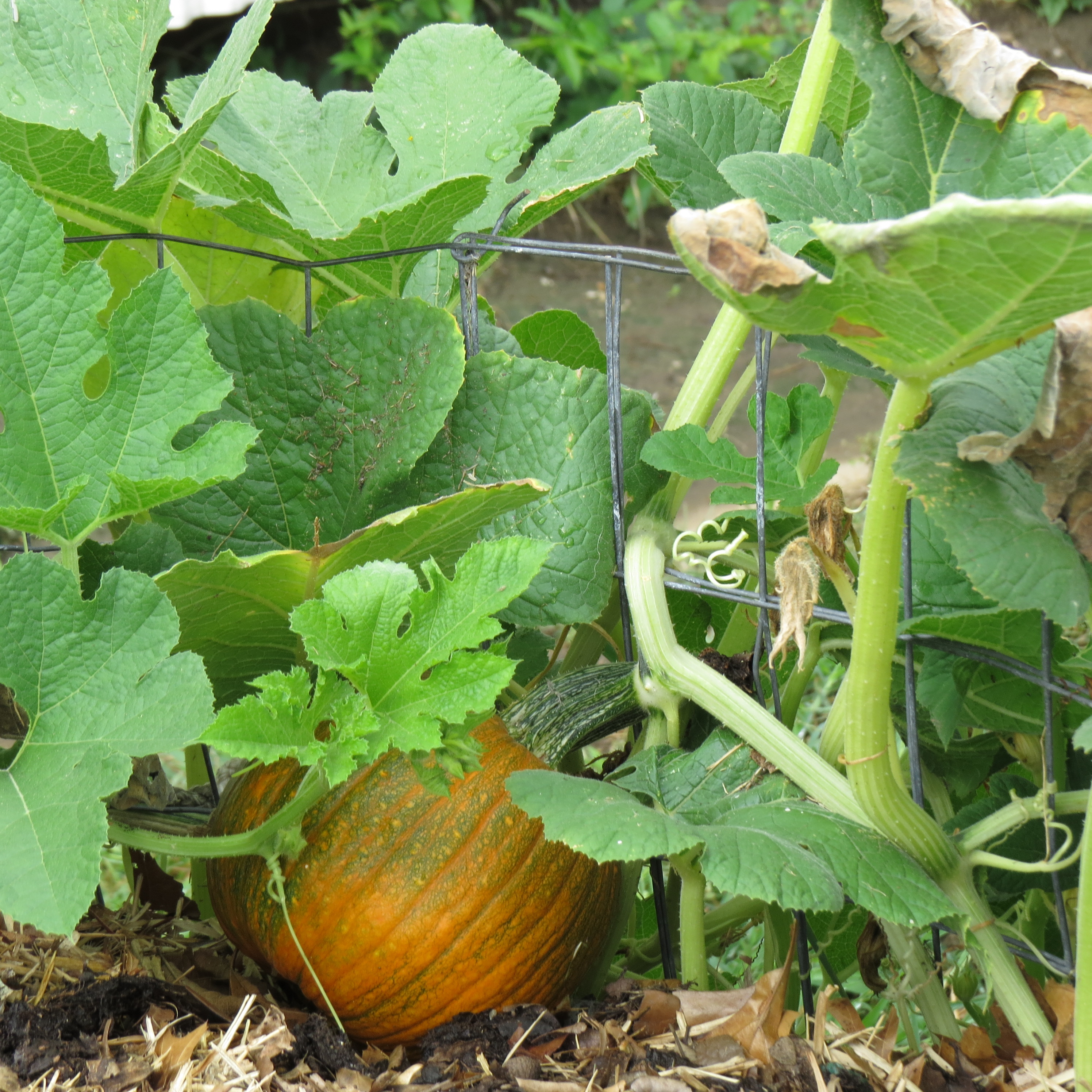
pumkin growing in the demo garden

Master Gardeners at the Joe Field Demonstration Garden invite you to…

“Outstanding at the Field”

Guests will enjoy a fall feast celebrating the harvest, the land, and the farmers that cultivate the food for our table.

Lunch will served on white tablecloths covering a long table

set within our lovely fall garden.

 Garden to Table Harvest Lunch

Mother’s Meatloaf with Piquant Sauce

Skillet Fried Corn

A “Mess of Peas” with Sweet-and-Spicy Chow-Chow

Roasted Butternut Squash Salad with Warm Cider Vinaigrette

Dixie Cornbread with Honey-Thyme Butter & Tomato Jam

Caramel Apple Layer Cake with Apple Cider Frosting

or

Layered Pumpkin Pie in a Jar

 and

“Growing and Grilling”

 A special presentation by Master Gardener Tim Allsup

(One-hour Education Credit for Master Gardeners)

11:00 a.m. – 12:30 p.m. Tuesday, October 29

 $15 per person

 Proceeds benefit educational tours for Dallas schoolchildren

Your reservation is your check for $15 made out to DCMG.  Checks must be received by October 15th.

If you would like to come, please email us at dallasgardenbuzz@gmail.com

 Enrollment is limited.

This event is open to all Master Gardeners, friends, and the public.

SHRUBS: THE UNSUNG HEROES OF YOUR GARDEN

Let’s face it.  Shrubs can be boring.  We all have the house in our neighborhood with green “meatballs” or “meatloaves” arranged haphazardly along the foundation.  Throw a line of pruned green along the edge of your house and you’re done. Right?

Shrubs are like clarinets and flutes in the high school band; they provide the structure for all the other components of the landscape—or musicians.  If you think of your landscape as a grouping of upright trees for a canopy, lawns for flooring, and annuals and perennials for bling, the careful choice of shrubs is essential.

How do you use shrubs in a landscape? Shrubs can provide many functions:

  • screen unsightly views or strong winds
  • break a landscape into outdoor spaces
  • serve as a background for a garden accent
  • give scale and unity
  • provide beauty from foliage, flowers, or contrasting foliage.
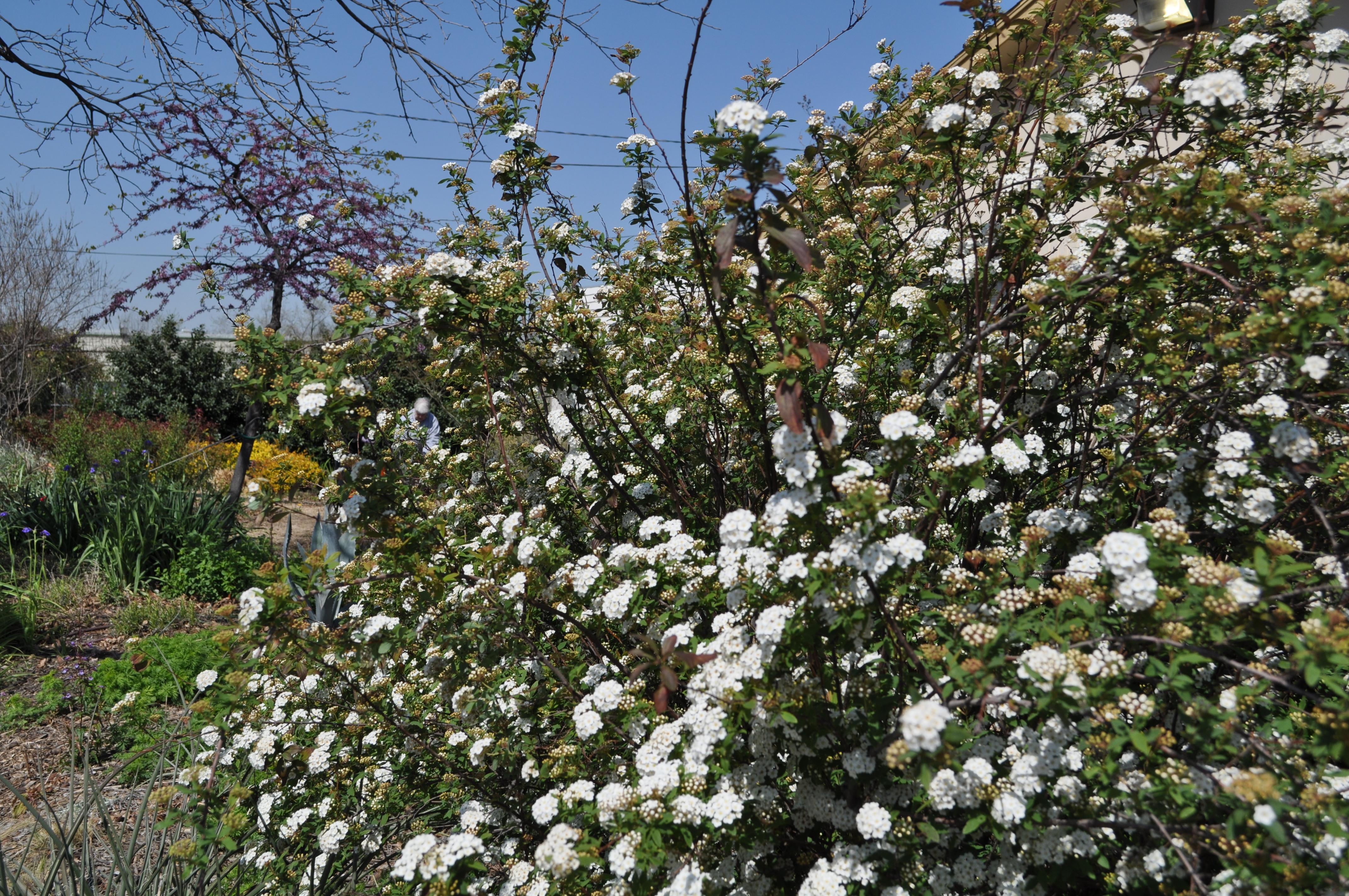
Shrubs at the Demonstration Garden include blooming Spirea and Abelia in the background

Shrubs at the Demonstration Garden include blooming Spirea and Abelia in the background

Choose shrubs based on their mature size.  My neighbor planted holly as a foundation planting several years ago.  The shrubs are now 10’ x 10’—you can guess where this is going—and she has cut large rectangles in the middle of the hedge, following the outline of the windows.  This look has not been featured on HGTV.  Read the label on your shrub purchase.  Many shrubs now come in smaller sizes, perfect for one-story homes and compact landscapes.

Some shrubs want sun, some shade, and some don’t care.  Oh, that kids were that easy. Cast iron plants are a staple in deep shade.  Dwarf yaupon holly is dependable in full sun to part sun; in deep shade they will survive, but not grow.

Don’t go crazy on the number of shrub species for your landscape.  Limit yourself to five or six varieties for the front yard, more for the back yard.  Group shrubs to contrast foliage textures or colors.

Mike and I often duck into a local sports bar/fried oyster and fish restaurant. While Mike is eager to settle down with a plate of catfish and the football game, I often want to linger in the carefully planned landscape of shrubs.  Situated in Dallas’ blowtorch west sun by a six-lane major street, the shrubs give patrons a Gulf of Mexico beach feel.  Wax myrtles and Texas sage screen the parking lot from heavy traffic.  Horsetail and nandina line the sidewalk.  Large palms flourish in the heat as foundation plantings. Oh, did I mention the food’s great, too?

Elizabeth

Separating the Seeds from the Chaff

It is a common mistake made by those gardeners who wish to save their own seeds.  Just what part of a seed pod is actually the seed and what is the chaff, that part of a seed head that can be separated and thrown away.  Sounds easy to tell?  It is, if you are saving squash, tomato, sunflower and other easily distinguishable seeds.  However, if you have ever gone to a seed exchange, perhaps you have excitedly brought home a small zip lock bag full of handpicked, thin, sharp, dark brown “seeds” from the Purple Coneflower (Echinacea purpurea).  After carefully planting and watering these “seeds” in your garden, you find that not even one grows.   Unfortunately at this point you have now joined the ranks of many gardeners in confusing the seeds from the chaff.

Coneflower, a native perennial, is one of the prettiest and easiest plants to grow in both full sun and even partial shade.  Though they prefer good, fertile soil, being a native plant, they will adapt to less hospitable areas and are hardy in USDA Zones 3-9.  Long-lived and drought tolerant once established, they are impervious to most insects and diseases.  A butterfly nectar plant, their seed filled cones are a favorite of song birds such as Goldfinches.

Purple Coneflower in Bloom

Hybrid Coneflowers now come in a wide variety of colors including pink, white, yellow, and orange.  Unfortunately for the seed saver, these hybrid varieties may not always reproduce true to their parent plant.  However the native Purple Coneflower is an easy plant from which to save seed, once you know the secret of distinguishing the seed from the chaff.

image

To save the seed, wait until late summer or fall when the coneflowers begin to fade and the seed heads develop.  At this point, begin to keep an eye on the plant, so the seeds can be harvested at the right time: after the seeds have matured, but before they drop off or the birds eat them.

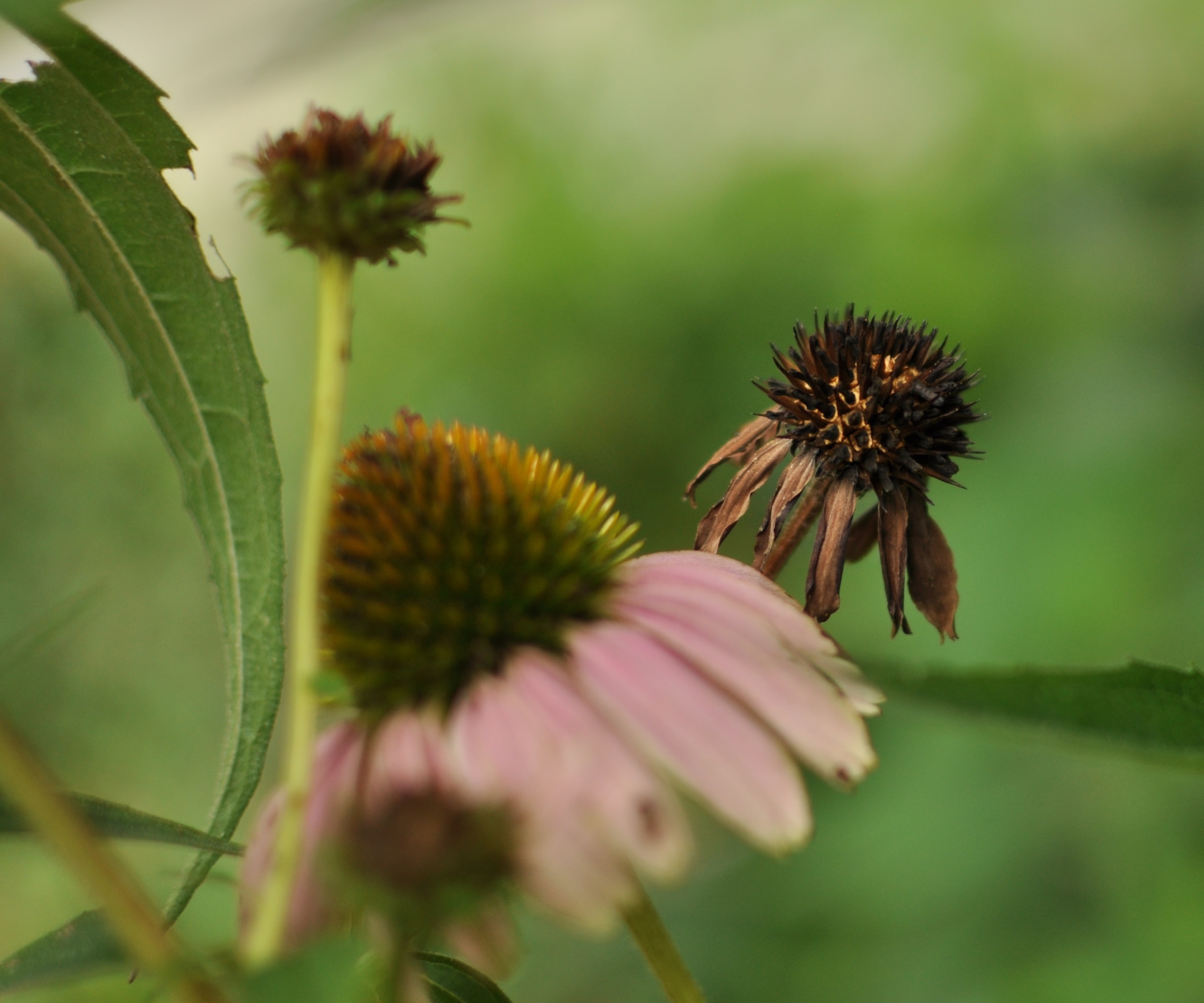
imageUsually the seed pod will turn from dark brown to black and the stem will begin to wilt.  At this point, if you inspect the seed pod, you can easily see small, light brown, bullet shaped seeds nestled in the spiky, woody seed pod.

To save the seed, one of the easiest methods is to cut the seed pod off, leaving a little stem, tie a paper bag around the stems and dry upside down, letting the seeds fall off themselves.  Another method is to manually separate the seeds from the spiky pod by crushing the pod.  Be sure and wear gloves when doing this as the needle-sharp dried spikes can be painful.  After the pod has been crushed, it is easy to pick out the plump, hard seeds.  They can be stored in a cool, dry place in a paper envelope or in an airtight container in the refrigerator.  The addition of a silica gel pack, found at craft stores, to the container will help keep the seeds dry.

So next time you are at a seed exchange and see a packet of sharp, brown, skinny spikes labeled Purple Coneflower seeds, remember that, just as in life, it is necessary to distinguish “the wheat from the chaff,”  Do not take that which is unnecessary but look instead for those light brown, plump seeds.  They are the ones to save.

Carolyn

Pictures by Ann

More about seed saving?  Click here.

The Tomato Station

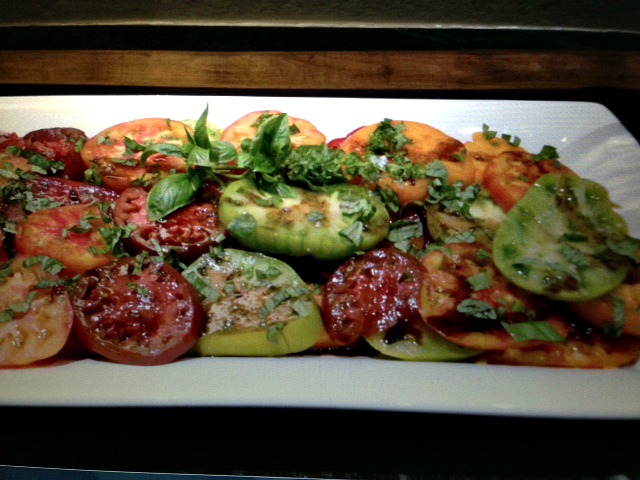
On a recent summer trip to Colorado for a destination wedding, my husband and I experienced a new concept – “the tomato station, or tomato bar “.  The idea is to select any variety of tomato available, heirloom, beefsteak, celebrity, etc., then sprinkle with a selection of different “salts”.  From there you move to the balsamic vinegar tray where, once again, you decide and then “drizzle” accordingly.

Tomato Station

Finally, to complete the experience, garnish with freshly chopped basil and enjoy the flavors that you have combined.

Once we were back in Dallas, I copied the idea and provided an heirloom tomato tray as one of the items for a “Summer Supper” dinner party.   It was the star of the menu.

Fleur de SelOur favorite salt was the “Fleur de Sel”, which can be found at places like Central Market, and Blackberry Balsamic Vinegar from a boutique type farm in Colorado.  I ordered multiple bottles from Westwood Farms.

As you can see from the picture, nature provides the most beautiful palette creating a real feast for the eyes.

Enjoy!

Linda

Dallasites, if you don’t have  tomatoes from your garden, try Central Market or Whole Foods or the Farmer’s Market.

Fall Crops For Dallas Veggie Gardens

If you are feeling the heat, you may think of September as the end of summer but if you are outside ready to work in your veggie patch;  fall is on your mind.

At the Demonstration Garden on Joe Field Road, we are busy planting and preparing for fall.  Jim, as always, is way ahead of most of us and provides this useful fall planting guide : For our fall crop info click here.

Last week we planted seeds of  green and yellow bush beans and yellow squash.

Next up, seeds of beets, peas, carrots lettuce and radishes with broccoli, brussel sprouts, cabbage and cauliflower transplants.

Seeds for Fall Planting in Dallas Gardens

Seeds for Fall Planting in Dallas Gardens

Prepare your beds for fall planting:

  • First, decide what crops will produce through fall, pull the diseased and finished or  non producing vegetables. For instance, I will save jalepeno,  okra, basil, and one of my tomato plants.
  • Pull back the mulch or set it aside on a tarp or in a wheelbarrow and add compost to your vegetable bed.  It is important to remove the mulch for seed planting and so that you don’t incorporate it into the soil.
  • After adding and forking your compost into the soil, you are ready to sow seeds or add transplants.
  •  Add back the mulch around transplants only. When your seeds have sprouted and have their “true” leaves, you can gingerly add mulch to these plants.

Ann

Two More Fall Planting Resources:

TAMU Fall Planting Guide and NHG Guide

Herbal Treats For Labor Day Festivities

Finish your Labor Day  supper with this flavorful treat and your guests will have sweet dreams.

Cinnamon Basil Ice Cream
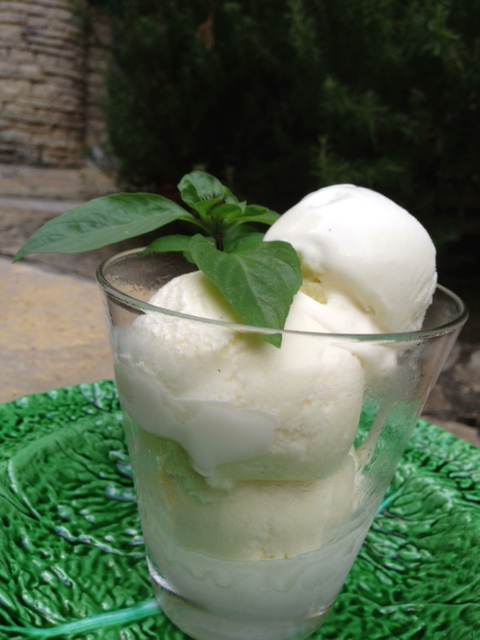
cinnamon basil ice cream


Ingredients: 

2 ½ cups whole milk, plus an additional 2 tablespoons if needed, or substitute low-fat

(2%) milk for a slightly less rich ice cream

1 ½ cups heavy cream

8 4-inch sprigs cinnamon basil and ½ cinnamon stick, or 6 4-inch sprigs sweet basil and

1 ½ cinnamon sticks

¼ vanilla bean, split and scraped, or ½ teaspoon vanilla extract

8 large egg yolks

1 cup plus 2 tablespoons sugar

Directions: 

1.  Infuse the cream.  Pour the milk and cream into a 2-quart saucepan and bring it to a boil over medium-high heat.  Add the basil, cinnamon stick, and vanilla bean if using, push them under the surface of the liquid with a spoon, and immediately remove the pan from the heat.  Cover the pan and steep for 20 minutes.  Strain the liquid through a fine sieve into a large liquid measuring cup, pressing down firmly on the herbs to extract all the liquid from the leaves.  Add fresh milk if needed to measure 4 cups.  Return the infused cream to the saucepan.

2.  Egg yolks.  Put the egg yolks in a medium stainless-steel mixing bowl and float that bowl in a larger bowl half full of hot tap water.  Whisk the yolks until they are lukewarm, 90 to 100 degrees F (it will take less than 1 minute), then lift the bowl out of the water.

3.  Ice cream base.  Add the sugar to the infused cream and bring it back to a boil over medium-high heat.  The instant the cream comes to a rolling boil and rises in the pan, lift it off the heat.  With the whisk in one hand and the saucepan in the other, pour the boiling cream into the egg yolk as you whisk constantly but gently.  Don’t whisk rapidly or you will cool the custard before the yolks have a chance to set.  Continue to stir the custard with the whisk for 1 minute.  At this point it should be fully cooked.  An instant-read thermometer set in the custard should register 170 degrees to 180 degrees F.  It will coat a teaspoon, but it will become much thicker when it cools.  (If for some reason the custard did not get hot enough to thicken, you can place the bowl on top of a saucepan of boiling water and stir it with a rubber spatula until it reaches 170 degrees F.  Do not overheat the custard or it will curdle).  Whisk the sauce rapidly for 30 seconds to cool it, then pour it through a fine sieve.  If using vanilla extract, add it now.  Refrigerate this custard base until thoroughly chilled.  Freeze in an ice cream maker according to the manufacturer’s directions.   Make 1 ½ quarts.

Adapted from” The Herb Farm Cookbook”

More Cinnamon Basil recipes to savor: Cinnamon Basil Swirl Cake and Cinnamon Basil Chicken.

————————————————————————————————————-

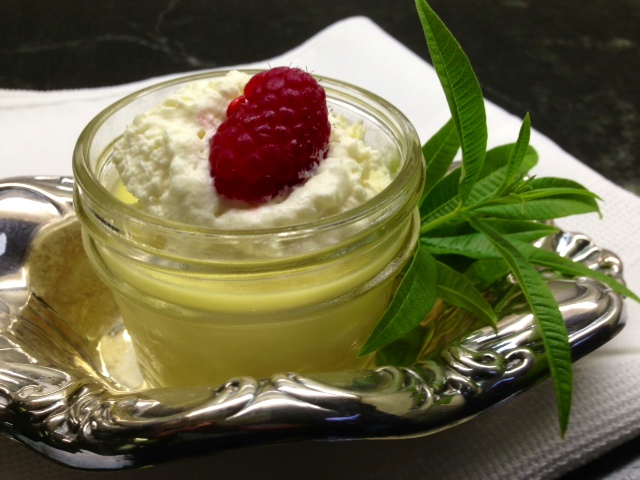
Lovely and fragrant Lemon Verbena gives a nice lift to these rich, silky lemon custards.
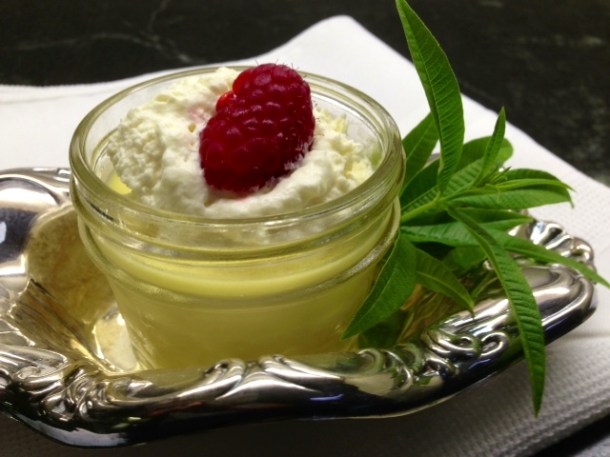
lemon verbena custard

Lemon Custards with Lemon Verbena

Ingredients:


1 cup water

14 2- to 2 ½-inch-long fresh or dried lemon verbena leaves (optional)

10 2 x ½-inch strips lemon peel (yellow part only)

6 tablespoons sugar

1 ½ cups whipping cream

6 large egg yolks

2 teaspoons fresh lemon juice

Directions:


Preheat oven to 325 degrees F.  Combine first three ingredients in medium saucepan.  Boil until mixture is reduced to ½ cup, about 4 minutes.  Add sugar; simmer until mixture is reduced to 1/3 cup, about 3 minutes.  Stir in cream.  Whisk yolks to blend in medium bowl.  Gradually whisk in hot cream mixture.  Whisk in lemon juice.

Strain custard through sieve into 4-cup measuring cup.  Divide among six 2-cup ramekins or soufflé dishes.  Cover ramekins with foil.  Place ramekins in a 13 x 9 z 2-inch metal baking pan.  Add enough hot water to pan to come halfway up sides of ramekins.

Bake custards until just set, about 45 minutes.  Remove pan from oven; let custards cool in water in pan.  Transfer ramekins to refrigerator.  Chill at least 4 hours or overnight.  Serve chilled.  Garnish with flavored whipped cream topped with a raspberry or blackberry.

Yield:  Serves 6

(This is a very rich custard that you may want to divide into smaller quantities)

Adapted from Bon Appetit

Linda
Refreshing Beverages for Summer’s End

There’s nothing like summer and none of us want to see beach trips, long summer nights, and  carefree days  disappear. The only cure I know is to extend the things you like about summer. Drink it up with these two herbal drinks and remember the good times!

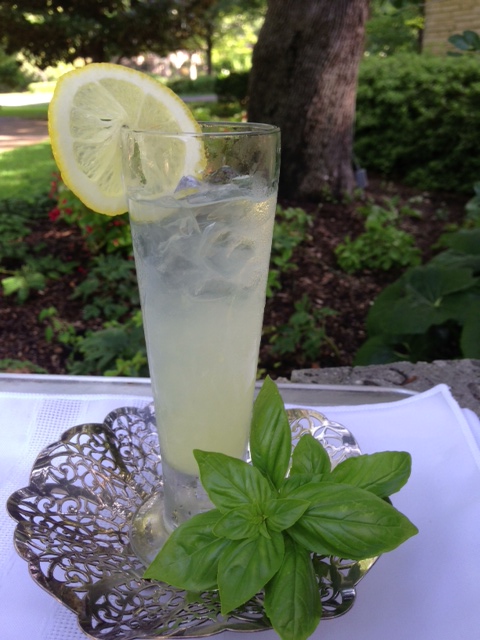
Basil limeade

BASIL LEMONADE OR LIMEADE

Basil Lemon or Lime Syrup:

4 cups packed fresh basil sprigs

2 cups sugar

4 cups cold water

9 strips of lemon or lime zest

Basil Lemonade or Limeade:

2 cups basil lemon or lime syrup

1 ¼ cups fresh lemon or lime juice

2 cups cold water

2 cups ice cubes

Fresh basil and lemon or lime zest for garnish

Directions:

Prepare the basil lemon or lime syrup by bringing all ingredients to a boil in a medium saucepan, stirring until the sugar is dissolved.  Let stand at room temperature, covered for one hour, then transfer to an airtight container and chill until cold (about one hour).

Strain the syrup through a sieve into a bowl, pressing the solids to extract as much liquid as possible.  Discard solids.  Makes four cups of syrup.

Prepare basil lemonade or limeade by stirring together all the ingredients in a large pitcher.  Pour into tall glasses half filled with ice.  Garnish with basil sprigs and lemon or lime zest strips.

Note:  The lemonade or limeade (without ice) can be made three hours ahead and chilled.

————————————————————————————————————-

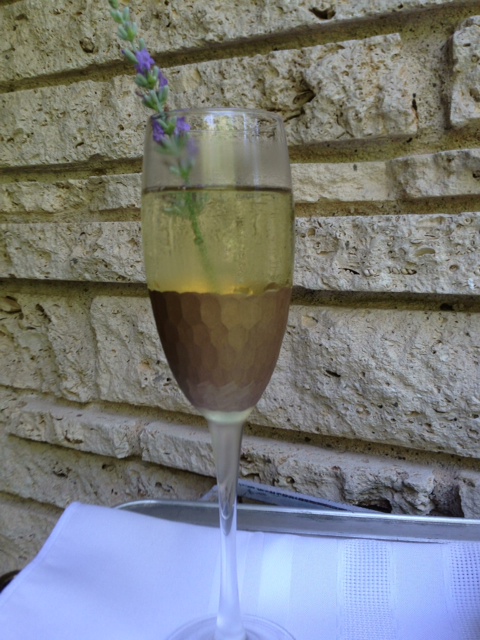
Lemon Lavender Cocktail is a champagne based cocktail with a lavender aroma that will caress your palate at every sip.  Its delicate and subtle lavender flavor infused within the citrusy essence of Rometti Limoncello is the perfect drink for a relaxing time with friends and family.

.Lemon Lavendar Champagne Cocktail

LEMON LAVENDER CHAMPAGNE COCKTAIL

Ingredients:

2 sprigs of lavender flowers

1 oz. gin

1 oz. Rometti Limoncello

½ oz. fresh-squeezed lemon juice

Champagne

Ice

In a cocktail shaker combine lemon juice and Rometti Limoncello.  Strip the lavender flowers from the stem and muddle them into the lemon mixer, letting them release their aromatic oil.  The longer you leave the flowers in the mixer, the stronger the lavender aroma.  Add the gin and ice and shake well.  Pour the mixer into a champagne glass and top it with champagne.  Add a lavender flower to garnish.

Linda

For more summer beverages to sip try: Basil Citrus Cooler or Lemon Verbena Tea