Artichokes, Aphids, and Groceries At Raincatcher’s Garden

Root around our garden this spring and you will find groceries growing like crazy.

Here’s what is planted in some of our beds.

Raised Beds:

Bed 2-Sungold, Purple Cherokee, Sugary Hybrid, Celebrity, Marianna’s Peace Tomatoes and Carmen Sweet Peppers

Bed 3-Red and Green Lettuces and Onions

Bed 8-Potatoes and Clemson Spineless Okra

Bed-9 Artichokes, Gourmet Blend Beets, and  Sugar Snap Peas

Other Beds-variety of vegetables planted by and grown for our visiting school kids

In Ground Veggie Bed-Celebrity Tomatoes, Giant Jalapeño, Habanero Pepper, Ichiban Eggplant, and Black Beauty

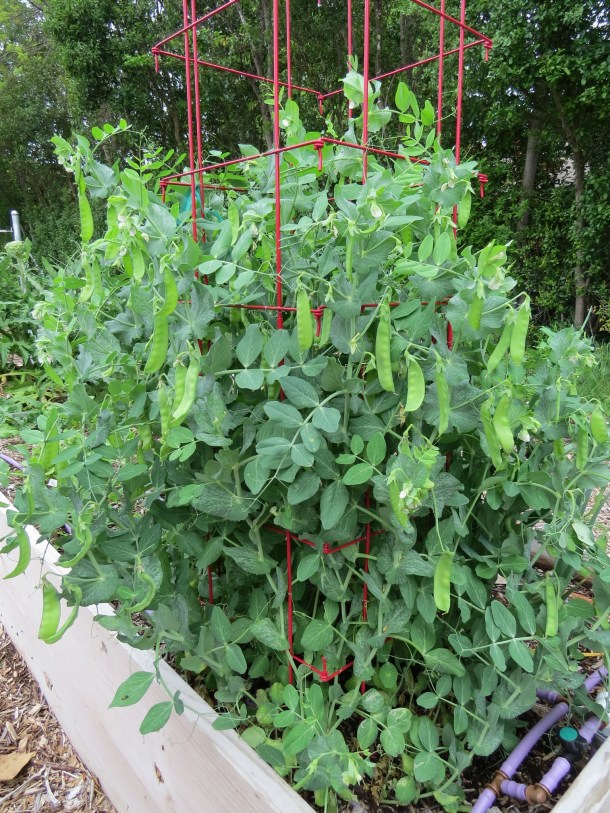
May I recommend the Sugar Snap Peas for munching straight off the vine!

Sugar Snap Peas at The Raincatcher's Garden

Sugar Snap Peas at The Raincatcher’s Garden

Aphids and Ladybugs are also eating their way through our garden. Ladybugs  seem to be winning as explained in this video:

Ann

Video by Starla

Artichokes by Dorothy

Oh, and if you have an answer to Dorothy’s question about stink bugs, please leave your answer in the comments section below.

Orphaned No More – Our Incredible Edible Landscape Project

Here at Raincatcher’s, we have a wide variety of demonstration gardens spread all around: we have an orchard, raised vegetable beds, ornamental trees, five types of turf, butterfly gardens, compost demonstrations and even a mixed ornamental bed in the courtyard. But there is one, last, orphaned space; it’s known as the old playground, and in some ways, it’s the church’s secondary entrance.  Which means it’s a very visible space that most people walk past and all cars drive by.  Wrapped in cyclone fencing, the playground was deemed ‘unsafe’ by regulatory agencies, and had been sitting unused when we moved to the church from Joe Field, the location of our previous garden.  We initially used the old playground as storage for all the plants, soil, and other large objects we brought over during our move. Then we disassembled the playground equipment and put it aside, in case we might be able to use it for another purpose.
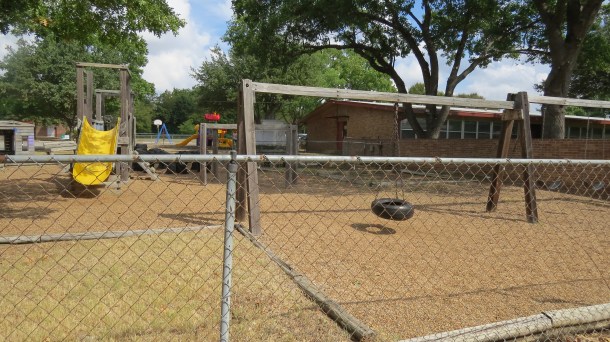
Playground "Before" Transformation

Playground “Before” Transformation

A year has gone by. The gardens have been installed.  The plants, soil, and other large objects have been moved into their new homes, and it became clear that the playground parts were not going to be needed.  We removed them, and what was left inside the cyclone fence was a greenhouse, the air conditioning mechanism for the church, a couple of compost bins, a chicken coop, mature trees, and the frame for the old swing set.  When you step back from that, you realize that the space is reminiscent of what most homeowners have in their own yards:  some nice things, some not so nice things, a fair amount of shade, some sun.

What it’s inspired us to do is play. (The space was a playground, after all!)  We’re going to be experimenting in this, last, garden, but we’ll be experimenting with a purpose.  Over the next year(s?), we’ll be installing an edible landscape in this space, this crowded, pre-owned space with some sun and a fair amount of shade.  We’ll be designing around our obstacles, turning them into features, and we’ll make the shade our ally instead of our adversary.  We’ll be showing off all sorts of different techniques from hugelkultur to vertical gardening to straw bales to edible flower beds.  Some will be raised, some will be inground; everything will be edible.  There will be some new crops, variations on common crops, and some old crops with new parts to eat.  And so in addition to growing these foods, we’ll also show you how to prepare and eat them.

Why are we going to do this? Because this space has so many similarities to the average homeowner’s yard, it’s a perfect teaching and demonstration tool, and teaching is our mission.  Why do it as an all-edible landscape?  Because there are many examples of ornamental landscaping, and plenty of examples of edible gardening, but there are not as many of edible landscaping.  We’re doing this because people are becoming interested in growing at least some of their food, but are often concerned that it won’t look good, or they can’t because they have too much shade.  This old playground gives us the opportunity to show everyone how they can create a beautiful landscape with edibles.

How are we going to do this? We’re going to do this in stages.  First, we’re going to start with the hardscape.  One of the biggest concerns people have about landscaping with edibles is the aesthetics – whether it’s an overgrown tomato plant, or the fallow season (too hot, too cold to grow edibles) for their climate.  To have a beautiful edible landscape, the first thing you need to do is make sure the landscape looks good before any plants are planted.  Plants (crops) are the ornamentation on top of a good looking base structure, your hardscape.  After all, there will be times when you may not have plants in your landscape; you might have had a crop failure, or have just harvested dinner!

In our next post, we’ll talk about hardscape ‘rules’, and show you how we’ll be incorporating them into our landscape.

Come along and follow our adventures – celebrate with our successes, and learn from our failures!

The Incredible Edible Landscape Team

Lila Rose

Picture by Starla

Note: Lila Rose will be speaking at the Whole Foods at Preston Forest soon about Edible Landscaping. Will add date to this post, so check back with us.
Chicken Day at The Raincatcher’s Garden

If your young child came home from school last week and said he had a held a chicken, maybe they were on a school field trip to the The Raincatcher’s Garden.  During the last 2 weeks on 2 consecutive Tuesdays about 175 children came to our garden to learn about chickens.  Judy, a Dallas County Master Gardener and henkeeper brought her brood: Blossom, Giggi, Dr. Pepper, and Velvet and Monarch.

Judy holding Gigi

Judy holding Gigi

Judy said the children had lots of good questions and learned some parts of the chickens…comb, wattles, beak, wings, etc. They learned chickens eat bugs, seeds, leaves, and other things.  Chickens do not have teeth;  they have a gizzard to grind up their food and their eyelids close from the bottom up.

Preston Hollow Students with Gigi

Preston Hollow Students Learning How to Hold a Chicken

Different breeds lay eggs of different colors and sizes. The children liked seeing the pretty colored eggs and knowing that eggs come from chickens not grocery store cartons.

Thank you da Vinci School, Dallas Cooperative Preschool, and Preston Hollow Presbyterian School. The Master Gardeners hope you come back and so do the chickens.

Ann

Pictures by Starla

Sign up for free field trips here.

Interested in becoming a henkeeper? Take a self guided tour of chicken coops provided by A Peep at the Coops. It starts at Moss Haven Farm.

Date: Sunday, May 1

Time: 11am-5pm

Place: 9202 Moss Farm Lane, Dallas, Texas


Bletilla striata, Chinese Ground Orchid

Bletilla striata, the easy to grow, terrestial orchid belongs in your garden.

Plant these bulbs in dappled shade and moist, but well drained soil. Add mulch. Although Chinese Ground Orchids are easily cared for and somewhat drought tolerant, they will not flourish in dry conditions so try to water before they become dry.

bletillastriata

The blooms come in several shades of lavender, hot pink, yellow, and white. Each stem can have as many as 10 blooms!

After the flowers collapse, Dr. Dotty Woodson suggests cutting the seed pods off  because they don’t naturally germinate in our climate but will germinate in a laboratory situation. Remember our trip to Dotty’s orchid greenhouse?

If you are curious, throw the seeds in one of your pots to see if you can get them to grow and if they do, let us know.

The good news is they will multiply vegetatively,  so expect ever increasing clumps.

Have I mentioned the pleasing foliage?  It is longitudinally pleated  or striated; growing  upright about 1 1/2 feet high.  A variegated form can be found, that Dotty says is awfully pretty. In our climate, the foliage is deciduous.

The lavender Bletilla striata blooming in our spring garden and pictured a few days ago came from Jim.

And on a serendipitous note;  while some of our gardeners were on a scavenger dig, they potted up several mystery bulbs. Now that the bulbs are at our garden, some think it could be another stash of Chinese Ground Orchids!

Ann

Spring at Raincatcher’s Garden 2016

“A little Madness in the Spring is wholesome even for the King.”
― Emily Dickinson

Take a walk with us through our garden to see some of our spring madness!

'Annelinde' peony-type tulip

‘Annelinde’ peony-type tulip

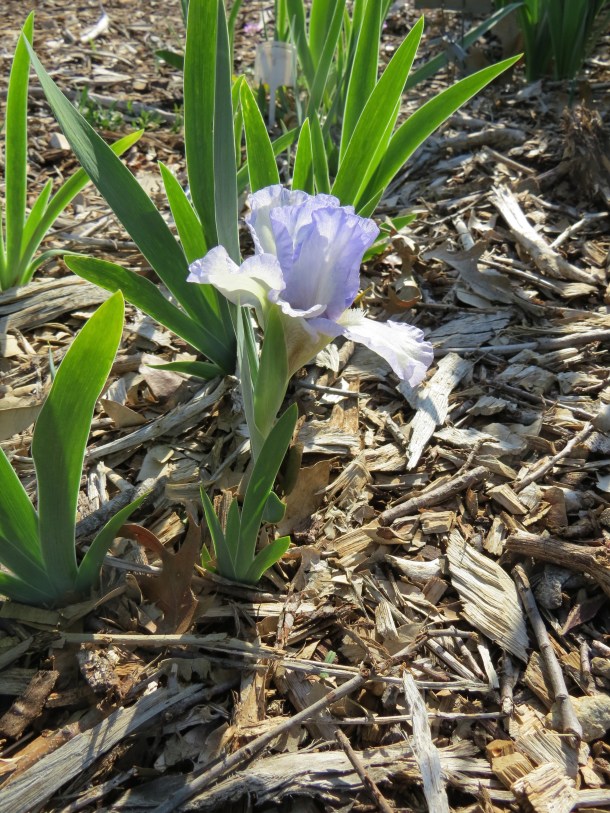
Iris 'Frothingslosh'

Iris ‘Frothingslosh’

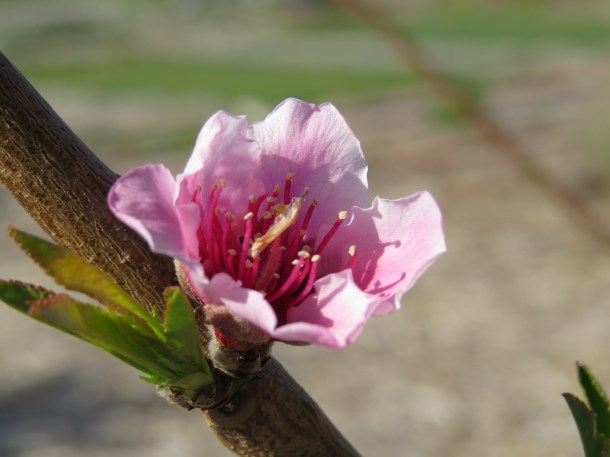
Peach Tree Bloom

Peach Tree Bloom

Pear Tree Bloom

Pear Tree Bloom

Plum Tree Bloom

Plum Tree Bloom

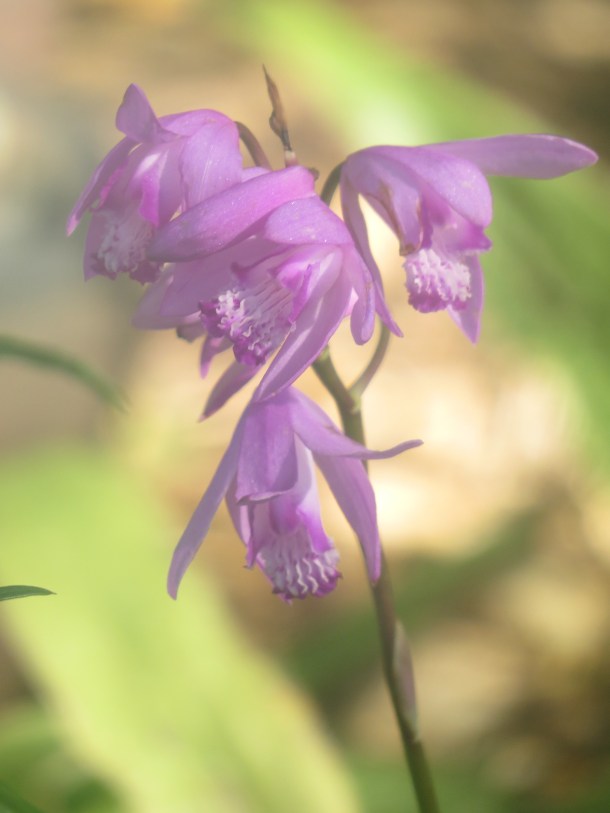
Ground Orchid, Bletilla striata Blooming in our Courtyard

Ground Orchid, Bletilla striata Blooming in our Courtyard

Cultivate Garden Thoughts by reviewing:

Our Orchard Varieties listed on the right, front page under Raincatcher’s Resources

Blooming Bulbs 

Daffodils, Jonquils, Narcissus

If you are like me, you have fallen in love with the Pink Tulip and Ground Orchid shown above.  Order them for your garden and help ours. The Raincatcher’s Garden receives a portion of your order at Brent And Becky’s fundraising site Bloomin’ Buck$ (www.bloominbucks.com).

Ann

Pictures by Starla


Tomatoes and North Texas

In selecting varieties of tomatoes for North Texas, the most important criterion to consider is the one in the trade called, “Early Season”. The less time required for maturation the better, because the extreme heat of our summers for tomatoes is like falling off a cliff.

Tomato varieties can also be described as being either determinate or indeterminate. Determinate varieties have the characteristic of reaching a point during their maturation at which most of the bearing of fruit occurs within a short time.  Indeterminate is just the opposite, where bearing occurs on a more gradual and sustained basis.

Indeterminate varieties that perform best here are mostly the smaller sized varieties. These can bear fairly prolifically even in mid-summer.  My own personal preference is for this class of tomatoes.  They are just the right size for popping into the mouth.  A usual day in my life finds me eating them every morning and about half the time that evening.

Tomato" Yellow Pear" an indeterminate variety

Tomato” Yellow Pear” an indeterminate variety

Larger sized tomatoes that perform best are the mid-sized varieties. The most popular 8- 12 oz. tomato for many years has been the determinant variety, Celebrity.  Its sister, Carnival is good also.  A typical year will find this variety bearing typically most heavily from early June to early July.

The largest fruited varieties require too long to mature, where anything past 65 days is marginal. The large fruited varieties also are susceptible to splitting and sun scald.  These do not appreciably affect the taste but certainly do affect the esthetic qualities of the fruit.

Celebrity Tomato Ripening on the Vine

Celebrity Tomato Ripening on the Vine

Perusing the catalog, “Tomato Growers Supply Company”, there are listed 16 varieties of Early Season varieties, many from which to choose.

Over the years, varieties come and go. Some are described as being highly heat resistant, but I would be wary of accepting that description as being accurate.  I would recommend acquiring a tomato catalog along with using my advice in choosing your selection(s).  Celebrity remains the preeminent mid-sized tomato.

Tom Wilten

Pictures by Starla


Globemallow

Globemallow Sphaeralcea ambigua

We didn’t think it would survive in Dallas. Much less bloom. Well, the Globemallow’s exquisite pink flowers triggered gardeners’ squeals—this is a passionate bunch!—last week at the Raincatcher’s Garden.

Globemallow

We planted Globemallow on a whim last year in the Butterfly/Hummingbird Garden. Most natives from the Big Bend region fail miserably in our dense clay, but this shrubby perennial will tolerate our soil and treat gardeners to “spectacular displays in wet years” according to the Lady Bird Johnson Wildflower Center.

The combination of purplish-pink 1” cup-shaped flowers and grayish-green scalloped leaves is a show stopper. The most common bloom color, however, is an apricot-orange suggestive of spring quince. If you prefer a color, you might be wise to purchase the plant in bloom.

Steer clear of stroking the leaves. The little hairs can irritate and sometimes cause an allergic reaction.

Plant Globemallow or Desert Mallow in full sun. It will become straggly in partial shade.  It is lovely with grasses or scattered throughout natural plantings.

Elizabeth

Picture courtesy of http://www.wildflower.org

Blooming Bulbs

Last fall, we decided to plant naturalizing bulbs and see how they fared.

In a word: gorgeous.

In December, we tucked in about 100 reliable, low-water beauties that are recommended varieties for Dallas. Now we are checking the north field compulsively to see what’s up and blooming.  We haven’t been disappointed.

Steve Huddleston, senior horticulturist at the Fort Worth Botanic Gardens, has found selections from the jonquil and tazetta families of smaller, multi-flower daffodils are the most dependable for years of color. Huddleston is slated to speak on “Perennials and Bulbs” for the Master Gardener School Class on March 28.


Daffodil Cragford‘Cragford,’ a pre-1930 Heirloom with white petals and reddish orange cups falls in the tazetta classification. The first to bloom in our garden, it grows to 14” -16.”
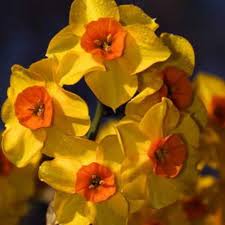


Daffodil Falconet‘Falconet’ is another dazzling tazetta with three to five flowers per stem. The petals are a bright gold with a rich orange cup.  Like ‘Cragford,’ it has a nice musky sweet perfume.  Other tazettas you might try are ‘Avalanche’ and ‘Geranium.’  We also planted ‘Hillstar,’ a jonquil variety which is not yet in bloom.


Daffodil Carlton‘Carlton’ has a larger bloom, but only one per stem, placing it in the Division II category. The two-toned yellow daffodil dates from 1927 and is the second most popular daffodil in the world, according to Brent and Becky’s Bulbs.  You might want to plant ‘Gigantic Star,’  ‘Ice Follies,’ or ‘Saint Keverne’ in the Division II category.


Daffodil Tete-a-TeteTiny Tete-a-Tete daffodils are showing their buttercup yellow petals and slightly darker yellow cup. This popular miniature daffodil usually has two flowers per stem and reaches 4-6 inches.



We also planted Dutch iris, grape hyacinths, and tulips.

Inspired? All our bulbs came from Brent and Becky’s Bulbs, one of the country’s respected bulb retailers. The Raincatcher’s Garden receives a portion of your order at the company’s fundraising site Bloomin’ Buck$ (www.bloominbucks.com).  If you’re looking for summer bulbs for your garden, Brent and Becky’s carries elephant ears, ground orchids, and more.

Elizabeth

Pictures by Starla and courtesy of Brent and Becky’s Bulbs

Perfectly Planted Potatoes Premiers

     Just in time for the Oscars:  Potatoes take center stage on the red carpet in this exclusive short video.  It features our own Jim Dempsey, nominated for Best Instructor, and Starla Willis, nominated for Best Cinematographer. Good luck to both!

And… if you want more information about growing potatoes, check out “One Potato, Two Potato, Hopefully More” and “Fried Green Potatoes.”

Carolyn

Video by Starla


Rain Garden Education, 3-01-2016

Rain Garden Class and Installation

9-10am Lecture in the Community Hall

10am-1pm (or as long as it takes!) Installation in the east lawn Tuesday, March 1st

Location: 11001 Midway Road, Dallas, Texas 75229

A Rain Garden is a planted shallow depression in the landscape that collects and stores rainwater runoff from roofs and other impervious surfaces until it can infiltrate the soil. Also known as bioretention areas, rain gardens are planted with appropriate hardy and attractive plants to provide color and beauty to the landscape and help conserve water and protect streams and rivers from pollution and erosion. Our training will prepare you to capture and conserve rainwater in a beautiful garden.

Led by specialists from Texas A&M AgriLife Extension Service:

Dr. Fouad Jaber, Associate Professor and Extension Specialist in Integrated Water Resources Management, and Dr. Dotty Woodson, Extension Program Specialist, Water Resources

You will learn:

  • Site selection
  • Design considerations
  • Materials Needed
  • Appropriate plant choices for Dallas County

Open to the public. Stay for just the class or help as long as you can in the garden – all are welcome. The class will also qualify as Master Gardener education hours.

In case of rain, please check dallasgardenbuzz.com for further information.