Mary Louise Whitlow’s Garden, October 1, Garden Tour

Above: Whitlow Garden on Tour, October 1

Above: Whitlow Garden on Tour, October 1

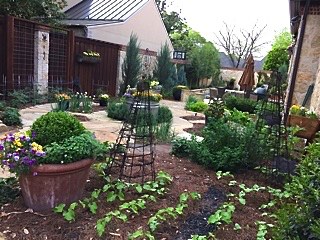
Mary Louise Whitlow had an “ah ha” moment in the 1990s. She was watering the grass taking up her home’s parkway with a garden hose.  “Why am I doing this?” she asked herself.  “I don’t even like grass.”

Next thing you know, the grass was out, and she had started on what became a large pollinator garden of native and adapted plants.

Over the years, the garden has expanded past the sidewalk and up the yard’s slope to stop at the shade from her large pecan tree.

Mary Louise grew up in the charming home, one of the few original houses remaining in University Park.  Her grandmother gave the pecan tree to her parents when they moved in the house in the mid-1950s.

Mary Louise’s landscape philosophy is straightforward: buy one or two plants of a variety and see what works with limited water, fertilizer and organic pesticides.  Now she has “more salvias than you can count.”  She particularly loves Gregg’s mistflower and frostweed because the plants attract Monarch and Queen butterflies.  She has found zexmenia to be as “tough as nails” and pipevine so resilient that “the caterpillars eat it to a nub and it’s back in a week.” The Jerusalem sage yellow blooms are so beautiful, she says, that her neighbors “stop and stare.”

Two hugelkultur gardens are mounded by the front door.  Mary Louise has found that the layers of rotten tree limbs, branches and soil are very efficient in breaking up Texas clay soil and retaining moisture.  She has successfully planted tomatoes in decomposing organic straw bales in the backyard.

Her backyard chain-link fence is lined with fig trees, including ‘Alma’, ‘Brown Turkey’ and ‘Celeste.’  Mary Louise harvested enough figs this year to can 71 pints of fig jam.

Elizabeth

Click here for full garden tour information.

Fall Garden Tour, October 1, Burke Garden

burke-garden-pic-program

Sherry Burke’s neighbor wasn’t crazy about her chain-link fence. She liked it.  After all, the fence had been around as long as her 1940s bungalow.  Sherry planted passion vine to hide the cyclone fence.  The passion vine brought the Gulf fritillaries, and the butterflies won over the neighbor.  Now the passion vine is taking a run over the garage.

In fact, Sherry’s backyard, filled with perennials, native Texas plants and ornamental grass, is a favorite in this casual Old East Dallas neighborhood. Friends look over the fence to see what’s growing, blooming or fluttering.  Monarchs and hummingbirds migrate through.  Tiny hairstreak butterflies are everywhere.  ‘John Fannick’ phlox blooms, a gift from Tony, Sherry’s manicurist.

You won’t find turfgrass. Not a blade.  “All it does is sit there,” says Sherry.  “I wanted something more interesting.”  And in a garden filled with friends and blooms, who has time to mow?

Elizabeth

Click here for full garden tour information.


Master Gardener Fall Garden Tour, October 1

quicheDon’t Miss the 2016 Garden Tour and Fall Fresh Garden Brunch on October 1st

What’s the best way to catch your breath when enjoying the 2016 Garden Tour? By indulging in a delightful Fall Fresh Garden Brunch on the patio of Linda Alexander’s garden, 5030 Shadywood Lane.  Linda’s garden will also be featured on the Tour.

Five Master Gardeners will welcome visitors to their stunning gardens for the Garden Tour on Saturday, October 1st.  Gardens on the Tour are open from 10 am to 4 pm.  Brunch will be served from 11 am – 1 pm.

You’ll also get a sneak peak at A Year on the Plate, the new Master Gardener cookbook.  Recipes for the Garden Brunch menu were chosen from A Year on the Plate and feature the best of fall local produce.

You need to act fast to get a brunch ticket for $15. Brunch reservations are limited, and tickets must be purchased by September 24.  Garden Tour and Brunch tickets will be available at the September 22 General Meeting. Tickets for the Tour and Brunch, and copies of A Year on the Plate are available at dallascountymastergardeners.org with PayPal.

A limited number of hardcover cookbooks will be for sale for $40 at the Garden Brunch. Sales will be reserved for Garden Tour visitors. Master Gardeners who have ordered copies of A Year on the Plate will receive their books in late October.

Fall Fresh Garden Brunch

Artichoke Bites

Iced Herb Gazpacho

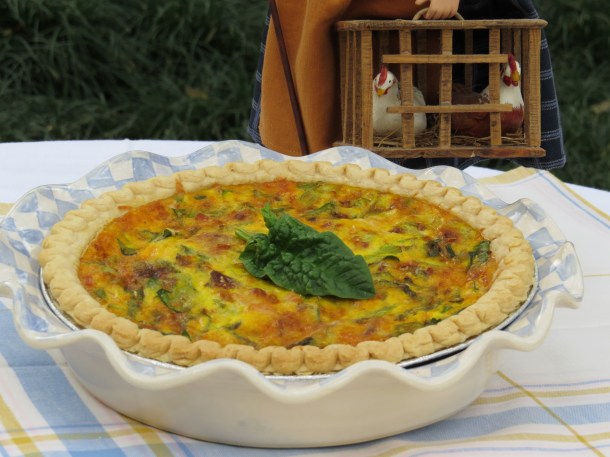
Henkeeper’s Quiche

Fresh Spinach Salad with orange curry dressing

Breadbasket Trio: Sweet Potato Biscuits and herb butter, Glazed Lemon Zucchini Bread and Lemon Verbena Bread

Maple Pecan Tartlet & Cranberry Pear Crisp

Lemon Verbena Iced Tea

Tomorrow at Whole Foods Market, Preston-Forest

Wednesday, September 14,  9am to 9pm

5% COMMUNITY GIVING DAY, WHOLE FOODS MARKET PRESTON-FOREST

YOUR PURCHASES HELP OUR NEW GARDEN GROW

Visit with Dallas County Master Gardeners at Whole Foods Market Preston-Forest on September 14 and fill your grocery cart. The store will give 5% of the day’s net sales to The Raincatcher’s Garden of Midway Hills, 11001 Midway. This helps us maintain our beautiful gardens and provide garden education for all ages.  This fall we have many school children visiting our garden for educational school field trips.  Hands-on-learning to expand math, science and social studies learning opportunities will be offered.

Above: Fall 2015 Field Trip, More to Come in 2016!

Above: Fall 2015 Field Trip, More to Come in 2016!


Fall Garden Tour, The Bowers Garden, Saturday, October 1, 2016

bowers-garden-pic-photoA regulation-size tennis court (with lights!) and a bamboo hedge didn’t quite fit into Jody Bowers’ vision of an English garden for her Swiss Avenue home.  Fire destroyed most of the original 1914 structure, and the home was rebuilt in 1924.

As part of a yearlong garden renovation, the tennis court and bamboo were removed. Designer Patrick Butterworth worked with the Bowers’ architect and contractor to replace them with a summerhouse and conservatory in the architectural style of the English/Norman French residence. The new formal garden mixes perennial beds and boxwood hedges filled with ‘Belinda’s Dream’ and ‘Grandma’s Yellow’ roses.

Jody then tackled the compacted soil that had been underneath the tennis court. “It was like asphalt.  Totally dead,” she says.  Dozens of bags of composted leaves and loads of topsoil were hand dug into the area to revitalize the soil.

She has been careful to relocate or reuse plant material when planning her garden. The boxwood in the parterre hedge was recycled from another garden. The scraggly plants had a good root structure and with some pampering are now thick and green. Two large Arizona Cypress were saved in large pots during the garden construction and are replanted in the back corners of the property.  “I love the challenge of trying to find things a new home when they outgrow their old home!”

In the summer, you’ll find Jody working in her vegetable beds filled with tomatoes, peppers and okra. She enjoys planting heirloom Brown Crowder Peas and Pencil Cob Corn, a field corn variety traditionally ground for “hoecakes.” Jody was given seeds for the peas and corn, as well as butter beans and miniature gourds, by the gardener at the Blackberry Farm hotel in the Tennessee Smoky Mountains.

In the warmer months, Jody enjoys cutting fresh flowers, herbs and greenery for arrangements. “Whether it’s zinnias or bee balm or bridal wreath or just a magnolia bloom, I love that I can walk outside and find something for a vase.” In cold weather, Jody fills the conservatory with tender perennials and starts cuttings and seeds under grow lights. “It’s my happy place outside in the winter months.”

She and husband Bill look forward to crisp evenings and a crackling fire in the summerhouse. “No matter the season, I know what lies beneath the soil, and it gives me great joy to just sit and ponder what will be returning and blooming the next season that rolls around.”

Elizabeth

Click here for full garden tour information.


October 1st, Dallas County Master Gardener Fall Garden Tour

alexander yard

Call it love at first sight. Linda and Art Alexander were in the market to purchase a new home in 2006.  They swooned over a Bluffview listing awash in April wisteria, dogwood, azaleas and tulips.  They quickly signed the contract.

Her landscape reflects a love of entertaining. One of Linda’s favorite quotes is: “The ornaments of your house will be the guests who frequent it.” The Alexanders have hosted more than 100 get-togethers at the 1948 ranch designed by noted regional architect Charles Dilbeck.

Visitors to the Alexander garden can see how Linda carefully edited mature landscaping from previous owners to frame the historic home. She developed cohesive garden rooms on the large lot, adding shrubs and perennials along the circular drive to welcome visitors.  Tall live oak trees shade conversation and seating areas for backyard entertaining.  She even planted Oklahoma-red pentas for the fall Texas-OU Red River Showdown post-game party. Linda’s updated raised vegetable beds are tucked behind the guesthouse.

Following herb expert Marian Buchanan’s advice, she particularly loves to grow herbs and uses them for cooking, flower arrangements and in the landscape. She says Art likes the herb scents when he brushes against the plants on a garden path.

You’ll often find Art and Linda in the garden swing in the backyard patio. They welcome the morning sun, cuddle a new grandchild and enjoy the yard they call “our sanctuary.”

Elizabeth

We will be featuring one garden a week until the October 1st Fall Garden Tour on Dallas Garden Buzz. Tour tickets can be purchased now online at the Master Gardener website.  Brunch will be served at the Alexander home and are also available now.  Plan ahead and purchase your tickets because the brunch tickets are limited. The menu will be based on recipes from the Master Gardner cookbook, A Year on the Plate. To pre-order the cookbook, click here.

Tour Tickets purchased before October 1-$15

Brunch Tickets-$15

Cookbook-$40

Deadheading, Just Do It

DEADHEAD—it sounds maybe dangerous—at the least not pleasant. But, I needs to be done.  Here is why.

Flowers bloom for a reason, it has nothing  to do with making gardeners  happy.  Flowers have a serious mission—they want the world to be full of plants.  Not just any plants of course—plants  like them.

Flowers attract pollinators to allow fertilization and seed formation. That’s it.  That is what flowers want.  When they have set seeds they can and usually do, go on to the great beyond with joy—mission accomplished.

We must stop them. Plants covered with fading flowers and  seed heads  do not make for a cheerful summer  show.  Gardeners want  lots of flowers on healthy plants..  For this to happen—deadhead early and often.

Pretty Flowers But Could Be Better With Deadheading

Rudbeckia in Need of Deadheading

How to do it? It’s not at all hard.  For many plants, such as zinnias, coneflowers or cosmos cut the stem of the fading flower back to the first set of full healthy leaves.  This hides  the cut and encourages branching and new flowers.  Do not cut just below the flower.  This leaves a stem to turn brown –not at all the way to tidy up the garden.

Deadheading Cosmos

Deadheading Cosmos

For some plants, like salvias, the best plan is to shear back all the stems about two to three inches. This removes the dead flowers and encourages a fresh flush of blooms.

Be sure to collect the blooms—they are great for the compost.

Don’t forget your herbs! If you want basil for fall tomatoes keep those flowers cut—remember  they are tasty and can go straight to the kitchen.

Keep the Herbs Coming by Deadheading as shown

Keep the Herbs Coming by Deadheading as shown

More flowers—tidy garden—sounds perfect—so why the resistance??

First— summer temperatures are still with us and its hot—that’s true.  Early morning is an ideal time to go out—do a bit each day and things won’t get out of hand.  Evening works too—just don’t put it off.

You will be rewarded. You will see things that might well have been missed.  A quick visit by a hummingbird,  a just hatched baby anole or delicate lace wing eggs that look like a tiny modern sculpture.

A Reward-Lacewing Egg Sighting

A Reward-Lacewing Egg Sighting

What about bees and butterflies? .

Are they still using those flowers? Well no, those flowers are past their prime for pollinators too. Really you are doing a big favor when you remove the old flowers—more will soon appear as the plant continues to try and fulfill its mission.

Susan

Buy Discounted Tickets Now for DCMGA 2016 Fall Garden Tour

alexander yard

Five spectacular gardens by members of the Dallas County Master Garden Association will be featured on the 2016 Garden Tour set for Saturday, October 1st.  Visitors will see formal English gardens on Swiss Avenue, edible landscaping in Preston Hollow, a buzzing pollinator garden in University Park, native perennials and ornamental grass in Old East Dallas and landscaping for gracious entertaining in Bluffview.

Make your tour complete by enjoying a seasonal Garden Brunch featuring recipes from A Year on the Plate, the new master gardener cookbook.  Guests will be treated to a menu chosen from fall produce, including Iced Herb Gazpacho and Artichoke Bites.  Brunch will be served on a lovely Bluffview patio shaded by live oak trees from 11am to 1pm the day of the tour.  Visitors can also preorder a copy of A Year on the Plate, the new DCMGA cookbook, at the same location.

Presale tour tickets will be $15 and on the day of the tour, $20 each. Tickets for the Garden Brunch must be purchased ahead at $15 each.  A limited number of brunch reservations will be taken.

Presale tickets for the brunch and tour will be available soon on the dallascountymastergardener.org website using PayPal. North Haven Gardens and selected Calloway’s Nurseries locations will sell only tour tickets in September.

Your ticket purchase will support a major fundraiser for the Dallas County Master Gardener Association. The 2016 Garden Tour is the first time DCMGA has opened its members’ gardens in three years. Please help make the tour a success by asking friends and neighbors to attend and by publicizing the tour in venues like Next Door. All profits go to fund the DCMGA educational programs and more than 30 community and school projects.

Elizabeth

GardenTourLogowithDate001

A Musical Squash for the Edible Garden

Have you wanted to grow squash in your vegetable garden but find that your plants are plagued by squash vine borers before you can harvest even one squash?  Or maybe you are looking for a variety of squash that can be used both as a summer or winter squash?  Or perhaps you would just like to try growing an unusual squash that would be an exotic addition to any edible landscape.  If you answered “yes” to any of these questions, then next summer you might want to grow Tromboncino Rampicante or Italian Edible Squash.

This squash goes by several common names: zucchetta rampicante, climbing zucchini, climbing crookneck, trombolino d’albenga, trombetta and serpentine squash.  It hails from the city of Albenga on the Italian Riviera where it is used in gnocchi and ravioli. Though most squash are in the species Cucurbita pepo, Tromboncino is a cultivar of Cucurbita moschata, which also includes butternut squash. Since its stem is not as hollow as C. pepo, it is more resistant to squash vine borers.  Even squash bugs and powdery mildew do not appear to affect it as readily.  Plus its name “Rampicante” gives away one of its other characteristics.  It grows “rampantly,” with vines often exceeding 15 feet in length.  These long stems, particularly if grown along the ground rather than on a trellis, can root at the nodes, thus giving the plant an even better chance to beat squash vine borers and other insects and diseases.

Some people compare the mild taste of a young Tromboncino to a zucchini.   If left to mature as a long-lasting winter squash, it is more like a watery butternut squash and it keeps very well.  If harvested at about 12 or up to 36 inches, the long neck makes perfectly round slices as opposed to other varieties of squash which have a less uniform shape.  Another advantage to the long neck is that there are no seeds in it. The bulb, which contains the seeds, can be stuffed with a variety of fillings.

squash-blog

Tromboncino is very easy to grow and likes our hot Dallas weather.  It can be started from seed in late spring, once the ground warms up.  A strong fence or arbor is recommended, especially if you want long, straight squash.  Even on a four foot fence, the Tromboncino pictured in this article started to bow once it touched the soil.  Tromboncino grown on the ground however tend to look less like trombones and more like French Horns, with many twists and curves.  Some people have said that the hardened curved winter squash make great legs for a Halloween spider; while the long straight Tromboncino squash make cute “weiner dogs.”  Because Tromboncino are so prolific, there are many recipes for how to cook with both the squash and the male flowers on the web.

So, if you want to make your garden sing, next year give Tromboncino Rampicante a try.  Just be sure however to give it a lot of room or you may find, like one of the commenters on the web, that he had “…really enjoyed seeing the plants take off and cover the compost heap where I planted it to give plenty of nutrients. I figured since pumpkins have done well as volunteers there that this squash would too, and this one did. Two plants covered the heap and would have covered my SUV, too, if the carport hadn’t shaded them too much.”

Carolyn


Pomegranates at The Raincatcher’s Garden

The orchard was one of the first things planned when we started up at Raincatcher’s garden of Midway Hills.   Six different trees were chosen and then planted in  January 2015.  Most of these were purchased, but the pomegranate was brought over from our previous location. One of the things about planning and planting an orchard is to realize that it usually takes 3 years for the trees to bear fruit.  So we planted, pruned, and then waited.   The first season was as expected – we could see the growth pattern of the different trees, but there was no fruit.

Our Very Own Pom Transplant

Our Very Own Pom Transplant

The winter came, and the trees lost their leaves and once again we waited till early February – and we pruned according to the type of tree – pears wrap around and grow vertically, while plums and peaches are pruned to a bowl type shape.

The last 2, persimmon and pomegranate, are more shrub-like and were not touched by the pruners.   They were about 2-3 feet tall at this time.

By March new growth was appearing and the effects of pruning was taking shape — a few blossoms appeared on the plums and peaches, but fruit did not follow. The pomegranate, however, was a different story – it began to grow, — and then blossoms appeared in March and April with this beautiful orange bud which then became a flower – the bees came to pollinate ,  and then fruit started to form.  The shrub is now over 5 feet tall and is laden with beautiful orangey pomegranates  -Yes  it’s only the second year, but we will have pomegranates in the late Fall.

Pomegranate Flowers Followed by Fruit

Pomegranate Flowers Followed by Fruit

Pomegranates are ready to harvest about 6 months after the flowers appear, so come later October or November our pomegranates will be ready. They should be the size of an orange and the color will vary from yellow to bright red.     We are looking forward to  celebrating this harvest by making some pomegranate jelly !

Pomegranates Ripening!

Pomegranates Ripening!

Starla

Orchard beginnings here.