New Year’s Resolutions

A new year is here, and with it comes hope. All those good intentions come roaring back, ready to improve our lives.  Last year, we began creating an edible landscape in the old, disused playground.  We promised you updates on our activities, and sharing what we learned as we experimented in our new space.  Those posts got written, but never published.

So our resolution for 2017 is to both write and publish our edible landscape adventure (with pictures, of course!)  We’ll aim to do one a week, keeping you informed of our progress, our activities, our successes, our failures, and any lessons we glean from all of it.  …And we’ll probably slip in last year’s posts (as they become seasonally relevant.)

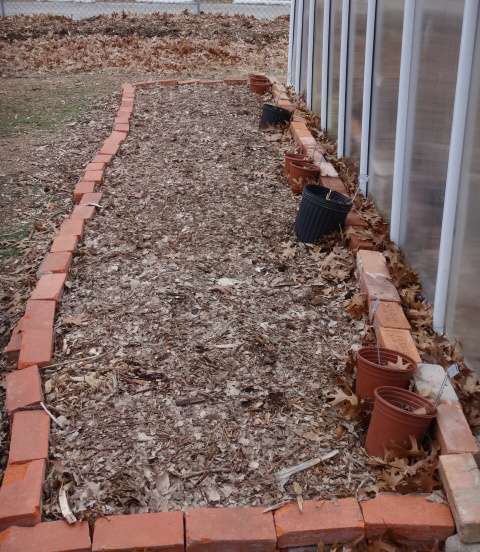
edible-garden-januaryAbove: growing soil!

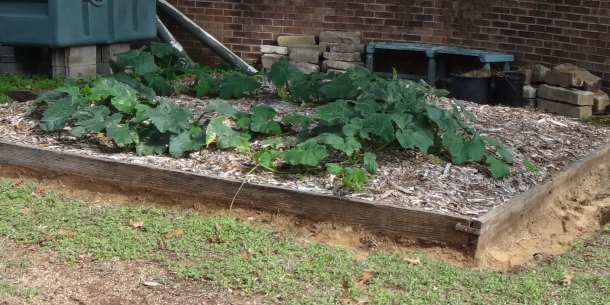
Right now, we’re growing soil. Aboveground, the garden looks asleep; belowground, many organisms are busy converting multiple layers of compost and mulch into rich soil.  You may have heard of it, it goes by many names:  sheet-mulching and lasagna-gardening are two common ones.  Growing soil doesn’t take much effort from the gardener (other than patience), so while the garden doesn’t need our immediate attention, we are inside, warm and cozy, surrounded by a mountain of catalogs, dreaming up the landscape for the upcoming year.  If you’ve got any suggestions for us, we’d love to hear it!  The only caveat is that the plant must have an edible component.  With all the trees in our landscape, shade-tolerant edibles get bonus points.

That’s all for today – see you next week!


Porterweed

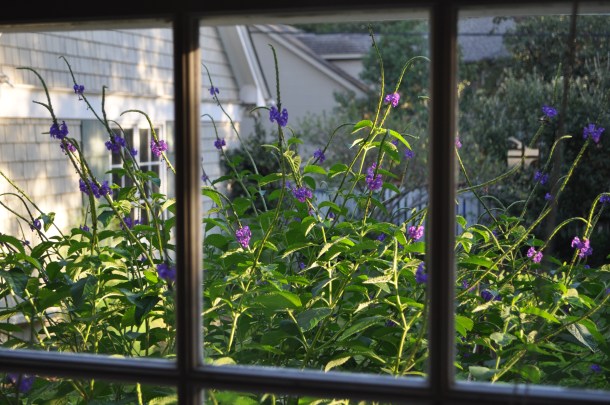
How often do you get an entertainment package with a nectar source?

Blue Porterweed, Stachytarpheta jamaicensis

Blue Porterweed, Stachytarpheta jamaicensis

My husband has mentioned several times how entertaining the Porter weed is which can be seen through our den windows. We have watched hummingbirds, butterflies, and bees drinking from it.

Now we must say goodbye and hope that it returns from its roots next year. Proper mulch has been applied.

Porterweed comes in several colors and be careful because the names and growth habits will switch according to species or cultivar.

Raincatcher’s has Coral Porterweed, Stachytarpheta mutabilis, in our courtyard garden and Lavender Porterweed Stachytarpheta mutabilis var. violacea in our butterfly garden.

Coral Porterweed, Stachytarpheta mutabilis

Coral Porterweed, Stachytarpheta mutabilis

Make a note to look for this favorite nectar source at the Texas Discovery Garden spring plant sale in 2017.

In the meantime, Porterweed, we are going to miss you!

Ann

Hope you read yesterday’s freeze information yesterday and for further info click here.

Note: I have seen Porterweed spelled as two words and one word.


Freezing Weather Coming…

I talked to Lisa today. She and Jim  were headed to The Raincatcher’s Garden to drain the pipes alongside our cisterns so the pvc wouldn’t crack if we have freezing weather and to make sure all faucets were covered.

Last week our gardeners were busy harvesting green tomatoes, some sugar baby watermelons(one last taste of summer) and herbs that would freeze like thyme, lemon verbena, and lemon balm.  Our basil was already on it’s last legs so only a little bit of it was worth picking.

Ann

Here’s some advice  from seasoned gardeners (hohoho)

about preparing home gardens before a freeze.

We were so lucky this time to have had rain because watering before freezes is so important. Buying  frost cloth is a good investment; the little sack like things are useful.  I just put those on two clumps of narcissus that are just about to bloom; it won’t hurt the plants but the blooms could be destroyed.  I think the kale will be fine but covered it just to be safe  of course all tropical have to be inside–and taking a small clump of lemon grass and just putting in the garage will be sure you have some for the next year. Lemon grass usually comes back but is tropical and can freeze.

Pick all vegetables. Green tomatoes usually ripen spread them out single layer–I use plates and put them in back rooms–my kids used to say they couldn’t sleep without green tomatoes on the dresser!

Susan

I’ve pulled out all my summer veggies, because I like to avoid the ugly frozen plants.

dorothys-frost-coversBecause I have now acquired 5 citrus trees, I don’t have room to move them in, so I covered them and have a light bulb down in the bottom.

Dorothy


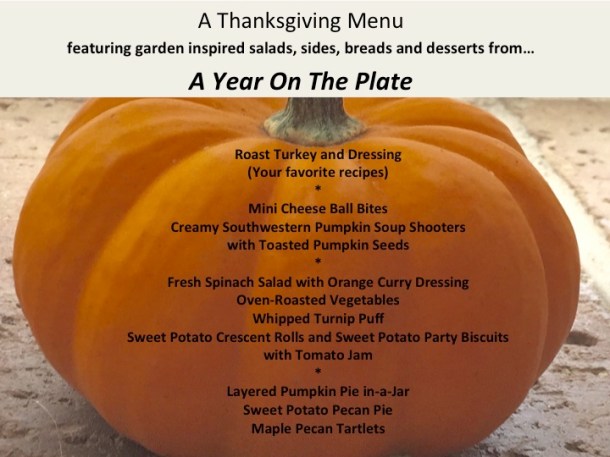
Thanksgiving Menu

Thank you to our many readers who have purchased the Dallas County Master Gardener Association cookbook, A Year On The Plate. Copies are available on our website and at North Haven Gardens while supplies last.slide08

Happy Thanksgiving to all!

Menu by Linda

Lakewood Elementary School Returns!

Teaching children about the natural world should be treated as one of the most important events in their lives. – Thomas Berry

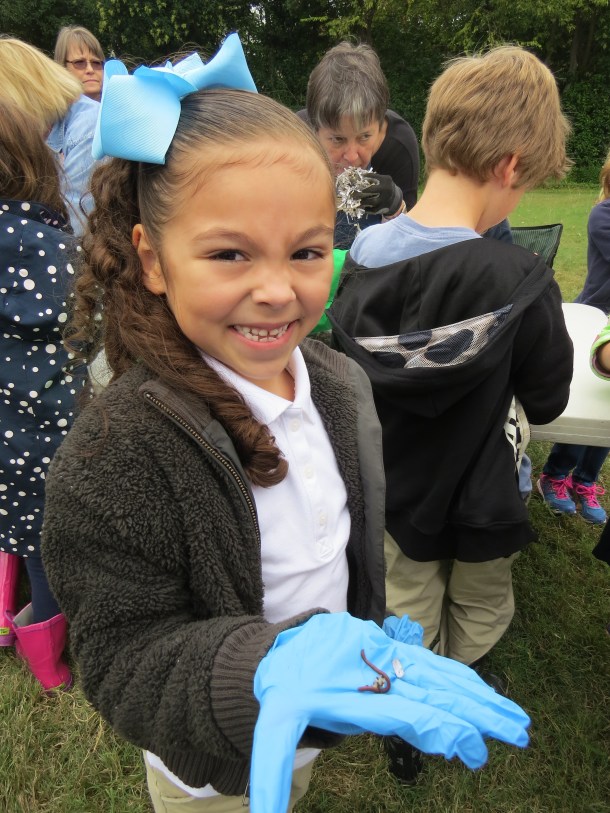
The Raincatcher’s Garden hosted 156 children and 10 teachers and aides from Lakewood Elementary School this week as they learned about vegetables you can grow in your own garden, vermicomposting and the life cycle of worms, pumpkin math, city chickens, compost and gardening to attract butterflies. 

lakewood-sheridanStudents were led to each garden station by happy Master Gardener volunteers like this one!
lakewood-color-wheel

Exploring the garden with all senses is encouraged.

lakewood-vermiculture

And just think if you can hold a red wriggler worm in your hand, the science of vermicomposting may become more interesting.lakewood-field-trip-mg

This is only a fraction of the army of Master Gardeners who helped with the field trip.  Great Job by our Master Gardener Education committee!

Pictures and observations by Starla


That Doesn’t Look Like Milkweed!

The milkweed section of the April Texas Discovery Garden plant sale is not for the faint of heart. Once the gate is opened, you’ve just got to get in there—elbows flying—and grab.

Turns out, this year we purchased an interloper that hitched a ride to the Raincatcher’s Garden with the native Rose, Common, Green, Green-flowered and Antelope Horns milkweed.  And this milkweed has been turning heads.

The green pods of African Milkweed

The green pods of African Milkweed

African milkweed Asclepias physocarpa or Gomphocarpus physocarpa was a mild mannered herbaceous plant with tiny white star-shaped flowers from August through September.  Then 3-inch pale green, round seedpods covered with soft hair-like spines appeared in October.  None of the Raincatcher’s volunteers had seen anything like it. The spiny pods will fade to red or brown and slowly split to release numerous oval seeds, each with a tuft of silky hairs to catch the wind.

Brown pods obviously

Brown pods with milkweed bug

African milkweed, which is also known as Balloon Plant, Swan Flower and Tennis Ball Plant, is an annual milkweed native to Africa. Its distinctive seedpods are often used in flower arrangements—or as conversation pieces in the Raincatcher’s Garden.

Elizabeth

Pictures by Starla

Texas Discovery Garden Plant Sale, November 4th  for members, November 5th for the public. Information here.

Monarchs Tagged in Butterfly Garden at Raincatcher’s

October is peak migration month for millions of Monarchs flying through the “Texas funnel” to overwinter in their ancestral roosts in Michoacan, Mexico. As the Monarchs flutter through the Raincatcher’s Garden, we have also had another visitor— one with a butterfly net.

monarch-tagging-ellen

Master Naturalist Ellen Guiling frequently visits the butterfly garden to capture and tag Monarchs. Ellen hovers by the Greg’s Mistflower, then her butterfly net swooshes and snaps to flip the net sock around the circle of the rim to prevent the butterfly’s escape. She gently folds the Monarch’s wings closed in the net then reaches in to hold the butterfly’s body and remove it.  It takes seconds to press a Monarch Watch tag on the discal cell, a spot on the middle of the lower wing.

monarch-tagging

She quickly checks the sex of the captured Monarch. Two small black dots on the veins of the lower wings signal that this male with his pheromone sacks is probably quite the favorite with the lady Monarchs.  Released into the intense October skies, the Monarch flutters back to the Greg’s Mistflower, ready for his trip south.

Male Monarch-see the spots!

Male Monarch-see the spots!

Ellen has tagged about 40 Monarchs this fall at Raincatcher’s.  After recording the date, location and complete tag numbers with other information, Ellen will send her data sheet to Monarch Watch at monarchwatch.org, the organization that helps create, conserve and protect Monarch habitats.   Tagging data by volunteers has been critical in mapping Monarch migration patterns. Scientists study the tagging results to answer unanswered questions about Monarch migration, such as whether migration is influenced by the weather and if there are differences in migration from year to year.

Elizabeth

Pictures by Starla

More about Monarchs:

A Monarch Pit Stop

Butterfly Migration

Butterflies at the Raincatcher’s Garden

Dallas Butterflies


Raincatcher’s Fall Veggie Garden

Please take a minute to go to this link to see information about our fall vegetable gardens. This link contains names of varieties, spacing information, and you can enlarge the plot plan for easier viewing.  Thank you, Dorothy, for setting this up for us! https://www.growveg.com/garden-plan.aspx?p=777788

Don’t forget tomorrow’s garden tour and sale of our cookbook, A YEAR ON THE PLATE, at 5030 Shadywood.

Questions? Leave a comment, we will answer or call the Master Gardener help desk at 214 904 3053.

Ann

Dorothy’s Garden On Tour October 1st!

dorothys-gardenDorothy Shockley still remembers summer suppers at her grandparents’ farm. “Of course, the homemade tomatoes were the highlight, but also, black-eyed peas, squash, fresh onions and strawberry shortcake,” she says.  “I’m sure meat was served, but I don’t think I ate anything but vegetables.”  In the Depression, her grandfather supported his family with a truck farm. “So my dad grew up working that farm.”

In the 1970s, you’d find Dorothy and Tommy at the end of their driveway selling corn they had raised on a one-acre plot on his family’s farm.  To supplement his income at Central Power and Light, Tommy would bring their produce to the office to sell.

Dorothy’s garden reflects her love of fresh vegetables.  It’s no wonder that to this day she would rather have a perfect summer tomato than a bouquet of flowers.

She concedes some space to drought-resistant perennials around the front drive. A large sugar barrel fountain is placed in ‘Coral Beauty’ cotoneaster, Italian cypress, ‘Kaleidoscope’ abelia, daylilies, skullcap and ‘Feed Back’ bearded iris.  She is intrigued by wire vine, a groundcover that spreads with a mat of wiry stems and tiny round leaves along a dry creek bed of river rock.  The front door plantings in purple and orange include ‘Lance Leaf’ coreopsis, Angelonia, coneflower and dwarf ruella.

But the side and backyard gardens are reserved for vegetables, herbs and compost.  “Our landscape was designed to give as much space as possible to attractive edible gardening,” she says.  When the Shockleys moved to their new house four years ago, they removed almost all the builder’s landscaping, including 12 trees.

The Cedar Post garden, punctuated by a bottle tree and cannas, is filled with five compost and shepherd’s bins.  In the backyard, visitors shouldn’t miss a darling fairy garden made by Dorothy and her granddaughter. The adjacent “pinwheel” garden is chockfull of eggplant, ‘Celebrity’ and heirloom tomatoes, peppers and strawberries.  Dorothy’s latest project in the three year old garden is a large east bed of okra, cantaloupe, thyme, sage and Mexican mint marigolds.

“Welcome to Dory’s Garden” says a sign in the backyard. Indeed, visitors might be treated to a perfect summer tomato.

Elizabeth

Click here for full garden tour information. The Dallas County Master Gardener Tour is this weekend!

Grass Plots at The Raincatcher’s Garden of Midway Hills

We have  five plots of grass, each 10’x20′. Drip irrigation has been installed under each plot. Walk from east to west to learn about the grasses and their water needs.

Buffalo grass occupies the west end of our demonstration as the grass needing the least amount of water. We have watered our Buffalo grass  twice this summer.  Too much irrigation risks the invasion of unwanted Bermuda grass. Sodding is recommended rather than seeding.

Above: Buffalo Grass

Above: Buffalo Grass

The HABITURF plot is next to buffalo grass.  We started this grass by seed, August 2015.

Above: Jim Reseeding Habiturf

Above: Jim Reseeding HABITURF

The prize for the prettiest color goes to the low water St Augustine.

Above: Low Water St. Augustine

Above: Low Water St. Augustine

Unfortunately this grass is not available to the public yet; maybe next year.

Jim told me he likes the Zoysia best.   Try this grass barefooted.  It feels so soft.

Above: Zoysia Grass Palisades

Above: Zoysia Grass ‘Palisades’

He nicknamed the tall fescue as “bad boy” becuase doesn’t look very good at our garden.  We should re-evaluate, though, when temps lower because it is a cool season grass. We plan to reseed the fescue this week.

Above: Tall Fescue,

Above: Tall Fescue, ‘Rebel’

Look to the right under Raincatcher’s Resources on our front page

for  more information about our grass plots.


Interested in flowers, not grass ?

 Come to our garden today to learn the best bulb choices for Dallas.

Enjoy Certified Master Gardener C.A. Hiscock’s tips for picking bulbs for Dallas’ warm winters and clay soils. The free class will be from 11 am to noon, Tuesday, September 27th at the Midway Hills Christian Church Fellowship Hall, 11001 Midway Road.  C.A. will discuss choices from crinums to rain lilies and will have handouts with favorite suppliers and resources.

Support the Master Gardener Raincatcher’s Garden with purchases of bulbs from Brent and Becky’s Bulbs. Delivery for our area will probably be in late November, the perfect time for planting bulbs.

Go to www.bloominbucks.com and from the pull down menu, select Dallas County Master Gardeners. With one click, you’re ready to select the bulbs you want from the Brent and Becky’s website.  Smaller jonquilla and tazetta daffodils do particularly well in Dallas and often have four to eight flowers per stalk.

Ann

Pictures by Starla