Pretty Peas, Please

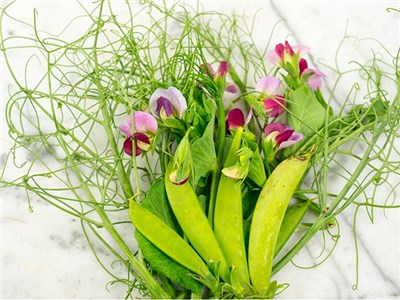
Magnolia Blossom Tendril Pea Courtesy of Baker Creek Heirloom Seeds

One of the joys about growing your own heirloom vegetables is to feel connected to the past as one learns about the rich history behind a particular plant.  Though many of us grow the “usual” vegetables, such as those found in the seed racks at big box stores, it is fun to experiment with more unusual varieties.  This year I am trying to grow several heirloom seeds from Bakers Creek Heirloom Seeds, www.rareseeds.com.  They include Magnolia Blossom Tendril Pea, Clay Cowpea, and Glass Gem Corn.  As they mature, I hope to share some of their stories.

Peas are a hardy cool season crop.  Aggie-Horticulture recommends planting them from January 18 to February or from August 23-November for a fall crop in North Texas.  The optimum ground temperature should be around 40-75 degrees F.  Peas can be grown in any good quality soil; however an addition of plenty of compost or synthetic or organic fertilizer will help produce a larger crop.  Some gardeners dampen their seeds before planting and inoculate them with live rhizobial bacteria which will improve the growth and nitrogen-fixing ability of many legumes.

Peas can be planted 1-1 ½ inches apart at a depth of about 1 inch.  Some peas are bush types while others are vining.  If a vining variety, a study trellis should be used.  I often use an upside down tomato cage tied around a bamboo stake.  However, the Magnolia Blossom Tendril Pea’s vines grew too tall for the 52 inch tomato cage and the cage fell over since it was too top-heavy.

Some common insects and diseases of peas are the pea aphid, fusarium wilt, and powdery and downy mildew.  It is recommended to rotate pea crops to a different location every 3-4 years.  If peas are harvested frequently, they will tend to produce longer.  Peas left on the vine too long tend to get starchy and the pods become tough.

The unusual pea that I tried growing this year, Magnolia Blossom Tendril Pea, is noted for having less disease problems.  Bakers Creek Seed catalogue says of it:  “An innovative typertendril snap pea bred by Dr. Alan Kapular, PhD.  Hypertendril plants make enlarged tendrils in place of some leaves.  The tendrils make for a more open habit, allowing better airflow and reducing diseases.  And they are also good to eat!  They are wonderful in salads or as a garnish, and they taste just like peas.  Sturdy 5-8 foot plants are very productive. The plants yield deliciously sweet snap peas for weeks.  Vigorous 5-8 foot vines produce bi-color flowers.  Flavor peaks just before the string turns red.  70 days.”
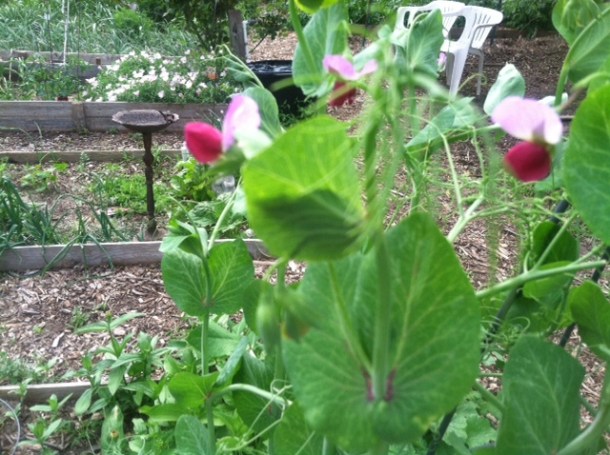
Peas growing in Carolyn’s Garden

In researching this pea, not only was its hypertendril growth interesting (though the hypertendrils do taste like peas and would make an interesting addition to a salad, one reviewer said that his children felt like they were eating hair), but I was equally fascinated by an article about Dr. Alan Kapular, PhD, who bred Magnolia Blossom Tendril Pea.

An article from Fedco Seeds  (www.fedcoseeds.com) said that as a child he was equally interested in both orchids and baseball.  He entered Yale at 16 and graduated first in a class of 1000 with his undergraduate honors thesis earning the highest grade Yale had ever bestowed.  After receiving his doctorate in molecular biology during the time that the structure of the genetic code was being discovered, he became dismayed when he felt that many of his colleagues were using their knowledge to develop lethal viruses for the US government.  To everyone’s surprise he left his job and lived in poverty on the west coast where he met his wife.  He started saving seeds because they were too poor to buy them.  Eventually he collected over 6000 seeds and started a company called Peace Seeds which was  bought out by Seeds of Change. Much of his work recently has attempted to de-hybridize hybrids to create open-pollinated varieties so the seeds can be saved and they can remain in the public domain.

Though next year I may try growing some other “unusual” vegetables, as I too found the hypertendrils to have a strange texture which was not to my liking, the flowers were quite pretty and the plant was vigorous.  Plus they certainly are a conversation piece.

Carolyn Bush

Picture by Baker Creek Seeds and Carolyn Bush
 

Ginkgo Tree Survival After a Hot Summer

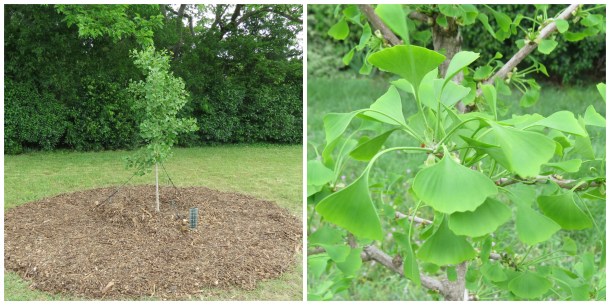
Ginkgo Tree Planted in Spring 2015 and Ginkgo Tree Close-Up of Leaves 2016

Thank you, Eric Larner, Master Gardener and Citizen Forester

Video and Pictures by Starla Willis


I would love to read this book, Ginkgo: The Tree That Time Forgot.

Written by Peter Crane and said to be quite inspiring.  If anyone has read it, please leave a comment. Here’s the review:

Perhaps the world’s most distinctive tree, ginkgo has remained stubbornly unchanged for more than two hundred million years. A living link to the age of dinosaurs, it survived the great ice ages as a relic in China, but it earned its reprieve when people first found it useful about a thousand years ago. Today ginkgo is beloved for the elegance of its leaves, prized for its edible nuts, and revered for its longevity. This engaging book tells the rich and engaging story of a tree that people saved from extinction—a story that offers hope for other botanical biographies that are still being written.

And to think, we have a specimen doing it’s best to survive in our garden!

Ann Lamb

If you need help watching this video, click here.

Pick a new landscape tree.

Gardening on a Shoestring!

Gardening on a Shoestring:

Confessions of a Frugal Gardener

Tuesday, June 6, 2017 at 11:00 am

Location:The Raincatcher’s Garden of Midway Hills

11001 Midway Road, Dallas in the Fellowship Hall

Speaker: Dallas County Master Gardener, Fran Powell.

Education Credit for Master Gardeners. Bring a friend.

This free event is open to the public.


Fran Powell comes from a family of English gardeners. Her mother instilled in her four daughters a love of the mysteries of life in the garden; from planting seeds and watching their growth to enjoying and harvesting the results.

Fran came to the USA in 1969 and to Texas in 1982. After spending seven years in Waco, she moved to the Dallas area in 1989. Two of Fran’s sisters are true English gardeners. Her younger sister has an award-winning vineyard in the southern part of England, while the eldest has a garden open to the public every year, including a meadow, which she leaves wild, many fruit trees and an enviable vegetable garden. Fran has used many of her eldest sister’s frugal methods and plans to share them with us.

What a treat—plan to come and learn from an experienced gardener and enjoy our gardens after class.

The courtyard of The Raincatcher’s Garden

Lisa Centala

Ann Lamb

Picture by Starla Willis


Plan Now to Attend the May Master Gardener Meeting and Plant Sale

Dallas County Master Gardener Association

May Meeting

 10:00am Plant Sale · 11:30am Meeting · Thursday, May 25th

Location: Midway Hills Christian Church Fellowship Hall, 11001 Midway Rd.

(West side of Midway just north of Royal Lane) Dallas 75229

Please use the south and west parking lots at Midway Hills Christian Church. The north lot is used by Dallas Cooperative Preschool parents.

 Plant and Brick Sale

Find summer-hardy plants to continue the gardening season with selections from our annual plant sale.

Honor a loved one with a brick purchase.

Cash, checks or credit cards accepted.


Program: “Fifty Shades of Green” showcasing 50 common

and rare native plants to use in the home landscape


Speaker: Ricky Linex who is a wildlife biologist for the Natural Resources Conservation Service (NRCS). He is also the author of

“Range Plants of North Central Texas, A Land User’s Guide to Their Identification, Value and Management” – a plant identification book for Texas detailing 324 various regional grasses, forbs, and woody plants.  

Book Sale 

The gift shop at Texas Discovery Gardens is the sole retail outlet in Dallas County for sales of this interesting book.  In conjunction with Mr. Linex’s presentation to DCMGA, a representative from the TDG gift shop will be present at our meeting and will sell copies of “Range Plants”.  The retail price of the book is $25.00.  All profits from the gift shop support TDG’s educational programs and mission.

Please join us for the plant sale and the monthly meeting,

which are both open to the public.


Purple Martins Have Arrived At The Raincatcher’s Garden

Deirdre starts this utube video saying “so these are the gourds where we’d really like to have a Purple Martin Colony.” She then explains the preparation and that we have been waiting two whole years for Purple Martins. No more waiting!

As of the beginning of May 2017, Purple Martins have landed at The Raincatcher’s Garden.

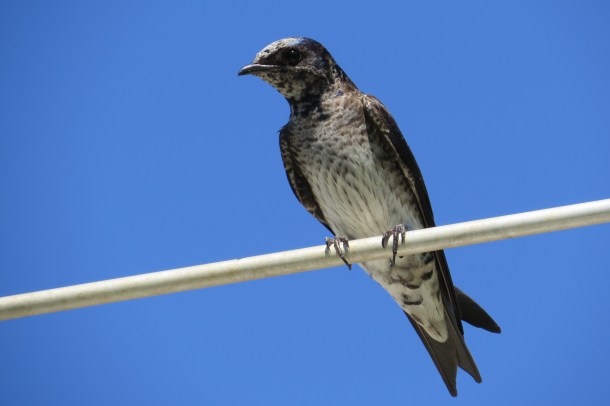
Purple Martin Close Up

Looking for friendly neighbors? Put up a Purple Martin house. It’s comparable to a miniature neighborhood in your backyard and Purple Martins chirp pleasantly and  perform aerial acrobatics to snap up flying insects.  Unfortunately, Mosquitoes only comprise as low as 3% of their diet.

At the end of the breeding season they gather in big flocks and make their way to South America.

Next year, we should see some of the same Purple Martins again!

Purple Martins At Home!

Video and Pictures by Starla Willis

If you are having trouble watching our Purple Martin Utube video, please click here.

Ann Lamb

Butterfly In My Garden

Around April 5, I caught a glimpse of a butterfly in my garden and ran out to get a closer look. I really couldn’t miss it since it had a wingspan of over 5 inches. It fluttered about my garden rue and then took off over the fence. I didn’t see any eggs just then but a week later there were tiny specks that might be larvae! By April 19, there were four “orange dog” caterpillars of the Eastern Giant Swallowtail, Papilio cresphontes. They look like bird droppings to deter predators.

Caterpillar On Rue

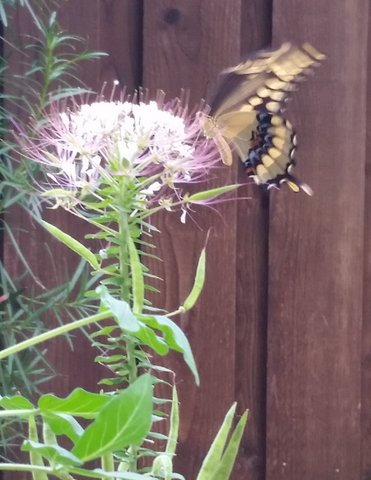
I have grown Ruta graveolens since becoming a Dallas County Master Gardener in 2006 and love its blue-green foliage and tiny yellow flowers. Along with various trees it is a host plant of the beautiful Giant Swallowtail larvae. The adults visit my garden every year but these are the first caterpillars I have seen. Photographing the adults is challenging as they are always in motion, fluttering away as they feed.

Then last fall I noticed this mating pair on my Loropetalum bush right at eye level. These are distinctive from the Eastern Black Swallowtail adult in that the and the row of large yellow spots on the dorsal (top) side meet in the middle of the wing rather than near the bottom and the ventral view is mainly yellow.

Eastern Giant Swallowtail Butterflies Mating

As of May 2, the four caterpillars have grown to over 2 inches and should pupate soon. The chrysalis stage is variable but usually takes 10–12 days. I hope to photograph at least one chrysalis and adult as it emerges. With luck they will return to my garden rue to produce another generation in the fall. Bugguide.net states they overwinter as a chrysalis.

Two Caterpillars!

Caterpillar Hosts: Trees and herbs of the citrus family (Rutaceae) including Citrus species, prickly ash (Zanthoxylum americanum), hop tree (Ptelea trifoliata), and Common Rue (Ruta graveolens).

Adult Food: Nectar from lantana, azalea, bougainvilla, bouncing Bet, dame’s rocket, goldenrod, Japanese honeysuckle, and swamp milkweed. Here’s one feeding on clammyweed last summer.


Eastern Giant Swallowtail on Clammy Weed

Grow Common Rue and you might have these interesting and beautiful garden visitors!

Susan Swinson


When Words Fail

    Probably almost all of us have had those situations where mere words alone seem to fail us.   Occasionally it is in the happy times, such as an upcoming marriage or a new home, when there are too many well-wishes that one wants to say.  However it is often in the sad, gut-wrenching times when one feels at loss for words.  At these times for gardeners, the language of symbolic herbs and flowers may be of help.

Tussie-mussies (a.k.a. tussie mussy) are symbolic bouquets of flowers and herbs.  Though often associated with the Victorian era during which the language of flowers and herbs were codified and instructions for making tussie-mussies were found in books such as Godey’s Ladies Book, the actual history of the tussie-mussie goes back much further than Queen Victoria’s era.  In fact, due to the lack of hygiene and sanitation, the use of nosegays to mask odors has been traced to medieval times and can be found in several cultures such as Greece, Turkey, and the Aztecs of Central and South America.  Because the meanings of herbs and flowers were derived from various cultures, some herbs and flowers took on widely divergent meanings, sometimes even opposite meanings.  For example, according to an article in Mother Earth Living, the inclusion of basil in a tussie-mussie meant “best wishes” in Greece, “hatred” in Italy, and “sacred” in India.  However a few herbs and flowers have retained their same meaning throughout the world.  Rosemary is an herb that commonly means “remembrance.”

In compiling a vocabulary of symbolic herbs and flowers, most people start with lists of herbs and flowers and their meanings found in books such as Tussie-Mussies: The Victorian Art of Expressing Yourself in the Language of Flowers by Geraldine A. Laufer and The Illuminated Language of Flowers by Jean Marsh.  Though it helps to have a wide variety of herbs and flowers available, even a very small bouquet of mixed flowers can say “love.”  As opposed to a typical large bouquet, a tussie-mussie is normally just the size of a nosegay.  Tussie-mussies can be presented in a small vase or, if you really want to get fancy and be historically-correct, antique tussie-mussie holders can be found on Ebay. Just be sure to include a card that explains the meaning behind each herb or flower.

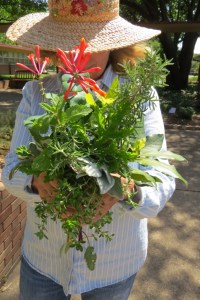
Flowers and herbs gathered for a tussie-mussie

Over the years I have made tussie-mussies for friends who have new jobs, weddings, and babies.  I have also found the language of flowers to be especially appropriate in those sad times, such as a bouquet that was given to a friend who was placed on hospice.  That tussie-mussie  (composed of geranium for friendship, Lamb’s Ear for kindness, thyme for courage, rosemary for remembrance, sage for wisdom, bay for peace, peppermint for warmth of feeling, honeysuckle for gentleness,  oak for strength, and, of course, flowers for love seemed to say it all.

Carolyn Bush

Picture by Starla Willis

Tussie- mussies by some of our school children here.

Have you ever seen a butterfly laying an egg?

Thanks to our own intrepid photographer, Starla, for capturing a rare picture of a butterfly laying an egg.

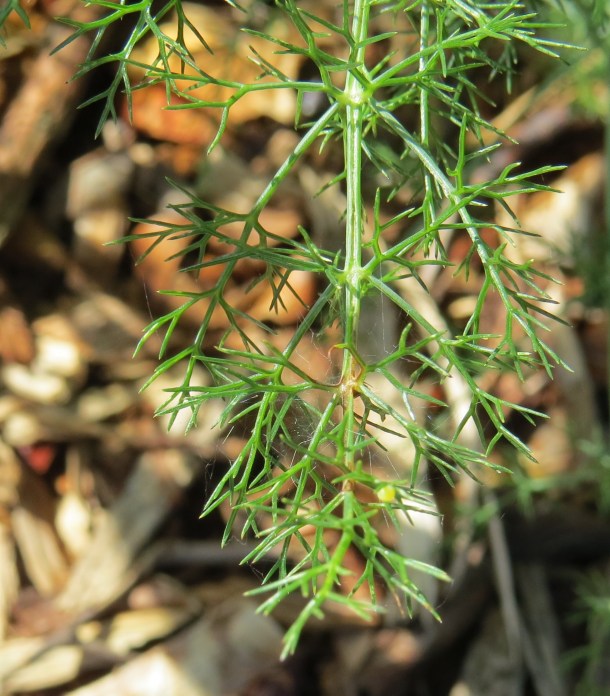
Black swallowtail butterfly laying an egg on fennel

And here’s the egg-

Look for the creamy yellow egg located on the lower right of the picture

*Eggs are laid singly on the host plants—usually on new foliage and occasionally on flowers. Development time is variable depending on temperature and host plant species, but generally the egg stage lasts four to nine days, the larval stage 10–30 days, and the pupal stage nine to 18 days.

Fascinating!

Ann Lamb

Picture by Starla Willis

*http://entnemdept.ufl.edu/creatures/bfly/bfly2/eastern_black_swallowtail.htm

Study up on our butterfly garden by looking at the right hand side of the front page of Dallas Garden Buzz under Raincatcher’s Resources for a list of hummingbird and butterfly plants or type butterfly in our search box for a host of articles on butterflies.


Arugula Has Its Day

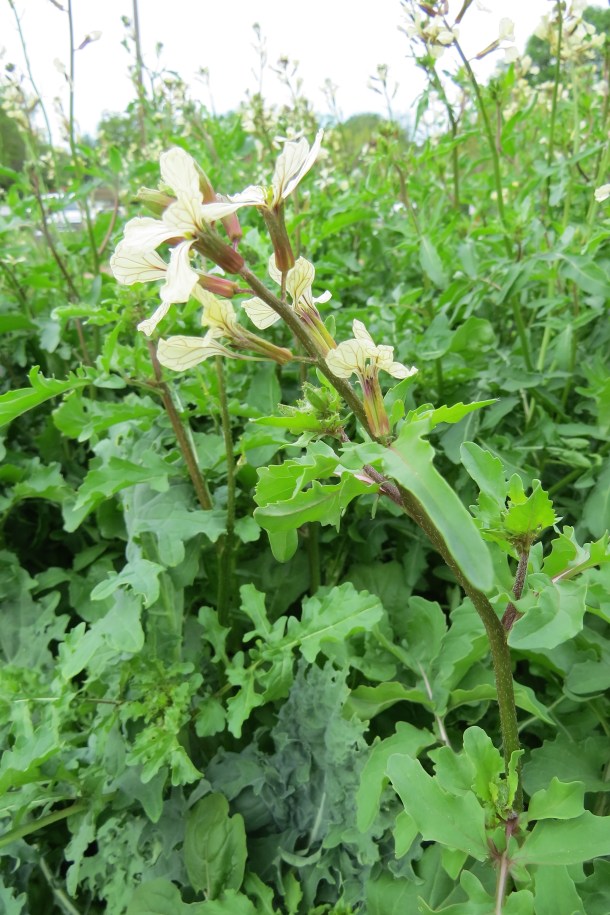
Tuesday at Raincatcher’s we noticed that the arugula was bolting. Lovely little white blossoms crowned the tops of all the arugula plants in our raised bed.  The bees couldn’t have been happier.

However, it also reminded us that the time had come for one final harvest. Carefully we clipped our way through the plants with bees buzzing all around us.  A very generous amount of arugula, at least 6 pots full, was harvested and shared with our volunteers.

Here is a delightful recipe for using fresh, peppery arugula brought in straight from the garden. A nice addition to the salad would be 1 bunch fresh roasted beets.  Be creative, arugula supports a variety of many different ingredients.


Arugula Growing at The Raincatcher’s Garden

Arugula Salad

Ingredients:

¼ cup sliced natural almonds

3 tablespoons olive oil

1 tablespoon minced shallot

1 tablespoon fresh lemon juice

1 ½ tablespoons red-wine vinegar

¼ teaspoon sugar

½ teaspoon salt

3 cups baby arugula (about 3 ounces)

3 or 4 radishes (thinly sliced)

Directions:

  1. Cook almonds in oil in a small skillet over moderate heat, stirring occasionally until pale golden. Cool almonds in oil, (nuts will get darker as they cool). Transfer almonds with a slotted spoon to a small bowl and season with salt.
  2. Stir together shallot, lemon juice, vinegar, sugar, salt and oil from almonds in a large bowl.
  3. Using a mandoline or very sharp knife, thinly slice radishes.
  4. Combine salad ingredients in a large bowl. Drizzle dressing over the top and toss well to coat the leaves.

Yield: 4 servings

Note: Freshly “pulled” radishes were added to the salad, as well.


Linda Alexander

Find out more about arugula here .

And here’s another way to use harvested arugula.

April Gardening, 2017

Making our raised beds even better!

Dallas County Master Gardeners at The Raincatcher’s Garden of Midway Hills

Upcoming Educational Events-Bring your friends and neighbors:

Saturday, April 8th , Spring Lawn Care by Stephen Hudkins and Jeff Raska at the Extension office, 10am until noon. Call the Master Gardener Help Desk for more information-214.904.3053.

Address: 10056 Marsh Ln Ste 101B, Dallas, TX 75229.

Saturday, April 15th, Updating the Home Landscape for Sun and Shade by Brad Sandy at Raincatcher’s, 10 until noon.

Address: 11001 Midway Road, Dallas, Texas, 75229. 

Ann Lamb

Picture by Starla Willis