Category Archives: Summer

Okra Pilau For Dinner Tonight

I am making this okra recipe tonight!  Last summer I let you know of my obsession  with okra. For an okra review: click here.
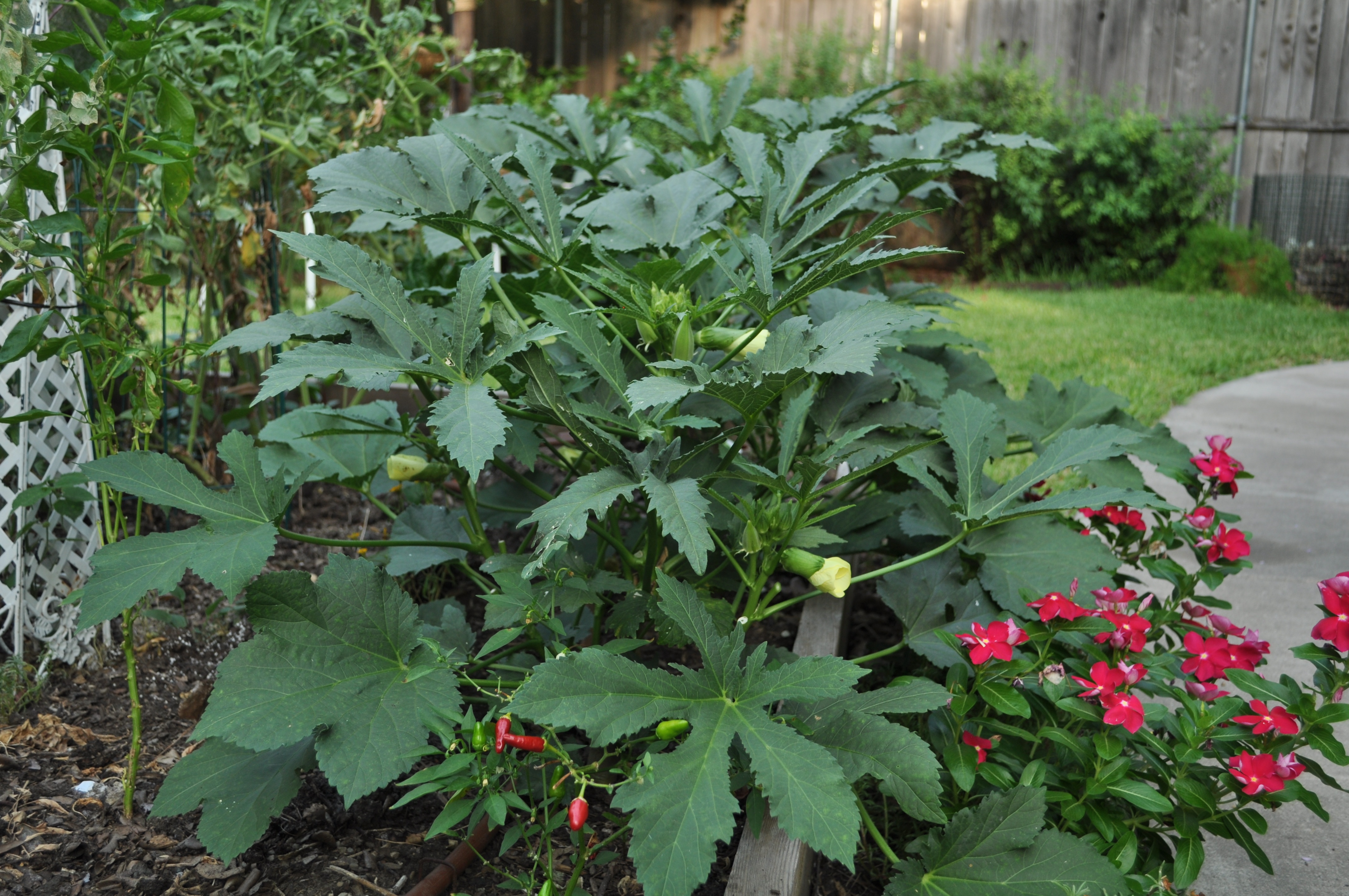
Green Fingers Okra in a Dallas Garden

Okra Pilau

Yield: 4 servings

8 bacon slices, diced
11/2 cups sliced fresh okra*
1 large onion, chopped
1 green bell pepper, chopped
11/2 cups uncooked long-grain rice
1/2 teaspoon salt
1/4 teaspoon pepper
2 cups water or chicken stock

Cook bacon in a large skillet until crisp; remove bacon, reserving 2 tablespoons drippings in skillet.

Sauté okra, onion, and bell pepper in hot drippings over medium-high heat 5 minutes or until tender. Stir in rice and next 3 ingredients; bring to a boil. Cover, reduce heat, and simmer 20 minutes or until water is absorbed and rice is tender. Remove from heat; stir in bacon. Let stand 5 minutes.

You can use any variety of okra (preferably from your garden) for this recipe that Tim says will make okra lovers of us all.

Red Velvet Okra will be in my skillet tonight.  I love it’s color even though the okra turns green when cooked.
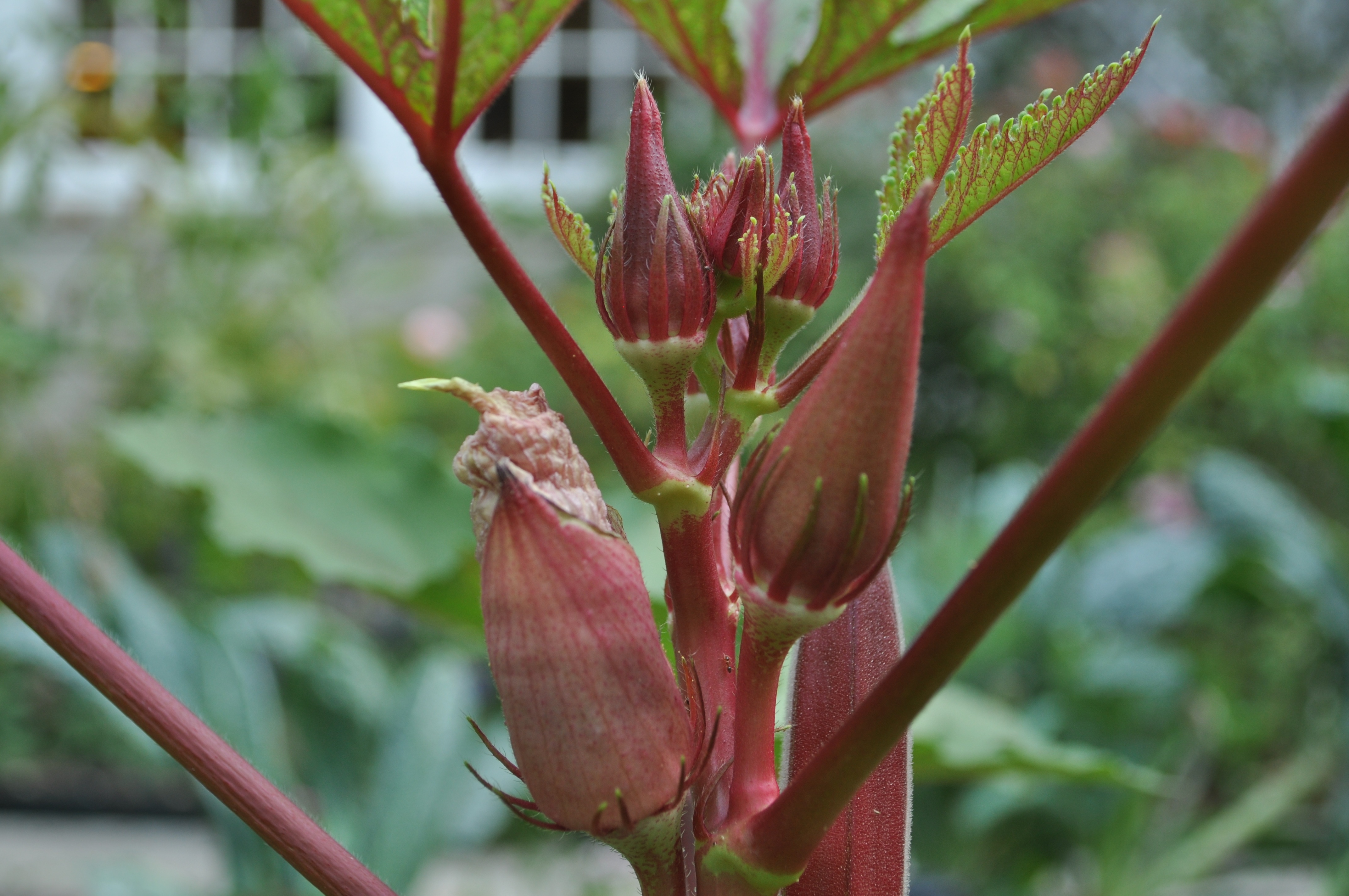
Red Burgundy Okra, Dallas Garden BuzzYou can’t eat Okra leaves but how lovely they are to have in your garden. Harvesting Okra every day requires your careful attention and looking in and around the whole plant and under every leaf to find Okra that may be hiding.  if you let it go an extra day, you end up with giant Okra good for drying and seed saving but not much else.
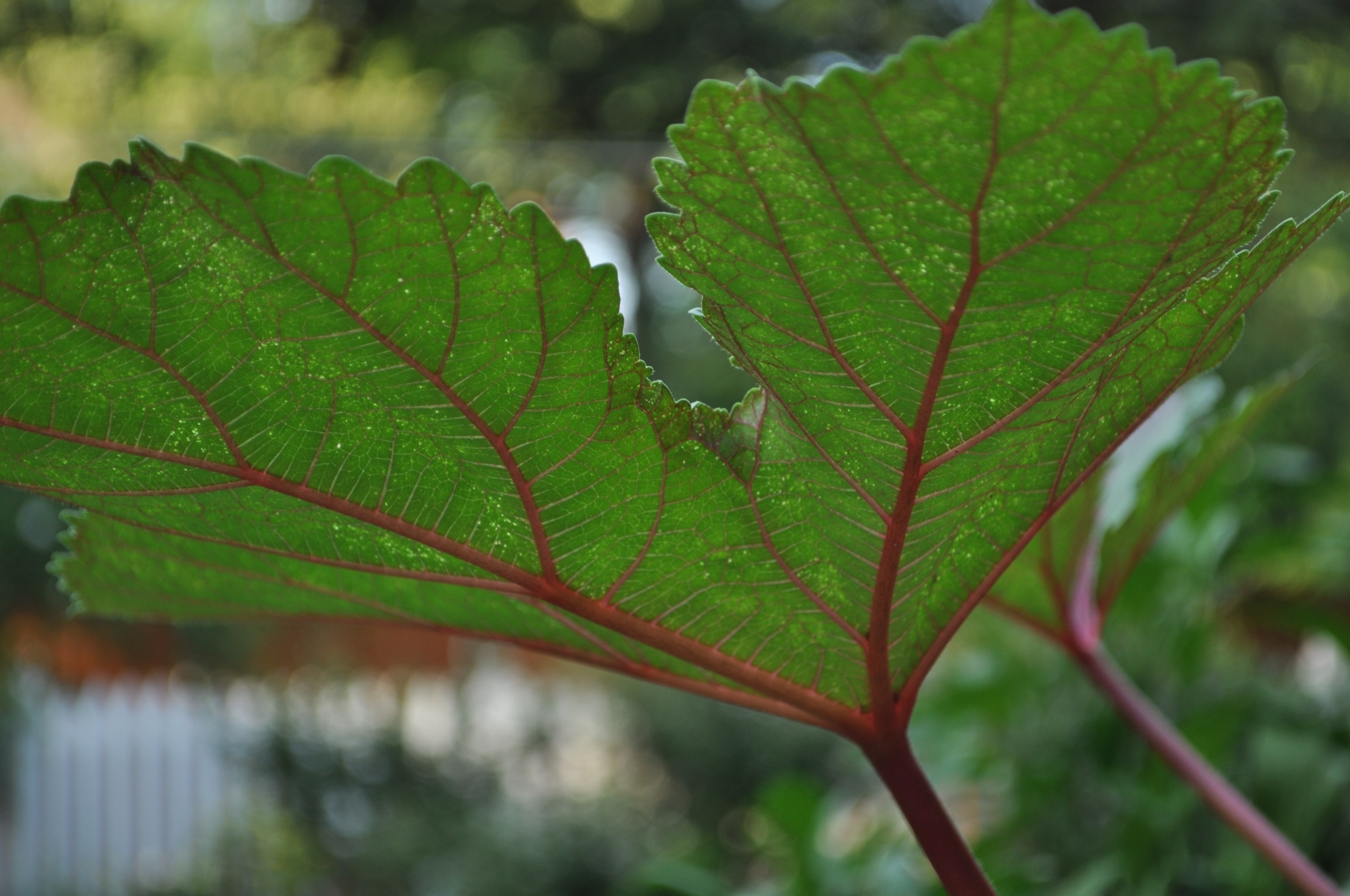
Okra Leaf, Dallas Garden Buzz

For the healthy benefits of okra including a hair rinse recipe, read this.

Ok now, all this about Okra is persuading me to get out in the garden and start picking.  Hope you are, too.

Ann

Rudbeckia Nitida ‘ Herbstonne’

Dallas County Master Gardeners and our visitors have been admiring a statuesque green-eyed coneflower in our garden all through July. And why shouldn’t they? Rudbeckia Nitida ‘Herbstonne’ is no slouch. It stands 4 feet tall featuring large daisy like flowers  that surround  a green cone. Even its foliage is arresting with rich green, deeply cut leaves at its base. Stunning!

Large Coneflower at the Demonstration GardenWith a good deadheading after the first bloom, it will flower all through the fall.

Looking up Through Rudbeckia HerbstonneStand and gaze at it, after  finishing garden chores, of course. You may be in line with the bees and butterflies who adore it.

Another View of Rudbeckia HerbstonneThis perennial appreciates  full sun and well drained soil in a Water Wise Garden.

Ann

Princess Caroline In Our Dallas Garden

Grasses Planted June, 2013, 2311 Joe Field Road, Dallas, Texas

June 18, 2013

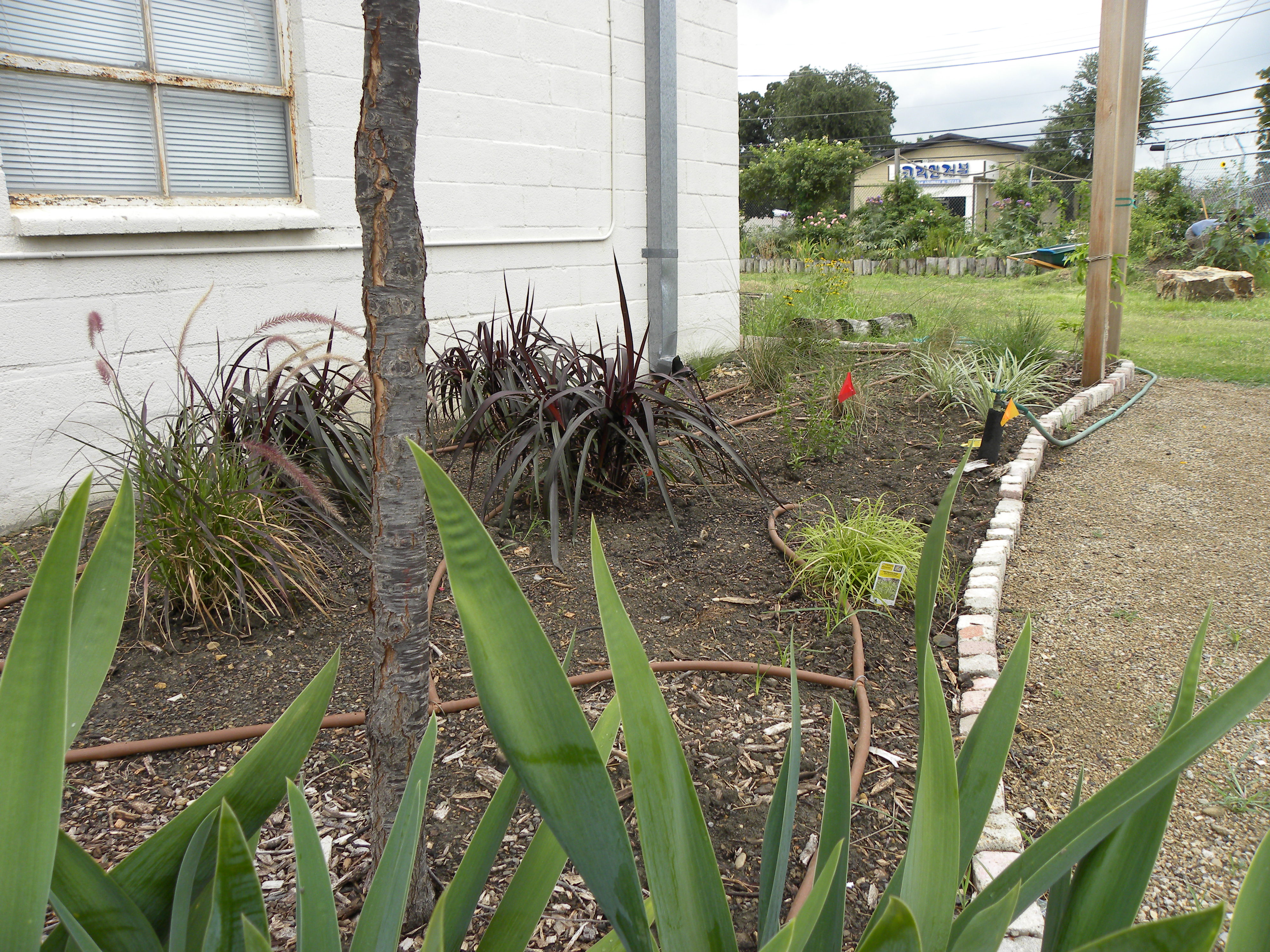
In mid-June we  planted ornamental grasses between the arbor and the Mexican plum tree:

  • Pennisetum purpureum (Purple Fountain Grass)
  •  P. alopecuroides ‘Hamelin’ (Dwarf Fountain Grass)
  •  Muhlenbergia capillaris (Pink Muhly Grass)
  • variegated Liriope
  •  Princess Caroline, a Pennisetum hybrid, our favorite. 

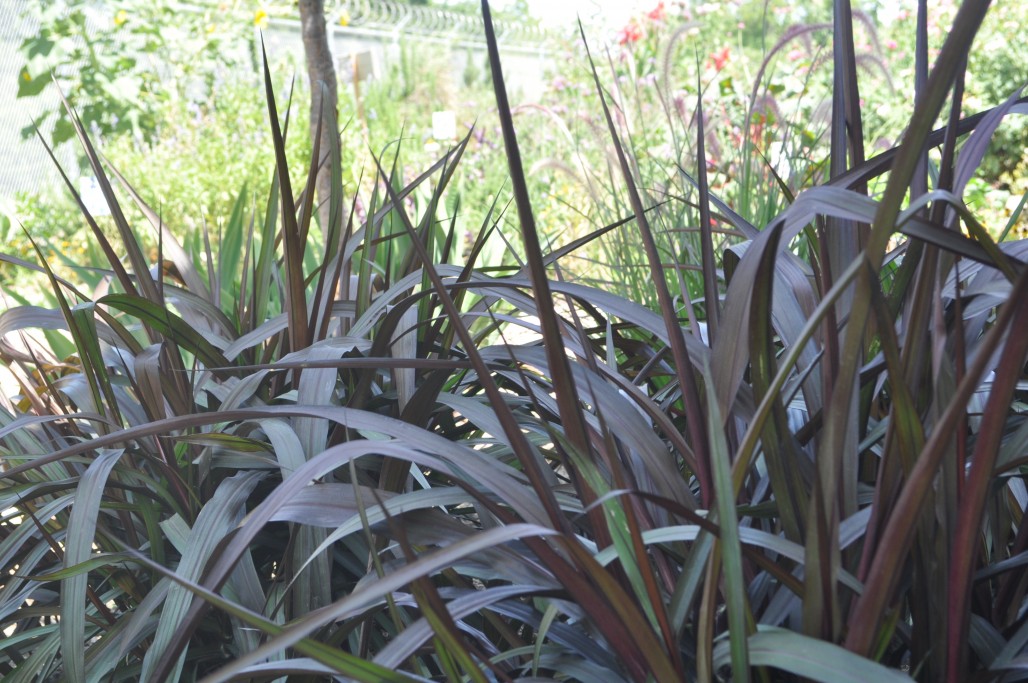
We planted 3 1-gallon size Princess Carolines on 3 foot centers. The foliage is a lush purple with leaves that are wider than that of Purple Fountain Grass. These plants are filling in very quickly despite the heat and drought early in July. This welcome rain should really give them a growth spurt.

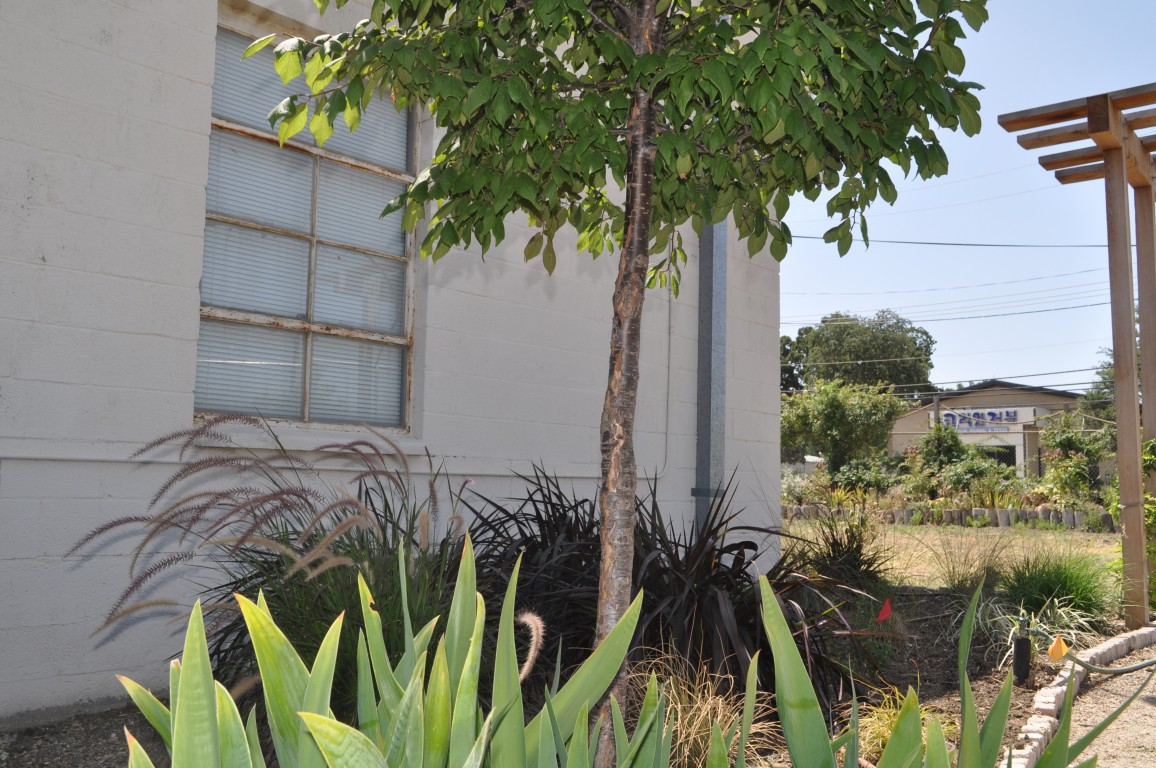
Same Area After One Month's Growth

July 9, 2013

This area was full of weeds, dallisgrass and nutsedge when we began to prepare it in 2012. Mulching with newspaper/shredded tree trimmings took care of most weeds; dallisgrass and nutsedge required hand digging for removal. We amended native soil with expanded shale and compost during the winter. Spring rain and warmer temps bought germination of weed seeds as well as the beautiful poppies and larkspur you’ve seen in previous posts. Since planting the new grasses, drip irrigation is now in place and weeding continues each week, especially to root out residual nutsedge. At our next opportunity, adding a 3” layer of shredded tree trimming mulch should finish this area off nicely.

Close Up View of Princess Caroline Grass

We think you will like this ornamental grass as much as we do!

To read more about  Pennisetum purpureum ‘Princess Caroline’ click here!

Susan S

Night Walks

 In Dallas, our afternoons are best spent inside under a cooling fan.  Outside, the June sun sears our gardens.  I find myself planting Mexican sunflower outside my window to catch glimpses of its brilliant orange flowers through the glass. 

But summer gives us a delightful hour to enjoy the garden.  The sun, spent from its day, sinks to the horizon, and dusky twilight beacons us to leave the dinner dishes in the sink and treat ourselves to time outside.  A breeze cools us, drifting up from the creek below the hill.  Colors of the flowers are richer without the bleaching sun’s rays.  Tomatoes have soaked up the sweetness of the day and wait to be picked and nestled in the tucked edge of a t-shirt. 

The just opened George Bush Library in Dallas is surrounded by a lovely landscape of Texas native plants.  Ann photographed this coneflower and the summer moon on the evening of the summer solstice, the longest day of the year. 

Purple Coneflower at The George W. Bush Library

 Elizabeth

Picture by Ann

Vitex agnus castus

The beautiful  blue blooms of the Vitex tree are swaying in our summer breezes.

Vitex or Chaste Tree

Yesterday I visited the Dallas Arboretum and took a walk  under a lane of  fragrant Vitex aka Chaste Tree located at the back of the garden along the shores of White Rock Lake.   The snarly branches of  blue blooming Vitex  with the  yellow St John’s Wort planted at its feet almost made me swoon!Vitex Trees at the Dallas Arboreteum

Once established, Vitex is a drought tolerant tree and delight to bees, butterflies, and hummingbirds.   Shear it back after every bloom cycle to keep up the maximum flowering production  By doing this, you can get three bloom periods every summer. Texas A&M agrees!

It will also need a good shaping in winter months.  Some gardeners  cut it to the ground every year to keep it shrub size. At our garden  we have let it  grow into a 15 foot tree.

*Here are some different ways to use chaste tree in the landscape:

1. As a single specimen in the lawn (See ours at The Demonstration Garden)

2. In a row along a property line or a driveway

3. Limbed-up in a border with lower plants growing beneath it (As seen at The Dallas Arboretum)

4. As a small patio tree ( I have also seen it grown as a topiary)

Ann

*List adapted from Grumpy Gardener of Southern Living

School In The Garden

A s summer fades away. here’s a look at some of our crops and more reasons to have school outside in our learning center at the Earth-Kind® WaterWise Demonstration Garden.

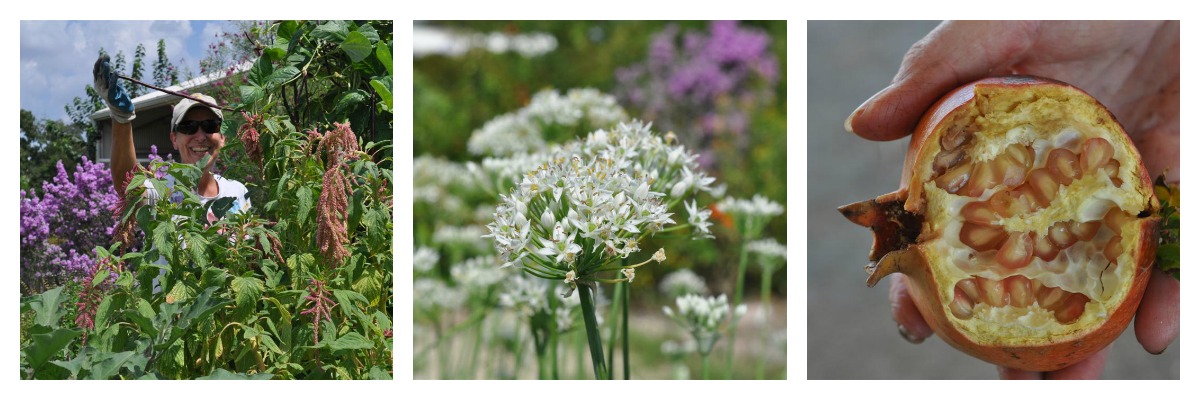
Chinese Red Yardlong Noodle Beans, Garlic Chives, Pomegranate

 Chinese Red Yardlong Noodle Beans and Amaranth Love Lies Bleeding

We are growing these two exotic edibles at the Demonstration Garden to learn more about them ourselves. In our first picture Cindy is stretching out the yardlong bean and the amaranth is blooming with cascading ropes of flowers in front of it.

 To find out how to cook the yardlong noodle beans read Garden Betty.  

Amaranth aka, Love Lies Bleeding, loves the heat and does not need much water. The leaves and seeds are highly nutritious.  Its creepy name refers to its use in the middle ages to stop bleeding.  A whole social studies unit could be written about Amaranth and the uses of it around the world today and historically.  Our garden setting would be the perfect place to teach this!

Garlic Chives  Plop the ornamental seeds heads into your salad along with the chopped up  stems or leave them so you can gather their seeds.

 Pomegranate  We grow the variety, ‘Wonderful’, and it started producing for us the summer after we planted it in 2009.  It will become a multi-trunked small to mid-size tree .  We have an orchard in the planning stages with  Pomegranate trees and other Dallas oriented fruit trees to be planted and more school lessons to be taught!

Ann

Cypress Vine

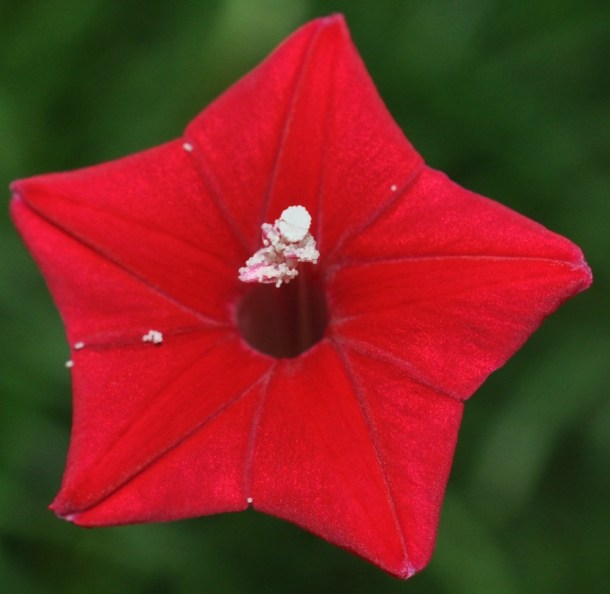
Cypress Vine Flower

When it comes to flowers, I like to get up close and personal.

I love to stare into them and what could be more rewarding than looking into the five point star of the cypress vine flower?  The bright red bloom also attracts hummingbirds who love to dive into the little white throat of its flower for nectar.

The fern like foliage also draws me to cypress vine or Ipomoea quamoclit.  It is bright green and buoyantly drapes around arbors, poles, columns, pergolas, or anything else you give it to climb. We have grown it in our Demonstration Garden on a trellis in a semi- shaded area.

Cypress Vine Draped At Ann's House With Althea In Background

This annual vine was grown in Virginia gardens in the eighteenth century.  Thomas Jefferson sent seeds to Monticello and it grows in their historic re-creation of Jefferson’s garden today.

Save the seeds of cypress vine when the pods become papery and you can hear the seeds rattle or just let them drop to the ground for a return of this welcome vine.

Ann

PS: Leave a comment if you are interested in a gift of cypress vine seeds from Dallas Garden Buzz.  We can mail  for planting next spring as long as our supply of seeds lasts!

August Blooms In Dallas

The Earth-Kind® WaterWise Demonstration Garden is blooming even through August.

Fourteen out of twenty days in August have been over 100°.  To maximize our water usage, we have set up drip irrigation in all our beds and we water this garden and others  with rainwater harvested from our large shed with 5,000 square feet of metal roofing.  Usually we don’t get enough rain for our drip system in the latter part of summer and have to revert to city water, but last week we had about 4 inches of rain at the garden!  What didn’t go into our two 2500 gallon cisterns swished into our rain garden for more capture. 

Most of these pictures were taken from our newly planted Color Wheel garden.  Link back to the * July Bloom report so that you also know what was blooming in August in the rest of our gardens. Combine these plant lists to keep your garden flourishing through the summer.

Read the list of blooms clockwise from the  large, top left picture.

Flowers Blooming in August Dallas Gardens

1. Pink Gomphrena and Cuphea 2. Gomphrena Fireworks, Gomphrena globosa ‘Fireworks’ 3. Periwinkle-Cora Vinca blackberry, Catharanthus roseus 4. Hot Pink Moss Rose Portulaca olerancea ‘Samba Hot Pink’  5. Jewels of Opar, Talinum paniculatum 6. Moss Rose, Portulaca olerancea 7. Trailing Lantana, Lantana montevidensis 8. Yellow Zinnia

Flowers Blooming In Dallas August Gardens

1. White Lantana and white coneflower 2. Orange Zinnia 3. Mexican Petunia-Lavendar, Ruellia brittonia 4. Lafter, Buck Rose 5. Mexican Bush Sage, Salvia leucantha 6. Orange Lantana, Lantana horrida (camara) 7. Bell Flower,  Campanula rotundifolia  8. Gregg’s Mist Flower, Eupatorium greggii

Flowers For Dallas Summer Gardens

1. Salvia coccineas with  Cora Vinca 2. Pink gomphrena, Gomphreana globosa 3.                       4. Red Gomphrena, Gomphrena aageana ‘Strawberry Fields’ 5. Summer Poinsettia or Mexican Fire Plant, Euphorbia cyathophora 7. Sunflower, Helianthus annus

Flowers Blooming In August In Dallas

1. Mexican Honeysuckle, Justica spicigera 2. Pearlie Mae, Buck Rose 3. Onion Chives 4. Maggie 5. Althea, Hibiscus syriacus ‘Helene’ 6. Esperanza or Yellow Bells, Tecoma stans 7. Canna-dwarf-Tropical Series 8. Quietness, Buck Rose

*Refer to the July Blooms report . Only  Phlox #11,Autumn Sage #16, and Salvia guaranatica#21 are taking a break and not blooming in August.  All the rest on the July list are giving us that last bit of summer pleasure.

Ann

Cinnamon Basil Swirl Cake

Cinnamon Basil Cake Swirl Cake

CAKE

2 tablespoons minced cinnamon basil leaves

1 ½ cups all-purpose flour

1 teaspoon baking powder

1/8 teaspoon coarse salt

6 tablespoons unsalted butter, softened

¾ cup granulated sugar

2 eggs

2 teaspoons vanilla extract

1 cup sour cream

1 teaspoon baking soda 

SWIRL

1/3 cup granulated sugar

2 tablespoons (packed) light brown sugar

2 teaspoons ground cinnamon 

1.  Preheat oven to 350 degrees.  Grease a 10-inch springform pan. 

2.  In a small bowl, whisk together cinnamon basil leaves, flour, baking p0wder, and salt; set aside. 

3.  In a large bowl, beat butter and sugar on high speed until light and fluffy.  Beat in eggs, 1 at a time until fluffy and well blended.  Beat in vanilla. 

4.  In a small bowl, whisk together sour cream and baking soda until smooth.  With mixer on low speed, beat half the flour mixture into the butter mixture just until blended.  Beat in sour cream mixture, then remaining flour, beating just until blended.  Spread into prepared pan. 

5.  Make swirl:  In a small bowl, whisk together granulated sugar, brown sugar and cinnamon.  Sprinkle evenly over batter; swirl into batter with the tip of a knife, being careful not to touch the knife to base of the pan. 

6.  Bake cake for 40 to 45 minutes, until a toothpick inserted in the center comes out clean.  Cool completely (or nearly so) on a wire rack before removing pan side and slicing.  Serve warm or at room temperature. 

Yield:  8 to 12 servings

Linda

Cinnamon Basil Chicken

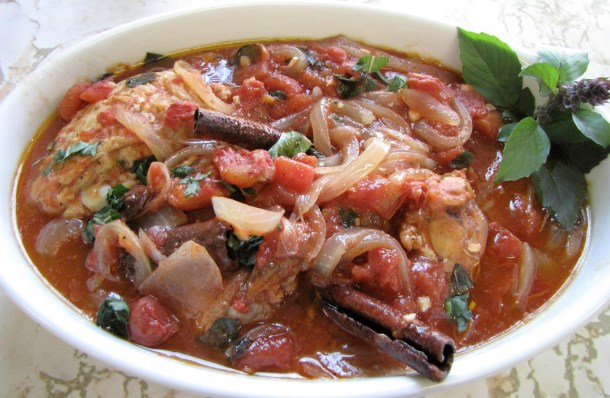
Cinnamon Basil Chicken Garnished With Cinnamon And Basil 

1 frying chicken, about 4 ½ pounds, cut into 8 pieces with the backbone

Kosher salt and freshly ground black pepper

2 tablespoons olive oil

1 large onion, halved and sliced from root end to top

2 cloves garlic, finely chopped

1 ½ tablespoons finely chopped fresh ginger

One (28-ounce) can diced tomatoes, drained of half the liquid

Three 3-inch cinnamon sticks, preferably “true” cinnamon

3 star anise pods

1 ½ cups torn  leaves cinnamon basil, or sweet basil,  gently  packed

Season all sides of the chicken with salt and pepper.  Heat the olive oil over medium-high heat in a large skillet with a tight-fitting lid.  When the pan is hot, put the chicken pieces in the pan, skin side down, and cook uncovered until the skin turns deep golden brown, at least 6 to 8 minutes.  Turn the chicken and cook another 2 to 3 minutes on the other side.  Take the chicken out of the pan and pile it on a platter.

Reduce the heat to medium and add the onion, garlic, and ginger to the pan.  Stir them around for 3 to 4 minutes, or until they soften and begin to brown.  Add the tomatoes, cinnamon sticks, star anise, and 1 teaspoon kosher salt.  Put the chicken back in the pan.  When the tomatoes come to a simmer, cover the pan, turn the heat to very low, and cook for about 50 minutes, or until there is little resistance when you pierce a thigh with the tip of a paring knife.  If the sauce seems watery, turn the heat to high and boil it uncovered until it thickens.  Scatter in the basil as you toss the chicken in the sauce with tongs.  Serve right away. 

Yield:  4 servings

Adapted from The Herbal Kitchen by Jerry Traunfeld

Linda