It’s a good time to think about the pollinator area at the Raincatcher’s garden.
First this area is just a part of the large garden—the whole garden attracts and supports pollinators.
So why a designated pollinator area? This area provides an opportunity to encourage visitors to think about the role the garden plays in supporting bees and butterflies.
As visitors see the interaction of insects and plants, information becomes more relevant and hopefully of more lasting benefit. The role the garden plays in the support of these amazing creatures comes alive when bees are seen carrying pollen or butterflies hover close to their host plant.
Raincatchers spreads the word—every garden can and should—make a difference—when thought and care goes into it.
So what is the first thing to think about when making a garden pollinator friendly? The old rule—First—do no harm! Chemical pesticides cannot be used—reducing use is not an option; butterflies and bees are insects so to try to attract them and then kill them is simply not to be considered. Just because it says organic—doesn’t mean its ok, some organic products can be used carefully—very carefully!
Its complicated—of course it is—but a garden is plants and in the pollinator area the aim is to grow as wide a variety of plants as possible—aiming for as long a bloom time as possible but also the aim is to have a variety in size and form so bees and butterflies large and small and even tiny can find something that appeals to them.
Butterflies are the stars of any pollinator area and to support them their life cycle must be considered. Flowers are essential for adults but to really help there must also be the host plants or plants where eggs are laid and larvae grow. For most butterflies the plant is a specific one cannot be changed. Without the correct host plant—no eggs, no larvae, and no new butterflies.
There are many plants at Raincatcher’s but lets look at a few that would make great choices for a new pollinator friendly garden.
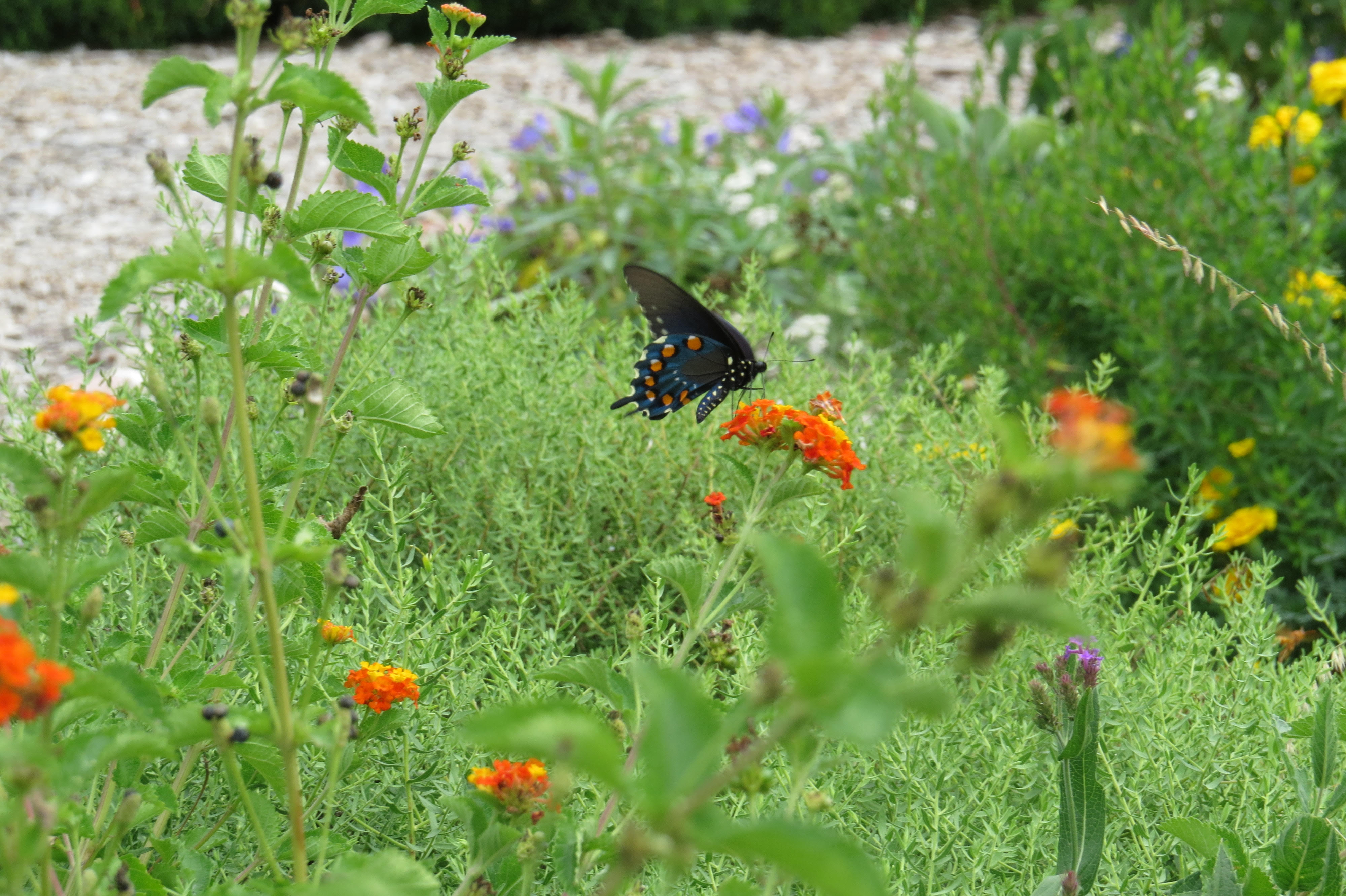
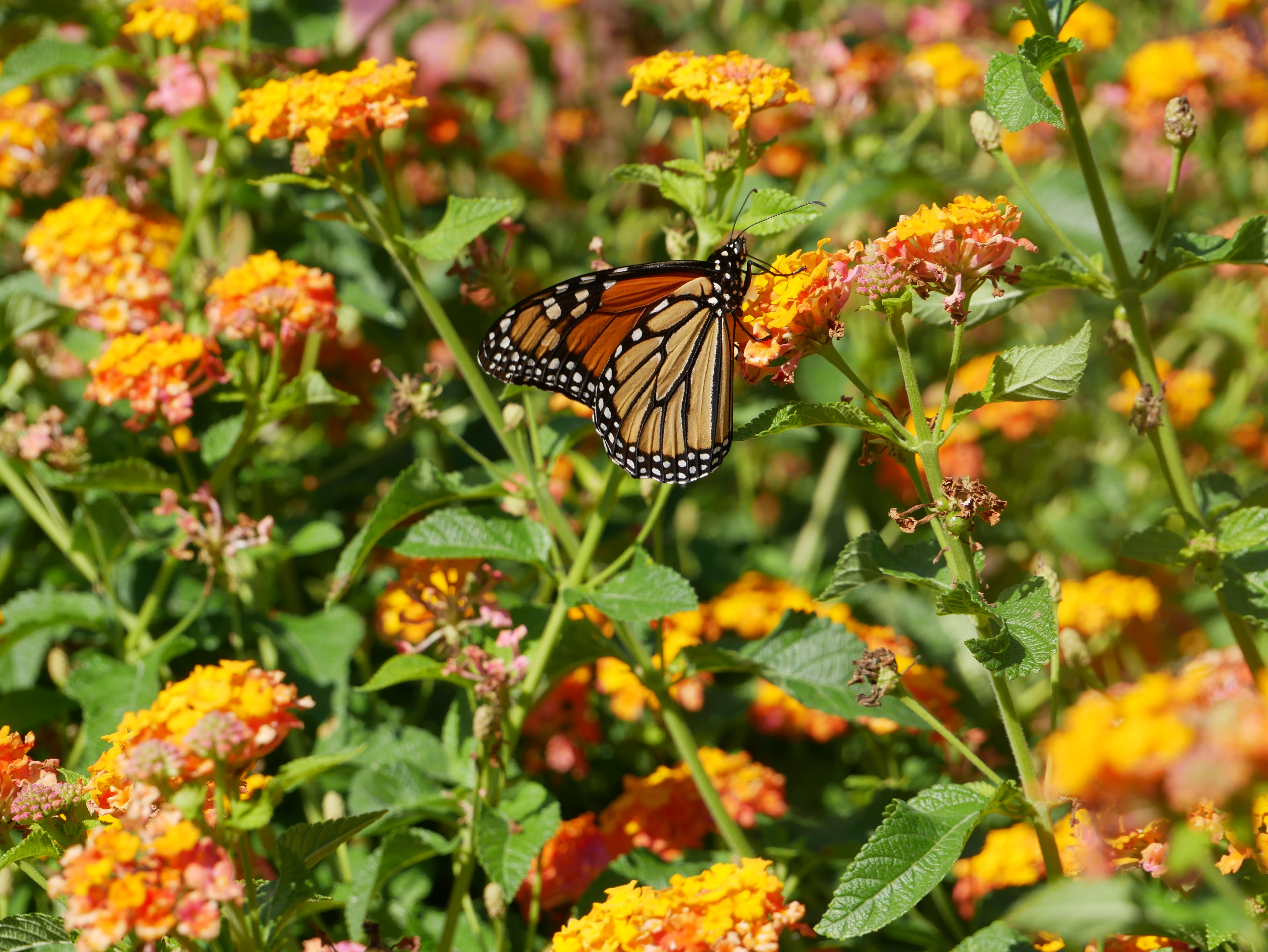
Black swallowtail butterfly enjoying lantanaMonarch butterfly and lantanaGulf Fritillary butterfly and lantana
For a great many years a huge lantana has been a garden feature. Rightly so everyone seems to love it. Its literally a magnet for butterflies large and small –maybe it’s the “landing pad” flower form? Bees love it too so it’s a winner.
Salvias—it doesn’t seem possible to have too many. The large ‘indigo spires’ and the ‘amistad’ attract bumble bees and other large bees take time to watch them as they climb into the individual flowers—don’t worry—they will tell you with loud buzzing when you take that step closer.
Two small trees—Bee brush and Texas kidneywood attract honey bees and a variety of small and even tiny native bees—take time to watch and breath in while close the flowers smell lovely.
Coneflowers—they are popular with everyone butterflies and honey bees as well as native bees visit. Keep them deadheaded and they bloom for a long time which is so valuable.
Now think about some host plants.
Pipevine is growing under the vitex tree. Its just really getting a good start now and must grow more. It’s the host plant for the beautiful pipevine swallowtail. Its growing well but there isn’t enough those larvae eat an amazing amount and its important to have lots. This is true of all the host plants grow multiple plants . It isn’t a good situation to have larvae run out of food before they are grown.
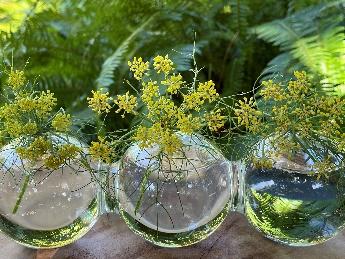
Common fennel this is a host plant for eastern black swallowtails—we have had some larvae on this plant. Dill and parsley are great too but fennel is wonderful for standing up better in summer.
Prickly ash—this is a large tree it’s a host plant for giant swallowtails.
We have small candlestick trees growing, (Senna alata) a host plant for sulfurs.
African MilkweedSenna alata, candlestick stick tree
We also have baby African milkweeds growing.
These are just a few of the plants growing. Come and visit the garden to see them. There will be garden workers on Tuesday mornings but you are welcome to visit any time.
But it can’t stop with a visit. Every garden counts—and that means yours—think how you can make it more pollinator friendly.
Pollinators are depending on us—just like we are depending on them!
Susan Thornbury, Dallas County Master Gardener Class of 2008
Starla Willis -Pictures, Dallas County Master Gardener Class of 2009
I have given up thinking about tomatoes in terms of their life cycle. Instead I look at it this way; each stage is an ongoing disaster until we shut down the whole operation in July because they will no longer set fruit.
The life of a tomato is a progression through fungal disease, wilt, blight, and infestations of mites and hornworms. We anticipate these events and do our best to prevent them but around June you can easily find yourself, as I did, staring at hornworms the size of my index finger. Owing to their coloring, hornworms are perfectly camouflaged until they have defoliated their habitat, i.e. our tomato plants. (We sentenced the hornworms to community service at our host organization’s preschool so the children could observe their transformation into sphinx moths.)
Don’t forget that while you are dealing with disease and pests, you must also be aware of your tomato’s changing fertilizer and watering needs. Decrease the nitrogen when they start to bloom. Keep your tomatoes watered consistently and while doing so consult your crystal ball for the next unexpected rain that will cause them to split.
Are tomatoes the jerkiest plant – making us work much harder than any plant should expect? Or, are they good for us in the sense that taking care of something other than ourselves is good therapy?
The tomatoes harvested so far this year have redeemed themselves by joining the peppers in family packs donated to North Dallas Shared Ministries.
Beverly Allen, Dallas County Master Gardener Class of 2018
After many years of service as a storage facility for both the church and garden, the old red shed was in a state of disrepair. Rotted floors, bulging sides, leaking roof and collapsing doors made it unsafe for volunteers to use. Watching as it was torn down gave us a sigh of relief.
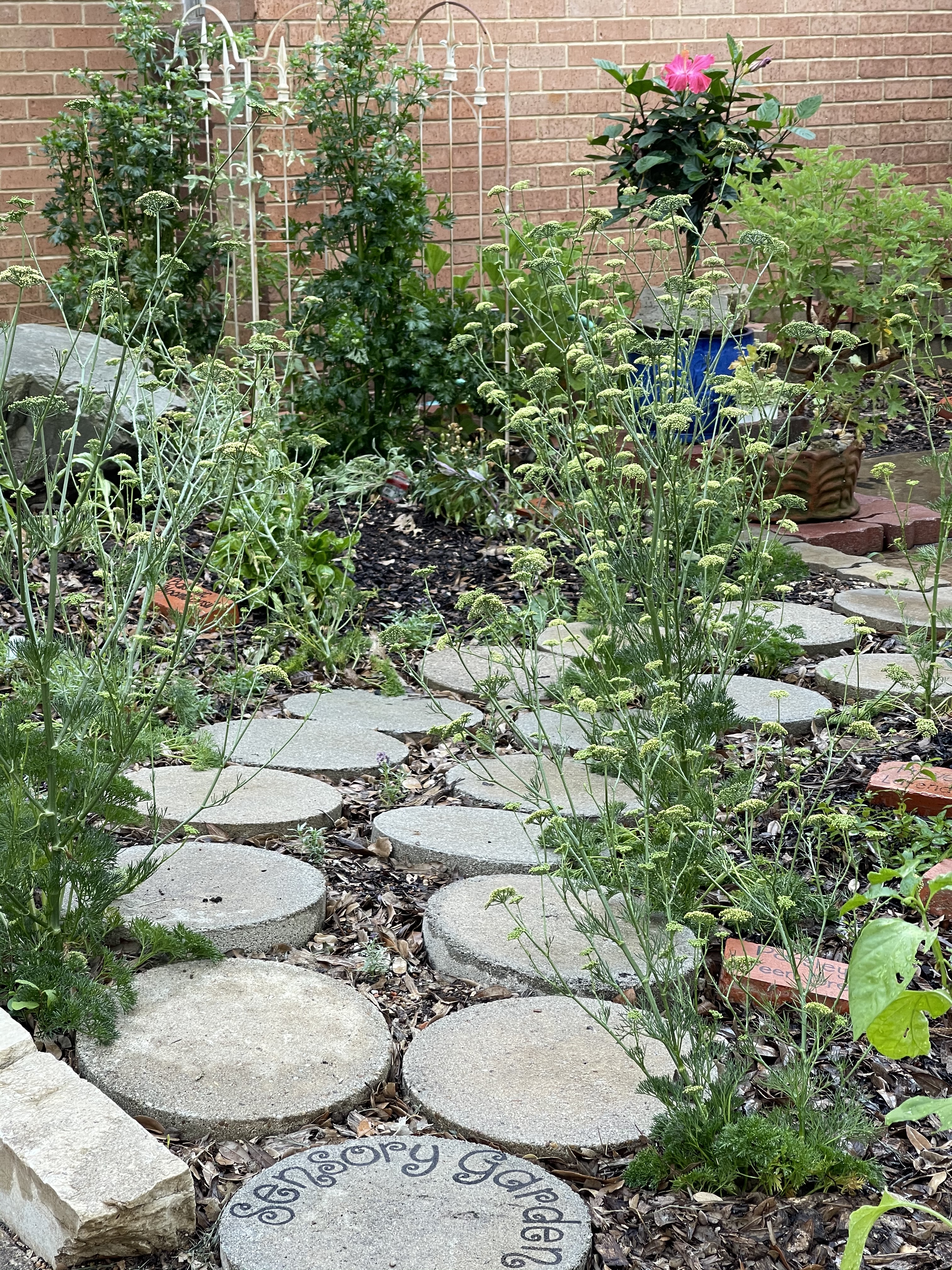
What happened next, with nothing left but an empty space, allowed for a time of reflection. The area bordering the north side of the shed had been transformed into a lovely sensory garden, one of our newest additions to the edible landscape. Expansion to the now vacant area would require the installation of an irrigation system but the church had suggested that they might need the space for future use. The other option was to relocate the sensory garden. Our decision was something unexpected which, ultimately, proved to be a magical solution.
Just a few yards away and bordering the stone pathway was a garden area we had previously christened as “The Kaleidoscope Bed”. With an eclectic mix of evergreen and perennial flowers and herbs as well as colorful annuals, it seemed as if we were being invited to consider yet another transformational opportunity. In the blink of an eye followed a sweet smile of happiness, the blending of gardens began. The Kaleidoscope Bed would graciously surrender its name while allowing existing plants and ornamental features to remain in place.
Our plan going forward is to maximize the sensory impact that the garden has on its visitors. Adhering to the 70/30 rule, our primary focus will be the addition of more edibles supported by a small percentage of non-edibles. We’ll be including textural plants such as lamb’s ear for it’s soft, fuzzy feel and an upright, aromatic rosemary for both smell and touch.
For real summertime garden beauty, we’re going to feature Balsamic Blooms Basil once again. It’s the basil that received a Texas Superstar designation in 2017. We first fell in love with its deep purple blooms and the sweet flavor of its gorgeous foliage in the spring of 2018. When we learned that this was the first basil to have flowers and leaves growing at the same time, our vote was unanimous to move it to the top of our seasonal list. Balsamic Blooms will always have a place of honor in the edible landscape.
Balsamic Blooms Basil and Begonias
Our newly relocated and appropriately named Sensory Garden offers triple the amount of space than before to feature a wide variety of plants that stimulate the senses. Come by for an inspirational visit and let your soul be nourished by the wonderful world of nature.
Linda Alexander, Dallas County Master Gardener Class of 2008
It was only a few years ago when just an ordinary piece of toast topped with gently smashed avocado became the rage. You’ll find it now on menus across the country from small cafes to upscale restaurants. Everyone seems to have created their own version by using an alphabetical listing of edibles including everything from artichokes and micro greens to tomatoes and tarragon for appeal. My approach tends to be more simplistic in style.
An early morning harvest from my edible garden provides a seasonally fresh selection of blossoms, greens, herbs and vegetables. On Saturday mornings from April until November a visit to our local farmer’s market gives me additional options. Here are a few delicious suggestions that my husband and I have recently enjoyed but be creative with your choices because any combination that pleases your palate is a winner.
Springtime
*Thinly Sliced French Breakfast Radishes, Onion Chives and Nasturtium Blossoms
*Broccoli Florets, Arugula and Mrs. Taylor’s Scented Pelargonium Blossoms
*Thinly Sliced Carrots Topped with Caraway Sprigs
*Swiss Chard Perpetual Spinach and Nepitella Blossoms
Summertime
*Sliced East Texas Peaches and French Tarragon
*Campari Tomatoes Sprinkled with Chopped Balsamic Blooms Basil Leaves
*Sliced East Texas Peaches, Sweet Banana Peppers and Purple Basil
*Armenian Cucumbers with Salad Burnet and Watercress
Avocado toast is something we enjoy for breakfast, brunch, lunch and as a delightful appetizer. For a light summer dinner we often serve it alongside homemade gazpacho or chilled cucumber soup. Our goal is simply to use garden fresh ingredients! The only exception is when I’ve made a visit to purchase fresh eggs from my master gardener friend who raises chickens at her ranch. A delicately fried egg sitting on top makes for a very scrumptious breakfast experience.
**Additional edibles from summer’s bounty will include anise hyssop blossoms, blueberries, shaved yellow crooked neck and zucchini squash, onions, jalapeno and shishito peppers. To complete the flavor kick be sure to consider a sprinkling of these herbs; anise, dill, fennel, lovage, mint, papalo, pipicha, lemon thyme and rosemary or any of your personal favorites.
Linda Alexander, Dallas County Master Gardener Class of 2008
Caprese Roasted AsparagusFettuccine with Cashew, Mint and Cilantro PestoBlueberry Zucchini Muffins
Asparagus, blueberries, garlic, jalapeno peppers, zucchini, tomatoes, basil, cilantro, Italian parsley, and mint are some of our Zone 8 seasonal garden crops. If you’re growing any of these springtime and summer favorites, consider giving them a starring role for breakfast, lunch, brunch or dinner. Each recipe calls for a list of ingredients which can be picked, snipped and harvested directly from the garden. The combined flavor profiles will elevate that fresh-from-the-garden taste experience we find so satisfying to our palates.
You may have noticed that the common thread in each of these recipes is olive oil. This past Christmas, family members and close friends received themed gift packages from my husband and me featuring olive oil and olive wood products. From olive wood boards, bowls and spoons to different varieties of olive oil, each one was customized for the recipient. A recipe for my favorite olive oil cake was included with each gift.
As the spirit of giving continues, throughout 2022 our family and friends are receiving a monthly recipe featuring new and unusual ways of cooking or baking with olive oil. The three recipes listed above were for March, April and May. Summer recipes calling for olive oil will include farm fresh garden vegetables (corn, tomatoes, peppers, squash, etc.) and zesty, flavorful herbs. I’m even sharing a cobbler recipe that calls for ¼ cup of lemon olive oil!
If you are an olive oil fan, check back for monthly recipes featuring this versatile product and its variety of uses. Writing in The Illiad, Homer revered olive oil as having the qualities of “liquid gold”. Let’s discover those possibilities together over the next seven months.
A Bit of Trivia…It was the ancient Greeks who invented the salad dressing which was comprised of extra virgin olive oil, vinegar, sea salt and honey.
Linda Alexander, Dallas County Master Gardener Class of 2008
he North Garden continues to thrive with a crew of three to five gardeners on Mondays and help with hardscaping from the regular workday group on Tuesdays.
We were especially grateful for the substantial progress made on Intern Day in the new Donation Garden where we will be demonstrating ridge and furrow gardening and donating the produce to area food banks.
Making progress on the Donation Garden
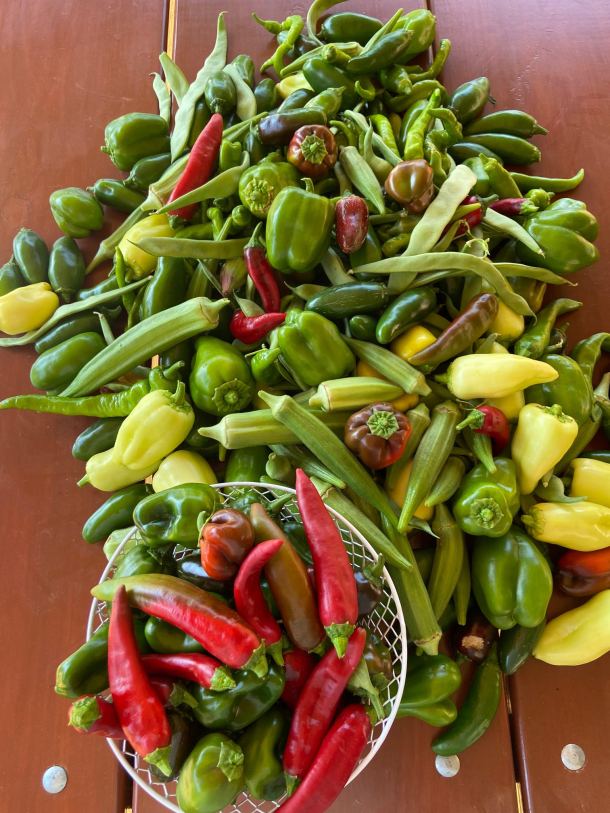
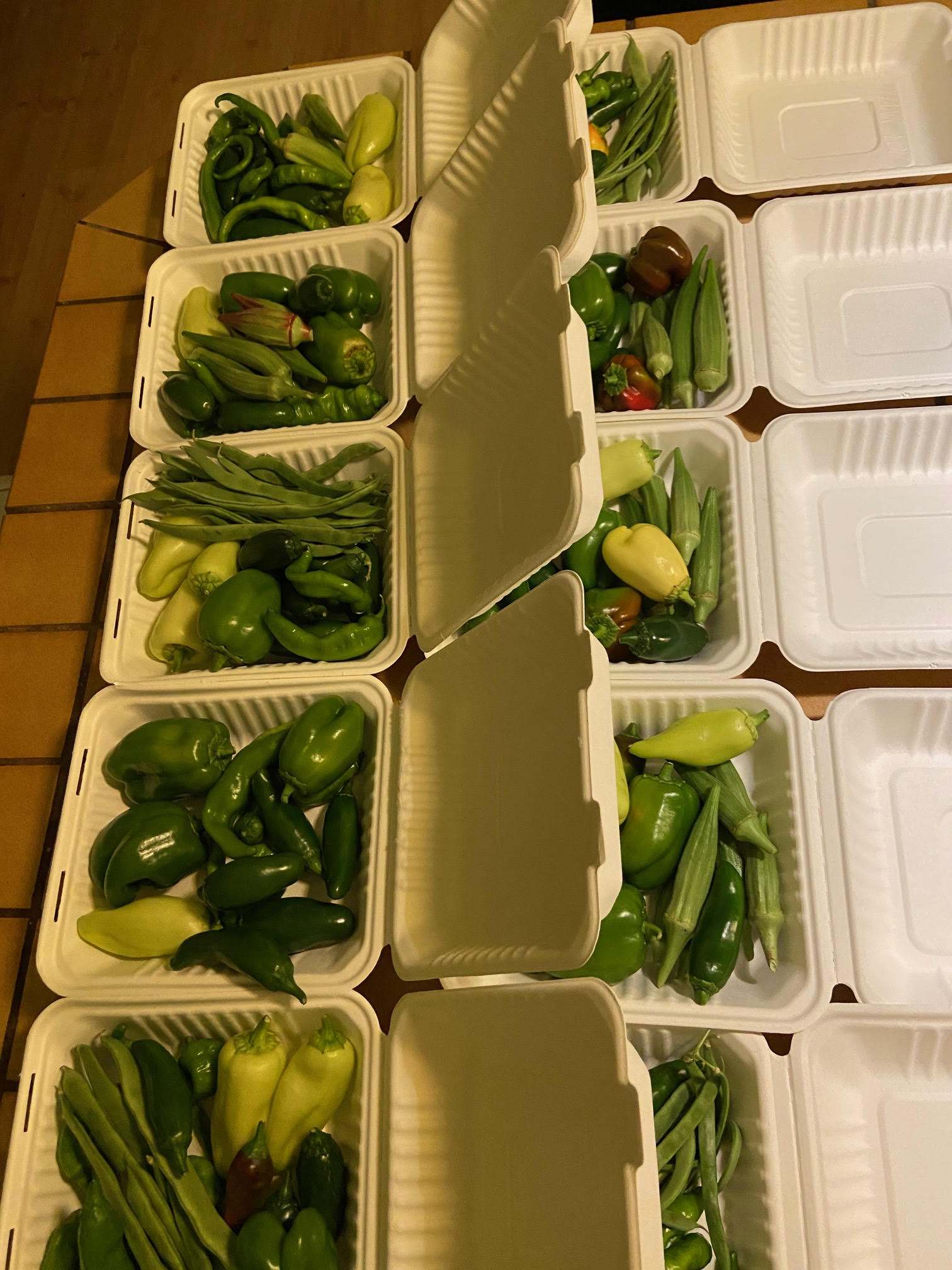
This week we harvested peppers, okra and pole beans and put together 10 family packs of the vegetables for donation. There were plenty of peppers left for the jam and jelly team to make their popular jalapeño jelly. We also harvested the calyces of Roselle Hibiscus for jam.
Monday’s Harvest
Vegetables packed for donating
The pepper varieties we have growing are North Star, Gypsy, Jimmy Nardello, Tajin, Emerald Fire, Poblano, and Sweet Roaster. North Star and Gypsy peppers are heavy producers and 0 on the Scoville Scale. North Star is known for production under a wide range of conditions. Both it and the Gypsy variety are very easy to grow. The Jimmy Nardello peppers are not quite as productive but they have an excellent sweet taste and nice crispy texture.
The Tajin and Emerald Fire are very productive jalapeño hybrids with low to moderate degrees of spiciness. We didn’t see many Poblanos in the Spring and Summer but now that temperatures have dropped, the plants are heavily laden with mild green peppers. The Sweet Roasters were productive and flavorful but unexpectedly hot.
We also grew Clemson Spineless and Hill Country Red okra. The Clemson Spineless is very productive but must be harvested daily to keep the pods from getting tough and stringy. The Hill Country Red is not as productive but it tastes great and the pods are very tender despite their ridged barrel shape.
The Northeaster pole beans are surprisingly delicious. Several gardeners and visitors have tasted them in the garden and all were in agreement that they were very enjoyable even uncooked.
Raincatchers volunteers are always welcome to sample any produce growing in the North Garden. It’s a great way to tell if you would like to grow the same variety in your home garden.
Beverly Allen, Dallas County Master Gardener Class of 2018
After waiting for over a year and a half to resume monthly meetings, The Pierian Club of Dallas chose Raincatcher’s Garden of Midway Hills for their first event. The much anticipated gathering was filled with hugs, laughter and smiles of happiness on the faces of those who attended. We were thrilled to welcome them to learn about our approach to gardening in North Texas and to enjoy a garden-themed lunch prepared by our “Friends of the Garden” volunteer culinary team.
The story of The Pierian Club is very fascinating. It began in 1888 and has continued to evolve for over 133 years. The purpose of the club is to increase knowledge. Their motto states, “A little learning is a dangerous thing; drink deep or taste not the Pierian Spring. Their shallow draughts intoxicate the brain, and drinking largely sobers us again.” In Greek Mythology, it was believed that drinking from the Pierian Spring would bring you knowledge and inspiration.
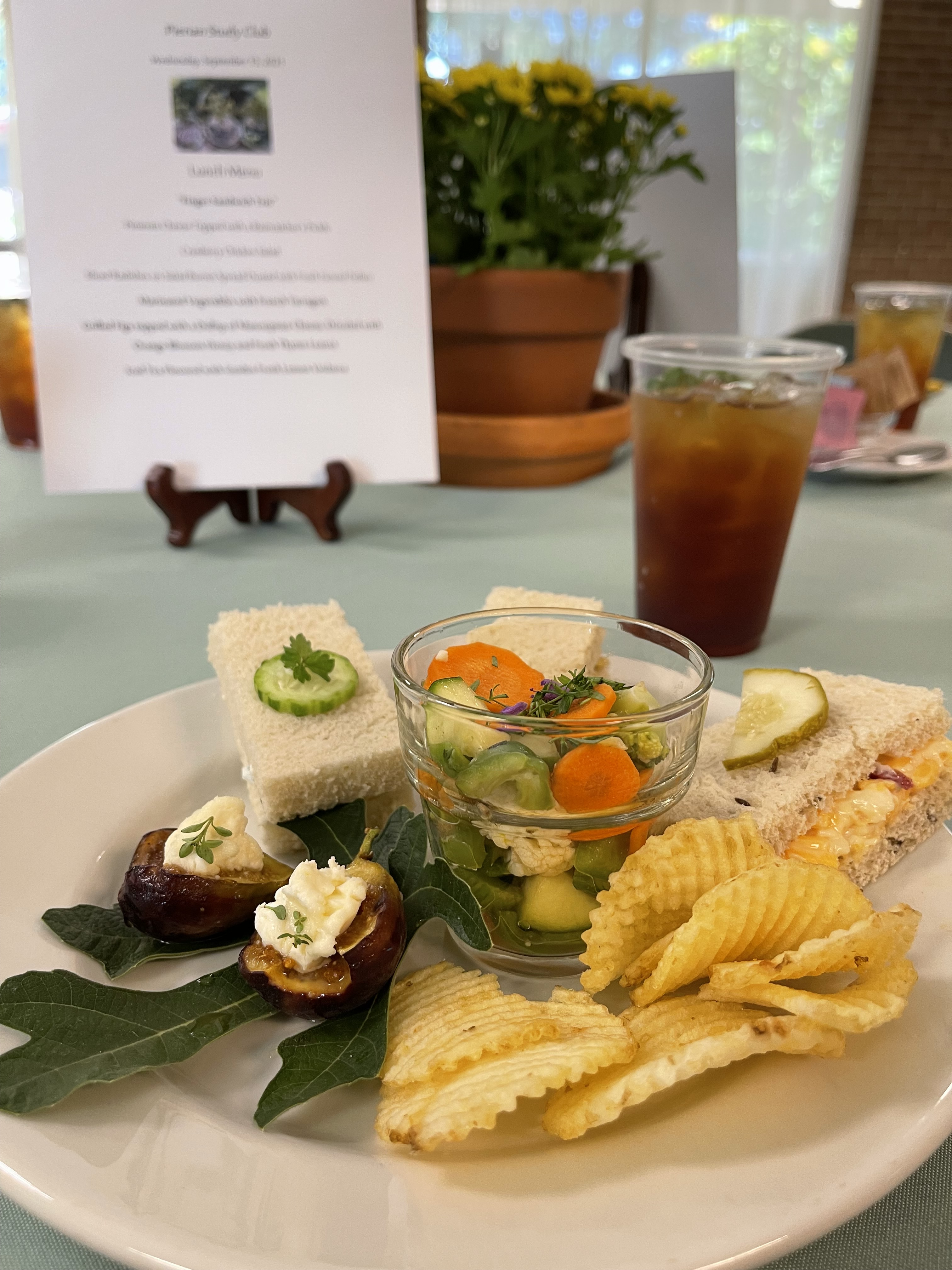
With a focus on seasonally fresh herbs and vegetables from our edible gardens, we treated them to a flavor-filled menu that stirred the senses. A brief explanation of how the menu was developed includes comments about several carefully chosen items.
The Pierian Study Club
Wednesday, September 15, 2021
Lunch Menu
“Finger Sandwich Trio”
Pimento Cheese topped with a Raincatcher’s Pickle
Cranberry Curry Chicken Salad with Orange Blossom Honey
Sliced Radishes on Salad Burnet Spread Dusted with Fresh Fennel Pollen
Marinated Vegetables with French Tarragon and Anise Hyssop Blossoms
Grilled Figs topped with a Dollop of Mascarpone Cheese, Drizzled with Orange Blossom Honey and Fresh Thyme
Iced Tea Flavored with Garden Fresh Lemon Verbena
Our finger sandwich trio included the following:
1. A tribute to Martha Stewart’s favorite sandwich…buttered white bread topped with thinly sliced radishes sprinkled with salt. Taking inspiration from herbs growing in our garden, we substituted a spread made with whipped cream cheese, freshly snipped salad burnet leaves and onion chives. Radishes were added next, sprinkled with sea salt and then lightly dusted with delicate fennel fronds. Each sandwich was topped with a thinly sliced Armenian cucumber brought in from the garden.
2. Pimento Cheese. This recipe is a favorite from a recently closed restaurant in Fredericksburg, Texas…The Peach Tree Tea Room. While the original recipe calls for jalapeno juice, we omitted it, as requested, for this event. Each sandwich was topped with a pickle made by one of our volunteers. Pickles were made from the variety, ‘Homemade Pickles,’ currently growing in our garden.
3. Cranberry Curry Chicken Salad with Orange Blossom Honey. We love using this special honey from Savannah Bee and available locally at Central Market. It adds just the right amount of sweetness to the earthy flavor of curry.
Marinated Vegetables were embellished with fresh-picked French tarragon from our edible landscape. Served in individual clear glass flowerpots, they made a colorful addition to the menu with pretty purple anise hyssop blossoms scattered over the top.
Dessert was on the lighter side. Fig leaves from the garden cradled two figs halves that were lightly grilled and topped with a dollop of mascarpone cheese and a drizzle of Orange Blossom Honey. Tiny lemon-flavored thyme leaves added that fresh from the garden effect that rounded out the meal.
Following lunch, a short program introducing the Raincatcher’s Garden of Midway Hills was presented by Dallas County Master Gardener, Lisa Centala. Master Gardener volunteers then joined Lisa and our guests for a delightful tour of the demonstration gardens. With their newly acquired horticultural knowledge, members of the study group left inspired and feeling as if they had been refreshed by drinking from the Pierian Spring.
Linda Alexander, Dallas County Master Gardener Class of 2008
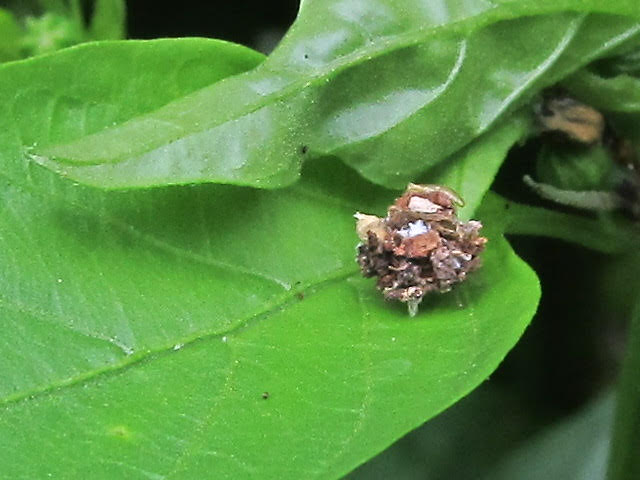
Diane, a frequent visitor to Raincatchers Garden, saw a little bit of debris on a leaf. To her surprise it began to move purposefully. She learned that the debris was called a junk bug. It covers itself with the bodies of insects it has preyed upon. This creates a convincing camouflage that fools birds and the ants that tend aphids. Aphids are a frequent snack.
Junk Bug with a purpose!
The junk bug is a larva that becomes a green lacewing, a beautiful insect with delicately veined gossamer wings.Per Diane, “I almost missed it till it started moving, and this is my very first one to ever see, or even hear of.”
Thanks, Diane, for your close observation. It’s great to know we have an insect ally to help us keep the aphids in check.
P.S. The eggs on a stalk shown in the picture above are also part of the lifecycle of this beneficial insect.
Beverly Allen, Dallas County Master Gardener Class of 2018
PIctures by Diane, a friend of The Raincatcher’s Garden
“The greatest gift of the garden is the restoration of the five senses.”
-Hanna Rion
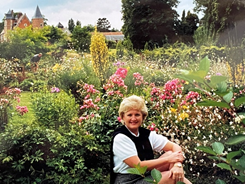
Almost thirty years ago, my husband and I took our first trip to France. Our destination was Paris but along the way we scheduled a romantic anniversary visit to the lovely town of Reims. It is considered an essential stop on France’s champagne trail with big-name bubbly houses headquartered there among wide boulevards and well-preserved medieval churches.
Linda at The Garden of the Five Senses
Our three-night stay was at an elegant boutique hotel known as Domaine Les Crayeres. Nestled discreetly in a seven-hectare park full of lush vegetation, it remains one of my most treasured travel memories. During our stay, it was suggested that we visit a little-known sensory garden in a charming village just outside of town. We were told that not many tourists take time to visit the garden but because of our desire to experience the lesser-known places, we were excited to make the trip. The cost to enter the garden was minimal but the joy we shared that afternoon was priceless. Our enchanting visit was to a place called, “The Garden of the Five Senses”.
It was a beautiful day in August with temperatures hovering comfortably in the seventy-degree range. Unlike summer weather in Texas, we had chosen a perfect time to spend the day outdoors. An incredible bottle of French champagne led to countless toasts and smiles as we leisurely enjoyed a beautiful afternoon in the garden.
Each of the five individual gardens were created using a loosely defined circular formation. Plants were carefully selected for the role they would play in stirring up the senses: sight, smell, taste, sound and touch. Unhurried and totally caught up in the moment, our hearts and souls were rejuvenated. A quaint, little “off the beaten path”, and privately owned garden, had given us the gift of a lifetime memory.
Reflecting on that wonderful day in France, this spring our volunteers introduced a Texas style version of a sensory garden to the edible landscape. Our sensory garden is on a much, much smaller scale than the one in France, but we’ve packed in a pleasing variety of edible plants. Summer into early fall we will be featuring some of the following:
We invite you to visit the sensory garden anytime you’re in the area. You might even consider bringing along a bottle of bubbly to celebrate the experience.
10 Tips for Creating a Sensory Garden
1. Choose an ideal location. Find a quiet place in your yard or somewhere that naturally draws you into a “time-out” or relaxing place in the garden.
2. Measure the space and create a map of the area. Detailed information is beneficial when the time comes for selecting plants.
3. Decide what plants and features will best achieve the atmosphere that is desired. Accessories like gazing balls, mirrors and sculpture can add to the visual effect.
4. Provide a bench, swing, or some place to sit and relax. A unique idea would be to install a chamomile lawn. The recommended variety of chamomile for this particular purpose is Roman Chamomile (C. nobile ‘Treneague’).
5. Create a safe place using plants that are non-toxic, non-allergenic and with no pesticide application.
6. Choose plants that will keep the senses aroused each season of the year.
7. When selecting plants pay close attention to growing conditions whether sun or shade, poor or good drainage, clay or other types of soil.
8. Decide which plants are best for stimulating each of the five senses. Start with 3 plants for each one, then expand as space and growing characteristics allow.
9. Feature elements that appeal to the five senses:
Color – may be seasonal, grouped in clusters or spaced for maximum contrast.
Texture – use plants that add a variety of tactile stimulation.
Water and Wind Chimes – items like bird baths, fountains and small ponds provide a refreshing sensory experience for sight, sound and touch while attracting birds, butterflies and other pollinators to the garden. Enhance the sense of sound with wind chimes and/or whirligigs.
10. Be inspired throughout the process. Creating a sensory garden will elevate your environment into one that gives interest and stimulation to people of all ages.
Linda Alexander, Dallas County Master Gardener Class of 2008
Summer rain tapped on our garden. And just like Johnny Rivers so sweetly sang, she stepped out of a rainbow. Lavender blossoms filled the air with their intoxicating fragrance as bee balm welcomed the bees with tiny, tubular petals in shades of pink, purple and red. The showy yellow flowers of baby butternut squash plants told us it was time to get out the recipe for Squash-Blossom Quesadillas.
Our Edible Landscape ‘Baker’s Dozen’ of summer blossoms and flowers continues to evolve. The early bloomers are starting to fade while the colorful hibiscus, impatiens and marigolds refresh us with their summer beauty. Stroll down the garden path for a glimpse of these seasonal stars. Or as the lyrics suggest…stay awhile, then sail into the sunset and let tomorrow be.
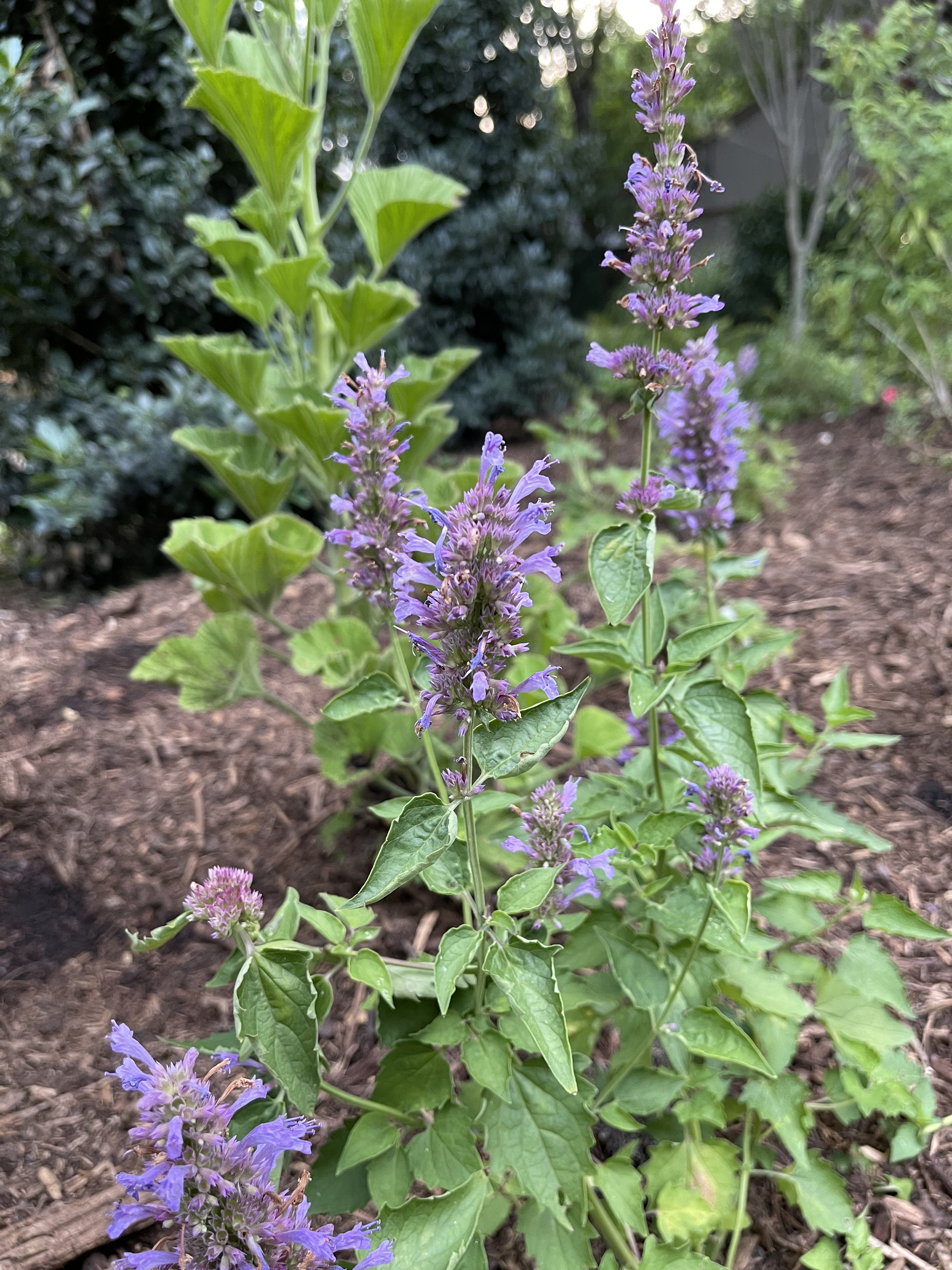
#1 Anise Hyssop (Agastache foeniculum)
Some people believe that this is one of the tastiest edible flowers. If you are curious, stop by the Sensory Garden and pick a few tiny petals. You might taste a flavor somewhat between anise and root beer. Leaves and petals, if used sparingly, are very pleasant in salads, iced drinks, soups, tea breads and dessert.
This highly ornamental plant is an easily grown herbaceous perennial that reaches from three to six feet. Leaves are gray green with dense one- to three-inch flower spikes ranging from mauve to lavender to white. Grow it in full sun in average soil and keep it fairly moist. The plant dies down in winter and often reseeds itself the next spring. Our anise hyssop was lost to the extreme cold this winter but has been replaced with a new plant that is thriving in a sunny location.
#2 Basil (Ocymum basilium)
Spicy Globe Basil
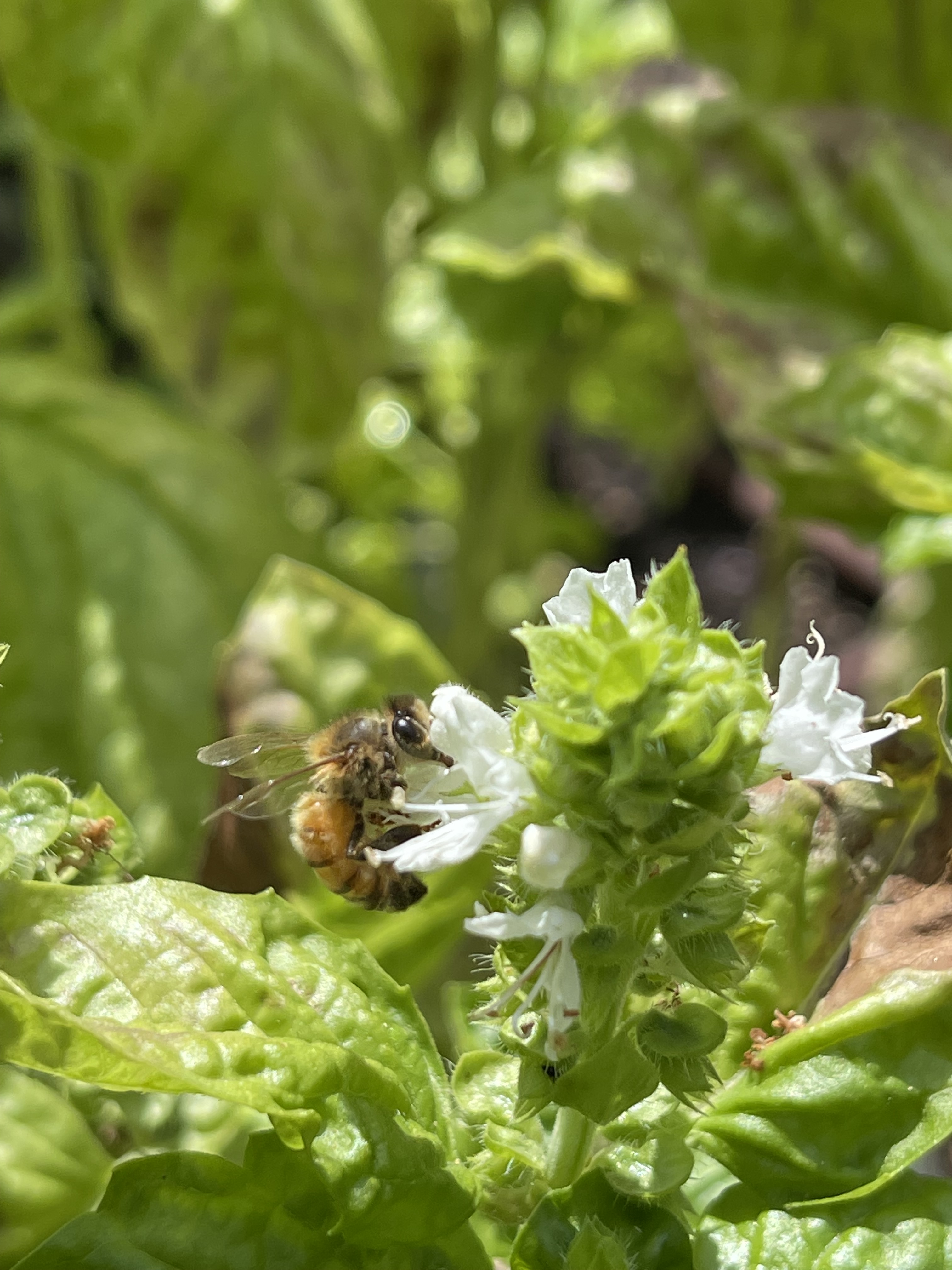
The Edible Landscape Garden is filled with over 12 different varieties of basil. Their blossoms and leaves vary in color, taste and texture. During the summer months our temptation to start deadheading is sometimes delayed by the bees. Bees love basil and can be found collecting both pollen and nectar from the white, pink, purple and light-blue flowers. That’s the dilemma we face once those fragrant blossoms start appearing. A convincing answer is found in the reason for removing the blossoms. Basil is grown primarily for the tender, fluffy leaves. Adding them to soups, tomato caprese and, best of all, whirring up a tasty batch of pesto is what summer is all about. But, once the plants develop flowers that mature and turn into seed pods, the taste profile changes and the plant becomes woody. Fortunately for the edible landscape, we generally plant three of each variety. That gives us the opportunity to allow one plant in each variety to grow from blossom to seed. For the remaining two plants, the entire flowering branch gets snipped off. With the flowers gone, the plant’s focus will shift back to growing new leaves, and it will become bushier. Since basil is a very edible plant, those flowering tops get added to salads or tossed with other greens. The bees keep buzzing and our culinary summer desires have been satisfied.
#3 Bergamot ‘Bee Balm’ (Monarda didyma)
This plant lives up to its name. Once it begins to bloom the bees arrive and find their happy place sipping its nectar. The variety we chose to plant on either side of the greenhouse is ‘Marshall’s Delight’, a lovely shade of lavender. Depending on your preference, it also comes in bright red, pink and white. Bergamot is a perennial, in the mint family, that prefers a rich, well-drained soil. Native Americans of the Oswego tribe showed the colonists how to make a substitute “freedom tea” from its fragrant leaves…thus another common name, Oswego tea.
Bergamot grows from 2-1/2 to 4 feet high. After reaching 12 inches in height, support the branches with stakes to help keep plants upright. Flowers appear in whorls of frilly tubes and have a lemony mint fragrance and taste. Use flowers sprinkled on fruit, cold dishes and fish. Or enjoy a refreshing cup of Oswego Tea. (Recipe: Use 3 teaspoons fresh or one teaspoon dried leaves per cup. Place in a glass or China pot, cover with boiling water and steep for 10 minutes. Sweeten with honey. Garnish with freshly picked bee balm blossoms.)
#4 Daylilies (Hemerocallis fulva)
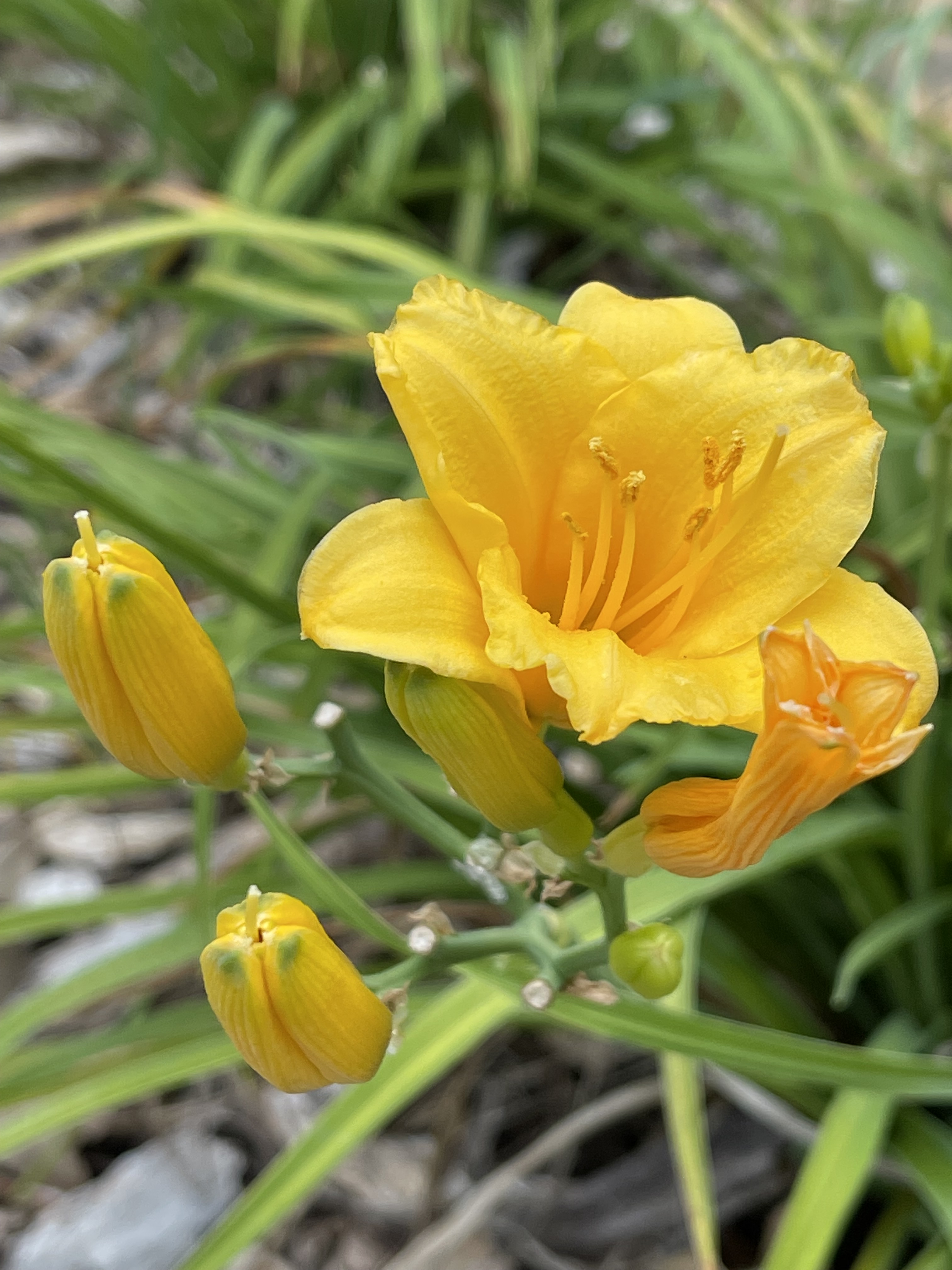
Daylilies got their name from the Greek hemera, for “day,” and kalles, for “beauty.” Each beautiful flower lasts for only a day, but another replaces it the next. The flowering period of an established clump is usually several weeks long. Daylilies perform best if given full sun and an area with well-drained, fertile soil. We’ve located our daylilies in the garden bed just in front of the greenhouse where they receive full sun most of the day. The variety we chose is the traditional ‘Stella de Oro’. It has numerous yellow flowers per scape that bloom all summer. Daylily buds will keep in the refrigerator for several days, but the delicate flowers should be consumed the day they are picked. Several interesting recipes for using them include Daylily Cheesecake, Daylily Curry and Daylily Petal Salad.
#5 Dianthus ‘Sweet William’ (Dianthus barbatus)
Gardeners have been cultivating this short-lived perennial since at least the 1500’s. In the language of flowers, dianthus stands for love, fasciation, distinction and pure affection. With such descriptive words, we should all be growing dianthus in our gardens. Dianthus flowers are in bloom from late spring until midsummer. (They are related to carnations, another edible, which we also have growing in the Sensory Garden.) The nickname “pinks” is derived from the color of the flower. If you’ve ever used a pair of “pinking shears” then you should know that they are so named because they create a fringe much like the ruffled petal edging on this beloved flower.
The variety growing in our cottage garden, ‘Sweet William’, has a spicy fragrance with hints of clove and cinnamon. When grown organically, the flower petals can be crystallized with sugar and used for decorating cakes or other desserts. And, if you happen to enjoy the liqueur Chartreuse, it is composed of distilled alcohol aged with dianthus petals and 130 other herbs, plants and flowers. This very historic French liqueur has been made by the Carthusian Monks since 1737.
#6 Summer Phlox (Phlox paniculate ‘Party Girl’)
Every cottage garden needs some type of phlox. This summer we chose one of the four “Garden Girl” varieties, ‘Party Girl’. Displaying bright white flowers with star-shaped pink centers, we’re hoping she will bring the party to the garden. Hardy in zones 3-8, ‘Party Girl’ flowers mid to late summer with an excellent rebloom. Two of our plants receive morning sun, afternoon shade while the other receive just the opposite. We’ll continue to monitor the progress of this long-blooming perennial and adjust the location, if needed. Phlox are pollinator-friendly plants known for attracting butterflies and hummingbirds. The perennial phlox is the only type that is edible. Their flavor is sometimes described as slight spicy but, also, quite sweet. Use them crystallized on cakes and desserts or floating in summer drinks.
#7 Coneflower (Echinacea purpurea)
Do you think of hedgehogs or sea urchins when admiring a coneflower? The genus name of Echinacea comes from the Greek word echinos meaning, you guessed it, hedgehog or sea urchin. A gentle touch of the spiny center cone found on most flowers in the genus explains the connection. Echinacea is an herbaceous perennial native to moist prairies, meadows and open woods of the central to southeastern United States.
Before growing echinacea, decide where you want them to grow permanently. Because they establish deep taproots, moving to a different location is not recommended. The plant can reach heights of five feet. Their showy daisy-like purple coneflowers bloom throughout summer making them an excellent, long-blooming flower for massing in the garden. Leaves and flower petals are edible. Harvest echinacea leaves for tea by cutting a few from each plant as needed. Use them fresh or dry the leaves and store them in a cool, dry place.
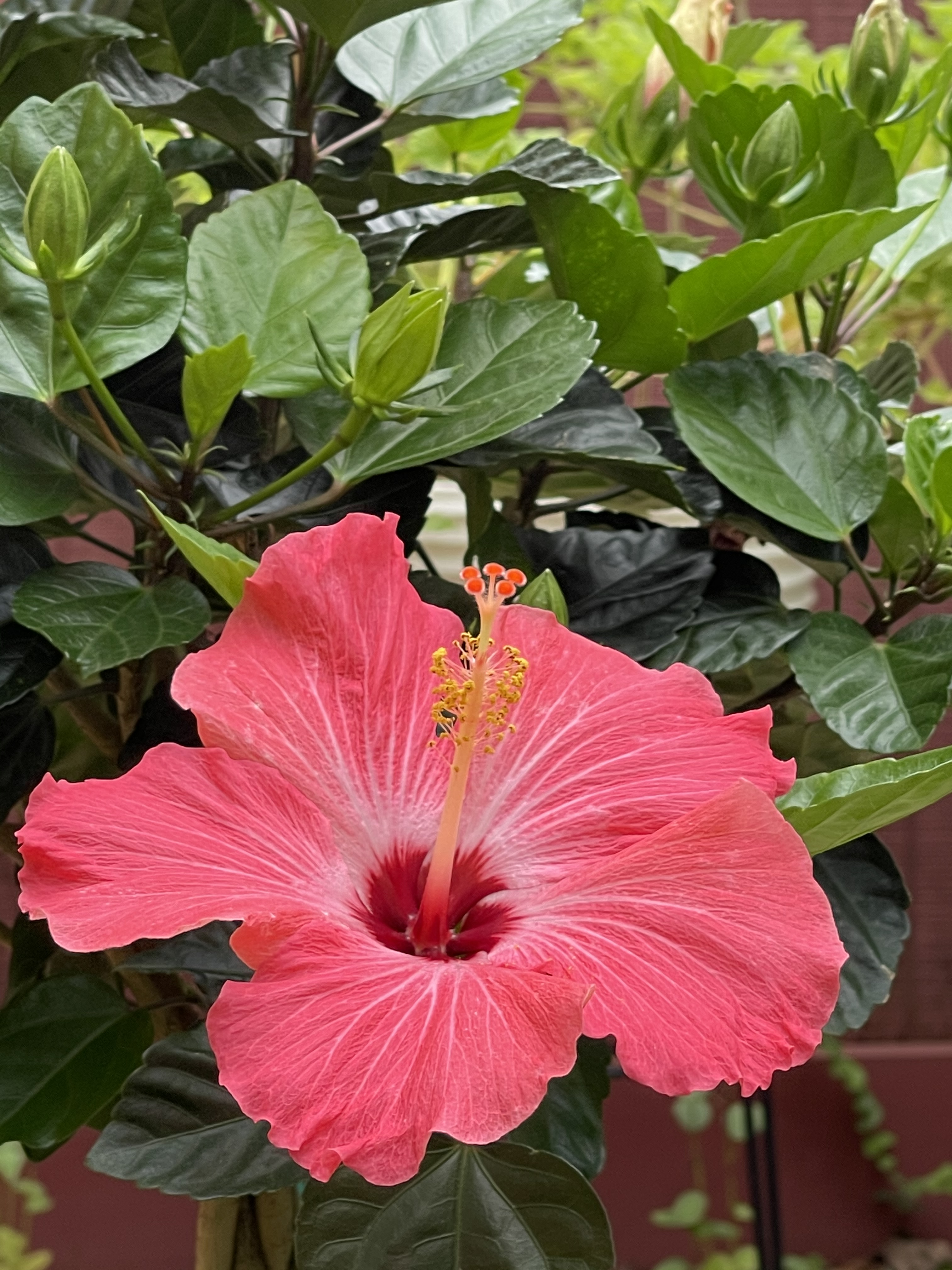
#8 Hibiscus (Hibiscus rosa-sinensis)
A summer garden without hibiscus is like a rainbow absent of color. Tropical-looking showy flowers in tones of yellow, coral, orange, pink, red and countless other color combinations make this member of the mallow family a true seasonal superstar. Even the well-known paint company, Sherwin-Williams, features SW 6851 Hibiscus in a stunning shade of deep pink for both interior and exterior use.
As a special culinary treat, combine hibiscus flowers with fresh summer blackberries to make Hibiscus Chutney or try the adult version of Hibiscus Popsicles made with champagne and hibiscus simple syrup. Petals can also be torn and tossed into your favorite salad. You’ll enjoy their mild flavor with just a slight tanginess.
Hibiscus plants are lovely grown in containers or in ground. For the best growth and flower production give them a full sun location. It is important to keep the soil moist, but they must have good drainage. Hibiscus flowers open daily and last for only one day, after which they die. Simply remove all wilted or unsightly flowers and keep grooming daily.
For a fascinating and very comprehensive look into the world of hibiscus plants go to:
My husband and I have lived in Dallas for almost fifty years, and I can’t think of a summer when we didn’t have impatiens growing in the shady areas of our garden. Their bright and cheerful flowers add a touch of pizzaz anywhere you choose to plant them. At Raincatcher’s this year we purchased four hanging pots of purple impatiens to feature as bedding plants in the Cottage Garden. They have almost tripled in size since their April addition to the garden and have maintained their large mounding shape.
We were already aware of their growing characteristics which require moist well-draining soil and partial to deep shade. The bed where they are located is irrigated but during extreme heat, we give them supplemental watering.
Impatiens are considered to be one of the most popular bedding plants in the Northern Hemisphere. As a big bonus for the edible landscape, they also have tasty edible petals. The sweet petals can be used to flavor desserts, salads and drinks. Thankfully, there is plenty of time left to enjoy beautiful and edible impatiens in your yard and on your plate.
FYI…next year we plan to use impatiens in other areas of the edible landscape. And, in those sunnier spots, SunPatiens will be making a showy appearance.
#10 Oxalis ‘Iron Cross’ (Oxalis deppei)
Do you need a bit of “good luck” in your garden? You may find ‘Iron Cross’ exceptionally rewarding. It is a bulbous perennial forming a lush mound of heart-shaped green leaflets. Each leaf has a dark purple blotch at its base which is reminiscent of a cross. During the day the leaves open out to receive sunlight but at night they retract and fold up like umbrellas. From early summer until frost, the rich green foliage is topped with sprays of trumpet-shaped bright pink flowers. Plant Iron Cross in a sunny to partly shady area of the garden where the soil drains well and has a light, loamy or sandy texture.
The edible leaves and stalk give salads and soups a pleasant, tangy taste. Dark pink oxalis flowers are a nice garnish for desserts and summer salads.
#11 Lavender (Lavandula angustifolia)
Lavender has been called the ‘fragrance of Provence’, and today, in France, it is still referred to as “blue gold.” If you’ve ever had the opportunity to visit Provence when lavender is bloom, it’s easy to appreciate the mesmerizing affect its beauty and fragrance have on you. My husband and I first made the trip over 20 years ago returning to Texas with the dizzying effects of lavender fever lingering in our heads. That’s when my love affair with lavender began.
It has grown wild throughout the Mediterranean for millennia. And now it’s found growing all over the state of Texas, especially down in the Hill country area. The story of how it came to the Texas dates back to the year 1999. Robb Kendrick, a photographer for National Geographic magazine was assigned to do an article about the perfume industry in France. While there, he was struck by the similarity of a lavender-growing area in southern France to his own land near Blanco, Texas. After a careful study of the soil and climate, he decided to start growing it on his property. Texans embraced the idea wholeheartedly and a booming new business was started. For a real Provence-type experience, be sure to put the Blanco Lavender Festival on your calendar. It’s held annually in June and features “all things” lavender.
Growing Tips:
*Lavender does best in a sunny location with well-drained soil. The ideal pH for lavender is between 7.5 and 8.5. A slight slope helps promote drainage.
*Best time for planting seedlings is March and mid-October, before the first frost. A fall planting will give the plants a better chance of getting established.
*Consider growing lavender in raised beds to help keep roots out of water during heavy rains.
*There are at least 47 varieties of lavender with an infinite number of cultivars. Do some research to determine the variety best suited for your location. We chose Provence Lavender.
*Lavender is a perennial, which should give you 8 to 12 years of beautiful growth if properly cared for.
#12 Marigolds (Tagetes tenuifolia)
If you are unfamiliar with Signet Marigolds, take a stroll around The Edible Landscape Cottage Garden where they are in full bloom. These showy, single-flowered marigolds feature small, but abundant, richly colored blossoms covering the finely divided lacy foliage. We expect the compact and busy plants to reward us with their tiny blooms summer into fall.
This year, the varieties we chose are ‘Lemon Gem’ and ‘Tangerine’. Master Gardener, Gail Cook, started the seeds for us in early spring. The four-to-six-inch seedlings were transplanted in May. Over the past few months, we’ve enjoyed the elegance of their petite, single, lemon and tangerine blossoms with a citrus-forward, subtly peppery flavor. Harvest the flowers just before using by separating petals from the flower base as it contains a bitter, unpleasant flavor.
#13 Roses (Rosa Meidrilfora’ (Coral Drift®))
Every color of rose has a different meaning. In the language of flowers, coral is desire or passion. We are excited to have four Coral Drift rose bushes growing in our Cottage Garden Bed, one in each wedge. Drift® roses are intended to function as groundcover or carpet type roses. As all gardeners know, roses are sweet and highly aromatic. While color doesn’t affect the flavor of roses, scent does. The stronger the scent of the rose, the stronger the taste. And, if it smells good chances are it will taste good. Roses generally bloom in early summer but Coral Drift blooms continuously from spring until frost. It produces abundant clusters of small, vibrant coral flowers about 1.5 inches across filled with up to 25 petals. They open up in a softly cupped shape to reveal the stamens. The glossy deep green foliage is noted for its strong disease-resistance.Sometime around mid-September our desire is to use those beautiful coral rose petals to make Pistachio Rose Shortbread and Fig and Rose Cream Trifle.
Linda Alexander, Dallas County Master Gardener Class of 2008













 DALLAS GARDEN BUZZ