Tag Archives: The Raincatcher’s Garden

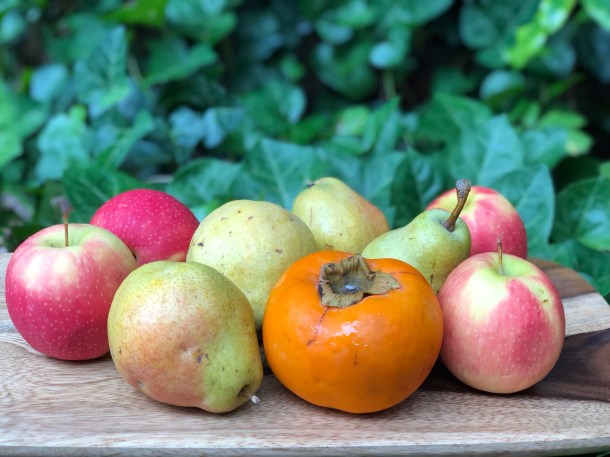
Growing Apples, Pears, Persimmons and Pomegranates

Apples, Pears, Persimmons and Pomegranates, nature’s grand finale!

Jeff Raska, Dallas County Horticulture Program Assistant, Texas A&M AgriLife Extension Service inspired us to start planting, growing and harvesting the fruits of the season. For Raincatcher’s, it was our last and final class of 2018 in the series.  With an abundance of fall fruits ripe and ready for harvest, we gathered up our pens and paper for a very educational presentation. Highlights from Jeff’s lecture included the following:

General Information for Fruit Trees

Your first consideration should be selecting the right variety for our climate and soils. Plant trees during dormancy, January to early February in a slightly raised mound rich in compost and top-dressed with mulch.  Bare root trees are preferred as they will outgrow a container plant. Want to know if you have a healthy tree? Scratch the root. If it’s the color of cooked spaghetti, it’s a viable tree.

All fruit growth happens within the first 45 days of fruit set (after bloom). At that time, the plant needs constant water (1-3” per week). The fruit won’t get any bigger or sweeter after the first 45 days, it just develops the seed.

In terms of “chill hours,” our Zone 8b previously was between 600-950 hours. Currently we are between 600-800 hours. Our winters are getting colder but shorter due to climate change.

Apples and pears need a cross-pollinator…another tree that blooms at the same time. Both trees grow spurs, short and stout twigs that bear the fruit buds year after year. That’s one reason  you can espalier the tree and have fruit on those limbs. This is in contrast to peaches that bear fruit on new growth every year.

The second consideration is pruning. As a ‘rule-of-thumb’, if you can’t see the fruit then you’re not getting enough sun. Thin the fruit when it’s the size of a nickel. The goal here is to have only 3-4 fruits per limb, spaced about 6 inches apart. Each flower will produce one fruit; too many fruits on a limb will create smaller fruit and risk the branch breaking under the weight.

The third consideration is fertilizer. Instead of fertilizer, mix finished compost into your mound, then top-dress 1-2 times per year. Finished compost is homogenous. When you hold a fistful, there are no telltale leaves or twigs in it. If you do choose to fertilize or use chemicals, don’t use them before a rain event. Rain doesn’t wash the chemicals in, it washes them out. Mulch for weed control. Not only do weeds take nutrients away from the plants, they are a home for the insects that attack the plant.

Apples (Best varieties for the DFW metroplex, with chill hours)

Gala (600)

Mollies Delicious (500-600)

Mutsu (500-900)

Golden Delicious (500-600)

Granny Smith (400-600)

Aim for a variety that has about 600 chill hours. A tree that has more, or less, will live but won’t bear fruit. When is the fruit ripe? Look for green that is starting to add color, or if a bird pecks at it. If you cut it open and find a black seed, it’s ripe. If the seed is green, it is not yet completely ripe.

Pears

(Best varieties for the DFW metroplex, with chill hours)

European varieties:

Warren (600)

Moonglow (700)

Ayers (600)

Asian varieties:

Shinko (500)

Shin Li (500)

In addition to chill hours, these varieties are resistant to fire blight. *Bartlett is especially vulnerable to fire blight and strongly not recommended for this area. All the above varieties can cross pollinate with one another.

Pomegranates

(Best varieties for the DFW metroplex)

Wonderful and Al-sirin-nar

The pomegranate is a part of the crepe myrtle family. It is a wild and unruly bush that needs to grow as a bush and fruits best when not pruned to grow as a tree. However, it can be trimmed to maintain an attractive form. It is self-fertile and doesn’t need another plant for cross-pollination. Pomegranates don’t ripen after being picked. Wait to pick until the fruit is ripe, it should give a little when you squeeze it gently.

Persimmons

(Best varieties for the DFW metroplex)

Eureka (a flat variety, less tannic and can be eaten when firm or soft)

Hachiya (this is the cone-shaped variety, very tannic and only edible when soft)

Based on the variety, persimmons can be self-fertile or need cross-pollination. Persimmon tree branches are thicker and can handle a heavy fruit load.

Immediately following Jeff’s presentation, members and guests were treated to bountiful buffet table bursting with seasonal flavor. It was a feast for both the eyes and the palate.

 A few of the recipes that were developed for this special event will be posted tomorrow:

Baked Brie with Roasted Persimmons

Butternut Squash-Pear Soup garnished with Parmesan and Chopped Rosemary

Salad of Figs, Pomegranates, Persimmons and Pears with Pomegranate Dressing

Autumn Orchard Crisp

Persimmon Cookies

written by Lisa Centala and Linda Alexander from Jeff Rasks’s presentation
 

Sunny Yellow Flowers For Fall Beauty From Raincatcher’s

Our yellow flower tour starts as the cheerful yellow daisy like flowers of zexmenia welcomes visitors to the garden.  It is hard to go wrong with this native plant. Zexmenia asks little beyond a sunny spot with a bit of room to spread.  Butterflies and bees are frequent visitors to the lasting display of clear yellow flowers.

Zexmenia

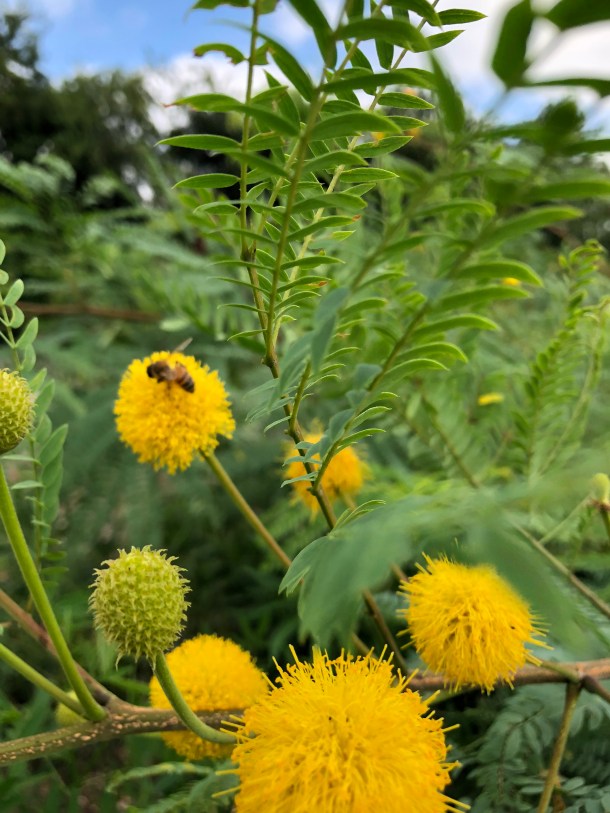
One need not go far to see the bees enjoying the fuzzy round blooms of the golden lead ball tree. This small tree, native to Texas, has been blooming for months.  The flowers are a bit out of the ordinary and always attract attention.

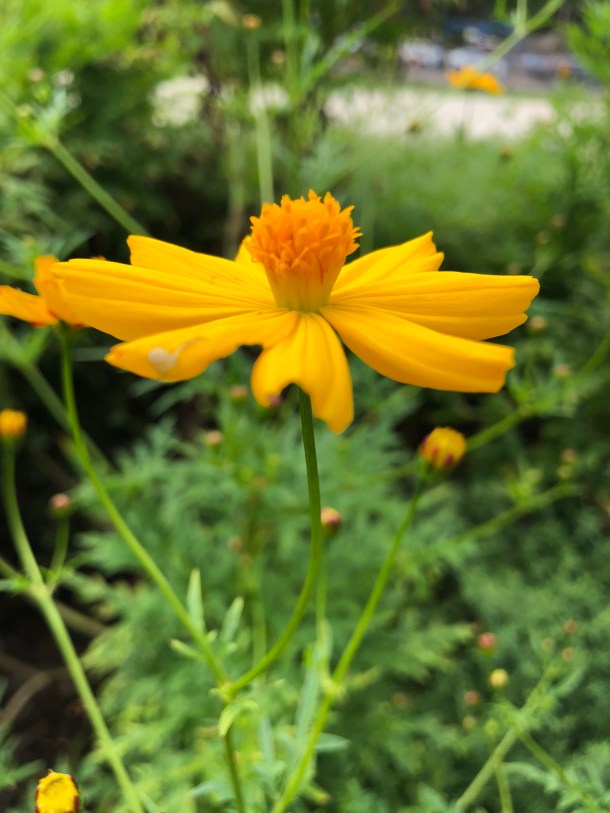
Fall is the time for the tall yellow cosmos to shine. It is true the tall plants may fall over in wind and rain and it can be over ambitious in seeding itself.  But, no plant is perfect and isn’t it a happy sight? It is well worth overlooking a few things—and bees and butterflies really do love it.

The fast growing well adapted argentine senna is literally covered in lovely yellow flowers.  Some sennas bloom for a short time and seed out to an alarming degree. This one doesn’t. The flowers last for a long time and seeding is not a problem.  If that isn’t enough to make it a favorite—it is also a host plant for those pretty yellow sulfur butterflies.

This yellow rose is part of the trials to try and find plants that resist rose rosette disease.  Let’s all think positive for this little plant with flowers in such a delicate shade of yellow.

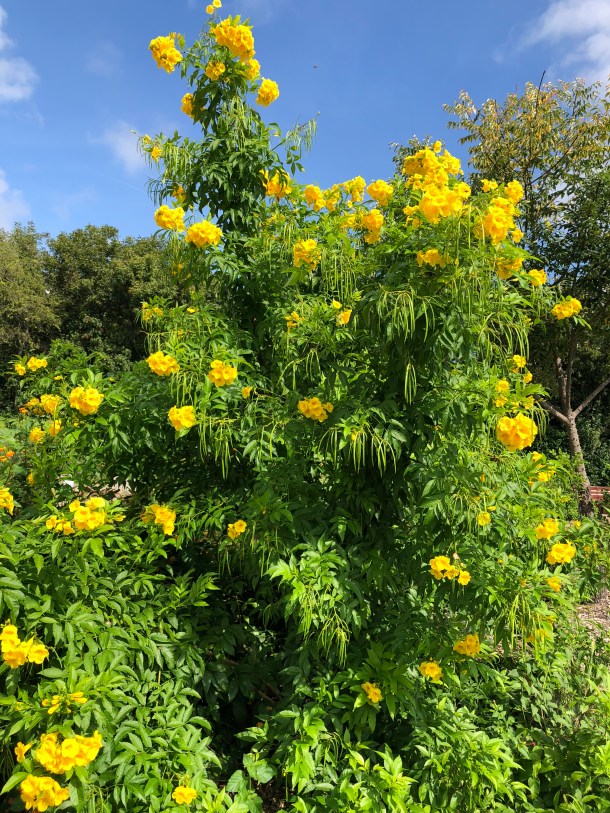
Esperanza cannot be left out of any list of favorite yellow flowers.  This plant was almost given up for lost in the Spring—what a come back it seems to have more bright yellow flowers than it has leaves.

Don’t forget that vegetables can be as pretty as they are delicious.  This yellow okra flower is a perfect example.

If your garden could use a little sparkle or if you want to do more to provide the nectar pollinators need to live,  add some , or all, of these lovely yellow and you will do both.

You can see all of these plants at Raincatcher’s garden at Midway Hills Christian Church.  Garden work is on Tuesday mornings and you are always welcome.

Susan Thornbury

Pictures by Starla Willis


A Summer Dessert Buffet From the Garden

Dallas County Master Gardeners said farewell to summer with an outside dessert buffet at our monthly meeting, Thursday, September 27th. Beautiful weather that morning teased us into believing that fall was only a whisper away.

Earlier in the summer we harvested gallons of blackberries from the vines in our north garden.  Mid-summer peaches were purchased from local growers. Carefully packaged, our bountiful berries and fruits were sent to the freezer for a brief storage. And then, the cooking began.

Our dessert buffet featured some long-standing favorites:

*Old-Fashioned Blackberry Cobbler

*Old Fashioned Peach Cobbler

*Fresh Peach Pound Cake

*Blackberry Pie Bars

*Fresh Peach Drop Cookies

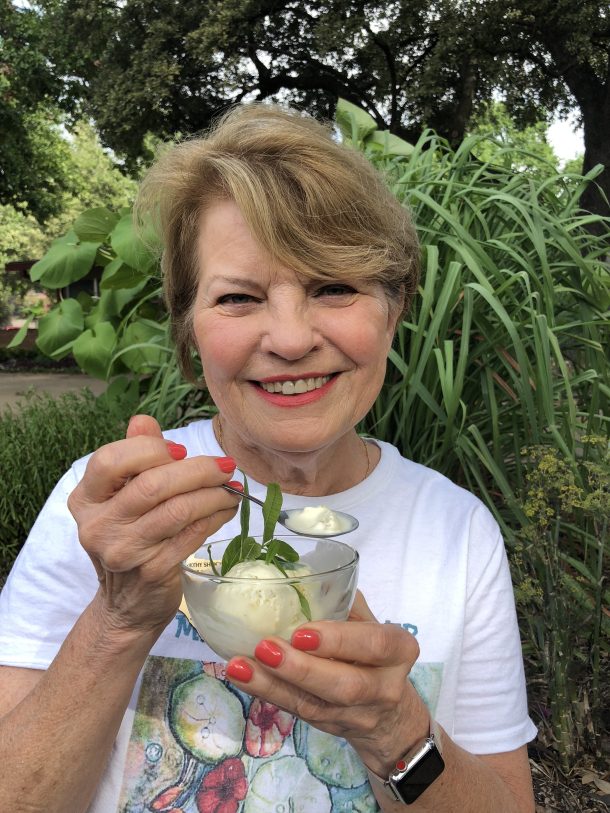
It was the surprise dessert, however, that took center stage…Lemon Verbena Ice Cream. If you already know about Lemon Verbena but aren’t growing it, now’s the time to reconsider. This ice cream was a real crowd pleaser based on some of the comments we heard as each spoonful was savored by our members:

“Lemony goodness is filling my senses. I want more.”

“Those tiny, little bits of candied lemon rind are popping in my mouth. So refreshing.”

“Creamy texture, divine flavor…please make this again.”

Lemon Verbena Ice Cream Enjoyed by Dorothy!

Lemon Verbena Ice Cream

Ingredients

1 cup milk

1 cup fresh lemon verbena leaves

1 ¾ cups heavy cream

¾ cup sugar

⅛ teaspoon salt

5 egg yolks

¼ cup fresh lemon juice

*¼ cup chopped candied lemon zest

Directions

In a saucepan set over moderate heat bring the milk just to a simmer. Gently crush the lemon verbena leaves in a bowl and add the hot milk. Cover and let steep until milk is cool.

Strain the milk through a sieve into a saucepan, pressing hard on the leaves to extract all flavor. Add the cream, sugar and salt. Bring to a boil, stir once, and remove pan from the heat.

In a bowl whisk the egg yolks, add half of the hot cream mixture, whisking, and pour the egg mixture back into the remaining hot liquid. Cook over moderate heat, stirring, until mixture coats the back of a spoon. Do not let it boil. Stir in the lemon juice and candied zest.

Transfer the mixture to a bowl, let cool, and chill, covered with plastic, until cold.

Transfer the mixture to an ice cream maker and freeze according to manufacturer’s directions.

Yield: about 1 quart


*Candied Lemon Zest

Ingredients

4 lemons, well scrubbed

2 cups sugar

1 cup cool water

Directions

Remove zest from lemons with a vegetable peeler, keeping pieces long. Remove white pith using a paring knife. Cut into a fine julienne using a very sharp knife. Place julienned zest in a small bowl; cover with boiling water. Let stand 30 minutes; drain.

Bring sugar and the cool water to a boil in a small saucepan over medium-high heat. When sugar is completely dissolved, add julienned zest, reduce heat to medium low, and cook 10 minutes. Remove from heat, cover, and let stand overnight. Drain before using.

Yield: 8 servings

Here’s some information about a well-loved herb, lemon verbena:

Lemon Verbena

Lemon Verbena, Aloysia triphylla syn. Lippia citriodora, is a member of the Verbenaceae family. It is a shrub-like herb with woody stems and bright green, rough-textured pointed leaves, from 1-3 inches long. Leaves grow in whorls of 3 to 4 with an intense lemon scent.  

The bush generally grows around 3-6 feet tall. Plant in full sun in good garden soil. Give it plenty of room to ramble off in different directions or trim slightly, if desired. Either way, you will have an abundance of leaves to use starting in early spring and continuing into fall. In winter lemon verbena will lose its leaves.

Once springtime arrives, you’ll notice tiny little leaves popping out up and down the stems. Your lemon verbena has come out of its dormant stage and it is ready to welcome the new season. This might be a good time to give it a shapelier look.

Enjoy its crisp, clean lemon taste as a substitute in any recipe calling for lemons. Use its fresh leaves chopped up in cakes, cookies and glazes. Drop a sprig or two in your tea and relax with a delightfully lemon-scented herb that should be in everyone’s garden.

Linda Alexander


The next Dallas County Master Gardener meeting will be October 25   at Walnut Hill United Methodist Church and don’t forget our fall garden tour on October 13th. Tickets can be purchased ahead online for $15 or for $20 on the day of the tour at any of the garden locations. More information here.

All members of the public are invited to both events!

Lemon Verbena-no calories, no guilt info here!


Brussel Sprouts

As master gardeners, we really dig a good reason to gather around the table. When delicious, garden-fresh food is involved we’re “all in”. That’s what happened a few weeks ago when we surprised our Raincatcher’s team leader, Lisa Centala, with a ‘bring your favorite dish’ salad buffet for her special birthday.

A tantalizing line up of salad bowls and platters was spread out the length of two 8-foot tables. We didn’t hesitate to fill our plates with the most amazing variety of green salads, vegetable salads, chicken salads and more. Approaching the end of the line were Artichoke Bites, Baguette slices spread with basil cream cheese and Hatch chili biscuits. No restraint was shown as evidenced by plates full of our garden-inspired selections.

One particular dish new to many of us and requested by all was the Zesty Brussels Sprouts. True to its name, the apple cider vinegar combined with sugar and horseradish was soaked up by each little sprout. They had just the right amount of zip to satisfy the palate. Kathey Roberts graciously shared the recipe for everyone to enjoy.

Raincatcher’s Iconic Picture of Brussel Sprouts! Agree?

Now is the time to plant Brussels sprouts. With their long maturity date, transplants should be in your garden by October 15th. 

Zesty Brussels Sprouts

Ingredients

2 (10-ounce) bags frozen Brussels sprouts or use fresh from your garden or produce isle

1 ½ cups sugar

1 cup apple cider vinegar

5 Tablespoons prepared horseradish (not cream of horseradish)

Salt to taste

2 teaspoons dry mustard

Directions

Cook the sprouts according to package directions; drain. In a large bowl, mix the sugar, vinegar, horseradish, salt and mustard. Add the sprouts and toss lightly. Refrigerate at least 6 hours or overnight.

For more information about Brussel sprouts and a video about their care read here.

Linda Alexander

By the way, only 6 tickets left for the Apples, Pears, Persimmons and Pomegranates lunch on October 16th.  Lecture is free.


Greek Vegan Domaldes Recipe

Judy and Yaiyia (Toney) discussing grape leaves at The Raincatcher’s Garden

You remember Yiayia aka Toney Davrados.  Yiayia is Greek for Grandmother and as any Greek Grandma would-she showed us how to make dolmades at our fabulous July  Grape Lecture and Lunch Event.

Now she has offered us the vegan version:

Yiayia’s Greek Dolmades Vegan Style

*Stuffed Grape Leaves with Rice and Herbs

Stuffed Grape Leaves (Greek Dolmades) are often served as part of a mezé (appetizer) plate.  Too often they come from a can and are not fresh. Fresh Greek Dolmades are far superior to the canned.  These can either be a main dish or an appetizer, depending on your appetite. These small bundles of rice and herbs wrapped in grape leaves are a favorite dish in Greece.

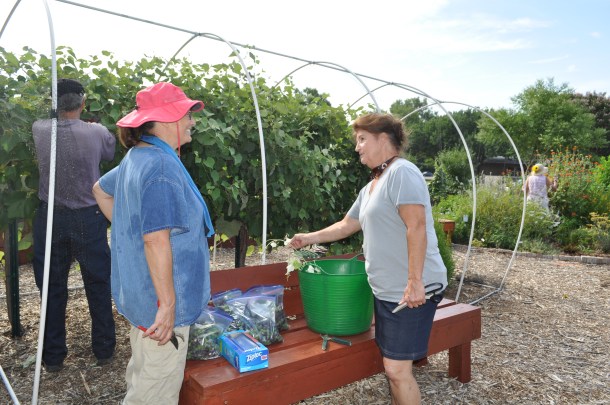
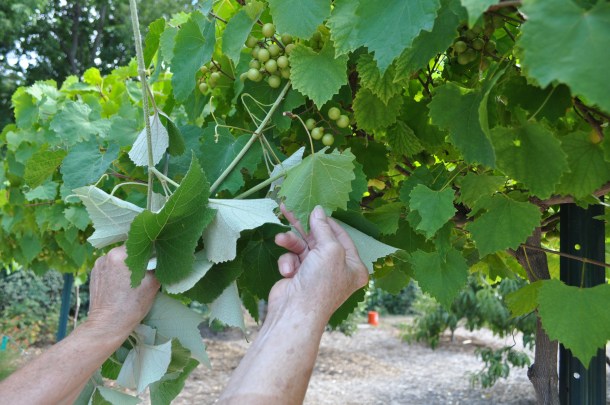
Toney surverys our grape leaves to show us leaves that are smooth on the back make better dolmades.

If you have never tried fresh Greek Dolmades, now is the time. They are very easy to make and so delicious!

*Fresh vine leaves: Blanch tender vine leaves for 2-3 seconds in boiling, salted water. Remove them with a slotted spoon and transfer to a bowl full of very cold water. Place in  colander to drain off water. Use a small sharp knife to remove any stems or tough veins they may have.

*When using bottled Grape Leaves:  To prepare bottled grape leaves, rinse well under cold water to remove the brine.  Place them in a colander (back side up) to drain and hold until ready to use

Ingredients

  • 60-70 tender vine leaves
  • 2 bunches fresh green onions, sliced in to very thin rounds
  • 1 large onion or 2 smaller ones, diced
  • 2 cloves of garlic, thinly sliced
  • 1 1/2 cup olive oil
  • 1 1/2 cup rice
  • 1 1/2 cup water
  • 1 bunch fresh parsley, finely chopped
  • 1 bunch dill, finely chopped
  • 1 bunch mint, finely chopped
  • grated zest of 2 lemons
  • salt
  • freshly ground pepper
  • juice from 1 1/2 – 2 lemons

Preparing  filling:

Place a pan over medium to high heat.

Add the green onion, onion and garlic along with ½ the olive oil .

Sauté for 10-15 minutes, until they soften, caramelize nicely and shrink in volume.

Add the rice and sauté for 2-5 minutes.

Add the 1 ½ cup water and stir. Lower heat and simmer for about 5 minutes, until the rice soaks up the water.

When ready, remove from heat and set it aside to rest for at least 10 minutes.

Add the parsley, dill, mint, lemon zest, salt and pepper. Stir to combine.

To assemble:

Spread 4-5 vine leaves, and lemon juice on the bottom of a 22 cm pot. Use any ripped or broken vine leaves.

Place a vine leaf in the palm of your hand or on a cutting board (veins facing up and shiny side down).

Add 1 tablespoon of filling in the center, fold the sides of the vine leaf inward and roll to complete. Review the process here.

Transfer to the pot, placing the stuffed vine leaves in a row, one next to the other.

Repeat the same process for all the vine leaves.

When the first layer has been added, continue with a second and third, if needed until they are all done.

Add the remaining olive oil, and cover the stuffed vine leaves with a plate. This is done so that they don’t fall apart while cooking.

Add the warm or hot water, until they are completely covered.

Simmer for about 40-50 minutes until the rice is done and the vine leaves are tender.

When ready, remove from heat and set them aside to cool in the pot.

Let them cool for a bit, in the pot. They can be served warm or cold and should be enjoyed all on their own!

*Perfect sauce for dolmades

Serve the stuffed vine leaves with yogurt, dill, mint, olive oil and freshly ground pepper.

  • 8oz Yiayia’s Greek strained yogurt
  • 1tsp dill finely chopped
  • 1tsp mint finely chopped
  • 1tbs extra virgin olive oil
  • Fresh ground pepper

Linda Alexander and Ann Lamb

Video by Starla Willis

“Apples, Pears, Persimmons and Pomegranates” Class and Lunch


“Apples, Pears, Persimmons and Pomegranates”

Nature has been saving up all year for the grand finale.

You’ll be inspired by this colorful class on planting, growing and harvesting the fruits of the season.

Tuesday, October 16th, 10:00am – 11:30pm

Raincatcher’s Garden of Midway Hills * 11001 Midway Road

Instructor: Jeff Raska, Dallas County Horticulture Program Assistant, Texas A&M AgriLife Extension Service

(The class is free – no reservation required. The public is welcome, and Master Gardeners earn one-hour education credit)

Immediately following Jeff’s presentation in the church sanctuary, you are invited to join us in the Community Hall for a bountiful buffet table bursting with seasonal flavor. This will be a feast for both the eyes and the palate.

Lunch reservations required by Tuesday, October 9th * $15 Per Person * Limited to 60

Eventbrite Ticket Sales for Apples, Pears, Persimmons and Pomegranates

Menu

Baked Brie with Roasted Persimmons

Cinnamon Candied Apple Slices

Butternut Squash-Pear Soup Garnished with Parmesan and Rosemary

Tennessee Ham Balls with Brown Sugar Glaze

Salad of Figs, Pomegranates, Persimmons and Pears with Pomegranate Dressing

Autumn Orchard Crisp, Persimmon Cookies, Caramel Apple Layer Cake with Apple Cider Frosting

Pineapple Sage Infused Water

Linda Alexander

Fall Veggie Gardening Resources


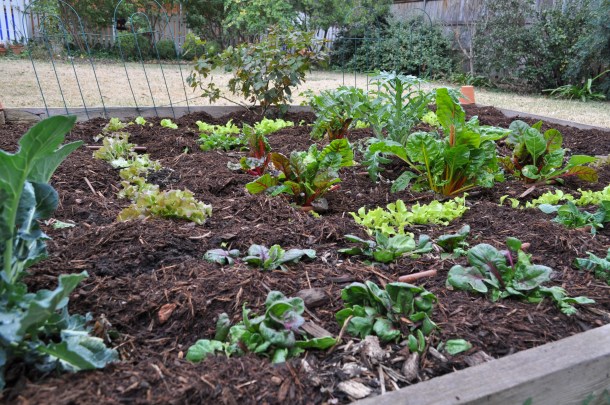
Last year our family chomped through lettuce, spinach, Swiss chard and broccoli out of this little garden fall through spring.

Dallas Garden Buzz asked Daniel Cunningham, Horticulturist and Program Coordinator at Texas A&M AgriLife about fall gardening a couple of weeks ago. He has given us good information and was right on with his *rain prediction:

Fall is a great time for growing vegetables in Texas! Coming off the driest growing season (to date) in 109 years in DFW, even the most seasoned green thumb’s gardens may have struggled in 2018.

Plants and planters can be renewed this fall. Let’s rejoice in the fact that there are cooler temperatures ahead and hopefully some *well-timed rain events. AgriLife has an incredible network of resources to help folks root into fall vegetable gardening!

o    Sustainable Vegetable Gardening brochure

o    TAMU Fall Planting Guide

o    TAMU Vegetable Variety Selector

o    TAMU Vegetable Resources

o    TAMU Vegetable Integrated Pest Managment

o    TAMU Plant Clinic


Dallas Garden Buzz thanks Daniel Cunningham:       

Horticulturist | Program Coordinator     (972) 952-9223

@TXPlantGuy


Fig Fest Dessert Recipes and Lecture 2018

Dallas County Master Gardeners Working Fig Fest

We had a great day at the garden on August 7th, out working early, tidying up the plants and helping them through this summer heat, and then inside to learn about the care and feeding of fig trees, a (relatively) easy and delicious plant we can grow out here in north Texas.

“Fig Fest” was the third in our series, “A New Crop of Classes.” Entertaining, informative, inspirational, flavorful and delicious were just some of the comments we heard from those who attended…77 to be exact. Jeff Raska, our Dallas County Horticulture Program Assistant, Texas A&M AgriLife Extension Service, shared the biology, history, and how-to’s of growing figs locally, and Lisa Centala shared nutritional information about figs, which are a great source of dietary fiber and vitamins K and A.

Highlights from Jeff’s talk included:

  • Figs: You can love them to death. Figs love poor soil, but keep it well-drained and water consistently. You can even raise the bed a bit when planting with compost and mulch. Don’t add nitrogen – it will cut back fruit production.
  • The flower is inside the fig
  • Figs are a Mediterranean plant and want no more than 800 chill hours. We are about as far north as we can be and still grow figs, which means the plant may die back in the winter. Allow your fig to have several trunks, and don’t worry if one or all die back – it will come back in the spring. In fact, don’t trim the dead wood away until the leaves come back in spring so you know which branches are really dead.
  • There are two varieties of fig trees: those that are everbearing, and those that bear once a season. Texas Everbearing (or Brown Turkey) will give an early crop in late spring/early summer, and the rest of the fruit will ripen from June through August. Celeste is also a recommended variety for our area, but it’s “one and done.” Celeste gives one crop a season but is a bit more cold-hardy than Texas Everbearing, which is why we chose this variety at Raincatcher’s.
  • Harvest your figs when they’re ripe (they have a little give when you squeeze them), because they won’t ripen off of the tree. And eat them quickly! They’ll start to ferment in just a couple of days.

For more information on cultivating figs, please visit this Aggie Horticulture site.

And, once again, following Jeff’s presentation we savored a fig-inspired lunch that would have kept Adam and Eve in the garden. We hope you enjoy the photos and recipes from a delightful summer class. Congratulations to a new crop of “fig experts!”

Trio of Fig Desserts

Fig and Strawberry Tart

Ingredients

For the Crust

1 ¼ cups all-purpose flour, plus more for surface

½ teaspoon granulated sugar

Salt

1 stick cold unsalted butter, cut into small pieces

¼ to ½ cup ice water

Directions

Make the crust: Pulse flour, granulated sugar, and ½ teaspoon salt in a food processor until combined. Add butter, and pulse until mixture resembles coarse crumbs with some larger pieces remaining, about 10 seconds.

Drizzle ¼ cup ice water evenly over mixture. Pulse until mixture just begins to hold together (it should not be wet or sticky). If dough is too dry, add more water, 1 tablespoon at a time, and pulse. Press dough into a disk, and wrap in plastic. Refrigerate until firm, about 1 hour or overnight.

Roll dough to a 14-inch circle (⅛ inch thick) on a floured surface. Fit dough into bottom and up sides of a 10-inch fluted round tart pan with a removable bottom. Trim excess dough flush with edges of pan using a knife. Refrigerate until firm, about 1 hour.

Preheat oven to 350˚F. Prick bottom of tart shell all over with a fork, and fill with pie weights or dried beans. Bake for 30 minutes. Remove weights, and bake until set, about 5 minutes more. Let cool. Leave oven on.

For the Filling:

¾ cup blanched hazelnuts, toasted

½ cup packed light-brown sugar

¼ cup granulated sugar

½ teaspoon finely grated lemon zest

Salt

1 stick unsalted butter, cut into small pieces

2 tablespoons Armagnac, or other brandy, such as Cognac

2 large eggs

½ teaspoon pure vanilla extract

8 ounces figs (about 7), trimmed and halved lengthwise

8 ounces strawberries (1 ½ cups), halved if large

Garnish: whipped cream

Make the Filling: Pulse hazelnuts in a food processor until finely chopped. Add sugars, zest, and ¼ teaspoon salt; pulse to combine. Add butter, Armagnac, eggs, and vanilla; pulse until mixture is almost smooth.

Spread filling evenly into tart shell. Top with figs and strawberries. Bake for 30 minutes. Reduce oven temperature to 325˚F; bake until set and dark brown on top, about 1 hour more. Garnish with whipped cream.

Lemony Rice Pudding with Figs and Saba

Ingredients

1 cup uncooked long-grain rice

1 tablespoon powdered sugar

7 cups milk

¾ cup granulated sugar

1 tablespoon lemon zest

½ teaspoon salt

1 vanilla bean, split

1 pint fresh figs, quartered

Saba is an ancient sweetener traditionally made from freshly squeezed grape juice, known as must. It is basically a sweet grape syrup. Order online or purchase at specialty grocers. After opening, refrigerate up to one year.
Directions

Bring 4 cups water to a boil in a large saucepan. Stir in first 2 ingredients, and cook, stirring occasionally, 5 minutes; drain.

Return rice to saucepan; stir in milk and next 4 ingredients. Bring to a boil over medium-high heat; reduce heat to low, and simmer, stirring occasionally, 45 minutes or until thick. Remove vanilla bean. Remove from heat, and transfer to a glass bowl. Let stand 1 hour, stirring occasionally. Cover and chill 8 hours.

Spoon into serving dishes; top each with figs and a drizzle of Saba.

Yield: Makes 10 servings

Fresh Fig Ice Cream

Ingredients

1 (15-ounce) can condensed milk

2 (13-ounce) cans evaporated milk

Juice of ½ lemon

3 pints peeled, fresh figs, mashed

2 cups sugar

Whole milk

Directions

Put all ingredients in freezer container. If the figs are very ripe, you may not need as much sugar as called for. Add whole milk to level freezer calls for to ensure proper freezing. Freeze in a 6-quart freezer according to directions.

Yield: Serves 20

Note: In the dessert picture there is a grilled fig spread with a dollop of mascarpone cheese and a drizzle of honey. No recipe just buy and prepare!

Linda Alexander and Lisa Centala


*Our fourth and final class of 2018 is scheduled for Tuesday, October16th.

Apples, Pears, Persimmons and Pomegranates promises to be a another educationally inspiring class. And following Jeff Raska’s presentation; don’t miss a bountiful lunch buffet filled with seasonal flavors.  Information about the class will be posted on this blog in early September.

Hope you can join us!

Fig Fest Recipes 2018

Figgy Focaccia

Ingredients

1 medium-size red onion

3 tablespoons olive oil, divided

Coarse sea or kosher salt and freshly ground pepper to taste

Plain cornmeal

1 pound bakery pizza dough

8 fresh figs, halved

1 tablespoon fresh rosemary leaves

Directions

Preheat grill to 350˚F to 400˚F (medium-high) heat. Cut onion into ¾ to 1-inch slices. Brush onion slices with 1 tablespoon olive oil, and season with sea salt and freshly ground pepper to taste. Grill onion slices, without grill lid, 3 to 4 minutes on each side or until tender and lightly charred.

Preheat oven to 425˚F. Lightly dust work surface with cornmeal. Stretch dough into a 10- to 12-inch oval on work surface. Place dough, cornmeal side down, on a greased baking sheet; drizzle with remaining 2 tablespoons olive oil. Rub oil into dough. Arrange fig halves and grilled onion over dough, pressing lightly. Sprinkle with rosemary and salt and pepper to taste.

Bake at 425˚F on lowest oven rack 15 to 20 minutes or until golden.

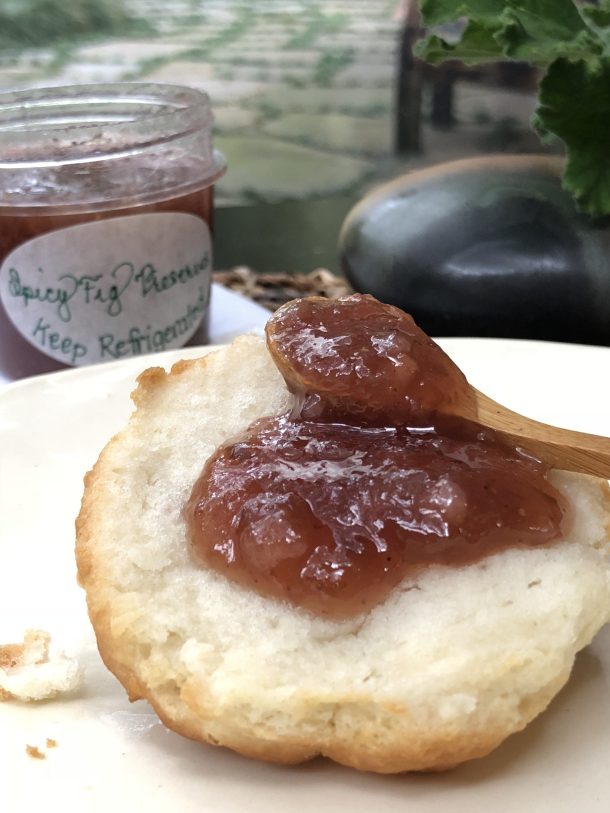
Spiced Fig Preserves

Spiced Fig Preserves

Ingredients

½ lemon (unpeeled), thickly sliced, seeded

1 ½ pounds fresh ripe figs, halved (about 4 cups)

2 ¼ cups sugar

1 3-inch cinnamon stick

2 ¼ teaspoons mined peeled fresh ginger

⅛ teaspoon ground cloves

Directions

Finely chop lemon in processor. Add figs. Using on/off turns, process until figs are coarsely pureed. Transfer mixture to heavy large saucepan. Add sugar, cinnamon stick, minced ginger and cloves. Simmer until mixture thickens to jam consistency and candy thermometer registers 200˚F, stirring often, about 20 minutes. Discard cinnamon stick.

Divide hot preserves among hot clean jars. Cover tightly and refrigerate up to 2 months.

Yield: Makes about 3 ⅓ cups

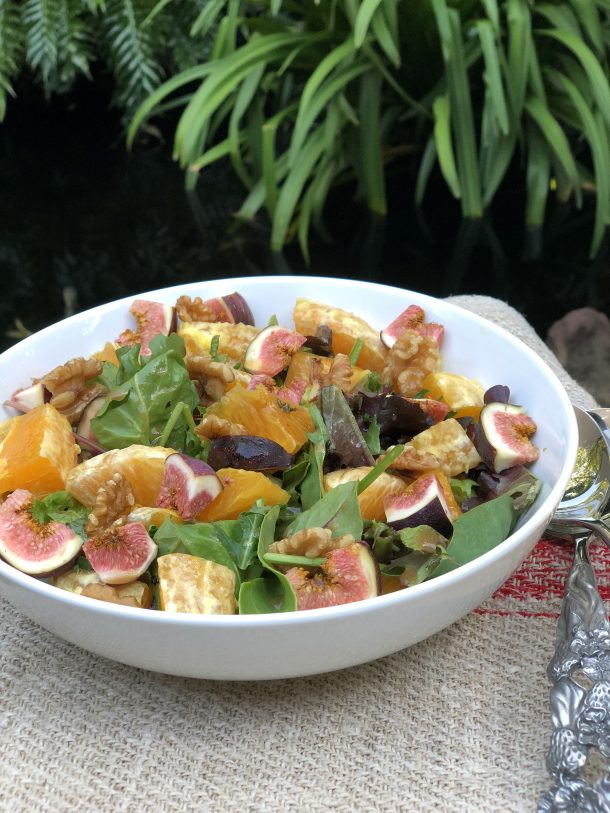
Orange, Walnut, Gorgonzola and Mixed Greens Salad with Fresh Citrus Vinaigrette

Orange, Walnut, Gorgonzola and Mixed Greens Salad with Fresh Citrus Vinaigrette

Ingredients

¾ cup walnut halves

10 ounces mixed salad greens with arugula

2 large navel oranges, peeled and sectioned

4-5 fresh figs, quartered

½ cup sliced red onion

¼ cup olive oil

¼ cup vegetable oil

⅔ cup orange juice

¼ cup white sugar

2 tablespoons balsamic vinegar

2 teaspoons Dijon mustard

¼ teaspoon dried oregano

¼ teaspoon ground black pepper

¼ cup crumbled Gorgonzola cheese

Directions

Place the walnuts in a skillet over medium heat. Cook 5 minutes, stirring constantly, until lightly browned.

In a large bowl, toss the toasted walnuts, salad greens, oranges, and red onion.

In a large jar with a lid, mix the olive oil, vegetable oil, orange juice, sugar, vinegar, mustard, oregano, and pepper. Seal jar, and shake to mix.

Divide the salad greens mixture into individual servings. To serve, sprinkle with Gorgonzola cheese, and drizzle with the dressing mixture.

Fig Fest note: We omitted the gorgonzola when serving the salad at Fig Fest since it was already a topping for the flank steak. Otherwise, it is nice to include in the salad.

Abbe Bolich’s husband, Neil, and grandson grilling flank steak.

Rosemary Flank Steak with Fig Salsa

Ingredients

1 tablespoon chopped fresh rosemary

2 garlic cloves, minced

¾ teaspoon kosher salt

½ teaspoon freshly ground pepper

3 tablespoons olive oil, divided

1 (1 ¼ pound) flank steak

3 cups chopped fresh figs

1 green onion, minced

2 tablespoons chopped fresh parsley

2 tablespoons seasoned rice wine vinegar

3 ounces Gorgonzola cheese, crumbled

Directions

Stir together first 4 ingredients and 1 tablespoon olive oil. Rub into steak; cover and chill 30 minutes to 4 hours.

Preheat grill to 400˚F to 450˚F (high) heat. Toss together figs, next 3 ingredients, and remaining 2 tablespoons oil. Add salt and pepper to taste.

Grill steak, covered with grill lid, 5 minutes on each side or to desired degree of doneness. Let stand 5 minutes.

Cut steak diagonally across the grain into thin strips and arrange on a serving platter. Spoon fig salsa over steak and sprinkle with Gorgonzola.

Yield: Makes 6 servings

Linda Alexander

Grape Harvest at The Raincatcher’s Garden

Our Fig Luncheon on Tuesday, August 7th is sold out but we have plenty of room if you would like to join us for Jeff’s Fig Lecture.


Champanel Grapes Harvested at The Raincatcher’s Garden, summer 2018

Jim’s grape notes:
33 lbs. of grapes were picked last Tuesday, July 31st. Previous week’s harvest was 16 lbs.   The ripe grapes were juiced providing enough for 5 batches of jelly. That should make about 40- ½pints of jelly. We have been wanting grapes, well… we are getting grapes now!

Thank you, Jim Dempsey and everyone who picked the grapes!