Tag Archives: gardening

Winter Savory Is Welcome In This Flavorful Wintertime Dish

January 20, 2024

A plant growing on a stone wall

Description automatically generated
Winter Savory growing in the garden

Walking in the garden early this morning just as sunlight was spreading its glowing rays, I stopped for a moment to gently caress the winter savory. Dew had fallen softly upon it, leaving the cascading branches with a shimmery presence. It seemed to be saying…” use me please”. And that is exactly what happened!

My husband and I love a cozy wintertime dinner by the fire. Thankfully, my winter herb garden had supplied me with the three ingredients needed to infuse the marinade for Balsamic Herb Baked Chicken Thighs: fresh rosemary sprigs, sage leaves and winter savory. This herb-garden inspired recipe delivered a pleasing amount of comfort and flavor for the perfect fireside meal.

Hopefully, you are growing a nice selection of herbs in your winter garden. If so, remember that they liked to be snipped, trimmed and used for culinary and decorative purposes in your home.

*For information about growing winter savory, click here. 

*All herbs were harvested just before the cold front and freezing temperatures arrived. They were kept in a damp paper towel lined plastic baggie for two days.

Linda Alexander, Dallas County Master Gardener Class of 2008

Gifts From the December Garden

December 20, 2023

A red ball on a statue

Description automatically generated

The chill of winter, though not officially here according to the calendar, has arrived. Trees are now displaying their bare branches as each day swirling, gusty winds bring colorful autumn leaves to the ground. From the stately red oaks and maples to the stunning brilliance of Chinese Pistache, yard crews are struggling to keep up with the piles and piles of leaves covering grassy lawns and flower beds. 

What remains is winter’s gift to our yards and woodlands…the mighty evergreens. My Christmas decorating theme was simplified significantly this year as I took time to pause and contemplate this marvel of nature.  Suddenly, I was caught completely by surprise upon discovering a towering tree growing along the back side of our neighbor’s fence. After 17 ½ years of driving past their property to enter our back gate, a large evergreen tree bursting with clusters of small blue berries caught my eye. I had never even noticed this tree until two weeks ago. Unsure of its name, a quick plant search on my iPhone gave me the correct answer. It was a JUNIPER. 

From that moment of discovery, I was smitten with the dreamy blue color of berries drooping from needle-like leaves with a delicate and aromatic pine scent. Thoughts of decorating my home with the greenery of winter were filling my head. And then a beloved old Christmas carol seemed to speak the words I needed to hear. My decorating theme for Christmas 2023 would be…” Let Heaven and Nature Sing”.

My sweet neighbor was so accommodating by giving me permission to ‘harvest’ as much as I wanted from her Juniper tree. That was the beginning of a foraging-type mission for evergreen material in our yard and along the alley ways and streets behind us. My goal was to respectfully select, then carefully cut, branches that would complement my decorating theme. 

The joy of using freshly cut evergreen branches for Christmas decor is their aromatic gift and profound color. Our home not only has the feel of a nature-inspired Christmas, but the air is filled with a calming heavenly scent, as well. 

Please enjoy a sampling of nature’s gifts in this short video featuring the evergreens used to adorn our home as we proudly proclaim…” Joy to the World!”

*Evergreens, and herbs, used from our yard (and a kind neighbor) are: Magnolia, Boxwood, Burford, Foster, Nellie R. Stevens, Savannah and Yaupon Hollies, Junipers, Cedar Trees, Japanese Plum Yew, Lavender, Rosemary, Thyme, Winter Savory and traditional English Ivy.

Linda Alexander, Dallas County Master Gardener Class of 2008

Vegetable Lambs

Plant Born Sheep, The Medieval Idea Of Cotton           

     Have you seen the Demonstration Garden’s flock of “vegetable lambs?”  Tended with loving care by Dallas County Master Gardener Jim and other DCMG volunteers, they thrive in the Garden’s raised beds.  Though we now know these “vegetable lambs” by their contemporary name, cotton, during the medieval period in Europe, cotton was an imported fiber and the actual plant that produced it was unknown.  So, noting its similarities to wool, people imagined that cotton must have been produced by plant-born sheep.  In 1350 John Mandeville, after a trip to Tartary, wrote: “There grew there (India) a wonderful tree which bore tiny lambs on the ends of its branches.  These branches were so pliable that they bent down to allow the lambs to feed when they are hungrie (sic).”   Later in 1791 Dr. De la Croix in his work Connubia Florum, Latino Carmine Demonstrata  wrote of the vegetable lamb:

  Upon a stalk is fixed a living brute,                       Early Understanding Of Cotton Plants

  A rooted plant bears quadruped for fruit.

  It is an animal that sleeps by day

  And wakes at night, though rooted in the ground,

  To feed on grass within its reach around.

     Today’s scientific classification of cotton is, of course, much different from the zoophyte (i.e. an animal that visually resembles a plant) classification of the medieval period.  The name of the genus derives from the Arabic word goz, which refers to a soft substance. 

It is particularly interesting that cotton is in the Mallow family and is related to hibiscus.  This resemblance can be seen easily in cotton’s flowers.  Cultivated cotton is a perennial shrub.  However it is grown in our area as an annual.  Plants are around 3-5 feet tall with broad three to five lobed leaves.  The seeds are contained in capsules called a “boll.”  The many seeds found in a boll are surrounded by two types of cotton fiber.  The longer fiber can be spun into thread and ultimately cloth, while the much shorter fibers, called “linters,” are spun into low quality fiber, giving rise to the term “lint.”  Cotton requires a long growing period, full sun, moderate water and likes heavy soil.  If this sounds like a perfect plant for the Dallas area, it is—- and is why cotton fields used to be numerous throughout DallasCounty.  There are several different naturally occurring colors of cotton (white, brown, and green) and the DemonstrationGarden grows brown cotton and several different varieties of white cotton.

White Cotton And Brown Cotton Grown At The Demonstration Garden

     So the next time you visit the DemonstrationGarden, try standing by the cotton plants, closing your eyes, and just “Believe.”  If you listen closely, maybe you will hear the vegetable lambs say “baaaa.” 

       ***this is the first of several articles on cotton: the plant, its history, spinning and dyeing

Carolyn


A Summer’s Day

Take a close up view of these easy flowering plants for a sunny, summer garden.  Our Entry Garden is full of drought tolerant plants that fulfill the goal of being part of the non picky plant’s brigade.  Hooray for the plants that do it all for you and request so little water in return!  

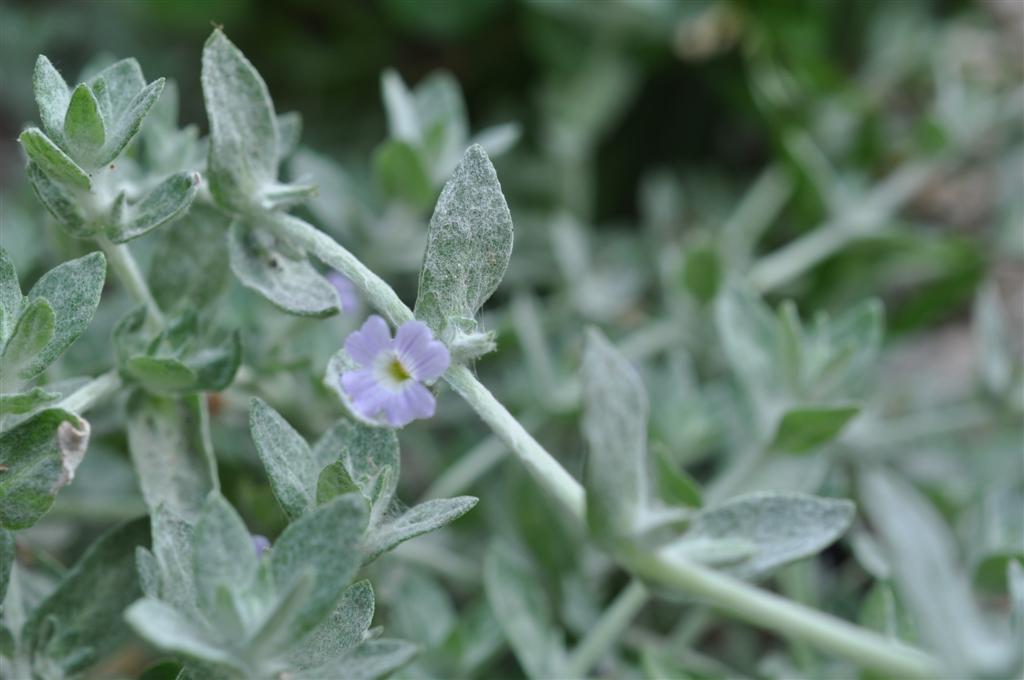
Woolly Stemodia– a dependable, ground hugging stalwart. 

 Wooly Stemodia with a little blue bloom


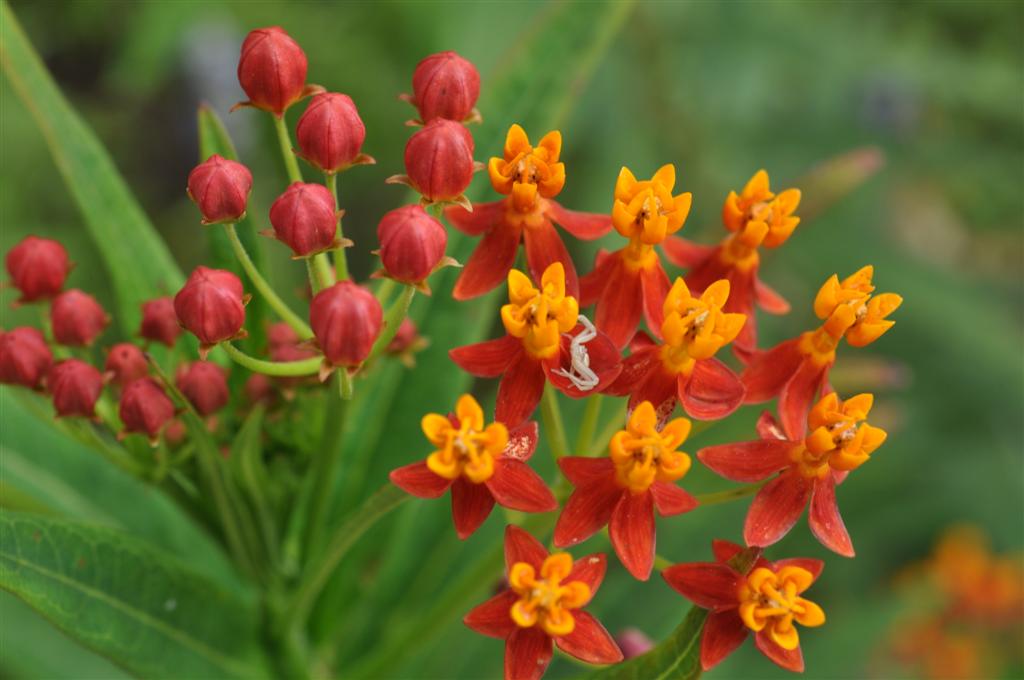
Butterfly Weed– a nectar source for butterflies.

Butterfly Weed


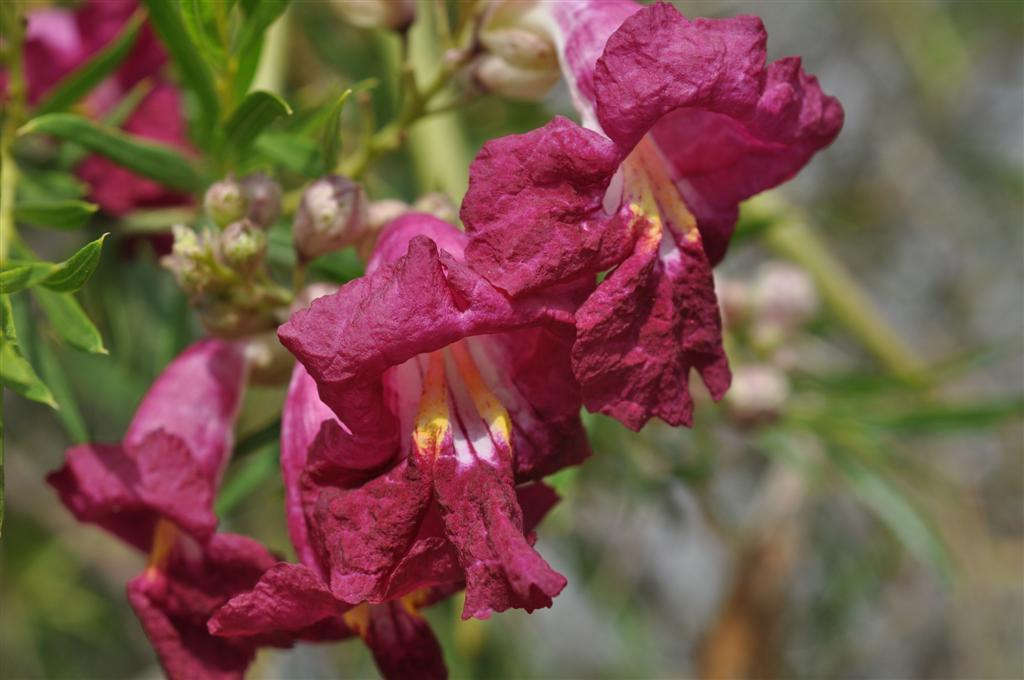
Desert Willow-seductive, trumpet-shaped  blooms for hummingbirds.

Desert Willow magenta blooms


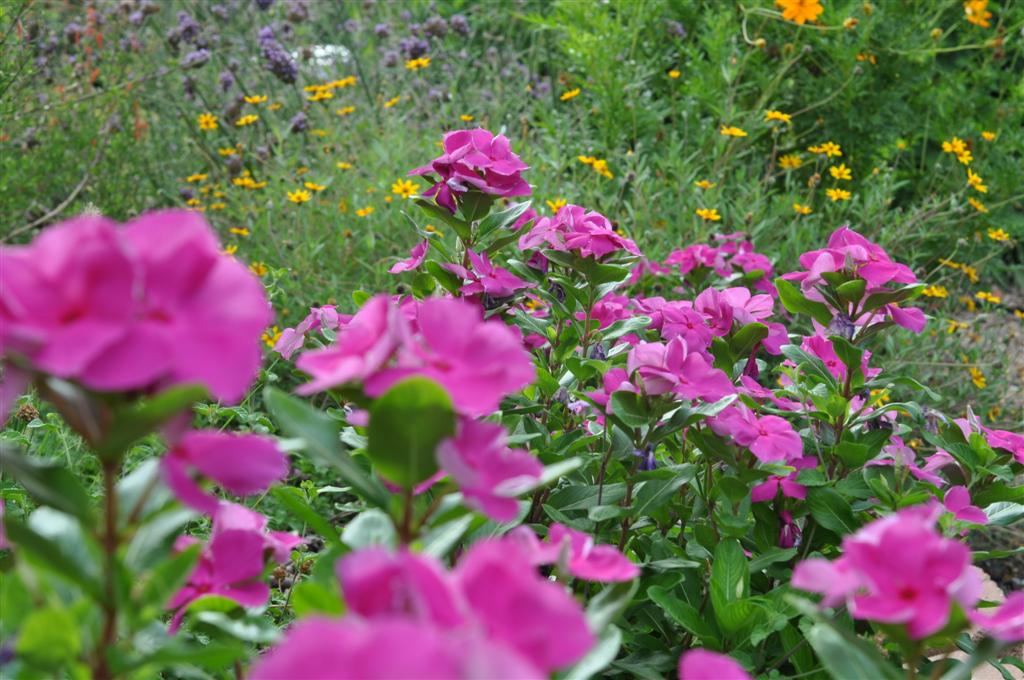
 Periwinkles-the Cora variety is disease resistant,  loves the heat  and has a more uniform habit  than other periwinkles. It looks great all season and into fall. Many colors to try!

Periwinkles in front of stick verbena, zexmenia, and cosmos


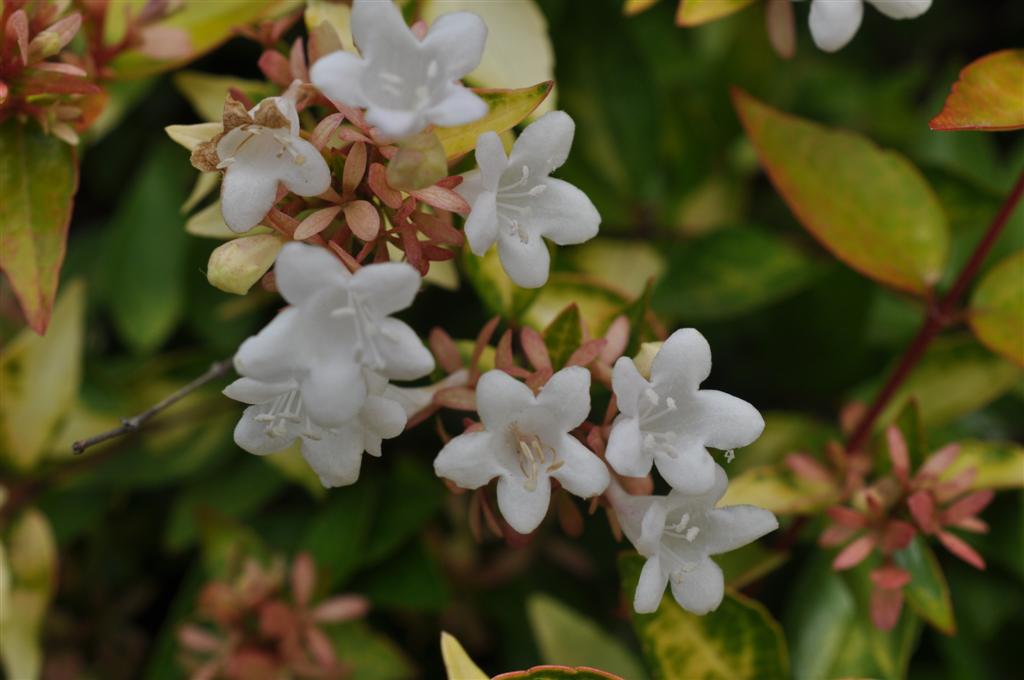
Abeilia-foliage with a punch, this is the Frances Mason variety. The leaves turn from several  colors of yellow to a coppery color in the fall.

Abielia foliage with white bloom

 Ann

Our New Blog

 Looking Down the Path to our Garden


Hello,  and welcome to the new blog for the Earth Kind® WaterWise Demonstration Garden on Joe Field Road. We have changed our name, but not our mission.  You may have known us formerly as the Bloomin’ Blog on Joe Field Road, we can now be found as dallasgardenbuzz.com.  You can help us by subscribing to our blog and passing our name along to others.

Though we are changing our web address to dallasgardenbuzz.com, you will find the same gardening advice and love of gardening. Our physical address has not changed. The  Earth Kind® Water Wise Demonstration Garden is located at 2311 Joe Field Road, Dallas, Texas 75229 in the heart of the Northwest industrial  area of Dallas near Royal Lane and Stemmons Freeway.

Drop in on a Tuesday morning or contact us for an appointment.  Even better, bring a group for a field trip to our gardens.  We would love for you to see our gardens.