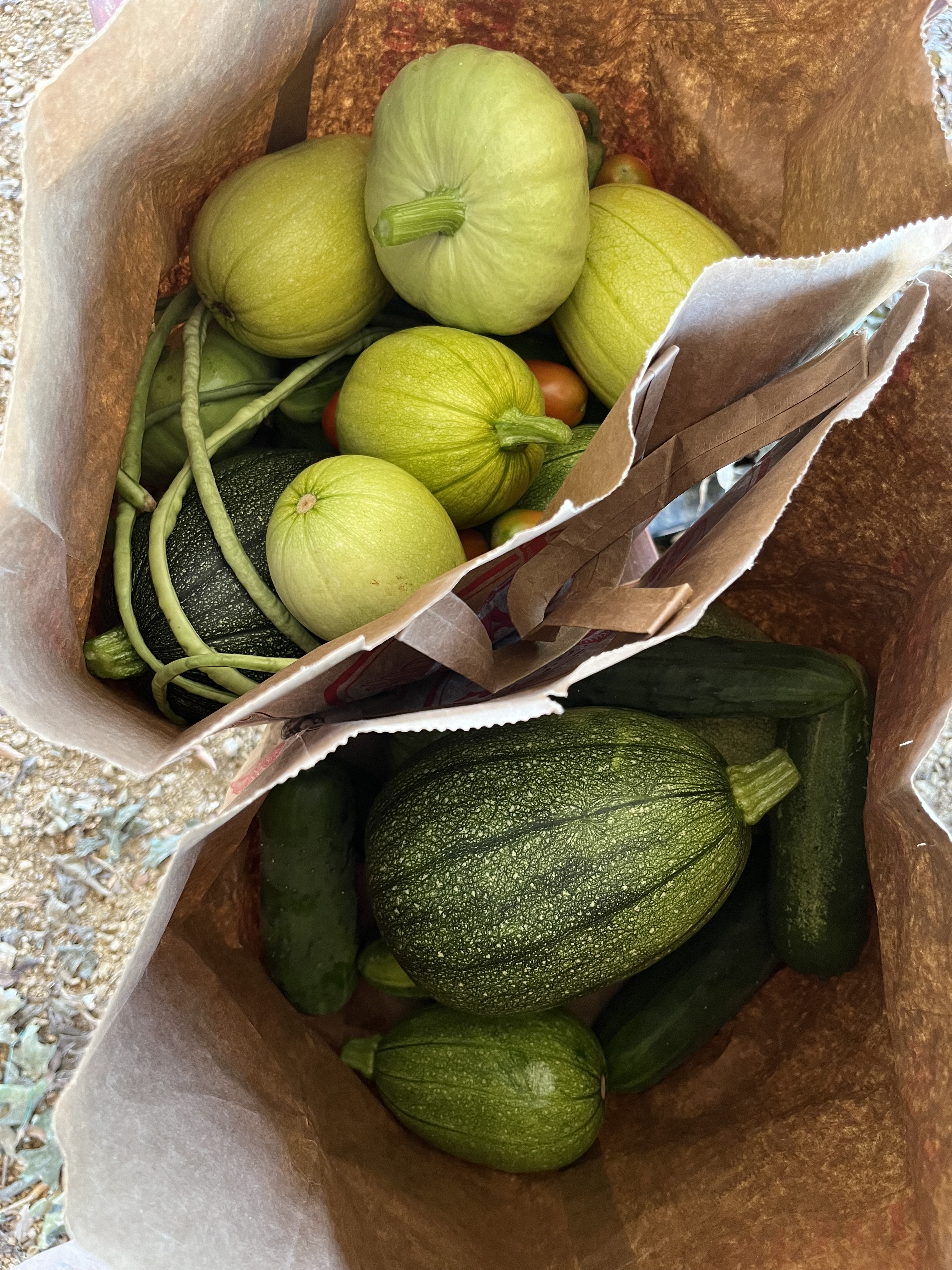
Congratulations to the Raincatcher’s Garden Veggie Team, who has harvested and donated 634 pounds of squash so far this year. It’s quite an accomplishment when you consider the ubiquity of the destructive squash vine borer (SVB) in the area.
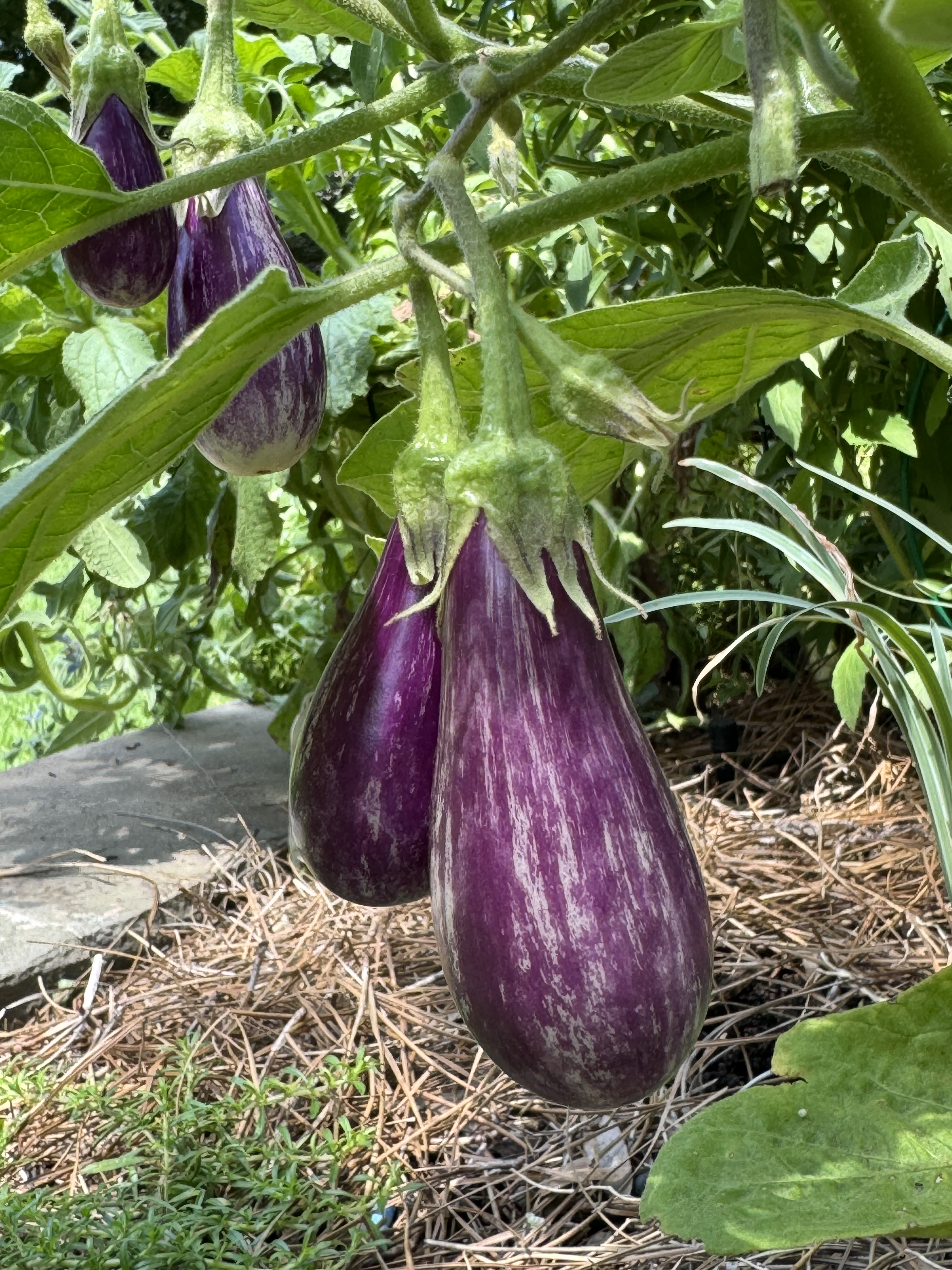
The team’s challenge was to find a squash variety that resists SVB. Over the past three years, gardeners have tried Zucchino Rampicante (Cucurbita moschata), Baby and Waltham Butternut (Cucurbita moschata) and Calabacita (Cucurbita pepo). All overcame SVB damage, but the Calabacita production was much higher.
Calabacita is delicious, especially when harvested at tennis ball to softball size. It can also be eaten as a soccer ball size pumpkin and stores well at the larger size. It takes a little more effort to prepare the larger size, so the gardeners included cooking instructions with donations.
One difficulty, but a good problem to have, is finding the many fruits of this prolific plant before they reach a large size.
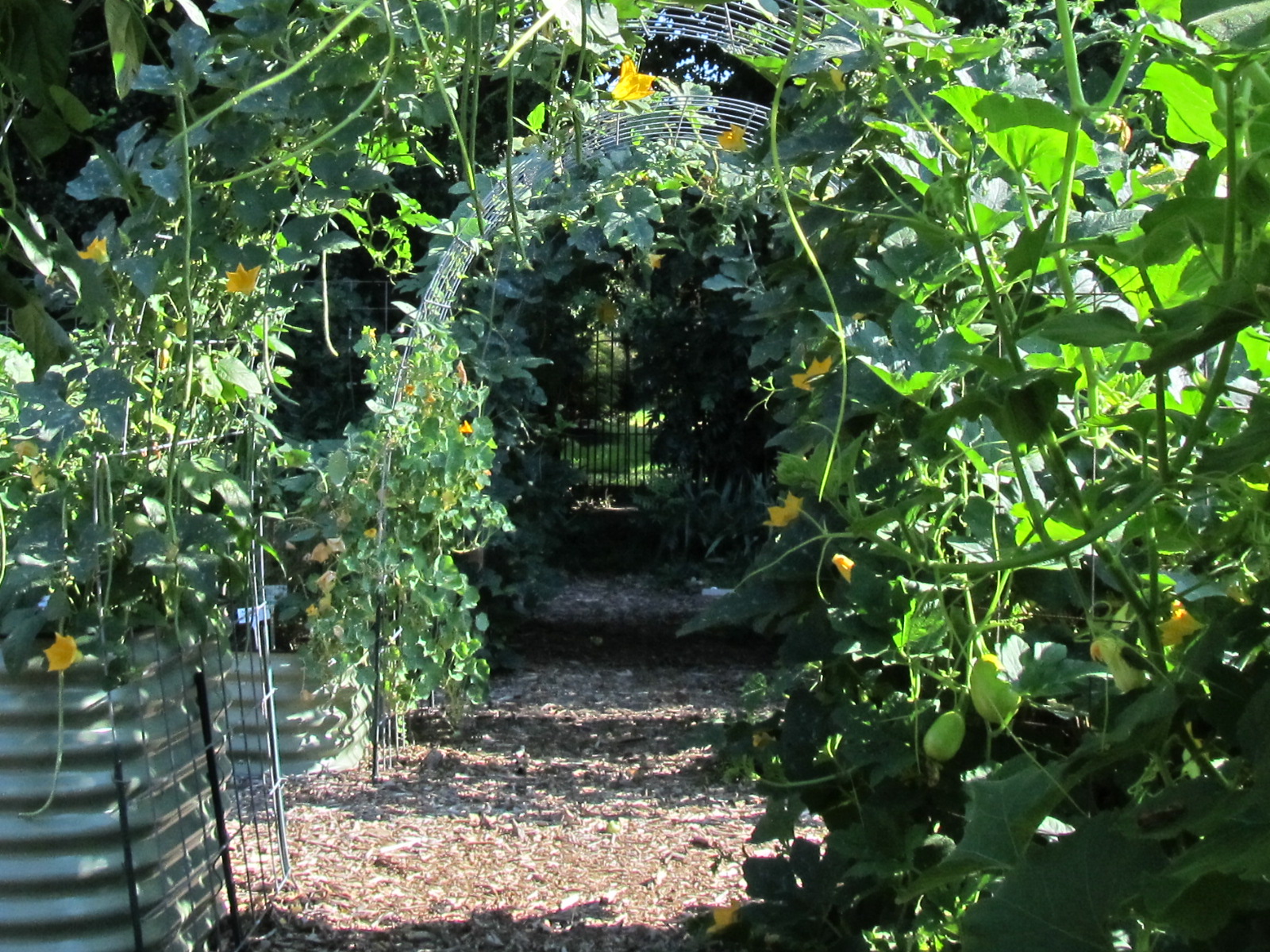
Another issue is the vines grow over 10 feet long and quickly sprawl throughout the garden. At Raincatcher’s they grew over large trellises and into the raised beds and grape arbor on the opposite side.
However, the trade off of space for productivity worked out well for the garden this year.
Well done Veggie Team, whose total production for 2024 has now surpassed 1200 pounds, providing fresh, nutritious food for the patrons of North Dallas Shared Ministries.
Cyntihia Jones and Beverly Allen, Dallas County Master Gardeners
The Veggie Team works hard every Monday morning (and many Thursday mornings during harvest), weather permitting, so please feel free to stop by with any questions you may have about growing vegetables in Dallas or just to look around and be inspired. Our garden is located on the grounds of Midway Hills Christain Church at 11001 Midway Road, Dallas, TX, 75229.
Oh, I so enjoy the colors and flowers that bloom during the early summer and one that I’m enjoying of late is bee balm. Its magenta flowers atop a tall stalk are a feast for pollinators. In the wildflower area of Raincatchers, a purple rocket-like plant is putting on a show – Bee balm? It looks nothing like the other, but I recall it being bee balm too. Can it be? And then there’s Lemon Balm with its bushy habit and ability to travel readily. Looks like it’s time to clear up this mystery—
Upon further investigation, these similar names create a climate for confusion Bee balm, Lemon Balm, and Lemon Bee Balm -the looks of the plants are distinctively different but all are related to the mint family.
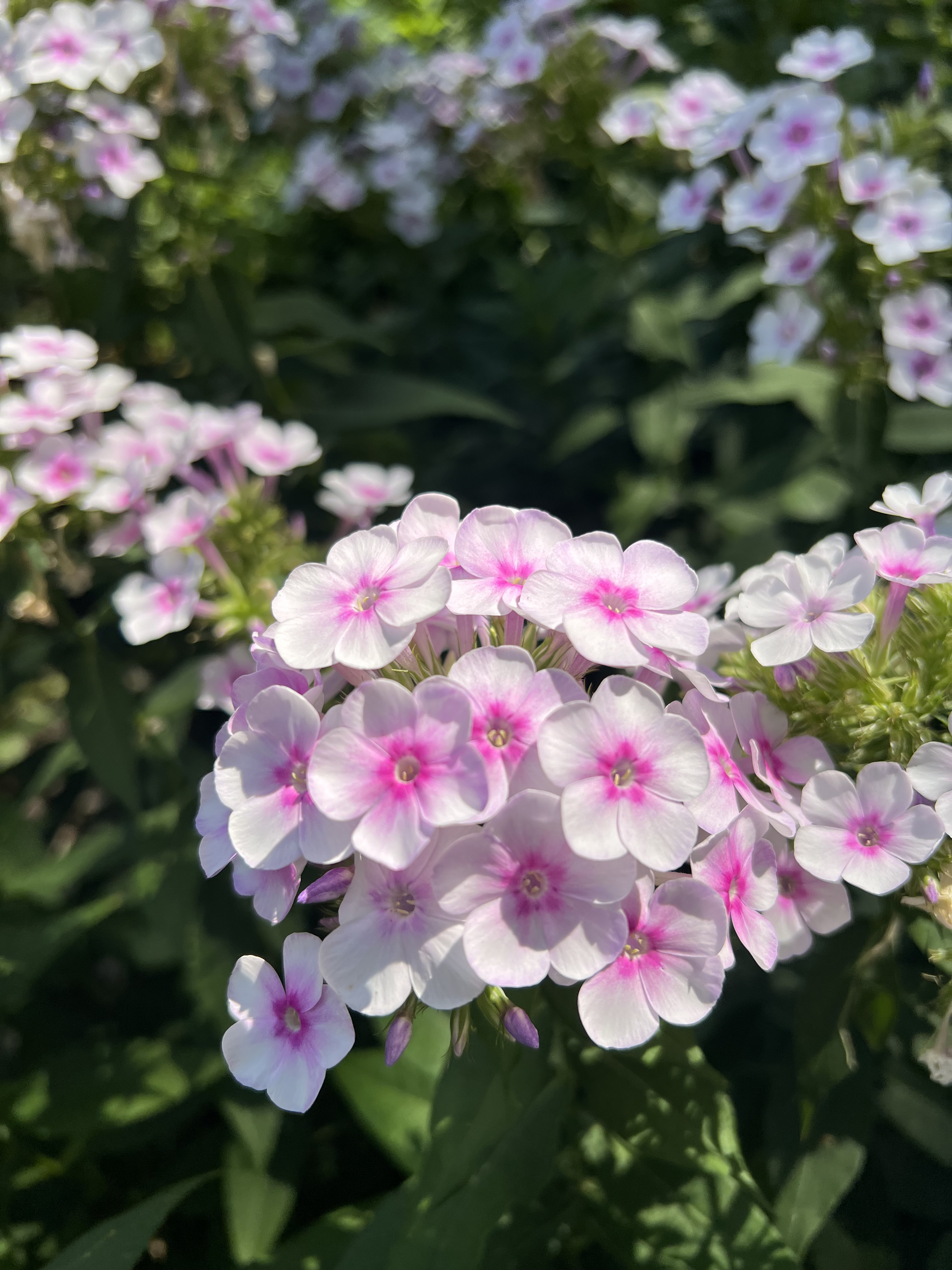
eBee balm, also called Wild bergamot, has several varieties – some perennial and others annual. Monarda is a genus of flowering, plants from the mint family. Lamiaceae didyma or fistulosa (zones 4-9) are perennials. Its cheery pink flowers are located near the Edible landscape greenhouse and stands 24-48 inches tall, and can spread 24 -36 inches. It blooms late spring into summer in full to part sun in well prepared beds with good drainage. Bee balm has magenta, pink, purple, red or white flowers that are 2-3-inch across with slender tubes looking flowers on a tall stalk.
Bee Balm
If your garden needs a smaller specimen, pinch the stalks in early spring, or purchase a shorter variety. Deadheading and cutting makes way for more flower production. Cut the stalks close to the ground in late fall and they will return in the spring. Powdery mildew might make an appearance if it’s a wet spring, but it won’t harm the plant.
II was purchased at the DCMG Plant Sale at Fair Park and then a dear friend gifted some she started from seeds (Northaven Gardens). It spreads some, but not difficult to control. The bees, Butterflies and hummingbirds are delighted. Mark and Cynthia Jones captured this picture of a moth (white lined sphinx moth I think) feasting on the variety Peter’s Purple.
Lemon BEE Balm (Monarda citriodora) is a herbaceous annual of the mint family, native to Central, southern America and Mexico and is commonly found in pastures and prairies. It will thrive in full sun, and in poor, rocky, or sandy soils. Can you see where this gets confusing? It Blooms in late Spring early summer about the same time as the Bee balm is blooming. This was found in our wildflower area at the garden along with blanket flower, long after the bluebonnets, Indian paint brush, and Engelmann daisies have said their adieus (goodbyes) To confuse even more, Lemon Bee balm is also known as purple horsemint or lemon mint. It has lemon scented spiky clusters of varying shades of lavender. You can find this in seed packets and often in wildflower mixes.
Lemon Bee Balm
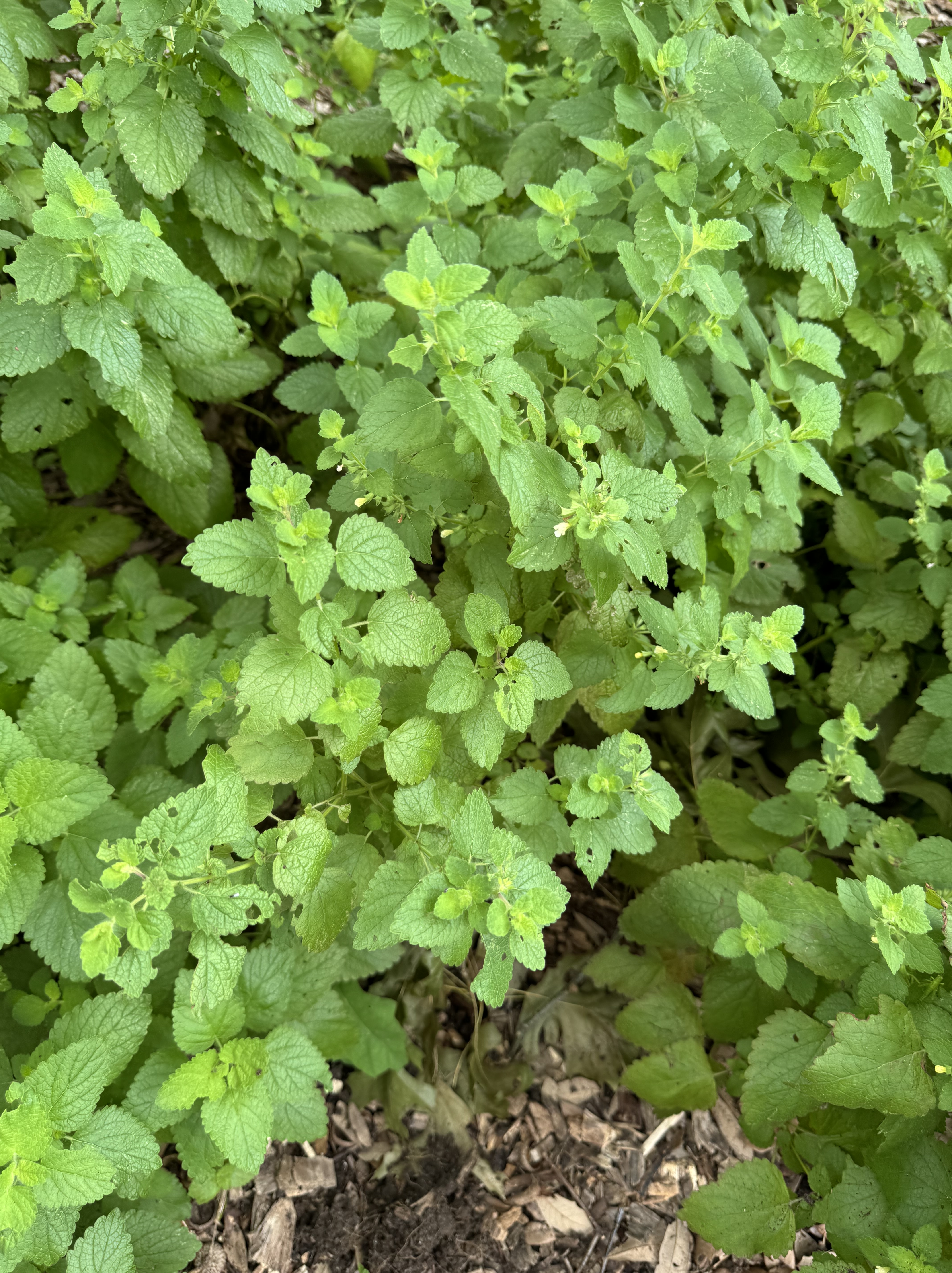
Lastly there is Lemon Balm, another member of the mint family, (Melissa officinalis). Native to Europe, It can be found in many places, but most recently has been thinned from the Hügelkultur in the Edible landscape. It grows in a clump, with wrinkled leaves that have a scent of Lemon. The flower is an insignificant spiky pale-yellow cluster. This herb is said to produce calming effects. It seeds and spreads readily and can get 3 feet by 2 feet. It consistently returns in the garden. It can be obtained in the herb section of garden centers or possibly a garden friend would gift you a start.
Lemon Balm
Now that that mystery is put to rest, figure out a way to use one or all of these beauties in your landscape.
Starla Willis, Dallas County Master Gardener Class of 2011
Video of sphinx moth, courtesy of Mark and Cynthia Jones, Dallas County Master Gardeners Class of 2013
Many things connect us to our gardens.We have had a busy spring at The Raincatcher’s Garden.
Garden chores become pleasure when we work together. Spring has consisted of weeding, seed collecting, watering and learning from each other and then sharing the fruit of that knowledge with all ages and also agencies that assist others
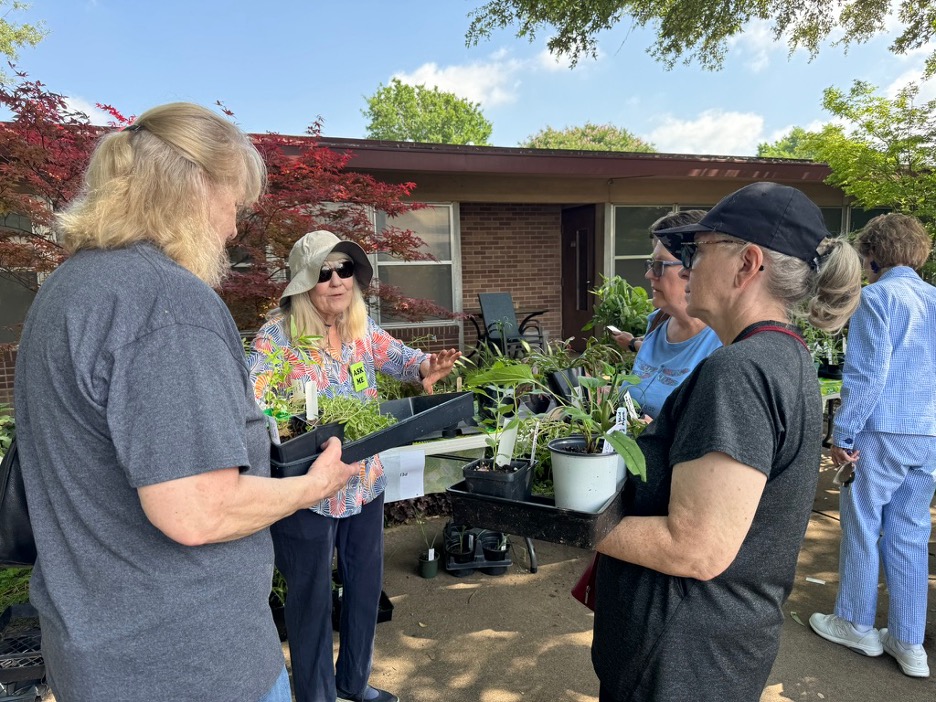
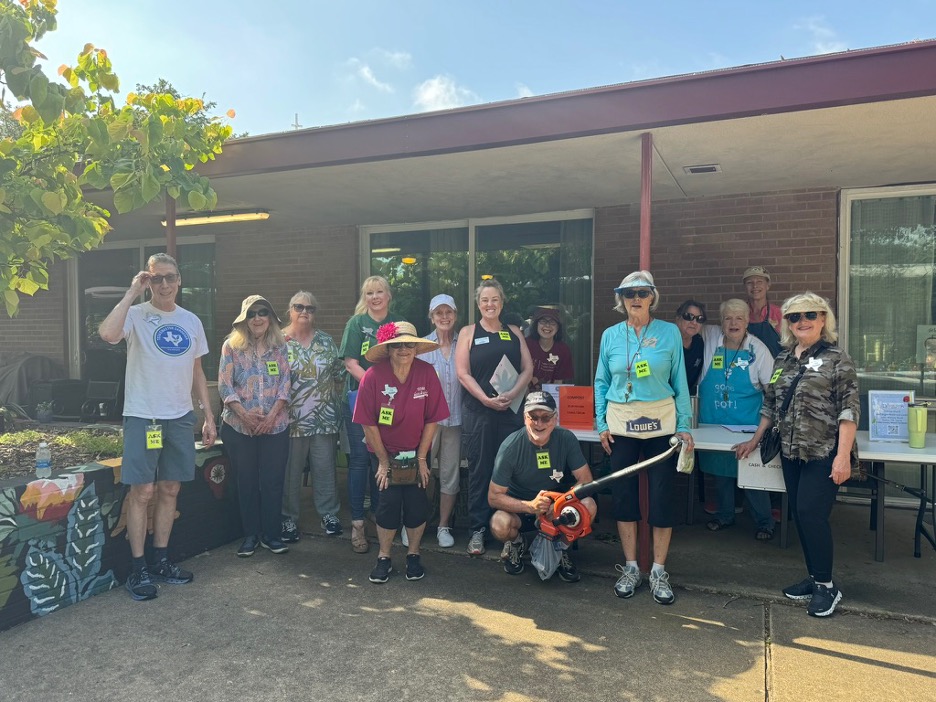
North Dallas Shared ministries received over 200 lbs of fresh vegetables to distribute from the Raincatcher’s Garden.Our compost crew hard at work. Combining efforts and resources for common goals. Here we are at our annual plant sale Jackie, Sue and Deborah at the Raincatcher’s Plant Sale
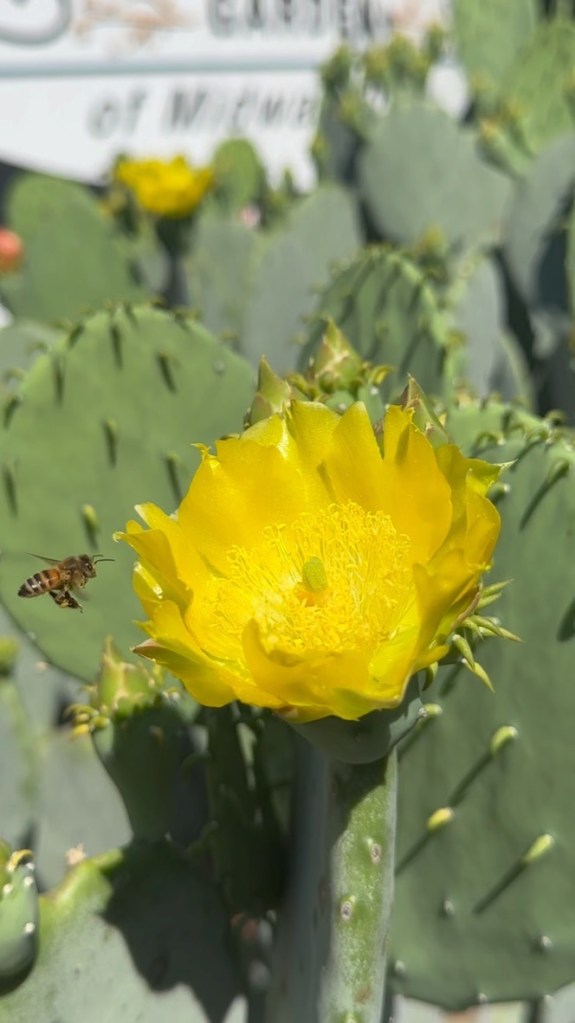
Nature unfolds before our very eyes. This honeybee is about to forage for nectar on a beautiful cactus flower at the Raincatcher’s Garden.
Garden love also includes sharing life, having fun, and learning through our garden work experiences.
Starla Willis, Dallas County Master Gardener Class of 2011
The UN officially recognizes May 20th as World Bee Day. In their opening statement, we are reminded that “Nearly 90% of the world’s wild flowering plant species depend, entirely, or at least in part, on animal pollination, along with more than 75% of the world’s food crops and 35% of global agricultural land. Not only do pollinators contribute directly to food security, but they are key to conserving biodiversity.”
Here are some of their suggestions for ways that we can do more to help make pollinators a priority:
*planting a diverse set of native plants, which flower at different times of the year
*buying raw honey from local farmers
*buying products from sustainable agricultural practices
*avoiding pesticides, fungicides or herbicides in our gardens
*protecting wild bee colonies when possible
*sponsoring a hive
*making a bee water fountain by leaving a water bowl outside
In celebration of our local honeybees, please enjoy these recently captured photos of the bees busy at work gathering nectar and pollen for the hive!
Linda Alexander, Dallas County Master Gardener Class of 2008
The allure of having a greenhouse is something that some gardeners dream of – a place to overwinter plants, start seedlings, and have workspace. How does this become a reality? First of all, determine your goals and ideas. Do your homework and decide if it is a project worthy of the investment of your time, money and efforts?
About the time Fall arrives and freezing weather makes its appearance, ads for greenhouses start flooding inboxes and social media sites. It seems like a good idea to have a place to store tender plants that can’t handle it outside during our coldest temperatures of January and February. Another bonus is the ability to provide a head-start for seedlings to sprout before they are planted in the garden.
There are a variety of styles, sizes, price points as well as optional accessories to consider – from heavy plastic, glass or plexiglass partitions, to brick surrounds, and various mortar and glass options, ranging in cost, size and function. A greenhouse can also be labor intensive, and impractical for those who don’t have the time, ability, or manpower to maintain it properly.
The preferred space needs to be of adequate size for your garden needs, level and in a sunny to mostly sunny location. Water needs to be close and the ability to heat, cool and monitor the space is an important consideration.
Dreaming of a place to overwinter my plants caused me to inquire online. My available location was not ideal-the space was not adequate and the prep and the assembly was more than daunting (in so many ways). Ultimately, the amount of time, effort and money to be invested caused me to pause, rethink and determine that installing a greenhouse was not my best move. However, a well-utilized greenhouse is much more than just a storage space for tender plants.
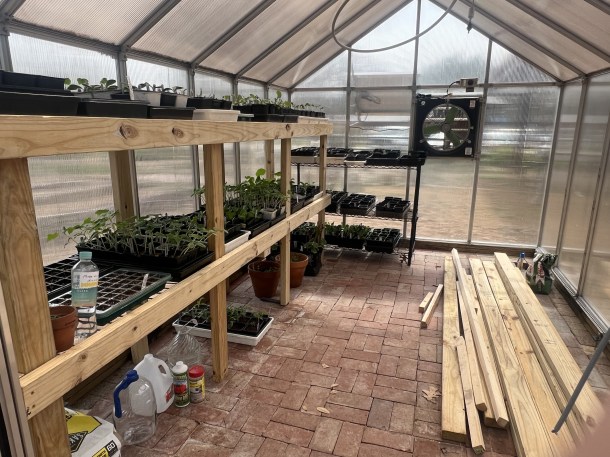
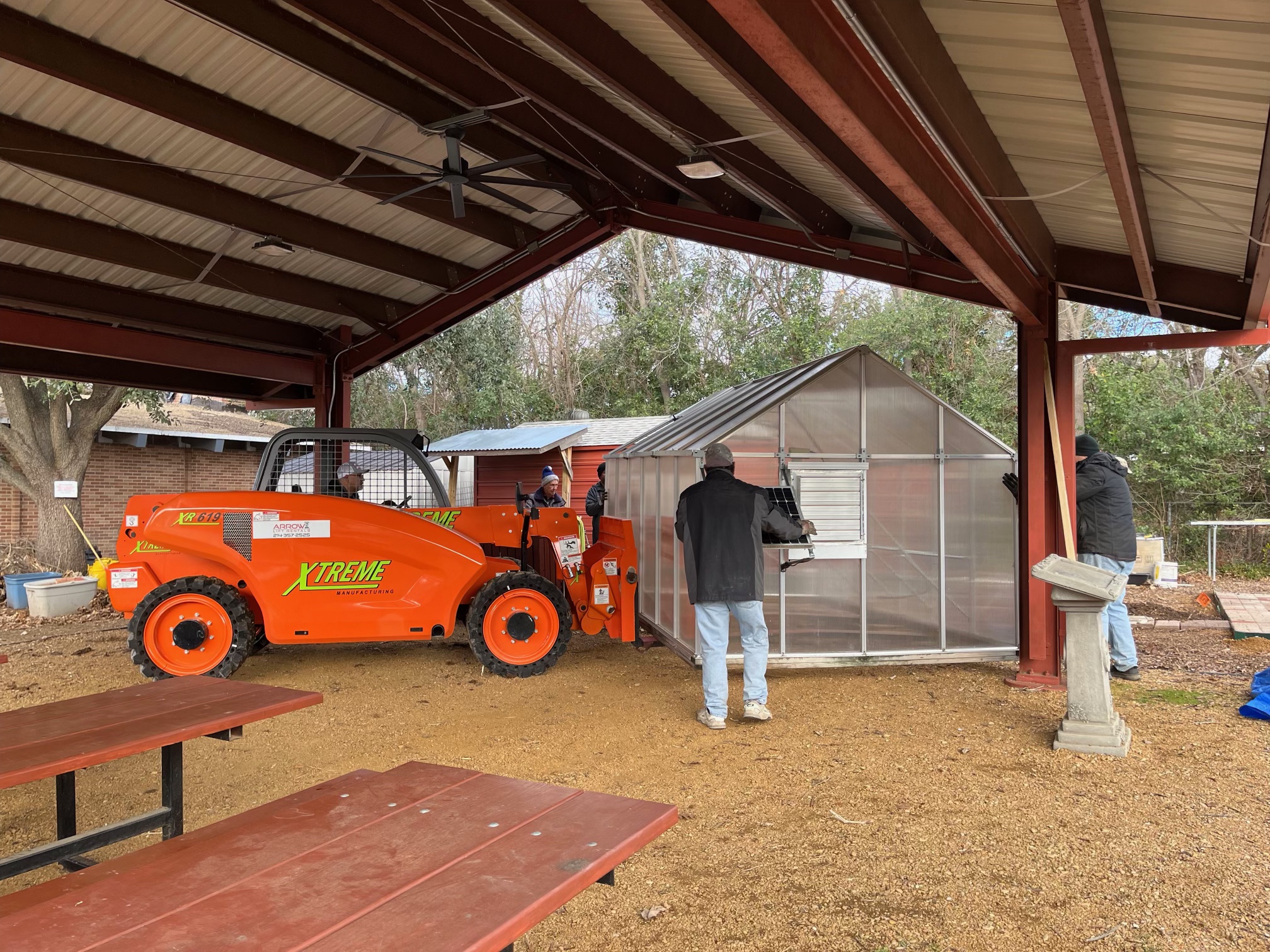
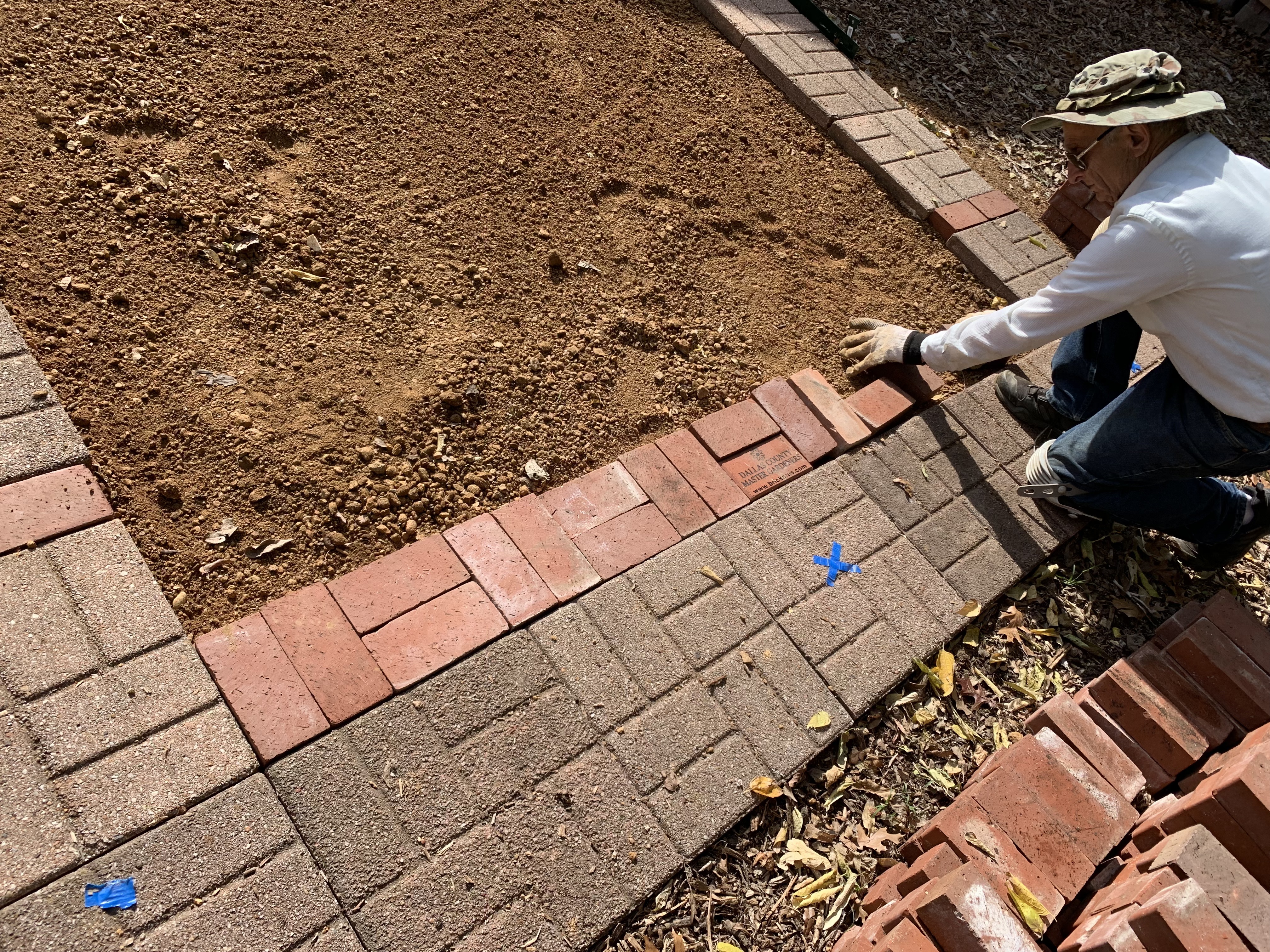
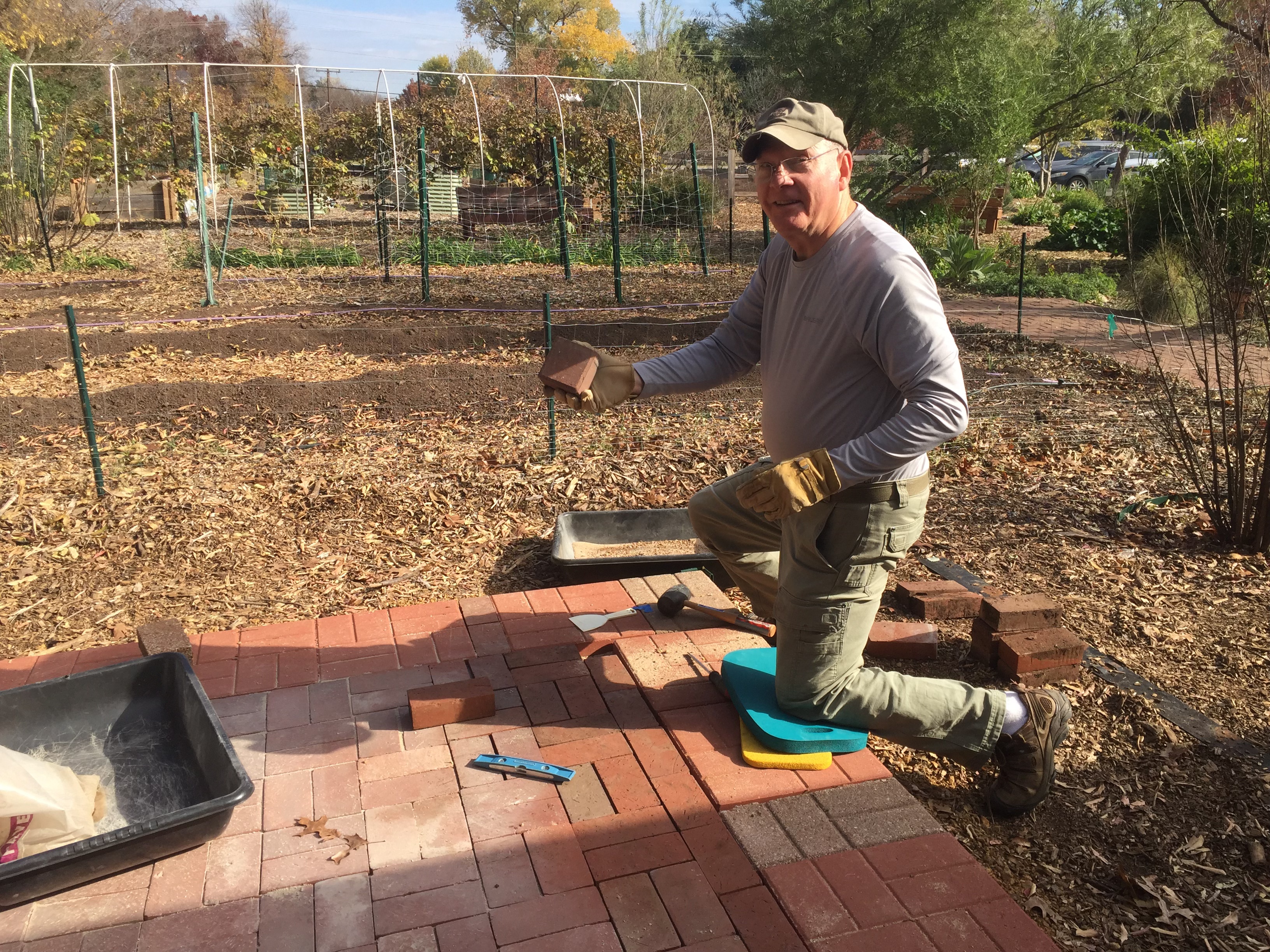
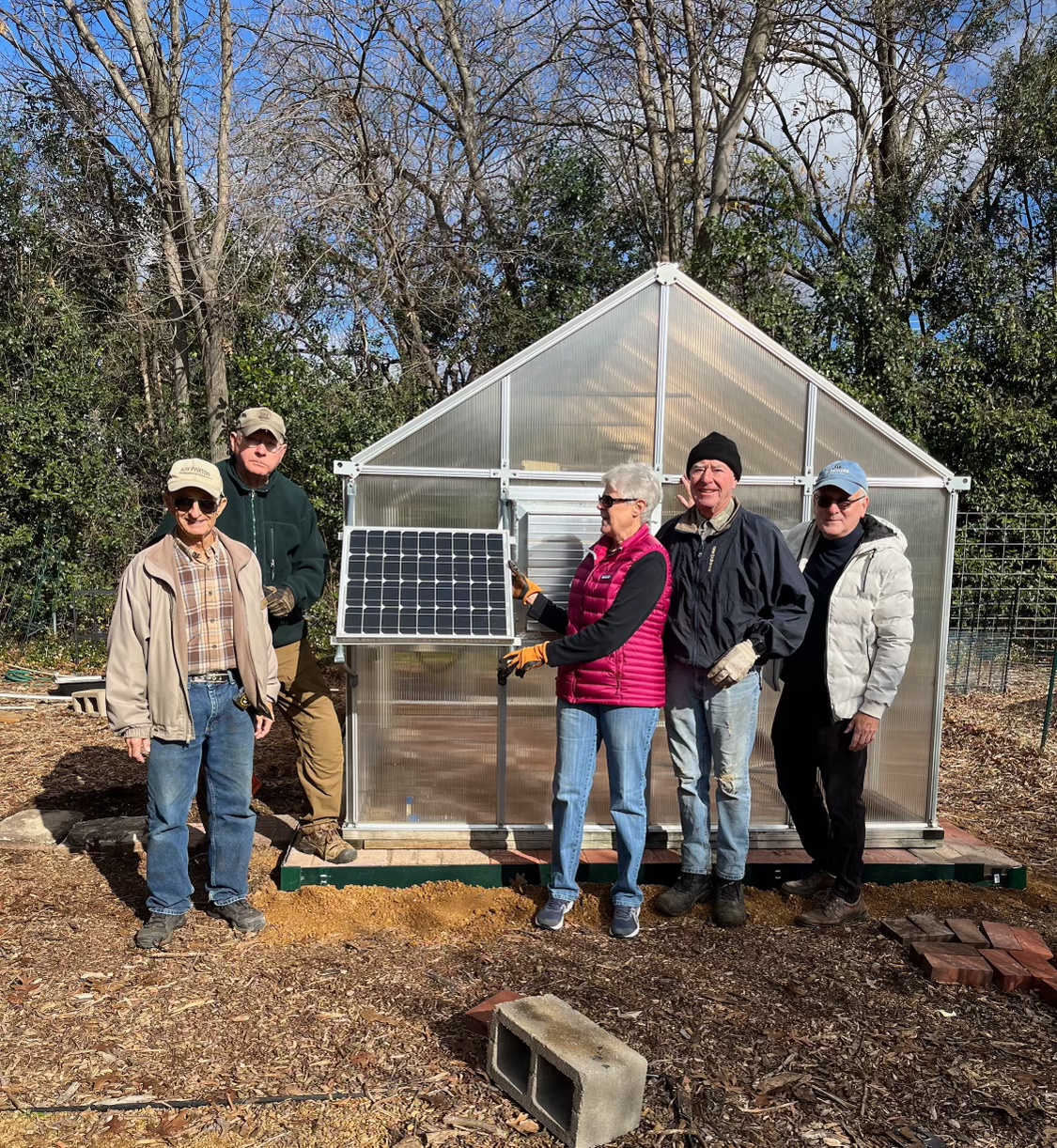
While contemplating this, Raincatchers’ acquired one that would be optimal for our North Garden. It was transported to the property and the plans for putting it into seedling production began to unfurl. It took about two months to get the “new to us” greenhouse relocated and in working order. The “team” at Raincatchers’ has spent many man hours preparing it for use, leveling the site, setting a brick floor on decomposed granite, anchoring the greenhouse against the strong Texas winds, building multiple two-tiered seedling tables, installing a solar powered cooling fan, and initiating water and electrical hookups. Maintenance will be ongoing.
Seedlings have now been started for our many vegetable beds and they appear to be very happy in their controlled environment. Note: vegetable seedlings are started and then set out into our gardens at the proper time.
If you are thinking about acquiring a greenhouse, either by purchase or building it yourself – the best of luck to you! Hopefully, you now have an idea of the reality of the effort to produce a functioning greenhouse and can make an informed decision It can be very useful and an asset to your gardening efforts; whether starting vegetables, flowers or show plants, or just over wintering your houseplants or tropicals.
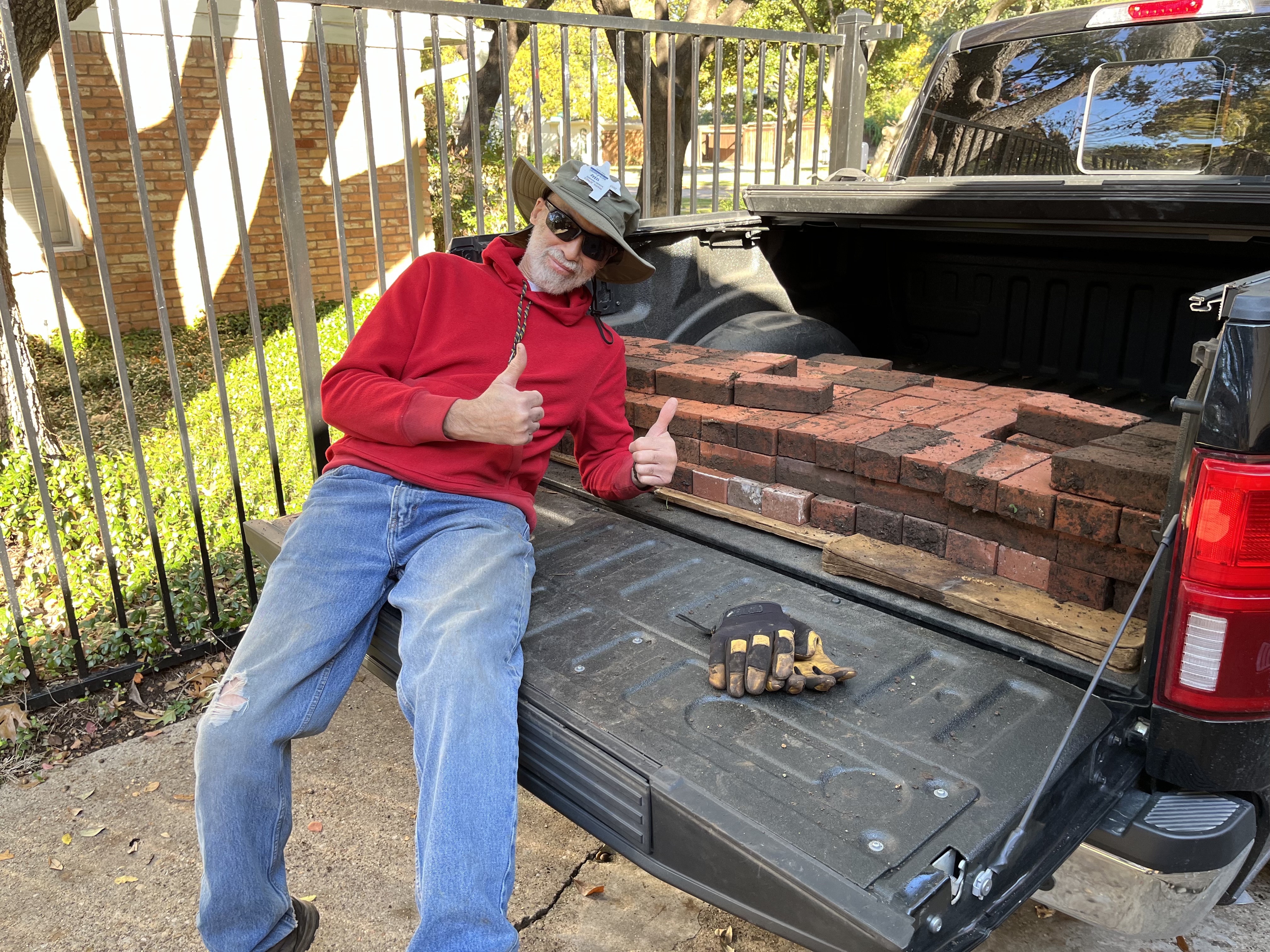
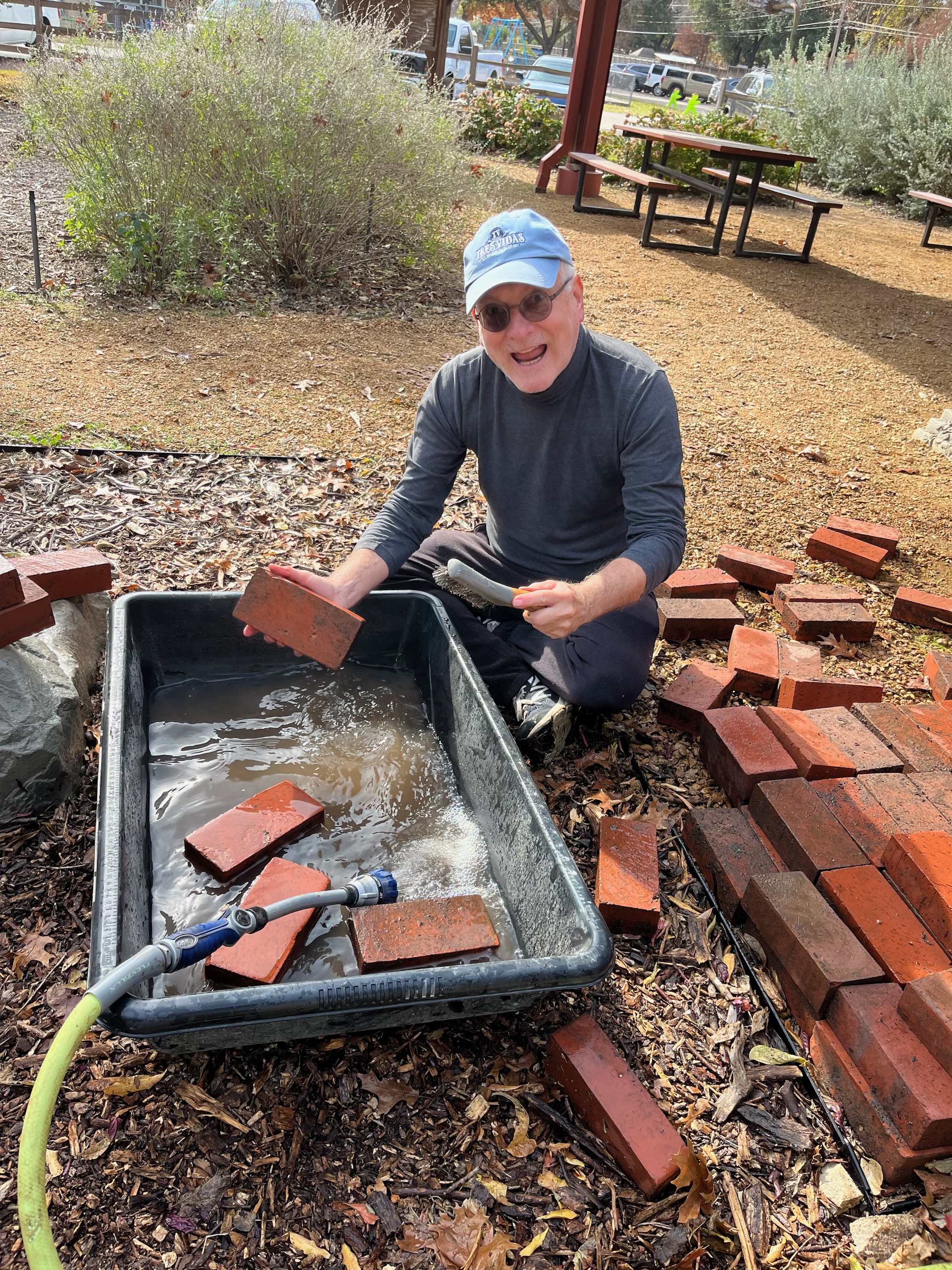
Friends helping move our greenhouse.Joe at work, brick by brick.Many hands make light work.Bricks donated by Tig and fetched by Mark-thank you!Jon and the greenhouse floor-Jon keeps us level.Don, washing brickspre-installation.The greenhouse installation has been a true team effort with many hands involved-thank you!
A gardener’s considerations for Installing a greenhouse:
Manpower to construct the unit (most come in sections that require construction)
$$ Cost (from a few hundred dollars to several thousands)
Overall Size and Options
Site selection –
Sunny to mostly sunny location
Ground leveled for structure
Anchoring against the wind
Inside Flooring (Hard surface with the ability to drain) several options Shelving options (Water resistant)
Storage options (Greenhouse supplies)
Heating and Cooling Capability, i.e., a solar operated cooling fan
Electrical Considerations
Water Availability (For plant watering and seedling misting)
Shade Capability (For the long, hot sunny days)
On-going Upkeep (several hours a week)
Construction Permit (If required)
Starla Willis, Dallas County Master Gardener Class of 2011 with input from Jon Maxwell, Class of 2015
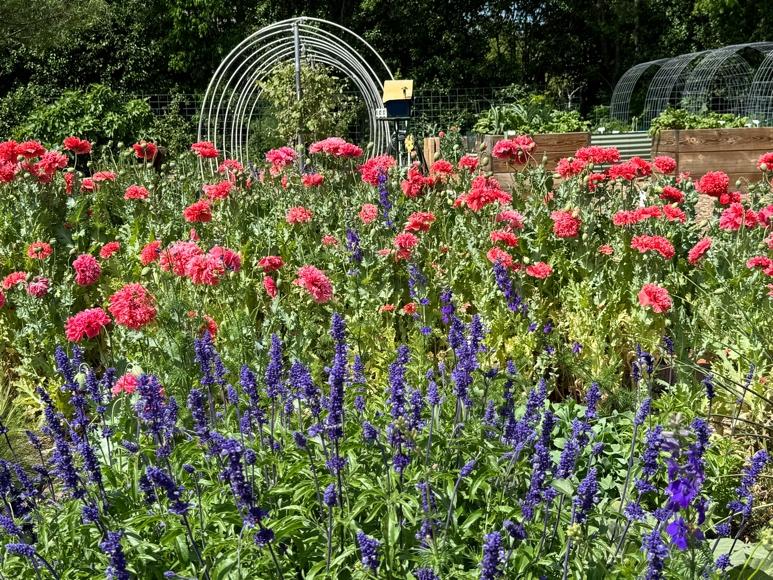
If you’ve been to Raincatcher’s Garden of Midway Hills anytime during the past two weeks, a seasonal spectacle may have caught your eye. Everywhere you look, from the Edible Landscape/Courtyard area extending out to the north garden, pathways are filled with the sight of spring blooming pink poppies.
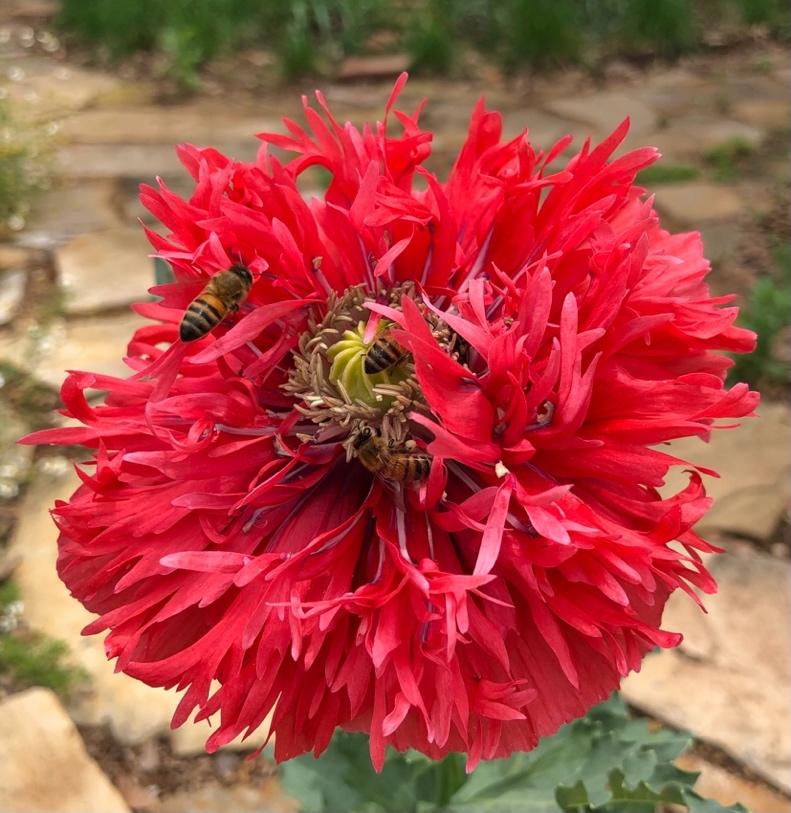
Move in a little closer and listen carefully for a soft humming sound. As you might have guessed, honeybees are busy at work foraging for pollen from the abundance of poppies that share these garden spaces with our herbs, vegetables and wildflowers.
Are you wondering…why are honeybees so attracted to poppies? As the late Robbin Thorp, native pollinator specialist for UC Davis in California so succinctly stated…” they’re not there for the nectar – they’re there for the pollen”.
Poppies should be considered as a quintessential plant for pollen production. And honeybees are one of the chief pollinating agents. A deeper dive into the world of poppies gives us some interesting information regarding pollen.
It is true that honeybees are attracted to poppies for pollen only. The reason why is that the inflorescences of all poppy species lack nectaries, thus no sugary nectar available to pollinators. Flowers, however, are packed with pollen-bearing anthers. Because pollen is the honeybee’s main source of protein, collecting it is a necessary task. Once collected, it is used for brood development and to feed the young larvae. And, fortunately for the bees, scientists have found that poppy pollen is remarkable clean, containing few fungi or mycotoxins.
Come visit our garden and take time to stroll the garden paths filled with poppies. Expect to be mesmerized by an eye-catching explosion of frills. Early morning and late afternoon seem to be the optimum time to experience the honeybees in action. Don’t be surprised to see as many as four or five honeybees foraging frenetically within a single flower.
(Raincatcher’s Garden of Midway Hills…Our “field of poppies!)
Linda Alexander, Dallas County Master Gardener Class of 2008
This is the time of the year when everyone wants something to change and improve advertisements that didn’t attract a bit of concern a while ago now seem tempting–the newest skin treatments that absolutely promise “younger brighter fresher” The poor child in the picture seems still a bit concerned but yet now doing better–well she should be concerned of course she is probably past Fourteen and knows its all downhill from here. Now if you want to buy thats fine after all it won’t hurt–although the price might be a real surprise and the bottle is so small and then there are two more things you absolutely must have if you really want “results” But we will go no further with this.
Baby Larkspur with maybe a weed-don’t worry about the weed.Baby poppy-same warning!Winter Honeysuckle does not give up.
No because YOUNG honestly is a state of mind more than anything and at this time of the year–well we may have to work at realizing that–and most importantly acting on our knowledge.
WE can’t let the season get us down. Its absolutely true that the leaves lying about have totally lost their charm –and how on earth did there get to be so many sticks and stalks everywhere. We have to look at things closely–after we clean up a bit of course. But take your time don’t be hasty, baby plants can be deceiving. The last thing you want to do is accidentally “weed” your precious spring flowers when in doubt don’t pull it up. Better to leave and weed than loose a poppy! Let your imagination take you to the blooms that will be here soon and you will be surprised at how much happier you will feel. Anticipating good things to come–well that is a receipt for real joy.
This is nothing but pure potential and hope!
Try to see bare patches as “Potential” not “Problems”. All the fresh seeds are here–stop and look . For some people this can be as much temptation as the five hundred dollar skin serum so do be careful. READ the labels and remember that if it says avoid heat you must avoid buying no matter how chilly and misty the day is right now. But maybe choose something new to try and go home and plant it–nothing worse than buying seeds and forgetting them–that doesn’t lead to happiness. But the choosing and preparing and planting–that can make a big difference for anyone. Feelings of accomplishment and planning for the future and feeling hopeful–well that makes anyone feel younger and fresher and its a feeling that lasts! Just the work in the fresh air helps so much even if you have to wrap up and use plastic shoes.
If it gets really cold take the time to protect your plants you will be glad you did–its work but it pays off and that makes us feel powerful. Just a little cover saved this lettuce.
If there are plants in the house don’t just pass them by they aren’t sofa cushions they really will respond to attention. water them and clean their leaves look for changes and growth–if you are fortunate even flowers–its the natural time for orchids to send up flower spikes–look carefully. Just noticing will brighten the whole day and who knows what tomorrow might bring .That is the key.
When we think about it–isn’t YOUNG really anticipating the future–the good exciting things to come? That feeling may get a little harder to come by sometimes but if we really notice our plants and gardens and care for them that feeling just seems to catch us and carry us forward–and that is FOREVER YOUNG.
Susan Thornbury, Dallas County Master Gardener Class of 2008
Walking in the garden early this morning just as sunlight was spreading its glowing rays, I stopped for a moment to gently caress the winter savory. Dew had fallen softly upon it, leaving the cascading branches with a shimmery presence. It seemed to be saying…” use me please”. And that is exactly what happened!
My husband and I love a cozy wintertime dinner by the fire. Thankfully, my winter herb garden had supplied me with the three ingredients needed to infuse the marinade for Balsamic Herb Baked Chicken Thighs: fresh rosemary sprigs, sage leaves and winter savory. This herb-garden inspired recipe delivered a pleasing amount of comfort and flavor for the perfect fireside meal.
Balsamic Herb Baked Chicken Thighs prepped and ready to bakeReady to serve!
Hopefully, you are growing a nice selection of herbs in your winter garden. If so, remember that they liked to be snipped, trimmed and used for culinary and decorative purposes in your home.
*For information about growing winter savory, click here.
*All herbs were harvested just before the cold front and freezing temperatures arrived. They were kept in a damp paper towel lined plastic baggie for two days.
Linda Alexander, Dallas County Master Gardener Class of 2008
The chill of winter, though not officially here according to the calendar, has arrived. Trees are now displaying their bare branches as each day swirling, gusty winds bring colorful autumn leaves to the ground. From the stately red oaks and maples to the stunning brilliance of Chinese Pistache, yard crews are struggling to keep up with the piles and piles of leaves covering grassy lawns and flower beds.
What remains is winter’s gift to our yards and woodlands…the mighty evergreens. My Christmas decorating theme was simplified significantly this year as I took time to pause and contemplate this marvel of nature. Suddenly, I was caught completely by surprise upon discovering a towering tree growing along the back side of our neighbor’s fence. After 17 ½ years of driving past their property to enter our back gate, a large evergreen tree bursting with clusters of small blue berries caught my eye. I had never even noticed this tree until two weeks ago. Unsure of its name, a quick plant search on my iPhone gave me the correct answer. It was a JUNIPER.
From that moment of discovery, I was smitten with the dreamy blue color of berries drooping from needle-like leaves with a delicate and aromatic pine scent. Thoughts of decorating my home with the greenery of winter were filling my head. And then a beloved old Christmas carol seemed to speak the words I needed to hear. My decorating theme for Christmas 2023 would be…” Let Heaven and Nature Sing”.
My sweet neighbor was so accommodating by giving me permission to ‘harvest’ as much as I wanted from her Juniper tree. That was the beginning of a foraging-type mission for evergreen material in our yard and along the alley ways and streets behind us. My goal was to respectfully select, then carefully cut, branches that would complement my decorating theme.
The joy of using freshly cut evergreen branches for Christmas decor is their aromatic gift and profound color. Our home not only has the feel of a nature-inspired Christmas, but the air is filled with a calming heavenly scent, as well.
Please enjoy a sampling of nature’s gifts in this short video featuring the evergreens used to adorn our home as we proudly proclaim…” Joy to the World!”
*Evergreens, and herbs, used from our yard (and a kind neighbor) are: Magnolia, Boxwood, Burford, Foster, Nellie R. Stevens, Savannah and Yaupon Hollies, Junipers, Cedar Trees, Japanese Plum Yew, Lavender, Rosemary, Thyme, Winter Savory and traditional English Ivy.
Linda Alexander, Dallas County Master Gardener Class of 2008
Have you seen the Demonstration Garden’s flock of “vegetable lambs?” Tended with loving care by Dallas County Master Gardener Jim and other DCMG volunteers, they thrive in the Garden’s raised beds. Though we now know these “vegetable lambs” by their contemporary name, cotton, during the medieval period in Europe, cotton was an imported fiber and the actual plant that produced it was unknown. So, noting its similarities to wool, people imagined that cotton must have been produced by plant-born sheep. In 1350 John Mandeville, after a trip to Tartary, wrote: “There grew there (India) a wonderful tree which bore tiny lambs on the ends of its branches. These branches were so pliable that they bent down to allow the lambs to feed when they are hungrie (sic).” Later in 1791 Dr. De la Croix in his work Connubia Florum, Latino Carmine Demonstrata wrote of the vegetable lamb:
Upon a stalk is fixed a living brute,
A rooted plant bears quadruped for fruit.
It is an animal that sleeps by day
And wakes at night, though rooted in the ground,
To feed on grass within its reach around.
Today’s scientific classification of cotton is, of course, much different from the zoophyte (i.e. an animal that visually resembles a plant) classification of the medieval period. The name of the genus derives from the Arabic word goz, which refers to a soft substance.
It is particularly interesting that cotton is in the Mallow family and is related to hibiscus. This resemblance can be seen easily in cotton’s flowers. Cultivated cotton is a perennial shrub. However it is grown in our area as an annual. Plants are around 3-5 feet tall with broad three to five lobed leaves. The seeds are contained in capsules called a “boll.” The many seeds found in a boll are surrounded by two types of cotton fiber. The longer fiber can be spun into thread and ultimately cloth, while the much shorter fibers, called “linters,” are spun into low quality fiber, giving rise to the term “lint.” Cotton requires a long growing period, full sun, moderate water and likes heavy soil. If this sounds like a perfect plant for the Dallas area, it is—- and is why cotton fields used to be numerous throughout DallasCounty. There are several different naturally occurring colors of cotton (white, brown, and green) and the DemonstrationGarden grows brown cotton and several different varieties of white cotton.
So the next time you visit the DemonstrationGarden, try standing by the cotton plants, closing your eyes, and just “Believe.” If you listen closely, maybe you will hear the vegetable lambs say “baaaa.”
***this is the first of several articles on cotton: the plant, its history, spinning and dyeing