Tag Archives: Fall Gardening in Dallas

Arugula-Pear-Blue Cheese Salad

Arugula, Pears, Pecans, Blue Cheese For Salad

1/4 cup plus 2 Tbsp peach or pear preserves

1/2 cup Champagne vinegar

1 shallot, sliced

2 tsp. Dijon mustard

1/2 tsp salt

1/4 tsp freshly ground pepper 

1/2 cup olive oil 

8 cups loosely packed arugula

2 Bartlett pears, cut into 6 wedges each

4 oz. blue cheese, crumbled

1/4 cup chopped toasted walnuts or pecans 

Process 1/4 cup preserves and next 5 ingredients in a food processor 30 seconds to 1 minute or until smooth.  With processor running, pour oil through food chute in a slow steady stream, processing until smooth.  Transfer to a 2-cup measuring cup or small bowl, and stir in remaining 2 Tbsp peach preserves. 

Place arugula in a large serving bowl.  Top with pears, blue cheese, and pecans.  Drizzle with vinaigrette. 

Elizabeth  From Southern Living Magazine 

Lakota Squash, An Heirloom Vegetable For Fall Gardens

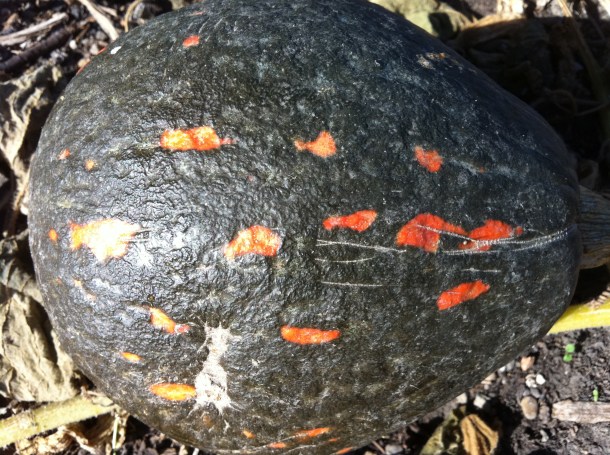
Lakota Squash Planted In  Early August

Lakota squash is one of the winter storage types of squash. It’s a medium sized,  pear-shaped squash, weighing an average of about seven pounds. The outer shell is hard with interior flesh a golden yellow. The flavor is nutty and sweet. The Lakota squash derives its name from the Lakota Tribe of the Sioux Indians who prized this hardy winter squash for cooking and baking.   We like to think we are continuing their history by growing it at The Demonstration Garden. 

Store Lakota squash in a cool, dry place for up to three months or more after picking them. Since this is our first time to grow this heirloom vegetable, we may try one of these cooking ideas from Chef Kyle Shadix :

• Purée in food processor with light coconut milk, curry, and freshly minced and sautéed ginger and garlic.
• Add brown sugar, vanilla extract, and toasted walnuts.
• Add maple syrup and toasted almonds.
• Serve mashed with salt and pepper and a touch of real butter.
• Mix with prepared pesto and sprinkle with Parmesan or Pecorino Romano cheese.

Because Lakota Squash is an heirloom variety not a hybrid, the seeds will produce offspring like the parent. Next year we can share the seed and all get a little taste of Sioux history!

Ann

Bushels Of Butternuts

Even the name—butternut—brings fall to mind.  Nature brings us such end of the season treats in November.  The queen of winter squash hides hers in a soft beige overcoat, revealing the rich, orange-yellow flesh when cut.
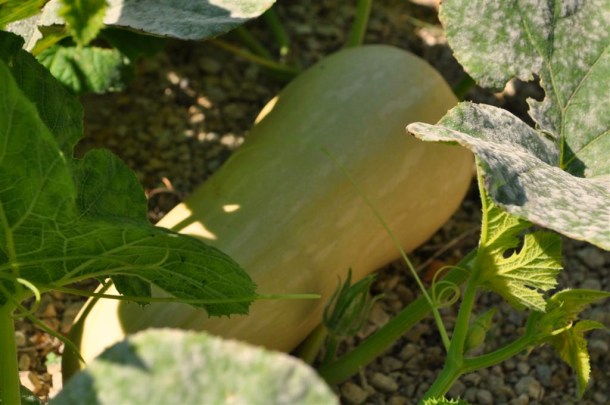
Butternut Squash Growing In Our Garden With Unfortunate Mildew On Leaves

Jim, our vegetable expert at the garden, has harvested bushels of lovely butternuts.  He planted the exuberant vines in the heat of the summer, with harvest plans for November. All squash are types of gourds.  Butternuts should be harvested when firm, well shaped, and heavy for their size.  Unlike their thin-skinned summer cousins, winter squash have a hard tough shell.  Butternuts can be stored for several months in a cool, dark place. 

Of course, the fun is deciding how to serve butternuts.  Soup? Such a lovely, rich addition to the Thanksgiving table.  Roasted? Add a bit of fresh ginger and butter. Or enjoy its sweet, slightly nutty flavor in filled pastas, spicy curries, or stews. 

Butternut–and other winter squash like acorn, pumpkin, and Hubbard–are a nutritional bonanza. They are rich in Vitamin A (beta-carotene), fiber, folate (folic acid) and potassium.

Butternut Squash Harvested From Our Garden Atop A Store Bought Pumkin

So don’t pass up these lovely winter squash for your Thanksgiving table.   You might try my daughter Molly’s favorite: Butternut Squash Soup.

Butternut Squash Soup 

1 Tbs olive oil

5 oz. pancetta, cut into small dice

1 yellow onion, chopped

1 tsp sugar

1 tsp minced garlic

1 sprig fresh sage leaves

3 ¼  cups low-sodium chicken broth

3  cups butternut squash, peeled, seeded, and cut into 1 ½ inch chunks

 1 ½ Tbs. Marsala wine

Salt and pepper to taste

¼ cup heavy cream

Lightly whipped cream for garnish

¼ cup hazelnuts, toasted and chopped 

In a stockpot over medium-low heat, warm the olive oil.  Add the pancetta and cook, stirring occasionally, until lightly crisp, 5-7 minutes.  Transfer to a paper towel-lined plate; reserve the oil in the pot.

Add the onion and sugar to the pot and cook, stirring occasionally, until the onion is tender and slightly caramelized, 8-10 minutes. Add the garlic and sage sprig and cook, stirring, for 1 minute.  Add the broth and squash and simmer, covered, until the squash is tender, 20-25 minutes.  Remove the sage sprig and discard.  Add the Marsala and season with salt and white pepper.  Simmer for 3 minutes, and then remove the pot from the heat.

Puree the soup in a blender until smooth, then whisk in the cream.  Ladle the soup into warmed bowls.  Garnish with the pancetta, a dollop of whipped cream, and hazelnuts.

Adapted from a Williams-Sonoma recipe 

Elizabeth

Texas Style Fall Color

Fall Gardens in Dallas trump summer gardens!   Remember this instead of  falling into discouragement in our 100° plus days with hardly a drop of rain. The Dallas County Master Gardeners who garden at the Demonstration Garden on Joe Field Road all agree we  love our version of fall color!

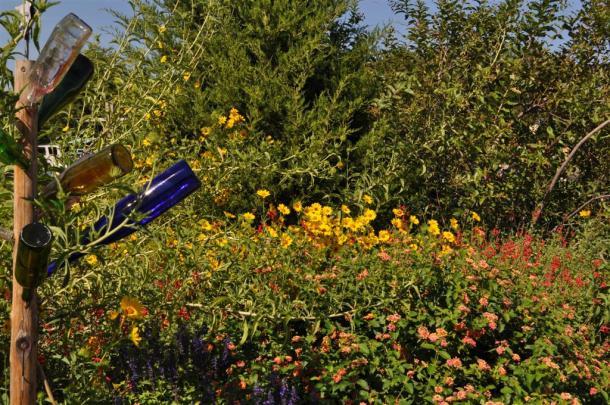
Bottle Tree Framing a view of Maximillian Sunflower, Desert Sage, Lantana, and Salvia Blue Spires

This area of the garden is relatively carefree after amending the soil, careful plant selection, and mulch, mulch, mulch!

Rosy Creek Abelia, Salvia Blue Spires, Muhly Grass, Papyrus On The Right In Our Pond

We do have an agonizing  bind weed issue that keeps us humble, but we will save that part of the story for another time. 

 Enjoy the mellow quality of Autumn in Texas. Temperatures are less and color is more!

Ann

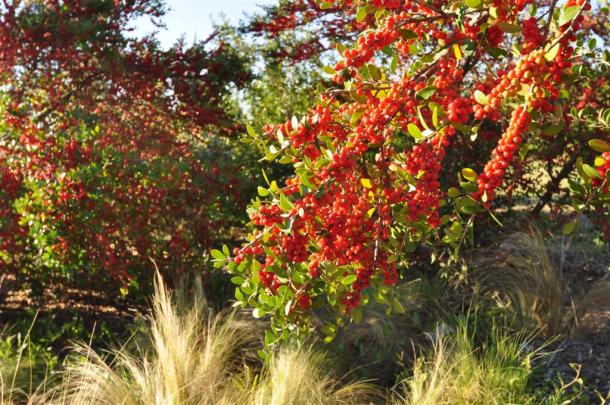
Yaupon Holly, Full Of Fruit In The Fall

 We have three female Yaupon Holly (Ilex vomitoria) trees in the Wildlife Habitat of the Raincatcher’s Garden.  The fruit ripens in the fall and will attract Northern Mockingbirds, Cedar Waxwings, and other fruit-eating birds.  The evergreen foliage provides good cover and sometimes nesting sites, for songbirds.  Although the the foliage will be more dense in full sun than in part-shade, this species is well adapted to both.  Pruning practices also affect the density of the cover it provides.

When buying yaupon trees, the easiest way to be sure you will get fruiting trees is to select them in the late summer or fall, when you should be able to see fruits on a female tree.  Because yaupons are dioecious, pollination by a male tree is required for the female tree to produce fruit, so you may want to plant a male (non-fruiting) tree among your females.  However, Dallas has many yaupons, and female trees often seem to be pollinated by males from other gardens.   Fortunately, fall is our best season for planting trees. 

'Pride of Houston' Yaupon Holly At The Demonstration Garden

The beautiful fruits are properly called drupes rather than berries, because there is a single seed in the center of the fruit, surrounded by an outer skin and a fleshy middle layer.

Deirdre

Fall Herbs

Paula taught a class at our garden last week about fall herbs.  She gave us the name of a new sage: New’re Year’re Sage and gave it the thumbs up for taste.  We will all have to look at Dallas garden centers to try to find it.

She reminded us to plant Cutting Celery, which smells and tastes like celery.  Chop up the slender stalks and leaves of Cutting Celery for tuna and  in any dish that call for celery.  I’ll bet she uses it in Bloody Mary’s too!

Fall Herbs For Texas Gardens

We talked about Bay which Paula uses fresh in her recipes and doubles the amount of leaves.  For instance using 4 when her soup recipe says 2.  When purchasing Bay, you want to make sure you are buying the culinary version.

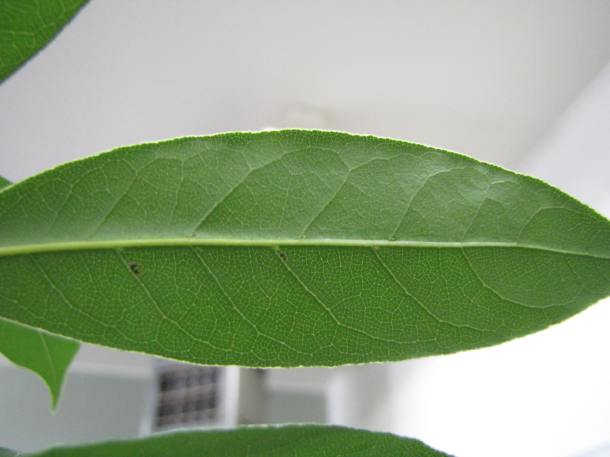
Bay Leaf

Paula says hold a leaf up to the light; if you can see the veins of the leaf, you have the correct Bay.

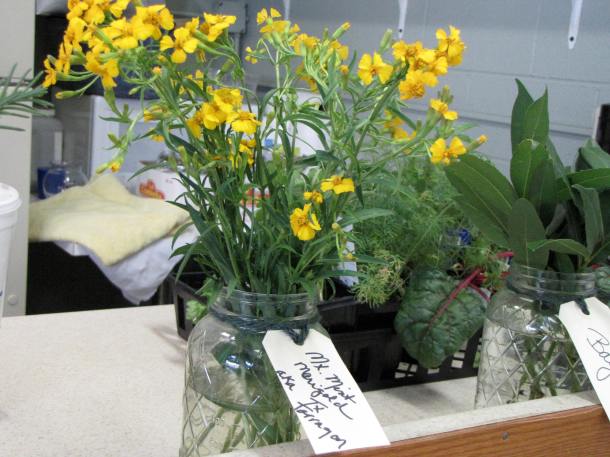
Mexican Mint Marigold

 Texans use the licorice flavored leaves of Mexican Mint Marigold as a Tarragon substitute and the flowers as an edible garnish.  It is blooming now in our Demonstration Garden.

It’s not too late to harvest Basil to make a few batches of Basil Butter for the holidays or Basil Ice Cubes.  Use your Basil now because it will be gone after the first frost.  
 
Basil Ice Cubes: Wash and dry your Basil and remove the leaves from the stems. Discard the stems. Finely chop the leaves. Fill an ice-cube tray with chopped Basil, scooping one tablespoon of the Basil into each cube. Fill the cubes with vegetable or chicken broth. When they freeze, pop them out of your tray and into a Ziploc bag in your freezer.  Yum-Basil all winter to be added to soups and vegetables!
 
We can also rely on Rosemary, Hot and Spicy Oregano in salsa and enchiladas, Lemon Verbena, and Italian Parsley to perk up our fall menus.

Ann

Fall At The Demonstration Garden

This fall we have been busy preparing new garden areas.  Aadil Khambati built this arbor as part of his Eagle Scout project.  Our Master Gardeners are planting ornamental grasses to rim the walk circling The Color Wheel. We love working in the cooler fall weather and our plants  thank us for giving them a better start before summer’s high temperatures hit!

New Arbor Leading Into The Raincatcher's Garden, Susan, Jan, Abbe, Hans

As you walk through the new arbor, you will see The Color Wheel  blooming  riotously. This was planted in late spring to give gardener’s ideas for color contrasts and harmonies in their own gardens.  Don’t we all wish for the “eye of an artist” in our gardens?  Start here at our garden and learn the principles of the color wheel.

The Blues Of The Color Wheel, Salvia leucantha, Salvia farinacea, Purple Heart Next Door

Examine the reds of our color wheel. Are you pulled towards exciting, warm colors?  Lisa has planted several red Salvias, Lantana, and even Mexican Poinsettia with splashes of an orangey red on green leaves. 

Dallas Red Lantana, Salvia, Canna, Rosemary In The Background

At the Earth-Kind® WaterWise Demonstration Garden on Joe Field Road we are making the most of Fall Gardening in Texas!

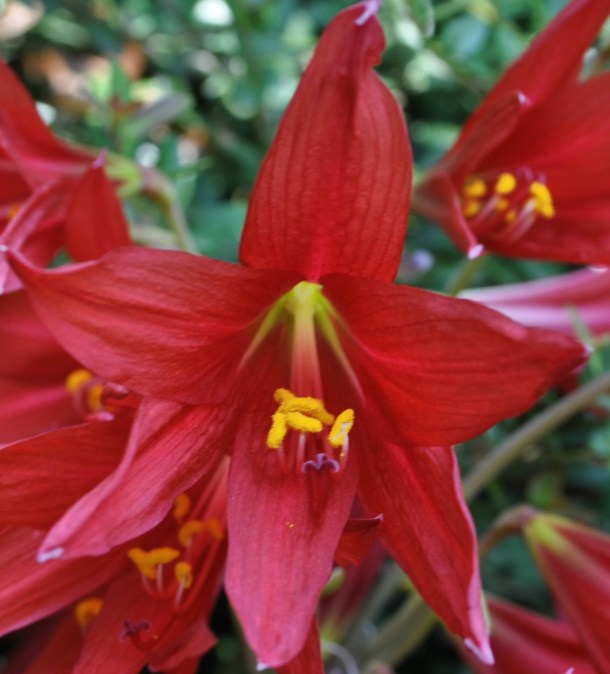
The Oxblood Lily

On New York runways this fall, the trendy color is oxblood.  You will see leather jackets, wool pants, purses, and boots drenched in oxblood.   Last spring the color was tangerine tango, next year it might be beechnut  green.

Not to be out done by the fashion world, Texans have been enjoying Oxblood Lilies (Rhodophiala bifida) for over 150 years. Think back in Texas history to the 1840’s when German settlers immigrated to Central Texas for the early cultivation of this bulb.  Like these settlers, Oxblood Lilies are tough and tenacious and thrive all over the Central Texas area on old farms and abandoned homesteads.

Oxblood Lily Close Up

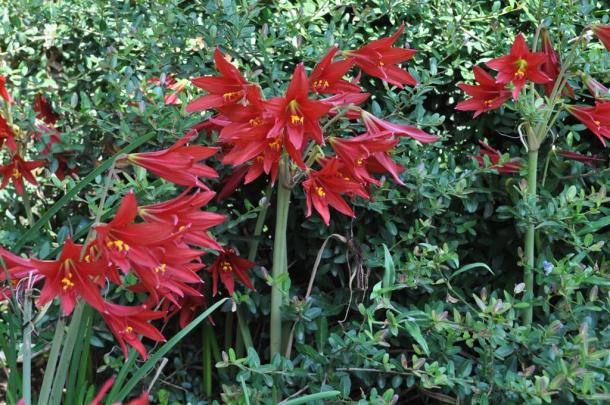
Unlike fashion dictates for 2012, the oxblood lily will endure for generations and mulitply.  Plant them in part shade or full sun. The red blooms are short lived but will last a little longer with afternoon shade.  They bloom in early September following rain and are also known as School House Lilies.  After the flower dies; thin, deep green leaves will continue until early summer.

For a small investment, your garden can enjoy the bright hues of the Oxblood Lily.  Plant them in the fall through December 1.  Next year what people are wearing will change but your garden will always be in style.

Oxblood Lilies At The Demonstration Garden With Dwarf Yaupon

Ann

Hummingbird Migration

“Hummingbird don’t fly away, fly away…”  Seals and Crofts’ lyrics always repeat in my mind this time of year.  But as the temperatures drop in North Texas, hummingbirds must migrate south.

If you are like me, the spring arrival of the first hummingbird is always a Red Letter Day.  The song lyrics continue: “I love you, love you, love you.  I don’t even know the reason why…”

Buff-bellied Hummingbird

Photo by John Lynn

Hummingbirds have always held a fascination for me.  Finding a hummingbird nest continues to be on my life list. To attract hummingbirds, I have planted many native plants including coral honeysuckle, Turk’s cap, flame acanthus, scarlet buckeye, false indigo bush, red yucca, various salvias, standing cypress, Texas lantana, cenizo, lemon beebalm, penstemons, and Texas betony.

Hummingbird and Esperanza

Photo by Pam DiFazio

My love affair with the little birds found us traveling south recently to Rockport, Texas, to learn more about these amazing creatures. Rockport is a stop on the migration map for many birds.  For more information on Rockport’s 24th Annual Texas HummerBird Celebration, visit http://rockporthummingbird.com

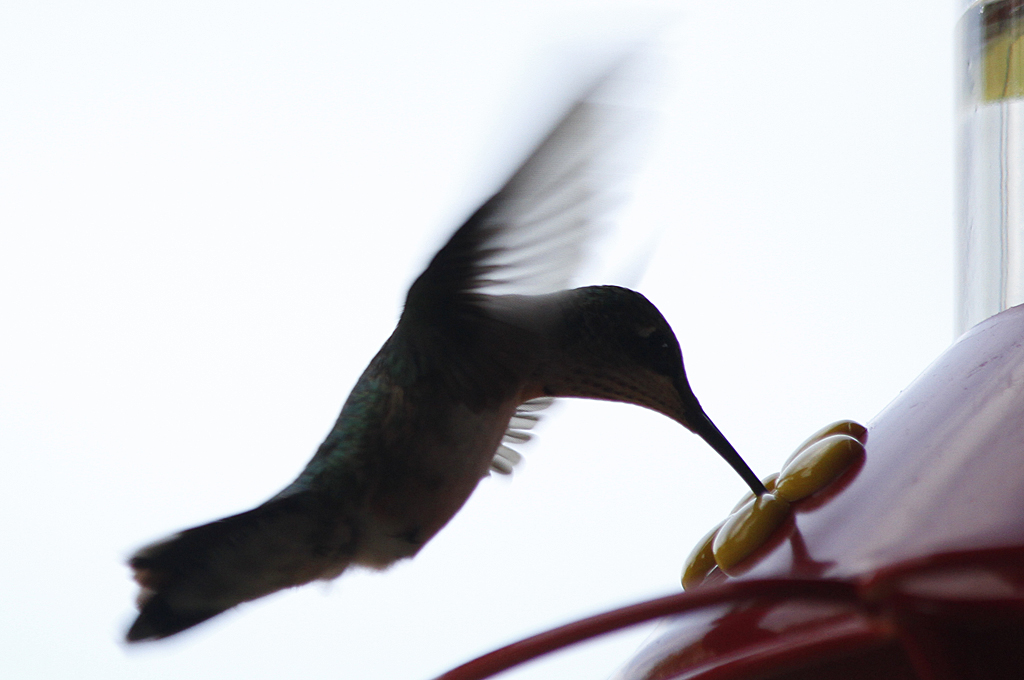
Hummingbird at feeder

Photo by Pam DiFazio

“The sweetness of your nectar has drawn me like a fly…”  The hummingbird event offered four days full of lectures, workshops and field trips.  I only attended one.  Instead, the view of these fascinating birds (uncharacteristically) sharing feeders at the 25 tour stops mesmerized me. At a single landscape more than a hundred birds could have been counted simultaneously fluttering around the feeders and flowers. I was enchanted by the hummingbirds—and the people who hosted them before sending them off for the next leg of their journey.  One yard had 40 feeders!  At another, a gentleman told me he uses about 60 pounds of sugar to prepare his feeders for the weeks the hummingbirds fly through.


The tiny birds look for more than just sweet nectar.  Gardens with food, water, and shelter are the most attractive to hummingbirds.

Hummingbird on Yaupon

Photo by Pam DiFazio


Here in North Texas, we can evaluate our yards now to host next spring’s hummingbirds.  Plant bird-friendly native plants in our milder fall temperatures.  This will give those plants time to establish strong roots during the winter months.  Their blooms will welcome a bounty of life.  Remember the importance of supplying fresh water.  Careful arrangement of shrubs and trees should provide protection for the birds and an easy step-ladder approach.  Then next spring, you might be marking your calendar with the first day you spot a hummingbird in your yard!

Pam

Fall-What’s Not To Love?

What’s my favorite season? Easy peasy. FALL. Jacket wearing, college football cheering, leaf rustling, turkey roasting, Halloween mini-Snickers sneaking—Fall!

This lovely autumnal season is so much more than pulling up summer-scorched annuals and popping in mums for a few weeks.  At a time when northern gardeners are closing up shop for the winter, Texas gardeners have realized that the fall months may very well be the best time of the year to plant.

Think about it.  A Sweet Innocent Perennial you might plant in the spring is just being lined up for the furnace blast of summer from late May through August.  It’s hard to even survive—much less thrive–in temperatures in the 100s, no rainfall, and nighttime lows that hover in the 80s.  But if you’re a savvy gardener and plant that same Sweet Innocent in the fall, you’ve tucked it in when the future holds cooling temperatures and more frequent rain.  Voila.  Plant Success.

Most plants will put on a fall flush of growth and bloom in fall weather conditions.  Roses can be spectacular in the fall, often with blooms more vibrant than spring or summer.  Trim roses back now, fertilize, and give a deep soaking to promote bloom.

Raised Bed with carrots, radish seeds and trowel

If you’re planting a fall school garden with kids, it’s time to get busy.  If you want a warm season garden, plant bush beans and pinto beans by seed until September 15.  Be sure to baby your seeds; they need to be kept moist until they sprout and are established. 

Dallas County Master Gardeners Busy With Fall Gardening

Fall is Prime Time for cool season crops, those vegetables that love a nip in the air in November and December.  Plant beets, spinach, lettuce, and carrots by seed now through October 15.  Kids love transplants; they’re veggies in miniature.  Plant broccoli, Brussels sprouts, cabbage, and cauliflower transplants now through late-November.  Mustard greens, Swiss chard, spinach, parsley, leeks and kale transplants can be tucked in the garden from September 15 through the winter.  (Harvest your warmer season crops in late October, then plant cole transplants for a continued harvest.)

Spring flowering bulbs can be a fun thing to plant with kids.  Purchase your bulbs now when nurseries start stocking bulbs, but wait on planting them until soil temperatures cool significantly, for us in mid- to late-November.  Daffodils are probably your best bet with kids.  They are dependable, don’t require pre-chilling (like tulips), and some will naturalize.  The Southern Bulb Co. in Golden, Texas  is known for propagating old varieties of bulbs, often found in deserted homesteads. 

The best reason to garden in the fall is to enjoy it.  Your garden is filled with new blooms and growth.  Pests have taken a vacation with the cool temperatures.  So nibble a bit of early Halloween candy and enjoy the season.

Elizabeth