Tag Archives: Edible Landscape

Homesteading in North Dallas

Sheila Kostelny, a Louisiana gal, and  Master Gardener class of 2009  walks us through her garden.


Shiela’s words of advice and her own planting date guide:

It’s too late for peas (sugar snap and snow peas are planted Feb 1st thru 10th) and too early for winter squash.  In addition to okra, I will be planting my sweet potato slips after April 15th.  Attached is a timetable that I compiled from the TAMU and NHG suggested dates for planting.  I’m glad to share this spreadsheet. It’s created with the veggies/herbs that interest me.

Thank you, Sheila. this has been a pleasure and I love what you told me about your garden.

We close with Sheila’s words:

“My garden has provided a great deal of joy and feelings of usefulness.

It’s my place of normalcy and peace during this time.”

Thank you, Sheila.

Ann Lamb

Sweet potatoes 


Bundles of Love

Our Edible Landscape’s Response to COVID-19

Sheltering in place has been a time of quiet solitude and reflection for me. My precious 91-year-old mother is being cared for by the staff in her memory care facility and I’m not allowed to visit at this time. (We are so grateful for their compassion and the care she receives from each one of them).  Our children and grandchildren send “face time” hugs and kisses but we are missing the warmth of their sweet touch. 

For me, the one familiar and unchanging experience is time spent in the garden. Early in the morning, with clippers in hand and a basket in my arm, the gathering begins. Late winter and into spring we’ve seen record high amounts of rain followed by temperatures dipping into the  30’s then soaring up into the mid 90’s. Somehow, this unusual weather has blessed our plants with the nourishment needed to grow and flourish. The garden has graced with a bounty of flavorful herbs and greens. 

Since the mid l980’s I’ve been smitten with herbs. Growing them is one of my simple pleasures. From sun to part sun, dappled shade to deep shade, over 20 different kinds of herbs make a seasonal appearance in my garden and in the edible landscape at Raincatcher’s Garden of Midway Hills. A few of the evergreens stay throughout the year while perennials come and go as they choose. Annuals fill in the gaps with seasonal color and interesting flavors.

This year as we started the gentle transition of winter into spring, wonderful things began happening in the garden. Sleepy little lettuce plants opened their heads with delicate green foliage to use in our spring salads. French tarragon, Mexican mint marigold and Italian oregano made a colorful statement from their country of origin. Alliums grew by inches, almost daily. The garden was ready to embrace the season. 

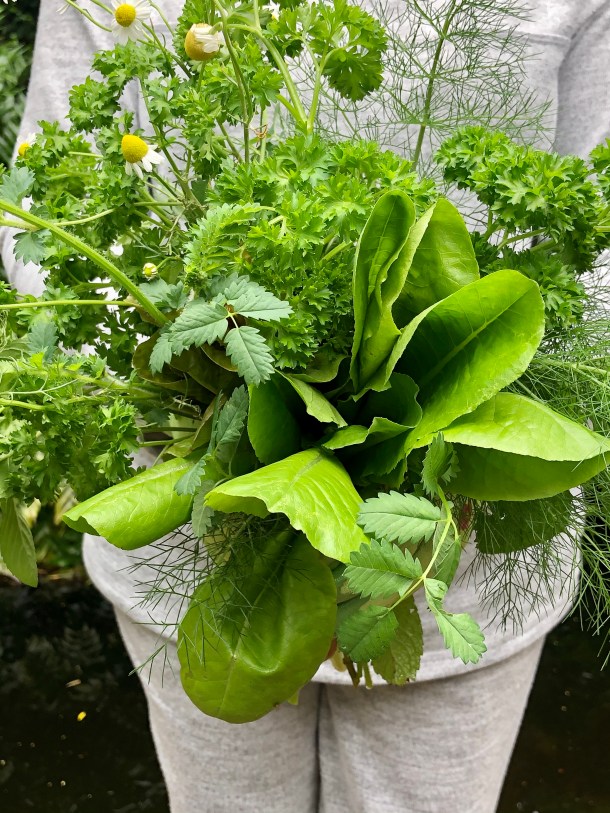
At Raincatcher’s garden and in my garden at home, I’ve been using the harvest of the season to create “bundles of joy” for my family and friends. Always careful to wear gloves and a face mask, if the garden is ready to share, I’m prepared to snip away. Look at each of these three bundles and see if you can identify the herbs and greens in each one. Everything you see is edible!

Did you find nasturtiums, blue borage, rosemary, kale (‘Jagallo Nero’-blue-green frilly leaves with a sweet, tender taste), rosemary, wasabi arugula with white blossoms, dill, thyme and rose scented geranium?

Look for the curly parsley, fennel fronds, spearmint, salad burnet, buttercrunch lettuce and German chamomile blossoms

In this photo you will find cutting celery (looks like Italian flat leaved parsley but has a taste resembling celery), calendula flowers, French sorrel, watercress, oak leaf lettuce and lemon verbena.

Note: These delightful little bundles should be shared with instructions to use soon after harvesting. Remember, leaves don’t like to be under water. So, keep everything fresh and snip from the top down. 

Included are a few favorite recipes but here are some suggestions for using more herbs in your daily meal planning:

Nasturtiums: leaves for pesto and flowers for butter, cookies, jams, salads, and tea sandwiches 

Borage: lovely blue blossoms as a garnish for cakes, salads and syrups

Rosemary: breads, cakes, cookies and soups

Arugula: leaves and blossoms in salads; leaves for pesto

Dill: breads, frittatas and fish

Calendula: flower petals for cornbread, cakes, cookies, quiche 

Scented geraniums: leaves for flavoring sugar, cakes, flowers and leaves for whipped cream

Curly parsley: parsley soup (recipe included), salads

Fennel fronds: salads and soups

Spearmint: tea, lemonade, brownies and in watermelon salad

Salad burnet: creamy dips and salads

German chamomile blossoms: tea and garnish for cakes and cookies, syrups

Cutting celery: creamy dips and young, tender leaves in salads

Marjoram: Italian foods like lasagna and pasta dishes

French sorrel: soups and as a wrap for oven roasted salmon

Watercress: leaves and blossoms for salads

Lemon verbena: breads, cakes, custards, sorbets and in iced tea, water or lemonade

Thyme: butters, soups, cookies and gougers 

Linda Alexander

And now for those recipes:

Parlsey Potato Soup

Lemon Verbena Bread


Scented Geraniums, An Olfactory Pleasure

Raincatcher’s Garden of Midway Hills is hopeful that by June, social distancing and shelter-in-place restrictions will be lifted. However, the health and well-being of our community is, of course, our highest priority. We will review the official guidance from health authorities and our local government, particularly Dallas County, as well as guidance from the Dallas County Master Gardener program, as our June 2nd date gets closer. If you purchase a ticket, you will be notified via email if this event must be postponed or cancelled due to COVID-19 concerns.Taste of the Garden


Scented Pelargoniums (Scented Geraniums)

“An Olfactory Pleasure”

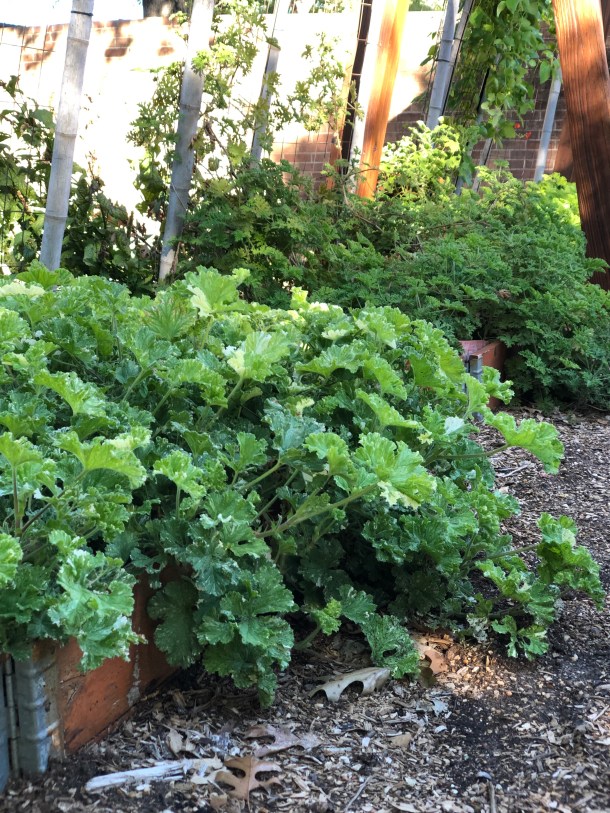
Snowflake geraniums and chocolate geranuims growing in The Raincatcher’s edible landscape

Learn how to bring color, variety and a whole spectrum of fragrances into your life. Following an enlightening talk about growing their aromatic foliage you’ll be treated to a tasting table of flavorful treasures.

Tuesday, June 2nd

Raincatcher’s Garden of Midway Hills…11001 Midway Road

Program 10:00 – 11:00am with
Dallas County Master Gardener, Paula Spletter
Free and open to all in the Sanctuary

‘A Taste of the Garden’ 11:15 – 12:15
$10.00 per person in the Community Hall

Reservation Deadline, May 26th

Menu

Rose Geranium Italian Cream Cake with Rose Cream Frosting

Strawberry Rose Geranium Ice Cream

Rose Geranium Buttermilk Pie

Rose Scented Geranium Lemonade

Sign up here and keep up with any news about this event on our blog:

https://www.eventbrite.com/e/taste-of-the-garden-scented-pelargoniums-scented-geraniums-tickets-101252956318 


Questions? Leave a comment on this blog or contact lindawalexander@sbcglobal.net

Grow Now!

Dallas County Master Gardener volunteers at the Raincatcher’s Research, Education and Demonstration Garden of Midway Hills share your concern for eating healthy during these uncertain times. We’ve put together a short list of ways that you can start growing and harvesting seasonal crops over the next few weeks and months. Here are some gardening (and recipe) suggestions to help supplement your meals with freshly harvested herbs and vegetables.

 If you do not already have a designated vegetable garden, try one of these options:

1) Find an open place in your flower bed that receives around 6 to 8 hours of sun, preferably from morning until mid or late afternoon. Give your soil a boost by adding compost. Good quality compost can be purchased at most local garden centers. Make sure you have a water source close by, and position the garden where you can keep a daily watch to head off any potential pests and weeds that could create problems if left unchecked.

2) Create a simplified version of a raised bed using cinder blocks. Place cardboard directly over a grassy spot in your yard that receives ample sunlight, then place cinderblocks in a rectangular shape around the cardboard, starting with 5 on each side and 3 at each end. Fill the enclosed space about 6 inches above the bed border with a commercial raised bed mix, and water thoroughly to let the soil settle. Space plants or seeds according to directions. Water as needed to maintain even moisture within the bed.

The cardboard method, a good way to smother weeds

A large cinder block garden bed

Start with 4” to 6” edible plants spaced according to label directions. Seasonal plants, including cucumbers, peppers, and tomatoes, are currently in stock at many local garden centers, but don’t stop there.

Try the following options in your new raised bed or in your existing landscape as borders and ground covers, or plant a bay laurel to grow as a shrub or small tree. 

Arugula (Eat fresh in salads, or use in dips.)

Spinach (Eat fresh in salads, sauté with scrambled eggs, or use in omelets, quiches and vegetable dishes.)

Kale (Eat fresh in salads; sauté for kale chips.)

Lettuce (Many different varieties provide texture and color in the landscape.)

Radish (Eat fresh in salads; slice thinly and serve on buttered bread for sandwiches.)

Carrot (Eat fresh in salads, roasted, or in soups and souffles. Use carrot tops to make pesto.)

Beet (Serve roasted, or grate for a cake.)

Swiss Chard (Eat fresh in salads, use leaves as a “wrap” for fresh chopped vegetables, sauté for turnovers, or add to soups.) 

Dill (Leaves can be added to salads, potatoes, meat and fish at the end of cooking.)

Fennel (All parts of the plant are edible – leaves and stalk make a wonderful flavoring for fish.)

French Sorrel (Can be cooked or used fresh like lettuce. Makes a good soup; adds zip to salads. Great on roast beef sandwiches.)

Nasturtiums (Harvest the leaves, buds and flowers anytime, and use fresh. Excellent in salads. Leaves make a great pesto.)

Artichokes (Excellent vegetable served roasted, sautéed or steamed—a beautiful and majestic plant for your garden.)

Thyme (Strip small leaves from stems and use to enhance the flavor of baked or broiled fish dishes or fish sauces. Thyme Cheese Roll: Combine 8 ounces softened cream cheese, 1 tablespoon chopped thyme, 1 tablespoon chopped parsley, ½ teaspoon minced garlic. Roll into a log and refrigerate. Serve with toast or crackers for a quick and easy snack.)

Sage (Flowers and leaves are edible; flowers are nice in salads and for making tea, and the leaves are great for cooking and making herb butters.)

Rosemary (Use with foods rich in fat such as roasted meats, poultry and fish. Add to soups and stew. Use stripped branches as skewers for your favorite grilled meats and veggies.)

Chives (Snip the leaves at ground level when harvesting. Chop and serve with salad, potatoes, pasta and cabbage.)

Oregano (Sprinkle on fresh tomatoes or use to make a sauce; adds flavor to stews and soups.)

Marjoram (Rub leaves on all kinds of meat, chop into egg dishes, stir into soups and sprinkle it over vegetables)

Basil (Plant mid to late April. Use leaves for salads, pesto and sauces. Combines well with zucchini, beans and mushrooms.)

Watercress (Harvest and use fresh in salads, soups and sandwiches.)

Purslane (Use in early spring salads. Leaves can be cooked like spinach.)

Sweet Bay/Bay Laurel (Use the leaves of this evergreen plant in soups, stews and other simmered dishes. Cook a leaf or two with dried beans.)

We hope you will be inspired to start gardening with your family and experience the joy of bringing fresh, flavorful food to your table. 

How about a healthy robust minestrone soup using fresh garden ingredients. Picture by Linda

Click here for the recipe. 

Linda Alexander and Lisa Centala with comments by Jeff Raska, Horticulture Assistant, Dallas County

Follow these planting guides: TAMU Vegetable Planting Guide

Northaven Garden Spring Planting Guide

New to gardening? Read this pamphlet, pages 13-15 have specific recommendations for veggie gardening.

Pictures by Starla Willis


Calendulas in My Garden

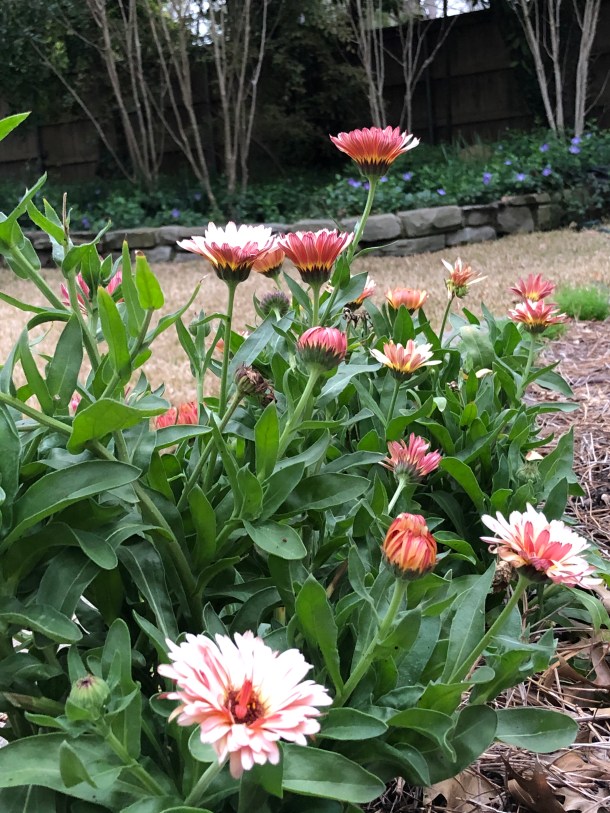
Above: Calendula in Linda’s garden

There’s a new herbal flower growing in my garden that makes my heart happy. Calendula, sometimes known as pot marigold, signifies sacred affections, joy, grief and remembrance. With such a wide range of emotions, there are countless reasons to include it in your garden landscape design. 

 With hues from golden to apricot, deep yellow and bright orange, calendula flowers are eye-catching in any setting. An early morning walk in the garden will tempt you to take a handful of clippings for a lovely bouquet or gather up the flowers for some edible delicacies. 

Growing calendulas is quite simple. Plant seeds in good garden soil, keeping the ground moist until the plants appear. If planted in late summer or early fall, there’s a good chance that they will produce flowers from spring into summer. Some years it might flower almost year-round.

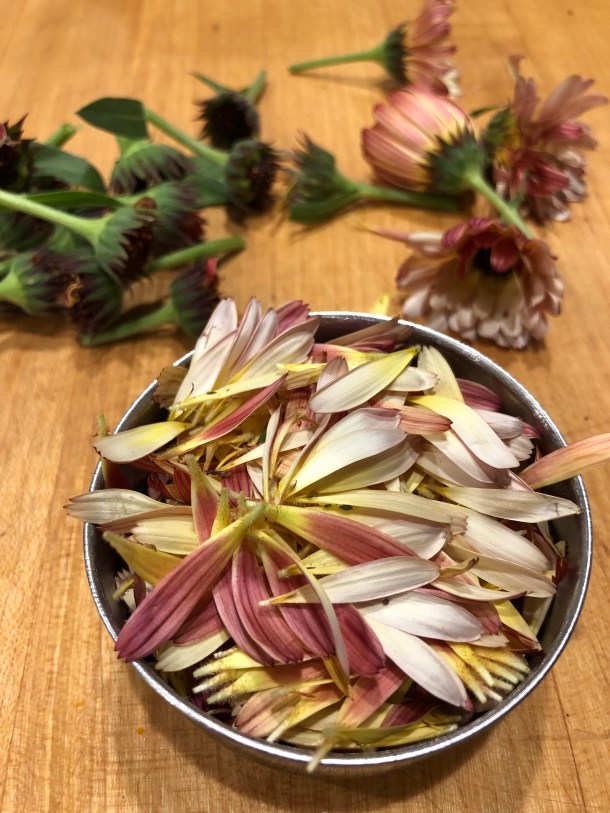
My calendula plants were put in the ground in mid fall, started blooming in February and are continuing to produce new buds weekly. The flowers are harvested often to use in cut arrangements and for ingredients in butter, cookies, cornbread, quiche and a scrumptious calendula cake. They can also be sprinkled on soups, pasta, rice dishes and salads. The Raincatcher’s volunteers recently sampled calendula quiche. The recipe is given below.

Above: Petals to be eaten!

In the vegetable or herb garden, calendulas encourage pollinators and other beneficial insects. If you’re looking for a plant that flourishes in cooler weather, blooms often and is easy to maintain, give this versatile herb a sunny location in your garden. 


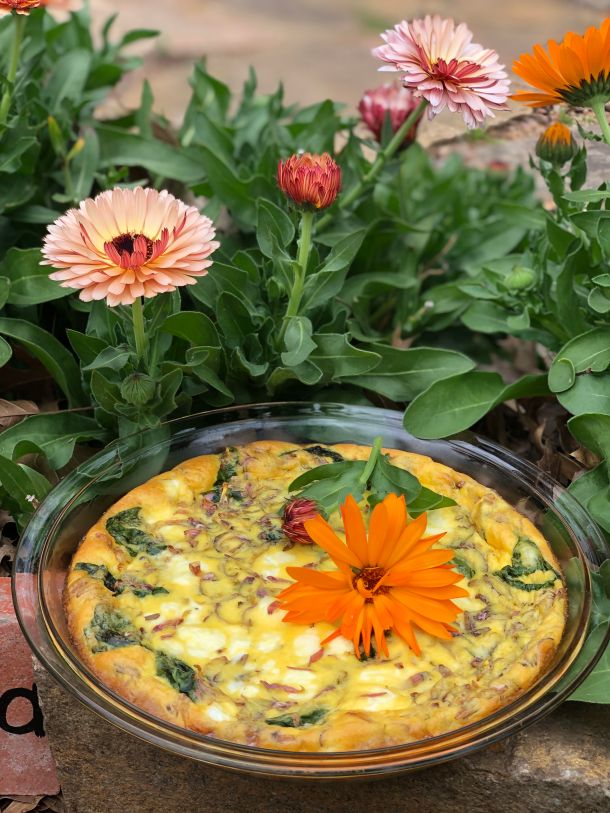
Calendula Quiche

Above: Calendula Quiche surrounded by Calendula Flowers at Raincatcher’s Garden

Ingredients

3 cups loosely packed fresh spinach

1 tablespoon extra-virgin olive oil

4 eggs

1 cup heavy cream

¼ cup (6 ounces) soft goat cheese, crumbled

½ cup calendula petals (from about 20 flowers)

½ teaspoon salt

Directions

Preheat oven to 375˚F. Liberally butter a 9-inch pie pan. 

In a skillet over medium heat, cook spinach in olive oil until the leaves are fully wilted, about 3 minutes. Drain. 

Whisk eggs and cream together. Add goat cheese, calendula petals and salt and whisk again. 

Arrange spinach in the bottom of the prepared pie plate and pour egg mixture over the top. Bake for about 25 minutes, or until the custard is set in the center and the top is golden brown.

*Option: If you prefer, follow directions for the ingredients but pour into a prebaked pie crust.

Yield: One 9-inch Quiche

As in true Texas style, we suggest a few drops of Tabasco sauce on each slice for extra zing.

Linda Alexander

Photos by Linda and Starla Willis

Click here to learn how to pronounce Calendula correctly.

Giant Red Mustard, Ornamental and Edible

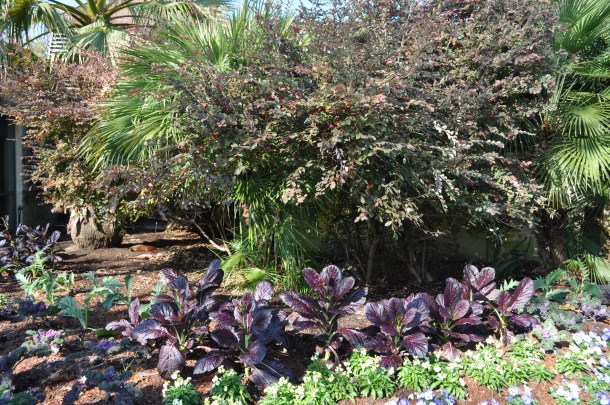
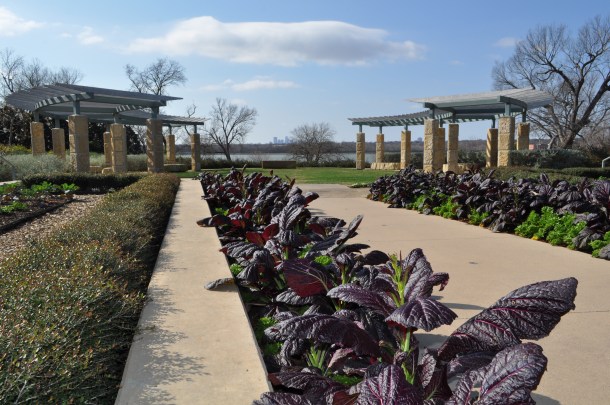
The Dallas Arboretum chose Giant Red Mustard as a signature plant this year. It’s an ideal choice because it fits in with the aesthetics of the garden and the mantra of the Arboretum’s edible landscape, called A Tasteful Place. You see, Giant Red Mustard is an ornamental edible mustard.

The  maroon leaves blended perfectly with plantings of lorapetalum and palms, pansies and cardoon at the entrance to the Arboretum.

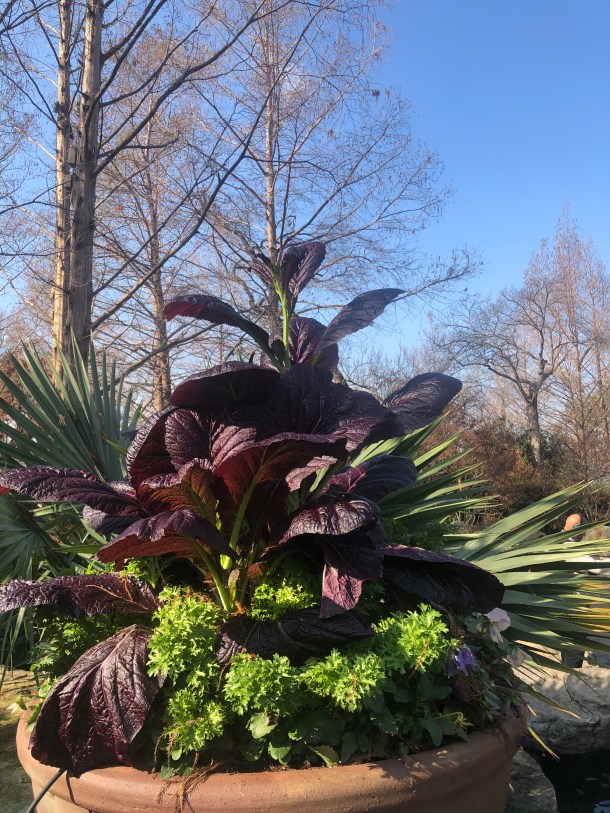
All over the grounds, pots were planted with the mustard as an accent. This planting below was especially beautiful with the sabal palm fronds framing it and the frilly chartreuse leaves of Mustard “Mizuna” at the base.

In the Arboretum’s edible garden, a long lane of mustard led your eye to the Dallas skyline. Do you see some of our downtown buildings in the distance?

It wouldn’t have been right to taste the leaves while strolling through the Arboretum; but now that I have bought some of these plants for my garden, I can vouch for their spicy taste.

Here is what Park Seeds says about this Giant Red Mustard:

“At last, a Mustard Green so showy it just may do for this nutritious family what Bright Lights did for Swiss Chard — put it in every garden and on every table of gardeners who love bold colors and fresh flavor in their veggies! Red Giant is a brilliant maroon with deep green midribs, so showy you may just have to plant two crops — one in the veggie patch and one along the walkway or in your annual border!

These leaves are slightly textured for a better bite and good holding power. The flavor is zesty and full, with a good bite that you just can’t find in store-bought mustard greens. Imagine Red Giant flanking your Pansies and cheery Mums in the fall garden, or nestling beside bold Ornamental Cabbage and Kale. Or put it in bright containers for an unforgettable patio or porch display!

And because you pick this mustard leaf by leaf for eating (instead of uprooting the entire plant, as you do for head lettuce), you can enjoy the fine display of color for many weeks! Frost just improves the flavor and color.

Sow seed outdoors in early spring or, for fall crops, 6 to 8 weeks before first fall frost. Space seedlings 1 to 2 inches apart in rows 15 inches apart.”

Giant Red Mustard will be in my garden next year. Will it be in yours?

Ann Lamb

Read about Raincatcher’s edible landscape:

Edible Landscaping, Here’s What You Plant

Orphaned No More-Our Incredible Edible Landscape Project

Learning To Plant Outside The Lines

and don’t forget to plan a trip to the Arboretum for Dallas Blooms February 29-April 12, 2020.

Propagation Primer with Master Gardener, Paula Spletter

Scented geraniums in the Edible Landscape before the freeze.

Our five pelargonium beds (scented geraniums) were beautiful. Brushing up against them or gently rubbing a leaf between your fingers, fragrant scents of everything from roses to peach and chocolate mint filled the air. But the weather forecast had prepared us. Below freezing temperatures were only days away and it was time to carefully dig them up for winter protection in our greenhouse.

Propagation class in session.

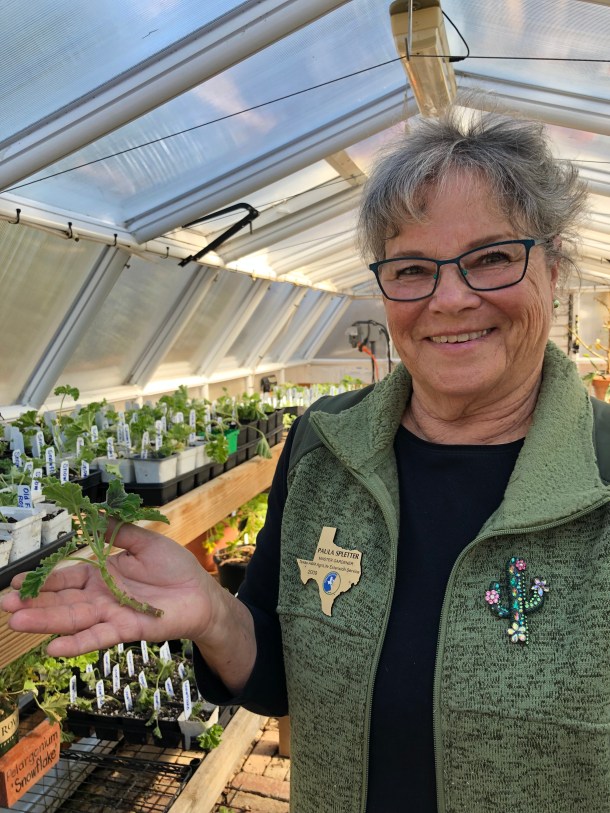
Paula Spletter to the rescue! Under her helpful guidance, each plant received a severe pruning leaving only one third of the plant intact for its winter location. Then the fun began. Over 200 stem cuttings were taken and repotted in preparation for a spring class at Raincatcher’s Garden of Midway Hills. Here are Paula’s basic tips for propagating scented geraniums:

Paula Spletter showing us the perfect stem cutting.

  1. Start with a healthy, well-hydrated “mother” plant.
  2. Cut tip-end stems just below two nodes. Each cutting should be about 2” to 3” long.
  3. Cut stems with a sharp, clean paring knife. Make a straight cut across (not at an angle) the stem.
  4. Use a dowel stick or the handle end of the knife to make a hole in the potting soil. (This will help to protect the fragile meristem when inserting.)
  5. Cuttings should be placed into a pot filled with a mixture of loose potting soil and compost.
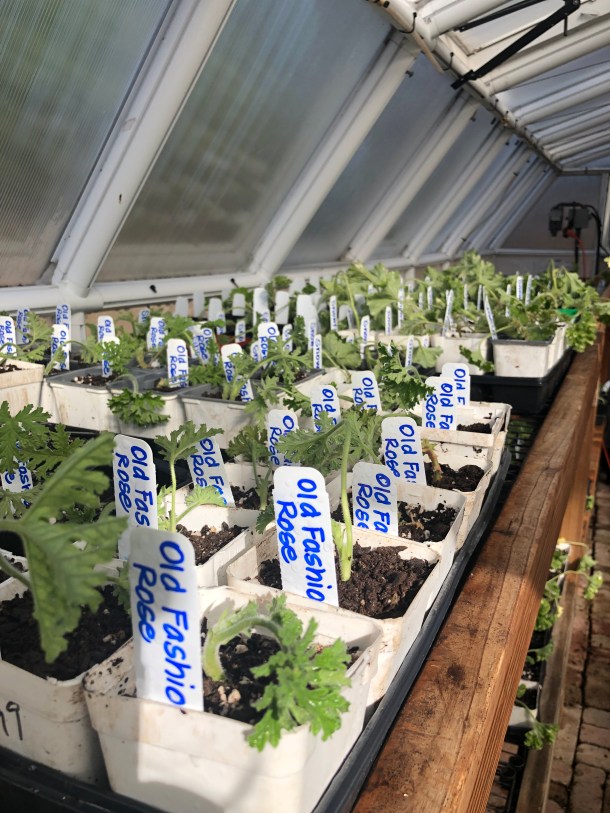
  6. Label every pot. Sometimes things get accidently moved around and what looks like an old-fashioned rose scented geranium might instead be peach scented.
  7. Water lightly. Monitor the soil while cuttings are in the greenhouse. Pay careful attention to conditions that could affect the health of the plants:

*Temperature in the greenhouse should be 45˚ or higher. A heater is recommended for anything below this number.

*Soil should stay evenly moist; never too wet or completely dried out.

*Extremes in heat, cold, overwatering or underwatering could cause problems with mealy bugs or a fungus. Pay attention and adjust accordingly.

Scented geranium cuttings in our greenhouse labeled and ready for winter.

Watch for an announcement about our 2020 late spring/early summer class on the joys of growing scented geraniums in your garden. A tasting menu will inspire you to get started!

Linda Alexander

Pesto Party Anyone?

Basil Bed Before Harvest

We had a party…a “Pesto Party” …and it was a chopping, blending and pulsing success. Our Edible Garden raised basil beds yielded some of the most beautiful plants we’ve ever seen. And, with a new drip irrigation system going in on Tuesday, all the plants had to be cut back rather severely. It was time to rally the troops and make good use of our harvest.

Two “favored” recipes, slightly adapted, served as the basis for our pesto making adventure. Each participant was encouraged to personalize their recipe. While some chose to stay with tradition, others brought an assortment of ingredients including everything from walnuts and pecans to a yeast substitute for the Parmesan cheese. Our garden, of course, provided the basil – three different varieties to be exact: Cardinal (cinnamon/clove flavor with hints of anise), Eleonora (somewhat spicier flavor than traditional pesto types) and Persian (a distinctive aroma, both lemony and spice like).

Once the food processors began their whirring magic, the next important decision was chunky or smooth. Those in favor of a smoother texture watched closely as more olive oil was slowly drizzled into the mix. If your twist happened to be chunky, only a few short pulses and it was done. More salt or lemon juice, each person had to make that call, as well.

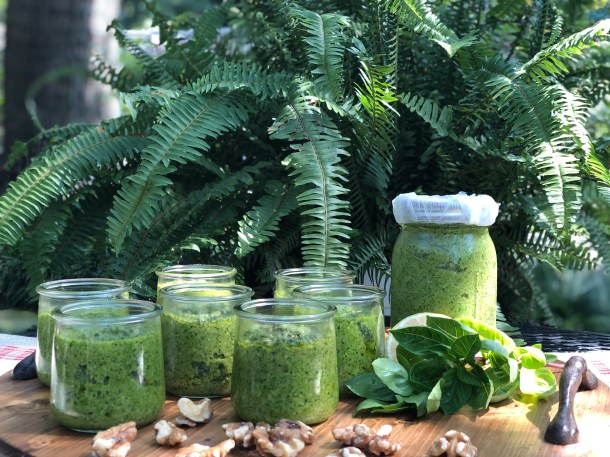
Amidst all the chatter and finger licking swipes, it was hilariously entertaining to see each batch being scooped out of the processors. Varying shades of green, silky smooth texture or visibly chunky little pieces of spinach and nuts didn’t matter. Each jar was filled with a pesto that yielded its own distinct personality. And, our chefs were thrilled to take home over 30 jars of garden-fresh pesto for their personal enjoyment or to share with family and friends.

*If you have basil that’s ready for harvesting, try one of our favorite recipes included below.

Pesto After Basil Harvest

Spinach Basil Pesto

Ingredients

1 ½ cups baby spinach leaves

¾ cup fresh basil leaves

½ cup toasted pine nuts

½ cup grated Parmesan cheese

4 cloves garlic, peeled and quartered

¾ teaspoon kosher salt

½ teaspoon freshly ground black pepper

1 tablespoon fresh lemon juice

½ teaspoon lemon zest

½ cup extra-virgin olive oil

Directions

Blend the spinach, basil, pine nuts, Parmesan cheese, garlic, salt, pepper, lemon juice, lemon zest, and 2 tablespoons olive oil in a food processor until nearly smooth, scraping the sides of the bowl with a spatula as necessary.  Drizzle the remaining olive oil into the mixture while processing until smooth.

Yield:  24 servings

Classic Pesto

Ingredients:

3 large cloves garlic

3 cups loosely packed fresh basil leaves

½ cup pine nuts, lightly toasted

½ cup coarsely grated Parmigiano-Reggiano cheese

1 teaspoon salt

½ teaspoon freshly ground black pepper

½ cup extra-virgin olive oil

Directions:

  1. Place the basil leaves in a food processor and pulse until half-way chopped.  Add the pine nuts and garlic.  Continue pulsing.  Add the cheese, salt and pepper.  Through the pouring spout, with the processor on, drizzle the olive oil into the basil mixture.  Blend just until incorporated but not completely smooth.  A little texture is best.

Yield:  About 3 cups

Linda Alexander


Grow and Graze-Pumpkins on Parade, Sweet Potatoes for Adornment – TIME CHANGE

“Pumpkins on Parade, Sweet Potatoes for Adornment”

PLEASE NOTE: Start time has been move back a half hour to begin at 10:30. Traffic on nearby streets, particularly Preston, Royal and Walnut Hill is difficult to navigate because of storm debris. Midway is open north of the garden and south to at least Royal Lane. Please allow extra travel time, and we hope to see you at the garden!

Tickets are sold out but the class is free, so please join us!

Join us for an in-depth look into these harvest-season jewels that have become an intrinsic part of classic autumn fare.

Tuesday, October 22nd

A ‘Grow and Graze’ Event Hosted by the Raincatcher’s Garden of Midway Hills

10:30 – 11:30am * 11001 Midway Road * Church Sanctuary

Free Program by Raincatcher’s Vegetable Experts

Immediately following the program, please join us in the Community Hall for Lunch

11:30 – 12:30

$15 per person, Reserved seating for 60, Ticket Sales Begin September 24th

Deadline Tuesday, October 8th

For Lunch Tickets, visit https://www.eventbrite.com/e/pumpkins-on-parade-sweet-potatoes-for-adornment-tickets-72885583743

 (Master Gardeners earn two CEU’s if attending both events)

Menu

Curried Pumpkin Hummus with Toasted Pita Chips

Autumn Bisque

Harvest Salad with Bacon Vinaigrette

Sweet Potato and Black-eyed Pea Salad with Rosemary-Honey Vinaigrette

Sweet Potato Crescent Rolls

Maple Sweet Potato Bread Pudding

Pumpkin Chai Pots de Crème Garnished with Pumpkin Seed Brittle

Orange-Scented Water and Hazelnut Coffee

Linda Alexander

Facts About Growing Okra and Recipes from our Latest Grow and Graze Event


Botanically speaking, okra is a member of the mallow family. Looking deeper into the Malvaceaes, we learn that it shares family ties with cotton, cocoa, balsa wood, hibiscus and durian fruit. Ancient cultivation of okra can be traced back to East Africa, West Africa, India and Southeast Asia. Its arrival in America is documented as one of Africa’s major crops that were brought to the United States on slave ships. Okra probably landed in the US through the ports of Charleston and New Orleans in the 1700s.

Varieties:

The USDA Germplasm Resources Information Network (GRIN) yields 1,099 accessions, most unnamed.

The National Bureau of Plant Genetic Resources in New Delhi claims over 4,000 accessions. 

Okra comes in all sorts of shapes and sizes: fat and thin pods, long and short pods and all sorts of variations in between. Colors vary from Burgundy, Red River, Louisiana Green Velvet, Emerald, Silver Queen, White Velvet and Jing Orange to Hill Country Red.

Tips:

Okra prefers a pH of around 6.5 and performs well in soils that are rich with organic matter.  Full sun is required. For best results, soak seeds for a few hours up to overnight. Plant okra seed 3” to 4” apart, thinning to 12”. For summer crops sow seeds in April and May. For a fall harvest, plant in late July to early August.

After the first harvest, remove the lower leaves to help speed up production. 

When shopping for okra, look for small bright green or red pods with no browning or discoloration, especially at the tips. Okra should be firm to the touch with no signs of limpness. Plan to use within a day or two or it will lose its texture and may even turn moldy. 

Interesting facts:

Okra will produce large flowers about two months after planting. The okra pods will be ready to pick three-to-four days later.

India is the largest producer of okra in the world. 

Okra leaves are incredibly nutritious. However, they need to be cooked as you would spinach or collard greens. Young leaves can be fried.

Okra plants are stunning and can be grown for their landscaping aesthetics alone, especially the red-stemmed varieties. We are currently growing both red and green varieties in the edible landscape at Raincatcher’s for this purpose. It’s something we hope to continue in 2020.

Following the program, guests were treated to a corn and okra flavor-filled lunch menu. Enjoy the photos and recipes from this delicious experience hosted by the Raincatcher’s Garden of Midway Hills. 

Our final ‘Grow and Graze’ event of 2019…Pumpkins on Parade and Sweet Potatoes for Adornment will be October 22nd.

Sign up will begin on September 24th. Ticket sales for our last event sold out in a few hours so mark your calendars now….


Warm Okra and Red Onion Salad with Pine Nuts
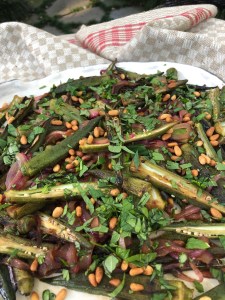
Ingredients

½ cup pine nuts

1 ½ tablespoons coconut oil (divided use)

½ red onion, thinly sliced

¾ pound okra, halved lengthwise

½ teaspoon kosher salt (divided use)

2 tablespoons Worcestershire sauce

2 teaspoons red wine vinegar

2 tablespoons finely chopped parsley

2 tablespoons finely chopped basil

2 tablespoons finely chopped mint

Directions

Toast pine nuts: Heat oven to 400˚F. Place the pine nuts on a rimmed baking sheet. Cook for 5 to 8 minutes, shaking every 2 minutes. Remove from the oven when golden. 

Place ½ tablespoon of coconut oil into a large cast iron or nonstick pan. Add the onion and cook over medium heat for 3 to 4 minutes. Remove the onions and set aside. 

Add 1 tablespoon of oil to the skillet and increase temperature to medium-high. Once the pan is hot, add half of the okra and ¼ teaspoon kosher salt. Sauté for 10 minutes. Stir occasionally. Remove the okra and add to the onions. 

Add the second batch of okra to the pan (add a bit more coconut oil if the pan is dry). Cook for 10 minutes, stirring occasionally. Add the onions and okra back into the pan. Stir to combine. 

Add the Worcestershire and vinegar to the pan. Cook on medium-high until the liquid is reduced by half. 

Remove from the heat. Stir in the parsley, basil, mint and toasted pine nuts. Stir well to combine. Salt to taste and serve immediately. 

Yield: Makes 6 servings.

Fried Okra with Pickle Aioli

Ingredients

Pickle Aioli

½ cup mayonnaise

2 tablespoons chopped dill pickles, plus 2 tablespoons pickle juice

2 tablespoons chopped fresh dill

2 tablespoons finely chopped fresh chives

Kosher salt and freshly ground black pepper

Okra

Vegetable oil, for frying

1 cup buttermilk

1 tablespoon hot sauce

1 ½ cups all-purpose flour

¾ cup yellow cornmeal

1 tablespoon Old Bay Seasoning

Kosher salt

1 pound okra, halved lengthwise

Directions

To make the pickle aioli: In a medium bowl, stir together the mayonnaise, pickles, pickle juice, dill and chives. Season to taste with salt and pepper. 

To make the okra: In a large Dutch oven or other heavy-bottomed pot, heat 2 inches of the oil to 350˚F over medium-high heat. Alternatively, heat the oil to 350˚F in a deep fryer following the manufacturer’s directions. Line a large plate with paper towels. 

While the oil is heating, whisk together the buttermilk and hot sauce in a large bowl. In a separate large bowl, whisk together the flour, cornmeal, Old Bay and 1 tablespoon salt. 

Add the okra to the buttermilk mixture and toss to coat. Transfer to the flour mixture and toss to thoroughly coat. 

When the oil is hot, remove the okra from the flour mixture, shaking off any excess, and fry the okra in two batches until golden brown and crisp, about 5 minutes. Use a slotted spoon to transfer to the prepared plate and season lightly with salt. Repeat with the remaining okra. 

Serve hot with the pickle aioli.

Yield: Serves 4

Fresh Okra Muffins

Ingredients

2 cups self-rising cornmeal

1 tablespoon sugar

½ teaspoon salt

1 ¼ cups milk

2 large eggs, lightly beaten

¼ cup vegetable oil

1 teaspoon Worcestershire sauce

¼ teaspoon hot sauce

2 cups thinly sliced fresh okra (about ½ pound)

¼ cup chopped onion

Directions

Combine first 3 ingredients in a medium bowl; make a well in center of mixture.  Combine milk and next 4 ingredients; add to dry ingredients, stirring just until moistened.  Fold in okra and onion.

Grease muffin pans, and place in a 400˚F oven for 5 minutes.  Quickly spoon batter into prepared pans, filling two-thirds full; bake for about 20 minutes or until lightly browned. Remove from pans immediately.

Yield:  1 ½ dozen.

Linda Alexander