Mealy Blue Sage (Salvia farinacea) is a low maintenance, perennial plant that is native to Texas and Mexico and is heat and drought tolerant. It is a 2 – 3 foot sprawling plant that forms a mound as wide as the plant is tall. Its upright growth and showy flowers make it ideal for the back of a perennial garden. The leaves have a grayish cast which makes a good contrast to the green foliage of other plants.
Mealy Blue Sage has numerous flowers on a terminal spike and it requires at least 6 hours of sun for optimal growth and flower production. The stunning purple-blue flower spike brightens the landscape and attracts pollinators to the garden. Once the flowers are spent, it produces a small, papery capsule that some birds enjoy as food. The plant will reseed itself after established and the seedlings can be easily transplanted to other areas of the garden. This plant will grow thicker and will flower better in the fall if cut back in mid-summer
This is yet another fabulous perennial plant that we will have available at our plant sale at Raincatcher’s Garden at Midway Hill Christian Church (11001 Midway Road, Dallas Texas 75229) on Thursday May 4th from 10 AM – 3 PM. Hope to see you there!!!
On a typical Sunday morning following church, my husband and I can be found enjoying brunch at our favorite local bistro. A few weeks ago, was no exception. Parigi is owned by a dear friend of ours who, in “oh so chic” Parisian style, never fails to greet guests with a petite tabletop centerpiece of fresh flowers.
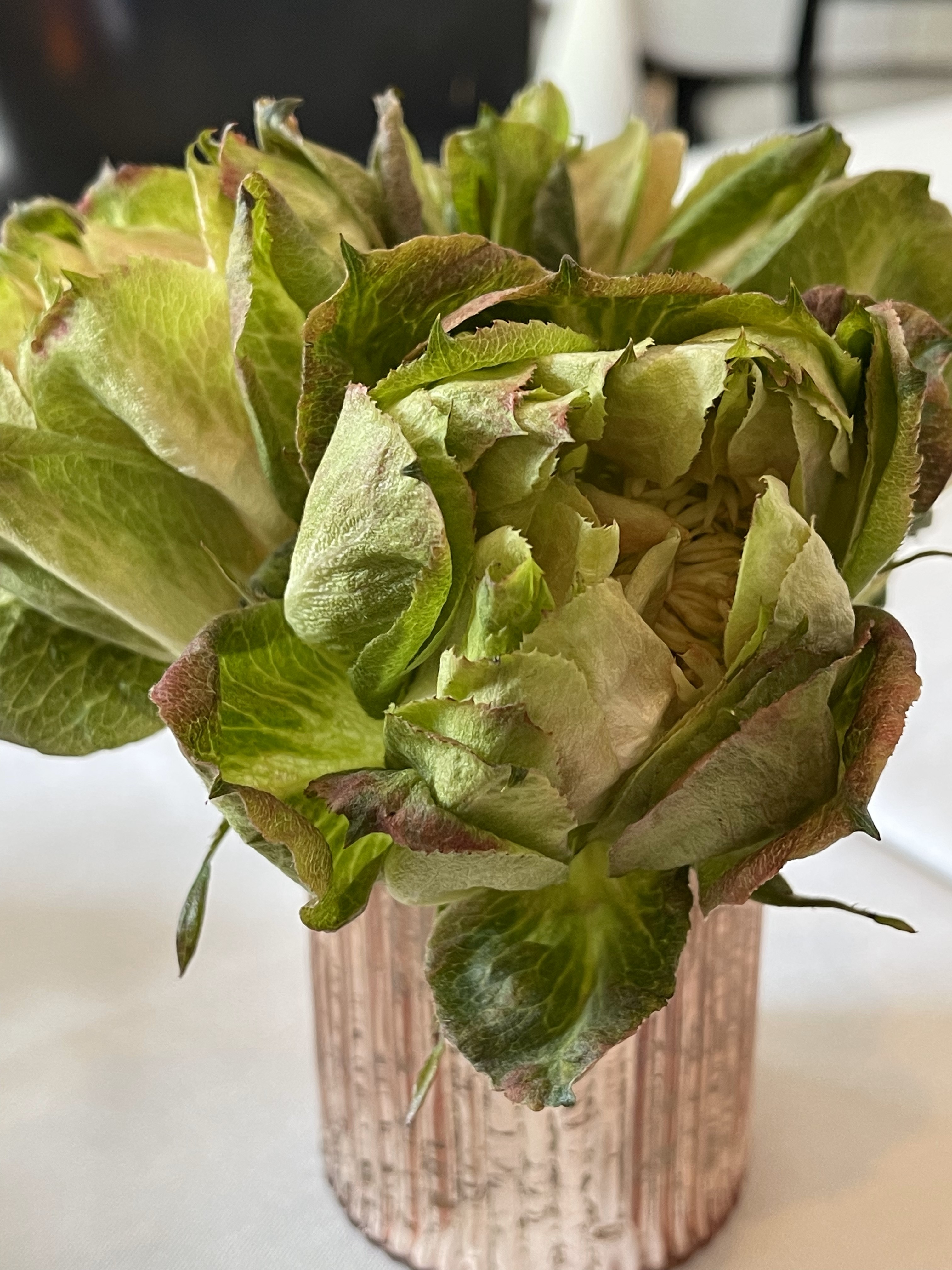
Taking a seat at our usual window table, we were mesmerized by the small but stunning floral display in front of us. Our server smiled as we inquired about the apple-green petals with bronze tips resembling a rose but tightly connected in a lettuce-type formation. Her answer was and short and simple… “I only know that it is called ‘Veggie Greenrose’.”
Brunch was delightful and relaxing but once in the car, a google search took me to a source that provided the best explanation. Here is an abbreviated version of what I learned.
Our admiration was for a unique rose known as Green Rose, thought to be a descendant of Old Bush, a two-hundred-year-old form of Rosa chinensis viridiflora. China roses are extremely hardy and well suited to Zone 8. One grower observed that many winters, in Zone 8, the Green Rose never loses its leaves but remains a vibrant green with a tinge of red.
While the buds on Green Rose bloom like any other rose, when open, there are never any petals. Interestingly, the rose bloom is made up of sepals on top of sepals followed by more sepals. Characteristic of its design, the sepals usually come together to form the “holder” of the flower. This holder is called a calyx, but the Green Rose never makes a true flower. Without a flower, there is no seed and no next generation of the plant.
Thankfully, gardeners throughout the years who held Green Rose in high esteem, chose to take cuttings that were graciously shared with family and friends. Today, this rose exists due to the kindness and love of these special admirers.
However, locating a source for Green Rose can be challenging. Once again, thanks to the internet, Mountain Valley Growers in Squaw Valley, California had them in stock. I ordered three small plants. Joyfully, my order arrived two weeks ago.
Following their instructions, Green Rose spent a few days acclimating to our climate. After a carefully selected location, it is now growing in my garden. And my dear friend and fellow master gardener, Ann Lamb, agreed to grow one of the plants in her garden. We plan to compare their growth over the next few months and eventually start taking cuttings to share with family and friends.
Ann and Linda with our beginner Green Roses
It is enchanting to consider a diminutive and wonderful rose that first appeared as early as 1743 in the area that later was named China. Even more intriguing is the fact that, at one time, it was forbidden for anyone outside of the Forbidden City to grow this rose. It was the sole property of the emperors!
Emperors aside, Ann and I have no walls or thoughts forbidding anyone to grow a beautiful rose that should have a place of honor in any rose garden! Let us know if you would be interested in having a cutting someday.
Linda Alexander, Dallas County Master Gardener Class of 2008
We have several rosarians amongst our Master Gardener crowd. Has anyone grown the Green Rose? If you have, send us a picture.
Four-Nerve Daisy (Tetraneuris Scaposa) is a Texas native perennial plant that blooms almost year round. It is evergreen with gray green foliage and bright yellow flowers that bloom on long leafless stems. The plant itself is 6 – 12 inches tall (including the flower stem) with a 1 foot spread. It is heat and drought tolerant and pest and disease free. It also attracts butterflies and bees!
I have been growing this plant for about 10 years now and it has become my favorite plant. I have paired it with grape hyacinth and have found this to be a great combination because they both bloom in early spring. It’s a great border plant or rock garden plant and does well in full sun. It does not tolerate over watering which is a good thing in my book!!! This plant has a long taproot and does not transplant well. It spreads from seeds and does well if dug when the seedlings are small. I have been digging these tiny seedlings and will have some available at our plant sale at Raincatcher’s Garden on May 4th.
Raincatcher’s Annual Plant Sale
May 4th, 10 AM – 3 PM
We will have annuals, perennials, herbs, peppers, succulents, shrubs, trees, groundcover, bulbs, houseplants, decorative pots, yard art, and more.
Location: The courtyard at 11001 Midway Road, Dallas, Texas 75229
Jackie James, Dallas County Master Gardener Class of 1998
Many of you have seen these color change artists in your own gardens but do you really know what they are and how they help to limit plant pests?
The green anole, Anolis carolinensis, is a small to medium-sized lizard, with a slender body and a long tail. Its head is elongated and has numerous ridges between its eyes and nostrils, and smaller ones on the top of its head. Its toes have adhesive pads to facilitate climbing. The males are 15% larger than the females, and the male dewlap (throat fan) is three times the size of the female’s and ranges in color from bright orange to a light pink, whereas the females dewlap is lighter in color. The extension of the dewlap from the throat is used for communications. Males can also form a dorsal ridge behind the head when displaying or when under stress.
The green anole’s body coloration can vary from dark brown to bright green and can be changed like many other kinds of lizards, but anoles are closely related to iguanas and are not true chameleons. The anole changes it color depending on mood, level of stress, activity level and as a social signal, (for example, displaying dominance). Although often claimed, evidence does not support that they do it in response to the color of their background.
Ever seen one with either no tail or a very short one? An interesting fact is that the anole, like many lizards, has an autotomic tail, which will wiggle when broken off to distract a predator and allow the anole to escape.
This species is native to North America, where it is found mainly in the subtropical parts of the continent.
An anole’s diet consists primarily of small insects such as crickets, grasshoppers, flies, moths, cockroaches, small beetles, and other arthropods, including spiders, as well as occasionally feeding on various mollusks, (think snails and slugs), grains and seeds.
Me-Ann at the Ann Norton Sculpture Garden in Florida
Like a bee going from flower to flower for different types of nectar, I am flying all over gathering information from many sources about tomatoes. Last year I learned of a grower, Bobby’s Best. You can find him on instagram-Bobby’sbeststarts.com
Recently he was kind enough to share his compelling explanation of the advantages of using organic fertilizers. Remember if you feed your soil, it will feed you!
You may not be thinking about tomatoes tonight but I am. March 15th is the frost free date for the Dallas area which means it is not likely we will have a frost after that date. However, next week we may have a few low temperature nights so you may want to wait to plant. Regardless of the date you choose to plant, you are going to want to come to our garden on Tuesday to purchase tomato and pepper plants; lovingly started and tended by Raincatcher’s volunteers. See details below. Ann
It’s time to plant!!!
TOMATOES and PEPPERS, TOMATOES and PEPPERS, TOMATOES and PEPPERS
The MG volunteers of Raincatchers at Midway Hills have grown several varieties of tomatoes and peppers from seed and will have them for sale.
Tuesday, March 14th, 10:00 am – 12:00 noon
Courtyard Garden
Midway Hills Christian Church
11001 Midway Rd. Dallas 75229
$2.00 per 4” pot
Cash or Check only, please
Sarah Sanders, Dallas County Master Gardener Class of 2006
Jackie James, Dallas County Master Gardener Class of 1998
Don’t be confused-we have our big plant sale coming up May 4th and will talk it up over the next few weeks.
In the “paint” world, each new year begins with the big reveal. For 2023, Pantone has taken inspiration from the natural world with the announcement of Viva Magenta as their color of the year. Described by the company as a powerful and vibrant shade of red deeply rooted in nature, it promises to be “bold and fearless” while adding a joyful and optimistic tone to your interior.
Pantone’s glamorous appeal is convincing; “Viva Magenta descends from the red family and is inspired by the red of cochineal. The cochineal beetle is an insect that produces carmine dye, one of the most precious, strongest, and brightest natural dyes the world has known”. They add, “it was chosen to reflect our pull toward natural colors.”
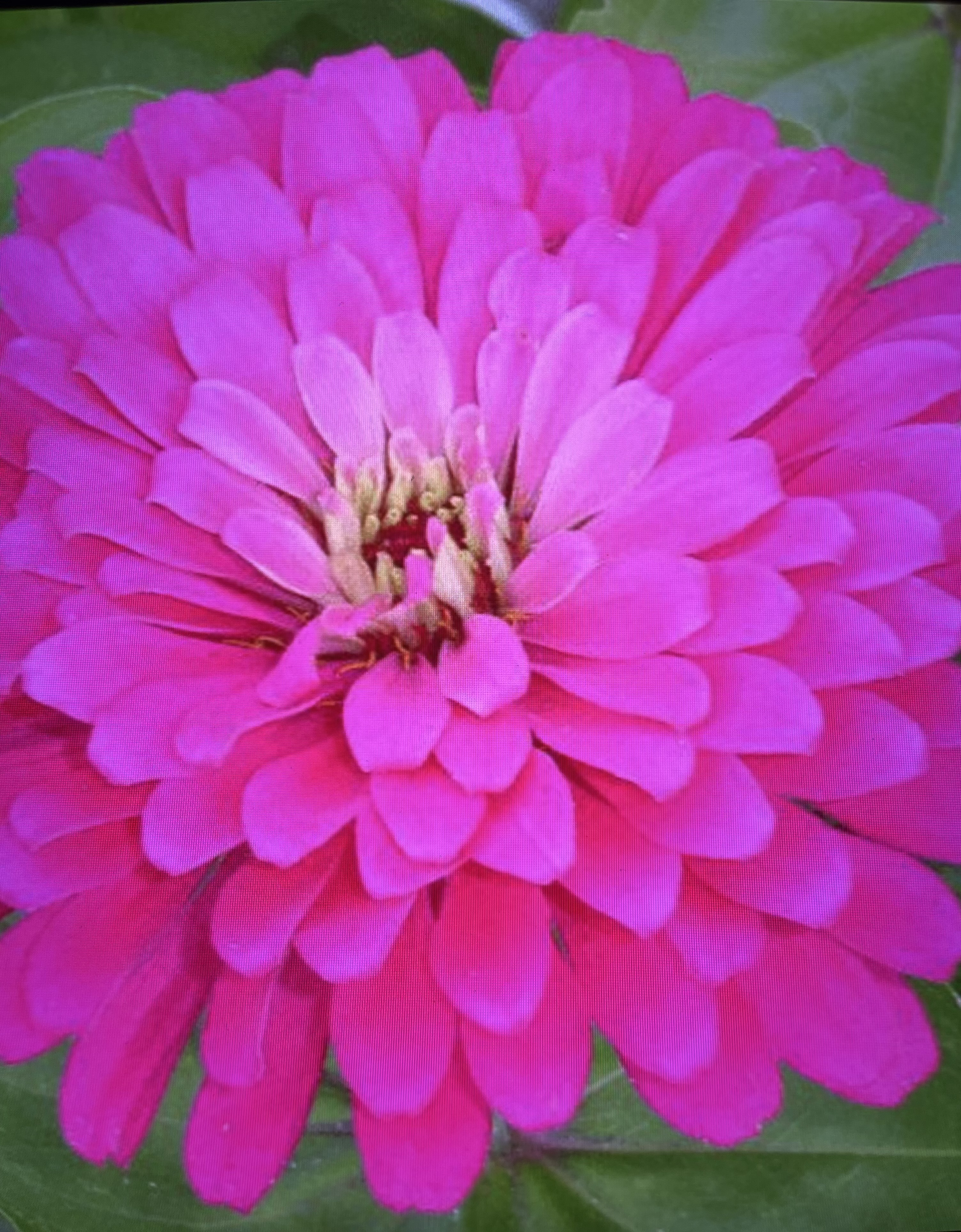
Seems the botanical industry has taken notice with promotional ads now featuring a stunning array of floral options for your landscape. Not surprisingly, it would be difficult to find a flower that more dramatically captures the true essence of “magenta” than the zinnia.
As you can see from this stunning photograph, I was, indeed, “drawn in” and quick to imagine the perfect sunny location for it in my summer garden. It’s from The Gardener’s Workshop in Newport News, Virginia.
The name and description they’ve given this zinnia is impressive; ‘Uproar Rose’. It is being held as the next knock-out zinnia by cut flower growers everywhere.
My seeds have been ordered and will be planted directly into the garden after our last danger of frost. I’ll follow their very professional harvesting tips:
*Harvest the blooms when fully mature.
*Make the first harvest cut above the bottom two side shoots as this establishes a branching habit for the season.
*Make future cuts at the base of the stem.
Linda Alexander, Dallas County Master Gardener class of 2008
After many years of service as a storage facility for both the church and garden, the old red shed was in a state of disrepair. Rotted floors, bulging sides, leaking roof and collapsing doors made it unsafe for volunteers to use. Watching as it was torn down gave us a sigh of relief.
What happened next, with nothing left but an empty space, allowed for a time of reflection. The area bordering the north side of the shed had been transformed into a lovely sensory garden, one of our newest additions to the edible landscape. Expansion to the now vacant area would require the installation of an irrigation system but the church had suggested that they might need the space for future use. The other option was to relocate the sensory garden. Our decision was something unexpected which, ultimately, proved to be a magical solution.
Just a few yards away and bordering the stone pathway was a garden area we had previously christened as “The Kaleidoscope Bed”. With an eclectic mix of evergreen and perennial flowers and herbs as well as colorful annuals, it seemed as if we were being invited to consider yet another transformational opportunity. In the blink of an eye followed a sweet smile of happiness, the blending of gardens began. The Kaleidoscope Bed would graciously surrender its name while allowing existing plants and ornamental features to remain in place.
Our plan going forward is to maximize the sensory impact that the garden has on its visitors. Adhering to the 70/30 rule, our primary focus will be the addition of more edibles supported by a small percentage of non-edibles. We’ll be including textural plants such as lamb’s ear for it’s soft, fuzzy feel and an upright, aromatic rosemary for both smell and touch.
For real summertime garden beauty, we’re going to feature Balsamic Blooms Basil once again. It’s the basil that received a Texas Superstar designation in 2017. We first fell in love with its deep purple blooms and the sweet flavor of its gorgeous foliage in the spring of 2018. When we learned that this was the first basil to have flowers and leaves growing at the same time, our vote was unanimous to move it to the top of our seasonal list. Balsamic Blooms will always have a place of honor in the edible landscape.
Balsamic Blooms Basil and Begonias
Our newly relocated and appropriately named Sensory Garden offers triple the amount of space than before to feature a wide variety of plants that stimulate the senses. Come by for an inspirational visit and let your soul be nourished by the wonderful world of nature.
Linda Alexander, Dallas County Master Gardener Class of 2008
It was only a few years ago when just an ordinary piece of toast topped with gently smashed avocado became the rage. You’ll find it now on menus across the country from small cafes to upscale restaurants. Everyone seems to have created their own version by using an alphabetical listing of edibles including everything from artichokes and micro greens to tomatoes and tarragon for appeal. My approach tends to be more simplistic in style.
An early morning harvest from my edible garden provides a seasonally fresh selection of blossoms, greens, herbs and vegetables. On Saturday mornings from April until November a visit to our local farmer’s market gives me additional options. Here are a few delicious suggestions that my husband and I have recently enjoyed but be creative with your choices because any combination that pleases your palate is a winner.
Springtime
*Thinly Sliced French Breakfast Radishes, Onion Chives and Nasturtium Blossoms
*Broccoli Florets, Arugula and Mrs. Taylor’s Scented Pelargonium Blossoms
*Thinly Sliced Carrots Topped with Caraway Sprigs
*Swiss Chard Perpetual Spinach and Nepitella Blossoms
Summertime
*Sliced East Texas Peaches and French Tarragon
*Campari Tomatoes Sprinkled with Chopped Balsamic Blooms Basil Leaves
*Sliced East Texas Peaches, Sweet Banana Peppers and Purple Basil
*Armenian Cucumbers with Salad Burnet and Watercress
Avocado toast is something we enjoy for breakfast, brunch, lunch and as a delightful appetizer. For a light summer dinner we often serve it alongside homemade gazpacho or chilled cucumber soup. Our goal is simply to use garden fresh ingredients! The only exception is when I’ve made a visit to purchase fresh eggs from my master gardener friend who raises chickens at her ranch. A delicately fried egg sitting on top makes for a very scrumptious breakfast experience.
**Additional edibles from summer’s bounty will include anise hyssop blossoms, blueberries, shaved yellow crooked neck and zucchini squash, onions, jalapeno and shishito peppers. To complete the flavor kick be sure to consider a sprinkling of these herbs; anise, dill, fennel, lovage, mint, papalo, pipicha, lemon thyme and rosemary or any of your personal favorites.
Linda Alexander, Dallas County Master Gardener Class of 2008