Tag Archives: Dallas County Master Gardeners

Blackberry Class And Lunch In Our Blackberry Patch

Take the mystery out of growing blackberries. 

Come to the Earth- Kind ® WaterWise Demonstration Garden

at 2311 Joe Field Road

to hear Tim Allsup give an outdoor talk about how to grow ‘em and which varieties he likes, and how to prune ‘em! 

Date: Tuesday, June 4th                   Blackberries, Some Ripe                                                                    

Time: 11:00am-Noon

Place: 2311 Joe Field Road

Reservations: glamb@flash.net or sign up by leaving a comment on this blog.

Cost: $5.00 each person to be paid when you arrive for class 

Guests welcome, Master Gardeners will receive one hour education credit.

“Blackberry Lunch” 

Smoked Turkey, Mozzarella, and Blackberry Sandwiches 

Spinach Berry Salad with Blackberry Balsamic Vinaigrette 

Blackberry Lemonade

 Dessert Smorgasbord 

Blackberry Crumb Bars 

Fresh Blackberry Cake 

Blackberry Puffs 

Lemon Blackberry Swirl Pound Cake

Menu by Linda

Picture by Starla

Recipes will be included on our blog next week.


April Dallas County Master Gardener Meeting

 Nothing short of a tornado should keep you from the April 25 Master Gardener meeting at the Earth-Kind Water Wise Demonstration Garden, 2311 Joe Field Rd. , Dallas. 

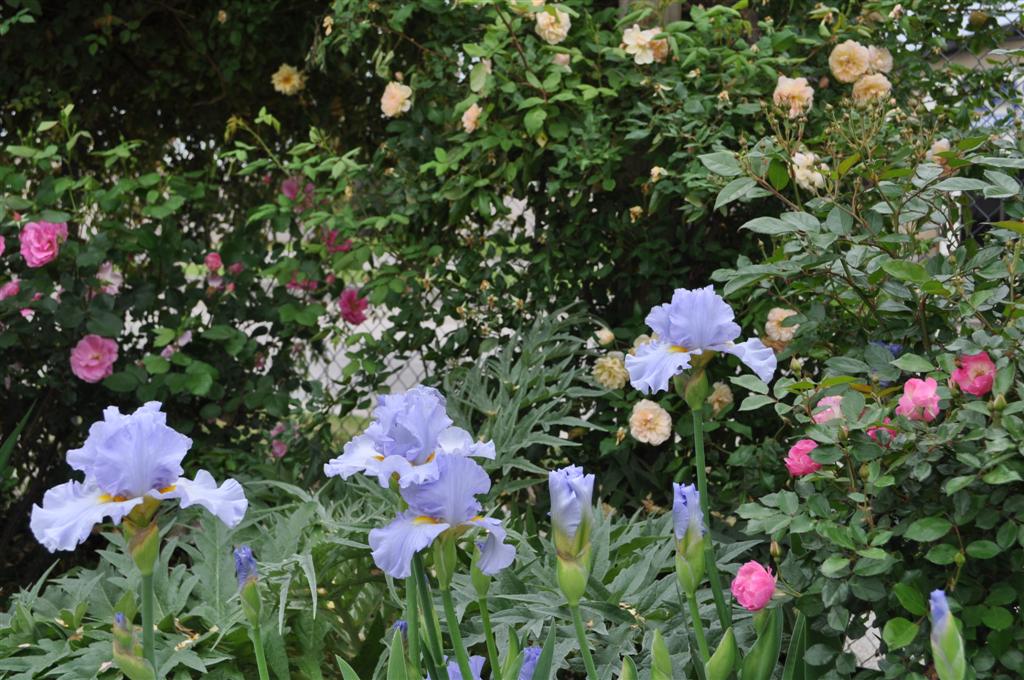
Blue Iris and Earth Kind Roses at the Demonstration Garden

Not only is the Garden in full, best of April, boisterous bloom.  But Linda  tested Mexican recipes for months to perfect a lunch menu using our home grown cilantro that will leave you weak in the knees: Cream of Cilantro Soup; Spinach and Mushroom Enchiladas with Cilantro Cream Sauce; Black Bean Salad with Corn, Red Peppers, Avocado and Lime-Cilantro Vinaigrette; Spicy Salsa; and Mexican Chocolate Cake with Praline Frosting. 

Cilantro Growing In Raised Bed At The Demonstration Garden

What would lunch be without a Plant Sale? Master Jardineros will sell 4-inch, quart, and gallon plants for rock bottom prices.  Plants include: lyre leaf sage, artemesia, Victoria blue salvia, stick verbena, Indigo Spires salvia, Star sedum, fall asters, blackberries, Blue Gamma grass, tall pink “Chi Chi” Ruelia, white and purple Hyacinth bean, and compost.  Check or cash only, please. 

Note: Please bring your own folding chair.  The meeting begins at 11:30.  Gina Woods a fellow Master Gardener will be presenting a program on Tillandsias and Bermulaids .  She will be bringing plants to show and sell.

Elizabeth

Learning In The Garden

Tuesday, April 7, the Denton County Master Gardener School came to Dallas to learn from the Dallas County Master Gardeners at The Earth-Kind® WaterWise Demonstration Garden on Joe Field Road.

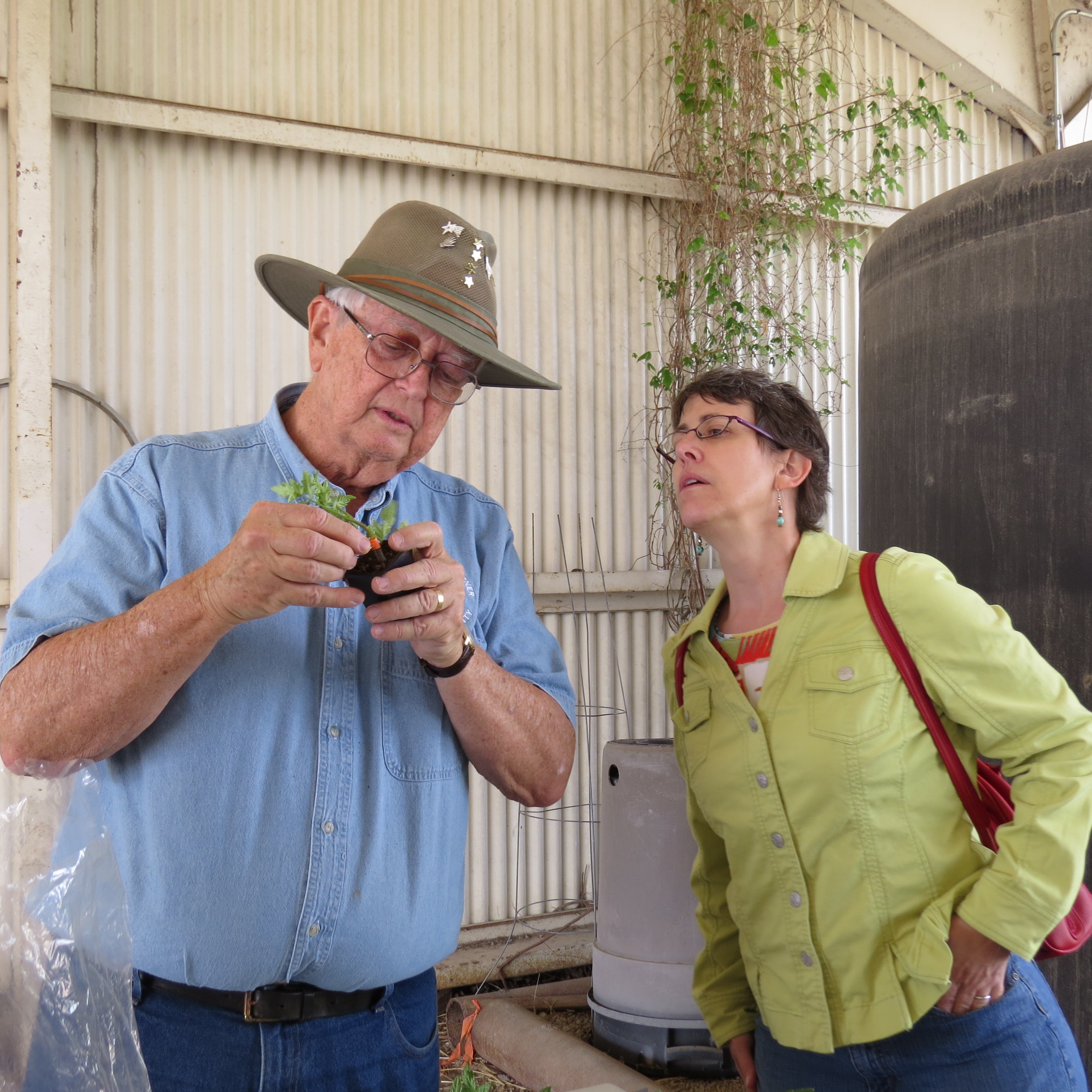
Did you know blackberries have primocanes and  floricanes and perennial roots and biennial tops?

Tim Allsup and blackberry lessons

Have you ever grafted a Cherokee Purple Tomato onto a Celebrity Tomato?

Jim Teaching Tomato Grafting

Are you aware of the virtues of vermiculture?

Michele and Sue Teaching At The Dallas Demonstration Garden On Joe Field Road

We just can’t help it.  We love sharing  garden know- how with other gardeners.

Yearning to learn in the garden?  Future classes will be advertised on this blog.  Y’all come!

Ann

Pictures by Starla.

In The Spring…

February Garden Chores

During February Dallas gardeners prepare for spring.   Several of our Dallas County Master Gardeners pruned roses at the Farmers Branch Rose Gardens and developed the confidence needed to remind us hot to tackle  17 varieties of Earth-Kind Roses at the Demonstration Garden.

We pruned the roses back to about three feet, cut out crossing and interior branches, pruned out the dead wood and excess-voila Earth-Kind Roses ready for spring.

February Rose Pruning, Mutablis Rose and Two Master Gardeners

Sarah demonstrated an ornamental grass cutting technique:  

To cut  tall grasses in a perfect mound……you go around the clump with a bungee cord, cut straight across just above the cord and pop the cord off. Sarah just happened to have a couple of bungee cords in her trunk so that we could try this technique.

Bungee Cord Wrapped Around Grass To Be Pruned

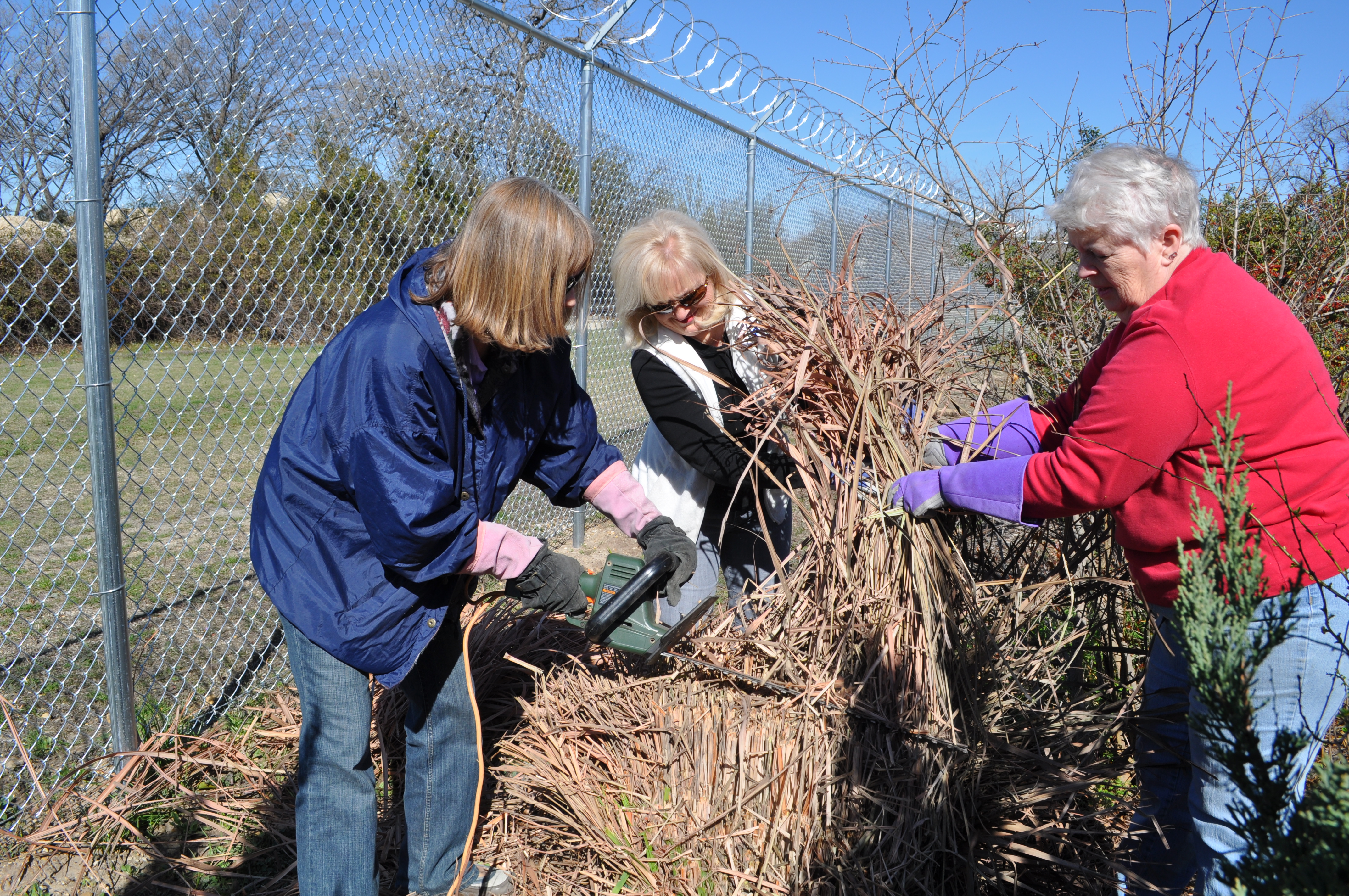
Sarah, Jackie, and Linda take it away:

Master Gardeners Cutting Back Grass

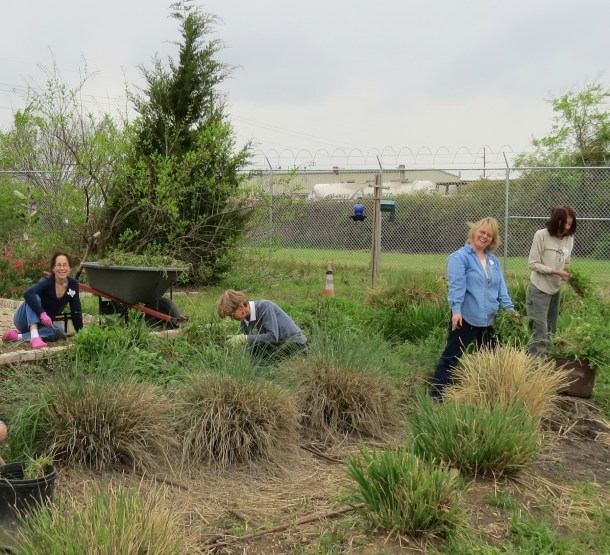
More ornamental grass pruning by Jean, Becky, Michele, and Linda:

Master Gardeners Cutting Back Grasses At The Demonstration Garden

This grass will go to the compost pile:

Clippings Going To Our Compost at The Demonstration Garden

Spring is coming and we hope you will visit us at our garden, 2311 Joe Field Road, Dallas, 75229.   Comment  if you would like to ask a question or set up tour of the gardens.

Ann

Soups And Cornbread With Veggies

Broccoli Cornbread

Broccoli Veggie Cornbread 

½ stick butter or margarine, melted

2 eggs, slightly beaten

1 pkg Jiffy Cornbread Mix

½ pkg (10 oz) frozen chopped broccoli, cooked (about 1 cup)

½ cup small curd cottage cheese

½ cup canned creamed corn

Grated onion or chopped green onion, if desired 

Preheat oven to 350 degrees. Chop cooked broccoli a bit smaller. In a large bowl melt butter in microwave. Add chopped broccoli, cottage cheese, corn, onion and beaten eggs. Mix till combined. Stir in cornbread mix.

Pour into greased 8 x 8 Pyrex for thicker squares or 7 x 11 Pyrex for less thick squares. Bake about 35 minutes or until toothpick in center comes out clean. 

Patti,Dallas County Master Gardener Class 2012

 Spicy Refried Bean Soup

1 can (15oz) fat-free, spicy refried beans

1 can (15 oz) whole kernel corn, drained

1 can (15 oz) black beans, rinsed and drained

1 can (14.5 oz) vegetable broth

2 cans (10oz) Rotel tomatoes with green chilies

1 cup water

Mix all ingredients in a large pan.  Heat on medium until it comes to a boil.

 Reduce heat and simmer 8-10 minutes.  Serve with tortilla chips.

Makes 2 quarts.  Less than 120 calories per 8oz. serving.

“Heat” can be adjusted by using less Rotel tomatoes

Sarah, 2006

Mediterranean Lentil Ragoût

Olive oil cooking spray

1 large onion, finely chopped

5 cloves garlic finely minced

1 jalapeño pepper, finely minced

1 large fennel bulb, sliced thin

1 (28 ounce) can diced tomatoes

1 1/2 cups orange juice

1 1/3 cups lentils, picked over and rinsed

1 Tablespoon dried basil

1 Tablespoon dried oregano

1/4 cup tomato paste

1/3 cup mint leaves, chopped, divided use

6 cups cooked rice, quinoa or bulgur

Parmesan cheese (optional)

1. spray a heavy skillet with cooking spray; place over low heat and sauté onion, garlic, jalapeño and fennel, stirring occasionally, until soft, about 5 minutes. (if vegetables start to stick or brown, cover skillet.)

2. Add tomatoes, orange juice, lentils, basil, oregano and tomato paste. Increase heat and bring to a boil.  Reduce heat, cover and simmer for 40 to 50 minutes, or until lentils are tender. (add up to 1/2 cup water or orange juice if ragout gets too thick.)

3. Stir in mint leaves, reserving 2 tablespoons for garnish.  Serve lentil stew over rice, quinoa or bulgur. Garnish with Parmesan cheese, if using, and remaining chopped mint.

Serves 6, approximately 449 calories per serving

Recipe from The Phytopia Cookbook by Barbara Gollman and Kim Pierce


Homegrown, Veggies, Fruits and Herbs

I have a visual image of Master Gardener and nutritionist Barbara Gollman at Kroger: Red hair flying, trim figure running behind a cart, zipping down the frozen food isle flinging packs of frozen veggies into the cart for one of her wonderful soups. 

Barbara, Dallas County Master Gardener Teaches Value of Vegetables

Barbara intrigued a large group of Master Gardeners Tuesday with her talk on the nutritional benefit of vegetables, fruits, and herbs.  Turns out that Mom was correct when she urged us to eat our vegetables.  Carrots, oranges, sweet potatoes, and other fruits and vegetables are full of phytochemicals, substances in plants that have the potential to slow aging, boost immunity, prevent disease, and strengthen our hearts and circulation. 

Cabbage, Broccoli Field Road, Dallas, Texas

Barbara suggests that we eat watermelon and tomatoes, plants that are packed with lycopene, a nutrient which helps prevent macular degeneration.  Pinto beans are rich in fiber, which can prevent cancer and heart disease, and flavonoids, which can curb the oxidation of LDL cholesterol and prevent blood clotting.  Cruciferous vegetables like broccoli and cabbage are high in calcium.  Nuts are filled with Vitamin E, one of the most potent fat-soluble antioxidants. Berries, greens, winter squash—-well, you get the idea.  

Barbara said that new research has shown the health benefits of herbs. Who knew? Turns out that 1 teaspoon of oregano = ¾ cup of brussel sprouts in antioxidants.  

Barbara dries her herbs in the microwave after her husband’s reaction to using his closet as an herb drying rack. Remove the leaves from the stems of the herbs and spread on paper towels.  Put two paper towels on top of the herbs.  Pop in the microwave and zap for one minute.  (If the leaves are charred, try again and use a shorter amount of time. If the leaves aren’t crisp, microwave longer in 15-second increments.)  Remove from the microwave and air dry on the kitchen counter for a few days.  Store in a labeled glass jar.  

Are home grown vegetables better for you than those found in the grocery? Barbara says some research showed up to a 15 percent increase in nutrients in homegrown and organic vegetables.  Some other studies didn’t find an increase in nutrients. 

Many thanks go to Barbara for her research and common sense approach to healthy eating.  Let’s just put it this way: on the way home I stopped at Whole Foods and bought spinach, broccoli, and almonds for dinner.   

Elizabeth

Recipes served in the class will follow.

Arugula-Pear-Blue Cheese Salad

Arugula, Pears, Pecans, Blue Cheese For Salad

1/4 cup plus 2 Tbsp peach or pear preserves

1/2 cup Champagne vinegar

1 shallot, sliced

2 tsp. Dijon mustard

1/2 tsp salt

1/4 tsp freshly ground pepper 

1/2 cup olive oil 

8 cups loosely packed arugula

2 Bartlett pears, cut into 6 wedges each

4 oz. blue cheese, crumbled

1/4 cup chopped toasted walnuts or pecans 

Process 1/4 cup preserves and next 5 ingredients in a food processor 30 seconds to 1 minute or until smooth.  With processor running, pour oil through food chute in a slow steady stream, processing until smooth.  Transfer to a 2-cup measuring cup or small bowl, and stir in remaining 2 Tbsp peach preserves. 

Place arugula in a large serving bowl.  Top with pears, blue cheese, and pecans.  Drizzle with vinaigrette. 

Elizabeth  From Southern Living Magazine 

Merry Christmas From the Demonstration Garden on Joe Field Road

Merry Christmas From The Demonstration Garden

T’was the weekend before Christmas, and all through the yard,
Not a gift was being given, not even a card
The tools were all hung, in the garage with care,
With hopes that St. Nicholas soon would repair.
The shovel with blade all rusty and cracked,
The pitchfork still shiny, but handle it lacked.
When out on my lawn, (its brown and abused)
I could see poor old Santa, looking confused.
No list had been left for Santa to see,
No gardening gifts were under the tree.
But wait there’s still time, it’s not Christmas yet,
And gardening gifts are the quickest to get.
You can forget the silk tie, the fluffy new sweater;
Give something to make the garden grow better.
If she wants a gift shiny, then don’t be a fool,
It’s not a dumb diamond, but a sparkling new tool.
If fragrance is listed you can forget French perfume,
It’s a pile of manure that’ll make gardeners swoon.
Give night crawlers, not nightgowns, a hose that sprays water.
(Anything for the kitchen is not worth the bother.)
Give a great gift that can dig in the dirt,
It’s better than any designer-brand shirt.
Now look quick at Santa, this guy’s not so dumb,
Under his glove, he hides a green thumb.
His knees are so dirty, his back how it aches,
His boots stomp on slugs, (he gives them no breaks).
The guy works only winter, you can surely see why,
For the rest of the year it’s as easy as pie.
He has elves plant through spring, pull weeds in the summer,
In fall they all harvest, but winter’s a bummer
And so Christmas gives Santa a part-time employment,
‘Till spring when the blooms are his real enjoyment.
So ask the big guy for garden gifts this year,
Seeds, plants and tools, Santa holds them all dear.
You see, malls may be crowded, vendors hawking their wares,
But visit a nursery; stress-free shopping is there.
Now Santa’s flown off, to the nursery he goes,
And his voice fills the night with a loud Hoe! Hoe! Hoe!
Reprinted from Rhode’s Newsletter with permission.

Plant Your WildLife Habitat

The flowers that are blooming in our WildLife Habitat right now were selected with a purpose.  We wanted to provide food for all kinds of creatures and yes, they are flying in to feast on our plants and eat our berries.   Monarch, Gulf Fritillary, and Giant Swallowtail butterflies have been identified. Skippers, bees, dragonflies, and birds are in residence.

Consider these Suggestions from landscapers around the USA of  The National Wildlife Federation for Your Backyard Habitat:

In every landscape I design and with the volunteer consultations that I do there is one plant that I always suggest: Asclepias (milkweed). I try to use native varieties, and A. incarnata (swamp), A. speciosa (showy) and A. verticillata (whorled) milkweeds are my gold medal winners—the wildlife garden equivalents to Shaun White. I like them not just for their importance in habitats—they are host plants for the monarch butterfly—but because of their educational value for children. My kids love to go out into our flower garden and check to see if there are any new monarch eggs, larvae or chrysalides, and they love watching the butterflies fly in to feed on the nectar.”—Mat Paulson of Moorhead, Minnesota.

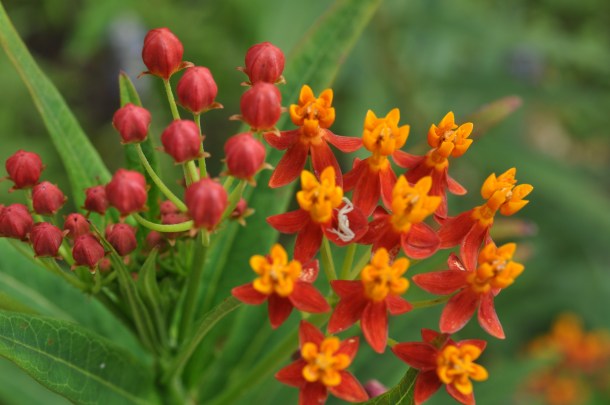
 At the Earth-Kind® Water Wise Demonstration Garden we have planted Asclepias currassavica, tropical milkweed. (Love the super star reference made to Shaun White-Olympic snowboarding Gold medalist.)

Tropical ButterFly Weed In The Wildlife Habitat

 “The purple flowers of aromatic aster (Aster oblongifolius) provide color in the late summer and fall and attract swarms of pollinators. The plant’s short, shrublike appearance makes it a good candidate for more formal landscaping applications. The silvery checkerspot butterfly, pearl crescent butterfly, and asteroid moth utilize this plant as a host. Tolerance to poor soil conditions has allowed me to add it to my own suburban residential lot. This aster is naturally found in the eastern and north-central United States.”—Perry Eckhardt of St. Charles, Missouri

Aster Growing At The Demonstration Garden Wildlife Habitat

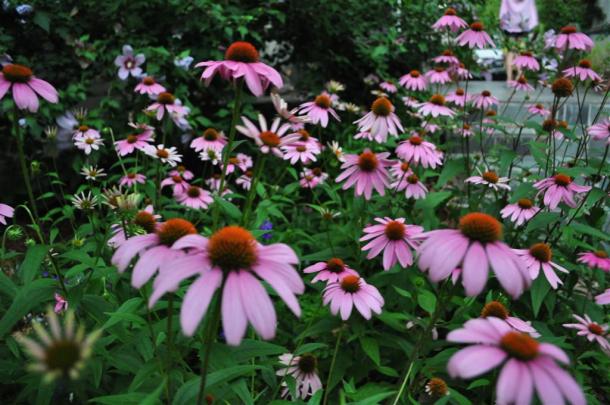
“Purple coneflower (Echinachea purpurea) is a great nectar plant in any butterfly garden and is used by many other insects as well. I think it’s like candy to them. Purple coneflower is also a favorite of American goldfinches and sparrows, who love the seeds. Plant big clumps for the best effect.”—

Purple Coneflower In A Dallas Garden

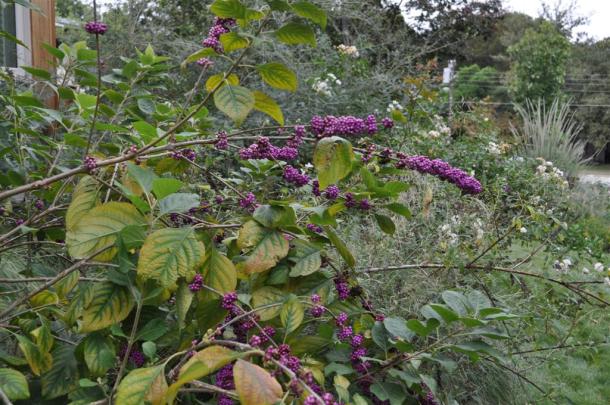
“One of my favorite native beauties, which is also a hit with the birds, is the American beautyberry. This large shrub makes a wonderful understory plant, perfect for shady areas in your yard or along riparian areas in need of restoration. This beautyberry takes care of itself in the maintenance department, requiring little effort on the part of the caretaker. The open branching structure, brilliant green leaves, and fuchsia-colored berries of this plant make it a lovely addition to any habitat garden. The birds will thank you by devouring the tasty berries, and the butterflies will come calling to taste the sweet nectar of the dainty whitish pink flowers.”—Alice Nance of Austin, Texas

Butterfly Weed, Aster, Coneflower, and Beauty Berry are a benefit to our Demonstration Garden and we thought you might like to include them in yours!

Ann