Merry Christmas y’all. Celebrate with us!
Video by Starla, of course!
Merry Christmas y’all. Celebrate with us!
Video by Starla, of course!
Dallas has had record rainfall in 2015 totaling 57.95 inches. Could homeowners be doing something to slow and/or lessen storm water runoff, create less pollution in runoff, or direct water that falls on your property so that groundwater supplies are replenished? Dr Fouad Jaber will address these subjects next Tuesday.
Date: Tuesday, December 8
Time: 10:00 am
Place: The Raincathcher’s Garden of Midway Hills (we will meet in fellowship all)
11001 Midway Road, Dallas, Texas 75229
Cost: Free!
Master Gardeners can receive one hour of education credit
This class is open to the public. Bring a friend, all welcome.
Video by Starla
Ann
Information about our speaker, Dr.Fouad Jaber:
Associate Professor and Extension Specialist in Integrated Water Resources Management
Texas A&M AgriLife Extension Service
972.952.9672
f-jaber@tamu.edu
Dr. Jaber’s research emphasis is integrated water resources management. His area of study is focused on best management practices to mitigate the harmful effects of urbanization on storm water volume and water quality. He test the effectiveness of green infrastructure (GI) and low impact development (LID) practices such as porous pavement, bio-retention areas, green roofs, rainwater harvesting and wet detention ponds. Dr. Jaber also conducts research in water reuse in urban settings including grey water and A/C condensate reuse.
“Dear Mrs. Jones, Thank you for the best field trip ever! It was awesome! Thank you for helping us make seed balls. We had so much fun!!!!!”

First graders from Lakewood Elementary had a five exclamation point (!!!!!) assessment of their field trip to the Raincatcher’s Garden of Midway Hills.
One hundred and fifty pairs of sneakers never stopped from the moment they hopped out of four school buses on November 3rd . Every 15 minutes, timers took the students to another station: seed balls, real live clucking chickens, wiggly red wigglers, “name that vegetable,” herbs and compost. Elizabeth Wilkinson, Cynthia Jones, and Annette Beadles organized the field trip.
“Dear Raincatcher’s Friends, I love you! I love you! I love pumpkins!”

Annette compared the circumference of pumpkins—and first grade volunteers. Cynthia showed students how to roll, mash, divot, and taco-fold clay, soil and wildflowers to make seed balls for their school.
 Dear Garden Friends, Thank you for a great time! I love my journal!
Jan Larson assembled 150 journals and sharpened pencils, one for each child. They carried their journals all day, making notes at each station.
The field trip was even the topic of discussion at a Lakewood hair salon. Jan was telling her stylist about the field trip, and a young woman in the next seat joined the conversation. “Are you talking about the field trip to the Raincatcher’s Garden?” At Jan’s nod, the mom said she was a chaperone on the field trip and remarked that it was “amazing.”
With some tears, the Lakewood visitors returned to their classrooms, long-used “temporary” buildings outside an old East Dallas school in need of major repairs. The forty master gardener volunteers, including DCMG board members, might have kept these thoughts from Rachel Carson in mind:
“If a child is to keep alive his inborn sense of wonder, he needs the companionship of at least one adult who can share it, rediscovering with him the joy, excitement, and mystery of the world we live in.”
Elizabeth
Pictures by Starla, poster pic by Cynthia
Listen to Dorothy! I always do! Here’s our fall tomato report:
We have talked about green tomatoes almost as much as red, ripe tomatoes:
Ann
Video by Starla
At The Raincatcher’s Garden we are offering not only our regular 4 activity station field trips, but also shorter, monthly-themed lessons w/follow-up activities that are based upon connections and the cycles of nature. We began tracking these patterns with ”September: Change is Coming” anticipating the turn of the season in the fall garden and planning ahead for spring wildflowers.
Keeping w/in the monthly theme is “October: Harvest, the Last Hurrah” in which we introduced our pumpkin unit, Pumpkin Circle, the Story of a Garden by Mary McKenna Siddals & Pumpkin Book by Gail Gibbons. The title encapsulates the content of the book perfectly. By studying life cycles, we learned about the “seed-to-seed” story of a pumpkin, then, related that to the “seed-to-seed” story of the entire garden.

Pumpkin Class is in Session
Pumpkins are historically & culturally significant; they were originally domesticated in North America (9000 year-old-seeds have been found in caves in Mexico) and continue to play an important role in holiday celebrations from Halloween Jack-o’-Lanterns to our traditional Thanksgiving feasts complete w/pumpkin pies, breads, muffins.
Children also love pumpkins for their variety of colors and sizes, some of which are so outlandish and unique. We even created our own “Pumpkin Patch” with specific samples of pumpkins, gourds, and squash.
Factoid: Did you know there was a website with video of Libby’s canned pumpkin that details how “pie pumpkins” were developed specifically for their 16 oz cans? Or, that our beloved tradition of carving Jack-o’-Lantern pumpkins comes from an old fable about a mean, stingy man named Jack who, after his death, was doomed to roam the world carrying a carved-out turnip illuminated by glowing coals, hence, the name Jack-of-the-Lantern or Jack-o’-Lantern?
The most popular of our varieties, hands down, were our gnarly, orangey-green-colored Native American Squash, weighing in at almost 30 pounds, slightly less than the weight of our smallest 3-year-old visitor from The da Vinci School, and the Knuckle Head Pumpkin, a warty orange oval that raised the “Ick Factor” for ugly.
As part of our study of the Scientific Process we used our carving pumpkins for “Pumpkin Math” – estimating & measuring (number of seeds, circumference, weight, lines/creases), recording data (individual charts for ESD Primer class & volunteers’ results for our 3’s & Pre-K groups), then reporting & analyzing our results. Using standard & non-standard measurements, we also compared our weight in pumpkins, estimating first, then using our trusty bathroom scale, & guessing our waist measurements, then tape-measuring to compare that to the circumference of the pumpkin.

Pumpkin Math with Master Gardener, Mrs Beadles
One child reported, “I weigh 4 carving pumpkins (8 lbs each) + a Cinderella Pumpkin + a Fairy Tale Pumpkin!” Many of our 3-year-old and Pre-K visitors had smaller waists than our sample pumpkins which averaged 24-27 inches. After all of the slicing and dicing and eviscerating was done, we separated seeds and pumpkin goop. And, we still had survivors which eventually fell to the carving knife.

Pumpkin Goop and Pumpkin Carving with ESD students
Later, we enjoyed a treat of toasted seeds (pepitas) and Elizabeth’s delicious pumpkin mini muffins. Our young visitors returned to their respective schools excitedly reporting these facts and more to anyone who would listen.
Annettte
Pictures by Starla
More about Pumpkin:
Creamy Southwestern Pumpkin Soup
“If a child is to keep alive his inborn sense of wonder, he needs the companionship of at least one adult who can share it, rediscovering with him the joy, excitement, and mystery of the world we live in.”
Rachel Carson
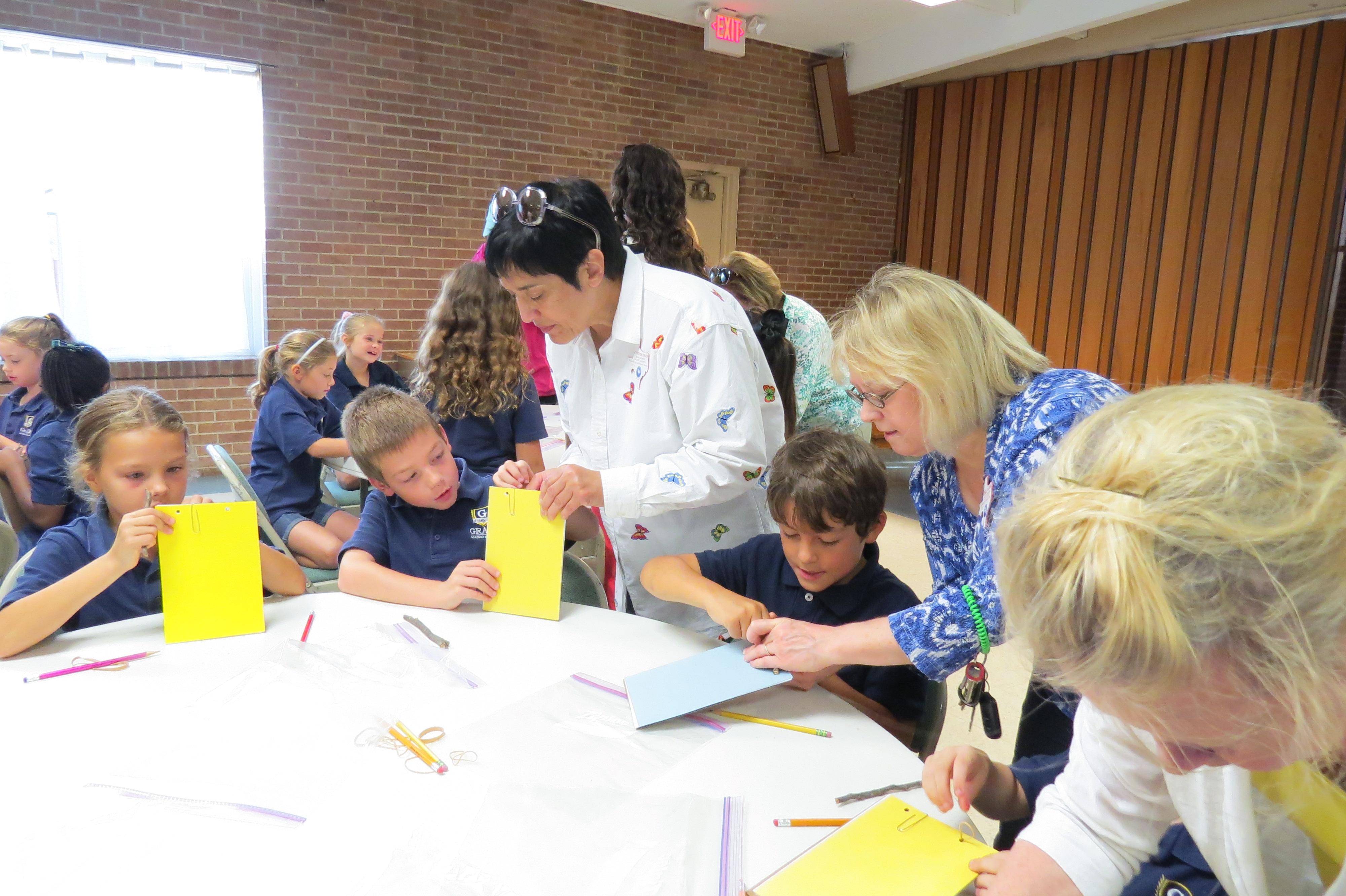
Field trips to The Raincatcher’s Garden are designed to increase that sense of wonder about our natural world. Dallas County Master Gardeners assisted Grace Academy Second Graders as they made their very own journals to write about what they see, feel, and touch in the garden.
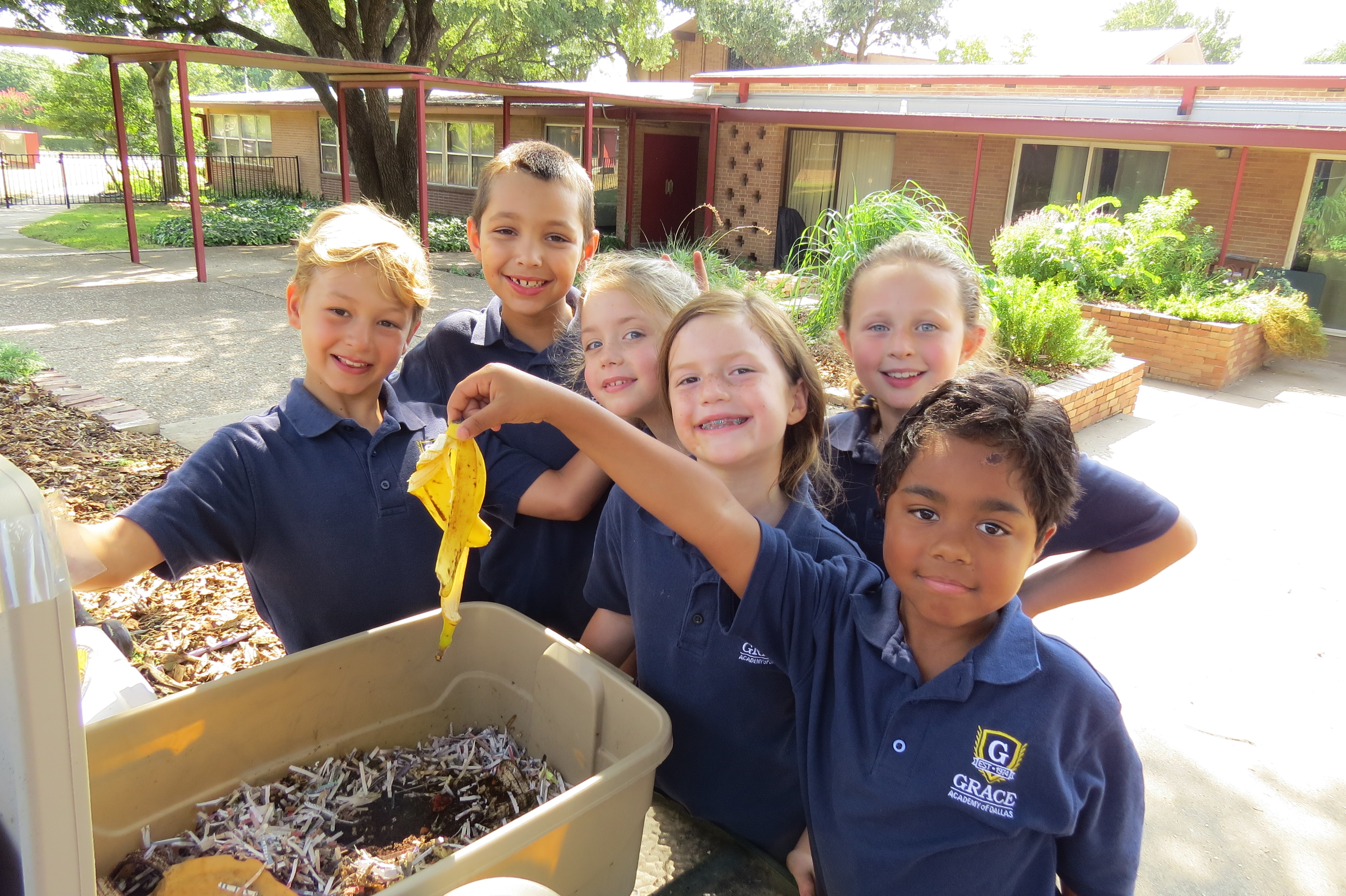
As you know, we spend quality time with worms and learning about vermi-composting!
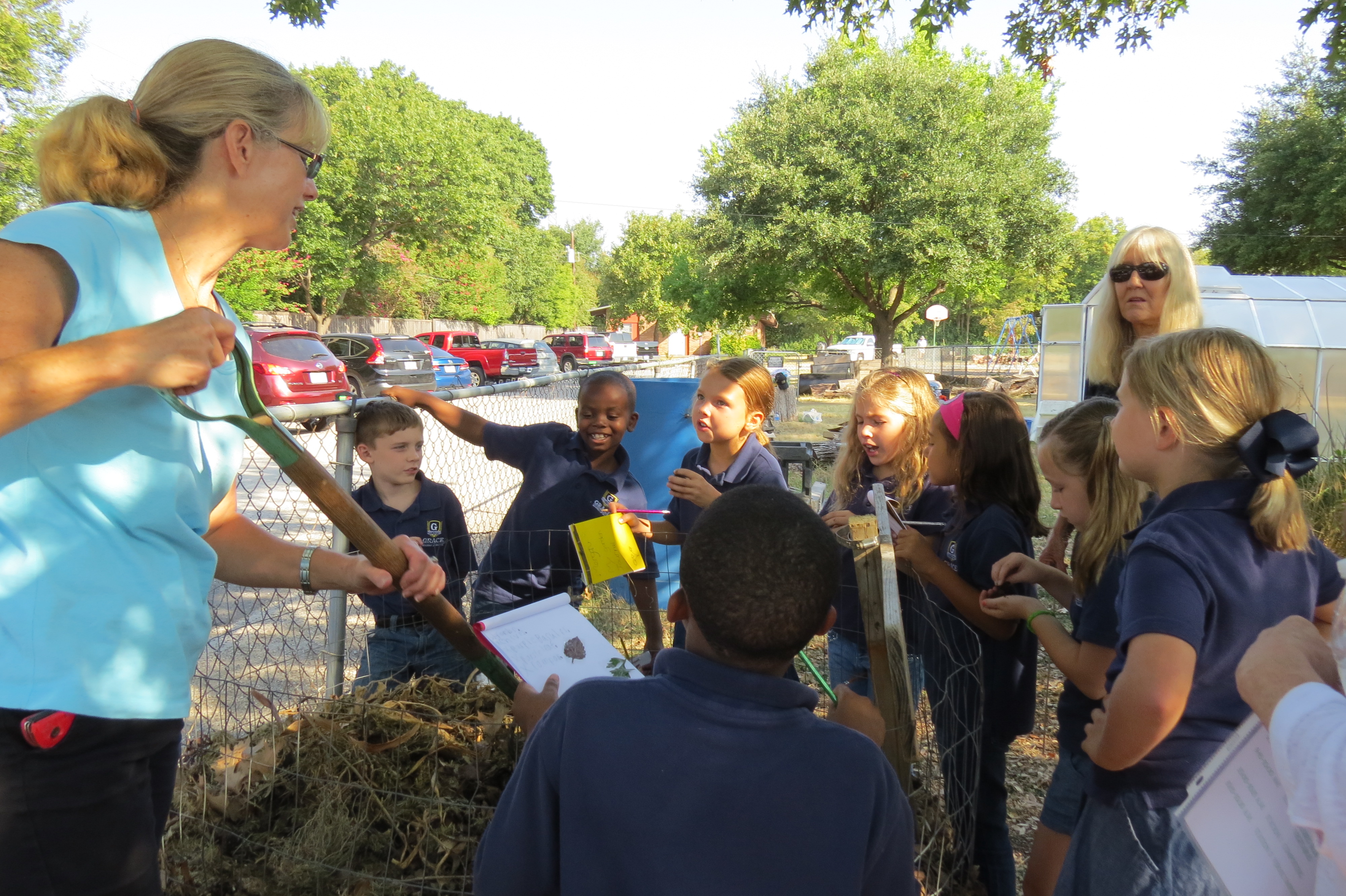
Worms are masters of composting. We also teach traditional composting methods.
Metamorphosis, cocoon to butterfly is studied and the science of host plants and nectar stations is seen first hand in our butterfly garden.

Ann
Pictures by Starla
Favorite quote by Cynthia
Consider this an introduction by Dr. Dotty Woodson for our class Thursday. We are looking forward to installing our rain cisterns at Midway Hills Christian Church and teaching the how-tos so that you can set up rainwater harvesting at your home or office and save water.
Date: Thursday, October 15
Time: 10am-12noon
Place: 11001 Midway Road, Dallas, Texas 75229
Who: All are welcome!
Cost: $10 per person
October is here and we’ve been fortunate to have some sunny days, cooler weather, and an opportunity to garden at Raincatcher’s. It’s hard to believe it’s been a year since we moved from our Joe Field location.
We are blessed to be able to partner with Midway Hills Christian Church. The winter was filled with planning, building, composting and planting trees.
Spring brought much-needed and bountiful rain and the beginnings of our gardens, the transition of the courtyard, as well as some opportunities to cook for others and share our new location.
Summer came and the rain slowed, but our plantings were starting to take root and we have had our first harvests. So now it’s Fall, and it feels like Fall with the buzzing of bees, the flutter of butterflies, the chatter of students on field trips, and vegetable crops transitioning from summer to winter.

Episcopal School of Dallas field trip studying pumpkins
The demonstration grasses are coming through, the wildflowers have been prepared and planted and we are setting up the color wheel and planning for the “Under the Powerline” possibilities.

The Color Wheel is Beginning to Take Shape
The monumental task of the irrigation is almost complete and the water tanks have arrived and will be installed next week. Oh what a busy year it has been; many hours have been logged by the Master Gardeners who call Raincatcher’s home.
I wanted to take time to thank the amazing leadership team who has made this happen in one short year, (or at times very long). Your leadership has inspired us to dream big and then plan to make it a reality, to not be afraid to ask, to join with others in the community, and to share our gifts.
The teamwork of all who work at this garden has been phenomenal. We all have had opportunities to be challenged to make this the best demonstration garden that we can offer to the residents of Dallas County.
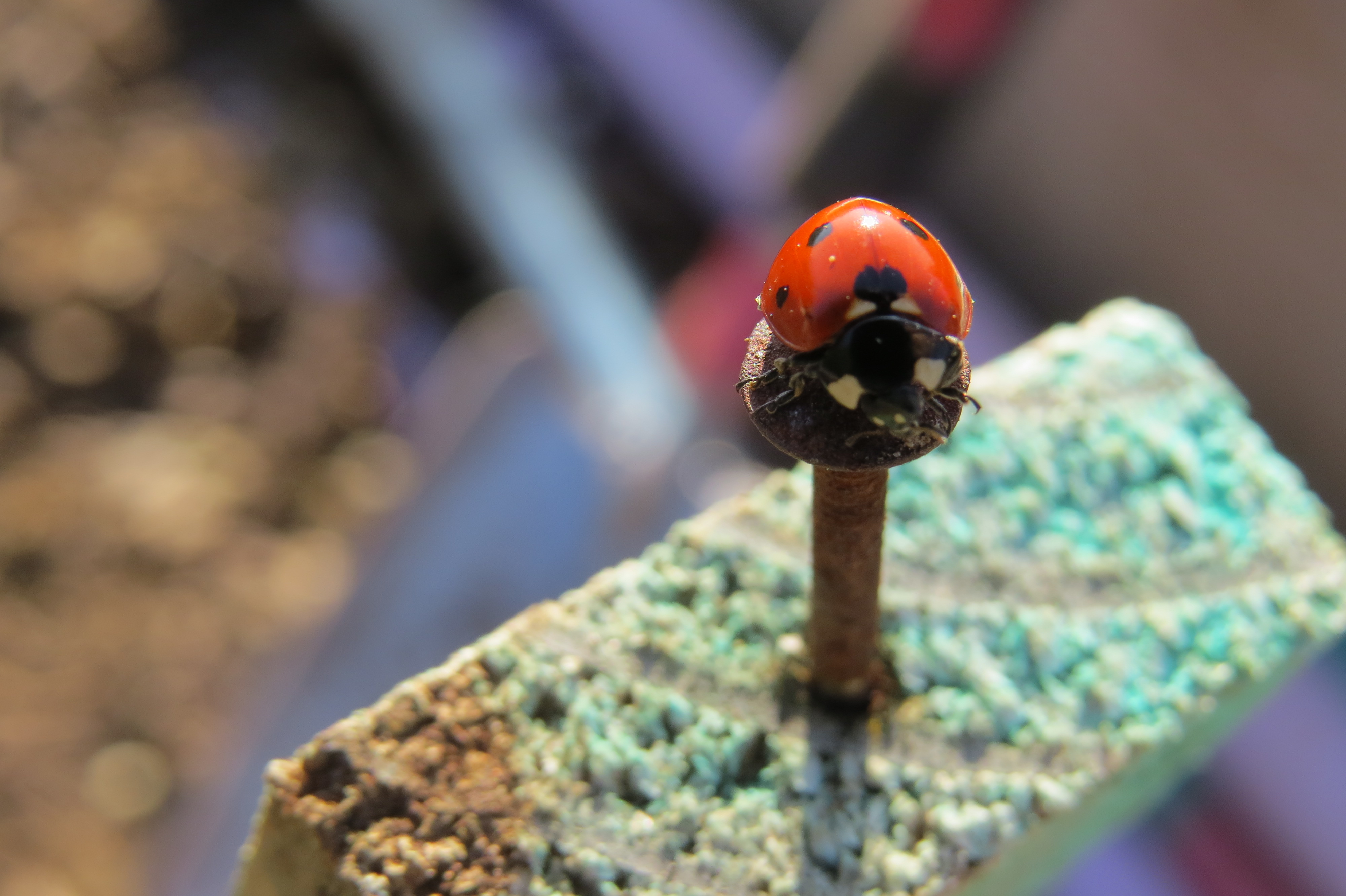
Starla’s Serendipitous Ladybug Picture
The ladybug nailed it! We love Raincatcher’s Garden of Midway Hills. Come and see what’s going on for yourself.
Starla
Details about our Rainwater Harvesting Class on Thursday morning, October 15th will be on the blog tomorrow.
If there’s a spot in your yard that could use some shade, it’s time to think about planting trees.
Fall and winter are the best time to plant ornamental and fruit trees, arborists say.
“October, November, December — it’s the optimal time,” says Steve Houser, a certified arborist and a leader in the Dallas Citizen Forester Program.
Late-year planting allows roots to get established “before the summer blast furnace,” adds Eric Larner, an urban forestry specialist for Dallas County Master Gardeners.
“Our main planting season is probably November through March,” says Larner, 73, of Carrollton.
Larner helped select five trees planted in the master gardeners’ Raincatcher’s Garden at Midway Hills Christian Church. The garden, which includes a butterfly garden, flowers and vegetables, is designed to show the public what works.
The gardeners planted three oaks — a chinquapin (quercus muehlenbergii), Mexican white oak (quercus polymorpha) and Lacey (quercus glaucoides) — a cedar elm (ulmus crassifolia) and ginkgo (ginkgo biloba).
Notice that a live oak and red oak, two of the most popular trees in Texas, were not included.
“We need to get away from live oak and red oak,” Houser says. They are particularly susceptible to oak wilt, a disease that kills a tree, then spreads through the roots to kill other oaks nearby. Cedar elms are reliable, adaptable shade trees that are drought tolerant and turn golden yellow in the fall.
Larner says a ginkgo is part of the mix to add something a little unusual.
“The ginkgo is becoming more popular because it is drought tolerant and more likely to have fall color,” Larner says.
A ginkgo warning: Be sure it’s a male tree. Females produce stinky fruit, Larner says. “I don’t think retailers are selling females, but you need to check.”
When it comes to shade trees, probably the bigger the better. Trees with a dirt root ball wrapped in burlap are the best, but they are also more expensive, Larner says.
A container tree from a local big-box store can be fine, if it’s carefully selected and planted. If possible, ease a tree out of the container at the store to see if the roots are somewhat vertical or look more like a woven basket.
If the roots are wrapped around the root ball, they will need to be pulled out and even cut to keep them from strangling the tree after it’s planted.
The same guidelines apply to fruit trees, says Larry Stein, a specialist with Texas AgriLife Extension Service. Except he likes to plant even later.
“If I had my choice, I’d plant in the winter,” he says. January and February are his favorite time. Bare-root trees, those whose roots are usually wrapped with little or no soil, are more likely to be available. “They are cheaper,” Stein says, and you can see whether the roots are healthy. Often they are found at feed or farm supply stores.
Container-grown trees are more readily available, he says, and will do well if planted carefully. Ideally, fruit trees should be 3 to 4 feet tall. If they are taller, it’s best to trim the central trunk at the top. Side limbs should also be pruned, Stein says. Peaches, pears, plums and other fruits do well in Texas. Apples can grow but are subject to cotton root rot, Stein says.
Homeowners interested in the more unusual can try persimmons. The key, the arborists say, is to pick a tree and plant. The shade, and maybe fruit, will be well worth it.
Karel Holloway is a Terrell freelance writer.
Trees provide shade.
They help clean air.
They can lower utility bills.
Roots hold soil in place.
Trees add value to property.
Decide what kind of tree you want. Will it primarily provide shade? Screening from an unwanted view? Fall color? Edible fruit?
Pick the right spot. Is there room for the size tree wanted? Remember to think about how far the tree will reach when it’s fully grown.
Will it interfere with driveways, walkways or the home’s foundation?
Will the selected tree interfere with power lines when it is full size?
Think about the amount of shade it will provide. Will it shade the home’s windows? When it’s full size, will it provide too much shade for grass or flowers to grow?
Does it have undesirable characteristics? Is there unwanted fruit? An unpleasant smell?
Select the proper site with appropriate soil type. Eric Larner, a Dallas urban tree specialist, says he ran into solid rock just a few inches down when helping plant at the master gardeners’ demonstration garden. The planters dug through the rock and planted. The tree didn’t do well, Larner says.
Measure the root ball and dig a hole 2 to 3 times the ball’s diameter.
The hole should not be too deep. The top of the root ball should be level with the ground.
If the hole is too deep, backfill with dirt taken from the hole. Steve Houser, a certified arborist, says it’s better to plant a tree too high than too far into the ground.
Remove the tree from the container. Make sure girdling roots are pulled or trimmed.
Place the tree in the hole and fill in with removed dirt. Fertilizer is not needed. Some compost can be mixed with the fill dirt, if desired. Larner says to be sure to stomp the dirt down so the tree won’t settle too much later.
Use a slow-running hose to thoroughly water the tree.
Put mulch around the newly planted tree, pulling it away from the trunk.
Protect the trunk with a purchased protector or slit the side of a 2-liter plastic bottle and place it around the trunk.
Water as necessary, depending on how dry the soil is. Houser says just poke your finger in the ground to see whether it’s damp a couple of inches down. Water if it’s dry.
SOURCE: Dallas Morning News research
More information about our tree selection here.
Berm and Tree Planting Video.
How to Plant a Bare Root Tree Video.
We’ve tested and tasted, savored and enjoyed but now it’s time to say farewell. Our memories have been sweetened with the most delightful flavors of summer; juicy, plump blackberries, tantalizing tomatoes and the star of the show – those luscious, versatile peaches (many would agree, perhaps, summer’s finest fruit). Yes, we would take them through every season if nature allowed. But, we must let go and only dream about the spring and summer yet to come.
From the Raincatcher’s Garden: We wish you and your family a restful, and pleasure filled Labor Day weekend. Join us on our seasonal garden journey by subscribing to Dallas Garden Buzz.
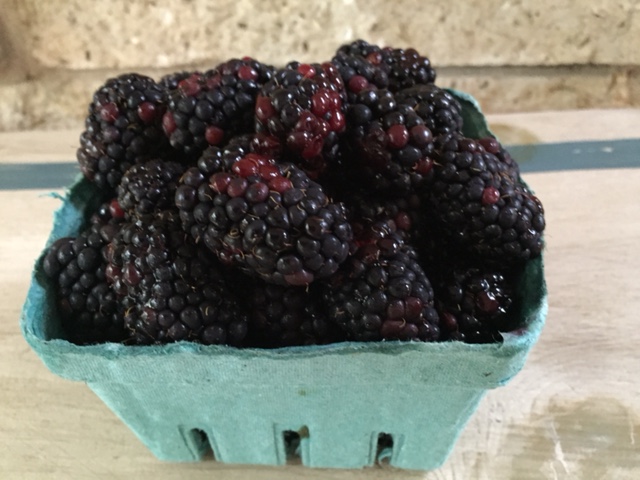
Blackberry Brie Bites
Ingredients:
1 tube refrigerated crescent rolls (Pillsbury 8 oz.)
1 round Brie Cheese (8 oz.)
¼ cup blackberry jelly (Smuckers Spreadable Fruit)
24 fresh blackberries
24 large toothpicks, optional
Directions:
6 even squares. Press into 24 mini muffin tins.
Yield: Makes 24 crescent cups.

Gorgonzola-Tomato Salad
Ingredients:
 4 ounces Gorgonzola cheese
¼ cup minced fresh parsley
3 tablespoon minced shallot
2 tablespoons minced fresh basil
6 medium tomatoes, thinly sliced
⅓ cup olive oil
2 tablespoons fresh lemon juice
2 teaspoons Dijon mustard
Salt and freshly ground pepper to taste
Directions:
Yield: 6 servings
Linda
Peach recipe tomorrow!