Bees require both nectar and pollen sources for survival. Each source has a specific purpose, nectar for energy and pollen for protein. Let’s do our part by offering them blooming plants throughout the seasons and help to avoid a feast or famine situation for the bees. Included in this post is a partial listing of nectar and pollen sources along with photos of seasonal plants loved by honeybees. Be proactive and intentionally plant flowers that bloom at different times of the year.
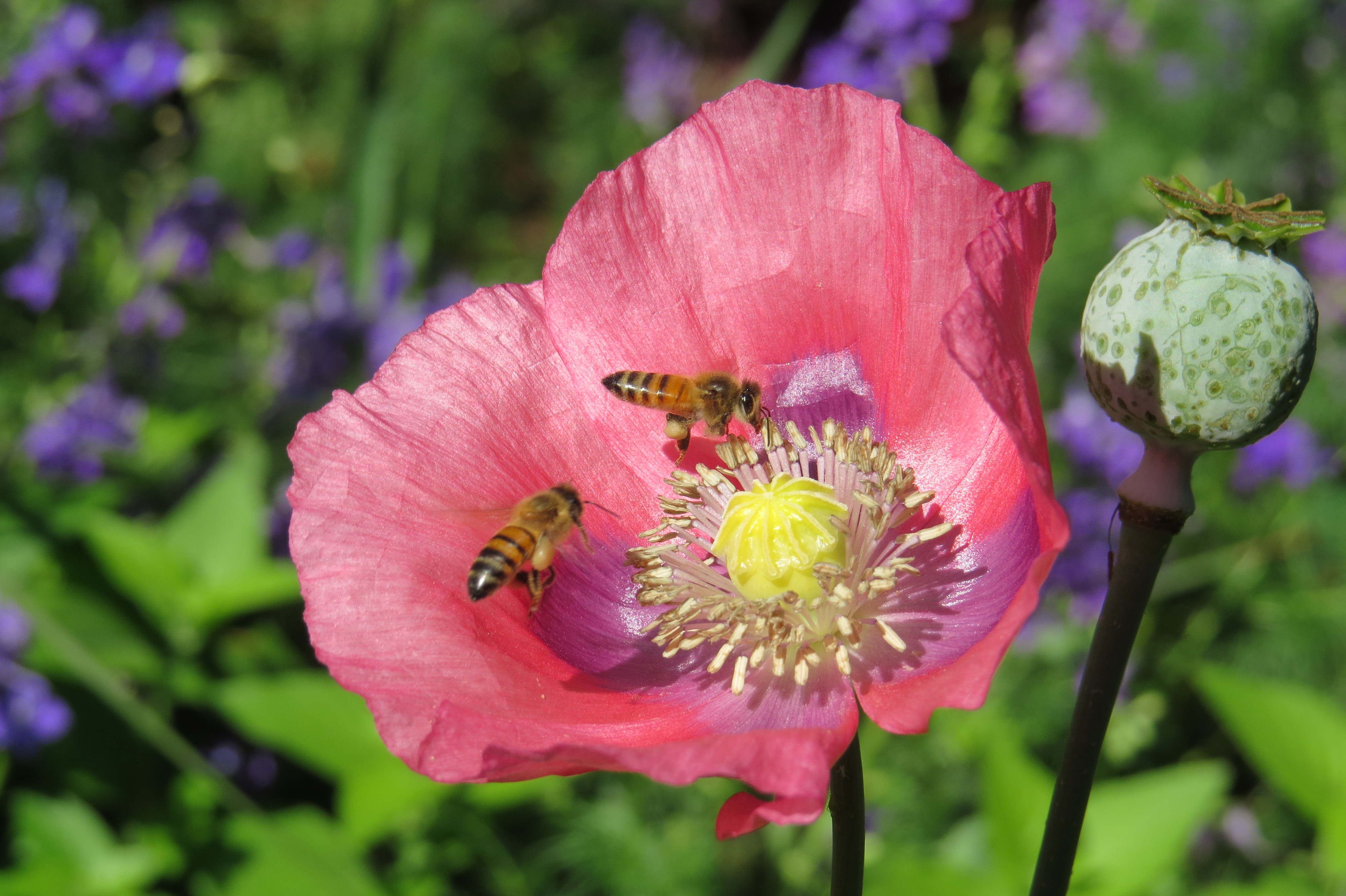
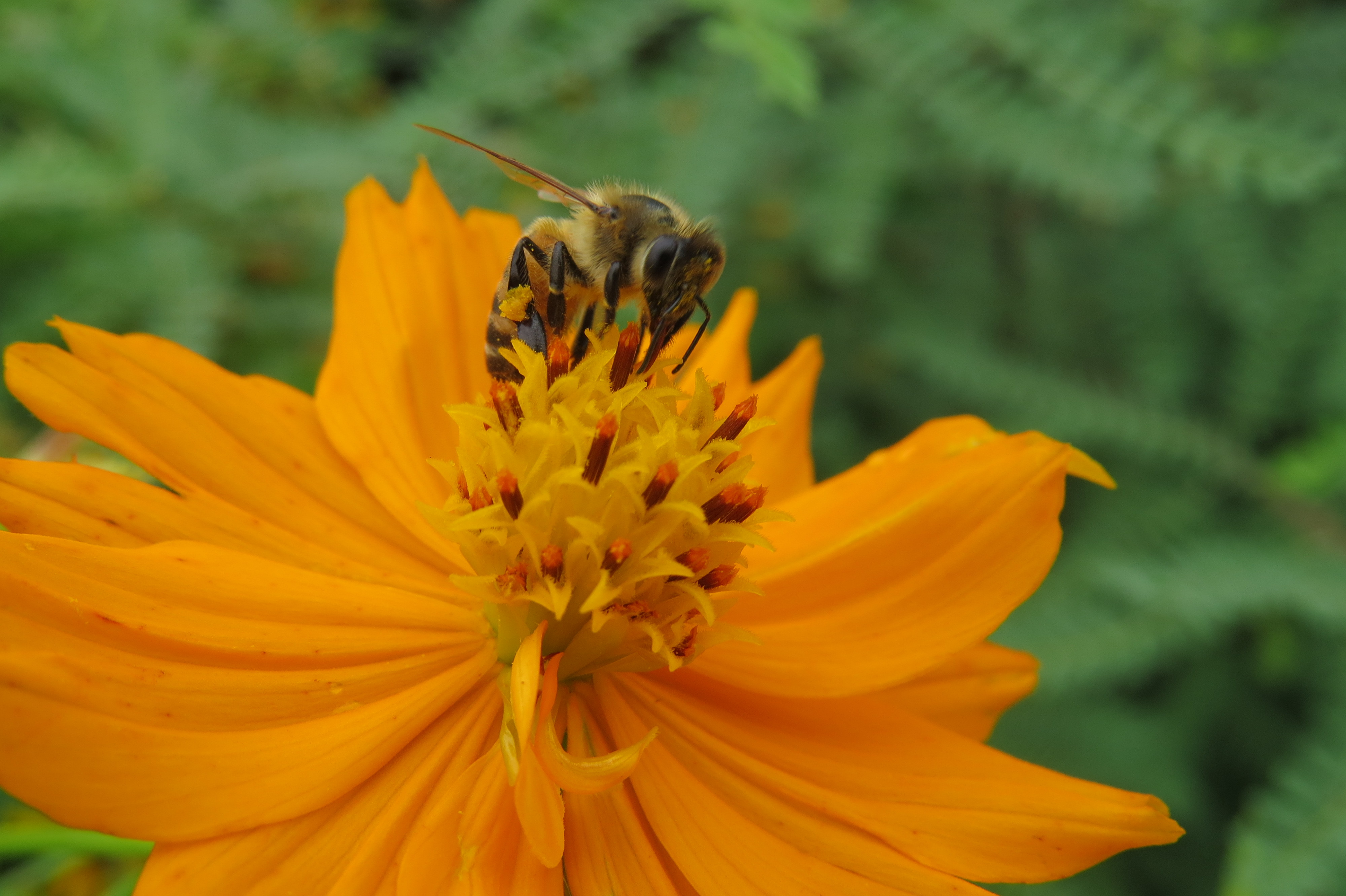
Poppy feastBee borrowing from BorageRue Bee buried in a Blackberry blossomClose up on Coreopsis Bees like Okra blossoms
Annuals
*Alyssum
*Basil (especially African Blue and Cinnamon)
*Cockscomb
*Fuchsia
*Larkspur
*Love-in-a-Mist
*Mexican Sunflower
*Moss Rose
*Snapdragon
*Stock
*Sweet Pea
*Zinnia
Perennials
*Anise Hyssop
*Fall Aster
*Borage
*Clovers
*Columbine
*Chrysanthemums
*Scented Geranium
*Lambs Ear
*Lavender
*Mallows
*Scabiosa
*Shrimp Plant
*Statice
Vines
*Black-eyed Susan Vine
*Cantaloupe
*Clematis
*Cucumber
*Gourds
*Honeysuckle
*Jasmine
*Morning Glory
*Passionflower
*Pumpkin
*Squash
Shrubs
*Azalea
*Barberry
*American Beautyberry
*Boxwood
*Butterfly Bush
*Cherry Laurel
*Cotoneaster
*Crepe Myrtle
*Fire Thorn
*Flowering Quince
*Hydrangea
*Spirea
*Viburnum
*Weigela
*Wisteria
Linda Alexander, Dallas County Master Gardener Class of 2008
Pictures by Starla Willis, Dallas County Master Gardener Class of 2009
On a typical Sunday morning following church, my husband and I can be found enjoying brunch at our favorite local bistro. A few weeks ago, was no exception. Parigi is owned by a dear friend of ours who, in “oh so chic” Parisian style, never fails to greet guests with a petite tabletop centerpiece of fresh flowers.
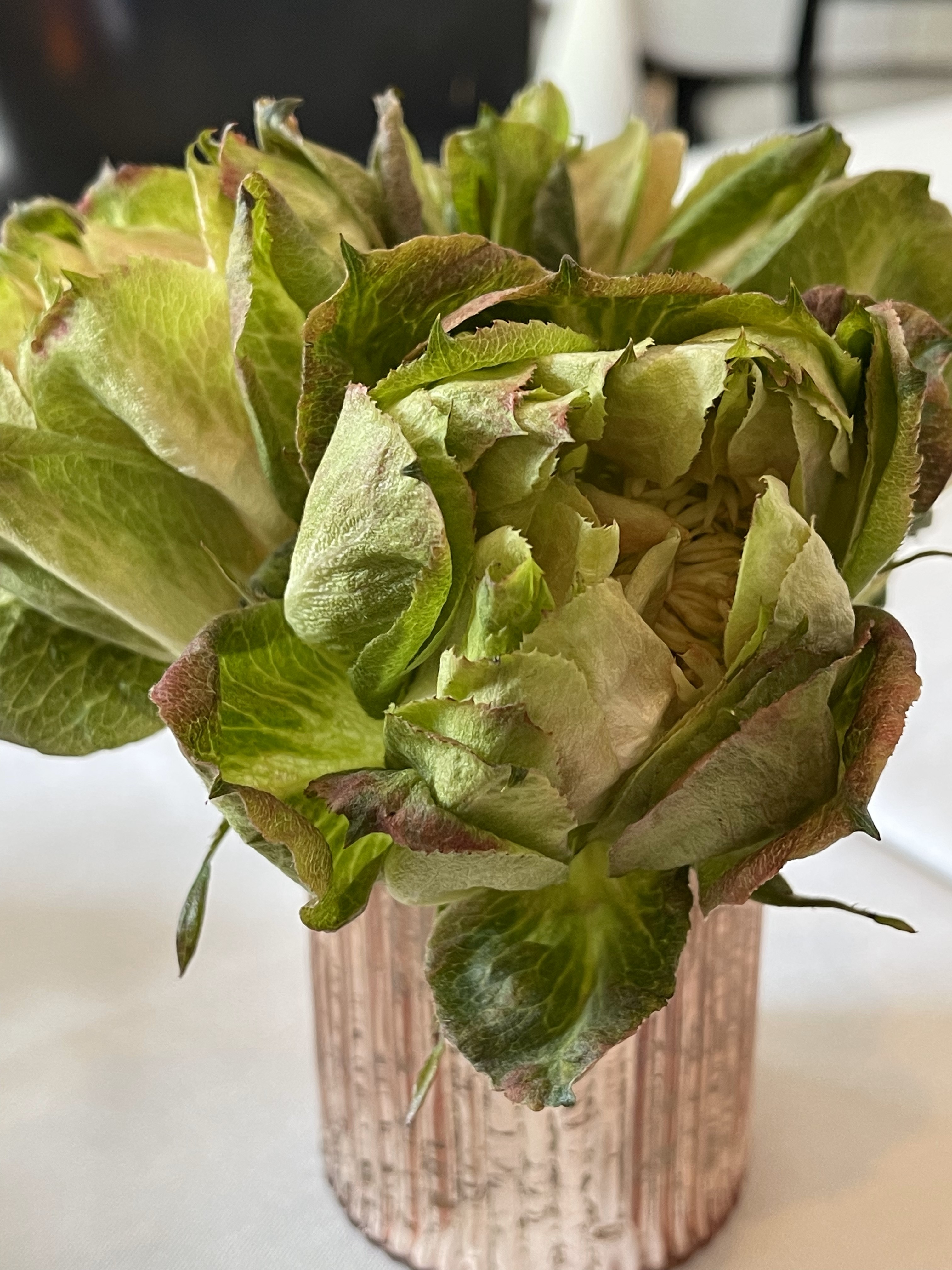
Taking a seat at our usual window table, we were mesmerized by the small but stunning floral display in front of us. Our server smiled as we inquired about the apple-green petals with bronze tips resembling a rose but tightly connected in a lettuce-type formation. Her answer was and short and simple… “I only know that it is called ‘Veggie Greenrose’.”
Brunch was delightful and relaxing but once in the car, a google search took me to a source that provided the best explanation. Here is an abbreviated version of what I learned.
Our admiration was for a unique rose known as Green Rose, thought to be a descendant of Old Bush, a two-hundred-year-old form of Rosa chinensis viridiflora. China roses are extremely hardy and well suited to Zone 8. One grower observed that many winters, in Zone 8, the Green Rose never loses its leaves but remains a vibrant green with a tinge of red.
While the buds on Green Rose bloom like any other rose, when open, there are never any petals. Interestingly, the rose bloom is made up of sepals on top of sepals followed by more sepals. Characteristic of its design, the sepals usually come together to form the “holder” of the flower. This holder is called a calyx, but the Green Rose never makes a true flower. Without a flower, there is no seed and no next generation of the plant.
Thankfully, gardeners throughout the years who held Green Rose in high esteem, chose to take cuttings that were graciously shared with family and friends. Today, this rose exists due to the kindness and love of these special admirers.
However, locating a source for Green Rose can be challenging. Once again, thanks to the internet, Mountain Valley Growers in Squaw Valley, California had them in stock. I ordered three small plants. Joyfully, my order arrived two weeks ago.
Following their instructions, Green Rose spent a few days acclimating to our climate. After a carefully selected location, it is now growing in my garden. And my dear friend and fellow master gardener, Ann Lamb, agreed to grow one of the plants in her garden. We plan to compare their growth over the next few months and eventually start taking cuttings to share with family and friends.
Ann and Linda with our beginner Green Roses
It is enchanting to consider a diminutive and wonderful rose that first appeared as early as 1743 in the area that later was named China. Even more intriguing is the fact that, at one time, it was forbidden for anyone outside of the Forbidden City to grow this rose. It was the sole property of the emperors!
Emperors aside, Ann and I have no walls or thoughts forbidding anyone to grow a beautiful rose that should have a place of honor in any rose garden! Let us know if you would be interested in having a cutting someday.
Linda Alexander, Dallas County Master Gardener Class of 2008
We have several rosarians amongst our Master Gardener crowd. Has anyone grown the Green Rose? If you have, send us a picture.
Four-Nerve Daisy (Tetraneuris Scaposa) is a Texas native perennial plant that blooms almost year round. It is evergreen with gray green foliage and bright yellow flowers that bloom on long leafless stems. The plant itself is 6 – 12 inches tall (including the flower stem) with a 1 foot spread. It is heat and drought tolerant and pest and disease free. It also attracts butterflies and bees!
I have been growing this plant for about 10 years now and it has become my favorite plant. I have paired it with grape hyacinth and have found this to be a great combination because they both bloom in early spring. It’s a great border plant or rock garden plant and does well in full sun. It does not tolerate over watering which is a good thing in my book!!! This plant has a long taproot and does not transplant well. It spreads from seeds and does well if dug when the seedlings are small. I have been digging these tiny seedlings and will have some available at our plant sale at Raincatcher’s Garden on May 4th.
Raincatcher’s Annual Plant Sale
May 4th, 10 AM – 3 PM
We will have annuals, perennials, herbs, peppers, succulents, shrubs, trees, groundcover, bulbs, houseplants, decorative pots, yard art, and more.
Location: The courtyard at 11001 Midway Road, Dallas, Texas 75229
Jackie James, Dallas County Master Gardener Class of 1998
Many of you have seen these color change artists in your own gardens but do you really know what they are and how they help to limit plant pests?
The green anole, Anolis carolinensis, is a small to medium-sized lizard, with a slender body and a long tail. Its head is elongated and has numerous ridges between its eyes and nostrils, and smaller ones on the top of its head. Its toes have adhesive pads to facilitate climbing. The males are 15% larger than the females, and the male dewlap (throat fan) is three times the size of the female’s and ranges in color from bright orange to a light pink, whereas the females dewlap is lighter in color. The extension of the dewlap from the throat is used for communications. Males can also form a dorsal ridge behind the head when displaying or when under stress.
The green anole’s body coloration can vary from dark brown to bright green and can be changed like many other kinds of lizards, but anoles are closely related to iguanas and are not true chameleons. The anole changes it color depending on mood, level of stress, activity level and as a social signal, (for example, displaying dominance). Although often claimed, evidence does not support that they do it in response to the color of their background.
Ever seen one with either no tail or a very short one? An interesting fact is that the anole, like many lizards, has an autotomic tail, which will wiggle when broken off to distract a predator and allow the anole to escape.
This species is native to North America, where it is found mainly in the subtropical parts of the continent.
An anole’s diet consists primarily of small insects such as crickets, grasshoppers, flies, moths, cockroaches, small beetles, and other arthropods, including spiders, as well as occasionally feeding on various mollusks, (think snails and slugs), grains and seeds.
You may not be thinking about tomatoes tonight but I am. March 15th is the frost free date for the Dallas area which means it is not likely we will have a frost after that date. However, next week we may have a few low temperature nights so you may want to wait to plant. Regardless of the date you choose to plant, you are going to want to come to our garden on Tuesday to purchase tomato and pepper plants; lovingly started and tended by Raincatcher’s volunteers. See details below. Ann
It’s time to plant!!!
TOMATOES and PEPPERS, TOMATOES and PEPPERS, TOMATOES and PEPPERS
The MG volunteers of Raincatchers at Midway Hills have grown several varieties of tomatoes and peppers from seed and will have them for sale.
Tuesday, March 14th, 10:00 am – 12:00 noon
Courtyard Garden
Midway Hills Christian Church
11001 Midway Rd. Dallas 75229
$2.00 per 4” pot
Cash or Check only, please
Sarah Sanders, Dallas County Master Gardener Class of 2006
Jackie James, Dallas County Master Gardener Class of 1998
Don’t be confused-we have our big plant sale coming up May 4th and will talk it up over the next few weeks.
The new year brings programs that promise the new and improved you. These sensational claims are seen everywhere; the gym, the bus stop and store fronts. They boast incredible results like guaranteed weight loss of 100 lbs. And we can’t forget the facials that will freshen the person you are right now.
It seems that for gardeners fewer promises are offered. While you might not become a whole new gardener, it really is a good time to think about improvements, realistic improvements. And thankfully that can happen without signing a contract you might soon come to regret. Improvement for gardeners can start today!
Where to start? Well of course it’s a personal thing that will be a bit different for each gardener but here a few suggestions.
First It all starts with being there—in the garden. Plan to make your garden time a part of as many days as possible. And make the time count. When you are in the garden really be there.
Remember the old saying: “The best fertilizer for the garden is found in the footsteps of the gardener.”
Use a little time to observe closely. See what is there. Look for insects and other creatures that have a home because of your garden. Amazing! Appreciate what is happening now. Yes, for sure we have to plant and weed and clean but also just enjoy what is. It is so easy to forget this in the need to make the next moment better. The best plans and actions will just follow when we carefully observe.
The Raincatcher’s Garden, a garden worth observing!
So lets plan to enjoy the garden more by being in it and carefully observing.
Yet another old saying comes to mind “ Reduce Reuse Recycle.’
Thinking before buying is so important. First think if you can divide current plants and use what you already have.
Try a new propagation technique. Cuttings don’t always work but amazingly they often do. Instructions are just a ‘click away.’ You can often share with a friend, and in return they share back. You not only have a new plant but a happy memory.
Evelyn Womble sharing Hardy Amaryllis–a happy memory for alot of us!
Containers look trendy with small divisions of grasses paired with ground covers. You might even consider a sedum that creeps over the sides.
Naturally we all want to buy just something to support local plant sales Do be sure you have a place for the plant. No doubt you have seen pots filled with very dead plants by the curb waiting for the landfill. Poor things never even got planted. Never do that!
The Raincatcher’s plant sale, full of repurposed pots and pass-along plants is a great sale to support! Don’t forget to put May 4th on your calendar.
Think carefully, as well, before buying products. Obviously no toxic chemicals and remember peat is completely non sustainable. Try coir based product. Speak up at the shop and ask nicely for what you want and explain why. It can make a difference. Let’s try to be more aware, to spend as much time in the garden as we can and try to be responsible with resources.
What is the next step ?
Sharing of course! We know every garden can make a difference in supporting people and creatures—so why don’t more people have one? Well, that is a question we can’t really answer but we can try to inspire and even assist those that do show an interest. Take time to show neighbors around your garden and answer questions. If you “plant the seed” maybe it will grow and they will start a garden and then maybe they will share. And well maybe you yourself will have started something really valuable.
Its all too easy to get discouraged with the situations around us but in practical terms gardeners can make a difference; first for themselves then the little patch of the world we care for and then others.
So, let’s start by making just a few improvements in ourselves and we will make it the best gardening year ever.
Susan Thornbury, Dallas County Master Gardener Class of 2008
Pictures by Starla Willis, Dallas County Master Gardener Class of 2011
Working with our veggie team at Raincatcher’s last Monday, January 16th, spring was definitely in the air and now we have had over an inch of rain to further encourage our spring longings.
We sat at tables under our education pavilion planting tomato seeds with dreams of epic tomatoes. For a list of tomato varities we are seeding, see below.
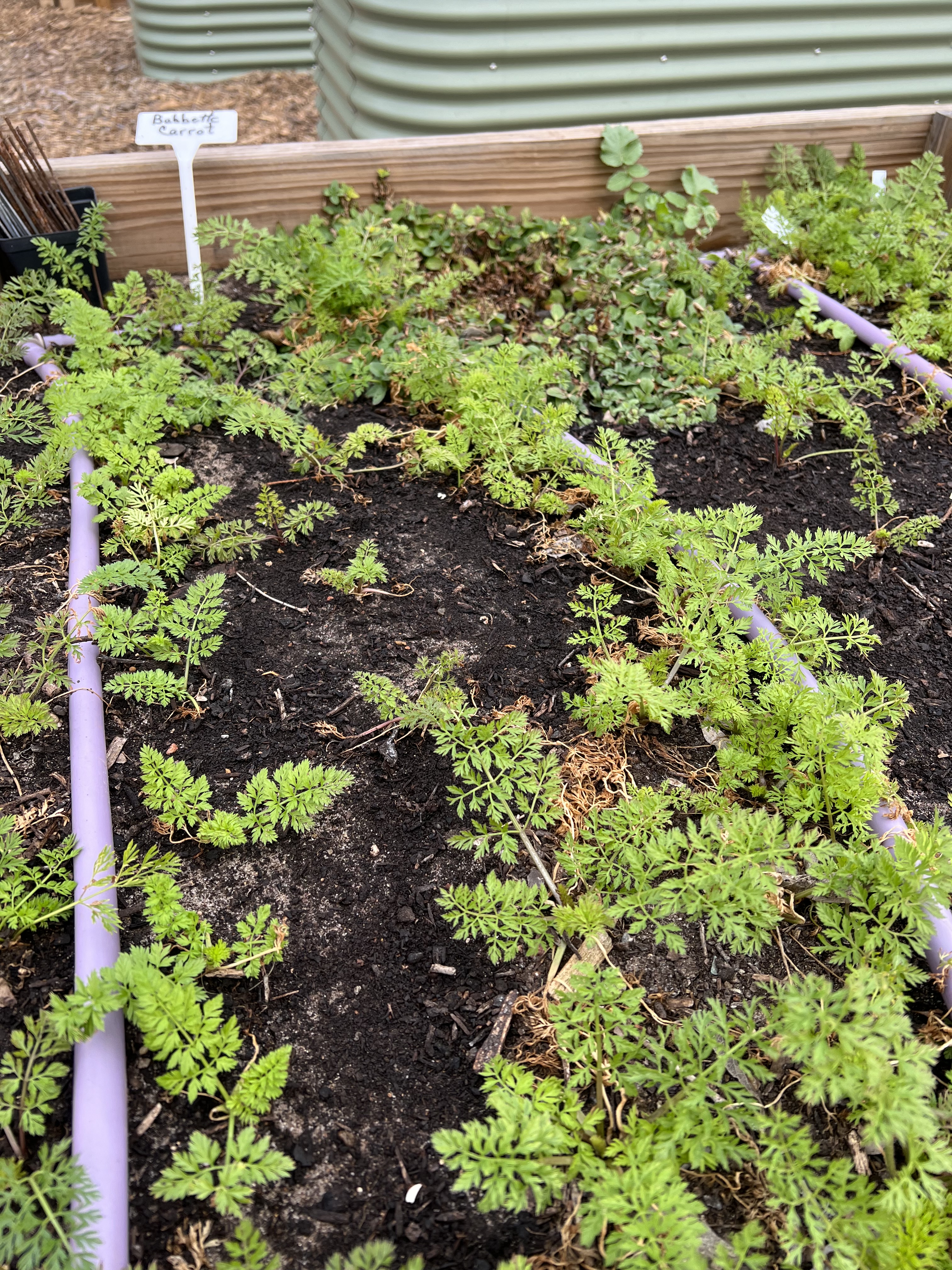
Elephant garlic planted in November, to be harvested in June, was examined. We considered the carrots that took a hit during the December low temperatures but have rebounded.
Last year the Raincatcher’s Garden delivered 700 pounds of fresh vegetables and fruit to North Dallas Shared Ministries Food Pantry. The goal for 2023 is 1,000 pounds of harvest. With the dedication of this band of Master Gardeners and expert leadership, I am sure they will succeed.
Ann Lamb, Dallas County Master Gardener Class of 2005
Tomato varieties and place purchased are as below.
Johnny’s Selected Seeds – Hybrid Cherry BHN-968, Early Girl, Five Star Grape, Tasmanian Chocolate and Juliet.
John Scheepers Kitchen Garden Seeds – Cherry Falls.
Botanical Interests – Patio Choice Yellow.
Tomato Growers Supply Company – Red Robin and Wild Cherry.
In the “paint” world, each new year begins with the big reveal. For 2023, Pantone has taken inspiration from the natural world with the announcement of Viva Magenta as their color of the year. Described by the company as a powerful and vibrant shade of red deeply rooted in nature, it promises to be “bold and fearless” while adding a joyful and optimistic tone to your interior.
Pantone’s glamorous appeal is convincing; “Viva Magenta descends from the red family and is inspired by the red of cochineal. The cochineal beetle is an insect that produces carmine dye, one of the most precious, strongest, and brightest natural dyes the world has known”. They add, “it was chosen to reflect our pull toward natural colors.”
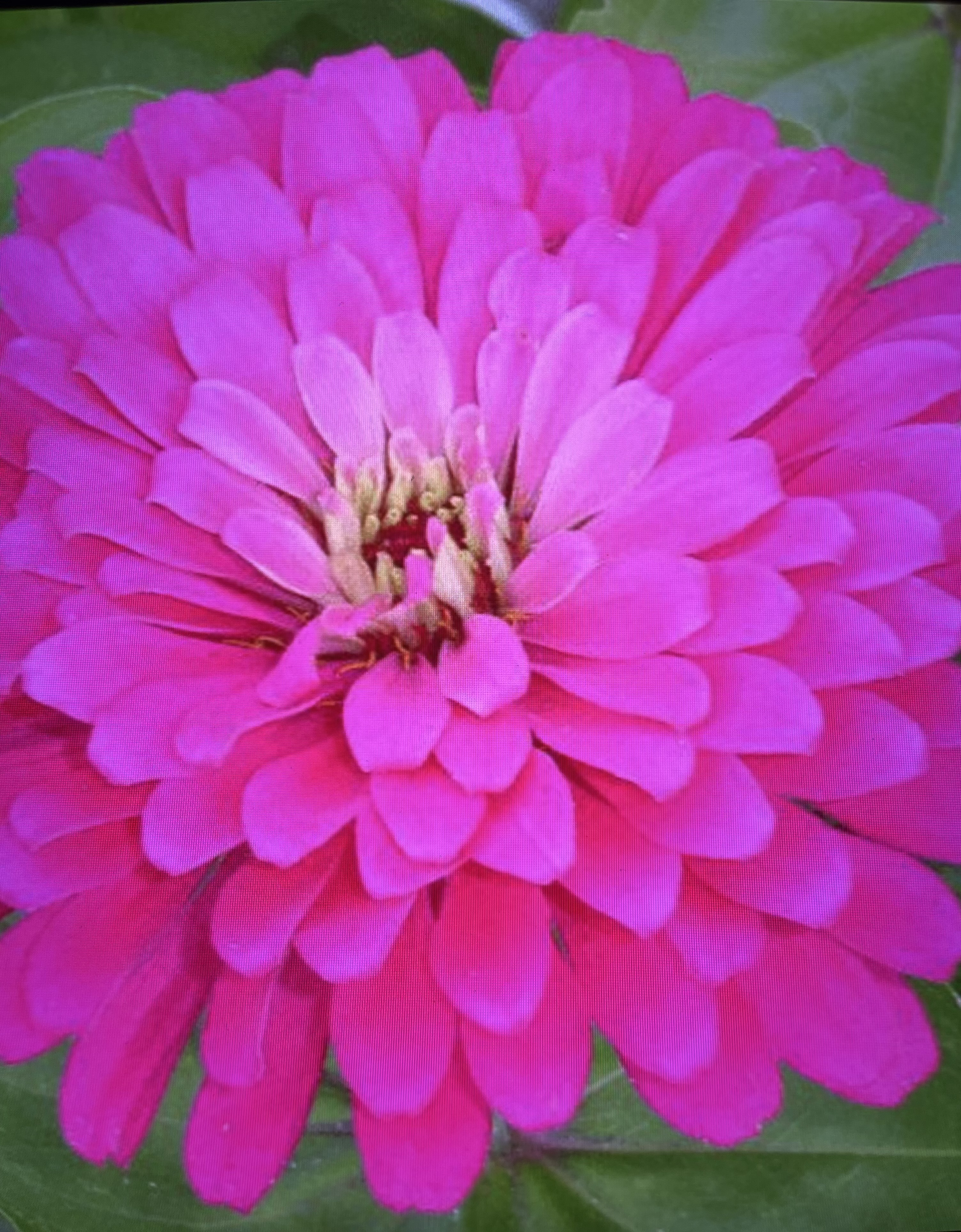
Seems the botanical industry has taken notice with promotional ads now featuring a stunning array of floral options for your landscape. Not surprisingly, it would be difficult to find a flower that more dramatically captures the true essence of “magenta” than the zinnia.
As you can see from this stunning photograph, I was, indeed, “drawn in” and quick to imagine the perfect sunny location for it in my summer garden. It’s from The Gardener’s Workshop in Newport News, Virginia.
The name and description they’ve given this zinnia is impressive; ‘Uproar Rose’. It is being held as the next knock-out zinnia by cut flower growers everywhere.
My seeds have been ordered and will be planted directly into the garden after our last danger of frost. I’ll follow their very professional harvesting tips:
*Harvest the blooms when fully mature.
*Make the first harvest cut above the bottom two side shoots as this establishes a branching habit for the season.
*Make future cuts at the base of the stem.
Linda Alexander, Dallas County Master Gardener class of 2008
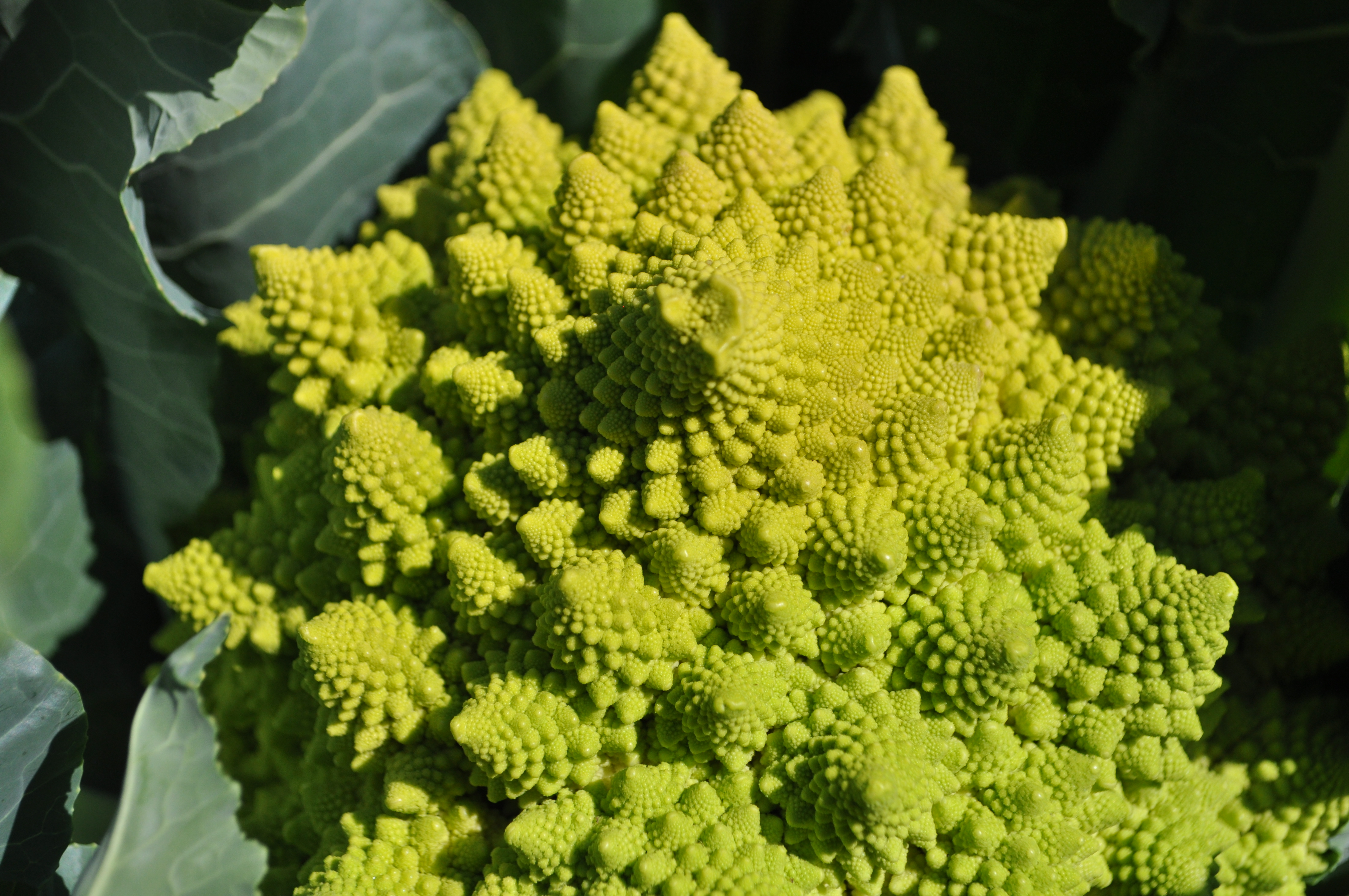
Grow your own garden art! Romanesco is a cole crop with characteristics of broccoli and cauliflower. It is widely grown in Italy and gaining popularity in Texas. Thanks to Romanesco, vegetable gardening is not just rewarding and nutritious it is also beautiful.
Romanesco produces thick stalks and wide, rough leaves. Leave a large space to grow this vegetable. The central head grows very large and eventually the plant can span 2 feet in diameter.
Me-Ann Lamb holding a Brocolli Romanesco from my garden in 2016
Sow seeds in a fertile location from February 1 to March 5 for a spring crop or August 20 to September 20 for a fall crop. Fall crops are ofter more sucessful as this plant thrives in cool weather. Sow seeds tinly and cover with 1/2 inch of fine soil. Keep evenly moist. Seedlings will emerge in 10-21 days. Thin to about 16 inches apart when seedlings are 1-2 inches high. Transplants are also available and much easier to grow. These plants will reach maturity in 75-100 days. To harvest, pick the enitre head before it begins to seperate.
Romanesco is a true photo opportunity. Take a close-up shot and it looks like and apple-green mountain range. The scientific name for this unusual ordering of rows is a “fractal.” Fractals can be thought of as never-ending patterns-nothing wrong with bringing math into the kitchen.
Susan Thornbury, Dallas County Master Gardener Class of 2008
Photo by Starla Willis, Dallas County Master Gardener Class of 2008










 DALLAS GARDEN BUZZ