Growing Asparagus

Jerry Parsons and Sam Cotner, Extension Horticulturists
Texas AgriLife Extension Service

Asparagus is a highly productive vegetable best suited to cooler areas of North and West Texas. Grown for the stems or spears, a well tended planting yields 8 to 10 pounds or more per 100 square feet of bed or 24 to 30 pounds per 100 feet of row. For most home gardeners, one row is adequate. 

An asparagus planting lasts 15 to 25 years without replanting if it is well cared for and the climate is suitable. It does not do well if summers are extremely hot and long and winters are mild. 

Asparagus is grown from 1-year-old plants or “crowns” planted in January or February. Crowns grow from seed planted in flats or peat cups in October for January transplanting, or they are transplanted from an existing asparagus bed. To get healthy, vigorous plants, buy 1-year-old crowns from a nursery or garden center or order them from a seed catalog. It takes 1 year to grow a good crown. 

It requires 3 years from the time the crown is planted until the bed is in full production. Buds arise from the crown when conditions are favorable and develop into edible spears. If these spears are not harvested and are allowed to continue growing, they develop into “fern-like” stalks. 

From these “ferns”, the mature plant manufactures food and stores it in “storage roots.” This reserve supplies the energy necessary to produce spears the following year. 

Asparagus does best in a deep, well-drained soil with full sunlight. 

Soil Preparation 

Since an asparagus planting lasts many years, good seedbed preparation is essential. The soil should be free of trash, soil insects and weeds such as johnsongrass and bermudagrass before planting. 

In late fall, spread a 3-inch layer of organic matter such as manure, rotted sawdust or compost over the beds. Till or spade to a depth of 10 to 12 inches and turn the soil so all organic matter is covered. Asparagus grows well in high pH soils but does not do well if the soil pH is below 6.0. Test the soil before planting the beds and add lime if needed to adjust the pH to 6.5 to 7.0. 

Fertilizing 

Before planting new asparagus beds, till in 2 to 3 pounds of 10-20-10 or a similar analysis fertilizer per 20 feet of row or as directed by a soil test report. 

For established beds scatter 1 to 2 pounds of 10-20-10 fertilizer per 20 feet of row before growth begins in the spring, late January or early February in most areas of Texas. Add an additional 1 to 2 pounds per 20 feet of row after the last harvest. If available, use a nitrogen fertilizer such as 21-0-0 at this time. Water the fertilizer into the soil. Low fertility can cause fibrous spears. 

Varieties 

Martha Washington, UC 157, Jersey Giant and Mary Washington tests have shown hybrid asparagus varieties produce more than the standard varieties, but they are not widely available to home gardeners. 

Planting 

Since asparagus will be in the same place several years, it is important to select the right spot. Asparagus plants make a good border around the edge of a garden or along a fence. 

After asparagus beds are tilled, mark rows 4 to 6 feet apart. Dig a furrow 4 inches wide and 6 to 12 inches deep. Place the crowns in the furrow, cover with 2 to 3 inches of soil and firm the soil around the roots. Do not fill the entire furrow at once. Plant crowns 6 to 12 inches deep in loose soils and 4 to 6 inches in heavier soils. 

Place crowns 12 to 14 inches apart. Planting too closely can cause small spears. Wider planting results in larger spears but lower total yield. Control weeds but do not injure the crowns. Fill the furrows gradually as the shoots grow. This covers small weeds, and they die from lack of light. By the end of the first season, the furrow reaches its normal level (figure 1). Deep planting of the crowns allows cultivation with garden tools or tiller (do not till too deep) without damage to crowns. 

Watering 

Asparagus plants like frequent, deep watering. Water the beds thoroughly as needed. Allow the top 1 inch of soil to dry before watering again. The time varies from 3 to 5 days depending on temperature. Asparagus roots reach 10 feet deep if the soil is adequate and moisture is available. 

Care During the Season 

Keep weeds pulled or hoed from the beds. Asparagus beds require little care after the first 2 years. Control weeds without damaging the spears. In early season, till the soil when fertilizer is applied before the spears begin growth (figure 2). Control weeds during the season by raking lightly or mulching. After the last harvest, cut back all top growth. Apply fertilizer and till lightly 1 to 2 inches to kill weeds. 

Cover the bed with a 3-inch layer of clean straw, compost or other mulch material, water thoroughly and allow to grow the rest of the year. This helps insure a good harvest the next year (figure 3). 

After the first hard frost/freeze of fall, cut fern tops off at ground level and mulch with manure. In southern areas the fern may not be killed by a freeze and should be removed in late November. Any spears which sprout may be removed and eaten. 

Harvesting 

Harvest asparagus spears from established beds for about 8 weeks. Do not harvest too soon from a new planting. 

Harvest spears when they are 4 to 10 inches long. To prevent spears from becoming fibrous, harvest at least every other day. The fibrous condition is caused by overmaturity or inadequate fertility. Spears with loosely formed heads are overmature. 

Cut asparagus spears 1 to 2 inches below the soil level. At least one-half the length of the spear should be above the ground. Never cut the spear within 2 inches of the crown to avoid damage to the developed buds. Never cut asparagus spears above the ground and allow stubs to remain (figure 4). Discontinue harvest when spear diameter becomes less than 3/8 of an inch. 

Reprinted courtesy of Texas AgriLife Extension Service.
Moving Asparagus

If your house caught on fire, you might have thought about which prized possessions you would grab on your way out. What would it be: a photo album, childhood memoir, or book?

What if you had to leave your 9 year old garden in a rush?  We had to do that very thing.

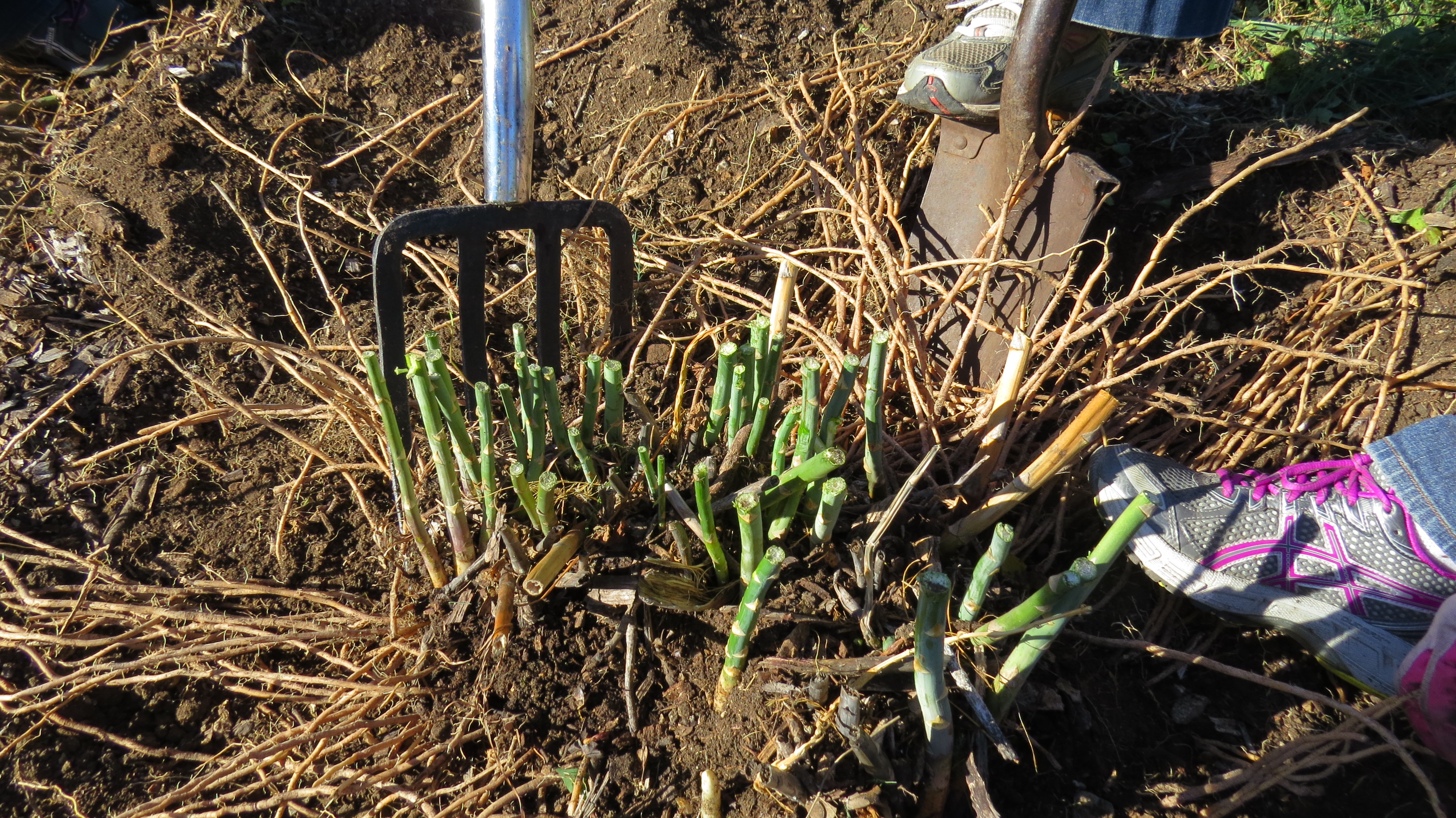
For sure our asparagus plants needed to be moved to our new location. Two or three years ago we had planted two packages of scrawny looking asparagus crowns in a trench.  They looked dead and we didn’t think they would come up, but in a miraculous way they thrived!

Now we had to hurry to bring these very same asparagus plants to our new garden. Hastily the digging began!

 Asparagus Roots

Asparagus Roots

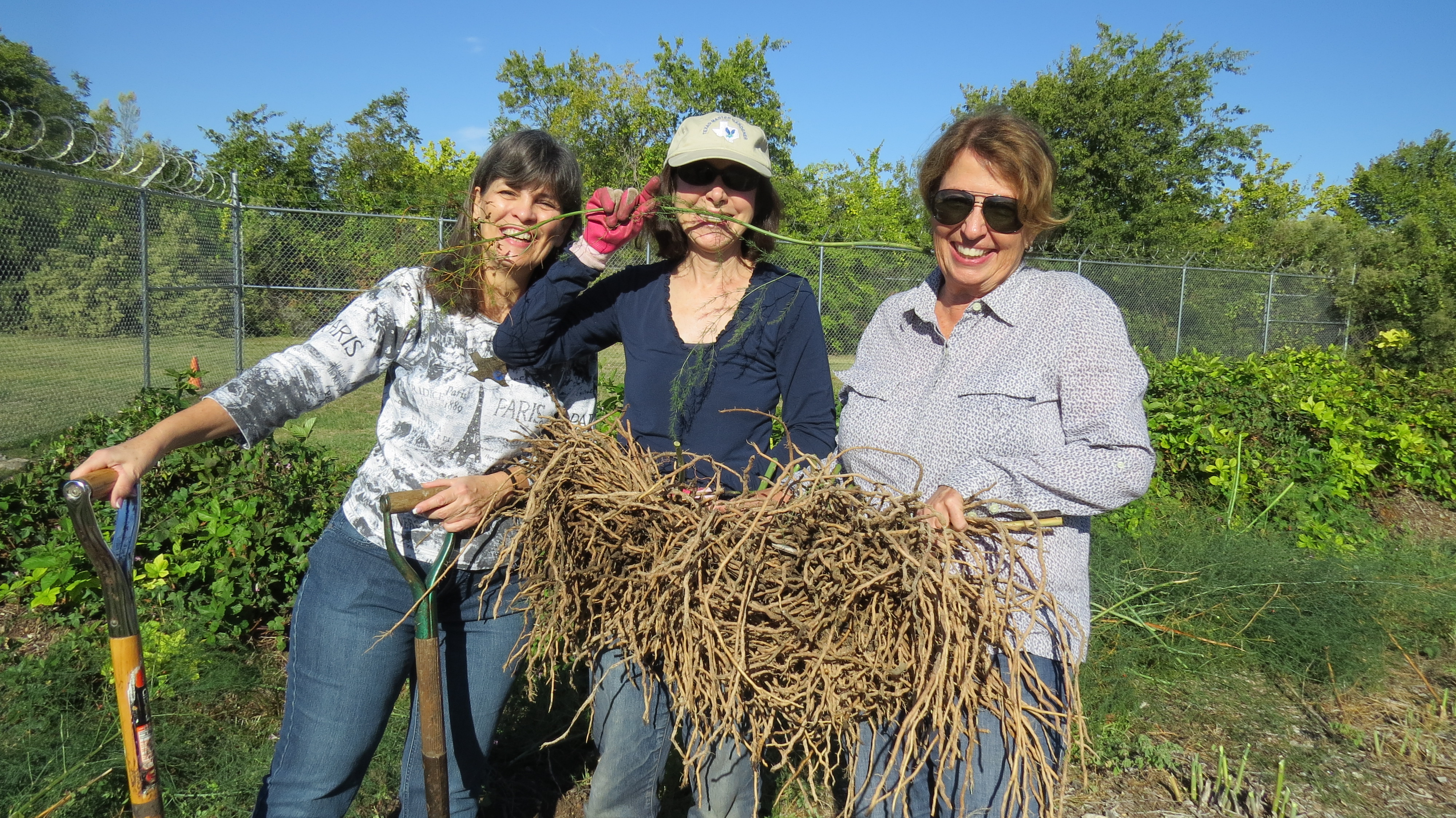
The roots had grown to gargantuan proportions. Even that didn’t stop us and we got a little silly about it!

Kim, Sue, Ann, and our Saved Asparagus Roots

Kim, Sue, Ann, and our Saved Asparagus Roots

We picture our asparagus flourishing in our new garden at Midway Hills as a sort of Asparagus Lane at the entrance to our new vegetable garden. And why not; asparagus is a perennial vegetable and really pretty throughout the year except after the first freeze when you cut it back.

There’s nothing finer than Asparagus from your very own garden.

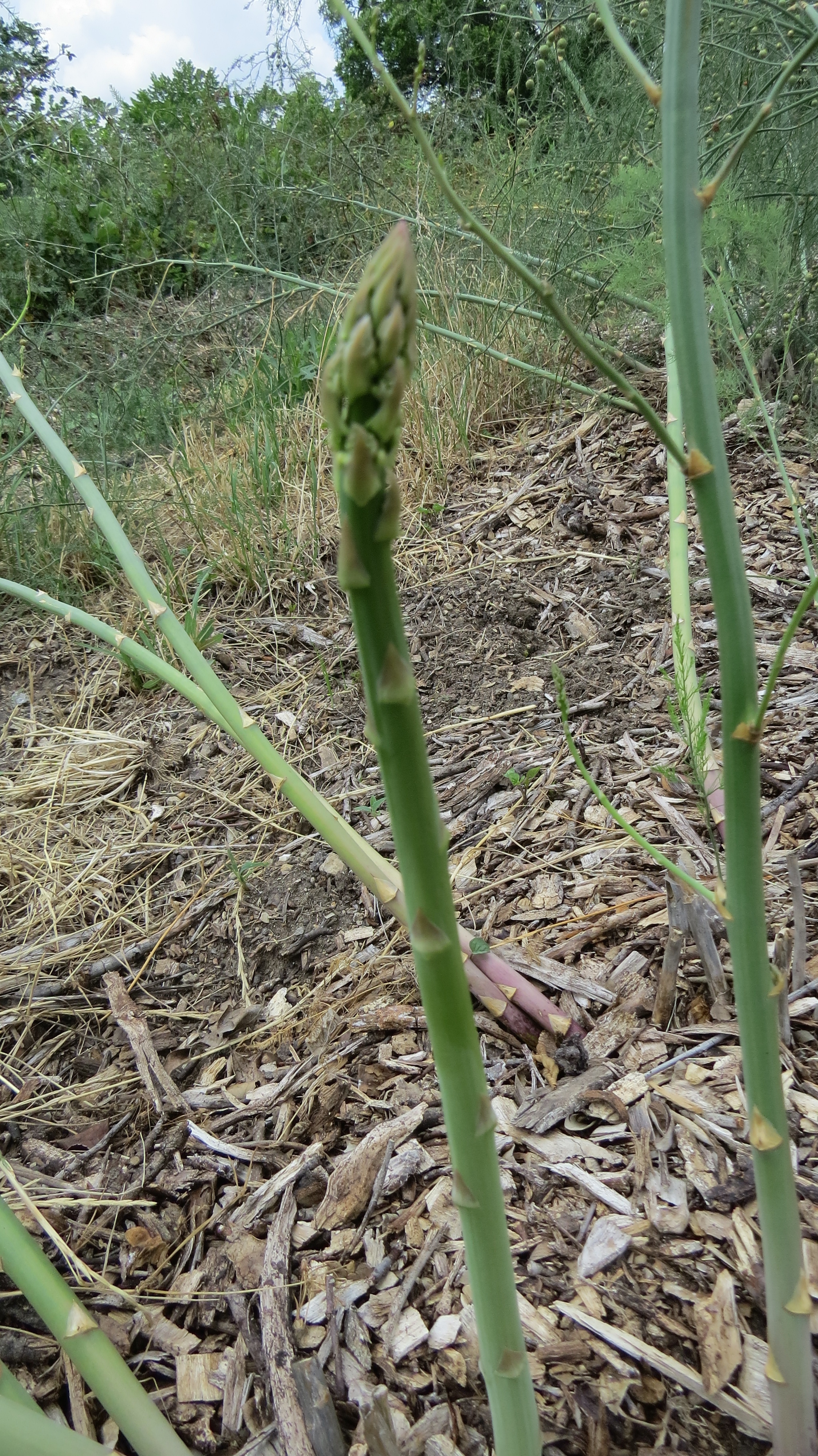
Close up of Asparagus Shoots

Close up of Asparagus Shoots

So, dear friends, we will be talking hopefully about fresh asparagus this spring.

I am just glad we got ours out in time!

Ann

Pictures by Starla and Kim

More notes on Asparagus tomorrow.


It’s That Time of Year

 They may go by many names, but whether you call them Weihnachtskaktus (German), Cactus de Noël (French), Cacto de Navidad  (Spanish), Thanksgiving Cactus (American), Holiday Cactus (US) or even Crab Cactus (referring to the clawed ends of the stem), you can’t go to any garden center or grocery store this time of year without being tempted to buy a Christmas Cactus (Europe/US/Canada).   But just how do you keep them healthy—and, as importantly, get them to bloom again next year.  Like poinsettias, another holiday flower, there’s a trick to that.

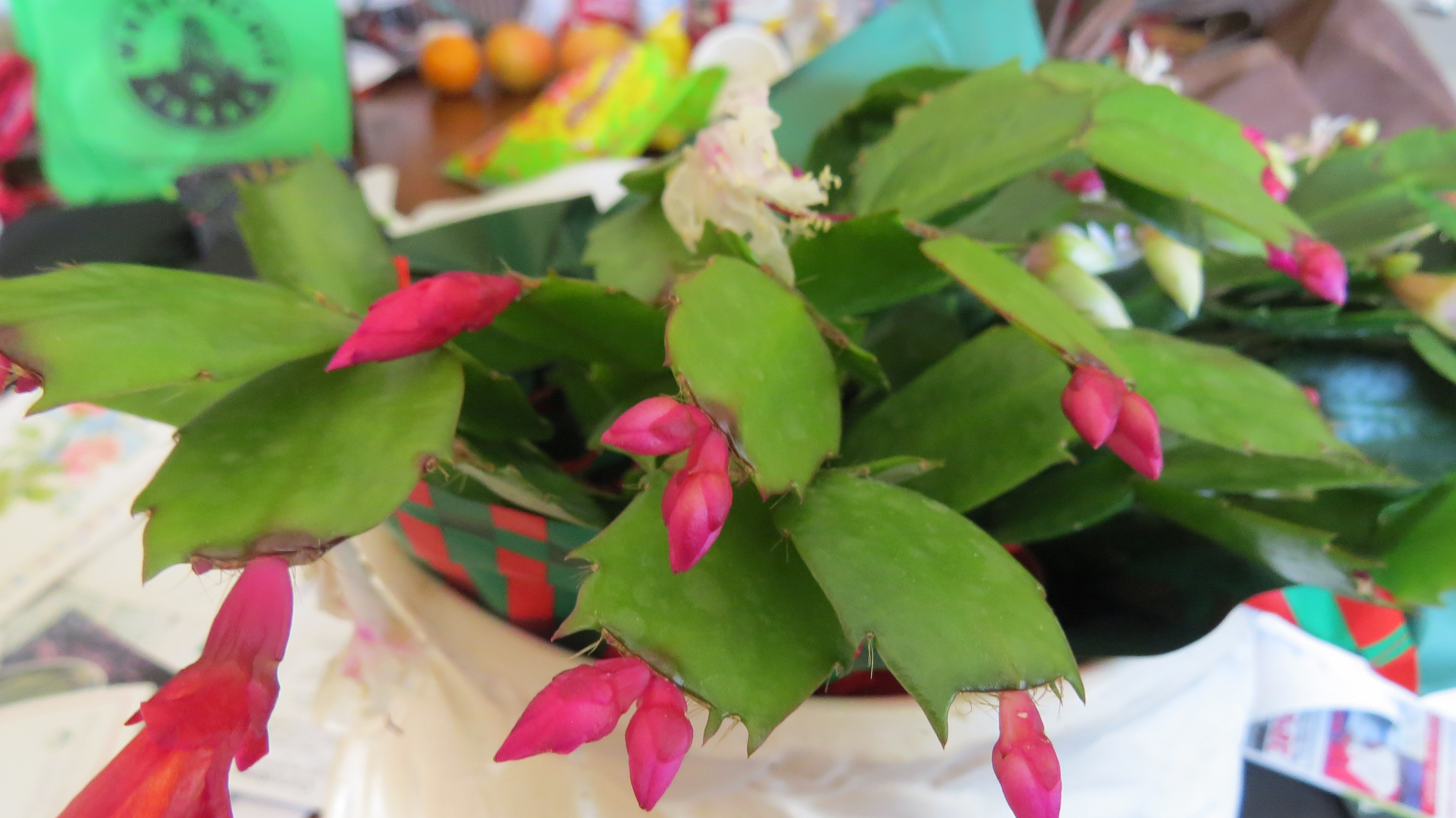
What do You Know-This is Actually a Thanksgiving Cactus

What do You Know-This is Actually a Thanksgiving Cactus

According to Clemson Cooperative Extension, Thanksgiving cactus (Schlumbergera truncata) and Christmas cactus (Schlumbergera bridgesii) are popular, fall- and winter-flowering houseplants native to Brazil, where they grow as epiphytes on tree branches in shady rain forests.  Their flowers are available in a wide variety of colors including red, rose, purple, lavender, peach, orange, cream, and white.

Strangely enough, what we call “Christmas cactus” and find most often in stores starting around November is most likely the Thanksgiving cactus  (Schlumbergera truncata), as it blooms almost a month before Schlumbergera bridgesii.  If you really want to impress your friends with your horticultural knowledge, the way to tell the two apart, according to the Clemson website, is to “look at the shape of the flattened stem segments, which are botanically called phylloclades.  On the Thanksgiving cactus, these stem segments each have 2 to 4 saw-toothed serrations or projections along the margins. The stem margins on the Christmas cactus are more rounded.

A second method to distinguish between these two Schlumbergera species is based on the color of the pollen bearing anthers. The anthers of the Thanksgiving cactus are yellow, whereas the anthers on the Christmas cactus are purplish-brown.”

Since Holiday cactus originated in shady rain forests, it is best to grow them in light shade.  The secret to good repeat flower production involves temperature regulation (do not let the temperature go over 90 degrees once the flower buds appear) and photoperiod (length of day and night) control.  Fourteen hours or more of continuous darkness each day for at least six weeks is required for complete bud set to occur.  Street lights, car lights or indoor lightening can disrupt the required dark period.  My mother, who once grew a Christmas cactus so large and with so many buds that she donated it to a horticultural center when she moved, would put her Christmas cactus in a dark closet every night for six weeks starting in September.

Watering and fertilizing the Christmas cactus is fairly easy.  Though Holiday cactus can tolerate being somewhat under-watered during the summer, once buds appear the soil should remain slightly moist or the buds may drop.  Clemson recommends fertilizing once monthly with a dilute 20-20-20 fertilizer from the time new growth starts in the early spring.  As Holiday cactus have a higher requirement for magnesium, Epsom salts (one teaspoon per gallon of water) can be used also, but not applied at the same time as the other fertilizer.  The plants do best grown in well-drained soil and like being somewhat pot bound.  The most common problem is over-watering which produces root rot.

Christmas cactus is easily propagated by cuttings, so if you are looking for a present to give to your gardening friends, you might try growing them yourself.  However, whether you want to go to all the trouble of getting them to bloom or whether you just want to consider your Christmas cactus as a “holiday annual plant,” go ahead and purchase that beautiful Christmas cactus at the store.  After all, what says “Holiday” to a gardener more than poinsettias and Christmas cactus.

Carolyn

Picture by Starla

DALLAS BUTTERFLIES

Move over husband Mike.  I’m in love, but I can’t spell—or pronounce–his name.

To bring you up to date, the old 8,000 square foot garden on Joe Field Road is now moved lock, stock, compost pile, tomato support, and rototiller to a fabulous new location at Midway Hills Christian Church, Royal Lane and Midway Road.  We also have a new name, Raincatcher’s Garden of Midway Hills, an Earth-Kind ® Water/Wise Demonstration Garden, a collaboration of the Dallas County Master Gardener Association, Texas A&M AgriLife Extension, and Midway Hills Christian Church.

Midway Hills Christian Church, Site of our New Garden

Midway Hills Christian Church, Site of our New Garden

MHCC has generously offered us a 100’x300’ field for a new garden and plans are hatching.  Just like butterflies will—we hope—this spring.

We brainstormed the components that we wanted to bring (or not) to the new garden: vegetables, an education garden, and a wildlife habitat. And some new things we wanted to feature, like urban trees and turf.  But probably tops on people’s list was a butterfly garden.

Which brings me to my new love: skippers, brushfoots (not “feet), whites, sulphurs, blues, hairstreaks, and swallowtails.  I’d like to learn to be a lepidopterist, but I’ve got to set some time aside to learn to roll out that moniker.

Diving into Butterflies of Texas by Geyata Ajilvsgi and the Dallas County Lepidopterist’s Society website maintained by Dallas butterfly expert Dale Clark was absolutely fascinating.

Variegated Fritillary (Euptoieta claudia)

Variegated Fritillary (Euptoieta claudia)

I learned if you want to attract grass skippers, you need an abundance of host grasses like bluestem and side-oats gramma in your garden.

Most gardeners know to plant dill, fennel, parsley, and rue for swallowtail caterpillars, but they also have a hankering for citrus, celery and Queen Anne’s Lace.

We’re familiar with the Pirinae family of sulphur’s and white’s passion for broccoli and cabbage. But the Coliadinae family of whites and sulphurs pine more for senna, marigolds, clover, and false indigo for host plants.

Cloudless Sulphur Butterflies on Turk's Cap, Photo by Janet D. Smith

Cloudless Sulphur Butterflies on Turk’s Cap, Photo by Janet D. Smith

Hairstreaks look for oaks, mistletoe, Texas bluebonnets and okra. Blues are thrilled with frostweed, lima and garden beans, and snouts want sugarberry and net-leaf hackberry. Fritillaries swoon for maypop and passionvines, monarchs for milkweed.

Brushfoots remind me of a 17-year-old football player.  They’ll clean out your garden “refrigerator” of almost everything.  Wildflowers to thistles to American elm, to frogfruit are on the host plant menu.

As we’re planning the garden, there’s more to think about than host and nectar plants.  You want your plants in full sun (more nectar), have enough water to prevent wilting (nectar stops with inadequate moisture), use favorite colors of purple, pink, yellow and white, and include a variety of bloom shapes.  Some little guys forego the nectar plants and pull over for old fruit, a fermented sugar mixture, or a damp salt and sand mixture for amino acids.  Rocks and logs in the sun give a spot for basking.  Old logs and brush provide Red Admirals and Mourning Cloaks a spot for hibernating.

The monarch has gotten a lot of press lately concerning the declining amount of milkweed necessary for its caterpillars.  We plan on having a Monarch Waystation, based on recommendations from Monarch Watch, filled with native and tropical milkweed for the trip north and favorite nectar plants for the fall migration to Mexico.

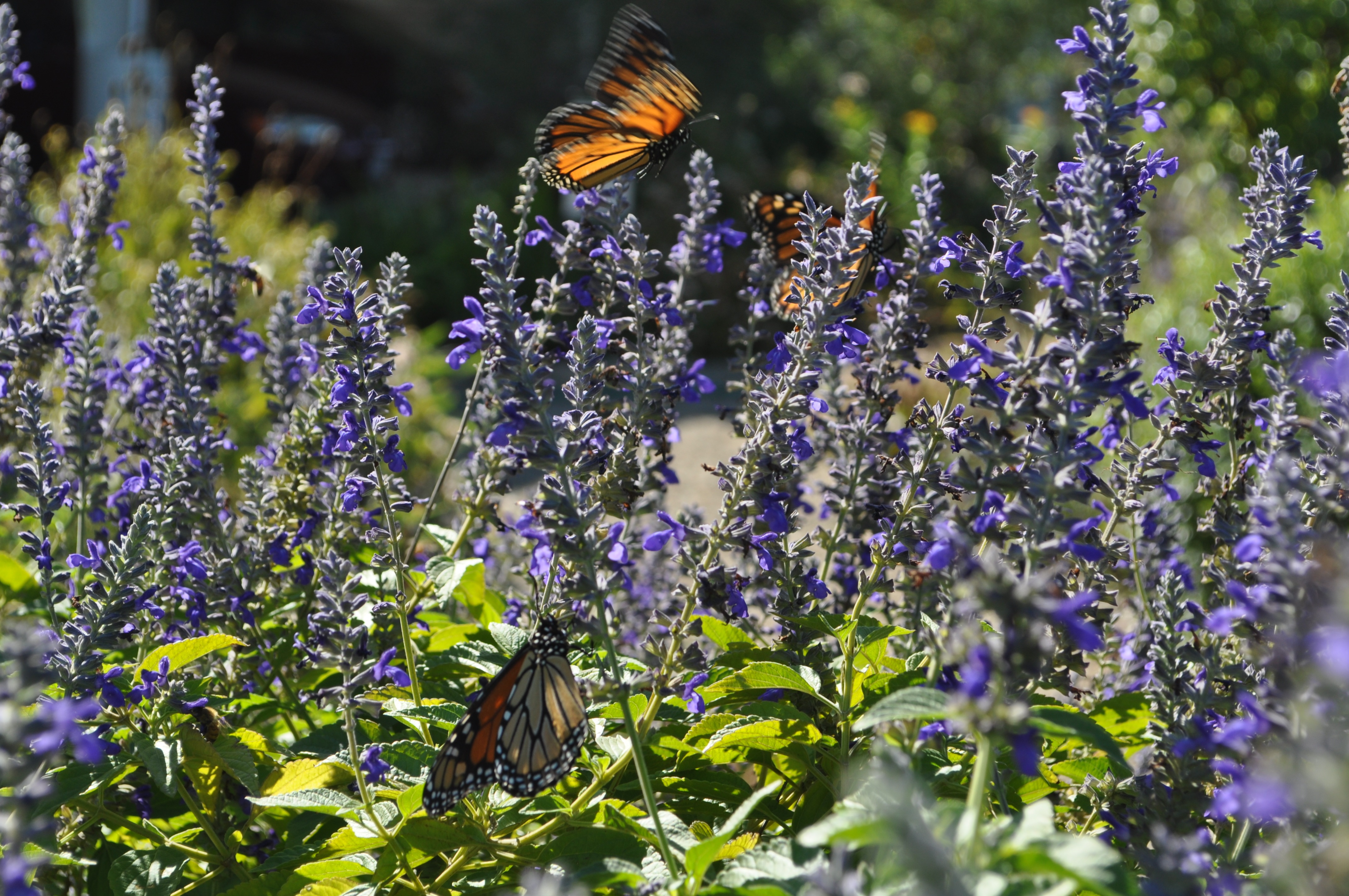
Monarch Butterflies Nectaring on Blue Salvia at our Old Location

Monarch Butterflies Nectaring on Blue Salvia at our Old Location


As our plans take place, we are looking forward to late spring and summer, and we hope, a large garden full of fluttering beauties.

Elizabeth

Pictures by Starla and Ann and Janet

More about Monarchs!


Thankfulness 2014

Our industrious group has had two bake sales in the last two months to raise money for our new garden: The Raincatcher’s Garden of Midway Hills.   It takes a lot of planning, baking, and w-o-r-k to pull off these events.

Sue. Elizabeth, and Linda, Cooking and Planning

Sue. Elizabeth, and Linda, Cooking and Planning

We would like to thank many of  you for supporting us by sending you these recipes for your holiday feasts.

Pumpkin Apple Spice Muffins

Ingredients:

1 ⅔ cup all-purpose flour

1 cup sugar

1 Tablespoon pumpkin pie spice

1 teaspoon baking soda

¼ teaspoon salt

¼ teaspoon baking powder

1 cup canned pumpkin

½ cup butter, melted

2 large eggs

1 apple peeled and finely chopped (Granny Smith, Pink Lady etc.)

1 teaspoon pumpkin pie spice

2 Tablespoons sugar

Directions:

Preheat oven to 350°.

  1. Combine the flour, sugar, 1 tablespoon pumpkin pie spice, baking soda, salt, and baking powder in a large bowl.
  2. Fold in diced apples. Scoop batter into greased muffin tin filling 2/3 full.
  3. Mix together 1 teaspoon pumpkin pie spice and 2 tablespoons sugar and sprinkle over top of muffin batter.
  4. Bake muffins at 350° for 15 to 18 minutes or until done in center. Cool slightly and serve.


October 2014 Dallas County Master Gardener Craft Fair

October 2014 Dallas County Master Gardener Craft Fair

Pumpkin-Pistachio Breakfast Bread

A yummy holiday bread that’s worthy of gift giving.

 Ingredients:

1 ½ cups butter, softened

1 ½ cups sugar

3 large eggs

3 cups all-purpose flour

2 teaspoons baking powder

½ teaspoon baking soda

¾ teaspoon salt

1 teaspoon ground cinnamon

½ teaspoon ground ginger

¼ teaspoon ground cloves

1 ½ cups canned mashed pumpkin

1 cup raisins

1 ½ teaspoons vanilla extract

Directions:

Beat butter at medium speed with an electric mixer until creamy; gradually add 1 ½ cups sugar, beating well. Add eggs, 1 at a time, beating until blended after each addition.

  1. Combine flour and next 6 ingredients in a large bowl; add to butter mixture alternately with pumpkin, beginning and ending with flour mixture. Stir in raisins and vanilla.
  2. Spread batter into a greased and floured 13” x 9” pan; sprinkle with Pistachio Topping. Bake at 350 degrees for 45 to 50 minutes or until a wooden pick inserted in center comes out clean.  Cool on a wire rack.
  3. Beat cream cheese, powdered sugar, and milk in a small bowl until smooth, using a wire whisk. Using whisk, drizzle cream cheese mixture over cake.

Yield: 12 servings

Linda

Pictures by Starla

For more Thanksgiving recipes refer to: Farewell to the Field and More Recipes from Farewell to the Field


Chow Chow

This is the Monday family’s ‘best guess’ recipe for the relish served at an old cat fish place near Oil City, Louisiana.

 I’m not sure why, but  we call it “B and B Relish”.

Tomatoes and Onions on the Stove!

Tomatoes and Onions on the Stove!

B and B Chow Chow

(Also known as Cool Point Relish)

2 Gallons quartered green tomatoes

1/2 Gallon quartered (or smaller) onions

1 Pint hot peppers ( or less)

1/2 Gallons white vinegar

6 Cups sugar

1/2 cup salt

In large pan, add the vinegar, sugar, and salt to a large pan.  Bring it to boil and add tomatoes, onions, and peppers.  Bring it back to a boil, and remove from heat.

Pack in jars, cover with liquid and seal.

Dorothy

Harvesting Before the Freeze

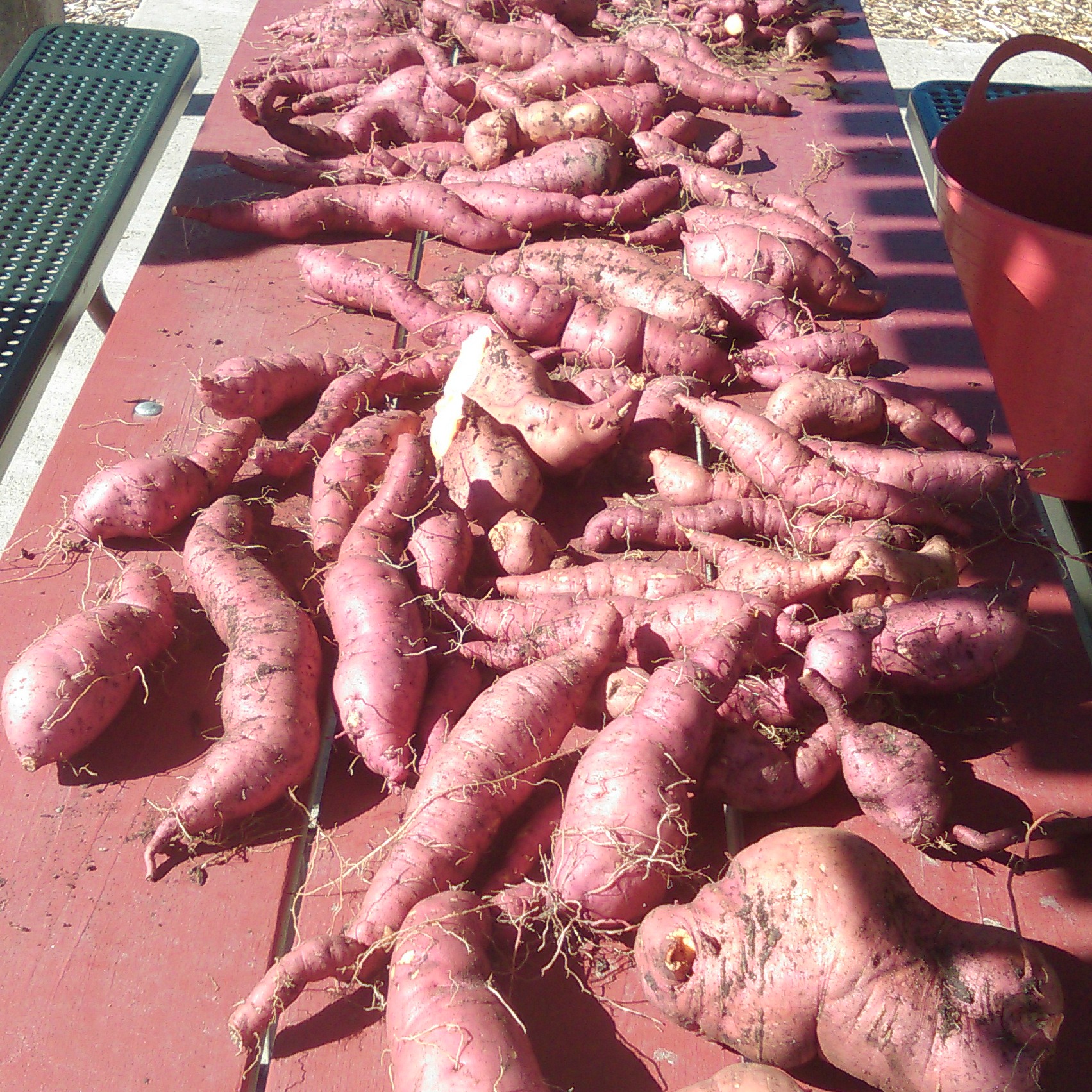
For a whole summer I have watched the beautiful, vining sweet potato plant in my garden and wondered what was happening below ground.  Sweet potatoes can be dug as soon as the tubers reach suitable size but farmer friends like Tim say the flavor and quality improves with colder weather. They can even be left in ground until after the first freeze  and leaves blacken, but you don’t want to leave them in too long and have rotten potatoes.  So today was my  day to pick!

Sweet Potatoes from Ann's Garden

Sweet Potatoes from Ann’s Garden

Of course, Tim had more. He has a nice big plot at The Farmer’s Branch Community Garden.

Tim's Sweet Potatoes

Tim’s Sweet Potatoes

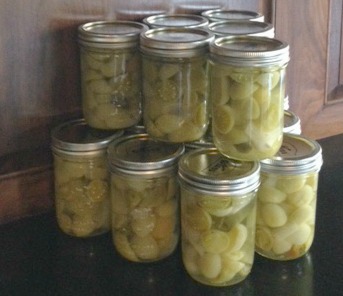
I also picked my green tomatoes.  Dorothy  picked 70 pounds from her garden last week and made the most delicious Chow Chow.

Chow Chow is a southern favorite made from pickled green tomatoes and other veggies. It is served alongside  black eyed peas to hamburgers to cornbread, almost anything and hers was the best I have ever tasted.

Green Tomato ChowChow

Her recipe will be shared tomorrow!

Ann


More Recipes from Farwell to the Field Luncheon


From Cranberry Spice Chutney to Pumpkin Cheesecake with Cinnamon Flavored Whipped Cream our “garden inspired’ menu was filled with the flavors of fall. It truly was a time to express gratitude for our new home as we celebrated with our most supportive Master Gardener friends.

Farewell-volunteers

We have loved our garden on Joe Field Road but  are ready to begin anew with exciting plans in a large field on the property of Midway Hills Christian Church.  We bring with us experience and as you can see from the smiles on our faces; we bring a camaraderie or esprit de corps that will enable us to plant the 100’s of  plants and lay miles of drip irrigation in the coming year.

Remember us as you plan your Thanksgiving celebrations!

Farewell salad

Bibb Lettuce Salad with Raspberry Maple Dressing

Ingredients:

5 heads Bibb lettuce, torn into pieces

2 small purple onions, thinly sliced and separated into rings

2 cups (8 ounces) crumbled blue cheese or feta cheese

½ cup toasted pine nuts or sunflower seeds

⅔ cup vegetable oil

¼ cup raspberry vinegar

2 tablespoons maple syrup

Directions:

  1. Arrange the lettuce and onion on 12 salad plates. Sprinkle evenly with the blue cheese and pine nuts.
  2. Combine the oil, vinegar and maple syrup in a jar with a tight-fitting lid. Shake until well mixed. Drizzle the desired amount over the salads.

Yield: 12 servings

Farewell-cranberry chutney

Cranberry Chutney

Serve leftovers atop cream cheese as an appetizer, or spread on warm biscuits at breakfast.

Ingredients:

1 cup chopped Granny Smith apple

1 medium onion, chopped

¾ cup chopped celery

1 cup raisins (golden)

1 cup sugar

1 cup white vinegar

¾ cup water

2 teaspoons ground cinnamon

1 ½ teaspoons ground ginger

¼ teaspoon ground cloves

1 (12-ounce) package fresh or frozen cranberries

Directions:

  1. Bring all ingredients to a boil in a large saucepan. Reduce heat, and simmer, stirring occasionally, 30 minutes or until slightly thickened.
  2. Serve alongside turkey, chicken, roast, or ham. Store covered in refrigerator.

Yield: 4 cups.

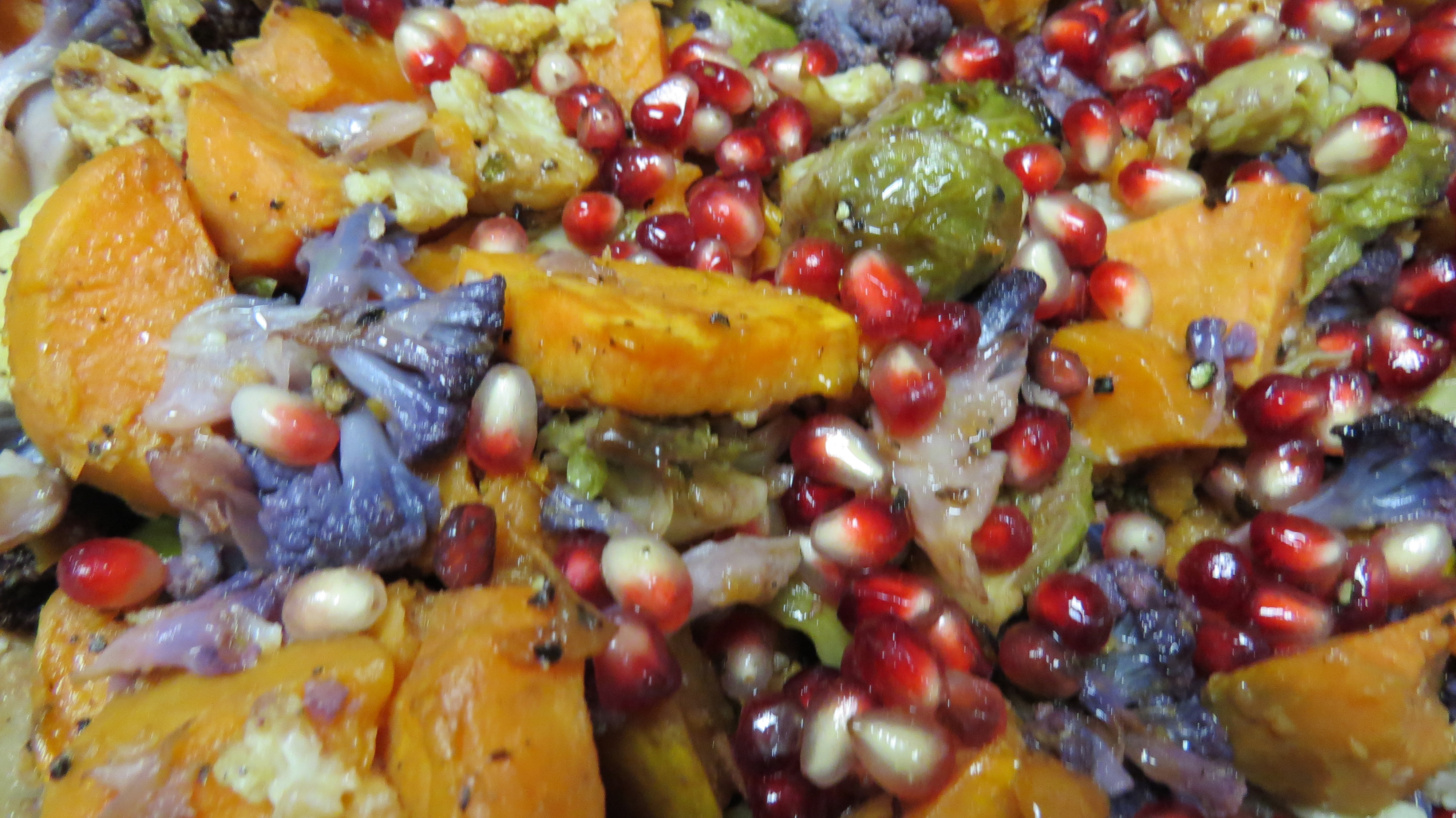
Farewell-veggies

Roasted Vegetables with Pomegranate Vinaigrette

Ingredients:

For the Roasted Vegetables

1 large head regular cauliflower (about 2 pounds), cut into small florets

1 pound baby Romanesco cauliflower, or regular, cut into small florets

2 medium sweet potatoes, peeled and cut into ½-inch wedges

1 pound brussels sprouts, halved

3 tablespoons extra-virgin olive oil

Coarse salt and freshly ground pepper

For the Vinaigrette

½ cup pomegranate juice

½ cup extra-virgin olive oil

Coarse salt and freshly ground pepper

1 cup pomegranate seeds

Directions:

  1. Roast the vegetables: Preheat oven to 425⁰. Toss together vegetables and oil in a large bowl, and season with salt and pepper.  Spread vegetables evenly on 2 rimmed baking sheets, and roast until golden, mixing halfway through, about 30 minutes.
  2. Meanwhile, make the vinaigrette: Transfer pomegranate juice to a bowl. Pour in oil in a slow, steady stream, whisking until emulsified.  Season with salt and pepper.
  3. Just before serving, drizzle vinaigrette over warm vegetables, and toss with pomegranate seeds.

Yield: Serves 12.

Sweet Potato Crescent Rolls and Sour Cream Yeast Rolls

Sweet Potato Crescent Rolls and Sour Cream Yeast Rolls

Sweet Potato Crescent Rolls

 An “unnamed” family member said she once ate 10 of these dreamy little “puffs” of goodness. We’ll never tell!

Ingredients:

2 packages dry yeast

1 cup warm water (105 to 115 degrees)

1 cup cooked mashed sweet potato

½ cup shortening

½ cup sugar

1 egg

1 ½ teaspoons salt

5 ¼ to 5 ¾ cups all-purpose flour

¼ cup butter, softened

Directions:

  1. Dissolve yeast in warm water in a large mixing bowl; let stand 5 minutes. Add sweet potato, shortening, sugar, egg, and salt; beat at medium speed of an electric mixer until thoroughly blended. Gradually stir in enough flour to make a soft dough.


  1. Turn dough out onto a well-floured surface, and knead until smooth and elastic (about 5 minutes). Place in a well-greased bowl, turning to grease top. Cover and let rise in a warm place (85 degrees), free from drafts, 1 hour or until doubled in bulk.


  1. Punch dough down, and divide into 3 equal parts. Roll each into a 12-inch circle on a lightly floured surface; spread each circle with 1 tablespoon plus 1 teaspoon butter. Cut each circle into 12 wedges; roll up each wedge, beginning at wide end. Place on lightly greased baking sheets, point side down, curving slightly to form a crescent.


  1. Cover crescent rolls and let rise in a warm place, free from drafts, 30 to 45 minutes or until rolls are doubled in bulk. Bake at 400 degrees 10 to 12 minutes or until light golden brown.

Yield: 3 dozen

Sour Cream Yeast Rolls

Ingredients:

½ cup sour cream

¼ cup butter

¼ cup sugar

½ teaspoon salt

1 (¼-ounce) envelope active dry yeast

¼ cup warm water (100° to 110°)

1 large egg, lightly beaten

2 cups all-purpose flour

Melted butter

Directions:

  1. Cook first 4 ingredients in a saucepan over low heat, stirring occasionally, until butter melts. Cool sour cream mixture to 100° to 110°.
  2. Dissolve yeast in ¼ cup warm water in a large mixing bowl; let stand 5 minutes.
  3. Stir in sour cream mixture and egg. Gradually add flour to yeast mixture, mixing well.

(Dough will be wet.) Cover and chill 8 hours.

  1. Punch dough down. Shape into 36 (1-inch) balls; place 3 balls in each lightly greased muffin cup. Cover and let rise in a warm place (85°), free from drafts, 1 hour or until doubled in bulk.
  2. Bake at 375° for 10 to 12 minutes or until golden brown.
  3. Brush rolls with melted butter. Freeze up to 1 month, if desired. To reheat, wrap frozen rolls in aluminum foil, and bake at 400° for 15 minutes or until thoroughly heated.

Yield: 1 dozen.

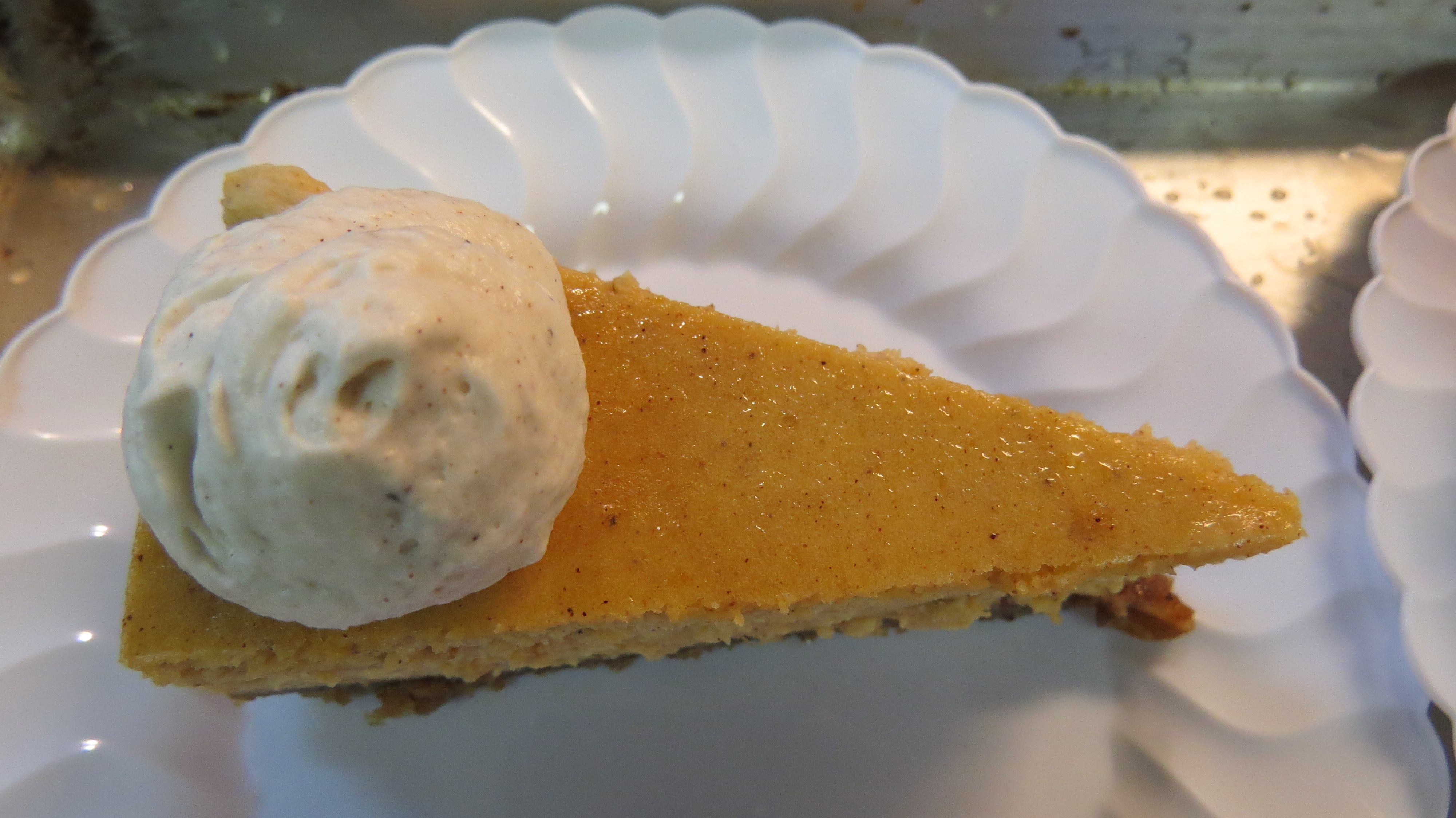
Farewell pumkin cheesecake

 Pumpkin Cheesecake

This recipe from “The Peach Tree” Tea Room in Fredericksburg, Texas was published in the March 1989 issue of Gourmet Magazine. It is worthy of the honor. 

 Ingredients:

Crust:

1 ¼ cups graham cracker crumbs

½ cup finely chopped pecans

¼ cup brown sugar

¼ cup granulated sugar

¼ cup butter, melted

Directions:

  1. Combine all ingredients and mix well. Pat mixture firmly into bottom only of a buttered 9” to 10” springform pan. Bake 15 minutes in a pre-heated 325 degree oven. Remove from oven and set aside.  Reduce oven to 300 degrees.

Filling:

¾ cup granulated sugar

1 cup canned pumpkin

3 eggs

1 ½ teaspoons cinnamon

½ teaspoon nutmeg

½ teaspoon ground ginger

½ teaspoon salt

24 ounces cream cheese, softened

6 tablespoons granulated sugar

1 tablespoon cornstarch

2 tablespoons evaporated milk or whipping cream

½ teaspoon vanilla

Directions:

  1. Mix ¼ cup sugar, pumpkin, eggs, cinnamon, nutmeg, ginger, and salt in a bowl. Set aside.
  2. Using an electric mixer, beat the cream cheese and 6 tablespoons sugar until smooth.
  3. Add cornstarch, evaporated milk, and vanilla, beating well after each addition.
  4. Add pumpkin mixture to cream cheese mixture. Mix until no traces of white remain.
  5. Pour filling mixture into prepared springform pan, and bake 1 hour at 300 degrees until sides have risen. The center will be soft.
  6. Turn off oven and let cake cool with door closed for several hours or overnight. Refrigerate cheesecake. May be served with whipped cream, a dusting of cinnamon, sugar, and a few small pieces of toffee candy, if desired.  Also would be good topped with praline sauce.


Yield: 14 to 16 Servings

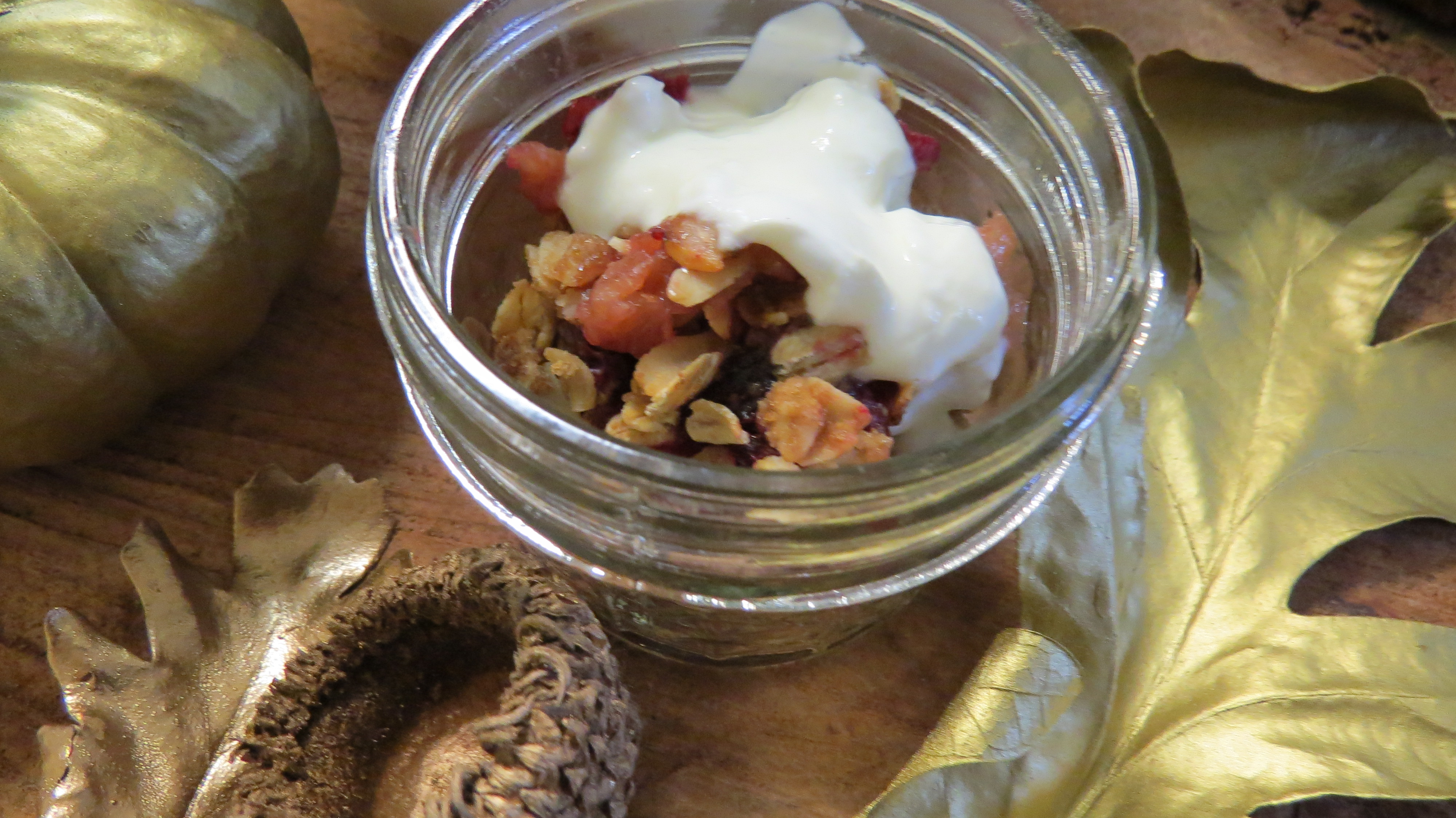
Farewell cranberry crisp

Cranberry Pear Crisp

Ingredients:

3 very ripe pears, peeled, cored, and cut into chunks

1 cup whole cranberries

¼ cup maple syrup

2 tablespoons lemon juice

½ cup oatmeal

¼ cup brown sugar

1 tablespoon flour

1 tablespoon butter

½ cup Enlightened Crème Fraiche

Directions:

  1. Preheat the oven to 400°.
  2. In a medium bowl, combine the pears, cranberries, maple syrup, and lemon juice and toss. Set aside.
  3. In another bowl, combine the oatmeal, brown sugar, and flour. Cut in the butter until the consistency resembles coarse crumbs and the dough just barely holds together. Spoon the cranberry mixture into an 8 x 8-inch baking dish and spoon the dry mixture over it.
  4. Bake for 10 minutes or until the topping is brown and crisp. Reduce the heat to 350°

and bake for 20 to 25 minutes more, or until the fruit is bubbling. Serve with Enlightened Crème Fraiche.

Yield: Serves 4

Linda

Pictures by Starla

Farewell to the Field, Hello to the HIlls Luncheon and Recipes

Our last act at our 9 year old garden was to be on Tuesday.  Fifty guests and much preparation were planned.

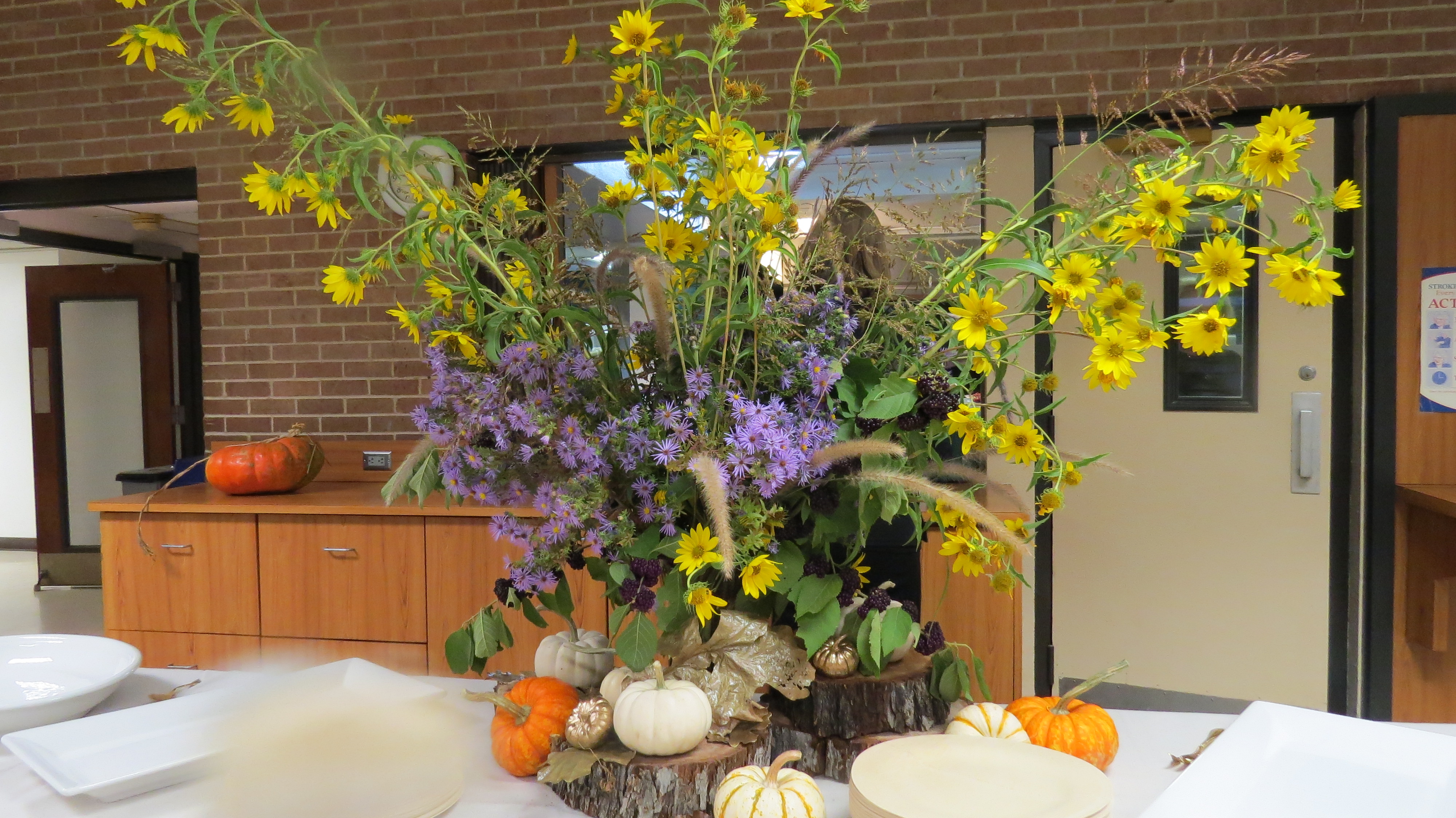
Above: Flowers from our Garden on Joe Field Road

Above: Flowers from our Garden on Joe Field Road

Rain came and changed our plans.  Instead of being at Joe Field for the last time, we moved our feast to our new home at Midway Hills Christian Church, 11001 Midway Rd, Dallas, Texas 75229.   The lunch was a fund raiser for us and a time for thankfulness.

Guests were greeted in the parking lot by Master Gardener volunteers with huge umbrellas.  One of our guests said” you guys think of everything!” The hors d’oeuvres table and wassail were very popular.

Cranberry Wassail

Ingredients:

¼ teaspoon nutmeg

¼ teaspoon cinnamon

¼ teaspoon allspice

3 Tablespoons tea

3 cups boiling water

1 can jellied cranberry sauce

2 cups water

¾ cup sugar

½ cup orange juice

½ cup lemon juice

Directions:

  1. Put spices in saucepan and pour boiling water over them. Pour boiling spices over tea, in large pan with cover. Let steep 5 minutes covered.
  2. Beat jellied cranberry sauce with fork and heat with 2 cups water; add sugar and stir to dissolve.
  3. Strain tea; add cranberry liquid mixture, orange juice and lemon juice.
  4. Serve hot.

Yield: Makes 2 quarts.

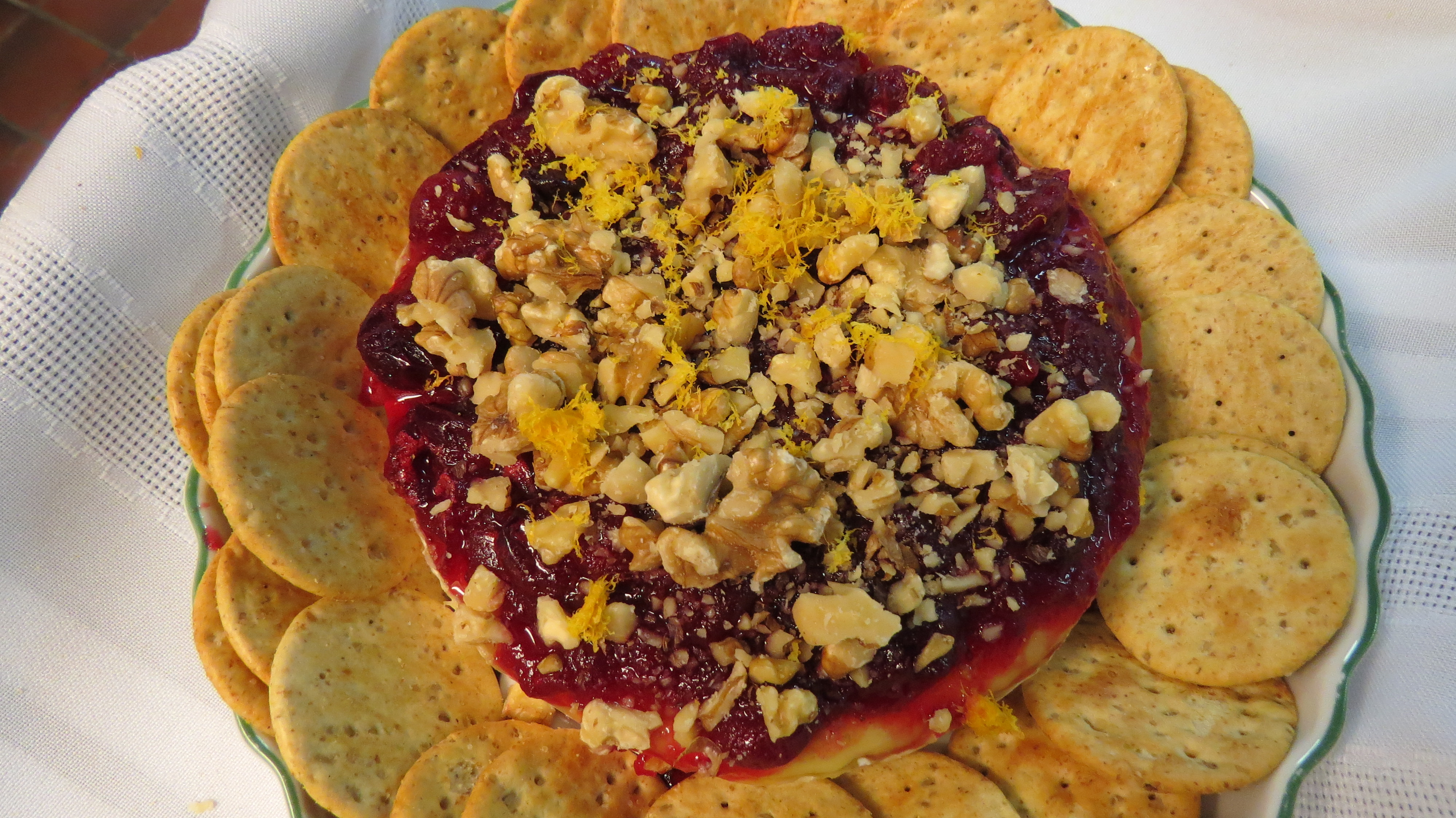
Baked Brie with Cranberry Sauce and Walnuts

Baked Brie with Cranberry Sauce and Walnuts

 Baked Brie with Cranberry Sauce and Walnuts 

Ingredients:

¾ cup cranberry sauce

1 (16-ounce) brie round

Zest of one orange

⅔ cup walnut pieces

Crackers for serving

Directions:

  1. Preheat oven to 350⁰.
  2. Remove the top of the rind from the cheese using a serrated knife, and discard the rind. Place the cheese, cut side up on an oven safe plate or bowl. Just make sure to use a larger plate or a bowl so your cheese doesn’t start oozing off the plate.
  3. Bake at 350⁰ for 10 minutes.
  4. Remove from the oven and top with the cranberry sauce. Bake for an additional 5 minutes, or until the cheese is soft and warm. Sprinkle the top with orange zest and walnuts.
  5. Serve immediately with crackers.

Note: For a simple cranberry sauce combine 4 ounces cranberries, 1/3 cup orange juice, and ¼ cup sugar.  Bring to a boil, then reduce to medium and simmer till thickened and cranberries have popped.  For extra favor add ⅛ teaspoon nutmeg and cinnamon.

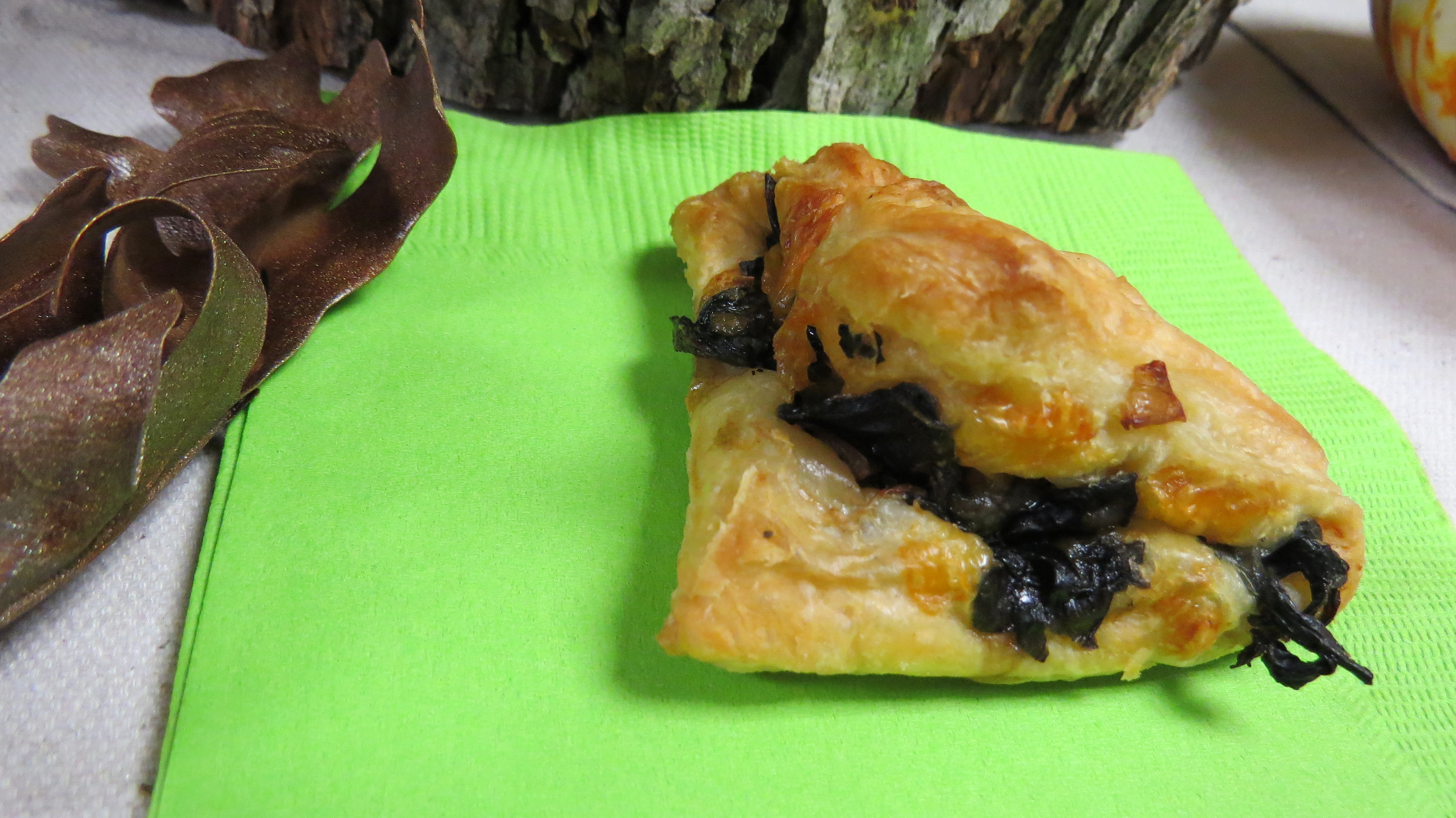
Swiss Chard Turnover

Swiss Chard Turnover

 Swiss Chard Turnovers

Ingredients:

1 tablespoon olive oil

1 shallot or small onion, chopped

1 bunch Swiss chard, washed and dried, stemmed, and cut or torn into pieces

Salt to taste

Freshly ground black pepper to taste

½ cup (or more) shredded cheese, such as Parmesan

1 sheet of puff pastry, thawed overnight in the fridge

Directions:

  1. Preheat the oven to 400⁰. Line a baking sheet with parchment paper.
  2. In a skillet or sauté pan, heat the olive oil over medium heat. Add the chopped shallot or onion and cook until the shallot becomes translucent. Turn the heat up to medium high, add the chard, and sauté for about 3 to 5 minutes, until the greens wilt.  (Avoid cooking the greens to the point that they lose color or give off water).  Season the greens with salt and black pepper to taste.  Remove from the heat and set aside.
  3. On a large cutting board or counter top, unfold the puff pastry. Cut it into six rectangles. Top one end of each rectangle with a mound of the chard mixture, and then top the chard with some of the cheese.
  4. Fold the unfilled end of the puff pastry over the greens, and press the edges to seal the turnover. Place the turnovers on the baking sheet.
  5. Bake the turnover for 15 to 20 minutes, until the pastry is puffed and golden brown. These are best eaten as soon as they’re cool enough, and definitely on the same day.

Yield: Makes 6

Linda

More Recipes from Farewell to the Field tomorrow!


Sex 101

How do you tell the “boys” from the “girls?”  In Monarch butterflies, that is.

The male Monarch butterflies have a scent gland on their lower hindwing that produce pheromones used to attract females:

Above: Male Monarch Butterfly

Above: Male Monarch Butterfly

The females on the other hand have wider veins giving them a somewhat darker appearance:

Above: Female Monarch Butterfly

Above: Female Monarch Butterfly

Our own Dallas County Master Gardener Janet D. Smith, a much requested speaker on such topics as “Sex in the Garden” and pollinators, says the following:  “I couldn’t remember if the black spot indicated if it is a male or female until I realized that it is normally the male of the species who has round things on the lower half of the body.  The darker veins on the female also remind me of eyeliner which for most of my life was only seen on women.”

Janet always gets a laugh from the audience after she tells her way of remembering how to sex Monarch butterflies— and you probably won’t forget how to tell the difference either.

Carolyn


Note: Both pictures courtesy of Janet D. Smith

Read the rest of this entry