Fish City Grill-deliciousness with a purpose!

Mater Gardener, Sarah Sanders, and husband, Gerald, and friend enjoying the food and atmosphere at Fish City Grill.
Dallas, Texas 75230
Phone: 214-891-9979

Fish City Grill-deliciousness with a purpose!

Mater Gardener, Sarah Sanders, and husband, Gerald, and friend enjoying the food and atmosphere at Fish City Grill.

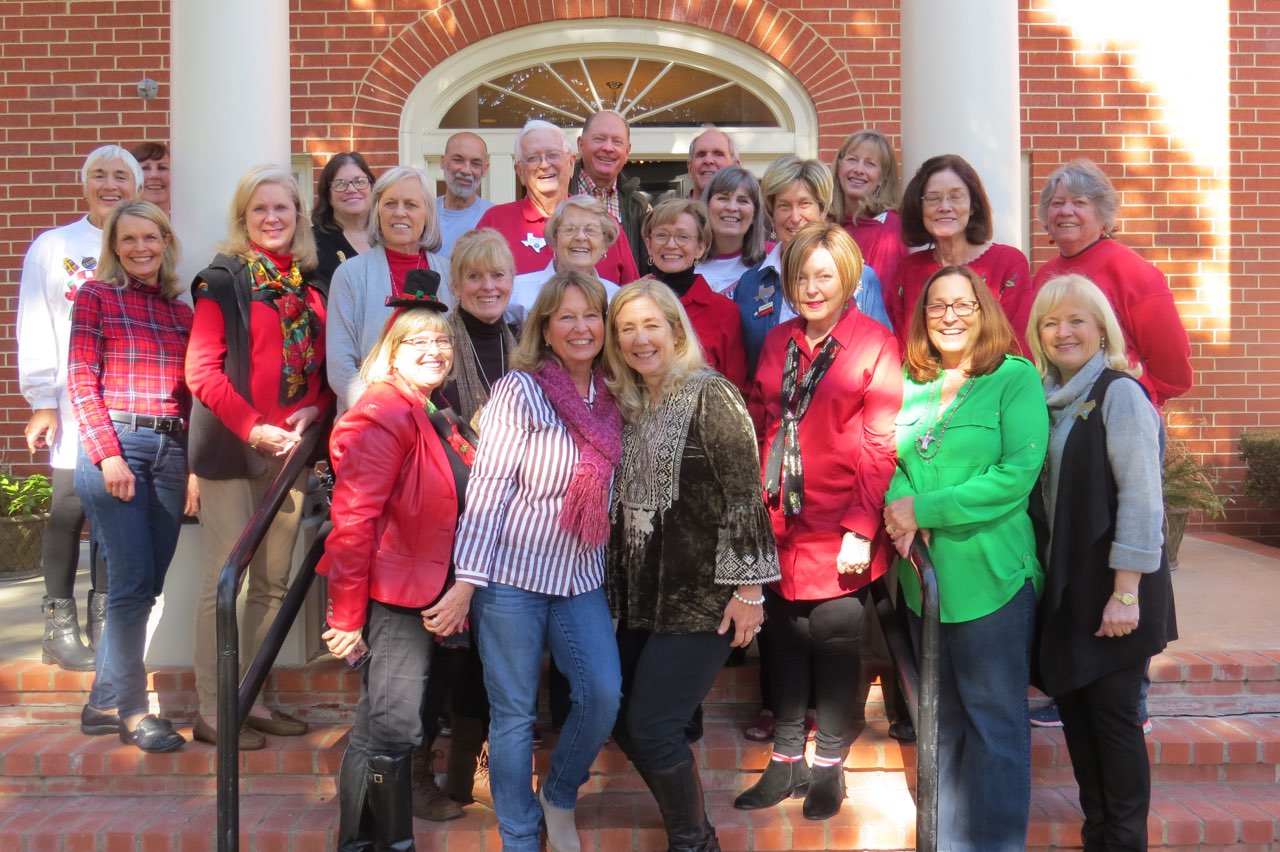
Raincatcher’s Volunteers at our Christmas Party. Some Volunteers are missing from this picture and more needed! Happy Gardening in 2019 from our garden to yours.
Q. You have often mentioned cold tolerant vegetable crops and those which are very susceptible to frosty injury. Could you list these and temperature lows which they can tolerate?
A. This is very difficult to do and be accurate since cold tolerance depends on preconditioning. For instance, if broccoli has been growing in warm conditions and temperatures drop below 22 degrees F., it will probably be killed. If these same broccoli plants had experienced cool weather, they would probably survive the sudden cold.
In general, a frost (31-33 degrees F.) will kill beans, cantaloupe, corn, cucumbers, eggplant, okra, peas, pepper, potatoes, sweet potatoes, squash, tomatoes, and watermelon.
Colder temperatures (26-31 degrees F.) may burn foliage but will not kill broccoli, cabbage, cauliflower, chard, lettuce, mustard, onion, radish, and turnip.
The real cold weather champs are beets, Brussels sprouts, carrots, collards, kale, parsley, and spinach.
Thank you Aggie Archives for this information!
More about frost protection here.
Cold Tolerant Veggies from Daniel Cunningham here.
Ann Lamb

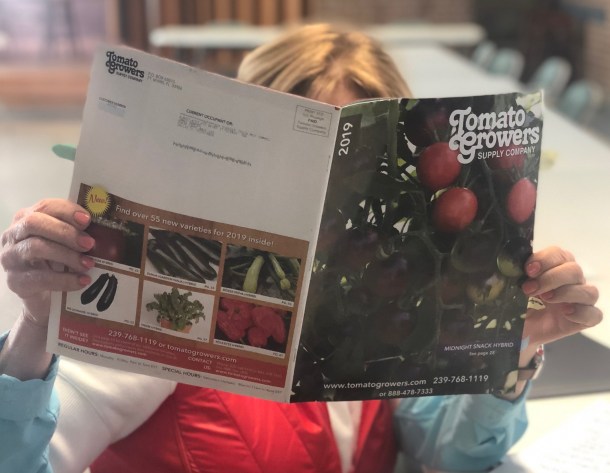
Dorothy shopping for Raincatcher’s via catalog!
Jim, Could I ask some questions about starting seeds for our 2019 gardens.

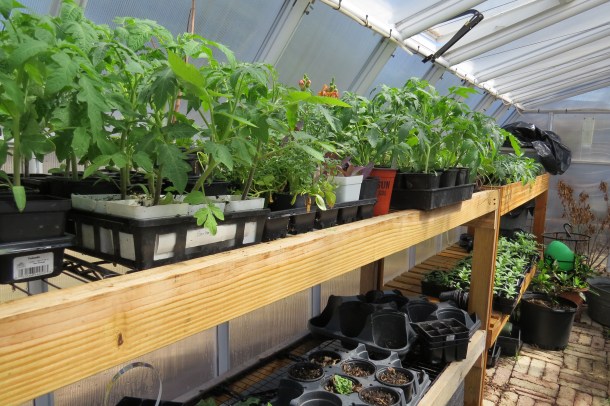
Last year’s tomatoes(2018) started by seed, thanks to Jim!

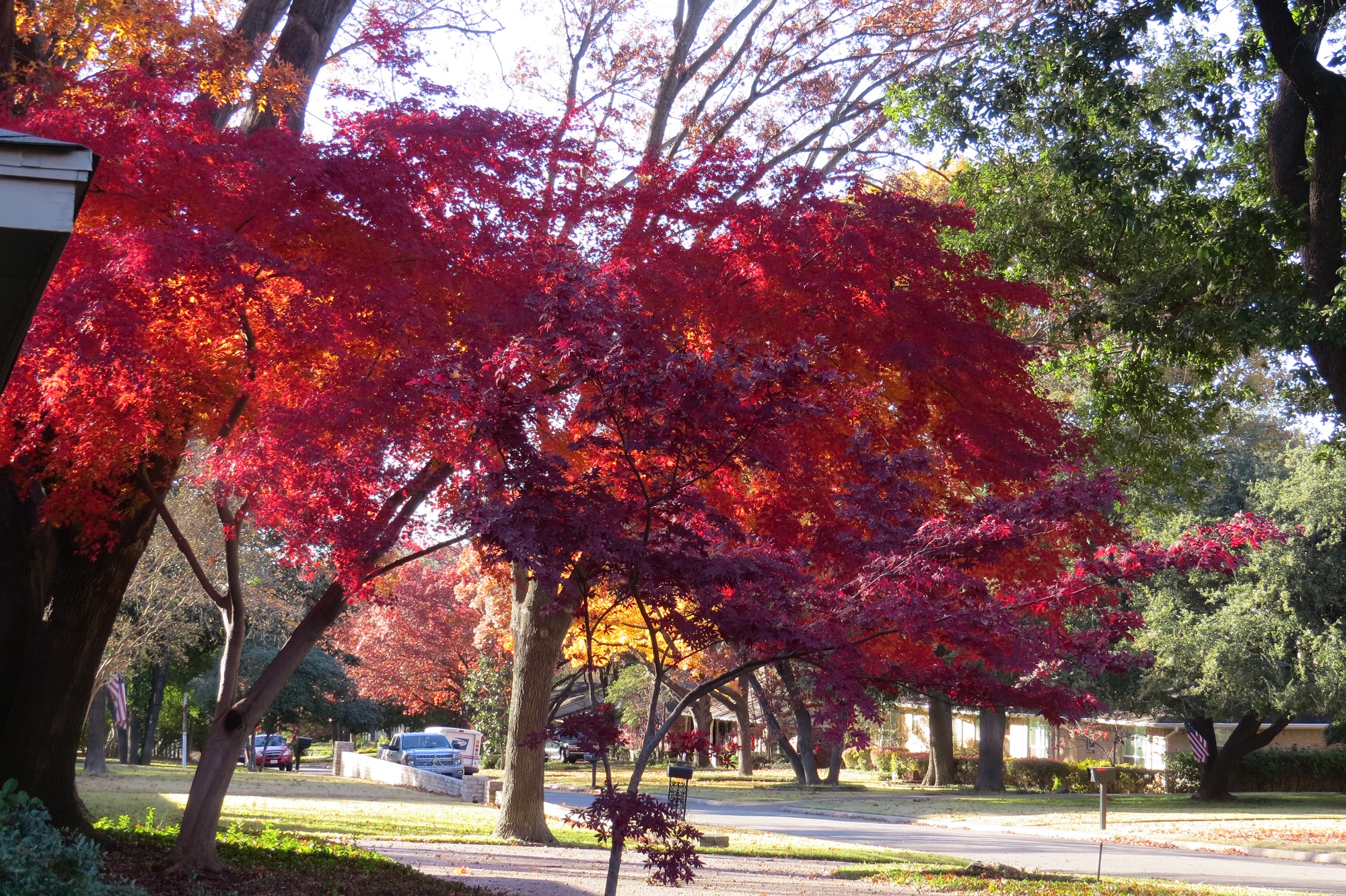
Bloodgood Japanese maple ‘ in Starla’s neighborhood
Dallasites on Facebook have taken notice of the colorful fall foliage, with one poster saying, “All of that rain must’ve helped because I’ve never seen such pretty autumn leaves in Texas as I have this year.”
Another commenter said, “This year has been the prettiest of the 13 years we’ve been here.”
Cunningham explained that cool weather helps to break down the chlorophyll — that’s the green pigment in plants — allowing the yellow and orange pigments to shine through. When temperatures reach just above freezing, it increases anthocyanin formation, and that pigment produces the red and purple leaves.
The rain storms that plagued North Texas recently may have also helped the trees keep their leaves longer, giving them more time to change colors for all to see.
A commenter in a Facebook thread of Frisco residents comparing North Texas’ fall leaves with the colors of Northeastern fall leaves said, “As a lover of all things fall and someone who finally did a fall foliage trip a couple of years ago, it really is stunning this year.”
Cunningham said that autumn is the best time to plant trees in Texas as well as the perfect excuse to head over to a local tree nursery.
Another Facebook user said, “It’s gorgeous if you take side streets to your destination wherever that may be just to see the foliage.”
Cunningham agreed.
“Folks, get outside and enjoy it,” he said. “Whether you do that by walking in your neighborhood or hiking around DFW, do it because we probably only have two more weeks of this lovely fall color to enjoy.”
Thank you to the Dallas Observer and Nashwa Bawab for allowing us to print this story.
Ann Lamb
Japanese Maple picture by Starla

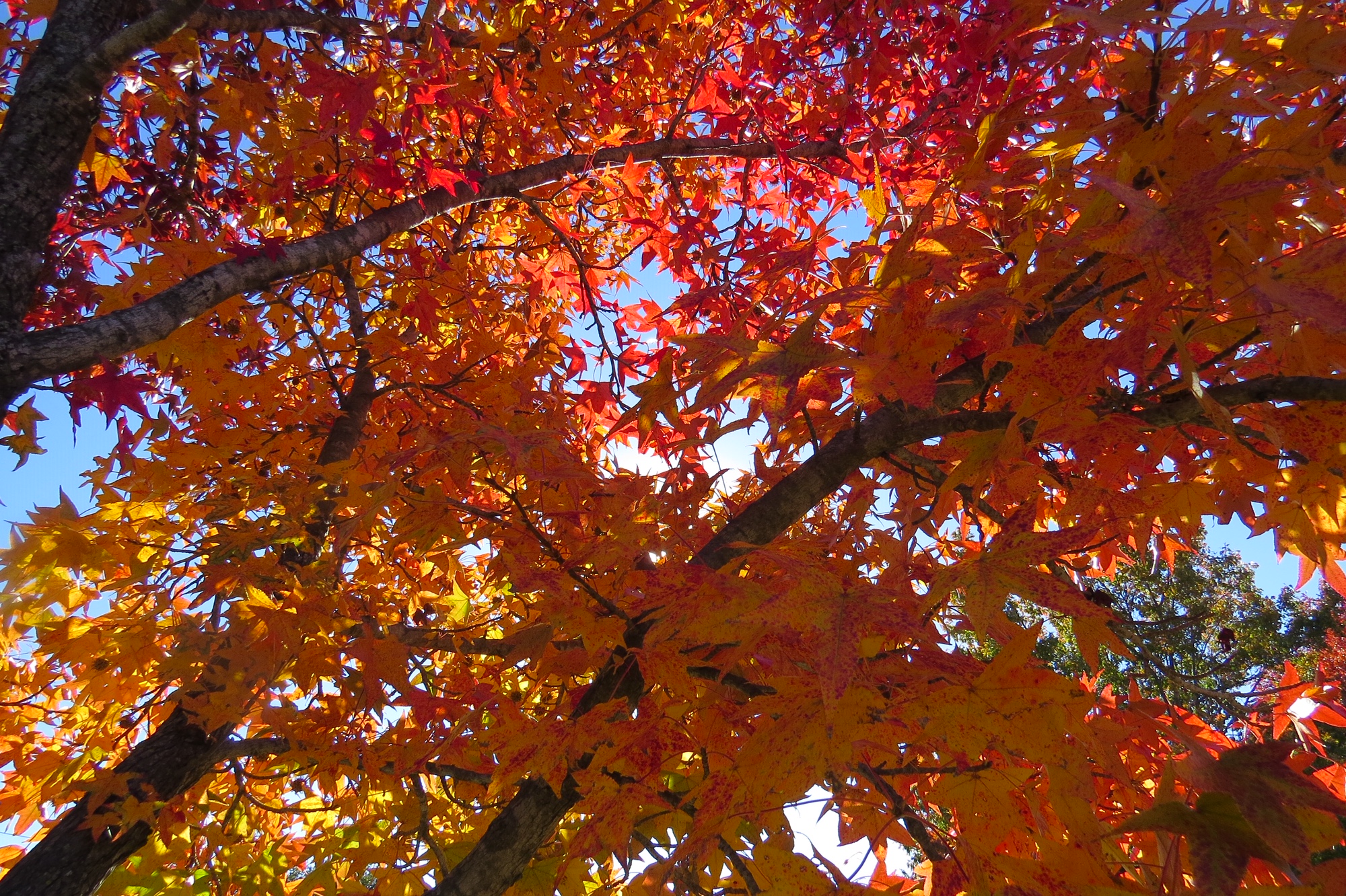
Sweetgum tree with brilliant fall color at Raincatcher’s Garden
Eric,
This Fall has been spectacular with so many kinds of trees with brilliant fall colors. Some had said it has to do with our long hot summer while others have said the rain came at just the right time and it’s a combination of the two weather factors.
What do you think is causing such beautiful fall color in 2018?
What trees would you recommend for fall color? Say someone wants to buy a tree this fall in hopes for future fall color in their yard.
What about Shantung Maples, I see alot of those in my neighborhood and I like the shape of them. Ann
Hi Ann – So good to hear from you. I agree with you 100 % on the beautiful fall colors for many of our trees in the Urban Forest. There are many different opinions on the reasons for the beautiful colors this Fall. The truth is that tree people know that temperature(highs and lows), water, first freeze date, all play a part in the Fall colors but cannot figure out the exact timing of these variables to come up with a nice tidy equation that will let us all know when to expect the beautiful colors.
My neighbor from New York planted a Bradford Pear a few years ago . She loved the Fall colors but also found out the final ending for Bradford Pears is not pretty. I suggested she might want to look at the Shantung Maple. She planted one four years ago and every year would ask me when the beautiful oranges and reds would show up. I told her to be patient, the yellow colors looked great but it wasn’t until this Fall that she finally got the brilliant oranges that she has been waiting on. I am thinking of trying one of the Shantung maples at RCG. I have given up on the Ginkgo. They require too much tender loving care for the first two years and we need to recommend trees that are hardy and can survive with a minimum amount of care to the public. I would also like to be able to fine a Big Tooth Maple but availability in the nurseries is very limited.
I think you are on the right trail with the Shantung.
Have a great Holiday season,
Eric
Thank you,Eric, and thank you for all the effort and thought you put into our demonstration forest at Raincatcher’s!
Ann Lamb
Picture by Starla Willis
Eric Larner is a Dallas County Master Gardener from the class of 2006 and a Citizen Forester. He and his wife, Jane(also a Master Gardener) work at The Raincatcher’s Garden and many other places in Dallas planting and speaking about trees.
Where have all the butterflies gone? We enjoyed so many this fall in our garden.

Monarch butterfly sipping nectar from Tithonia, Mexican Sunflower.

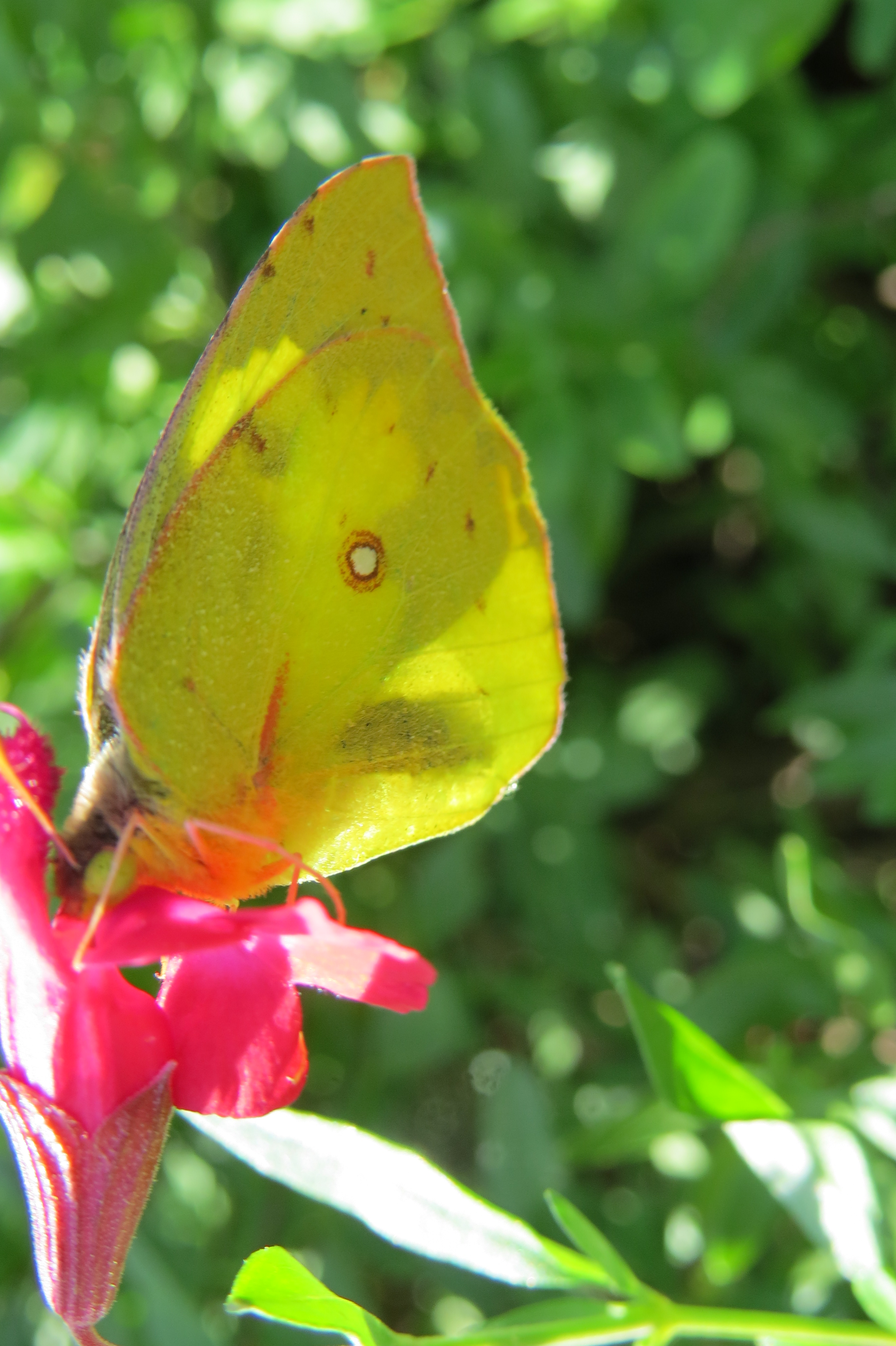
Cloudless Sulphur butterfly on a canna in our color wheel.

Queen butterfly alight Lantana, Miss Huff.

American Snout on an Okra blossom.
By late November, most butterflies have bred and died. Their offspring overwinter in egg, larva, or chrysalis form until next spring.
Fascinating news from the Native Plant Society-click to read their newsletter.
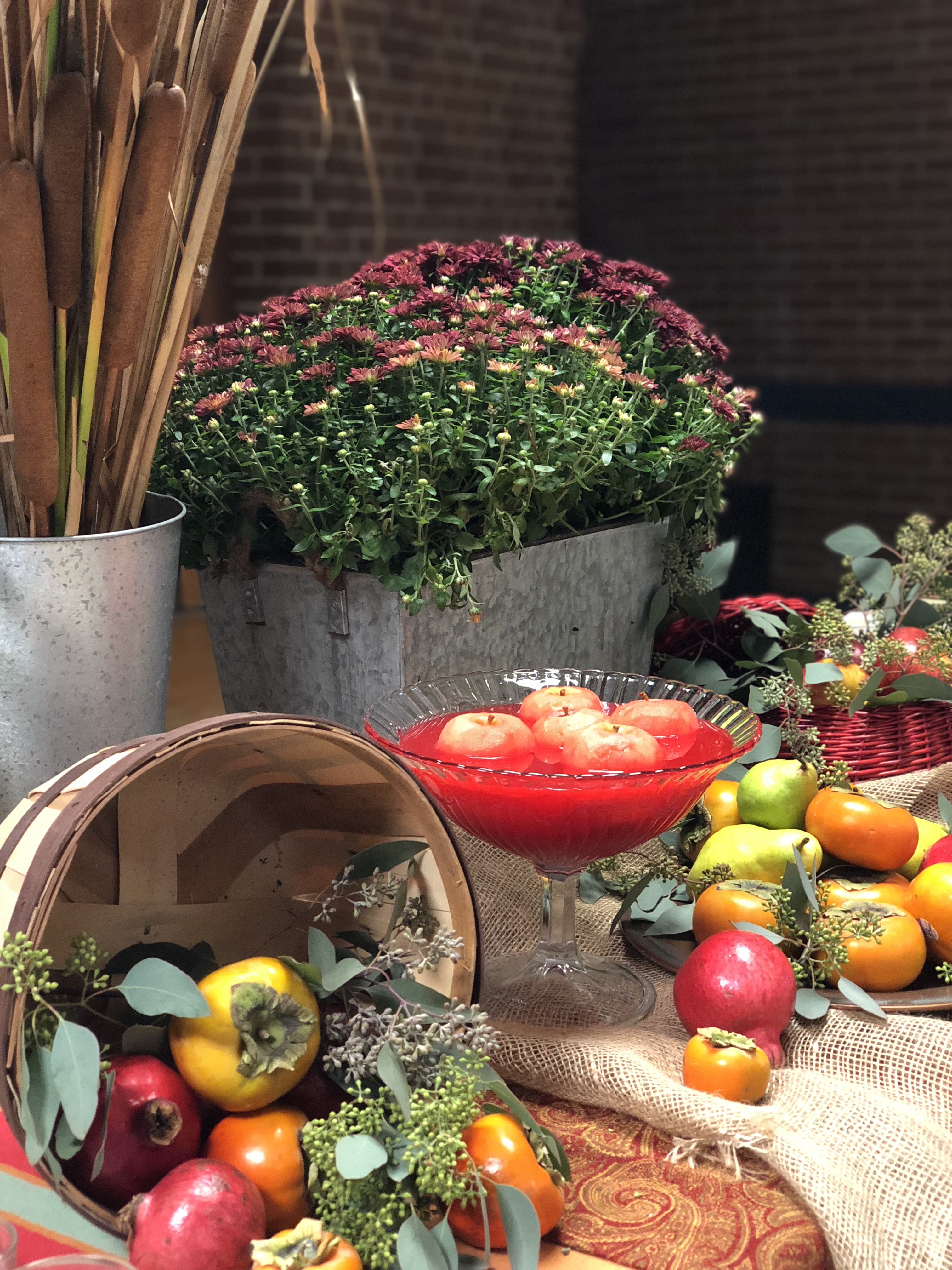
Apples, Pears, Persimmons and Pomegranates, nature’s grand finale!
Jeff Raska, Dallas County Horticulture Program Assistant, Texas A&M AgriLife Extension Service inspired us to start planting, growing and harvesting the fruits of the season. For Raincatcher’s, it was our last and final class of 2018 in the series. With an abundance of fall fruits ripe and ready for harvest, we gathered up our pens and paper for a very educational presentation. Highlights from Jeff’s lecture included the following:
General Information for Fruit Trees
Your first consideration should be selecting the right variety for our climate and soils. Plant trees during dormancy, January to early February in a slightly raised mound rich in compost and top-dressed with mulch. Bare root trees are preferred as they will outgrow a container plant. Want to know if you have a healthy tree? Scratch the root. If it’s the color of cooked spaghetti, it’s a viable tree.
All fruit growth happens within the first 45 days of fruit set (after bloom). At that time, the plant needs constant water (1-3” per week). The fruit won’t get any bigger or sweeter after the first 45 days, it just develops the seed.
In terms of “chill hours,” our Zone 8b previously was between 600-950 hours. Currently we are between 600-800 hours. Our winters are getting colder but shorter due to climate change.
Apples and pears need a cross-pollinator…another tree that blooms at the same time. Both trees grow spurs, short and stout twigs that bear the fruit buds year after year. That’s one reason you can espalier the tree and have fruit on those limbs. This is in contrast to peaches that bear fruit on new growth every year.
The second consideration is pruning. As a ‘rule-of-thumb’, if you can’t see the fruit then you’re not getting enough sun. Thin the fruit when it’s the size of a nickel. The goal here is to have only 3-4 fruits per limb, spaced about 6 inches apart. Each flower will produce one fruit; too many fruits on a limb will create smaller fruit and risk the branch breaking under the weight.
The third consideration is fertilizer. Instead of fertilizer, mix finished compost into your mound, then top-dress 1-2 times per year. Finished compost is homogenous. When you hold a fistful, there are no telltale leaves or twigs in it. If you do choose to fertilize or use chemicals, don’t use them before a rain event. Rain doesn’t wash the chemicals in, it washes them out. Mulch for weed control. Not only do weeds take nutrients away from the plants, they are a home for the insects that attack the plant.
Apples (Best varieties for the DFW metroplex, with chill hours)
Gala (600)
Mollies Delicious (500-600)
Mutsu (500-900)
Golden Delicious (500-600)
Granny Smith (400-600)
Aim for a variety that has about 600 chill hours. A tree that has more, or less, will live but won’t bear fruit. When is the fruit ripe? Look for green that is starting to add color, or if a bird pecks at it. If you cut it open and find a black seed, it’s ripe. If the seed is green, it is not yet completely ripe.
Pears
(Best varieties for the DFW metroplex, with chill hours)
European varieties:
Warren (600)
Moonglow (700)
Ayers (600)
Asian varieties:
Shinko (500)
Shin Li (500)
In addition to chill hours, these varieties are resistant to fire blight. *Bartlett is especially vulnerable to fire blight and strongly not recommended for this area. All the above varieties can cross pollinate with one another.
Pomegranates
(Best varieties for the DFW metroplex)
Wonderful and Al-sirin-nar
The pomegranate is a part of the crepe myrtle family. It is a wild and unruly bush that needs to grow as a bush and fruits best when not pruned to grow as a tree. However, it can be trimmed to maintain an attractive form. It is self-fertile and doesn’t need another plant for cross-pollination. Pomegranates don’t ripen after being picked. Wait to pick until the fruit is ripe, it should give a little when you squeeze it gently.
Persimmons
(Best varieties for the DFW metroplex)
Eureka (a flat variety, less tannic and can be eaten when firm or soft)
Hachiya (this is the cone-shaped variety, very tannic and only edible when soft)
Based on the variety, persimmons can be self-fertile or need cross-pollination. Persimmon tree branches are thicker and can handle a heavy fruit load.
Immediately following Jeff’s presentation, members and guests were treated to bountiful buffet table bursting with seasonal flavor. It was a feast for both the eyes and the palate.
A few of the recipes that were developed for this special event will be posted tomorrow:
Baked Brie with Roasted Persimmons
Butternut Squash-Pear Soup garnished with Parmesan and Chopped Rosemary
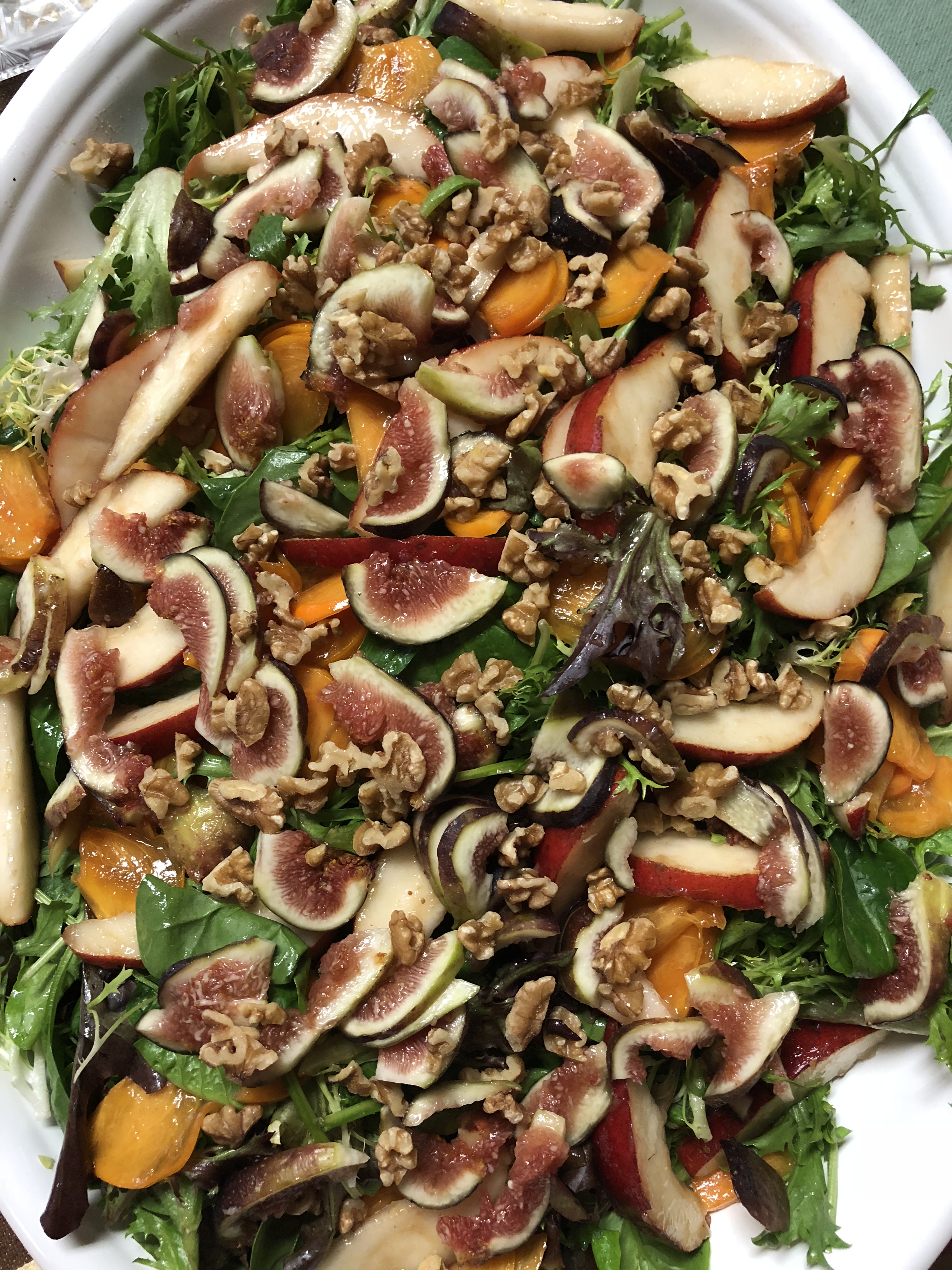
Salad of Figs, Pomegranates, Persimmons and Pears with Pomegranate Dressing
Autumn Orchard Crisp
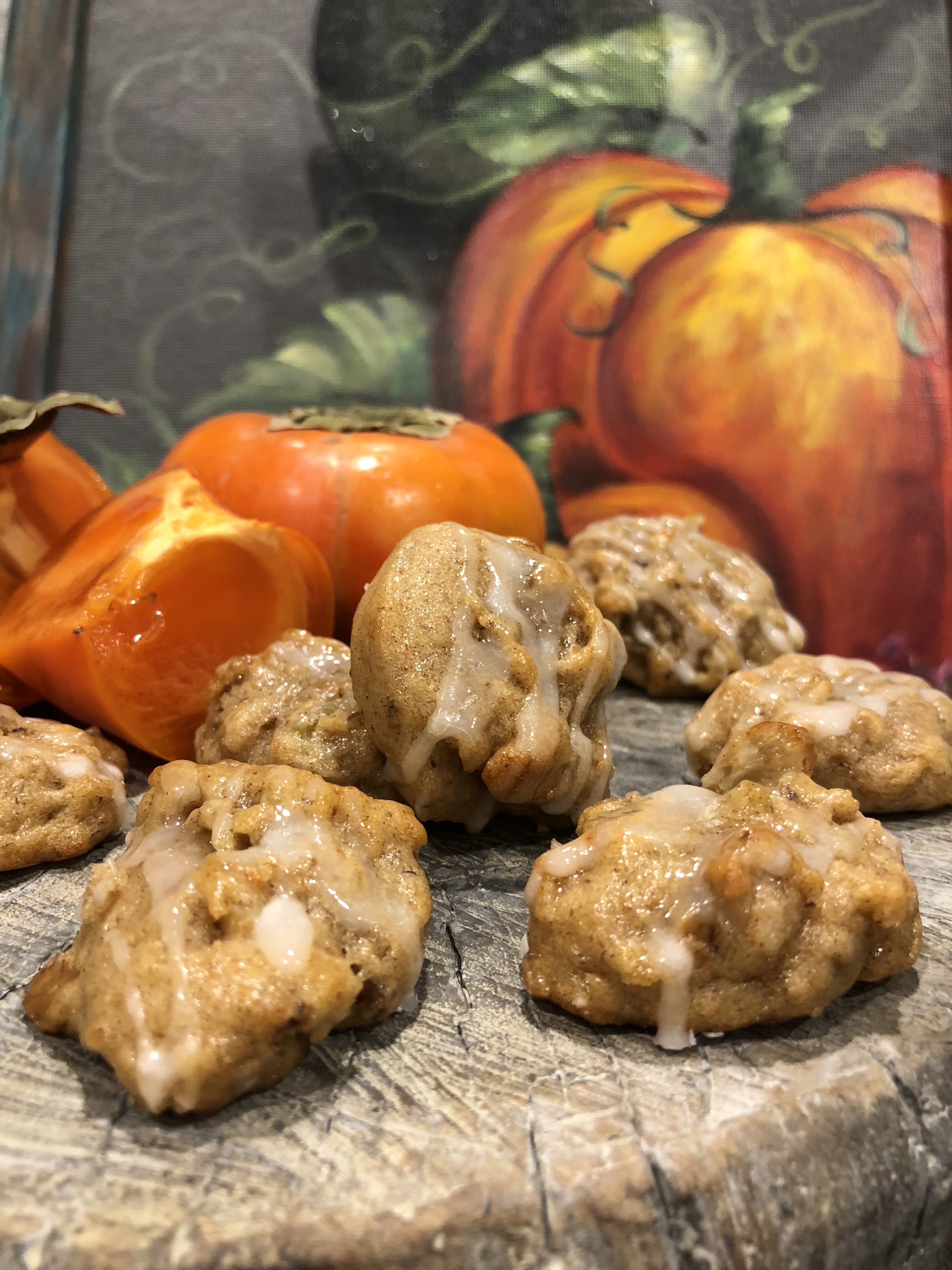
Persimmon Cookies
written by Lisa Centala and Linda Alexander from Jeff Rasks’s presentation
Our yellow flower tour starts as the cheerful yellow daisy like flowers of zexmenia welcomes visitors to the garden. It is hard to go wrong with this native plant. Zexmenia asks little beyond a sunny spot with a bit of room to spread. Butterflies and bees are frequent visitors to the lasting display of clear yellow flowers.

Zexmenia

One need not go far to see the bees enjoying the fuzzy round blooms of the golden lead ball tree. This small tree, native to Texas, has been blooming for months. The flowers are a bit out of the ordinary and always attract attention.

Fall is the time for the tall yellow cosmos to shine. It is true the tall plants may fall over in wind and rain and it can be over ambitious in seeding itself. But, no plant is perfect and isn’t it a happy sight? It is well worth overlooking a few things—and bees and butterflies really do love it.

The fast growing well adapted argentine senna is literally covered in lovely yellow flowers. Some sennas bloom for a short time and seed out to an alarming degree. This one doesn’t. The flowers last for a long time and seeding is not a problem. If that isn’t enough to make it a favorite—it is also a host plant for those pretty yellow sulfur butterflies.

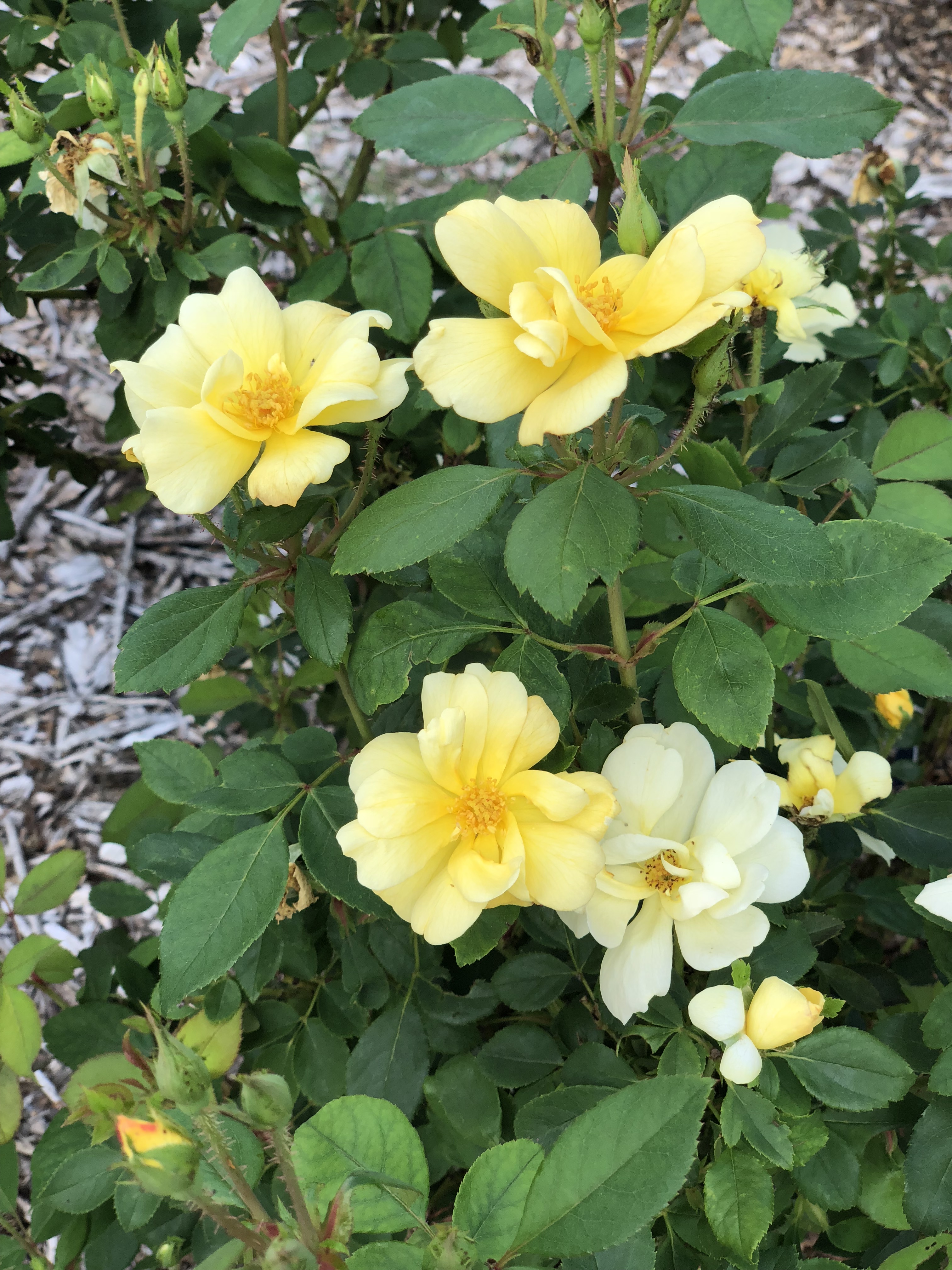
This yellow rose is part of the trials to try and find plants that resist rose rosette disease. Let’s all think positive for this little plant with flowers in such a delicate shade of yellow.

Esperanza cannot be left out of any list of favorite yellow flowers. This plant was almost given up for lost in the Spring—what a come back it seems to have more bright yellow flowers than it has leaves.

Don’t forget that vegetables can be as pretty as they are delicious. This yellow okra flower is a perfect example.
If your garden could use a little sparkle or if you want to do more to provide the nectar pollinators need to live, add some , or all, of these lovely yellow and you will do both.
You can see all of these plants at Raincatcher’s garden at Midway Hills Christian Church. Garden work is on Tuesday mornings and you are always welcome.
Susan Thornbury
Pictures by Starla Willis
Dallas County Master Gardeners said farewell to summer with an outside dessert buffet at our monthly meeting, Thursday, September 27th. Beautiful weather that morning teased us into believing that fall was only a whisper away.
Earlier in the summer we harvested gallons of blackberries from the vines in our north garden. Mid-summer peaches were purchased from local growers. Carefully packaged, our bountiful berries and fruits were sent to the freezer for a brief storage. And then, the cooking began.
Our dessert buffet featured some long-standing favorites:
*Old-Fashioned Blackberry Cobbler
*Old Fashioned Peach Cobbler
*Fresh Peach Pound Cake
*Blackberry Pie Bars
*Fresh Peach Drop Cookies
It was the surprise dessert, however, that took center stage…Lemon Verbena Ice Cream. If you already know about Lemon Verbena but aren’t growing it, now’s the time to reconsider. This ice cream was a real crowd pleaser based on some of the comments we heard as each spoonful was savored by our members:
“Lemony goodness is filling my senses. I want more.”
“Those tiny, little bits of candied lemon rind are popping in my mouth. So refreshing.”
“Creamy texture, divine flavor…please make this again.”

Lemon Verbena Ice Cream Enjoyed by Dorothy!
Lemon Verbena Ice Cream
Ingredients
1 cup milk
1 cup fresh lemon verbena leaves
1 ¾ cups heavy cream
¾ cup sugar
⅛ teaspoon salt
5 egg yolks
¼ cup fresh lemon juice
*¼ cup chopped candied lemon zest
Directions
In a saucepan set over moderate heat bring the milk just to a simmer. Gently crush the lemon verbena leaves in a bowl and add the hot milk. Cover and let steep until milk is cool.
Strain the milk through a sieve into a saucepan, pressing hard on the leaves to extract all flavor. Add the cream, sugar and salt. Bring to a boil, stir once, and remove pan from the heat.
In a bowl whisk the egg yolks, add half of the hot cream mixture, whisking, and pour the egg mixture back into the remaining hot liquid. Cook over moderate heat, stirring, until mixture coats the back of a spoon. Do not let it boil. Stir in the lemon juice and candied zest.
Transfer the mixture to a bowl, let cool, and chill, covered with plastic, until cold.
Transfer the mixture to an ice cream maker and freeze according to manufacturer’s directions.
Yield: about 1 quart
*Candied Lemon Zest
Ingredients
4 lemons, well scrubbed
2 cups sugar
1 cup cool water
Directions
Remove zest from lemons with a vegetable peeler, keeping pieces long. Remove white pith using a paring knife. Cut into a fine julienne using a very sharp knife. Place julienned zest in a small bowl; cover with boiling water. Let stand 30 minutes; drain.
Bring sugar and the cool water to a boil in a small saucepan over medium-high heat. When sugar is completely dissolved, add julienned zest, reduce heat to medium low, and cook 10 minutes. Remove from heat, cover, and let stand overnight. Drain before using.
Yield: 8 servings
Here’s some information about a well-loved herb, lemon verbena:

Lemon Verbena
Lemon Verbena, Aloysia triphylla syn. Lippia citriodora, is a member of the Verbenaceae family. It is a shrub-like herb with woody stems and bright green, rough-textured pointed leaves, from 1-3 inches long. Leaves grow in whorls of 3 to 4 with an intense lemon scent.
The bush generally grows around 3-6 feet tall. Plant in full sun in good garden soil. Give it plenty of room to ramble off in different directions or trim slightly, if desired. Either way, you will have an abundance of leaves to use starting in early spring and continuing into fall. In winter lemon verbena will lose its leaves.
Once springtime arrives, you’ll notice tiny little leaves popping out up and down the stems. Your lemon verbena has come out of its dormant stage and it is ready to welcome the new season. This might be a good time to give it a shapelier look.
Enjoy its crisp, clean lemon taste as a substitute in any recipe calling for lemons. Use its fresh leaves chopped up in cakes, cookies and glazes. Drop a sprig or two in your tea and relax with a delightfully lemon-scented herb that should be in everyone’s garden.
Linda Alexander
The next Dallas County Master Gardener meeting will be October 25 at Walnut Hill United Methodist Church and don’t forget our fall garden tour on October 13th. Tickets can be purchased ahead online for $15 or for $20 on the day of the tour at any of the garden locations. More information here.
All members of the public are invited to both events!
Lemon Verbena-no calories, no guilt info here!