Walking in the garden early this morning just as sunlight was spreading its glowing rays, I stopped for a moment to gently caress the winter savory. Dew had fallen softly upon it, leaving the cascading branches with a shimmery presence. It seemed to be saying…” use me please”. And that is exactly what happened!
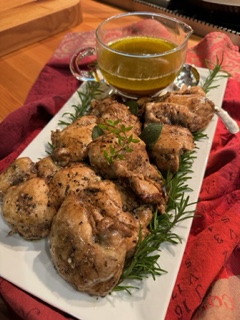
My husband and I love a cozy wintertime dinner by the fire. Thankfully, my winter herb garden had supplied me with the three ingredients needed to infuse the marinade for Balsamic Herb Baked Chicken Thighs: fresh rosemary sprigs, sage leaves and winter savory. This herb-garden inspired recipe delivered a pleasing amount of comfort and flavor for the perfect fireside meal.
Balsamic Herb Baked Chicken Thighs prepped and ready to bakeReady to serve!
Hopefully, you are growing a nice selection of herbs in your winter garden. If so, remember that they liked to be snipped, trimmed and used for culinary and decorative purposes in your home.
*For information about growing winter savory, click here.
*All herbs were harvested just before the cold front and freezing temperatures arrived. They were kept in a damp paper towel lined plastic baggie for two days.
Linda Alexander, Dallas County Master Gardener Class of 2008
This is the time of the year when one things about past efforts and plans ahead for what’s to come—naturally the future must be vastly improved over what came before. Its been that way for a long time. After all January is named for Janus the god who is able to look to the past and the future.
All useful so far. Evaluating past efforts and planning for the future is important for just about everything.
However this is also a time when one is most susceptible to promises of perfection if only you buy something—well not just anything of course but the new and improved item currently on offer. Let’s not consider the diets and health promoting supplements and the body that would be ours if only a new and improved fitness machine was ordered. All available right now and payment can be easy—there is a plan available.
Gardeners are not immune to these thoughts by any means. Emails seem to arrive daily to showcase the “must haves” for this years garden. All involve buying the new and improved plants from all sorts of places. Catalogues have pictures that are simply astonishing The flowers in glorious colors. Petals are now double and triple and maybe more. Some seem to be very small “fit any space” How can this be exactly. Surely they would want to grow at least a little bit.
Even shrubs and trees are new and have amazing flowers and turn all sorts of colors. Buy now” really seems the only reasonable thing to do after all “supply may be limited”.
But wait—take a deep breath and consider—where will all these new plants go? Go back and look at your garden photos (you know they are right there) and when you look you see that not only was the garden actually lovely it was pretty full.
Now there is nothing all wrong with buying new plants. There are indeed new discoveries to be made. Plus its just fun and adds excitement to the garden—and may be the key to the perfection everyone is looking for—this could happen.
Just think carefully about replacing the tried and true plants. The ones you have counted on for years—that have stood the tests of time and weather. Afterall they hold memories of past gardens—yours and so many others—and even of the gardeners who loved them before you and maybe even shared them. It’s a lot to think about.
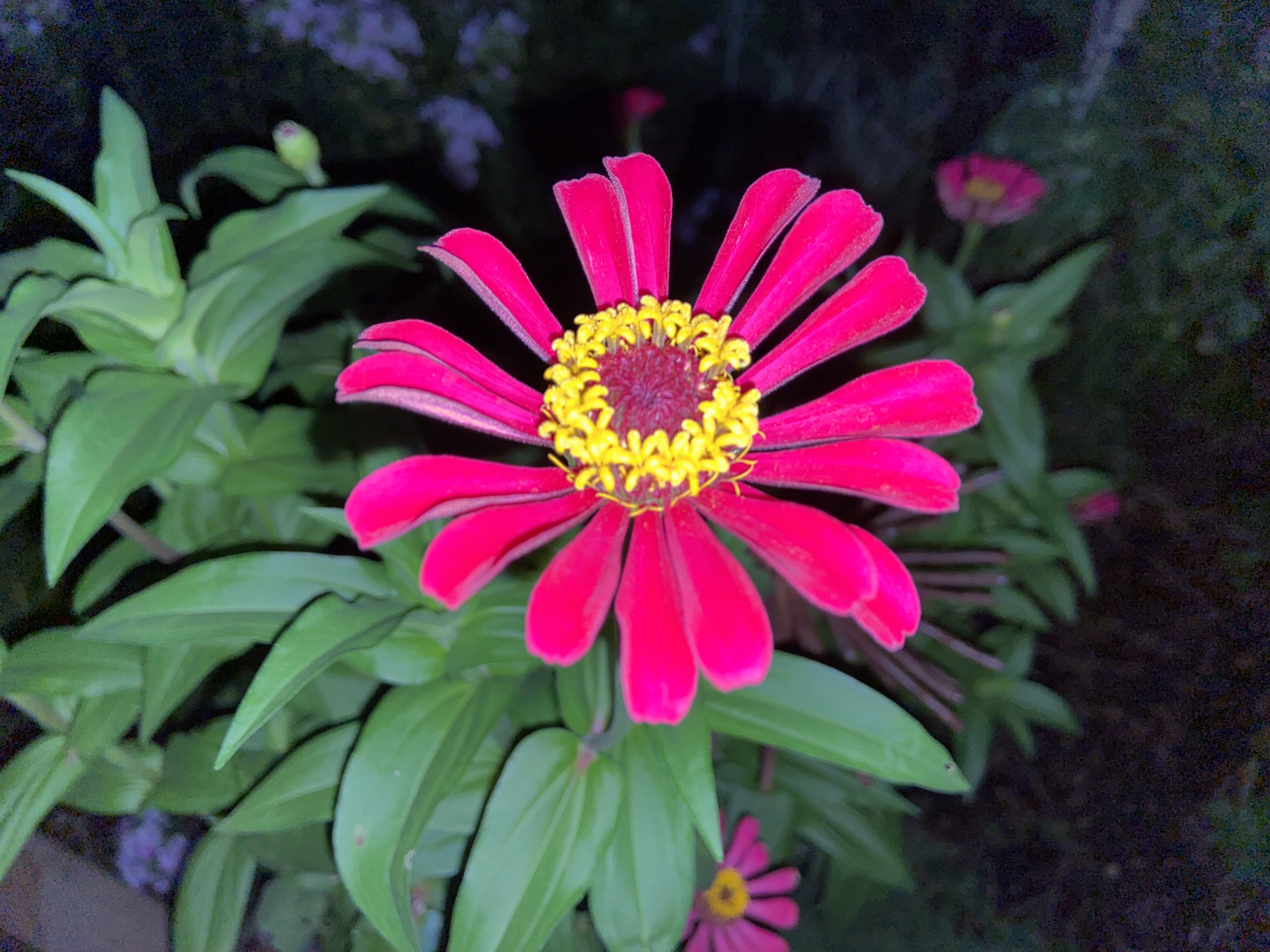
Tithonia requres a lot of dead heading but you can enjoy the butterflies that love it.How could you resist this dusky purple color in a plant that loves to live no matter what.Strawberry fields globe amaranth does seed out but appreciate it?When zinnias reseed they are usually single pink. But is there something wrong with that?Grasses aadd grace and stability so forgive a little mess.Common mullein adds a sense of drama and plants itself.Pothos is common but that’s okay there is nothing like it for brightening a dark corner. Why pay more?Annual salvia is wonderful for late summer. Yes, it seeds but think what a virtue that can be in a hot dry summer. This is coral nymph salvia.
The little song children used to sing sums it up:
Make new friends but keep the old— one is silver and the other gold.
Susan Thornbury, Dallas County Master Gardener Class of 2008
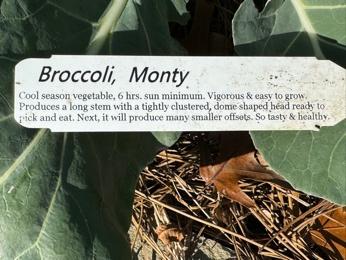
This past fall, I decided to try several different varieties of broccoli in my garden. A few are still growing and I’m hoping they reach the harvesting stage very soon. But, as you can see from the photo, this particular variety produced a beautiful head of broccoli just a few days ago. There are five or six smaller side shoots, but none will be as large as the original.
One definition of “monty” describes it as the whole thing; everything that is wanted or needed.
The recipe I selected for ‘monty’ is from our family cookbook. We refer to it as Bethy’s Crunchy Broccoli Salad. It is delicious any time of year but bringing it in straight from the garden on a chilly winter morning was the best ever! It certainly met, and exceeded, our expectations.
*Johnny’s Seeds currently has packets of Broccoli, Monty seeds in stock.
Linda Alexander, Dallas County Master Gardener Class of 2008
A Chritmas gift from a dear friend tied up with a fuzzy peach ornament
How could we enter into the new year without knowing the big announcement from Pantone? In 1999, the Pantone Color Institute created the color of the year educational program to engage the design community and color enthusiasts around the world in a conversation around color. Their hope is to inspire us to look at color in a different way. It is interesting to read about the process Pantone global color experts follow to arrive at the selection each year. You can do that by going directly to their website at pantone.com.
For 2024 we are encouraged to “Embrace the Warmth”. They suggest that we look for ways to nurture ourselves and others. To help guide us along in our yearning for closeness and connection, the Executive Director of the Pantone Color Institute, Leatrice Eiseman, made the following announcement on December 11, 2023.
Pantone’s Color of the Year for 2024 is Peach Fuzz, a velvety gentle peach tone whose all-embracing spirit enriches mind, body and soul. Officially, the number you need to know is PANTONE 13-1023. For like-minded gardeners, it is gratifying to learn that they selected a perfectly peachy nature-inspired fruit.
As a Texas girl, my mind went quickly to a lifetime of memories revolving around fresh peaches. If you are like me, the thought of ripe summer peaches makes this color choice especially meaningful. Going forward you can expect to find Peach Fuzz making an appearance in the design industry, fashion industry and in home décor. Also, it appears that Peach Fuzz will open the door to a wide assortment of lipstick, blush and contouring options. Nail color options will be available, as well.
Just last week I embraced that fuzzy feeling by ordering a pair of Peach Fuzz tennis shoes from Cariuma. If all goes well, I’ll be wearing them on one of our summer trips to the Texas Hill Country where we hope to visit a ‘pick your own peaches’ roadside orchard.
If you feel inspired to start growing your own peach trees this year, go to aggie-horticulture.tamu.edu for a full list of varieties recommended for our area. Wishing you all the joys of a heartfelt peach hue that enriches mind, body and soul.
Here are a few of our favorite peach recipes from ‘A Year On The Plate’ 2016 Master Gardener Cookbook.
As composters for the Raincatcher’s Garden of Midway Hills, we are continuously looking for ingredients to make compost.
During the spring through fall, we find green grass, leaves, coffee grounds, kitchen scraps, etc. to add to our compost piles.
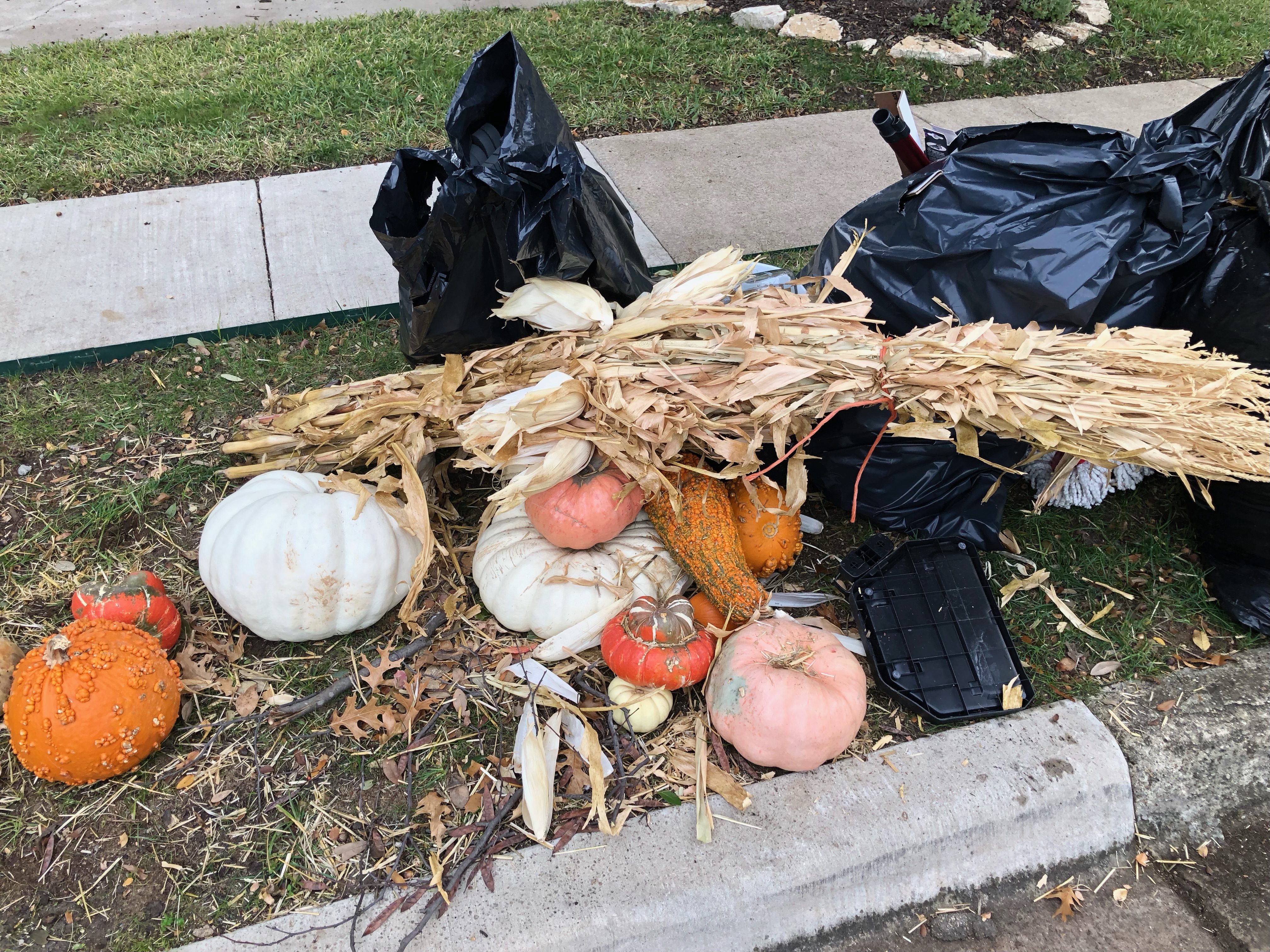
In November we are blessed with the remains of Halloween and Thanksgiving decorations—PUMPKINS! During bulk pick-up weeks we scrounge the neighborhoods looking for the elusive pumpkins and gourds. Rather than allowing them to rot in the dump, we chop them up and add them as the GREEN (nitrogen source)ingredient of compost. The BROWN (carbon source)ingredient of the recipe is, of course, are the dried leaves that are falling everywhere. The BLUE ingredient is water. The CLEAR ingredient is air. The last is TIME.
Result—BLACK GOLD—also known as compost.
This year we “harvested by the side of the road” six pickup loads of pumpkins, gourds, bags & bags of leaves, some grass, and even a bale of hay.
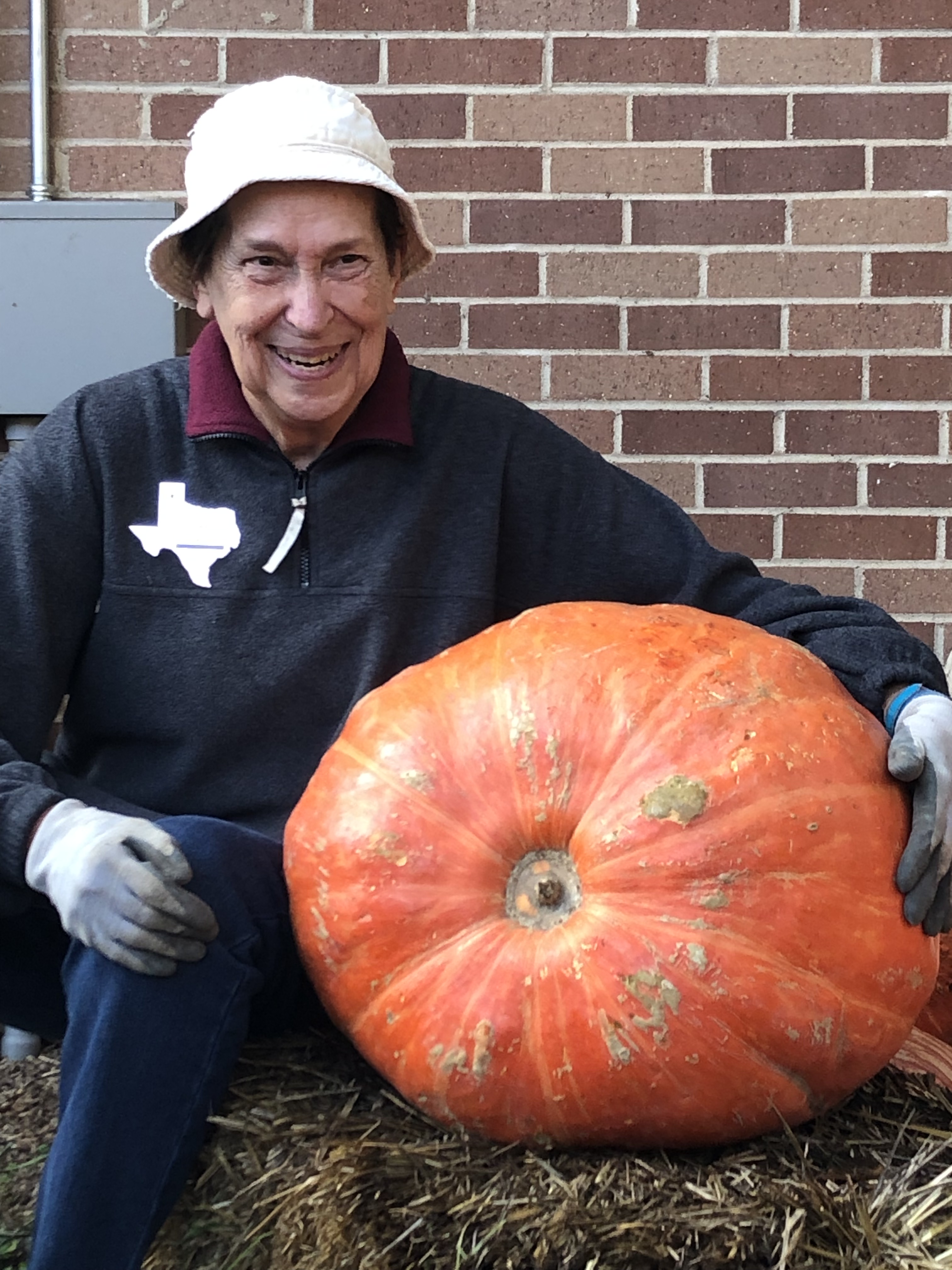
And, at our last stop—THE GREAT PUMPKIN!
Cindy and the great pumpkin!
As winter progresses, we will chop, grind with the mower, mix in water, turn piles as they heat up and cool down (temperatures up as high as 160°). As we turn the piles, the chunks begin to change shape and color. The unseen microbes and fungi consume and break down everything making pieces smaller and smaller, and of course,darker—hence , BLACK GOLD. This process takes time—sometimes as long as 2-4 months, depending on how energetic the humans are in turning the piles.
When we add compost to our heavy clay soil, we lighten it, allowing the plants to absorb the nutrients in the compost, allowing better drainage, thus producing more healthy plants and feeding everything.
Cindy Bicking, Dallas County Master Gardener Class of 2006
Jon and Joe meticoulsly laying the floor for the greenhouse.We’re excited to be getting the space to start seeds for the north garden. The other greenhouse gets extremely crowded in spring with the combination of north garden and plant sale seedlings. Tig said the brick floor is too nice to cover up with a greenhouse!
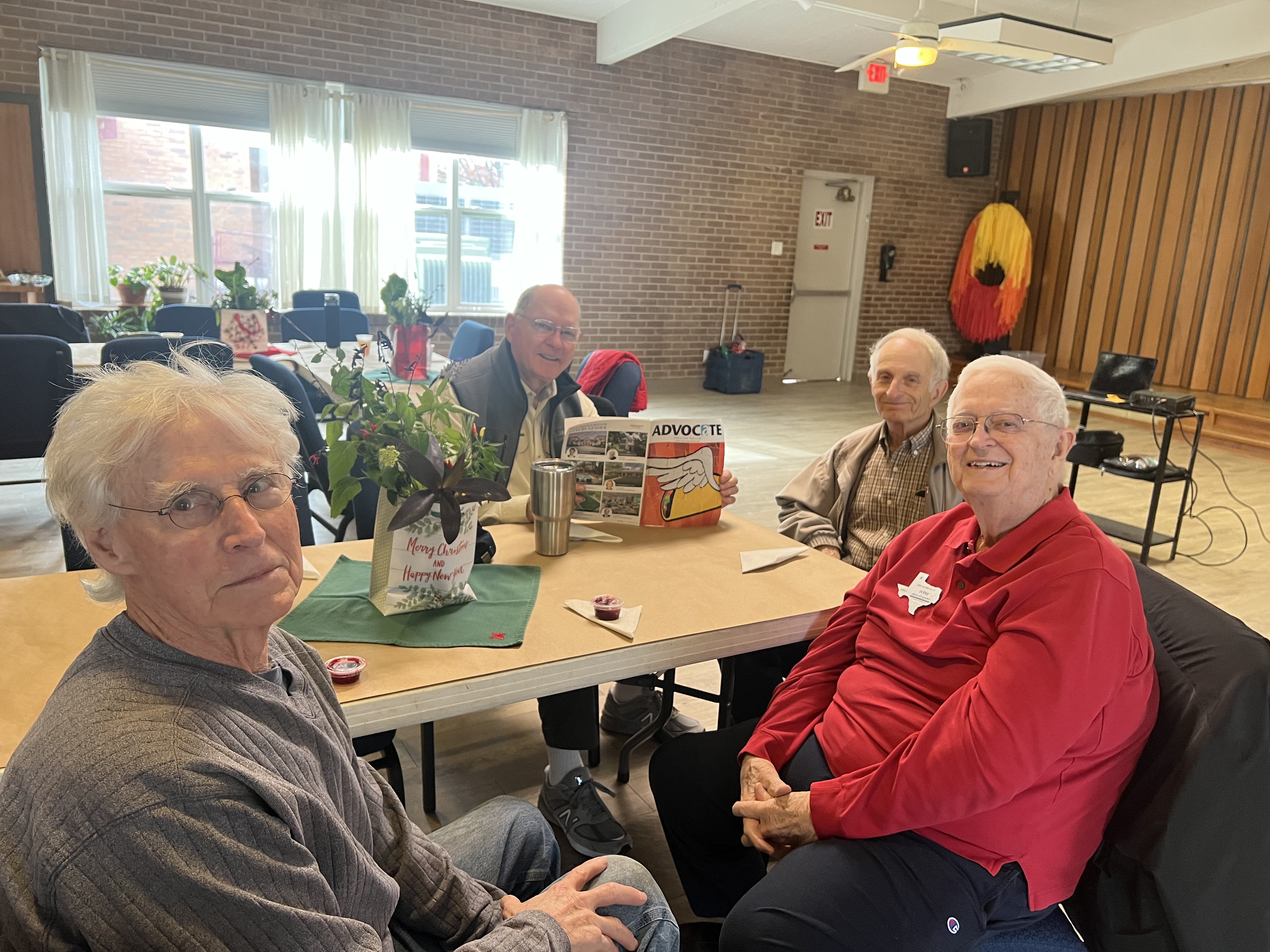
Here are a few pictures by Starla from our recent Christmas lunch.
The chill of winter, though not officially here according to the calendar, has arrived. Trees are now displaying their bare branches as each day swirling, gusty winds bring colorful autumn leaves to the ground. From the stately red oaks and maples to the stunning brilliance of Chinese Pistache, yard crews are struggling to keep up with the piles and piles of leaves covering grassy lawns and flower beds.
What remains is winter’s gift to our yards and woodlands…the mighty evergreens. My Christmas decorating theme was simplified significantly this year as I took time to pause and contemplate this marvel of nature. Suddenly, I was caught completely by surprise upon discovering a towering tree growing along the back side of our neighbor’s fence. After 17 ½ years of driving past their property to enter our back gate, a large evergreen tree bursting with clusters of small blue berries caught my eye. I had never even noticed this tree until two weeks ago. Unsure of its name, a quick plant search on my iPhone gave me the correct answer. It was a JUNIPER.
From that moment of discovery, I was smitten with the dreamy blue color of berries drooping from needle-like leaves with a delicate and aromatic pine scent. Thoughts of decorating my home with the greenery of winter were filling my head. And then a beloved old Christmas carol seemed to speak the words I needed to hear. My decorating theme for Christmas 2023 would be…” Let Heaven and Nature Sing”.
My sweet neighbor was so accommodating by giving me permission to ‘harvest’ as much as I wanted from her Juniper tree. That was the beginning of a foraging-type mission for evergreen material in our yard and along the alley ways and streets behind us. My goal was to respectfully select, then carefully cut, branches that would complement my decorating theme.
The joy of using freshly cut evergreen branches for Christmas decor is their aromatic gift and profound color. Our home not only has the feel of a nature-inspired Christmas, but the air is filled with a calming heavenly scent, as well.
Please enjoy a sampling of nature’s gifts in this short video featuring the evergreens used to adorn our home as we proudly proclaim…” Joy to the World!”
*Evergreens, and herbs, used from our yard (and a kind neighbor) are: Magnolia, Boxwood, Burford, Foster, Nellie R. Stevens, Savannah and Yaupon Hollies, Junipers, Cedar Trees, Japanese Plum Yew, Lavender, Rosemary, Thyme, Winter Savory and traditional English Ivy.
Linda Alexander, Dallas County Master Gardener Class of 2008
We are now entering the final month of our year-long journey into the world of honeybees and honey production. Along the way, we’ve attempted to answer the introductory question that started this series…’What’s all the buzz about’?
January began with a brief overview that introduced our readers to some of the topics we would be exploring in 2023. Starting with the “Anatomy of a Honeybee” and “What is Honey?” followed by “The Three Different Types of Honeybees in a Hive” to the “Let’s Dance!” article which explained the purposeful and very necessary “waggle dance” routine performed by worker bees, some amazing information has been shared monthly.
We’ve grown in our understanding of how honey is made, the reason behind the various colors and tastes which ultimately depends on the soil, source and other environmental factors. Hopefully, after reading the article about “Tasting Honey”, you were able to land on a favorite new variety. For me, the most appealing taste profile, at this time, is the earthiness of Black Sage Honey with notes of fruit and pepper. Remember, it’s the one that is harvested only four times per decade!
After discovering secrets of the colony, we were amazed at how efficiently these tiny insects perform their specific duties within a brief, but highly productive, lifespan. Think of worker bees as soldiers and the most active bee of their species. Drones are the male population of the honeybees with their only purpose in life being to stay alive long enough to have the chance of breeding with a queen – a process that occurs only once in their life.
Honeybees are fascinating and brilliant creatures. Without them, our world would be a much different place. Consider these numbers: bees are responsible for pollinating about one-sixth of flowering plant species worldwide and approximately 400 different agricultural types of plants. Simply stated, we rely on the pollination efforts of bees (and other animals) to sustain our modern food system.
On a personal note, my appreciation for honeybees has grown immensely. I now approach them more respectfully and welcome their presence in my garden. And I must admit that one of the highlights of spending time with honeybees throughout the year was the absolute joy of teaching my adorable 8-year-old granddaughter how to photograph honeybees with my new iPhone 15 camera.
We talked about how honeybees were in the garden to perform very important tasks and not to sting us. I watched as she carefully and slowly grew in her confidence about approaching the bees as they foraged for nectar and pollen. Observing as she moved gently closer to the bees and with her precious little hands, snapped the button just in time to capture the perfect shot, was an experience I’ll treasure. (Be sure to see her “first honeybee” photograph in the September frame of the movie!)
In closing, I’ve made an important decision regarding my personal relationship with honeybees. Becoming a “beekeeper” is not the right project for me at this season and time of my life. Instead, my desire is to be more intentional about creating specific pollinator-friendly options and opportunities throughout my gardens for the honeybees. Writing about honeybees this year has helped me to discover a longer list of seasonal plants that will be attractive to all pollinators. It’s time for a new journey and I can’t wait to get started!
And finally, the meaning behind the title, “Telling the Bees”, is something I stumbled across while doing research about honeybees. It is an old Western European beekeeping tradition in which bees are told of everything that goes on in their keeper’s family, including births, deaths, illnesses and marriages. Bees are, therefore, treated as extended members of their own family. Beekeepers talk to the bees in calm voices and never use harsh words for fear of upsetting the bees. It is a fascinating story worth reading. Also, click on the link to poems written by John Greenleaf Whittier and Eugene Field entitled “Telling the Bees.”
Here are the two December recipes featuring honey:
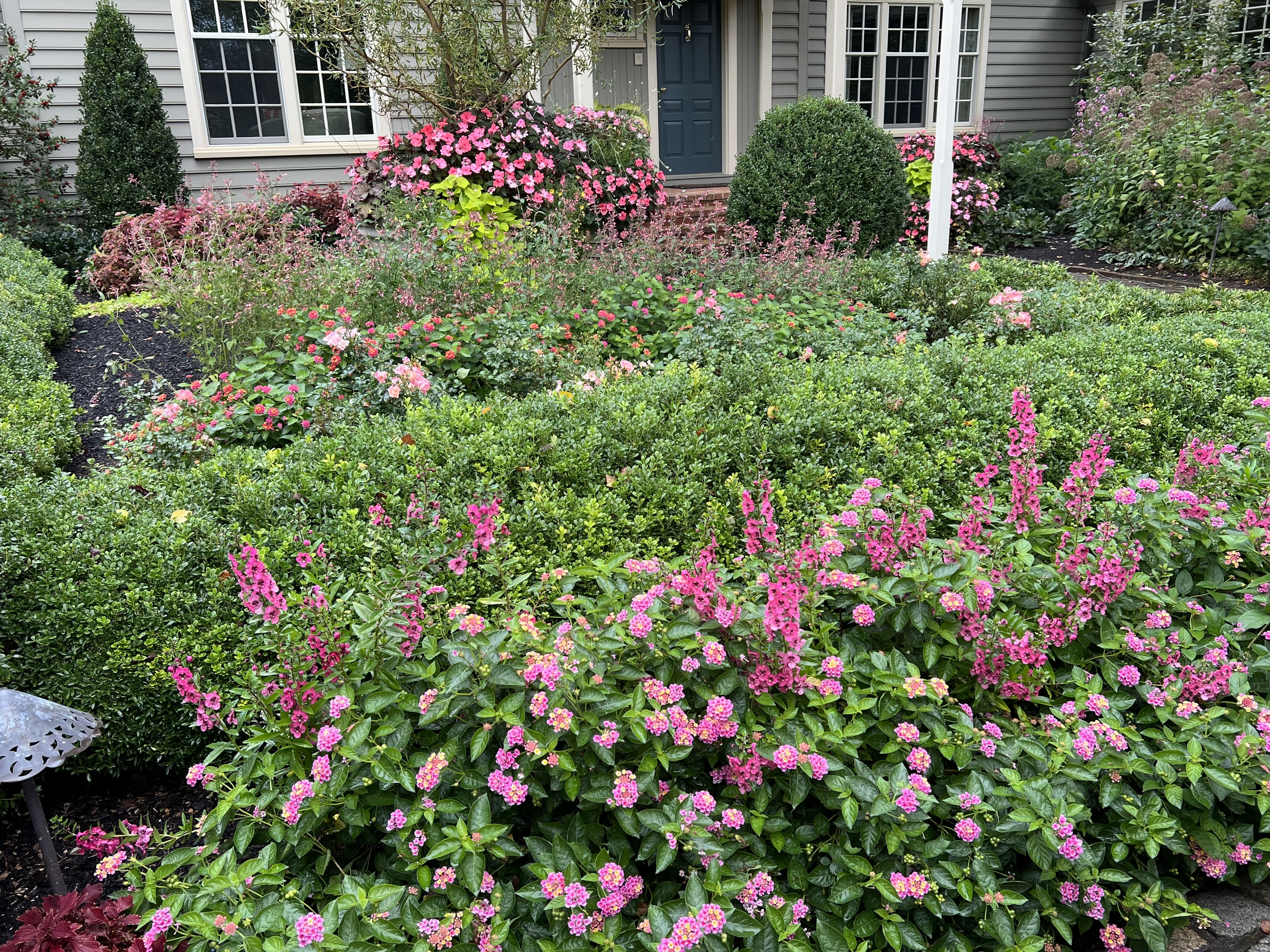
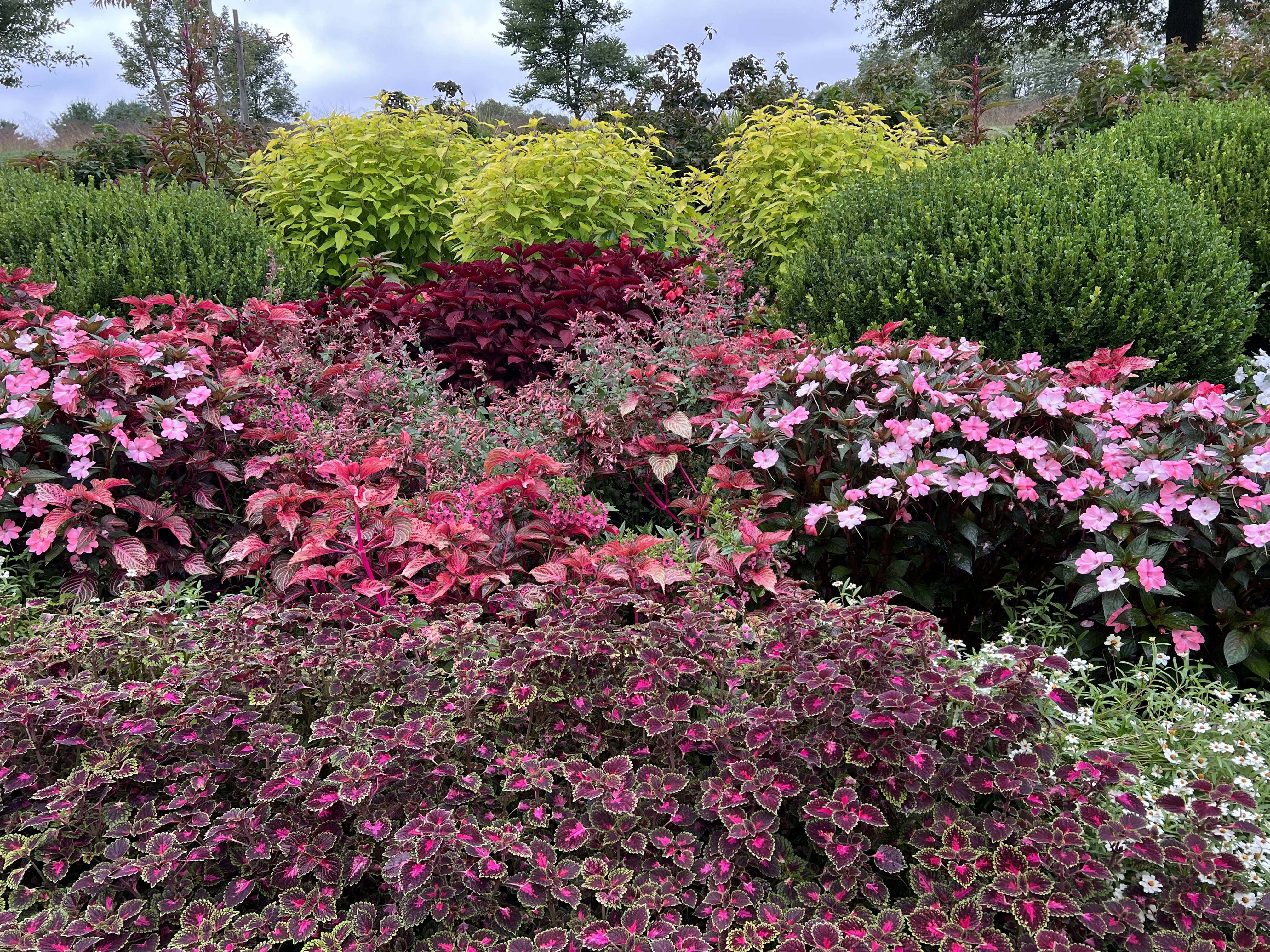
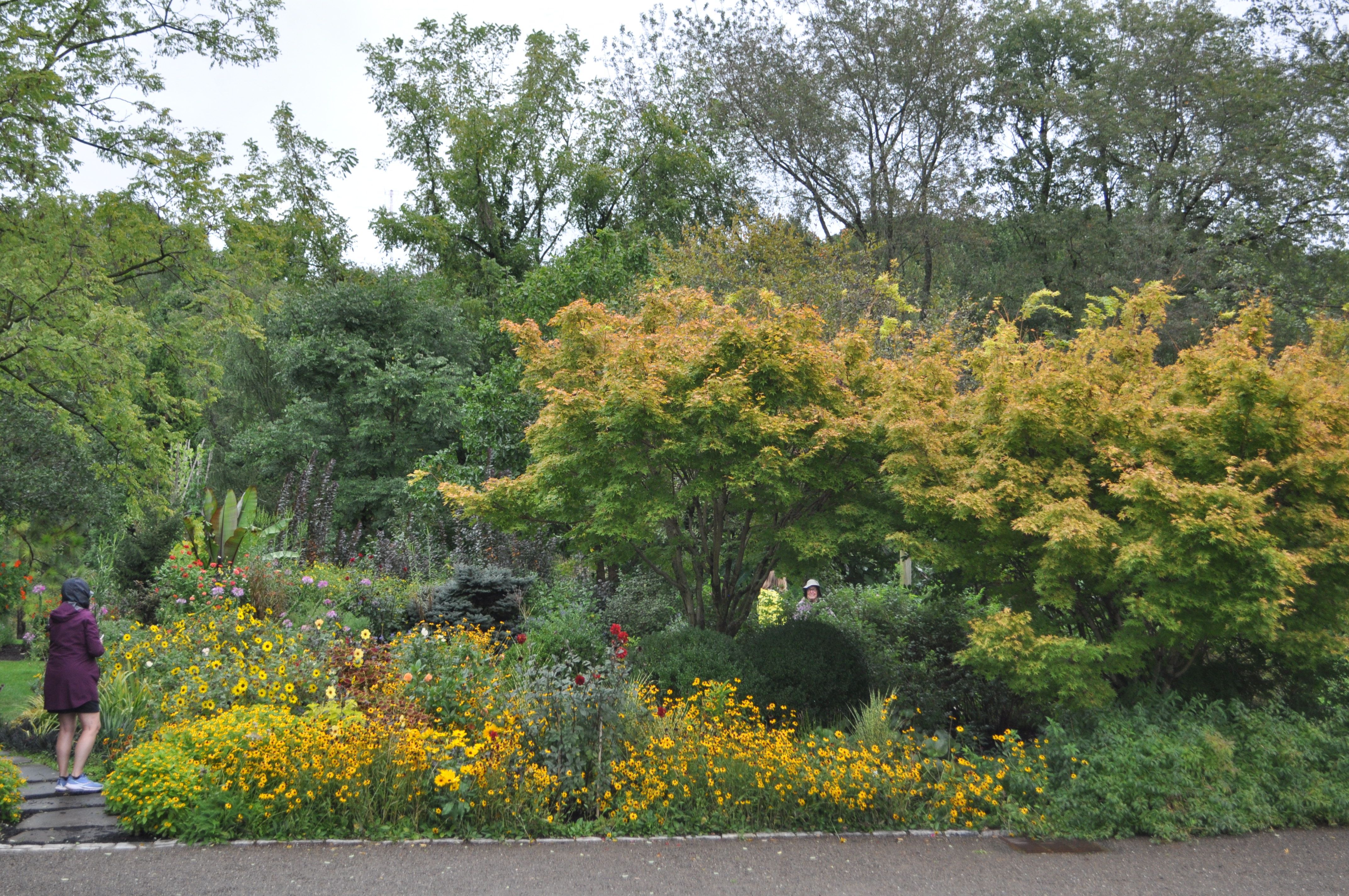
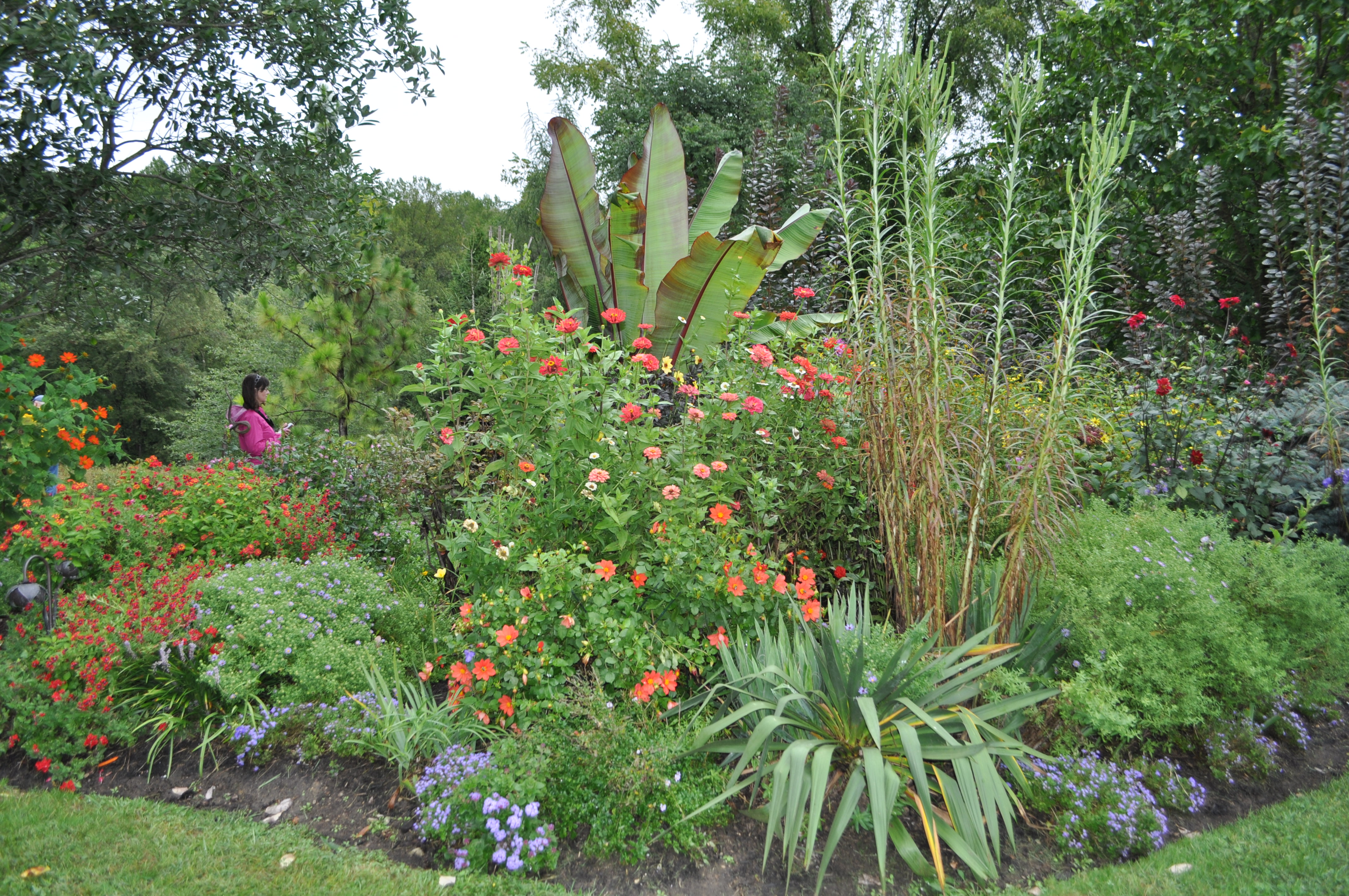
Plow back with me in time to The Garden Blogger’s Fling in September, a few months ago. Owl Creek Farm in West Chester, Pennsylvania was a favorite. There were no ancient walls, limestone paths or turrets as backdrops but the design elements leaned towards English garden theory. Stepping into this garden, fed my plant lusting eyes but also my heart. I hope you will enjoy a look at Owl Creek Farm.
Lush plantings such as these pink borders in the two photos above with several kinds of Coleus, Impatiens, Angelonia, and Lantana. Texans could borrow this scheme.Color Themed Gardens, yellow reigns here!Plant Diversity-yuccas, orange zinnia and dahlia with a banana as an exclamation.Perfectly Planned Borders, love the textural contrast-coneflower, anemones, a grass I can’t name, allium seed heads in the front, weeping redbud, Cercis canadensis anchoring the back.
Trellis– such as these three, an essential English garden element
Exuberant Pots, Phormium, Coleus, a bit of Lantana, Cuphea at it’s feet and blue salvia
Ann Lamb, Dallas County Master Gardener, Class of 2005
October ushered us into the colorful changes of fall. And then, November arrived with waves of crimson, yellow and orange. Mary Ann Evans, known by her pen name, George Eliot, gave us these endearing words from a letter written to Miss Lewis, October 1, 1841…
“Delicious autumn! My very soul is wedded to it, and if I were a bird I would fly about the earth seeking the successive autumns.”
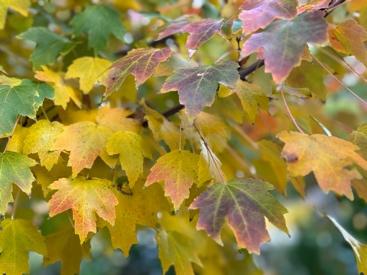
How eloquently her words capture the essence of autumn in this beautiful quote. Hopefully, you have taken notice of trees bursting with color, fall foliage ablaze with seasonal splendor and tables graced with a harvest of plenty. As the gathering of family and friends begins, let’s celebrate the abundance of blessings found in the natural world.
Japanese Maples: For the past few years, the Dallas County Master Gardener Association has hosted a fundraiser featuring countless varieties of Japanese maples. Trees are usually “sold out” within hours. This speaks to the popularity of Japanese maples found in landscapes throughout Dallas County and beyond. Everyone seems to have a favorite but for many homeowners, the options typically include several types.
When we purchased our seventy-five-year-old house in 2006, previous owners (six total) had planted Japanese maples in various locations on the property. One maple, in particular, struggled to survive the below freezing temperatures of 2021, 2022 and 2023. As you can see from the photo, we chose to give it time to recover. After consulting with several arborists, the stately 30+ year-old tree is continuing to fight its way back. Still requiring some special attention, our tree is determined to overcome the odds. Its canopy provides wonderful afternoon shade in an area where we gather by the pool during the heat of the day.
Over the years we’ve added several dwarf Japanese maples and our new favorite variety, coral bark. It is a beautiful small tree with red-coral bark on its young branches with color that intensifies in the winter.
You’ll find them growing somewhere in most yards, especially on older properties. Overlooked, undervalued, neglected and dismissed, why have they lost favor in the landscaping world? It’s time to revisit a plant with so much to offer but rarely considered for its dramatic effect. More commonly known as heavenly bamboo or sacred bamboo, we know it as Nandina Domestica.
Nandina is native to China, cultivated significantly in Japan, then intentionally introduced to the United States as an ornamental in 1804 for its year-round interest and beauty. As a native Texan who spent my K-College years in southeastern Oklahoma, l am very familiar with nandina. It was growing in yards throughout my small hometown of Durant. However, from what I remember, nandina shrubs were typically used as background plants and located where they didn’t offer much more than a lame effort for “filling in”.
Over the years it has proven to be a very reliable asset for homeowners. Especially desirable for its dependability in extreme temperatures and striking seasonal foliage, it ranks high on the performance scale. Landscapers seem to be taking a fresh, new approach to using it in more creative and eye-catching ways, even with modern architecture. Hopefully this trend will continue with nandina giving us the “heavenly” mention it deserves!
Follow these recommendations when considering nandina for your landscape:
*Nandina is still considered invasive in some areas so choose wisely.
*Two sterile cultivars that might be a better option are ‘Firepower’ and ‘Blush Pink’.
*Nandina should not be sheared as it destroys the natural beauty of the plant. When nandina becomes too large, irregular in shape or leggy, carefully prune using the one-third rule.
*Nandina thrives in USDA zones 6 to 9 and grows best in full sun or partial shade. Choose from the numerous cultivars available in most garden centers. ‘Firepower’, Gulfstream’, ‘Obsession’ and ‘Sienna Sunrise’ are strong recommendations.
We’ve just added three new ‘Obsession’ nandinas to a south facing area in our backyard. They are already starting to show those brilliant shades of red in their leaves.
November’s ever-changing tapestry is filled with botanical color. Take a few moments to experience some especially magnificent images of autumn’s brilliance. It may not be Vermont but our local landscapes really know how to take center stage!
Linda Alexander, Dallas County Master Gardener Class of 2008





















 DALLAS GARDEN BUZZ