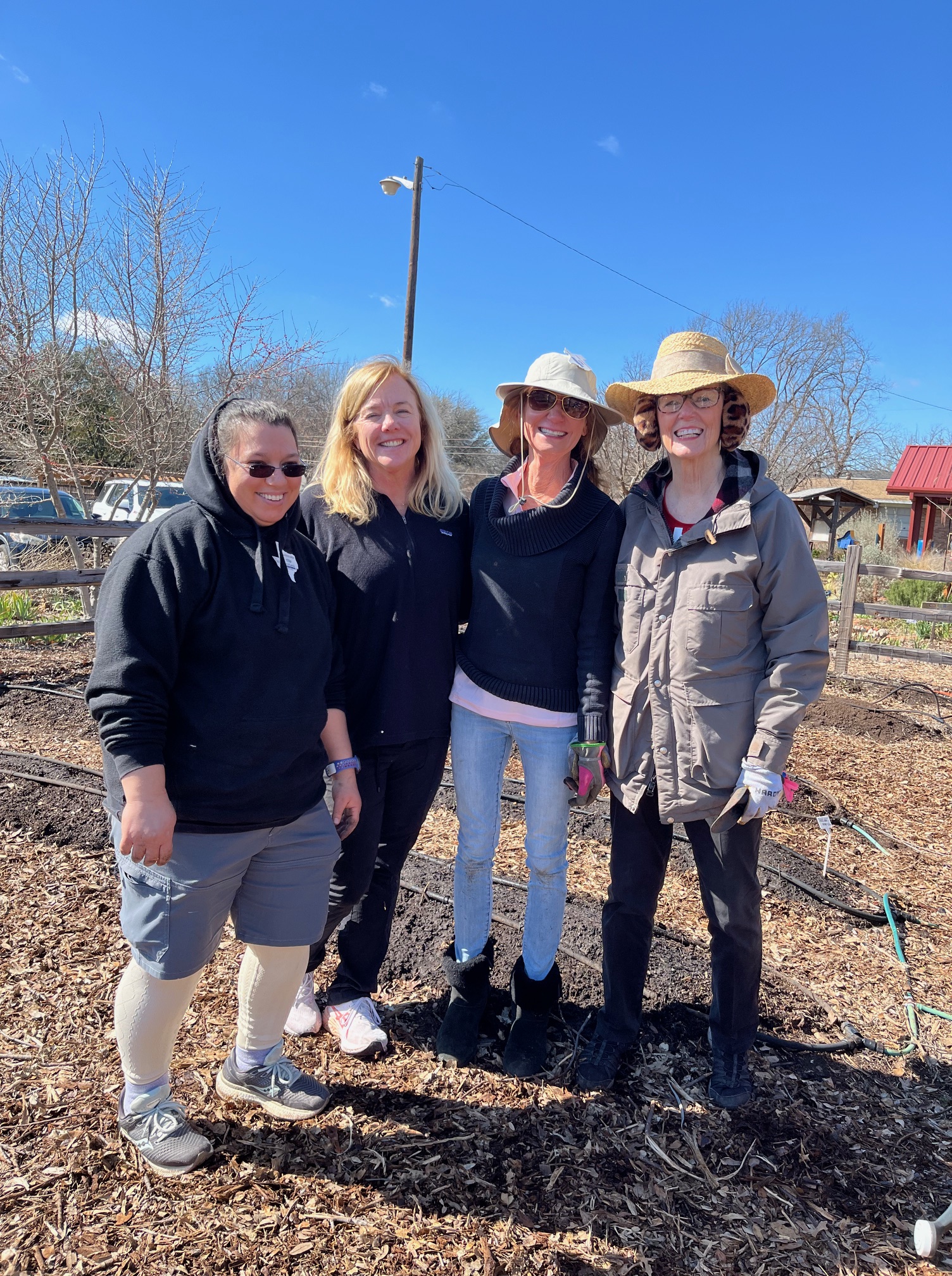
What does it take to keep a garden like The Raincatcher’s Garden producing? Dedicated leadership, hearty volunteers and planning are essential componets. This week Beverly sent out this list from the vegetable patch. It’s inspiring and reminds us of what we can do in our own gardens as spring comes towards us.
Harvest lettuce, spinach, and broccoli;
Hand water the raised beds, corral, and greenhouse (but not the donation garden);
Start sunflower and marigold seeds in trays;
Direct sow climbing nasturtiums near the raised bed trellises;
Start lettuce, spinach, collard greens, and chard seeds outside in the corral after amending with Espoma fertilizer;
Transplant lettuce from greenhouse if ready;
Make melon cages, bring heavy gloves and wire cutters if you have them;
Keep working on the Morgan building and greenhouse.
Cabbage in the greenhouseSpinach enjoys the cooler temperatures while the tomato seedlings are protected by coziesYuliana, Darla, Trish, and Kay planting lettuce and radishes in the corralRadish seedlings on Valentine’s Day (picture by Darla Reimer)
Ann Lamb, Dallas County Master Gardener Class of 2005 with Beverly Allen, Dallas County Master Gardener Class of 2018
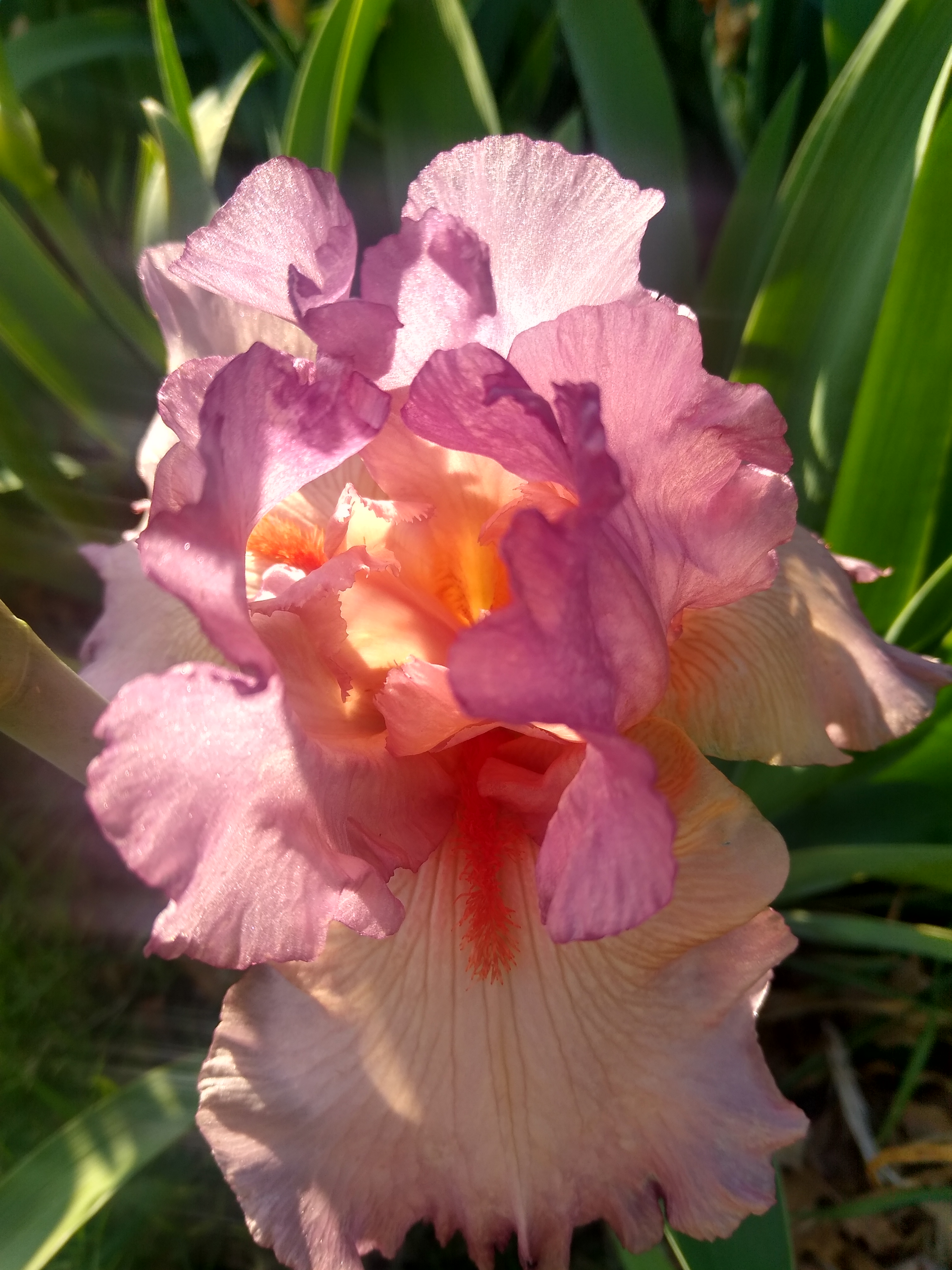
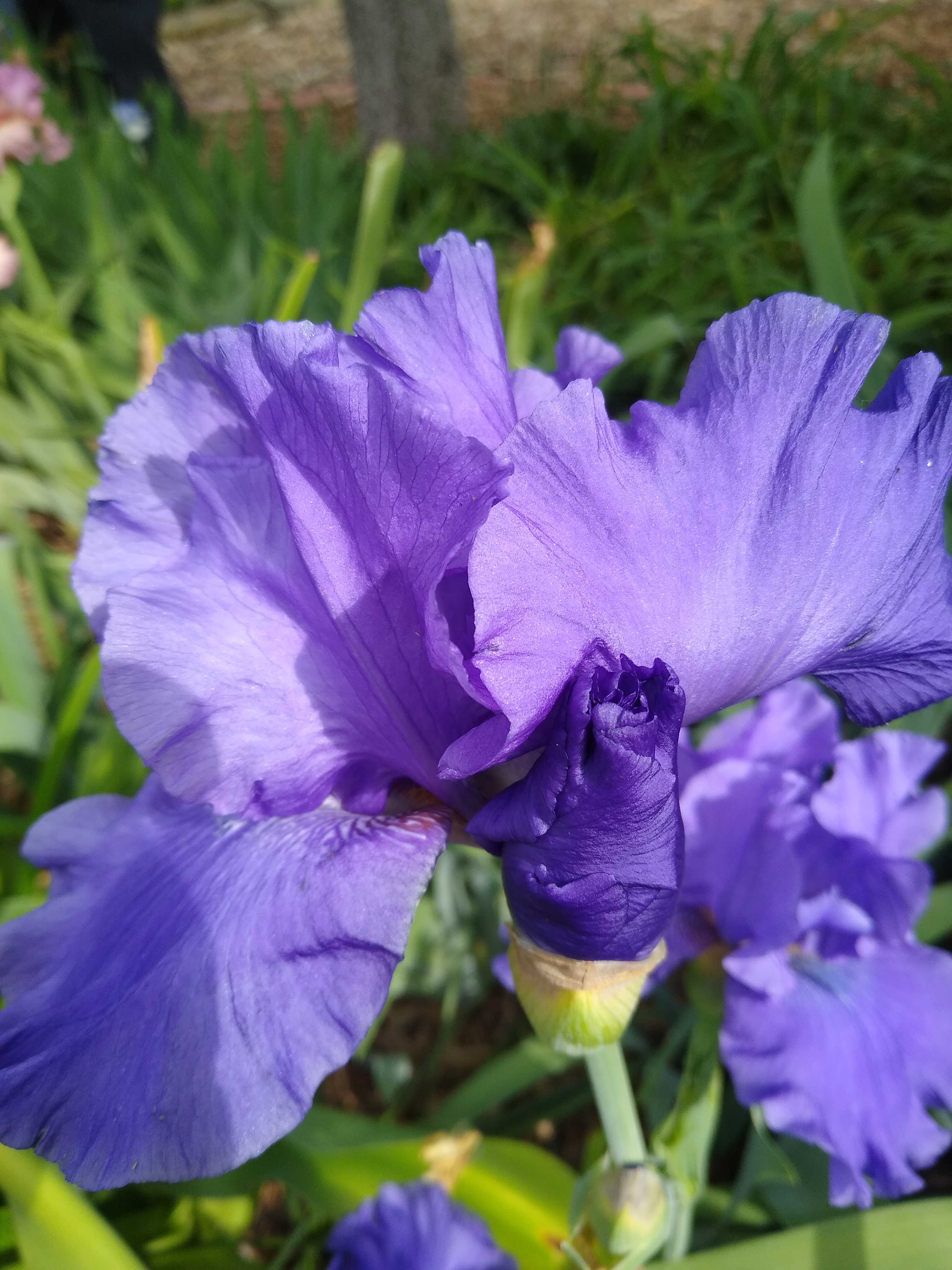
Who doesn’t love a beautiful iris plant? It’s one of the first plants to bloom in the spring and it is rugged, reliable and very easy to grow. The iris is named for Iris, the Greek goddess of the rainbows and personal messenger for the Gods. It is a long lived perennial that needs a minimum amount of care.
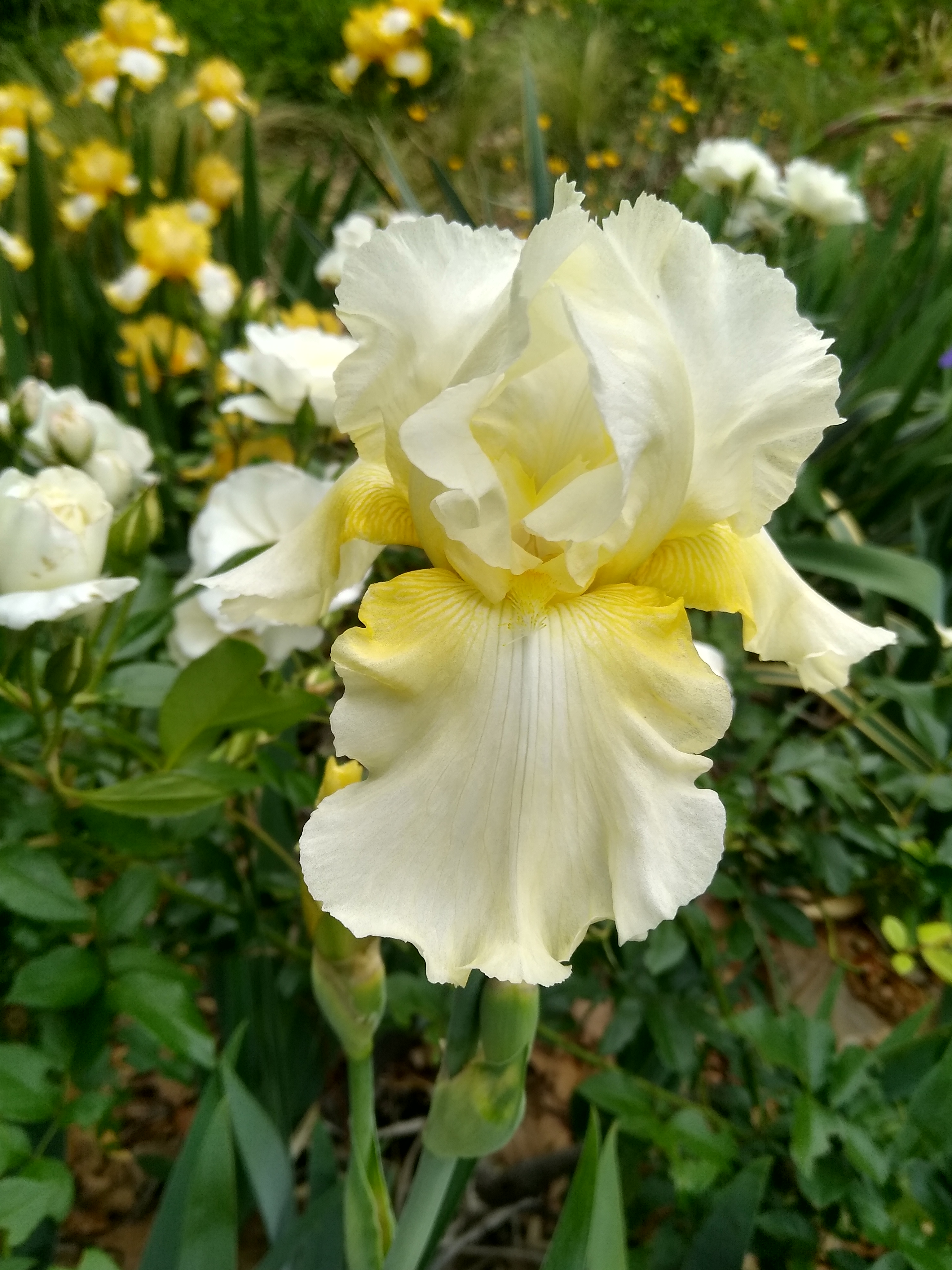
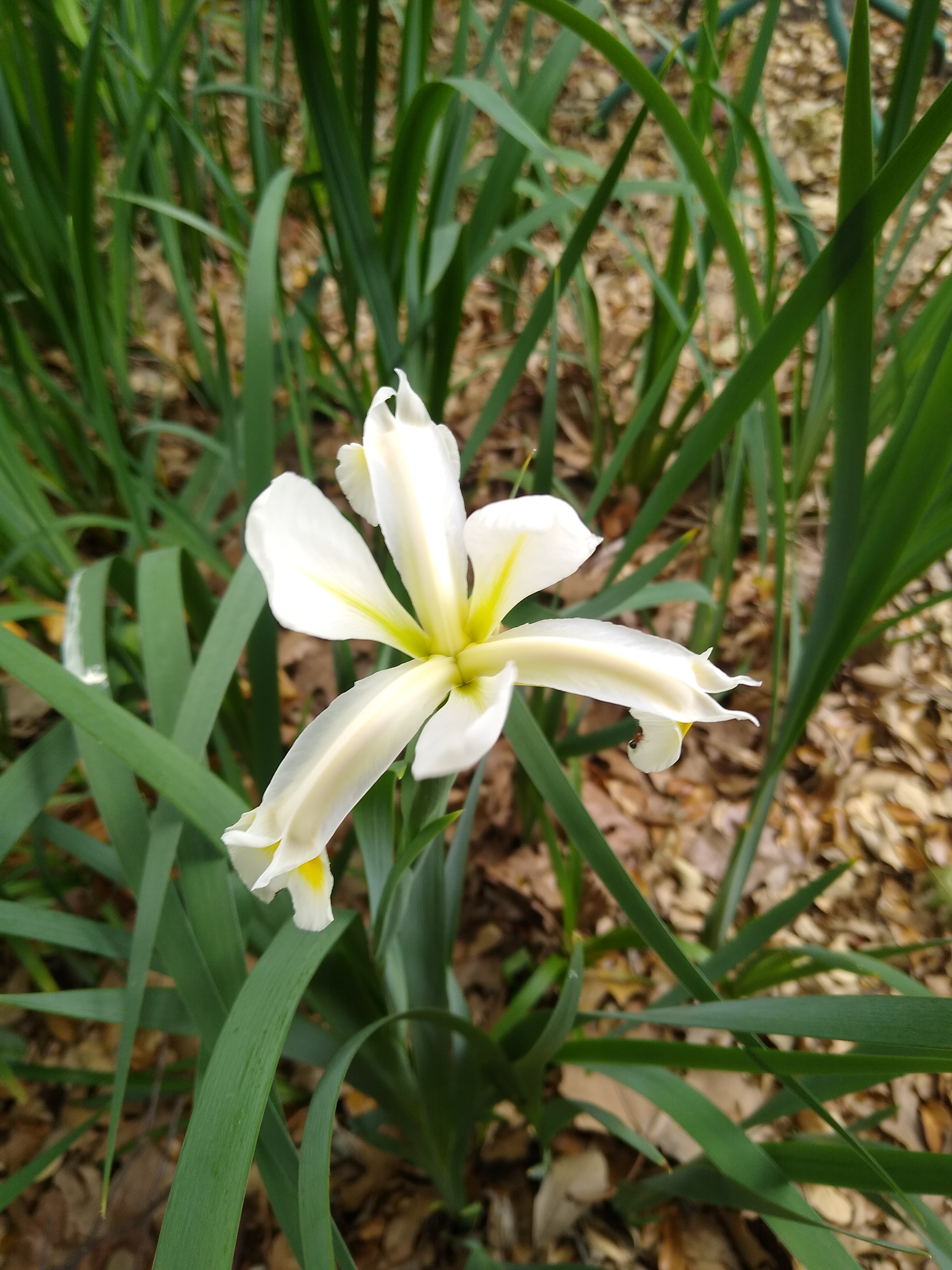
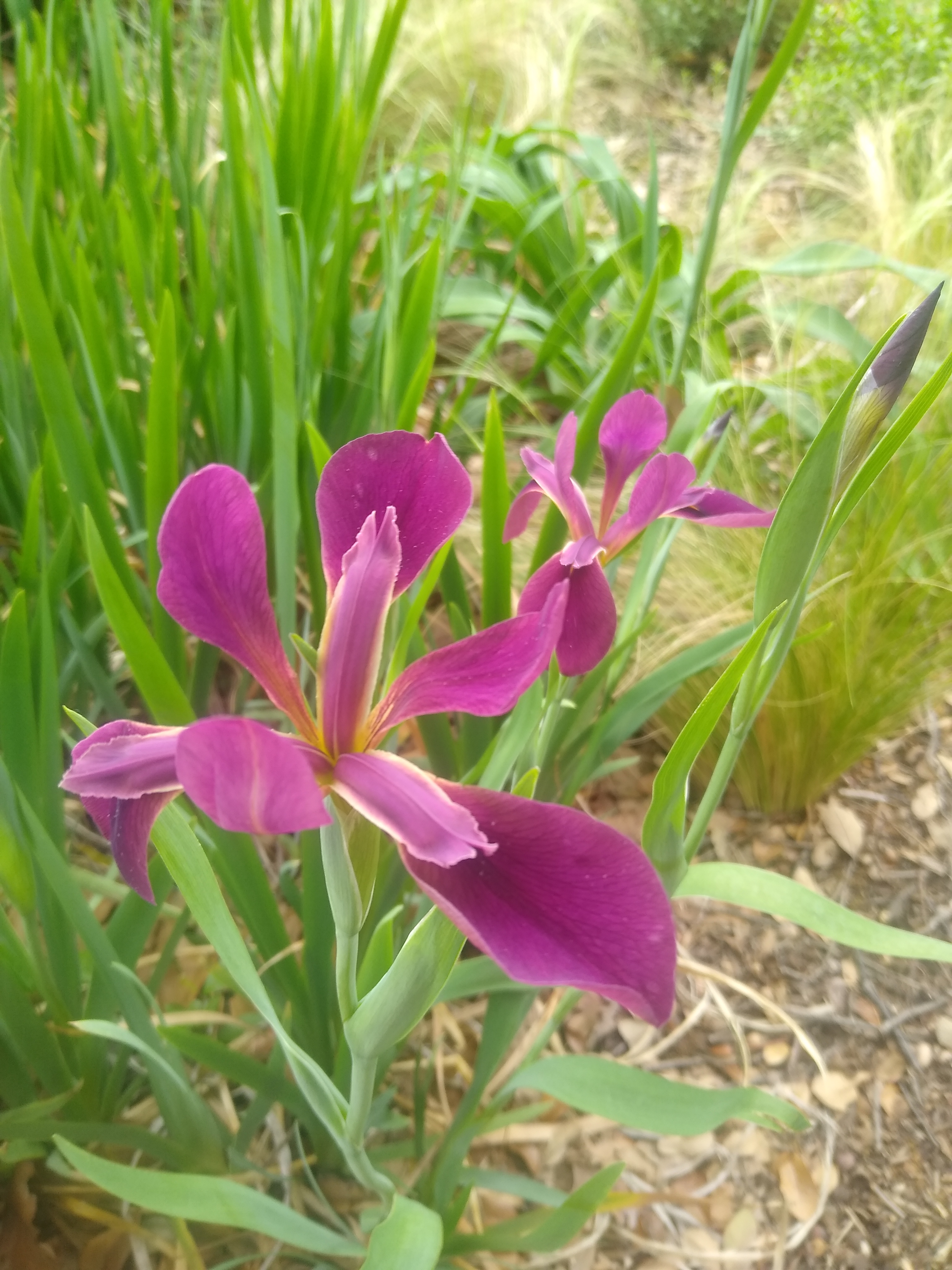
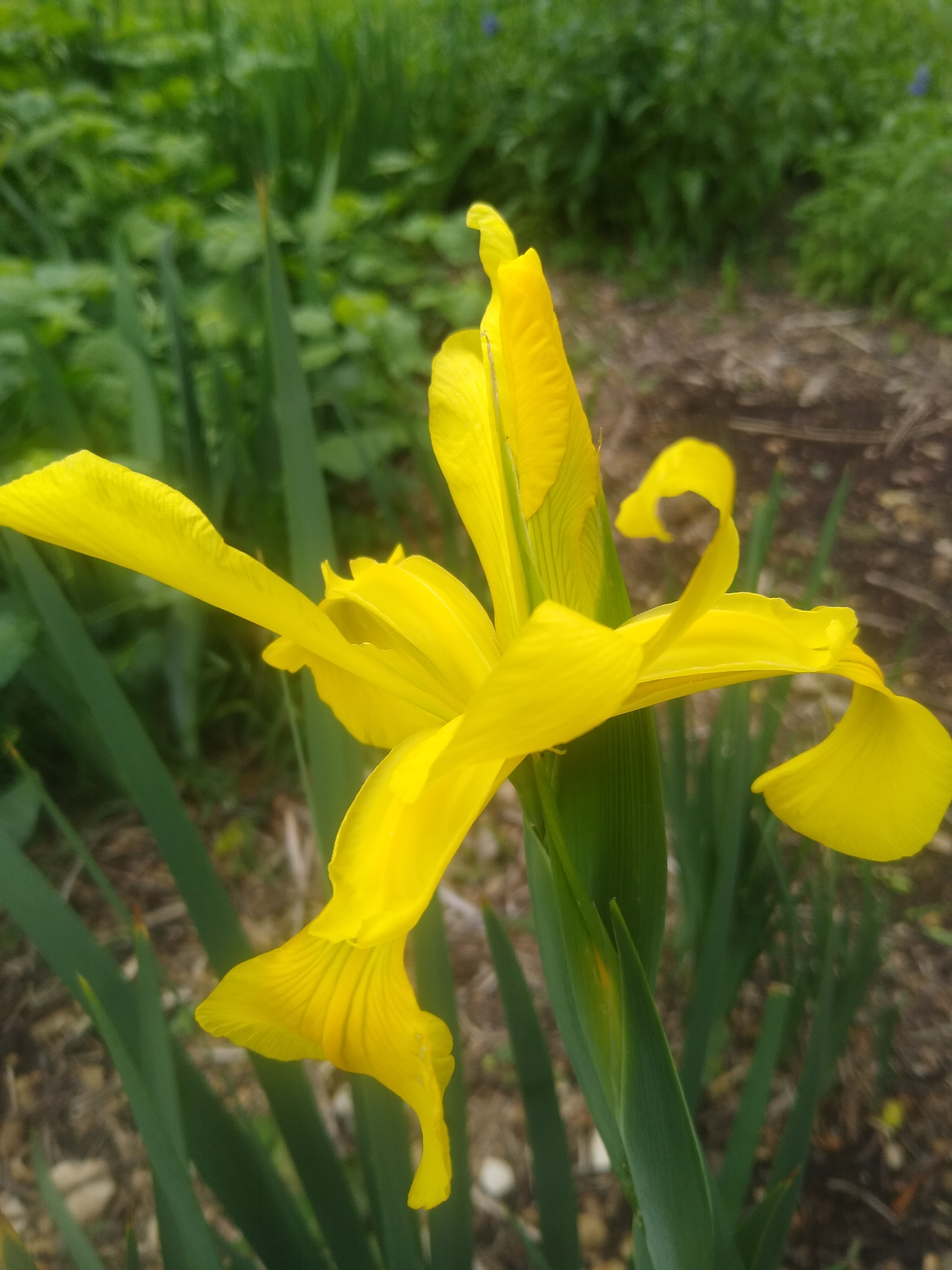
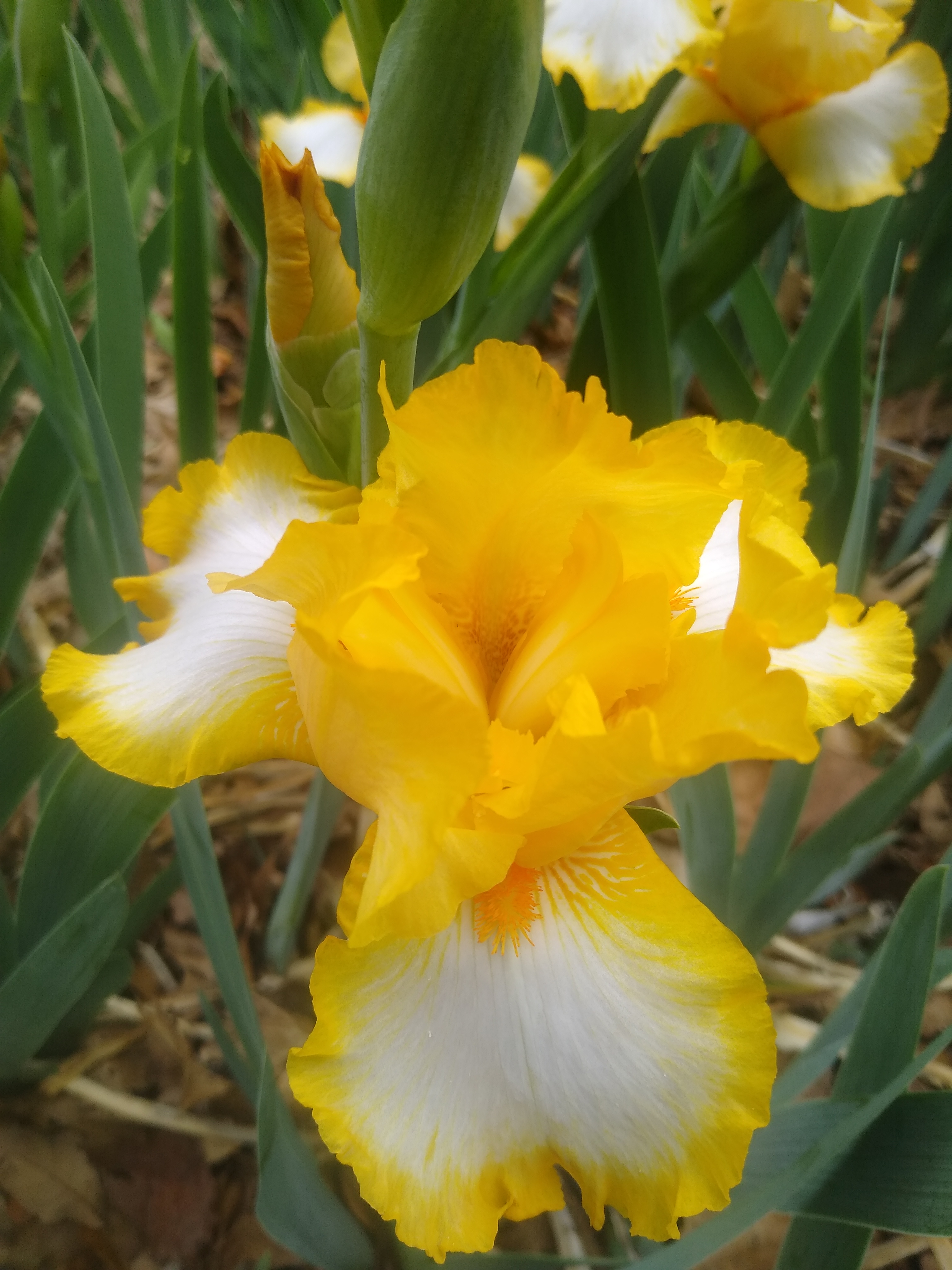
There are almost 250 species of iris and they come in a multitude of colors. With many different types and colors available, there is a perfect iris for every garden. The most popular iris is the bearded iris. Other popular varieties include Siberian and Japanese irises, Louisiana irises (which are native to North America), and Dutch hybrids. Bearded iris get their name from the “beard” that runs down the center of the cascading petal.
The rhizomes need sun and air to keep them dry. If they are covered with soil or mulch there is a chance the plant will rot. Some say to plant the bearded iris rhizomes “with their face in the sun” leaving the upper part of the rhizome exposed. Iris plants need at least 6 hours but preferably 8 hours of direct sun. The best time to plant iris is early fall. This will give the plant enough time to settle into the ground and start rooting before the first frost. They should be planted 12–18 inches apart. If you have different types of iris cultivars, plant each type together in groups of 3 to 7 plants for a greater color impact.
After iris plants have finished blooming, cut the flower’s stem down to the base but do not trim the leaves. The plant’s foliage carries on with photosynthesis in order to generate energy for next year’s growth and flowers. It is best to divide iris plants in the fall.
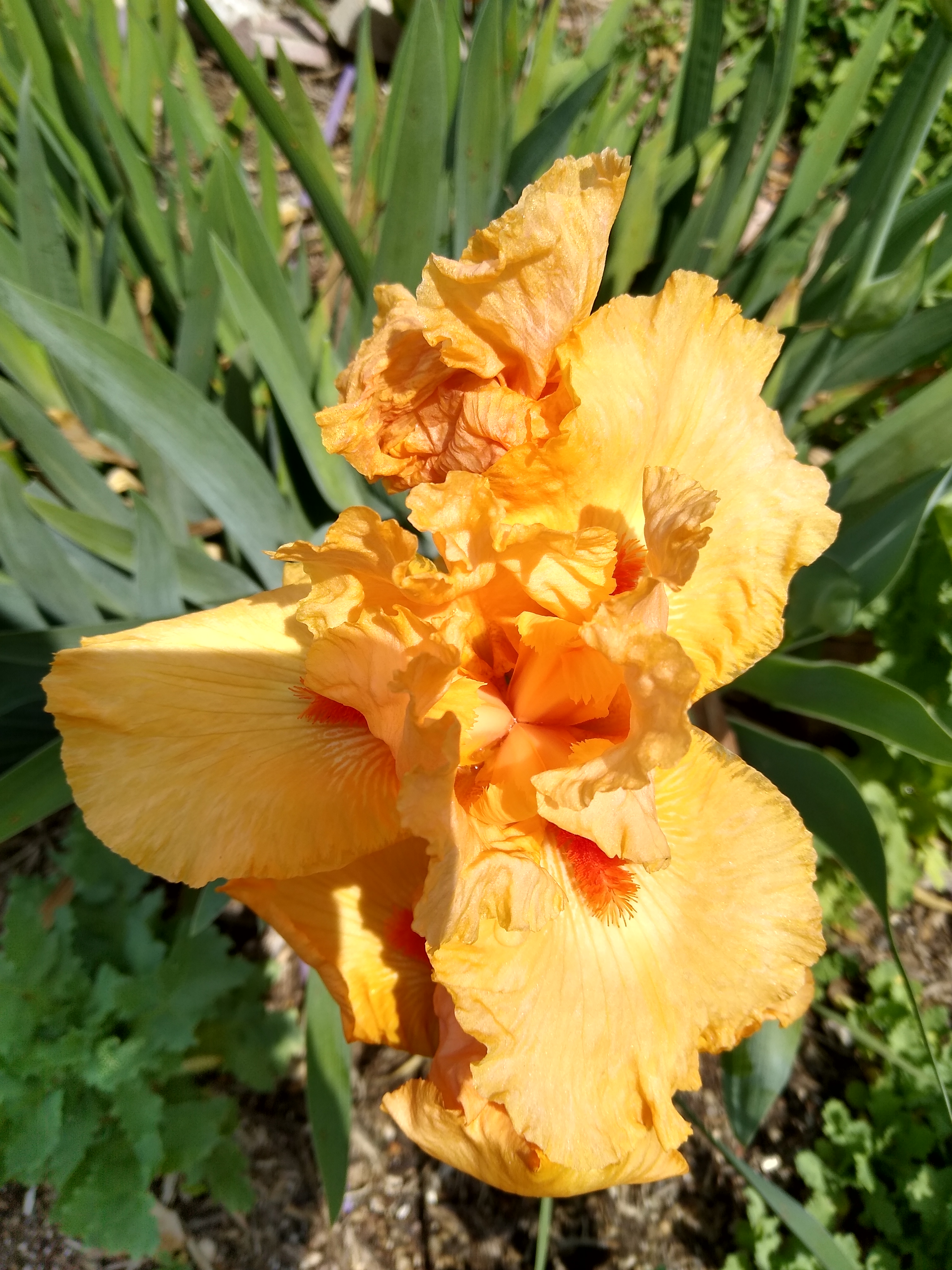
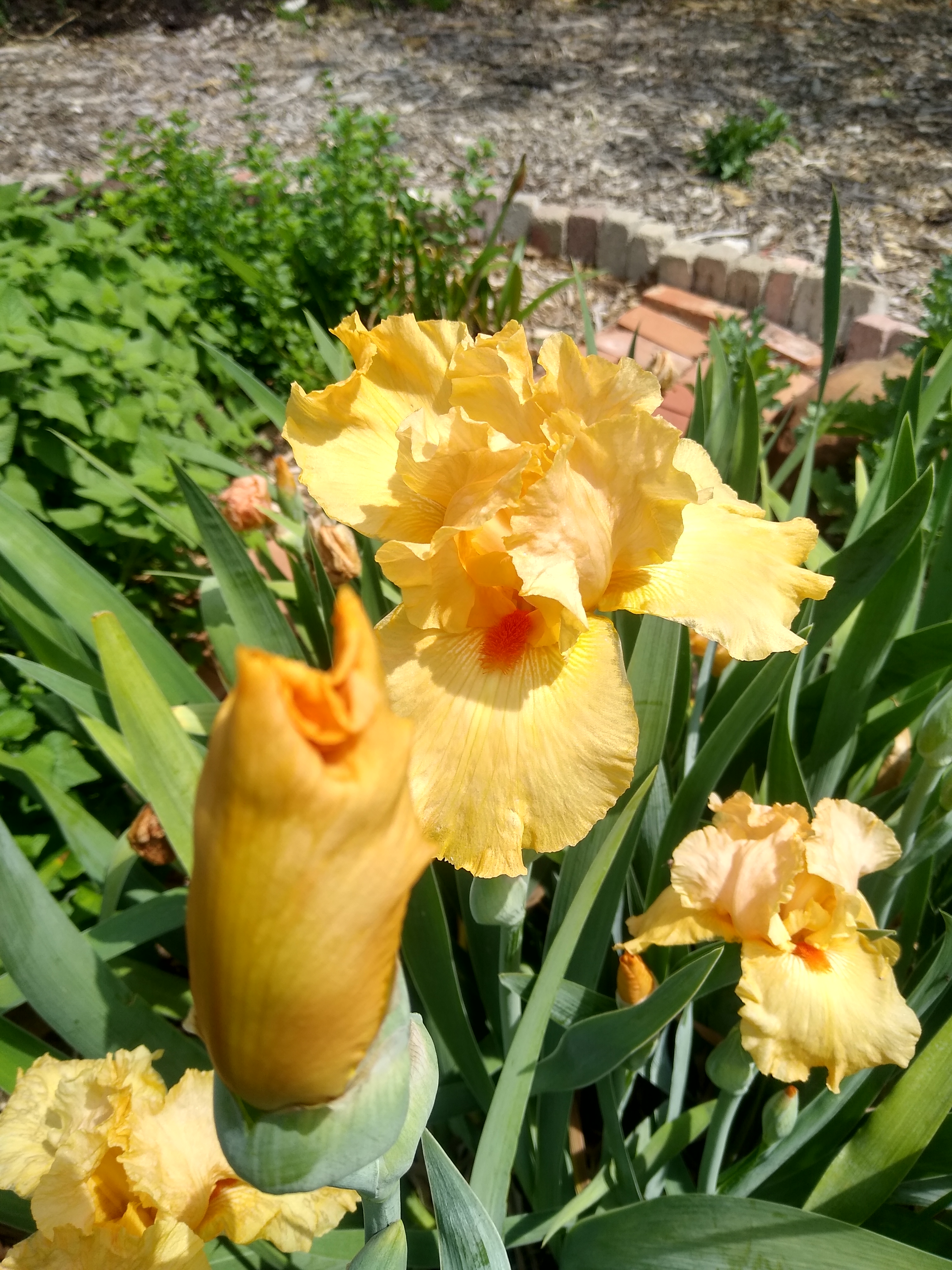
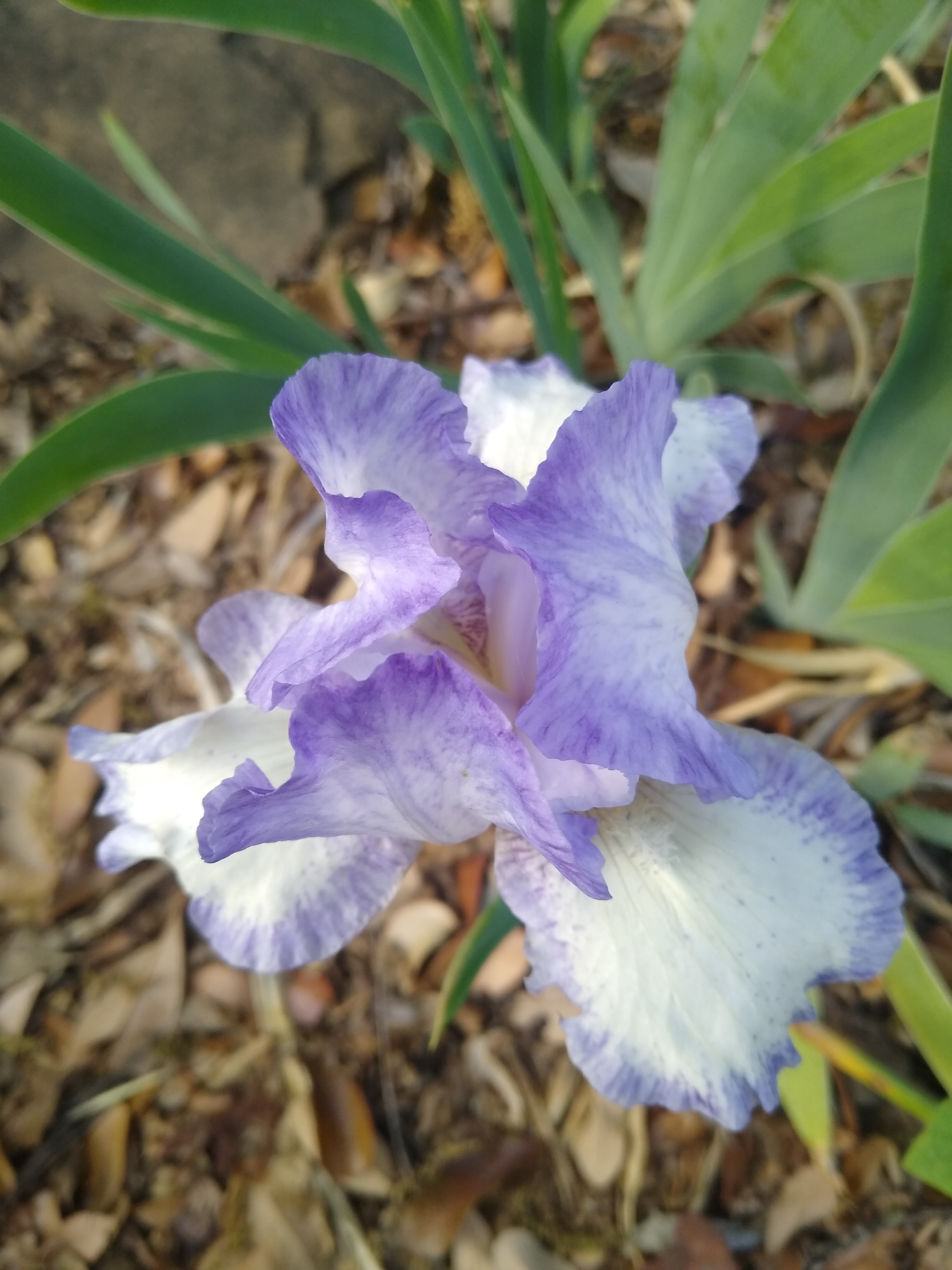
We are lucky at Raincatcher’s Garden to have the most beautiful collection of iris so I hope you enjoy the photos taken at the garden.
Or better yet, visit the garden in the near future and see these beauties in person! If you have iris in your garden, share them with friends and neighbors and help spread the joy of iris!
This is the time of the year when everyone wants something to change and improve advertisements that didn’t attract a bit of concern a while ago now seem tempting–the newest skin treatments that absolutely promise “younger brighter fresher” The poor child in the picture seems still a bit concerned but yet now doing better–well she should be concerned of course she is probably past Fourteen and knows its all downhill from here. Now if you want to buy thats fine after all it won’t hurt–although the price might be a real surprise and the bottle is so small and then there are two more things you absolutely must have if you really want “results” But we will go no further with this.
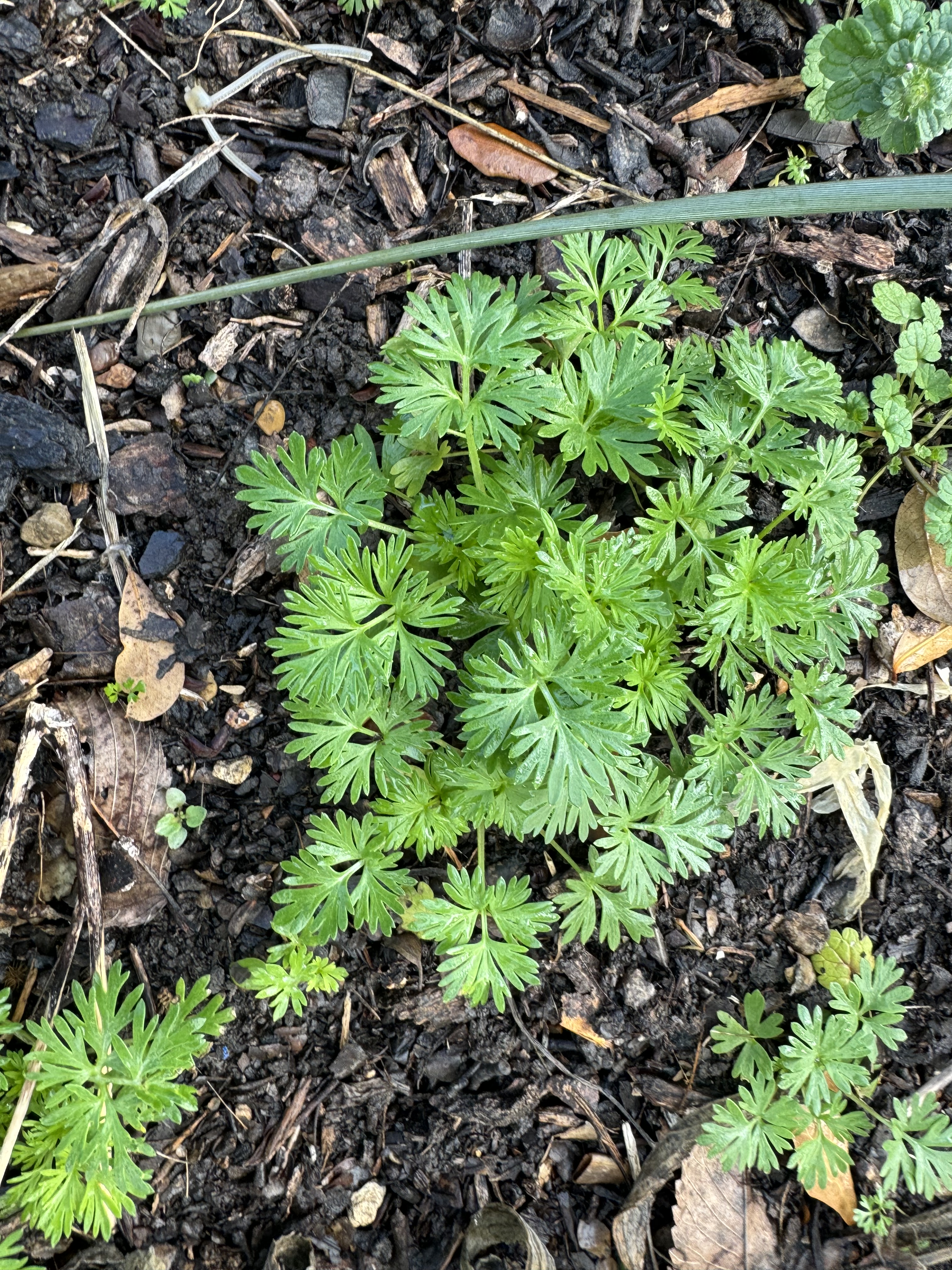
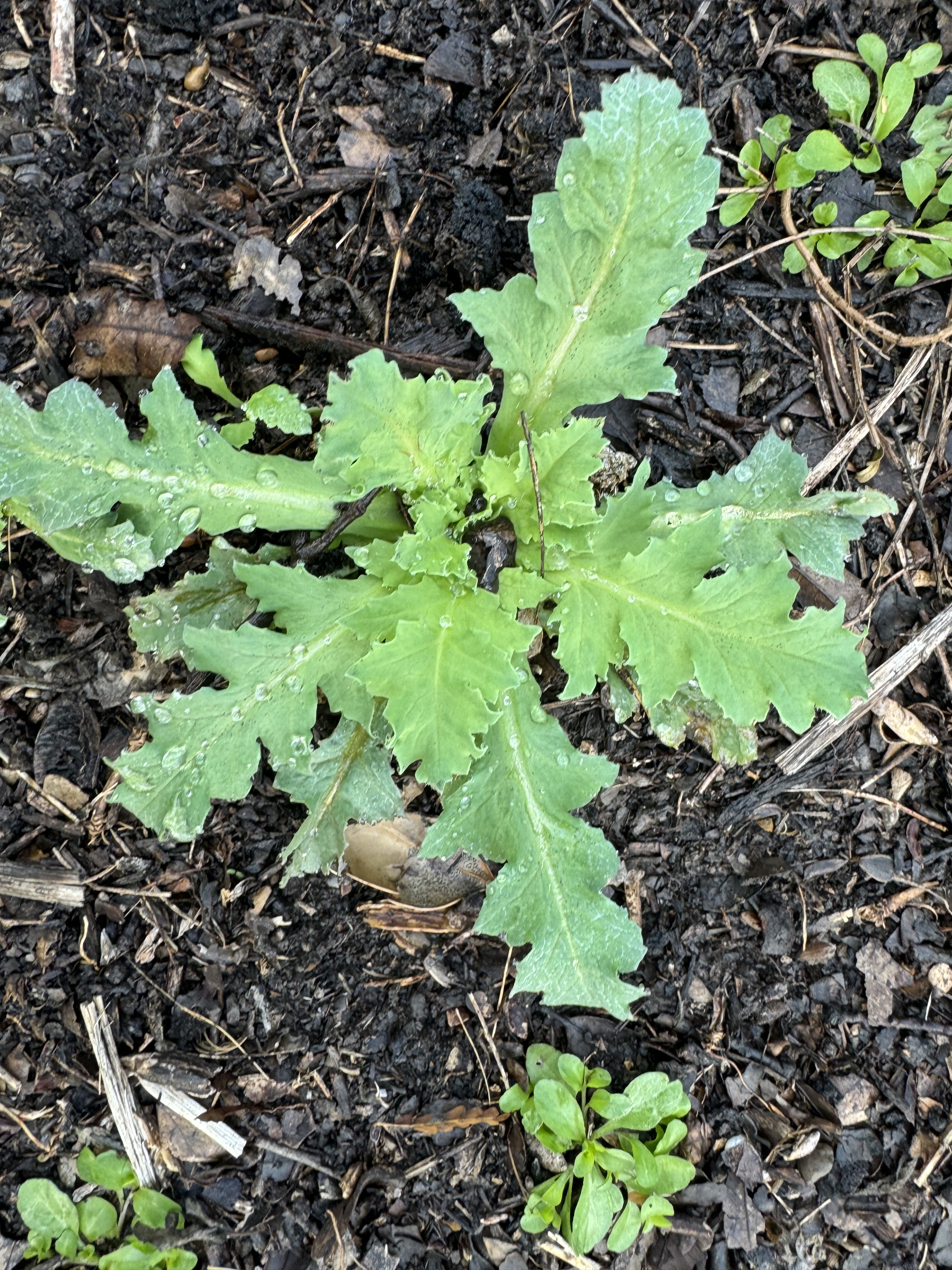
Baby Larkspur with maybe a weed-don’t worry about the weed.Baby poppy-same warning!Winter Honeysuckle does not give up.
No because YOUNG honestly is a state of mind more than anything and at this time of the year–well we may have to work at realizing that–and most importantly acting on our knowledge.
WE can’t let the season get us down. Its absolutely true that the leaves lying about have totally lost their charm –and how on earth did there get to be so many sticks and stalks everywhere. We have to look at things closely–after we clean up a bit of course. But take your time don’t be hasty, baby plants can be deceiving. The last thing you want to do is accidentally “weed” your precious spring flowers when in doubt don’t pull it up. Better to leave and weed than loose a poppy! Let your imagination take you to the blooms that will be here soon and you will be surprised at how much happier you will feel. Anticipating good things to come–well that is a receipt for real joy.
This is nothing but pure potential and hope!
Try to see bare patches as “Potential” not “Problems”. All the fresh seeds are here–stop and look . For some people this can be as much temptation as the five hundred dollar skin serum so do be careful. READ the labels and remember that if it says avoid heat you must avoid buying no matter how chilly and misty the day is right now. But maybe choose something new to try and go home and plant it–nothing worse than buying seeds and forgetting them–that doesn’t lead to happiness. But the choosing and preparing and planting–that can make a big difference for anyone. Feelings of accomplishment and planning for the future and feeling hopeful–well that makes anyone feel younger and fresher and its a feeling that lasts! Just the work in the fresh air helps so much even if you have to wrap up and use plastic shoes.
If it gets really cold take the time to protect your plants you will be glad you did–its work but it pays off and that makes us feel powerful. Just a little cover saved this lettuce.
If there are plants in the house don’t just pass them by they aren’t sofa cushions they really will respond to attention. water them and clean their leaves look for changes and growth–if you are fortunate even flowers–its the natural time for orchids to send up flower spikes–look carefully. Just noticing will brighten the whole day and who knows what tomorrow might bring .That is the key.
When we think about it–isn’t YOUNG really anticipating the future–the good exciting things to come? That feeling may get a little harder to come by sometimes but if we really notice our plants and gardens and care for them that feeling just seems to catch us and carry us forward–and that is FOREVER YOUNG.
Susan Thornbury, Dallas County Master Gardener Class of 2008
Walking in the garden early this morning just as sunlight was spreading its glowing rays, I stopped for a moment to gently caress the winter savory. Dew had fallen softly upon it, leaving the cascading branches with a shimmery presence. It seemed to be saying…” use me please”. And that is exactly what happened!
My husband and I love a cozy wintertime dinner by the fire. Thankfully, my winter herb garden had supplied me with the three ingredients needed to infuse the marinade for Balsamic Herb Baked Chicken Thighs: fresh rosemary sprigs, sage leaves and winter savory. This herb-garden inspired recipe delivered a pleasing amount of comfort and flavor for the perfect fireside meal.
Balsamic Herb Baked Chicken Thighs prepped and ready to bakeReady to serve!
Hopefully, you are growing a nice selection of herbs in your winter garden. If so, remember that they liked to be snipped, trimmed and used for culinary and decorative purposes in your home.
*For information about growing winter savory, click here.
*All herbs were harvested just before the cold front and freezing temperatures arrived. They were kept in a damp paper towel lined plastic baggie for two days.
Linda Alexander, Dallas County Master Gardener Class of 2008
This is the time of the year when one things about past efforts and plans ahead for what’s to come—naturally the future must be vastly improved over what came before. Its been that way for a long time. After all January is named for Janus the god who is able to look to the past and the future.
All useful so far. Evaluating past efforts and planning for the future is important for just about everything.
However this is also a time when one is most susceptible to promises of perfection if only you buy something—well not just anything of course but the new and improved item currently on offer. Let’s not consider the diets and health promoting supplements and the body that would be ours if only a new and improved fitness machine was ordered. All available right now and payment can be easy—there is a plan available.
Gardeners are not immune to these thoughts by any means. Emails seem to arrive daily to showcase the “must haves” for this years garden. All involve buying the new and improved plants from all sorts of places. Catalogues have pictures that are simply astonishing The flowers in glorious colors. Petals are now double and triple and maybe more. Some seem to be very small “fit any space” How can this be exactly. Surely they would want to grow at least a little bit.
Even shrubs and trees are new and have amazing flowers and turn all sorts of colors. Buy now” really seems the only reasonable thing to do after all “supply may be limited”.
But wait—take a deep breath and consider—where will all these new plants go? Go back and look at your garden photos (you know they are right there) and when you look you see that not only was the garden actually lovely it was pretty full.
Now there is nothing all wrong with buying new plants. There are indeed new discoveries to be made. Plus its just fun and adds excitement to the garden—and may be the key to the perfection everyone is looking for—this could happen.
Just think carefully about replacing the tried and true plants. The ones you have counted on for years—that have stood the tests of time and weather. Afterall they hold memories of past gardens—yours and so many others—and even of the gardeners who loved them before you and maybe even shared them. It’s a lot to think about.
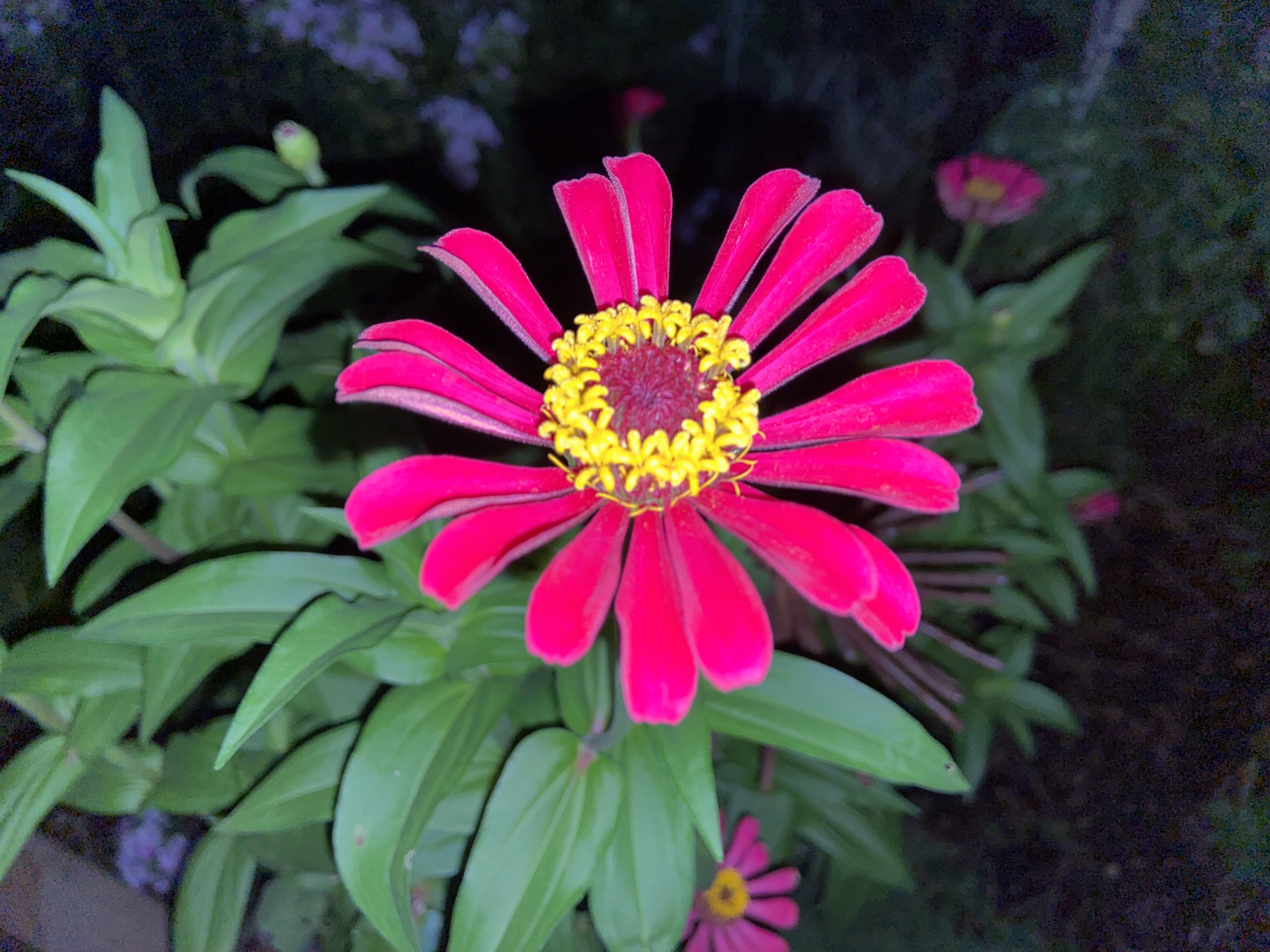
Tithonia requres a lot of dead heading but you can enjoy the butterflies that love it.How could you resist this dusky purple color in a plant that loves to live no matter what.Strawberry fields globe amaranth does seed out but appreciate it?When zinnias reseed they are usually single pink. But is there something wrong with that?Grasses aadd grace and stability so forgive a little mess.Common mullein adds a sense of drama and plants itself.Pothos is common but that’s okay there is nothing like it for brightening a dark corner. Why pay more?Annual salvia is wonderful for late summer. Yes, it seeds but think what a virtue that can be in a hot dry summer. This is coral nymph salvia.
The little song children used to sing sums it up:
Make new friends but keep the old— one is silver and the other gold.
Susan Thornbury, Dallas County Master Gardener Class of 2008
This past fall, I decided to try several different varieties of broccoli in my garden. A few are still growing and I’m hoping they reach the harvesting stage very soon. But, as you can see from the photo, this particular variety produced a beautiful head of broccoli just a few days ago. There are five or six smaller side shoots, but none will be as large as the original.
One definition of “monty” describes it as the whole thing; everything that is wanted or needed.
The recipe I selected for ‘monty’ is from our family cookbook. We refer to it as Bethy’s Crunchy Broccoli Salad. It is delicious any time of year but bringing it in straight from the garden on a chilly winter morning was the best ever! It certainly met, and exceeded, our expectations.
*Johnny’s Seeds currently has packets of Broccoli, Monty seeds in stock.
Linda Alexander, Dallas County Master Gardener Class of 2008
A Chritmas gift from a dear friend tied up with a fuzzy peach ornament
How could we enter into the new year without knowing the big announcement from Pantone? In 1999, the Pantone Color Institute created the color of the year educational program to engage the design community and color enthusiasts around the world in a conversation around color. Their hope is to inspire us to look at color in a different way. It is interesting to read about the process Pantone global color experts follow to arrive at the selection each year. You can do that by going directly to their website at pantone.com.
For 2024 we are encouraged to “Embrace the Warmth”. They suggest that we look for ways to nurture ourselves and others. To help guide us along in our yearning for closeness and connection, the Executive Director of the Pantone Color Institute, Leatrice Eiseman, made the following announcement on December 11, 2023.
Pantone’s Color of the Year for 2024 is Peach Fuzz, a velvety gentle peach tone whose all-embracing spirit enriches mind, body and soul. Officially, the number you need to know is PANTONE 13-1023. For like-minded gardeners, it is gratifying to learn that they selected a perfectly peachy nature-inspired fruit.
As a Texas girl, my mind went quickly to a lifetime of memories revolving around fresh peaches. If you are like me, the thought of ripe summer peaches makes this color choice especially meaningful. Going forward you can expect to find Peach Fuzz making an appearance in the design industry, fashion industry and in home décor. Also, it appears that Peach Fuzz will open the door to a wide assortment of lipstick, blush and contouring options. Nail color options will be available, as well.
Just last week I embraced that fuzzy feeling by ordering a pair of Peach Fuzz tennis shoes from Cariuma. If all goes well, I’ll be wearing them on one of our summer trips to the Texas Hill Country where we hope to visit a ‘pick your own peaches’ roadside orchard.
If you feel inspired to start growing your own peach trees this year, go to aggie-horticulture.tamu.edu for a full list of varieties recommended for our area. Wishing you all the joys of a heartfelt peach hue that enriches mind, body and soul.
Here are a few of our favorite peach recipes from ‘A Year On The Plate’ 2016 Master Gardener Cookbook.
As composters for the Raincatcher’s Garden of Midway Hills, we are continuously looking for ingredients to make compost.
During the spring through fall, we find green grass, leaves, coffee grounds, kitchen scraps, etc. to add to our compost piles.
In November we are blessed with the remains of Halloween and Thanksgiving decorations—PUMPKINS! During bulk pick-up weeks we scrounge the neighborhoods looking for the elusive pumpkins and gourds. Rather than allowing them to rot in the dump, we chop them up and add them as the GREEN (nitrogen source)ingredient of compost. The BROWN (carbon source)ingredient of the recipe is, of course, are the dried leaves that are falling everywhere. The BLUE ingredient is water. The CLEAR ingredient is air. The last is TIME.
Result—BLACK GOLD—also known as compost.
This year we “harvested by the side of the road” six pickup loads of pumpkins, gourds, bags & bags of leaves, some grass, and even a bale of hay.
And, at our last stop—THE GREAT PUMPKIN!
Cindy and the great pumpkin!
As winter progresses, we will chop, grind with the mower, mix in water, turn piles as they heat up and cool down (temperatures up as high as 160°). As we turn the piles, the chunks begin to change shape and color. The unseen microbes and fungi consume and break down everything making pieces smaller and smaller, and of course,darker—hence , BLACK GOLD. This process takes time—sometimes as long as 2-4 months, depending on how energetic the humans are in turning the piles.
When we add compost to our heavy clay soil, we lighten it, allowing the plants to absorb the nutrients in the compost, allowing better drainage, thus producing more healthy plants and feeding everything.
Cindy Bicking, Dallas County Master Gardener Class of 2006
Jon and Joe meticoulsly laying the floor for the greenhouse.We’re excited to be getting the space to start seeds for the north garden. The other greenhouse gets extremely crowded in spring with the combination of north garden and plant sale seedlings. Tig said the brick floor is too nice to cover up with a greenhouse!
Here are a few pictures by Starla from our recent Christmas lunch.
The chill of winter, though not officially here according to the calendar, has arrived. Trees are now displaying their bare branches as each day swirling, gusty winds bring colorful autumn leaves to the ground. From the stately red oaks and maples to the stunning brilliance of Chinese Pistache, yard crews are struggling to keep up with the piles and piles of leaves covering grassy lawns and flower beds.
What remains is winter’s gift to our yards and woodlands…the mighty evergreens. My Christmas decorating theme was simplified significantly this year as I took time to pause and contemplate this marvel of nature. Suddenly, I was caught completely by surprise upon discovering a towering tree growing along the back side of our neighbor’s fence. After 17 ½ years of driving past their property to enter our back gate, a large evergreen tree bursting with clusters of small blue berries caught my eye. I had never even noticed this tree until two weeks ago. Unsure of its name, a quick plant search on my iPhone gave me the correct answer. It was a JUNIPER.
From that moment of discovery, I was smitten with the dreamy blue color of berries drooping from needle-like leaves with a delicate and aromatic pine scent. Thoughts of decorating my home with the greenery of winter were filling my head. And then a beloved old Christmas carol seemed to speak the words I needed to hear. My decorating theme for Christmas 2023 would be…” Let Heaven and Nature Sing”.
My sweet neighbor was so accommodating by giving me permission to ‘harvest’ as much as I wanted from her Juniper tree. That was the beginning of a foraging-type mission for evergreen material in our yard and along the alley ways and streets behind us. My goal was to respectfully select, then carefully cut, branches that would complement my decorating theme.
The joy of using freshly cut evergreen branches for Christmas decor is their aromatic gift and profound color. Our home not only has the feel of a nature-inspired Christmas, but the air is filled with a calming heavenly scent, as well.
Please enjoy a sampling of nature’s gifts in this short video featuring the evergreens used to adorn our home as we proudly proclaim…” Joy to the World!”
*Evergreens, and herbs, used from our yard (and a kind neighbor) are: Magnolia, Boxwood, Burford, Foster, Nellie R. Stevens, Savannah and Yaupon Hollies, Junipers, Cedar Trees, Japanese Plum Yew, Lavender, Rosemary, Thyme, Winter Savory and traditional English Ivy.
Linda Alexander, Dallas County Master Gardener Class of 2008