Category Archives: Spring

Spring Field Trips, West Dallas Community School Returns To The Demonstration Garden

 At The Demonstration Garden we have enjoyed having West Dallas Community School 4th and 5th graders come to our garden.   The students at  have a nature studies class and come to our garden well prepared. 

They experience nature on a daily basis with their very own garden at school and by coming to our garden on field trips.  These students are tasting fava beans for the first time.  Notice the smiles on their faces and carrot and rosemary in the pocket.Fifth Graders From West Dallas Community School and Dallas County Master Gardener, Abbe in background

These boys are looking  carefully for ladybugs on the roses.

West Dallas Community School Boys Visiting The Demonstration Garden

We are happy to have children come to our garden and they are happy!

West Dallas Community School Spring 2013 At The Demonstration Garden

A WIN/WIN SITUATION FOR EVERYONE!

Ann

Pictures by Starla

2013,A Beautiful Spring in Dallas

Dallas gardeners have enjoyed a long, lovely spring and I don’t think we have glowed enough about it . If you feel like glowing, make a comment at the bottom of this post.  We will send a package of seeds from our garden to the first 10!

Think back to our post, A Texas Spring?  Week after week, we have enjoyed blooms galore!

We planted these Oxeye Daisies in 2009 and this year they have been a “best of show” type exhibit. 

Oxeye Daisies Blooming at The Demonstration Garden

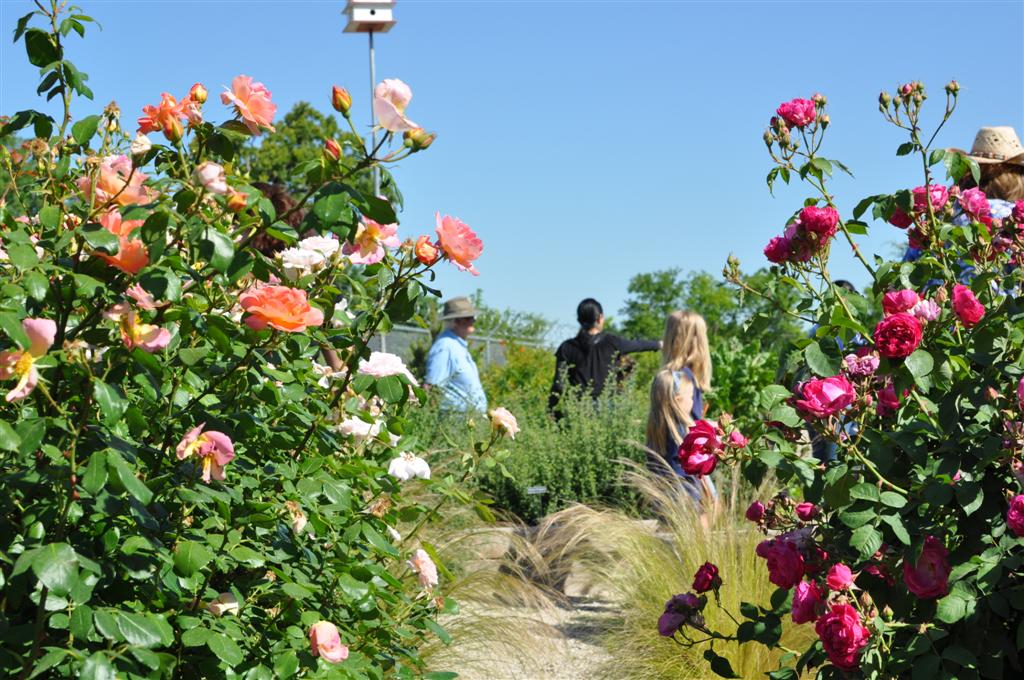
Our Earth-Kind® Roses have bloomed continuously as you can see looking through Lafter and Maggie. 

Earth-Kind Roses, Lafter and Maggie at The Demonstration Garden on Joe Field Road

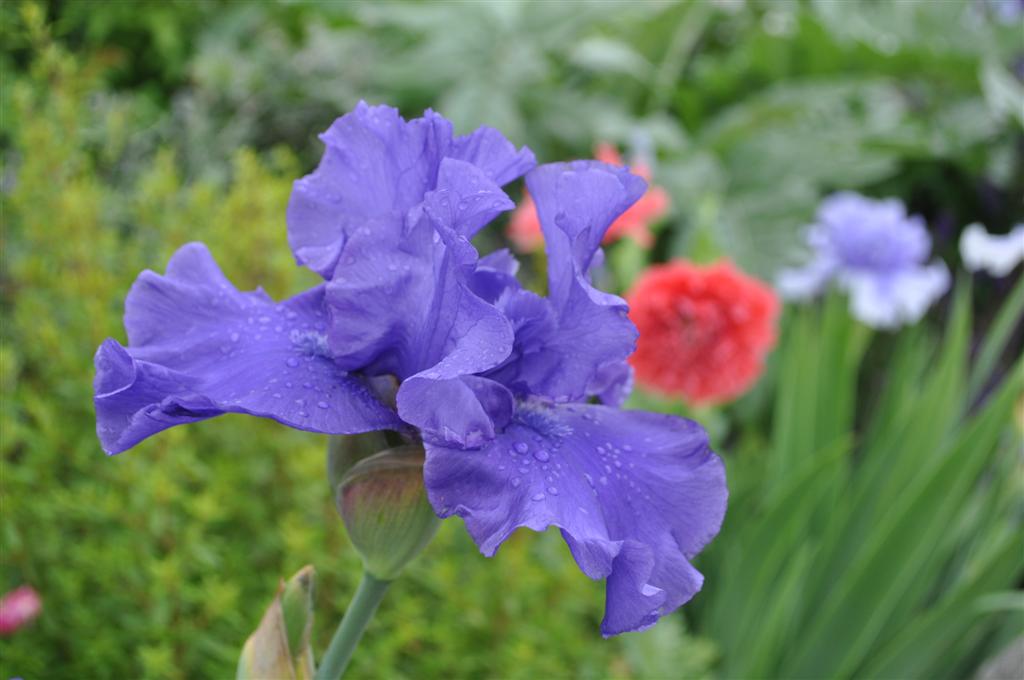
Our Iris have finished blooming so we must say goodbye to them.

How appropriate this one is called Bye Bye Blue!

Iris with Poppy Blooming in Background

Ann

A Letter To Mom After A Field Trip To The Garden

Dear Mom,

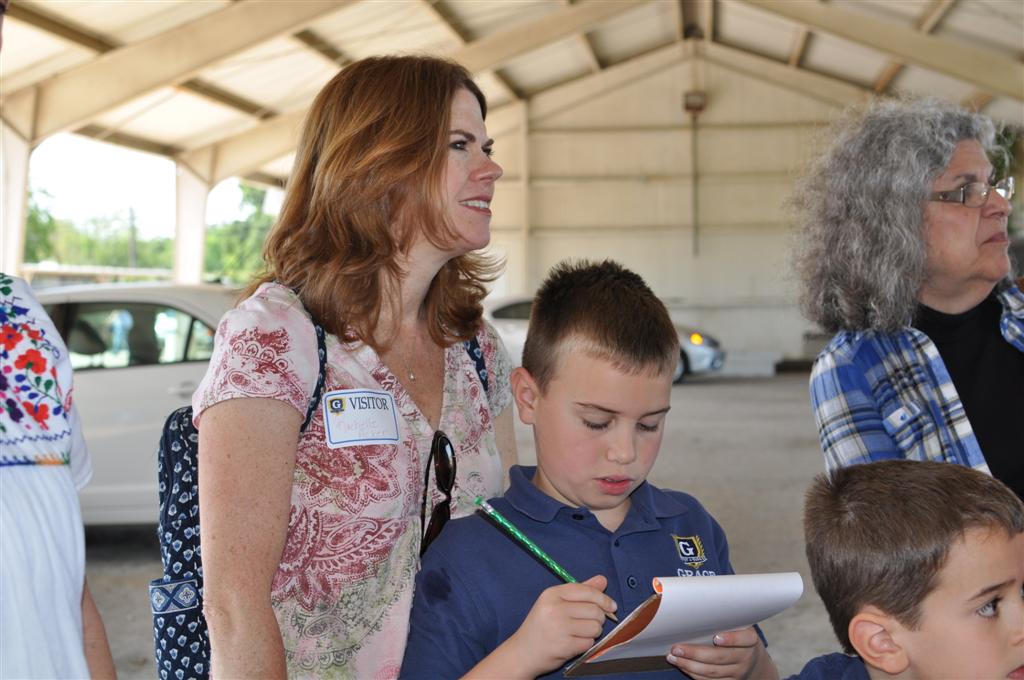
Our wonderful first grade teachers of Grace Academy took us on a field trip to a garden.  And not just any garden, this garden and Dallas County Master Gardeners  taught us about flowers, herbs, vegetables, and two kinds of composting. Mrs. Medina and Mrs. Metheny of Grace Academy, Dallas, Texas

We made garden journals and recorded what we were learning in the garden that day.

Garden Journals at The Demonstration Garden,2311 Joe Field Road, Dallas

We learned the language of flowers and made tussie mussies.

Grace Academy Student with Tussie Mussie

Tussie Mussies and First Graders Visit the Garden with Dallas County Master Gardeners

Thank you, Mom, for all you have done for me.  Happy Mother’s Day!

Can we go back to that Demonstration Garden on Joe Field Road soon?

Love,

From Your First Grader

**********************************************************************

Written through the eyes of  the children on our field trip Tuesday by Ann.

Hope you don’t mind!

MAKING A LIST: SPRING PLANT SALES

 I am not one of those people—and you know who you are—who are very organized.  Ask anybody. The spring trip to the local plant sale usually goes like this:  “Plants for the vacant spots in the front flower bed? Ok, this year,” I muse to myself,  “we’re using ______ colors, and I don’t have one of _______, yet. “ 
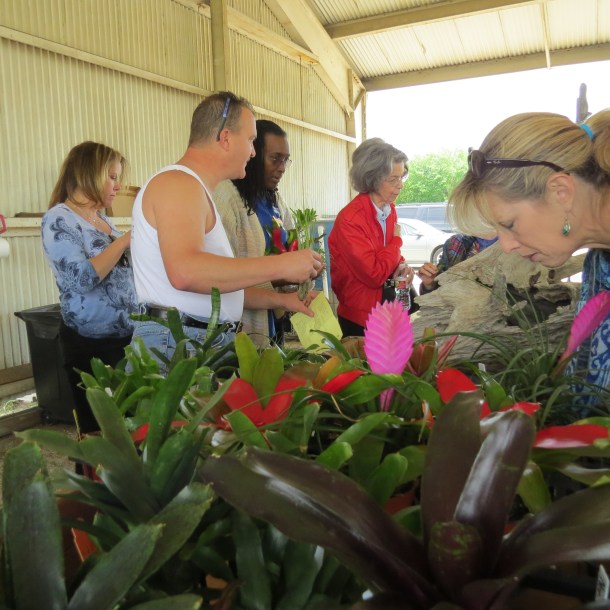
Plant Sale Shopping in Dallas

Not this spring. This year, I’m going to have a PLAN. The real deal: down to the ¼- inch, drawn on the drafting board with the compass and scale ruler kind of inspiration.  And from the plan, I’ll have a plant list.  Clutching the plan tightly, I’ll march into the spring plant sales that lure gardeners much like the waft of ribs from the barbecue joint seduce ‘cue lovers.  No impulse purchases for me.  I’ll have something I’ve never had before: a shopping list. Not on the list? Not in the checkout line. 

I did get the plan drawn up.  It took several weeks of looking at the favorite plant books, doodling around on the computer, and checking on mature sizes of plants.

Each plant had a circle drawn to scale representing its place and size in the grand scheme.  I finally had the shopping list. 

Things began to unravel within minutes at my first plant sale of the season.  Blame the perfect spring day. Chalk it up to cash burning a hole in my pocket. Proceeds go to four charities? Oh Lord, help me now. 

 Needless to say, I emerged from the check out line with two unplanned Eryngium ‘Blue Glitter’ that promise a cool purple thistle-looking bloom. Cardinal Flower Lobelia cardinalis wasn’t on the list either.  But how else was I going to have “dense spikes of brilliant red blooms that are a hummingbird magnet?”  Just put “hummingbird” and “magnet” in close proximity and I am a goner. I bought three. 

Chiding myself, I shopped at the Texas Discovery Garden plant sale the following week.  Russian sage, black-eyed Susan, asters, and Mexican sunflower went on the cart.  Each of those was on the Shopping List. 

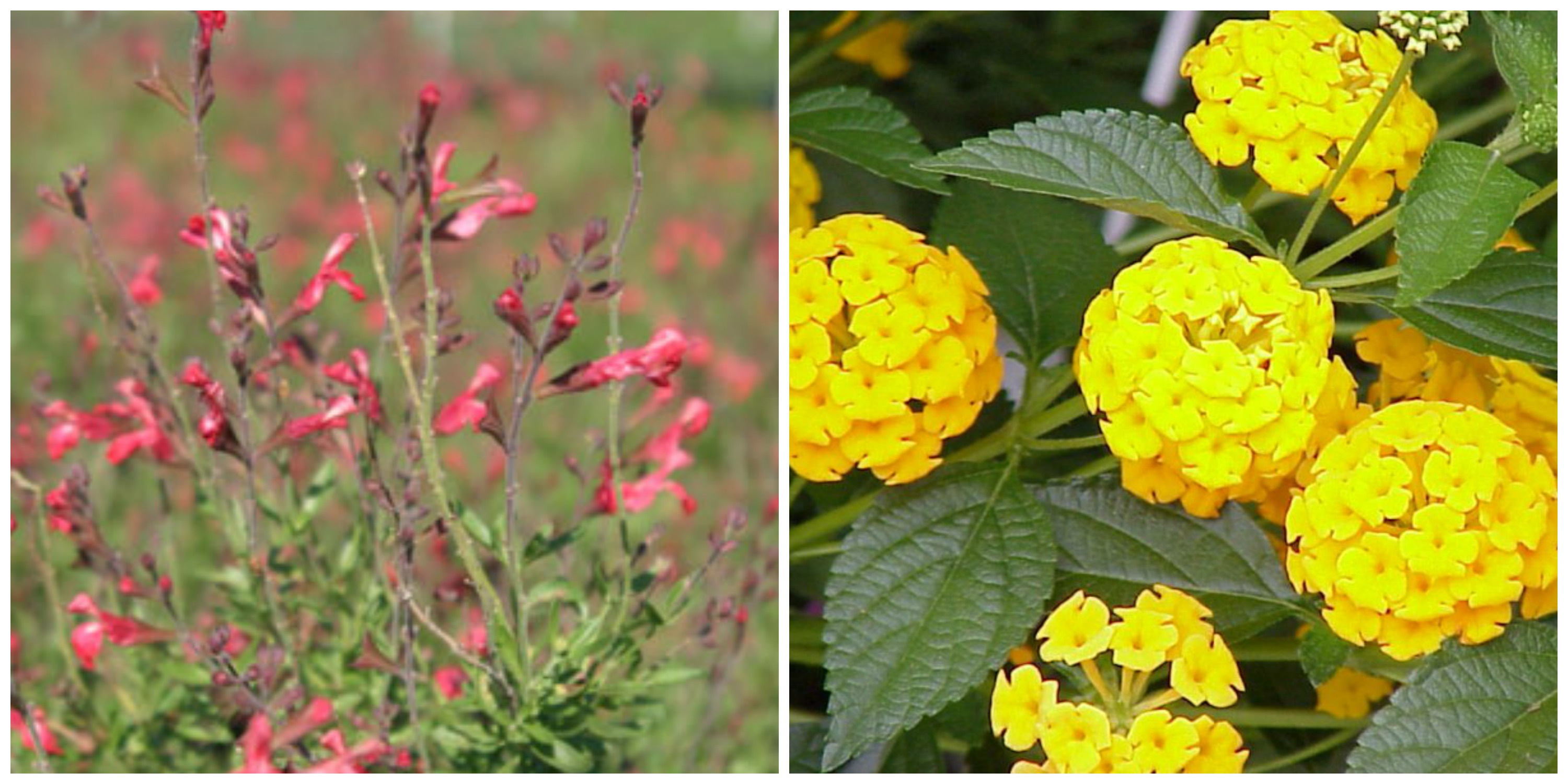
But then I fell for Miss Huff lantana.  The “BEST of the lantanas” says the plant description.  I bought two.  I overlooked that it grows 3-6 feet high. The Best of the Lantanas needs to be moved to the side yard. 

It was getting easier to tally what purchases were not on the Shopping List: Bridal Wreath vine, “Peter’s Purple” monarda, Louisiana iris, Mountain sage…… 

Husband Mike’s only request was for something to shade the brick wall of the house from the hot west sun.  I snagged dwarf pomegranate ‘Nana’ at a sale in Collin County.  Perfect plant: 3-6 feet tall, orange blooms and fruit from spring to fall, gorgeous color next to the brown brick.  The next day as I popped it out of the pot, I noticed a slight discrepancy: the tag said ‘Wonderful’ which grows into to a small tree. 

Oh bother. Is it 3-6 foot ‘Nana’ as the plant list specified? Or have I planted a really, really big ‘Wonderful’ pomegranate? Time will tell.  

Elizabeth
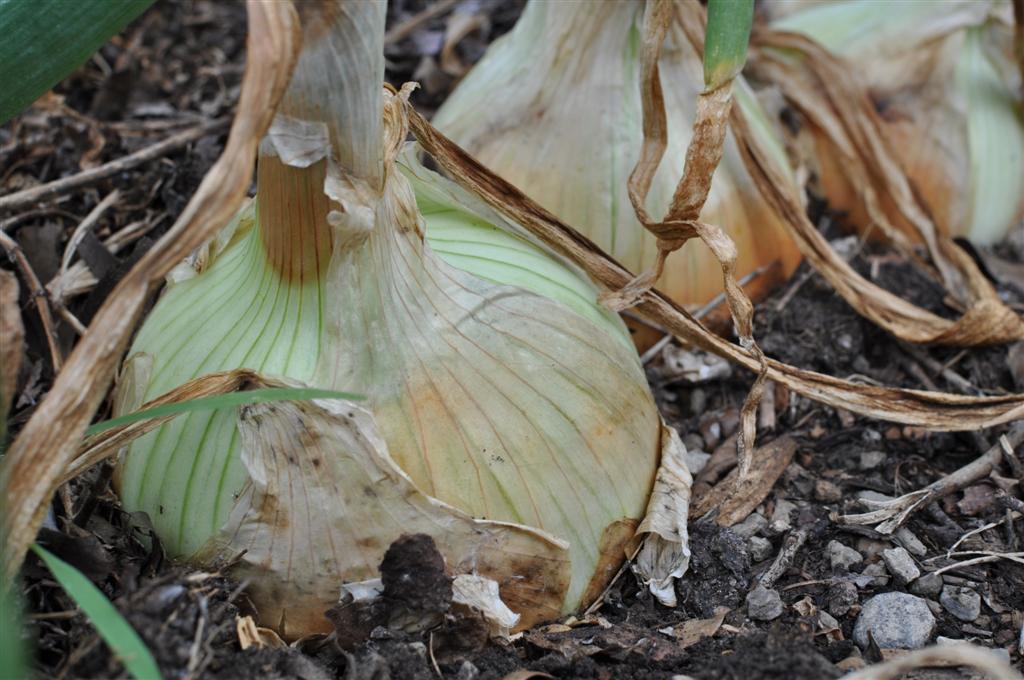
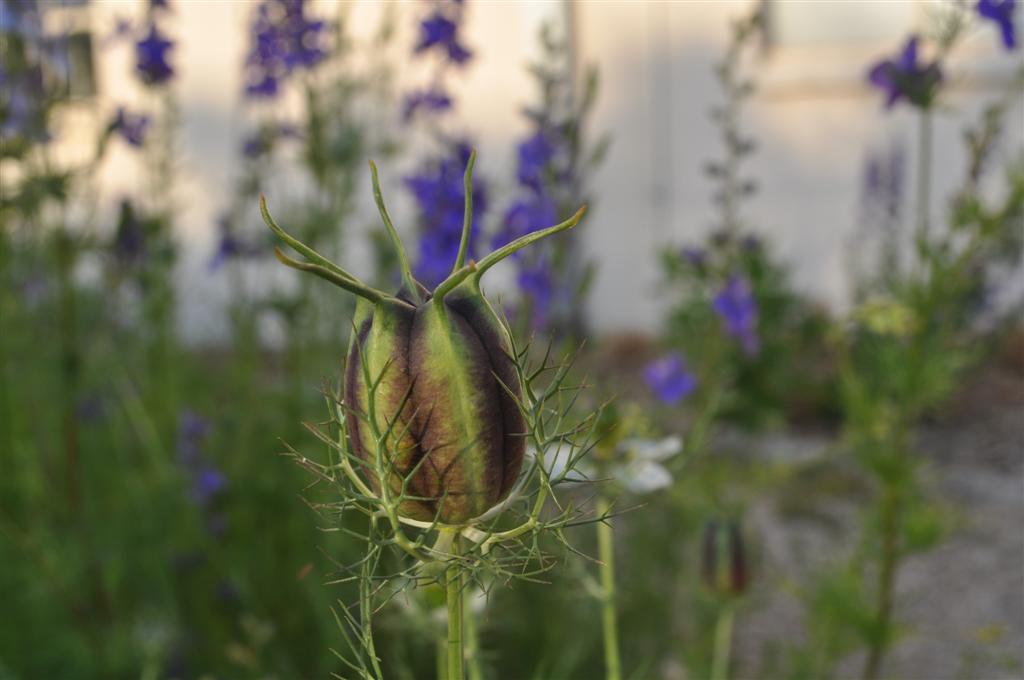
Love In The Mist, Nigella damascena

Love In The Mist At The Demonstration Garden on Joe Field RoadSome cottage garden favorites just do not work for us. Towering foxgloves just rarely tower, but Love in the Mist that’s a happier story.

Love In The Mist Blooming In April In Dallas

It’s true it doesn’t care for heat but still it loves spring here and adds a pretty airy charm to the early garden.  Its easy care as long as you remember Love in the Mist doesn’t like heat.  So the seeds are best planted in fall or early winter;  the plants establish themselves over the dreary months and then grow amazingly fast and start to bloom when warm days arrive.  The flowers are in shades of blue as well as pink and white  with fine foliage that is a treat in itself. When flowering is done, the seed pods form. 

Seed Pod Of Love In The Mist

Remember,self seeding annual, means you have to allow the seed pods to become mature but in this case it’s really an added bonus as the pods are intricate stripped balloons that add interest to the flower bed and can be saved for arrangements as well. Just be sure that some seeds fall to the ground. It’s the circle of life right there in your garden; the seeds will find their way and when winter comes they start to grow  and soon…

Susan

Pictures by Starla and Ann

Bluebonnets

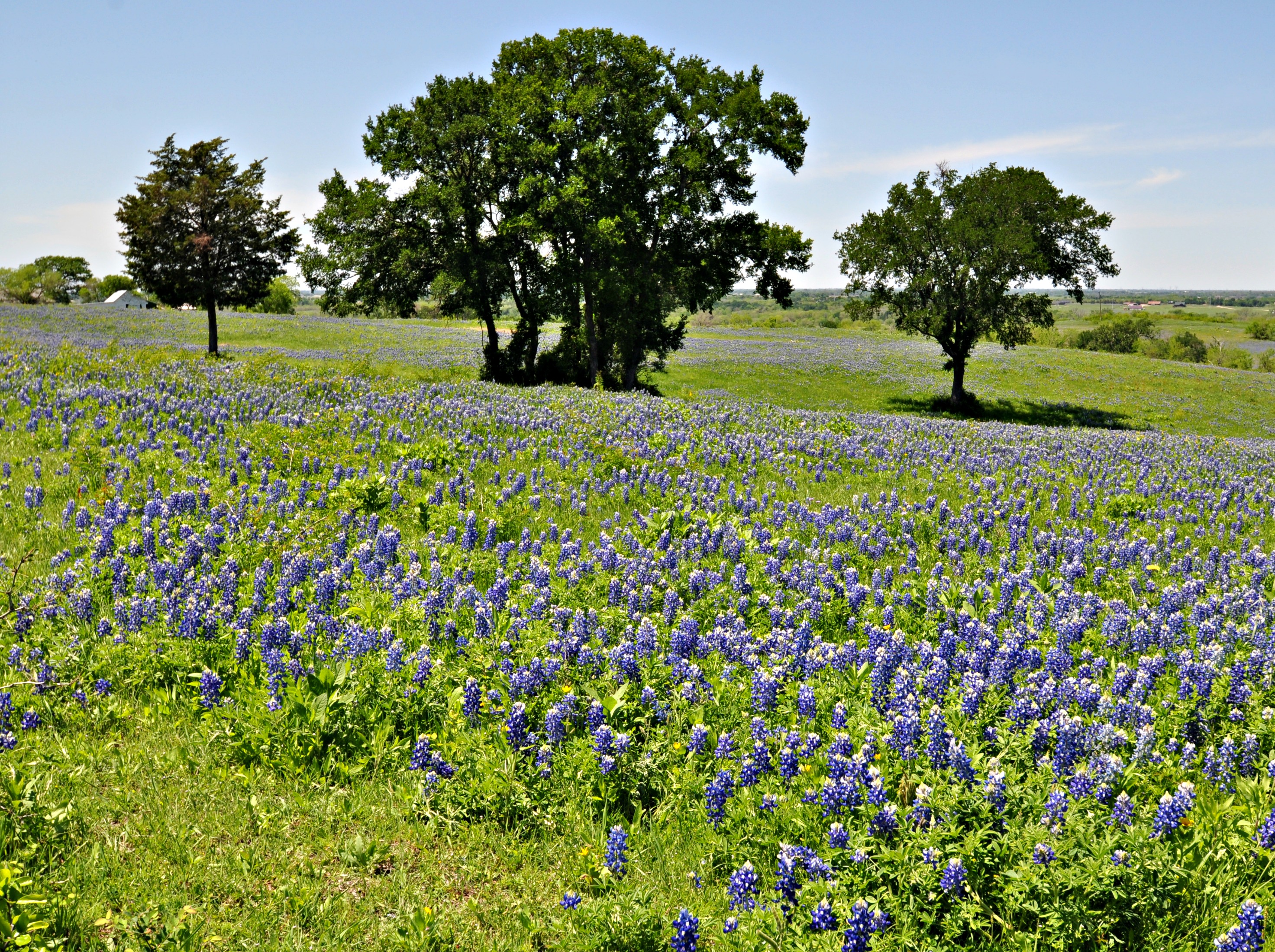
 On April 20th a short one hour drive from Dallas to Ennis, Texas brought us to beautiful Bluebonnet fields.”The bluebonnet is to Texas what the shamrock is to Ireland, the cherry blossom to Japan, the lily to France, the rose to England and the tulip to Holland.” (quote by Jack McGuire) 

To get this field of blue, you have to plant seeds in the fall when spring thoughts are  distant. If you need a little reminder, we will be happy to oblige.  In October we will remind our readers to plant Bluebonnet seeds.

Close up of Bluebonnets in an Ennis field

And remind you to purchase a field.

Bluebonnets Covering an Ennis Hillside

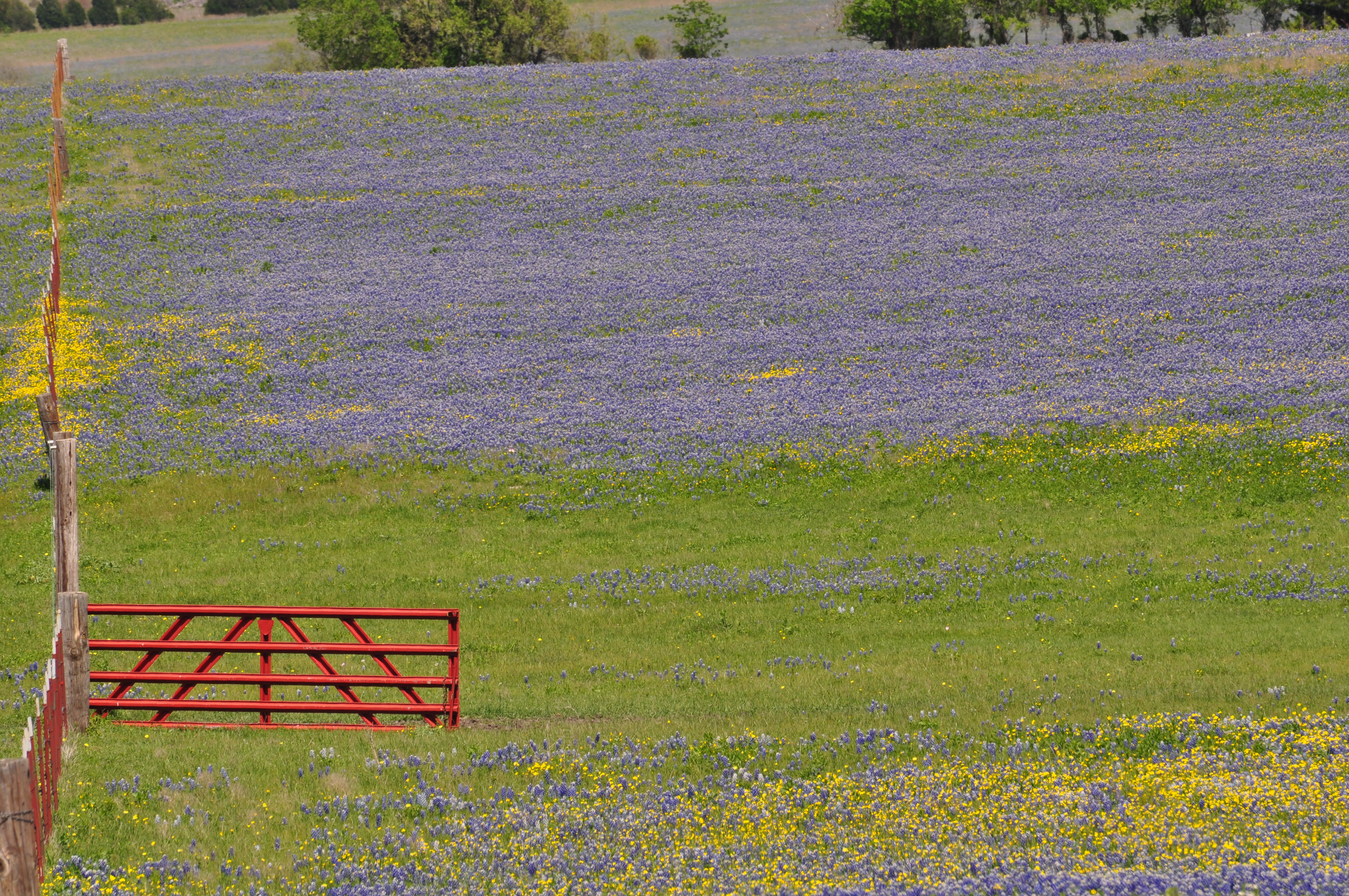
And to paint  the gate.

Bluebonnet Field in Ennis, Texas With Red Gate

Ann

April Dallas County Master Gardener Meeting

 Nothing short of a tornado should keep you from the April 25 Master Gardener meeting at the Earth-Kind Water Wise Demonstration Garden, 2311 Joe Field Rd. , Dallas. 

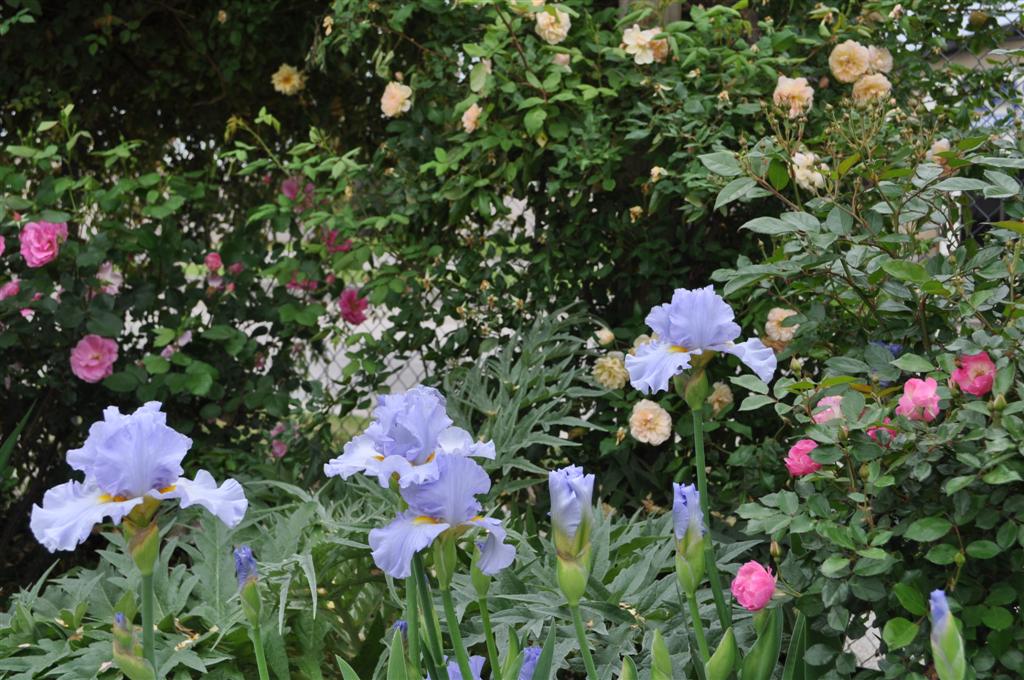
Blue Iris and Earth Kind Roses at the Demonstration Garden

Not only is the Garden in full, best of April, boisterous bloom.  But Linda  tested Mexican recipes for months to perfect a lunch menu using our home grown cilantro that will leave you weak in the knees: Cream of Cilantro Soup; Spinach and Mushroom Enchiladas with Cilantro Cream Sauce; Black Bean Salad with Corn, Red Peppers, Avocado and Lime-Cilantro Vinaigrette; Spicy Salsa; and Mexican Chocolate Cake with Praline Frosting. 

Cilantro Growing In Raised Bed At The Demonstration Garden

What would lunch be without a Plant Sale? Master Jardineros will sell 4-inch, quart, and gallon plants for rock bottom prices.  Plants include: lyre leaf sage, artemesia, Victoria blue salvia, stick verbena, Indigo Spires salvia, Star sedum, fall asters, blackberries, Blue Gamma grass, tall pink “Chi Chi” Ruelia, white and purple Hyacinth bean, and compost.  Check or cash only, please. 

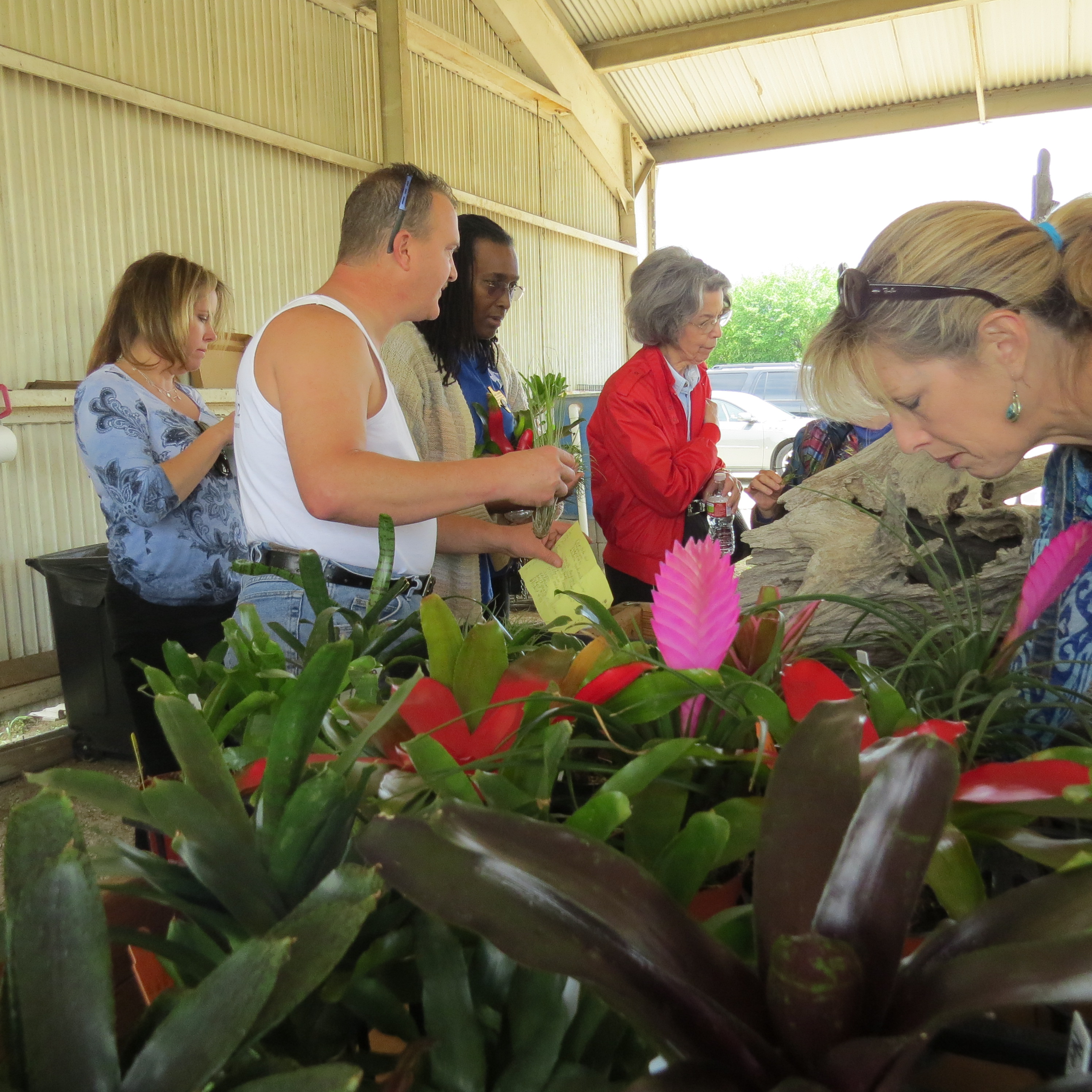
Note: Please bring your own folding chair.  The meeting begins at 11:30.  Gina Woods a fellow Master Gardener will be presenting a program on Tillandsias and Bermulaids .  She will be bringing plants to show and sell.

Elizabeth

Learning In The Garden

Tuesday, April 7, the Denton County Master Gardener School came to Dallas to learn from the Dallas County Master Gardeners at The Earth-Kind® WaterWise Demonstration Garden on Joe Field Road.

Did you know blackberries have primocanes and  floricanes and perennial roots and biennial tops?

Tim Allsup and blackberry lessons

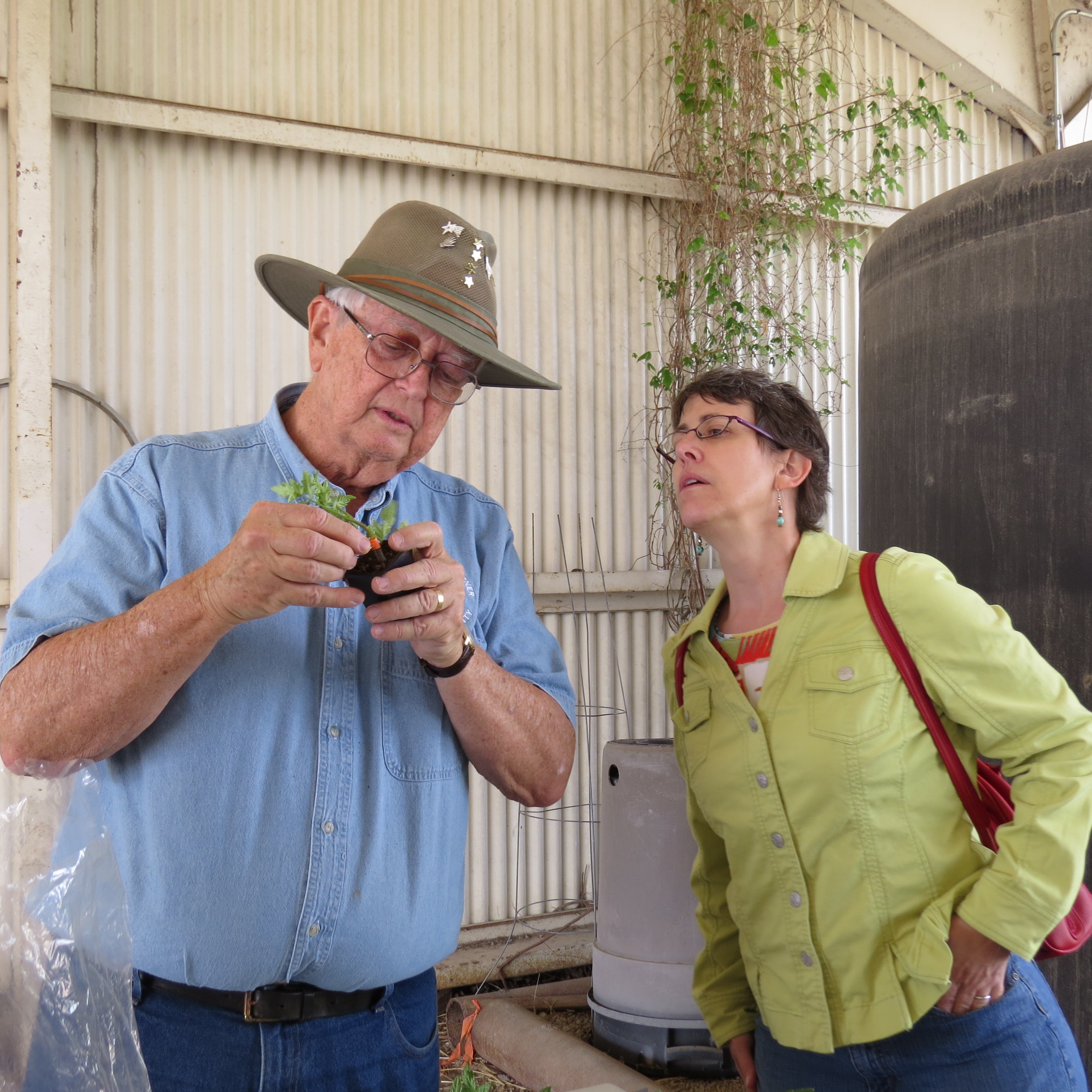
Have you ever grafted a Cherokee Purple Tomato onto a Celebrity Tomato?

Jim Teaching Tomato Grafting

Are you aware of the virtues of vermiculture?

Michele and Sue Teaching At The Dallas Demonstration Garden On Joe Field Road

We just can’t help it.  We love sharing  garden know- how with other gardeners.

Yearning to learn in the garden?  Future classes will be advertised on this blog.  Y’all come!

Ann

Pictures by Starla.

In The Spring…

From Wheat To…….. Bread?

One of the most fascinating aspects of being a gardener is learning about the history of certain plants that are growing in the garden.   Our DemonstrationGarden has many plants that have long and interesting pasts.  From the Garden’s “vegetable lambs” (a.k.a. cotton) to the fascinating stories behind many of the herbs, the Garden provides a mini-history lesson to the school children who visit. 

     Around 10,000 BC three grass species are thought to have crossed, giving rise to the plant we now call “wheat.”  Archeologists have found evidence of wheat in pits and caves used by humans as far back as 8000 BC.   By 6700 BC Stone Age man was using stone tools to grind the wheat into flour.  In fact, it is postulated that the “domestication” of wheat and other cereal crops might have been responsible for turning ancient nomadic hunter-gatherer communities into agrarian, stationary societies.  By 5000 years ago many civilizations grew wheat as a major crop.  The Egyptians were the first to make loaves of bread rise, possibly as a result of using beer, rather than water, as the liquid while making their bread.  Wheat bread was so important in Egyptian culture that in the tombs their dead were provided with miniature granaries to provide food for the afterlife.  An Egyptian museum even displays a loaf of bread found in one of the tombs.   This gives a whole new meaning to the words “stale bread.”

     For the past three to four years, the Demonstration Garden has grown a crop of wheat.  There are two different types of wheat:  fall wheat and spring wheat.  For years, the Garden’s wheat seeds (the name of the variety is unknown) were planted in a long raised bed in the spring.  However, few wheat stalks made it to maturity.  So, after talking to Fred Burrell, who was the County Extension agent at the time, in 2012 the seeds were broadcasted in the fall about 1”-2” apart and about 1”-2” deep in the raised bed.   Judging from the plants,

Wheat Growing At The Demonstration Garden on Joe Field Road, Dallas

it looks as if a good crop of mature wheat will be obtained this year.  By late summer the stalks will turn golden and be harvested.

     Until now, the Garden’s wheat crop has been used primarily for educational purposes to show school children an actual wheat plant.  In the past, the few wheat stalks that made it to maturity were cut and used for decoration.  However, at some point, it is hoped that enough wheat can be grown to actually produce a loaf of bread (or maybe a mini-muffin, since it takes about 10 square feet of planted wheat to make one small loaf of bread). 

     If you would like to find out more information on growing your own wheat to make bread, there are several articles on the internet describing the process.  Mother Earth News  has a detailed article on how to go about planting, reaping, threshing, winnowing, and turning the wheat into flour.  Growing your own wheat to make bread isn’t as easy as buying a loaf at the store, but it certainly makes one appreciate what our ancestors and even some people today still do to obtain wheat flour.  So, as you are eating your morning toast, think about the history of wheat as an important food crop.  And, if you have ever grown your own wheat for bread, we would love to hear from you.

Carolyn

Picture by Starla