Category Archives: Spring

BUTTERFLY PLANTS: I LOVE YOU, BUT IT’S TIME TO LEAVE


Variegated Fritillary on Salvia

Variegated Fritillary on Salvia

My side yard has a new unwanted hedge of plants in pots.  These are plants that should be planted in the new butterfly plot at the Raincatcher’s Garden of Midway Hills.  They are not. They sit in pots.  At my house.

The plants have been living in my side yard for two weeks.  They remind me of adult children who move back in for “just a few months, Mom,” and a year later you’re still sharing the washer with their yoga pants.

Using the butterfly garden plan, I made a list of plants required for that garden.   We needed almost 200 plants.

Plant sales are a little cheaper, but you have to know what you’re doing:

Get there early.  I am convinced most shoppers get up at 4:30 a.m. to line up two hours before the doors open.  If you’re pulling in the parking lot with your coffee in a to-go cup about 10:30, it’s not worth the drive.  The shelves are bare at that point.

Plant sales are the closest thing Dallas has to a crowded New York subway.  You’ve got to elbow your way to native-this and hard-to-find that  (saying ‘excuse me’ after each grab—this is, after all, The South).  My genteel mother would have been appalled.

Don’t kid yourself. A tiny old Prius will not be big enough for the drive back with your new acquisitions. You’ll have to beg your patient friend Judy-with-a-truck to pick up all the leftover purchases the next day.

Which brings us to why I have about 200 Plants In A Pot in my side yard, and why I know each of them intimately.

North Texas has been in a severe drought for six years.

I purchased the plants two weeks ago.  Six hours after I unloaded them to my side yard, I hauled them back into the garage because of impending “damaging 60 mph winds, hail, and possible tornadoes.” Out into the sun. Thirty minutes later, back into the garage. This has gone on for days. The plants are confused.  I am exhausted.

Last week I emptied 5 inches of rain from the rain gauge. It is too muddy to till the site for the new butterfly garden.  It is too wet to even think of planting.

The forecast is for 85 degrees and sunny today.  Severe thunderstorms are predicted for tomorrow.

Elizabeth

To read more about our Butterfly Garden Plans click here.

Picture by Starla

Plant Sales and Church Potluck Dinners


If you think about it, a plant sale is a lot like a church potluck dinner.  You never know what you’re going to have, the good stuff goes fast, and you get to try new things.  And it’s all homemade, except for the tubs of fried chicken.

Our Sarah outdid herself organizing the Demonstration Garden’s annual plant sale on May 22, held each spring when the Demonstration Garden volunteers host the Master Gardener monthly meeting.  The speakers giving announcements didn’t start until 11:30 a.m., but the early birds were scrambling long before that for the best deals.

Plant sale cashiers

And what deals they found: About 33 bright cardstock plant tags in Elizabeth’s calligraphy hovered over the “Have to Have It Plants” like Purple Coneflower, Lyre Leaf Sage, and White Autumn Clematis.  “Garden Standbys” like Rock Rose and Red Yucca enticed shoppers.  And then there were the “You Don’t Find That Very Often Plants” including horseradish, Jewel of Opar, and Rose Campion.

Plant sale sign

Of course, garden advice was dished out with each purchase.  Want hummingbirds?  Flame Acanthus must be in your basket.  Malabar spinach? Well, it’s sort of like spinach, but it will take hot weather.

Now you don’t just decide to have a plant sale the week before.  This is a multi-month process for our Sarah to keep up with.  In March, eager plants are divided and seeds started.  Then nursemaids take these little guys home to pamper them.  Gardeners also raid their own yards for contributions. We even had many lovely plants donated by a friend of the Demonstration Garden, Master Gardener Margaret Burnette.  Then there’s the “I Don’t Know Exactly What’s Coming In” factor, as Sarah was inundated days before the sale with last minute “I’m Bringing….” emails.

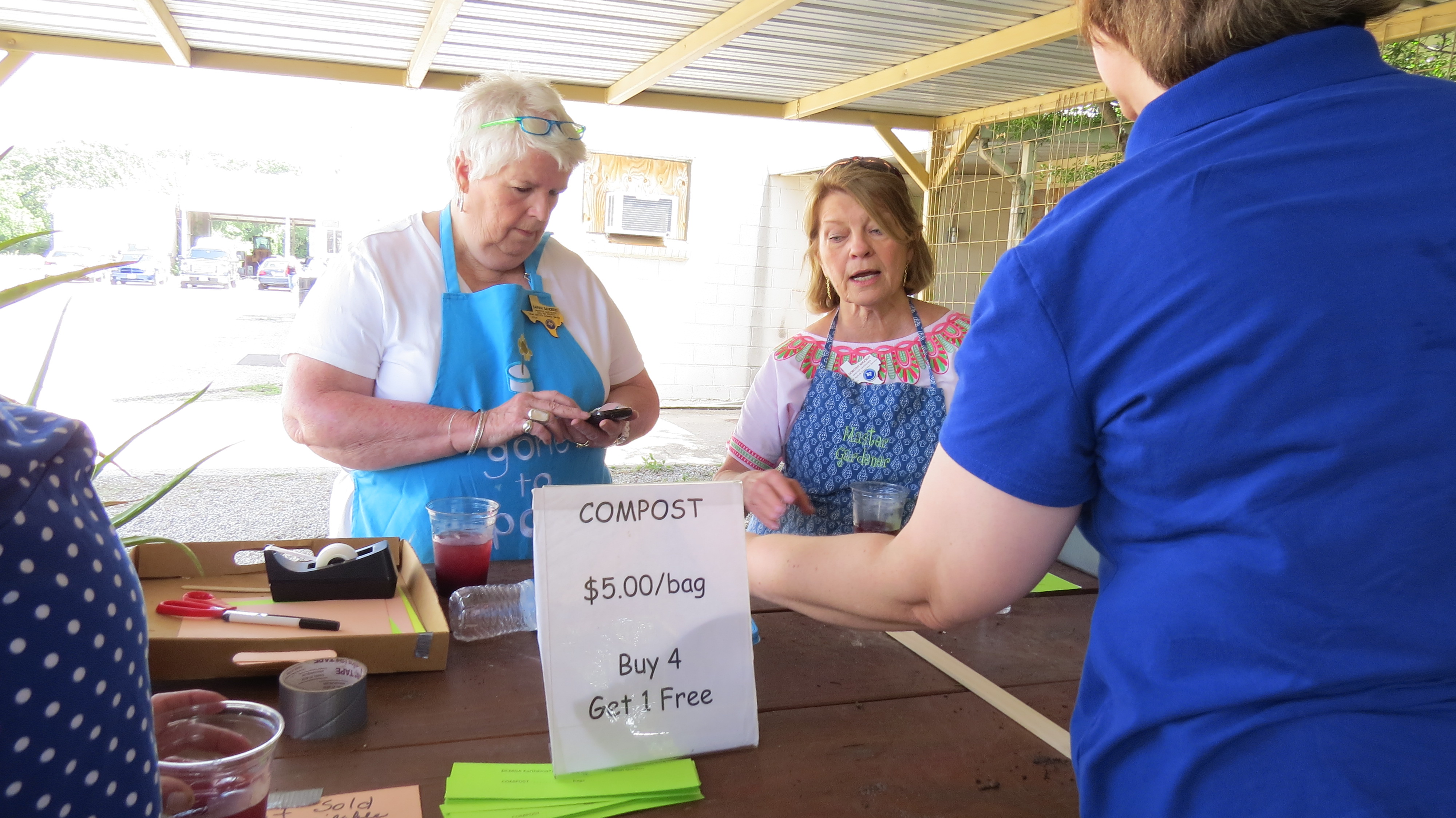
This was a Plant Sale with added attractions.  Shoppers could also bring home some of the Demonstration Garden’s magical compost or worm castings.  Cindy has the knack of coaxing compost out of a mound of clippings and leaves, and shoppers knew to stock up.

Dallas County Master Gardener with Plant Sale Specimens

Dallas County Master Gardener with Plant Sale Specimens

It’s a year until the 2015 Demonstration Garden Plant Sale Extravaganza, and I’m already making my shopping list.

Elizabeth

Pictures by Starla

Honey Selections for Tasting and Cooking

Hello Honey! Like a fine wine…..

the color and flavor of every nectar reflects

a particular time and place

 IMG_9854


Tupelo The Gold Standard of Honey

Tupelo, the Gold Standard of Honey

Tupelo Honey:

Bright citrus and summer berries, buttery undertones

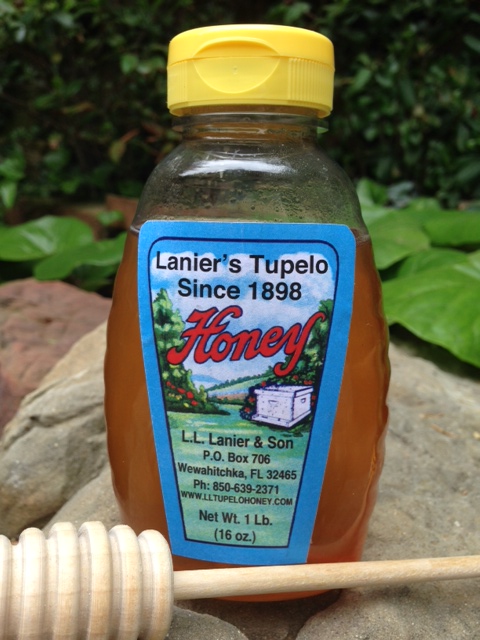
Savannah Bee Company describes Tupelo as the “gold standard” of honeys, like a “slow moving river of sunshine.” L.L. Lanier and Son’s Tupelo Honey Co. has harvested honey from the tupelo-gum tree since 1898 in swamps along the Chipola and Apalachicola rivers of northwest Florida. Bees are placed on elevated platforms along the river’s edge, free to search out the fragrant nectar in April and May. As the white Tupelo bloom begins, beekeepers clean the combs of other honey to be sure to collect the just new crop. Then the new crop of honey is removed after bloom, to keep the honey pure. Tupelo honey is a light golden amber color with a slight greenish cast. Because of its unusually high fructose content, tupelo honey will not granulate. (A granulated honey indicates an impure Tupelo honey.) Be careful when purchasing Tupelo honey, as it can be mixed with Gall berry, which blooms right after the Tupelo tree, or cut with wildflower honey. Fun fact: Tupelo Honey by the band Van Morrison was a song and album released in 1971.

 L.L. Lanier & Son’s, Wewahitchka, Florida  www.lltupelohoney.com

???????????????????????????????

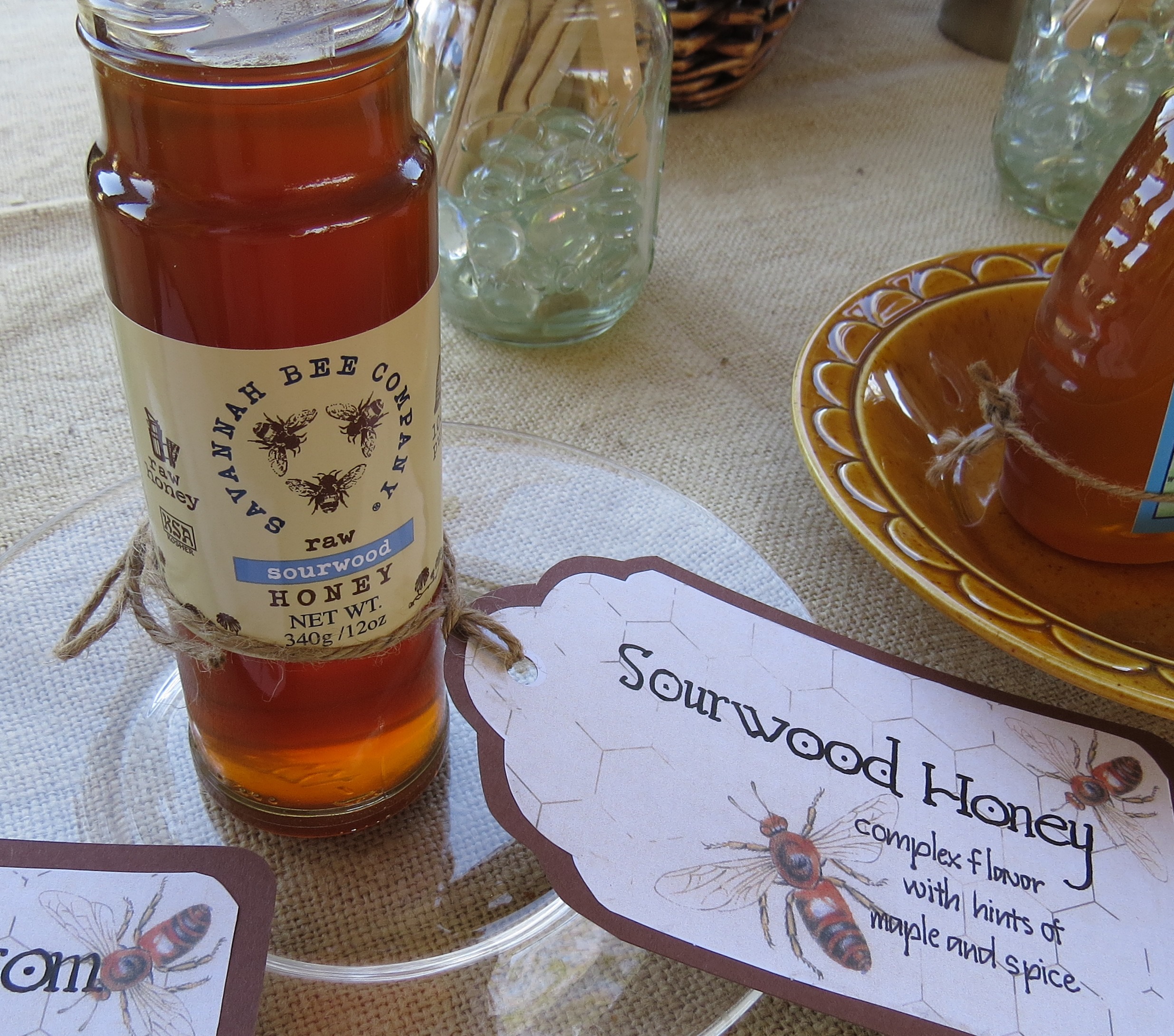
Sourwood, Angelic!

Sourwood honey:

Most honey is made by bees. But sourwood is made by bees and angels.”

Sourwood honey requires just the right timing: the sourwood trees bloom late in June through August and must have enough sunshine and rain to produce enough flowers to yield a honey crop. If the understory trees don’t receive enough rain, the producer cannot make honey that year. Like fine wines, this honey from southern Appalachia is only available during those perfect “vintage” years. Sourwood honey is so rare that a good crop sometimes only surfaces once every decade. Like Tupelo honey, the beekeepers are careful to restrict the bees’ nectar gathering to the sourwood blossoms. If the honey has even a small percentage of other varietals, it cannot be sold as sourwood. Sourwood honey won the 2005 World Honey Tasting Competition for its flavors of molasses, maple, and mocha. The color ranges from pure white to light amber with a slightly grey or purple tint. Sourwood trees are also called “Lilly of the Valley Trees” because of the similar look of the blossoms.

Savannah Bee Co. Savannah, Georgia savannahbee.com
 

???????????????????????????????

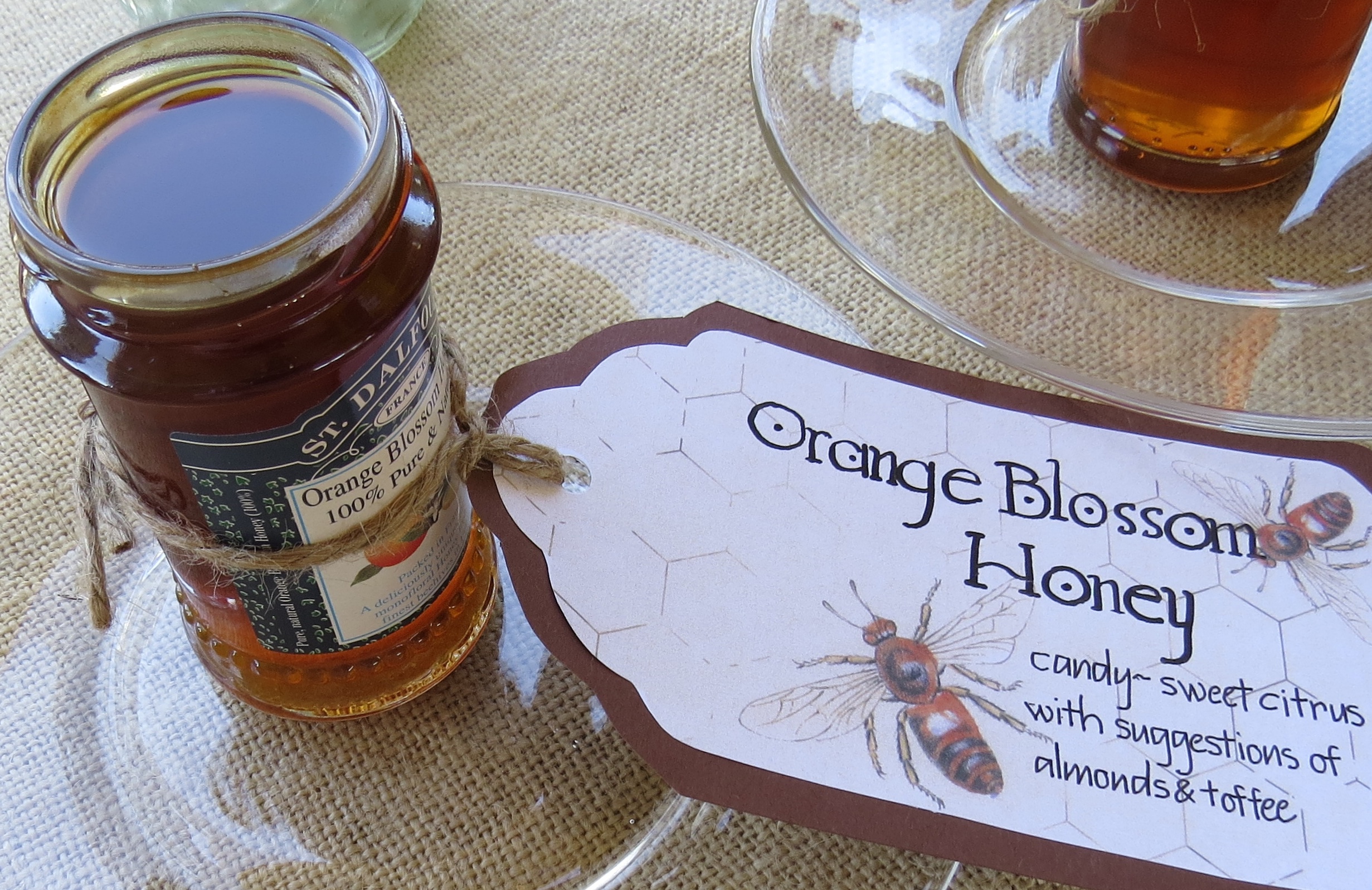
Orange Blossom, Sweet Citrus

Orange blossom honey:

Candy-sweet explosion of citrus flavor

Orange Blossom honey comes from sunny southern Florida and is one of the earliest honeys harvested in the year. The orange blossoms are a classic flower for bridal bouquets because they symbolize purity and have a lovely fragrance. Use this floral and fruity honey for Baklava or to drizzle over French toast. Orange Blossom is also perfect as a dip for figs, strawberries, and melon.

www.savannahbee.com

Wildflower honey:

Inspired by a field of Texas wildflowers

Unlike a varietal honey drawn from a specific nectar plant, Wildflower honey depends on the whimsy of bees let loose in fields of flowers. The bright golden honey is rich and luscious: a taste of Texas in a jar. Enjoy Wildflower honey on a classic peanut butter and honey sandwich or twirled on a steamy latte.

Warne Bee Farm, Anna TX 972-924-3928 www.warneshoneybees.com
  

???????????????????????????????

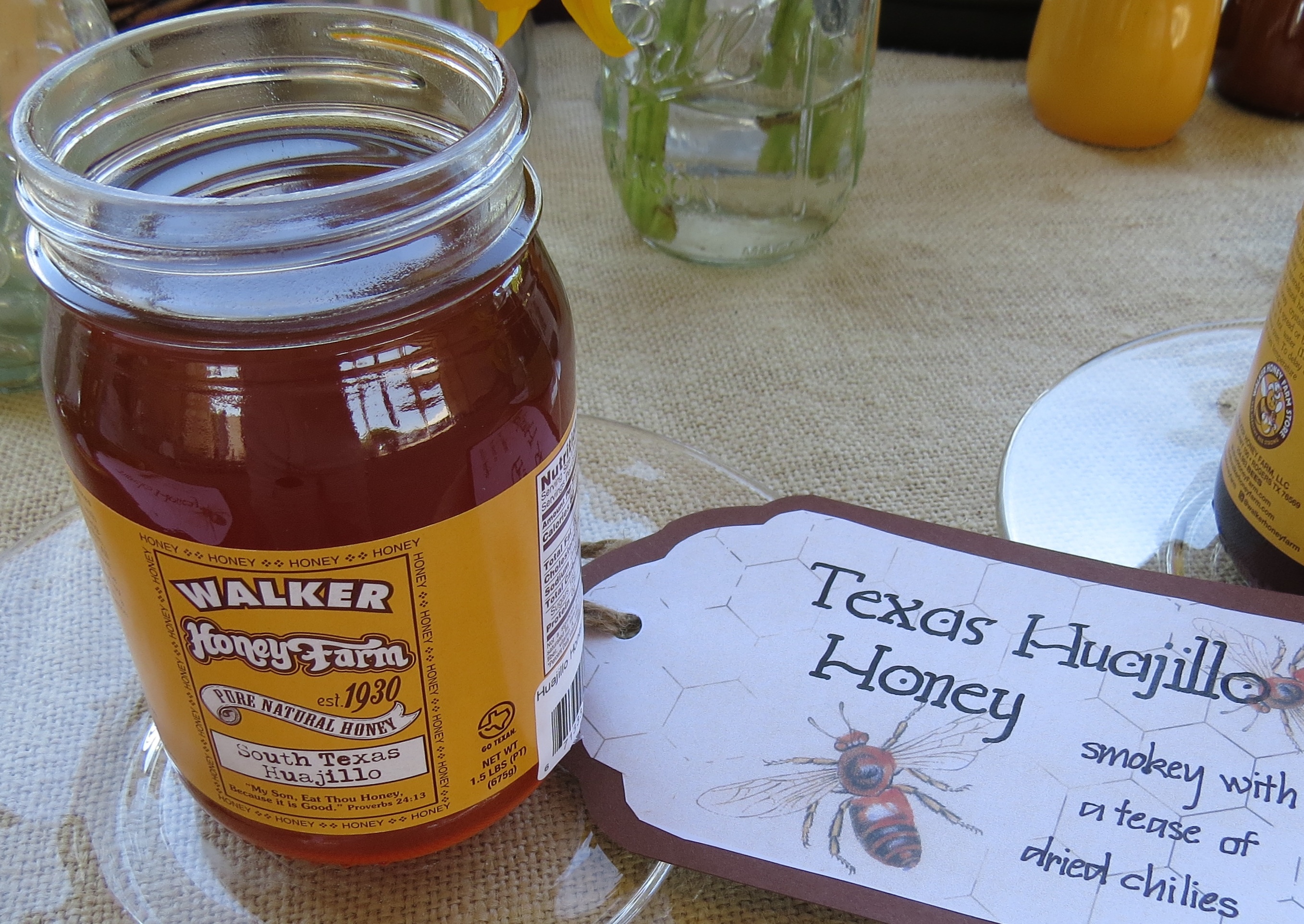
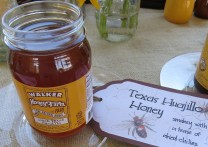
Huajillo, Smoky and Spicy

Texas Huajillo Honey:

Smoky with a tease of dried chilies

Texas Huajillo honey springs from the brush country of Southwestern Texas and Northern Mexico along the Rio Grande River. Bees feast on the fragrant white blooms of native Guajillo Acacia berlandieri in March and early April. (Guajillo is also known as Huajillo, Berlandier Acadia, and various Catclaws.) The large, multi-trunked shrub can be pruned to a small specimen tree for use on patios or around pools. Guajillo has an open airy form, fern-like lacy foliage, and prefers full sun. Walker Honey Farms Huajillo honey is harvested in Frio County, Texas, southwest of San Antonio.

Walker Honey Farm, Rogers, TX http://www.walkerhoneyfarm.com
 

???????????????????????????????

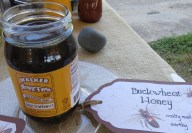
Buckwheat, Malty and Earthy

Buckwheat honey:

Malty and earthy

Buckwheat honey is unusual for its deep brown color, thick rich texture, and a taste that reminds one of mild molasses. Honeybees are drawn to the irresistible fragrance of the profuse white buckwheat flowers, a plant related to rhubarb and sorrel. Buckwheat honey is the perfect sweetener for Jewish Honey Cake or gingerbread, delicious on sweet potatoes and a distinctive topping for pancakes. Local honey producers rely on beekeeper friends in states like North Dakota and New York to provide honey from this northern crop.

http://www.warneshoneybees.com or Weeks Honey Farm http://www.weekshoneyfarm.com

More reading: National Honey Board http://www.honey.com

Elizabeth

Pictures by Starla and Linda
Bee Expert, Local Honey Tastings & Lunch

Bee on Blanket Flower

 TAKE THE “STING” OUT OF TAXES

Bee Expert, Local Honey Tastings & Lunch

It’s a Honey of a Deal!

Tuesday April 15 Ÿ10:30 a.m.-12:00 noon

$20 per person Ÿ Limited Reservations

EARTH-KIND®/WaterWise Demonstration Garden Ÿ 2311 Joe Field Rd.

Bee Expert David McCarty will tell you:

Ÿ Why are honeybees brilliant?

Ÿ Which bees produce the most honey?

Ÿ Why is the honeybee referred to as a well-designed engine?

Ÿ Why is the “waggle” dance a kind of honeybee GPS?

 Hello, Honey! Menu 

Appetizer Tray featuring Marcona Almonds & Artisanal Cheeses

Drizzled with Tranquility Hill Honey RanchŸ

Goat Cheese Handkerchiefs with Tart Cherries & SageŸ

Smoked Turkey, Red Grape & Pistachio Salad

With Creamy Honey-Dijon DressingŸ

Honey-Pecan Tart with Honey Ice CreamŸ

Iced Honey Lemon Tea

Your check is your reservation and must be received by April 5th.  No refunds.

Make checks payable to: DCMGA.

Email: dallasgardenbuzz@gmail for the address of where to send your checks.

Harbinger of Spring


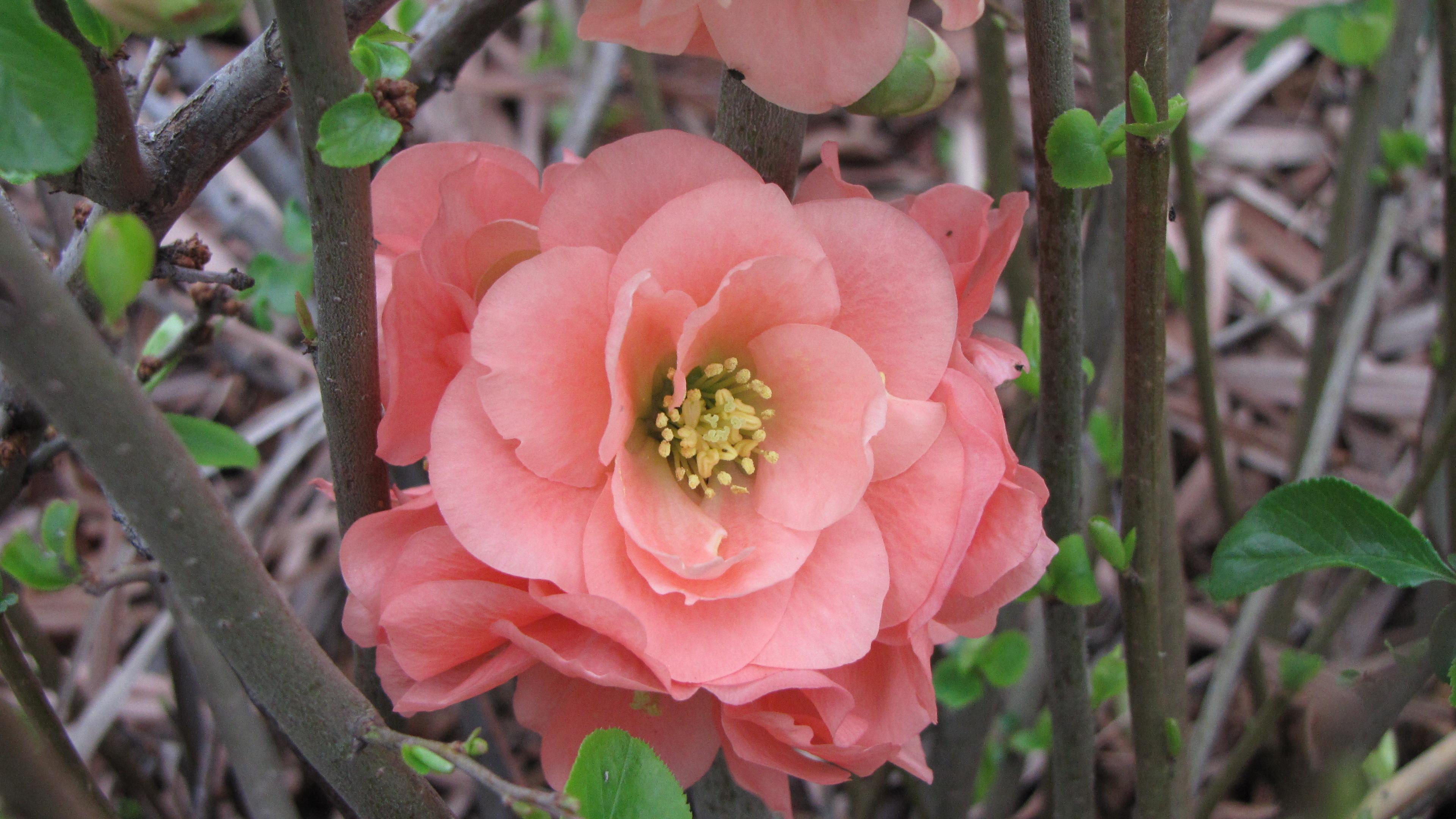
Quince BranchAlmost no other plant screams as loudly “Spring is just around the corner!! “ as the cheerful sight of a Flowering Quince in full bloom in the dreary winter landscape.

Native to eastern Asia, Japan and China, Flowering Quince is highly adaptable to growing well the United States, including Texas.  Because of its Asian origins, an old-time name for the plant was Japonica and the pink and white blossoms of Flowering Quince and its fruit are often depicted in Japanese paintings.

quince

Flowering Quince, genus Chaenomeles, can range in size from 2-10 feet tall and wide depending on the variety.  They tend to be a rounded shrub and nearly all have thorns, though some of the newest varieties are thornless.  Except for their brief moment of glory when they bloom in shades of red, white, pink or salmon in late winter, they are a nondescript, glossy green shrub which some consider too ungainly and rambling to be given a prominent place in the landscape.  They are very hardy, will live for years, and require only moderate maintenance.  In highly alkaline soils they may become chlorotic but even in Dallas County this does not present much of a problem.  Though some of the newer varieties are said to grow in partial shade, the more sun they are given, the more flowers they will produce. 

     Here at the Demonstration Garden we grow a variety called Texas Scarlet Flowering Quince, Chaenomeles japonica ‘Texas Scarlet.’  It grows from 3-6 feet tall and wide and has very fiery tomato-red, apple-blossom-like flowers that precede the deciduous leaves.  After blooming it produces a greenish-yellow fruit which can be harvested in the fall.  It is considered best when used in a shrub border or as a background plant.

    The fruit of Flowering Quince, including Texas Scarlet, can be used to make jellies and jams.  The fruit is very hard and must be cooked before eating; and the seeds, which contain amygdalin, must be removed before cooking.  Because the fruit contains more Vitamin C than lemons, in Estonia, it is called a Nordic Lemons.  There are several recipes for Flowering Quince jelly on the internet.  However, because of the small size of most of the fruit from ornamental varieties, most cooks consider it too labor intensive to make jelly from varieties such as Texas Scarlet.

   quince-flowering  Though nurseries are carrying Flowering Quince now that are in full bloom, just remember that glory of these shrubs may only last for ten days to two weeks.  However, if you plant and establish Flowering Quince now, just wait until next year.   You will be greeted with a flamboyant harbinger of spring. 

Carolyn


Nasturtium, Tropaeolum majus

It is said that Monet was rather fond of them and planted them in the border of the pathway that led to the front door of his home in Giverny.  With enchanting names like “Empress of India”, “Whirlybird”, “Alaska”, “Peach Melba” and “Butter Cream”, no wonder Nasturtiums are so welcomed in the garden.   They just seem to add a touch of old-fashioned charm.

Above: Beautiful fall nasturtiums at Shelburne Farm in Vermont

Above: Beautiful fall nasturtiums at Shelburne Farm in Vermont

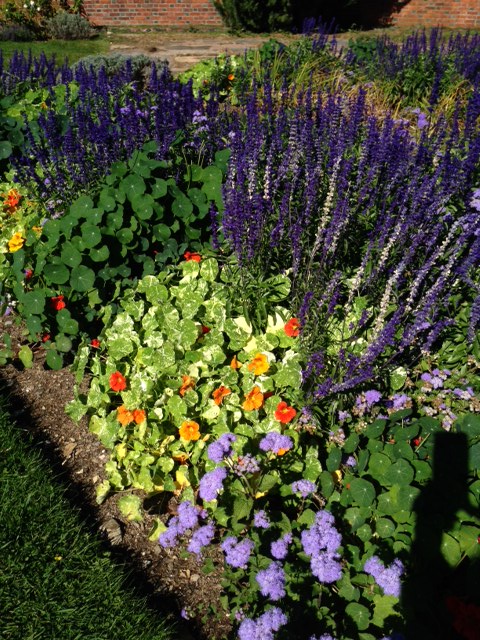
Nothing signals spring’s arrival more dramatically than the first bunch of jeweled toned nasturtiums perched on the shelf at your local garden center. If you are looking for decorative, even water lily pad- like foliage, with a wave of brightly-colored blossoms that are tasty to boot, then head for the nasturtiums.  You may be familiar with the varieties that have deep green leaves, but there are now a number of variegated, almost speckled ones, as well.

Above: Lily pads in the garden? No, more fall Nasturtiums from Vermont!

Above: Lily pads in the garden?
No, more fall Nasturtiums from Vermont!

Ideally, nasturtiums like to be in full sun, with moist, well drained soil. However, most varieties can survive when grown in partial sun. These carefree little dazzlers don’t seem to be bothered much by snails, other insects or diseases.  Enjoy them from March until sometime around late June when they succumb to our extreme Texas heat.

You’ll typically find two different kinds of nasturtiums: dwarf bush type and trailing.  The dwarf types are much more commonly available, and are useful as 10- to 12-inch tall colorful borders and for mass plantings.  The trailing variety will cascade dramatically down walls or hanging baskets.  Nasturtiums make a lovely addition to the herb garden with a multitude of culinary benefits.

There is nothing more intriguing than the tissue paper like profusion of blossoms that nasturtiums produce.   Although the blossoms appear delicate, they are actually very durable and make for vibrant and long-lasting garnishes.  Use the blossoms either whole or chopped to decorate creamy soups, salads, butters, cakes and platters.  Their sweet, peppery taste (both in the leaves and in the flowers) adds to the enjoyment.

Above: Organic nasturtium blossoms bundled  up and for sale at the Aspen, Colorado Summer market

Above: Organic nasturtium blossoms bundled up and for sale at the Aspen, Colorado Summer market

Nasturtiums are natives to the cool highlands of mountains extending from Mexico to central Argentina and Chile. The conquistadors brought these brightly colored plants back to Spain in the 1500’s. The Indians of Peru used the leaves as a tea to treat coughs, colds and the flu, as well as menstrual and respiratory difficulties.   Being high in vitamin C, nasturtiums act as a natural antibiotic, once used topically as a poultice for minor cuts and scratches.


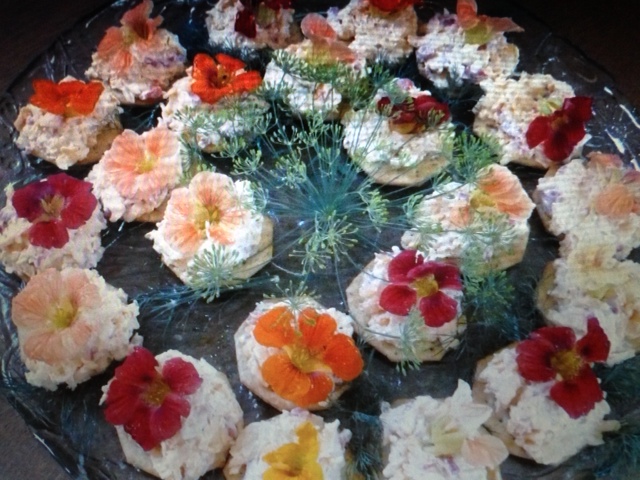
Take advantage of the many decorative ways to use nasturtium flowers for your next gathering.  However, don’t be surprised; some people will turn up their noses to a beautiful flower sitting atop a cracker spread with herb-flavored cream cheese.  Others will fully embrace the opportunity to sample such a tasty little gem.  If we could only extend our growing season nasturtiums might grace our tables more often.  Oh, dreaded Texas summers, why do you leave us so little time to enjoy this beloved plant?

Linda

Tip: Texas AgriLife Extension Service recommends planting nasturtium seeds about the time of the average last frost. They are usually planted where they can be allowed to mature, since young seedlings can be difficult to transplant.


Larkspur Deconstructed

We have had Larkspur blooming in our garden since April.  It is a cool season, self seeding annual. Another words throw down your seeds in the fall and expect blooms the following spring.   Like Love in the Mist

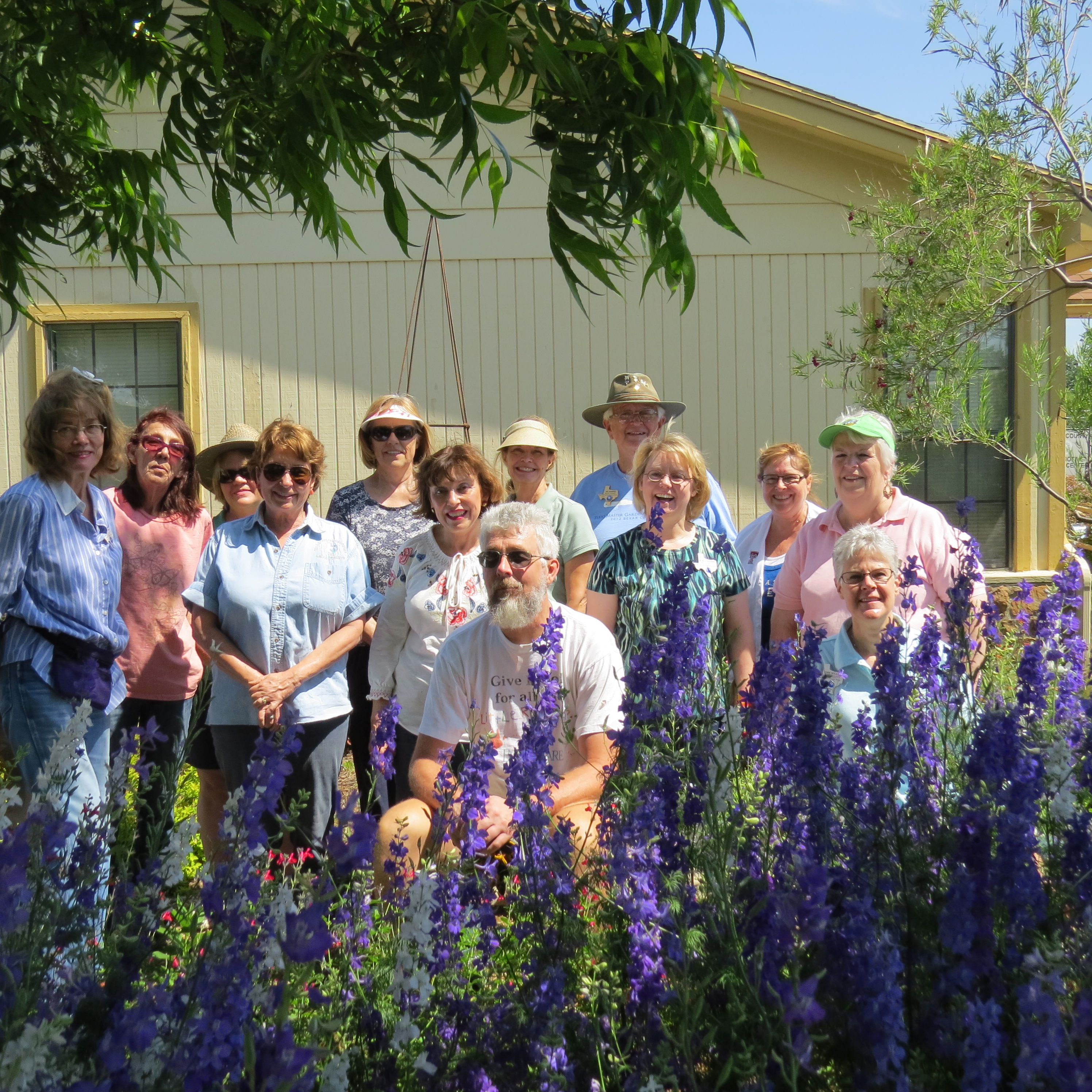
Larkspur and  some Dallas County Master Gardeners

When the flowers begin to fade and seed pods turn to papery brown, you can either leave the flower stalks to drop more  seeds  and/or you can harvest them so you have a stash to share.  We have plenty, so we will share, thank you.

Larkspur Stalks With Seeds

Jackie, a Master Gardener and  seed saving expert, suggests turning the stalks upside down in a paper bag to let them settle at the bottom of the bag.  We are doing this at the Demonstration Garden and will sort out the seeds  and package them later this summer.

  I am trying this at home, using a metal trash can for the seed collection.Larkspur Seed Saving Process

Swedish Proverb:

“All the flowers of all the tomorrows are in the seeds of today.”

Larkspur Seeds

Ann

Blackberry Class And Lunch In Our Blackberry Patch

Take the mystery out of growing blackberries. 

Come to the Earth- Kind ® WaterWise Demonstration Garden

at 2311 Joe Field Road

to hear Tim Allsup give an outdoor talk about how to grow ‘em and which varieties he likes, and how to prune ‘em! 

Date: Tuesday, June 4th                   Blackberries, Some Ripe                                                                    

Time: 11:00am-Noon

Place: 2311 Joe Field Road

Reservations: glamb@flash.net or sign up by leaving a comment on this blog.

Cost: $5.00 each person to be paid when you arrive for class 

Guests welcome, Master Gardeners will receive one hour education credit.

“Blackberry Lunch” 

Smoked Turkey, Mozzarella, and Blackberry Sandwiches 

Spinach Berry Salad with Blackberry Balsamic Vinaigrette 

Blackberry Lemonade

 Dessert Smorgasbord 

Blackberry Crumb Bars 

Fresh Blackberry Cake 

Blackberry Puffs 

Lemon Blackberry Swirl Pound Cake

Menu by Linda

Picture by Starla

Recipes will be included on our blog next week.


Spring Harvest

  Hooray for vegetable gardening  in Dallas  because it is  an all year feast  thanks to our mild winters. 

1015 Y Onions

Dig back to the beginning of 2013:  in January  little onion sets, no bigger than a pencil, were planted.  Now  baseball size onions are ready for harvest

Wheelbarrow Of Onions

And ready for curing… and new recipes.

1015Y Onions Curing After Spring Harvest

This makes it possible to cook with each season’s bounty of homegrown vegetables all year.

 The Earth-Kind® WaterWise Demonstration Gardeners will be providing more farm to table recipes using our produce. More onion recipes are coming.

Dine with us by subscribing to our blog ! 

Ann

Red Yucca

 When the tall plumes of Red Yucca brighten up the Dallas landscape, it’s time to break out the mojitos: summer can’t be far behind. We’ve had a long, cool, graceful spring filled with the most beautiful roses in years. But today’s crushing heat and humidity signal the end of May, the last days of the school year, and the start of sun tan season.

Red Yucca With Larkspur in Background at The Demonstration Garden

Gardening just doesn’t get any easier than Red Yucca. You mix in expanded shale into your clumps of clay soil (for better drainage), plant the yucca, and watch its red blooms for 30 (THIRTY!) Weeks of the Year. Then you trim off the spent flowers at the end of the season. After yucca is established, you don’t even water it; the plant lives off rainfall. Poor drainage is its only downfall.

No wonder TXDOT plants these in large groups along the highway. Whizzing along at 70 mph, a large swatch of Red Yucca is breathtaking.

The one-inch bell-shaped flowers cluster up and down the stalks, rising 4 to 6 feet above the ground. Flowers are full of nectar and irresistible to hummingbirds. The most common flower color of Hesperaloe parviflora is the lovely coral outside, with pale yellow on the inside. A solid yellow selection is also available.

Close Up Red Yucca Bloom

Red Yucca is a great choice to use around swimming pools and patios. Combine it with ‘New Gold’ lantana to pick up the soft yellow insides of the bloom or Coral Autumn Sage to repeat the color of the yucca’s flowers. Add a few grasses and you’re ready for a carefree landscape.

Coral Salvia and Lantana, New Gold

Mix me another mojito and pass the sunscreen.

Elizabeth

Close up photo of Yucca by Harry Cliffe