Category Archives: Fall

Poppy And Larkspur Seed Planting For Dallas Gardens

Before the seed there comes the thought of bloom. –E. B. White

 Poppy Blooming In Front Of Climbing Pinkie Rose In Our Rose Trellis Garden

Plant Poppies and larkspur seed now for early spring blooms!

They require cool weather to germinate.  If you want gorgeous color for a low price, take this simple step and throw down these seeds in your garden right away.

Sow poppy and larkspur seeds on top of a well-prepared bed but do not cover with dirt. Tamp down the soil with the back of a hoe or pat down with your hands. Do not mulch.  

With a little rain, they will begin to germinate and next spring you will be well on your way to an heirloom, cottage garden look. Time is of the essence.  Do it now, you will be thanking us next spring! 

Ann

Bushels Of Butternuts

Even the name—butternut—brings fall to mind.  Nature brings us such end of the season treats in November.  The queen of winter squash hides hers in a soft beige overcoat, revealing the rich, orange-yellow flesh when cut.
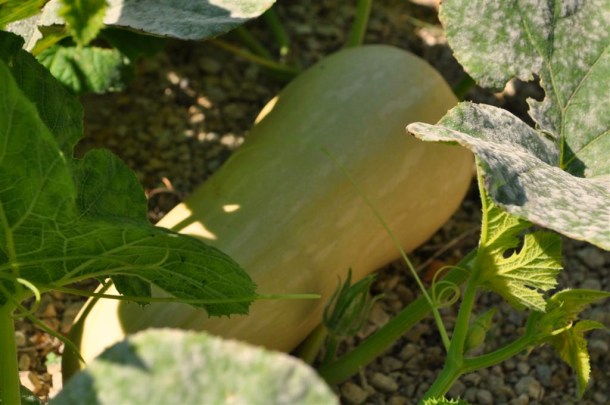
Butternut Squash Growing In Our Garden With Unfortunate Mildew On Leaves

Jim, our vegetable expert at the garden, has harvested bushels of lovely butternuts.  He planted the exuberant vines in the heat of the summer, with harvest plans for November. All squash are types of gourds.  Butternuts should be harvested when firm, well shaped, and heavy for their size.  Unlike their thin-skinned summer cousins, winter squash have a hard tough shell.  Butternuts can be stored for several months in a cool, dark place. 

Of course, the fun is deciding how to serve butternuts.  Soup? Such a lovely, rich addition to the Thanksgiving table.  Roasted? Add a bit of fresh ginger and butter. Or enjoy its sweet, slightly nutty flavor in filled pastas, spicy curries, or stews. 

Butternut–and other winter squash like acorn, pumpkin, and Hubbard–are a nutritional bonanza. They are rich in Vitamin A (beta-carotene), fiber, folate (folic acid) and potassium.

Butternut Squash Harvested From Our Garden Atop A Store Bought Pumkin

So don’t pass up these lovely winter squash for your Thanksgiving table.   You might try my daughter Molly’s favorite: Butternut Squash Soup.

Butternut Squash Soup 

1 Tbs olive oil

5 oz. pancetta, cut into small dice

1 yellow onion, chopped

1 tsp sugar

1 tsp minced garlic

1 sprig fresh sage leaves

3 ¼  cups low-sodium chicken broth

3  cups butternut squash, peeled, seeded, and cut into 1 ½ inch chunks

 1 ½ Tbs. Marsala wine

Salt and pepper to taste

¼ cup heavy cream

Lightly whipped cream for garnish

¼ cup hazelnuts, toasted and chopped 

In a stockpot over medium-low heat, warm the olive oil.  Add the pancetta and cook, stirring occasionally, until lightly crisp, 5-7 minutes.  Transfer to a paper towel-lined plate; reserve the oil in the pot.

Add the onion and sugar to the pot and cook, stirring occasionally, until the onion is tender and slightly caramelized, 8-10 minutes. Add the garlic and sage sprig and cook, stirring, for 1 minute.  Add the broth and squash and simmer, covered, until the squash is tender, 20-25 minutes.  Remove the sage sprig and discard.  Add the Marsala and season with salt and white pepper.  Simmer for 3 minutes, and then remove the pot from the heat.

Puree the soup in a blender until smooth, then whisk in the cream.  Ladle the soup into warmed bowls.  Garnish with the pancetta, a dollop of whipped cream, and hazelnuts.

Adapted from a Williams-Sonoma recipe 

Elizabeth

Texas Style Fall Color

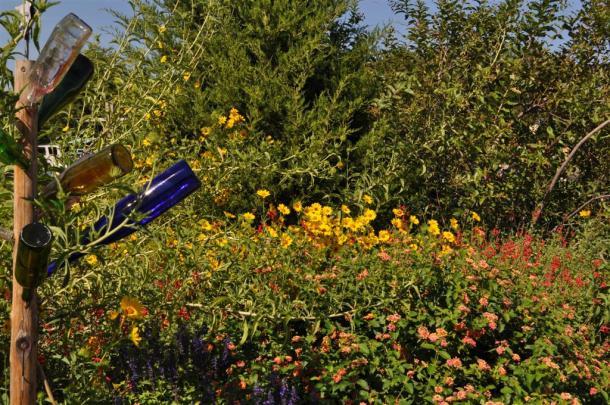
Fall Gardens in Dallas trump summer gardens!   Remember this instead of  falling into discouragement in our 100° plus days with hardly a drop of rain. The Dallas County Master Gardeners who garden at the Demonstration Garden on Joe Field Road all agree we  love our version of fall color!

Bottle Tree Framing a view of Maximillian Sunflower, Desert Sage, Lantana, and Salvia Blue Spires

This area of the garden is relatively carefree after amending the soil, careful plant selection, and mulch, mulch, mulch!

Rosy Creek Abelia, Salvia Blue Spires, Muhly Grass, Papyrus On The Right In Our Pond

We do have an agonizing  bind weed issue that keeps us humble, but we will save that part of the story for another time. 

 Enjoy the mellow quality of Autumn in Texas. Temperatures are less and color is more!

Ann

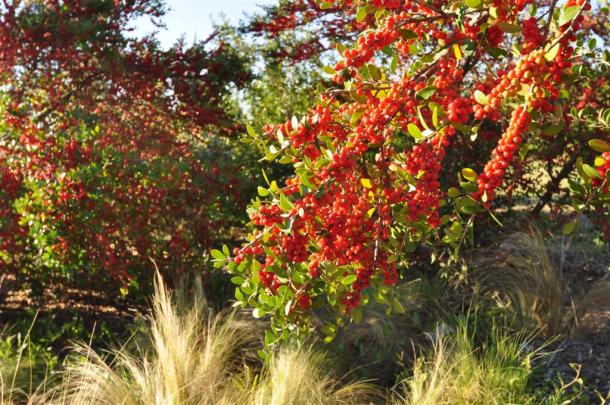
Yaupon Holly, Full Of Fruit In The Fall

 We have three female Yaupon Holly (Ilex vomitoria) trees in the Wildlife Habitat of the Raincatcher’s Garden.  The fruit ripens in the fall and will attract Northern Mockingbirds, Cedar Waxwings, and other fruit-eating birds.  The evergreen foliage provides good cover and sometimes nesting sites, for songbirds.  Although the the foliage will be more dense in full sun than in part-shade, this species is well adapted to both.  Pruning practices also affect the density of the cover it provides.

When buying yaupon trees, the easiest way to be sure you will get fruiting trees is to select them in the late summer or fall, when you should be able to see fruits on a female tree.  Because yaupons are dioecious, pollination by a male tree is required for the female tree to produce fruit, so you may want to plant a male (non-fruiting) tree among your females.  However, Dallas has many yaupons, and female trees often seem to be pollinated by males from other gardens.   Fortunately, fall is our best season for planting trees. 

'Pride of Houston' Yaupon Holly At The Demonstration Garden

The beautiful fruits are properly called drupes rather than berries, because there is a single seed in the center of the fruit, surrounded by an outer skin and a fleshy middle layer.

Deirdre

Fall Herbs

Paula taught a class at our garden last week about fall herbs.  She gave us the name of a new sage: New’re Year’re Sage and gave it the thumbs up for taste.  We will all have to look at Dallas garden centers to try to find it.

She reminded us to plant Cutting Celery, which smells and tastes like celery.  Chop up the slender stalks and leaves of Cutting Celery for tuna and  in any dish that call for celery.  I’ll bet she uses it in Bloody Mary’s too!

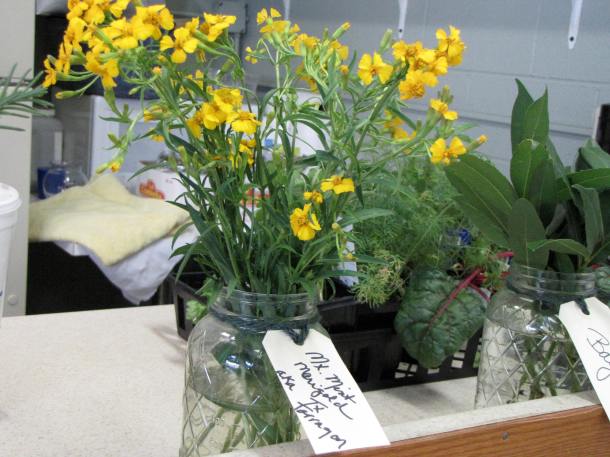
Fall Herbs For Texas Gardens

We talked about Bay which Paula uses fresh in her recipes and doubles the amount of leaves.  For instance using 4 when her soup recipe says 2.  When purchasing Bay, you want to make sure you are buying the culinary version.

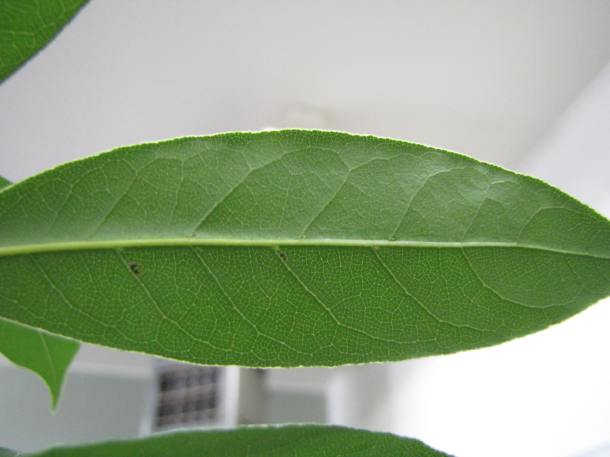
Bay Leaf

Paula says hold a leaf up to the light; if you can see the veins of the leaf, you have the correct Bay.

Mexican Mint Marigold

 Texans use the licorice flavored leaves of Mexican Mint Marigold as a Tarragon substitute and the flowers as an edible garnish.  It is blooming now in our Demonstration Garden.

It’s not too late to harvest Basil to make a few batches of Basil Butter for the holidays or Basil Ice Cubes.  Use your Basil now because it will be gone after the first frost.  
 
Basil Ice Cubes: Wash and dry your Basil and remove the leaves from the stems. Discard the stems. Finely chop the leaves. Fill an ice-cube tray with chopped Basil, scooping one tablespoon of the Basil into each cube. Fill the cubes with vegetable or chicken broth. When they freeze, pop them out of your tray and into a Ziploc bag in your freezer.  Yum-Basil all winter to be added to soups and vegetables!
 
We can also rely on Rosemary, Hot and Spicy Oregano in salsa and enchiladas, Lemon Verbena, and Italian Parsley to perk up our fall menus.

Ann

Pomegranate Jelly

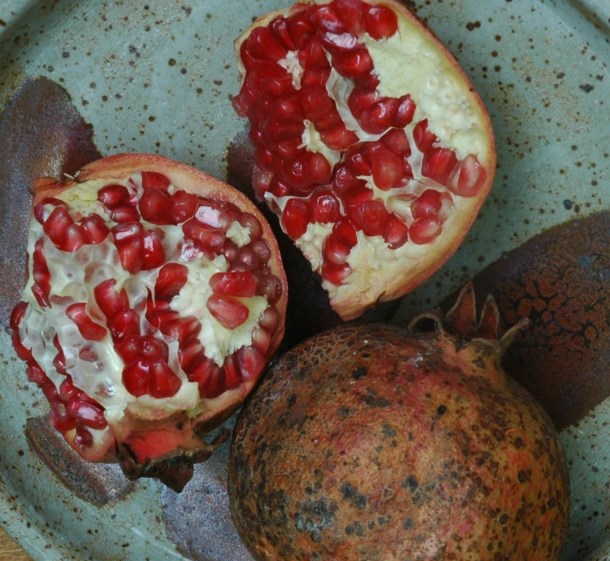
Pomegranate harvested from our tree, pottery by Lisa's daughterWe are wild about pomegranates at the Demonstration Garden.  Our three year old tree produced enough pomegranates to fill 12 quart bags of pomegranate seeds and make two dozen jars of jelly. 

Pomegranate Jelly Making-First Step

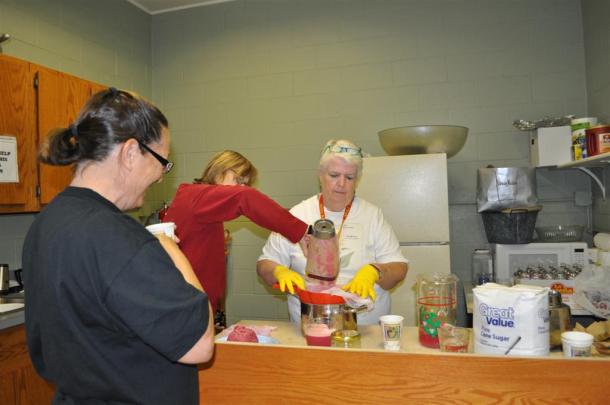
Sarah provided the recipe and tutelage. You should have been in our kitchen last week! Extracting Juice From The Pomegranates Seeds

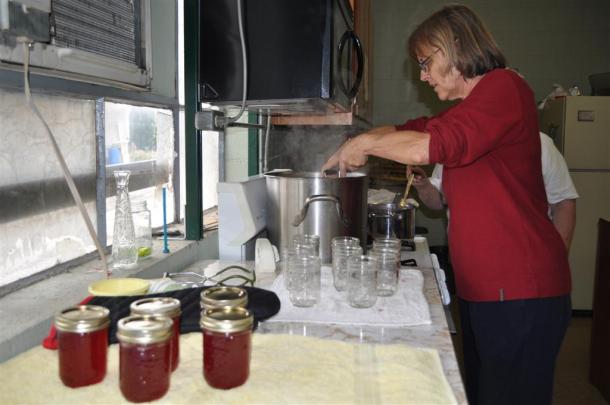
The pomegranate juice, lemon juice, and sure jell was brought to a rolling boil, sugar was added and more boiling.  This was carefully poured into sterilized jars and processed in a boiling water canner.

Processed Jars of Pomegranate Jelly

Last step-refuse goes to the compost pile!

Pomegranate Hulls Will Be  Composted

Actually, you can help us with one more step! Please purchase a jar of Pomegranate Jelly at the October 25th Master Gardener meeting at Winfrey Point, Dallas, Texas. The proceeds will provide a little  for the upkeep of our gardens!

Ann

Garden Based Education

Benefits of Garden-Based Learning
“Gardening enhances our quality of life in numerous ways: providing fresh food, exercise and health benefits, opportunities for multi-generational and life-long learning, creating pleasing landscapes and improved environment, and bringing people together.

Garden-based learning programs result in increased nutrition and environmental awareness, higher learning achievements, and increased life skills for our students. They are also an effective and engaging way to integrate curriculum and meet learning standards, giving young people the chance to develop a wide range of academic and social skills.

Garden experiences foster ecological literacy and stewardship skills, enhancing an awareness of the link between plants in the landscape and our clothing, food, shelter, and well-being. They also provide children and youth with the time and space to explore the natural world–something that can occur rarely in today’s era of indoor living.” (excerpted from Cornell University, the garden based education blog.)

Last week we had 54 kindergarten students from Providence Christian Academy in our gardens learning about chickens and eggs, veggies and herbs, compost, and observing our gardens full of Monarch butterflies, ladybugs, and bees.

SIlky Hen At The Demonstration Garden Field TripMeet Opal, named for Judy’s Aunt Opal. 
 Opal is a Silkie with black skin and bones and 5 toes instead of the normal 4. She is a wonderful brooder and mother.

Moms And Children FromProvidence Christian School Enjoying Our Visiting Chickens

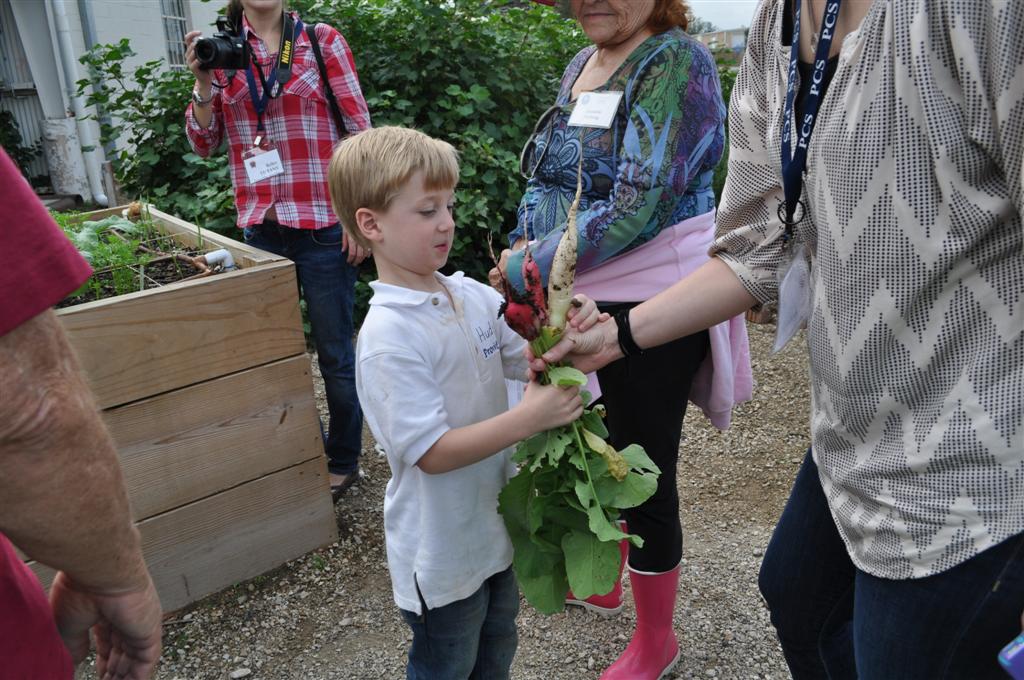
Eat your veggies! We let the children take home the radishes they picked and they fed the radish tops to the chickens. 

Radish Harvest For A Kindergarten Boy From Providence Christian School

Enthusiastic future vermi-composters!

Red Wriggler Worms and Providence Christian School Students

We are still booking fall field trips.  The Gardens and our Dallas County Master Gardeners are always ready to teach in the garden!

Fall At The Demonstration Garden

This fall we have been busy preparing new garden areas.  Aadil Khambati built this arbor as part of his Eagle Scout project.  Our Master Gardeners are planting ornamental grasses to rim the walk circling The Color Wheel. We love working in the cooler fall weather and our plants  thank us for giving them a better start before summer’s high temperatures hit!

New Arbor Leading Into The Raincatcher's Garden, Susan, Jan, Abbe, Hans

As you walk through the new arbor, you will see The Color Wheel  blooming  riotously. This was planted in late spring to give gardener’s ideas for color contrasts and harmonies in their own gardens.  Don’t we all wish for the “eye of an artist” in our gardens?  Start here at our garden and learn the principles of the color wheel.

The Blues Of The Color Wheel, Salvia leucantha, Salvia farinacea, Purple Heart Next Door

Examine the reds of our color wheel. Are you pulled towards exciting, warm colors?  Lisa has planted several red Salvias, Lantana, and even Mexican Poinsettia with splashes of an orangey red on green leaves. 

Dallas Red Lantana, Salvia, Canna, Rosemary In The Background

At the Earth-Kind® WaterWise Demonstration Garden on Joe Field Road we are making the most of Fall Gardening in Texas!

A September Garden Field Trip

Our Garden is certified as a Wildlife Habitat. When  children are interested in  nature; they  learn about protecting habitats and become engaged with their environment.  Being outside in an area that provides food, water, and cover for wildlife, gives them the chance to observe frogs, fish, rabbits, birds, butterflies,  dragonflies, and the occasional visit from our Mr.Cottontail. 

Teaching In The Wildlife Habitat At The Demonstration Garden

We teach the virtues of vermicomposting.  Red wriggler worms easily hold the attention of these students. 

Vermicomposting Taught By Dallas County Master Gardeners For Kids

Kids that visit our gardens like to take home something they can grow.  The Grace Academy kids learned about seeds and planted them in  “Root Viewers”, made out of  recycled rinsed out milk cartons with a plastic window made of tape.

Gardening With Grace Academy Kids

Cotton: From Plant To Fabric

“Cotton is family.  We sweat in cotton.  It breathes with us.  We wrap our newborns in it.  In fact, we pay cotton the highest compliment of all, we don’t go out of our way to be nice to it.  Look in your closet.  The crumpled things on the floor are most probably cotton- soiled shirts and khakis, dirty housework clothes and muddied socks that rise up in dank mounds ready to be baptized with detergent and reborn in the washer, fresh and clean as new snow.  ……Cotton is the fabric wool would be if it were light enough for summer and didn’t shrink to toddler-size in the dryer; it’s what silk would be if it gracefully absorbed sweat; and what linen might aspire to if it didn’t wrinkle on sight.”

                            —–Cotton The Biography of a Revolutionary Fiber  by Stephen Yafa (Penguin Books, 2005)

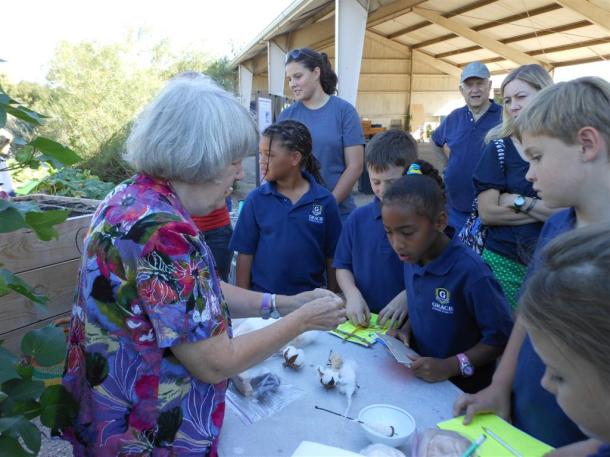
       Twenty Five children from  Grace Academy  and their parents learned how cotton goes from plant to fabric.  Under the shade of the Gardens’ white and brown cotton plants, they saw cotton growing on an actual plant, removed some seeds from the cotton bolls by hand, and watched a demonstration on how cotton is spun on both a tahkli hand spindle and a book charkha cotton spinning wheel from India.  Each child got to pick and take home their own cotton boll from the Garden’s plants and were reminded that as recently as 105 years ago sharecropper children, no older than themselves, worked in Dallas County’s cotton fields from dawn to dusk, enduring hardships that we can not imagine today.  

Grace Academy Students Learning About Cotton At The Demonstration Garden


Cotton Spinning Demonstration

Cotton Spinning Demonstration For Field Trip

Left to right:

      • Cardboard box that the book charkha spinning wheel came in from India.  It is covered with khadi cloth, a handspun, hand woven cotton cloth, and sewn with handspun cotton thread.  The address label is written on the fabric.
      • Bowl with tahkli hand spindle
      • Cotton carders (red) to comb the cotton to straighten the fibers
      • Book charkha cotton spinning wheel from India.   In 1947 Mahatma Gandhi in his non-violent campaign for India’s independence from England said “Take to spinning to find peace of mind.  The music of the wheel will be as balm to our soul.  I believe that the yarn we spin is capable of mending the broken warp and woof of our life.  The charkha (spinning wheel) is the symbol for non-violence on which all life, if it is to be real life, must be based.”

Carolyn

This was one of four learning stations visited by our Grace Academy visitors on September 11, 2012.  Keep following our blog to see more pictures and descriptions of this field trip to our Demonstration Garden.