
Tomorrow we will explore our garden through pictures. Please join us.
Tomorrow we will explore our garden through pictures. Please join us.
Are you familiar with papalo? We first learned about papalo last summer. This year we found a seed source online, placed the order and started growing it in the edible landscape. Papalo is an ancient Mexican herb whose ancestral home is thought to be South America. Today it grows wild in Arizona, New Mexico and West Texas. And now, as you can see from the photo, right in the heart of Dallas County.

Papalo growing at Raincathcer’s Edible Garden
Papalo’s bluish green leaves have a somewhat complex, distinctive flavor reminiscent of cilantro and arugula. But unlike cilantro, it grows throughout the summer and does not bolt. It is best used fresh as it doesn’t dry well. Once cool weather arrives, the growing season is over.

Papalo seeds
When starting papalo from seeds you must be very careful not to separate the seed stem from the umbrella-like top. Master Gardener, Gail Cook, started the seeds for us in March. She carefully laid them on top of the potting mix in 4” pots. They were then covered lightly with more of the mix. Once the seedlings were about 3-4” tall, around mid-May, we transplanted them into our Ole Garden.
Plants are thriving in well-draining soil in an area that receives mid-morning to late afternoon sun. After that, they are in full shade. Just last week we noticed that the plants are producing those uniquely shaped seed heads that will be harvested for next year’s crop.
If you’re looking for a vibrant herb substitute for cilantro, check out our Ole Garden by the red shed in the edible landscape. You’ll find a large patch of papalo growing in an area immediately south of the sidewalk. Feel free to snip some for a taste!
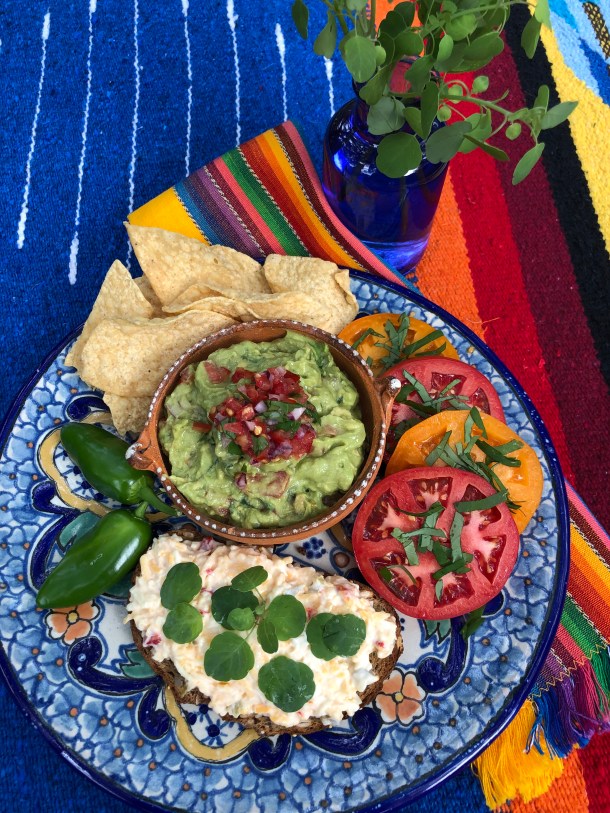
A few ideas for using papalo include the following:
Ingredients:
1 or more (to taste) jalapeno or serrano chili peppers, finely minced (optional)
2-3 tablespoons finely diced yellow or red onion
1-2 tablespoons fresh lime juice
1-2 tablespoons finely chopped fresh papalo
Coarse salt to taste
3-4 avocados
½ cup finely diced fresh tomatoes
Topping: ¼ cup finely diced fresh tomatoes, 1 tablespoon finely diced onion, 1 teaspoon finely shredded papalo leaves
Garnish: whole papalo leaves
Directions:
Crush the onions, chilis, salt, lime juice and papalo in a mortar and pestle or a molcajete until they are just paste-like. Add the avocado flesh and mash it roughly into the paste until well mixed. Stir in the tomatoes and place the guacamole in a serving dish or molcajete.
Mix the tomatoes, onions and shredded papalo that were reserved for the topping. Pile on top of the guacamole. Garnish with whole papalo leaves and serve.
Linda Alexander
Photos by Linda and Starla Willis

No matter the season, there’s always work to be done in the garden. Seasonal challenges many times involve weather related temperature extremes serving as the determining factor. In north central Texas, we typically get socked in with sweltering temperatures mid June to early September. This week is no exception. The forecast is for temperatures over 100°. Our weather forecasters have advised caution for any type of outdoor activity. Staying hydrated is of supreme importance as we are reminded to drink lots of water.
While doing those garden chores, how about some fresh ideas using herbal infusions to flavor your water? Easy to make and so refreshing, follow these simple steps for a cool thirst quencher:
Select the fruits, vegetables and herbs of your choosing
Give everything a gentle wash
Fill a pitcher with tap or filtered water
Add your preferred combination
Refrigerate and allow the fruit and herbs enough time to infuse the water
Fruit and herbs should be removed after 10 hours, or less, but continue to enjoy the water
Create a different flavor combination each day
At Raincatcher’s, taking a water break is a tasty and satisfying experience. We enjoy our time to “pause” and visit with each other. Sipping on herbal infused water gives us that refreshing lift needed to continue caring for our beloved gardens.
Thirst no more! Here are the herbal infused waters from left to right in the picture above:
Cucumber, Salad Burnet and Borage Blossoms (Starla’s favorite)
Watermelon, Watermelon Flavored Mint
Orange Slices, Blueberries, Lemon Verbena (Linda’s Favorite)
Lemon and Lime Slices, Pineapple Sage
Strawberries, Balsamic Blooms Basil (Ann’s Favorite)
Apricots, French Tarragon
Other flavorful combinations to try:
Parsley and Lemon
Peaches and French tarragon
Cucumber and lemon thyme
Grapefruit and rosemary
Lavender and lemons
Oranges and sage
Strawberries, blueberries and mint
Look for seasonal inspiration in your garden and be creative with your combinations.
Linda Alexander
Photo by Starla Willis
Note: When using borage flower heads for culinary purposes, pick off by grasping the black stamen tips and gently separating the flower from its green back. Sprinkle over salads, or use to flavor water and other beverages.
Here’s a few pictures of our rain garden doing it’s job which by the way is to catch the overflow water from our two gigantic rain cisterns and allow it to sink into the ground rather than out to the street.
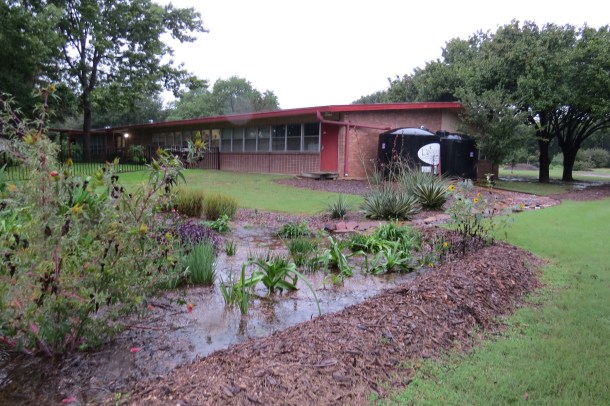
The water is typically absorbed in less that 24 hours.
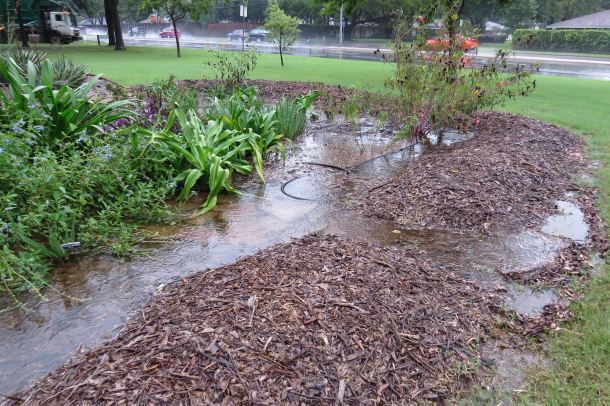
We have selected plants that can survive in standing water or low water situations. The result is a beautiful garden that catches water that would otherwise land in our city storm water drain. The rain garden also serves as a bird and butterfly haven.
Take a look at these beautiful flowers and then let us shower you with plant suggestions. The list will be at the bottom of the page.
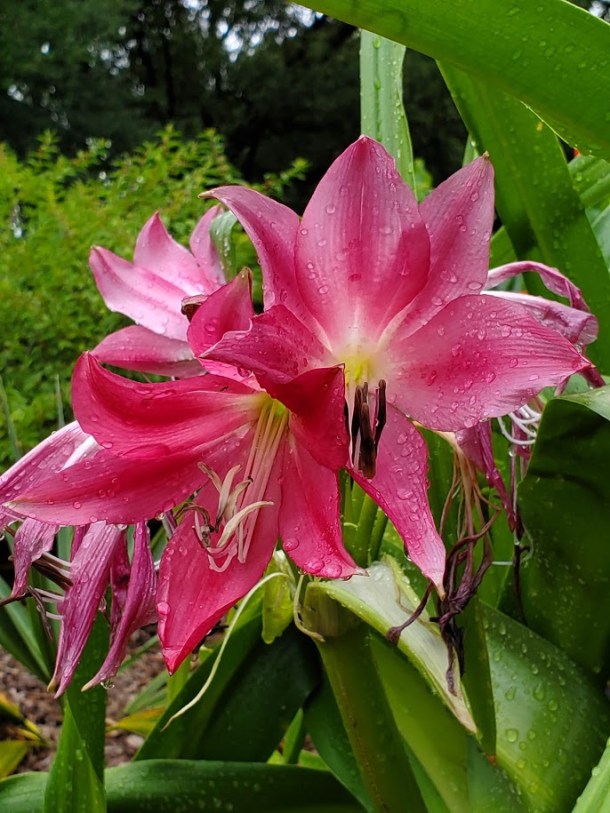
Super Ellen Crinum Lily
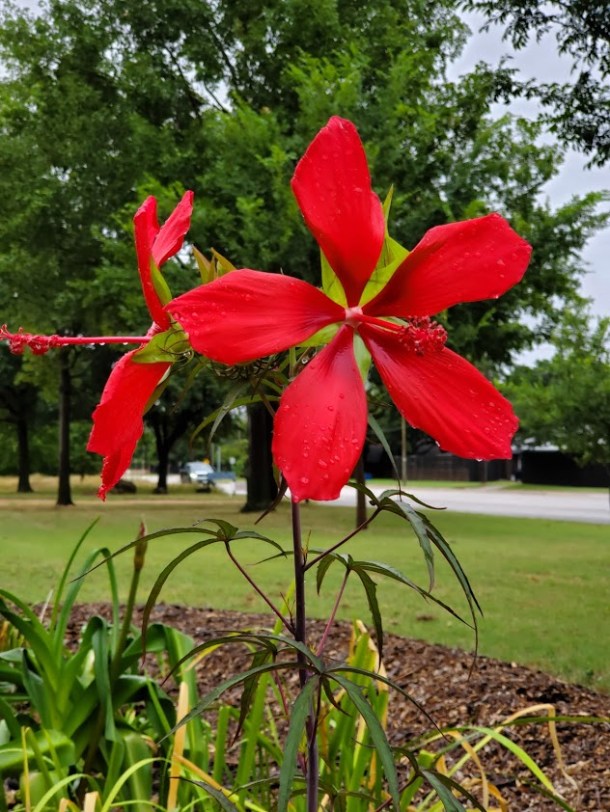
Texas Star Hibiscus
Rain garden plant list 2020
Crinum lilies, including ‘Super Ellen’ Crinum sp.
Various Daylilies Hemerocallis hybrids
Society Garlic Tulbaghia violacea
White Rain Lily Zephyranhes candida
Pink Rain Lily Zephyranthes grandiflora
Red Spider Lily Lycoris radiata
Texas Spider Lily Hymenocallis liriosme
Louisiana Iris cultivars Iris sp.
Purple Heart Tradescantia pallida pupurae
Concord Grape Spiderwort Tradescantia pallida ‘Concord Grape’
Purple Coneflower Echinacea purpurea
Summer Phlox Phlox paniculata ‘John Fanick’
Summer Phlox Phlox paniculate ‘Victoria’
Brazos Penstemon Penstemon tenuis
Shenandoah Switch Grass Panicum virgatum
Texas Star Hibiscus, Red and White Hibiscus coccineus
Purple Beautyberry Callicarpa dichotoma ‘Purple Pride’
Turk’s Cap Malvaviscus drummondii
Dwarf (Swamp) Palmetto Sabal minor
Let it rain!
Ann Lamb
Photos by Starla Willis and Susan Swinson
Last week at our local farmer’s market I was taken by surprise. Crowds arrived early creating lines at most stands. After a first pass at a few of my usual stops, something caught my eye. A local grower from Irving was offering freshly pulled carrots straight from her garden. While that may not seem unusual, it was the carrot tops that made me swoon. Lush and lovely, their feathery formation in vibrant shades of green jogged my memory.
A few weeks earlier, my husband and I had dinner at one of our favorite Dallas restaurants. Janice Provost, chef/owner of Parigi’s, is a good friend who loves to “talk garden” with me and enjoys sourcing locally grown, fresh produce. That night she was featuring an appetizer we decided to try.
Appropriately named, our ‘Garden Board Special’ with Carrot Top Pesto was stunning. A colorful combination of bread “planks” slathered with whipped feta and cream cheese then topped with perky little red and yellow cherry tomatoes tumbling across the next layer had us drooling. The finishing touch was a light sprinkling of micro greens drizzled with carrot top pesto. For me, the meal was complete, and a new pesto experience stayed in my head.
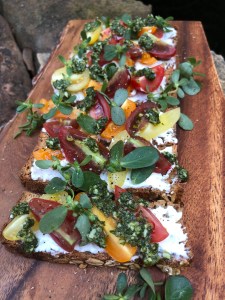
Garden Board Special
It must have been somewhat providential that those carrots spoke to me at the market, but it was also the surprising discovery of locally grown edible purslane that motivated me to recreate our appetizer experience. And, thankfully, I had stumbled upon the necessary ingredients to complete the task.
Here is my slightly adapted version of the pesto. If you find it intriguing, start thinking now about your fall carrot crop and a flavorful new way to use them from top to bottom. And, check back in early January for a preview of our ‘Grow and Graze’ lineup of 2021 classes.
Carrot Top Pesto
Ingredients:
1 cup carrot tops (lightly packed)
½ cup flat-leaf parsley or fresh spinach
¼ cup walnuts
1 garlic clove
½ cup freshly shredded parmesan cheese
1 tablespoon lemon juice
Zest of 1 lemon
¼ teaspoon sea salt
2 tablespoons olive oil
Directions:
Lightly toast the walnuts over medium heat until they start to become fragrant. Stir constantly, toasting just until slightly golden brown.
In a food processor, pulse all the ingredients, including the toasted walnuts, until everything is well-combined and forms a coarse paste. For a thinner pesto, add a few more tablespoons of olive oil, one at a time, until reaching a desired consistency.
Serve over roasted vegetables, soups, baked chicken, or fresh tomatoes.
*Substitute pecans or pine nuts, if desired.
______________________________________________________________________________________________________________

Highly prized, beautiful umbel-shaped blossoms of the carrot tops
This summer, in the edible landscape, we took the advice of Dallas County Interim Extension Agent, Jeff Raska, and let our carrots grow for two seasons. By early summer we were treated to a carrot blossom extravaganza. Beautiful umbel-shaped blossoms soon became lovely spherical, lacy white flowers ready for both the bees and our garden guests to enjoy. We’re now using those delicate Queen Anne’s Lace looking flowers as a topper for salads, soups and appetizer trays. Our garden adventure was a delightful surprise!
Linda Alexander
Carrot Top Photo by Starla Willis
April 26, 2020
Never in my wildest dreams did I think of growing Wasabi lettuce and that I would enjoy it so much. It has a sharp, wasabi-like taste just perfect when used raw in salads. I planted it and several other varieties of lettuce in my garden in January after visiting the Dallas Arboretum and their lovely edible landscape.
Something else I did not foresee was a pandemic with the shut down of our usual freedoms to work, shop, eat in restaurants and everything else we take for granted. I have not been inside a grocery store since early March so this little salad garden at my back door has been comforting to me and I have been able to share salad greens with neighbors and family.
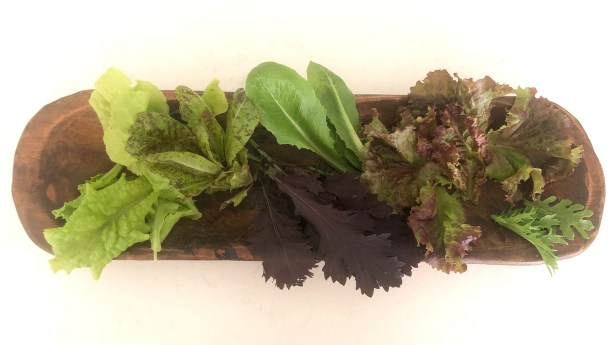
If you would like a garden of fresh lettuce, consider planting some of these varieties next fall. I bought all these packages on the seed rack at Nicholson-Hardie Garden Center.
Left to Right as seen above:
Black Seeded Simpson Lettuce-a glowing, vibrant bright green
Forellenschluss Lettuce-freckled, also known as Speckles Trout Back, said to hold up well in summer heat. (We’ll see how that goes.)
Mustard Hybrid Salad Leaf Miz America-deep dark red color, mild tasting
Parris Island Cos Romaine Lettuce-crunchy sweet leaves, good texture
New Red Fire Leaf Lettuce- green at the base of the leaf and dark red at the ruffled leaf edge. Also said to be slow to bolt. ( I hope so.)
Mustard Salad Leaf Wasabina-light green serrated leaf with spicy flavor (This one is cold tolerant.)
Ann Lamb
We have almost 600 subscribers to our blog. We appreciate everyone who reads our blog and we care. Dallas Garden Buzz writers love to study garden topics and we are happy to research the answers to your garden questions. Our horticultural agents will help us with anything we can’t answer. Ask away in our comments section, we are here for you.
She loves to garden at my house and seems to find it empowering to trim the suckers off the photinia. However, I didn’t get any feedback about the book.
Earlier this year I was surprised to find that she had read the book from cover to cover and had been doing the seasonal activities from it all along.
We can’t be together or garden for a while so I send pictures to her parents to share with her.
She has enjoyed following the progress of this “bookshelf garden” that I keep in a sunny window. The leftovers of green onions, carrots, and radishes were planted and are now growing again.
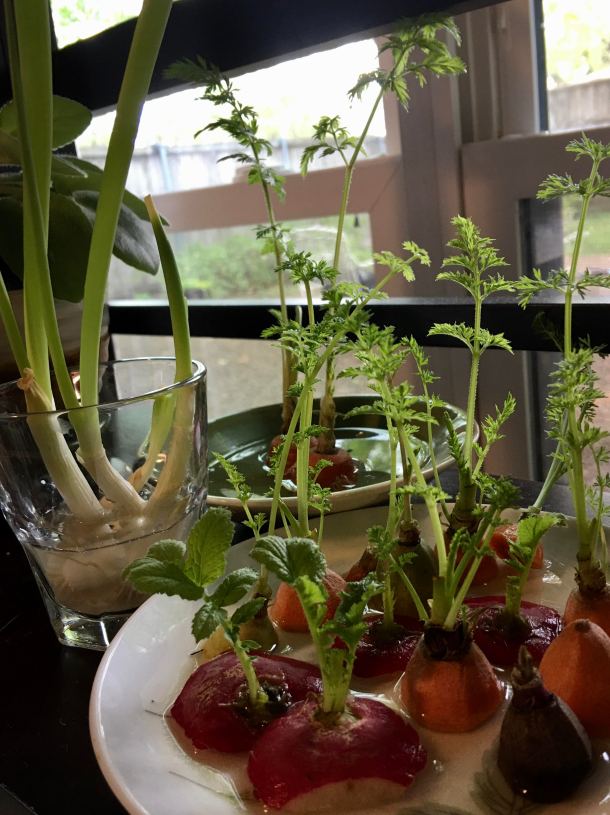
Beverly’s bookshelf garden of repurposed kitchen scraps
I look forward to future in-person gardening projects with my grandaughter but until then I am thankful for this way of continuing our shared love of growing plants. This project has been a helpful tool for teaching propagation, the importance of recycling, and the joy of gardening.
Here is a link describing how children can make their own indoor edible gardens.
Gardening Activities-Kitchen Scrap Gardening
Sheila Kostelny, a Louisiana gal, and Master Gardener class of 2009 walks us through her garden.
Shiela’s words of advice and her own planting date guide:
It’s too late for peas (sugar snap and snow peas are planted Feb 1st thru 10th) and too early for winter squash. In addition to okra, I will be planting my sweet potato slips after April 15th. Attached is a timetable that I compiled from the TAMU and NHG suggested dates for planting. I’m glad to share this spreadsheet. It’s created with the veggies/herbs that interest me.
Thank you, Sheila. this has been a pleasure and I love what you told me about your garden.
We close with Sheila’s words:
“My garden has provided a great deal of joy and feelings of usefulness.
It’s my place of normalcy and peace during this time.”
Thank you, Sheila.
Ann Lamb
April 2, 2020
Most of us are at home this week and for the next coming weeks.
If you’re itching to walk through a garden, why not take a tour of ours through the eyes of Starla, our photographer who took these pictures last week.

New decomposed granite walkway flanked by beds of Canyon Creek Abelia, Hamelim Dwarf Fountain Grass, and Texas Sage, “Compactum” (Texas Ranger). Read a full description of this new memorial garden here.
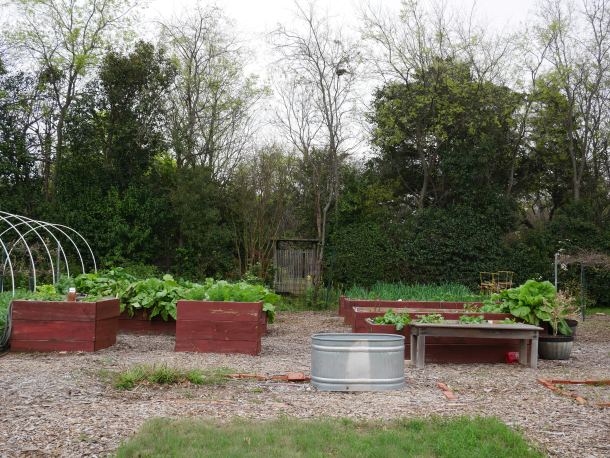
Veggie beds full of turnips (mostly gone), mustard greens (lots), collards (gone), carrots, and onions. Meanwhile Jim, is nursing 6″ pots of tomatoes and peppers for the garden.
 Pollination of a blackberry blossom

The color wheel garden with a pretty apricot iris. Jim has repotted 40 zinnias and has 20 more to repot for the color wheel.
Redbud tree in bloom

The rain garden, our unsung hero! It has been channeling rain from our full rain cisterns to this sunken garden.
Garden questions? Send us a question by making a comment.
Ann Lamb
Pictures by Starla Willis
Dallas County Master Gardener volunteers at the Raincatcher’s Research, Education and Demonstration Garden of Midway Hills share your concern for eating healthy during these uncertain times. We’ve put together a short list of ways that you can start growing and harvesting seasonal crops over the next few weeks and months. Here are some gardening (and recipe) suggestions to help supplement your meals with freshly harvested herbs and vegetables.
If you do not already have a designated vegetable garden, try one of these options:
1) Find an open place in your flower bed that receives around 6 to 8 hours of sun, preferably from morning until mid or late afternoon. Give your soil a boost by adding compost. Good quality compost can be purchased at most local garden centers. Make sure you have a water source close by, and position the garden where you can keep a daily watch to head off any potential pests and weeds that could create problems if left unchecked.
2) Create a simplified version of a raised bed using cinder blocks. Place cardboard directly over a grassy spot in your yard that receives ample sunlight, then place cinderblocks in a rectangular shape around the cardboard, starting with 5 on each side and 3 at each end. Fill the enclosed space about 6 inches above the bed border with a commercial raised bed mix, and water thoroughly to let the soil settle. Space plants or seeds according to directions. Water as needed to maintain even moisture within the bed.

The cardboard method, a good way to smother weeds

A large cinder block garden bed
Start with 4” to 6” edible plants spaced according to label directions. Seasonal plants, including cucumbers, peppers, and tomatoes, are currently in stock at many local garden centers, but don’t stop there.
Try the following options in your new raised bed or in your existing landscape as borders and ground covers, or plant a bay laurel to grow as a shrub or small tree.
Arugula (Eat fresh in salads, or use in dips.)
Spinach (Eat fresh in salads, sauté with scrambled eggs, or use in omelets, quiches and vegetable dishes.)
Kale (Eat fresh in salads; sauté for kale chips.)
Lettuce (Many different varieties provide texture and color in the landscape.)
Radish (Eat fresh in salads; slice thinly and serve on buttered bread for sandwiches.)
Carrot (Eat fresh in salads, roasted, or in soups and souffles. Use carrot tops to make pesto.)
Beet (Serve roasted, or grate for a cake.)
Swiss Chard (Eat fresh in salads, use leaves as a “wrap” for fresh chopped vegetables, sauté for turnovers, or add to soups.)
Dill (Leaves can be added to salads, potatoes, meat and fish at the end of cooking.)
Fennel (All parts of the plant are edible – leaves and stalk make a wonderful flavoring for fish.)
French Sorrel (Can be cooked or used fresh like lettuce. Makes a good soup; adds zip to salads. Great on roast beef sandwiches.)
Nasturtiums (Harvest the leaves, buds and flowers anytime, and use fresh. Excellent in salads. Leaves make a great pesto.)
Artichokes (Excellent vegetable served roasted, sautéed or steamed—a beautiful and majestic plant for your garden.)
Thyme (Strip small leaves from stems and use to enhance the flavor of baked or broiled fish dishes or fish sauces. Thyme Cheese Roll: Combine 8 ounces softened cream cheese, 1 tablespoon chopped thyme, 1 tablespoon chopped parsley, ½ teaspoon minced garlic. Roll into a log and refrigerate. Serve with toast or crackers for a quick and easy snack.)
Sage (Flowers and leaves are edible; flowers are nice in salads and for making tea, and the leaves are great for cooking and making herb butters.)
Rosemary (Use with foods rich in fat such as roasted meats, poultry and fish. Add to soups and stew. Use stripped branches as skewers for your favorite grilled meats and veggies.)
Chives (Snip the leaves at ground level when harvesting. Chop and serve with salad, potatoes, pasta and cabbage.)
Oregano (Sprinkle on fresh tomatoes or use to make a sauce; adds flavor to stews and soups.)
Marjoram (Rub leaves on all kinds of meat, chop into egg dishes, stir into soups and sprinkle it over vegetables)
Basil (Plant mid to late April. Use leaves for salads, pesto and sauces. Combines well with zucchini, beans and mushrooms.)
Watercress (Harvest and use fresh in salads, soups and sandwiches.)
Purslane (Use in early spring salads. Leaves can be cooked like spinach.)
Sweet Bay/Bay Laurel (Use the leaves of this evergreen plant in soups, stews and other simmered dishes. Cook a leaf or two with dried beans.)
We hope you will be inspired to start gardening with your family and experience the joy of bringing fresh, flavorful food to your table.
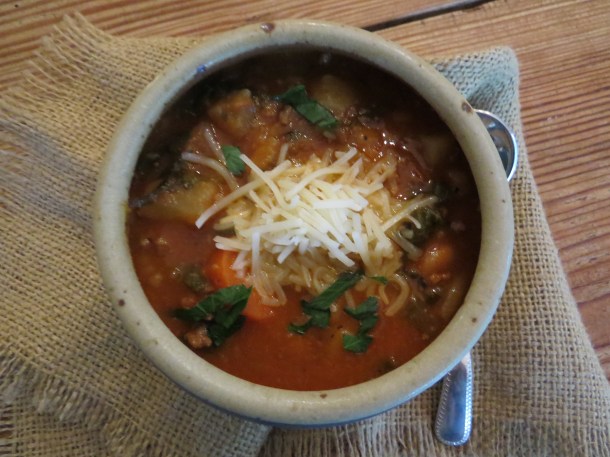
How about a healthy robust minestrone soup using fresh garden ingredients. Picture by Linda
Linda Alexander and Lisa Centala with comments by Jeff Raska, Horticulture Assistant, Dallas County
Follow these planting guides: TAMU Vegetable Planting Guide
Northaven Garden Spring Planting Guide
New to gardening? Read this pamphlet, pages 13-15 have specific recommendations for veggie gardening.
Pictures by Starla Willis