Early last fall I planted a 4” pot of caraway in my raised garden bed. That little plant has now more than tripled in size.
Just a few days ago tiny white flowers appeared atop the feathery foliage. Blooming should continue until sometime during late spring or early summer when spent flowers yield those small, but wonderfully aromatic, hard brown seeds used in cuisines throughout the world.
If you’ve never grown caraway in your garden, follow along as we learn more about this carrot-like plant which is edible from root to shoot!
Caraway is a hardy herbaceous biennial requiring two seasons to complete its life cycle. The first year, bright green threadlike foliage resembling that of a carrot form a mound 1 to 3 feet high. Next comes the umbels of creamy white, delicate flowers that resemble Queen Anne’s Lace.
Once the flowers are spent, brown ribbed seeds appear. The familiar caraway seed is actually the fruit of the plant. It is recommended that seeds should be harvested about a month after they have blossomed. To accomplish this, clip off the seed heads and place in a paper bag to finish ripening.
While caraway seeds are most often associated with rye (or dark rye) breads there are a many other applications for using it. Some include: desserts and baked goods, liquors, stews, casseroles and as a flavoring for beef and pork dishes.
When the plant has produced seed, dig up the taproot and use as you would any other root vegetable.
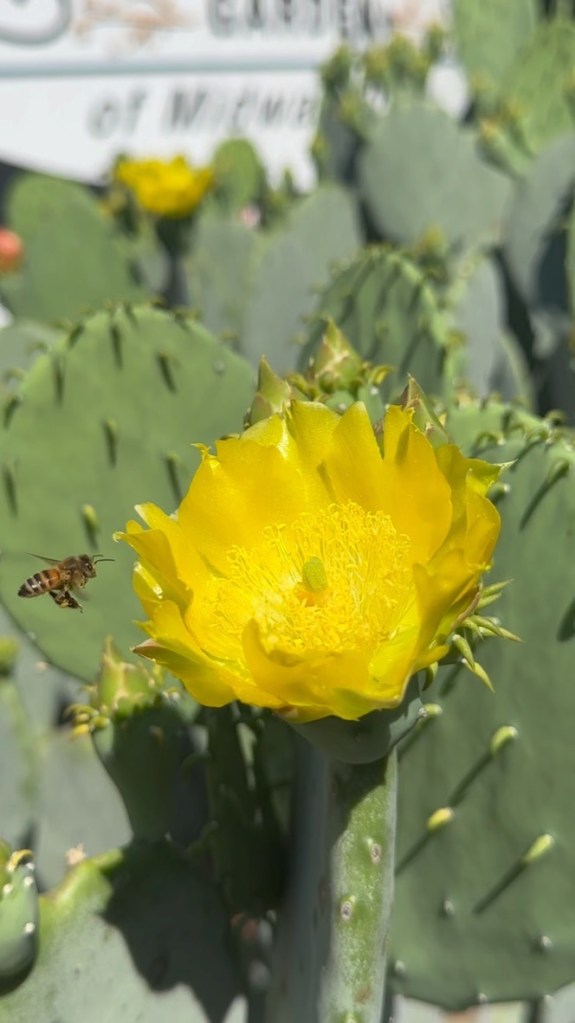
Caraway is a pleasing plant to grow in your herb garden. The lovely little flowers attract beneficial insects, including honeybees.
For two different dinner options recently, we enjoyed caraway leaves straight from the garden in the following ways:
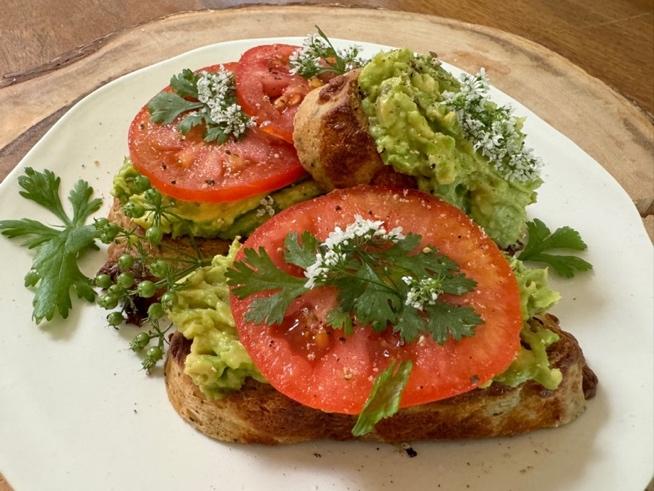
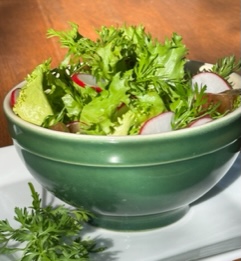
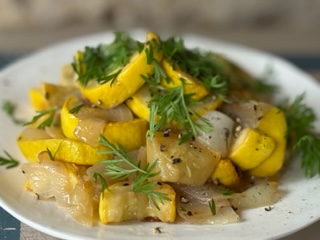
Tossed in a green salad along with radishes, tomatoes, and avocado slices Sauteed yellow squash and onions with a generous sprinkling of fresh caraway leaves for a flavorful lift
Linda Alexander, Dallas County Master Gardner Class of 2008
This is the time of the year when everyone wants something to change and improve advertisements that didn’t attract a bit of concern a while ago now seem tempting–the newest skin treatments that absolutely promise “younger brighter fresher” The poor child in the picture seems still a bit concerned but yet now doing better–well she should be concerned of course she is probably past Fourteen and knows its all downhill from here. Now if you want to buy thats fine after all it won’t hurt–although the price might be a real surprise and the bottle is so small and then there are two more things you absolutely must have if you really want “results” But we will go no further with this.
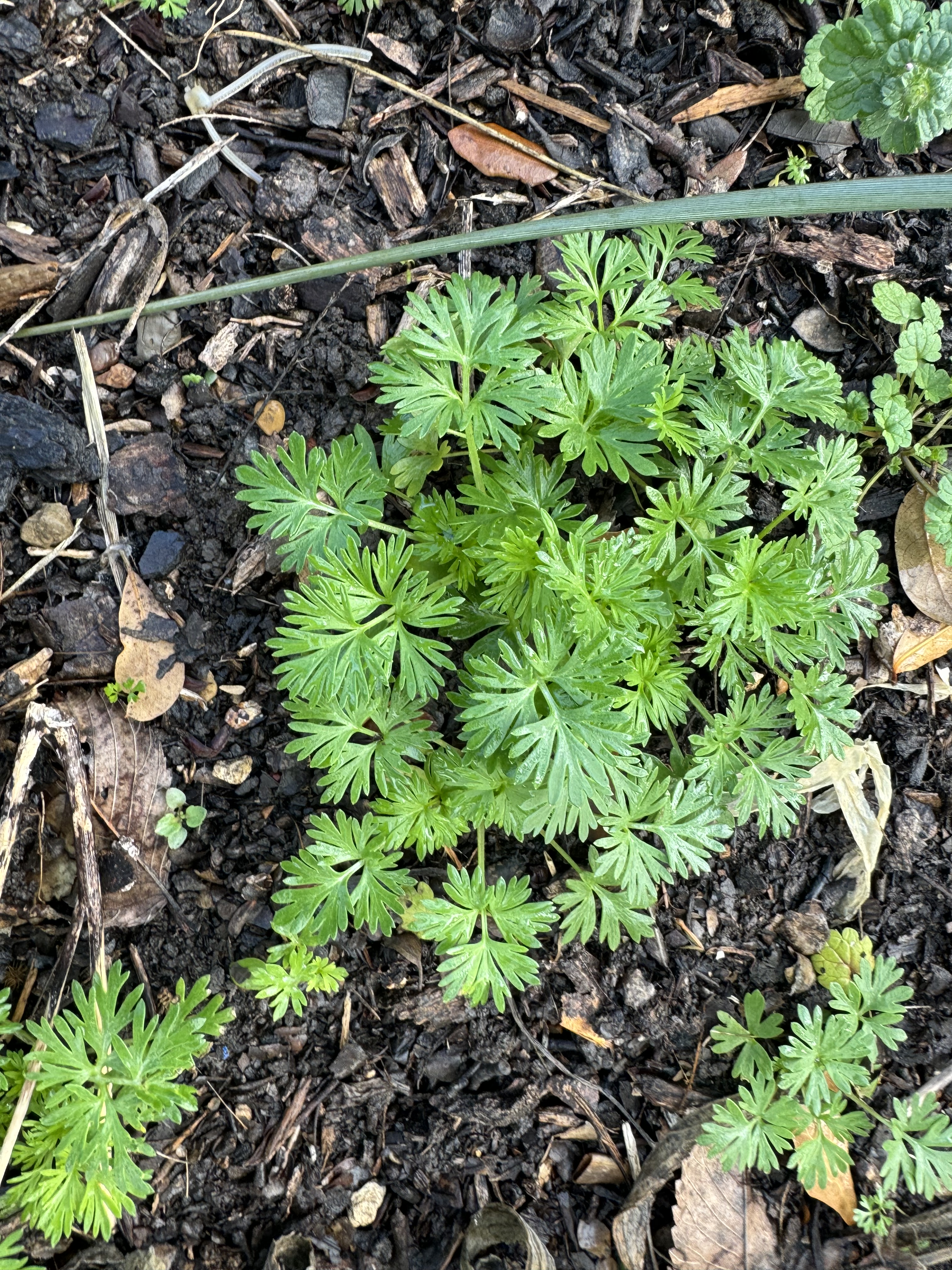
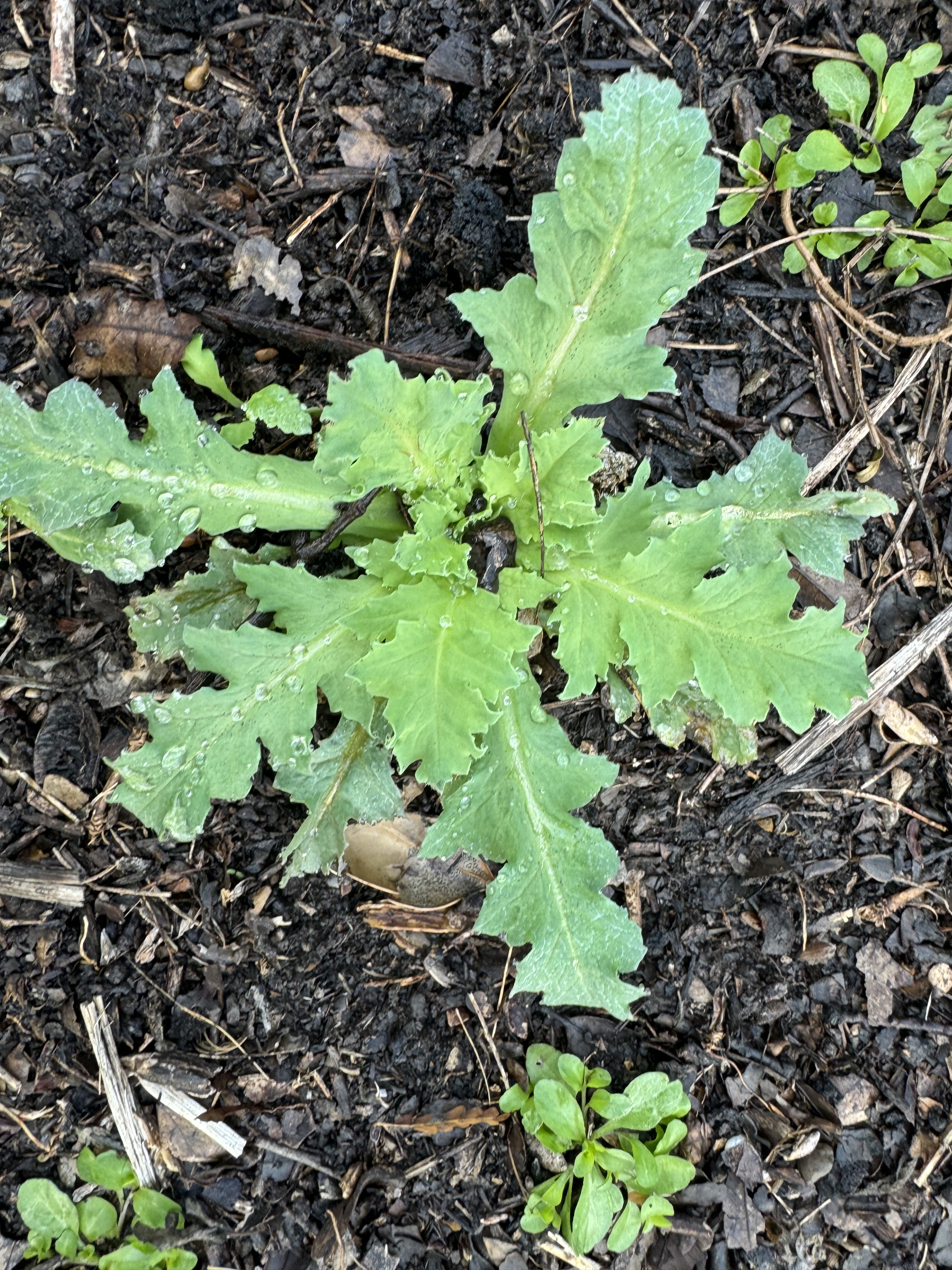
Baby Larkspur with maybe a weed-don’t worry about the weed.Baby poppy-same warning!Winter Honeysuckle does not give up.
No because YOUNG honestly is a state of mind more than anything and at this time of the year–well we may have to work at realizing that–and most importantly acting on our knowledge.
WE can’t let the season get us down. Its absolutely true that the leaves lying about have totally lost their charm –and how on earth did there get to be so many sticks and stalks everywhere. We have to look at things closely–after we clean up a bit of course. But take your time don’t be hasty, baby plants can be deceiving. The last thing you want to do is accidentally “weed” your precious spring flowers when in doubt don’t pull it up. Better to leave and weed than loose a poppy! Let your imagination take you to the blooms that will be here soon and you will be surprised at how much happier you will feel. Anticipating good things to come–well that is a receipt for real joy.
This is nothing but pure potential and hope!
Try to see bare patches as “Potential” not “Problems”. All the fresh seeds are here–stop and look . For some people this can be as much temptation as the five hundred dollar skin serum so do be careful. READ the labels and remember that if it says avoid heat you must avoid buying no matter how chilly and misty the day is right now. But maybe choose something new to try and go home and plant it–nothing worse than buying seeds and forgetting them–that doesn’t lead to happiness. But the choosing and preparing and planting–that can make a big difference for anyone. Feelings of accomplishment and planning for the future and feeling hopeful–well that makes anyone feel younger and fresher and its a feeling that lasts! Just the work in the fresh air helps so much even if you have to wrap up and use plastic shoes.
If it gets really cold take the time to protect your plants you will be glad you did–its work but it pays off and that makes us feel powerful. Just a little cover saved this lettuce.
If there are plants in the house don’t just pass them by they aren’t sofa cushions they really will respond to attention. water them and clean their leaves look for changes and growth–if you are fortunate even flowers–its the natural time for orchids to send up flower spikes–look carefully. Just noticing will brighten the whole day and who knows what tomorrow might bring .That is the key.
When we think about it–isn’t YOUNG really anticipating the future–the good exciting things to come? That feeling may get a little harder to come by sometimes but if we really notice our plants and gardens and care for them that feeling just seems to catch us and carry us forward–and that is FOREVER YOUNG.
Susan Thornbury, Dallas County Master Gardener Class of 2008
Walking in the garden early this morning just as sunlight was spreading its glowing rays, I stopped for a moment to gently caress the winter savory. Dew had fallen softly upon it, leaving the cascading branches with a shimmery presence. It seemed to be saying…” use me please”. And that is exactly what happened!
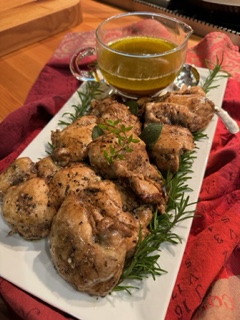
My husband and I love a cozy wintertime dinner by the fire. Thankfully, my winter herb garden had supplied me with the three ingredients needed to infuse the marinade for Balsamic Herb Baked Chicken Thighs: fresh rosemary sprigs, sage leaves and winter savory. This herb-garden inspired recipe delivered a pleasing amount of comfort and flavor for the perfect fireside meal.
Balsamic Herb Baked Chicken Thighs prepped and ready to bakeReady to serve!
Hopefully, you are growing a nice selection of herbs in your winter garden. If so, remember that they liked to be snipped, trimmed and used for culinary and decorative purposes in your home.
*For information about growing winter savory, click here.
*All herbs were harvested just before the cold front and freezing temperatures arrived. They were kept in a damp paper towel lined plastic baggie for two days.
Linda Alexander, Dallas County Master Gardener Class of 2008
This is the time of the year when one things about past efforts and plans ahead for what’s to come—naturally the future must be vastly improved over what came before. Its been that way for a long time. After all January is named for Janus the god who is able to look to the past and the future.
All useful so far. Evaluating past efforts and planning for the future is important for just about everything.
However this is also a time when one is most susceptible to promises of perfection if only you buy something—well not just anything of course but the new and improved item currently on offer. Let’s not consider the diets and health promoting supplements and the body that would be ours if only a new and improved fitness machine was ordered. All available right now and payment can be easy—there is a plan available.
Gardeners are not immune to these thoughts by any means. Emails seem to arrive daily to showcase the “must haves” for this years garden. All involve buying the new and improved plants from all sorts of places. Catalogues have pictures that are simply astonishing The flowers in glorious colors. Petals are now double and triple and maybe more. Some seem to be very small “fit any space” How can this be exactly. Surely they would want to grow at least a little bit.
Even shrubs and trees are new and have amazing flowers and turn all sorts of colors. Buy now” really seems the only reasonable thing to do after all “supply may be limited”.
But wait—take a deep breath and consider—where will all these new plants go? Go back and look at your garden photos (you know they are right there) and when you look you see that not only was the garden actually lovely it was pretty full.
Now there is nothing all wrong with buying new plants. There are indeed new discoveries to be made. Plus its just fun and adds excitement to the garden—and may be the key to the perfection everyone is looking for—this could happen.
Just think carefully about replacing the tried and true plants. The ones you have counted on for years—that have stood the tests of time and weather. Afterall they hold memories of past gardens—yours and so many others—and even of the gardeners who loved them before you and maybe even shared them. It’s a lot to think about.
Tithonia requres a lot of dead heading but you can enjoy the butterflies that love it.How could you resist this dusky purple color in a plant that loves to live no matter what.Strawberry fields globe amaranth does seed out but appreciate it?When zinnias reseed they are usually single pink. But is there something wrong with that?Grasses aadd grace and stability so forgive a little mess.Common mullein adds a sense of drama and plants itself.Pothos is common but that’s okay there is nothing like it for brightening a dark corner. Why pay more?Annual salvia is wonderful for late summer. Yes, it seeds but think what a virtue that can be in a hot dry summer. This is coral nymph salvia.
The little song children used to sing sums it up:
Make new friends but keep the old— one is silver and the other gold.
Susan Thornbury, Dallas County Master Gardener Class of 2008
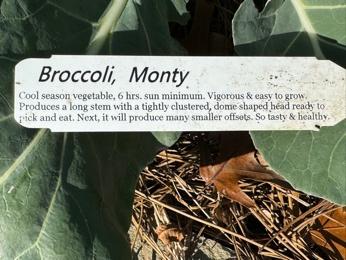
This past fall, I decided to try several different varieties of broccoli in my garden. A few are still growing and I’m hoping they reach the harvesting stage very soon. But, as you can see from the photo, this particular variety produced a beautiful head of broccoli just a few days ago. There are five or six smaller side shoots, but none will be as large as the original.
One definition of “monty” describes it as the whole thing; everything that is wanted or needed.
The recipe I selected for ‘monty’ is from our family cookbook. We refer to it as Bethy’s Crunchy Broccoli Salad. It is delicious any time of year but bringing it in straight from the garden on a chilly winter morning was the best ever! It certainly met, and exceeded, our expectations.
*Johnny’s Seeds currently has packets of Broccoli, Monty seeds in stock.
Linda Alexander, Dallas County Master Gardener Class of 2008
A Chritmas gift from a dear friend tied up with a fuzzy peach ornament
How could we enter into the new year without knowing the big announcement from Pantone? In 1999, the Pantone Color Institute created the color of the year educational program to engage the design community and color enthusiasts around the world in a conversation around color. Their hope is to inspire us to look at color in a different way. It is interesting to read about the process Pantone global color experts follow to arrive at the selection each year. You can do that by going directly to their website at pantone.com.
For 2024 we are encouraged to “Embrace the Warmth”. They suggest that we look for ways to nurture ourselves and others. To help guide us along in our yearning for closeness and connection, the Executive Director of the Pantone Color Institute, Leatrice Eiseman, made the following announcement on December 11, 2023.
Pantone’s Color of the Year for 2024 is Peach Fuzz, a velvety gentle peach tone whose all-embracing spirit enriches mind, body and soul. Officially, the number you need to know is PANTONE 13-1023. For like-minded gardeners, it is gratifying to learn that they selected a perfectly peachy nature-inspired fruit.
As a Texas girl, my mind went quickly to a lifetime of memories revolving around fresh peaches. If you are like me, the thought of ripe summer peaches makes this color choice especially meaningful. Going forward you can expect to find Peach Fuzz making an appearance in the design industry, fashion industry and in home décor. Also, it appears that Peach Fuzz will open the door to a wide assortment of lipstick, blush and contouring options. Nail color options will be available, as well.
Just last week I embraced that fuzzy feeling by ordering a pair of Peach Fuzz tennis shoes from Cariuma. If all goes well, I’ll be wearing them on one of our summer trips to the Texas Hill Country where we hope to visit a ‘pick your own peaches’ roadside orchard.
If you feel inspired to start growing your own peach trees this year, go to aggie-horticulture.tamu.edu for a full list of varieties recommended for our area. Wishing you all the joys of a heartfelt peach hue that enriches mind, body and soul.
Here are a few of our favorite peach recipes from ‘A Year On The Plate’ 2016 Master Gardener Cookbook.
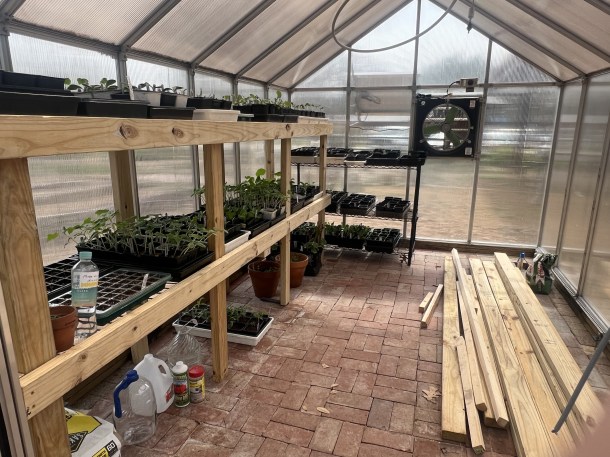
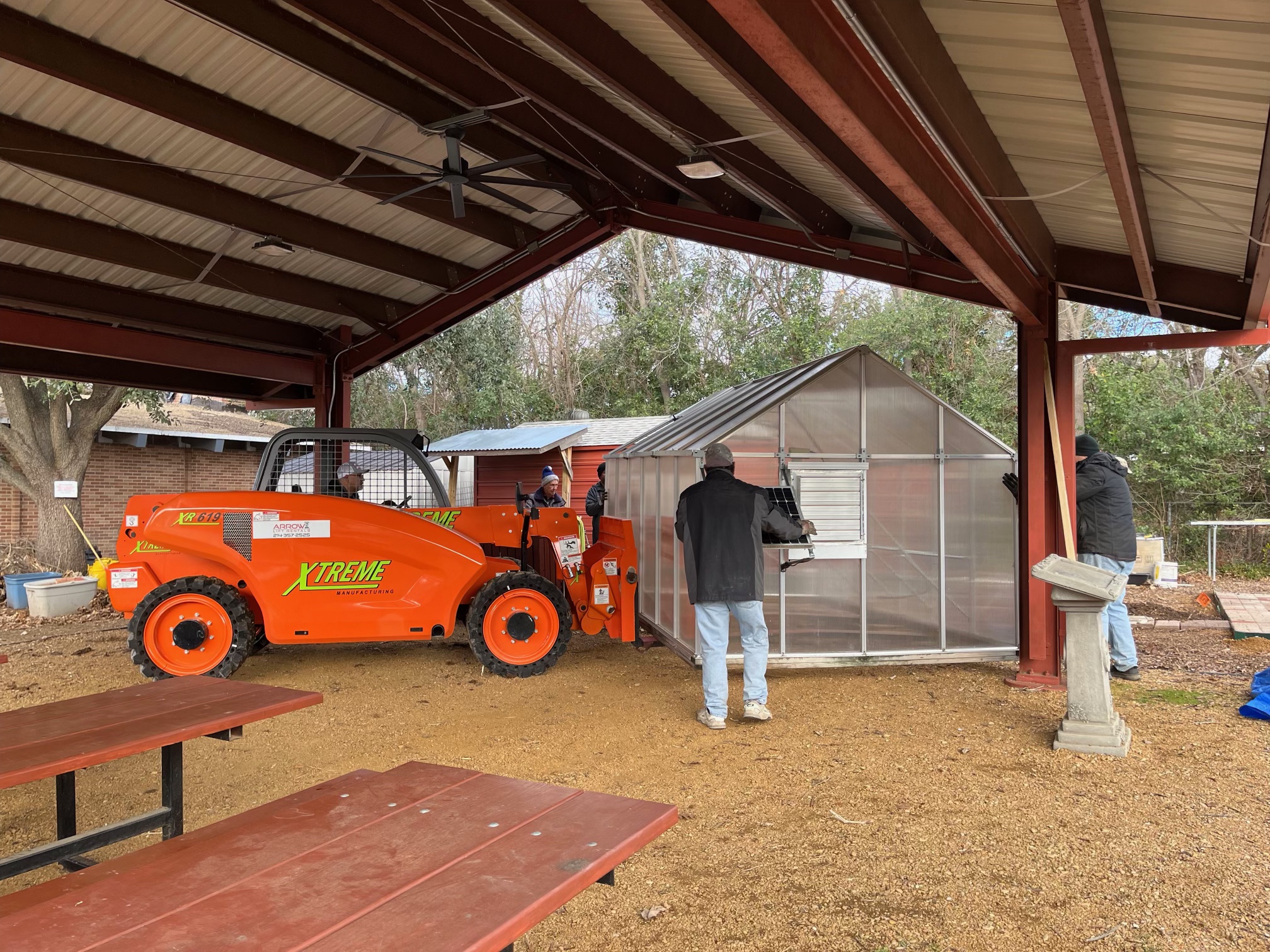
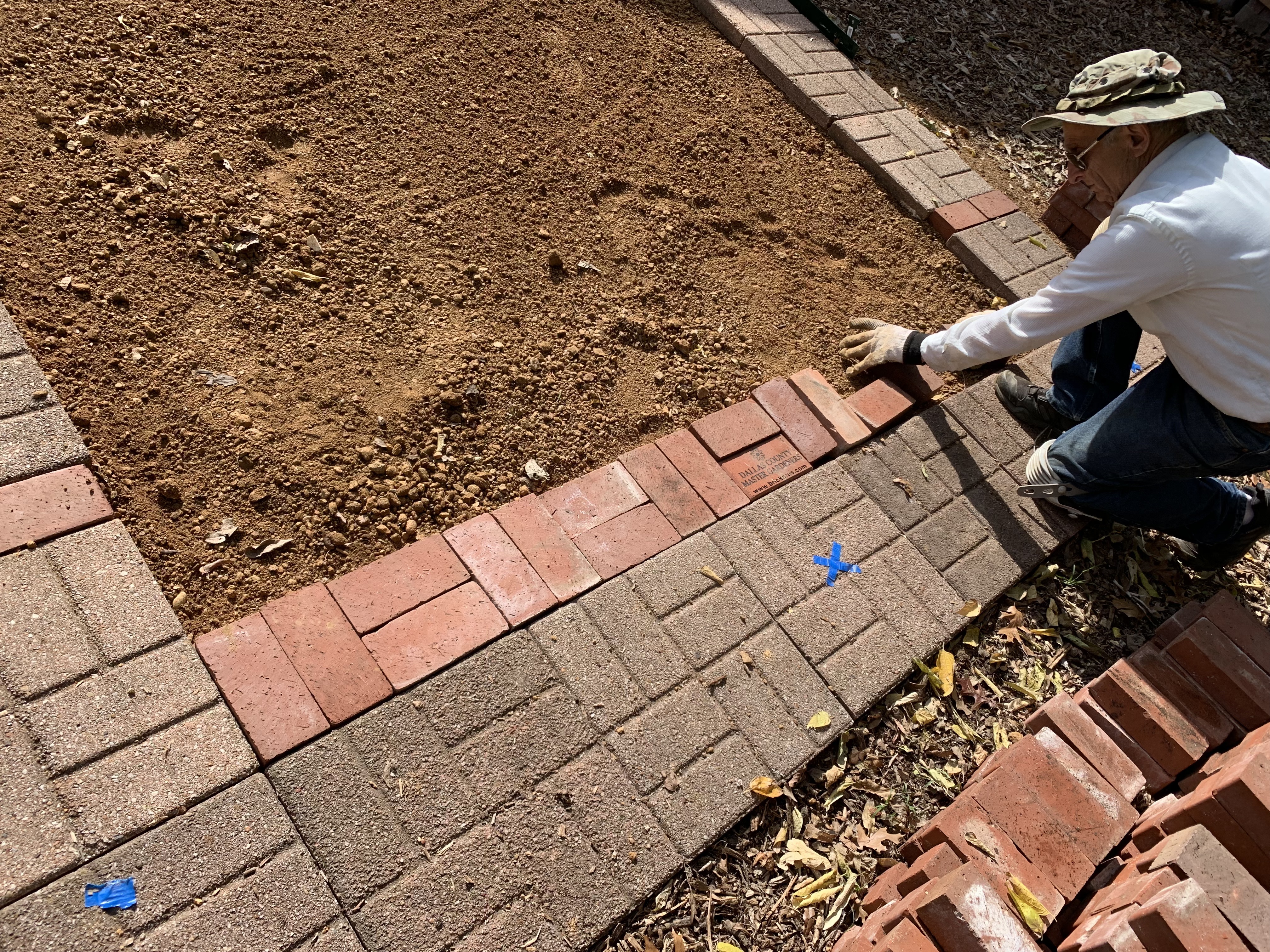
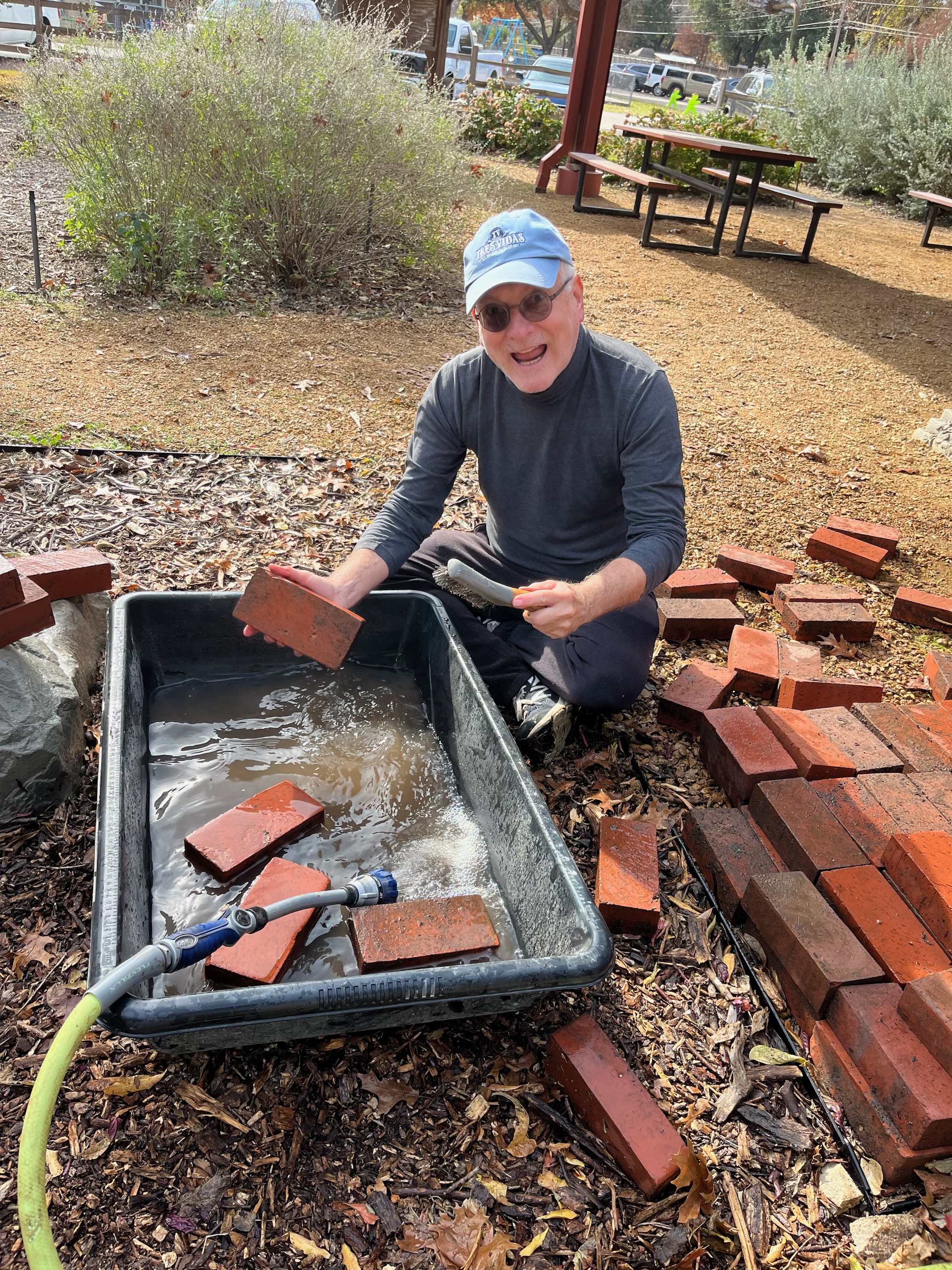
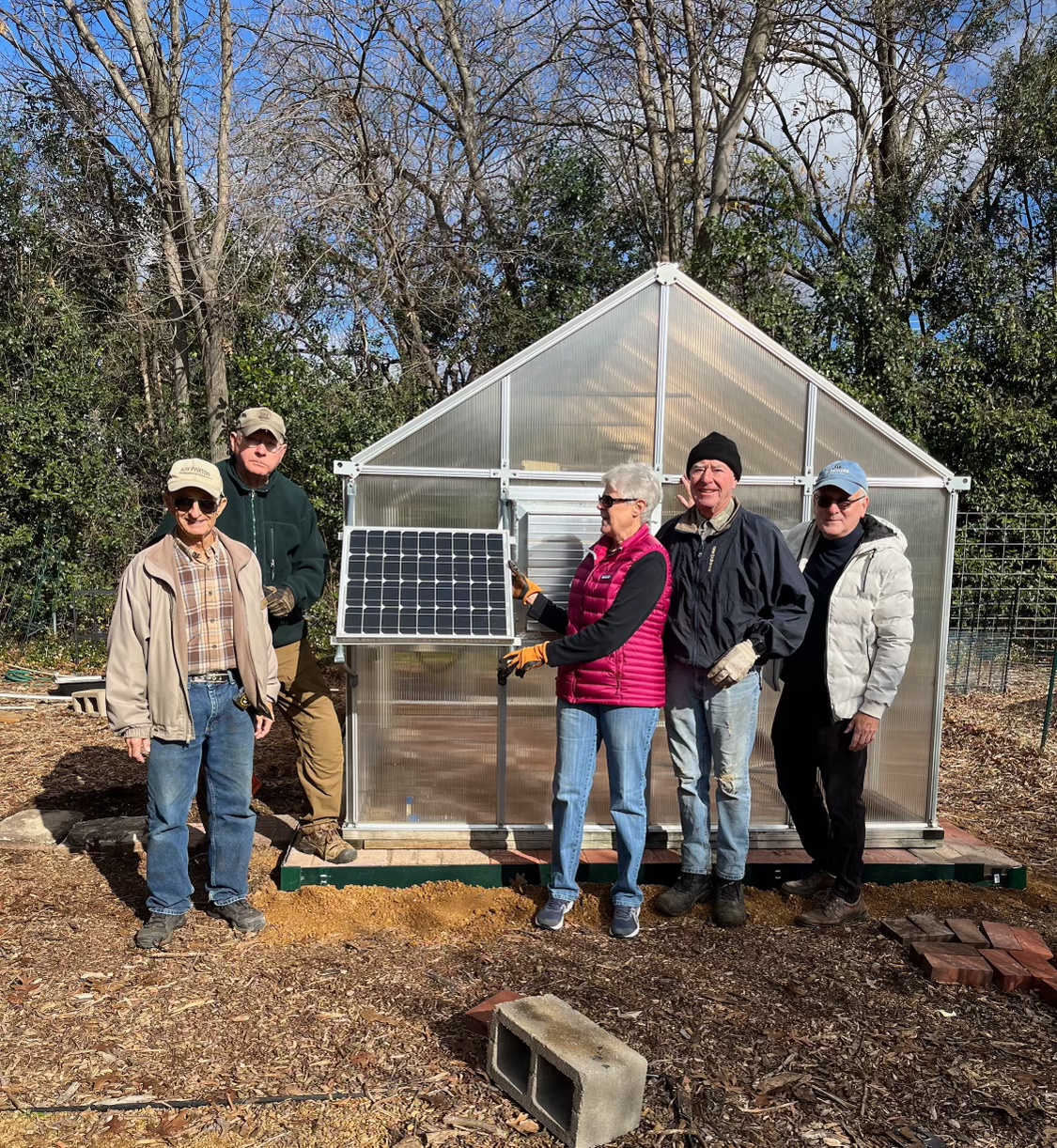
Jon and Joe meticoulsly laying the floor for the greenhouse.We’re excited to be getting the space to start seeds for the north garden. The other greenhouse gets extremely crowded in spring with the combination of north garden and plant sale seedlings. Tig said the brick floor is too nice to cover up with a greenhouse!
Here are a few pictures by Starla from our recent Christmas lunch.
This season of the year we are often asked to express what we are thankful for, of which there are many things; however, recently I have been reminded of how thankful I am to have a garden to tend, a group to garden with and organizations and friends who support these garden endeavors.
Several weeks ago when there was an impending freeze, I made my way to capture what I expected to be a transition in the looks of our colorful and vibrant landscape to a somewhat muted look. Upon arrival, the brisk fall air welcomed , the pink shades of the muhly grass glistened in the bright morning sunlight – flowers were continuing to burst forth with blooms, and vegetables continued to produce fruit.
As I wandered through the pathways, soaking up the beauty, my memories were not just of the plant material, but the people who have made this garden special to me. Raincatcher’s garden of Midway Hills was begun in November, of 2014. We moved locations that Fall –and began anew. The courtyard plantings have been transformed, a rain garden was added, and the old playground has become home to our Edible Landscape and greenhouse. The most dramatic change has been in the North Field. It went from an acre of land, to a vibrant workspace with vegetable beds, trees, orchards, color wheel, compost area, wildlife habitat and a covered meeting area.
We are truly thankful for the opportunity to garden on the grounds of Midway Hills Christian Church, and for the many hands that make this Dallas County Master Garden project one that educates the residents of this area, but also gives back to the community.
We are grateful; We are thankful. And we are blessed. Thanks for following us on our journey!
OH yes, BTW, we are still awaiting our first significant freeze, so come by the garden and enjoy the beauty of whatever season you find yourself when you are here.
Starla Willis, Dallas County Master Gardener Class of 2011
In just a few weeks our year-long journey into the world of bees will come to an end. Until then, let’s explore, unarguably, the best part of experiencing honey.
In April of 2014, Joe Field (our location prior to relocating and becoming Raincatcher’s Garden on Midway Road) master gardener volunteers hosted a honey-tasting event along with a fabulous honey-themed lunch. A local beekeeper was our featured speaker. To this day, it has been one of our most successful educational programs. Not only did we learn the ‘proper’ way to taste honey, but the menu was created with those complimentary flavors in mind.
(For a quick glimpse of the menu and other photos from the event, go to the following link)
Our instructor that day shared with us that the composition of honey depends largely on which flowers are visited by the bees when collecting nectar. We should also not forget that plants produce nectar in order to attract pollinators such as honeybees, wasps, moths and bats. Another important fact is that the nectar of each plant species has a different combination of sugar and odor. Together, with the flower’s shape, design and color, this helps to guide the bee from one flower to another of the same kind.
Additionally, it was beneficial to learn that honey’s color, flavor and aroma all derive from the plants pigments and other materials secreted in the nectar. This is what makes honey from each floral source unique. Last month we shared examples of local fall blooming pollinator-friendly plants. Some of the flavor profile descriptions of those flowers can help us to imagine the taste of that particular honey.
Color and Flavor Aster: Water-white to light amber. Spicy overtones, firm, chewy texture. Borage: Pale yellow or water white. Herbal and floral bouquet with hints of cucumber and orange pekoe tea. Sugary aftertaste. Goldenrod: Brilliant amber to a warm golden yellow. Bright, sharp, floral-like flavor with hints of fresh straw. Spicy aftertaste.
And a few others: Lavender: Light amber. Strong camphor-perfumed taste with sweet tobacco notes. Thyme: Carmel to dark, golden amber or darker. Aromatic, floral, lemony, minty and strikingly sweet.
Honeybees gathering nectar from Lavender blossomsHoneybees gathering nectar from thyme blossoms
Here is a quick overview of how we learned to taste honey. *Tasting honey is an exercise in comparing and contrasting flavors.
*Our taste buds can distinguish between five flavor sensations: sweet, sour/tart, salty, bitter and umami, which is a savory taste. The taste buds for each flavor are located at different areas on the tongue. This is the reason why it is recommended that you move the honey around your mouth as you taste it. Tasting more than one honey at a time gives you a reference point for comparing “tasting notes”.
*Begin with the lightest in color, moving on to medium ambers and then finishing with the darkest. Light-colored honeys typically have a mild flavor, while dark-colored honeys are usually stronger in flavor.
*Take a sip of water in between each sample to clear your palate. Also, a crusty piece of bread and a variety of cheeses can complement the tasting experience.
*To keep it simple and less confusing, start with about five to six different types of honey.
*Start by drizzling a sample of honey onto your tongue and let it melt for a few seconds.
*Spread it around your mouth and consider several questions:
Is it woody, floral, full, light, crisp, buttery, well balanced? Does it have a long finish or an abrupt end? Do you like it or find it unpleasant?
Finally, there is no right or wrong as we each have our own individual taste preferences and predisposition to flavors. Embrace the process of learning how to appreciate honey and celebrate the opportunity to discover the flavors you find the most enjoyable!
FYI…I was intrigued about Goldenrod honey and decided to try to find a source that sells it. That led me to Bee Friends Farm in Michigan. My two 12 oz. bottles should arrive within a few days! Look for an update about the flavor and taste in our December article.
Linda Alexander, Dallas County Master Gardener Class of 2008
My history with wildlife eating my flowers is a long one. I once watched a wild turkey peck away at my johnny jump ups. Here in Dallas County, we are much more likely to encounter bunnies. Those little bundles of fluff that look so cute on a neighbor’s lawn may find your new pansies and their friends to be very attractive. Unfortunately, they may not limit themselves to enjoying only with their eyes and might proceed to dine on your new plants.
How to keep plants from being nibbled by rabbits is a challenge faced in most gardens sooner or later. A quick tour of the internet reveals many techniques that are reported to be successful for some gardeners but finding actual studies is another matter entirely.
Regardless of the source of the data, there are two primary techniques for saving your plants and they are like the ways we protect our skin from mosquitoes. We either exclude or we repel the pest. Shooing them away just isn’t effective. Like mosquitoes, most rabbits will return for a meal.
Fencing can be one of the most successful options. The addition of a chicken wire or hardware cloth fence 2-3 feet tall and buried 6 inches underground can keep a section of your garden off the menu. Wire cages can be constructed or purchased to protect your kales or chards. Planting in large, tall pots can keep your plant safer on your porch or patio.
Repellants can be purchased or made at home, and work via odor or taste. All will require repeated applications, especially after rain. Odors that rabbits avoid are associated with predators or spoiled, pungent foods. Blood meal is a commonly used odor deterrent and has the advantage of containing nitrogen. One reported downside is that it may attract other predators, leading to the trusty family dog to roll over your pansies. On the plus side, the presence of a dog may scare away rabbits.
Most rabbits dislike the taste of hot peppers, and capsaicin is included in many commercial products. Please read and follow the directions, as some products are not designed for or safe to use with edible plants. If you decide to surf the web for a home-grown repellant, do not use moth balls in your yard. This dangerous advice continues to haunt the internet. Regulated by the EPA, it is illegal, toxic, and counterproductive to use mothballs as deterrent for mammals in your garden. Using garlic spray or a sprinkle of red pepper might just work for you. It all depends on the rabbit and just how hungry it might be.
Whether we are dealing with wildlife that nibbles us or our gardens, what works for one person may not be appropriate for another. One deterrent I read about mentioned encouraging the presence of predators. I doubt the addition of a coyote here would be acceptable. I have found that my new fence seems to keep all the bunnies in the front yard… or is it the feral cat that now enjoys the safety of the back garden? Just like mosquitos, wildlife will find a way around our plans.
Mary Freede, Dallas County Master Gardener Class of 2005